
Before + After: Creating a Canopy of Vines
We have two fast-growing, seasonal vines in the garden of our tiny house: grapevines, and trumpet vines.

While the grapevine plant recedes completely and becomes bare in winter, the trumpet vine recedes only partially, so we can enjoy it in varying degrees of fullness year-round.

When we first moved in 9 years ago, the trumpet vine was only a few feet high:
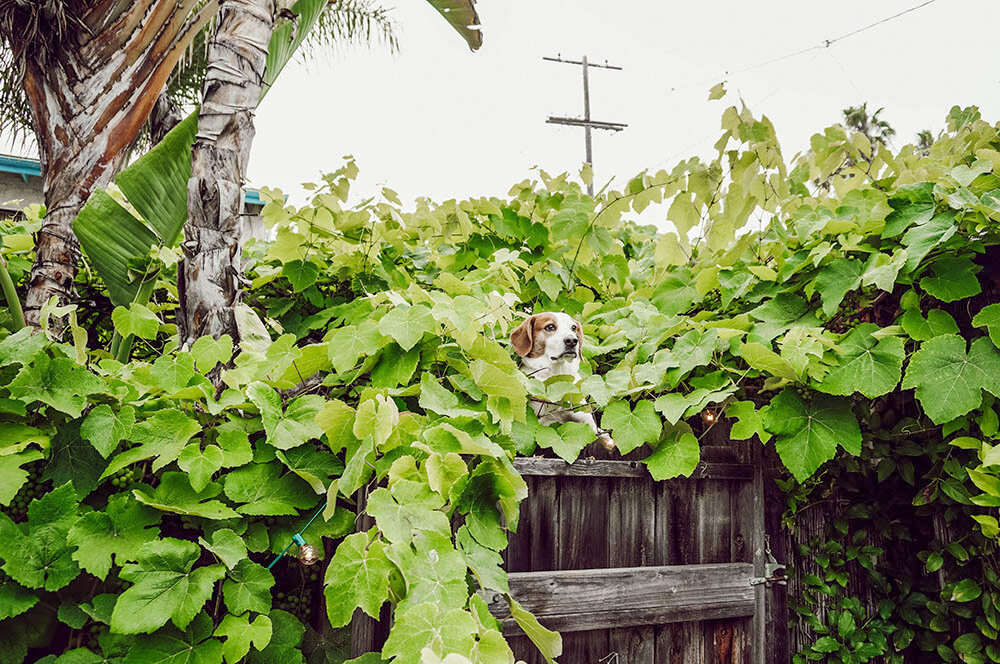
Above: Years ago, when the trumpet vine was just a handful of feet high (as seen on the right in dark green), and tucked beneath the grapevine.
Now it spans the entire length of our back garden. (See the video here.)
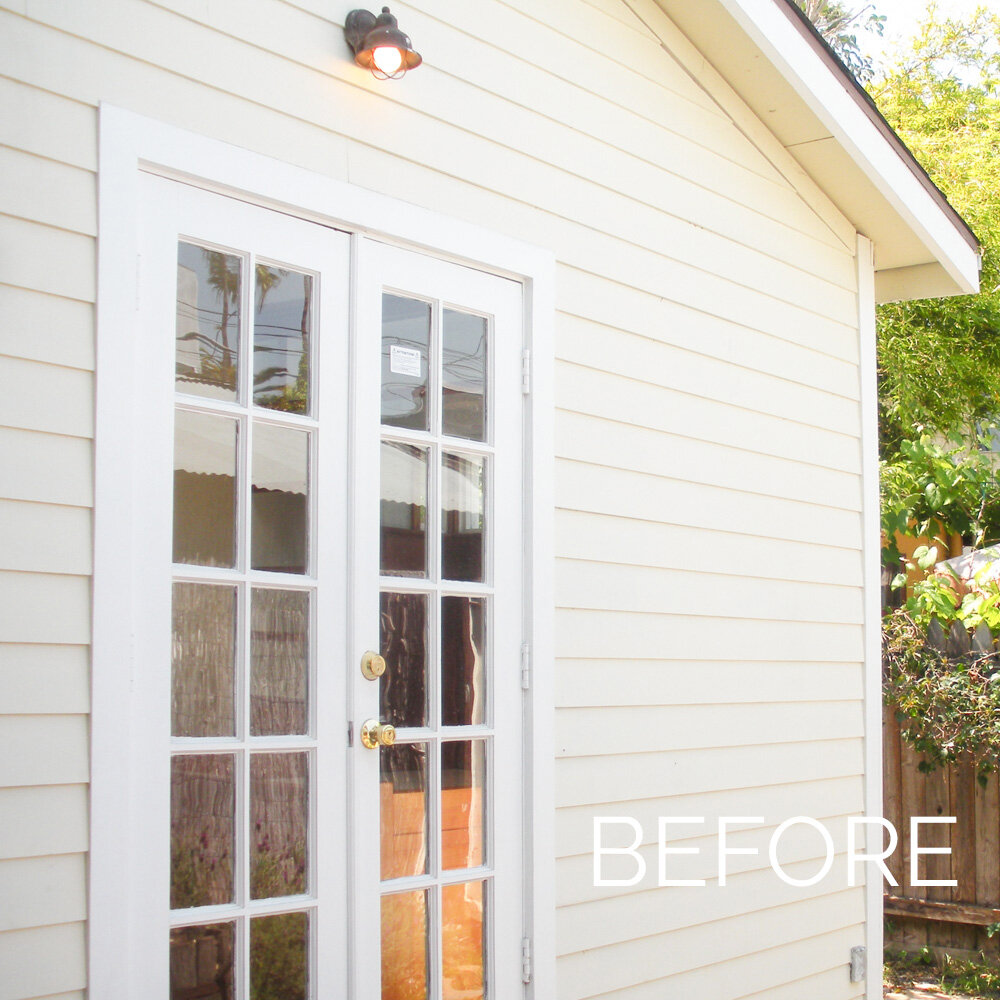
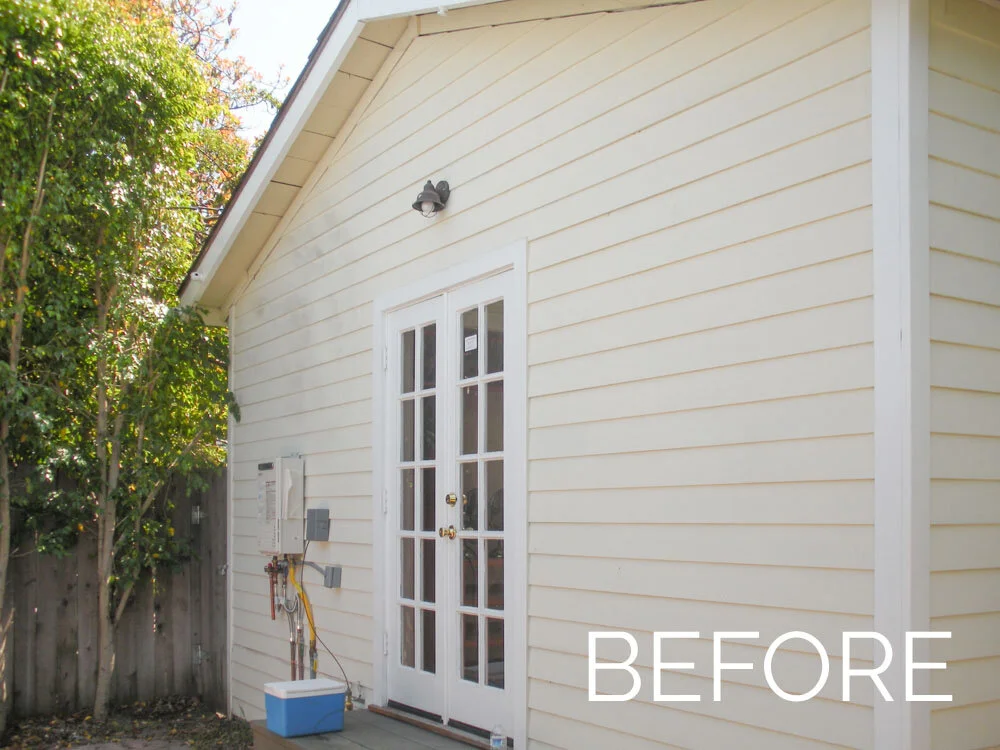
Above: The house when we moved in 9 years ago.
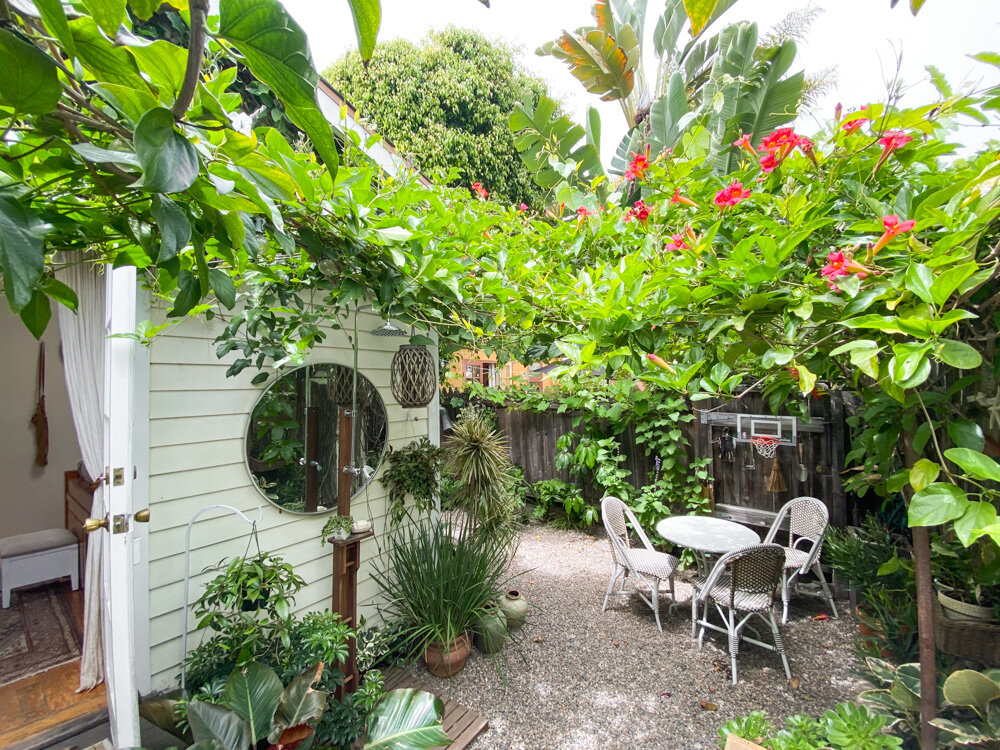
Above: The house in Spring 2020.
Bright red flowers burst out in Spring, just as the tiny grapes are starting to form on the other vine:

For the most part, the grapevine is trained along our side garden and fence line, as it originates on our neighbor’s property.

But it spreads from there via strong branches and slim creeping tendrils that latch on to anything within reach, ultimately landing on the roof of the cottage.

The trumpet vine is mainly concentrated in our back garden. For years we watched as our string lights drooped lower and lower under the weight of the greenery— so much so that Adam and I had to duck beneath them to traverse the compact corridor below, and to ensure that we wouldn’t disrupt any birds’ nests.

Above: Baby hummingbirds in their tiny nest in the trumpet vines.
Last year we worked with our friends at Big Red Sun to lift the vines out of the walkway, and up towards the roofline. They installed 3 slim vertical steel beams in the garden via concrete as anchor points to start the job.

One post was attached to our back gate/fence.
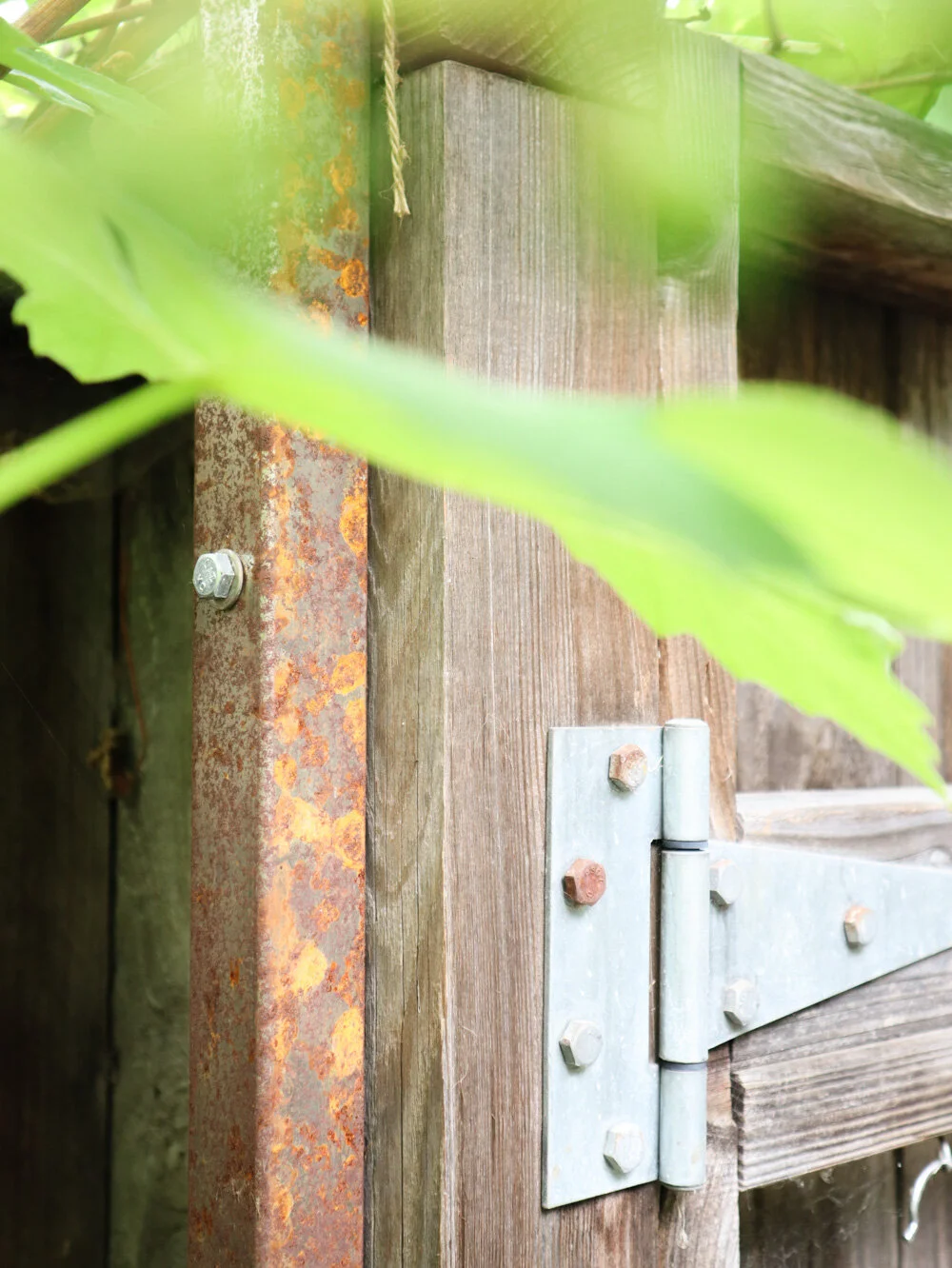
The other 2 were positioned on either side of the space allocated for our custom sofa and mirror set, which was in the process of being crafted here in LA.

Above: 2019, immediately after the posts and sofa were installed.
From the posts, the Big Red Sun team attached strong cables, which they then anchored to various points along the house.

Above: Fall 2019
They zip-tied the vines to the new cables as a method of wrangling the mess, and left us with a beautiful zig-zag of greenery that followed the path of the twinkle lights intertwined within it.


Above: A close-up look at one of the 3 posts.
As the trumpet vine continued to grow and branch out, I then used lightweight wire to connect the stretches of space between the main cables, so smaller tendrils could then span the open areas to create a more comprehensive canopy.


The canopy has a few larger gaps that allow sunlight to pour through and pass across the garden throughout the day. But otherwise it’s almost as though we have a living ceiling of green out back.
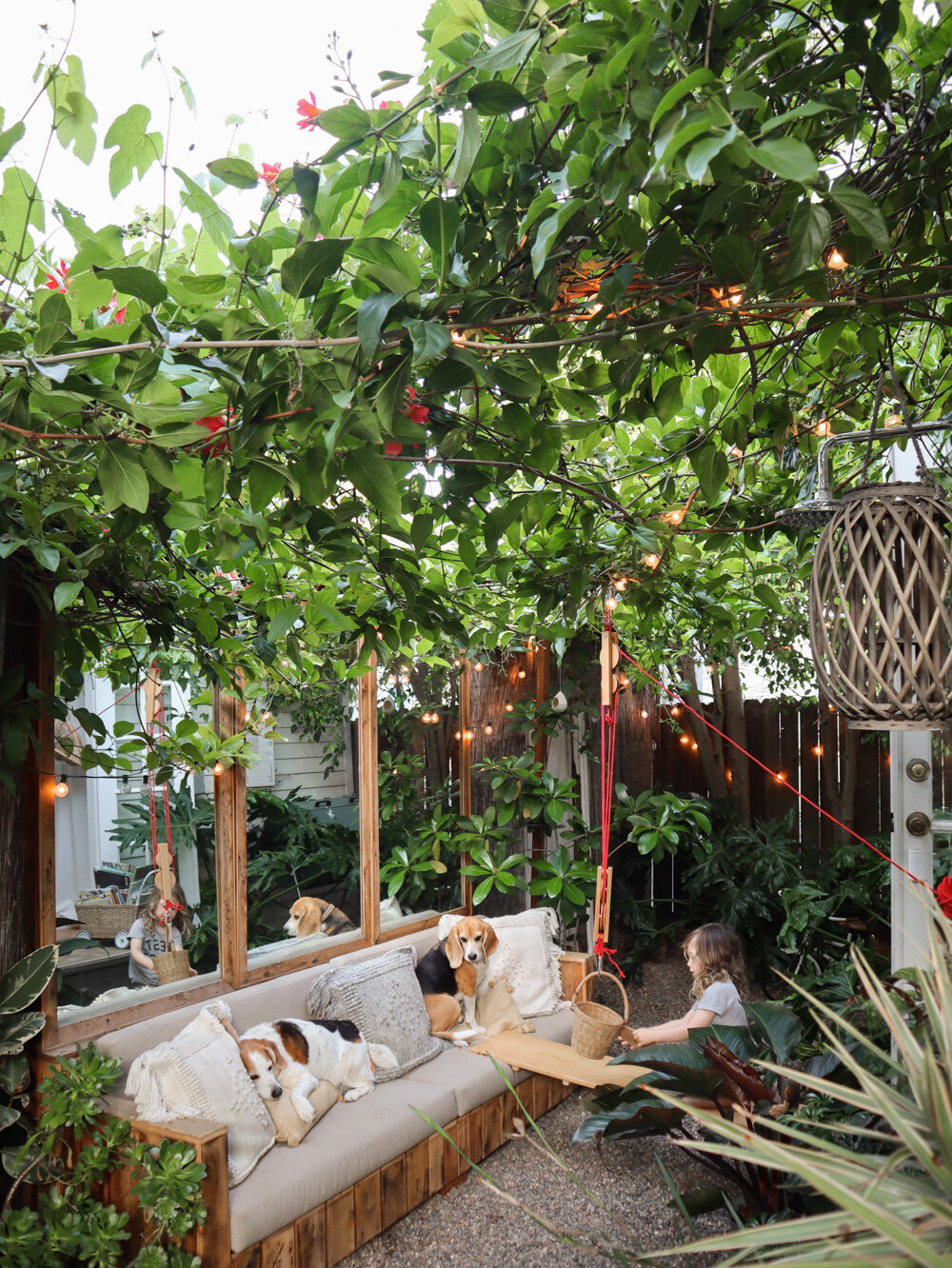
This provides us with much-appreciated relief from the intense sun during the summers.

It also creates a safe home for hummingbirds, as well as a spot for bees and butterflies to congregate and rest.

Above: The view while standing on the garden sofa and breaking through the main/bottom layer of vines.

I’d never had a garden before this one, and I had no clue what I was doing when I started out. The yard was cracked, dry and bare.

This “before & after” is proof that even the most barren patch of city soil can give birth to a sea of life.


Cottage Plants
I receive a lot of questions about the plants we have at the cottage-- are they real? Are they toxic? How long do they take to grow? How much care do they require?
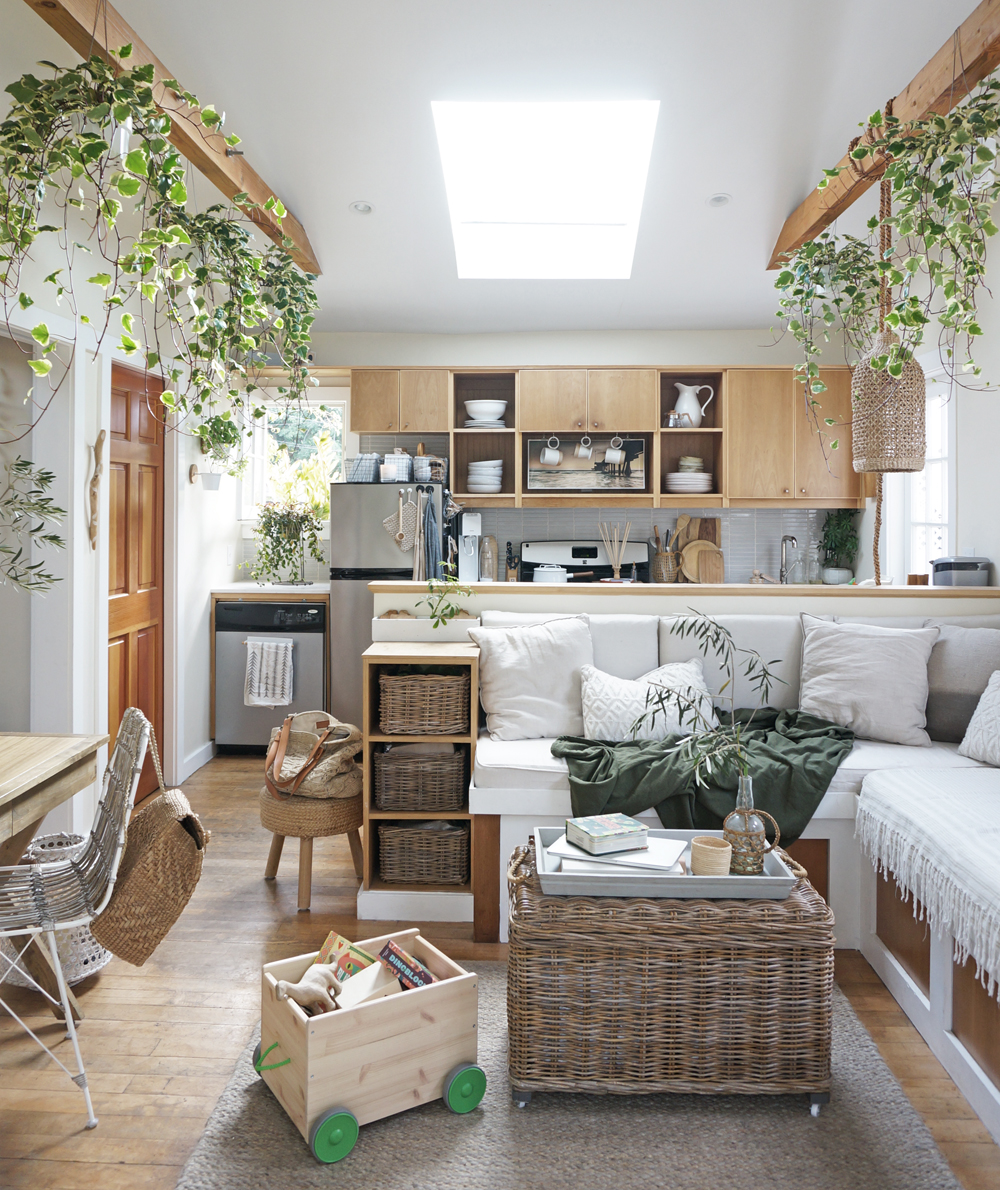
I am by no means a plant expert-- faaar from it. I look to Hilton Carter if I need help with my houseplants, and I am inspired by the creative ways that my friend Justina Blakeney of The Jungalow decorates with her plants. But I can certainly share what has worked for us here in our tiny home-office. While we have a wide variety of indoor and outdoor greenery, we routinely decorate with these three particular plants:
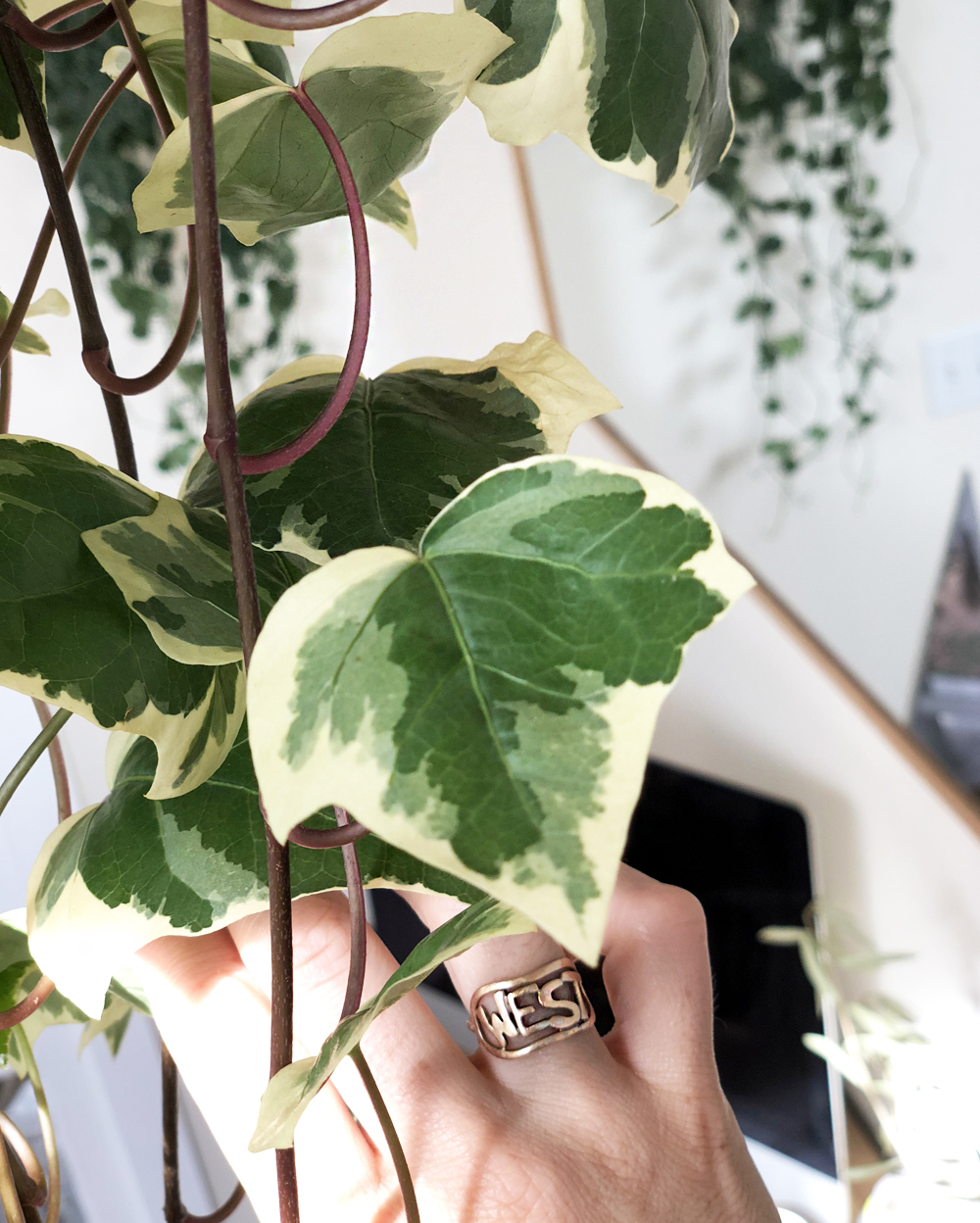
Algerian Ivy - I love this variegated vine, which drapes beautifully in hanging pots/baskets, and can also be used for ground cover. The mid-toned green and pale yellow help show off the texture and shape of the leaves, while the brown/red stalks contrast beautifully with the rest of the plant. Algerian Ivy can tolerate a decent amount of sun, but continues to thrive in times of lower light exposure. I usually display this ivy on shelves because it takes up a fair amount of space, allowing me to fill a room with warmth without cluttering it up with miscellaneous tchotchkes.

Silver Philodendron - Silver Philodendron is one of my favorite plants. In fact, it was one of the main visual inspirations for our home-wedding. This house plant grows rapidly, and has interestingly speckled grey-green leaves. In my experience, the vines will get sparse up top if the soil isn’t healthy and if the pot doesn’t drain well, so don’t forget to give these plants a bit of tending-to each week. My favorite spot to place these plants is on hidden/floating bookshelves on our living room walls. It is toxic to pets and people when ingested, so we simply keep ours high up out of the reach of all our little ones.

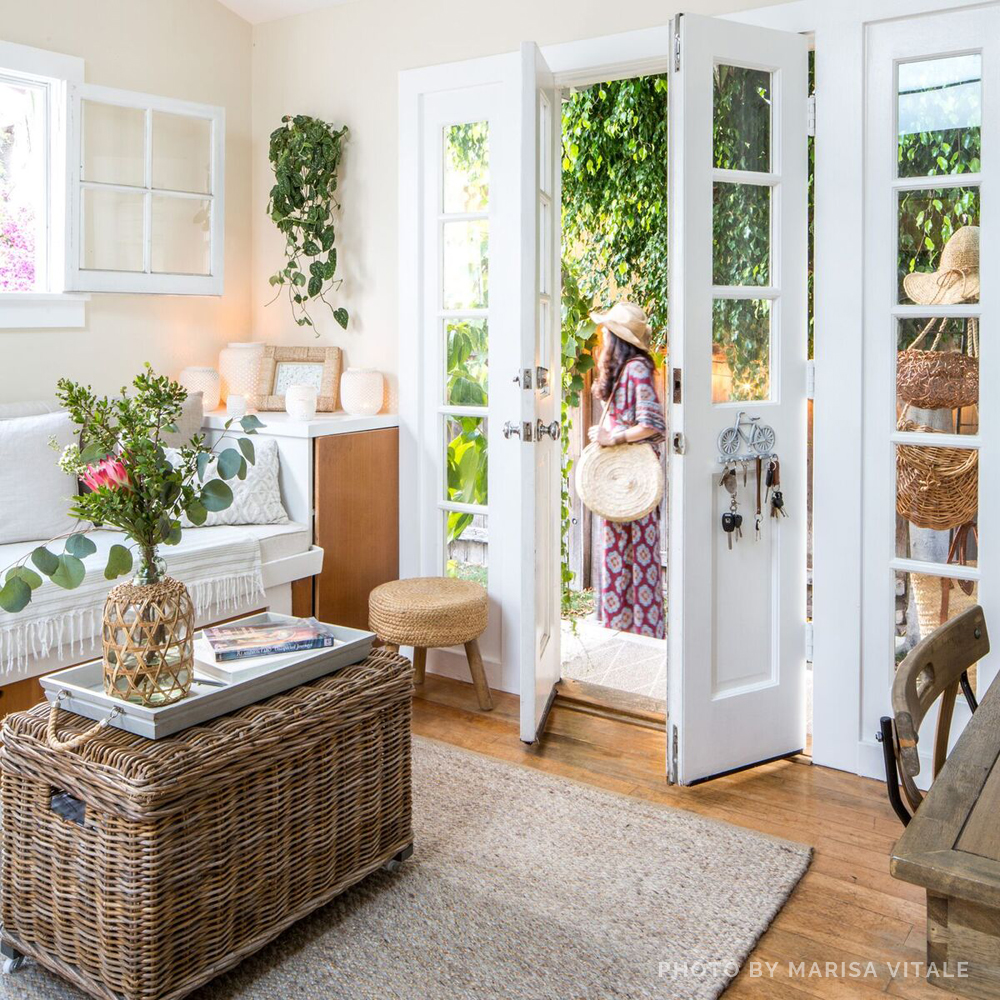
Vinca Vine - Vinca is one of my absolute favorites, because it grows incredibly long, and yet it barely sheds. This plant is simple and understated without being boring. It cascades and frames beautifully, adding depth and color wherever needed. My favorite place to hang them is near windows and outdoor corners, where the greenery livens up several feet of bare walls or moldings without consuming space. I’ve found that Vinca Vines require a touch of extra care in the winter, so I personally don’t leave them out in the cold. (Even here in SoCal they prefer to be indoors during the cooler months.) In the warmer season, they enjoy a few hours of sun, or regular dappled light-- nothing too harsh Cutting the vines back around Spring is a great way to spark new, healthy growth. (And don’t worry— they grow back in a blink.)