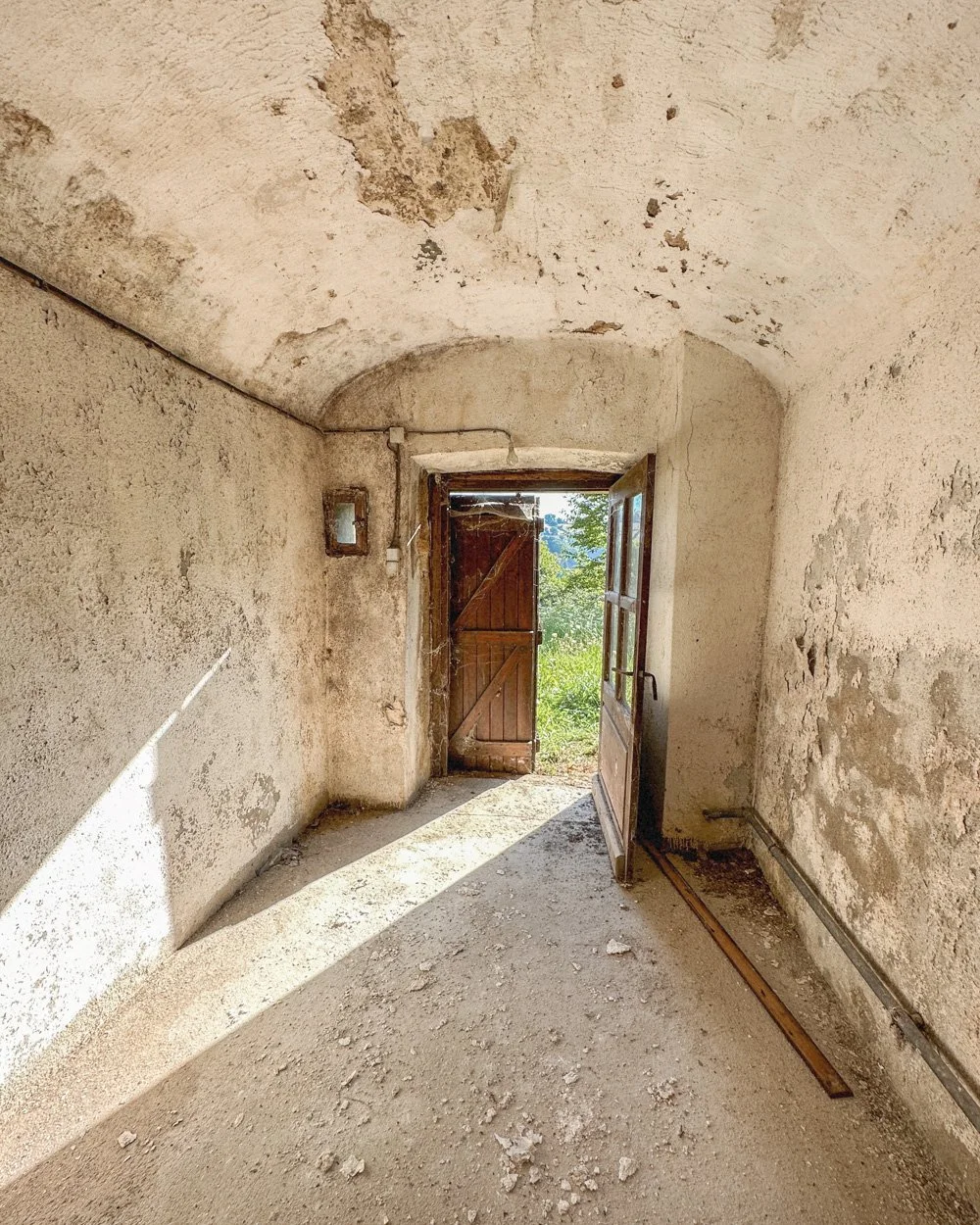
The Tiny French Farmhouse: Sleeping 9 people in <800 sqft
NOTE: This entry was written as a response to one of the most commonly asked questions about the farmhouse: “Where does everyone sleep?!”
Our <800 sqft farmhouse residence, which is shared between five adults and four young kids, was listed as a 2 bedroom / 1 bathroom online.

Thankfully, upon receiving the private link to the full property listing, we discovered that there was also an unlisted half-bath — or “WC”— upstairs between the little bedrooms. We rejoiced heartily over this. (We still do.)
While the surprise WC solved the most pressing space-related problem we’d anticipated (one toilet for nine people was clearly not going to suffice), there was still the significant, runner-up spacial issue of the need for a third bedroom. As we’re three parties who intended to overlap frequently during both our short and long-term stays, creating an additional, dedicated sleep space was promptly added to our list of restoration and renovation projects. We marked it as non-urgent, but a high priority.
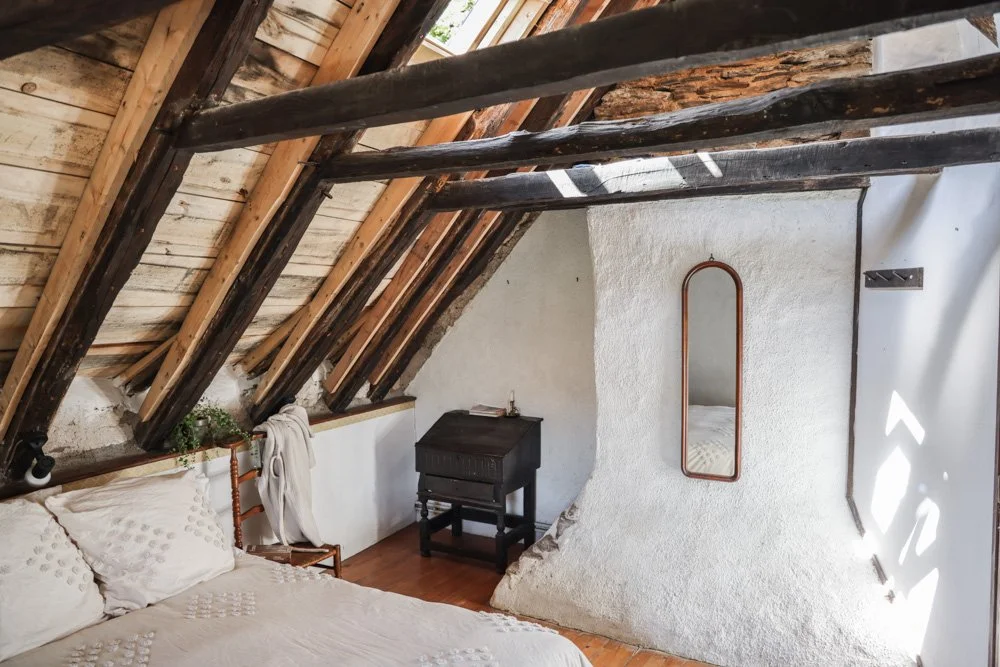
As you can imagine (and see for yourself via my photos), our repair + to-do list is very long. The farmhouse and its outbuildings were constructed in the mid-1800s, and adapted mindfully but inexpertly over time. Some of the our list’s entries are essential. Some are aspirational. Some need to be done for regulatory purposes. Others are constantly being erased and re-written to reflect our families’ evolving needs as life unfolds in the unexpected ways it does.
This past summer was our first with all three parties / nine folks together in the residence at once…

Tiny French Farmhouse: Repairing the 2nd Floor Ceilings
When we and our partners purchased the Tiny French Farmhouse on the final day of 2020, we knew we’d have to tackle the repair of the 2nd floor ceilings as soon as possible. The water damage within them was evident from the realtor photos, and after visiting the property in our stead, our surrogates in the region confirmed the rot was indeed extensive.

Luckily our neighbors and friends are highly skilled in various areas of both home construction and repair, and are knowledgable about the specific materials commonly used throughout older homes in the Aveyron region.

When our family was finally able to visit the property last year, we connected with our neighbors, who generously agreed to handle with the removal of the toxic ceilings as part of the roof restoration for which we’d hired them.
The process was layered, but here’s the gist:
The low, rotted ceiling panels of the upper floor were removed
The aged and water-logged insulation was removed and safely discarded
In select areas, drywall and plaster were replaced or added
In certain spots, electrical wires were reorganized in safer arrangements
As part of the roof restoration, three VELUX skylights were cut-in and installed— one in both bedrooms, and one above the dark stairwell

As of now, the ceilings of the second floor — including the beams that were once fully or partially wrapped — remain unfinished. After seeing it first-hand, we’ll determine next steps.

Even unfinished, it is already greatly improved. Areas that were previously filled with soggy overhead boards (that encouraged bending and stooping) are now vaulted and spacious.
We’re not anticipating dramatic temperature changes within the home without the interior insulation. The roof now provides insulation via numerous materials / layers beneath its original stones, and the home is so small that it isn’t difficult to heat with the built-in system or petite space heaters left by the previous owners. Plus the large fireplace sits beneath half of the upper floor, and its chimney extends upwards throughout the main bedroom and 1/2-bath walls.


Of course, only time will tell! But since we’re in this project for the long haul, we’re unhurried and, currently, quite content.

Tiny French Farmhouse: Lauze Roof Restoration
Since our last trip to the Tiny French Farmhouse, a fantastic team (who we’re lucky enough to call friends) restored the original, stone roof of the 1800s, <800 square-foot residence.
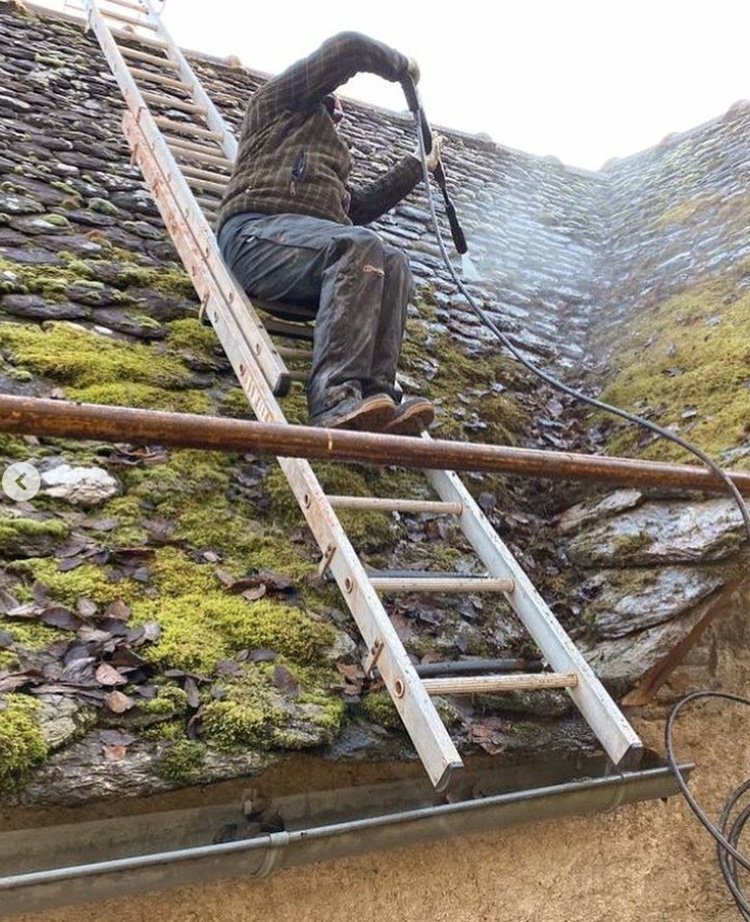
My family will be headed there next week, and we’re eager to enjoy their expert handiwork in person.
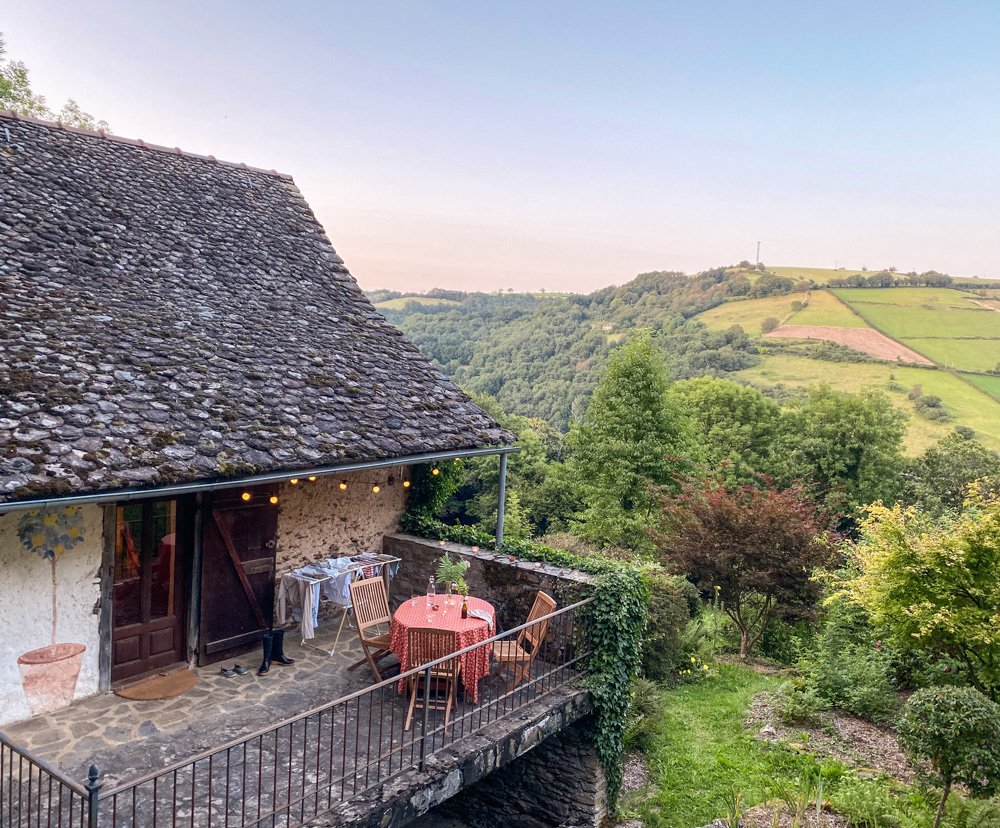
Before
This type of lauze roof is very common in the Averyon region. It’s not uncommon to pass one that’s being repaired, just as it’s not uncommon to pass one that has caved in after years of neglect.

Before
The stones gather green moss over time if not maintained, as ours had. In my opinion, the moss is beautiful, and allows the home to sink into its natural surroundings. But since the moss captures moisture and further weighs down the roof, it must be cleaned.

I covered the restoration process extensively across my social media channels*, but neglected to extend that coverage to the blog. (It’s been a sleepy year here on this site, I know. I was prioritizing time with our baby, while overseeing the new little cottage build in the Southeast. But I plan to get back into the full swing of posting later this summer.) *Much of that coverage has been saved to my Farmhouse Highlights on IG Stories.

Repairing the roof involved several technical steps, but the gist of it is:
The scaffolding was erected
The stone tiles were manually removed
The nails were removed one by one from the wood
The wood was allowed to dry out over several sunny days
The rotted components were removed and replaced, and the hips cleaned
Several layers of weatherproofing and insulation were applied above the wood
The tiles were individually and meticulously scrubbed clean and left to dry
The tiles were replaced, layer by layer, beginning at the bottom / soffits, and extending upwards towards the peaks.

From what we gather from the photos, we are thrilled with the end results. The before/after stand in stark contrast of one another, and yet the roof still looks like it’s beautiful, original self (plus the tiny skylights).

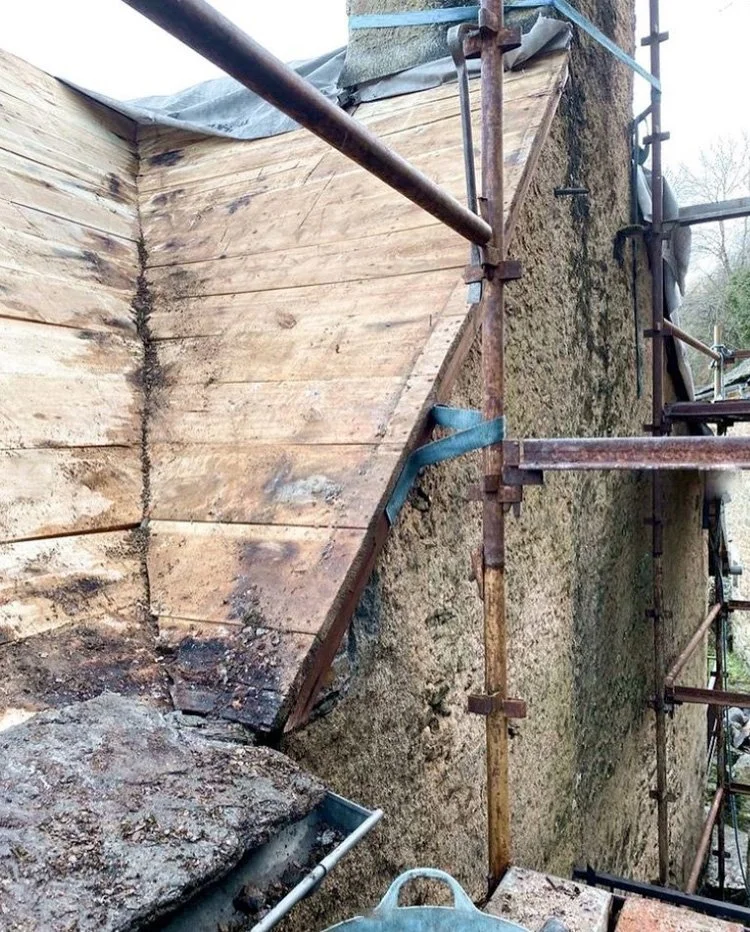


The entire process took a team of two about 4 months (including the ceiling work outlined in another recent blog post), as they worked around winter and spring snow and showers.
As far as budgeting for the restoration was concerned, let’s just say that the work was worth every penny, but that it was only possible to pay thanks to the multi-steward partnership behind the property acquisition.

Leaving the Farmhouse (for Now)
While my family was at our Farmhouse for the first time, a good friend of mine sent me a voice memo saying I looked like, “a woman in love.” She was right. The feeling I experience while in our new-to-us house is the sort of feeling I’ve only experienced while living in Venice. It’s the feeling of loving a physical place as completely as I love a person. It’s the feeling of home.
You can imagine how reluctant I was to leave. For the second time in a year, Adam and I closed and locked the front door of a (tiny) home we love, and begrudgingly left. But, unlike the cottage, we’ll return to the farmhouse one day soon.

The bright side of this is, of course, being reunited with our four-legged family members. I refuse to be separated from StanLee (our senior beagle-mix) for too long. When I first adopted him 13+ years ago I was working in France from 2-4 months per year. Eventually I just couldn’t stand being away from him, so I stopped going.
Adam and I would’ve loved to take the pups with us on this first visit to the farmhouse, but there was no way I was putting them through the trauma and risks of air travel for a one month stay… especially after driving them across the entire US earlier this year.
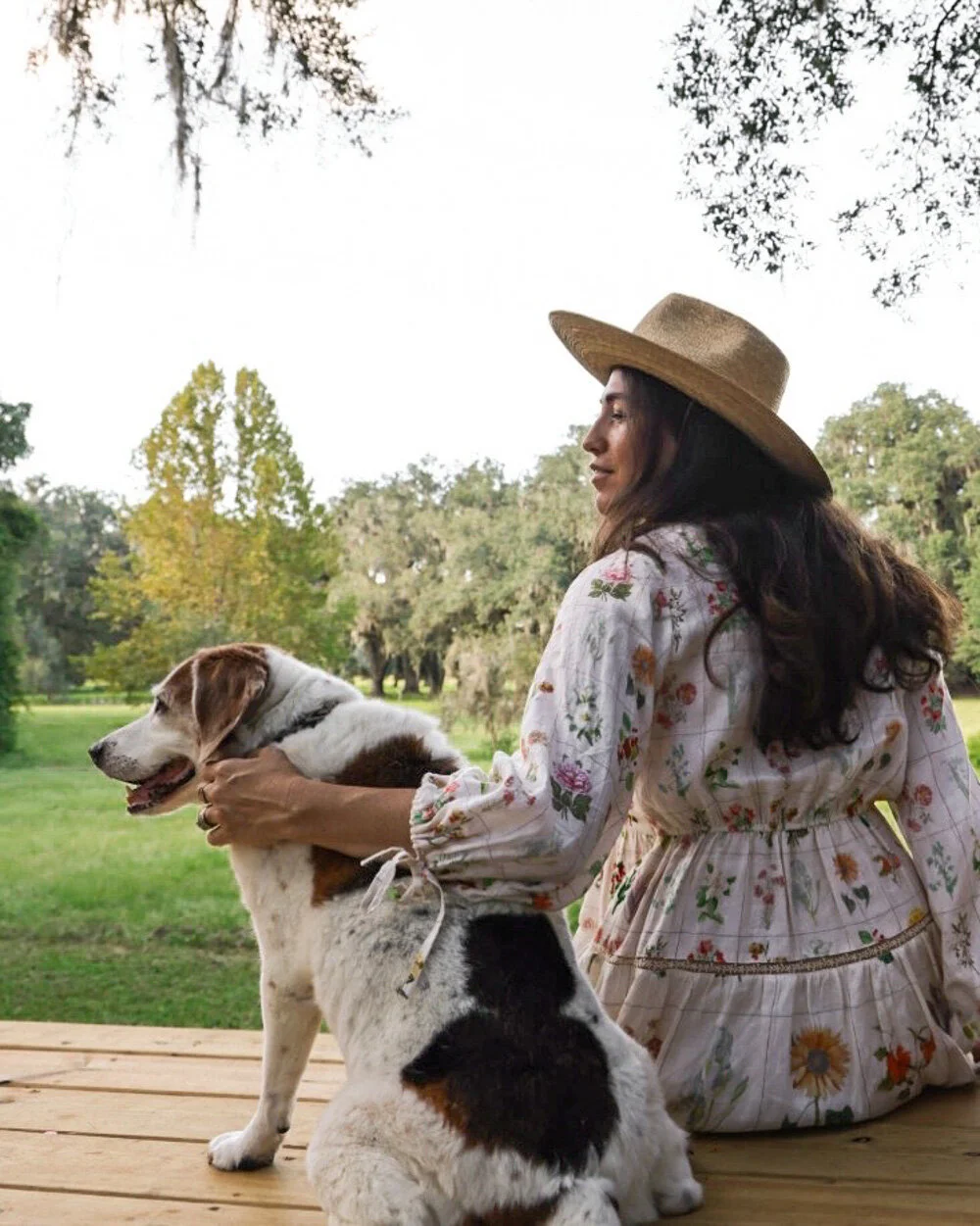
So, as planned, we’re back on the east coast for the time being.
Why so short a trip, rather than a forever move?
Well, lots of reasons. All of which we knew in advance.
The point of this first stay was not to relocate completely, but to instead meet with local contractors, establish plans for the first round of restoration work, get a better understanding of the land and structures since we’d purchased it all sight-unseen, and to make sure we hadn’t dreamt the whole place up to begin with.
The most pressing issue is that the farmhouse roof and ceilings are in desperate need of major repair— an issue of which we were aware going into the acquisition. There is some water damage that compromises the integrity of the building, while likely being unsafe for the little ones and their developing respiratory systems. Despite the fact that the house looks fairly large in photos due to the outbuildings, the residence is under 800 sqft, so there can be no relocating to one room or another while the restoration is underway. Instead, the entire home will be unlivable throughout the duration of the roofing project.

While this major, urgent work is being conducted (and shared with us in realtime via WhatsApp… so we can share it with you too!), we’ll be focusing on our tiny cottage build and newly completed greenhouse in the southeast. The prairie cottage is slated to be built this the fall. I’ll share the entire process here, and I’ll continue to post images and updates from the farmhouse.
Our trip to France was also brief due to medical considerations. Upon our return, I had a simple surgery from which I’m currently healing. Plus, my parents and Adam’s folks all have various health-related issues to handle, and we intend to be here in case anyone needs our help. And, of course, Léa’s doctors are keeping track of her growth and development after her IUGR. (So far so good, thankfully.)
As I’ve expressed before, the farmhouse is a forever home for us. We’ll be there again soon when the timing is even better.

Buying a Property Abroad: Finding the House, a Realtor & a Notaire
How we found our French Farmhouse as Americans

For years I’ve known the exact place in France in which I wanted to live. As such, I simply ran web searches for homes and land for sale within a given set of miles surrounding that town. I searched patiently for about two years before taking action.
In addition to seeking listings online, I also connected with the local Mairie (mayor’s office) to inquire about lots that might be introduced to the market in the near future, and/or properties that were still unlisted.
To read the full-length version of this piece and view all the photos, please consider becoming a subscriber to my Rightsizing newsletter. Subscribing is like walking into our cottage or farmhouse, but without getting all the dog hair stuck to your clothes! Paying subscribers will receive my newsletter, and full length versions of posts from this (now abbreviated) blog, along with exclusive imagery. We’ll nurture a community of folks who are interested in multigenerational living, co-stewardship, and life in — and with — a smaller footprint.

We Bought a (Tiny!) Farmhouse!
On the last day of 2020, we bought a house.
A very old, very small farmhouse... in France.
I’ll turn 40 this year, and up until this point the biggest purchase I’d ever made was my plain little car that I bought in my 20s. Adam and I have been renting our tiny cottage here in Venice for ten years, and never truly allowed ourselves to even consider the vague possibility of homeownership until recently.
This acquisition didn’t happen easily, and took months.
Global lockdowns and the financial + emotional strain of the pandemic (both in general and within the bubble of our family and small business) impacted every step of the process. The undertaking would’ve been complicated enough to begin with, regardless of the mayhem of 2020. But, with a firm belief in our vision, along with the help of what feels like a thousand warm-hearted people, it’s finally official.
We first began speaking to a realtor about the property (which features an <800 sqft residence and additional outbuildings,) in May. In August, while the five of us were in the aforementioned car driving to/from Idaho, we decided to take a bold leap and make our offer on the farmhouse. (It turns out that this happened to be the same week I got pregnant, because that’s just how the universe works.)
Those days and the months that followed were a flurry of phone calls, Google spreadsheets and group text chains, as we planned on joint ownership with two other parties.
From the onset, we envisioned sharing the farmhouse with family and friends in one form or another. Not only are we accustomed to a co-living format when residing abroad, but sharing household assets is an important part of our lifestyle here at the Cottage in Venice. I’ve become a firm believer that we don’t all necessarily need one of everything to ourselves. We’ve shared utilities and spaces with our next door neighbors for ten years, and this has enhanced our sense of community while decreasing our expenses and consumption.
The farmhouse isn’t a timeshare property. Instead, it’s a residence that we can all enjoy together or separately at any time. The co-owners of the farmhouse are my life-long closest friends with whom I’ve lived, worked and traveled extensively in the past. One has purchased property as part of a partnership before, which has helped us chart the more formal aspects of this acquisition, and map out our internal legal agreements between us as part of our joint ownership.
Together, we will renovate and restore the farmhouse. We will also develop the barn into a shared living space. We made this purchase with the intention of the buildings and land being part of our families across generations.
One of our primary goals throughout this project is to be as sustainable in our repairs and design as possible, reusing whatever materials we can, and opting for vintage and second-hand over newly manufactured goods. So far we’re off to a promising start with this endeavor, as we inherited several pieces of furniture and accessories from the previous stewards of the property.
We’re not sure when we’ll get there, but the work starts now. I look forward to sharing our design and lifestyle journey with you, and hope that you fall in love with this tiny French farmhouse just as we have.
FREQUENTLY ASKED QUESTIONS
Here are answers to some of the top questions we’ve already been asked repeatedly, and/or expect to receive frequently:
Will we leave our Venice cottage?
Yes. Sob! (More on this topic very soon.)
Who will move into our Venice cottage when we’re gone?
The owner has a plan, and is not currently seeking applicants.
Will we change our company name?
No, not any time soon. We’ll remain The Tiny Canal Cottage, even after we’ve said goodbye to our beloved home of 10 years.
How big is the farmhouse?
The residence is a 2 bedroom with an interior that measures under 800 square feet. There are additional outbuildings and a utility shed.
What size is the plot of land?
Several acres.
Where is the farmhouse located?
In the Midi-Pyrénées region of France. We are not disclosing the specific town for privacy reasons.
Why France?
I’ve been visiting France since middle school -- first as part of my education, then as part of my business. I’ve lived/worked there for long stretches of time in the past, and have hoped to find a place there for over a decade.
When do we plan to start renovating and living in the French farmhouse?
The structural repairs on the farmhouse will begin immediately, even as we remain in the States until it’s safe and permissible to travel to Europe. We hope to visit in 2021, but time and circumstance will tell. We plan to make stylistic renovations while living there, so we can do much of it on our own and share the experience with this community.
What about StanLee & Sophee?
Stubs and Soph are our family. (And long-time readers know that StanLee is the love of my life.) There’s no decision that Adam and I make without the pups at the top of our minds. We have a visa agency that can get the dogs the documents and permits needed for overseas travel and living, but we’ll cross that bridge when we come to it, as our longer-term stays in France are likely a couple of years away. (Note: I will never place our dogs in the cargo hold of a plane.) When we travel for shorter stays abroad, the pups will be well loved and cared for by our family, just as they have been in the past.
How old is the farmhouse?
To our knowledge, it was built in the 1860s.
Will the farmhouse be a vacation rental? Is it a timeshare?
The farmhouse is intended to be a long-term residence for our family and the other owners when the timing is suitable. It is not a timeshare, nor is it a rental property.
Will we permanently leave the USA?
Not at this point. We will still spend a portion of each year in the States with our families.
What about school for the little ones?
We are familiar with schools in this region, and are considering them for the future. We are also interested in homeschooling options.
Why did we buy this property with partners?
There are numerous reasons why we preferred the idea of shared ownership for this property. As none of us can initially be there full-time, the split nature of the investment means that the home and land will be better used between multiple parties. And the combined responsibilities help spread out the financial burden of purchasing, repairing and renovating. Beyond the financial implications, sharing belongings between one another within the house reduces the need for each party to have their own separate space with its own furnishings, appliances, etc., which helps us reduce our collective footprint. And, lastly, it’s simply more enjoyable this way, as our families are used to traveling and working together. A takeaway from our COVID-19 experience is the clear understanding that we want to be in close proximity to the ones we love for sizable stretches of time.
Who are the co-owners of the farmhouse?
We have two partners in this property. They are life-long friends with whom I’ve lived, worked and traveled in the past. One has purchased property with co-owners before, which has helped us chart the formal aspects of partnering for this acquisition.
What about the carbon footprint of air travel?
This is one of the primary reasons we’re leaving our Venice cottage. Flying between our rental in California, the farmhouse in France, and our extended families in the States would be more non-essential air travel than we feel is responsible. (Less than 20% of the world’s population has ever been on a plane, yet the negative environmental impacts of air travel affect the entire planet.) In recent years (prior to the pandemic), we saved up most of our air miles to fly to/from our families. Now that we have the farmhouse, we will relocate our US residence to be closer to our loved ones, and reallocate our air miles to the trans-Atlantic flights.
Do we know people in the Midi-Pyrénées who helped in the purchase process?
Yes. Our friends in the region generously provided their time and energy, and acted as our surrogates on several occasions.
Where do we plan to have the baby?
The baby will be born in the States, though we plan to be out of the Cottage before then. (That’s another big blog post for later this month!)