A Summer’s Day to Night in a Multitasking Space
This post was sponsored by Terrain. All photos & opinions are my own.
As is the case in most smaller homes, every space here — whether indoors or outdoors — multitasks. Here’s a glimpse of the most frequently used, and most versatile, spot on our porch:

Above: Reclaimed Work Table with drop-down sides.
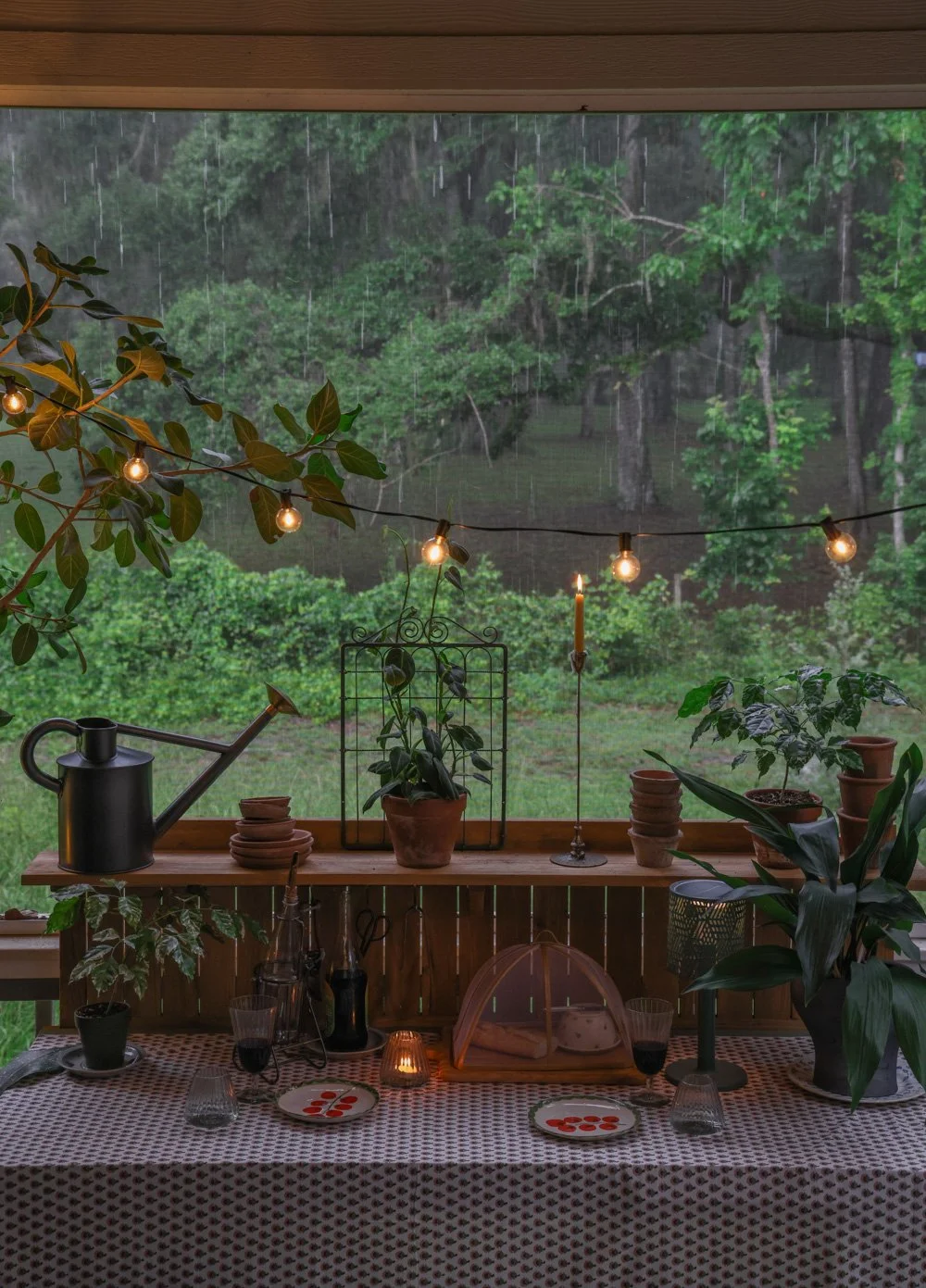
By day, this is a potting zone, largely open to the elements, but shaded from the hot sun via the reclaimed pine ceiling (and blissfully protected from the mosquitoes thanks to the screen). Come evening, this is a conversation bar — a spot where we can gather with neighbors and friends to connect and brainstorm without disturbing the kids in their shared bedroom off of the kitchen.
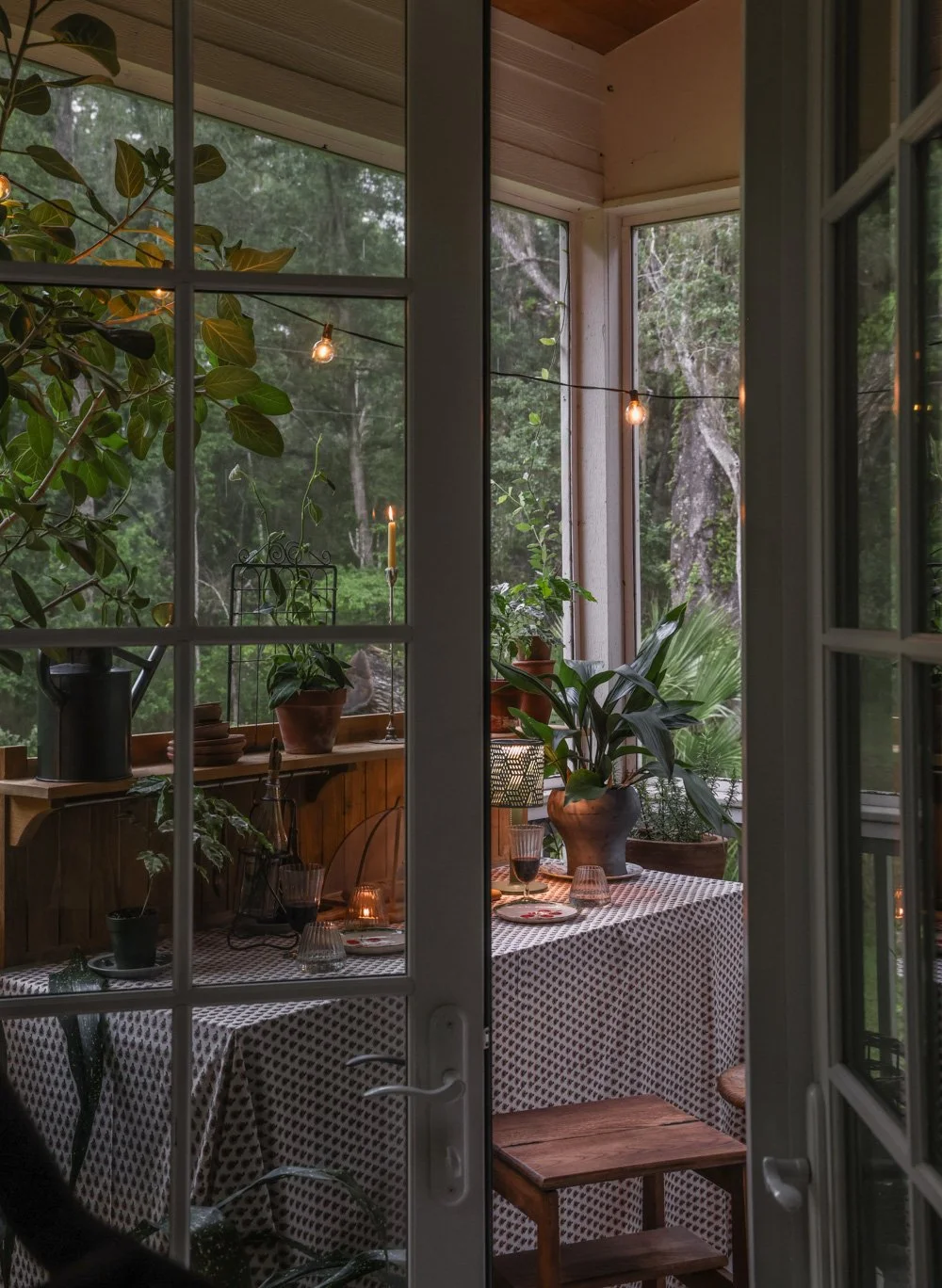
Above: Cotton Tablecloth + Stargazer Strands
As usual, this area is comprised of a mix of thrifted, hand-me-down, and repurposed items. Everything is supported brilliantly by an expandable recycled + reclaimed potting surface from Terrain. The table’s combination of two drop-leaf sides and a back rack with shelf make this design particularly friendly for smaller spaces in need of increased versatility. (It would be a wonderful piece for a deconstructed kitchen.)
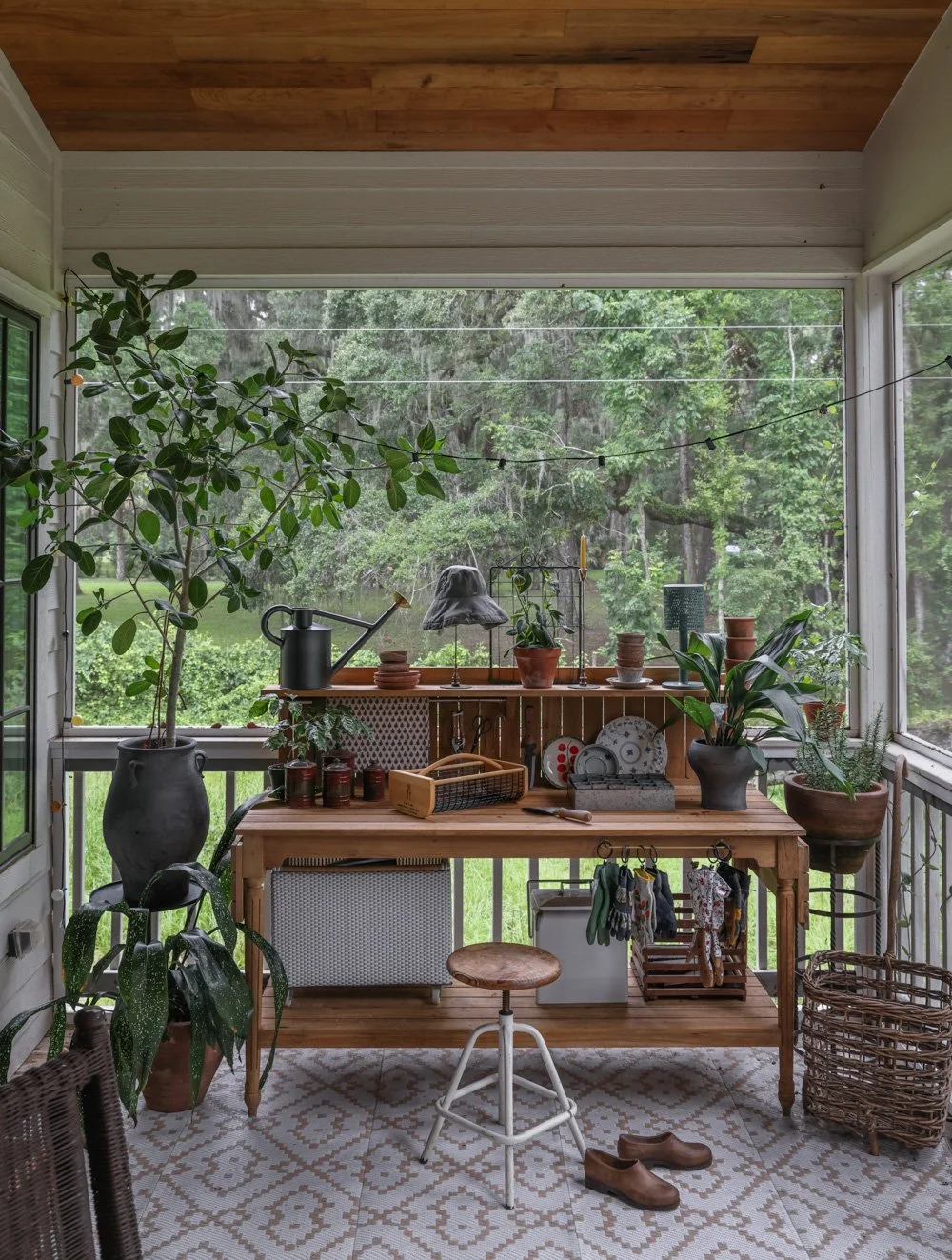
Above: Slip-on clogs (made from recycled materials) by an adjustable secondhand stool.
I customized the table by attaching a secondhand tension rod paired below the built-in shelf to create a spot for hanging tools and linens.
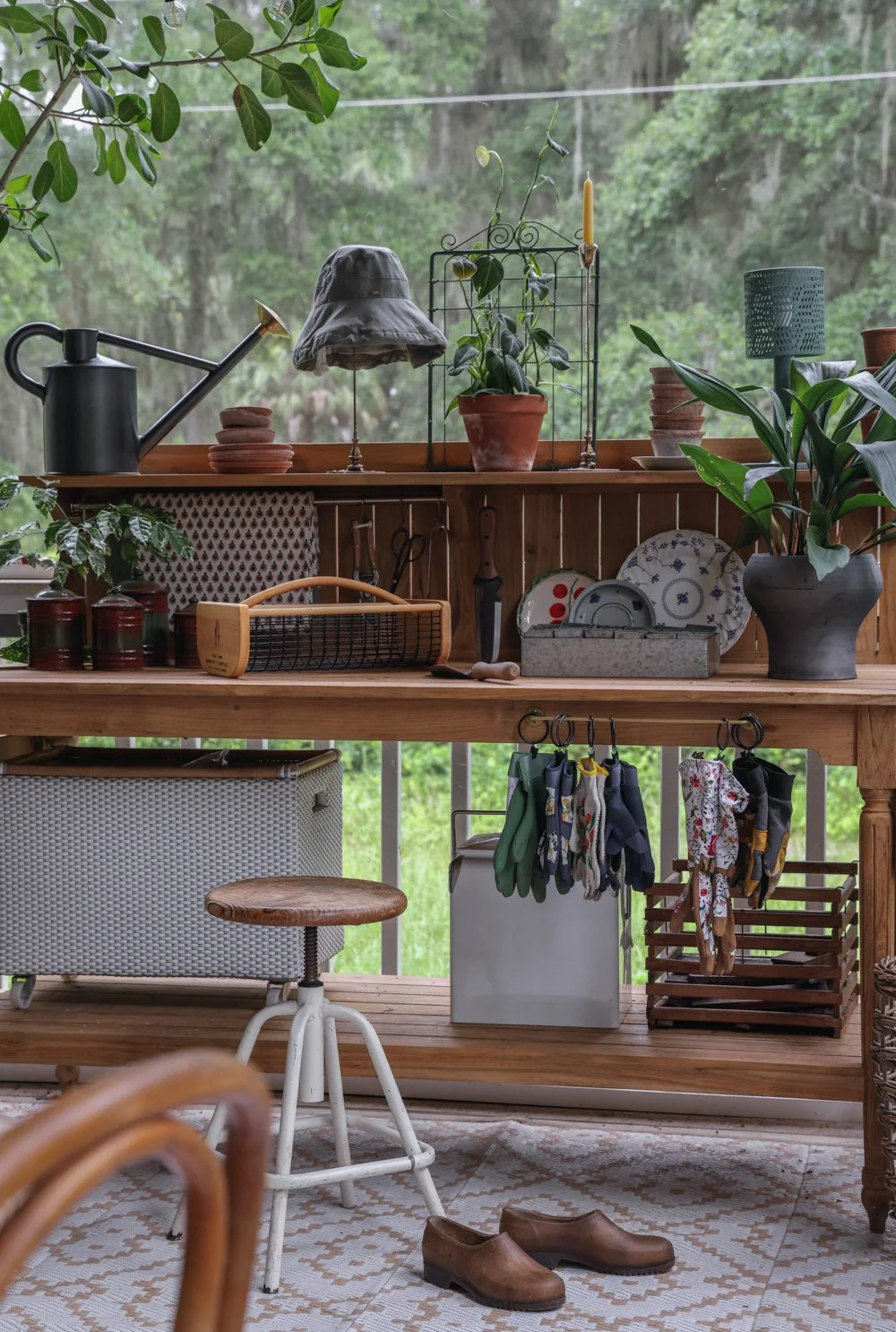

Above: Watering Can + Cotton Tablecloth
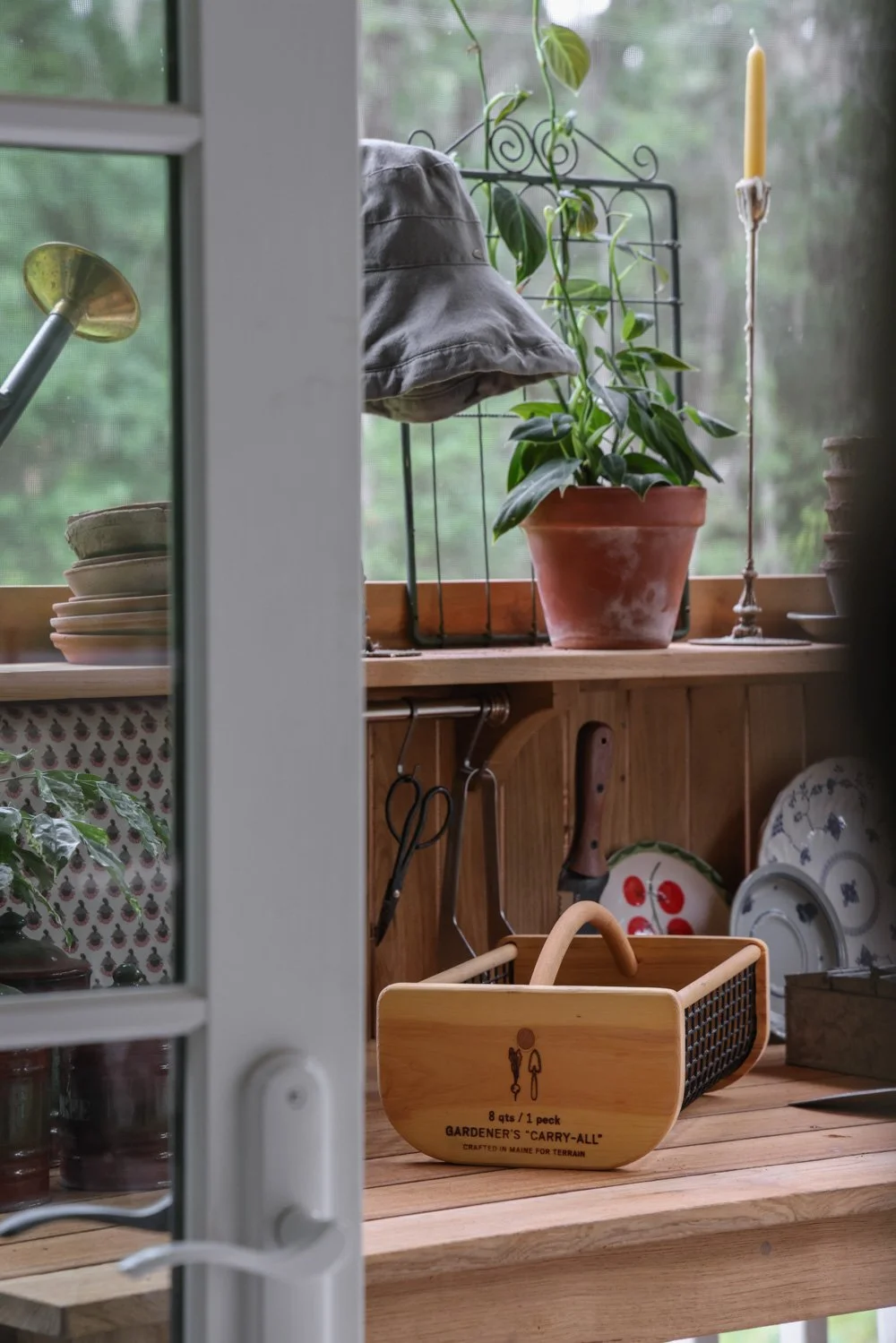
Above: Garden Carry-All Basket + Snips
I also added a small, thrifted towel rack with repurposed curtain clips to the face of the table for a spot for hanging our family’s gardening and work gloves.
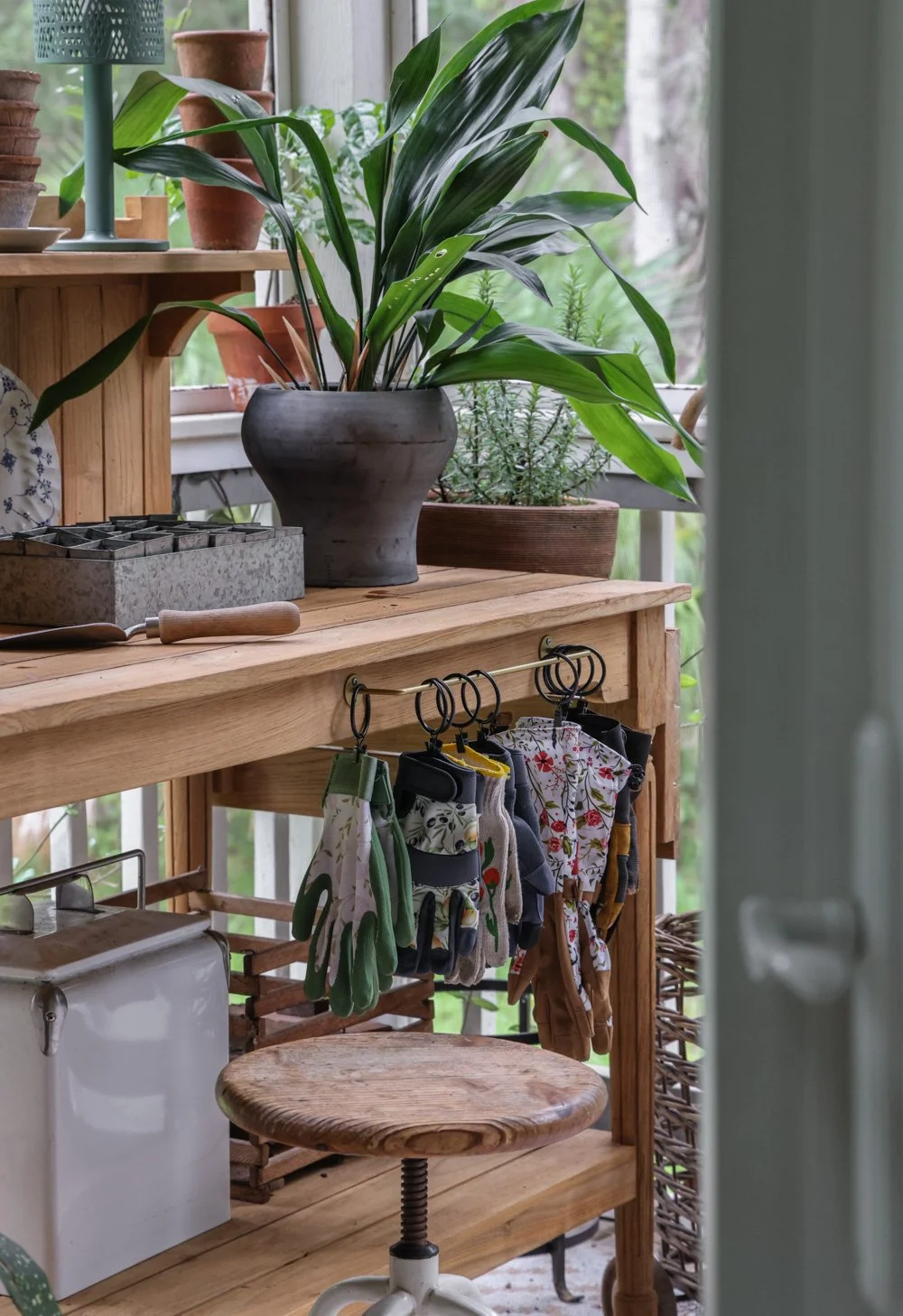
Above: Eartha Pedestal Planter and a thrifted towel bar turned into a rack for my Long Gloves and other garden + work gloves.
The end result is a spot that can easily transform from utilitarian work zone by day to a hosting zone by night, regardless of the weather.

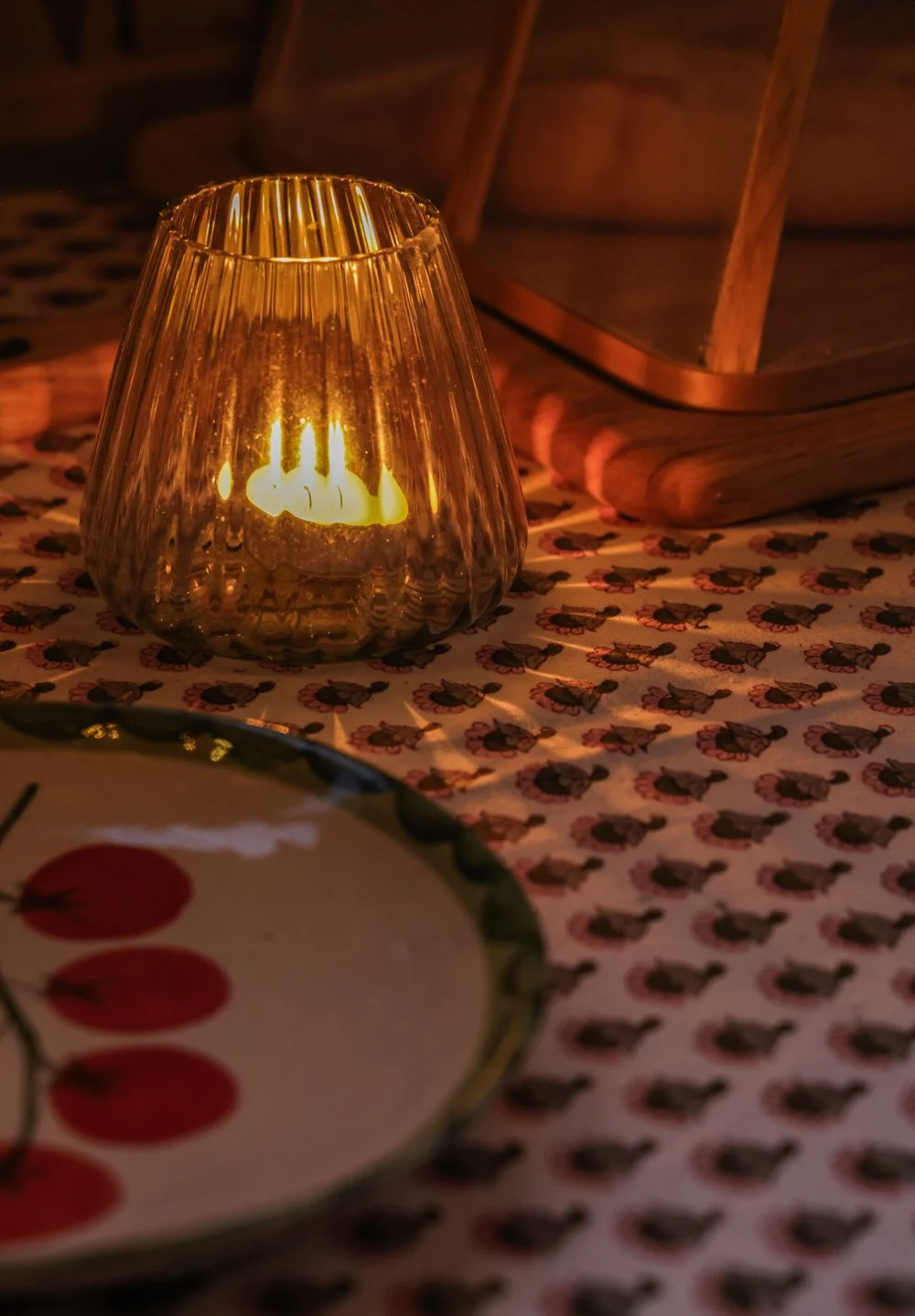
Above: Optic Glassware + Solar Lamp


Here’s to making every space count — inside and out.

Above: A Copper + Brass Tulip Sprinkler watering the upcycled garden space just beyond the porch.



Repurposing Project: Boot Rack Turned Stemware Storage
We don’t need a bigger space — we just need to creatively enjoy the space we have.
One of our little repurposing / upcycling projects for the Rightsizing in Real Time series in my newsletter was this secondhand boot rack turned stemware storage:

For me, this is a great reminder that most of the time we don’t need a bigger space — we just need to creatively enjoy the space we have.


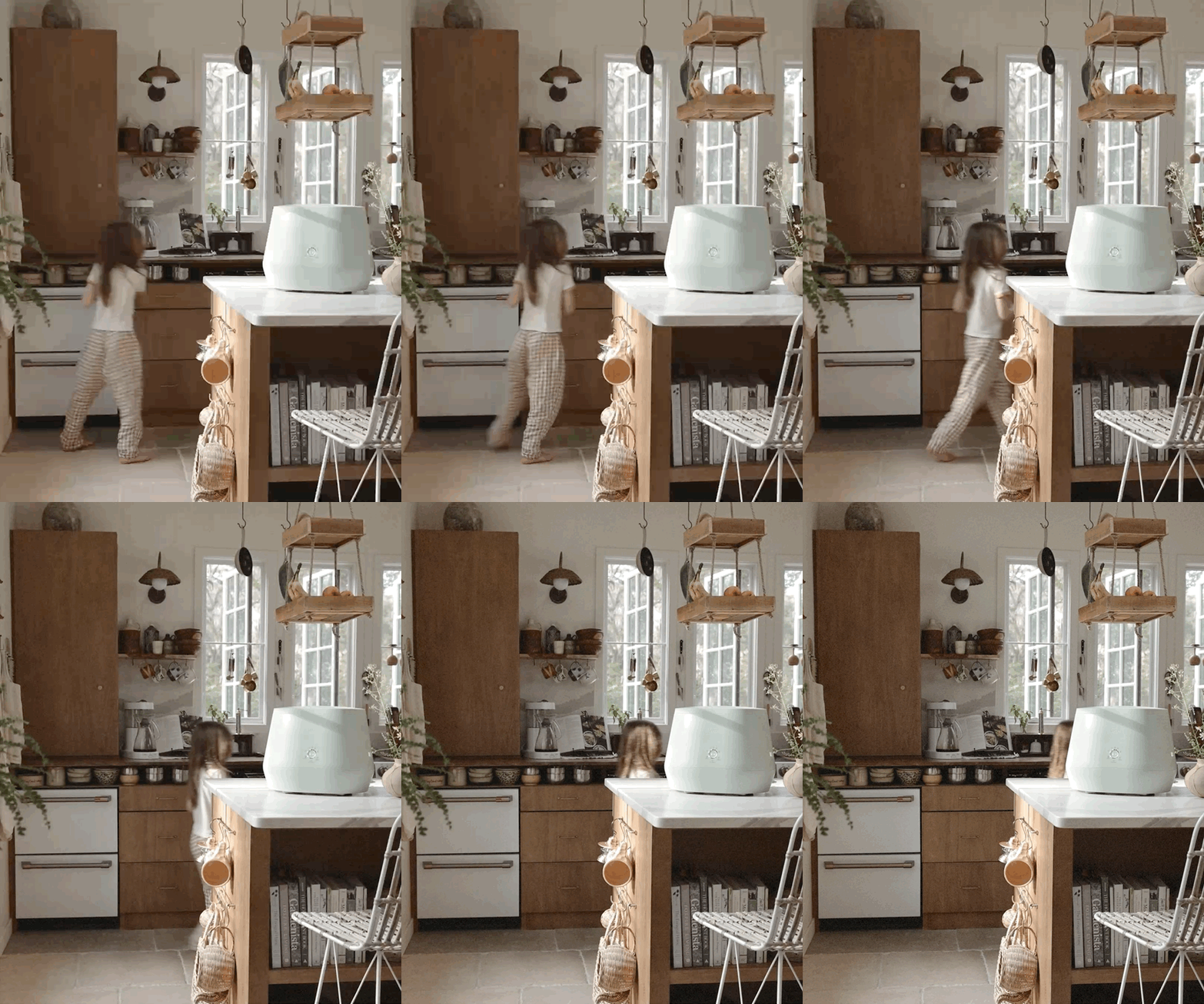
A Carbon Negative Kitchen Appliance with a Positive Impact on Soil Health
Imagine what our world would look like if, at the end of its life cycle, everything nurtured this magnificent earth as nature intended…
What if the world was waste-free? After all, there is no “waste” in nature — humans are the only species that create trash.

Food waste is one of the greatest contributors to climate change, and over 40% of that waste occurs at the household level.

But we have the ability to change this. Food waste is not really waste when it’s handled mindfully.

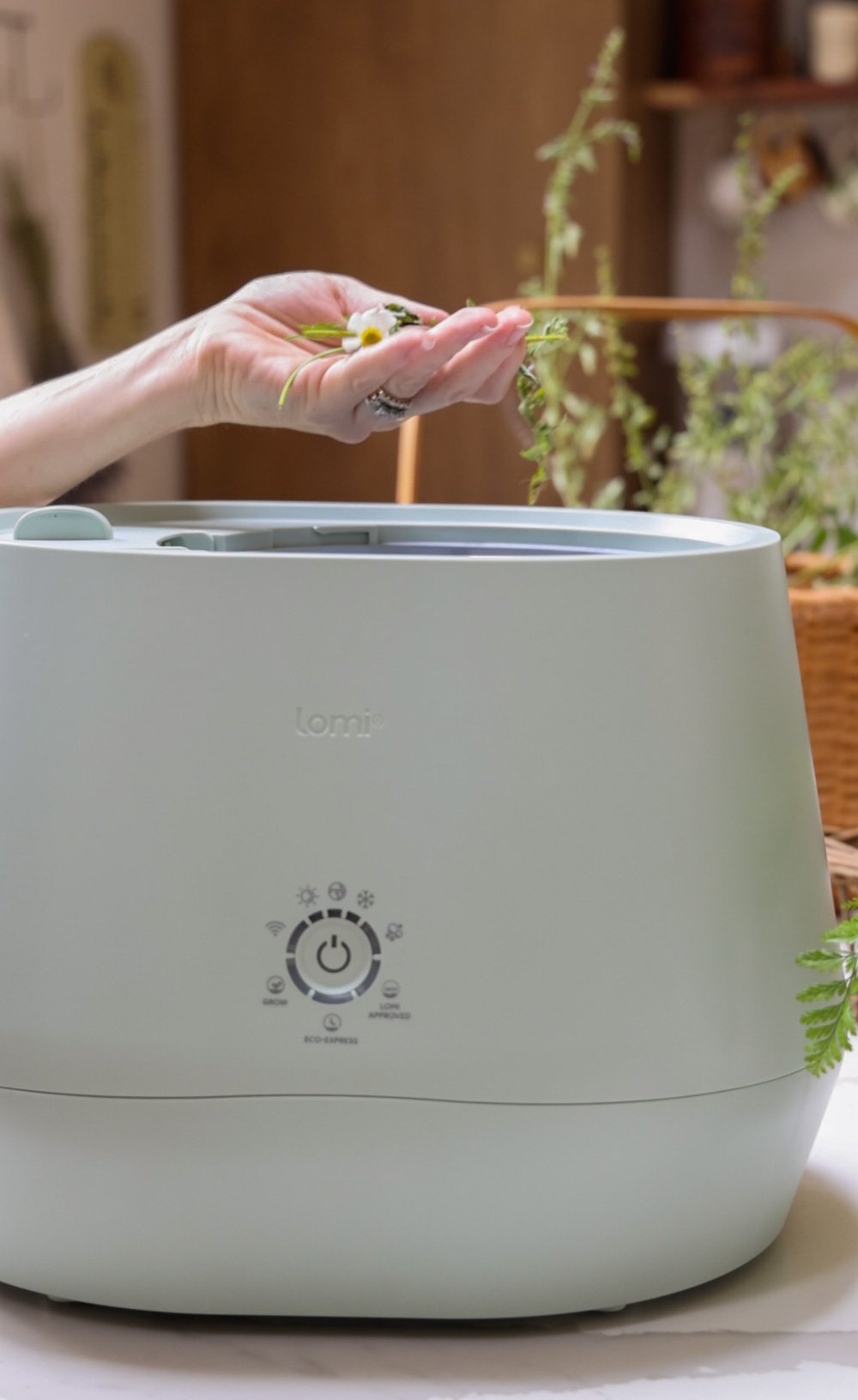
Instead, no matter where you live, food waste can become sustenance for nature, contributing precious natural resources back into the earth. Now, at the push of a button.

The Lomi Bloom is the only carbon negative appliance, and it can turn fruits, veggies, plant trimmings, yard waste, animal products, grains, and more into nutrient-rich plant food that supports healthy soil and its regeneration.


Lomi Earth — the result of Lomi’s “Grow” mode operating cycle— produces nutrient-rich, organic fertilizer that’s perfect to use on houseplants and gardens. When the Grow cycle is run with a LomiPod, the end result is packed with vital microbes to support plant health, and can also be sprinkled on lawns to improve soil health.

As we know, healthier soils store dramatically more carbon than degraded soils. When Lomi Earth is mixed with other soil and used to grow plants, the organic carbon in Lomi dirt is partially sequestered in soil and as plant matter. As such, not only are we able to avoid the harmful emissions of landfilling food waste, but we can also help sequester additional carbon.

Not only does Lomi Bloom reduce our carbon footprint and enhance our positive impact, it also rewards users in additional ways with every use. Via Lomi’s app, users can track their Bloom’s impact, and receive rewards like Lomi products and other useful, eco-minded items that can help us curb household waste.

Imagine what our world would look like if, at the end of its life cycle, everything nurtured this magnificent earth as nature intended…

Thank you to the wonderful folks at Lomi for supporting our small business by sponsoring this post. All opinions and photos are my own.

Repairing and Repurposing Clothing and Accessories
Post Summary: How repairing shoes and attending Moving Thread sewing classes forever changed my feelings on buying new in an era of climate crisis.
During last year’s winter, we discovered some water damage in the wall of our built-in bed. It wasn’t until months later— when fall rolled around— that we reached for our cold/wet weather boots and realized that half of our shoes had also been harmed by exposure to the moisture.

In evaluating the damage, we had a choice to make: either get rid of all 8 pairs and purchase just 2 or 3 new pairs in their place, or invest in repairing the sets.
As we’d recently learned that about 80+% of donations end up in landfills, we decided to spend on professional restoration. After all, one of my goals for 2020 is to repair and repurpose as many belongings as possible instead of acquire anything new, which is why I began taking sewing lessons— but more on that later in this post.

The repairs weren’t cheap, but they cost far less than replacing each pair, and probably the same price as buying 2-3 new styles. Plus we knew where our money was going; to skilled and friendly crafters who’ve been restoring goods here in West LA for nearly 4 decades.

In chatting with the team at Buster’s on Main Street in Santa Monica, I learned that not only do they repair boots, but they also work on all sorts of leather goods, handbags, luggage, zippers, dyeing and more.

I was eager to share that information, as I’ve seen mountains of bags, coats and suitcases pressed up against the glass in the nearest Goodwill, destined for who-knows-where, and I imagine that shoe repair shops in other communities are likely multi-service like Buster’s is.


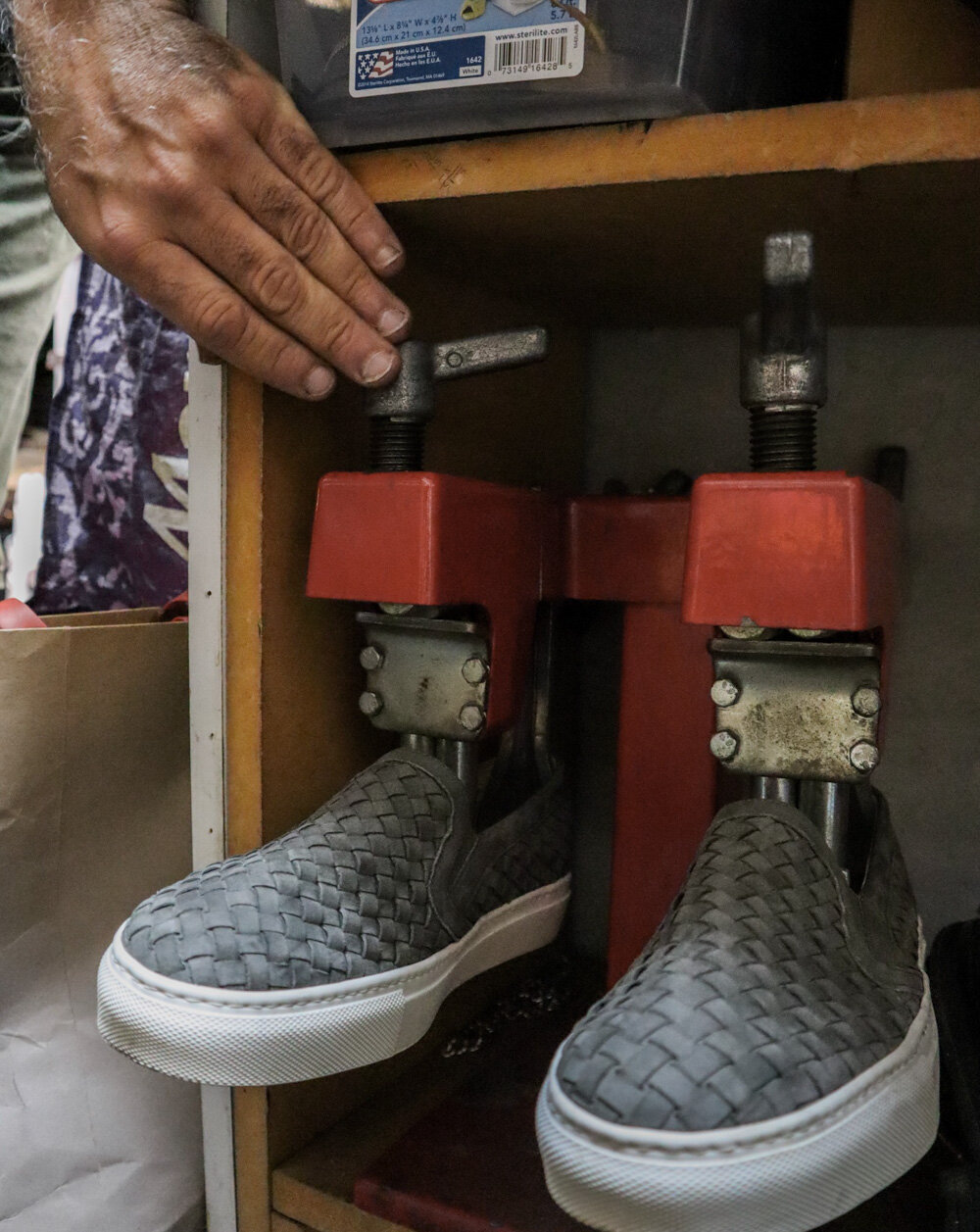


A month or so later when I pedaled the cargo bike over to collect our like-new boots, it was so satisfying to see them all ready to live our a second life, WITHOUT requiring manufacturing, shipping, and packaging like new shoes would have.
Inspired by this, I signed up for introductory sewing classes at Moving Thread. The classes have a maximum of 4 participants each, and are conducted within a beautiful home-studio space in Venice. Lead by Lissa, an expert who has been sewing and designing garments for over 25 years, Moving Thread offers intro and beginner workshops during which students can learn to make their own bags, and ultimately repair or alter an existing article of clothing.
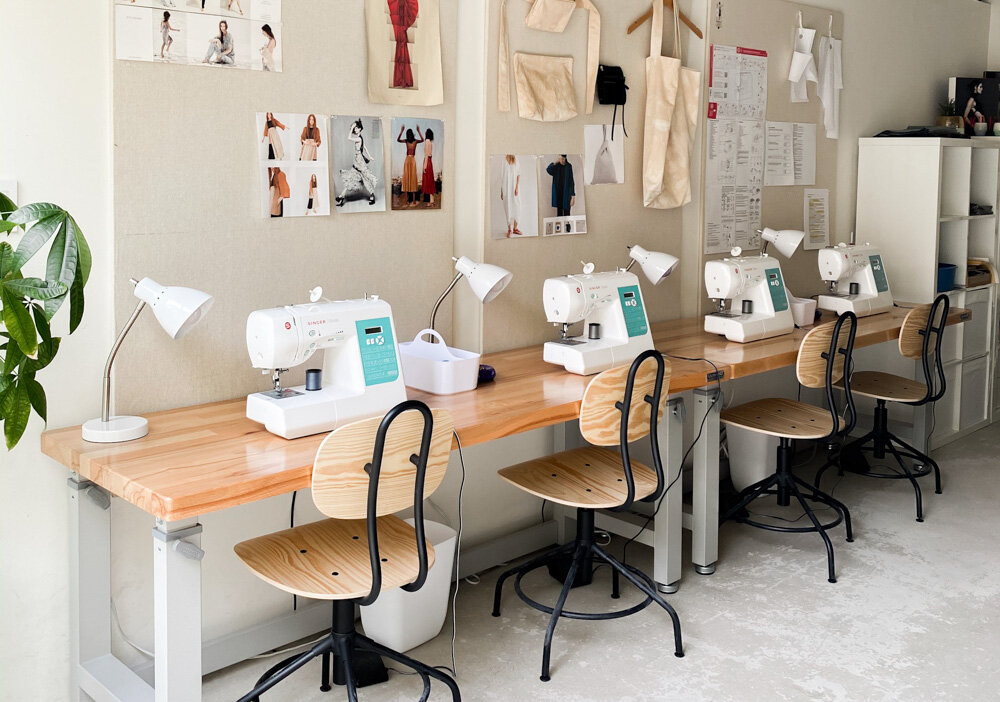
One of the things that struck me about Lissa’s mission was this statement from her website:
“Today, we could all have less. The fashion industry is one of the most polluting industries in the world and a massive contributing factor to global warming. A lot of change needs to be made to undo what we’ve already done but there are some small steps we, as individuals, can take. By repairing or making our own clothes and refusing to buy from companies that don’t do their part to improve our environmental standards is just one bit closer towards a cleaner Earth.”
I signed up immediately.

Moving Thread was one of the highlights of my holiday break. I’m eager to attend a few more classes, and then thrift a sewing machine of my own so we can begin to alter and repair our own clothes and repurpose linens around the cottage.

(On a fun side note, Lissa has a lovely outdoor shower, as well as a cargo bike similar to ours. I feel as though we were destined to meet and become close. She even attended my low waste holiday decor workshop at Big Red Sun, which was such a sweet surprise.)

So, while we’re still not one of those single-mason-jar-of-household-waste-per-year families, I’m determined to get there before it’s too late.

Forget the File Box
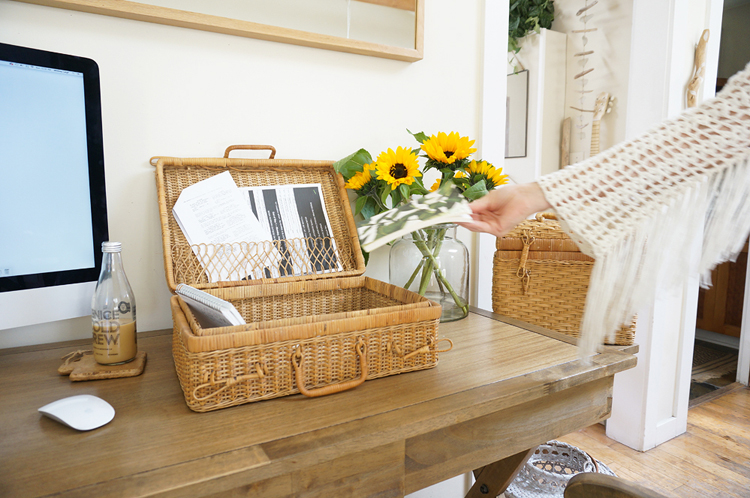
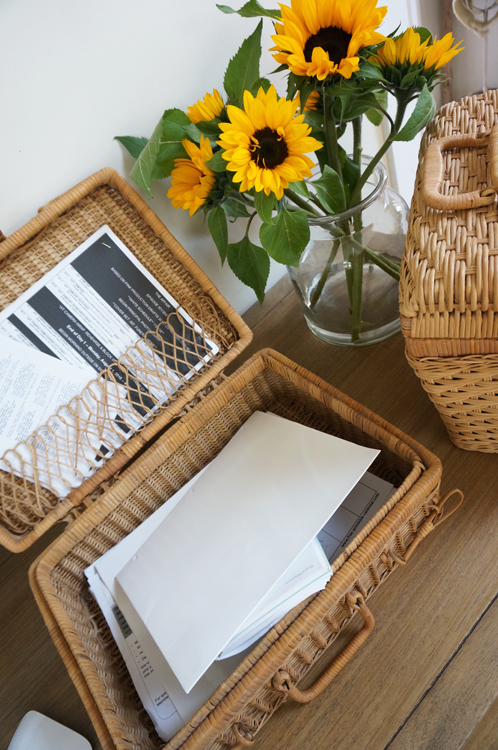
In a recent blog post, I provided tips on how to curb your daily paper clutter by regularly using a mini-scanner and organizing your files digitally. However, I didn't address one key issue: the leftovers. When living in a tiny space, what do you do with the paper files you cannot scan and HAVE TO keep? How do you maintain an uncluttered, beautiful, and yet practical home-office? The solution is simple-- repurposed picnic baskets:

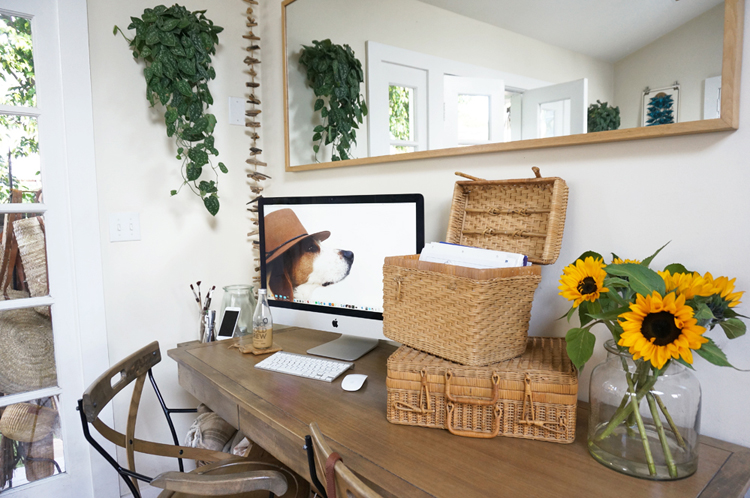
Bottom Basket: This horizontal design holds my current office paperwork.
Top Basket: This vertical format is the perfect filing solution for baby West's medical records & product safety information documents.
There are so many ways to get clever with necessary storage containers. In this case, think beyond the file box. In a small multi-use space where everything is visible, nothing will stab at your eyeballs like a plastic or metal file box that is not only ugly, but also a constant reminder of work. I chose picnic baskets because they're almost always large enough to house A4 paper and US-size folders, and because they're usually a similar color, so they're great to mix and match:
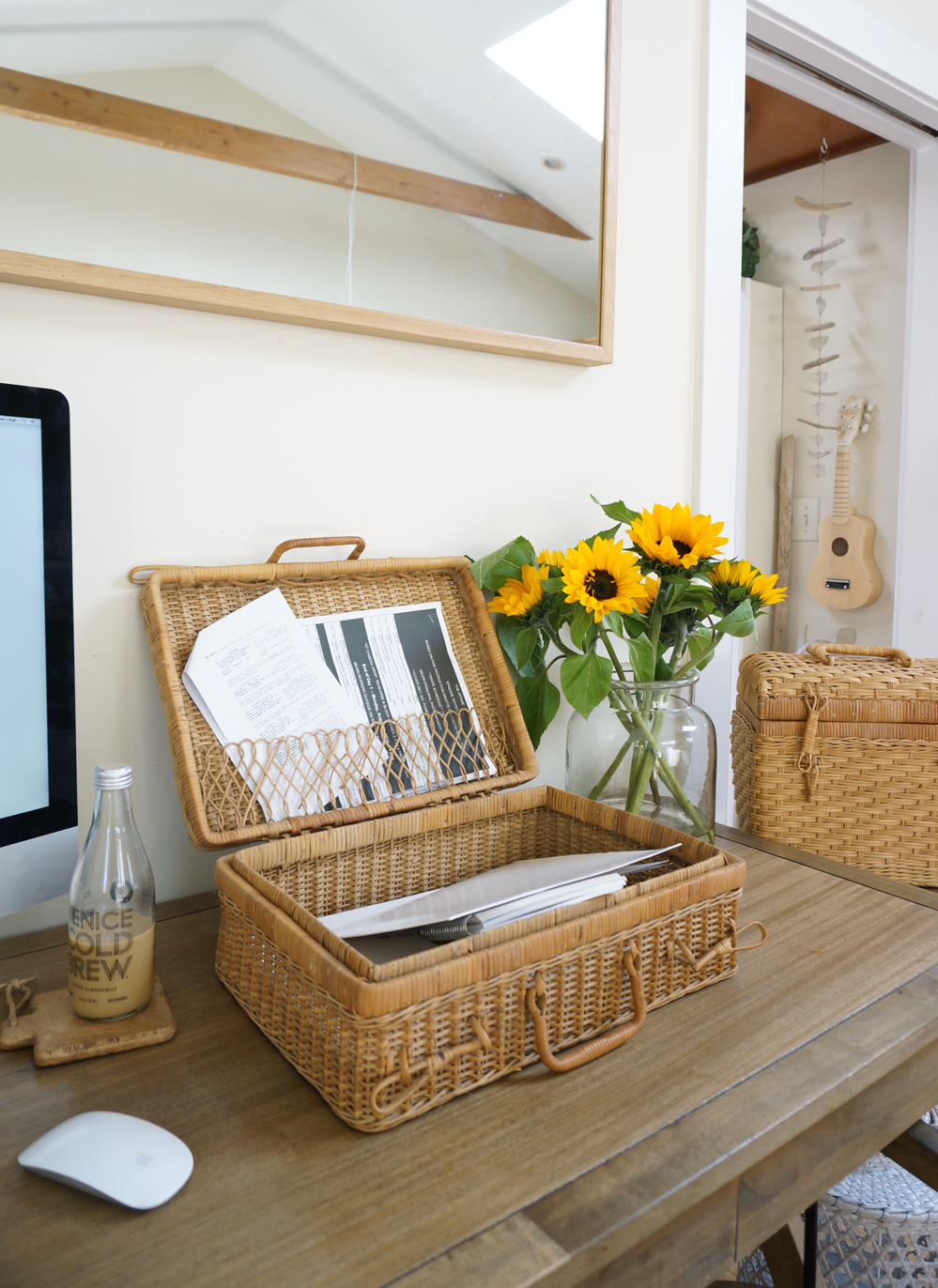
Both of these are vintage. I found the larger basket at The Mart Collective in Venice, and the other at Tower 20 in Santa Monica. Two of my favorite online shopping resources for vintage cases like this are ETSY and Maven Collective.
I love that I can leave these file boxes open and in use for the entire workday without making the house feel like a traditional office. You'll be amazed at what a difference little details like this can make in your little home.
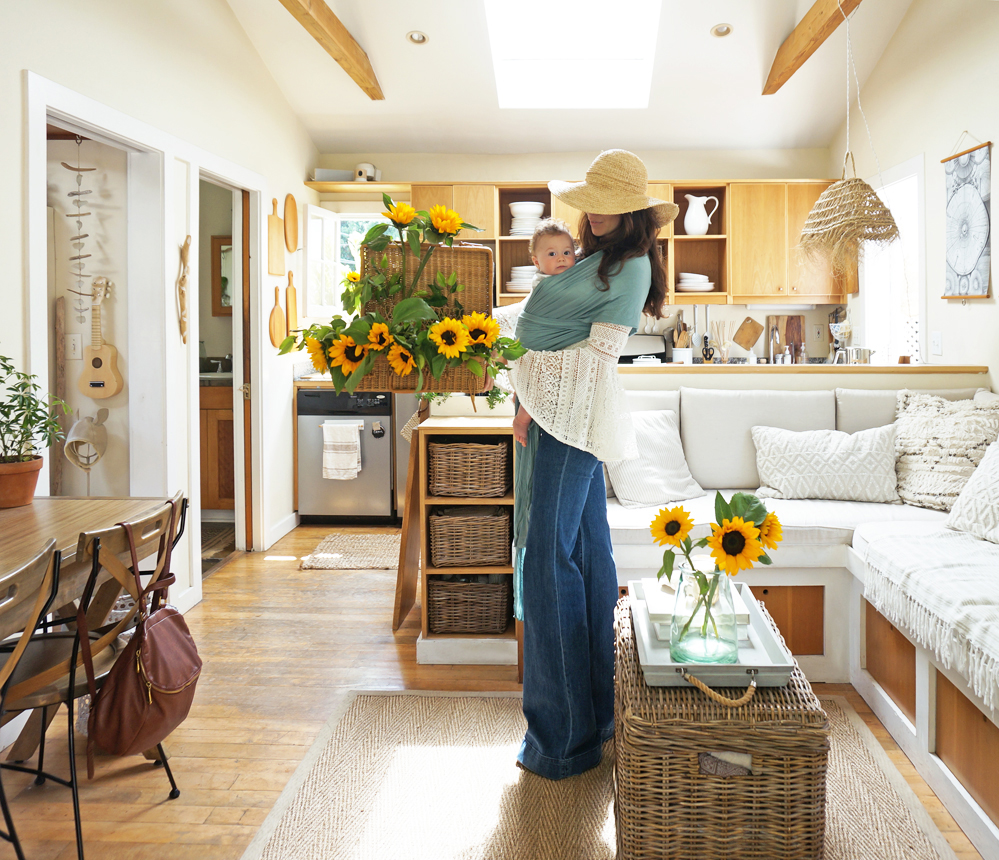
Storing your baskets on the floor? Make sure to select pieces that are stackable. Stowing yours up high in a closet? Pick a format that's slender enough to slide out easily when you need it. There's a never-ending and diverse array of designs out there-- enjoy finding what works for YOUR small space!