
Slow Fashion: Footwear
One of my goals for 2020 was to learn more offline by taking classes, participating in workshops and reading the books that had been gathering dust on our built-in shelves or at the library.

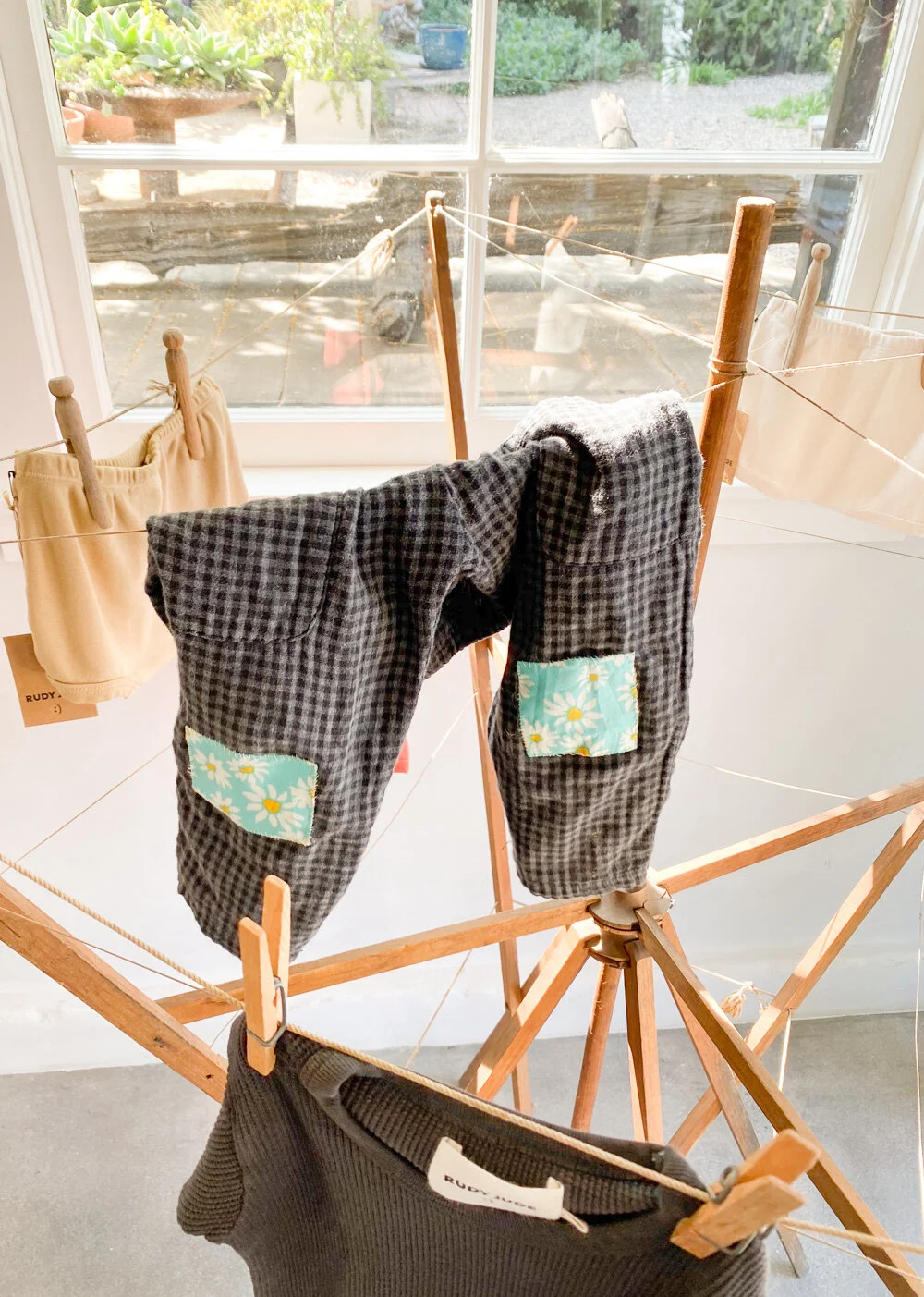
On the the topic of slow fashion, I started by devouring the book Fibershed (HIGHLY recommended), and signing up for sewing classes at Moving Thread. I followed this up with clothing repair workshops at R[eco]ntained and Rudy Jude with Adam.


I also subscribed to Aja Barber’s Patreon, so while online I’m also continuing the my sustainable fashion education.
But I was so curious about shoes, too. What does the shoemaking process entail? And if most “vegan leather” is plastic, how do we approach leather products and find life-long pieces that are ethically crafted?

(I should note here that while our family isn’t vegan, we are vegetarian and we eat an almost entirely local, plant-based diet. Even the dogs no longer eat meat. We do, however, still get eggs from a local regenerative farm, Apricot Lane Farms.)
I signed up for a sandal making workshop at These Hands Maker’s Collective, which offers a diverse array of classes.

This one was conducted by Stace Fulwiler, who is driven by sustainability and a ‘less, but better’ approach.

She teaches sandal making workshops in an effort to revive and demystify the lost art of sandal making, and to enable others to reclaim the joy of using their own two hands to finish a project.


Since taking the class, I haven’t been able to look at a pair of shoes the same way. And the only new pair I’ve introduced to my collection (other than the fantastic sandals I made that day) are handmade clogs by Bryr Studio.

Bryr Studio clogs are made by hand in their San Francisco workshop. Their leathers are sourced from US tanneries, using ecological manufacturing processes, while their bases are hand routed out of solid wood that’s lightweight and strong. It’s Bryr’s artistry and style that caught my eye, and their comfortable and simple yet high-quality, durable designs that made me a repeat customer. (These are my second pair. I wish I’d had them for my wedding. Sigh.)
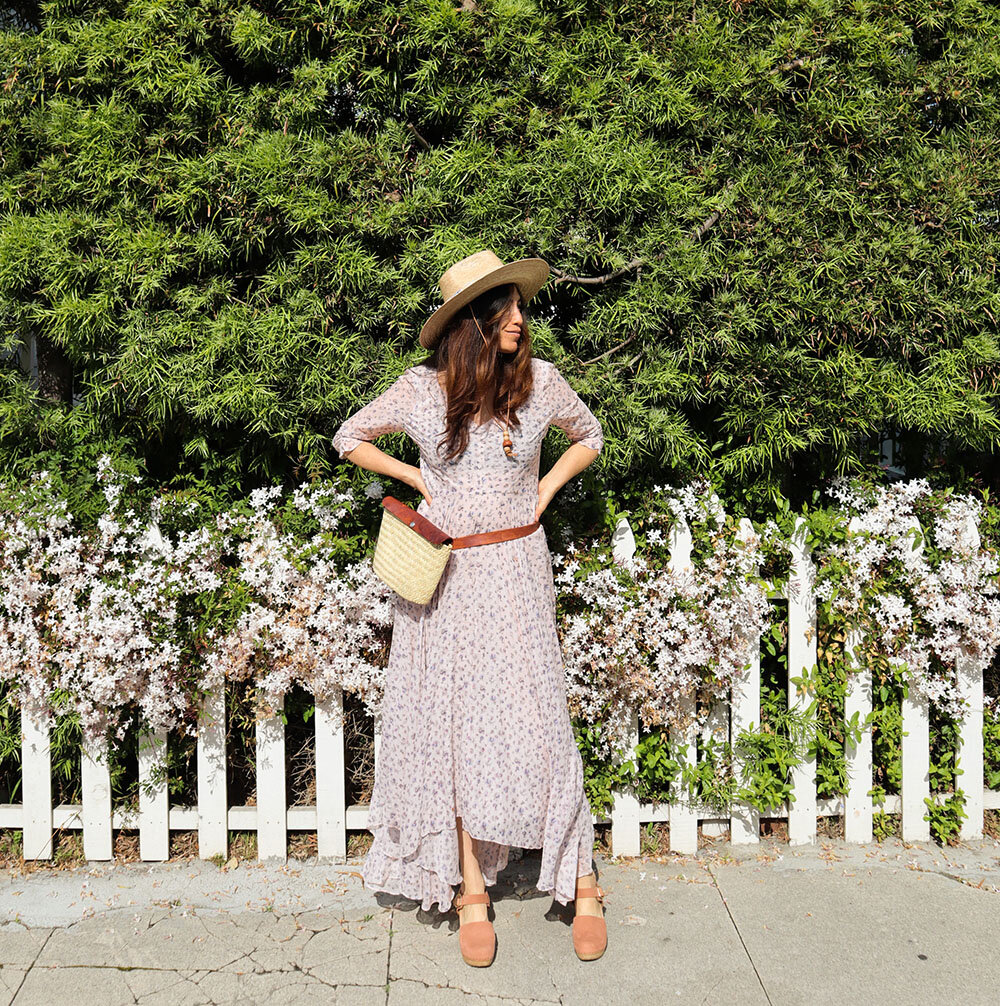
I hope to look back at these photos in the years to come and still have the same pieces in regular use. (As I discussed in this recent post, newness is not the point.)
“Vote with your money. Most important, eliminate waste. Apply the old-fashioned adage of reduce, reuse, recycle. When we need to buy things, our choices should be informed…”
- The Future We Choose: Surviving the Climate Crisis

Note: The dress featured in this post is a dress from years ago, and is not a sustainably made piece. But, since it’s in my wardrobe, I’ll wear it until it falls apart. Much like plastic, I believe it does no good to just chuck our unwise past purchases in a donation box, as we now know that roughly 84% of donations end up in landfills. If I’ve got it, I’m going to use it. And once something truly needs replacing, I’ll buy smarter.

Roundup: Small Space Shoe Storage
Over the six months that we rented the front cottage, West began walking. Finding a place for his shoes was not an issue-- we had tons of open storage over there. (We don't own nearly enough to fill 800 sqft.) But now that we've given up the front house and are back to sharing under 400 sqft, I needed to find a solution for our toddler's footwear.
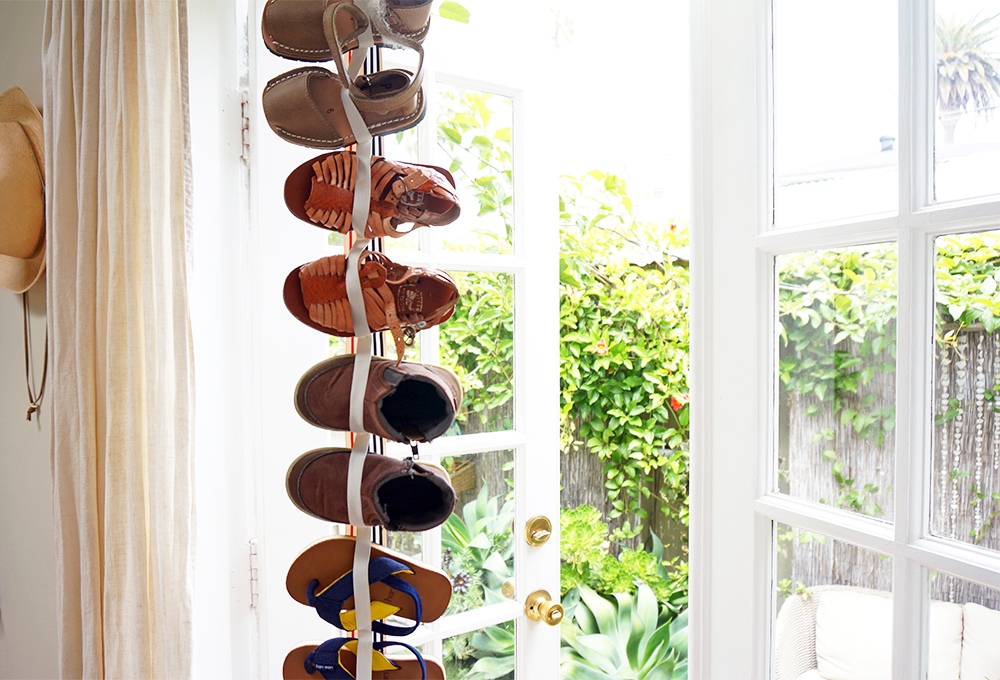
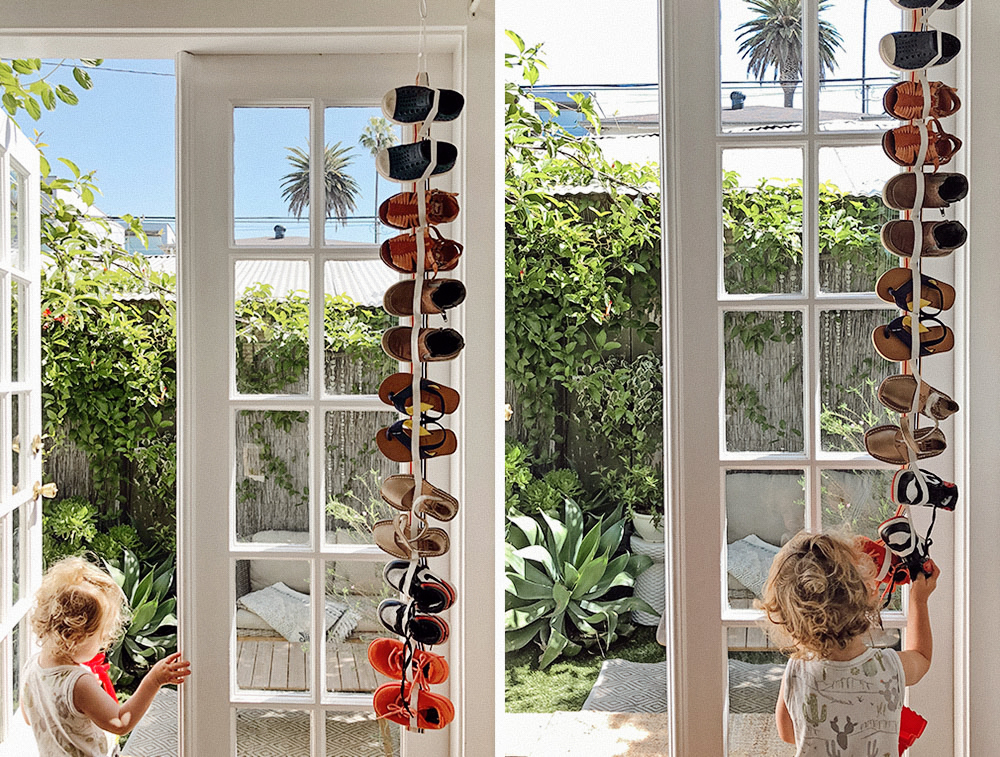
Initially we kept his footwear in a single canvas basket up on the top shelf of the closet. But West seems to enjoy picking out his own clothing and accessories, so I wanted to give him the opportunity to easily do so. I found a simple, customizable, handmade shoe storage solution for toddler shoes (and even baby shoes) via ETSY, and it works like a charm. It takes up no floor-space and no shelf-space, and we can easily relocate the strand to the closet when we prefer for it to be out-of-sight:
Adam and I stash our shoes within the built-in cubbies under the couch. The following images are a few years old (thus the old couch cushions and overflowing throw pillows), but the concept is clear:
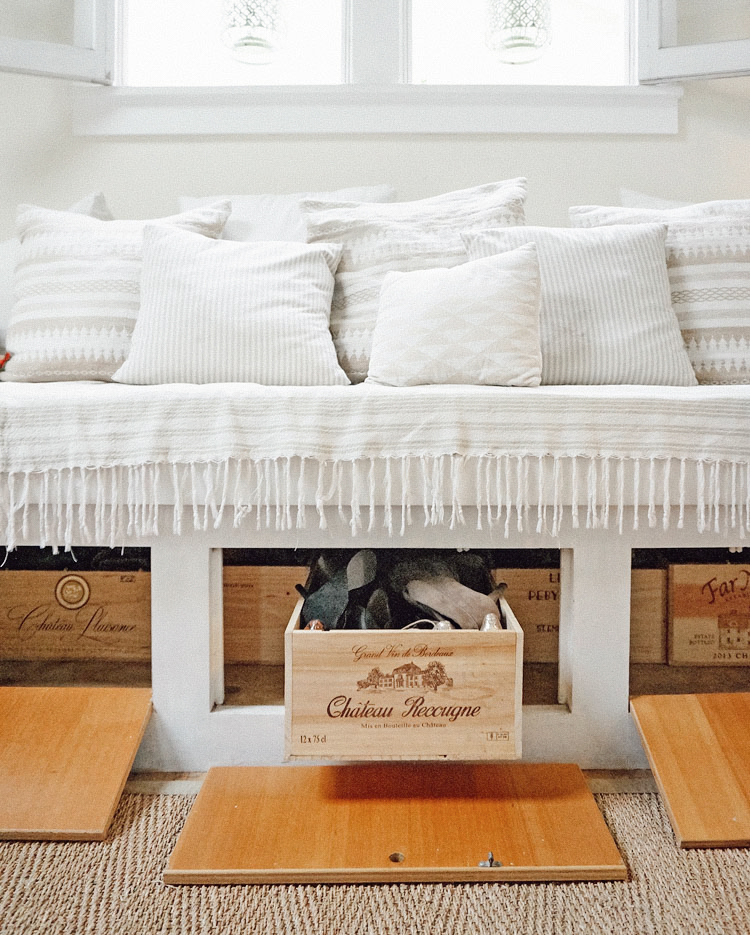
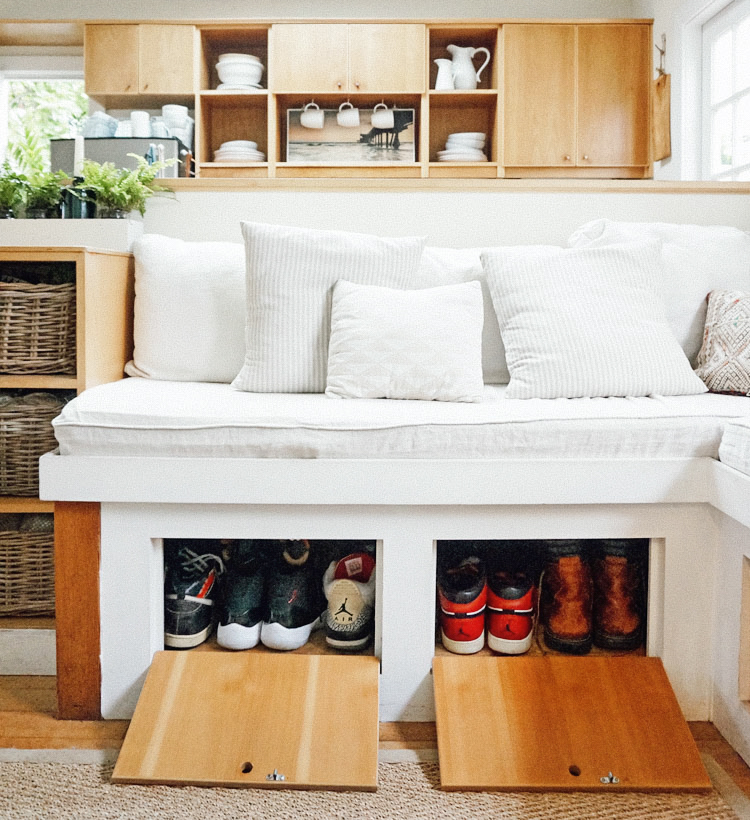
For those of you in need of shoe organization solutions in your small home, I've rounded up a few diverse options, below. But remember-- before you craft or buy storage, try downsizing your collection first! (Reading My Tea Leaves just posted a wonderful entry about responsible decluttering, which you can enjoy here.)
