
Repairing and Repurposing Clothing and Accessories
Post Summary: How repairing shoes and attending Moving Thread sewing classes forever changed my feelings on buying new in an era of climate crisis.
During last year’s winter, we discovered some water damage in the wall of our built-in bed. It wasn’t until months later— when fall rolled around— that we reached for our cold/wet weather boots and realized that half of our shoes had also been harmed by exposure to the moisture.

In evaluating the damage, we had a choice to make: either get rid of all 8 pairs and purchase just 2 or 3 new pairs in their place, or invest in repairing the sets.
As we’d recently learned that about 80+% of donations end up in landfills, we decided to spend on professional restoration. After all, one of my goals for 2020 is to repair and repurpose as many belongings as possible instead of acquire anything new, which is why I began taking sewing lessons— but more on that later in this post.

The repairs weren’t cheap, but they cost far less than replacing each pair, and probably the same price as buying 2-3 new styles. Plus we knew where our money was going; to skilled and friendly crafters who’ve been restoring goods here in West LA for nearly 4 decades.

In chatting with the team at Buster’s on Main Street in Santa Monica, I learned that not only do they repair boots, but they also work on all sorts of leather goods, handbags, luggage, zippers, dyeing and more.

I was eager to share that information, as I’ve seen mountains of bags, coats and suitcases pressed up against the glass in the nearest Goodwill, destined for who-knows-where, and I imagine that shoe repair shops in other communities are likely multi-service like Buster’s is.


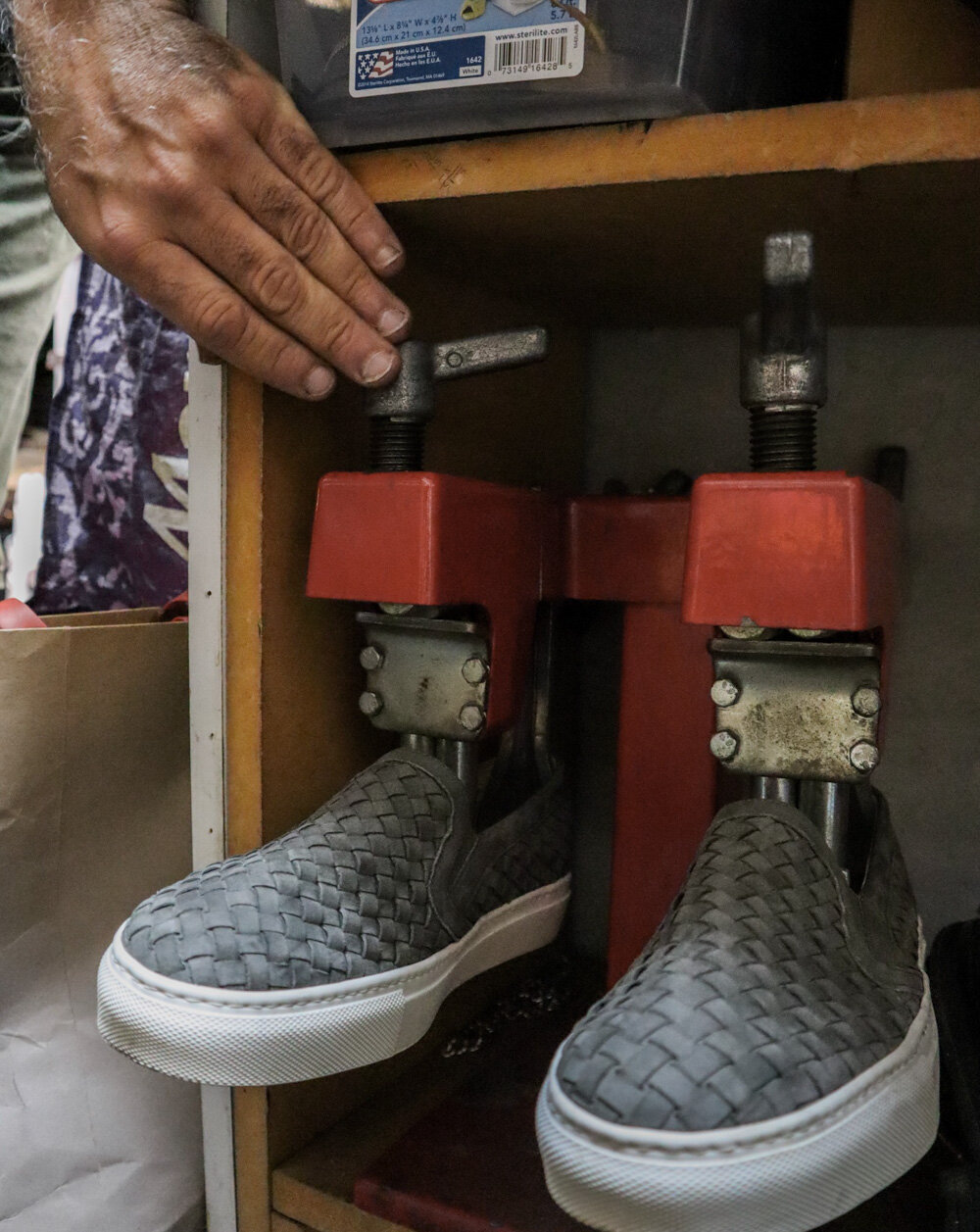


A month or so later when I pedaled the cargo bike over to collect our like-new boots, it was so satisfying to see them all ready to live our a second life, WITHOUT requiring manufacturing, shipping, and packaging like new shoes would have.
Inspired by this, I signed up for introductory sewing classes at Moving Thread. The classes have a maximum of 4 participants each, and are conducted within a beautiful home-studio space in Venice. Lead by Lissa, an expert who has been sewing and designing garments for over 25 years, Moving Thread offers intro and beginner workshops during which students can learn to make their own bags, and ultimately repair or alter an existing article of clothing.
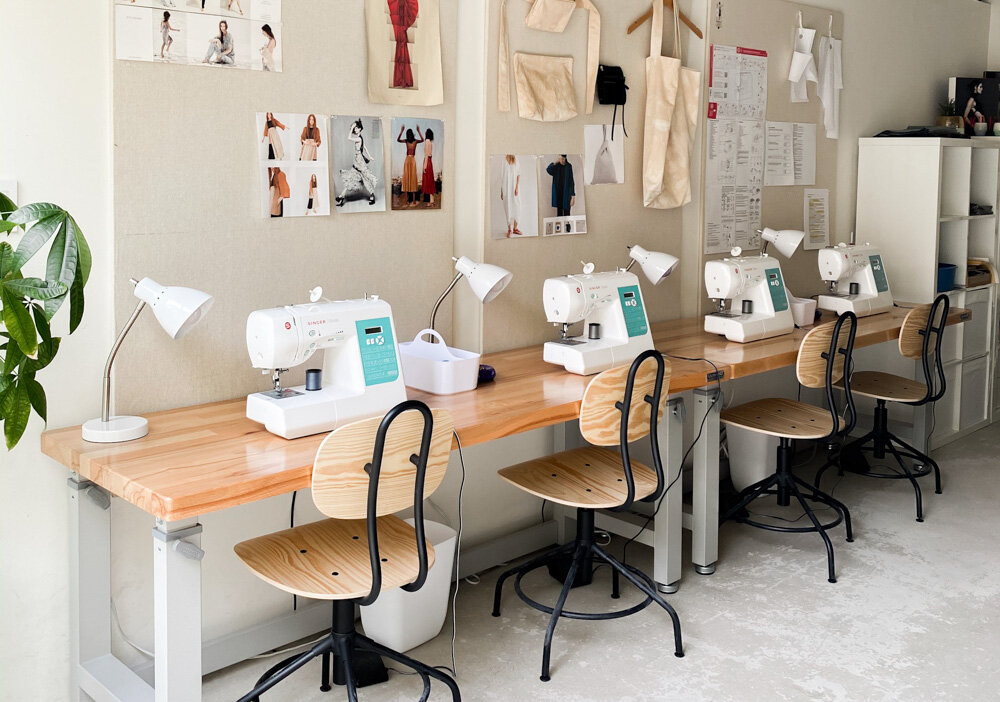
One of the things that struck me about Lissa’s mission was this statement from her website:
“Today, we could all have less. The fashion industry is one of the most polluting industries in the world and a massive contributing factor to global warming. A lot of change needs to be made to undo what we’ve already done but there are some small steps we, as individuals, can take. By repairing or making our own clothes and refusing to buy from companies that don’t do their part to improve our environmental standards is just one bit closer towards a cleaner Earth.”
I signed up immediately.

Moving Thread was one of the highlights of my holiday break. I’m eager to attend a few more classes, and then thrift a sewing machine of my own so we can begin to alter and repair our own clothes and repurpose linens around the cottage.

(On a fun side note, Lissa has a lovely outdoor shower, as well as a cargo bike similar to ours. I feel as though we were destined to meet and become close. She even attended my low waste holiday decor workshop at Big Red Sun, which was such a sweet surprise.)

So, while we’re still not one of those single-mason-jar-of-household-waste-per-year families, I’m determined to get there before it’s too late.
The Cottage Bath
Lately, we've received numerous requests for photos of the Cottage bath. While the room is actually larger than you might think, it's designed in a way that makes it tough to photograph, meaning we have very few images available:
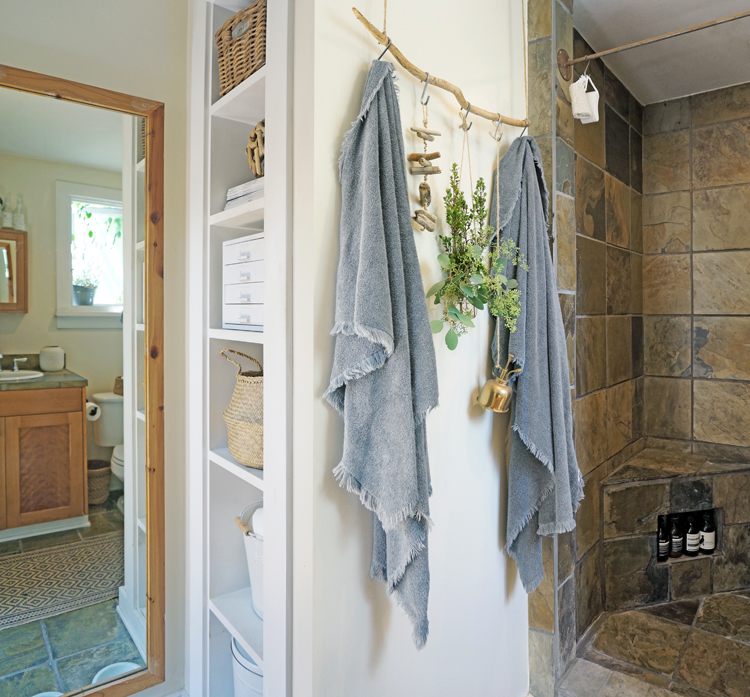
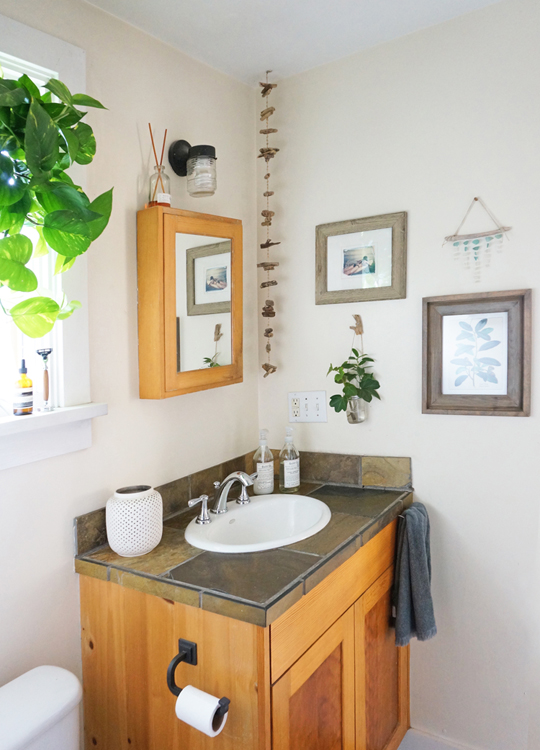
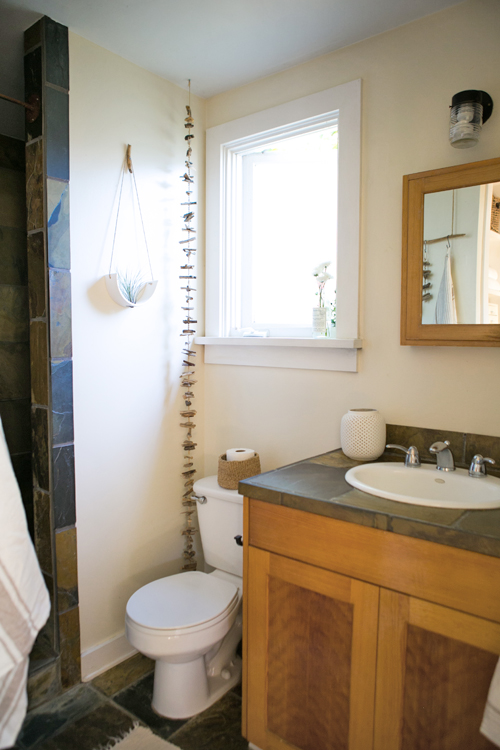


I'm often asked how we keep the bathroom organized and uncluttered, given its small size. Here are some of my top tips:
Only buy what you REALLY need:
I know this sounds basic, and it is. But controlling what you bring into your home is the best way to avoid accumulating clutter and wasting your money. We have ONE shampoo dispenser. ONE pet wash. ONE body wash. Etc. You don't have to come up with creative storage solutions when you don't have too much to store in the first place!
Upcycle:
I keep my makeup in an old metal hardware drawer set that I found on ETSY (reference: photo #7). I spray-painted the box, applied liners to the base of each drawer, and used the original metal hardware organizers within the drawers to keep my palettes and tools separated and easy to find.
Functional decor:
If you have limited cabinet space, try organizing your must-have items (such as spare toilet paper, extra cotton, etc.) in containers that fit with your style-- that way you can keep them out on display as functional decor. For example, we stash our extra bath goods in a white metal mop bucket from West Elm.
Save counter space:
Limited surface space? Try organizing your jewelry in slim hardware drawers. They come in varying sizes and depths, and are easy to stash in cabinets and next to sink U-bends. I purchased one like this years ago, which I keep in the vanity in front of our spare towels and travel pouches. It not only saves us counter space, but it also saves us time. This organizer helps me expedite my out-the-door routine on a daily basis, as I rarely have to untangle chains, and I don't have to sift through pouches to find the item(s) I'm looking for.
Let Go:
Don't let expired bottles, nearly-empty beauty products, and samples you've never used clutter up your limited space. Routinely clean out your medicine cabinet and drawers. Donate extra products to your local community housing corp or homeless shelter.
DIY:
Save money and get creative! Try making your own racks and/or curtain rods. Instead of buying a standard metal towel rack, I opted to craft one of my own. All it required was jute twine, S hooks (to hang towels and accessories), screw eyes (to secure the unit into the ceiling), and a wooden branch I found at my sister's wedding in Idaho. My good friend Lindsay over at Casa Joshua Tree did the same thing while renovating her house in the desert, and look at how great it turned out:

Our bathroom is a little too long for a standard bathmat to cover the necessary floor space, but it's definitely too small for two throws or a larger area rug. I searched Etsy and easily found alternatives to typical bathmats that have all worked beautifully over the years.
Lastly, for some strange reason, there is a recent story circulating that claims the Cottage is a converted garage or guest unit. That is inaccurate. While our home has been updated over the decades, it has always been its own free-standing house, consisting of a main room (including a kitchen), a bedroom, and a bathroom. So no-- we did not have to add the bathroom to our home. The Cottage was one of four identical, neighboring houses built in the 1920s. Three of those four are still standing today.
Photos by Whitney Leigh Morris & Monica Wang Photo.