
Manageable Home Learning
Like millions of Americans right now, we are exhausted.
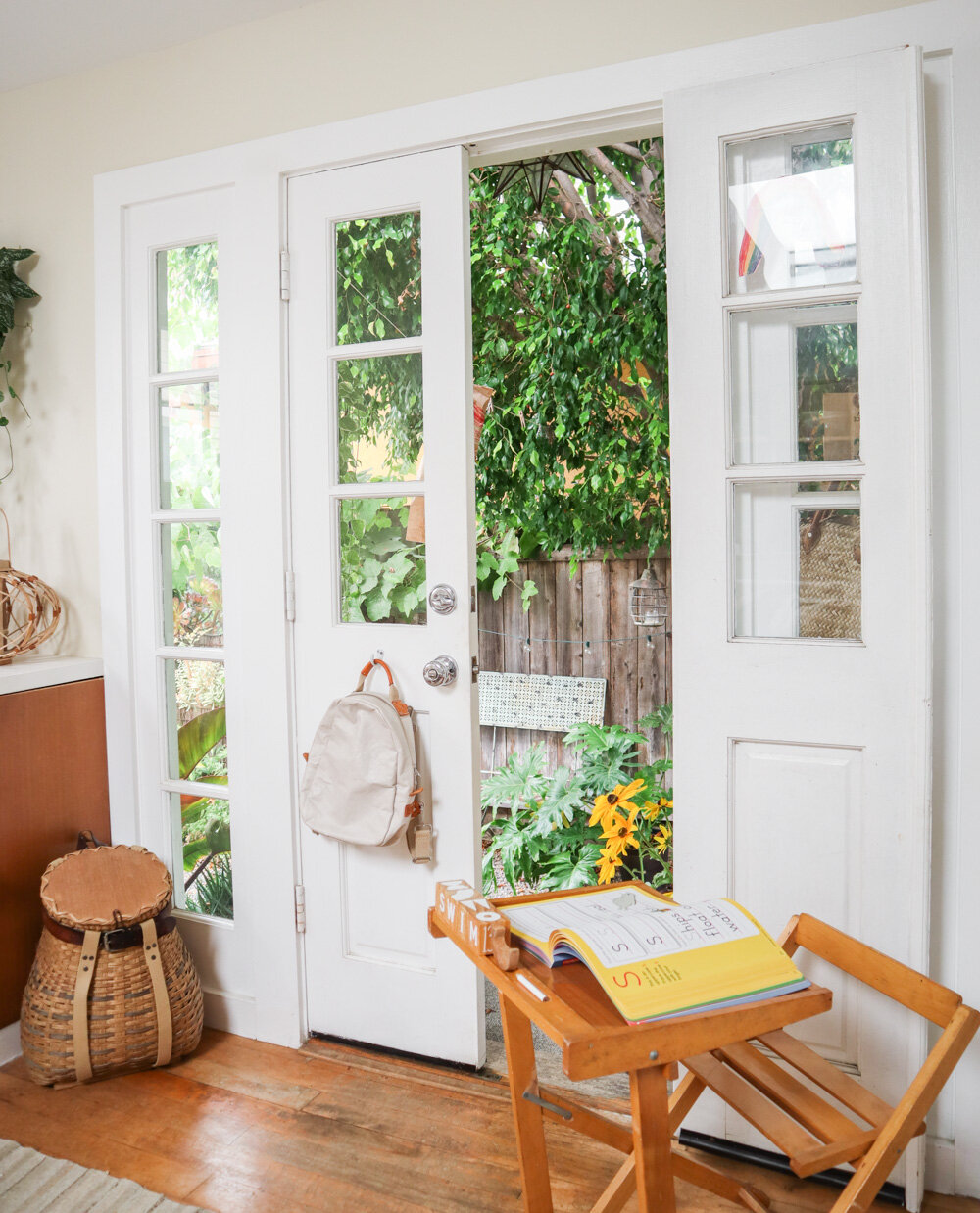
We are fortunate for countless reasons, and we are grateful for even more. Still, we are simply worn down.
Adam and I don’t want West to feel the weight of our fatigue.
At almost 4 years old, he’s ready for some semblance of schooling. But due to the ever-rising cost of pre-school in Los Angeles, coupled with the Covid-19 rates throughout the city, we are not sending our child to classes in the foreseeable future.

In order to give West a preschool-like feeling at the start of the weekdays, Adam and I have been packing themed lessons together at night for our little one to discover and explore the following mornings.

Spoiler alert: We’re not acing it as parents, folks. These are (very) low-lift lessons. I’m trying to be forgiving of such shortcomings, as we’re trying to run our small business in a recession, navigate family life in a big city during the pandemic, and attempt to figure out some major life changes and decisions (more on that later).

Just like with my office, we create a pop-up school space filled with workbook pages (usually from Highlights for Children), books, activities, and tools that support the morning’s theme. The theme is always something very general— like autumn, swimming, space, plants, etc. The obtuse nature of the themes helps us keeps things flexible, and prevents us from having to buy anything new in order to bring a fresh topic to life every day.

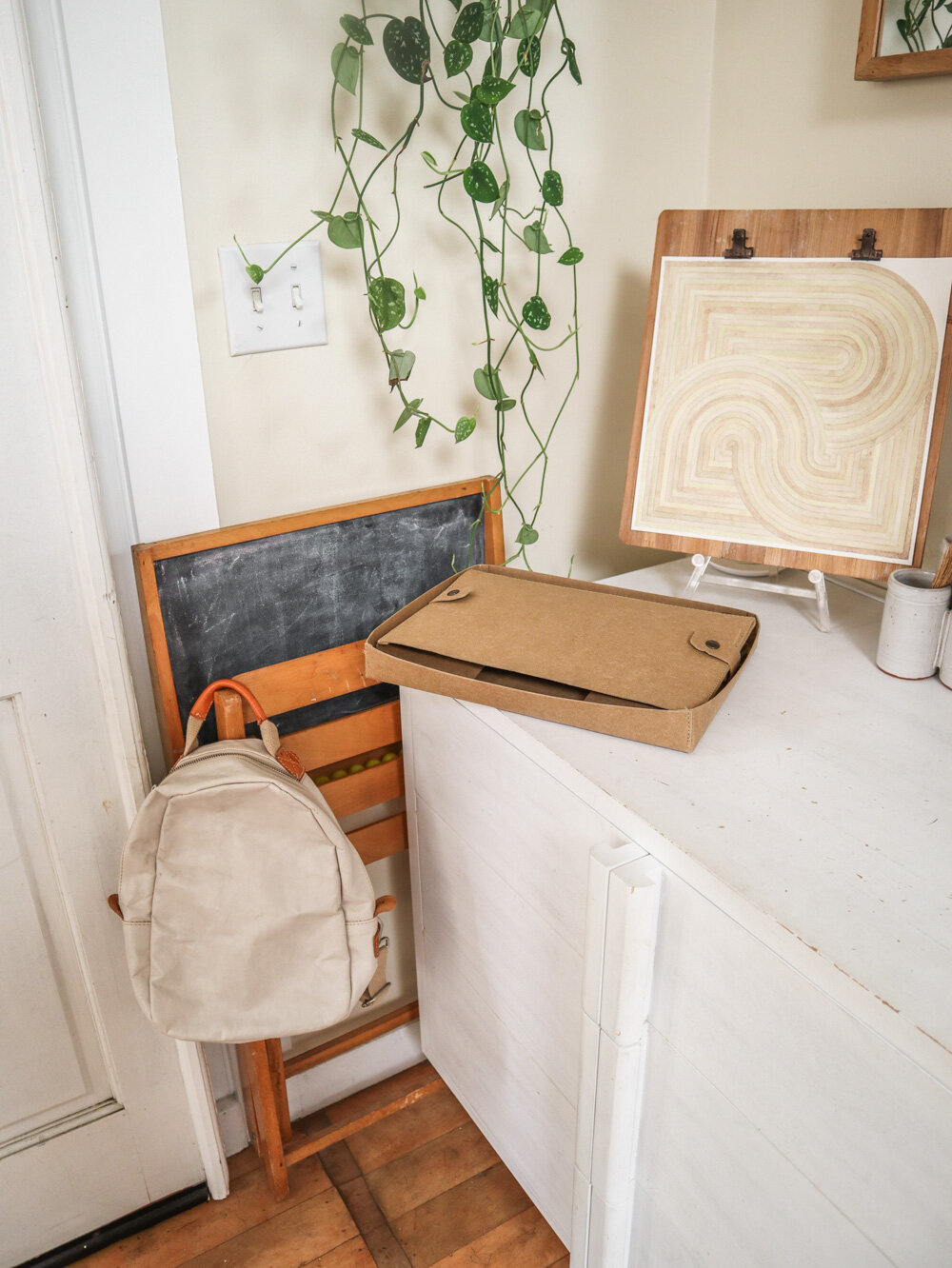
I’ve been filling West’s Uashama 100% organic paper backpack and collapsible, washable paper boxes / containers with the on-subject items he and Adam will use throughout the morning while I work.

And around lunchtime, we end up breaking it down for unstructured, open-ended play.

These sorts of mini lessons feel productive and doable. So while they’re not elaborate or innovative, they’re exactly what we can manage right now. And, most importantly, West is enjoying them.

More photos are below for those who are interested. (And while I have your attention: don’t forget to check your voter registration status or register to vote!)


The Privilege of Working & Studying From Home
Post summary: How to advocate on behalf of households with no access to internet connectivity or devices.
My next blog post will be about working and schooling from home, and I wanted to preface it with this:
As families around the country struggle to adapt to the challenges of working and schooling from home around the clock this upcoming fall, some do not have the necessary tools for online learning and productivity. Across the country, many students and families have limited or no access to adequate internet connectivity and dedicated devices.

The NAACP Legal Defense and Educational Fund called upon internet service providers that affirmed their commitment to racial equity this summer to help hundreds of thousands of students of color as countless schools transition to online learning.
Those who feel inclined can take action by writing to and/or using social media to tag Internet Service Providers and demand that they do their part to make certain that this nation’s schoolchildren receive the education they deserve.
Here are some of the requests outlined by the LDF that I am demanding of our ISP:
We insist that our ISP works with local school districts to determine what is needed for underserved families in regards to connectivity and accessibility.
We request that the providers offer free internet to households with school-age children for the upcoming/current school year, and ensure that the service provided is strong enough to support multiple family members streaming classes at the same time.
We ask that the ISP forgive any customer arrears that prevent families with children from accessing the internet.
We demand that the service provider makes their accessibility options known by advertising the access to these services widely and aggressively through flyers and U.S. mail for families with no phones, at school pick up sites, and through phone calls and emails, and ensure that materials are translated and accessible for non-English speakers and people with disabilities.
From the The NAACP Legal Defense and Educational Fund:
Any plan to educate America’s children that includes distance learning must address the fact that countless children will be left without educational access unless we undertake an aggressive effort to ensure access to computers and free high-speed internet connection for every family with children. As the new school year approaches, we ask that internet service providers act on their commitments to addressing structural inequalities and racial injustice by taking the series of actions outlined in our letter to help ensure that our nation’s schoolchildren receive the education they deserve.
Access to the internet and technological devices has been limited for many students of color throughout the duration of the pandemic – and it only stands to worsen as COVID-19’s socioeconomic implications continue to unfold. In April 2020, 54% of Latinx broadband users and 36% of Black users reported worrying about their ability to pay bills over the next few months, compared with only 21% of white users. As pandemic-related government moratoriums on evictions, foreclosures, and utility shutoffs begin to expire and federal unemployment benefits end, many families will soon face more monthly bills and be forced to prioritize immediate necessities, like running water and shelter, over internet access. Children should not be cut off from distance learning simply because their parents cannot afford an internet bill or because rural communities have been forgotten in the age of internet reliance and necessity.
Moreover, this pandemic-induced financial strain comes while many school districts have announced that they will be offering at least some form of distance learning for the foreseeable future — or requiring students to work remotely altogether. Therefore, as the 2020-21 school year approaches, access to online learning remains one of the most pressing needs for students and families of color. While some school districts have distributed devices to their students or encouraged local businesses to open hotspots, these measures are not nearly enough to meet students’ needs.
As a result, LDF is calling on internet service providers to act on their stated commitments to racial equity by expanding their coverage areas and providing free internet access and technology to low-income and communities of color.
Internet service providers must act swiftly to implement these measures to ensure that all students have the tools to succeed in the coming school year. As an organization deeply familiar with the challenges that face schoolchildren of color and their families face when it comes to achieving a quality, integrated education, we recognize that the digital inequities in this country represent a pressing racial justice issue that must be remedied in order to guarantee students’ equal access to quality education.

Working From Home: Folding Desk for Small Spaces
Note: Click here to view the standing desk featured in this post. (The child’s desk was a vintage find.)
At the start of the new year, our 3 year old graduated from his folding baby/toddler desk to a proper kid’s desk. I patiently searched vintage and secondhand shops until I finally found the piece that best suited his needs, along with the the format of our home.
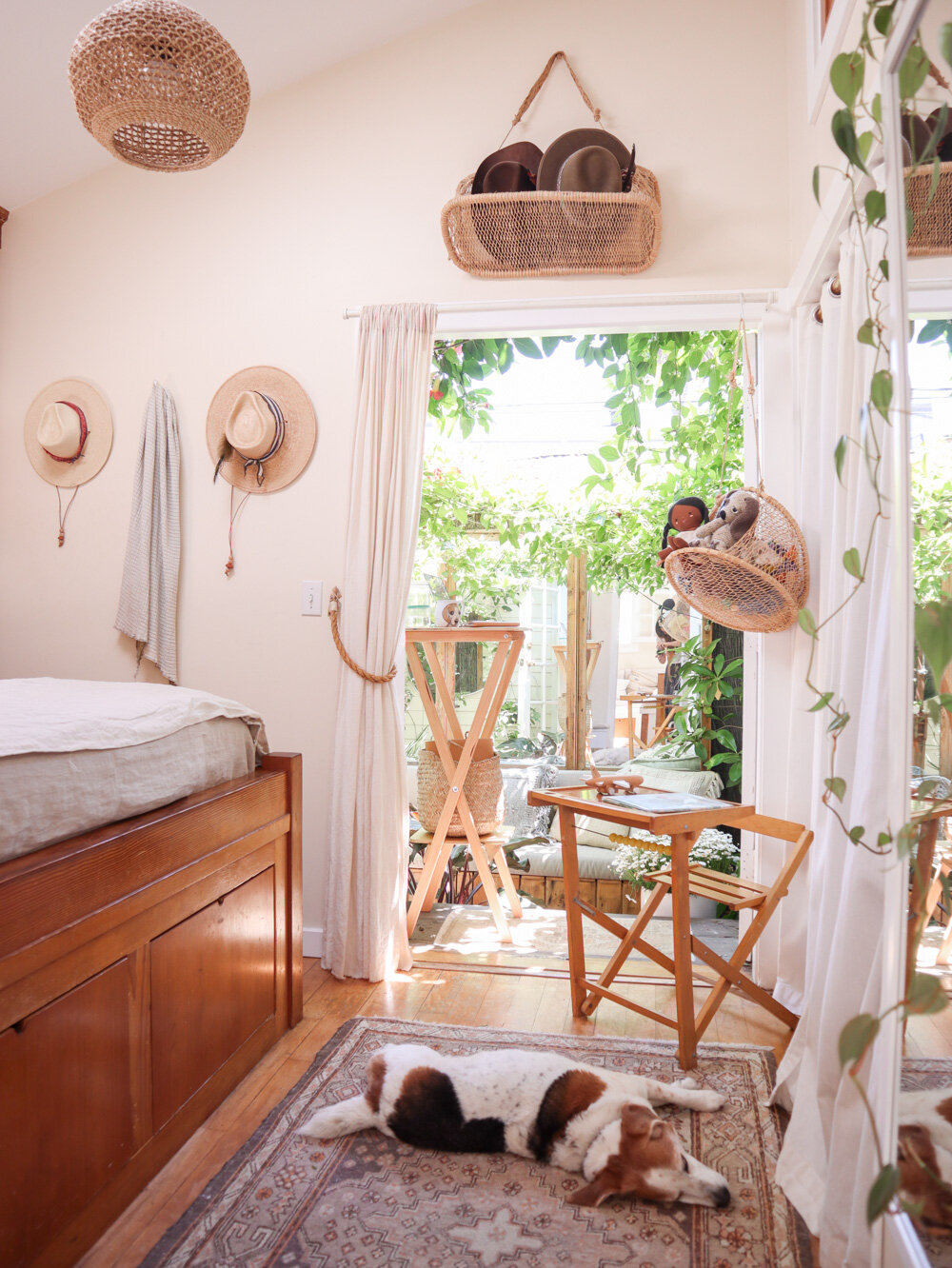
We eventually ended up with a vintage wooden desk + chair + chalkboard combo that folds up neatly, allowing it to slide behind our sideboard or be suspended from a wall.
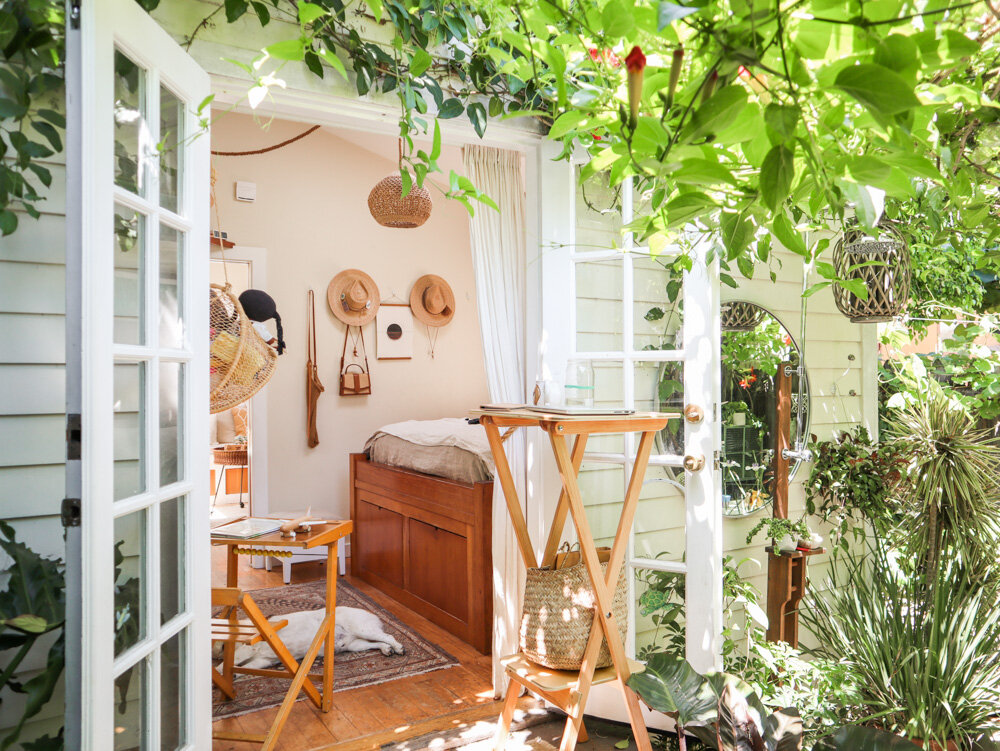
I liked the piece so much that I was determined to find something similar for myself.
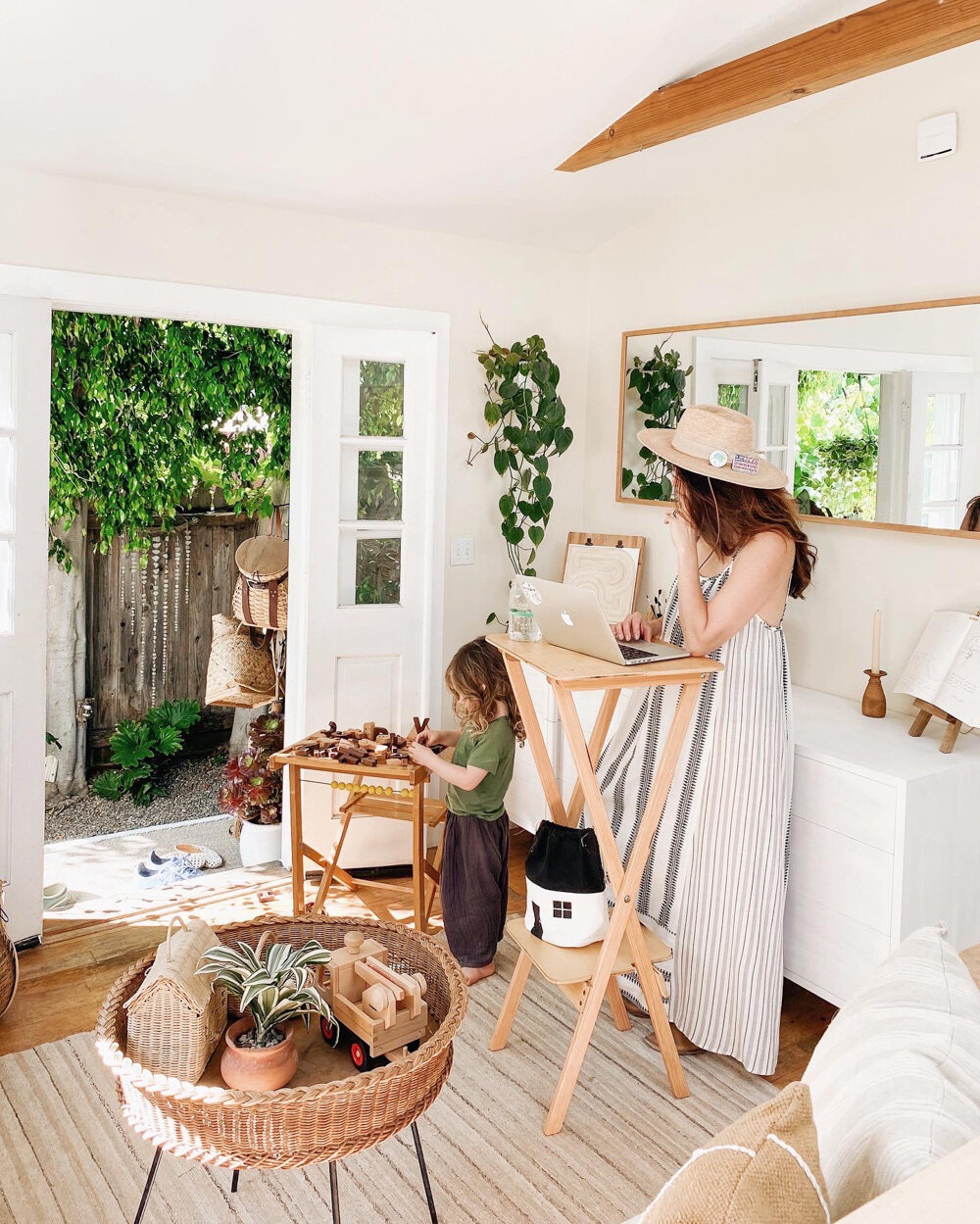
For years I’d had a dedicated desk, but we replaced it at the start of the Safer at Home order to help us simplify our main room and keep our small home better organized. (Full details on that here.)
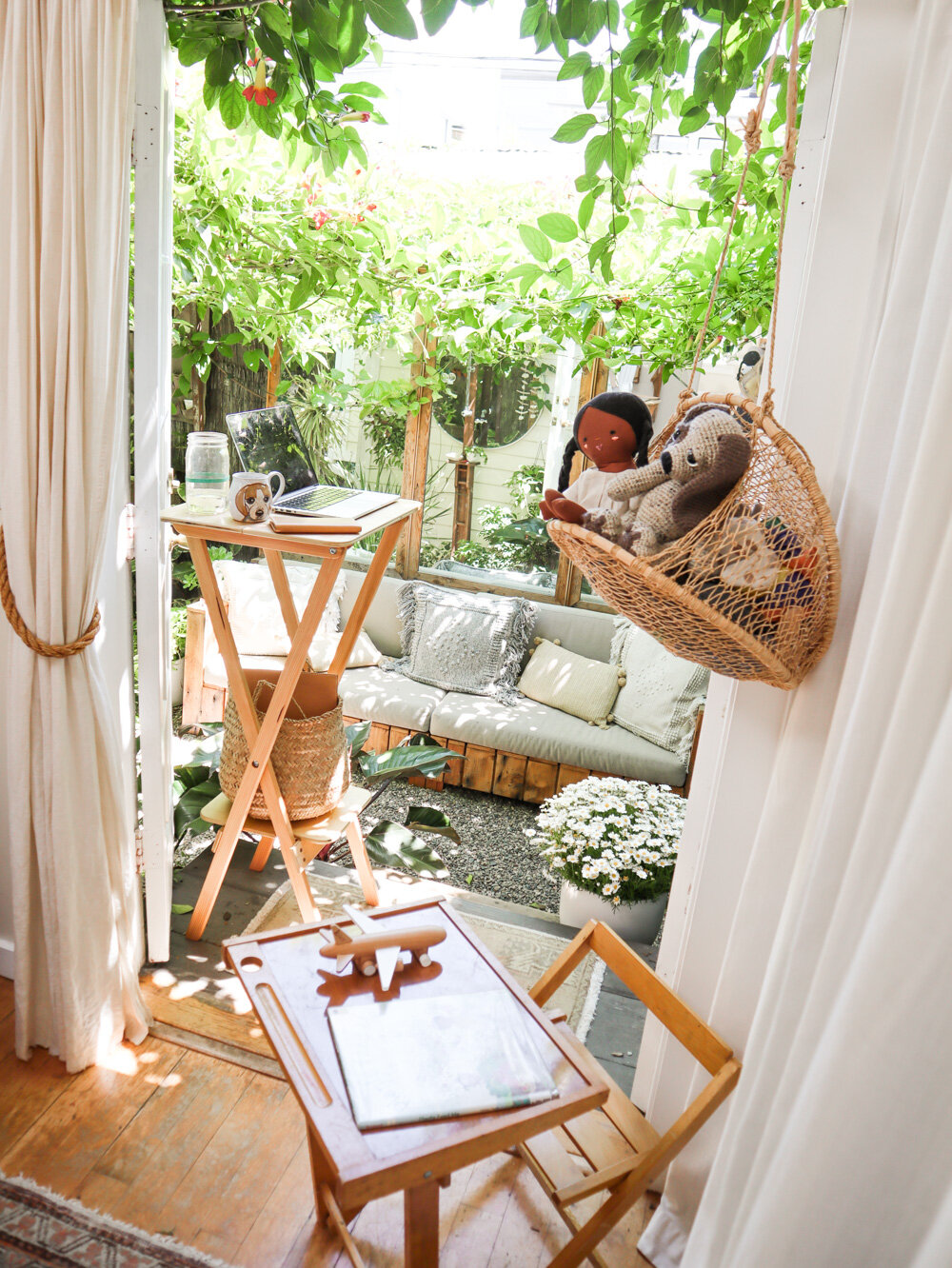
I discovered an Etsy maker/shop that crafts clever folding tables of varying sizes, heights and formats - click here to view.
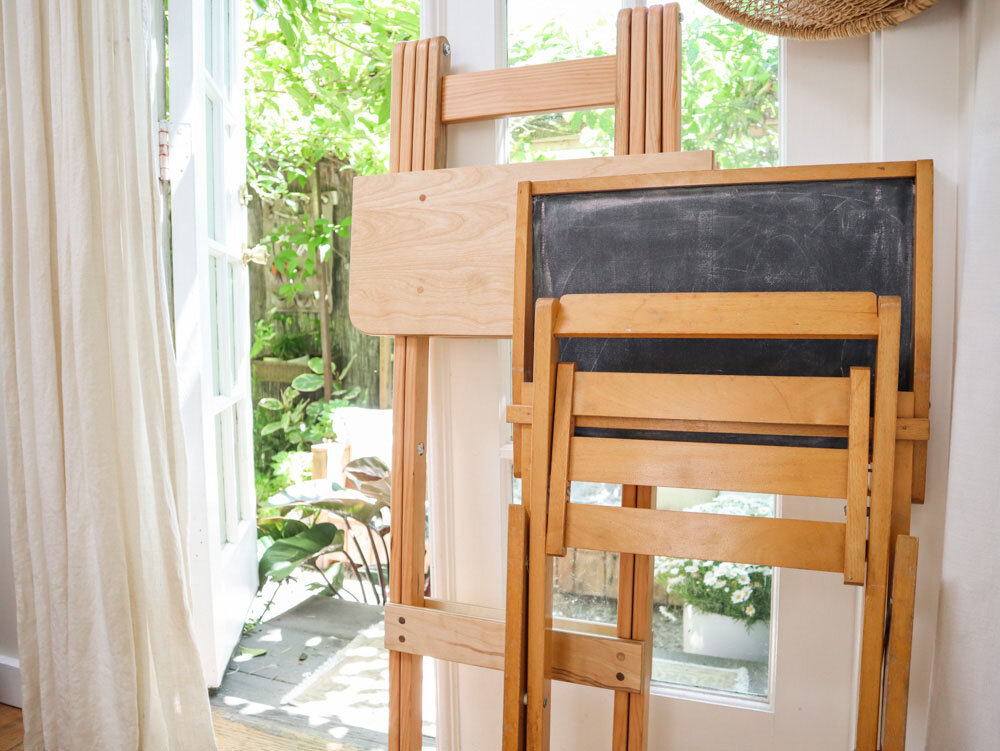
I selected their standing desk*, an original, handcrafted design that can be customized to accommodate specific heights. This is particularly helpful for me, as I’m 5’11” and I usually have to use a laptop riser on most standing desks.
(*Note that the shop appears to make everything to order, so they don’t always have all listings marked as available at all times, depending on their pending orders. I had to check back a couple of times before I was able to place an order for my desk.)

This model has an optional lower shelf that can be slid on for a touch of extra storage and surface space without requiring any additional inches.
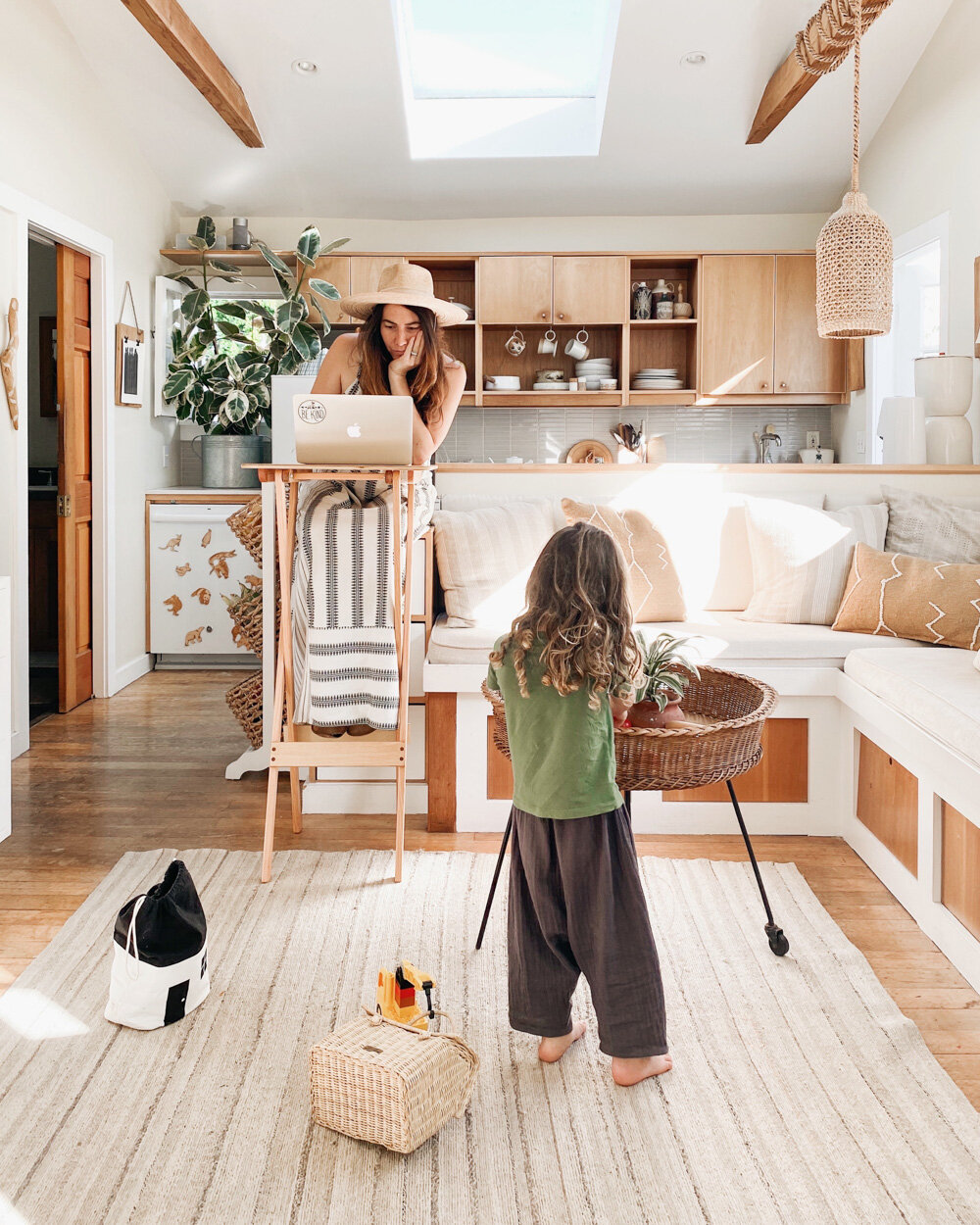
With or without the shelf, the lower bars are great for a footrest if, like me, you can’t stand up without pause for the entire work day.
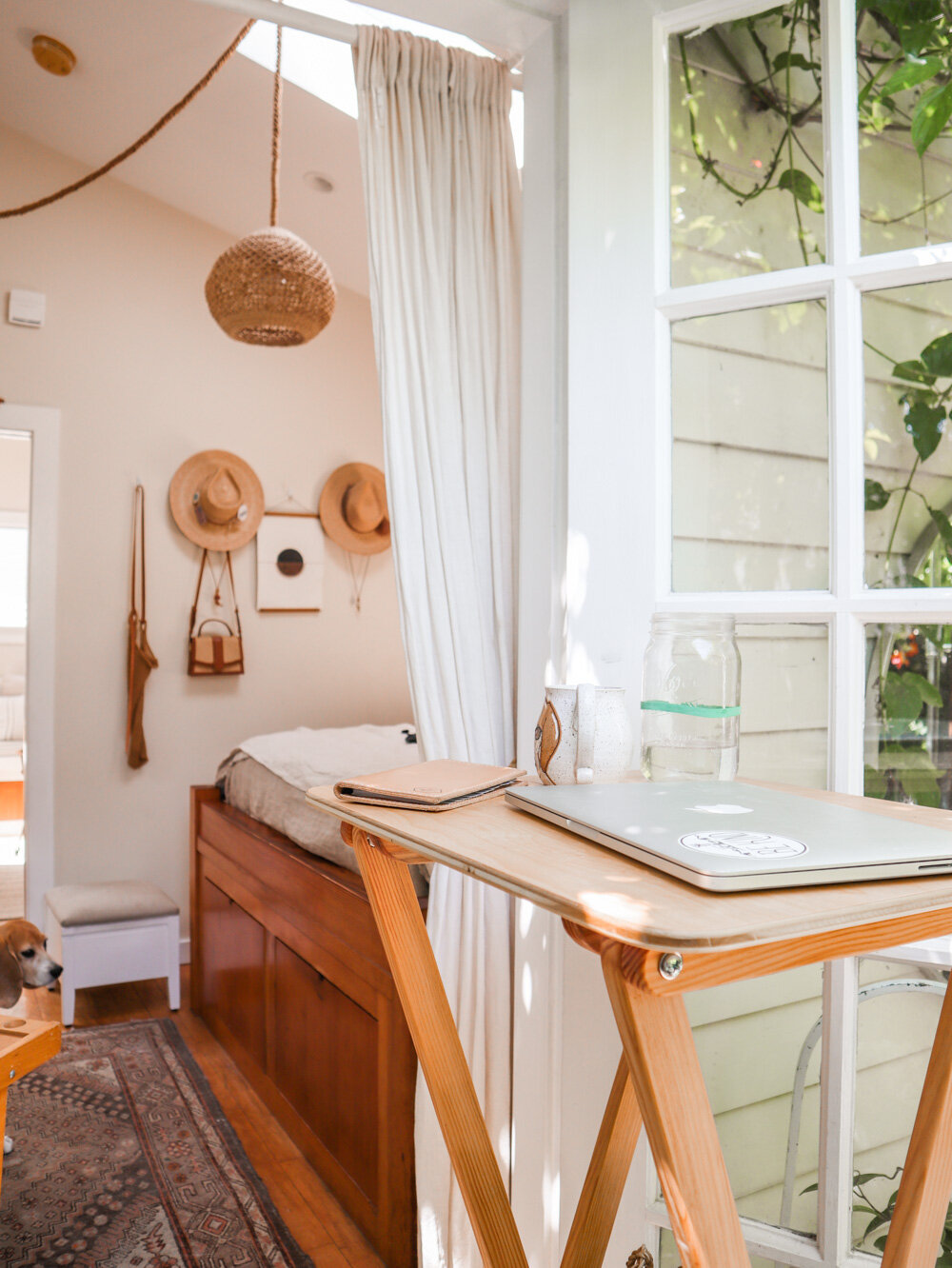
My favorite thing about this piece is the ease with which it can be moved and set up, allowing me to work in the smallest pockets of our home, and anywhere outdoors.
For those struggling to work effectively from a small home-office during the pandemic, I shared some tips/lessons I’ve learned during my 12+ years of working full-time from tiny, multitasking spaces here.

Tips for Working Effectively from a Small Home / Apt During the Pandemic
I recently published a post entitled: Creating a Makeshift Home-Office in a Small Space, and it sparked further questions from readers who are feeling cramped and distracted while trying to maintain a productive workflow since relocating their workspaces to their compact, shared residences due to COVID-19..

Above: Screenshots from our 1-minute IGTV video about streamlining a small home-office.
Many of you have requested help with establishing and maintaining more efficient practices for working in tight quarters with a partner, roommate and/or children ever-present, so here are 14 accessible tips I’ve learned over the course of a dozen years of operating a business full-time from small residences.
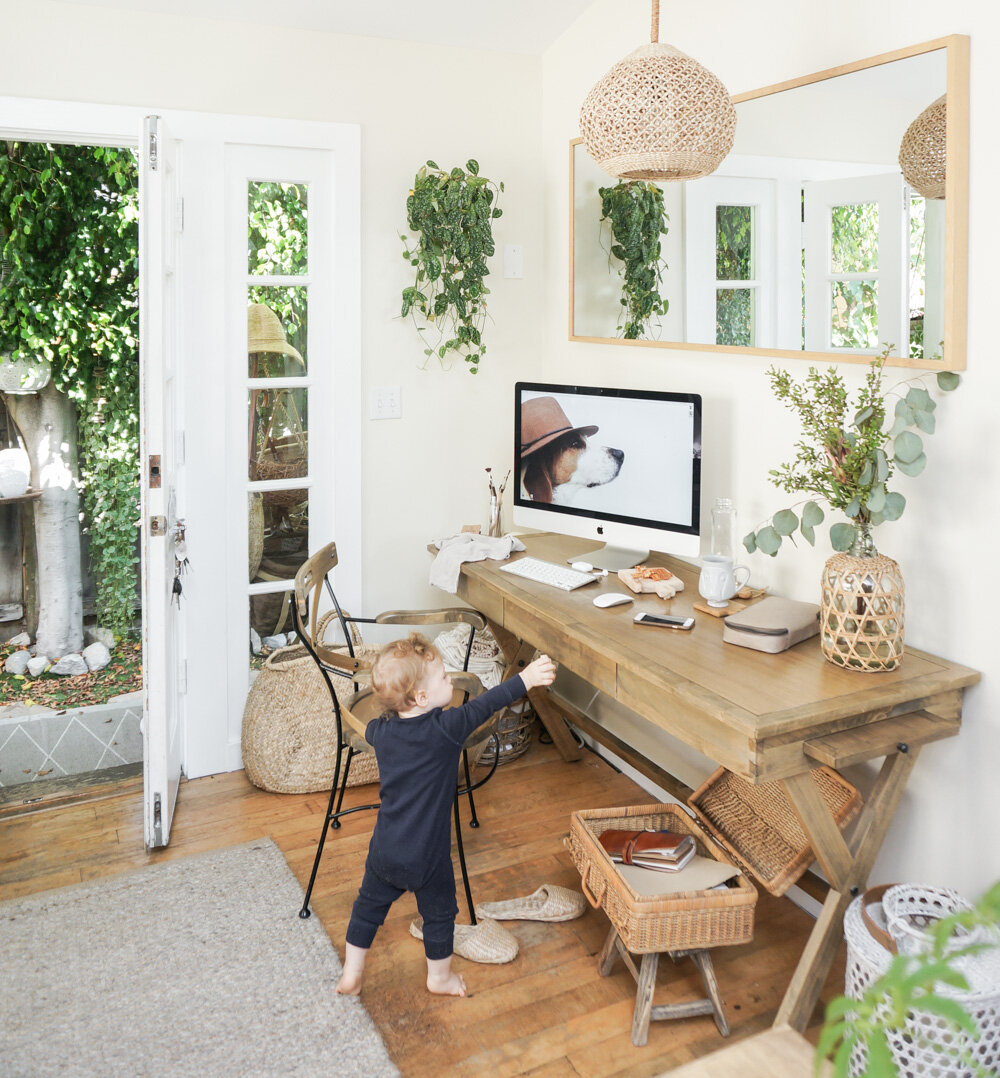
Photo from 2017
Keep in mind that some days will undoubtedly be more challenging than others, but the privilege of working from home is something to acknowledge and keep in mind. So many people are suddenly out of work across the globe, and medical professionals, delivery personnel and workers tied to essential businesses are putting themselves at risk to keep the rest of us safe. Staying home— even if it’s not your preference— is important for our communities, so let’s make it work.

Make your bed
Studies show that people who make their beds tend to be more productive. But in a small space, I think that making the bed is doubly important. With limited square footage, the bed can become a useful surface for random tasks throughout the day, such as sorting/filing/printing papers.
Carve out time for self care
Whether it’s as simple as brushing your teeth, washing your face or taking a shower— or more involved, like doing Yoga, making coffee/tea/a smoothie, putting on makeup if that’s your preference, and/or taking your pets for a (responsible!) walk, make sure to carve out time in your morning before work to accomplish the things you’d normally do before leaving your home for an office job.
Get dressed
I know this is often recommended to the point of exhaustion. Still, it really is helpful— even if you’re not on Zoom / FaceTime meetings during the day.
Set up a pop-up workspace if you don’t have a dedicated one
If you have a dedicated desk or dining table, fantastic. If not, create a pop-up workspace. Depending on your living situation, this might mean converting an end table into an office, employing a collapsible bistro table, or using a lap tray in bed. Whatever it is, set yourself up with the tools you’ll need throughout the day, so that you won’t loose your train of thought or productivity by having to get up and find supplies (and thus risk getting distracted) while you’re in a positive workflow. If possible, set up shop by a window, or place a mirror nearby to reflect the natural light from the closest window. In situations like these, I believe it can be emotionally beneficial to get some exposure to nature and/or your community while you work.
Clock-in
Set a time to start and stick to it. I believe this is why I have been so productive at working from home over the past dozen years. When I first began working remotely, I had a client with whom I had to check in every morning at 8AM, and that obligation provided a me with a sense of formal structure, much like a standard office does.
Set your phone timer for scheduled breaks
When you’re working from home, it can be tempting to hop up and take care of chores around the house. Overall, it’s a great gift to be able to check off your personal to-do list while simultaneously addressing your professional duties. But the reality is that this can be distracting and derailing. Instead of succumbing to the urge to steal random moments to manage chores, set timers on your phone to coincide with the times of day you’ll likely need a brief break to stretch and use the bathroom. At those intervals, allot an extra handful of minutes for calling a friend, getting a snack, doing the dishes, watering the plants, tending to personal matters, etc. Let your parter / child / roommate know when these breaks are scheduled so you can touch base or get out of each others way if needed. When your timer sounds again to signify the break is up, back to work!
Try earbuds or noise-canceling headphones
Whether you prefer to listen to music, need silence, or simply can’t stand another minute of your housemate’s keyboard clacking, invest in a pair of earbuds or noise canceling headphones if possible.
Consider a curtain or screen
It might be worthwhile to use a makeshift curtain, accordion screen or a room divider of some sort to cordon off your work zone. (There’s plenty more about this topic in my book, Small Space Style.) Beyond adding a sense of privacy, this can provide physical and symbolic boundaries for those with whom you share your home. It can also keep your eager eyes in check when they’re tempted to wander over to the snack shelf or laundry pile when they should be focused on your work instead.
Practice In-House Texting
This might seem absurd in a small home or apartment, but consider texting your partner/roommate/etc. or asking them to text you if something needs to be discussed. That way you will see the text when you choose to look at your phone and can then respond accordingly, rather than being yanked abruptly from a focused moment. (Adam and I often do this, even though we live in under 400 sqft… it works.)
Explore storing your administrative supplies in more than one area if you’re feeling cramped
While it’s handy to keep your must-haves within arm’s reach (as mentioned in tip 4, above), you don’t need to cram ALL of your supplies into one area in your small home office. If you rarely use a printer but have one, perhaps store it somewhere else so that you don’t feel like your work zone is taking over your home. (Examples of this can be found in the IGTV video linked at the start of this post.) Same goes for bulky files, business tools, etc— especially if you’re sharing them with someone else in the home. Spreading accessories out will aid with storage, but it will also allow all parties to use the same items throughout the day without distracting each other when crossing zones to borrow this-or-that.
Temporarily delete apps that distract
If you’re tempted to check non-essential apps on your phone, consider deleting them during the work day, and reinstalling them after you’ve “clocked out”.
Clock out
Just like clocking in, a clocking out routine can be useful for maintaining a live/work divide. Stow office items until the next work day, freeing up your home for personal activities and family time.
The night before, set up an activity for your kid(s) for the morning
If you’re feeling like the mornings are too hectic, analyze why. Do your kids need something to keep them safely occupied while you go about your self care routine and/or prepping your workspace? Perhaps plan and set up an activity for the morning that will keep them happy so you can stick to your schedule.
Prep Meals
If you find yourself hanging out in the kitchen more than you normally do, perhaps prep your meals and snacks in advance. This can prevent wasted time, and while potentially encouraging a healthier diet since we all need to keep our immune systems healthy while this virus circulates through our communities. Not only that, but preparing food in advance is a wise way to ration food within your household, limiting possible exposure from potentially avoidable grocery shopping trips and/or deliveries.
Remember: We’re all in it together. You’ve got this.
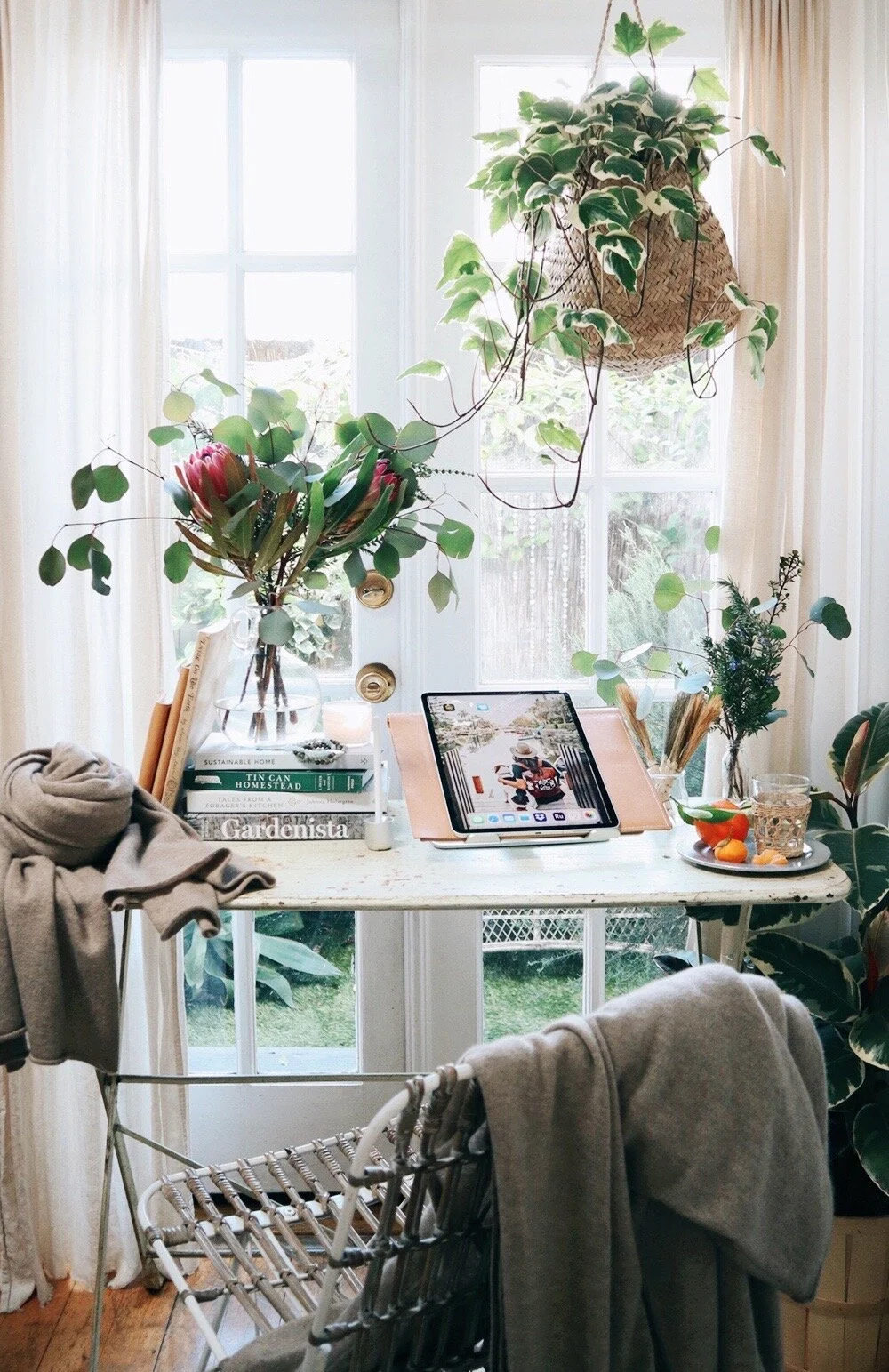
Working From Home: Creating a Makeshift/Temporary Home-Office in a Small Space
With so many people practicing social distancing and suddenly working remotely from their small homes/apartments, I wanted to share this 1-minute Tiny Takeaways episode (embedded below or viewable via my IGTV channel on Instagram) that I created last year about streamlining a compact home office.

Our tiny home-office has been the full-time workspace for my small business since we moved into the Cottage 9 years ago. And, for the past 3 years, Adam has worked here with me as well.

We float all over our tiny house, working from the desk, the breakfast counter, or on a folding table around the interior and exterior.

The video demonstrates a few tips and tools that help us make it work. More small space office solutions are available via my book, Small Space Style: Because You Don’t Need to Live Large to Live Beautifully.
