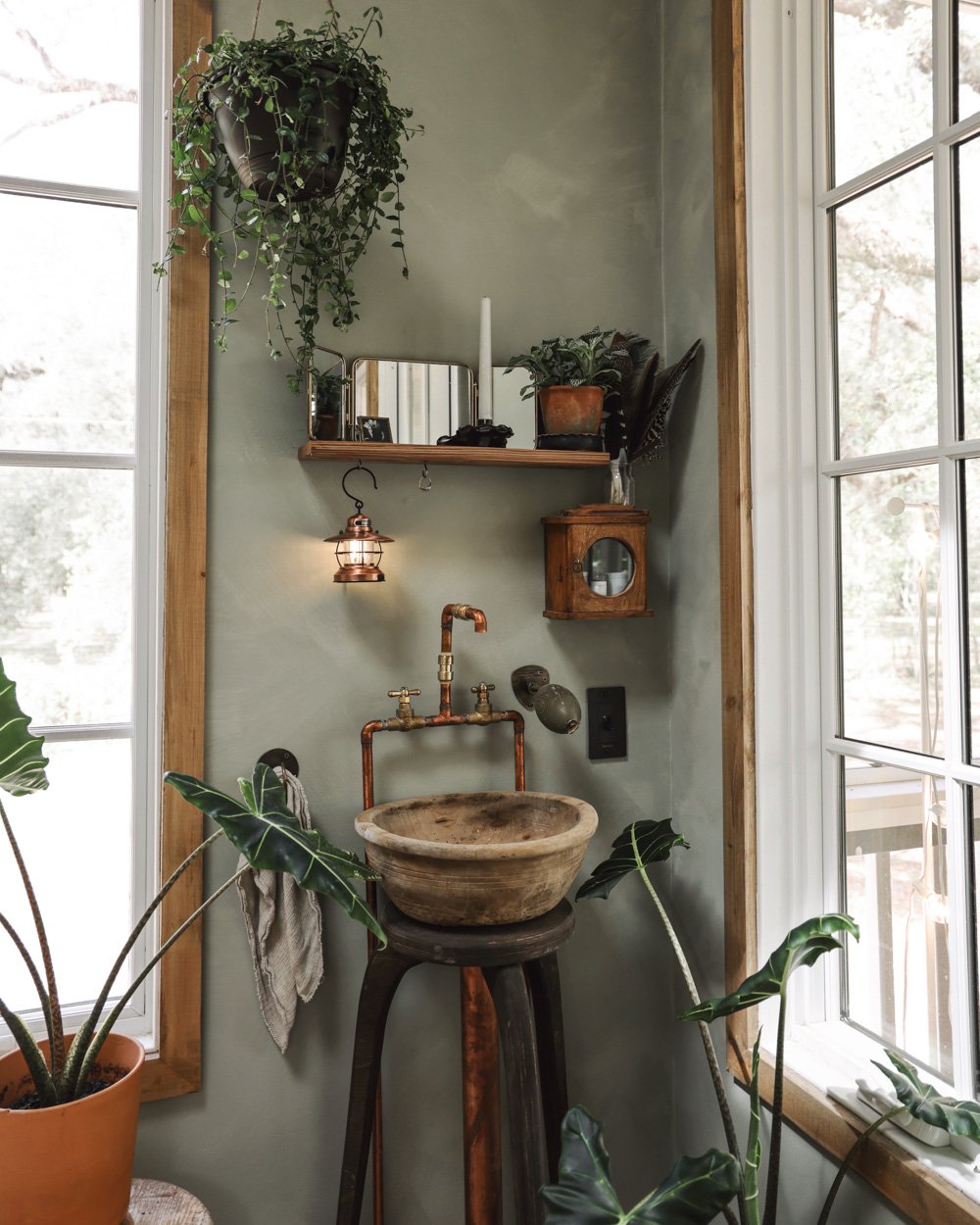
5 Ways to Invite the Outdoors In via Thoughtful Design
Whether you’re starting from scratch or responsibly re-imagining your space, here are five ways to create intentional and enduring interiors with the help of biophilic design.
Note: Thank you to Marvin for sponsoring this post and supporting our small business.
The arrival of a new year often inspires folks to streamline their homes, providing a simplified and organized slate for the months ahead. But this cycle of discarding (and ultimately replacing) goods is not ideal for our wallets, nor for the planet. So when I help my clients and readers declutter and/or update their spaces, I hope to help them do so for the long run.
My north star for designing and organizing with intention is nature. The idea of living inner-connectedly with the outdoors has always inspired me, as I believe that nurturing our bodies, our minds and each other cannot happen completely without remaining rooted deeply in the natural world, whether in a city or rural setting. Focusing on bringing in organic and natural elements (rather than on-trend home goods) can help us craft timeless, durable, and healthier spaces.

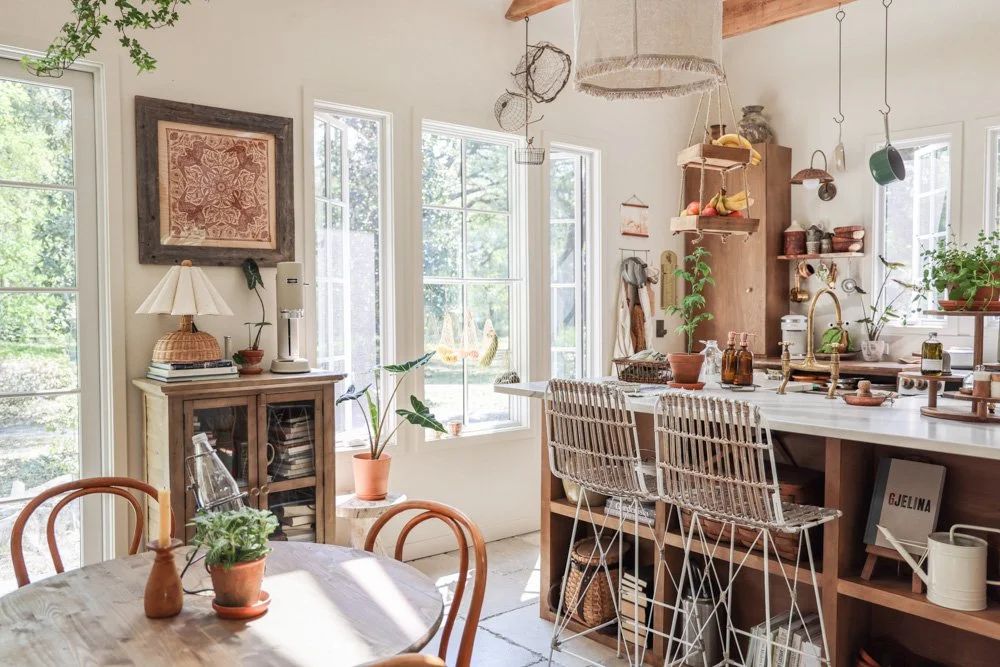
Each of the four rooms in our 900 sq ft cottage is meant to pull focus to the natural world around us and spark our innate instinct to interact with it. Whether you’re starting from scratch or responsibly re-imagining your space, here are five ways to create intentional and enduring interiors with the help of biophilic design.

MINDFUL SELECTION OF INTERIOR MATERIALS
Selecting natural and non-toxic materials that are rich in earthy textures and acquire a natural patina over time is important when crafting a biophilic interior. Not only do these materials keep our indoor air and surfaces cleaner and healthier, but they become visually richer with age, freeing us from the worry of character-filled wear over time.
Here are some examples of natural materials that have a huge impact on how an interior looks, feels and functions:
Lime Paint
Our primary bedroom walls and ceiling are painted with a mossy green Lime Paint, which is free of solvents, and toxic chemicals, and is composed of all natural material and mineral pigment that provide a durable, breathable coating. Lime’s high pH makes it a naturally mold and mildew resistant finish. Plus the textured look and feel of the brush strokes help conceal nail holes and similar markings.
Tadelakt
Tadelakt, the plaster we used in our only bathroom (which is also the laundry room), is an ancient plaster finish that originated in North Africa. It is composed of materials such as slaked aged lime, marble dust and clay, which come together in a water-resistant and durable finish. Not only is the finish stunning, strong and smooth to the touch, and visually interesting, but it’s also resistant to mold, mildew, and fungus, resulting in a healthier living environment.
Wood Windows
What better way to invite the outdoors in than by selecting a wood finish for the interior windows? Wood-clad windows offer a uniquely earthy feel in the exact places where the indoor and outdoor truly meet. In our home, we chose Marvin Elevate Casement windows, as their natural wood interiors and Ultrex® fiberglass exteriors ensure beauty and durability for years to come. We selected divided lites to best suit our cottage design aesthetic, and to help keep the birds in this wildlife haven safer.
Wood Trim with Natural Whey Stain
I love the look of trim that’s hand-coated with a natural whey stain made from minerals, and natural pigments. Such stains are an eco-friendly alternative to traditional synthetic formulas, and allow the grain of wood to shine while keeping tones within a unified spectrum of hues.
Natural Wood Floors & Shelves
Our wooden floors, shelving, nightstand tops, headboard ledge, and sink vanity are all made with ethically river-recovered, character-filled pine and cypress board remnants. While we lightly sanded the wood in order to remove deep-settled dust, everything except the headboard ledge was left unstained and natural in order to preserve the color, texture and matte finish of the wood. This way, nature takes the lead over trends, so we can be confident in the earthy and timeless aesthetic of our decision for as long as we live here. Each of the 500+ boards has a story to tell from years of impact from insects and sap, and every piece has naturally-occurring curls, knots, arching grain patterns or vertical pinstripes.

DIY FUNCTIONAL DECOR
When it comes to design, one of my greatest interests is brainstorming creative ideas for troubleshooting and enjoying small, shared, and unusual interiors. Time and time again, I’ve found that the best tools for our funny little homes are not, say, store-bought plastic drawer organizers that can be used for little else (although many repurposed items can be used in their place). Instead, the most ingenious items for our awkward spaces are often the ones we craft — however inexpertly — to suit our precise needs, tastes and specs. And, thankfully, those sorts of things can often be deconstructed and reconfigured in new ways to serve numerous purposes over time. Foraged items can not only usher in a certain natural aesthetic, but can also provide function. Organic linen, hemp and jute can provide our rooms with rich texture and layers. Vessels made from reclaimed and repurposed wood, rattan, seagrass, and similar woven materials can be used for storage that hides in plain sight. Repurposing salvaged, foraged and vintage materials to suit our specific spaces and needs can enrich our spaces in a way that’s more flexible, sustainable and character-filled than mass produced alternatives.

USHERING IN NATURAL LIGHT
Natural light helps eliminate dark corners, makes compact interiors feel airier, and can lift our moods throughout the seasons. Plus there’s no need to entirely overhaul wall decor for a fresh look and feel when nature is providing us with an ever-changing view. Here are some ways to usher in more natural light in a space of any size:
French Doors
French doors — whether used in exterior or interior frames — help keep a home feeling open and airy while still allowing for the division of space and privatization.
Pocket-Doors
When left open, pocket doors allow for uninterrupted light and airflow within an interior, without consuming valuable floor inches like a traditional door, or usurping usable wall space like a sliding barn door would. In our cottage, oversized double pocket doors generously connect the bedroom to the windowed and skylight-filled main room / kitchen. This provides a wrap-around, panoramic view of the wooded setting.
Mirrors
For anyone who wants a lower lift method of inviting natural light into their space, use mirrors. It’s a small hack with a huge impact. Just test the waters to see what I mean! Prop or suspend a small mirror in a darker corner where it can bounce light from an opposing wall’s window, let it sit for a few days, then remove the mirror to see just how lifeless the corner and wall look without it. The difference can be staggering! Opt for one larger mirror, or several smaller ones. Either way, you’ll instantly brighten up your space, which can uplift moods in darker seasons.
Unexpected Windows
We added small gable windows on the north and south peaks of the main room for extra natural light. As such, we needed no built-in overhead lighting in our main room / kitchen, which was a goal of ours given how artificial lights left on at night can interfere with the flight patterns of migrating birds. Thankfully a few smaller lamps can provide more than enough illumination in more compact square-footage.

VENTILATION
The most straightforward way to naturally improve our home’s air quality and pull focus to the outdoors is to keep our windows and doors open wide, when possible and safe. In our small space, the air flows through the house regardless of the direction of the wind, as casement windows on each side of the house make it possible. With Marvin Elevate casement windows like ours, each operable window has an optional screen that can easily be popped in or removed from the inside, making maintenance and installation easier in our situation.

PLANTS
Other than mirrors, plants are perhaps the easiest way to bring the outdoors in. For small households with little room for potted plants, consider tiered hanging options or wall-mounted vessels when possible. For folks who like to switch up the look and feel of their home often but want to do so responsibly, weekly market florals or locally foraged greenery can change your home’s color scheme instantly, and can also provide either a wild or polished look as desired. And for anyone on a tighter budget, try propagating! With a few reused jars, a pair of clippers, and a bit of guidance from interior plant stylists and experts like Hilton Carter, you can create a lush and green interior. (As always, keep the safety of pets and kids in mind when it comes to selecting your plant varieties.) We place our potted plants near our windows so they can live their best life indoors, whereas we arrange our clipped branches in more shaded corners to help them last longer.

This post was kindly sponsored by Marvin. All opinions and visuals are my own. We appreciate sponsors who believe in and support our small business.


Feature: Better Homes & Gardens Podcast
Regardless of square footage, having a versatile home is key.
Recently I had the joy of chatting with the folks at Better Homes & Gardens via their podcast, The Better Buy.

In the episode, we discuss designing limited square footage to multitask for your household, blending the outdoors seamlessly with your space, and taking an eco-friendly lifestyle seriously—from home renovation to everyday habits.
We also chat a bit about about the French Farmhouse, cottage and greenhouse.


Thanks for having me on the show, BHG!

Avoiding "Fast Furniture" and Taking Time to Source
Upon moving into our new cottage, we needed very few furnishings, despite having moved from our previous home with so few large items. One thing we did need, however, was a comfortable armchair for the living room office.

We took our time sourcing the perfect-for-us reading chair. With our planet in crisis, a temporary piece of “fast furniture” was out of the question. Did you know that 12.2 million tons of furnishings and home accents end up in landfills annually? This results in horrible amounts of of solid waste that have increased 450 percent since 1960 per the Environmental Protection Agency.

Instead, we borrowed a chair from family (which itself was a handmedown from neighbors) for a few months, covering it with a linen sheet so it better suited our decor (as pictured below).

Pictured above: A borrowed chair, covered with a linen sheet to better match our decor.
We wanted to find seating that would fit snugly yet welcomingly in the corner without jutting into either the bedroom entry or the thoroughfare to the living room’s French doors. We finally found what we were looking for— this timeless looking chair with casually draping cushions, an overstuffed vibe, and yet a space-savvy curved seat and rounded back.

We added a vintage stool, a handmade rattan wall sconce, a handmade ceramic airplant cradle, and a propagation station (designed by our friend Hilton Carter).

The end result is a very comfortable reading nook that all of us — pups included — enjoy daily.

Loula Chair by Sixpenny
Color: Oat Flour
Fabric: Light Weight Linen
Fill: Vegan Fiber


Roundup: Secondhand Gems for Versatile Small Spaces
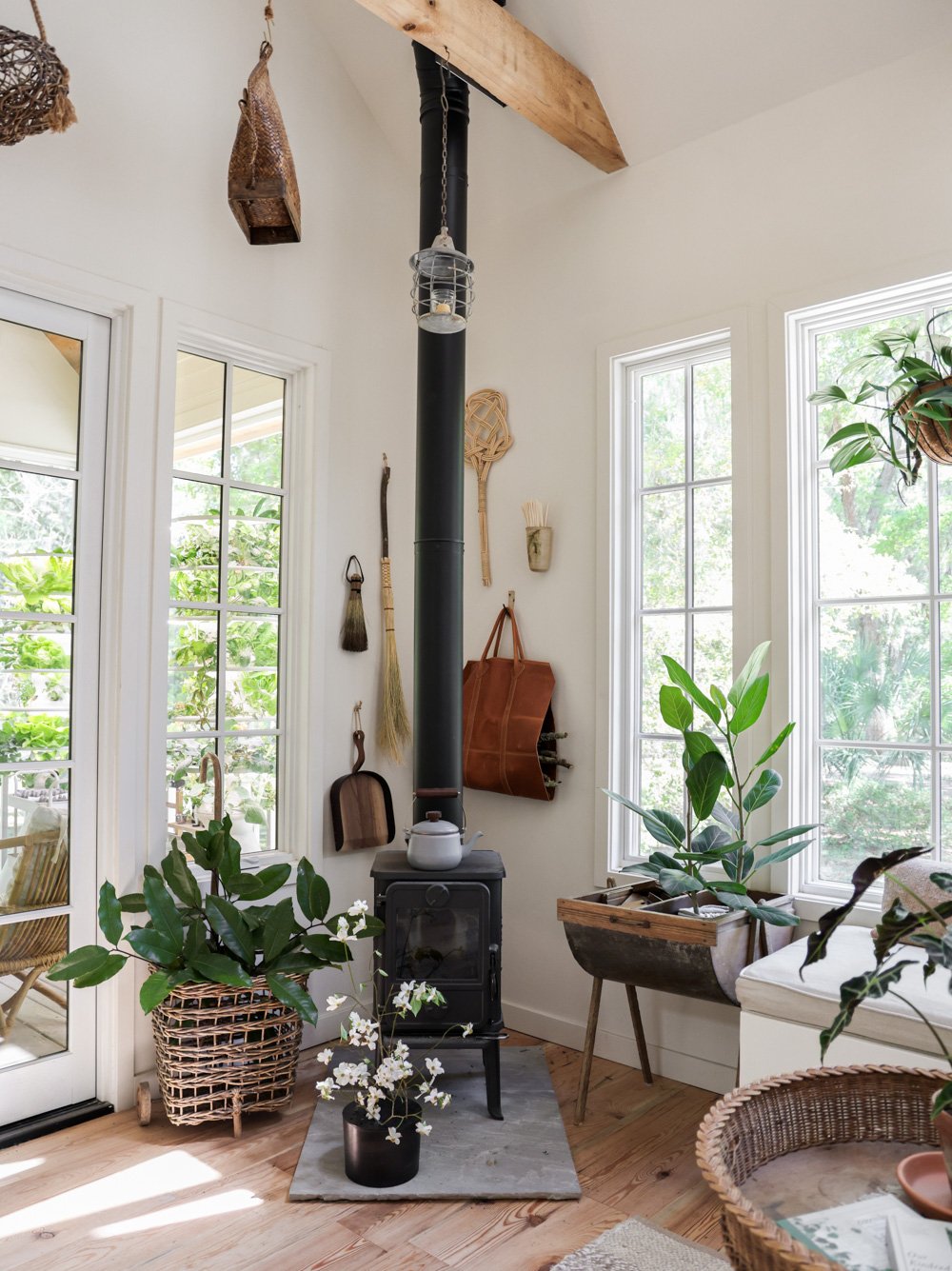
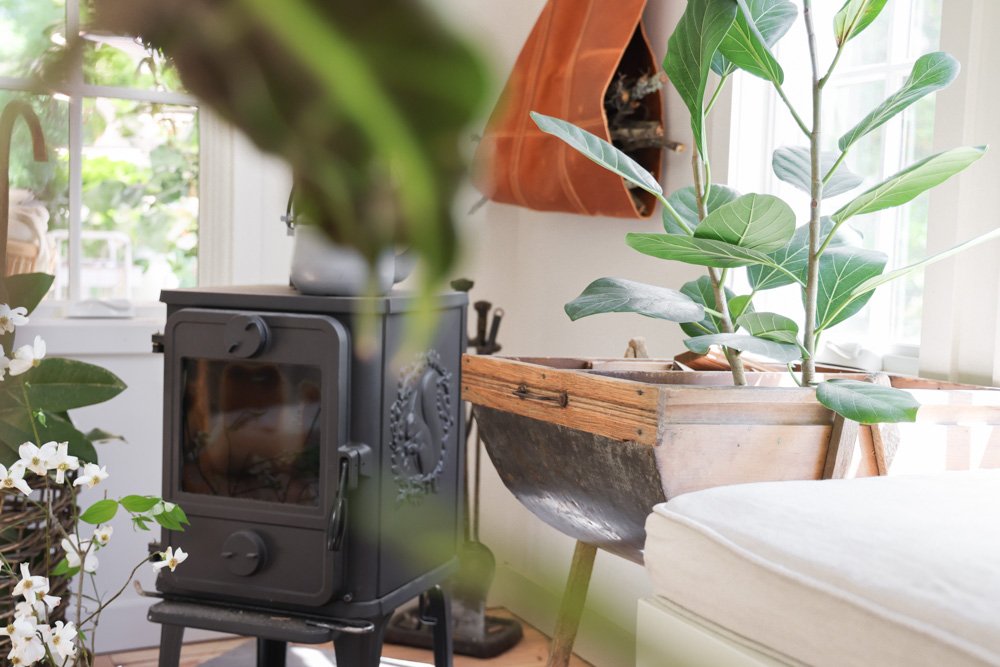
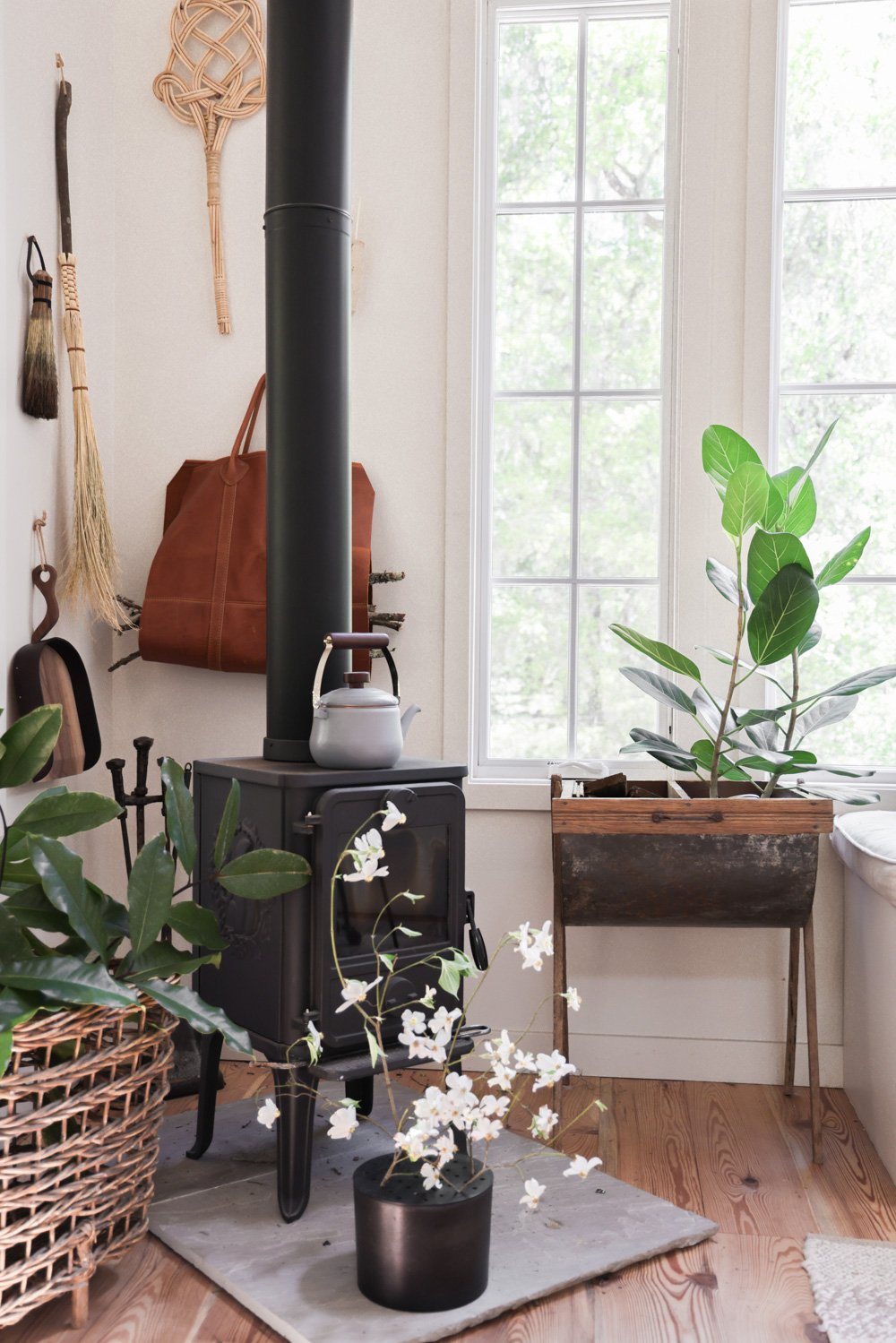
As my family advances into experiencing the first spring in our new cottage, we’re noticing the small ways in which our daily routines are shifting. For example, the tiny wood stove that was the backdrop of much of our daily activity since moving during the fall is now rarely in use. By contrast, the vintage rolling cart in which we stored the firewood is now in high demand for various gardening activities. As such, a spring shuffle was in order.
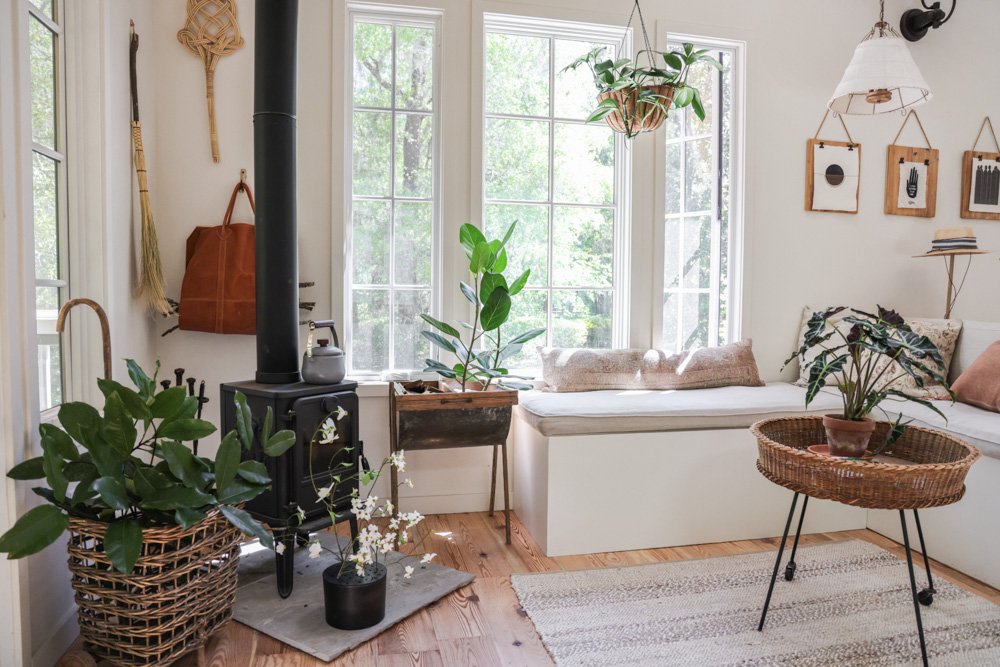
I usually don’t enjoy shopping, but I do delight in exploring vintage finds on ETSY, where I recently stumbled across a listing on Our Vintage Bungalow that was perfect for the update we had in mind. The piece for sale was an old metal + wood half-barrel divided into two compartments and outfitted with worn legs.
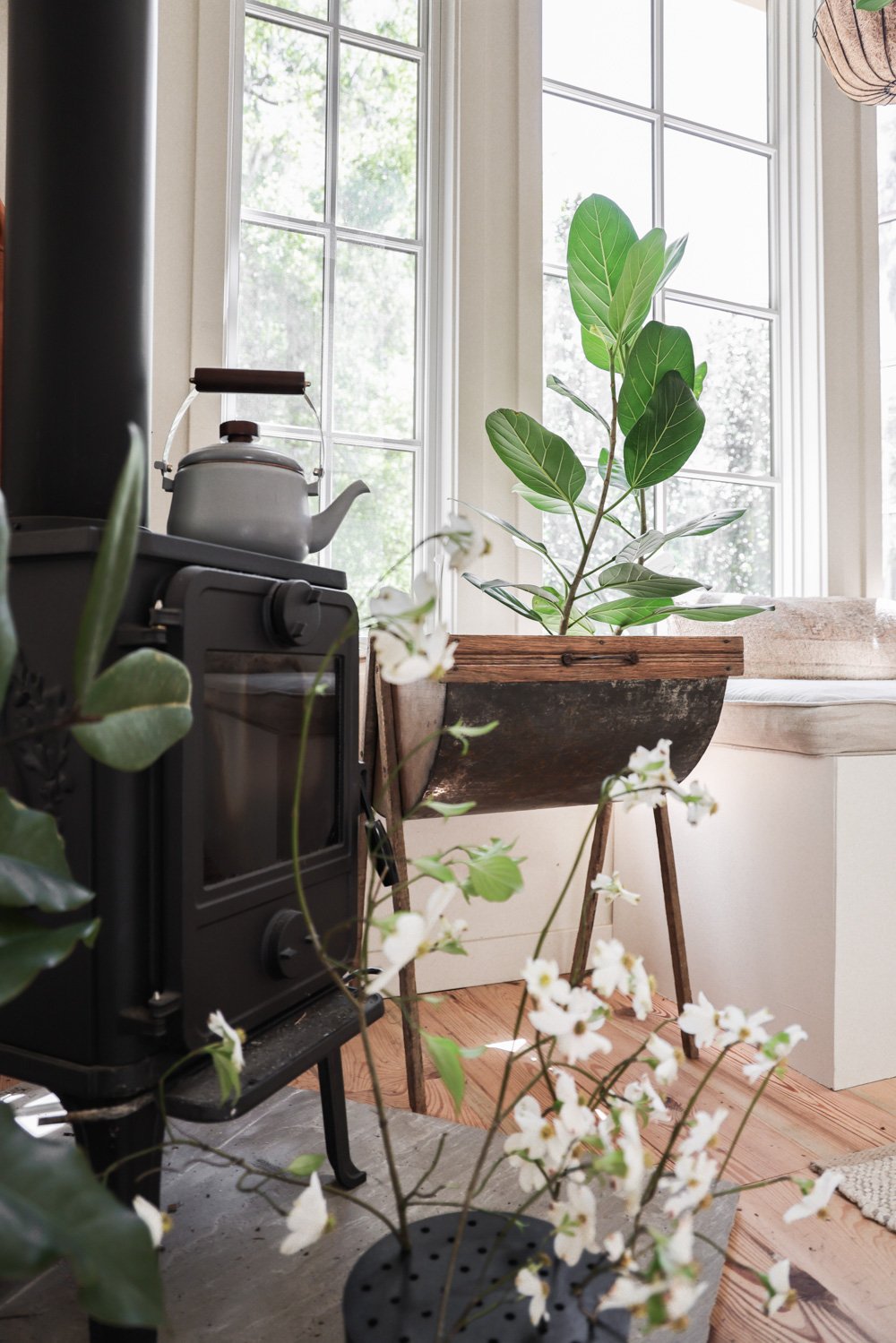
I thought it’d be the perfect size and shape for holding the firewood and displaying a plant in a tight space during the warmer seasons:
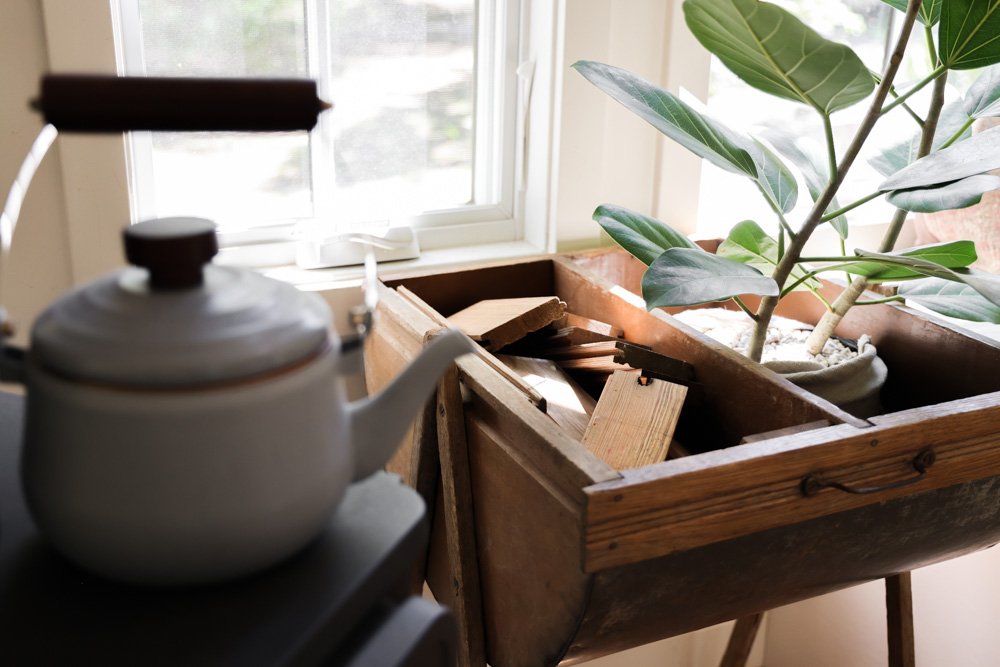
Fun side note: After discovering the piece, I noticed that the vendor also has a blog that communicates ways to successfully host and shop garage sales for a sustainable, vintage lifestyle… plus she shares her experiences with tackling a home renovation with young kids in tow. This is one of the reasons why I love shopping secondhand + small — there’s almost always an interesting story behind the storefront!
Over the years, countless folks have told me that they don’t know “how” to shop vintage or handmade on sites such as Etsy. For me, the key is to search for the general function I need an item to serve, rather than search by an item’s dedicated name directly.
By searching for goods via detail and function descriptors, I discover creative and unique homewares that serve the purposes my family needs, in formats I might not have previously considered. This is one of the traits that makes our little home so personal and special to us.
So here’s this week’s roundup of beautiful and functional one-of-a-kind vintage items that I favorited from the same shop that carried the half-barrel piece. My hope is that this sort of post helps readers find pre-loved homewares (rather than newly manufactured goods) offered by small businesses.


Wall Decor for Small Spaces
There’s no wrong way to decorate your small home. The differences and diversity among our residences are what make them beautiful and interesting. Colorful or subdued, glossy or matte, patterned or minimal— anything can work if it’s done mindfully with the realities of your specific space in mind. But here are a few tips to keep at the ready if you’re struggling to crack the elusive code on how to best balance function and style within slim size constraints. (And there are 200+ tips in my book, Small Space Style.)

Decorate with Daily Essentials
When storage space is pushed to the brink, play around with displaying your more stylish homewares and essentials via walls and other such vertical / suspended formats. While this leaves fewer inches for traditionally framed photos or elaborate window coverings, it frees up an impressive amount of drawer + closet + cabinet + surface space for navigation and daily use. Food, cleaning supplies, kitchenwares, wardrobe accessories, pet gear, and so much more can be on full display and within easy reach, while adding an entirely unique look to your home.
Play with Scale
More often than not, I’ve found that standard frames and typical print sizes aren’t best suited for small spaces, where it can be particularly impactful to play with scale. For example, with furnishings and wall decor it’s often helpful to go larger than one might first consider, as this can help sidestep visual and physical overcrowding. For example, a gallery wall might make a compact room feel overwhelmed, and an apartment-sized living room set can sometimes make navigation tough, whereas one roomy couch and a clever accent table might do the trick while avoiding access lines and adding extra comfort.
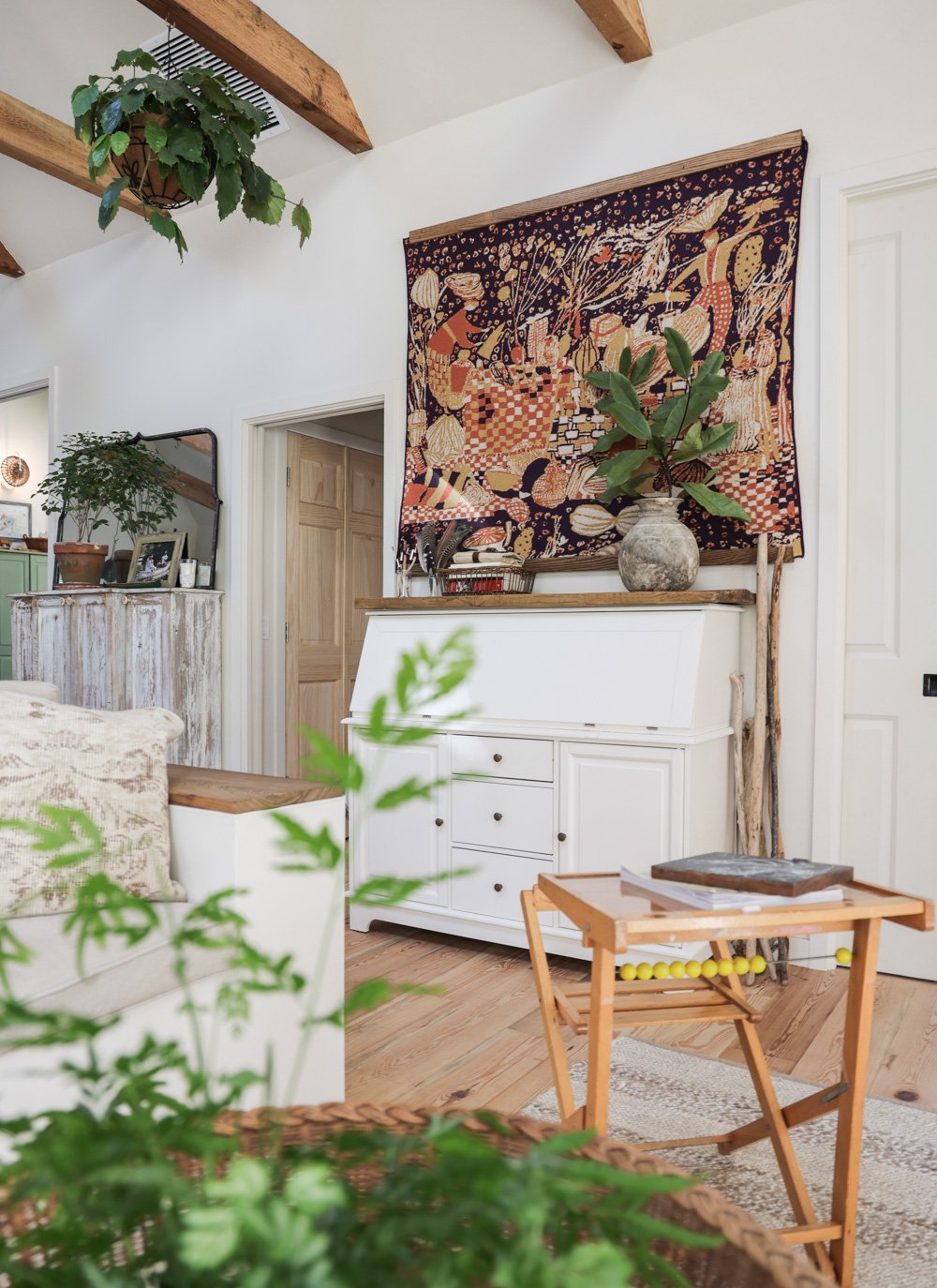
In our new cottage we suspended a large quilt in the living space / office, where it makes a big impression without making the walls feel closed in. By contrast, we’ve placed tiny, 2” frames around the house to keep family photos in sight without requiring a “gallery wall” or consuming space that’s better used in other ways.

Extra small brass frames from Connected Goods
Be a Good Steward of the Planet
There’s no shortage of mass-produced, “fast” home decor, such as generic signage, faux antiques, and synthetic plants. What if we avoid all of that, and decorate with the planet in mind instead? Responsibly-sourced vintage and secondhand goods, foraged finds, and daily essentials are all fantastic ways to adorn your walls and surfaces without contributing to the degradation of our one magical shared home.
Get Help from Hardware
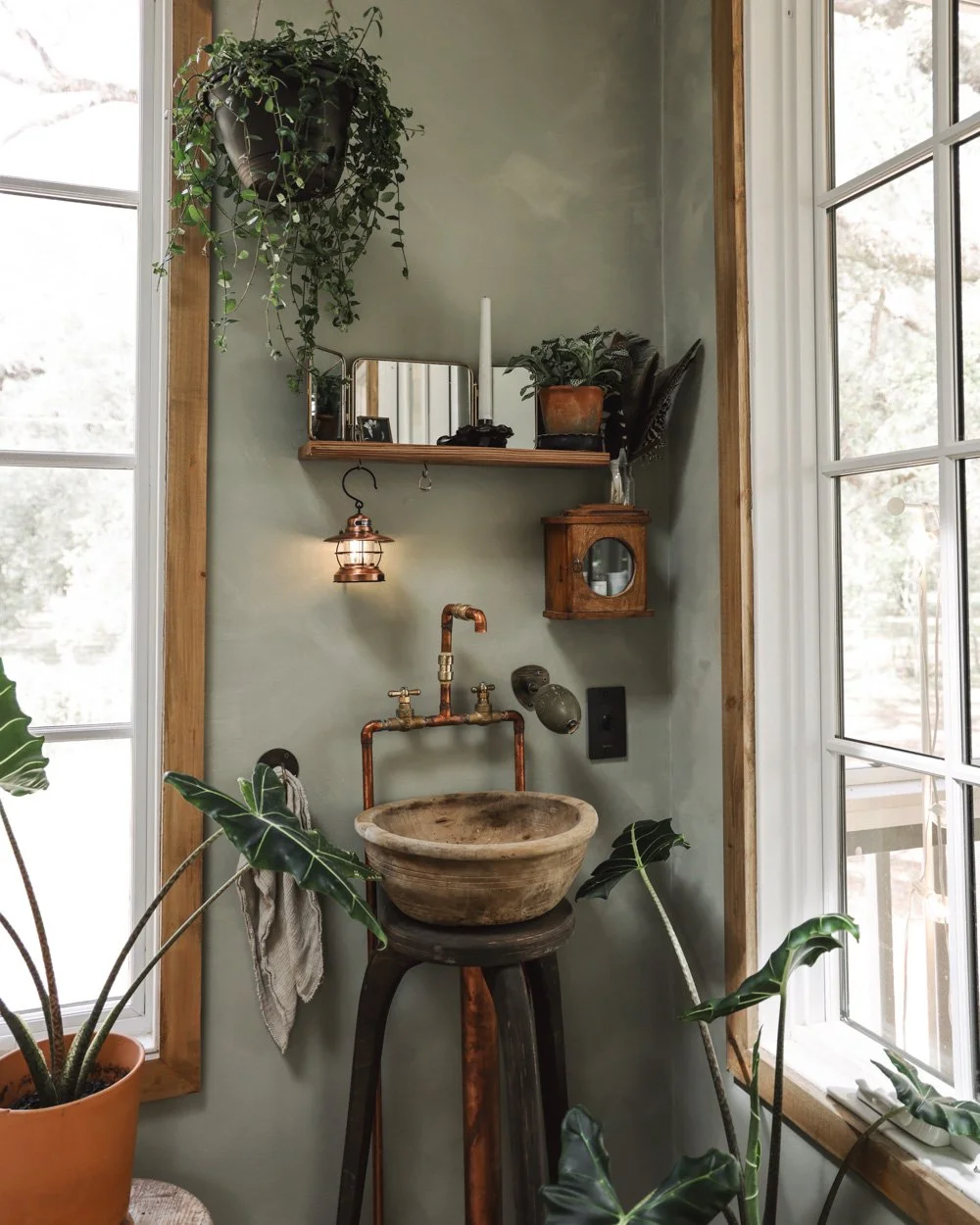
Hooks, racks, and multitasking wall units are a small space dweller’s best friend. Invest in a dozen s-hooks and you’ll realize just how valuable and versatile they can be in every space of your home.
Small Design Detail: Custom Switch Plates
Our previous cottage had standard plastic switch plates in every room. I never once thought about them, as they worked perfectly fine and neither enhanced nor downgraded the interior in my opinion. But when I designed this cottage, I wanted the organic feeling to extend through as many details as possible. So when I saw that the electricians whirled through the house and installed standard white plastic rocker switches, I was appreciative of their work, but not thrilled with the fact that I didn’t schedule myself to be on site that morning in order to chime in about the plates.

After calling to confirm that the local Repurpose Project would indeed take the plastic units if we chose to replace them, I decided we’d save up to swap them out gradually over time.
In the bathroom and bedrooms, I’ve slowly been replacing the plastic plate covers with unsealed wooden alternatives, which I stain with the custom blend of Rove & Dwell Natural Whey Stain that we’ve used throughout the woodwork in much of the house:

But for three specific areas, I wanted something particularly unique. One of those areas was the bedroom sink zone, where there was a rocker plate (that controls a porch light), which we upgraded this week with a Buster + Punch toggle.
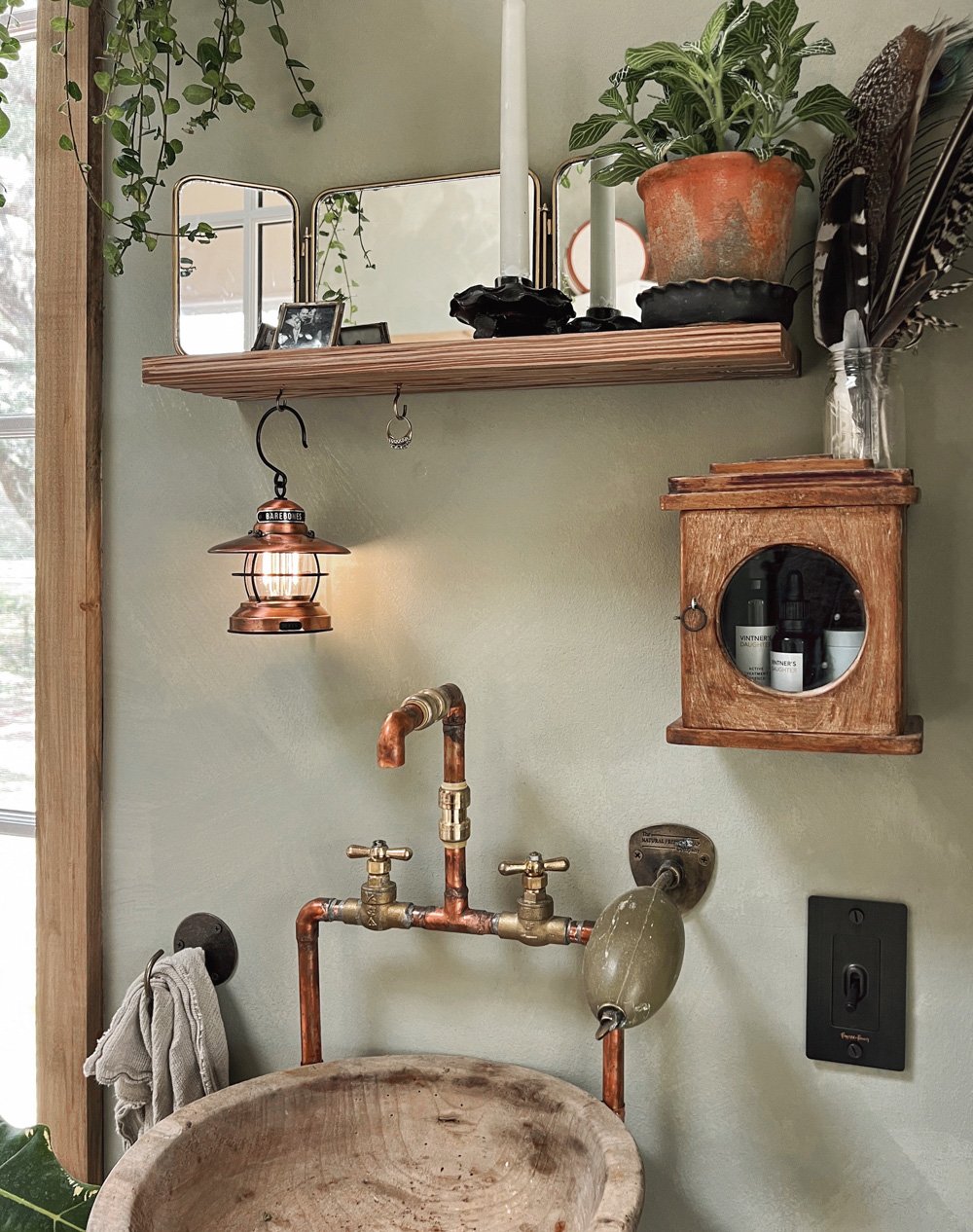
It’s a small detail with a big impact, don’t you think?