
Small Space Laundry Zone Solution for Air Drying Linens
When I designed our new cottage, I considered several locations for the laundry zone.
When I lived in Manhattan in a ~350 sqft apartment, I had a combination single washer/dryer unit in the kitchen in lieu of a dishwasher. When we were in our ~400 sqft cottage by the canals, our stacked washer and dryer unit were in a bike shed that we shared with our neighbors. And in my ~200 sqft studio on Venice Beach, there was a slim, thoroughfare laundry room on the ground floor for all the tenants to share.

I took all of these experiences and others into account when deciding what we approach we should take in our new home. An shed setup beneath the house was out of the question due to the extreme climate and likelihood of flooding in this region. A kitchen setup would’ve been doable, but I was concerned that having our cleaning AND cooking hub in the same zone would lead to daily congestion. And we’re far too remote to efficiently rely upon a community laundromat.

The logical location, in this case, was the bathroom. I first considered situating our bathroom counter over a side-by-side washer and dryer, but I really had my heart set repurposing a rescued slab of wood for the vanity, as well as designing a custom hutch for laundry + bathroom storage. So when I discovered a narrow, ventless, stackable washer and dryer, I knew it was the answer for us. Tucked into a custom nook opposite the shower and sink, the electrical would be far from splash zones, and the entire setup wouldn’t require any of the space needed for navigation and comfort within the room.
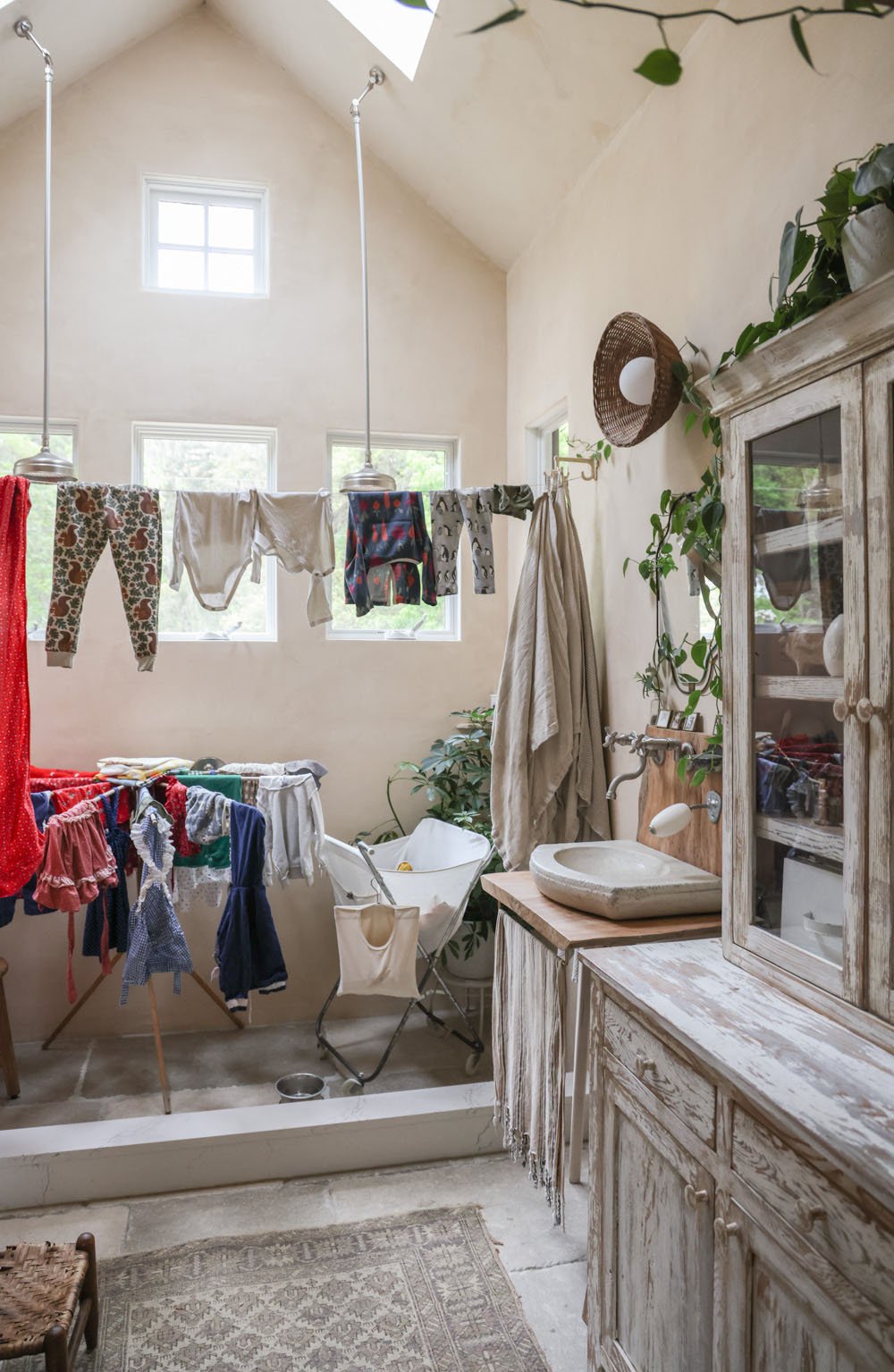
Even though we’ve typically always had access to a dryer, we’ve long preferred to air dry our linens whenever possible. But given the realities of the climate here, including frequent sudden downpours and tropically humid months on end, I wanted to reserve free space within the house for drying, rather than relying solely on our retractable outdoor laundry line. What would be the most suitable areas for this in our relatively compact home?

That’s when I began to picture the shower as a potential crucial component to our laundry room.
We usually try to conserve water by bathing quickly, so our shower is really only in use for about 10 minutes daily. As such, the bathing area’s real estate is largely available for 23+ hours per day. So when approaching the room’s design, I crossed out the option of a glass partition along the shower curb, along with the alternate option of a low / pony wall. Uninterrupted access would be easiest with a curtain.

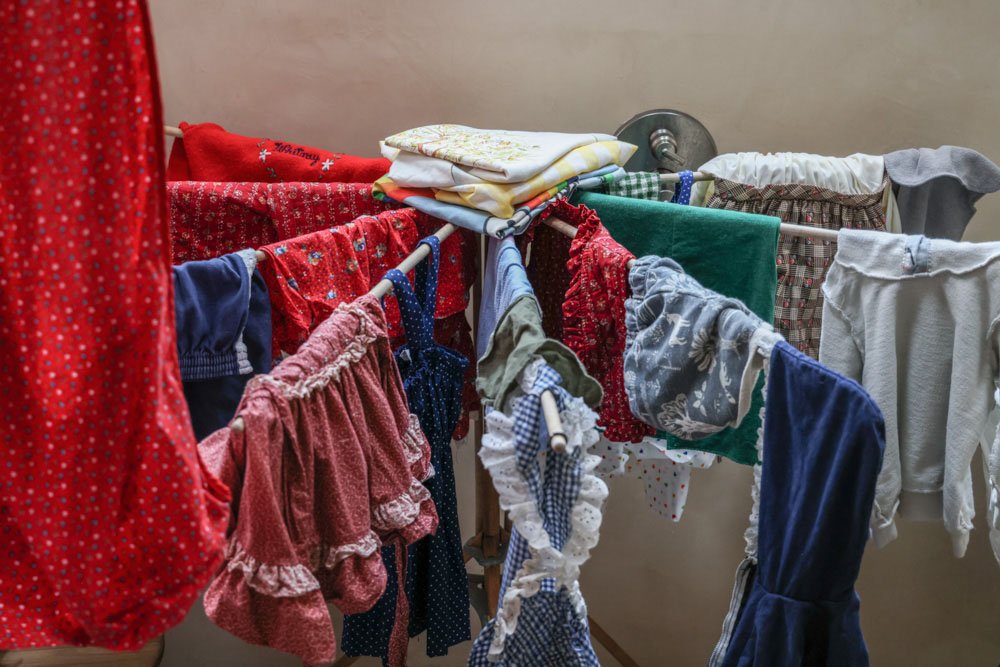
Since we didn’t want a horizontal curtain bar running in front of the mindfully placed windows, we installed two towel hooks directly above the inner edge of the curb line on either side of the bathroom, giving us anchor points for stringing up a removable drying line that could also hold our shower curtains. In addition to the line, we have a vintage, collapsible drying rack (that fits under our bathroom vanity when not in use), as well as our fold-down, repurposed baker’s bread cooling shelf for more surface space for drying laundry.

The end result is a room that’s fully in use throughout the day. It works perfectly for our small home and our family routines.

Repurposing Household Items: The Baker’s Cooling Rack
Note: While this entry is about a very specific item within our cottage — a reimagined, vintage baker’s rack — the message can be extended across countless home goods, as outlined towards the end of the post.
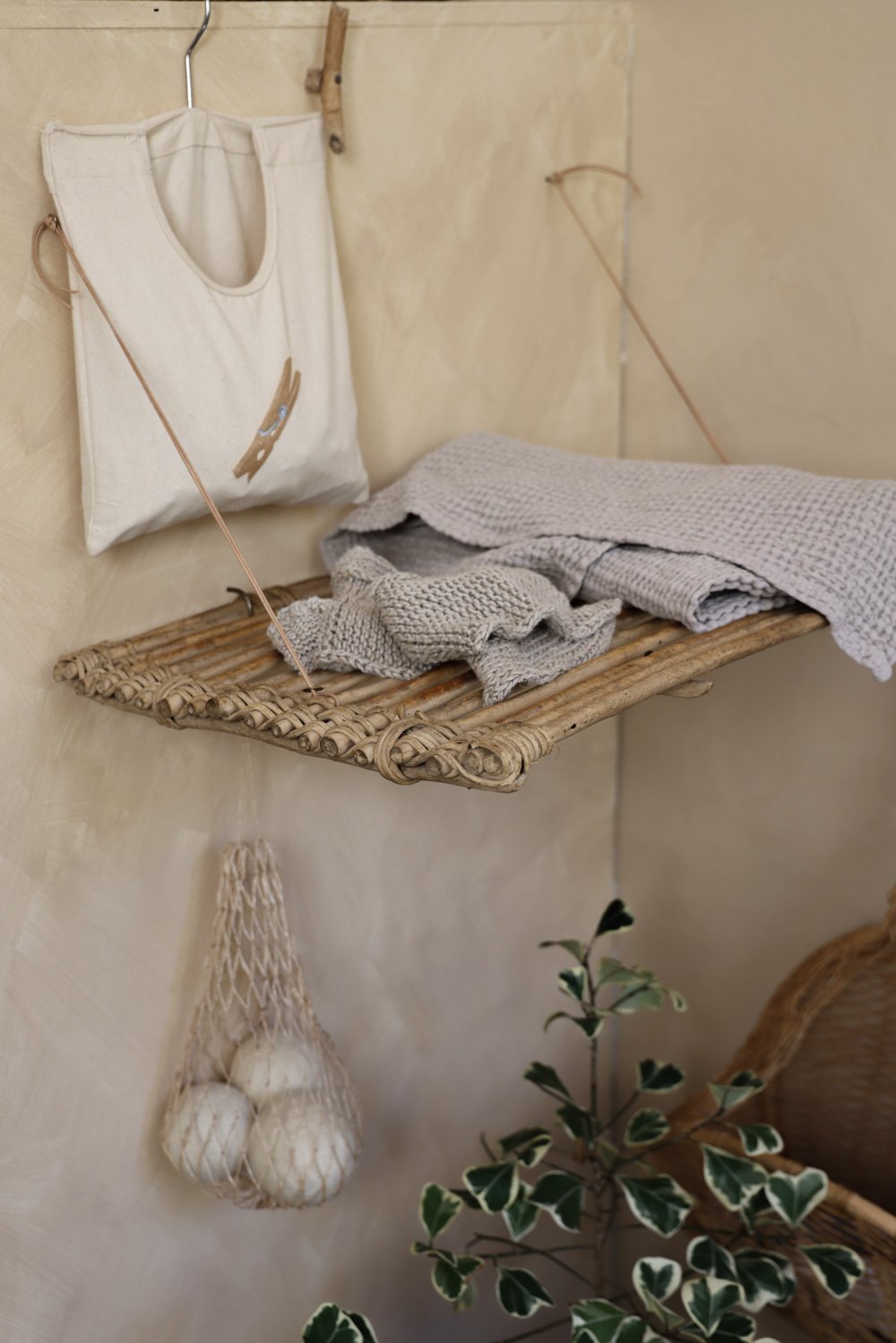
When we were designing our little bathroom / laundry room combo, I knew I wanted to leave space for linens to air dry.
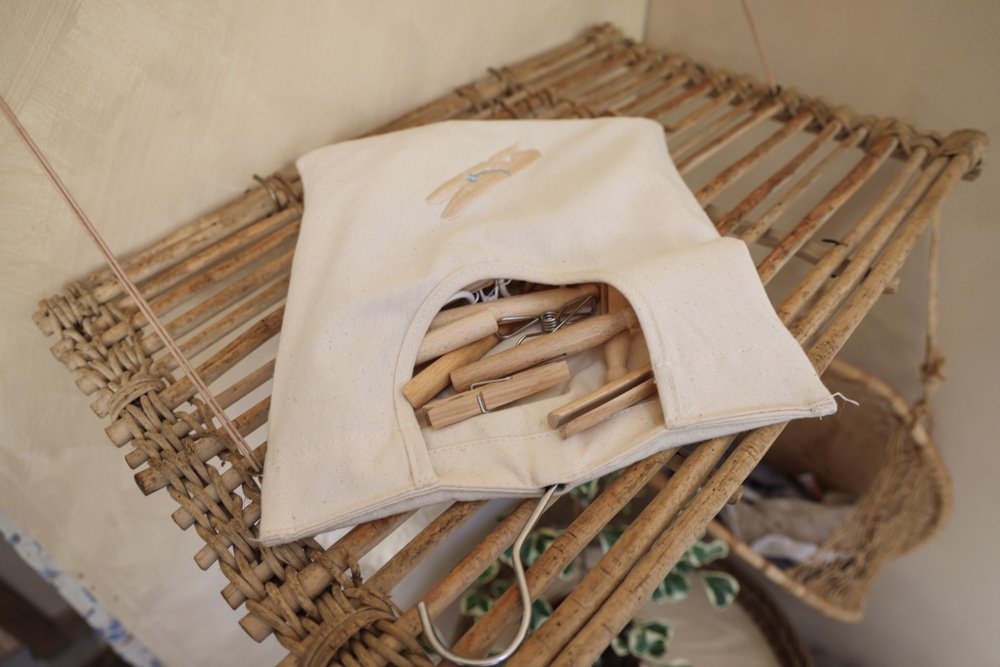
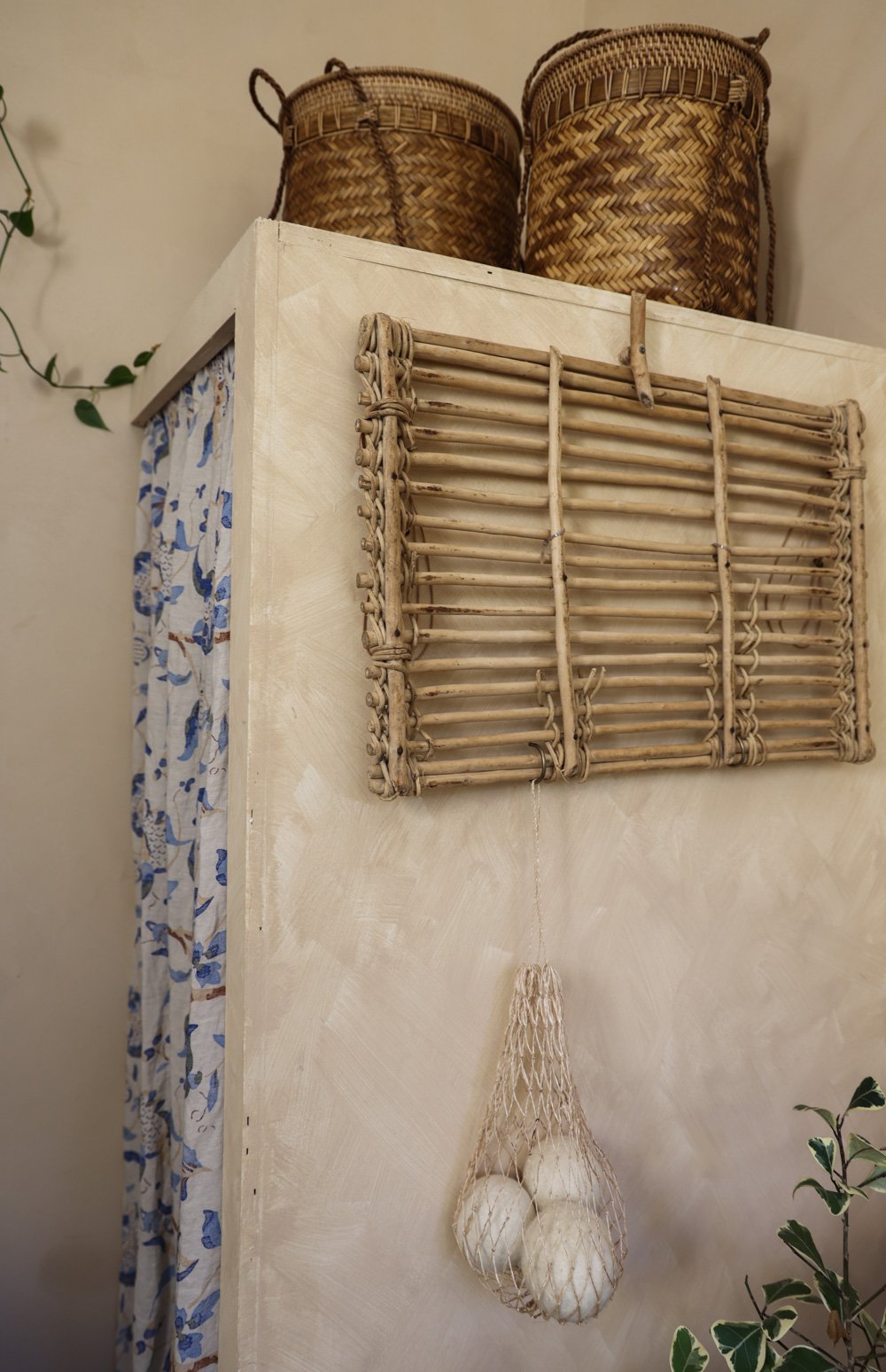
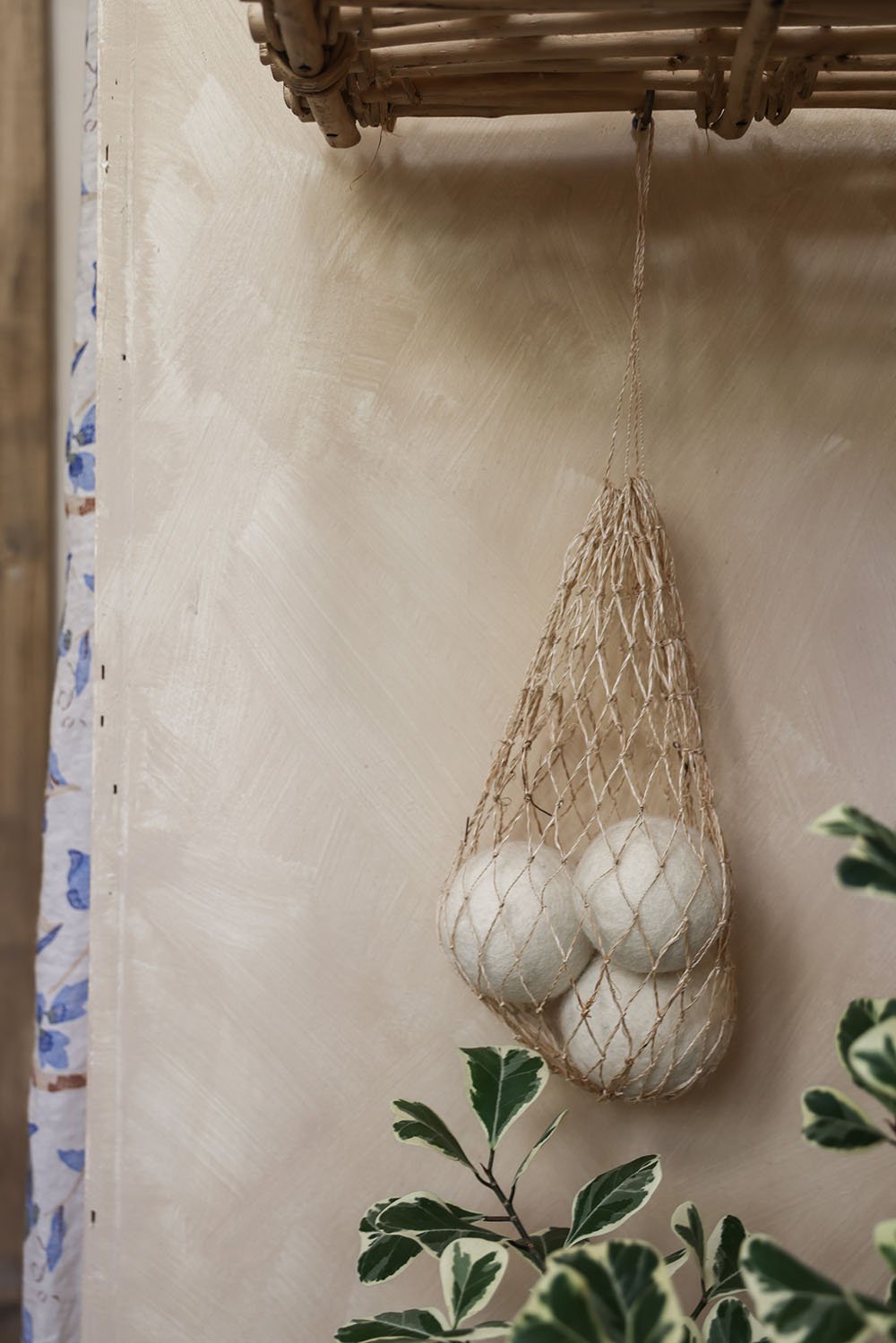
Our shower is one of those spaces. When it’s not in use for bathing, we sometimes pop open a vintage, collapsible drying stand for larger, damp linens beneath the windows and skylights. Another area we reserved for drying out (smaller) textiles was the wall space bordering the stacked washer-dryer. I wanted a fold-down, slated platform for items like still-damp, clean cloth diapers, and freshly washed Swedish dishcloths, but I didn’t want a newly-made plastic or metal rack from a big box retailer. So I went shopping within our home instead.
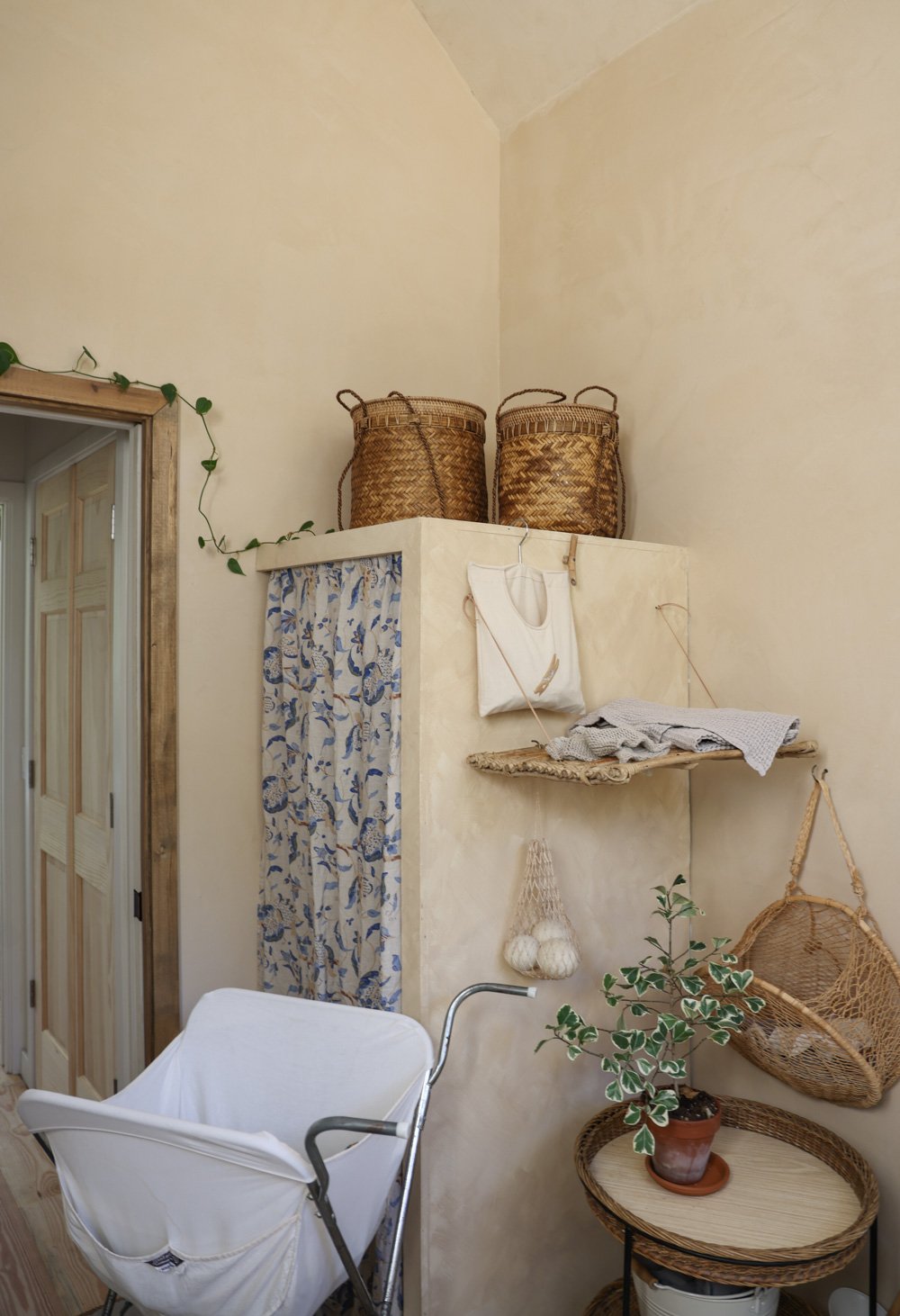
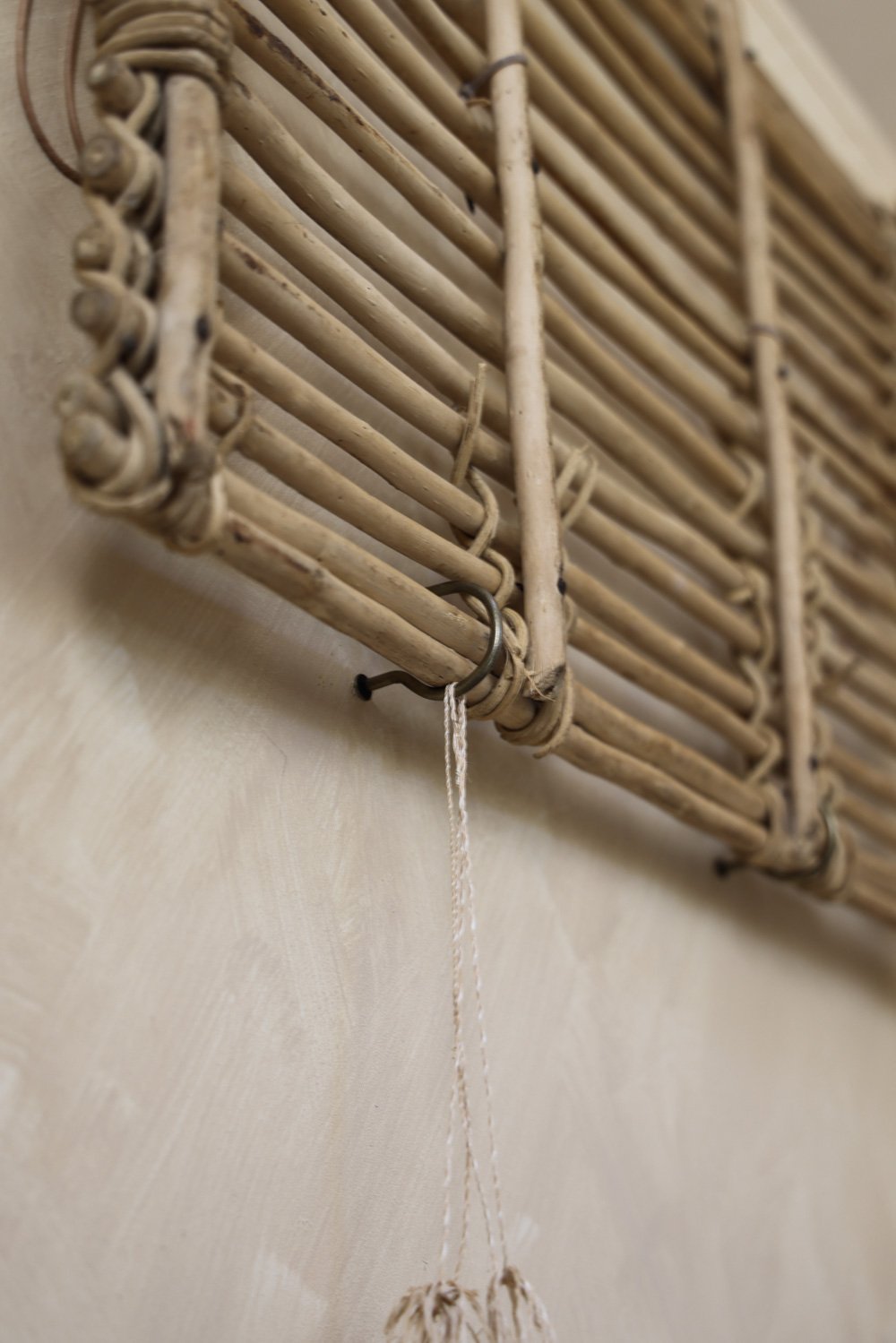
My eye fell upon an old French bread cooling rack that was dangling decoratively on our kitchen wall, waiting to serve a new purpose. It’s the kind of willow and reed shelf once used in a French boulangerie for supporting freshly-baked loaves of bread while allowing oxygen to flow around them. This was THE PERFECT size and design for what I had in mind by the washer-dryer. But what hardware would I need in order to attach it to the wall in a way that would allow it to function as needed?
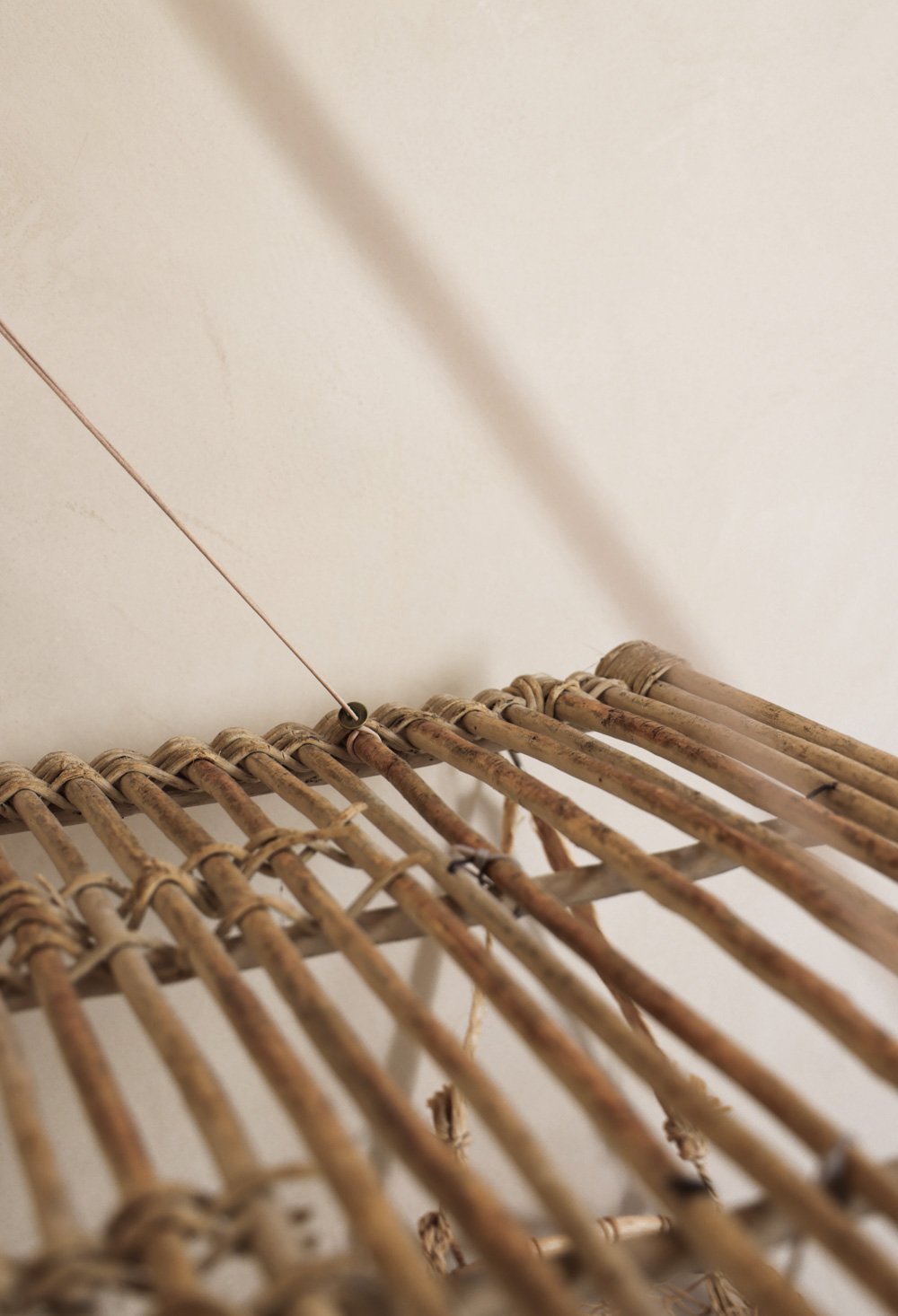
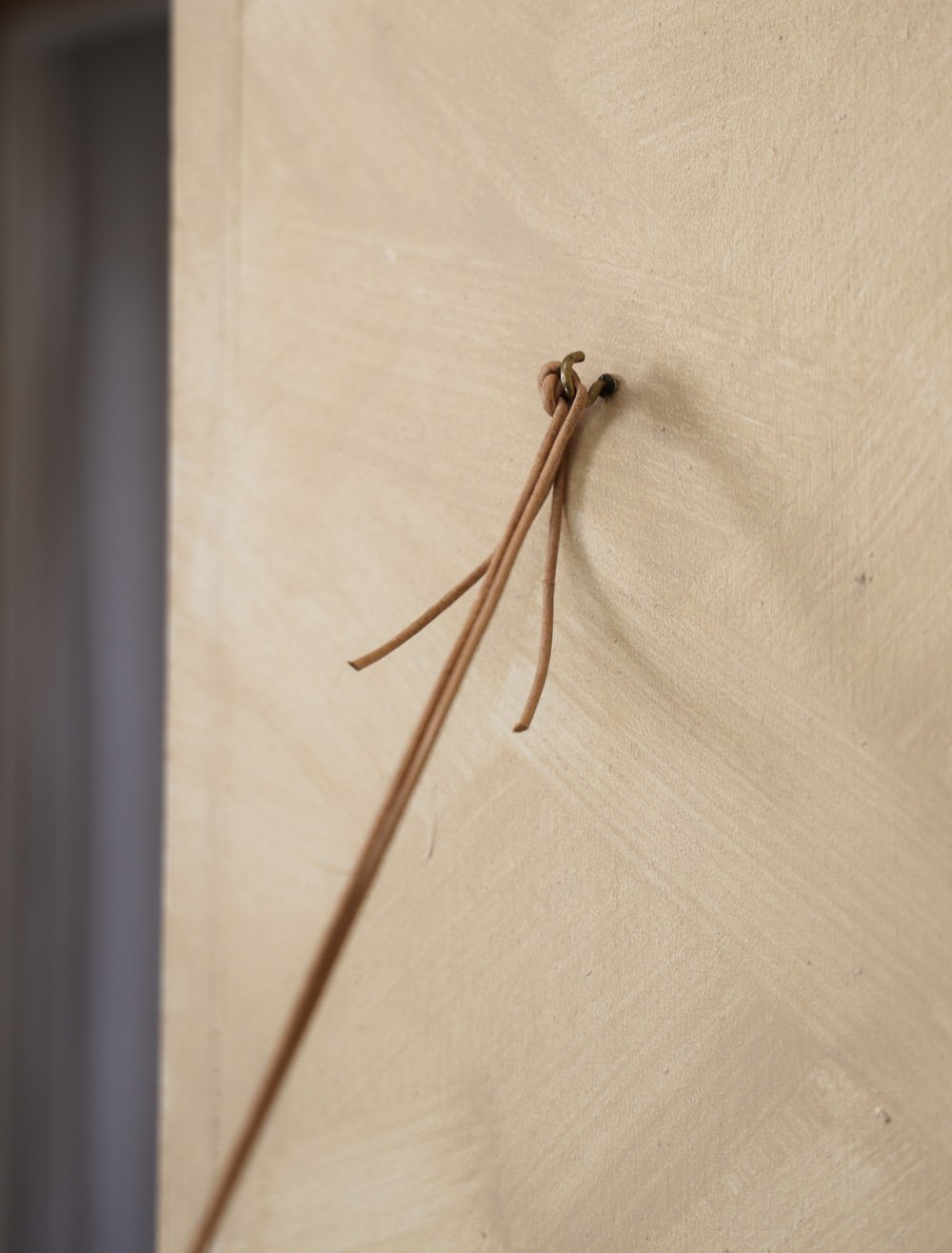
Again, we looked around our home. We found spare mug hooks in various sizes, two leftover chords from a suspended book rack (pictured in this post, 5th image), and a small piece of driftwood— all of which we could put to use to make the rack fold up and stay put, or fold down and support the necessary amount of weight.
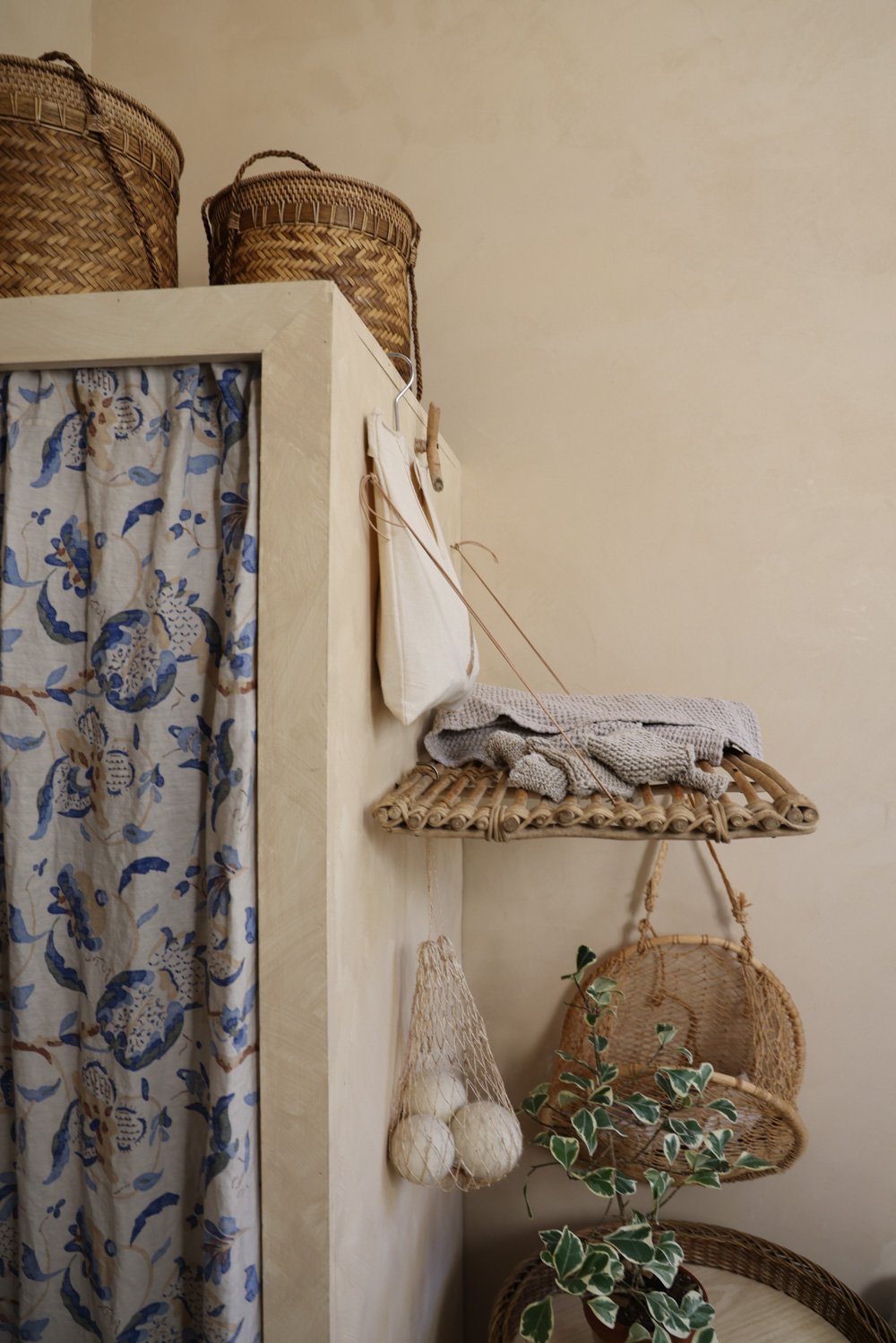

What we ended up with works for our tastes and the semi-foraged interior we hoped to create, while serving the necessary purpose.
If this approach to interior decor sparks your interest, try this when sourcing items for your home:
Stop searching for newly-manufactured goods by a specific name, such as “drying rack.”
Instead, imagine what items could serve the same purpose based on general functionality, design, materials, size, etc.
Then consider if you already have something that could work…
… Or if you can find a vintage or second-hand item that can be repurposed.
You’ll likely save money and enhance the character, originality and functionality of your home… all while being a more responsible steward of this planet.

Vintage Folding Laundry Racks for Small Spaces
Since publishing a recent post about styling a small stoop, I received many questions about our space-savvy drying rack. It’s been our goal to not use our shared dryer at all during spring and summer, so the rack is now a common sight in our garden.
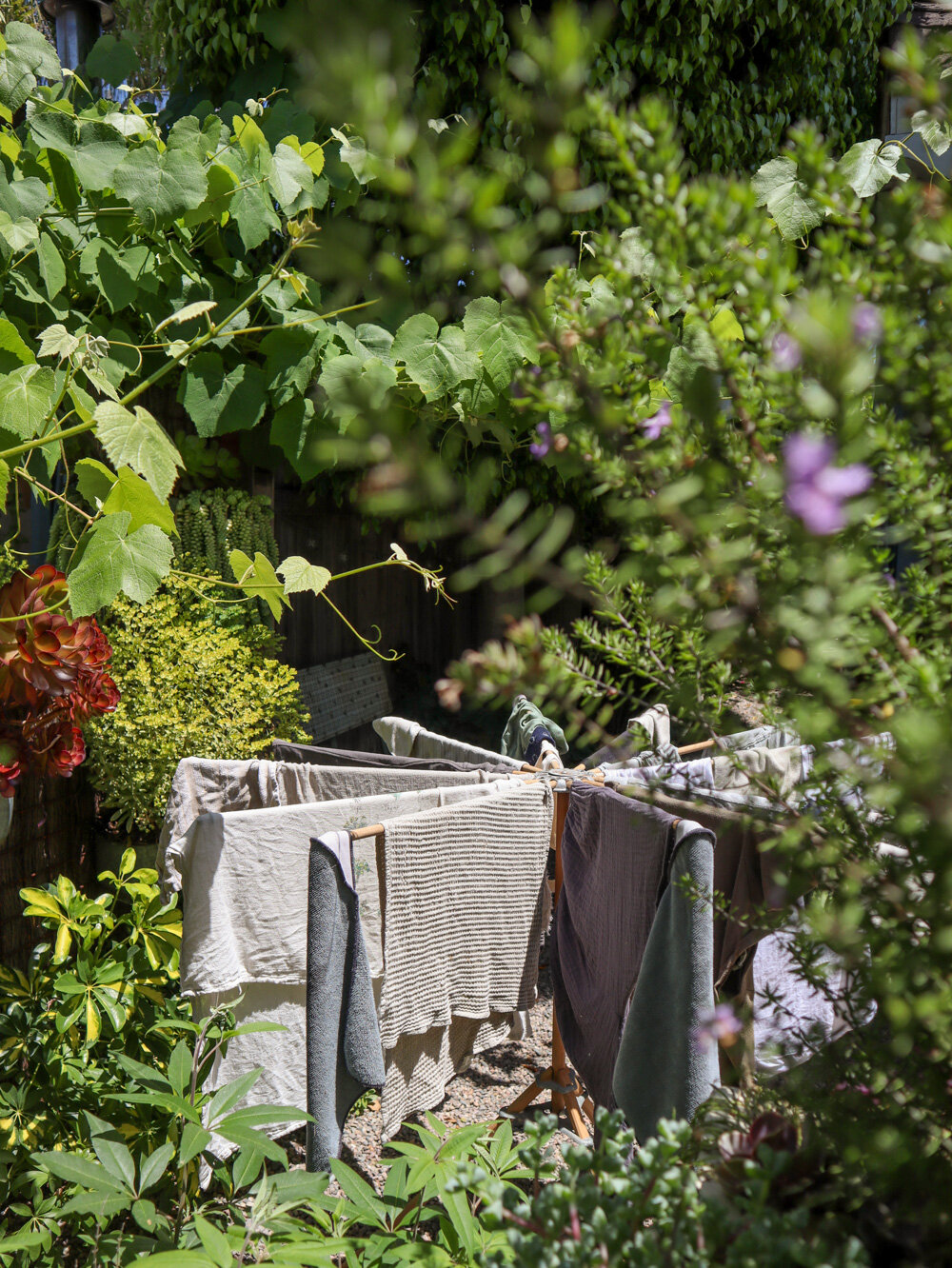
It was a vintage Etsy find, so I’ve rounded up similar designs below:

Right now, laundry is not simply laundry.
It’s a family activity meant to educate and entertain a preschooler about household tasks (shared by BOTH parents— not just one). It’s a well-worn collection of reusable goods meant to reduce our trips to the store as we attempt to keep our communities and families healthy by staying Safer at Home. It’s a round of linens washed together on cold and dried in the sun to help us reduce our negative environmental impact. It’s a vintage rack meant to save precious space in our tiny thoroughfare garden while supporting a small business. And it’s a bunch of overgrown plants — some edible — meant to enhance our positive footprint.

To make laundry lighter on the planet, we handwash delicates, wash on a cold setting (unless it’s a seriously mucky batch), and do fewer, larger loads vs smaller, color-divided loads.
We use our secondhand (but new-to-us!) collapsible rack in combination with two other tools: a folding rack from Helen Milan home (which is compact enough to easily use indoors or outdoors), and a makeshift drying line.

We do a fair amount of laundry, as we use washable/reusable goods in lieu of disposables, and because indoor/outdoor life with 2 dogs and a preschooler generates a bit of a mess.

Luckily I find laundry rather enjoyable and therapeutic. (Dishes, however, are Adam’s forté… I’m not a fan. And we share our household, parenting and business duties here.)

If you’re newer to line / sun drying, Simply Living Well: A Guide to Creating a Natural, Low-Waste Home by Julia Watkins offers some excellent tips on this topic (among many, many others).


The Pros and Cons of that Rumpled Look
Post Summary: Drying clothes and household linens in a small home/apartment.
Recently I discovered that our ridiculously extendable curtain rod is actually quite useful in our tiny space on laundry day:

Above: West’s handmade bamboo tops from Caribou Kids drying on the extendable curtain rod.

The pros of air drying are, of course, that it conserves energy and curbs the associated costs. For us, the cons are that it doesn’t remove all the dog hair (and there is SO MUCH OF IT here) from fabric, and that even a little bit of laundry can overwhelm a small space.

Above: West and I wear basics / undergarments from Arq.
Honestly though, for whatever reason, I don’t mind having garments out drying throughout our home and garden. (Dirty dishes, however, bother me— no patience for those here! Everyone has their hang ups…)

Above and below: West and I have matching robes from Odd Bird Company.


Since we all share one compact closet, our clothes are usually a bit (or a lot) rumpled.

Above: Wearing linen from Beaton and Garnet Hill.
It’s something I’ve long accepted, and it’s one of the reasons I love wearing and decorating with linen, which looks just as lovely when somewhat wrinkled.

Same goes for organic cotton and bamboo, of which most of West’s clothing is made.

Above: Child’s underwear from Arq, cloth overnight diaper from Grovia. (Photo by Tinylicious.)
We have a tiny iron, but we probably only use it a handful of times per year.

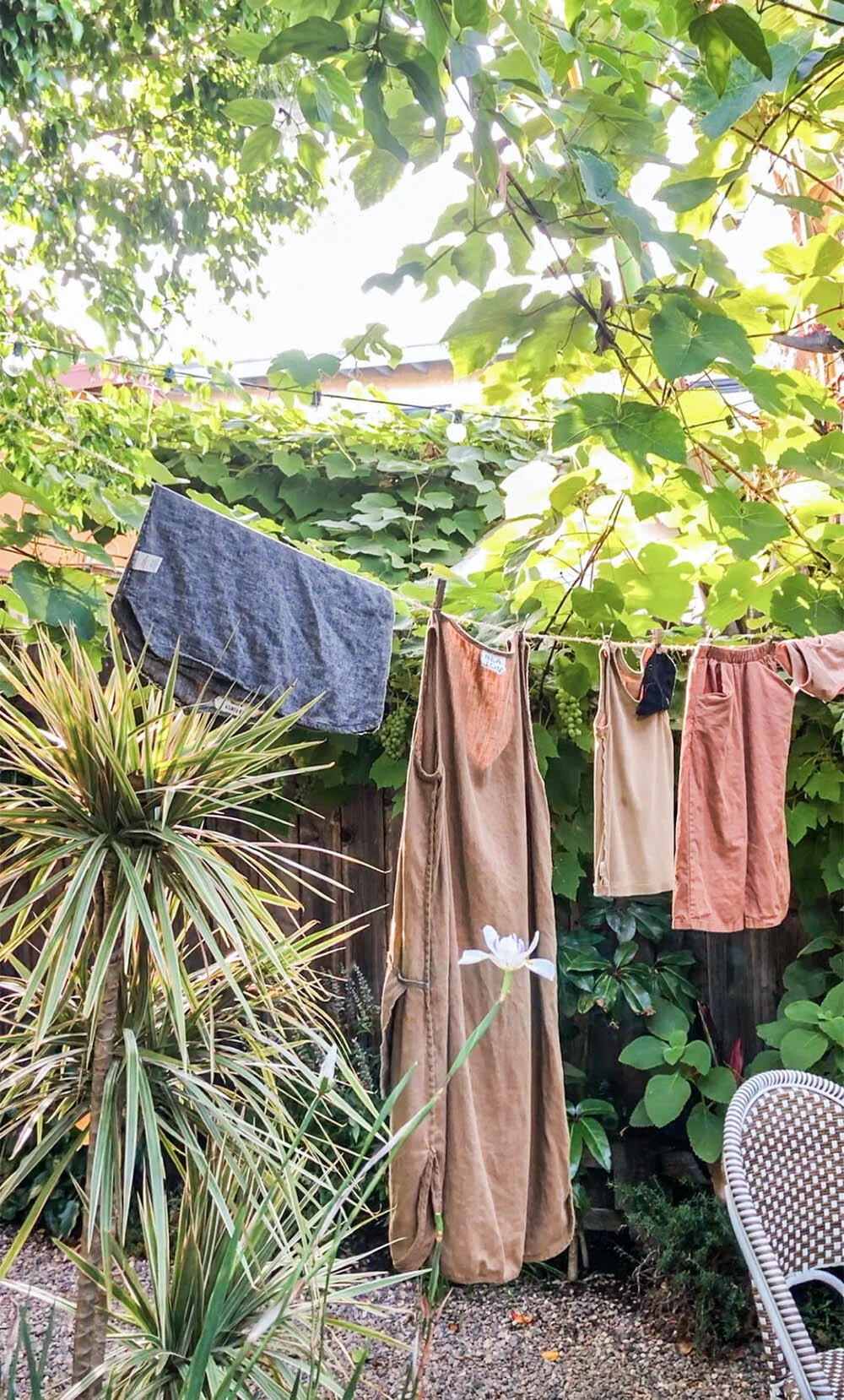


The more we love our clothes, the more I don't mind seeing them drying from the beams, seat-backs and doorways.

Above: Our folding drying rack from Helen Milan Home. (Photo by Tinylicious.)
Looking to start air-drying your clean laundry in your small home/apartment? Scroll to the bottom of this post for a collection of space-savvy accessories that might come in handy.

Keep in mind that a string safely secured from one end of the room to the other can work just as well— you might not need to buy a thing.

But just in case you do, here’s a mix of vintage, handmade and a couple new items that might help.
