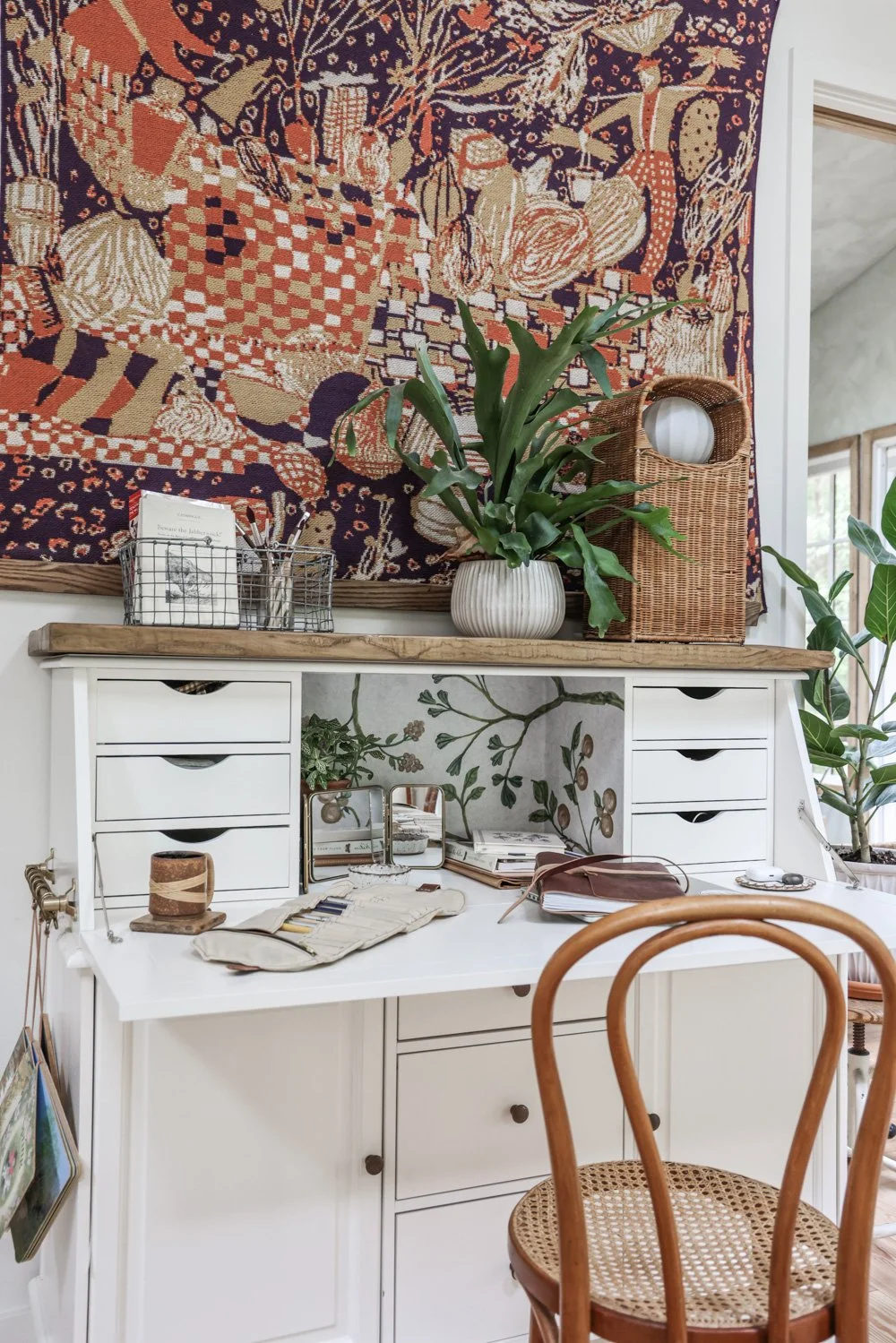
Before & After: Adding Character to Furniture
I’m a fan of working with what we’ve already got. It’s usually better for our wallets, better for the planet, and a way of making our homes look and feel our own.

A wobbly vintage rolling cart might just need a replacement wheel to be functional.
A broken planter might be useful when transformed into the perfect frog (or fairy) house on the stoop.
And a bland piece of furniture might just need a few reclaimed and repurposed accents to achieve its true character.
Our fold-away storage desk was one such piece:

This desk is perfect for our needs here in the cottage. It functions as an ample workspace when open, a narrow and unobtrusive console with storage when closed, it offers a standing-height tabletop when desired, and it’s almost the perfect width for this pocket-door frame-filled wall, which can’t support any substantial weight on its own.
But there was just no getting around the fact that it looked new and stale compared to pretty much anything else in our little home. The most obvious way to add character would be to paint it, but not a day has gone by since we installed this piece when it hasn’t been a heavily relied-upon workhorse for my small business. So rather than paint it — at least for now — I opted to work with materials we already had here at home in order to give the desk a beating heart.
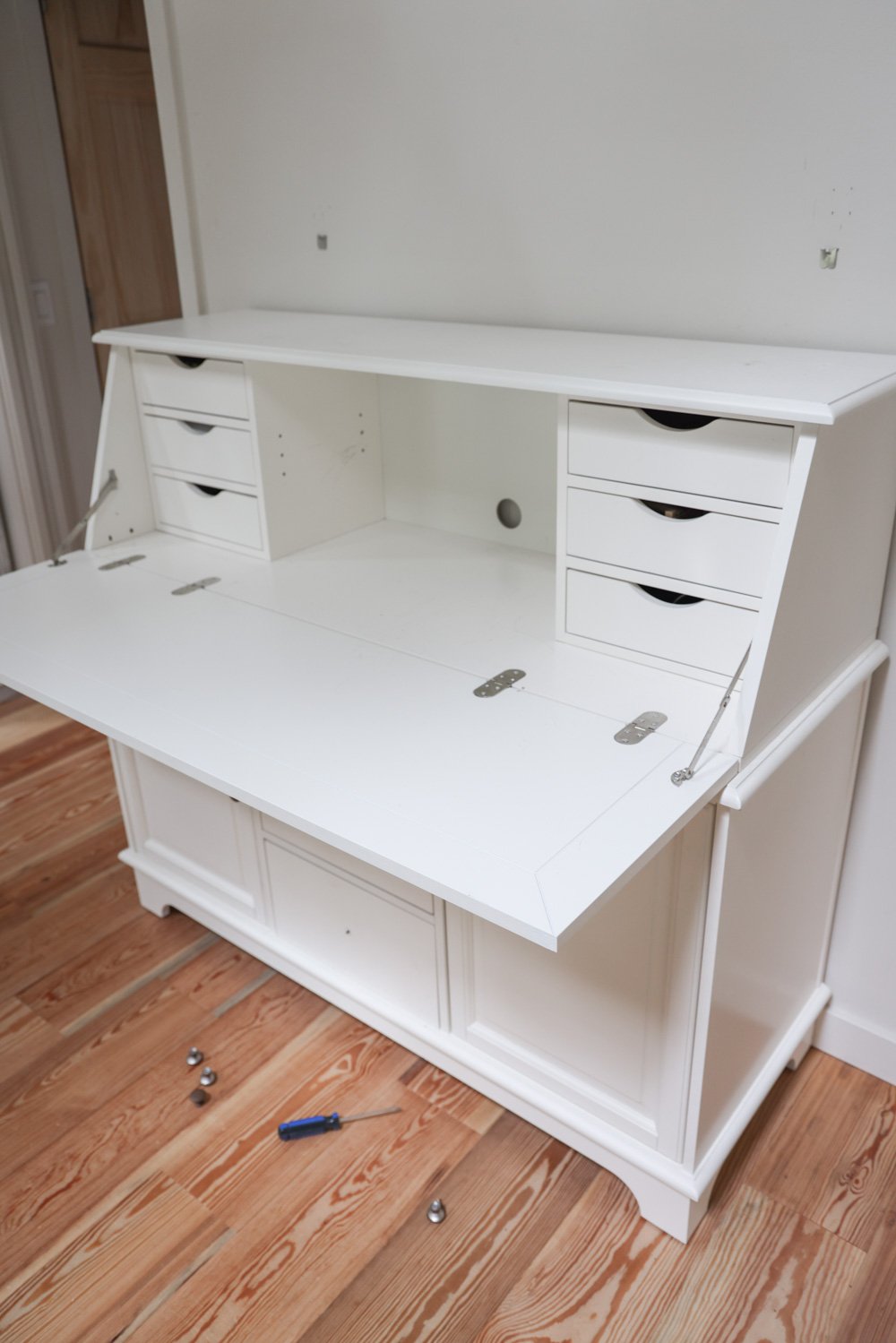

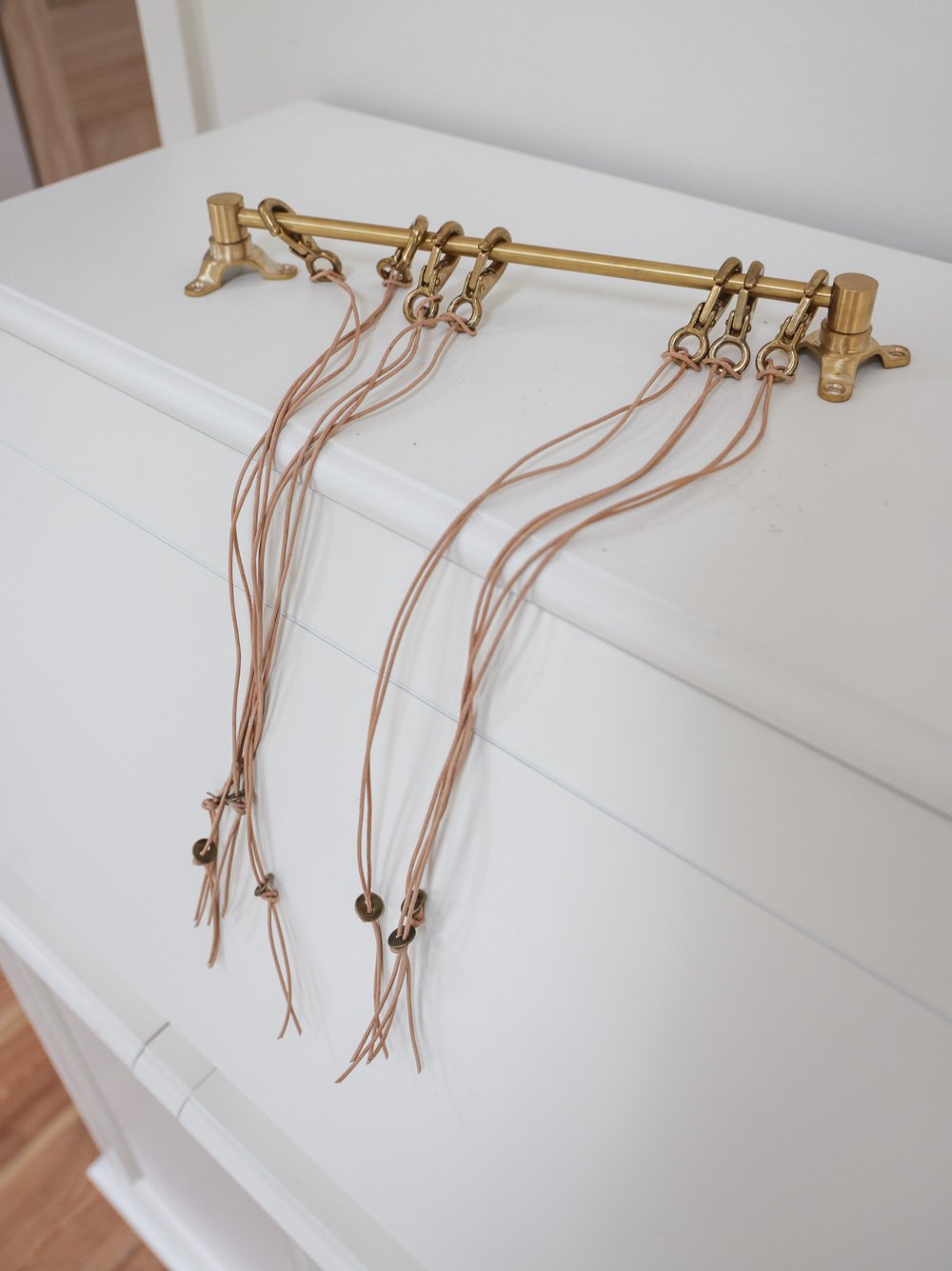
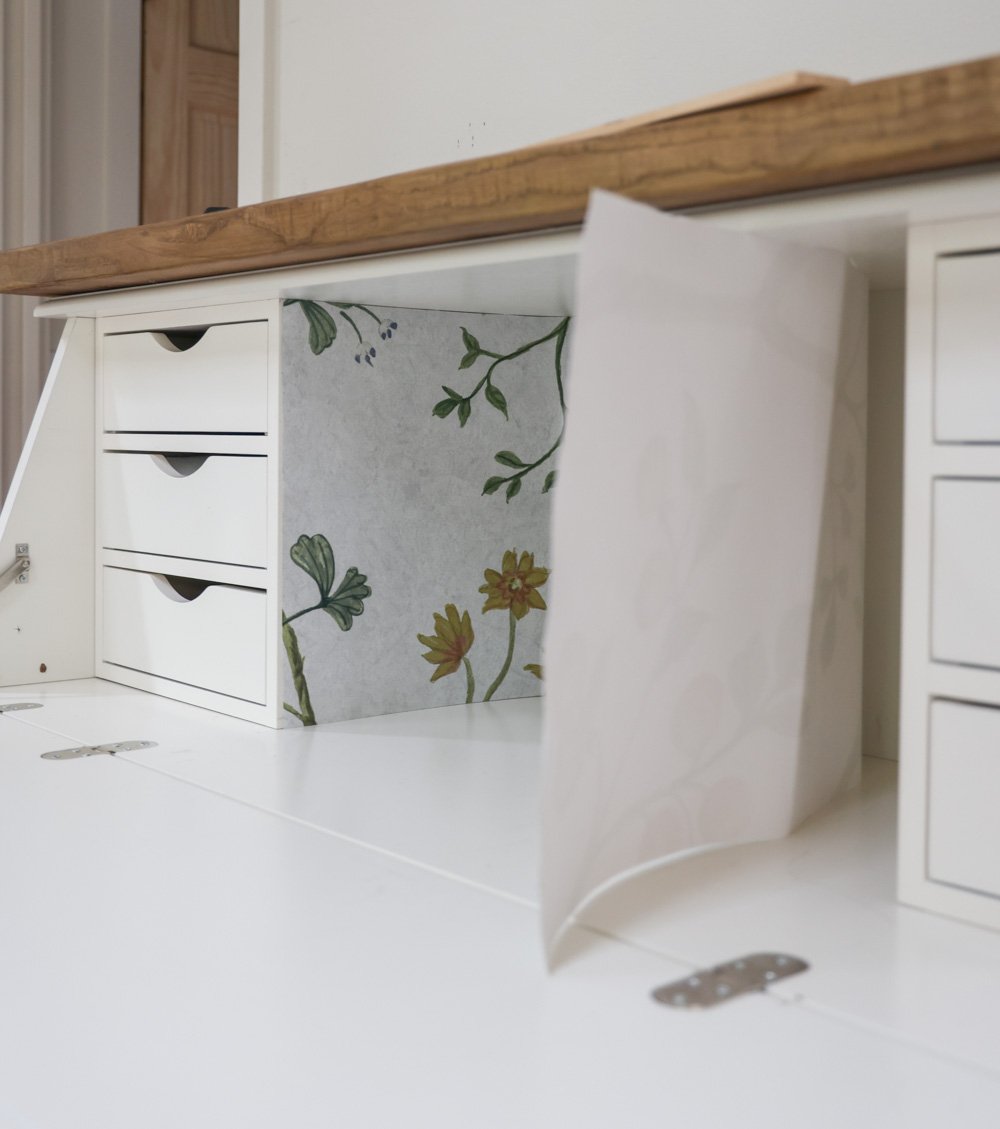
The brushed nickel nobs got a (hastily applied) coat of leftover textured bronze spray paint. The interior cubby received a remnant piece of peel + stick wallpaper from Rebel Walls, a scrap from our closet makeover. The exterior became a touch of extra book storage thanks to a clever, made-to-order suspended system that we were gifted upon moving in. Lastly, we layered the top shelf with a reclaimed wood board that was once the tabletop of narrow kitchen island from one of our previous homes.


While the end result isn’t the century-aged, eco-friendliest antique of my dreams, it is a highly usable, purposefully chosen, and mindfully modified desk that I plan to use for years to come.


If you already have newer furnishings for one reason or another, consider adding a dash of reclaimed materials to them in one or more ways. Vintage hinges, door knobs and pulls can work wonders. Similarly, consoles, countertop segments, accent pieces, and more can be enhanced when securely topped with a layer of repurposed or reclaimed materials, sized to your specifications. Additionally, paint, wallpaper, and secondhand accents can further transform a flavorless piece into a story-rich heirloom.


Biophilic Design: The Greenhouse Office (Brick Floor Update)
Shortly after we constructed our 114 sqft greenhouse-office, I was inside tending to a potted plant by my laptop when a small garden snake slid from the leaves to my hands before dropping down to my boots and sliding beneath the deck floor.

While I’m happiest when blending the indoors with outdoors in our design, I’ll admit that interacting with snakes while going about my daily office work wasn’t exactly my intention.
For the sake of the snakes and our family’s safety, I realized that we’d have to add either a screen to the underside of the greenhouse deck, or install decorative flooring within the structure.
As I wanted the interior to feel more like a traditional greenhouse settled into the ground (versus the raised format in which it’s constructed due to flood code), I opted for brick flooring. I’ve always loved the organic feel of brick, which is a material that’s long been used heavily throughout our region.

Rather than source traditional thick bricks, which would eat up valuable inches of height within the compact space and add extra weight, we picked a glazed thin brick from Fireclay.
We selected a hue named “Wind River,” which we chose for the way in which it perfectly echoed the mix of green, brown and grey of the Spanish moss in the grand live oaks overhead.

So while we kept nature out in one way (sorry, snakes - it’s in everyone’s best interest!), we like to think we brought it in via another avenue.

The low sheen on the otherwise muted surface gently reflects the sky, along with the movement of the clouds and foliage in the wind.

And the pattern is the same we used in the bedrooms of the cottage with reclaimed, remnant pieces of wood. These domestically-sourced bricks are rustic in appearance, yet elevated thanks to their lead-free, hand-applied glaze.
So the main question is, of course: why is there no grout?
The tile arrived in May 2021, but no contractor has ever arrived as promised to lay the subfloor and install the bricks properly since then. Rather than enter into month ten of waiting, our family (including our eager and loving 6 year old) decided to place the floor down ourselves. We figured that the loose installation felt reminiscent of informal brick floors of traditional old greenhouse anyway. Initially the bricks shifted and sang a bit, but they’ve now seemed to have settled. Soil and leaves sweep easily off the surface without much catching, but any little bits of earth that remain behind only add to the organic feel we welcome happily within this special space.

Perhaps, in another season of life, Adam and I will tackle the formal installation. Or maybe a professional will even show up to help as as once planned! We’re not holding our breath. We’re grateful for what we’ve got: a nature-rich — yet snake-free and mosquito-free — home office that gently brings the wild beauty of the outdoors in.
Note: Thank you to Fireclay Tile for generously supplying the bricks we used for this project!

Tiny Greenhouse Bedroom + Office
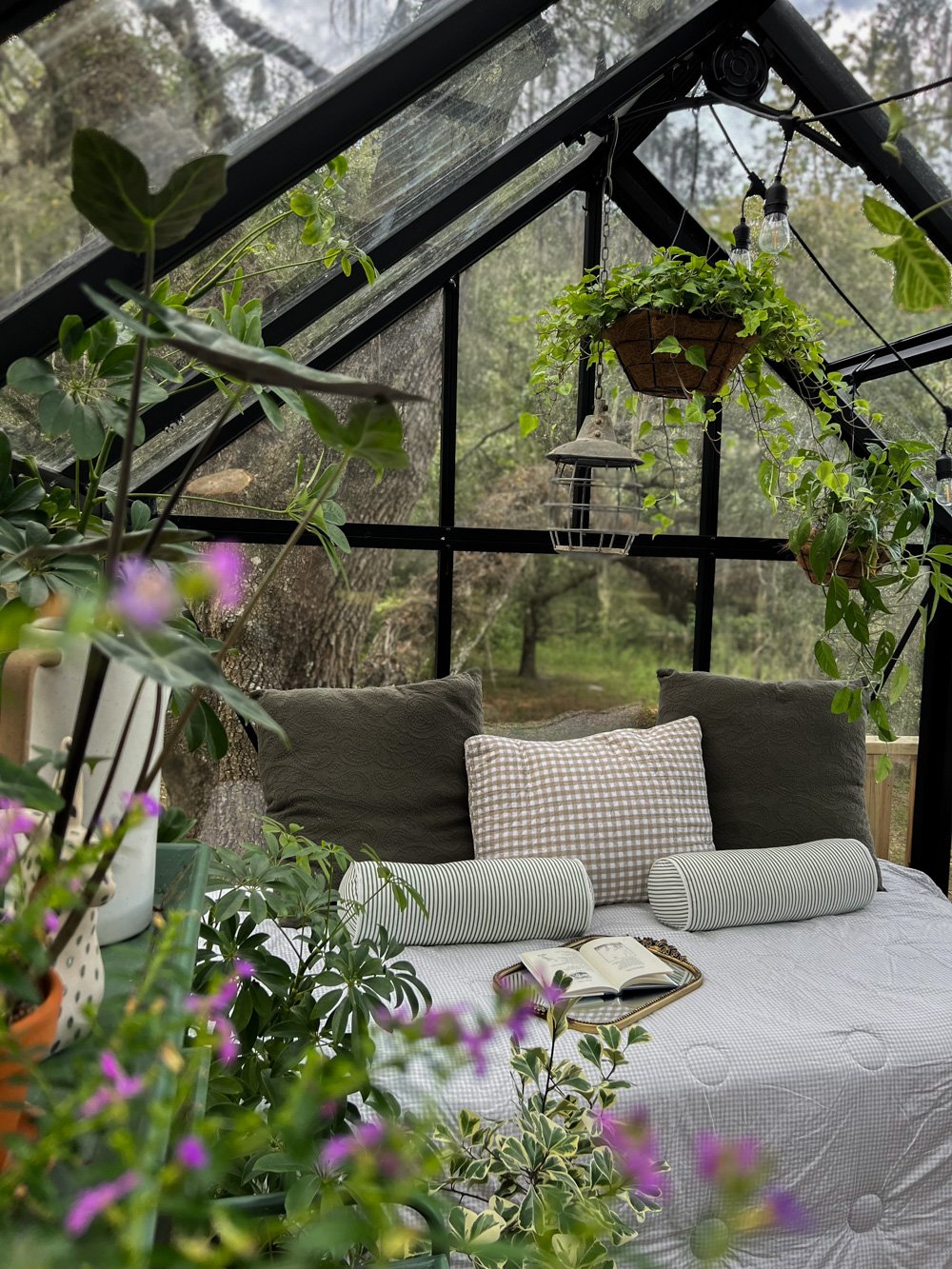
In a recent poll on social media, folks asked to see our tiny greenhouse as a sleep + workspace combination through the introduction of a daybed.
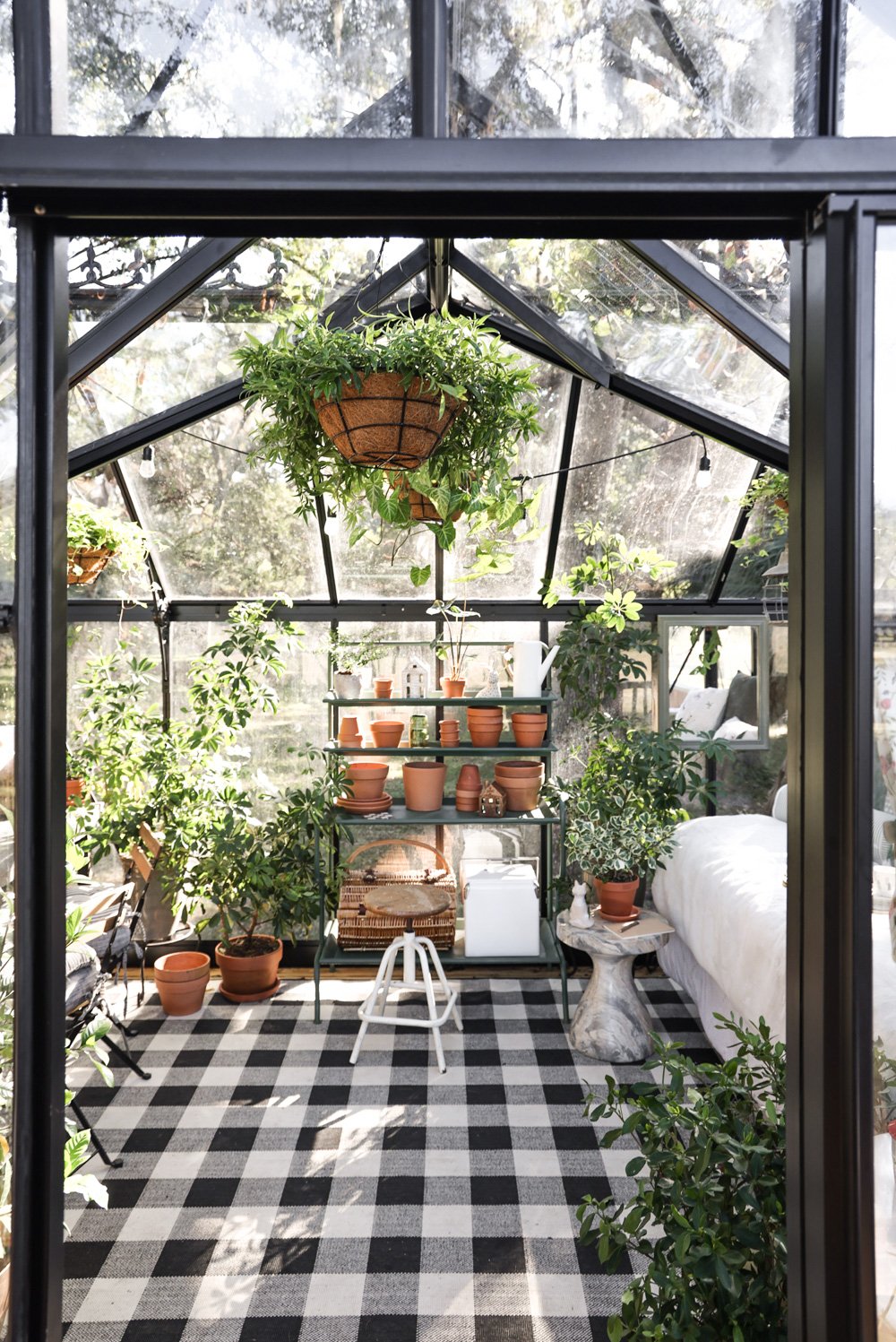
As we’re currently pulling furniture from storage in anticipation of our Cottage move-in date, as well as keeping the greenhouse flexible in preparation for the brick flooring installation in November, we figured we’d give the new setup a try.

After all, ever-versatile (and small) spaces are my favorite…

We hauled out West’s organic Avocado mattress, which he’ll be using in the Cottage when the time comes. (If we decide to keep this daybed setup out here at the greenhouse, we’ll ultimately secure another.)

organic mattress
(healthier for people. healthier for the planet.)
use promo code WHITNEYLEIGHMORRIS125 here
Adam and I have — and loooove — the same mattress in a Queen (with the topper add-on). We even got another Avocado in a King size as a gift for my parents last year. And yes— even the dogs have Avocado pet beds. After all, they’re as much family as the rest of us.

With the introduction of the daybed came the need to balance out the space with a larger work surface, so I brought in this slim, folding, reclaimed wood table.

I find that narrow, collapsible, yet expansive surfaces like this are ever-useful in compact rooms.

I’m a fan of this new format. Once the Fireclay brick floor is installed, I suspect we’ll make a daybed a permanent piece.

What do you think? Could you work and doze here— all in 114 sqft?

Back to School & WFH: Working & Studying in a Small Space
Post Summary: How to establish and maintain more efficient practices for working and schooling from home in compact quarters with a partner, roommate and/or kid(s) ever-present. (View a related 15 second video here.)
As the new school year approaches and folks around the globe are settling into the idea of potentially working and schooling from home for the long-haul, I thought it might be of assistance to some if I shared this updated post about how we managed our live/work/daycare/school practices here in our small space.

Below are several accessible tips I’ve learned over the course of a dozen years of operating a business full-time from small residences, including some newer points that I’ve adopted in recent years since my husband began working from home, and our son has grown from a baby to a toddler to a preschooler.
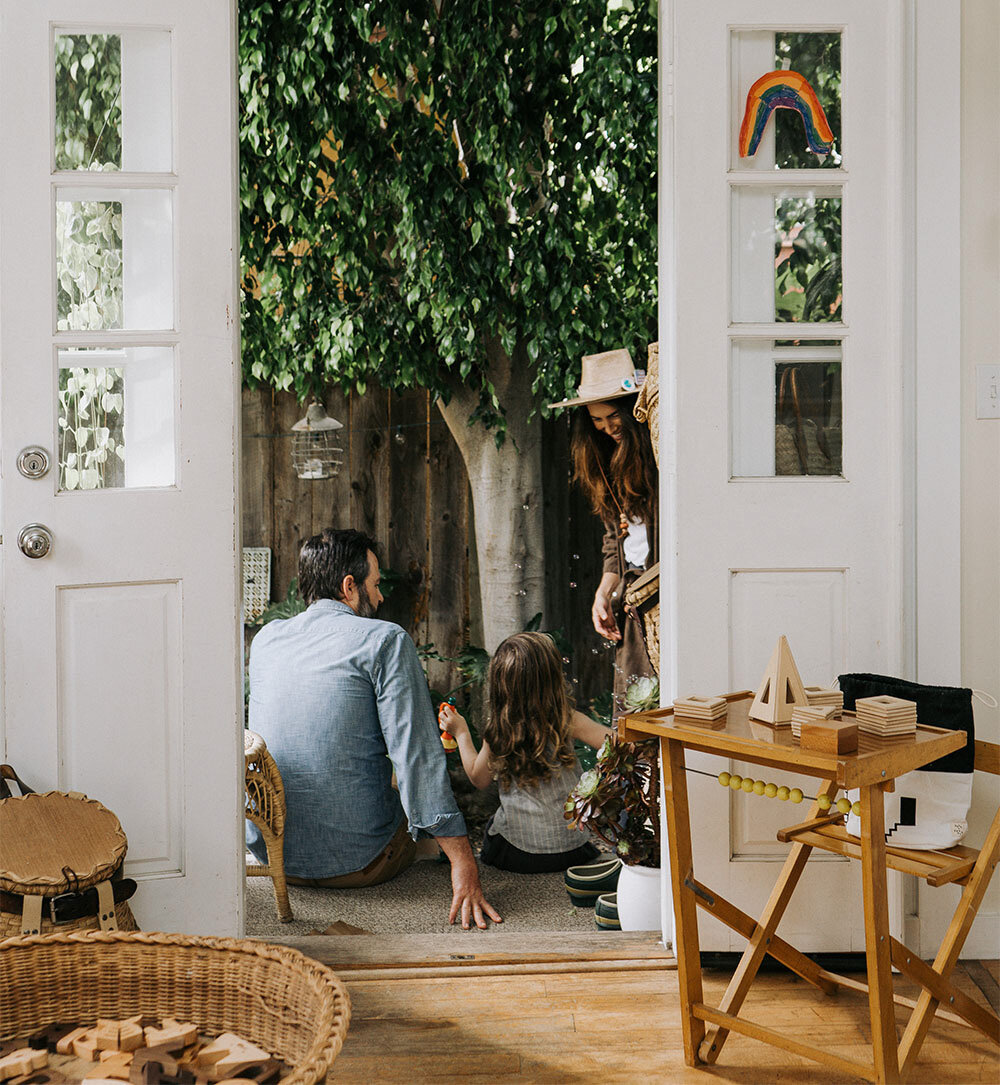
It’s my hope that these ideas will help you work and study effectively from a small house or apartment, whether you have dedicate space for a home-office and a home-school, or if you’re creating pop-up spaces.

Keep in mind that some days will undoubtedly be more challenging than others— there’s no magic solution to this juggling act. But the privilege of working from home during the pandemic is something to acknowledge and keep in perspective. So many people are out of work across the globe, and medical professionals, delivery personnel and workers tied to essential businesses are putting themselves at risk to keep the rest of us safe. Staying home— even if it’s not your preference— is important for our communities, so let’s make it work.
Make your bed
Studies show that people who make their beds tend to be more productive. But in a small space, I think that making the bed is doubly important. With limited square footage, the bed can become a useful surface for random tasks throughout the day, such as sorting/filing/printing papers.
Carve out time for self care
Whether it’s as simple as brushing your teeth and taking a shower— or more involved, like doing Yoga, making coffee/tea/a smoothie, putting on makeup if that’s your preference, and/or taking your pets for a (responsible!) walk, make sure to carve out time in your morning before work to accomplish the things you’d normally do before leaving your home for an office job.
Get dressed
I know this is often recommended to the point of exhaustion. Still, it really is helpful— even if you’re not on Zoom / FaceTime meetings during the day.

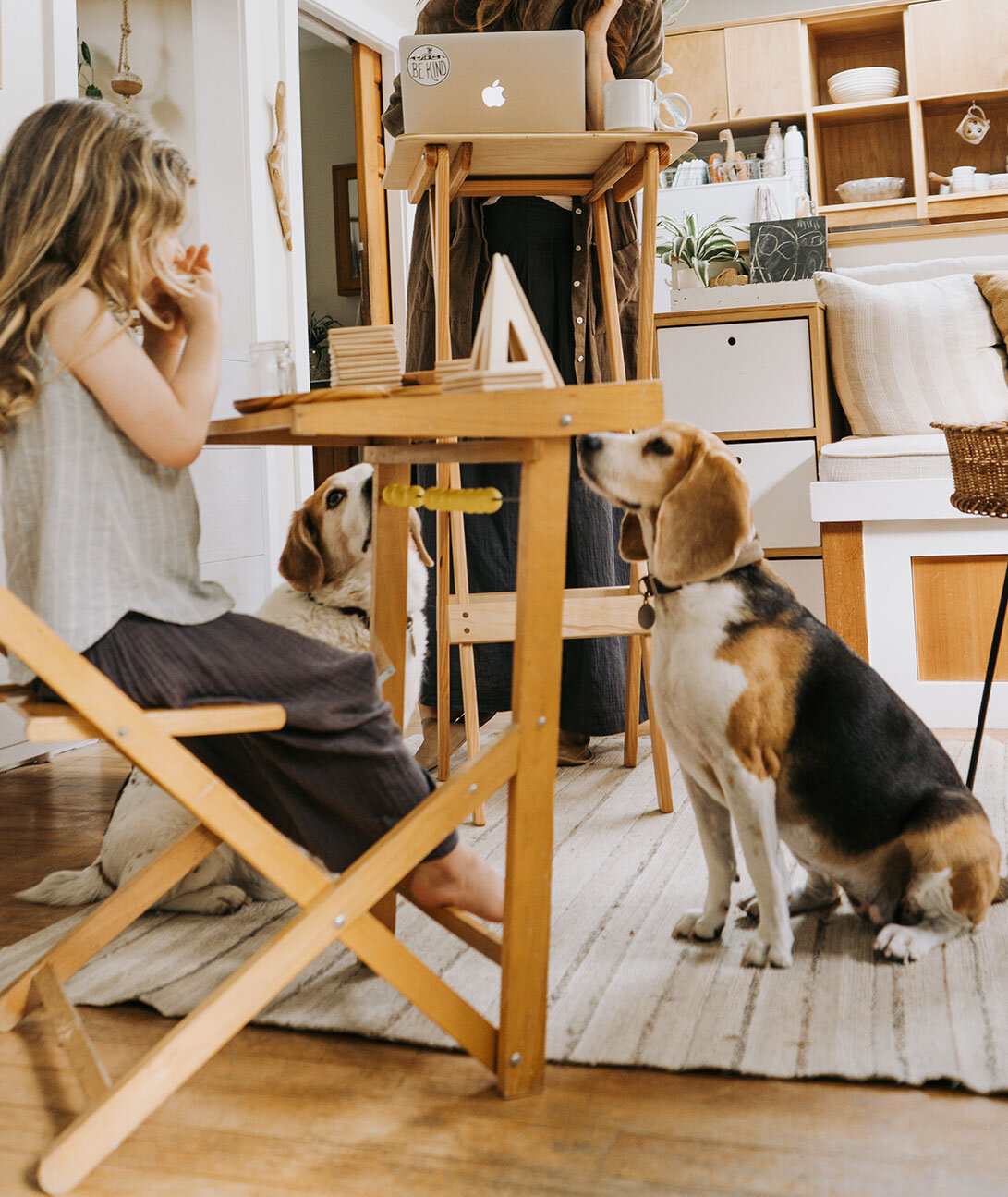
Set up a pop-up workspace (if you don’t already have a dedicated one)
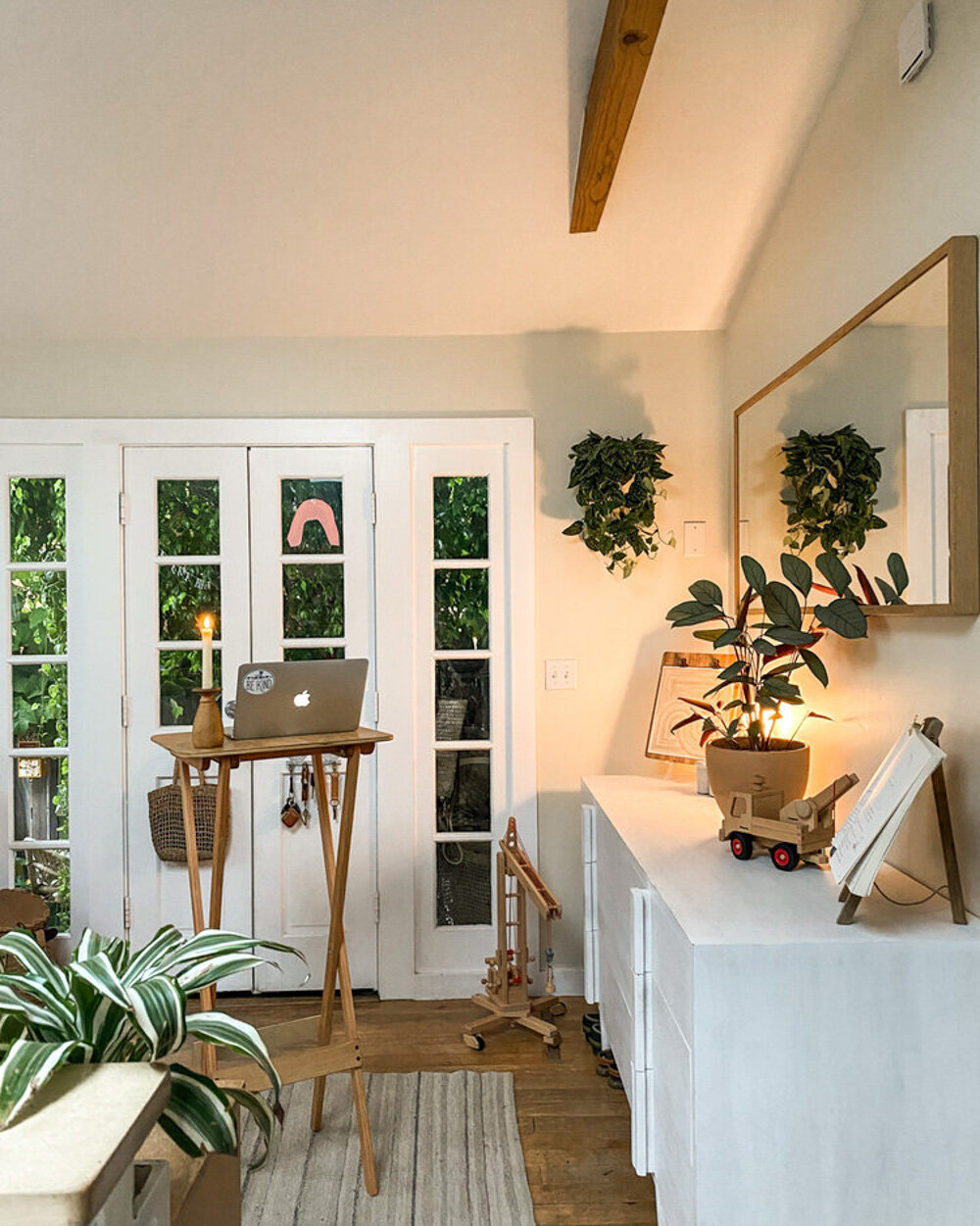
If you have a dedicated desk or dining table, fantastic. If not, create a pop-up workspace. Depending on your living situation, this might mean converting an end table into an office, employing a collapsible bistro table, or using a lap tray in bed. Whatever it is, set yourself up with the tools you’ll need throughout the day, so that you won’t loose your train of thought or productivity by having to get up and find supplies (and thus risk getting distracted) while you’re in a positive workflow. If possible, set up shop by a window, or place a mirror nearby to reflect the natural light from the closest window. It can be emotionally beneficial to get some exposure to nature and/or your community while you work.

Clock-in
Set a time to start and stick to it. I believe this is why I have been so productive at working from home over the past dozen years. When I first began working remotely, I had a client with whom I had to check in every morning at 8AM, and that obligation provided a me with a sense of formal structure, much like a standard office does.
Set your phone timer for scheduled breaks
When you’re working from home, it can be tempting to hop up and take care of chores around the house. Overall, it’s a great gift to be able to check off your personal to-do list while simultaneously addressing your professional duties. But the reality is that this can be distracting and derailing. Instead of succumbing to the urge to steal random moments to manage chores, set timers on your phone to coincide with the times of day you’ll likely need a brief break to stretch and use the bathroom. At those intervals, allot an extra handful of minutes for calling a friend, getting a snack, doing the dishes, watering the plants, tending to personal matters, etc. Let your parter / child / roommate know when these breaks are scheduled so you can touch base or get out of each others way if needed. When your timer sounds again to signify the break is up, back to work.
Try earbuds or noise-canceling headphones
Whether you prefer to listen to music, need silence, or simply can’t stand another minute of your housemate’s keyboard clacking, invest in a pair of earbuds or noise canceling headphones if possible.
Consider a curtain or screen
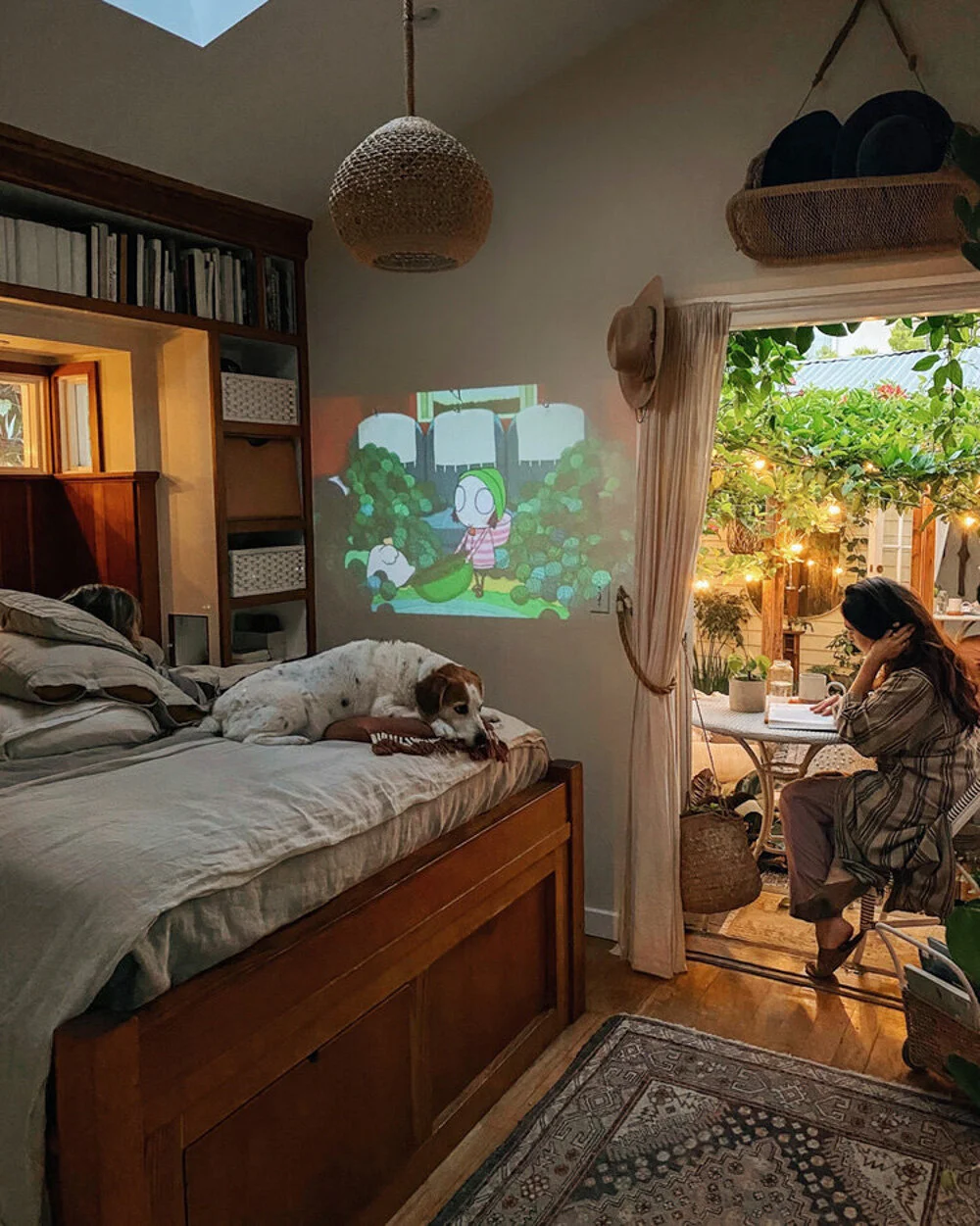
It might be worthwhile to use a makeshift curtain, accordion screen or a room divider of some sort to cordon off your work zone. (There’s plenty more about this topic in my book, Small Space Style.) Beyond adding a sense of privacy, this can provide physical and symbolic boundaries for those with whom you share your home. It can also keep your eager eyes in check when they’re tempted to wander over to the snack shelf or laundry pile when they should be focused on your work instead.
Practice In-House Texting
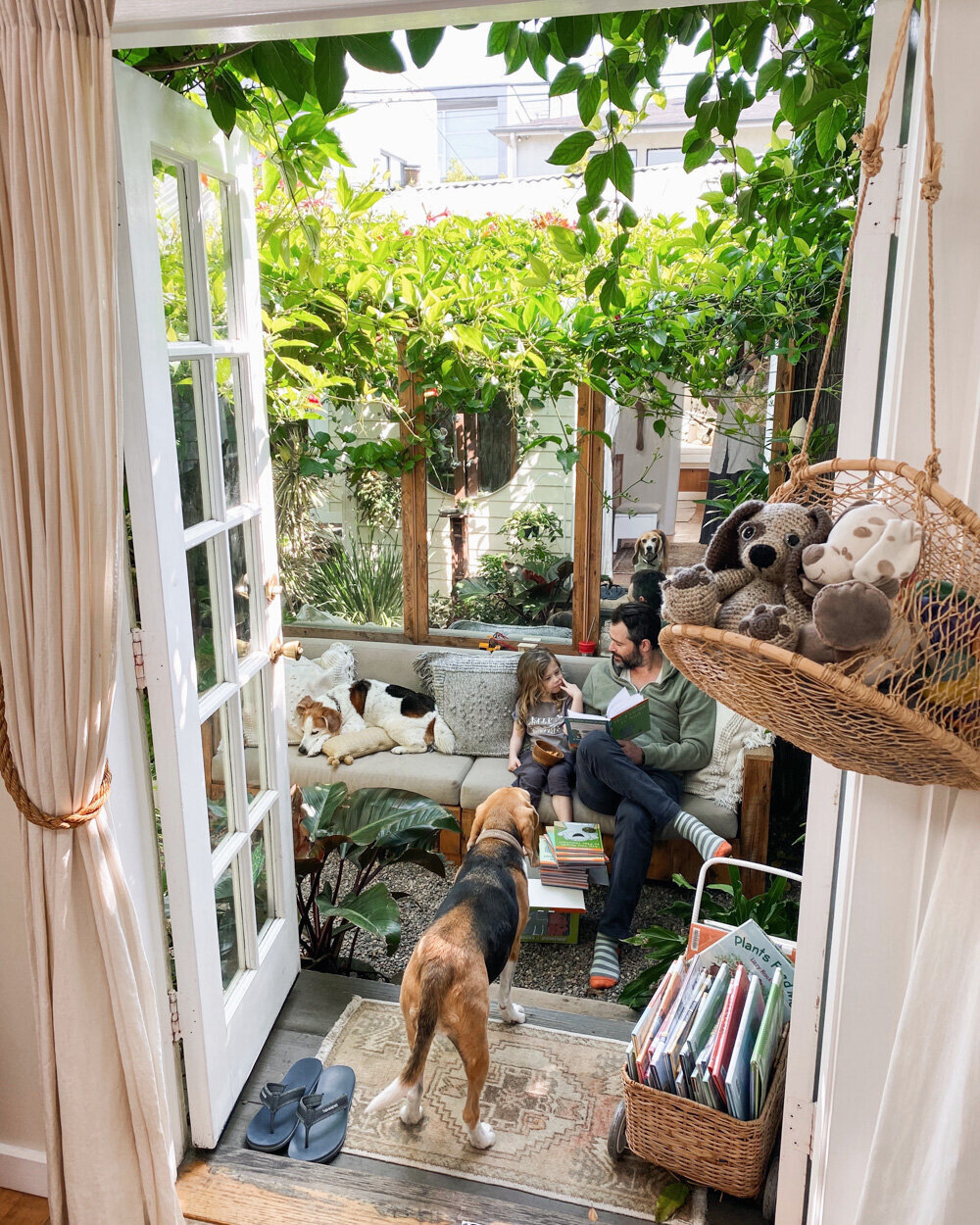
This might seem absurd in a small home or apartment, but consider texting your partner/roommate/etc. or asking them to text you if something needs to be discussed. That way you will see the text when you choose to look at your phone and can then respond accordingly, rather than being yanked abruptly from a focused moment. (Adam and I often do this, even though we live in under 400 sqft… it works.)

Explore storing your administrative supplies in more than one area if you’re feeling cramped
While it’s handy to keep your must-haves within arm’s reach (as mentioned in tip 4, above), you don’t need to cram ALL of your supplies into one area in your small home office. If you rarely use a printer but have one, perhaps store it somewhere else so that you don’t feel like your work zone is taking over your home. (Examples of this can be found in the IGTV video linked at the start of this post.) Same goes for bulky files, business tools, etc— especially if you’re sharing them with someone else in the home. Spreading accessories out will aid with storage, but it will also allow all parties to use the same items throughout the day without distracting each other when crossing zones to borrow this-or-that.

Temporarily delete apps that distract
If you’re tempted to check non-essential apps on your phone, consider deleting them during the work day, and reinstalling them after you’ve “clocked out”.

Clock out
Just like clocking in, a clocking out routine can be useful for maintaining a live/work divide. Stow office items until the next work day, freeing up your home for personal activities and family time.

The night before, set up an activity for your kid(s) for the morning
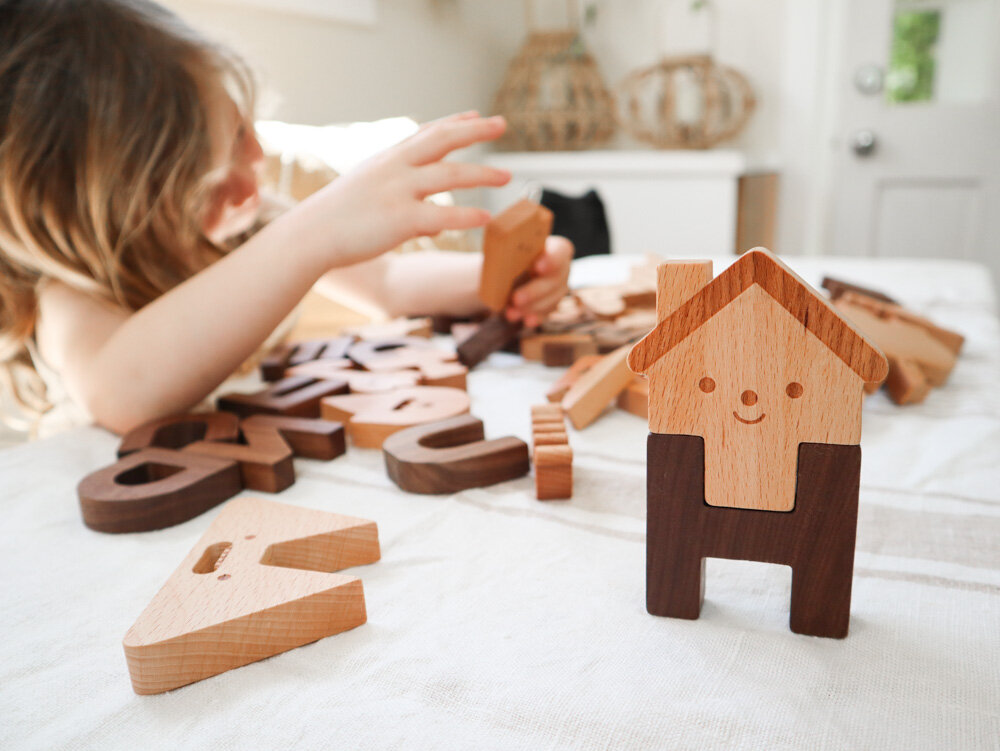
If you’re feeling like the mornings are too hectic, analyze why. Do your kids need something to keep them safely occupied while you go about your self care routine and/or prepping your workspace? Perhaps plan and set up an activity for the morning that will keep them happy so you can stick to your schedule.

Prep Meals
If you find yourself hanging out in the kitchen more than you normally do, perhaps prep your meals and snacks in advance. This can prevent wasted time, and while potentially encouraging a healthier diet since we all need to keep our immune systems in check while this virus circulates through our communities. Not only that, but preparing food in advance is a wise way to ration food within your household, limiting possible exposure from potentially avoidable grocery shopping trips and/or deliveries.
Remember: We’re all in it together. You’ve got this.
Select photos by Lucia Doynel.

Convertible Desks for Small Spaces
Over the years, I’ve learned that versatility is essential for a home-office in a small space.

Can a nightstand also serve as a desk? Can a convertible standing table function as a workspace by day and a dining surface by night? Can a folding table tuck away entirely on the weekends?

There really are so many great options — explore more via my book, Small Space Style.


Video: Tiny Takeaways (Ep.2)
Lately I’ve been reflecting quite a bit on why I do what I do for a living. My goal is for the readers of this blog and my book to be confident and fulfilled in their small homes or apartments, and I want to be one of their primary go-to resources for reliable, low-cost, eco-friendly takeaways that can help them spend less time organizing and searching for their stuff, and more time with the ones they love. Adam and I created a mini video series that we hope offers creative, no/low cost styling and storage solutions to folks living in smaller spaces. This is the second episode, in which we focus on ways to streamline a compact home-office. As always, thank you for your encouragement and continued support of our lil’ home, family and business.
