
Create the Look: A Small, Sustainable, Multipurpose Corner

Sharing tips regarding interiors feels pretty ridiculous at this moment in time, but I think there is something important to it.

There are so many ways to approach our homes mindfully. We can make the most of our interiors by being deliberate about what we acquire, curiously exploring items we can reuse and repurpose, and getting creative with the space we have. Embracing smaller spaces, repurposing, choosing local, handmade and/or used goods, and sharing resources are all ways to look out for each other and out one shared home.

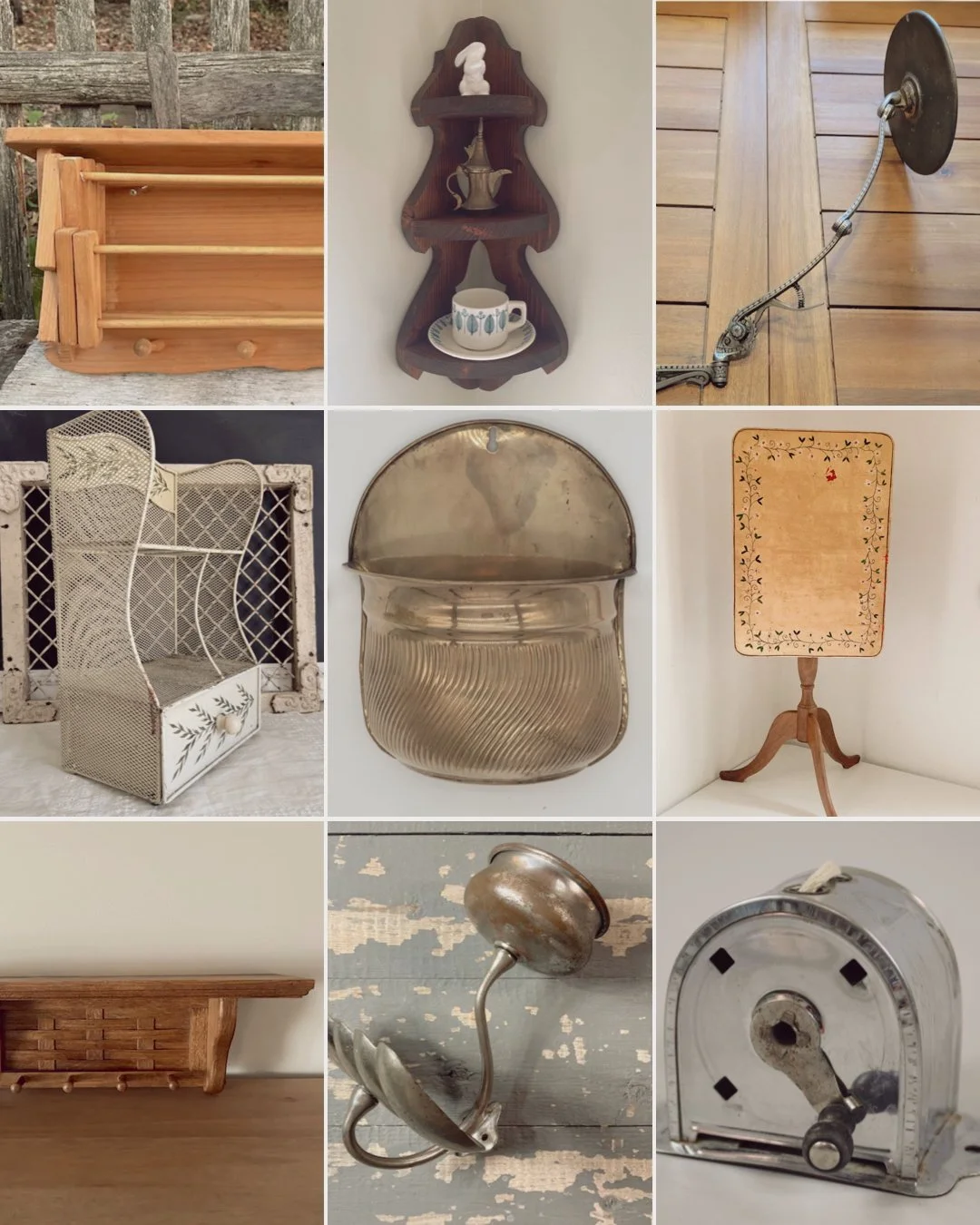
While used finds like the ones pictured here in our home and those curated below are such gems, there are plenty out there. Remember that homes have only ballooned in square-footage within more recent years, and that newly manufactured “apartment” furnishings are by no means novel concepts. There are so many clever designs that have long been circulating out there - let’s find and use them.
Please note that I sometimes earn a small commission from sales of secondhand pieces.

Create the Look: Upcycled Pulley Laundry Drying Rack
By request, here’s my latest Create the Look, which is geared towards enhancing the utility of our smaller spaces with the help of vintage and salvaged materials.

But please note: I don’t want everything I publish to be shoppable. I don’t wan’t to constantly encourage people to buy more, when I know that most of us can (and should — for environmental reasons,) live with less. What I do want is for folks to be comfortable, confident and content in their small homes or apartments, and to feel inspired by their space.

So here are some pre-loved or small-batch items from independent storefronts that can help you bring a touch of extra storage and functionality to your compact home.

Please note that we sometimes use affiliate links for the vintage and handmade goods we’ve curated, which helps keep the twinkle lights glowing for our small business.

Small Space Laundry Zone Solution for Air Drying Linens
When I designed our new cottage, I considered several locations for the laundry zone.
When I lived in Manhattan in a ~350 sqft apartment, I had a combination single washer/dryer unit in the kitchen in lieu of a dishwasher. When we were in our ~400 sqft cottage by the canals, our stacked washer and dryer unit were in a bike shed that we shared with our neighbors. And in my ~200 sqft studio on Venice Beach, there was a slim, thoroughfare laundry room on the ground floor for all the tenants to share.

I took all of these experiences and others into account when deciding what we approach we should take in our new home. An shed setup beneath the house was out of the question due to the extreme climate and likelihood of flooding in this region. A kitchen setup would’ve been doable, but I was concerned that having our cleaning AND cooking hub in the same zone would lead to daily congestion. And we’re far too remote to efficiently rely upon a community laundromat.

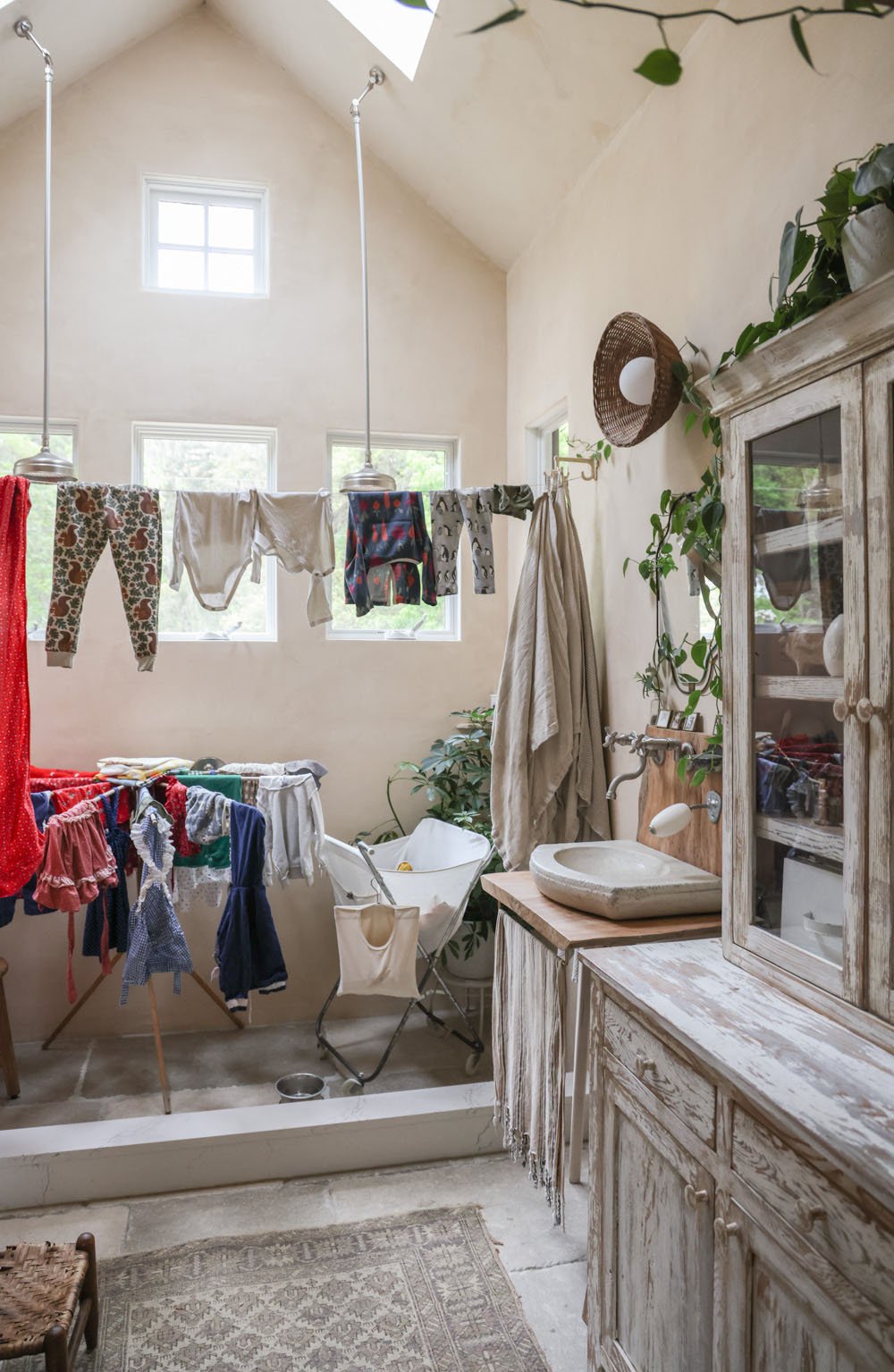
The logical location, in this case, was the bathroom. I first considered situating our bathroom counter over a side-by-side washer and dryer, but I really had my heart set repurposing a rescued slab of wood for the vanity, as well as designing a custom hutch for laundry + bathroom storage. So when I discovered a narrow, ventless, stackable washer and dryer, I knew it was the answer for us. Tucked into a custom nook opposite the shower and sink, the electrical would be far from splash zones, and the entire setup wouldn’t require any of the space needed for navigation and comfort within the room.
Even though we’ve typically always had access to a dryer, we’ve long preferred to air dry our linens whenever possible. But given the realities of the climate here, including frequent sudden downpours and tropically humid months on end, I wanted to reserve free space within the house for drying, rather than relying solely on our retractable outdoor laundry line. What would be the most suitable areas for this in our relatively compact home?

That’s when I began to picture the shower as a potential crucial component to our laundry room.
We usually try to conserve water by bathing quickly, so our shower is really only in use for about 10 minutes daily. As such, the bathing area’s real estate is largely available for 23+ hours per day. So when approaching the room’s design, I crossed out the option of a glass partition along the shower curb, along with the alternate option of a low / pony wall. Uninterrupted access would be easiest with a curtain.

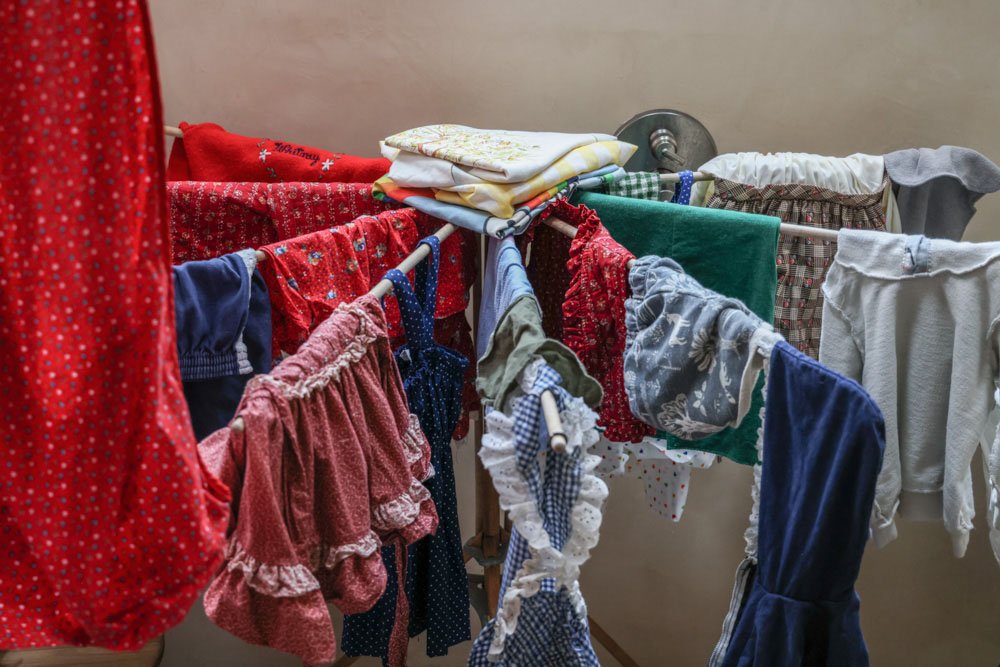
Since we didn’t want a horizontal curtain bar running in front of the mindfully placed windows, we installed two towel hooks directly above the inner edge of the curb line on either side of the bathroom, giving us anchor points for stringing up a removable drying line that could also hold our shower curtains. In addition to the line, we have a vintage, collapsible drying rack (that fits under our bathroom vanity when not in use), as well as our fold-down, repurposed baker’s bread cooling shelf for more surface space for drying laundry.

The end result is a room that’s fully in use throughout the day. It works perfectly for our small home and our family routines.

Repurposing Household Items: The Baker’s Cooling Rack
Note: While this entry is about a very specific item within our cottage — a reimagined, vintage baker’s rack — the message can be extended across countless home goods, as outlined towards the end of the post.
When we were designing our little bathroom / laundry room combo, I knew I wanted to leave space for linens to air dry.
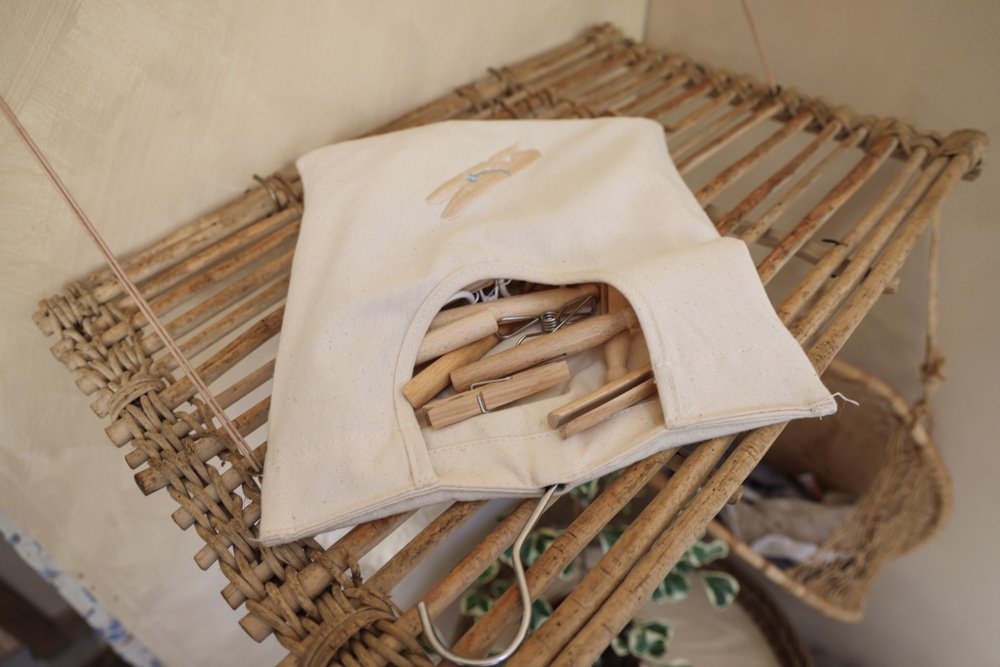
Our shower is one of those spaces. When it’s not in use for bathing, we sometimes pop open a vintage, collapsible drying stand for larger, damp linens beneath the windows and skylights. Another area we reserved for drying out (smaller) textiles was the wall space bordering the stacked washer-dryer. I wanted a fold-down, slated platform for items like still-damp, clean cloth diapers, and freshly washed Swedish dishcloths, but I didn’t want a newly-made plastic or metal rack from a big box retailer. So I went shopping within our home instead.
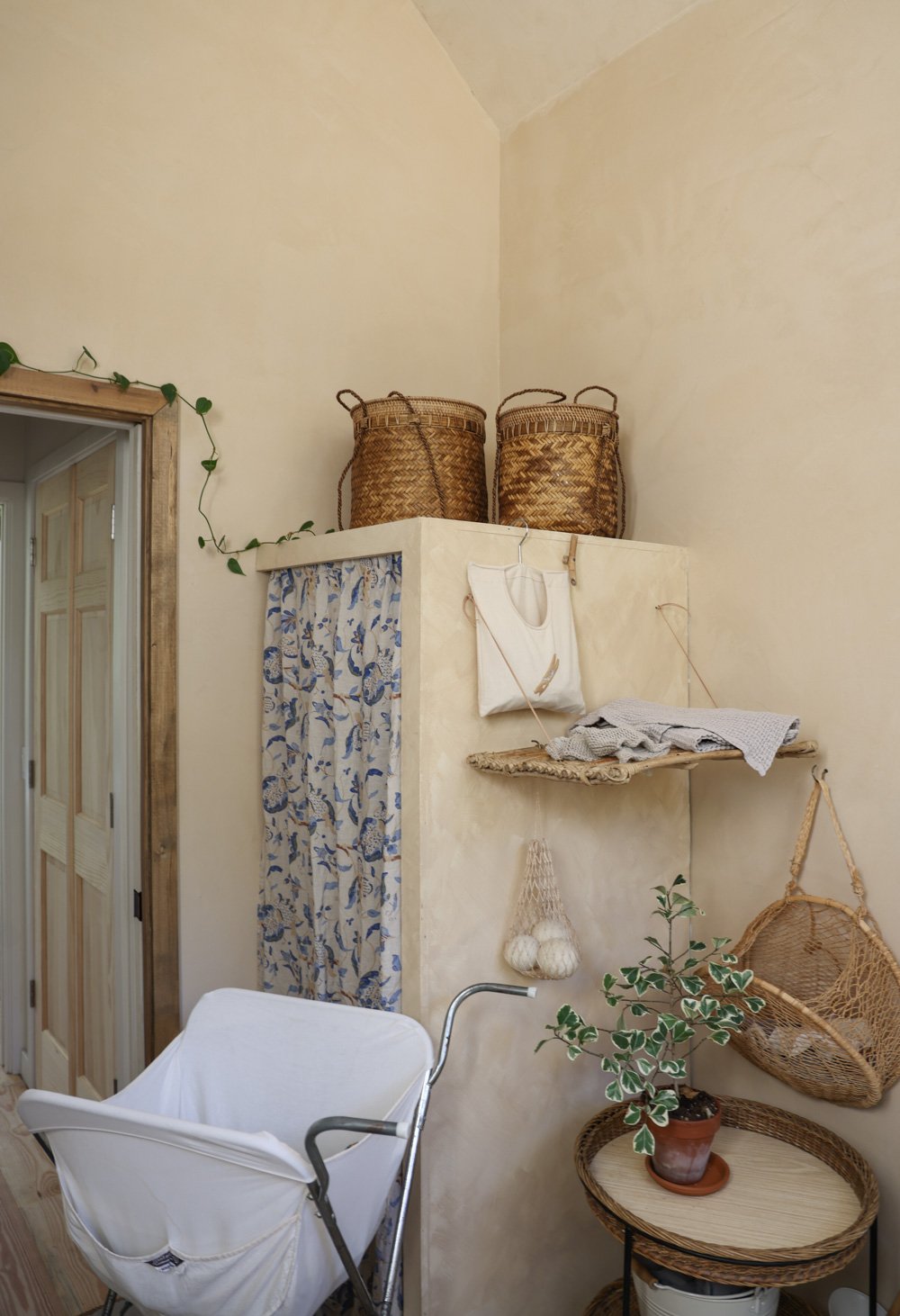
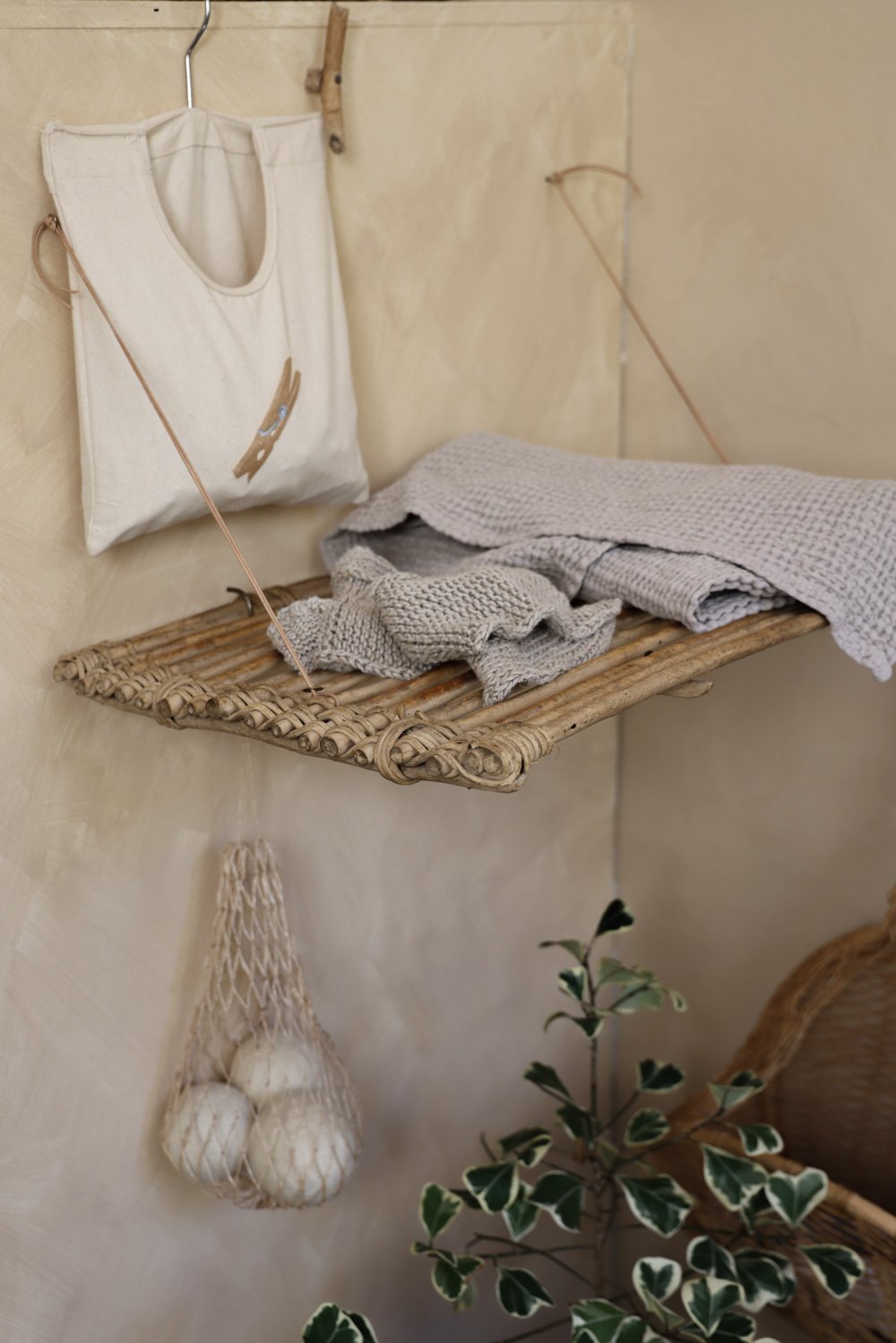
My eye fell upon an old French bread cooling rack that was dangling decoratively on our kitchen wall, waiting to serve a new purpose. It’s the kind of willow and reed shelf once used in a French boulangerie for supporting freshly-baked loaves of bread while allowing oxygen to flow around them. This was THE PERFECT size and design for what I had in mind by the washer-dryer. But what hardware would I need in order to attach it to the wall in a way that would allow it to function as needed?
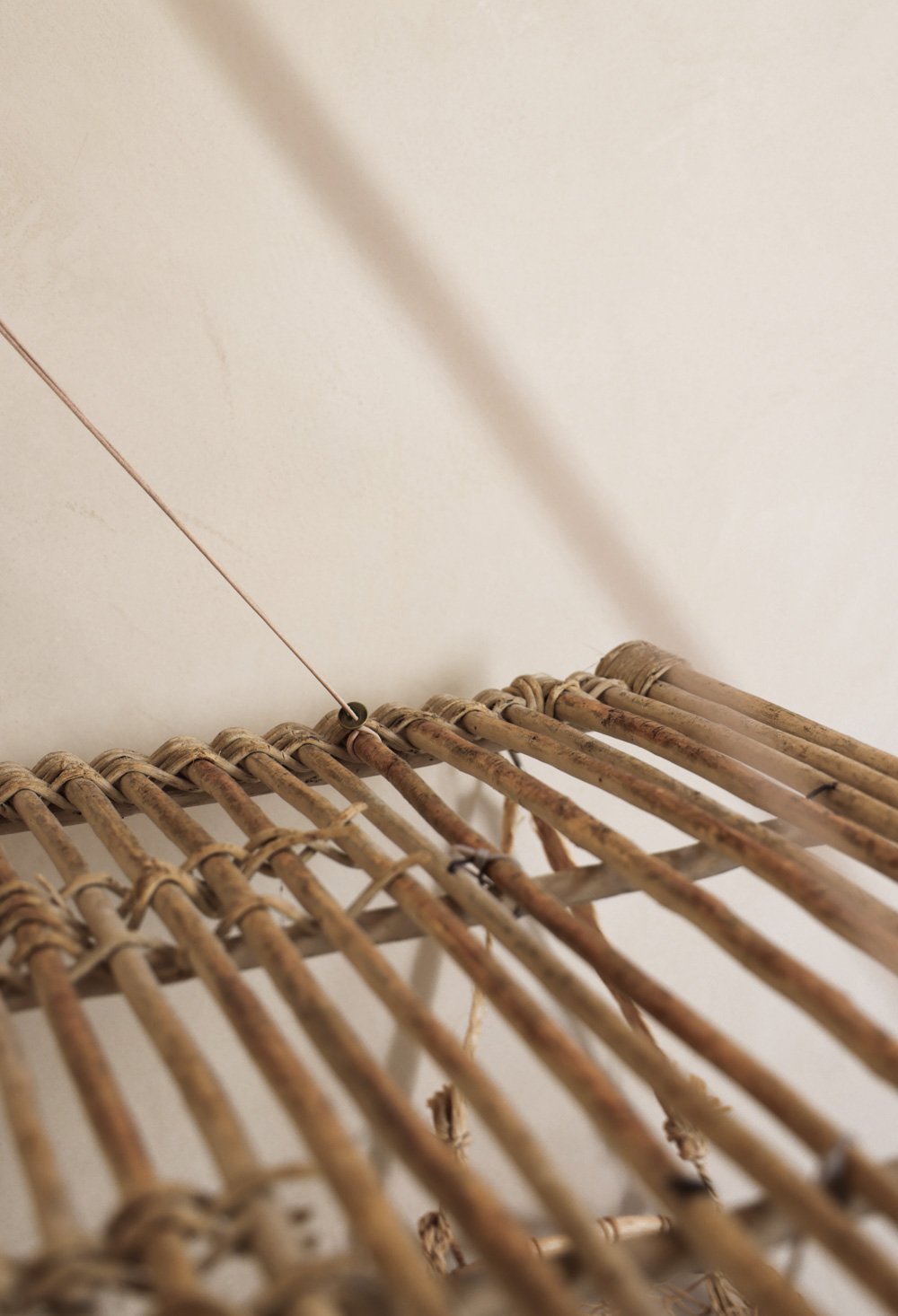
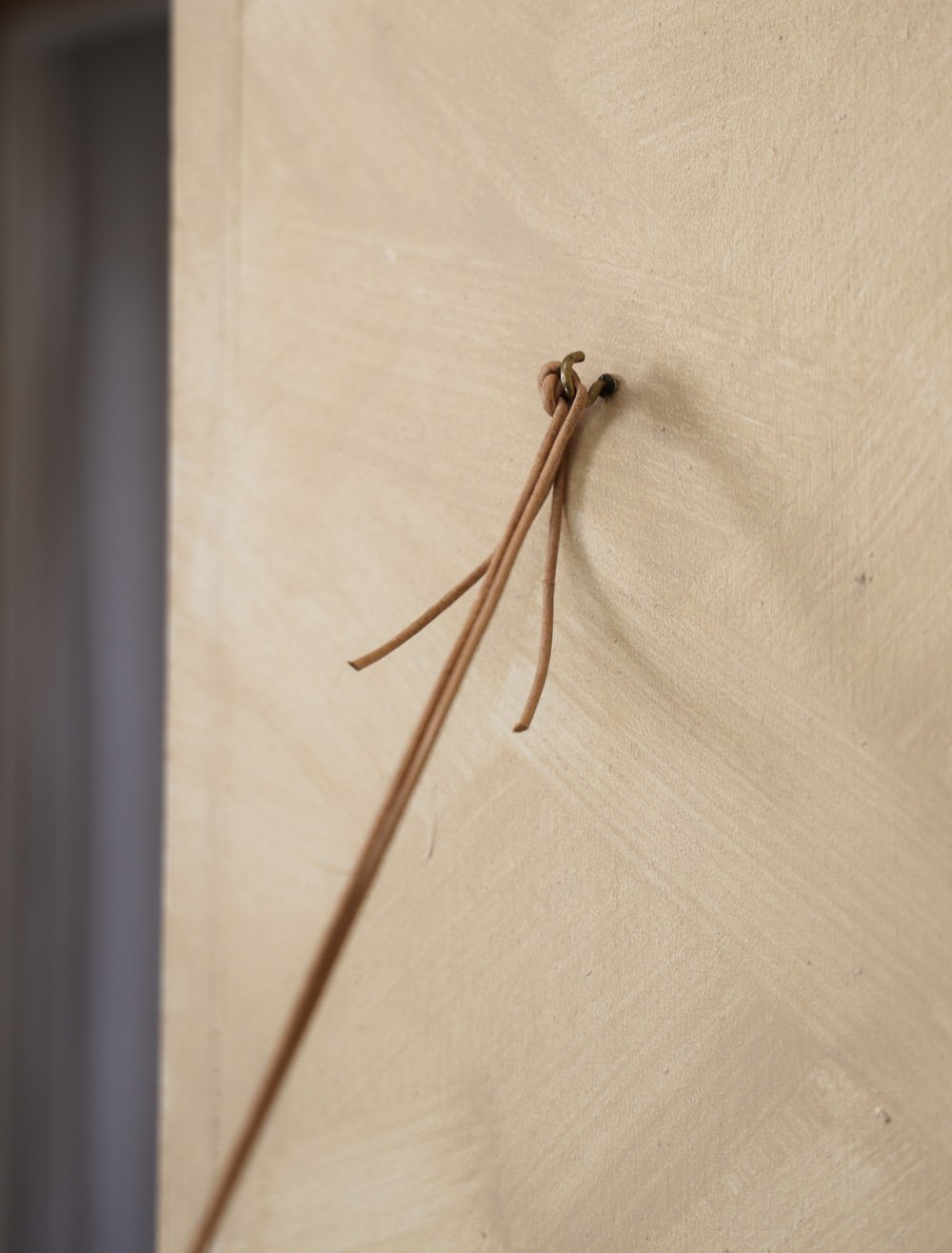
Again, we looked around our home. We found spare mug hooks in various sizes, two leftover chords from a suspended book rack (pictured in this post, 5th image), and a small piece of driftwood— all of which we could put to use to make the rack fold up and stay put, or fold down and support the necessary amount of weight.
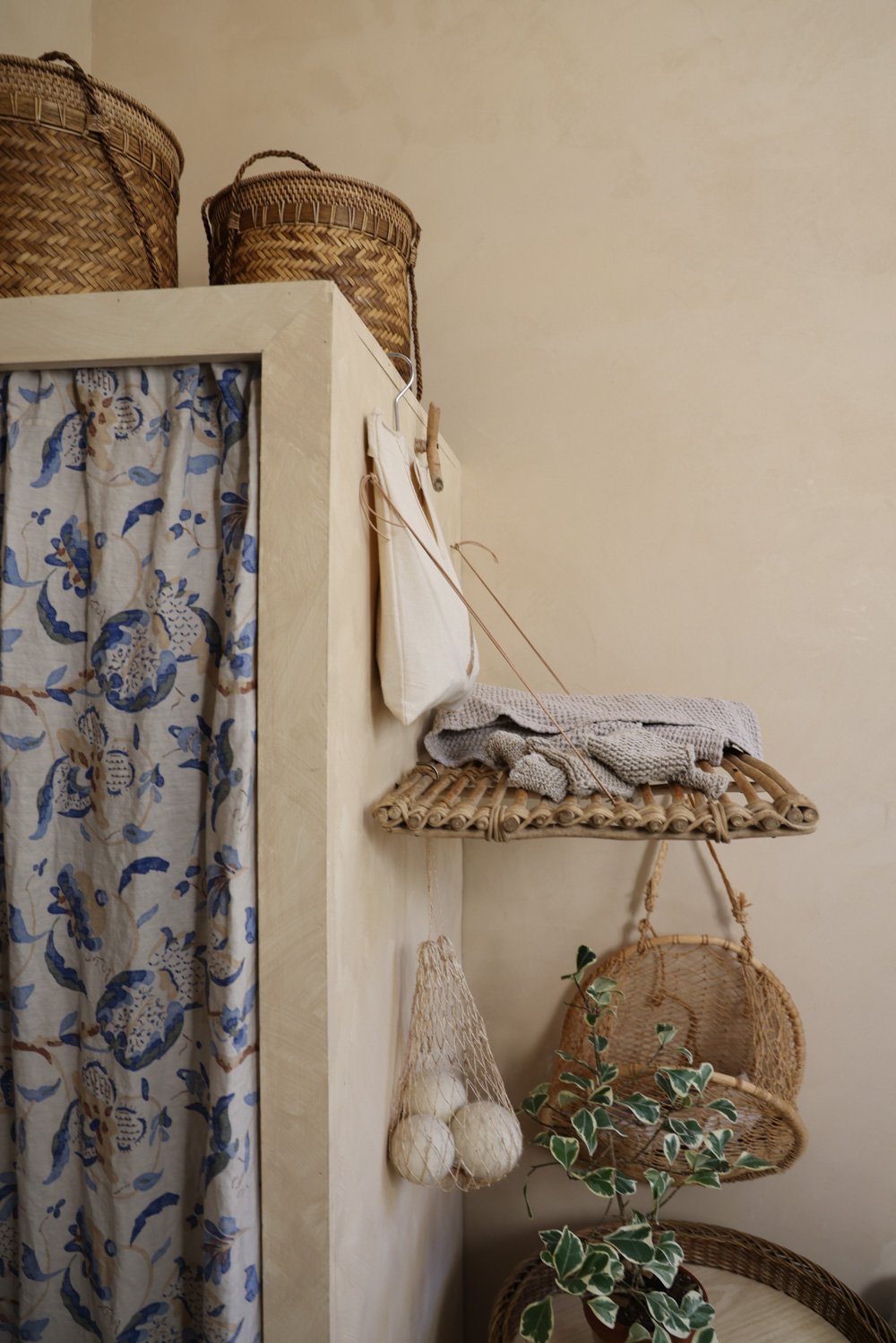

What we ended up with works for our tastes and the semi-foraged interior we hoped to create, while serving the necessary purpose.
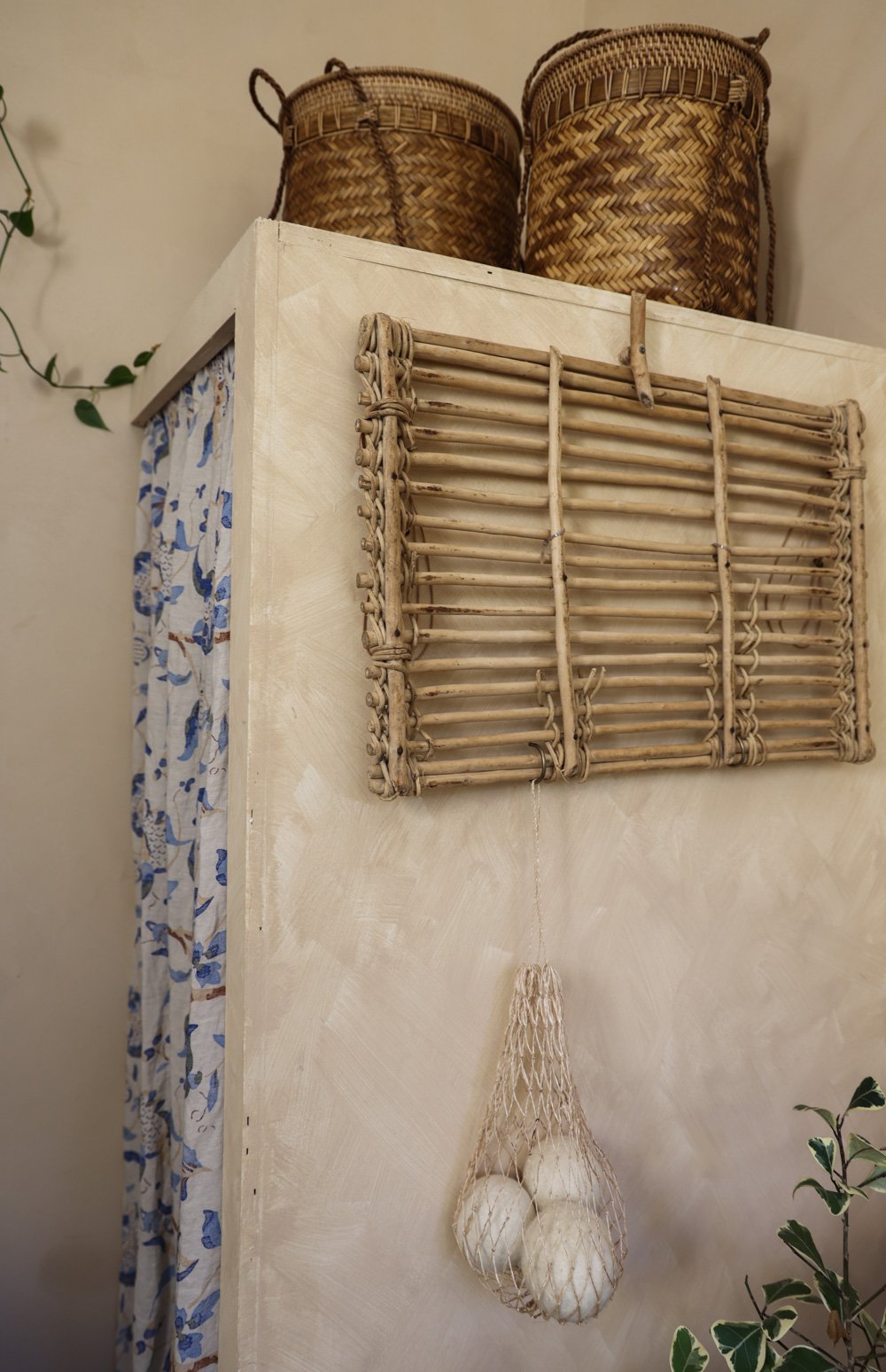
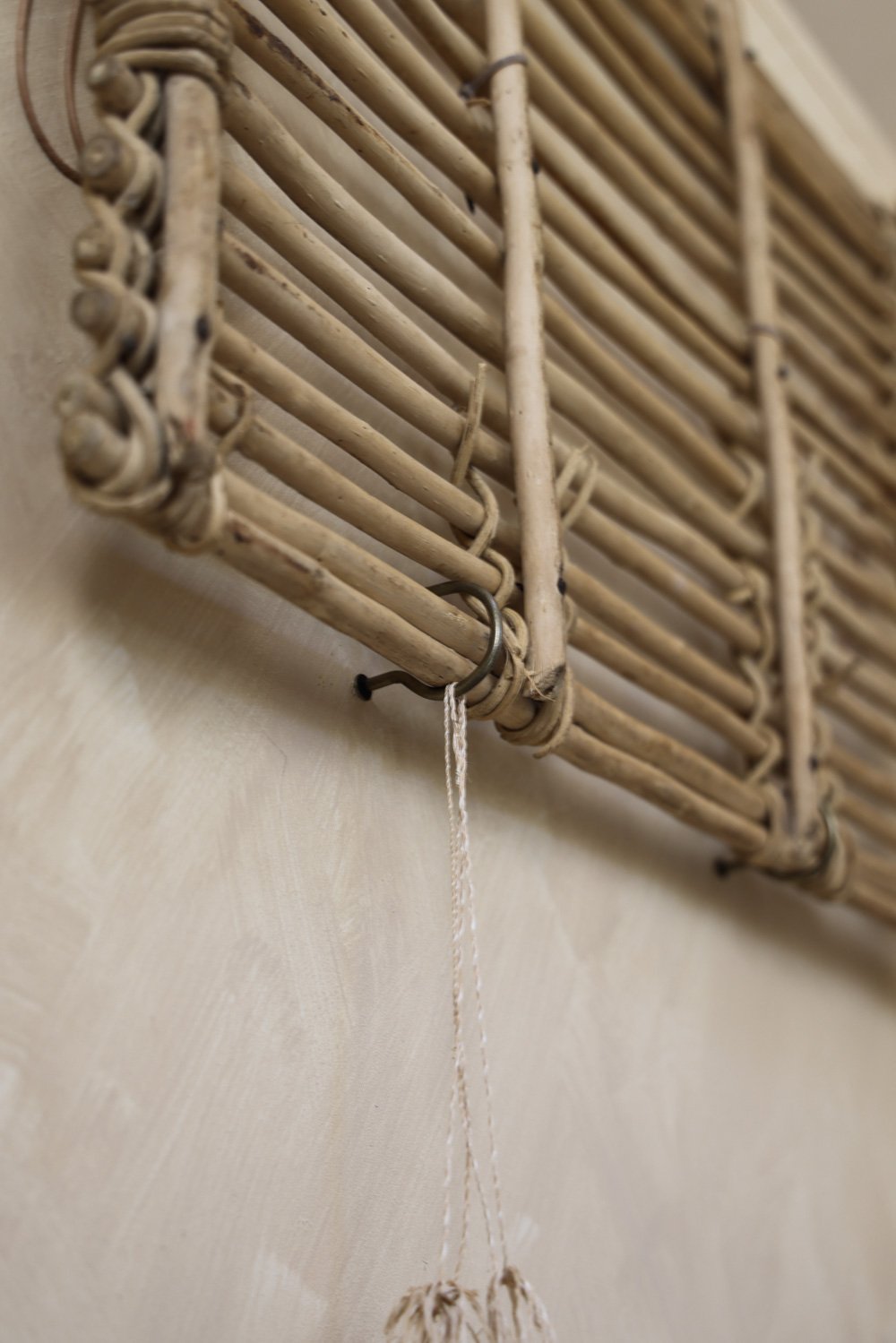
If this approach to interior decor sparks your interest, try this when sourcing items for your home:
Stop searching for newly-manufactured goods by a specific name, such as “drying rack.”
Instead, imagine what items could serve the same purpose based on general functionality, design, materials, size, etc.
Then consider if you already have something that could work…
… Or if you can find a vintage or second-hand item that can be repurposed.
You’ll likely save money and enhance the character, originality and functionality of your home… all while being a more responsible steward of this planet.
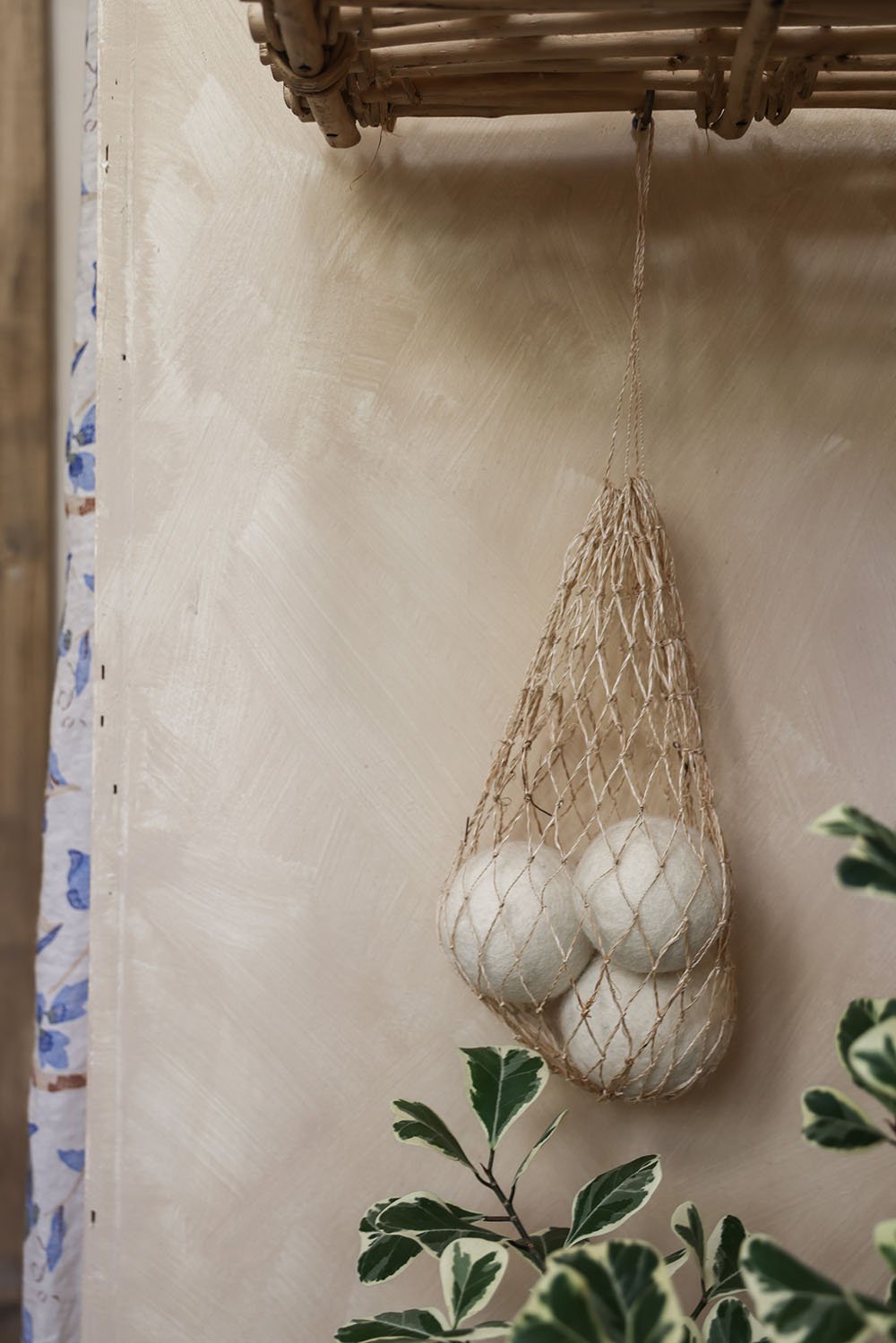

Our New Cottage's Combo Bathroom + Laundry Room
We didn’t expect this, but our favorite room in the new house has turned out to be the bathroom / laundry room combo.

While it’s bright and airy thanks to the windows and venting skylights, it is also intimate and grotto-like with it’s plastered walls and stone floors.

The entire space was an experiment. If we had windows on the three surrounding walls, could we manage the extra long shower down-rods? If we used a neglected slab of recovered Cypress wood as both a counter and a backsplash, could we waterproof it, customize the faucet, and get it all to fit within our slim parameters? If I designed a custom hutch, would it offer all the storage space needed for bath + cleaning + self-care products for a family of four? Could the shower remain in use throughout the day for laundry and rehabilitating plants? Could we create privacy while also keeping everything so exposed? Would the ventless washer / dryer combo take up too much space?

Somehow it all worked out exactly as we’d hoped. It’s not perfect— there are wonky lines and odd dimensions and out-of-the-ordinary combinations of materials and textures. And we are loving it all.

Due to its versatile design, the room is constantly in use by the entire family for activities beyond the obvious, so the square-footage (about 8’w x 10’l) is earning its keep.

At some point I’ll publish a detailed before + progress + after post about this unique space, but after seeing it under construction for so long, the last thing I want to do now that we’ve finally moved in is relive that lengthy process.

For now, I simply want to enjoy how it all came together. I hope you do, too! More images + sources are below.

Sources are listed at the bottom of this post, and below are some responses to commonly-asked questions:
• While we were initially eyeing raised-tank, vintage-style toilets, we eventually opted for a toilet / bidet combo and are happy we did so.
• We string up a basic line of twine and an oilcloth tablecloth for a curtain when we shower, offering complete privacy from the rest of the room.
• We chose a pocket door to save space, as always.
• The stacked washer + dryer combo is ventless, allowing it to be enclosed in a custom cubby. We pull the curtain aside when the machines are on, just to be safe.
• The pull-down drying surface is a vintage French bakery cooling rack, which we attached to the wall with four mug hooks and leftover leather cords. The lock that holds it flat against the wall when it’s not in use is a scrap of driftwood.
• The wooden sink vanity is coated with matte Rove & Dwell Finish Coat.
• The items attached to the sink backsplash on the right of the faucet are a vintage match holder and a rotating French soap holder.
• The skylights both vent / open, and have screens.
• The casement windows have optional screens, and the hardware isn’t problematic for water given their height and the rain-style showerheads.
• The concealing curtain over the laundry zone is cut from a flat sheet.


Thank you as always for sharing our li’l home with us by visiting my blog.

Sources:
Tadelakt Plaster (Color: Nue) by Color Atelier
Montpellier Stone Floors by Historic Decorative Materials
Custom Hutch by Tumbleweed & Dandelion
Skylights by VELUX
Windows by Marvin
Curb (Color: Colton) by Cambria
Recovered Cypress Slab from Goodwin Company
Small Space, Ventless Washer + Dryer from Haier
Linen Hanging: Garnet Hill
Folding Laundry Cart: Vintage via Etsy
Two-Tier Basket Table: Vintage via Etsy
Folding Drying Rack: Vintage Bread Drying Rack via Etsy
Wood Sealer: Rove & Dwell Finish Coat
French Wall Soap via Vivi et Margot
Baskets via Connected Goods
Fixtures via Delta and Signature Hardware
Extra-Long Hand Towel + Robes for the Entire Family via OddBird
Sconce: Reveal Home via Etsy

Vintage Folding Laundry Racks for Small Spaces
Since publishing a recent post about styling a small stoop, I received many questions about our space-savvy drying rack. It’s been our goal to not use our shared dryer at all during spring and summer, so the rack is now a common sight in our garden.
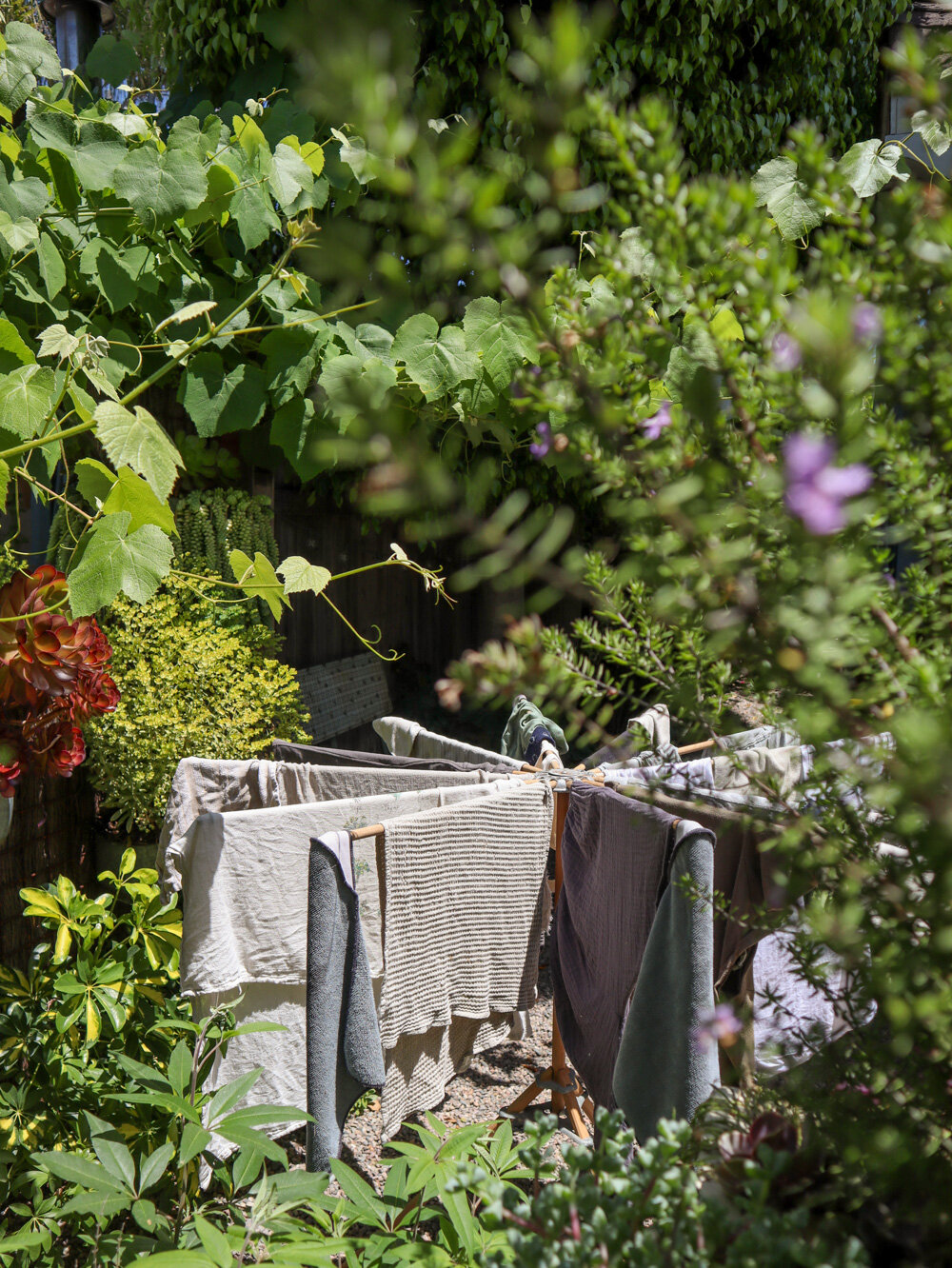
It was a vintage Etsy find, so I’ve rounded up similar designs below:

Right now, laundry is not simply laundry.
It’s a family activity meant to educate and entertain a preschooler about household tasks (shared by BOTH parents— not just one). It’s a well-worn collection of reusable goods meant to reduce our trips to the store as we attempt to keep our communities and families healthy by staying Safer at Home. It’s a round of linens washed together on cold and dried in the sun to help us reduce our negative environmental impact. It’s a vintage rack meant to save precious space in our tiny thoroughfare garden while supporting a small business. And it’s a bunch of overgrown plants — some edible — meant to enhance our positive footprint.

To make laundry lighter on the planet, we handwash delicates, wash on a cold setting (unless it’s a seriously mucky batch), and do fewer, larger loads vs smaller, color-divided loads.
We use our secondhand (but new-to-us!) collapsible rack in combination with two other tools: a folding rack from Helen Milan home (which is compact enough to easily use indoors or outdoors), and a makeshift drying line.

We do a fair amount of laundry, as we use washable/reusable goods in lieu of disposables, and because indoor/outdoor life with 2 dogs and a preschooler generates a bit of a mess.

Luckily I find laundry rather enjoyable and therapeutic. (Dishes, however, are Adam’s forté… I’m not a fan. And we share our household, parenting and business duties here.)

If you’re newer to line / sun drying, Simply Living Well: A Guide to Creating a Natural, Low-Waste Home by Julia Watkins offers some excellent tips on this topic (among many, many others).
