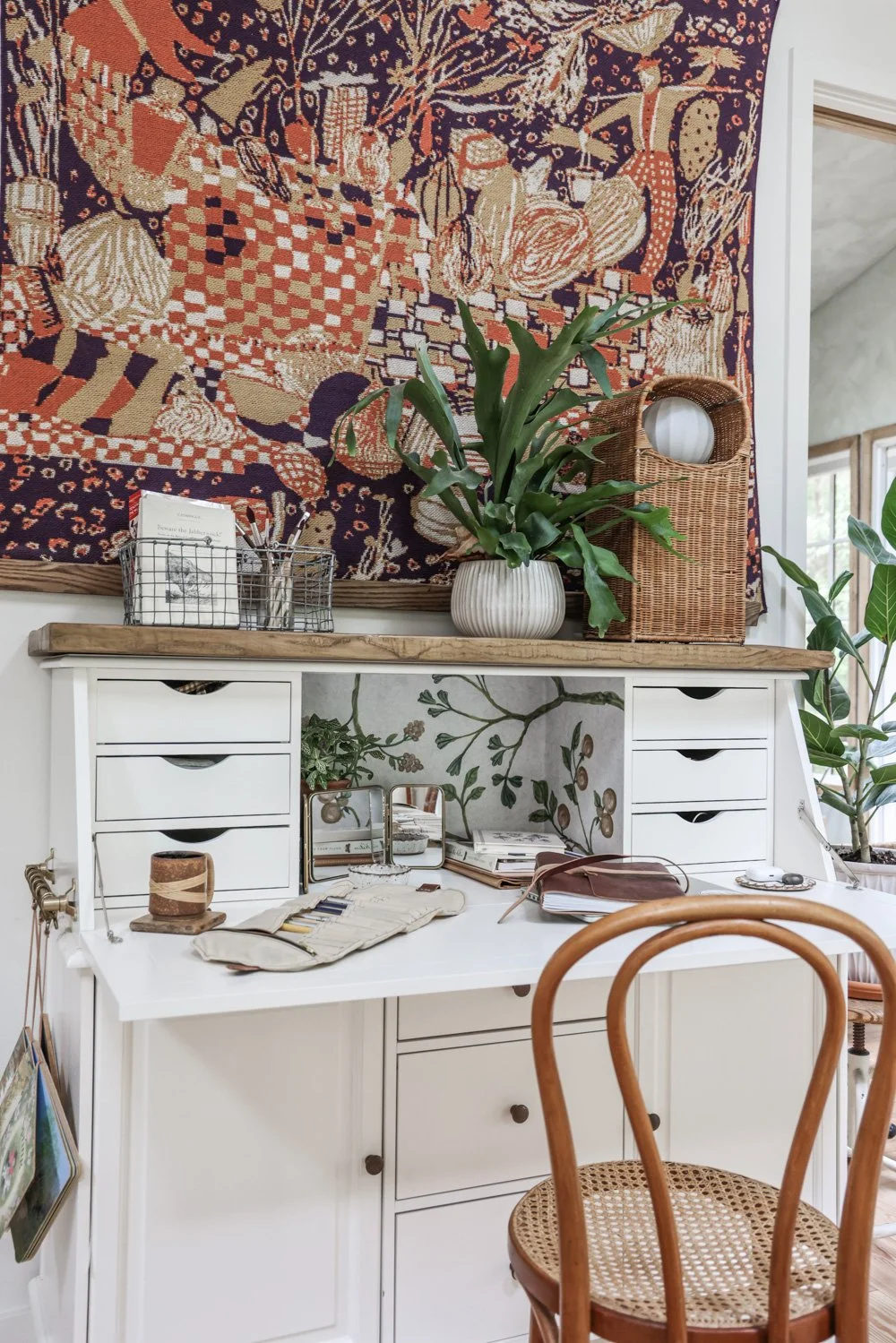
Before & After: Adding Character to Furniture
I’m a fan of working with what we’ve already got. It’s usually better for our wallets, better for the planet, and a way of making our homes look and feel our own.

A wobbly vintage rolling cart might just need a replacement wheel to be functional.
A broken planter might be useful when transformed into the perfect frog (or fairy) house on the stoop.
And a bland piece of furniture might just need a few reclaimed and repurposed accents to achieve its true character.
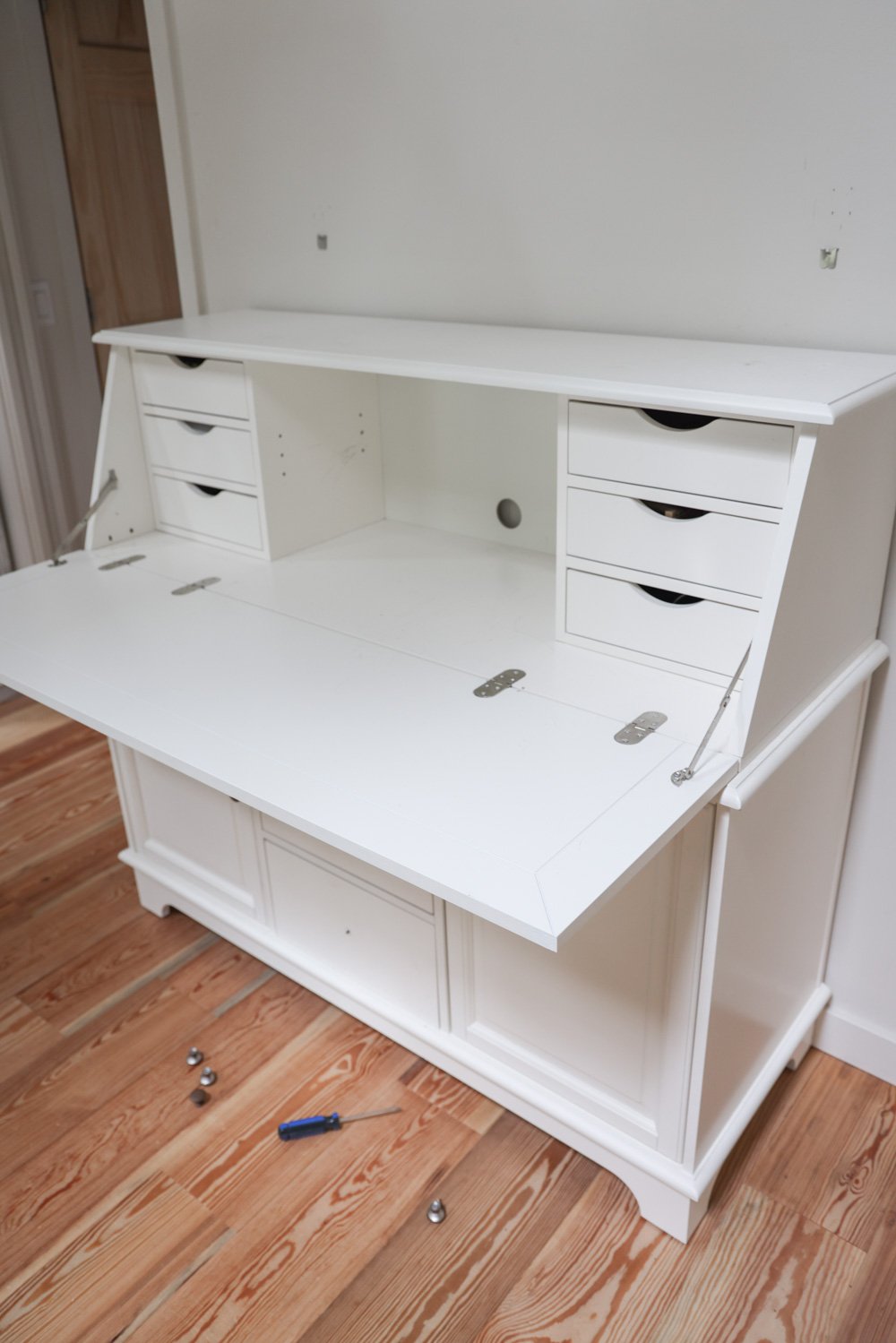
Our fold-away storage desk was one such piece:

This desk is perfect for our needs here in the cottage. It functions as an ample workspace when open, a narrow and unobtrusive console with storage when closed, it offers a standing-height tabletop when desired, and it’s almost the perfect width for this pocket-door frame-filled wall, which can’t support any substantial weight on its own.
But there was just no getting around the fact that it looked new and stale compared to pretty much anything else in our little home. The most obvious way to add character would be to paint it, but not a day has gone by since we installed this piece when it hasn’t been a heavily relied-upon workhorse for my small business. So rather than paint it — at least for now — I opted to work with materials we already had here at home in order to give the desk a beating heart.
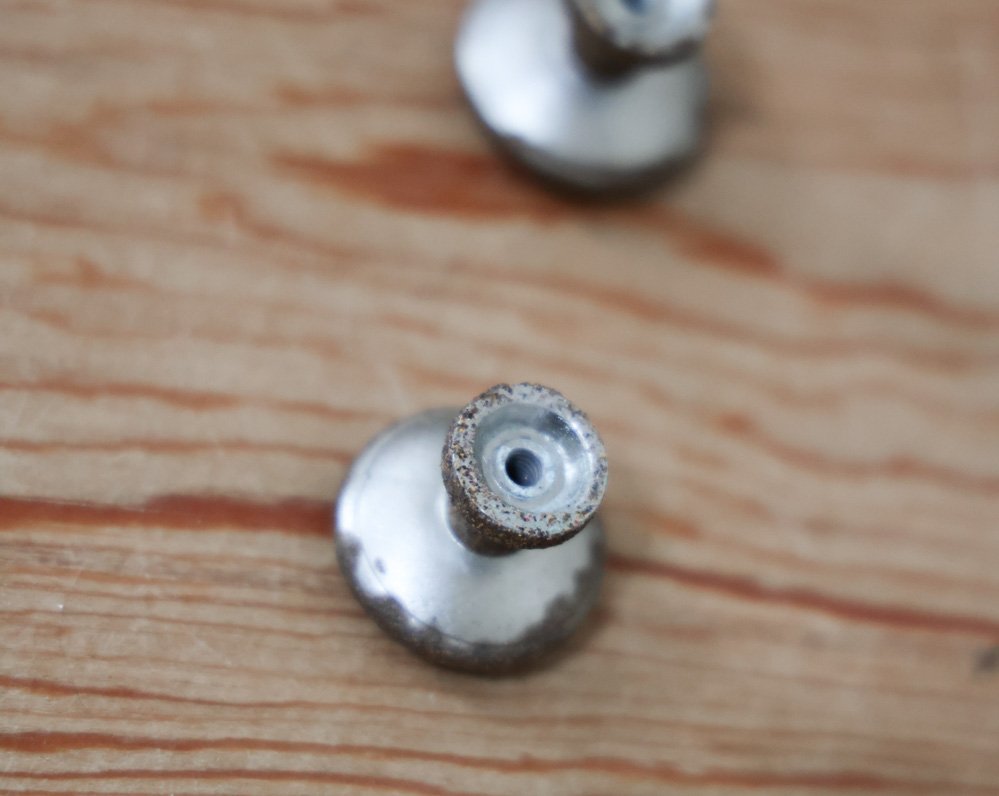
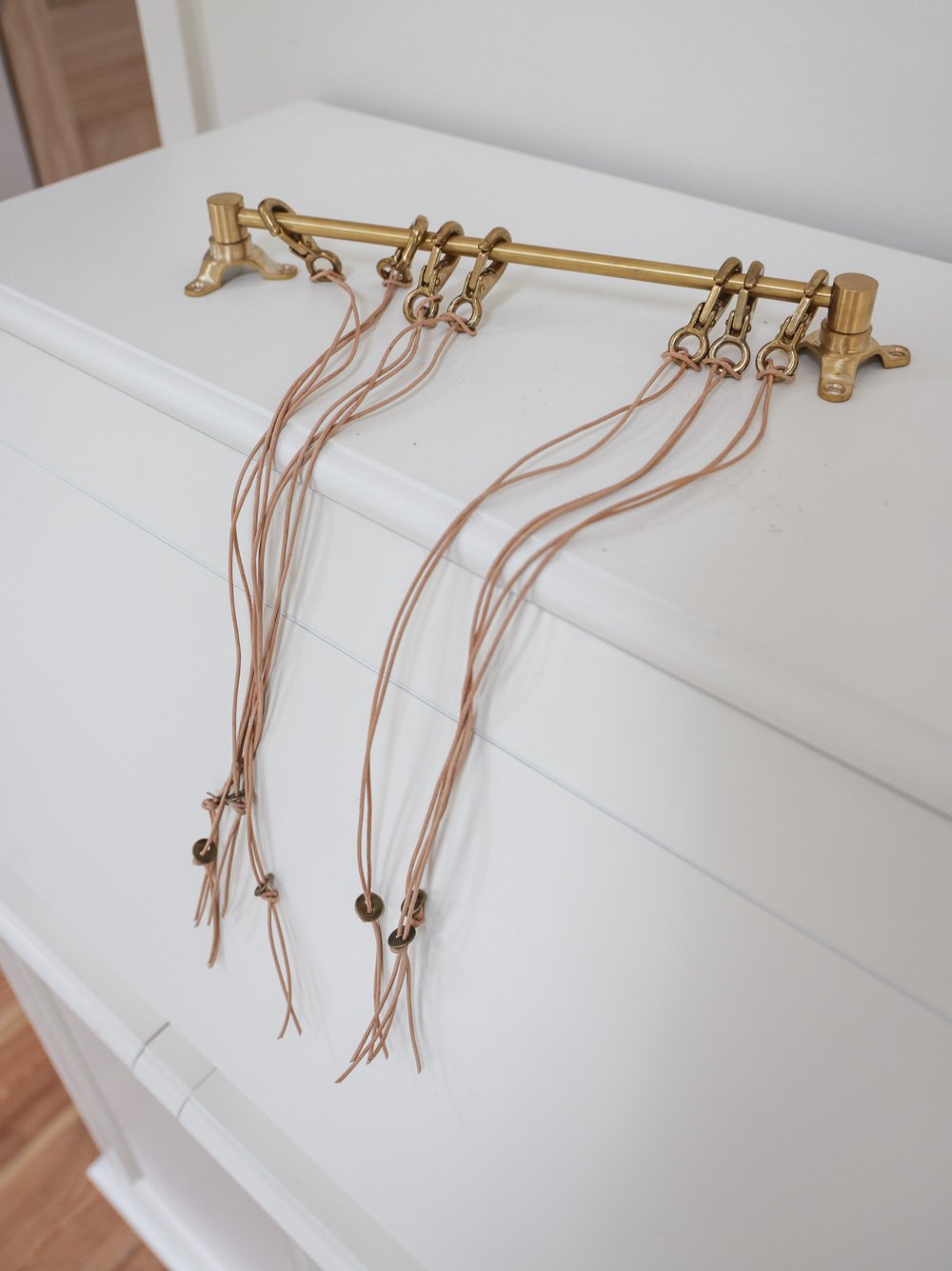
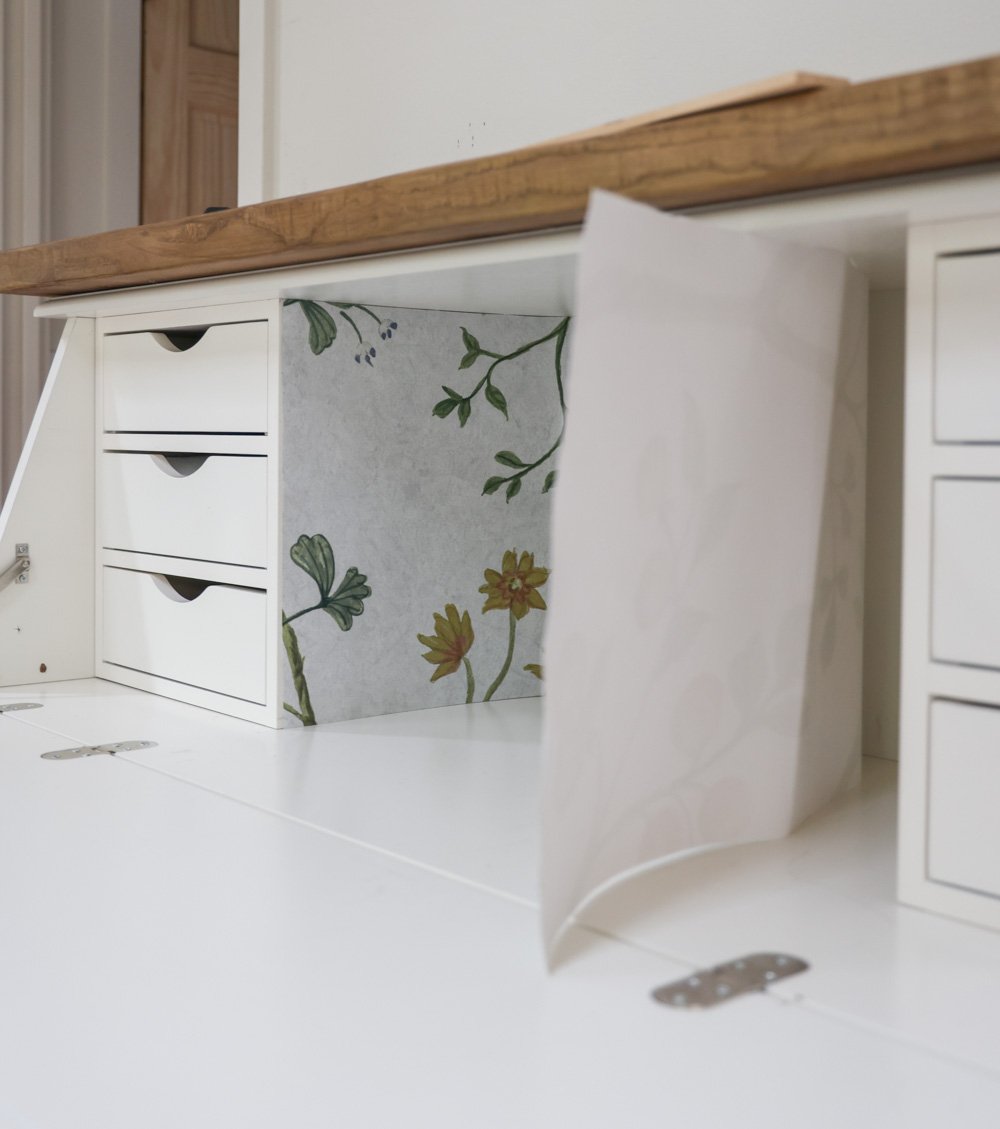
The brushed nickel nobs got a (hastily applied) coat of leftover textured bronze spray paint. The interior cubby received a remnant piece of peel + stick wallpaper from Rebel Walls, a scrap from our closet makeover. The exterior became a touch of extra book storage thanks to a clever, made-to-order suspended system that we were gifted upon moving in. Lastly, we layered the top shelf with a reclaimed wood board that was once the tabletop of narrow kitchen island from one of our previous homes.


While the end result isn’t the century-aged, eco-friendliest antique of my dreams, it is a highly usable, purposefully chosen, and mindfully modified desk that I plan to use for years to come.


If you already have newer furnishings for one reason or another, consider adding a dash of reclaimed materials to them in one or more ways. Vintage hinges, door knobs and pulls can work wonders. Similarly, consoles, countertop segments, accent pieces, and more can be enhanced when securely topped with a layer of repurposed or reclaimed materials, sized to your specifications. Additionally, paint, wallpaper, and secondhand accents can further transform a flavorless piece into a story-rich heirloom.


Custom Shoe Cabinet for Our Family of Four
Note: Discover tips and tricks for small space shoe storage via my book, Small Space Style: Because You Don’t Need to Live Large to Live Beautifully
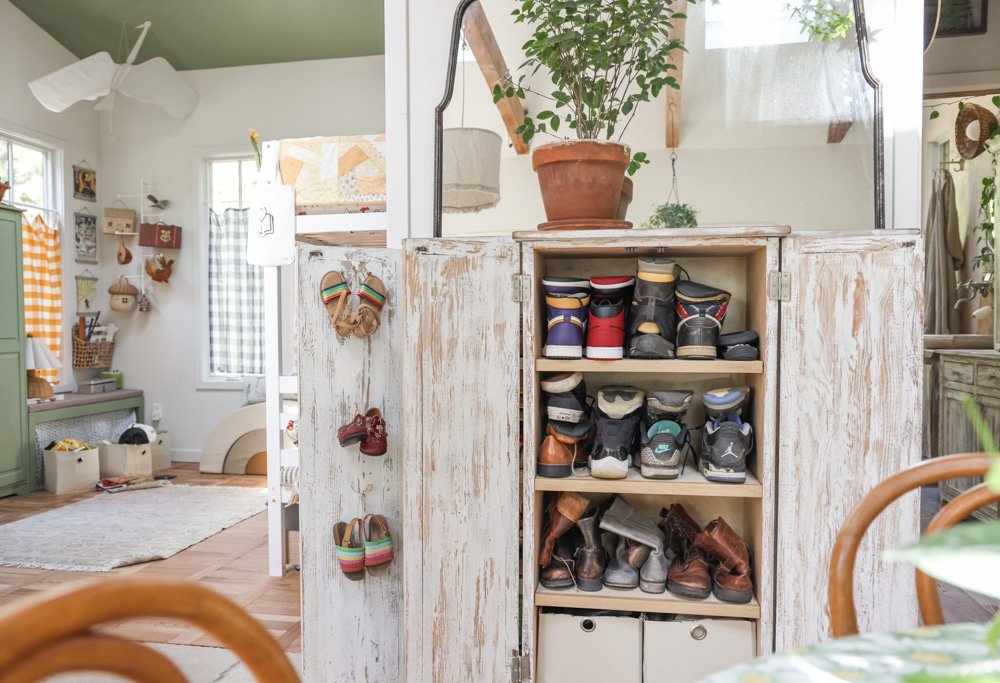
One of the first things that’s visible upon entering our cottage is a tall, custom cabinet made from reclaimed wood:

Luckily, one of the things that’s not immediately visible is all its contents:
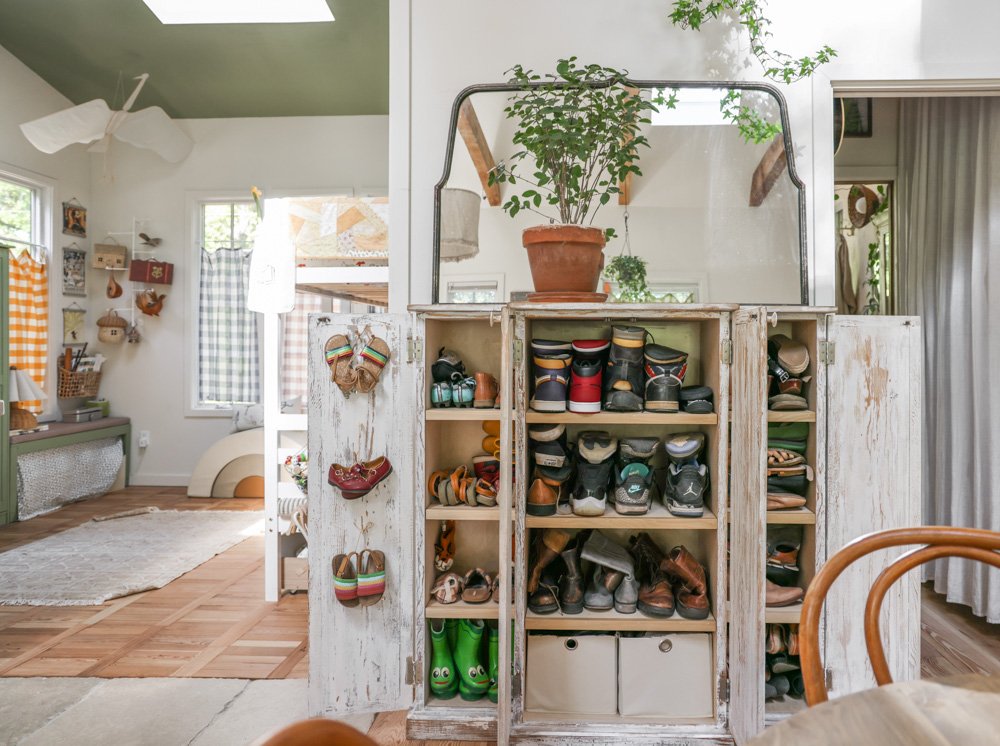
This three-part, four-doored cabinet holds almost all of the shoes for our family of four. (There are some frequently used pairs — as well as a few tall boots — stashed elsewhere for doorside access and utility.)
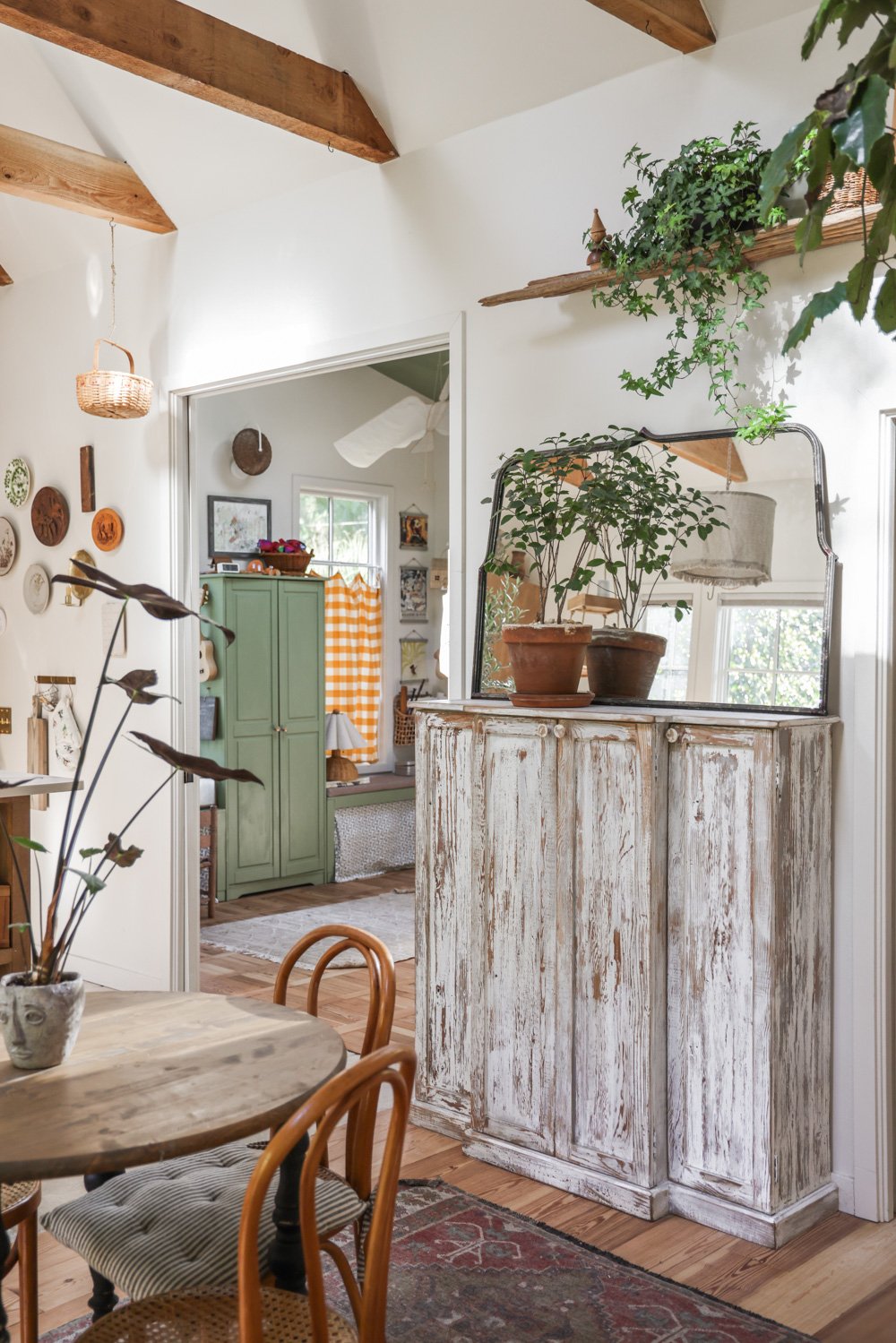
The cabinet was made by our good friend at Tumbleweed & Dandelion, with whom we designed it.
The idea was to keep everything near the front door, without causing a bottleneck there. We opted for a taller height (per usual), to maximize vertical space. The cabinet also provides the perfect perch for a large, light-bouncing mirror that adds color and depth to the pocket door wall, which itself cannot support even moderate weight due to the necessary hollow framing behind much of the drywall.
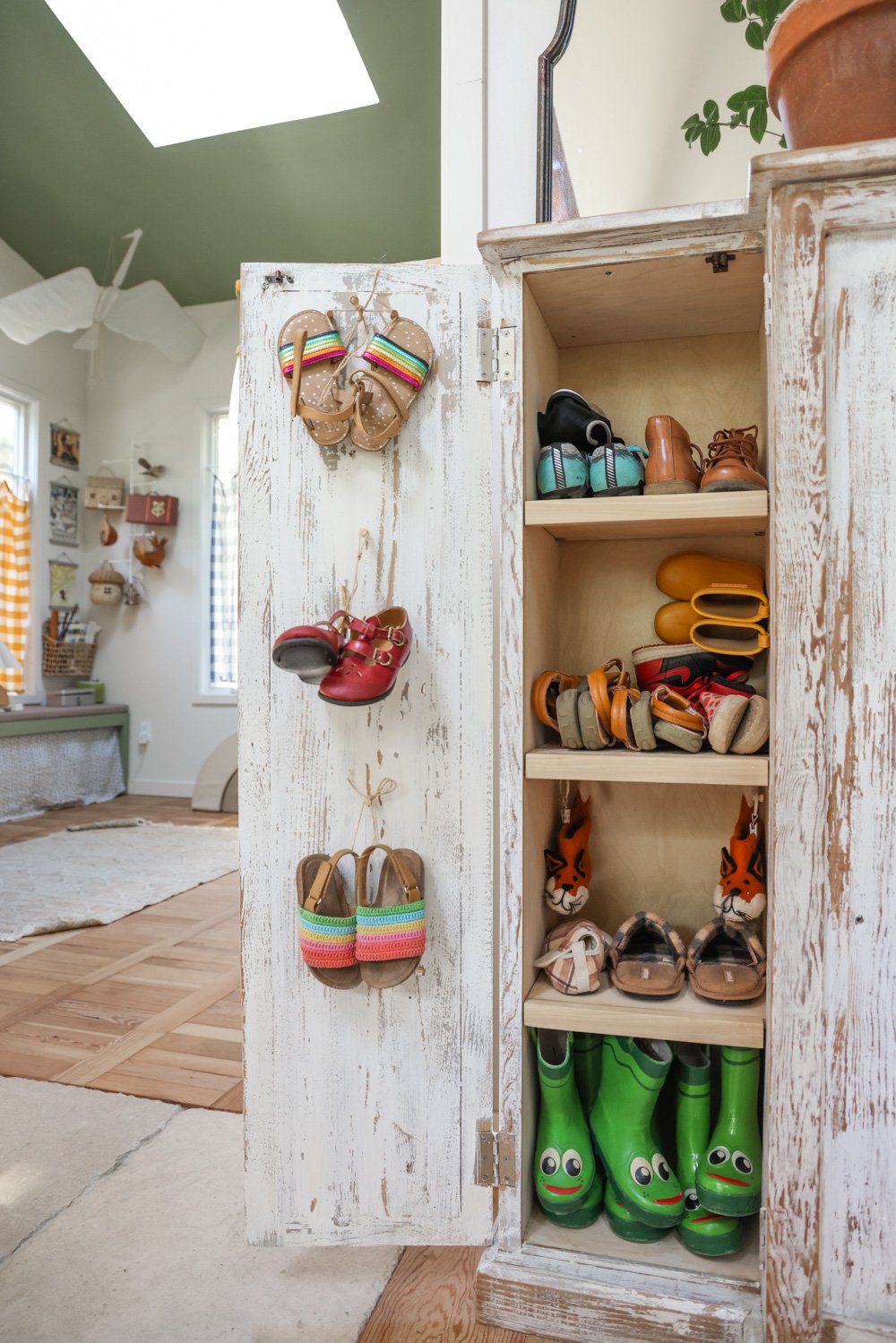
I’ve found that some important parts of designing custom furnishings for our unusual, smaller spaces are not just the obvious ones — like size (particularly depth) and shape, but also aspects like leg type and maneuverability around the pieces.
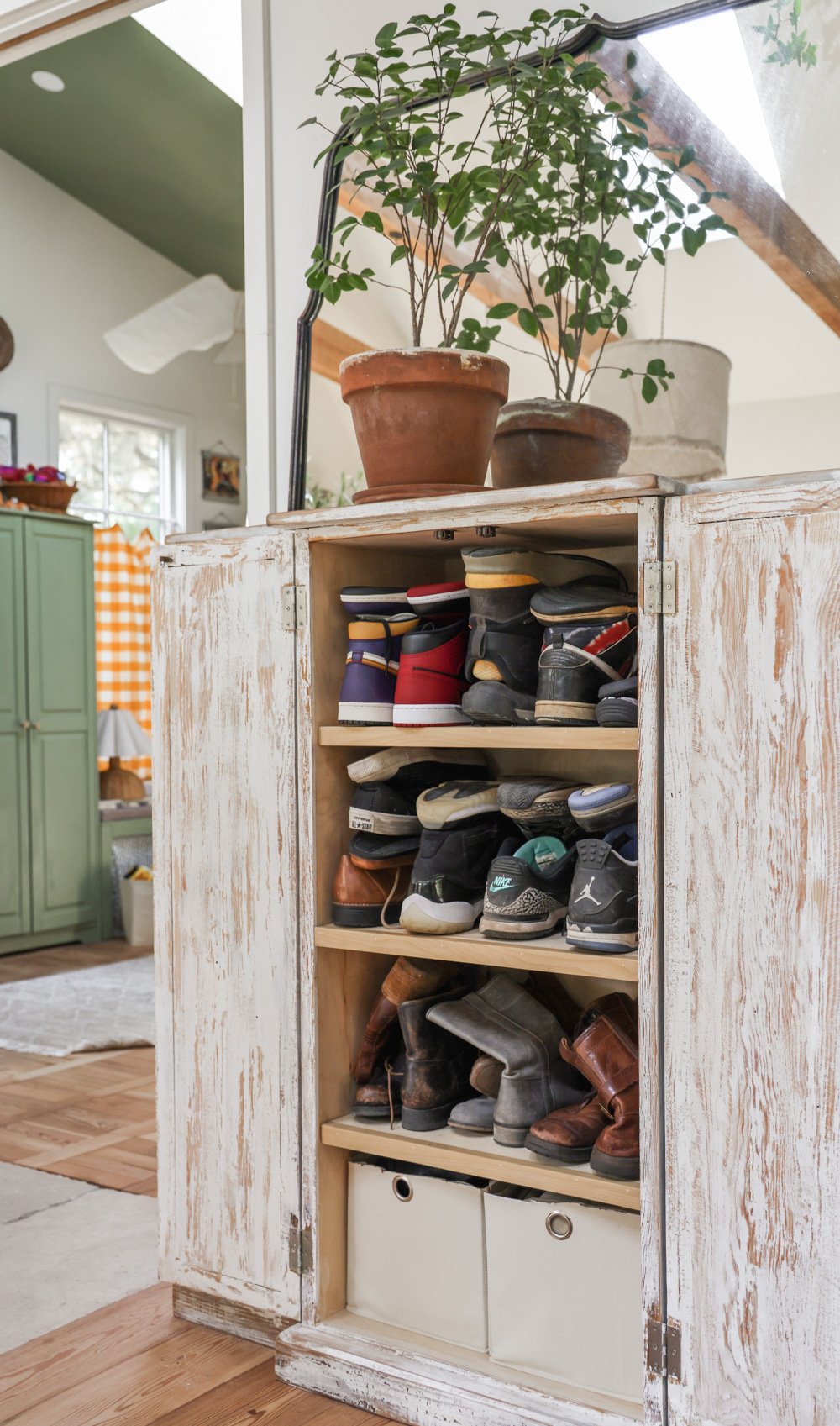
For example, we didn’t want dog hair to be able to make its way beneath the cabinet, and we wanted it as sturdy as possible since we have two young children. Hence the flat bottom design.
And we wanted the piece to be as shallow was possible to prevent us from bumping into it when in the “dining room,” or while crossing from the bathroom into the kids’ room, but it also needed to be deep enough to accommodate Adam’s sneakers. Hence the alternating depth between compartments.

The kids shoes go on one side, and handmedown shoes that they’ve yet to grow into hang from the interior of the door. Adam’s sneakers fill most of the middle compartment, while my shoes sit (somewhat pell-mell, but I don’t mind) on the right side.
Shoes that my oldest child has outgrown go into a 6-pocket beverage bag that I suspend from the makeshift hallway coat closet, which is a small stretch of receded wall in front of the breaker box where I added a dowel and hangers to make the space highly functional. While in the bag, the shoes wait to be reused by our younger child, or are kept for sentimental reasons. (Yes, I’m good at letting things go, but not all things.)

This cabinet turned out exactly as we’d hoped and imagined, and has room inside to adapt, thanks to removable shelves. We’re grateful to our talented (and absolutely delightful) friends at Tumbleweed & Dandelion in our old, beloved town of Venice Beach, for bringing this vision to life!

And speaking of our Tumbleweed friends, the shop’s founder, Lizzie McGraw just wrote and published a fantastic book that I love, which be found wherever books or sold, or via her small business’ online store.