
Biophilic Design: The Primary Bedroom
Our home is clearly influenced by the principles of Biophilic Design. The idea living innerconnectedly with the outdoors has always inspired me, as I believe that nurturing our bodies, our minds and each other cannot happen completely without remaining rooted deeply in the natural world, whether in a city or rural setting.

In our past home, we blurred the lines between our exterior and interior by growing overhead vine canopies, erecting living walls, using outdoor mirrors where safe and advantageous, installing an outdoor shower, creating living + dining + play spaces in the garden, and keeping our windows, glass doors and skylights uncovered. But, as folks loved to remind me daily, that was a major perk of California living that doesn’t extend to most other regions.


In this new cottage, which exists in a very different climate, we blended the outdoors with the indoors even more deliberately and extensively, while operating with the unique realities of living on this dot on the globe.

Each of the four rooms in the house is meant to pull focus to the natural world around us and spark our innate instinct to interact with it. One of my favorite examples of this is the design of the primary bedroom.

Here are some of the more notable bedroom features that help us establish a harmony with the land enveloping us:

Venting Skylight
An oversized venting / remote-operable skylight (by VELUX) ushers in fresh air, abundant sunlight, and twinkling stars. The skylight’s screen prevents curious dragonflies and bees from entering.

Casement Windows
Four casement windows and one stationary window fill two of the four walls of the bedroom. While the windows are generous in size, we selected divided lites in order to prevent bird strikes— and, thankfully, there have been none that we know of. Each operable window has a screen that can be popped in or removed within seconds as desired depending on the season.

Natural Wood Floors & Shelves
Our wooden floors, nightstand tops, headboard ledge, and sink shelf are all made with ethically river recovered and building reclaimed, character-filled pine and cypress board remnants from the Goodwin Company. While we lightly sanded the wood in order to remove deep-settled dust, everything except the headboard ledge was left unstained and natural in order to preserve the color, texture and matte finish of the wood. Each of the 500+ pieces has a story to tell from years of impact from insects and sap, and every board has naturally-occurring curls, knots, arching grain patterns or vertical pinstripes.


French Doors
Much like the windows, the divided lite French doors leading to the porch allow us to leave a sizable portion of the room open to the outdoors. (We will soon have a screen on the porch to keep the mosquitos and snakes from finding their way into the home.)


Oversized Double Pocket-Doors
The oversized double pocket doors, when slid open, generously connect the bedroom to the windowed and skylight-filled main room. This gives an wrap-around, panoramic view of the wooded setting from the bed, as 3 of the 4 walls — plus the ceiling — reveal the outdoors and provide natural airflow.

Wooden Trim with Natural Whey Stain
The wood trim was hand-painted with a Natural Whey Stain made from minerals, and natural pigments. This stain is an eco-friendly alternative to traditional synthetic stains.

Lime Paint
The bedroom walls and ceiling are painted with a mossy green-brown Lime Paint. This Lime Paint is free of solvents, and toxic chemicals, and is composed of all natural material and mineral pigment that provide a durable, breathable coating. Lime’s high pH makes it a naturally mold and mildew resistant finish.

Plants, Found Objects & Woven Materials
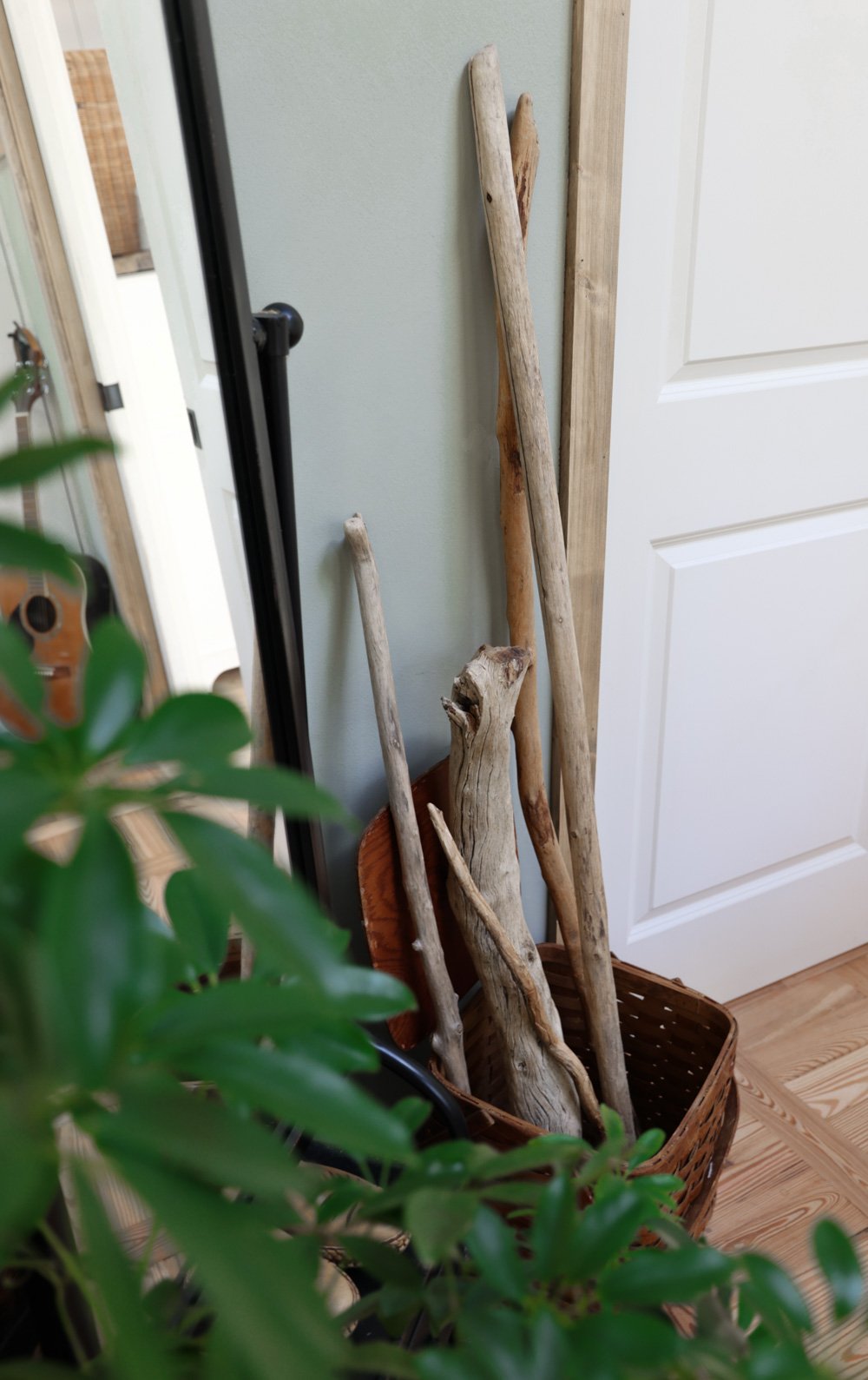
To further feather the transition between outdoors and in, we included plants in a variety of species and formats. Driftwood, branches and feathers found by our children fill the room for decor, sentiment and function. A linen-wrapped pendant lamp dangles from a snapped branch. A raw, handmade, reclaimed wood bed frame (reused from a previous project) grounds the queen-sized, organic Avocado Green Mattress. Various essentials are held in vintage rattan picnic baskets, and woven materials can be found throughout the accents, lighting and furnishings. Linen textiles further soften the room. And, of course, the ever-present dog hair tumbleweeds really tie the room together. 😃



Tiny French Farmhouse: Repairing the 2nd Floor Ceilings
When we and our partners purchased the Tiny French Farmhouse on the final day of 2020, we knew we’d have to tackle the repair of the 2nd floor ceilings as soon as possible. The water damage within them was evident from the realtor photos, and after visiting the property in our stead, our surrogates in the region confirmed the rot was indeed extensive.

Luckily our neighbors and friends are highly skilled in various areas of both home construction and repair, and are knowledgable about the specific materials commonly used throughout older homes in the Aveyron region.

When our family was finally able to visit the property last year, we connected with our neighbors, who generously agreed to handle with the removal of the toxic ceilings as part of the roof restoration for which we’d hired them.
The process was layered, but here’s the gist:
The low, rotted ceiling panels of the upper floor were removed
The aged and water-logged insulation was removed and safely discarded
In select areas, drywall and plaster were replaced or added
In certain spots, electrical wires were reorganized in safer arrangements
As part of the roof restoration, three VELUX skylights were cut-in and installed— one in both bedrooms, and one above the dark stairwell

As of now, the ceilings of the second floor — including the beams that were once fully or partially wrapped — remain unfinished. After seeing it first-hand, we’ll determine next steps.

Even unfinished, it is already greatly improved. Areas that were previously filled with soggy overhead boards (that encouraged bending and stooping) are now vaulted and spacious.
We’re not anticipating dramatic temperature changes within the home without the interior insulation. The roof now provides insulation via numerous materials / layers beneath its original stones, and the home is so small that it isn’t difficult to heat with the built-in system or petite space heaters left by the previous owners. Plus the large fireplace sits beneath half of the upper floor, and its chimney extends upwards throughout the main bedroom and 1/2-bath walls.


Of course, only time will tell! But since we’re in this project for the long haul, we’re unhurried and, currently, quite content.

Tiny French Farmhouse: Lauze Roof Restoration
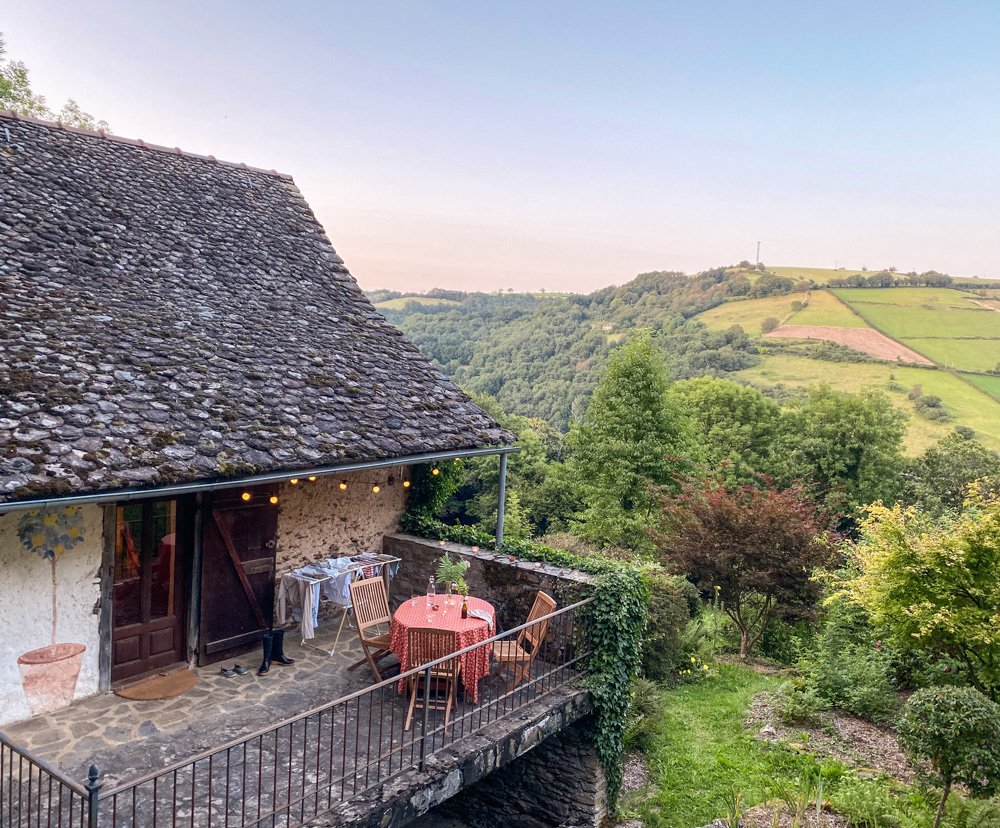
Since our last trip to the Tiny French Farmhouse, a fantastic team (who we’re lucky enough to call friends) restored the original, stone roof of the 1800s, <800 square-foot residence.
My family will be headed there next week, and we’re eager to enjoy their expert handiwork in person.
Before
This type of lauze roof is very common in the Averyon region. It’s not uncommon to pass one that’s being repaired, just as it’s not uncommon to pass one that has caved in after years of neglect.

Before
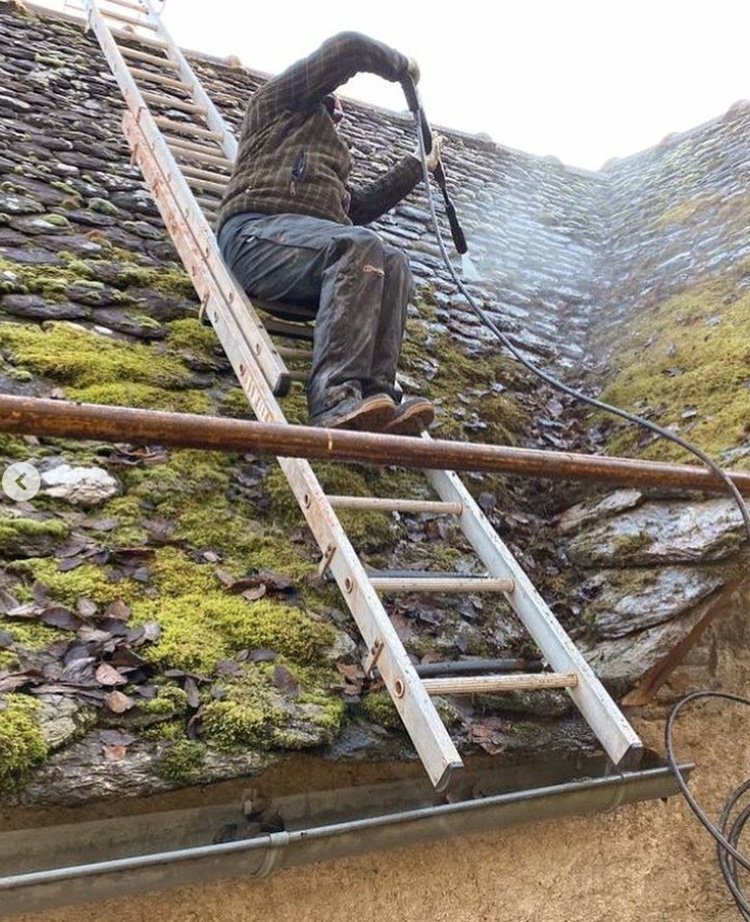
The stones gather green moss over time if not maintained, as ours had. In my opinion, the moss is beautiful, and allows the home to sink into its natural surroundings. But since the moss captures moisture and further weighs down the roof, it must be cleaned.

I covered the restoration process extensively across my social media channels*, but neglected to extend that coverage to the blog. (It’s been a sleepy year here on this site, I know. I was prioritizing time with our baby, while overseeing the new little cottage build in the Southeast. But I plan to get back into the full swing of posting later this summer.) *Much of that coverage has been saved to my Farmhouse Highlights on IG Stories.

Repairing the roof involved several technical steps, but the gist of it is:
The scaffolding was erected
The stone tiles were manually removed
The nails were removed one by one from the wood
The wood was allowed to dry out over several sunny days
The rotted components were removed and replaced, and the hips cleaned
Several layers of weatherproofing and insulation were applied above the wood
The tiles were individually and meticulously scrubbed clean and left to dry
The tiles were replaced, layer by layer, beginning at the bottom / soffits, and extending upwards towards the peaks.

From what we gather from the photos, we are thrilled with the end results. The before/after stand in stark contrast of one another, and yet the roof still looks like it’s beautiful, original self (plus the tiny skylights).

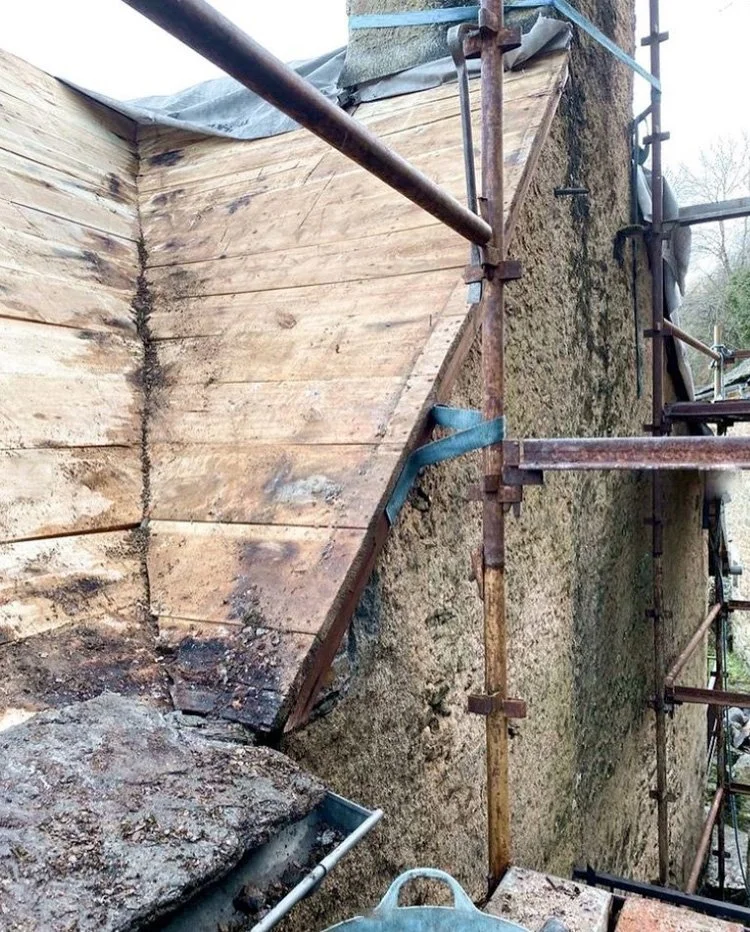


The entire process took a team of two about 4 months (including the ceiling work outlined in another recent blog post), as they worked around winter and spring snow and showers.
As far as budgeting for the restoration was concerned, let’s just say that the work was worth every penny, but that it was only possible to pay thanks to the multi-steward partnership behind the property acquisition.