Rightsizing in Real Time - An Ongoing Event for January 2024
I am stepping into 2024 with no illusions that a turn of the calendar will magically ease stressors, or reveal an untapped source of much-needed energy. Yet who doesn’t relish optimism, coupled with a fresh beginning of any sort?
A new year.
A rising sun.
An unexplored perspective.
It’s my job (and my joy) to help people discover comfort and contentment within their homes— particularly spaces that are compact and/or in need of heightened versatility. In order to tenderly weave that work into the intentions imagined by many at the top of the new year, I’ll be publishing regular posts throughout January as part of a month-long series entitled Rightsizing in Real Time. This series will offer simple, flexible prompts and examples aimed at helping folks with their own rightsizing, downsizing, repurposing, and/or organizational endeavors.
I hope you’ll mull over the concepts that apply to you at your own pleasant pace.
Good things take time and consideration.
Rather than jumping frantically from room to room (which is a common and often overwhelming approach that I find laughable when applied to small spaces), we’ll explore solutions to typical small space hurdles through a more versatile lens.
How can we thin the crowding of belongings wherever that occurs?
How can we better define and adapt zones?
What areas are under-utilized and need reimagining?
Where do we start when operating on a tight budget and with sustainability in mind?


Staying Rightsized (Part 6)
Staying Rightsized is a weekly photo roundup featuring some of the many space-saving considerations around our cottage. I share this as a reminder that we usually don’t need a bigger space— we simply need less stuff, and more creativity. As minor as some of these moments seem, the little things really do add up, providing more space for navigating daily life within limited or awkward square footage.

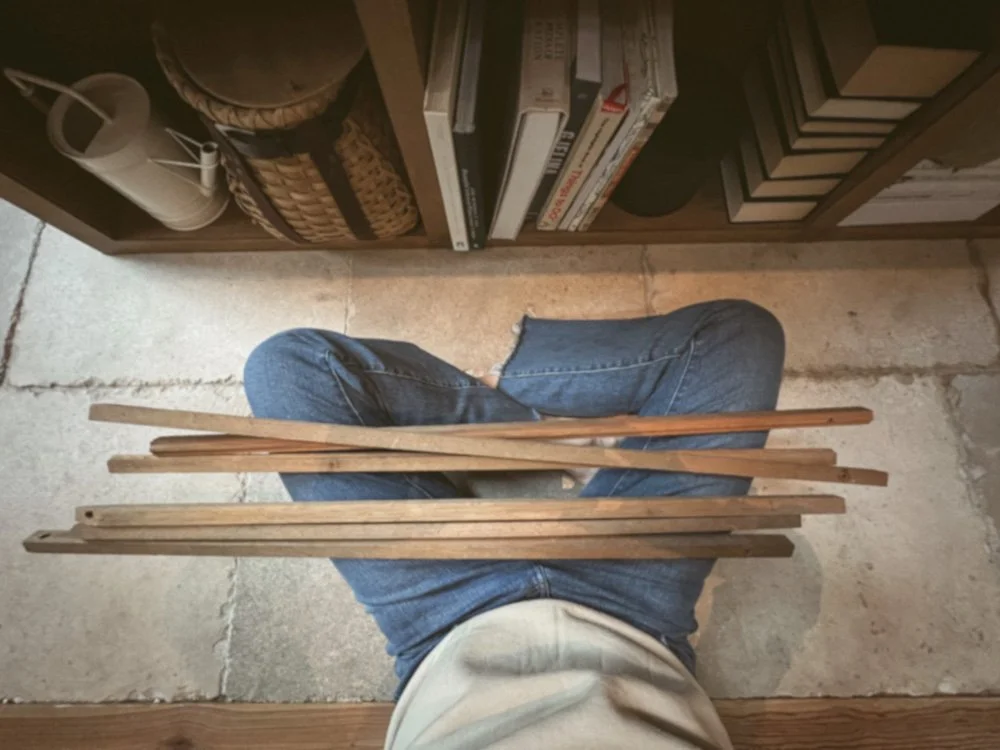
Above: A spare, recovered floorboard is repurposed as a shallow window ledge in the kitchen, providing an unobtrusive surface for utility and play.

Above: A two-tiered, vintage, rolling side table provides twice the surface space for decor and essentials in the combination laundry room + bathroom.

Staying Rightsized (Part 5)
Staying Rightsized is a weekly photo roundup featuring some of the many space-saving considerations around our cottage. I share this as a reminder that we usually don’t need a bigger space— we simply need less stuff, and more creativity. As minor as some of these moments seem, the little things really do add up, providing more space for navigating daily life within limited or awkward square footage.

A repurposed net bag attached to the underside of a reclaimed wooden stool is repurposed as a breathable shelf, allowing the treads of little shoes to dry by the front door.

A petite, hooked bin holds a bottle*, thermometer, battery-operated nightlight, and handkerchief for our toddler. This eliminates the need for a side table by the bunk, freeing up space for the kids to play. (*The bottle is PURA Stainless, and is an adaptable design that can be used with beverages for kids and adults.)
Staying Rightsized (Part 4)
A reminder that we usually don’t need a bigger space— we simply need less stuff, and more creativity.
Staying Rightsized is a weekly photo roundup featuring some of the many space-saving considerations around our cottage. I share this as a reminder that we usually don’t need a bigger space— we simply need less stuff, and more creativity. As minor as some of these moments seem, the little things really do add up, providing more space for navigating daily life within limited or awkward square footage.
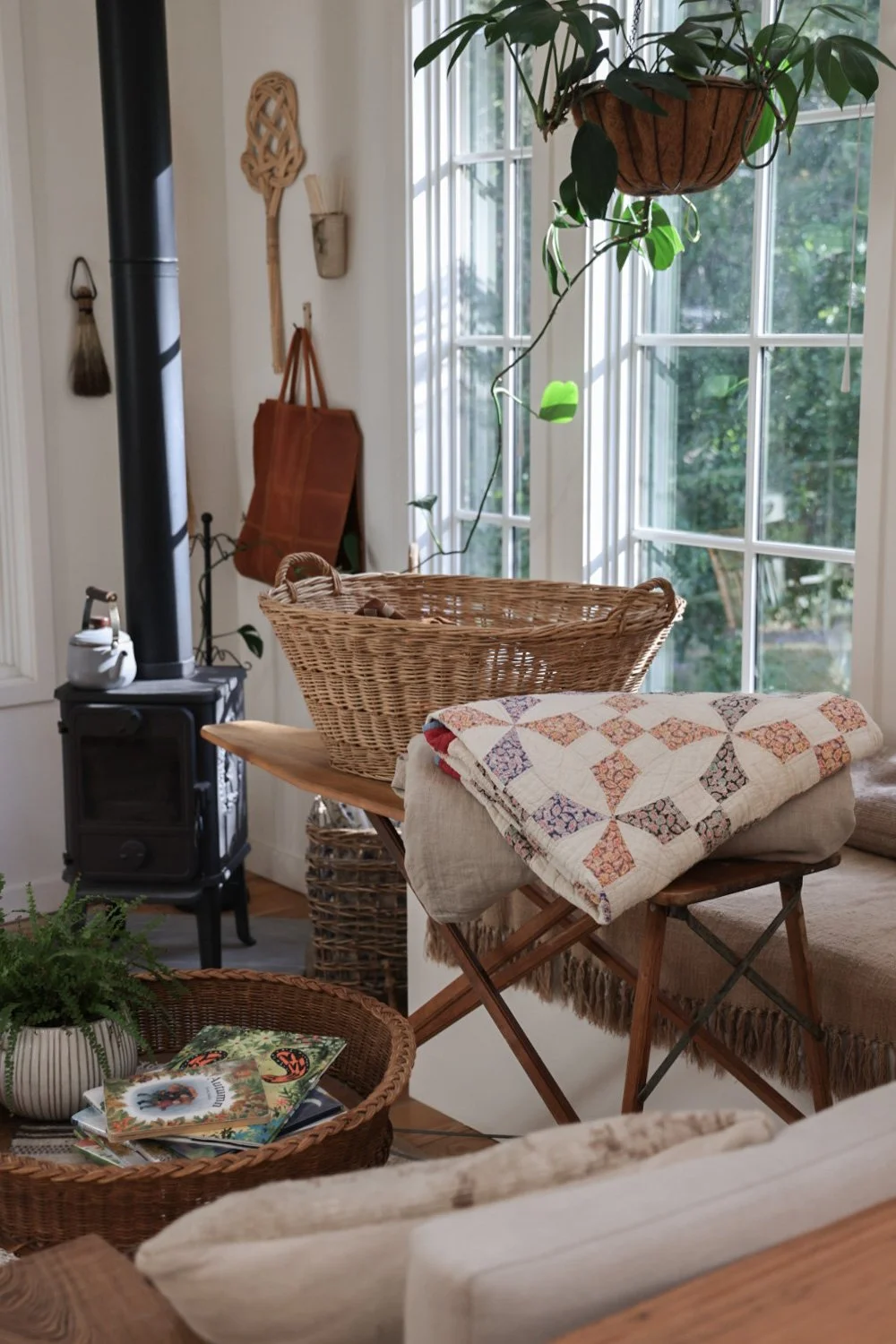
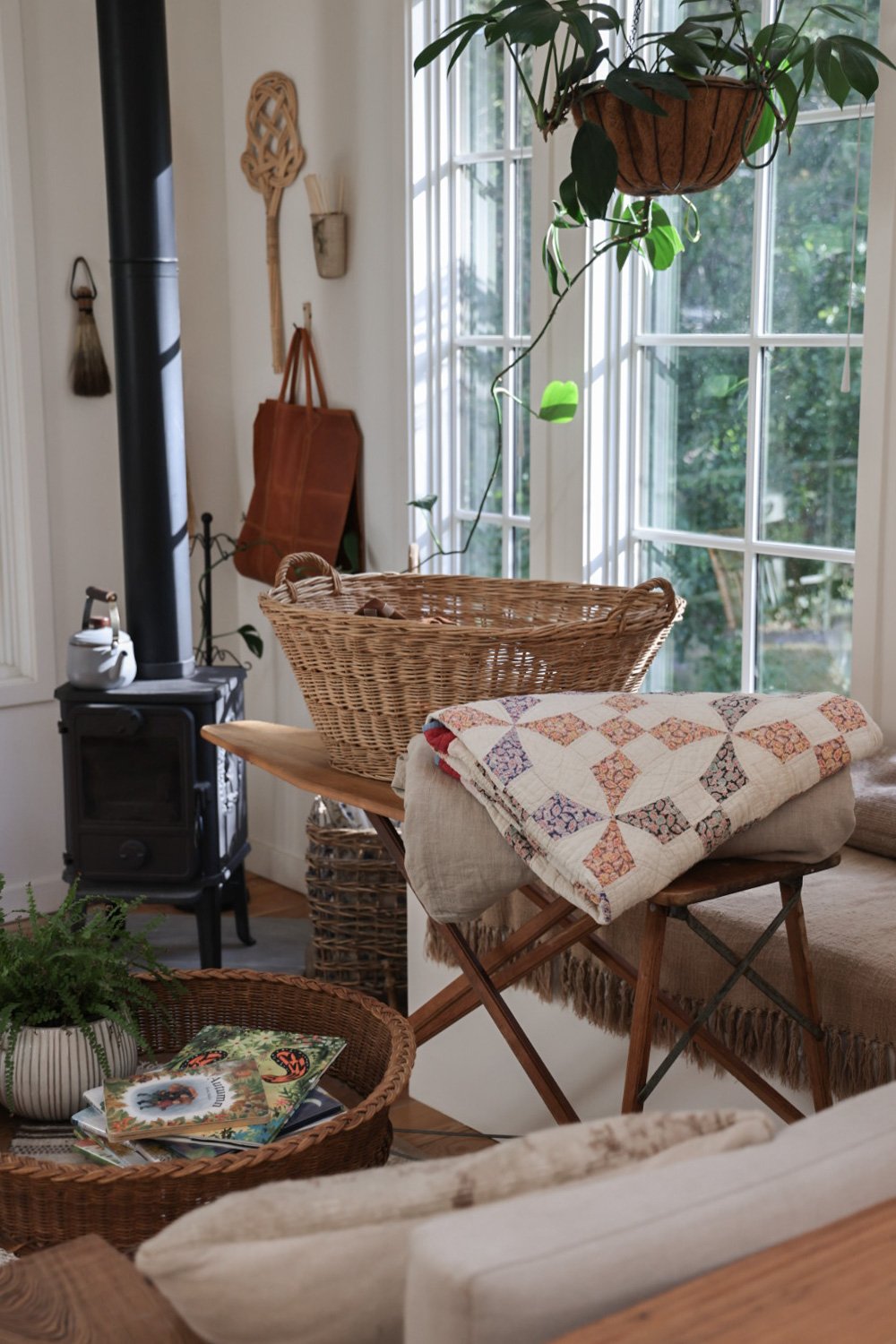
Above: A vintage, folding ironing board provides us with a collapsible, dog hair-free surface for sorting never-ending laundry. (Lately it’s been functioning as a mobile desk as well.)

Above: A swivel-arm, wall-mounted rack holds accessories / functional decor for our 7 year-old, while a lower wall basket keeps art supplies (and magic wands) within reach of both kids.

Staying Rightsized (Part 3)
Because we usually don’t need a bigger space. We simply need less stuff and more creativity.
Staying Rightsized is a weekly photo roundup featuring some of the many space-saving considerations around our cottage. I share this as a reminder that we usually don’t need a bigger space— we simply need less stuff, and more creativity. As minor as some of these moments seem, the little things really do add up, providing more space for navigating daily life within limited or awkward square footage.

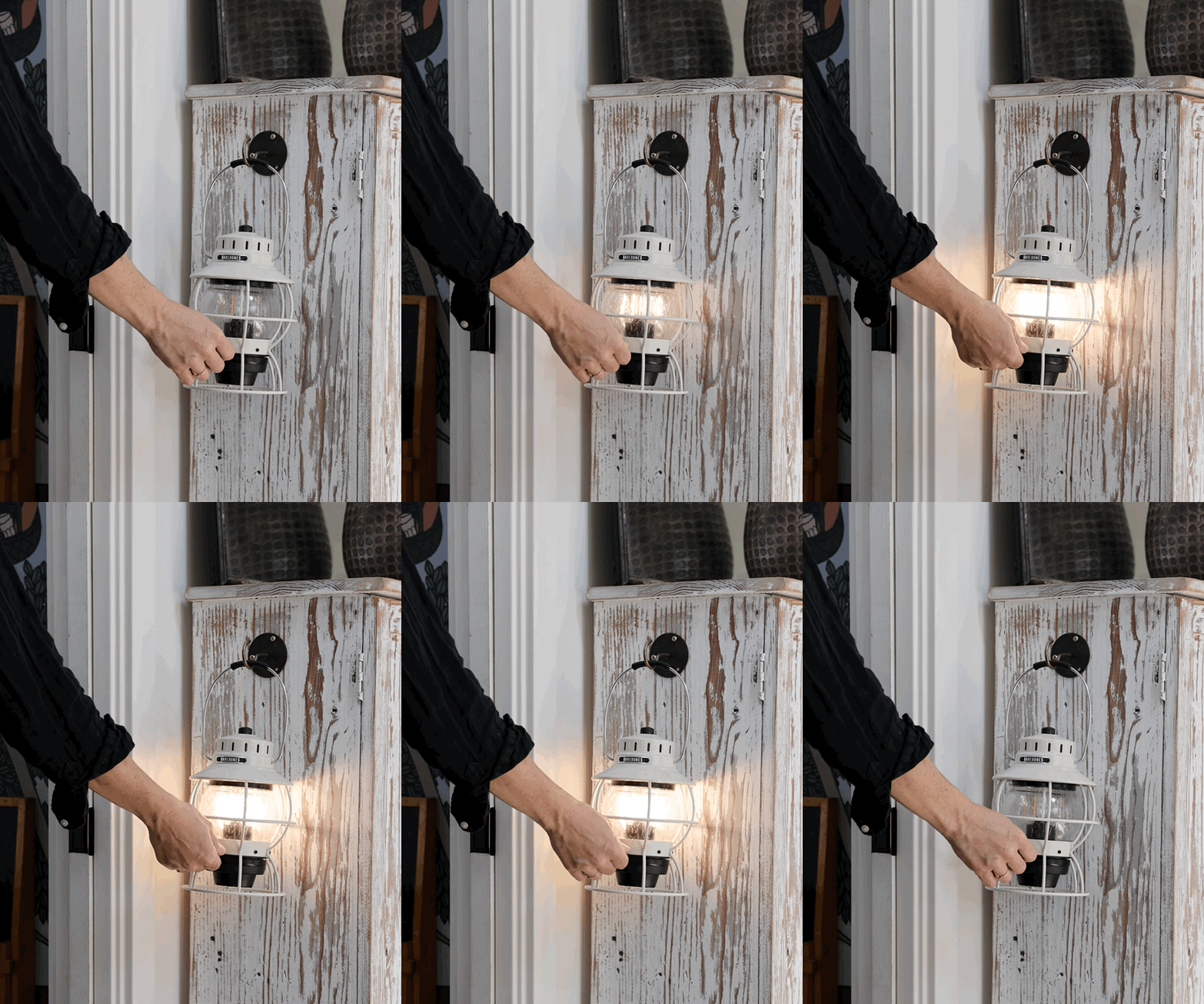
Suspended clips for air drying washable wipes and all manner of small linens.

A teapot put to additional use when the weather insists on see-sawing between the 40s and the 90s on a daily basis in November.
Staying Rightsized (Part 2)
Because we usually don’t need a bigger space. We simply need less stuff and more creativity.
Staying Rightsized is a weekly photo roundup featuring some of the many space-saving considerations around our cottage. As minor as some of these moments seem, the little things really do add up, providing more space for navigating daily life within limited or awkward square footage.
Because we usually don’t need a bigger space. We simply need less stuff, and more creativity.

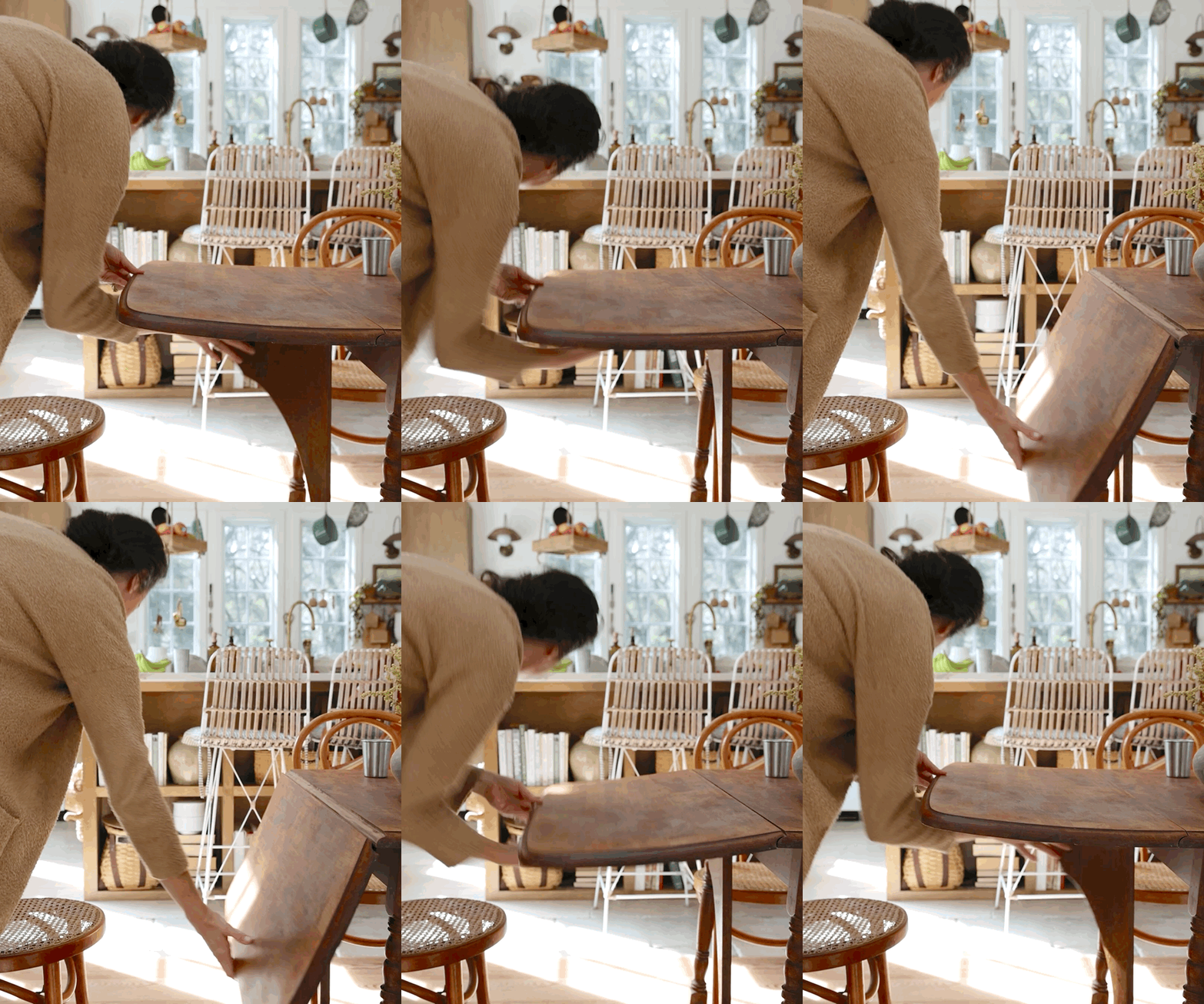
Above: Custom cushions top the raised benches / tables on either side of the kids’ wardrobe. With the cushions on, the kids each have a reading nook by a window. With the cushions removed, the kids each have a desk at which to play and work.

Above: 1¼” wide magnetic wooden blocks (squeezed between the trim of two narrow windows) support individual kitchen knives in order to free up drawer and counter inches.
Staying Rightsized (Part 1)
Staying Rightsized is is a new weekly photo roundup featuring some of the countless space-saving considerations around our cottage.

Because as minor as these moments seem, the little things really do add up and provide more space for navigating daily life within limited or awkward square footage.

Tiny French Farmhouse: Lauze Roof Restoration
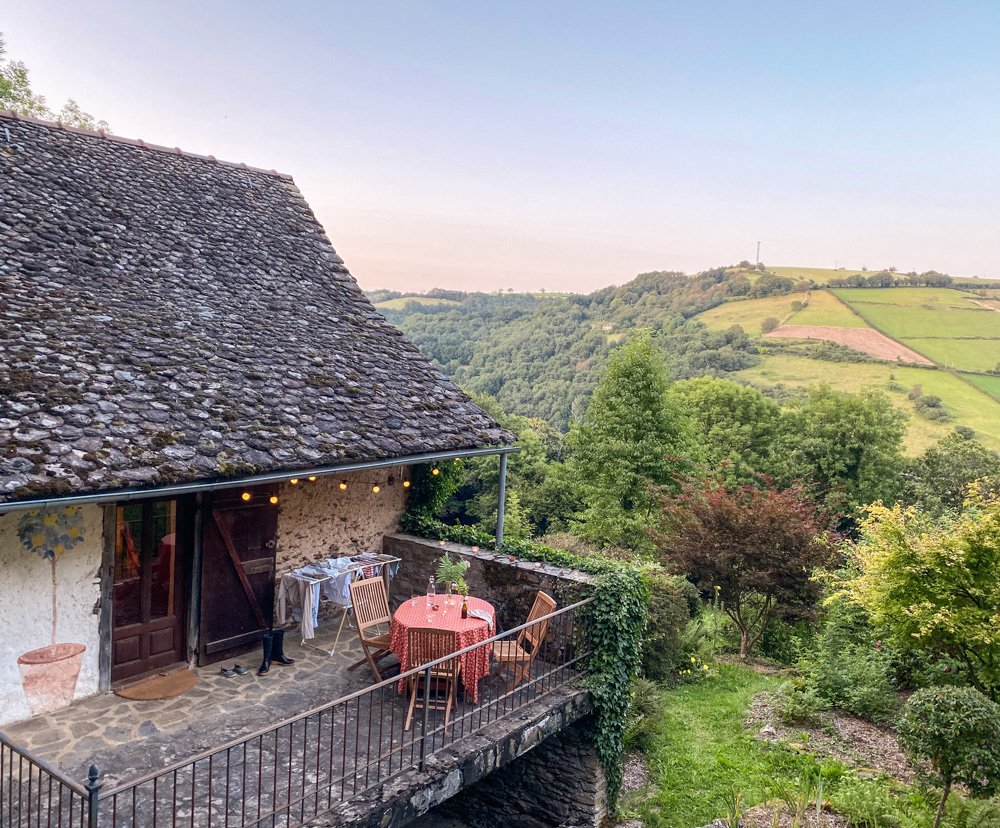
Since our last trip to the Tiny French Farmhouse, a fantastic team (who we’re lucky enough to call friends) restored the original, stone roof of the 1800s, <800 square-foot residence.
My family will be headed there next week, and we’re eager to enjoy their expert handiwork in person.
Before
This type of lauze roof is very common in the Averyon region. It’s not uncommon to pass one that’s being repaired, just as it’s not uncommon to pass one that has caved in after years of neglect.

Before
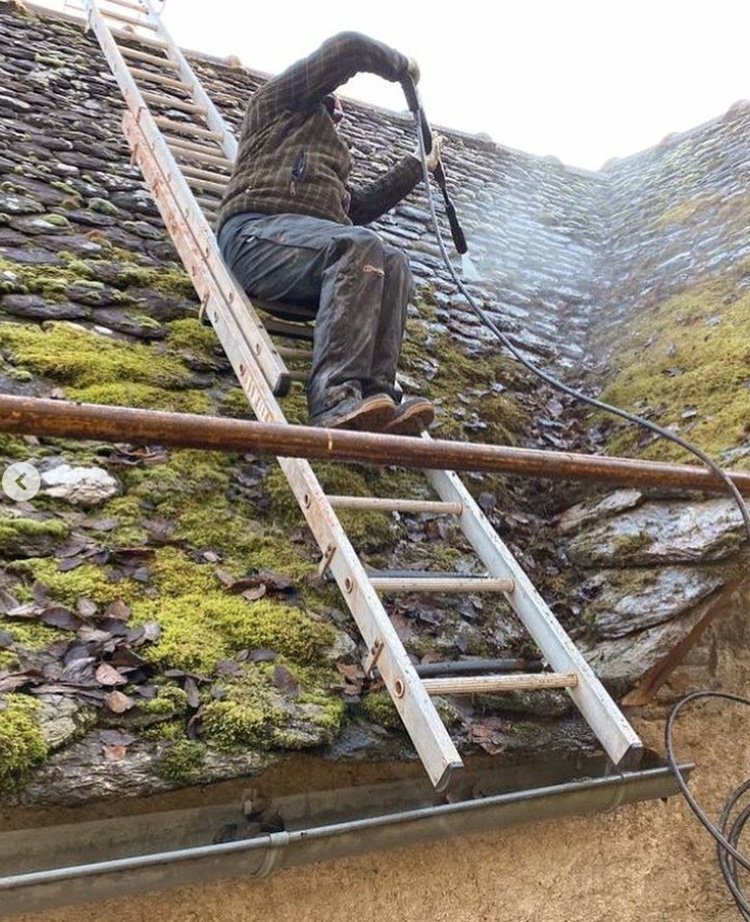
The stones gather green moss over time if not maintained, as ours had. In my opinion, the moss is beautiful, and allows the home to sink into its natural surroundings. But since the moss captures moisture and further weighs down the roof, it must be cleaned.

I covered the restoration process extensively across my social media channels*, but neglected to extend that coverage to the blog. (It’s been a sleepy year here on this site, I know. I was prioritizing time with our baby, while overseeing the new little cottage build in the Southeast. But I plan to get back into the full swing of posting later this summer.) *Much of that coverage has been saved to my Farmhouse Highlights on IG Stories.

Repairing the roof involved several technical steps, but the gist of it is:
The scaffolding was erected
The stone tiles were manually removed
The nails were removed one by one from the wood
The wood was allowed to dry out over several sunny days
The rotted components were removed and replaced, and the hips cleaned
Several layers of weatherproofing and insulation were applied above the wood
The tiles were individually and meticulously scrubbed clean and left to dry
The tiles were replaced, layer by layer, beginning at the bottom / soffits, and extending upwards towards the peaks.

From what we gather from the photos, we are thrilled with the end results. The before/after stand in stark contrast of one another, and yet the roof still looks like it’s beautiful, original self (plus the tiny skylights).

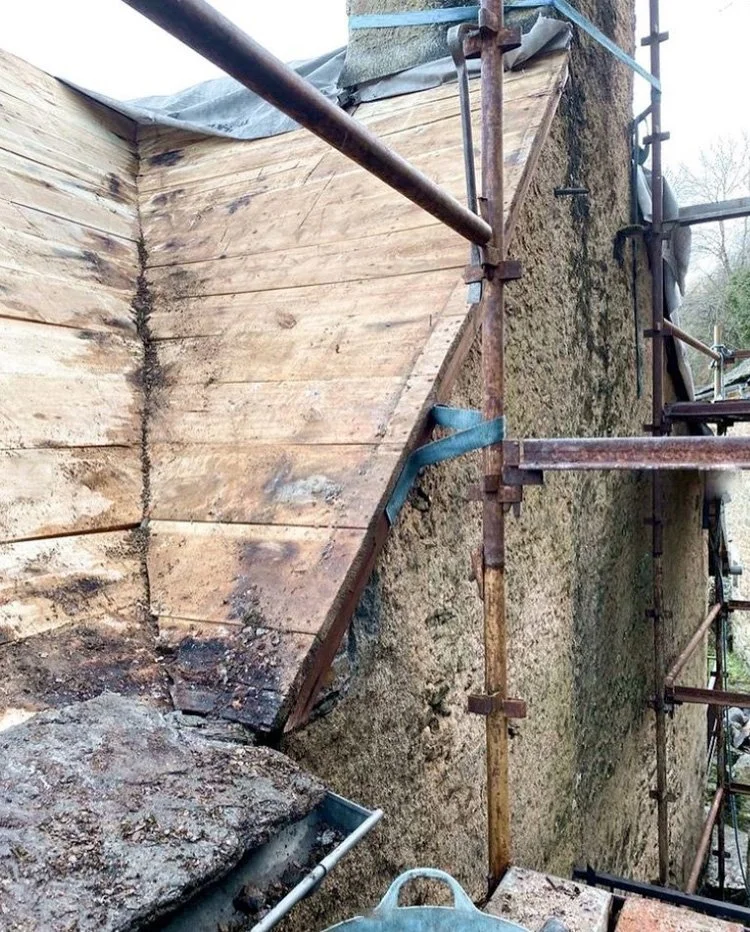


The entire process took a team of two about 4 months (including the ceiling work outlined in another recent blog post), as they worked around winter and spring snow and showers.
As far as budgeting for the restoration was concerned, let’s just say that the work was worth every penny, but that it was only possible to pay thanks to the multi-steward partnership behind the property acquisition.

Using Our Tiny Greenhouse as an Adaptable Sunroom
How we styled our ~114 sqft greenhouse to function as an easily-adaptable office, an activity space for our child, a quiet reading lounge, a dining / gathering space, and a grow zone.
Summary: How we styled our ~114 sqft greenhouse to function as an easily-adaptable office, an activity space for our child, a quiet reading lounge, a dining / gathering space, and a grow zone.

Our tiny greenhouse is a T-shaped design that straddles the sunny field of the prairie and the cool canopy of the oak trees. It’s propped up on a tall deck, resembling a house on stilts, as it’s required to sit above the flood zone in this region.


The goal behind this space was never for it to be used purely as a grow zone, though we do intend to use it for seedlings and select greenery.


Instead, it is meant to be fluid and adaptable, just all of my favorite small spaces.

Its uses already include an office, an activity zone for our child, a quiet reading/writing lounge, and a dining/gathering room.

This post contains images of the default set-up, which contains areas for working, lounging, potting and playing. The post does not contain images of the dining set-up, though it’s not hard to envision. (It also doesn’t reflect the recent railings we added to the platform the day after I captured these photos.)

Almost all of the pieces in the space are collapsible, from the standard chairs, to the second-hand potting bench from the cottage, to the corner shelves, and the desks/tables.

The remaining furnishings are lightweight and easily mobile. The focal points on either side — with a stunning view of both the woods and prairie — are two long, slim loungers from Serena & Lily.

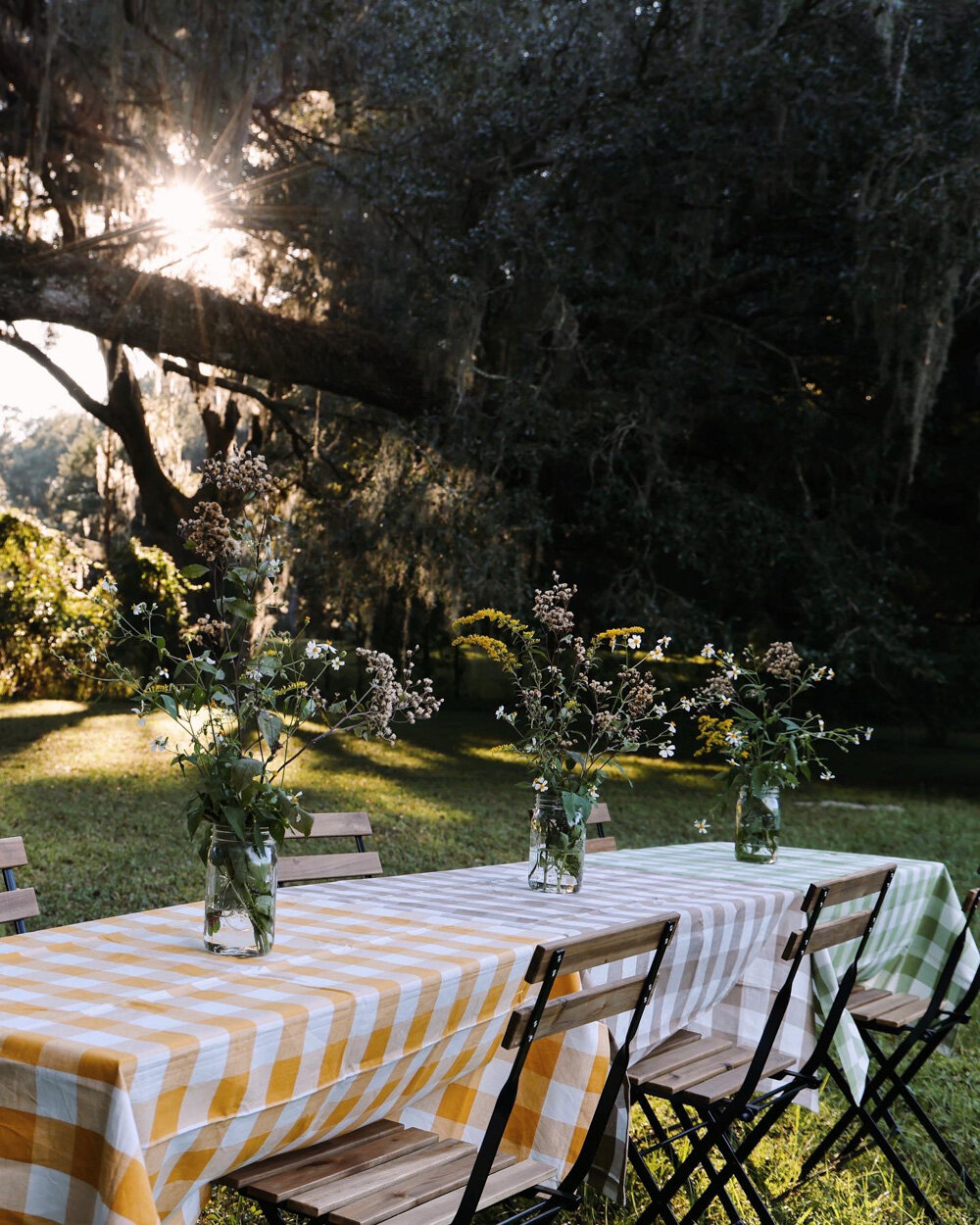
We also have extra folding tables and chairs so we can create a farmhouse-style dining setup inside the greenhouse (after relocating the loungers), or just beyond the platform in the grass leading to the prairie:
By leaving a few extra feet in front of the greenhouse door, we’ve been able to create a useful stoop, where we rehabilitate and grow plants from/for elsewhere.

Two spare folding chairs sit out front, offering views of the prairie and a place to take off muddy shoes or drop bags of soil.

For pops of playful and functional decor, we placed gardening gloves, tools, aprons and bags to the framework along the walls.

We added beautiful bolster pillows (in moss/white ticking) from Serena & Lily, an extra-long doormat (inside the sliding glass door), cafe lights, a patio rug, and a fan to help the ceiling vents and front door cool the room a bit when needed.

We also have useful items such as reusable cleaning cloths, candles, tablecloths, matches, etc. tucked out of sight but easily within reach.


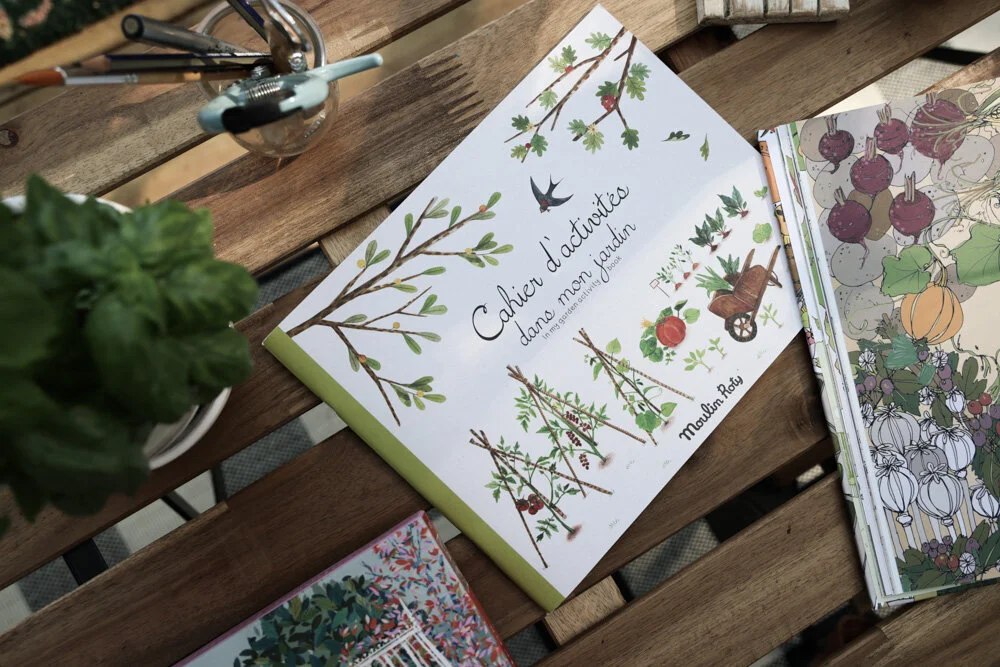
We rounded everything off with a gardening-related selection of books, games and tools for growing and learning in both French and English for our five year old.


I’ve found that I truly am so much more creative and content when working with small spaces. This little greenhouse has reignited a feeling I’d lost track of this year in my stress and uncertainty, and I’m excited to get to fully use and know this space with my family throughout the upcoming cooler, festive months.


Space-Saving Helmet for Safer Cycling
Post Summary: A simple step towards saving our heads, saving some space, and saving the planet.
More than 1/3 of all car trips in America are within 2 miles. If folks who are able to do so opt to walk, use public transportation, and/or bike instead, this 10% decrease in driving would prevent about 110 million metric tons of carbon dioxide from entering our atmosphere. (Source: NY Times)

Since finding my confidence in my 30s (especially since becoming a parent), I’m happy to be that person who is always showing up (online and in person) wearing her bike helmet. So much so that I reached out to Closca to ask if they’d be interested in working with me to spread the word about their space-saving + head-saving “foldable” helmet.
In my book, Small Space Style, there’s an entire section about ways to conserve space when storing sporting equipment. Needless to say I wish I’d known about the Closca when writing it.

As someone who gets around almost exclusively by bike (and as someone who has been struck by cars while doing so), here’s why I like the Closca helmet and wanted to share it:
Its unique, collapsible design reduces its size by 55% in mere seconds, making it easy to tote AND easy to store in a small home or apartment.
It offers essential protection and won’t fold while being worn, and it complies with the strict safety standards in Europe, Asia, USA & Canada.
It’s designed to work with Interchangeable visors, so you can swap between a reflective band for increased visibility, or a knit visor in cold weather.
It has a subtle ventilation system, which I appreciate because biking with this messy mane of mine gets hot in the SoCal sun.

Here’s to taking smart, simple steps to save our heads, save some space, and save the planet.

Note: This blog post was not sponsored, but the corresponding Instagram post was a paid partnership.