
Create the Look: A Small, Sustainable, Multipurpose Corner

Sharing tips regarding interiors feels pretty ridiculous at this moment in time, but I think there is something important to it.

There are so many ways to approach our homes mindfully. We can make the most of our interiors by being deliberate about what we acquire, curiously exploring items we can reuse and repurpose, and getting creative with the space we have. Embracing smaller spaces, repurposing, choosing local, handmade and/or used goods, and sharing resources are all ways to look out for each other and out one shared home.

While used finds like the ones pictured here in our home and those curated below are such gems, there are plenty out there. Remember that homes have only ballooned in square-footage within more recent years, and that newly manufactured “apartment” furnishings are by no means novel concepts. There are so many clever designs that have long been circulating out there - let’s find and use them.
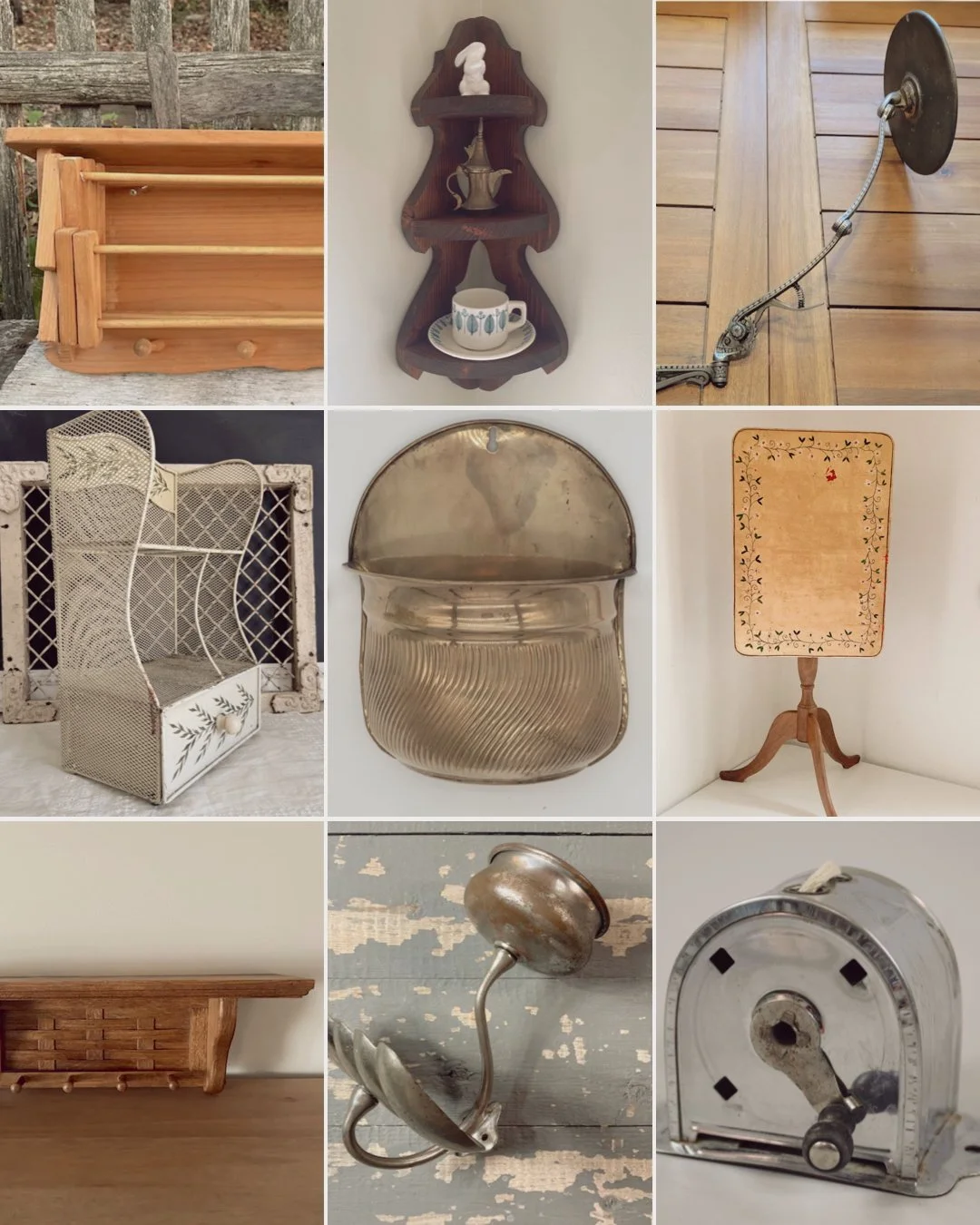
Please note that I sometimes earn a small commission from sales of secondhand pieces.

5 Ways to Invite the Outdoors In via Thoughtful Design
Whether you’re starting from scratch or responsibly re-imagining your space, here are five ways to create intentional and enduring interiors with the help of biophilic design.
Note: Thank you to Marvin for sponsoring this post and supporting our small business.
The arrival of a new year often inspires folks to streamline their homes, providing a simplified and organized slate for the months ahead. But this cycle of discarding (and ultimately replacing) goods is not ideal for our wallets, nor for the planet. So when I help my clients and readers declutter and/or update their spaces, I hope to help them do so for the long run.
My north star for designing and organizing with intention is nature. The idea of living inner-connectedly with the outdoors has always inspired me, as I believe that nurturing our bodies, our minds and each other cannot happen completely without remaining rooted deeply in the natural world, whether in a city or rural setting. Focusing on bringing in organic and natural elements (rather than on-trend home goods) can help us craft timeless, durable, and healthier spaces.

Each of the four rooms in our 900 sq ft cottage is meant to pull focus to the natural world around us and spark our innate instinct to interact with it. Whether you’re starting from scratch or responsibly re-imagining your space, here are five ways to create intentional and enduring interiors with the help of biophilic design.

MINDFUL SELECTION OF INTERIOR MATERIALS
Selecting natural and non-toxic materials that are rich in earthy textures and acquire a natural patina over time is important when crafting a biophilic interior. Not only do these materials keep our indoor air and surfaces cleaner and healthier, but they become visually richer with age, freeing us from the worry of character-filled wear over time.
Here are some examples of natural materials that have a huge impact on how an interior looks, feels and functions:
Lime Paint
Our primary bedroom walls and ceiling are painted with a mossy green Lime Paint, which is free of solvents, and toxic chemicals, and is composed of all natural material and mineral pigment that provide a durable, breathable coating. Lime’s high pH makes it a naturally mold and mildew resistant finish. Plus the textured look and feel of the brush strokes help conceal nail holes and similar markings.
Tadelakt
Tadelakt, the plaster we used in our only bathroom (which is also the laundry room), is an ancient plaster finish that originated in North Africa. It is composed of materials such as slaked aged lime, marble dust and clay, which come together in a water-resistant and durable finish. Not only is the finish stunning, strong and smooth to the touch, and visually interesting, but it’s also resistant to mold, mildew, and fungus, resulting in a healthier living environment.
Wood Windows
What better way to invite the outdoors in than by selecting a wood finish for the interior windows? Wood-clad windows offer a uniquely earthy feel in the exact places where the indoor and outdoor truly meet. In our home, we chose Marvin Elevate Casement windows, as their natural wood interiors and Ultrex® fiberglass exteriors ensure beauty and durability for years to come. We selected divided lites to best suit our cottage design aesthetic, and to help keep the birds in this wildlife haven safer.
Wood Trim with Natural Whey Stain
I love the look of trim that’s hand-coated with a natural whey stain made from minerals, and natural pigments. Such stains are an eco-friendly alternative to traditional synthetic formulas, and allow the grain of wood to shine while keeping tones within a unified spectrum of hues.
Natural Wood Floors & Shelves
Our wooden floors, shelving, nightstand tops, headboard ledge, and sink vanity are all made with ethically river-recovered, character-filled pine and cypress board remnants. While we lightly sanded the wood in order to remove deep-settled dust, everything except the headboard ledge was left unstained and natural in order to preserve the color, texture and matte finish of the wood. This way, nature takes the lead over trends, so we can be confident in the earthy and timeless aesthetic of our decision for as long as we live here. Each of the 500+ boards has a story to tell from years of impact from insects and sap, and every piece has naturally-occurring curls, knots, arching grain patterns or vertical pinstripes.

DIY FUNCTIONAL DECOR
When it comes to design, one of my greatest interests is brainstorming creative ideas for troubleshooting and enjoying small, shared, and unusual interiors. Time and time again, I’ve found that the best tools for our funny little homes are not, say, store-bought plastic drawer organizers that can be used for little else (although many repurposed items can be used in their place). Instead, the most ingenious items for our awkward spaces are often the ones we craft — however inexpertly — to suit our precise needs, tastes and specs. And, thankfully, those sorts of things can often be deconstructed and reconfigured in new ways to serve numerous purposes over time. Foraged items can not only usher in a certain natural aesthetic, but can also provide function. Organic linen, hemp and jute can provide our rooms with rich texture and layers. Vessels made from reclaimed and repurposed wood, rattan, seagrass, and similar woven materials can be used for storage that hides in plain sight. Repurposing salvaged, foraged and vintage materials to suit our specific spaces and needs can enrich our spaces in a way that’s more flexible, sustainable and character-filled than mass produced alternatives.

USHERING IN NATURAL LIGHT
Natural light helps eliminate dark corners, makes compact interiors feel airier, and can lift our moods throughout the seasons. Plus there’s no need to entirely overhaul wall decor for a fresh look and feel when nature is providing us with an ever-changing view. Here are some ways to usher in more natural light in a space of any size:
French Doors
French doors — whether used in exterior or interior frames — help keep a home feeling open and airy while still allowing for the division of space and privatization.
Pocket-Doors
When left open, pocket doors allow for uninterrupted light and airflow within an interior, without consuming valuable floor inches like a traditional door, or usurping usable wall space like a sliding barn door would. In our cottage, oversized double pocket doors generously connect the bedroom to the windowed and skylight-filled main room / kitchen. This provides a wrap-around, panoramic view of the wooded setting.
Mirrors
For anyone who wants a lower lift method of inviting natural light into their space, use mirrors. It’s a small hack with a huge impact. Just test the waters to see what I mean! Prop or suspend a small mirror in a darker corner where it can bounce light from an opposing wall’s window, let it sit for a few days, then remove the mirror to see just how lifeless the corner and wall look without it. The difference can be staggering! Opt for one larger mirror, or several smaller ones. Either way, you’ll instantly brighten up your space, which can uplift moods in darker seasons.
Unexpected Windows
We added small gable windows on the north and south peaks of the main room for extra natural light. As such, we needed no built-in overhead lighting in our main room / kitchen, which was a goal of ours given how artificial lights left on at night can interfere with the flight patterns of migrating birds. Thankfully a few smaller lamps can provide more than enough illumination in more compact square-footage.

VENTILATION
The most straightforward way to naturally improve our home’s air quality and pull focus to the outdoors is to keep our windows and doors open wide, when possible and safe. In our small space, the air flows through the house regardless of the direction of the wind, as casement windows on each side of the house make it possible. With Marvin Elevate casement windows like ours, each operable window has an optional screen that can easily be popped in or removed from the inside, making maintenance and installation easier in our situation.

PLANTS
Other than mirrors, plants are perhaps the easiest way to bring the outdoors in. For small households with little room for potted plants, consider tiered hanging options or wall-mounted vessels when possible. For folks who like to switch up the look and feel of their home often but want to do so responsibly, weekly market florals or locally foraged greenery can change your home’s color scheme instantly, and can also provide either a wild or polished look as desired. And for anyone on a tighter budget, try propagating! With a few reused jars, a pair of clippers, and a bit of guidance from interior plant stylists and experts like Hilton Carter, you can create a lush and green interior. (As always, keep the safety of pets and kids in mind when it comes to selecting your plant varieties.) We place our potted plants near our windows so they can live their best life indoors, whereas we arrange our clipped branches in more shaded corners to help them last longer.

This post was kindly sponsored by Marvin. All opinions and visuals are my own. We appreciate sponsors who believe in and support our small business.


Create the Look: Upcycled Spice Rack Wall
Little adjustments within a home can save a surprising amount of space— like this secondhand spice rack, fixed up a bit, painted, and now living out its new life in the kitchen of our 900 sqft cottage. (When pressed for space, go vertical if it’s safe. The best, untapped storage options are often UP.)

By request, here’s the latest Create the Look… but I don’t want everything I publish to be shoppable. I don’t wan’t to earn income by constantly encouraging people to buy more, when I know that most of us can (and should, for environmental reasons,) live with less. What I do want is for folks to be comfortable, confident and content in their small homes or apartments. And I want to be a resource for reliable ideas that can help you spend less time searching for your stuff, and more time with the ones you love.

So when people ask where I got something that’s in our home, I usually point them to similar handmade and vintage designs. As such, for folks who inquired about this little cabinet: here are some secondhand items and independent online storefronts with handmade goods that can help you recreate this look in a sustainable way that suits YOUR needs and YOUR style.

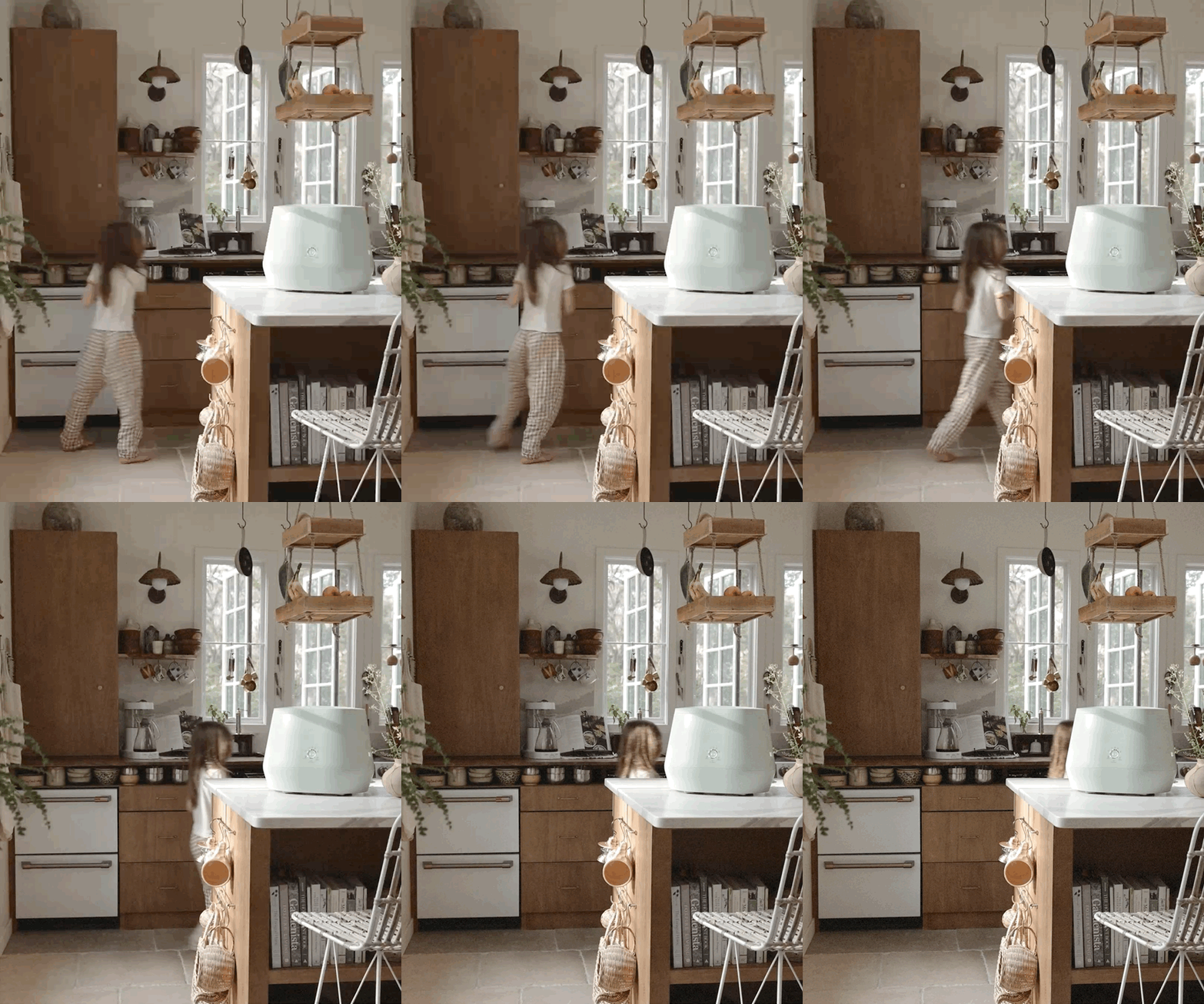
A Carbon Negative Kitchen Appliance with a Positive Impact on Soil Health
Imagine what our world would look like if, at the end of its life cycle, everything nurtured this magnificent earth as nature intended…
What if the world was waste-free? After all, there is no “waste” in nature — humans are the only species that create trash.

Food waste is one of the greatest contributors to climate change, and over 40% of that waste occurs at the household level.

But we have the ability to change this. Food waste is not really waste when it’s handled mindfully.

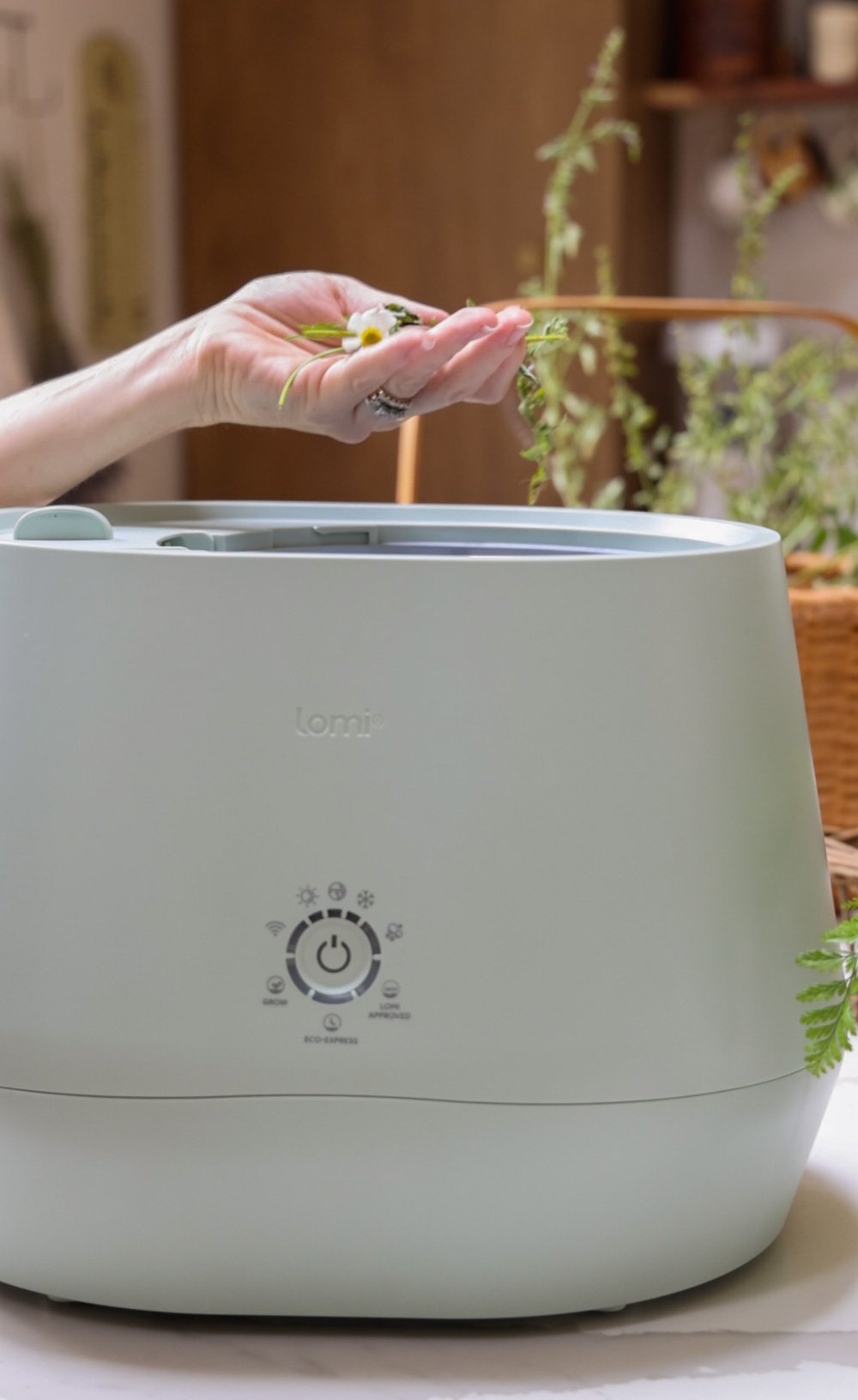
Instead, no matter where you live, food waste can become sustenance for nature, contributing precious natural resources back into the earth. Now, at the push of a button.

The Lomi Bloom is the only carbon negative appliance, and it can turn fruits, veggies, plant trimmings, yard waste, animal products, grains, and more into nutrient-rich plant food that supports healthy soil and its regeneration.


Lomi Earth — the result of Lomi’s “Grow” mode operating cycle— produces nutrient-rich, organic fertilizer that’s perfect to use on houseplants and gardens. When the Grow cycle is run with a LomiPod, the end result is packed with vital microbes to support plant health, and can also be sprinkled on lawns to improve soil health.

As we know, healthier soils store dramatically more carbon than degraded soils. When Lomi Earth is mixed with other soil and used to grow plants, the organic carbon in Lomi dirt is partially sequestered in soil and as plant matter. As such, not only are we able to avoid the harmful emissions of landfilling food waste, but we can also help sequester additional carbon.

Not only does Lomi Bloom reduce our carbon footprint and enhance our positive impact, it also rewards users in additional ways with every use. Via Lomi’s app, users can track their Bloom’s impact, and receive rewards like Lomi products and other useful, eco-minded items that can help us curb household waste.

Imagine what our world would look like if, at the end of its life cycle, everything nurtured this magnificent earth as nature intended…

Thank you to the wonderful folks at Lomi for supporting our small business by sponsoring this post. All opinions and photos are my own.

Avoiding "Fast Furniture" and Taking Time to Source
Upon moving into our new cottage, we needed very few furnishings, despite having moved from our previous home with so few large items. One thing we did need, however, was a comfortable armchair for the living room office.

We took our time sourcing the perfect-for-us reading chair. With our planet in crisis, a temporary piece of “fast furniture” was out of the question. Did you know that 12.2 million tons of furnishings and home accents end up in landfills annually? This results in horrible amounts of of solid waste that have increased 450 percent since 1960 per the Environmental Protection Agency.

Instead, we borrowed a chair from family (which itself was a handmedown from neighbors) for a few months, covering it with a linen sheet so it better suited our decor (as pictured below).

Pictured above: A borrowed chair, covered with a linen sheet to better match our decor.
We wanted to find seating that would fit snugly yet welcomingly in the corner without jutting into either the bedroom entry or the thoroughfare to the living room’s French doors. We finally found what we were looking for— this timeless looking chair with casually draping cushions, an overstuffed vibe, and yet a space-savvy curved seat and rounded back.

We added a vintage stool, a handmade rattan wall sconce, a handmade ceramic airplant cradle, and a propagation station (designed by our friend Hilton Carter).

The end result is a very comfortable reading nook that all of us — pups included — enjoy daily.

Loula Chair by Sixpenny
Color: Oat Flour
Fabric: Light Weight Linen
Fill: Vegan Fiber

Lime Painting the Cottage Walls
One delightful way to achieve depth and texture in a small space without cluttering up the square-footage is through the application of lime paint.

Main bedroom, work in progress.
For this reason, among others explored below, we opted to paint our new 11’ x 12’ bedroom with Color Atelier lime paint in “Cobblestone,” — a mossy, matte, green-brown.
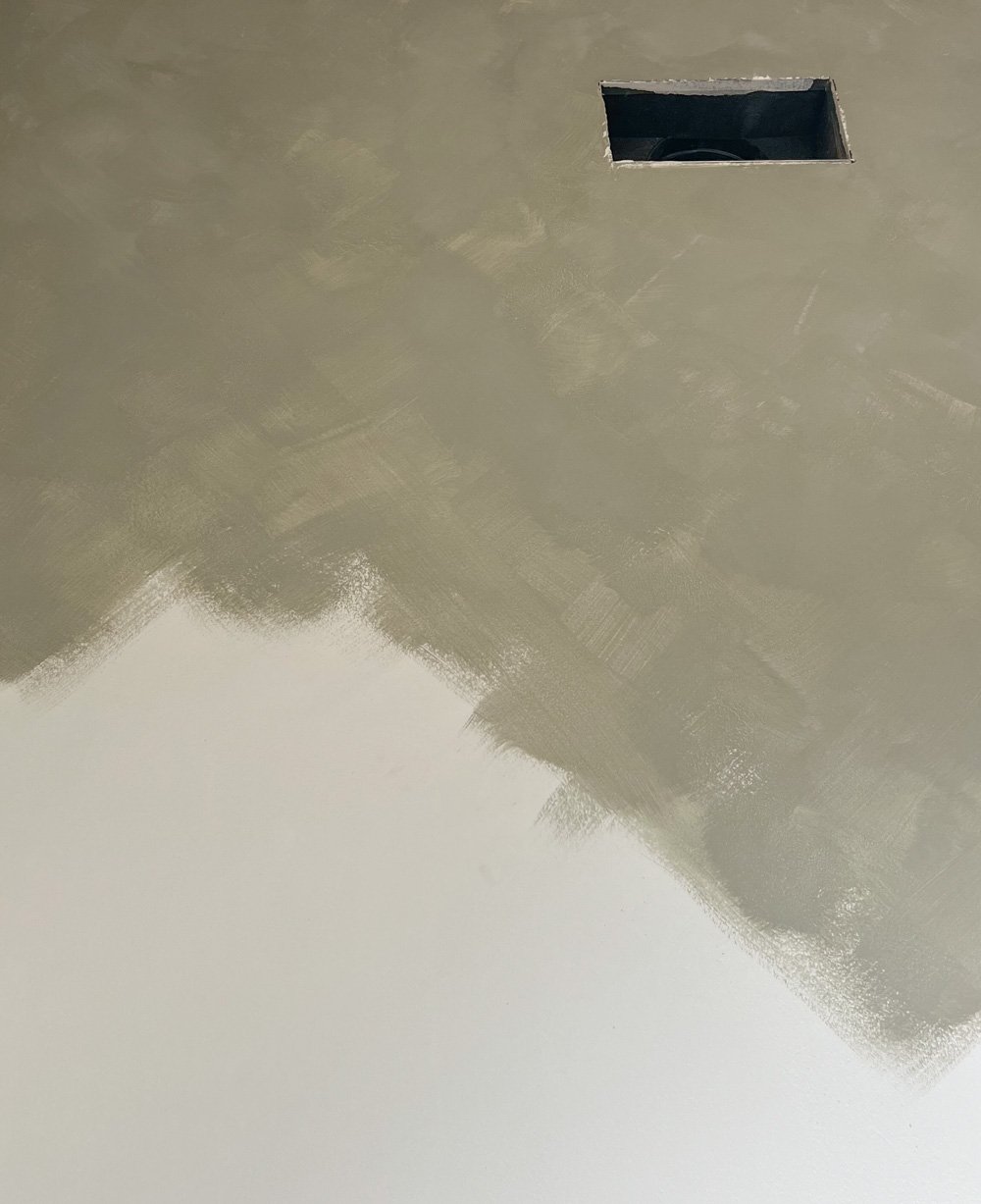
Lime paint creates subtle movements with natural color variations on interior and exterior surfaces. Color Atelier Lime Paint is natural and mineral-based, which can be used safely in areas with children and pets.

This paint is made with traditional European techniques known for removing toxins, odors and harmful CO2 from interior air, thus improving interior air quality.

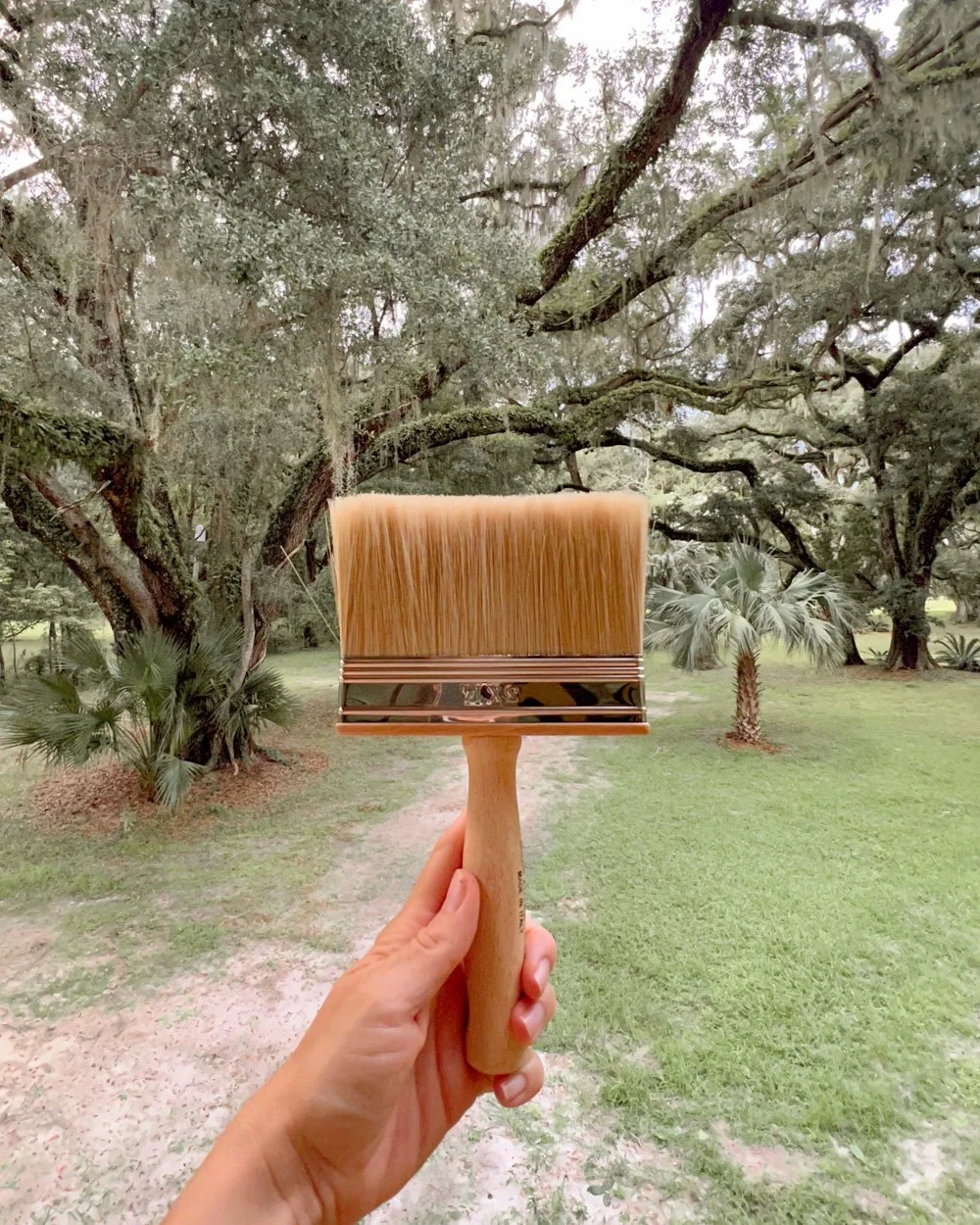
Color Atelier Lime Paint is user friendly and it is simple apply it by yourself using a block brush in random, multi-directional strokes— no special techniques or faux methods required; the lime will create the effect in a natural way.

It is non-flammable, free of odor and VOCs, free of solvents, and toxic chemicals, and is composed of all natural materials and mineral pigments.

Lime’s high pH makes it a mold and mildew resistant finish. It also means that microorganisms can’t survive, which adds an hypoallergenic quality.
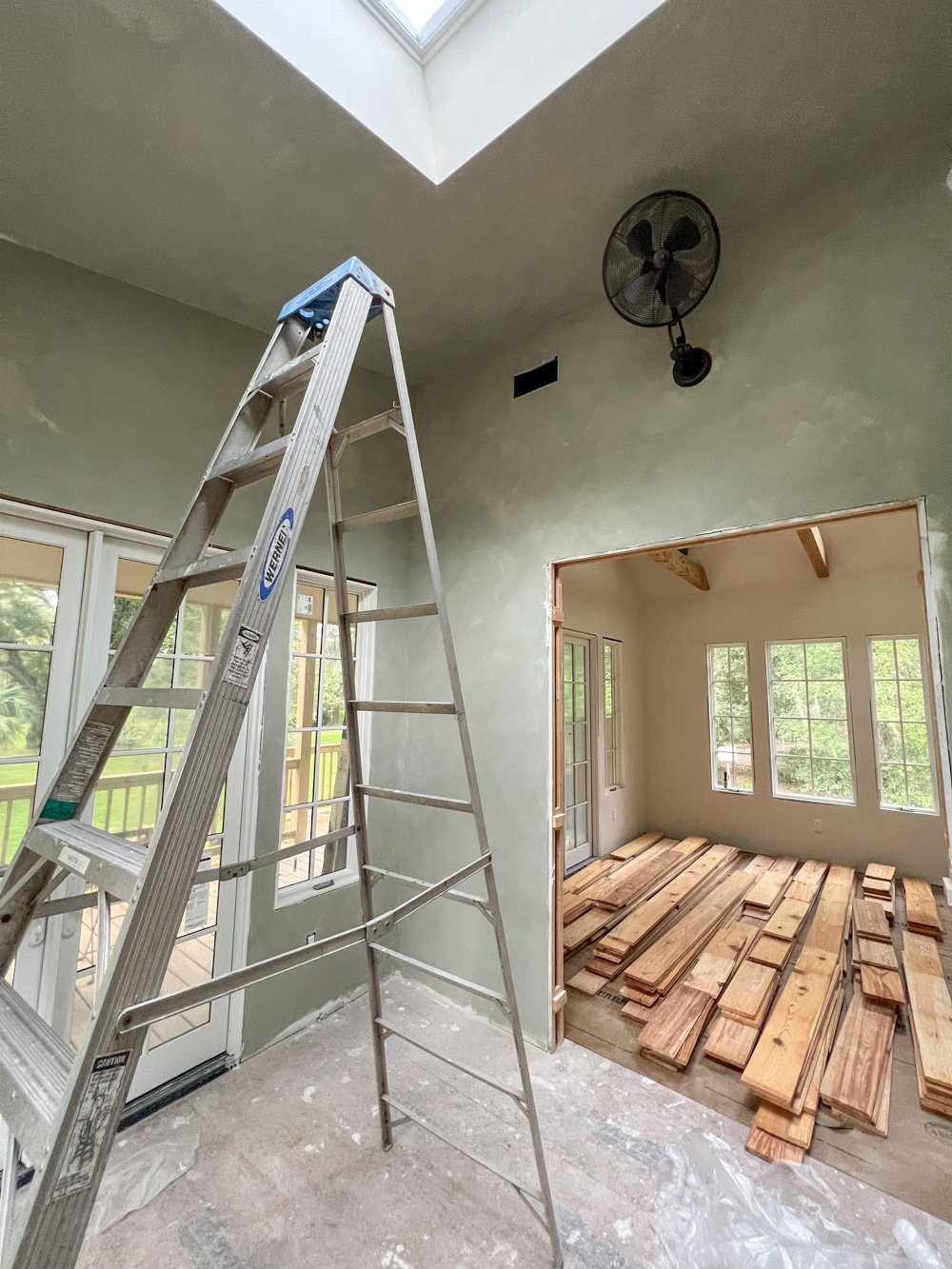
I typically like to reflect on a space and navigate around it for some time before making design decisions. In this case, I waited for the Lime Paint in the main bedroom of our new cottage to dry and viewed it in all sorts of light conditions before deciding that we definitely needed to include the ceiling:
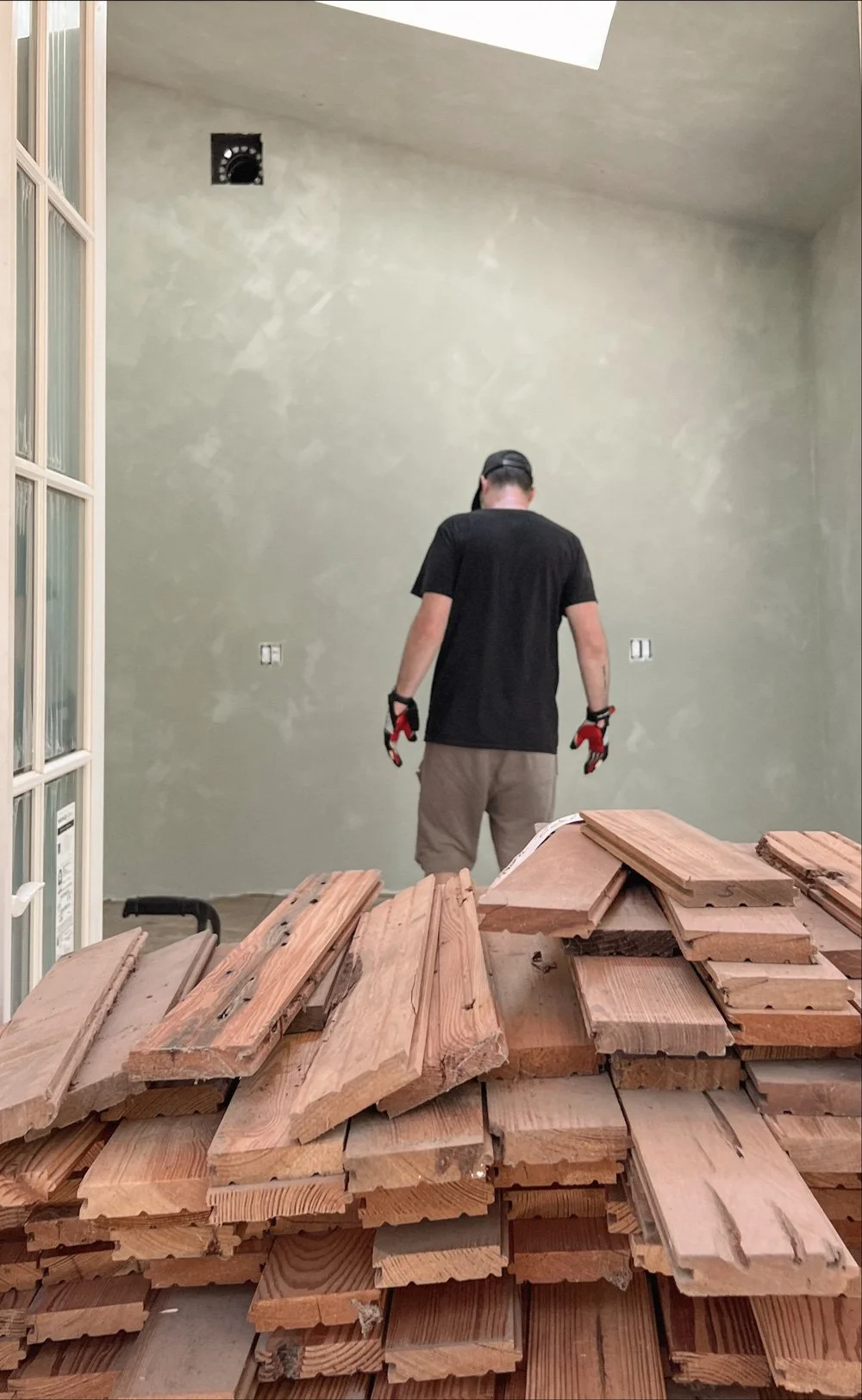
We’re thrilled with the “Cobblestone”— so much so that we wish we’d painted the entire interior with various hues of Lime Paint, rather than standard paint. (But it will give us an update to look forward to years down the road!)

Below are three videos of the paint process that I shared on Instagram in real-time:
Note: The descriptions of the Lime Paint and the Cobblestone color are from the Color Atelier website.

Climate Action Landscaping
Post Summary: Your garden, no matter the size, can have a positive impact.

When we first moved into our tiny cottage by the canals, we found cracked dirt throughout our L shaped yard, which was little more than a shared thoroughfare with our neighbors. Over the years, the earth was transformed into rich soil, vines and plants began to grow and thrive — providing us with food and shade while supplying a habitat for hummingbirds and pollinators, and our vertical gardens produced colorful, low maintenance herbs, veggies, fruits and flowers that enhanced our privacy and cooled our small space in the hot SoCal summers.

If you steward any amount of outdoor space — whether it’s a small thoroughfare garden like ours at the Cottage in the city, a suburban yard, or rolling acreage, you can transform it into space that has a positive environmental impact.

Our friends at Shades of Green Permaculture are offering a free, 1-hour training class entitled: Intro to Climate Action Landscaping. This training focuses on how a garden or landscape, no matter the size, can have a positive impact on the planet.

If you find what you learn to be of interest to your home and lifestyle, Shades of Green Permaculture also offers an incredible Regenerative Backyard Blueprint: A step-by-step guide to transform your yard into an eco-friendly paradise. The “RBB” will teach you how to create a thriving outdoor space that protects biodiversity; grows food, medicine, and pollinator habitat; builds soil; and restores the water cycle.

By the end of the Regenerative Backyard Blueprint program, you will have:
An understanding of the climate context and why your decisions matter so you can build your garden in alignment with your values, knowing the bigger impact of your decisions.
Clearly articulated your project goal, and have a realistic idea of phasing, timeline and budget.
Made a basemap, and put pen to paper to get accurate measurements and map necessary existing conditions, having identified priority areas and elements to include in your plan.
Correctly diagnosed the challenges you face with water in your yard, and know how to manage that water as a resource.
Spotted opportunities to build soil on your site, and identified which techniques are best for your site.
Made sound choices for plant palettes, have a sense of vegetation types, and know where to go and what questions to ask when searching for the perfect plant.
Crafted a solid plan for your landscape, with associated material and plant calculations, and have a clear understanding of what is needed to execute your project.
Registration is open from October 12th through October 25th at Shades of Green Permaculture.

Attempting a Low Waste, Long Distance Move
When we decided to leave our little home in Venice and relocate across the country, we knew we’d need to hire movers. Despite having a small indoor-outdoor space that isn’t hard to pack up compared to a traditional home, the realities of uprooting 10 years of live/work life while working full-time during a pandemic in the middle of a high-risk pregnancy with a 4 year old and two pups made it very clear that packing up a truck ourselves and driving it from one coast to the other would just be too much.

Thanks to my line of work, I’ve seen a fair amount of larger moves and installations, despite never requiring one myself. (Until now, for my own relocations in the past, I always just packed up whatever car I had and bopped on to my new setting.) In 2019, it was my experience with a client’s local move within LA that inspired me to halt my one-on-one interior decor and design work. The waste was staggering, and I didn’t want to play such a helpless role within it.

Above: Our “Company Car” the day it arrived from California.
I remember two key moments from that job that sparked the shift in my career. The first was unwrapping a box mislabeled as books that actually contained food, including an open stick of butter swathed in it’s own, massive slice of of brand new bubblewrap and kraft paper. (WHY?!) The second was standing in an expansive living space that was covered wall-to-wall in tape and single-use plastic sheeting to protect the shiny new wooden floor. As the wind slipped through the home, the plastic rippled dramatically, and I imagined that miles of it must end up in landfills within disenfranchised communities, and/or floating in the ocean beyond our tiny cottage, confusing and choking wildlife.
I was adamant about avoiding any similar situations with our own move. So we decided we’d pack everything ourselves, and then hire a moving service for the loading/unloading of the boxes and the transport.

Above: With the exception of one clipping that we brought with us, all of our houseplants went to loving homes in SoCal.
SUCCESSES / FAILURES
When attempting our low waste move, we succeeded in some areas, but failed in others.
GAS
We looked for a moving company that had bio-diesel trucks, and discovered that Northstar in L.A. has a fleet. We were delighted to confirm upon their arrival at the Cottage that the truck was indeed bio-diesel. However, we later learned that these specific trucks aren’t necessarily what are used for the long-haul trip, depending on the logistics of the move. (See below.)
SHARED LONG-HAUL TRANSPORT
Instead of hiring a dedicated individual or team to manage the relocation of our goods via one truck from door to door on set dates, we opted for a company that bundles the contents of numerous moves so that the long-haul ride is shared across clients. (Think of it as UberPool for your stuff.) So even though we were disappointed to find that our belongings didn’t arrive on the bio-diesel truck, we were happy to learn of all the additional stops the truck made and had scheduled. We were initially given a 30-day window for delivery due to this ride-share style of business, but it only took about 2 weeks for the contents of our Cottage to arrive (and we were of course provided with a 48-hour heads-up prior to drop off.)

PROTECTIVE PACKAGING SUPPLIES
To my absolute relief and joy, we were able to avoid buying any new protective packing supplies— no bubble wrap, no peanuts, no packing paper. Instead, we used every blanket, towel item of clothing, pillow or rug we had as protective materials.
The big positives were that this tactic saved us money, resulted in fewer boxes, and meant we had no fillers to trash or recycle. From what we’ve seen thus far, everything we packed this way arrived in tact. We’ve not unpacked it all, as we’re in a temporary space for the time being, but so far we’ve been pleasantly surprised by the effectiveness of our make-shift protective layers.
The negative side of packing this way is that the contents of our moving boxes are wildly varying. For example, our ceramic Walter Filter was stuffed with crochet clothes, wrapped in a baby quilt and, and padded within its container by winter coats. As such, there is basically no categorizing boxes for streamlined organization when they’re prepared in this manner.

BOXES
We failed spectacularly with the boxes themselves, as most of them were purchased new. (I know, I know. I’m not proud of this, folks.) We didn’t have the space to hoard used cardboard in advance, and most of what we did save in the bike/laundry shed suffered mild water damage that was enough to render the cardboard useless.
I had long hoped to drive around to local shops and marketing businesses and nab their used boxes, but between the risks pertaining to the COVID-19 outbreak in Los Angeles, but gave up due to the logistics of driving around the city for hours collecting and breaking down boxes (while pregnant and working and watching a 4 year old).
I researched renting reusable, collapsible crate-style boxes from Rent-a-Crate, but the hauling company required our entire relocation budget, and I was unable to allot the additional sum for crates that would not only need to be hauled, but also stored (and thus rented in an ongoing capacity) for several months.

TAPE
We spent a few extra dollars on two large rolls of brown paper tape instead of plastic packing tape. This tape needs no plastic cutter or dispenser, and was easy to use and effective at securing the boxes. I also find it far easier to remove paper tape when the time comes.

Some Items You Can Probably Go Without (Part 12)
While it's productive to share stories about designs and practices that help us live comfortably and less wastefully in small spaces, I think it’s just as important to discuss the things that we can happily live WITHOUT— particularly in this era of climate crisis. After all, making a home in a small space isn’t about figuring out how to puzzle a life’s worth of belongings into your compact quarters. It’s about experiencing more by owning less.
The following is just a small sampling of items you may want to reconsider before you buy. (View all the entries in this series here.)
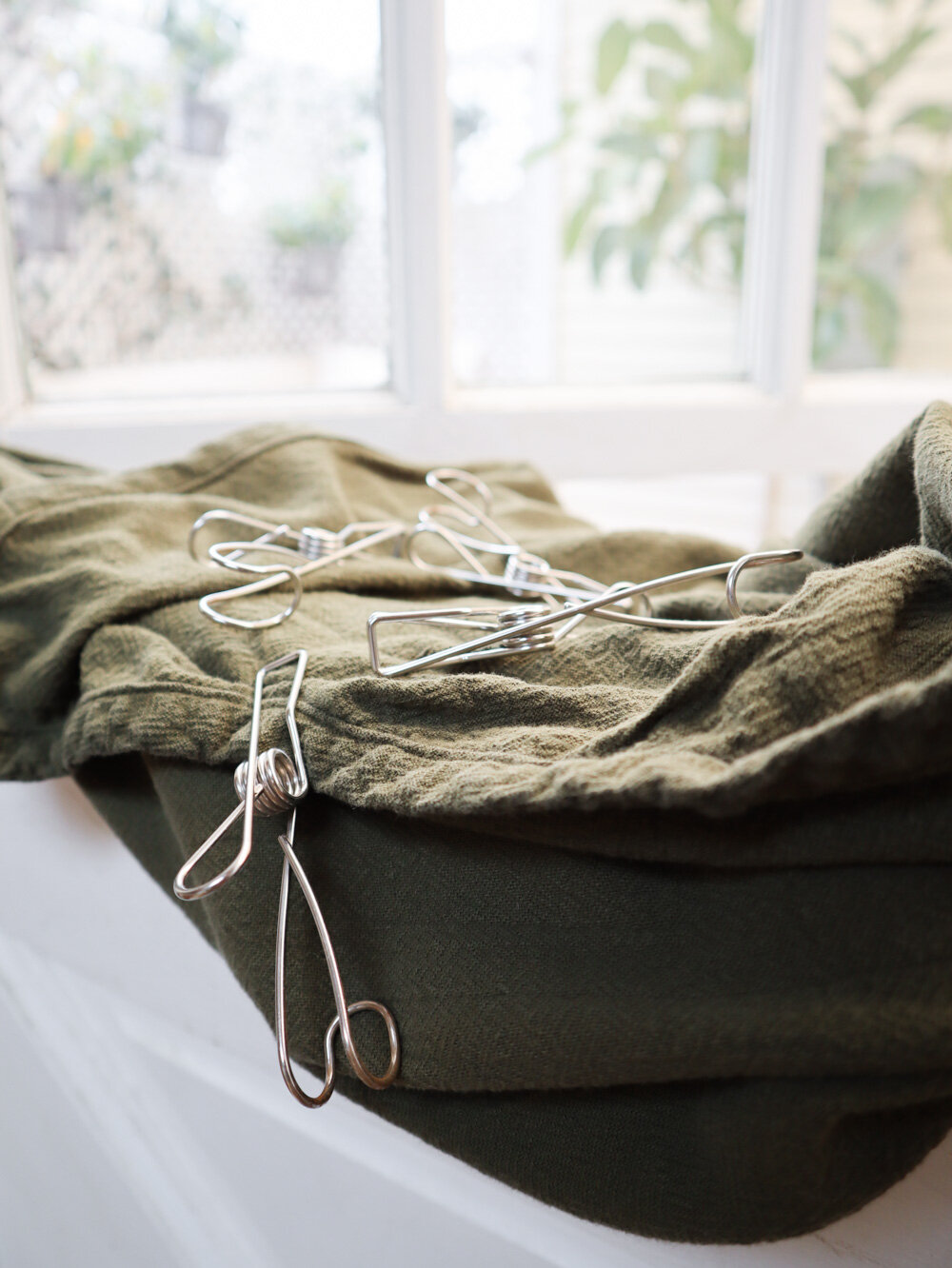
Plastic shower curtains and liners:
Depending on the style of your shower, you might be able to skip the standard plastic liners and synthetic blend curtains. Here we use a simple linen tablecloth / throw blanket (handmade locally for Gjusta Goods), which we suspend from the curtain rod via metal clothespin hooks. We simply throw the fabric into the machine with similar washing about once every-other week for a good soapy bath of its own. If the bottom of the sheet gets overly wet during a shower and stretches out the linen, we just make a fold up top and clip it an inch or so higher. Hemp fabric and/or upcycled, patchwork pieces could work well for this purpose, too, and add a unique touch to your bathroom. (As always, please keep safety — such as slip risks — in mind.)

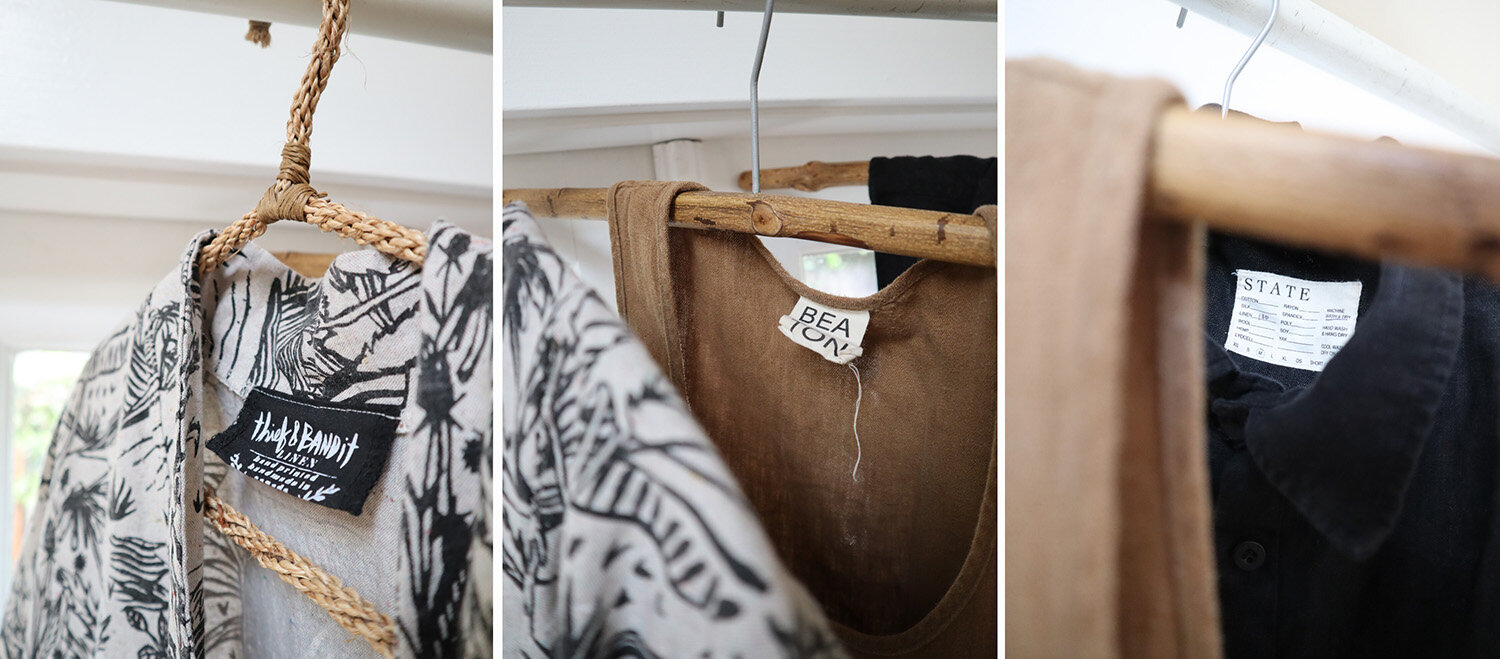
New outfits for every special event:
Between photo shoots, work events, speaking engagements and social gatherings, I frequently found myself feeling like I constantly needed a new outfit. I tried a rental service for a while. I think they’re good solutions to reducing fashion waste for many people, but I still found their carbon footprint to be too high for my comfort. I realized that the clothing itself wasn’t the issue— it was my mindset that needed to change. I’ve since found comfort and satisfaction in deliberately wearing the same garments repeatedly on camera and at events. We all know that fast fashion and over consumption of new styles is a major source of pollution — from dyes in water supplies, to transport and packaging, to discarded garments themselves. Plus most people in small homes struggle with wardrobe space, and the best solution is to simply own less clothing. It feels good to strike a truce with yourself and rock the same clothes you wore last week… and last month… and last year… and the year before that.
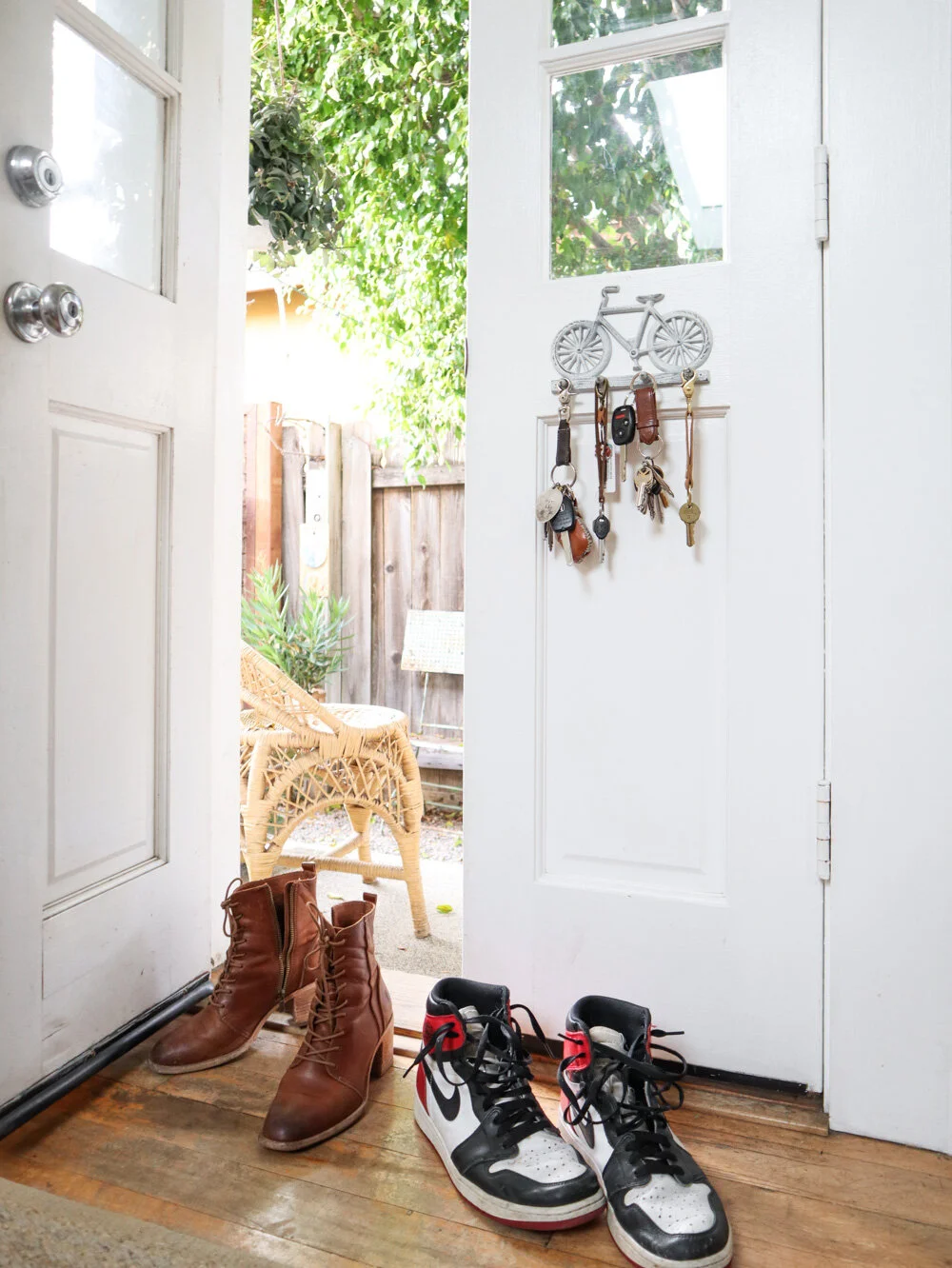
Toys that replicate safe, every day goods:
A good friend of mine sent me a photo of a toy lace-up shoe that her daughter received as a gift. The image was captioned: “WHY?!” (Why indeed!) Can we not teach our kids to lace on *actual* shoes? Do we need to mass manufacture fake shoes for this purpose? While we can all surely agree that items like child-safe scissors (which are available as hand-me-downs and second-hand purchases) are obviously well worth it, we probably don’t need items like fake (often plastic!) baby bottles for play when the real things are already sitting here in our homes taking up space— we might as well use them!
Novelty games / activities:
Okay. I liked Tetris and Super Mario as much as any child of the 80s. But to now purchase newly manufactured handheld (plastic!) gaming devices or mini arcade games as novelties when countless games are available on our phones is absurd. And Adam recently told me he saw a (plastic!) mini-golf game intended for use while you’re sitting on the toilet, and a quick web search confirmed that this is indeed available via at least three very prominent international retailers. Our planet is going up in flood and flames, and we’re all complaining about having too much stuff, so let’s convey as consumers that makers must stop producing total junk like this. It’s pointlessly wasteful, and ultimately it just ends up cluttering our homes before cluttering up a landfill.
An entire home gym:
There are many understandable reasons why someone might have a piece or several pieces of work out equipment in their home. (And I imagine that most people who could fit a home gym into their space are probably not reading this blog.) But if it’s not a necessity to you and yours, exercising outdoors or sharing equipment at a gym are simple ways to cut down on the number of large machines being manufactured, packaged, shipped, and — ultimately — discarded.
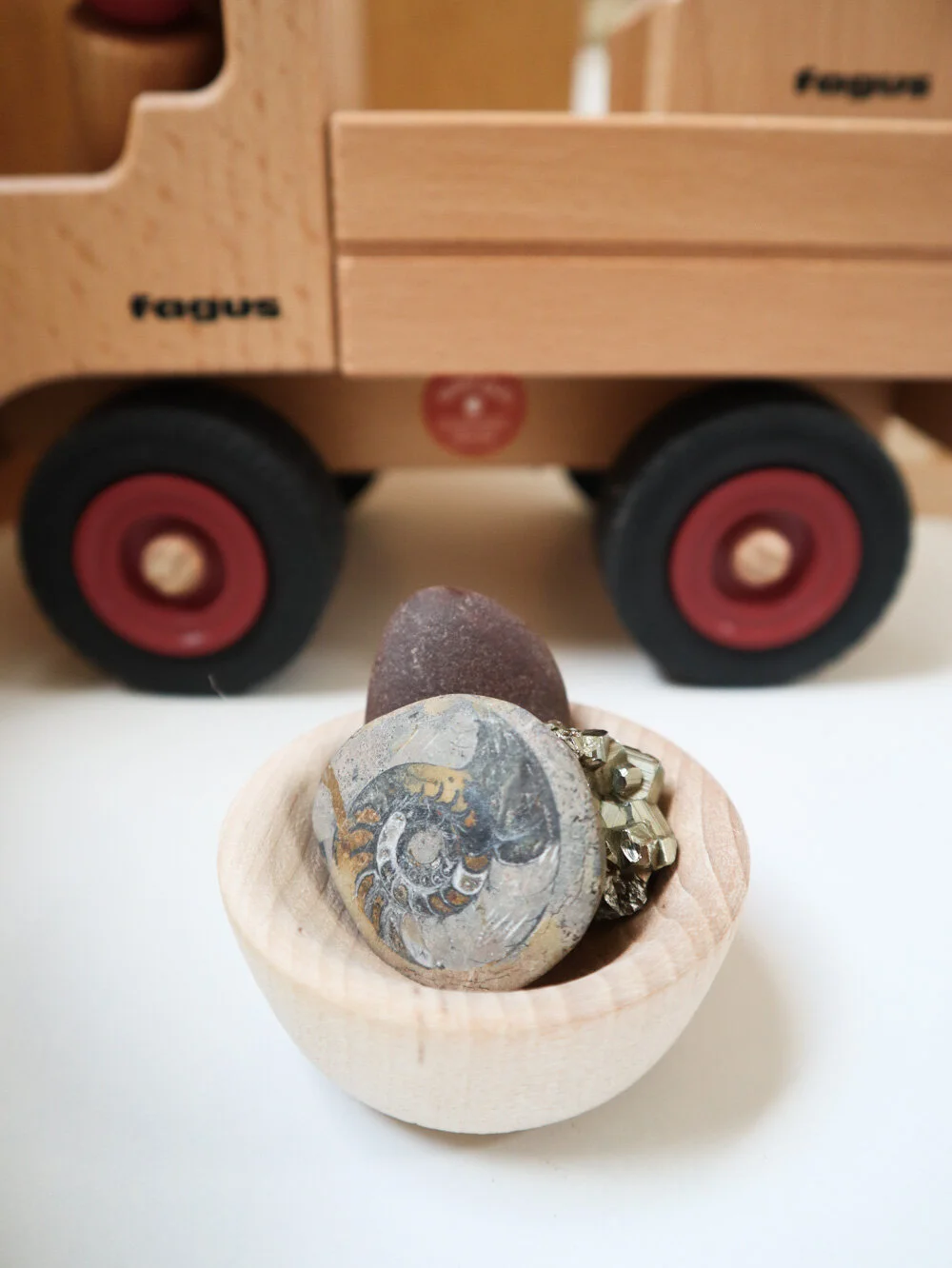
Catch-all dishes:
If you’re shopping vintage or supporting an artist by buying their handmade ring or catch-all dishes, great! But mass made valet caddies, ring dishes + holders, and coin trays are things that can easily be made from numerous repurposed items that are probably already available around your home. Or maybe you don’t need them in the first place! (For example, I just put my rings in a safe spot on top of our first aid box when I shower.) After all, items like this take up valuable surface space in a small home.
