
Small Space Gardening for Kids
Earlier this year, Adam and I both read The Future We Choose: Surviving the Climate Crisis, and felt inspired to make changes to the way we live our lives here at the cottage according to what we learned from the book. As part of that lifestyle shift, we decided to grow much of our own produce here at home. So we began converting our sunny 8’ porch into a tiny grow zone.

I’ve shared the following quote before, but I’m doing so again because it was this particular passage that helped me visualize exactly how I wanted to start our growing efforts:
“Every vacant lot, every grimy unused alley, has been repurposed and turned into a shady grove. Every rooftop has been converted to either a vegetable or floral garden. Windowless buildings that were once scrawled with graffiti are instead carpeted with verdant vines… Things that used to be done individually are now done communally— growing vegetables, capturing rainwater, and composting… In community gardens, on rooftops, at schools, and even hanging from vertical gardens on balconies, food sometimes seems to be growing everywhere.” - The Future We Choose: Surviving the Climate Crisis

That passage made me feel like every space — no matter how small — is an opportunity to plant and nurture something green and good, both for the planet and for our bodies.

As discussed in a recent post, we got two 6’ tall Farmstand growstands from Lettuce Grow (which we are absolutely loving). But we also wanted to create some raised garden beds so that all three of us could tackle growing fruit and vegetables in containers in our compact outdoor space in this big city.
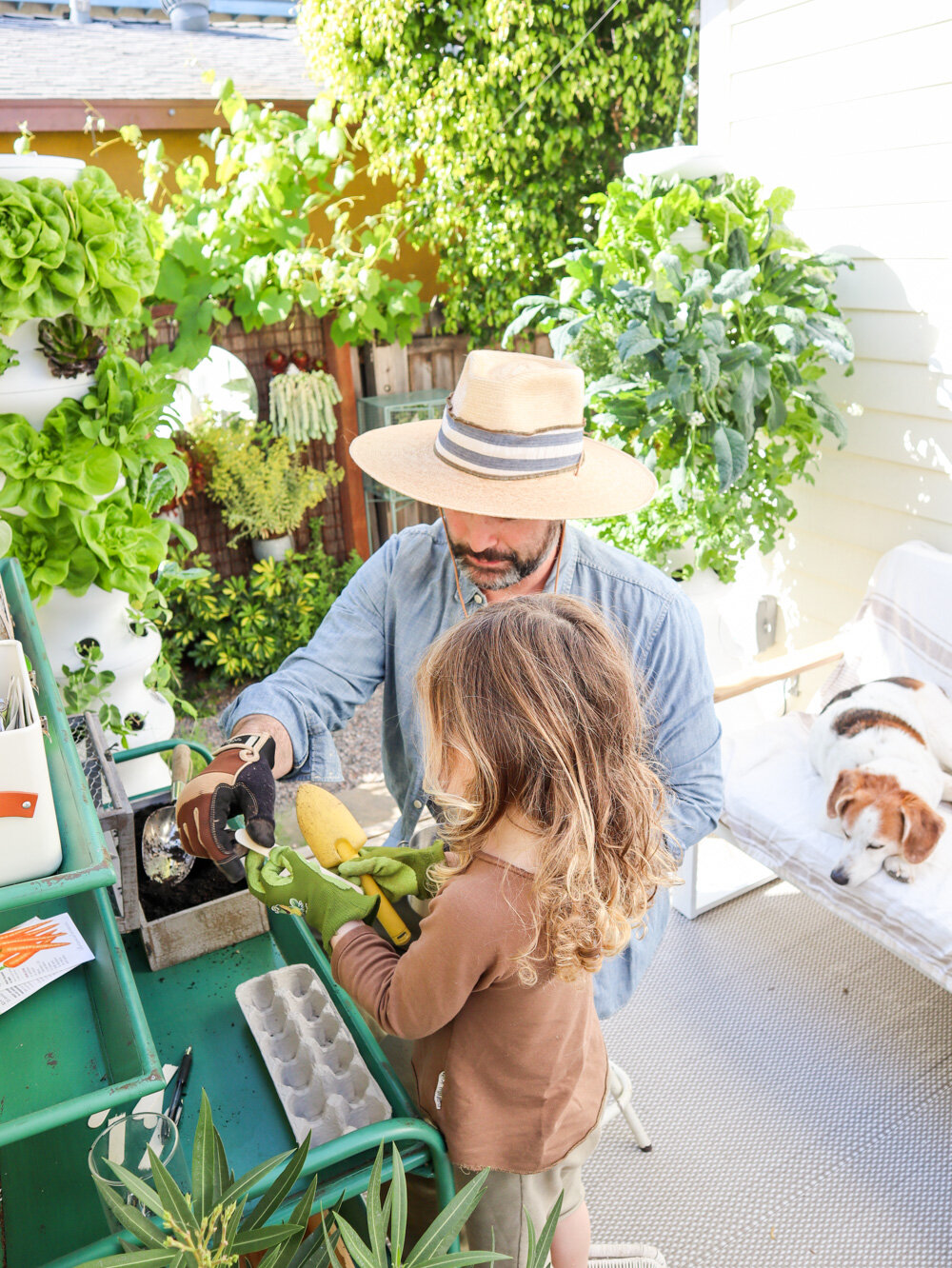
I’ll share our hack for creating the raised beds in the near future. But first we started out by getting some seedlings going in compostable egg cartons.


We’re attempting to grow several different plants on our little porch, from carrots to tomatoes to squash. We’re expecting plenty of failures, of course, but we’re hoping for some successes as well. To experiment, we’re trying a mix of soil types— some enriched with compost, some peppered with small doses of rinsed coffee grounds, and some sprinkled with fragments of nutrient-rich soil amendment courtesy of our FoodCycler.

West has been helping with it all, planting seeds and tending to the Farmstands. But we also got him a Root Viewer, so he could plant radishes, onions, and carrots and then watch them grow downward over time.


This family activity has been productive and entertaining as we shelter at home during the pandemic. I’ll share more from our experience soon, as this is just the beginning of our greener journey together.


Environmental Benefits of Small Space Living
"I'm a huge fan of small-space living because it forces us to do what larger spaces often discourage: Minimize. It's been proven that America has more self-storage facilities than all U.S. Starbucks and McDonald's combined, and that Americans waste 55 minutes a day just looking for things (that's 3000 hours or 30 days per year). Having less space means we are hopefully buying fewer, better items, using fewer precious resources (including our own time and sanity), and being gentler over all on the planet."
- Ashlee Piper (for The Tiny Canal Cottage)
Author: Give a Sh*t: Do Good. Live Better. Save the Planet.

Oddly enough, as much as I’ve discussed the steps we’re taking to live more sustainably, I’ve somehow failed to discuss outright the general, eco-friendly benefits of small space living itself.

As the planet becomes more and more populated, and as swaths of land become uninhabitable due to climate change, it’s reasonable to predict that small space living will only become more relevant to increasingly larger groups of people.
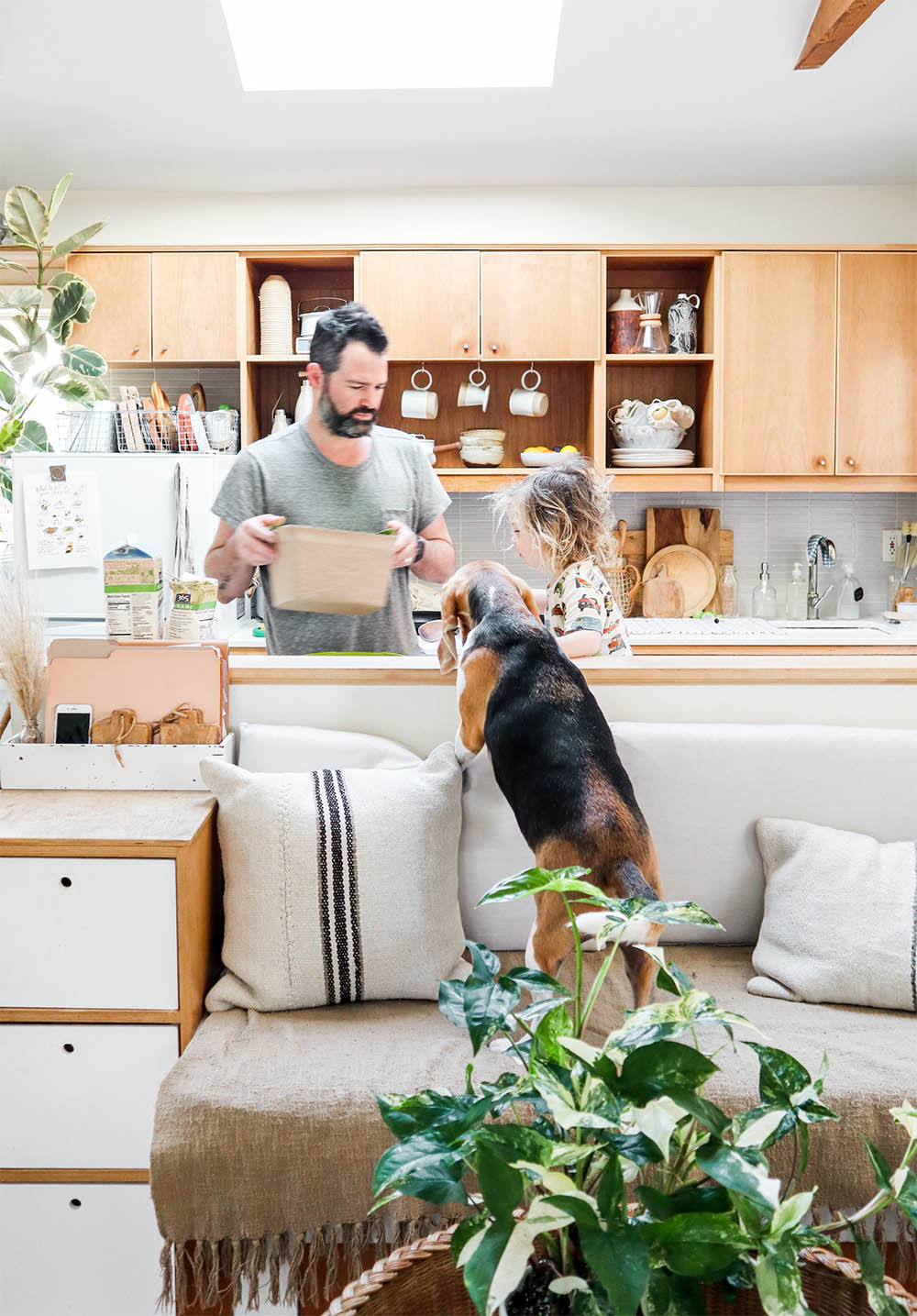
Luckily, small space living can significantly reduce the environmental footprint of your home. From the amount of materials used in crafting a tiny house, to its daily operations once occupied, there are a myriad of ways in which living within a modest floorpan can help you lead a greener existence.

From the start, there are fewer materials to use and transport when building a tiny home, which can widen the possibilities of using more eco-friendly supplies, and lessen corresponding emissions overall.

Similarly, there are far fewer interior spaces to outfit with fixtures, appliances, furnishings and more. This also means that eventually there will be fewer items to fix and/or update. This cuts back on production, transport, packaging, and general waste.

And with less space to furnish and decorate, you naturally curtail your possessions. Thus your overall retail consumption and affiliated carbon footprint can be vastly reduced.

The average American home is about 2,500 square feet, and uses a commensurate amount of energy. Homes in the US account for 38% of the country’s energy usage— and that amount surges to 80% when indirect usage is factored in.* A small space runs on a sliver of energy by comparison. After all— it doesn’t take much to warm up, cool down, or illuminate a 400 square foot home.

The secondary benefits of small space living are not to be overlooked. On a daily basis, this lifestyle encourages folks to get outside and enjoy the natural world and community offerings more.

This means that there’s even less energy being used within the home, as residents are often outdoors (requiring no utilities), or in shared local spots that are serving numerous people. Plus getting outside can have extraordinary health benefits.

Recent studies show that being around natural landscapes can notably reduce stress, enhance work performance, boost healing, and promote relaxation.**

Down the line, all of these advantages can make us healthier, which can mean less time spent in hospitals and fewer goods and medicines required for sustained wellness, all of which helps us lighten our impact on this precious planet.

While our family still has so much to learn on our journey to more sustainable living, it’s encouraging to know that our lil’ Cottage is helping us stick to a positive path.

Sources:
*Give a Sh*t, by Ashlee Piper
**How to Raise a Wild Child, by Scott D. Sampson
Special thanks to Ashlee Piper for generously offering some of her thoughts on Small Space Living for this post. Ashlee’s book is available in e-reader format, as an audiobook, and via paperback: Give a Sh*t: Do Good. Live Better. Save the Planet.