
Feature: Tips for Adding Character to a Newly Constructed Home
When Real Simple columnist Laura Fenton contacted me to ask for a few tips regarding how to make a new home feel older for this feature she was writing, I was delighted.

I’ve never been drawn to a sterile, modern aesthetic, which could be one of the many reasons I fell in love with our 1920’s Tiny Canal Cottage in Venice, and our 1800’s French Farmhouse in the Midi-Pyrénées.

Adding stories, history and layers to our recently constructed home is of the elements that makes our little ADU cottage so special to me.

Recently, an eight year old friend of my son’s visited our home and remarked that it didn’t look as though we just moved in. She said that it felt as though the house had been lived in for quite a long time. Assuming she was referring to the character of the interior — rather than the impressive tumbleweeds of dog hair and ever-present, overflowing Uashmama bags of laundry waiting to be folded — she made my month. My husband replied that this was the highest design compliant anyone could give me regarding our home, and I think he’s right.

Here are some tips to consider when trying to make a newly built home feel as though it’s been around longer.


Reclaimed + Repurposed Materials over New Furnishings and Accessories
If you already have newer furnishings, consider adding a dash of reclaimed materials to them in one or more ways. Vintage hinges, door knobs and pulls can work wonders. Similarly, consoles, countertop segments, accent pieces, and more can be enhanced when securely topped with a layer of repurposed or reclaimed materials, sized to your specifications.

Mix & Match
Matching furnishings and textiles are often hallmarks of a new space. Try mixing and layering textiles and materials. Not all metals have to be the same. One set of curtains can be different than their neighboring set. The sofa and armchair can indeed contrast. Such an approach echoes a time when newly manufactured goods weren’t so prevalent, and unique, mismatched, homemade and storied goods decorated well-loved rooms.

Lime Paint + Tadelakt
Old homes develop beautiful, rich patinas of all sorts over time. An impactful way to attain a similar feeling is through the application of layered Lime Paint and Tadelakt. The origins of these concoctions date back centuries, so they inherently offer an old-world, texture-rich look when applied to walls and ceilings.

Swap Out Switch Plates & Electrical Outlet Covers
If your home has plastic switch plates and outlets, explore alternatives and work with an electrician to replace the ones you see / use most. Toggle switches, pull cords (keep child safety in mind), wooden plates, screws in dulled metal finishes, and other such details can delightfully age a room.

Include Plants
Mix and match pots, display methods (suspended, wall-mounted, tabletop, floor), and types of plants for a vibrant and layered home that feels truly alive.

Embrace Imperfections
I know that one of the benefits of a brand new house is that there should (theoretically) be less to repair and modify. However, as we’ve learned first-hand, there can be PLENTY of imperfections in a recent build— especially if you’re working on a tight budget. If safety isn’t an issue, try embracing the little quirks, as they too can add character and disrupt uniformity.


One Small Step Towards a Cleaner, More Stylish, Eco-Friendlier Kitchen
In a small space, little details are particularly important. Because with less room to store daily items comes the frequent necessity to keep all sorts of goods out in plain sight. This by no means has to be a negative thing.
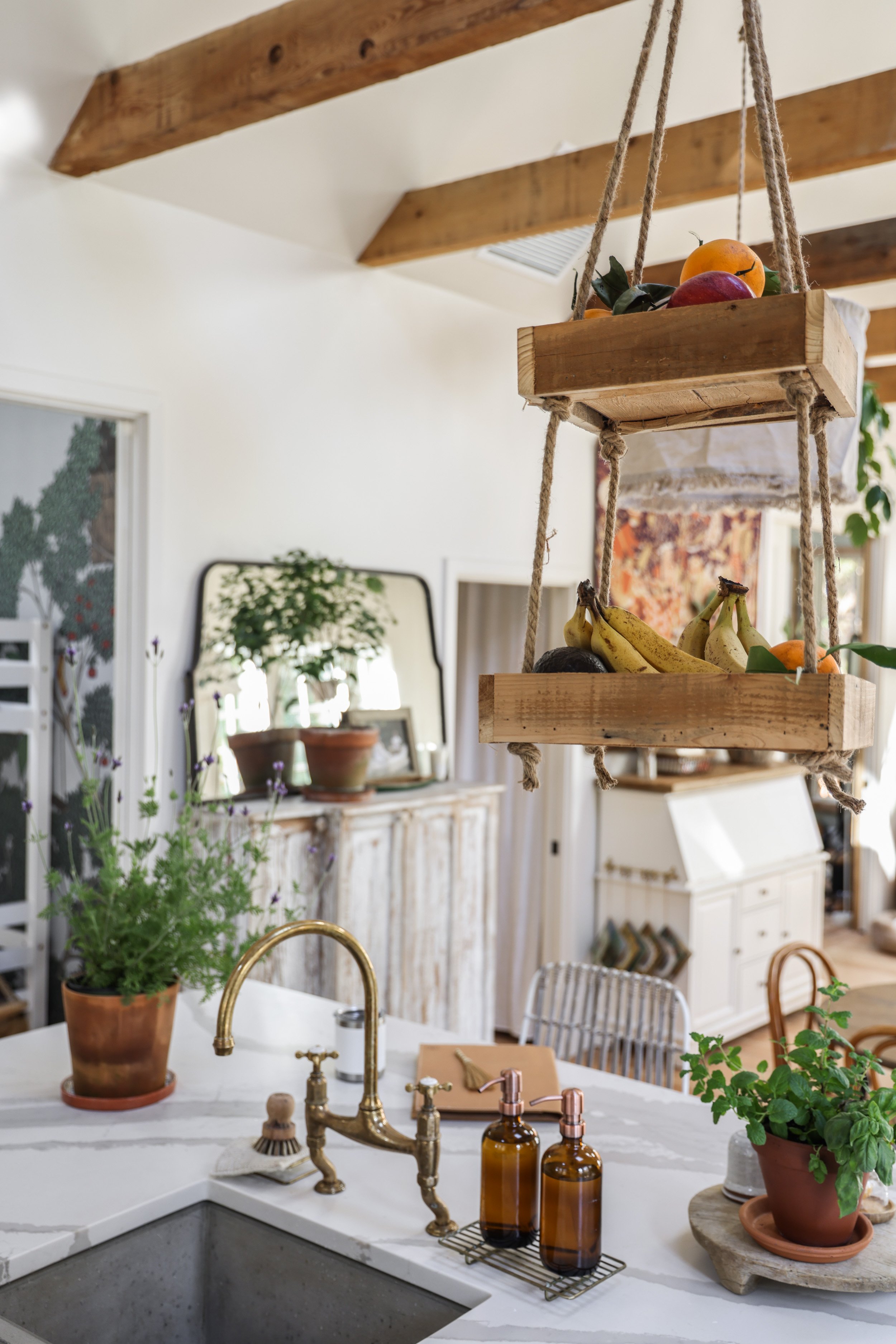
One little detail that elevates a kitchen time and time again are mindfully selected cleaning materials, including sponges and cleaning brushes. More importantly, eye-pleasing alternatives are usually more eco-friendly and budget-savvy over time.
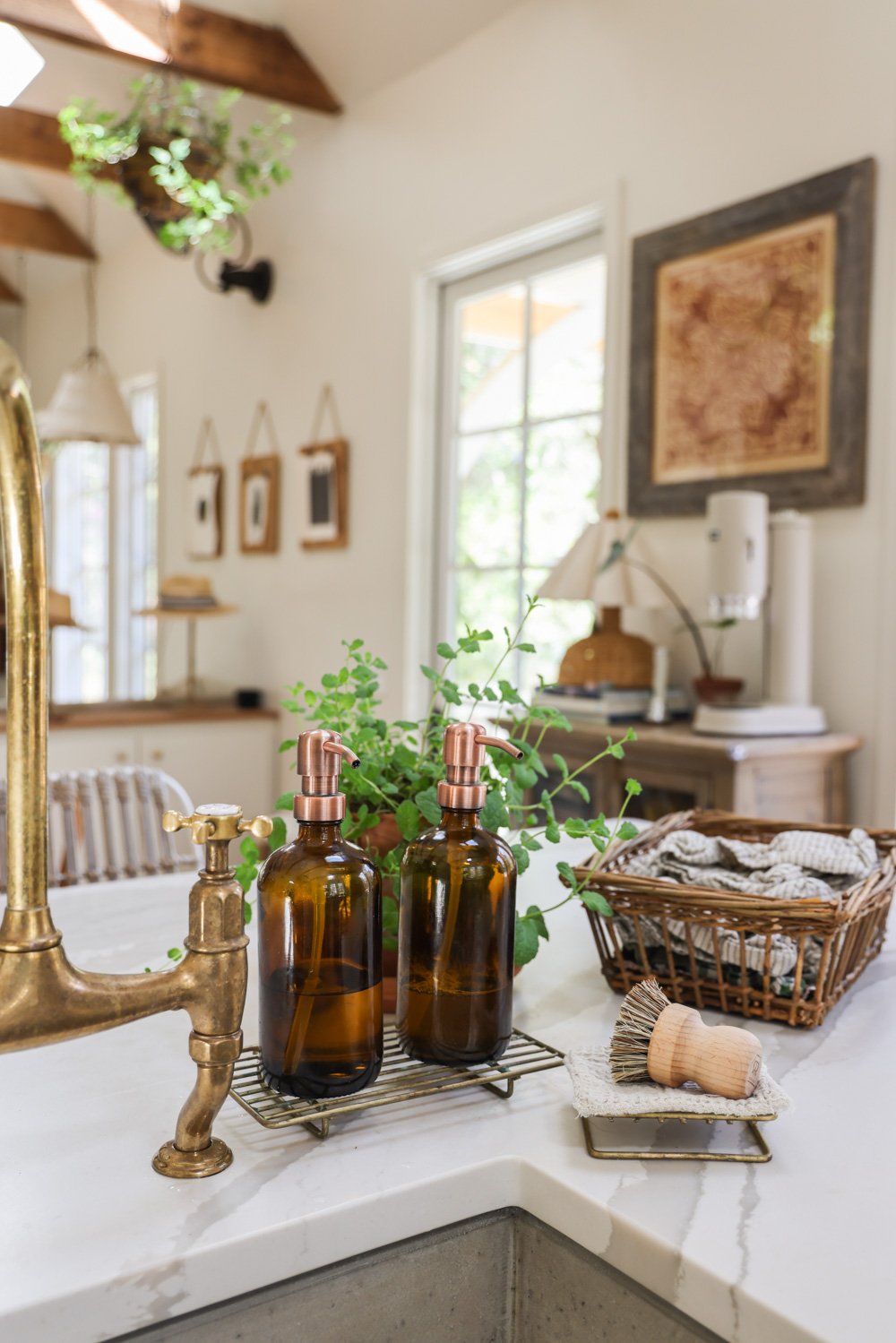
Typical sponges are made of plastic, with toxic dyes, and synthetic disinfectants. Not only are they less healthy for your body, but they’re also less healthy for the planet, as they cannot be recycled or composted, and even shed micro-plastics into our waterways and aquatic ecosystems. Plus, let’s be honest. They’re usually hideous.
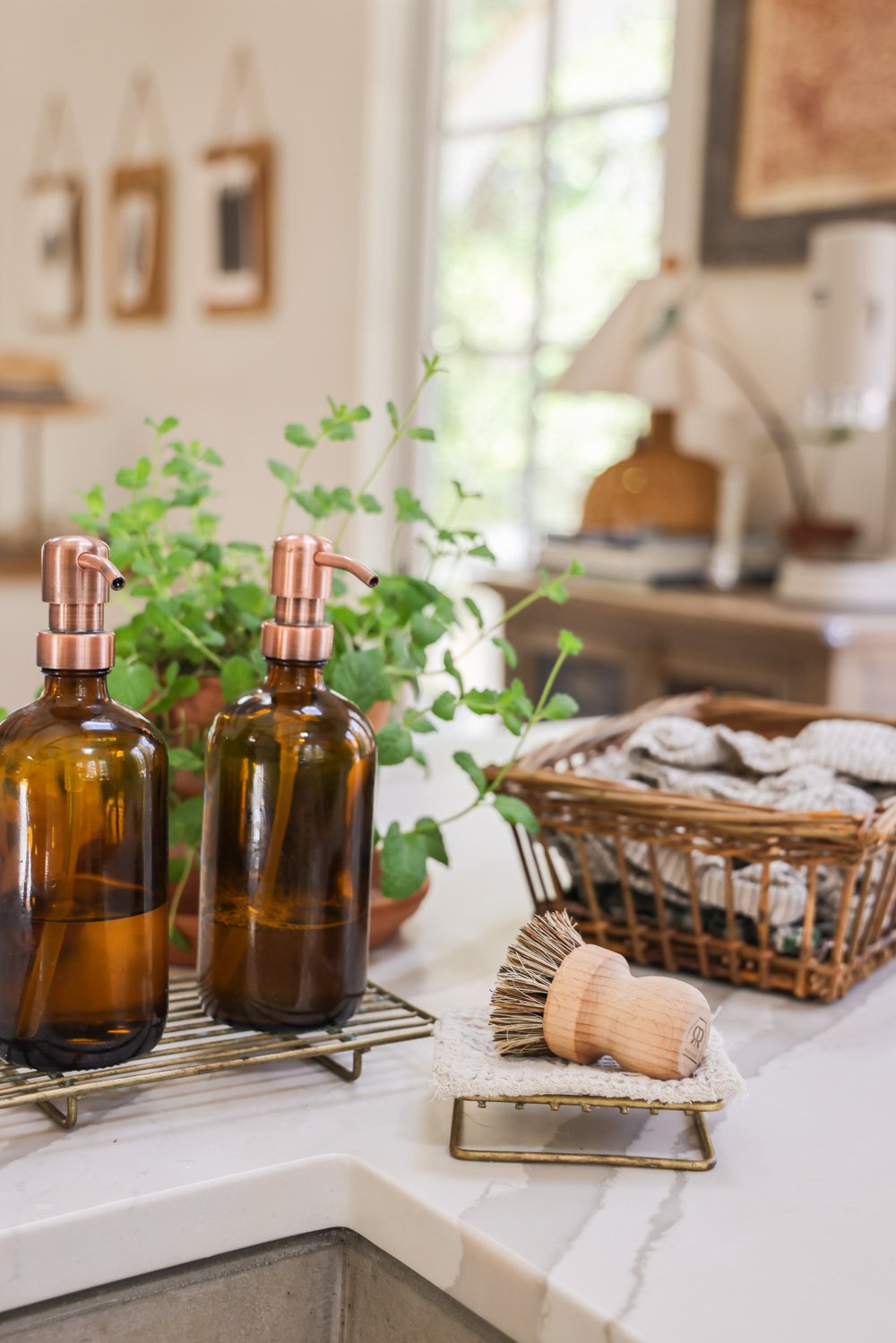
As always, if your current cleaning supplies are functional, don’t toss them out in exchange for the following. Instead, as the existing goods wear out over time, consider these (or other) greener alternatives. Here are my three favorite sponges + sponge alternatives that are kinder to the Earth… and kinder on the eyes:

SPONGES
These handmade, reusable kitchen sponges are compostable at the end of their life, and are machine washable and dishwasher safe. They’re comprised of dual layers of antimicrobial bamboo pressed between two layers of thick and scrubby, unbleached cotton waffle-weave fabric. The cotton is pre-shrunk to make it optimal for scrubbing, and to help minimize further shrinking.

SWEDISH DISHCLOTHS
These dishcloths are made of FSC certified 70% cellulose and 30% cotton, and are are 100% biodegradable. Ours are from this particular company, which donates 1% of every purchase to non-profits through 1% For The Planet, supporting environmental restoration. The dishcloths can be used for wiping, polishing, or scrubbing, and can replace 17 rolls of paper towels each, as well as packs of disposable wipes, and even sponges. Not only are they an eco-friendlier alternative, but they also absorb 20 times their weight. (We keep one at our kitchen sink to wipe the counters down, and one in the bathroom to wipe the vanity.)
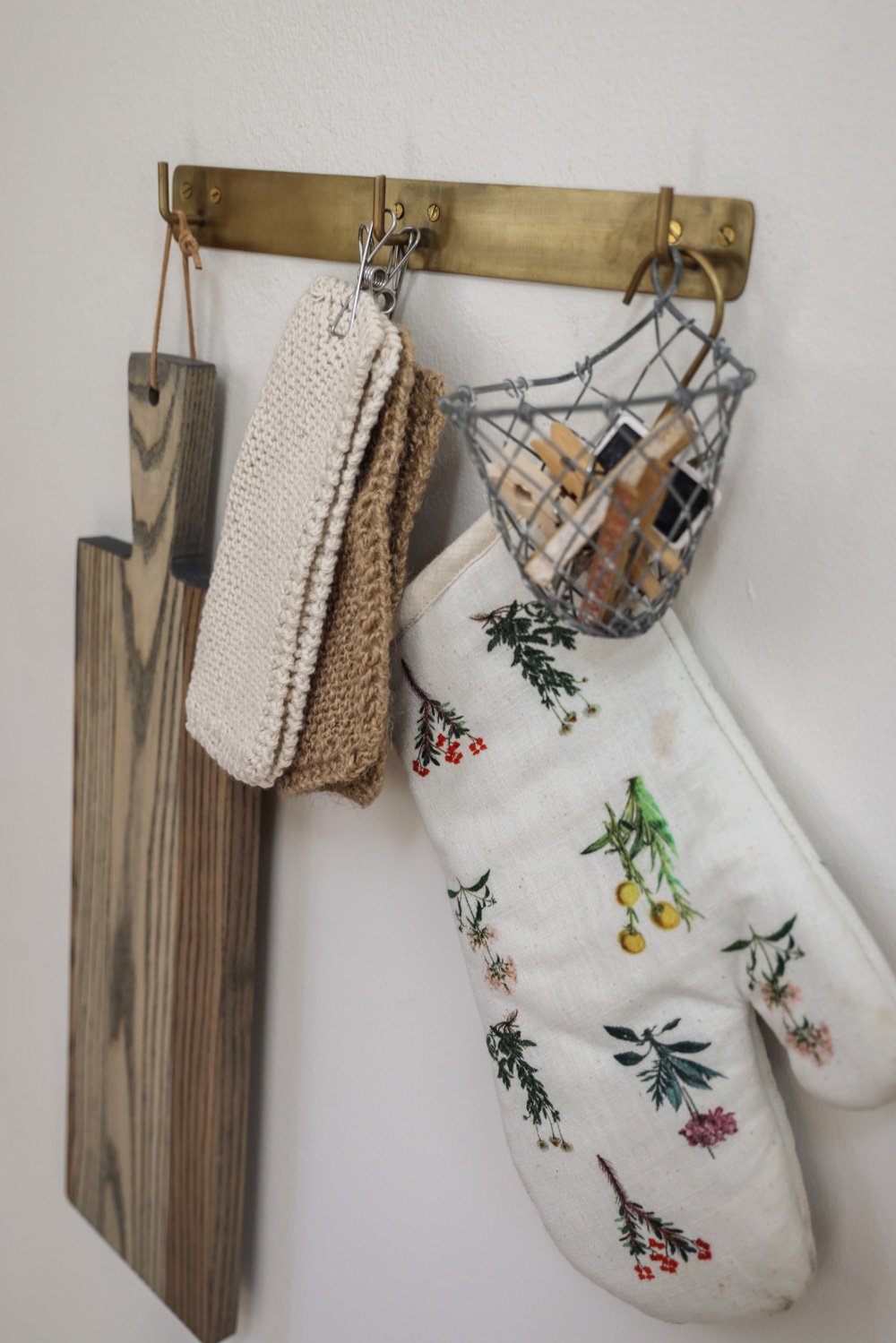
SCRUBBER SET
This organic cotton and jute scrubber set (7” x 7” each) scrub without scratching, allowing you to replace your disposable scrubbers with these tough cleaning, long lasting organic alternatives.The set includes one hand knit jute scrubber and one hand knit cotton scrubber, both of which are machine washable, plastic-free, synthetic-free, toxin-free, compostable, and biodegradable.

Eco-Friendly Organization Tools
Tips for organizing, and living mindfully, beautifully, and practically in spaces of all sizes.
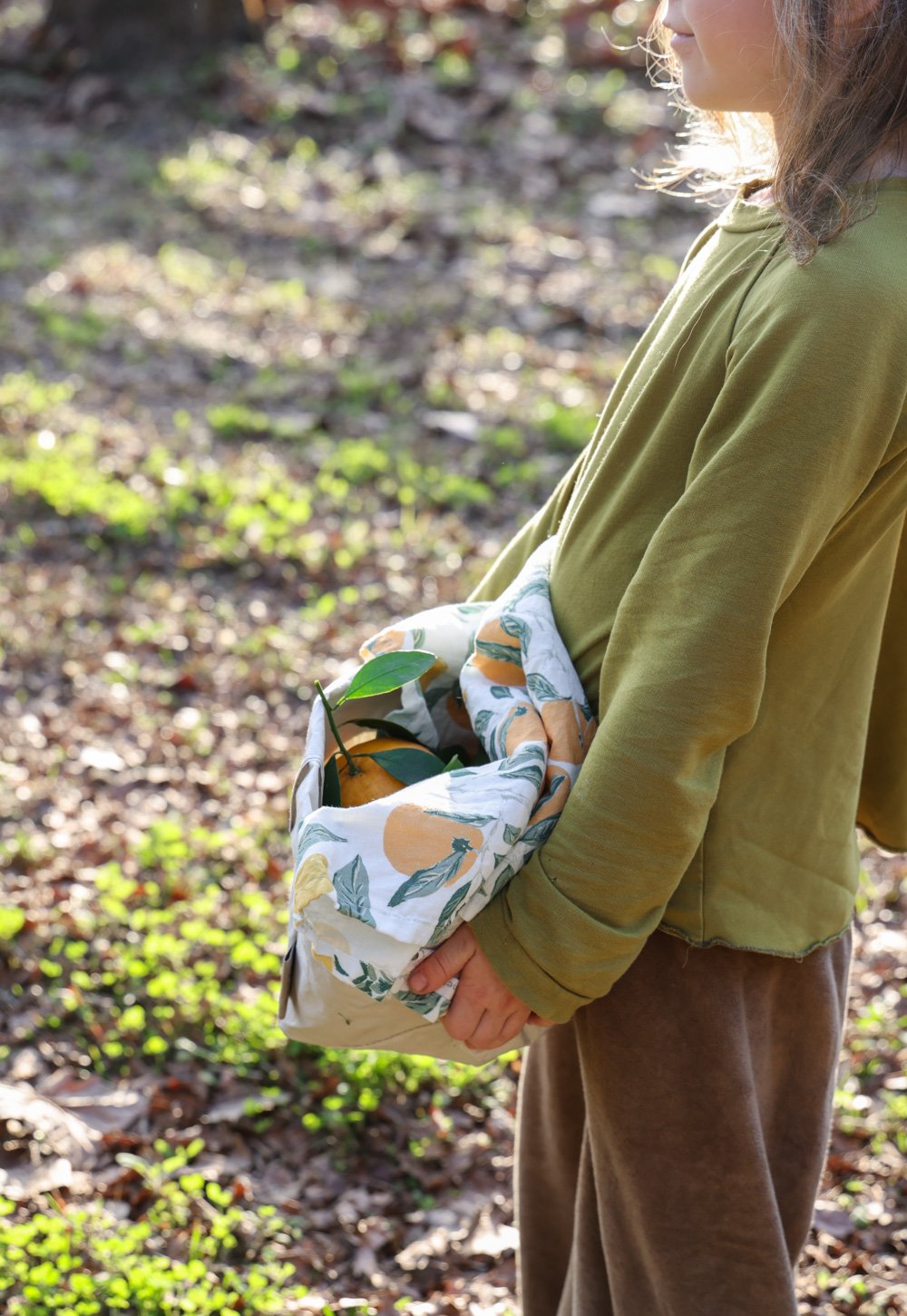
I’m delighted to be featured on the UASHMAMA blog today, sharing tips for organizing, and living mindfully, beautifully, and practically in spaces of all sizes.

I answered such questions as:
Many people want to de-clutter and live with less, but generally don’t know where to start and what to let go of. Do you have any tips for those who are just beginning the process of a living with less lifestyle or mindset?
… as well as:
When thinking about designing in a small space, should you prioritize design or function? Or can you have both?


Climate Action Landscaping
Post Summary: Your garden, no matter the size, can have a positive impact.

When we first moved into our tiny cottage by the canals, we found cracked dirt throughout our L shaped yard, which was little more than a shared thoroughfare with our neighbors. Over the years, the earth was transformed into rich soil, vines and plants began to grow and thrive — providing us with food and shade while supplying a habitat for hummingbirds and pollinators, and our vertical gardens produced colorful, low maintenance herbs, veggies, fruits and flowers that enhanced our privacy and cooled our small space in the hot SoCal summers.

If you steward any amount of outdoor space — whether it’s a small thoroughfare garden like ours at the Cottage in the city, a suburban yard, or rolling acreage, you can transform it into space that has a positive environmental impact.

Our friends at Shades of Green Permaculture are offering a free, 1-hour training class entitled: Intro to Climate Action Landscaping. This training focuses on how a garden or landscape, no matter the size, can have a positive impact on the planet.

If you find what you learn to be of interest to your home and lifestyle, Shades of Green Permaculture also offers an incredible Regenerative Backyard Blueprint: A step-by-step guide to transform your yard into an eco-friendly paradise. The “RBB” will teach you how to create a thriving outdoor space that protects biodiversity; grows food, medicine, and pollinator habitat; builds soil; and restores the water cycle.

By the end of the Regenerative Backyard Blueprint program, you will have:
An understanding of the climate context and why your decisions matter so you can build your garden in alignment with your values, knowing the bigger impact of your decisions.
Clearly articulated your project goal, and have a realistic idea of phasing, timeline and budget.
Made a basemap, and put pen to paper to get accurate measurements and map necessary existing conditions, having identified priority areas and elements to include in your plan.
Correctly diagnosed the challenges you face with water in your yard, and know how to manage that water as a resource.
Spotted opportunities to build soil on your site, and identified which techniques are best for your site.
Made sound choices for plant palettes, have a sense of vegetation types, and know where to go and what questions to ask when searching for the perfect plant.
Crafted a solid plan for your landscape, with associated material and plant calculations, and have a clear understanding of what is needed to execute your project.
Registration is open from October 12th through October 25th at Shades of Green Permaculture.

Cloth Diapering (Again!)
We used cloth diapers with our first child, and are happy to return to a slightly modified version of our diapering routing with our newborn. While they’re a financial investment up-front, they end up saving money over time, in our experience.

It's estimated that disposable diapers make up over 2% of the garbage in American landfills each year-- that's millions of tons. One of the key criticisms of cloth diapers is that they require an increase in water to wash, but that amount of water is far less than the amounts required to manufacture new diapers and packaging— to say nothing of the toll of transport and disposal of single-use goods. Parts of cloth diapers must be washed after every use, but shells from hybrid styles can be used multiple times in a row, depending on the circumstance. If a cloth diaper is well maintained, it can be put to use for years and passed on to other families.

Here is a simple run-down of our process and resources.
Diapers
We use Grovia all-in-one cloth diapers. Since it’s not recommended to go more than 2-3 days between washing, we find that we need about 10. We have the newborn styles (which we’ll soon pass on to a friend and/or a Buy Nothing Group), and about 15 of the larger size, which get more use since they are adaptable and grow with the child.

Cloths
We’ve collected reusable cloths over the years, and have a stack of about 25 for diapering. Grovia cloths are super soft and gentle, and we also use some we sourced via Etsy.

Turning Cloths into Wipes
For a gentle alternative to conventional baby wipes, we spray this all-purpose solution onto a moist cloth. We also have a stack of Water Wipes in case we’re out of any supplies, or if we’re on-the-go.

Changing Surface
We prefer Gathre mats for changing, and always have 1 hand on the baby since there are no safety straps. We have one padded mat, and one foldable mat that can be used on softer surfaces.
Rinsing + Storing (after use / pre-laundry)
After changing the baby and relocating her to a safe spot, we rinse soiled diapers above the toilet with a handheld sprayer / bidet nozzle. This ensures that no major messes make it into the washer/dryer. (It takes about 5-10 minutes to install, and works with most toilets.)

Mop Bucket
We temporarily store rinsed, used diapers in an open-top mop bucket (which we suspend from a shower curtain rod in order to save space) so they can breathe. After emptying the bucket for laundry, I spray the container with an all-purpose, non-toxic solution and let it sit while starting the wash wash. Then I wipe out the bucket with a washable cloth so it’s clean and ready for the next round.
Solids
To catch solids (to then dispose of in the toilet), we prefer bioliners. They’re not zero waste, but compared to a full disposable diaper, these dryer sheet-sized liners aren’t hugely wasteful and make cloth diapering much more doable for folks who wash at home. One roll of liners lasts a long time.

Laundry
After removing fecal matter from diapers via our rinse method (outlined above), we run diapers on rinse/spin cycle on cold with no detergent. Then we wash using hot water and 1 Tbsp of concentrate, and 1-2 scoops of Oxygen Boost. (I personally am not obsessed with keeping the diapers pure white. As long as they’re clean, I’m not bothered by slight discolorations when they happen.)

Drying
When possible, we dry the diapers in the sun on our retractable clothing line. It helps bleach the cloth while saving energy.

Travel / Diaper Bag
We tote a zippered wet bag around for used diapers while on-the-go.
Averting Fuss
Our newborn is too young to require entertaining during changes. However, when our son was of an age when he needed some entertainment to get him through the cleanings, we showed him musical greeting cards that folks had sent him over time. They offered plenty of amusement with no need for a screen.


An Earth-Minded Weighted Blanket for Anxiety & Sleep Troubles
Post Summary: Using eco-friendly, anxiety-soothing weighted blankets in three different environments around the Cottage.
I’ve grappled with anxiety and sleep for years. In February, I unexpectedly had a breakthrough with both struggles and enjoyed a blissful month or so of healthier sleep and manageable stress. But shortly thereafter came the global and national upheavals that our society continues to navigate together (albeit disturbingly divided), and my short-lived nightly progress evaporated. (I should note here that I’m not complaining— merely sharing. There are countless front-line and essential workers who are feeling depleted, and most families are beyond the point of exhaustion as we roll through months 8-9 of this pandemic.)

I’m back to being up most of the night, wading through individual and worldly issues in my mind. But now I’m also trying to be mindful of the sleep positions recommended during the 2nd and 3rd trimesters of pregnancy. To keep a baby safer in the womb, it’s advised that the mother sleep on her left side as much as possible. Unfortunately, due to some long-standing injuries, I can’t quite hold that position for too long, which then sparks my concern for the wellbeing of my baby.
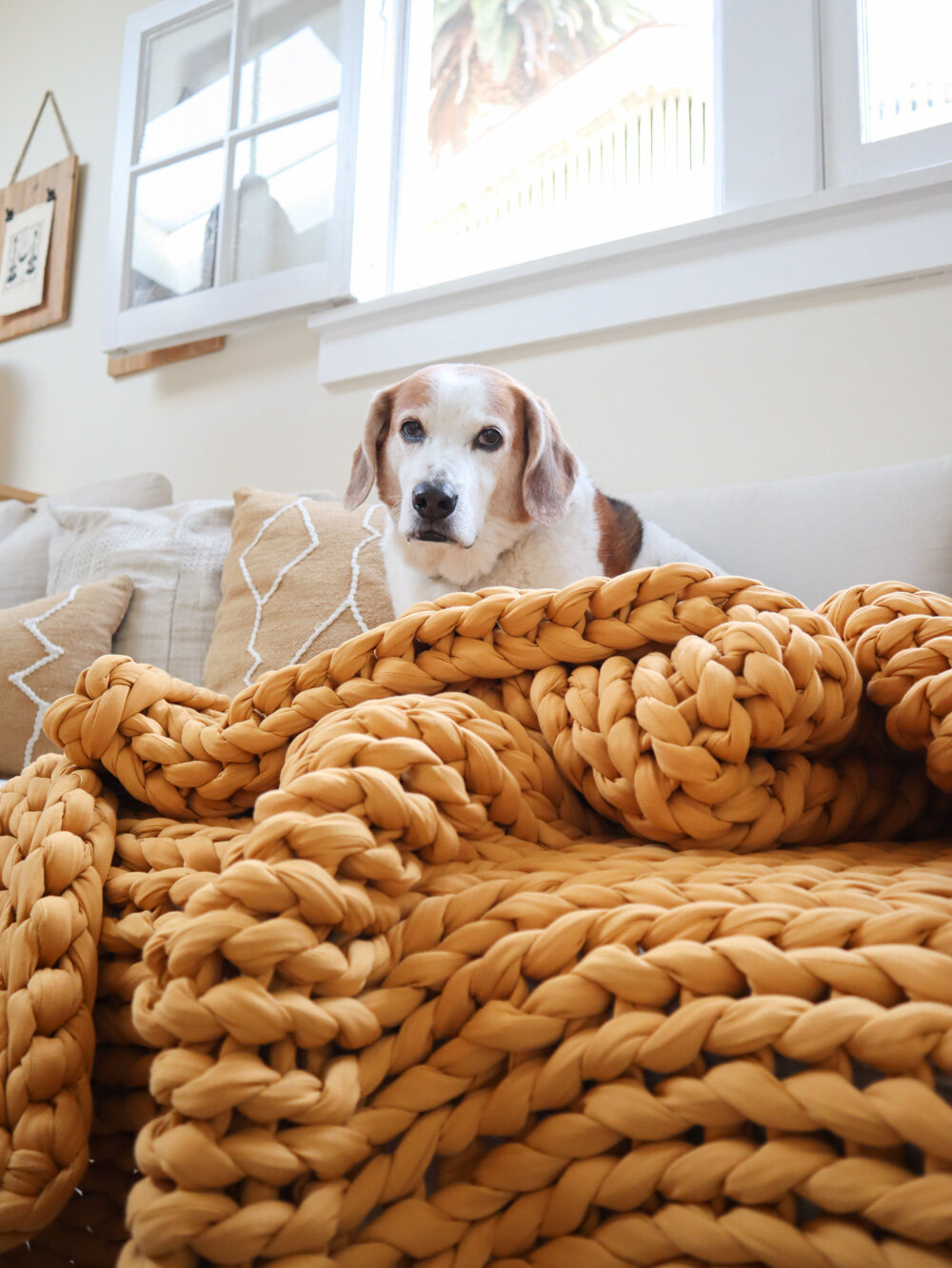
One soothing technique I’d never tried until recently was using a weighted blanket. Weighted blankets have been medically proven to aid naturally deeper sleep cycles, as the blanket’s evenly-dispersed weight over the body stimulates the production of serotonin, reduces cortisol, and increases melatonin. All of this can help with falling asleep, and staying asleep. (The falling asleep is no problem for me— it’s the staying asleep that’s the real hurdle.)

We try to be mindful of everything we bring into our home, so I was pleased to discover these “Nappers,” which use zero plastic in composition and packaging. They’re GOTS, BCI, OEKO-Tex 100 and Fair Trade-certified, made of organic cotton that’s naturally breathable, 100% biodegradable, and uses 85% less water than conventional farming methods, while being free from harmful chemicals, pesticides, synthetics, or artificial softeners.

The Nappers live up to their name, as they’ve certainly helped me catch up on sleep for an hour here and there throughout the day. At night, Sophee somehow manages to drag the blanket off of me so she can cocoon herself within it— an impressive feat, as it’s 15 pounds.

We’ve yet to experience any snagging or warping of the hand-knitted material, which doesn’t seem to cling to dog hair the way many other fibers do. (I’ve noticed the same thing with my clothing made of TENCEL. While it doesn’t entirely repel pet hair, it is much more forgiving.)

More photos are below.
To the readers who are wrestling with anxiety and sleep, I hope this helps!


Note: This post was not sponsored, but the two blankets pictured were gifted as part of a paid IGTV collaboration with Bearaby.

Voting for the Planet (at the Ballot Box and at the Check Out Line)
While using my ever-present mason jar with its sippy lid is better than using plastic bottles, these sorts of daily lifestyle habit shifts and swaps are just smaller components of our greater responsibility, which is to get active. Voting (both at the ballot box in all levels of government AND with/without our dollars as consumers,) is one of the most meaningful actions we can possibly take.
I refuse to believe that we are helpless in this climate crisis— it is reckless. And it is wrong.

As my 3 year-old likes to say, we need: “ALL HANDS ON DECK!” As voters. As investors. As members of our communities. As learners. As civilians. As allies. And as neighbors— because our independent decisions (such as what we buy, which candidates we support, and whether or not we engage in acts of civil disobedience) have collective consequences that impact us all.

But while our responsibilities go well beyond sustainable swaps, the swaps are indeed important. Here’s an example of why:
Package Free Shop has kept over 4 million plastic straws, 3 million plastic bags, and more than 1.5 million non-recyclable bottles and cups out of landfills. They ship everything 100% plastic free in an upcycled or 100% post-consumer box with paper wrapping and paper tape, and all of their shipping materials are 100% recyclable and compostable. And they’re setting new standards for businesses and consumers across multiple industries— a ripple effect with far-reaching implications.

“We believe that it should be easy to make choices that positively benefit the environment and that no matter who you are, where you come from, what you believe in, how many zeros you have (or don’t have) in your bank account, what president you voted for, what gender you identify with, or what part of town you live in, we can all take simple steps to reduce our waste.” - Package Free Shop

I’ve rounded up a small sampling of some of my favorite items from their site that we’ve found to be of great use here in our (tiny) home.

Note: This post was not sponsored. Some items were gifted, but most were purchased. I’m sharing this strictly because of our positive experiences with the products and their impact within our household.

Washable Duster
This duster is made from multiple layers of organic cotton and viscose bamboo. Duster tendrils will curl after washing to make the collection of dust more effective. To wash, simply remove the duster from the custom made wood handle and slide back on once dry. Includes cotton strap for hanging. To clean, machine wash warm with like colors, dry in dryer or air dry.
Organic Pad
Good for your body and the earth, this reusable day pad is free of plastics, artificial fragrances, adhesives, and chemical gels, and keeps disposable pads out of landfills. Not to mention, overtime, reusable feminine products will save you loads of cash.

Reusable Beauty & Ear Swabs
Nearly 25.5 billion single use swabs are produced and discarded every year in the U.S. But not this swab. It lasts up to 1,000 uses as it's able to be cleaned with soap and water. It also comes in a biodegradable, corn based case so you can use it on the go.

Organic Hair Ties
Organic cotton and natural rubber hair tie set on compostable paper backing.
Kid’s Brush
This soft bristled brush is 100% compostable.

Comb & Brush Rake
Helps your brushes last longer by keeping them clean between the bristles.
Wire: 100% recyclable with metal recycling / Wood: 100% compostable
Razor Cleaning Brush
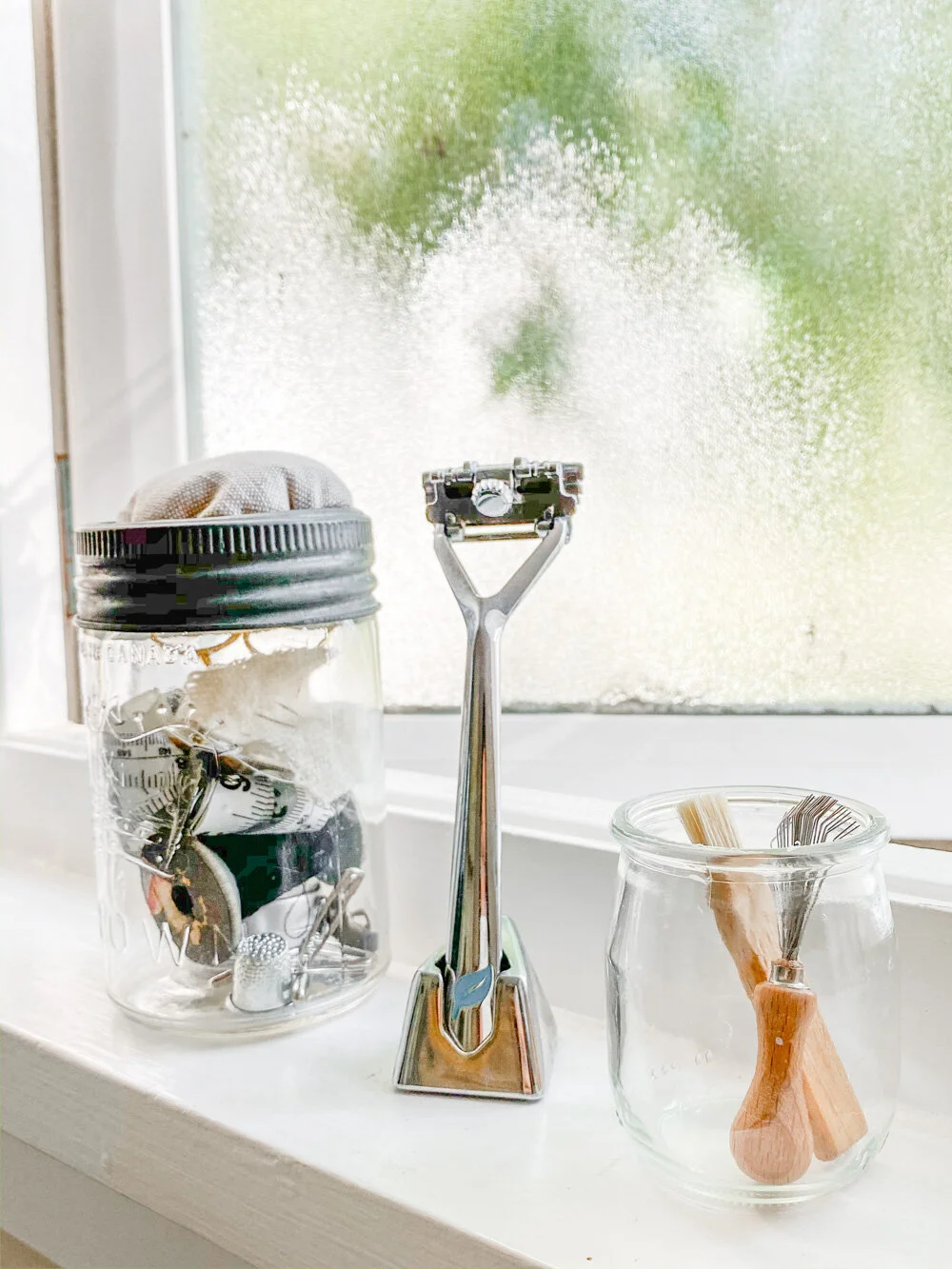
100% compostable razor cleaner, which works great for the pivot-head LEAF shave razor.
Tea Tree & Charcoal Face Soap
A balanced and gentle facial soap, this bar detoxifies skin with absorbent activated charcoal. Cocoa butter promotes a healthy complexion, while ground oats soothe and mildly exfoliate. Fresh and herbaceous tea tree and eucalyptus oils act as a natural astringent to combat skin blemishes. Also great for the whole body.

Travel Soap Box
Slice off a bit of the face soap, body soap, shampoo + conditioner bars, and/or body stones to use on-the-go with this soap box.
Washing Bag
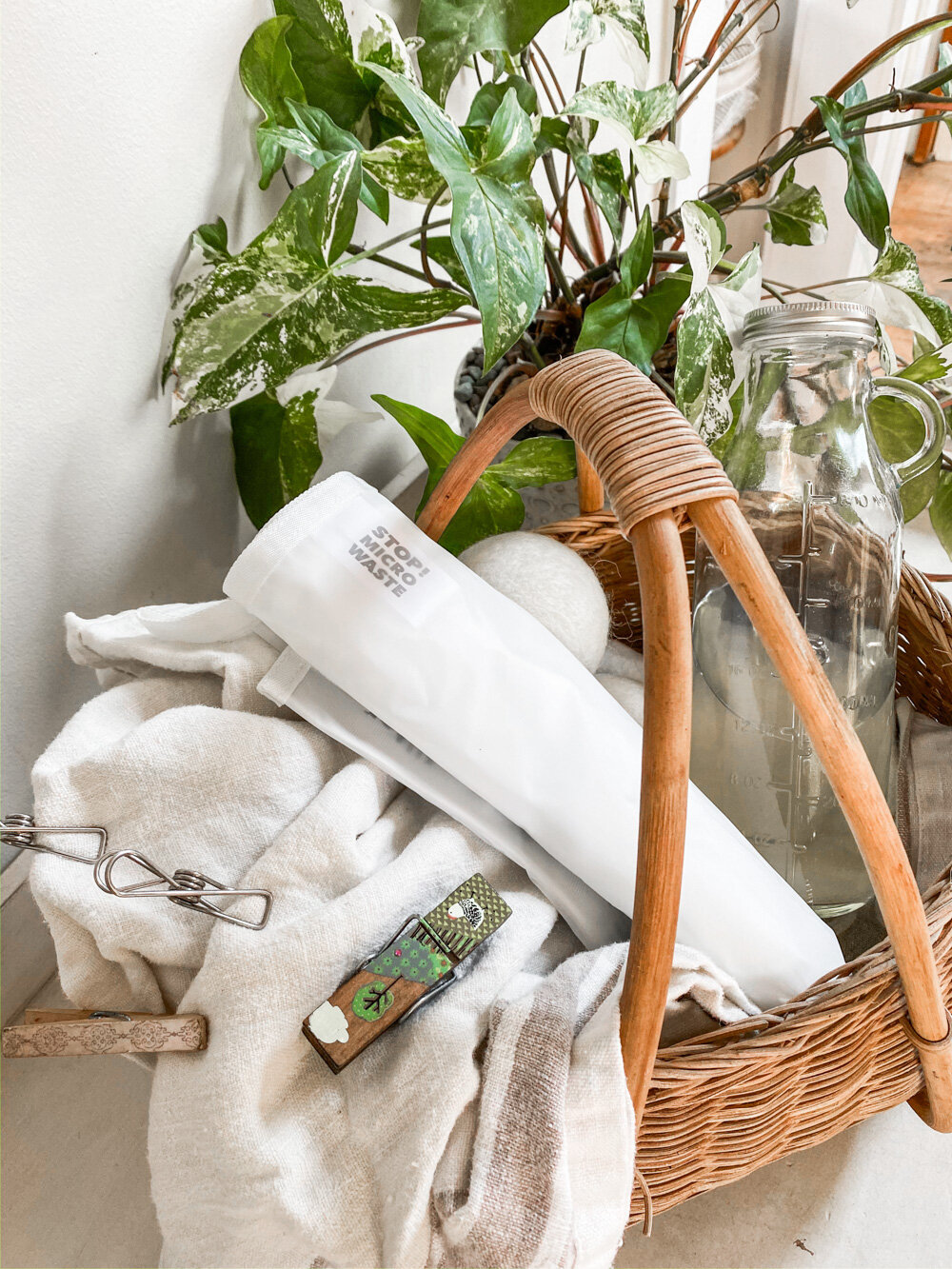
This washing bag is a scientifically-approved filter solution to stop micro plastic pollution caused by washing synthetic textiles. It reduces fiber from breaking significantly and thus extends the lifetime of your textiles. Using the washing bag reduces the breaking of synthetic textiles by 86% on average. The fibers that do break during washing are captured inside the bag and can easily be removed.

Natural Dog Brush
100% natural and compostable two-sided dog brush for both long and short haired best friends.
Water Filter Pod
One of these little guys filters 99% of lead and arsenic and 97% of chlorine and flouride right out of your regular tap water. Just drop this wine cork-sized pod into any water vessel, pitcher, bottle, glass, camelback, coffee maker and more for clean, healthy and great-tasting water everywhere you go.
Space-savvy + Low Waste Bathroom Swaps

It’s easy to be tricked into thinking that reusable goods consume more space than disposables, and thus are not small space friendly. However, I find the opposite to be true! Let’s look at some quick, affordable, and effortless bathroom swaps. If you select your eco-friendly bath items carefully, not only will they take up less storage space and fewer surfaces inches, but they’ll also look better than their single-use or plastic counterparts.


HAIR CARE
Shampoo + conditioner bars are becoming increasingly available. I found mind on Etsy, and will continue to test out various types instead of buying disposable shampoo, conditioner, and body wash bottles. And a simple wall-mounted, hanging or standard wooden soap dish is all one needs to accommodate these bars.

SHAVING
Adam and I recently made the switch to Leaf (for me) and Rockwell (for him) razors. Up front the cost is higher, but over time they save so much money and reduce a ton of unnecessary waste. (And let’s be real— they’re far prettier on the eyes than loud plastic designs.)
BIDET
It takes just 1 pint of water to properly wash with a modern bidet like the TUSHY. It takes 437 billion gallons of water, 253,000 tons of bleach, and 15 million trees to make toilet paper annually. And Americans make, move and use 34 million rolls of toilet paper every day. The problem is not just the 54 million trees cut each year to keep up with demand, but also the enormous amounts of water, chemicals, and energy used in the destructive production process of toilet paper.* And a modern bidet attachment simply attaches to your toilet in minutes— no extra space required… and no need to continue stockpile toilet paper.
* Source: HelloTushy.com

EAR SWABS
Reusable ear cleaning tips are arguably more effective than Q-tips, and are easy to clean and require far less storage space. (Since taking this photo, we switched to LastSwab, which we really like. They come in both cosmetic swab and ear swab formats.)

COTTON ROUNDS
Machine-washable cotton rounds are every bit as effective as disposables. They’re a one-time purchase that can last a lifetime. No need to store backups. 10 or so should be just fine if you do laundry at least once per week.

MAKEUP REMOVER WIPES
Similarly, machine-washable makeup remover pads are an easy alternative to disposables. If you prefer wipes or simply need a single-use alternative while on-the-go, these compostable wipes are a solid choice. (And don’t forget that coconut oil can make a great, low-waste makeup remover!)

TOOTHPASTE + FLOSS
Refillable floss and recyclable metal toothpaste tubes are lighter on the environment. Like everything else here, they take up no extra space and, in my opinion, look great on counters and shelves.

CLOTH TISSUES
Reusable tissues can serve as miscellaneous cloths as well. We keep small baskets of them stashed around the Cottage. No need to buy and store tissues, tissue box covers, or wipes.

DRYING RACK
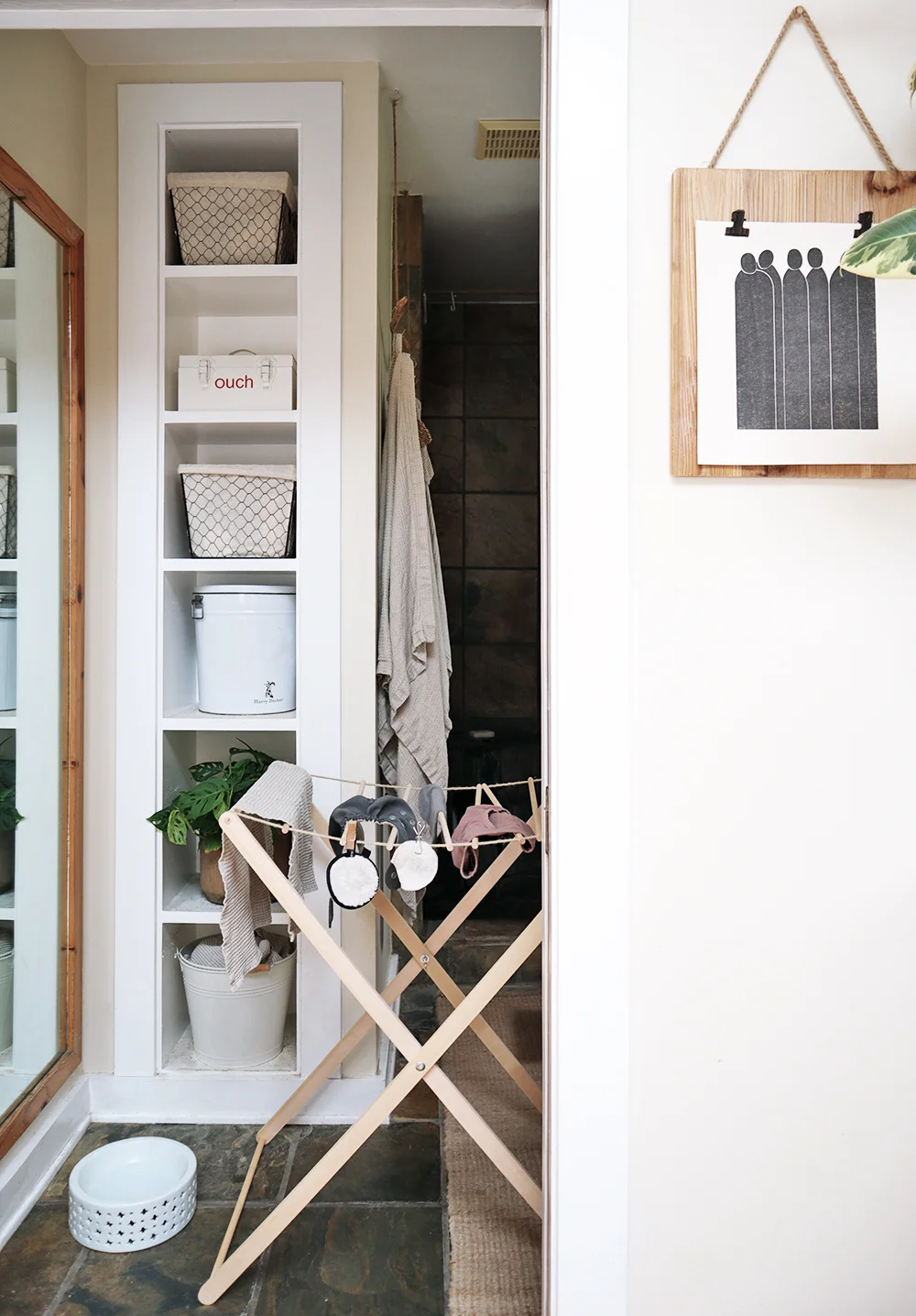
To dry your towels, reusable rounds, cloth diapers, laundry, and even wraps and bags in your small space, consider the foldable Helen Milan Birch Clothes Horse. When folded up, it tucks tightly against a small stretch of wall. (And it’s so lightweight that it can also be kept on a hook if you’d prefer to keep it off the ground when stored.) Even when it is in use, the rack consumes very little space (26″ L x 19.5″ W x 33.5″ H). Or a good old fashioned clothing line made of twine and tacks can work just as well, depending on your space and needs.

AIR FRESHENER
Skip the plastic plug-ins and synthetic air fresheners. When used safely (and in accordance with your building’s codes, etc.), hand-poured scented candles are effective and lovey little touches for a small bathroom. When the wax is burned out, you can clean and repurpose the container for a number of uses… such as holding your reusable bath goods!
HANDSOAP
We’ve started refilling glass containers with liquid soaps from ReContained instead of buying entirely new bottles.

Some other easy swaps include:
Upcycled containers and organizers (rather than store-bought bath sets)
(Note: This post was initially published on the blog in October 2018. It was updated with additional imagery and ideas in April 2019.)