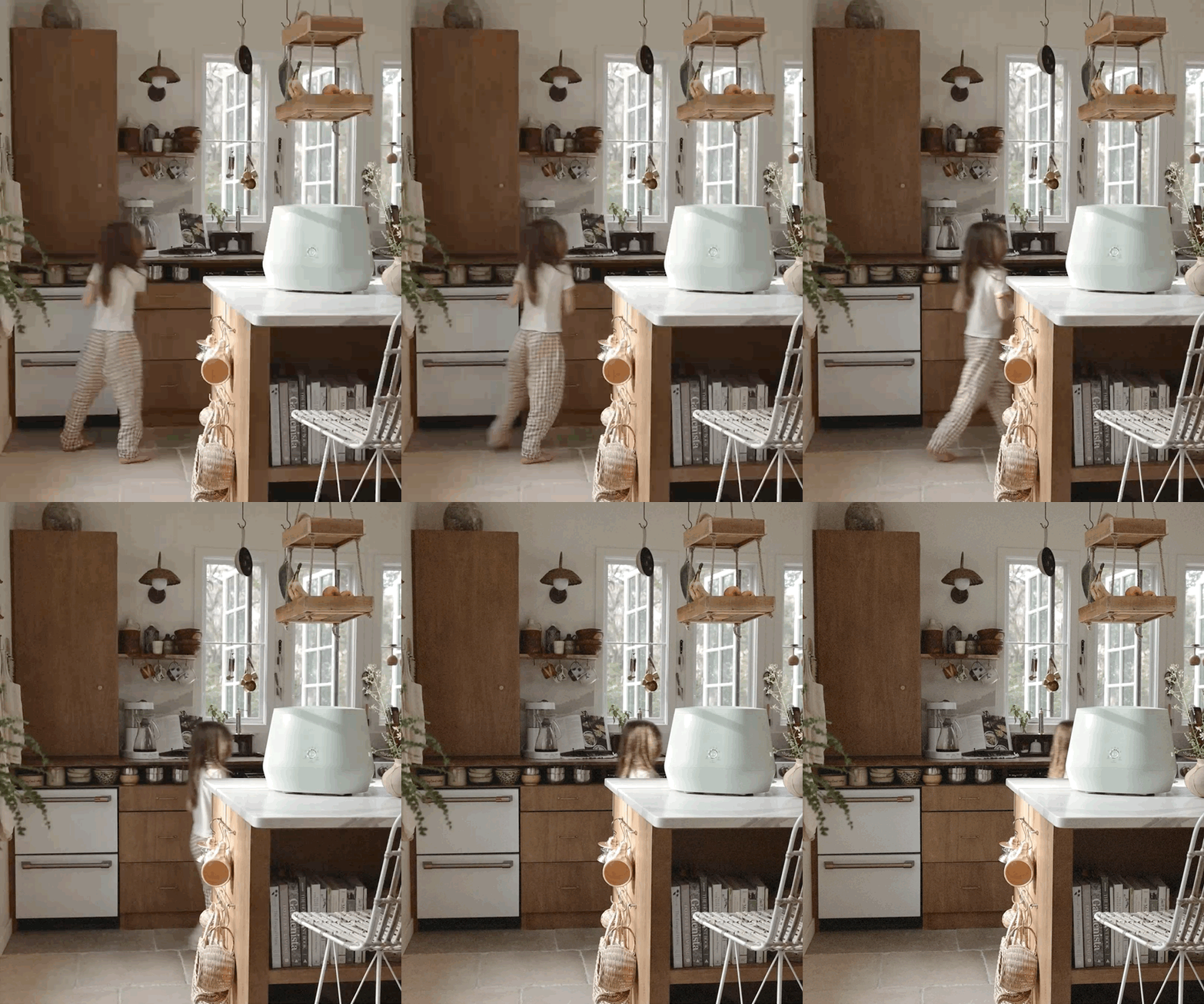
A Carbon Negative Kitchen Appliance with a Positive Impact on Soil Health
Imagine what our world would look like if, at the end of its life cycle, everything nurtured this magnificent earth as nature intended…
What if the world was waste-free? After all, there is no “waste” in nature — humans are the only species that create trash.

Food waste is one of the greatest contributors to climate change, and over 40% of that waste occurs at the household level.

But we have the ability to change this. Food waste is not really waste when it’s handled mindfully.

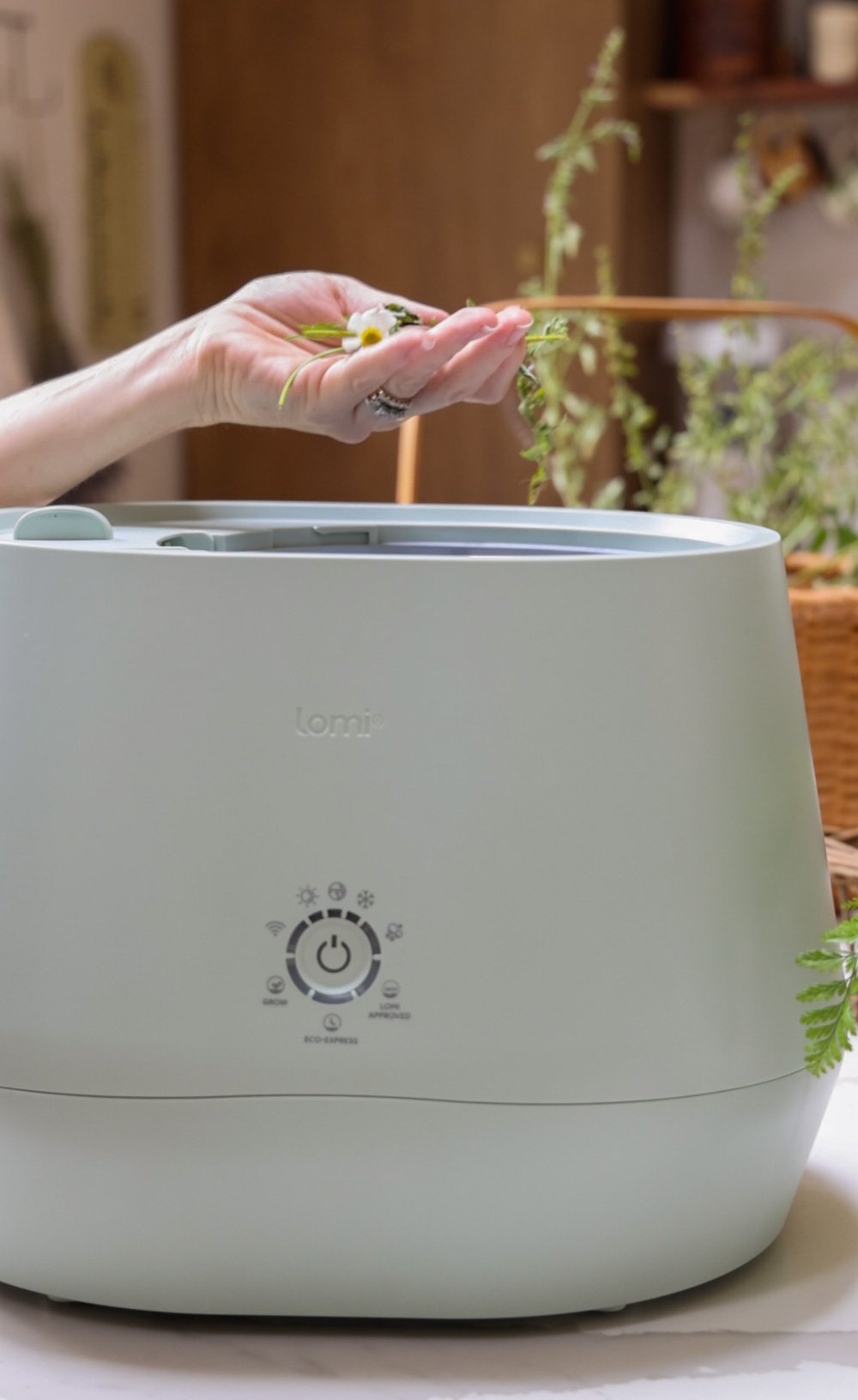
Instead, no matter where you live, food waste can become sustenance for nature, contributing precious natural resources back into the earth. Now, at the push of a button.

The Lomi Bloom is the only carbon negative appliance, and it can turn fruits, veggies, plant trimmings, yard waste, animal products, grains, and more into nutrient-rich plant food that supports healthy soil and its regeneration.


Lomi Earth — the result of Lomi’s “Grow” mode operating cycle— produces nutrient-rich, organic fertilizer that’s perfect to use on houseplants and gardens. When the Grow cycle is run with a LomiPod, the end result is packed with vital microbes to support plant health, and can also be sprinkled on lawns to improve soil health.

As we know, healthier soils store dramatically more carbon than degraded soils. When Lomi Earth is mixed with other soil and used to grow plants, the organic carbon in Lomi dirt is partially sequestered in soil and as plant matter. As such, not only are we able to avoid the harmful emissions of landfilling food waste, but we can also help sequester additional carbon.

Not only does Lomi Bloom reduce our carbon footprint and enhance our positive impact, it also rewards users in additional ways with every use. Via Lomi’s app, users can track their Bloom’s impact, and receive rewards like Lomi products and other useful, eco-minded items that can help us curb household waste.

Imagine what our world would look like if, at the end of its life cycle, everything nurtured this magnificent earth as nature intended…

Thank you to the wonderful folks at Lomi for supporting our small business by sponsoring this post. All opinions and photos are my own.

Avoiding "Fast Furniture" and Taking Time to Source
Upon moving into our new cottage, we needed very few furnishings, despite having moved from our previous home with so few large items. One thing we did need, however, was a comfortable armchair for the living room office.

We took our time sourcing the perfect-for-us reading chair. With our planet in crisis, a temporary piece of “fast furniture” was out of the question. Did you know that 12.2 million tons of furnishings and home accents end up in landfills annually? This results in horrible amounts of of solid waste that have increased 450 percent since 1960 per the Environmental Protection Agency.

Instead, we borrowed a chair from family (which itself was a handmedown from neighbors) for a few months, covering it with a linen sheet so it better suited our decor (as pictured below).

Pictured above: A borrowed chair, covered with a linen sheet to better match our decor.
We wanted to find seating that would fit snugly yet welcomingly in the corner without jutting into either the bedroom entry or the thoroughfare to the living room’s French doors. We finally found what we were looking for— this timeless looking chair with casually draping cushions, an overstuffed vibe, and yet a space-savvy curved seat and rounded back.

We added a vintage stool, a handmade rattan wall sconce, a handmade ceramic airplant cradle, and a propagation station (designed by our friend Hilton Carter).

The end result is a very comfortable reading nook that all of us — pups included — enjoy daily.

Loula Chair by Sixpenny
Color: Oat Flour
Fabric: Light Weight Linen
Fill: Vegan Fiber


Climate Action Landscaping
Post Summary: Your garden, no matter the size, can have a positive impact.

When we first moved into our tiny cottage by the canals, we found cracked dirt throughout our L shaped yard, which was little more than a shared thoroughfare with our neighbors. Over the years, the earth was transformed into rich soil, vines and plants began to grow and thrive — providing us with food and shade while supplying a habitat for hummingbirds and pollinators, and our vertical gardens produced colorful, low maintenance herbs, veggies, fruits and flowers that enhanced our privacy and cooled our small space in the hot SoCal summers.

If you steward any amount of outdoor space — whether it’s a small thoroughfare garden like ours at the Cottage in the city, a suburban yard, or rolling acreage, you can transform it into space that has a positive environmental impact.

Our friends at Shades of Green Permaculture are offering a free, 1-hour training class entitled: Intro to Climate Action Landscaping. This training focuses on how a garden or landscape, no matter the size, can have a positive impact on the planet.

If you find what you learn to be of interest to your home and lifestyle, Shades of Green Permaculture also offers an incredible Regenerative Backyard Blueprint: A step-by-step guide to transform your yard into an eco-friendly paradise. The “RBB” will teach you how to create a thriving outdoor space that protects biodiversity; grows food, medicine, and pollinator habitat; builds soil; and restores the water cycle.

By the end of the Regenerative Backyard Blueprint program, you will have:
An understanding of the climate context and why your decisions matter so you can build your garden in alignment with your values, knowing the bigger impact of your decisions.
Clearly articulated your project goal, and have a realistic idea of phasing, timeline and budget.
Made a basemap, and put pen to paper to get accurate measurements and map necessary existing conditions, having identified priority areas and elements to include in your plan.
Correctly diagnosed the challenges you face with water in your yard, and know how to manage that water as a resource.
Spotted opportunities to build soil on your site, and identified which techniques are best for your site.
Made sound choices for plant palettes, have a sense of vegetation types, and know where to go and what questions to ask when searching for the perfect plant.
Crafted a solid plan for your landscape, with associated material and plant calculations, and have a clear understanding of what is needed to execute your project.
Registration is open from October 12th through October 25th at Shades of Green Permaculture.

Voting for the Planet (at the Ballot Box and at the Check Out Line)
While using my ever-present mason jar with its sippy lid is better than using plastic bottles, these sorts of daily lifestyle habit shifts and swaps are just smaller components of our greater responsibility, which is to get active. Voting (both at the ballot box in all levels of government AND with/without our dollars as consumers,) is one of the most meaningful actions we can possibly take.
I refuse to believe that we are helpless in this climate crisis— it is reckless. And it is wrong.

As my 3 year-old likes to say, we need: “ALL HANDS ON DECK!” As voters. As investors. As members of our communities. As learners. As civilians. As allies. And as neighbors— because our independent decisions (such as what we buy, which candidates we support, and whether or not we engage in acts of civil disobedience) have collective consequences that impact us all.

But while our responsibilities go well beyond sustainable swaps, the swaps are indeed important. Here’s an example of why:
Package Free Shop has kept over 4 million plastic straws, 3 million plastic bags, and more than 1.5 million non-recyclable bottles and cups out of landfills. They ship everything 100% plastic free in an upcycled or 100% post-consumer box with paper wrapping and paper tape, and all of their shipping materials are 100% recyclable and compostable. And they’re setting new standards for businesses and consumers across multiple industries— a ripple effect with far-reaching implications.

“We believe that it should be easy to make choices that positively benefit the environment and that no matter who you are, where you come from, what you believe in, how many zeros you have (or don’t have) in your bank account, what president you voted for, what gender you identify with, or what part of town you live in, we can all take simple steps to reduce our waste.” - Package Free Shop

I’ve rounded up a small sampling of some of my favorite items from their site that we’ve found to be of great use here in our (tiny) home.

Note: This post was not sponsored. Some items were gifted, but most were purchased. I’m sharing this strictly because of our positive experiences with the products and their impact within our household.

Washable Duster
This duster is made from multiple layers of organic cotton and viscose bamboo. Duster tendrils will curl after washing to make the collection of dust more effective. To wash, simply remove the duster from the custom made wood handle and slide back on once dry. Includes cotton strap for hanging. To clean, machine wash warm with like colors, dry in dryer or air dry.
Organic Pad
Good for your body and the earth, this reusable day pad is free of plastics, artificial fragrances, adhesives, and chemical gels, and keeps disposable pads out of landfills. Not to mention, overtime, reusable feminine products will save you loads of cash.

Reusable Beauty & Ear Swabs
Nearly 25.5 billion single use swabs are produced and discarded every year in the U.S. But not this swab. It lasts up to 1,000 uses as it's able to be cleaned with soap and water. It also comes in a biodegradable, corn based case so you can use it on the go.

Organic Hair Ties
Organic cotton and natural rubber hair tie set on compostable paper backing.
Kid’s Brush
This soft bristled brush is 100% compostable.

Comb & Brush Rake
Helps your brushes last longer by keeping them clean between the bristles.
Wire: 100% recyclable with metal recycling / Wood: 100% compostable
Razor Cleaning Brush
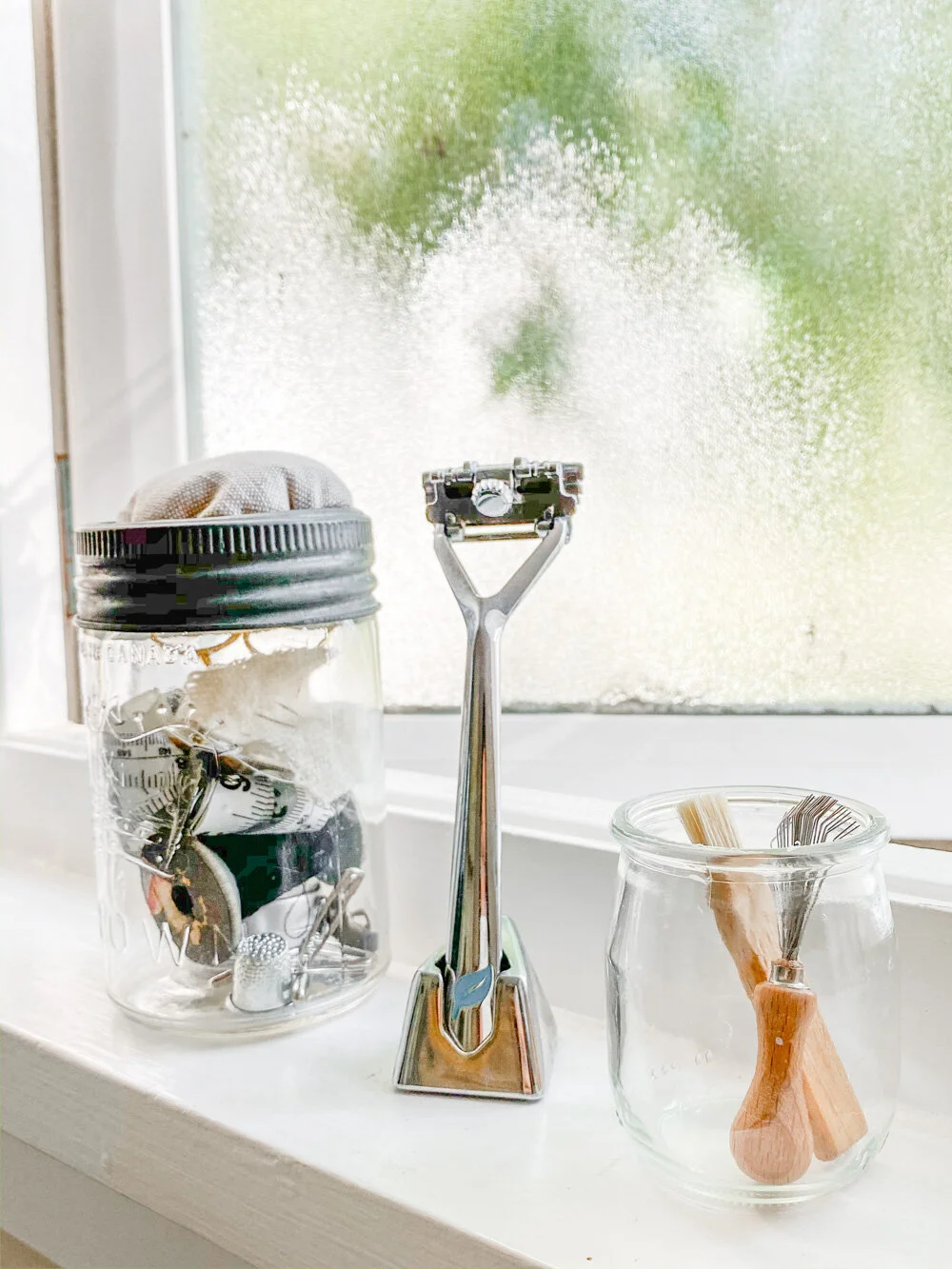
100% compostable razor cleaner, which works great for the pivot-head LEAF shave razor.
Tea Tree & Charcoal Face Soap
A balanced and gentle facial soap, this bar detoxifies skin with absorbent activated charcoal. Cocoa butter promotes a healthy complexion, while ground oats soothe and mildly exfoliate. Fresh and herbaceous tea tree and eucalyptus oils act as a natural astringent to combat skin blemishes. Also great for the whole body.

Travel Soap Box
Slice off a bit of the face soap, body soap, shampoo + conditioner bars, and/or body stones to use on-the-go with this soap box.
Washing Bag
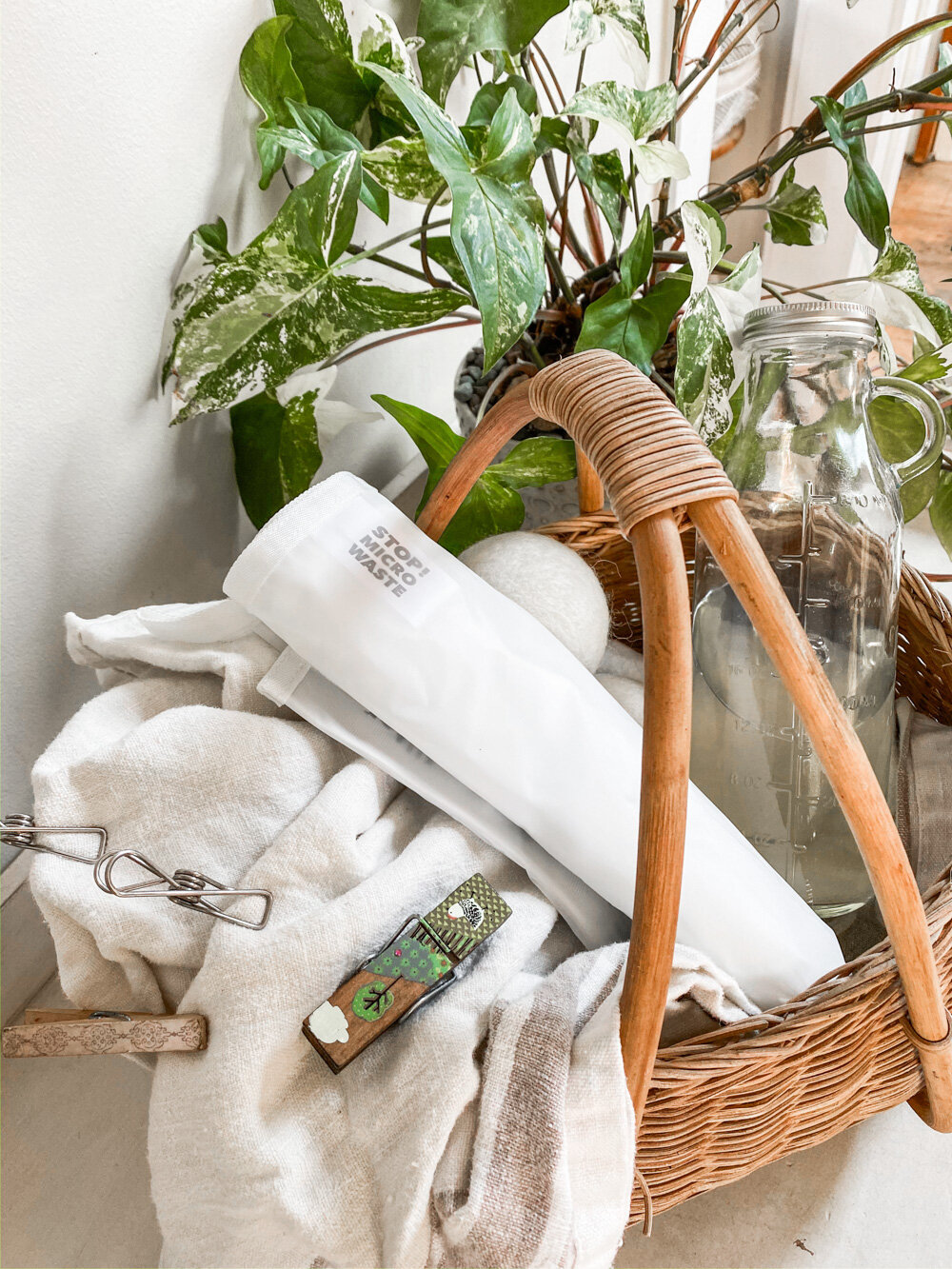
This washing bag is a scientifically-approved filter solution to stop micro plastic pollution caused by washing synthetic textiles. It reduces fiber from breaking significantly and thus extends the lifetime of your textiles. Using the washing bag reduces the breaking of synthetic textiles by 86% on average. The fibers that do break during washing are captured inside the bag and can easily be removed.

Natural Dog Brush
100% natural and compostable two-sided dog brush for both long and short haired best friends.
Water Filter Pod
One of these little guys filters 99% of lead and arsenic and 97% of chlorine and flouride right out of your regular tap water. Just drop this wine cork-sized pod into any water vessel, pitcher, bottle, glass, camelback, coffee maker and more for clean, healthy and great-tasting water everywhere you go.

Some Items You Can Probably Go Without (Part 12)
While it's productive to share stories about designs and practices that help us live comfortably and less wastefully in small spaces, I think it’s just as important to discuss the things that we can happily live WITHOUT— particularly in this era of climate crisis. After all, making a home in a small space isn’t about figuring out how to puzzle a life’s worth of belongings into your compact quarters. It’s about experiencing more by owning less.
The following is just a small sampling of items you may want to reconsider before you buy. (View all the entries in this series here.)
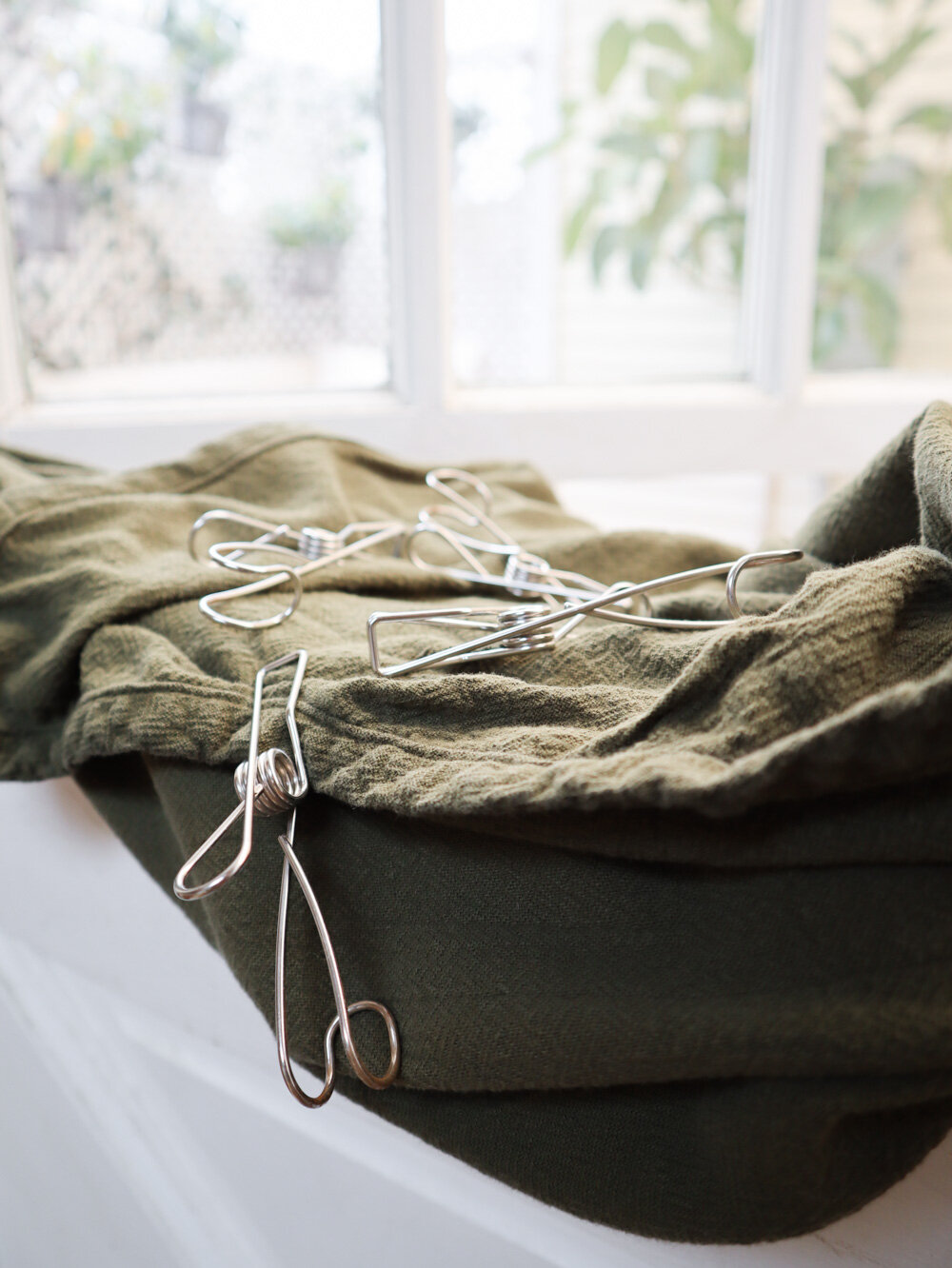
Plastic shower curtains and liners:
Depending on the style of your shower, you might be able to skip the standard plastic liners and synthetic blend curtains. Here we use a simple linen tablecloth / throw blanket (handmade locally for Gjusta Goods), which we suspend from the curtain rod via metal clothespin hooks. We simply throw the fabric into the machine with similar washing about once every-other week for a good soapy bath of its own. If the bottom of the sheet gets overly wet during a shower and stretches out the linen, we just make a fold up top and clip it an inch or so higher. Hemp fabric and/or upcycled, patchwork pieces could work well for this purpose, too, and add a unique touch to your bathroom. (As always, please keep safety — such as slip risks — in mind.)

New outfits for every special event:
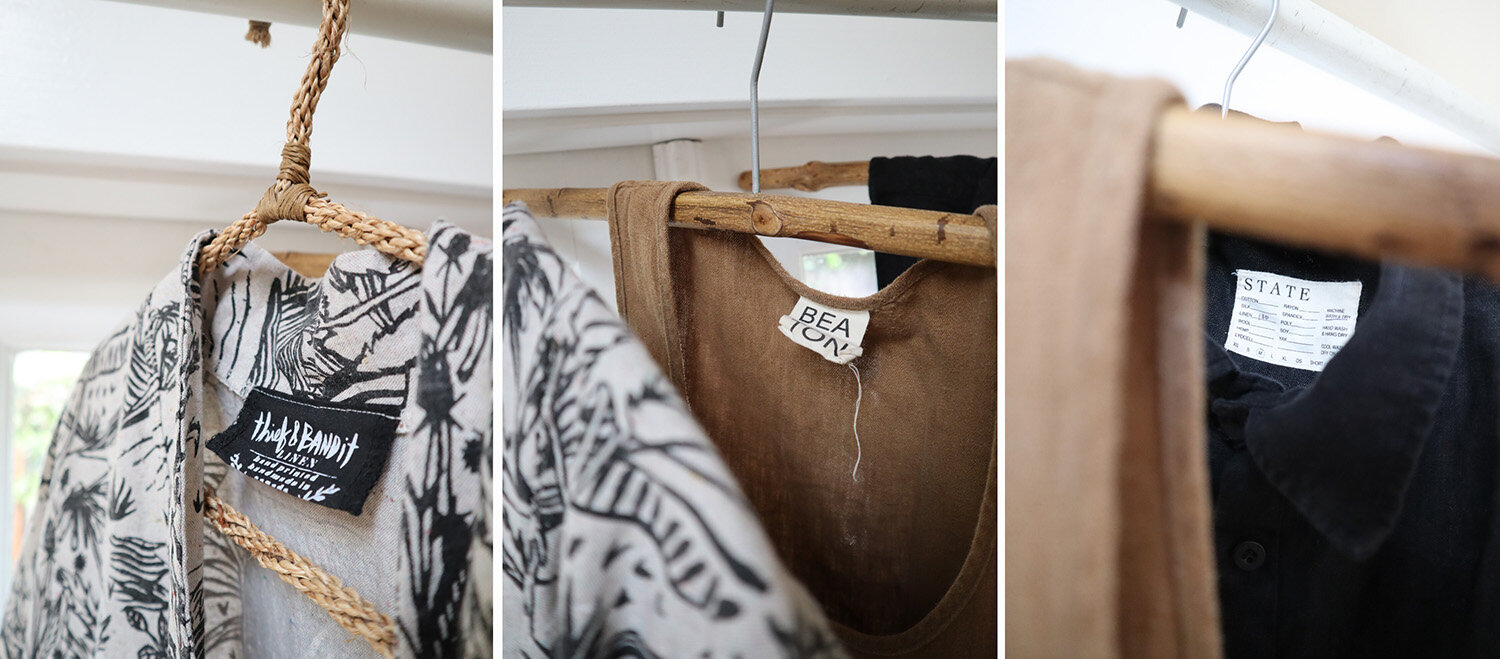
Between photo shoots, work events, speaking engagements and social gatherings, I frequently found myself feeling like I constantly needed a new outfit. I tried a rental service for a while. I think they’re good solutions to reducing fashion waste for many people, but I still found their carbon footprint to be too high for my comfort. I realized that the clothing itself wasn’t the issue— it was my mindset that needed to change. I’ve since found comfort and satisfaction in deliberately wearing the same garments repeatedly on camera and at events. We all know that fast fashion and over consumption of new styles is a major source of pollution — from dyes in water supplies, to transport and packaging, to discarded garments themselves. Plus most people in small homes struggle with wardrobe space, and the best solution is to simply own less clothing. It feels good to strike a truce with yourself and rock the same clothes you wore last week… and last month… and last year… and the year before that.
Toys that replicate safe, every day goods:
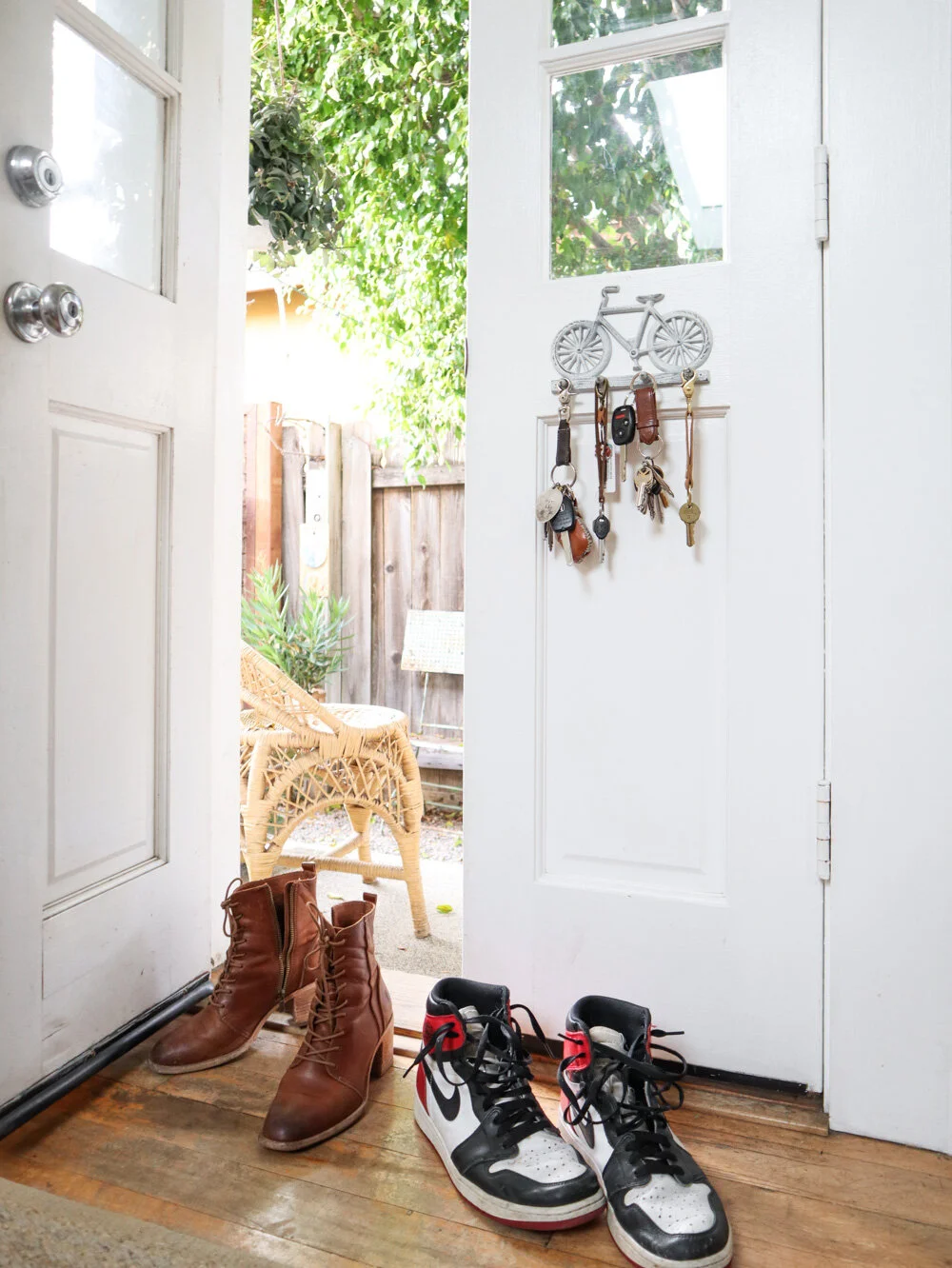
A good friend of mine sent me a photo of a toy lace-up shoe that her daughter received as a gift. The image was captioned: “WHY?!” (Why indeed!) Can we not teach our kids to lace on *actual* shoes? Do we need to mass manufacture fake shoes for this purpose? While we can all surely agree that items like child-safe scissors (which are available as hand-me-downs and second-hand purchases) are obviously well worth it, we probably don’t need items like fake (often plastic!) baby bottles for play when the real things are already sitting here in our homes taking up space— we might as well use them!
Novelty games / activities:
Okay. I liked Tetris and Super Mario as much as any child of the 80s. But to now purchase newly manufactured handheld (plastic!) gaming devices or mini arcade games as novelties when countless games are available on our phones is absurd. And Adam recently told me he saw a (plastic!) mini-golf game intended for use while you’re sitting on the toilet, and a quick web search confirmed that this is indeed available via at least three very prominent international retailers. Our planet is going up in flood and flames, and we’re all complaining about having too much stuff, so let’s convey as consumers that makers must stop producing total junk like this. It’s pointlessly wasteful, and ultimately it just ends up cluttering our homes before cluttering up a landfill.
An entire home gym:
There are many understandable reasons why someone might have a piece or several pieces of work out equipment in their home. (And I imagine that most people who could fit a home gym into their space are probably not reading this blog.) But if it’s not a necessity to you and yours, exercising outdoors or sharing equipment at a gym are simple ways to cut down on the number of large machines being manufactured, packaged, shipped, and — ultimately — discarded.
Catch-all dishes:
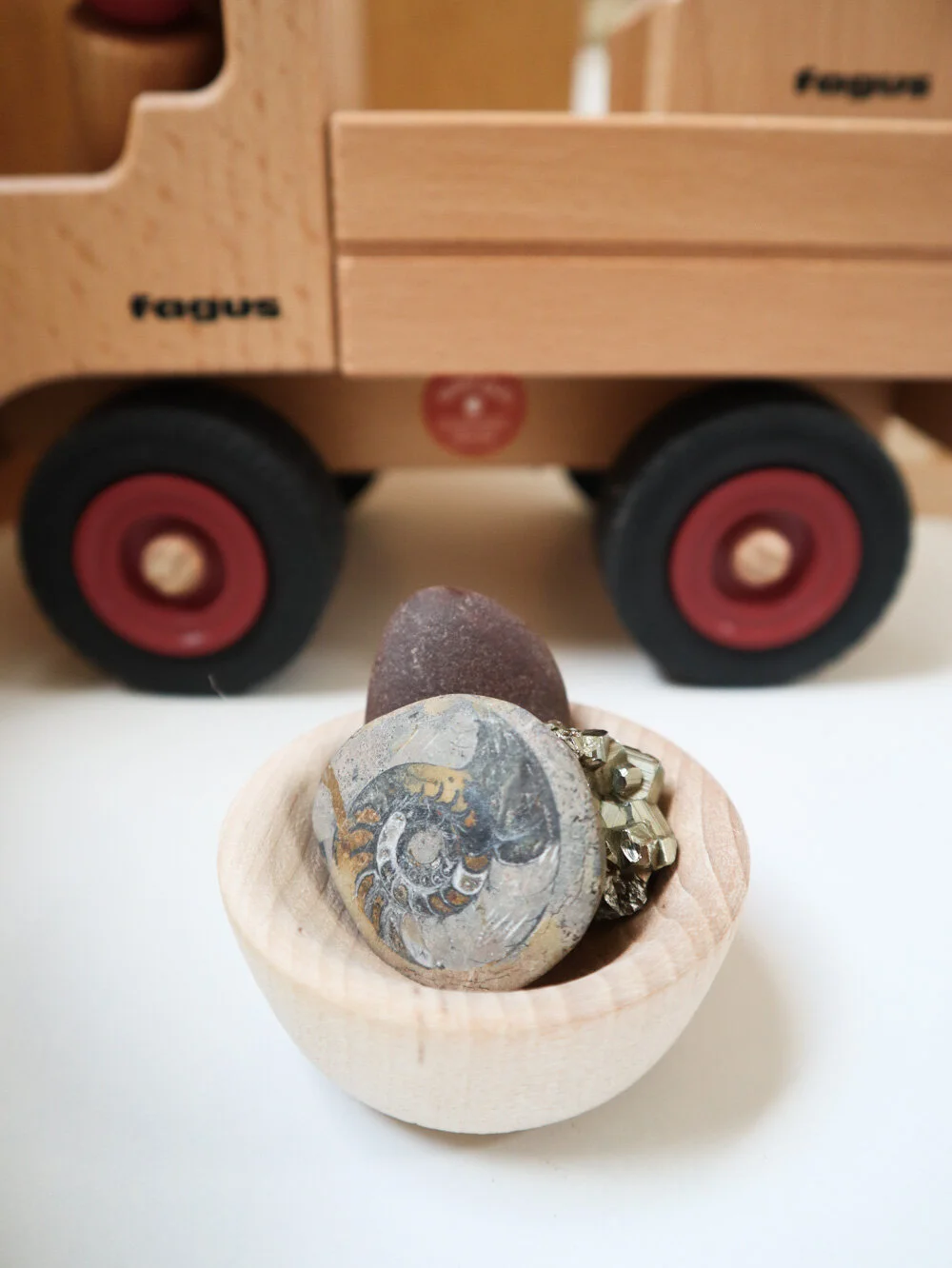
If you’re shopping vintage or supporting an artist by buying their handmade ring or catch-all dishes, great! But mass made valet caddies, ring dishes + holders, and coin trays are things that can easily be made from numerous repurposed items that are probably already available around your home. Or maybe you don’t need them in the first place! (For example, I just put my rings in a safe spot on top of our first aid box when I shower.) After all, items like this take up valuable surface space in a small home.


Nothing "New"
Post Summary: Why I’ve loved photographing the same tiny space for over 8 years, and why “newness” is not the point— especially in this era of climate crisis.
When folks ask me how I’m going to “find new angles” of our tiny house so I can continue to share photos on Instagram, I comfortably reply that I ran out of new angles several years ago (especially since we have built-in furnishings). I honestly prefer it that way, and here’s why:

While I always want to grow, improve, take chances and try different things, one of the aspects I treasure most about our space is that “new” isn’t the point.

The rapid cycle of replacing belongings once the next trend hits is one of the factors contributing to the climate crisis.

For me, the point of showing our tiny home and garden again (and again) is to demonstrate how a small space can continue to accommodate evolving lives over time.

We moved to the cottage in early 2011 as new couple with one dog. We progressed to a married couple with two dogs. And we’re now married business partners with two dogs and a 3 year old child.

Nothing lasts forever, but I’m looking forward to documenting our tiny world as long as we’re here. While it’s not new, it’s ever-changing in my eyes.


Repairing and Repurposing Clothing and Accessories
Post Summary: How repairing shoes and attending Moving Thread sewing classes forever changed my feelings on buying new in an era of climate crisis.
During last year’s winter, we discovered some water damage in the wall of our built-in bed. It wasn’t until months later— when fall rolled around— that we reached for our cold/wet weather boots and realized that half of our shoes had also been harmed by exposure to the moisture.

In evaluating the damage, we had a choice to make: either get rid of all 8 pairs and purchase just 2 or 3 new pairs in their place, or invest in repairing the sets.
As we’d recently learned that about 80+% of donations end up in landfills, we decided to spend on professional restoration. After all, one of my goals for 2020 is to repair and repurpose as many belongings as possible instead of acquire anything new, which is why I began taking sewing lessons— but more on that later in this post.

The repairs weren’t cheap, but they cost far less than replacing each pair, and probably the same price as buying 2-3 new styles. Plus we knew where our money was going; to skilled and friendly crafters who’ve been restoring goods here in West LA for nearly 4 decades.

In chatting with the team at Buster’s on Main Street in Santa Monica, I learned that not only do they repair boots, but they also work on all sorts of leather goods, handbags, luggage, zippers, dyeing and more.

I was eager to share that information, as I’ve seen mountains of bags, coats and suitcases pressed up against the glass in the nearest Goodwill, destined for who-knows-where, and I imagine that shoe repair shops in other communities are likely multi-service like Buster’s is.


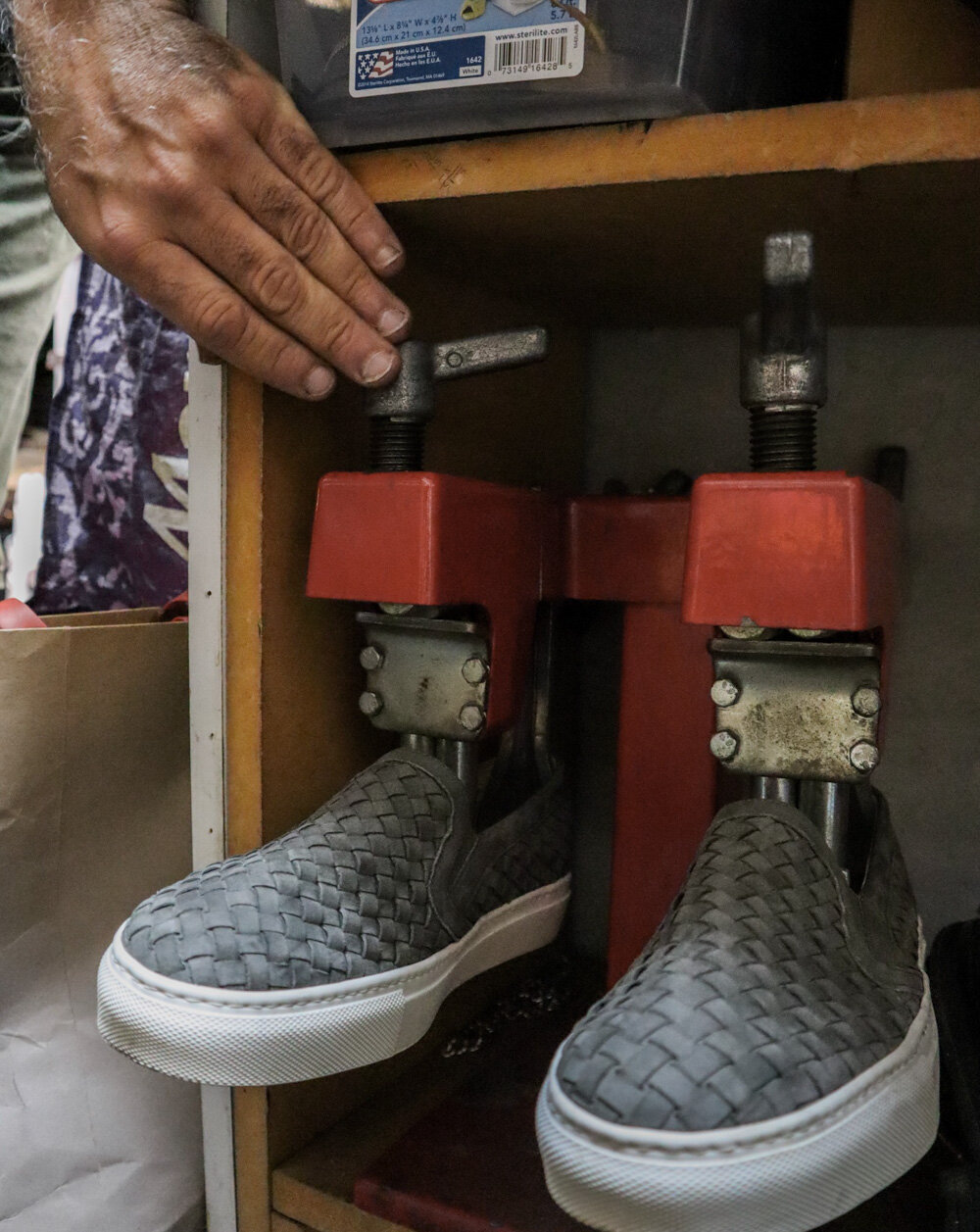


A month or so later when I pedaled the cargo bike over to collect our like-new boots, it was so satisfying to see them all ready to live our a second life, WITHOUT requiring manufacturing, shipping, and packaging like new shoes would have.
Inspired by this, I signed up for introductory sewing classes at Moving Thread. The classes have a maximum of 4 participants each, and are conducted within a beautiful home-studio space in Venice. Lead by Lissa, an expert who has been sewing and designing garments for over 25 years, Moving Thread offers intro and beginner workshops during which students can learn to make their own bags, and ultimately repair or alter an existing article of clothing.
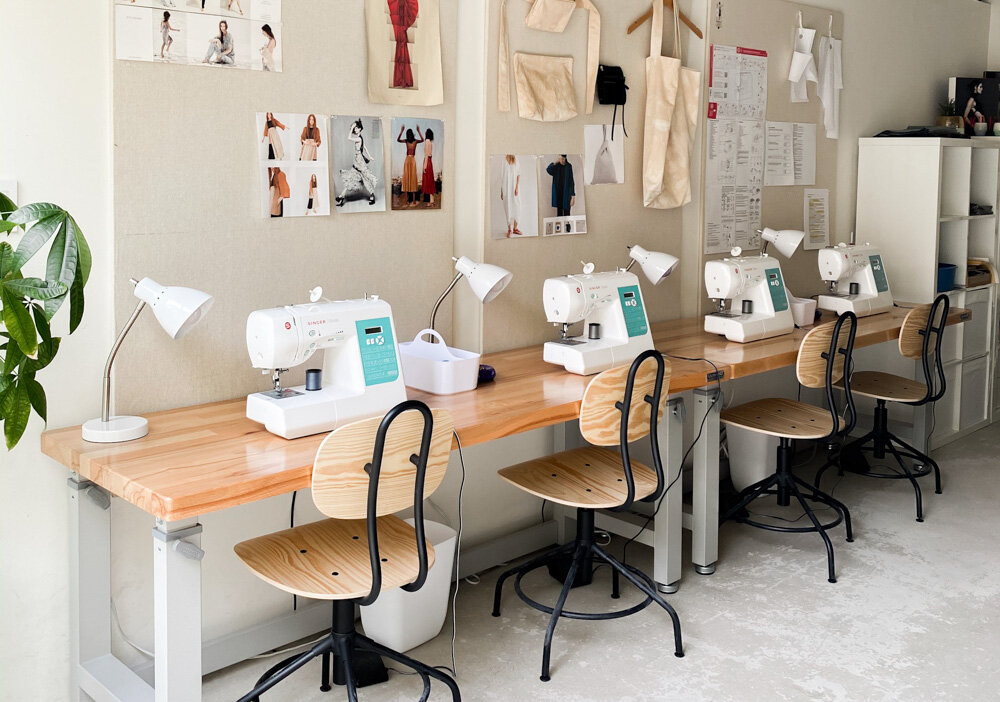
One of the things that struck me about Lissa’s mission was this statement from her website:
“Today, we could all have less. The fashion industry is one of the most polluting industries in the world and a massive contributing factor to global warming. A lot of change needs to be made to undo what we’ve already done but there are some small steps we, as individuals, can take. By repairing or making our own clothes and refusing to buy from companies that don’t do their part to improve our environmental standards is just one bit closer towards a cleaner Earth.”
I signed up immediately.

Moving Thread was one of the highlights of my holiday break. I’m eager to attend a few more classes, and then thrift a sewing machine of my own so we can begin to alter and repair our own clothes and repurpose linens around the cottage.

(On a fun side note, Lissa has a lovely outdoor shower, as well as a cargo bike similar to ours. I feel as though we were destined to meet and become close. She even attended my low waste holiday decor workshop at Big Red Sun, which was such a sweet surprise.)

So, while we’re still not one of those single-mason-jar-of-household-waste-per-year families, I’m determined to get there before it’s too late.

Environmental Benefits of Small Space Living
"I'm a huge fan of small-space living because it forces us to do what larger spaces often discourage: Minimize. It's been proven that America has more self-storage facilities than all U.S. Starbucks and McDonald's combined, and that Americans waste 55 minutes a day just looking for things (that's 3000 hours or 30 days per year). Having less space means we are hopefully buying fewer, better items, using fewer precious resources (including our own time and sanity), and being gentler over all on the planet."
- Ashlee Piper (for The Tiny Canal Cottage)
Author: Give a Sh*t: Do Good. Live Better. Save the Planet.

Oddly enough, as much as I’ve discussed the steps we’re taking to live more sustainably, I’ve somehow failed to discuss outright the general, eco-friendly benefits of small space living itself.

As the planet becomes more and more populated, and as swaths of land become uninhabitable due to climate change, it’s reasonable to predict that small space living will only become more relevant to increasingly larger groups of people.
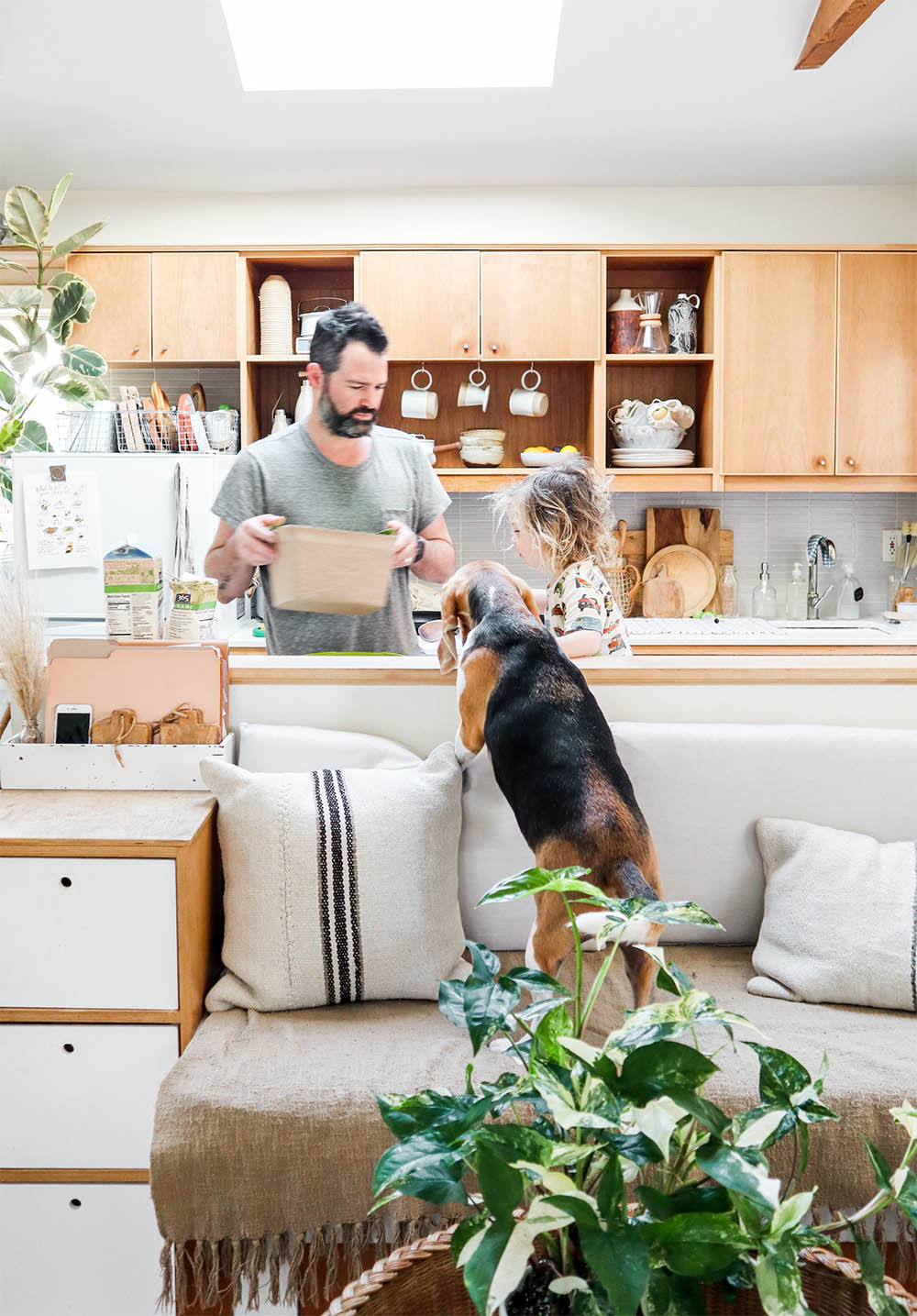
Luckily, small space living can significantly reduce the environmental footprint of your home. From the amount of materials used in crafting a tiny house, to its daily operations once occupied, there are a myriad of ways in which living within a modest floorpan can help you lead a greener existence.

From the start, there are fewer materials to use and transport when building a tiny home, which can widen the possibilities of using more eco-friendly supplies, and lessen corresponding emissions overall.

Similarly, there are far fewer interior spaces to outfit with fixtures, appliances, furnishings and more. This also means that eventually there will be fewer items to fix and/or update. This cuts back on production, transport, packaging, and general waste.

And with less space to furnish and decorate, you naturally curtail your possessions. Thus your overall retail consumption and affiliated carbon footprint can be vastly reduced.

The average American home is about 2,500 square feet, and uses a commensurate amount of energy. Homes in the US account for 38% of the country’s energy usage— and that amount surges to 80% when indirect usage is factored in.* A small space runs on a sliver of energy by comparison. After all— it doesn’t take much to warm up, cool down, or illuminate a 400 square foot home.

The secondary benefits of small space living are not to be overlooked. On a daily basis, this lifestyle encourages folks to get outside and enjoy the natural world and community offerings more.

This means that there’s even less energy being used within the home, as residents are often outdoors (requiring no utilities), or in shared local spots that are serving numerous people. Plus getting outside can have extraordinary health benefits.

Recent studies show that being around natural landscapes can notably reduce stress, enhance work performance, boost healing, and promote relaxation.**

Down the line, all of these advantages can make us healthier, which can mean less time spent in hospitals and fewer goods and medicines required for sustained wellness, all of which helps us lighten our impact on this precious planet.

While our family still has so much to learn on our journey to more sustainable living, it’s encouraging to know that our lil’ Cottage is helping us stick to a positive path.

Sources:
*Give a Sh*t, by Ashlee Piper
**How to Raise a Wild Child, by Scott D. Sampson
Special thanks to Ashlee Piper for generously offering some of her thoughts on Small Space Living for this post. Ashlee’s book is available in e-reader format, as an audiobook, and via paperback: Give a Sh*t: Do Good. Live Better. Save the Planet.