
My Top Small Space Hack
Recently I’ve needed to remind myself of my number one small space hack: STOP ACQUIRING SO MUCH STUFF.

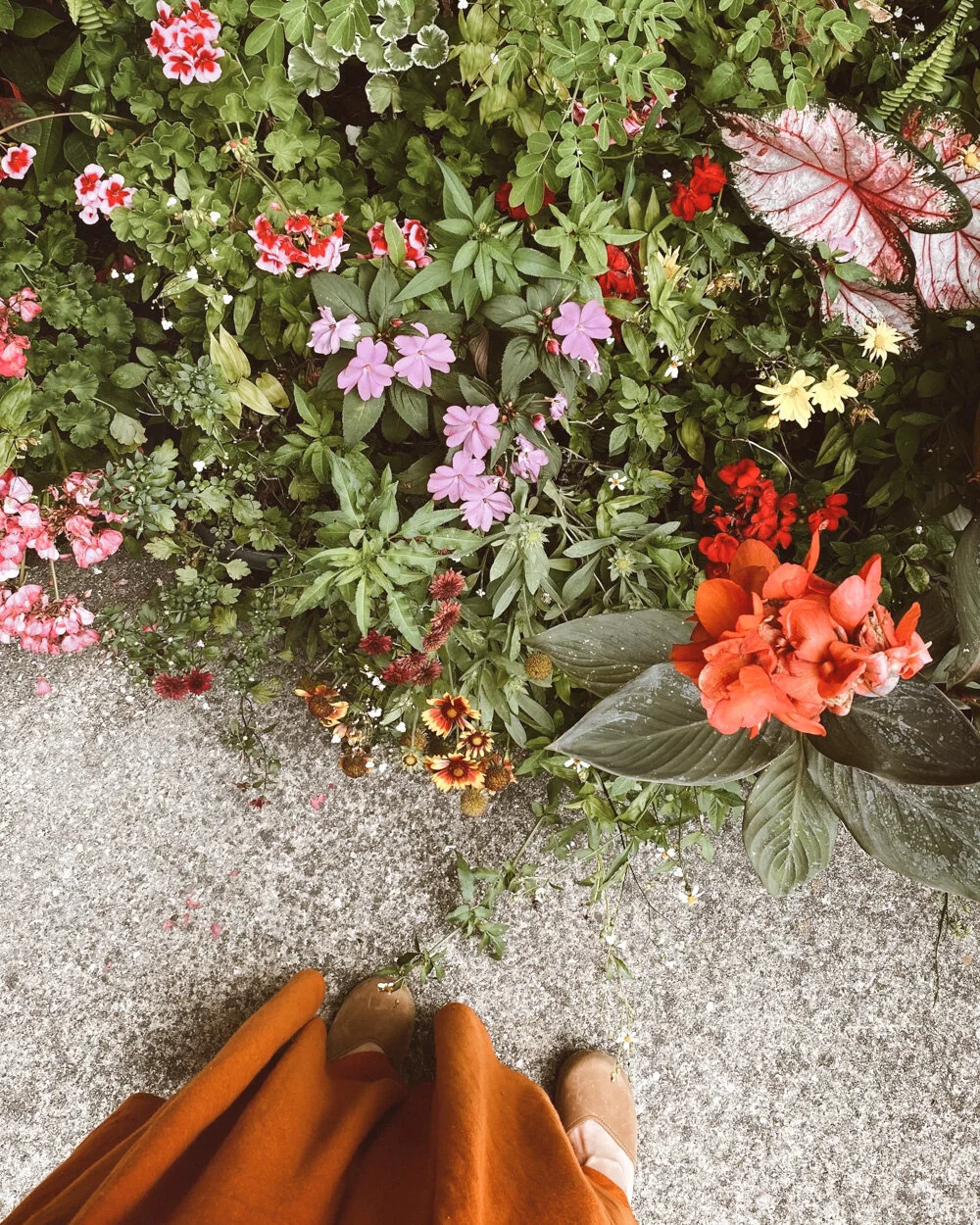
Above: Wearing a “Farm-to-Closet” dress, made with regeneratively grown cotton, from Christy Dawn.
At the end of the day, it’s not actually about nifty organizers and design tricks. It’s about discovering what you need — and don’t need — in order to live comfortably and happily, day by day.

A side perk of travel (even a short overnight trip) is that it can present an opportunity to reevaluate your belongings and true necessities.

• What items in your home can serve multiple purposes, eliminating the allure of obtaining more?
• What nonessentials require all sorts of finite resources to manufacture, acquire, maintain and store… then drain time, money and materials that should be protected or put to better use another way?
As we prepare to experience our tiny farmhouse for the first time, I’ll be keeping these topics at the top of mind. And, in the meantime, I’ll be reading The Afrominimalist’s Guide to Living with Less by Christine Platt.

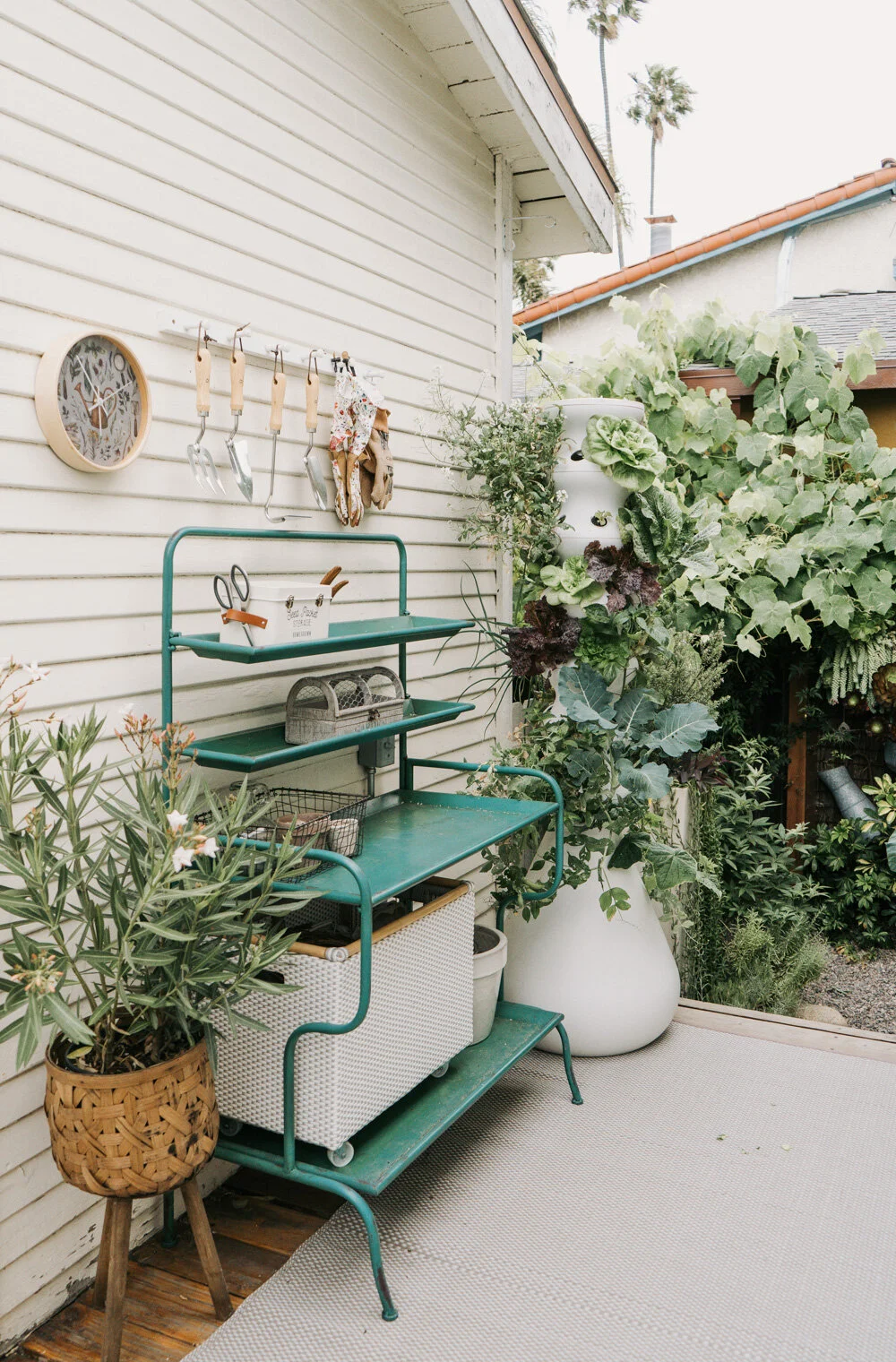
Decluttering & Remaining Clutter-Free for the Long Run (Updated)
Have you ever gone through the process of decluttering and downsizing, only to find yourself slipping back into an overstuffed life a few months down the road? You’re not alone. Every day I receive questions about how to declutter and maintain the results.

First and foremost, I think it’s important to find a dedicated home for everything with which you part ways, as 80+% of donations end up in landfills, and there’s a bunch of privilege wrapped up in the concept of decluttering in the first place.

Secondly, before you declutter, I’d recommend pledging to stop the influx of new, unnecessary goods after doing so. Otherwise the cycle repeats itself, which is no good for your space, wallet, the planet, and the disenfranchised populations who statistically live closer to landfills and toxic manufacturing and waste facilities.

Finally, if an item no longer works for you and can be put to better use with someone else, then letting go is a gift for both parties! I’d suggest asking yourself what purpose(s) each piece serves if any, and then take it from there responsibly.
With that, here are some easy tips for remaining clutter-free for the long run.

Avoid Triggers
Identify your more reckless spending triggers, then take care to avoid them. For example, do you find yourself buying items off social media links or major retail sites when you’re bored, stressed or unable to sleep? Tuck the phone away and pick up a book, meet a friend, or take a walk instead. Do you buy junk at the airport during layovers? Bring your own snacks, bottles and entertainment with you, and don’t even step foot in the shops within the terminal.
Pause Before Purchasing
When online shopping, challenge yourself to wait at least 24 hours before checking out. Chances are you’ll realize that you don’t actually need all (or any) of the items in your cart.
Get One, Give Two
If you do commit to acquiring a new item, try giving away two items in its place. Keep in mind that it’s important to find a dedicated home for everything with which you part ways, as 80+% of donations end up in landfills.
Reduce Opportunities for Impulse Purchases
Once you’ve swapped your common disposable goods (such as paper towels, cotton rounds, cleaning supplies, diapers, and tampons) for reusable options, you’ll have far less shopping to do. And with fewer trips to the store, you’ll have fewer opportunities to make impulse purchases.
Decline Freebies
You don’t need to accept every free item and bit of SWAG dangled in front of you. Just walk away, or use the magic words: “No thank you.” If you still somehow end up with freebies of wellness products or clothing that can be of use to organizations in need, leave the goods sealed/unopened and donate them as soon as possible.
Donating Gifts
If someone gives you a gift you can’t use and/or don’t like, shake off the guilt and donate it immediately. It doesn’t do anyone any good for the thing to rot away in a box under your bed. Pay their generosity forward by regifting the item(s) to a fitting non-profit, local school, etc.
Ask Qualifying Questions
Before you purchase a new object, ask yourself the following questions— you might be surprised by how few items actually clear these hurdles to earn a coveted place in your home:
Do I already own something that serves the same purpose as this new item?
Was this product produced ethically and with sustainability in mind?
Can this piece multitask? (Of course this question doesn’t apply to all goods, but it can apply to many. Multi-functional pieces will reduce the number of items you need in your home, saving you money and reducing your footprint.)
Where will this item be stored when NOT in use? And do I have the space for it?
Lastly, if the piece(s) you’re considering pass all of the questions above, then ask yourself: Is there a vintage or handmade option of this item that I can find locally instead?

You can do it. For your sanity, for your wallet, for your home, for your busy schedule, and — above all — for the planet.
First/key photo from the cottage taken by Lucia Doynel.

Where to Donate After Decluttering
My previous blog post was dedicated to the topic of how to keep homes, apartments, and/or offices decluttered for the long-haul. Once you’ve simplified your space, you’ll likely have a number of items left over to donate.
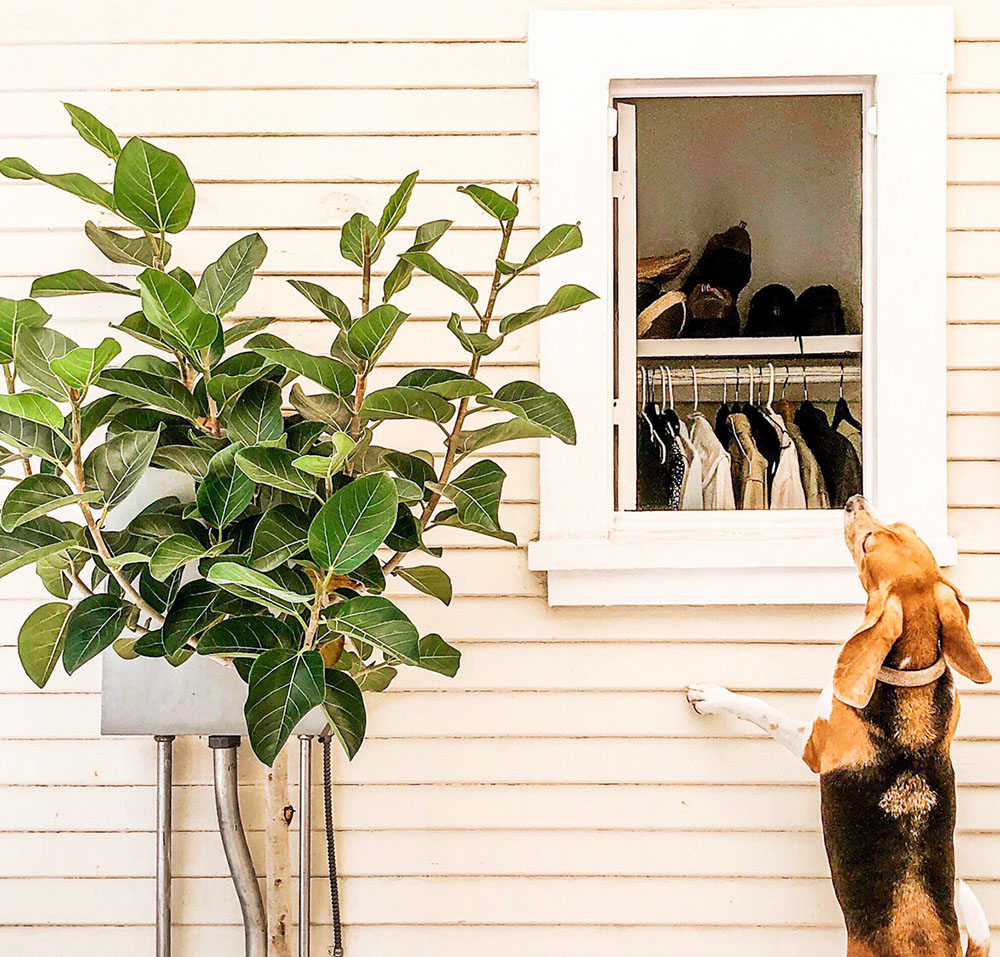
A simple Google search of nearby non-profits can provide you with a list of organizations within your community that might be able to put the goods to use. Just give them a quick call or send them an email to inquire what they need. For those in the LA area, I’ve provided a brief round-up of diverse organizations that accept a myriad of donations, outlined below.
The RightWay Foundation
The RightWay Foundation works with current or emancipated foster youth to move from a point of pain and disappointment to a point of power, productivity, and self-sufficiency.
(323) 903-5021
info@therightwayfoundation.org
Items Needed:
Toiletries
Grooming + Beauty Products
Interview/Workplace Attire, including Bags + Accessories + Shoes
Diapers, Toys and Books (for the young children of the former foster youth)
Mail or Drop-Off:
3650 West Martin Luther King Jr. Blvd. #195
Los Angeles, CA, 90008
(If dropping off, please call (323) 903-5021 in advance.)
L.A. Shares
L.A. SHARES is a nonprofit materials reuse program, which takes donations from the local business community and individuals of reusable goods and materials (both new and used) and then redistributes these items FREE-OF-CHARGE to nonprofits and schools in the City of Los Angeles.
(213) 485-1097
donate@lashares.com
Items Needed:
Office Furniture
Office Supplies
Office Equipment and Electronics
Sports Gym and Athletic Equipment
Musical Equipment
(Click here for a list of items that L.A. Shares cannot accept.)
Pick-Up:
Click here for easy steps to begin donation process and schedule pick-up
Children’s Hospital Los Angeles
Children's Hospital Los Angeles (CHLA) is a 501(c)(3) nonprofit institution that provides pediatric health care and helps our patients more than half a million times each year in a setting designed just for their needs.
323-361-2308
DonorRelations@chla.usc.edu
Items Needed:
CHLA’s patients and families appreciate donated items, including those on their toy wish list and book wish list . You can also donate your vehicle and other miscellaneous items to benefit CHLA. Click here for a complete list of items that the hospital can and cannot use, and to browse drop-off locations.
S.P.Y. (Safe Place for Youth)
Safe Place for Youth’s mission is to inspire, nurture, and empower the resilient human spirit of homeless youth by providing immediate and lasting solutions, one young person at a time.
310.902.2283
info@safeplaceforyouth.org
Items Needed:
New underwear
New or good condition Men's clothing
Gloves
New sleeping bags
Drop-Off:
Monday 10:00 AM - 5:00 PM or Friday 10:00 AM - 5:00 PM
2469 Lincoln Blvd.
Venice, CA 90291
Hav-A-Sole
Hav A Sole’s mission is to provide the homeless and at risk youth population with quality footwear to encourage healthier lifestyles and prevent disease, while fostering a sense of community along the way.
info@havasole.com
Items Accepted:
New + good condition footwear.
Mail Donations to:
10736 Jefferson Blvd. #636
Culver City, CA 90230
Downtown Women’s Center
The Downtown Women’s Center (DWC) is the only organization in Los Angeles focused exclusively on serving and empowering women experiencing homelessness and formerly homeless women. Their mission is to end homelessness for women in greater Los Angeles through housing, wellness, employment, and advocacy. Your donations directly benefit women experiencing homelessness and are an important boost to our programs.
Items Needed:
Clothing & Accessories
Emergency Items
Household Items
Personal Hygiene Items & Toiletries
Arts and Enrichment Activities
Vehicle Donations
(Unable to Accept: Razors, tampons, cribs, strollers, toys, clothing, mattresses, televisions, old computer monitors, large furniture, soiled or broken items, and most food donations.)
Drop-Off
442 S. San Pedro Street
Los Angeles, CA 90013
Friday - Tuesday, 8 a.m. - 2 p.m.

Remaining Clutter-Free for the Long Run
This weekend I conducted a “Living with Less” workshop at Create & Cultivate. Several of the attendees shared that they’d gone through the cathartic (albeit tedious) process of decluttering and downsizing, only to find themselves slipping back into an overstuffed life a few months down the road. This is something I hear repeatedly. So here are some tips for remaining clutter-free for the long run.

Photo by Smith House Photo for Create & Cultivate
Avoid Triggers
Identify your more reckless spending triggers, then take care to avoid them. For example, do you find yourself buying items off social media links or major retail sites when you’re bored, stressed or unable to sleep? Tuck the phone away and pick up a book, meet a friend, or take a walk instead. Do you buy junk at the airport during layovers? Bring your own snacks, bottles and entertainment with you, and don’t even step foot in the shops within the terminal.

Pause Before Purchasing
When online shopping, challenge yourself to wait at least 24 hours before checking out. Chances are you’ll realize that you don’t actually need all (or any) of the items in your cart.
Get One, Give Two
If you get something new, give away two items in its place. But make sure the items with which you’re parting have a dedicated home, as 80+% of donations end up in landfills.

Reduce Opportunities for Impulse Purchases
Once you’ve swapped your common disposable goods (such as paper towels, cotton rounds, cleaning supplies, diapers, and tampons) for reusable options, you’ll have far less shopping to do. And with fewer trips to the store, you’ll have fewer opportunities to make impulse purchases.

Decline Freebies
You don’t need to accept every free item and bit of SWAG dangled in front of you. Just walk away, or use the magic words: “No thank you.” If you still somehow end up with freebies of wellness products or clothing that can be of use to communities and organizations in need, leave the goods sealed/unopened and donate them as soon as possible.
Donating Gifts
If someone gives you a gift you can’t use and/or don’t like, shake off the guilt and donate it immediately. It doesn’t do anyone any good for the thing to rot away in a box under your bed. Pay their generosity forward by regifting the item(s) to a fitting non-profit.

Ask Qualifying Questions
Before you purchase a new object, ask yourself the following questions— you might be surprised by how few items actually clear these hurdles to earn a coveted place in your home:
Do I already own something that serves the same purpose as this new item?
Was this product produced ethically and with sustainability in mind?
Can this piece multitask? (Of course this question doesn’t apply to all goods, but it can apply to many. Multi-functional pieces will reduce the number of items you need in your home, saving you money and reducing your footprint.)
Where will this item be stored when NOT in use? And do I have the space for it?
Lastly, if the piece(s) you’re considering pass all of the questions above, then ask yourself: Is there a vintage or handmade option of this item that I can find locally instead?
Let’s do this— for our sanity, for our wallets, for our homes, for our busy schedules, and, above all, for the planet.

Some Items You Can Probably Go Without - Travel Edition
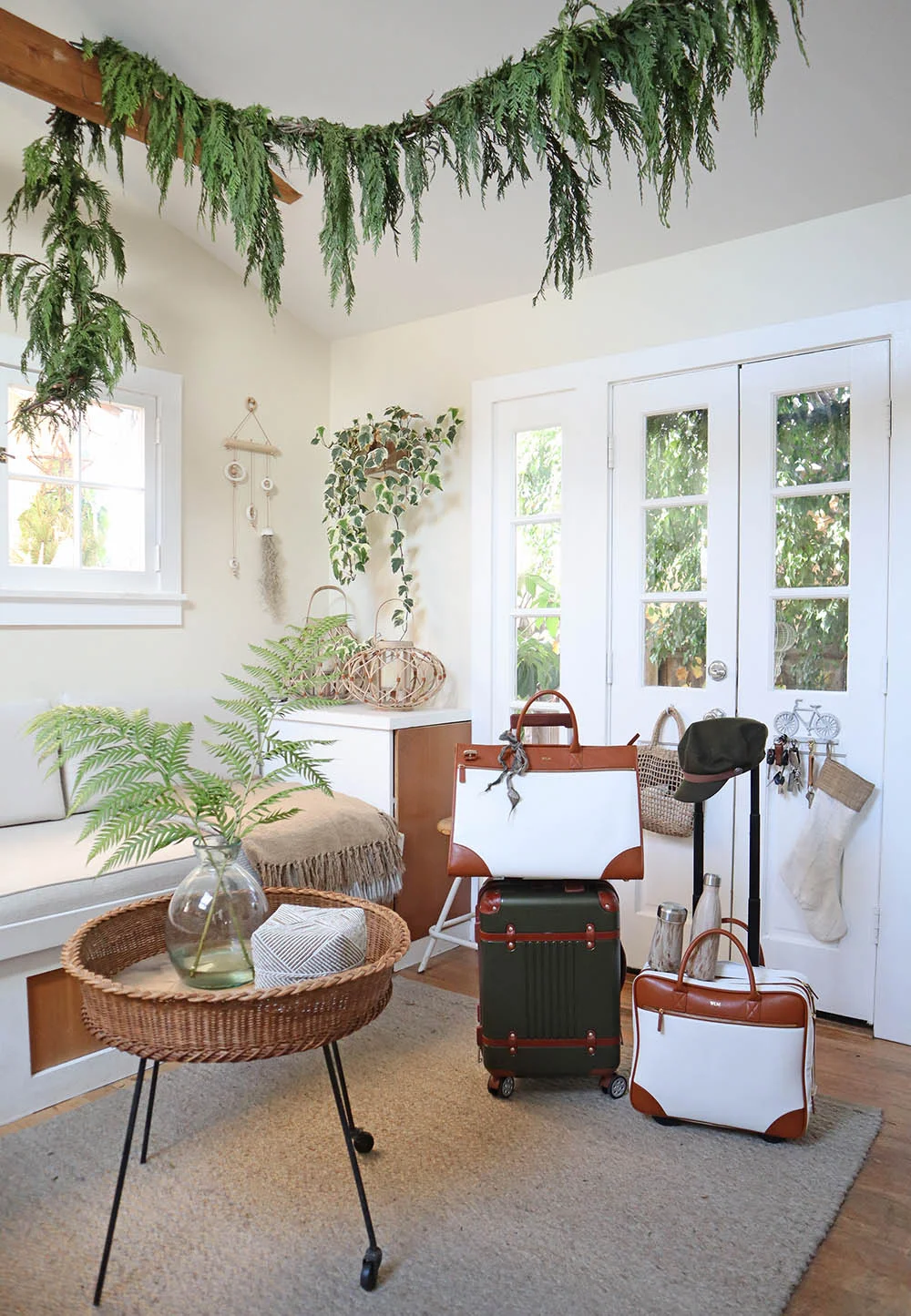
While it's great to share stories about designs and practices that help us live comfortably and contentedly in small spaces, I think it’s just as important to discuss the things that we can happily live WITHOUT— particularly during the holidays, when “stuff” just of all sorts just seems to swell. After all, making a home of a small space isn’t mainly about figuring out how to cram as much stuff as possible into your compact quarters— it’s about experiencing more by owning less. As always, before we jump on in, here’s a lil’ disclaimer: To each their own. While these items might be easy for easy for some folks to forego, they might be gems elsewhere. You know your own needs and space best. Habits shift, tastes change, lives and practices evolve. Design and decor should be different and enjoyable for everyone! The following is just a small sampling of travel items you may want to reconsider. (View all the entries in this series here.)
Neck Pillow
These silly things always, always make me laugh… until I imagine how many are likely disposed of between trips, and how many new ones are purchased daily. Try rolling up a scarf or a sweater… or dare we simply make-do with ever-so-mild discomfort for a few hours and then move on with our clutter-free lives.

Luggage Scale
If you have a regular scale at your home, then you have a luggage scale. If your bags are hard to weight by themselves, just weight yourself with each suitcase in your arms, and then subtract your weight sans-suitcase. My 5 year old nephew can manage it— you got this.

The Overzealous Skincare Routine
At home and on-the-go, I used to use an obnoxious (and expensive + space-space-consuming) number of products: makeup remover, face wipes, cleanser, toner, face oil, serum, add-in powders for the serum, moisturizer, under-eye cream, sunscreen, and primer. It was absurd, costly, cumbersome, and wreaking havoc on my skin. I’ve since updated my routine to something simpler and less wasteful in terms of spending, packaging and space. View my post about it here.

Disposable Makeup Remover Wipes
I was guilty of keeping a stash of these disposable goods in my bedside drawer, in the medicine cabinet, and in my travel toiletries pouch for years. Then, recently, we were paddling down the canals and I saw a crane pecking the discarded plastic packaging from the same product. So… no more. I now have three reusable makeup remover pads, which can be washed up to 200 times each. If I’m wearing particularly stubborn eye makeup after a en event or shoot, I just use a bit of coconut oil on a washable cotton round and it’s managed.


Pre-Packaged Travel Convenience Kit
These drugstore kits are usually filled with plastic bottles containing filler-laden formulas with toxic ingredients. And, most likely, you probably don’t even need (or want) all the products, but accept them as a bundle. Invest in a few reusable travel-sized bottles and containers instead— then just syphon off an appropriate amount of your everyday necessities within them and go. Sample sizes work well for this, too.

Passport Cover
I’m not going to lie— we have these. I bought a handmade trio for our first trip out of the country with West, simply because I was so excited about the journey. But it was silly of me. As long as you keep your passport safe while at home and on the go, you don’t need a dedicated cover. And, according to NPR, e-pickpocketing by RFID-hackers can be blocked by wrapping your wallet, cards, or passports in aluminum foil when you’re in places in which they’re potentially more vulnerable. (Consumer Reports claims that this works just as well as most RFID protectors on the market.) Our passport envelopes are pretty for sure, but we really only see them for a minute or so per year. I should’ve taken that bit of money and put it into West’s education account instead.

Conversation Cards
What? No. These are on par with neck pillows. Don’t be fooled into thinking that you require a deck of cards to carve a path through your social interactions during long rides.
Airplane Footrest
Some people have injuries and conditions that require special gear for travel. However, if you don’t have a medical issue, then you probably don’t need things like airplane footrests. Can you prop your feet on your under-the-seat bag or nearby hardware? Can you perhaps walk up and down the aisle, or do some basic stretches if you get achy? I have faith that most folks can make-do without their own suspended footrest.

“Shoe Bags”
I wrap up my shoes when I travel, but I do so with washable canvas totes, cotton drawstring sacks, or even the unfortunate plastic bags that still come with various deliveries. (Does your dry cleaner wrap your attire in plastic, even when you’ve asked them not to? You might as well get some more milage out of it all… better than just throwing it directly in the trash, right?)

Compact Blanket
These dedicated blankets roll up tight into their own clever little built-in pouches, but they’re likely unnecessary, and usually manufactured in conditions and with materials much like fast-fashion apparel. Just use your coat or an oversized large scarf when you get a bit chilly in-flight or on a drive. Adam, West and I wear our larger LSA scarves (as seen above in a photo by Sebastian Artz) when we travel for this exact purpose.

Above: Folks always ask how we get the pups to pose. We don’t. We just catch them doing what they do best: adorably photobombing.
Travel Accessories With Which I’m Unapologetically, Totally on Board
I personally like the following because I use them to stay organized every day, whether in our tiny home or when we’re away:
Dock-A-Tot & Carrying Case (We used both sizes of these constantly until West was about 18 months old.)

Roundup: 5 small ways to start decluttering
Feeling the need to declutter amidst all the holiday layers and gifts? It's easy to get overwhlemed quickly, so start small, tackling one compartmentalized topic/area at a time. Here are five easy ways to get going:
Sewing Kit
Unless you sew on a regular basis, there's probably no need for an entire box of spare buttons, thread, and so forth. A simple jar or pocket-sized tin can most likely contain the basics that most folks need on-hand to repair slight tears and loose hardware.

Hangers
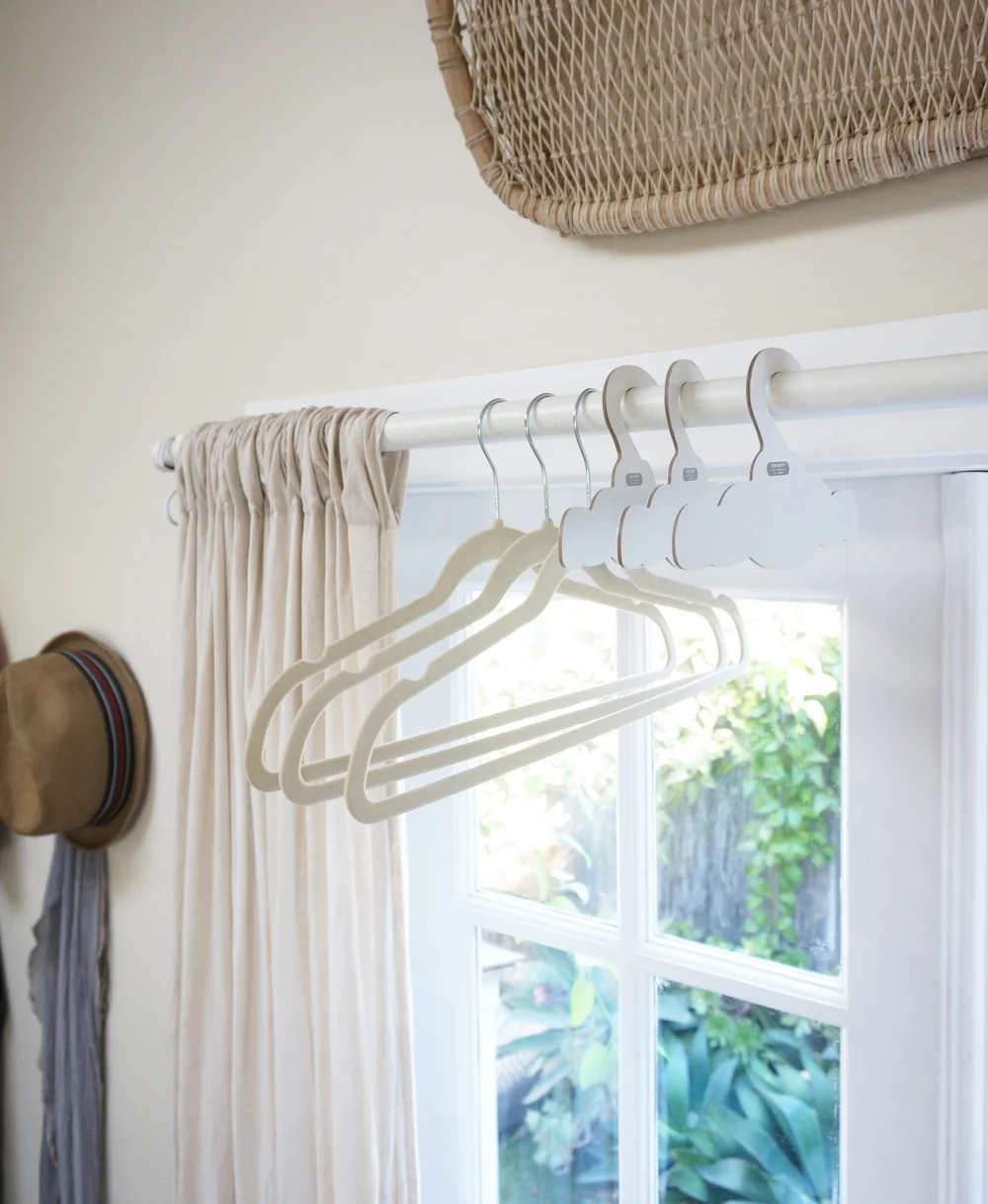
While it clearly helps to reduce the number of items in your wardrobe, don't forget to take a fresh look at the closet itself. Cleverly designed, slender, no-slip hangers can help your clothing last longer, while also freeing up much-needed space on the dowel. (Just round up all those old wire and plastic hangers and recycle them at your local dry cleaner.) If you have children's clothing that needs to be suspended as well, opt for recyclable cardboard hangers, which you can drop in the blue bin once your kids outgrow them.
Receipts
This project takes a bit longer, but it's an easy task to plow through while you chat on the phone, listen to podcasts, or watch a movie. For those of us who don't need to keep physical paper receipts and can use digital copies for our business and personal record-keeping purposes and taxes, a slim, speedy scanner can eliminate binders (or even boxes upon boxes) of old paperwork, freeing up surprising amounts of storage space in the home.

Desk Drawer
It bugs me that most pens and pencils-- along with other miscellaneous office supplies-- are sold in multiples. Why buy (and store) a dozen duplicates of something when you only need two or three? Consider donating your excess office items to a public school, and just rely on the small number of high-quality, beautiful, practical items that you actually need. Eliminate duplicate charging cords if possible as well, and check your local resources to find tech waste recycling options. Try keeping everything easily accessible and well organized via zipper pouches, or in kits primarily designed for travel use.

Cabinet Beneath the Sink
For years I've intended to make my own cleaning supplies in order to save space. But I have to admit that I just never get around to it. I do, however, make sure to manage our bottle build-up, keeping only what we need regularly on-hand. I don't buy in bulk, and I always make sure that we have no more than what can fit into our small upcycled cleaning crate or repurposed garden caddy. This ensures that we actually go through all the products in our home, rather than losing track of what we have and buying duplicates while older bottles expire and go to waste. Go through your cleaning and beauty items and get rid of anything out-of-date or unhealthy. You'll most likely find that you'll be more mindful of your future purchases once you've taken the time to organize your products back at home.

These are small steps, but in a tiny home or apartment they'll make a difference. And just remember to go easy on yourself-- it's the holiday season! Let's spend less time worrying about our stuff, and more time with our families, friends and/or communities.

Tiny Updates
With the Cottage nursery finally set up (see previous posts), I wanted to make a few minor updates around the house to allow the spaces blend together a bit more seamlessly.

My main resource for the updates was Couleur Locale. I love the neutral, Earthy tones and textures of their products:

New grass fringe lampshade, as we thought the bare-bulb would be a bit too bright for the baby.


New coconut tea light holders (for real and faux candles, depending on context) and bowls. This way we won't have to worry about glass or porcelain holders breaking once the baby begins to grab things.

New rattan wicker baskets for decor and market goods:


New handmade bedspread from World By Hand:

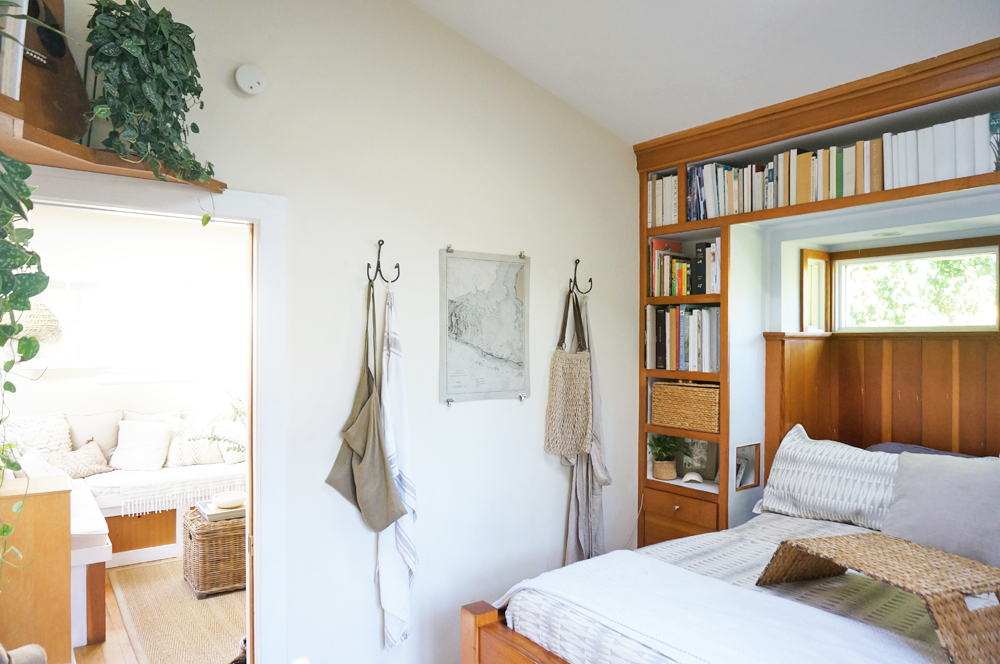
New anchor hooks for the bedroom, to match the subtle, nautical theme in the closet nursery:

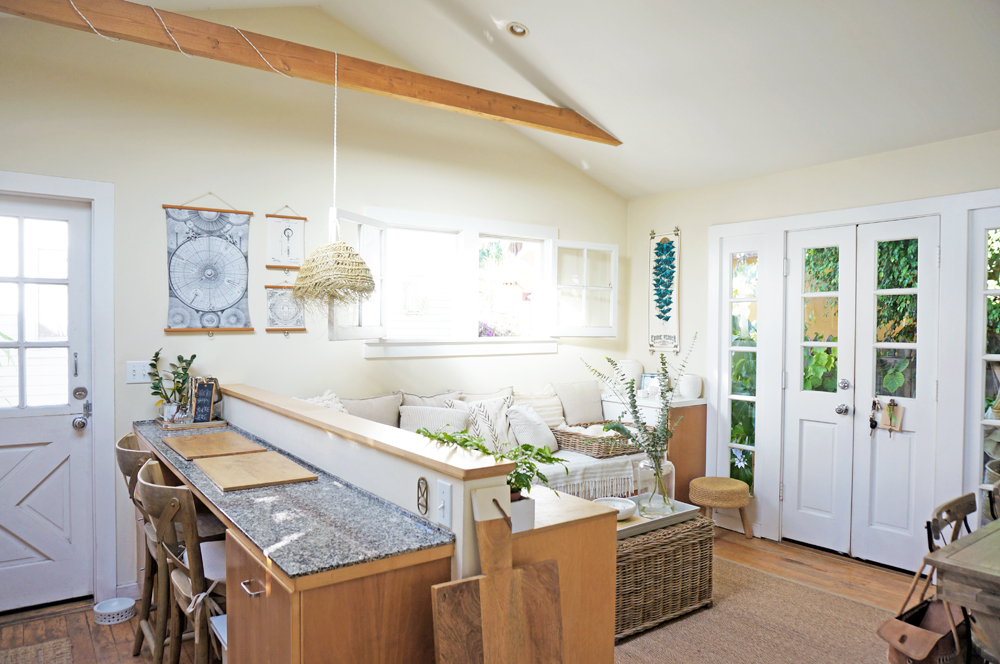
New stools with backs-- we want to feel more secure and supported when holding the baby during our meals at the breakfast counter:
And a few more little accessories, here and there:
Tiny House Closet Nursery - The Garden Shed Wardrobe
When Adam and I decided to have a child, we knew we wanted to stay here in our tiny home. As we already share the space with our two dogs and my small business, we knew it would be a challenge to add a nursery to the mix, but we were so excited to make it work. Given our budget, we basically had two choices when tackling the nursery project in our tiny house:
Leave nearly everything as-is, downsize our belongings in existing storage spaces to make room for baby care necessities, and rely solely on mobile/rolling nursery components.
Create a dedicated nursery within an existing space by downsizing and relocating our other belongings from that area.
We went with option two, because thanks to the sunny, dry SoCal climate, we knew we could get creative with indoor/outdoor lifestyle and storage solutions. (If we lived somewhere that gets a a fair amount of rain or any snow, we would've stuck with option one.) We decided to convert our bedroom closet into the nursery, by downsizing and relocating part of our wardrobe to a 2'x4' cedar garden shed from The Home Depot.
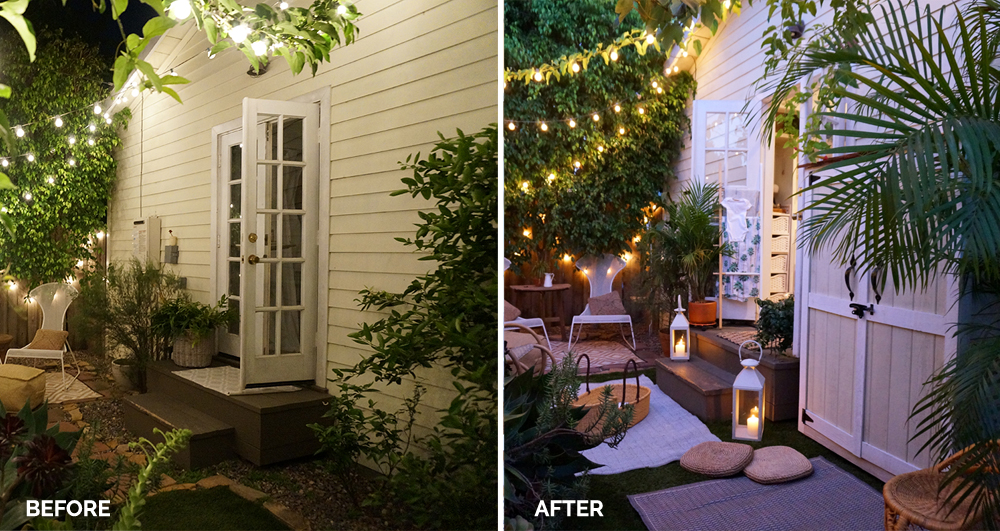
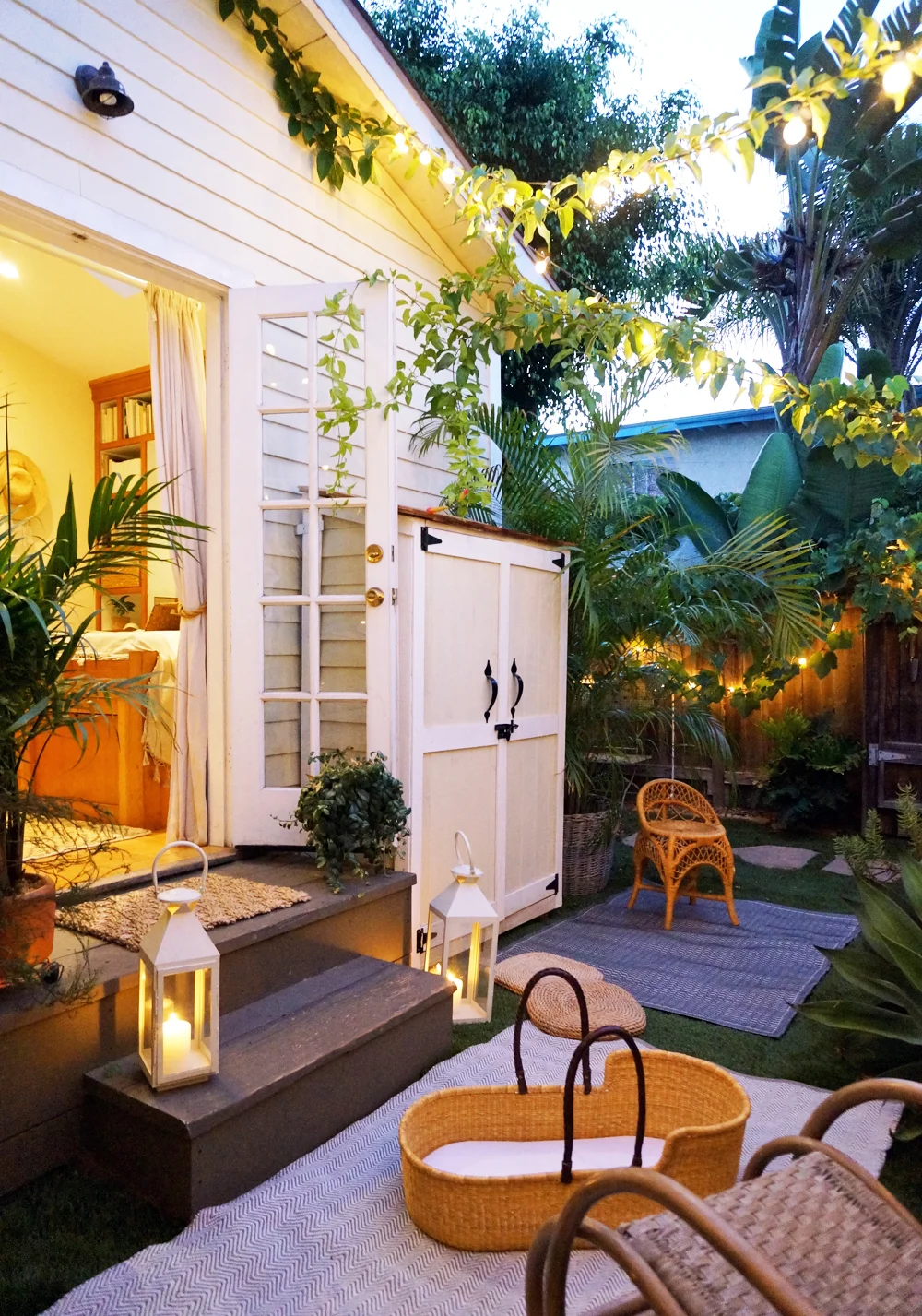
It's important to note that it VERY RARELY rains in Los Angeles, and the weather usually hovers somewhere around the 50°s to the 70°s. As such, our patio furniture stays outside and uncovered year-round, while select garden decor and accessories come indoors in the unusual event of rain. We've been using our outdoor spaces in this manner for over 5 years now, which gave us the confidence that we could pull off an unusual outdoor closet solution. Here’s how we did it.
DOWNSIZING
While storage solutions are obviously important in homes of all sizes, the clearest path to living simply is to not own too many things. While we extended our usable storage space at the Cottage via our new 2x4’ shed, Adam and I were able to make the wardrobe relocation project work by getting rid of nearly 1/2 of our clothing. Giving away belongings is second nature to us now, but it definitely took some practice at the beginning. For those of you struggling to let go with your unnecessary belongings, I recommend exploring The Life-Changing Magic of Tidying Up by Marie Kondo. (Try reading the digital version rather than the print edition and VOILA! You’re already on the path to reducing your physical possessions!)
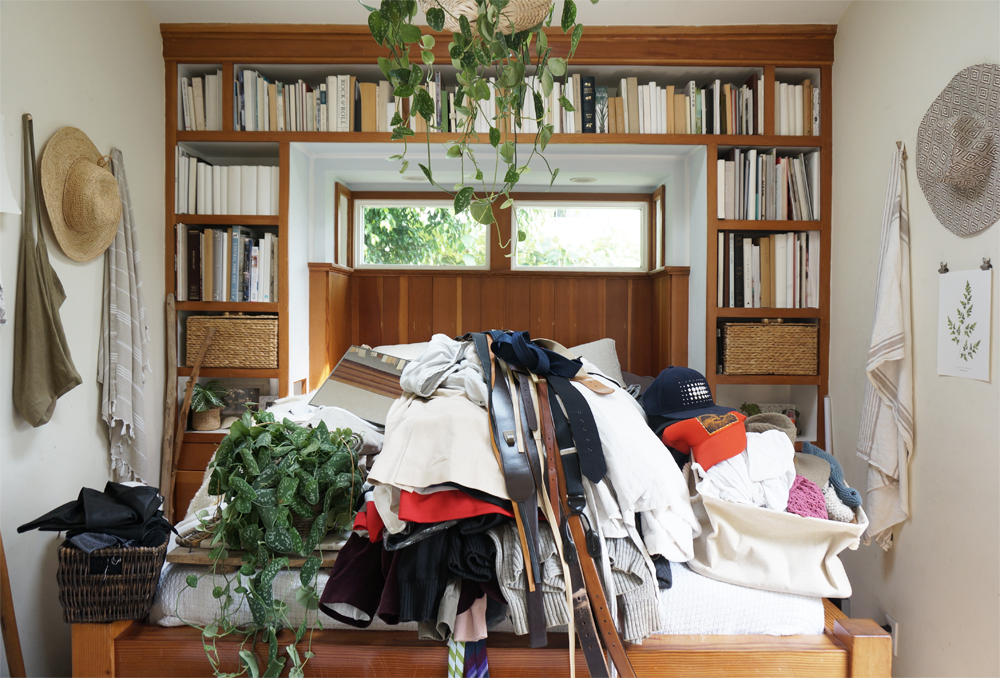
We removed everything from our shared closet, and created four piles:
The Giveaway Stack - I keep a folding bin from The Home Depot’s décor brand, Home Decorator’s Collection, in the laundry unit we share with our neighbor. Adam and I place our donation items in the bin weekly, and then drop its contents off at Goodwill and/or our local community housing organization about twice a month. We filled this bin (along with several other bags,) when cleaning out our closet for the nursery. I found that the start of my third trimester was the ideal time to tackle this undertaking. I hadn’t been able to wear my “regular” clothes for months due to the baby bump. It was therefore fairly easy to assess what I missed and needed, vs what I did not.
Infrequently Used but Useful Clothing - We put our winter/travel coats, scarves and other such infrequently used but handy clothing in two plastic, lidded storage bins. (The bins are now stowed at the bottom of the shed, beneath our hanging clothes.)
Weekly Wear to Hang - I had about 18”w of hanging clothes (dresses, tunics, etc) that needed to remain on hangers. We suspended those in a cedar wardrobe from Home Decorator’s Collection within the new shed, alongside Adam’s work shirts and sweaters. (Photo below.)
Daily Wear to Fold - I eliminated everything I didn’t need, and fit all of my daily casual dresses, tops and pants into one of the two trundle-drawers built into our bed. (Photo below.) The neighboring trundle was, and still is, our hamper. Adam bested me by downsizing his clothes even further— he managed to find a home of the rest of his pieces in the drawers that are part of the bed frame, beneath the bookshelves on his side of the bed.
We now keep all of our shoes in the built-in cubbies beneath the couch. (Photo below.) Socks, swimwear and underwear fit into the drawers that are part of the bed frame, beneath the bookshelves on my side of the bed


The fun (yet tricky) part of this project was finding a shed that was juuuuuust riiiiight for our little garden. We didn’t want to build on to the house— we just needed a simple shelter that was about 2’ deep by 4’ wide by 6’ high. Luckily we found this shed from The Home Depot, which was the perfect size for our needs:
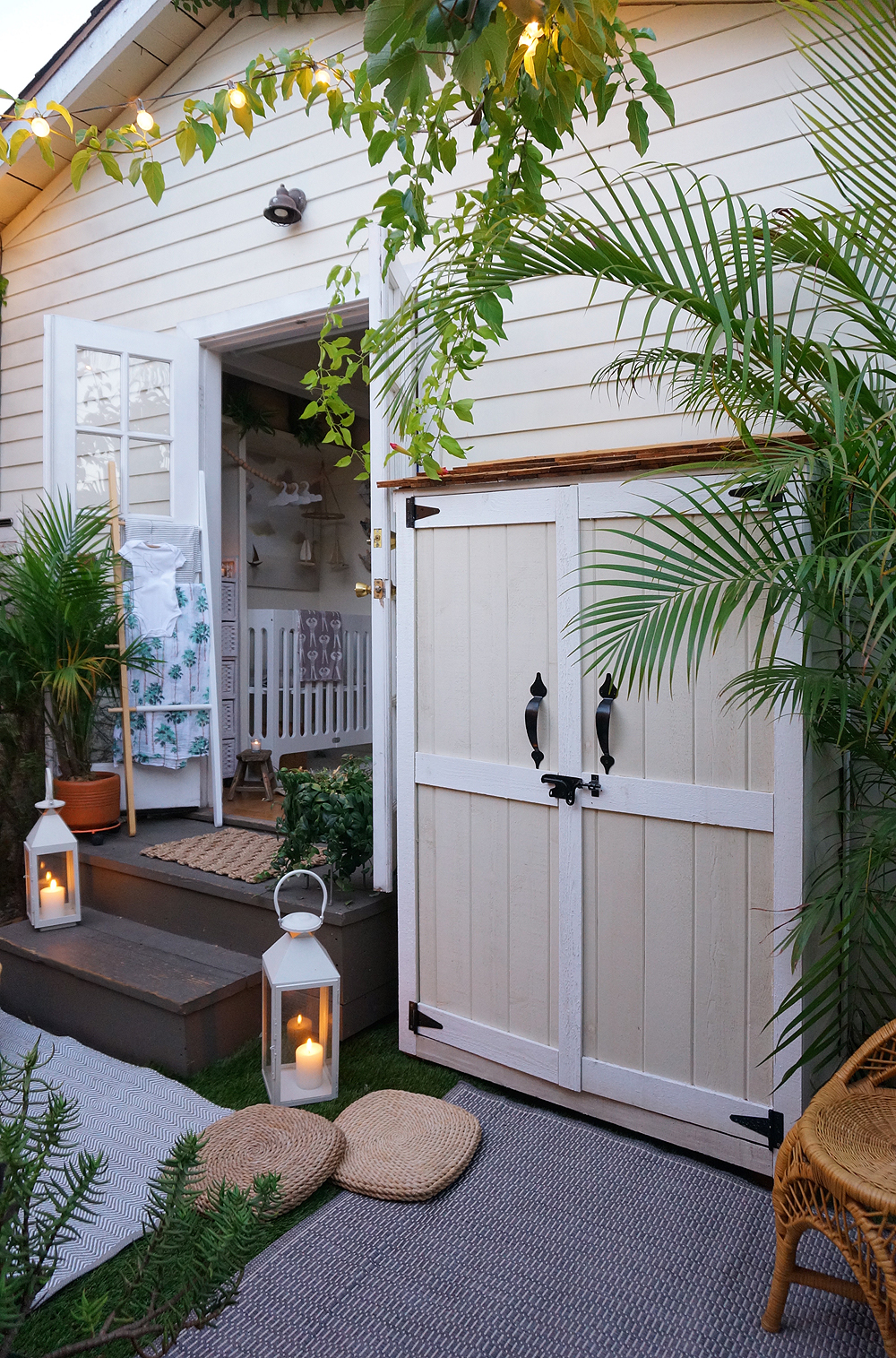
We carefully weather-proofed the shed’s seams, and painted the exterior to match the Cottage with contrasting Behr Paint colors on the panels and trim. Next, we installed a custom-cut dowel rod for our hangers, and selected this cedar wardrobe in which to stash our hanging “weekly wear.” Lastly, we secured the shed to the side of the house for safety, in case of earthquakes.


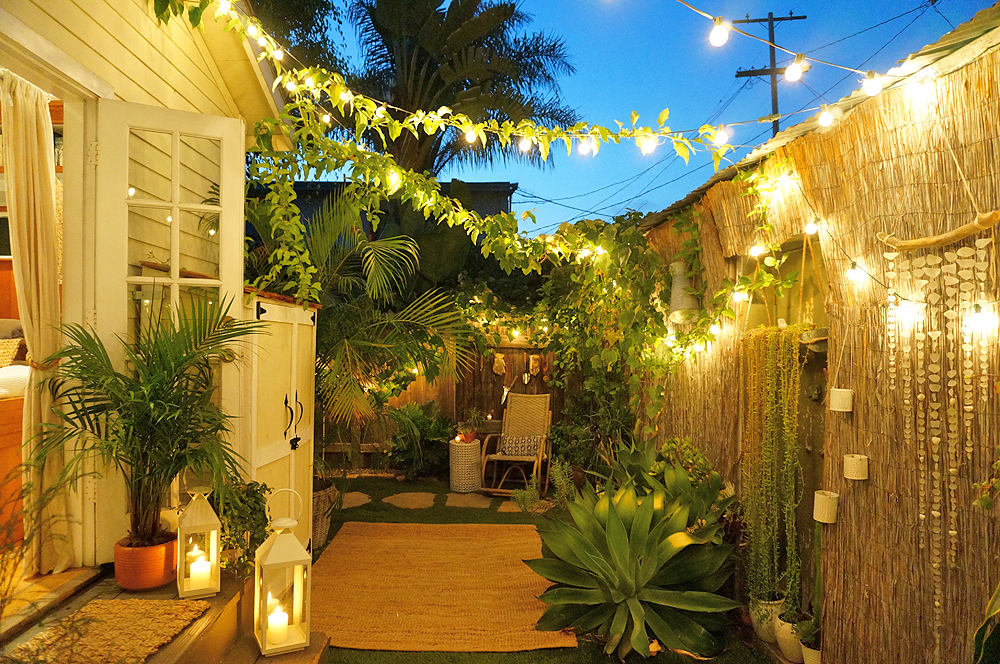
The entire process took about a day, from unpacking the shed at the start, to hanging up our belts and hats at the finish. We added some accessories— such as this outdoor rug— to make this part of the garden feel more like a room, and to tie it into the nursery’s outdoor lounge area.
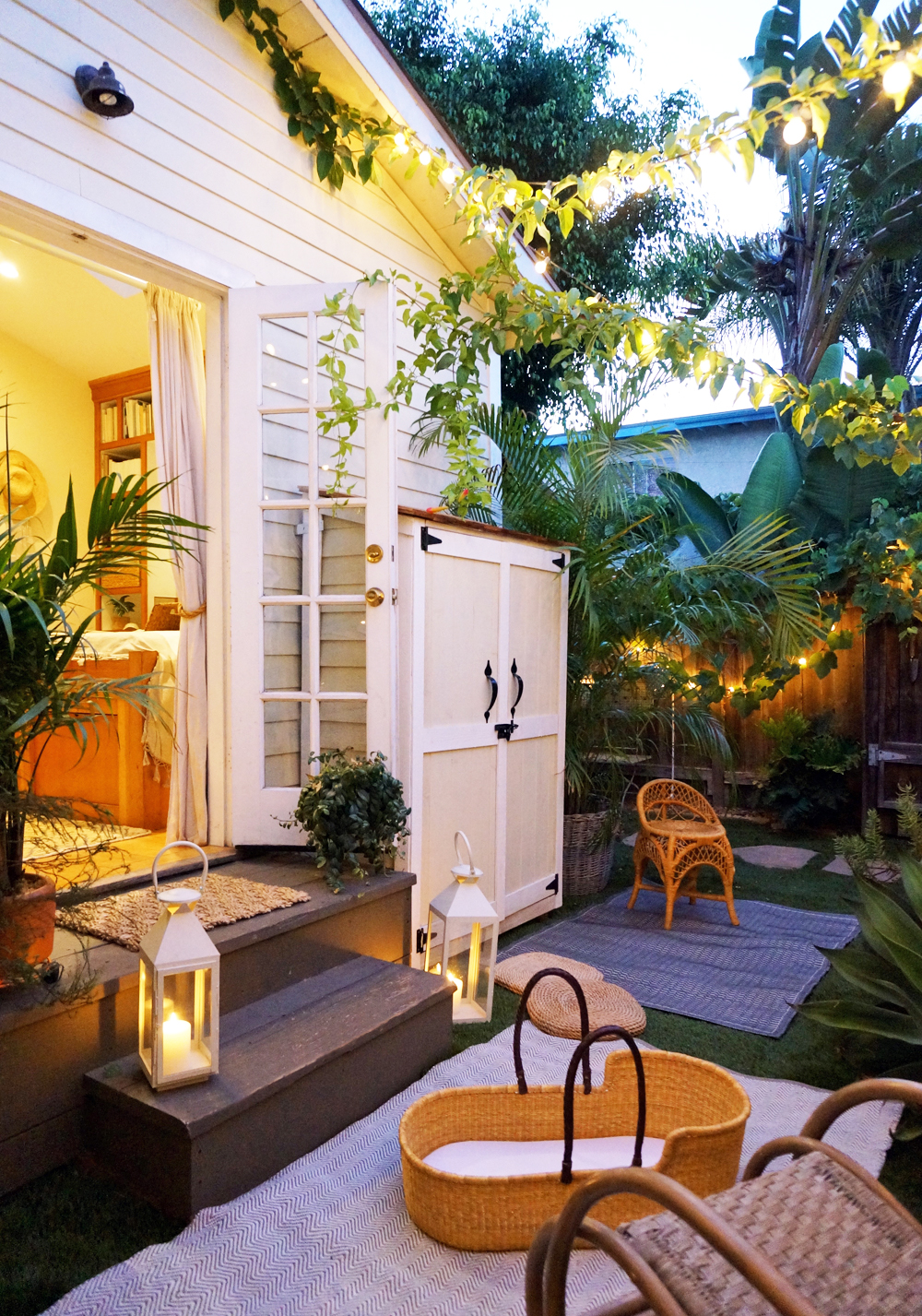
The shed is only five steps from the bedroom closet, so it’s no inconvenience. Adam and I joke that our clothes are probably actually better protected now that they’re living outside in a sealed shed and garment bag, seeing as how we keep our house wide open 10 months out of the year. Our clothes have pretty much been living an indoor/outdoor lifestyle for 5 years anyway!
I acknowledge that The Home Depot is partnering with me to participate in this nursery makeover project. As a part of the project, I am receiving compensation in the form of products for the purpose of promoting The Home Depot. All expressed opinions and experiences on this blog are my own, and are written in my own words. My post complies with the WOMMA Ethics Code and applicable Federal Trade Commission guidelines.
The Cottage Bath
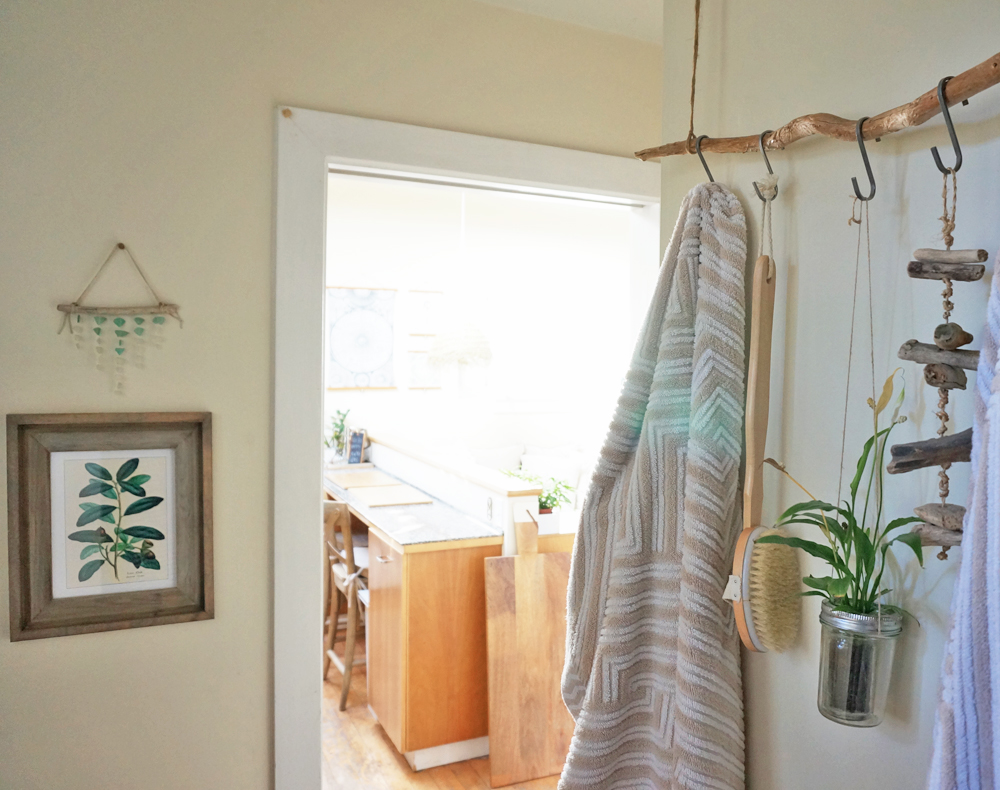
Lately, we've received numerous requests for photos of the Cottage bath. While the room is actually larger than you might think, it's designed in a way that makes it tough to photograph, meaning we have very few images available:
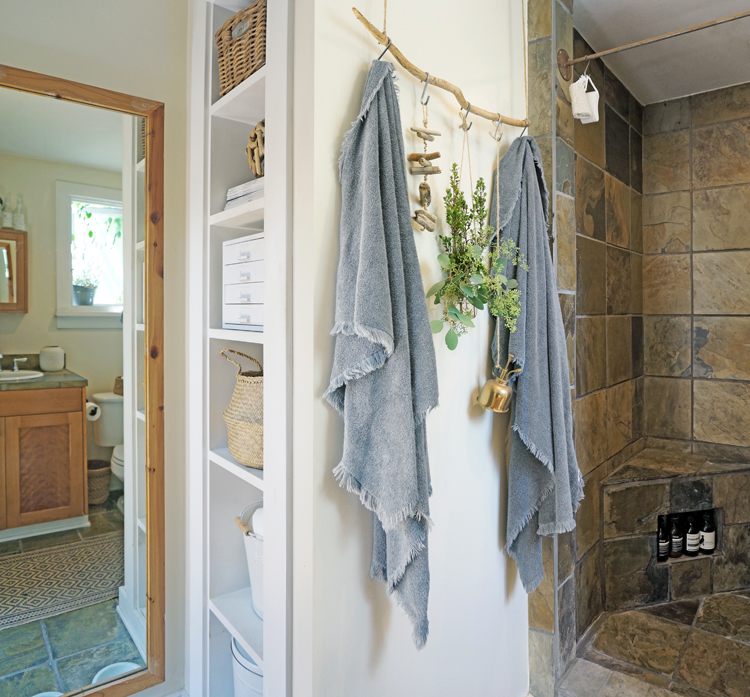
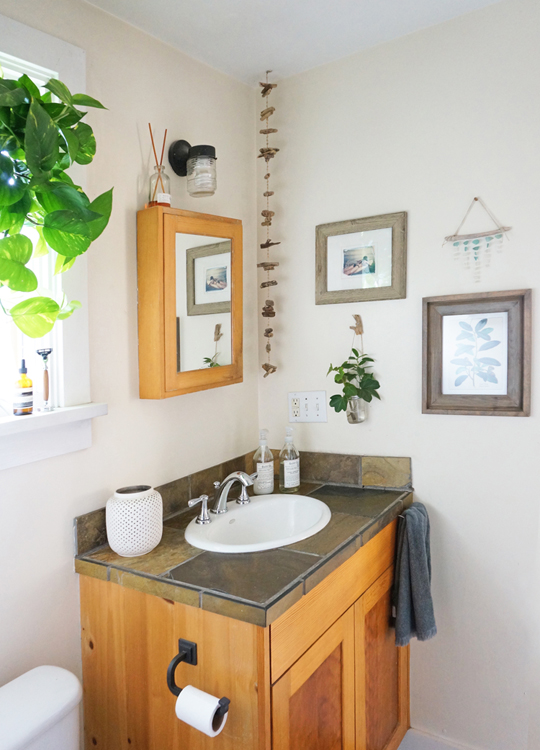
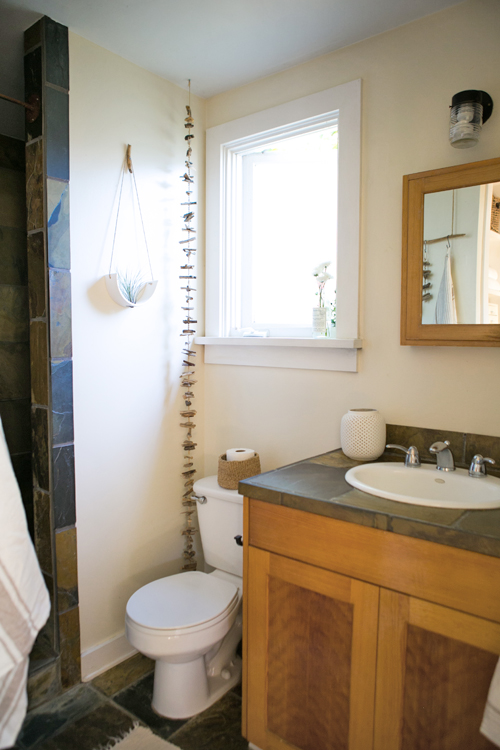


I'm often asked how we keep the bathroom organized and uncluttered, given its small size. Here are some of my top tips:
Only buy what you REALLY need:
I know this sounds basic, and it is. But controlling what you bring into your home is the best way to avoid accumulating clutter and wasting your money. We have ONE shampoo dispenser. ONE pet wash. ONE body wash. Etc. You don't have to come up with creative storage solutions when you don't have too much to store in the first place!
Upcycle:
I keep my makeup in an old metal hardware drawer set that I found on ETSY (reference: photo #7). I spray-painted the box, applied liners to the base of each drawer, and used the original metal hardware organizers within the drawers to keep my palettes and tools separated and easy to find.
Functional decor:
If you have limited cabinet space, try organizing your must-have items (such as spare toilet paper, extra cotton, etc.) in containers that fit with your style-- that way you can keep them out on display as functional decor. For example, we stash our extra bath goods in a white metal mop bucket from West Elm.
Save counter space:
Limited surface space? Try organizing your jewelry in slim hardware drawers. They come in varying sizes and depths, and are easy to stash in cabinets and next to sink U-bends. I purchased one like this years ago, which I keep in the vanity in front of our spare towels and travel pouches. It not only saves us counter space, but it also saves us time. This organizer helps me expedite my out-the-door routine on a daily basis, as I rarely have to untangle chains, and I don't have to sift through pouches to find the item(s) I'm looking for.
Let Go:
Don't let expired bottles, nearly-empty beauty products, and samples you've never used clutter up your limited space. Routinely clean out your medicine cabinet and drawers. Donate extra products to your local community housing corp or homeless shelter.
DIY:
Save money and get creative! Try making your own racks and/or curtain rods. Instead of buying a standard metal towel rack, I opted to craft one of my own. All it required was jute twine, S hooks (to hang towels and accessories), screw eyes (to secure the unit into the ceiling), and a wooden branch I found at my sister's wedding in Idaho. My good friend Lindsay over at Casa Joshua Tree did the same thing while renovating her house in the desert, and look at how great it turned out:

Our bathroom is a little too long for a standard bathmat to cover the necessary floor space, but it's definitely too small for two throws or a larger area rug. I searched Etsy and easily found alternatives to typical bathmats that have all worked beautifully over the years.
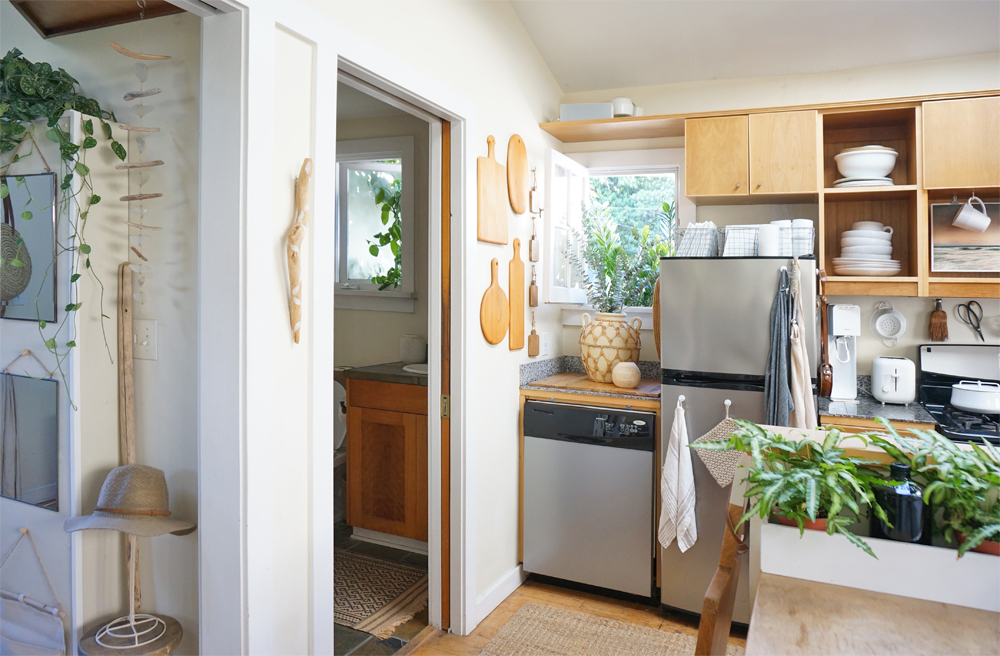
Lastly, for some strange reason, there is a recent story circulating that claims the Cottage is a converted garage or guest unit. That is inaccurate. While our home has been updated over the decades, it has always been its own free-standing house, consisting of a main room (including a kitchen), a bedroom, and a bathroom. So no-- we did not have to add the bathroom to our home. The Cottage was one of four identical, neighboring houses built in the 1920s. Three of those four are still standing today.
Photos by Whitney Leigh Morris & Monica Wang Photo.
Tiny Live/Work Office Space
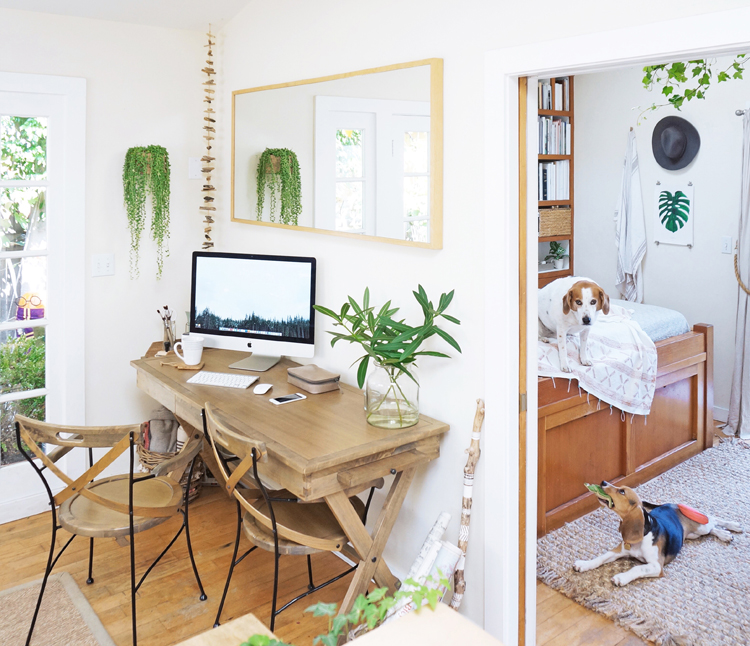
Lately I've received numerous inquiries about my live/work office space. (Does it REALLY look like that? Where's all the stuff? What is it like working and living in the same tiny space?) In this post, I'll provide a list of my go-to supplies that help keep the room organized and uncluttered.
Here is how the office generally looks on a daily basis. Sometimes it's a bit messier, sometimes it's a bit more simplified, but this is usually the norm:

First off, I should mention that nearly all of my business work is done digitally. My office is not a traditional artist's studio, so I don't have to house hundreds of materials and tools. Having said that, I do store craft supplies, a printer, a scanner, my business documents and standard materials, chords and tech accessories, reference materials, and other such office items my tiny home-office.
This is what is in, on or around my desk at all times:

1. Apple AirPort Time Capsule
Like so many people, I've experienced a total loss of my main hard drive... and it was pretty devastating, both personally and professionally. For better or worse, our computers are now our record collections, photo albums, filing cabinets, bookshelves and more, so I will never again make the mistake of failing to back up my machine. The Airport Time Capsule by Apple looks clean and minimal while backing everything up in case of calamity. Plus it provides a strong WiFi signal (with multiple network logins) so my collaborators and team members can work throughout the cottage and garden with me.
I got this particular Airport Time Capsule from ENJOY, which just launched here in LA (they're in numerous other cities as well). One of their experts (Umair) brought it to the cottage and installed it for me at no additional cost. Umair set up the Capsule and reworked the new WiFi networks within 30 minutes. (We also arranged a special discount code for $50 off any Apple product from Enjoy.com to share through 6/30/16: RAF-WHITNEY)
2. Big Jambox Bluetooth Speaker
The Big Jambox Speaker is great for small spaces. It's about 10" x 3" x 4", and comes in a variety of colors. This one blends into the cottage perfectly-- I keep it in the corner of the main room, above the kitchen cabinets. I can hear it clearly throughout our home and garden. It's wireless, and the charge lasts for around 15 hours. I stream Spotify or iTunes to it from the iPad and my old iPhone all day long.
3. Brother DS-620 Color Mobile Scanner
This little gizmo is one of the best purchases I've ever made. I scan all of our financial records, medical documents, pet paperwork, cards and notes. It saves me from accumulating piles of paper around the cottage, and helps my business run more efficiently. It measures 11.5" x 2" x 1.5" inches-- basically the size of a thick ruler. I highly recommend it, or a similar model.
4. Muji Handy Paper Shredder
After scanning all our documents, I need to shred a good deal of them. Usually it's just a page or two, along with a few receipts per day, so I use this amazing mini shredder from Muji to get the job done. It measures about 7.5" x 2", and is sleekly designed.
5. Poppin Supplies
Poppin is pretty much the best. They make modern, beautiful office supplies in a variety of colors to suit your taste. For those of us in small spaces, it helps when functional items are also pleasing to the eye-- that way we can leave them sitting out (as storage is so limited), while maintaining a clean and mindful space.
6. Cord Taco by This Is Ground
(See item #8 for details)
7. BackPack for iMac by Twelve South
The BackPack for iMac shelf is probably the handiest tool in my office. It stores my portable scanner, hand-held shredder and client hard drives-- all safely and out of sight. I recommend it to everyone with an iMac, no matter what size space you have.
Here's the description from their website: BackPack is a sleek, sturdy shelf designed exclusively for your iMac or Apple Display. This gorgeous slice of steel makes a perfect perch for hard drives, USB peripherals or business cards. Included vertical support pegs prop up tall drives, Time Capsule or even your MacBook Air. BackPack hangs on the back (or front) of your iMac using two clips and gravity. Built-in cable management rails hold your power cords in place for grab-and-go convenience. BackPack is here to help you create the minimalist zen-like workspace your Mac was made for.
8. Tech Dopp Kit by This Is Ground
I'm obsessed with This Is Ground-- they make the greatest leather organizational tools I've ever used. I also love the team behind the company-- they're based in downtown LA, and I've worked with them on several occasions in the past. This is the regular-sized Tech Dopp Kit, and I use it to hold my mirrorless camera's accessories. I also use their Cord Tacos, Mod Laptop and Mod Tablet daily.
9. Not Pictured: Organizational Pouches in Baskets
Lastly, I keep organizational pouches containing miscellaneous tools, cords, envelopes, etc. in zippered toiletry cases from West Elm (but you can get these pretty much anywhere). I keep them in baskets throughout the living room. Much like the printer, the baskets are stashed in the few built-in cabinets (some exposed, some covered) surrounding our couch.




Create & Cultivate Op-Ed
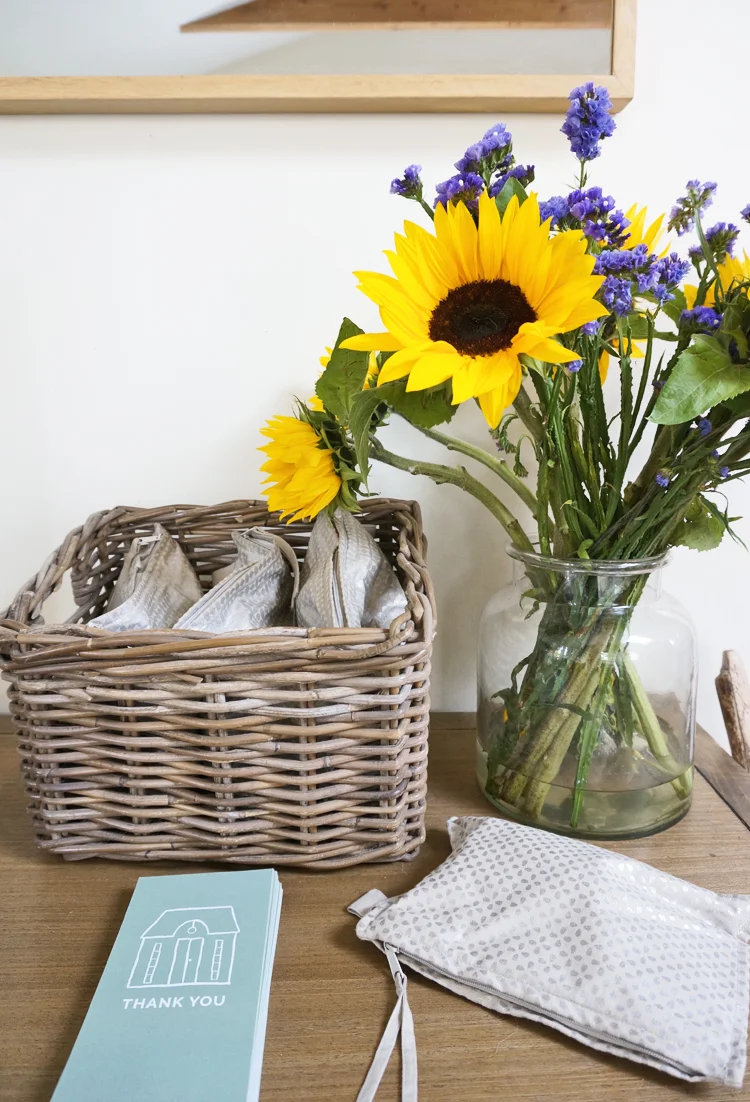
I'm sharing some thoughts on our Tiny House lifestyle over on the Create & Cultivate blog.
I was invited by the conference founder, Jaclyn Johnson, to write this piece, entitled, "Little is the New Large: A Tiny Home with a Big Message."
Click the image below to jump to the post.
