Rightsizing in Real Time - An Ongoing Event for January 2024
I am stepping into 2024 with no illusions that a turn of the calendar will magically ease stressors, or reveal an untapped source of much-needed energy. Yet who doesn’t relish optimism, coupled with a fresh beginning of any sort?
A new year.
A rising sun.
An unexplored perspective.
It’s my job (and my joy) to help people discover comfort and contentment within their homes— particularly spaces that are compact and/or in need of heightened versatility. In order to tenderly weave that work into the intentions imagined by many at the top of the new year, I’ll be publishing regular posts throughout January as part of a month-long series entitled Rightsizing in Real Time. This series will offer simple, flexible prompts and examples aimed at helping folks with their own rightsizing, downsizing, repurposing, and/or organizational endeavors.
I hope you’ll mull over the concepts that apply to you at your own pleasant pace.
Good things take time and consideration.
Rather than jumping frantically from room to room (which is a common and often overwhelming approach that I find laughable when applied to small spaces), we’ll explore solutions to typical small space hurdles through a more versatile lens.
How can we thin the crowding of belongings wherever that occurs?
How can we better define and adapt zones?
What areas are under-utilized and need reimagining?
Where do we start when operating on a tight budget and with sustainability in mind?


Thanks... but no thanks! (Thoughts on Avoiding Unnecessary Gifts)
Because the best gift anyone can give our children is a healthy planet for their generation and those that follow.
Because the best gift anyone can give our children is a healthy planet for their generation and those that follow.
It’s the time of year… for unwanted and unnecessary gifts.

With the planet groaning under the weight of ever-intensifying consumerism, households feeling relentless financial strain, and families grappling with an excess of clutter in their homes, it’s time we more widely accept and respect one’s decision to firmly avoid giving and receiving gifts.
But how do we kindly tell a child’s relatives to stop sending toys?
What do we do about well-intended friends who insist on giving “something”?
What solutions are there for rehousing the unwanted gifts that inevitably make their way through the door, despite the recipients wishes?
And what are some unique gifts that won’t further contribute to overflowing households, and — inevitably— landfills, which have a greater impact on disenfranchised and marginalized populations?*

My Top Small Space Hack
Recently I’ve needed to remind myself of my number one small space hack: STOP ACQUIRING SO MUCH STUFF.

Above: Wearing a “Farm-to-Closet” dress, made with regeneratively grown cotton, from Christy Dawn.
At the end of the day, it’s not actually about nifty organizers and design tricks. It’s about discovering what you need — and don’t need — in order to live comfortably and happily, day by day.

A side perk of travel (even a short overnight trip) is that it can present an opportunity to reevaluate your belongings and true necessities.

• What items in your home can serve multiple purposes, eliminating the allure of obtaining more?
• What nonessentials require all sorts of finite resources to manufacture, acquire, maintain and store… then drain time, money and materials that should be protected or put to better use another way?
As we prepare to experience our tiny farmhouse for the first time, I’ll be keeping these topics at the top of mind. And, in the meantime, I’ll be reading The Afrominimalist’s Guide to Living with Less by Christine Platt.

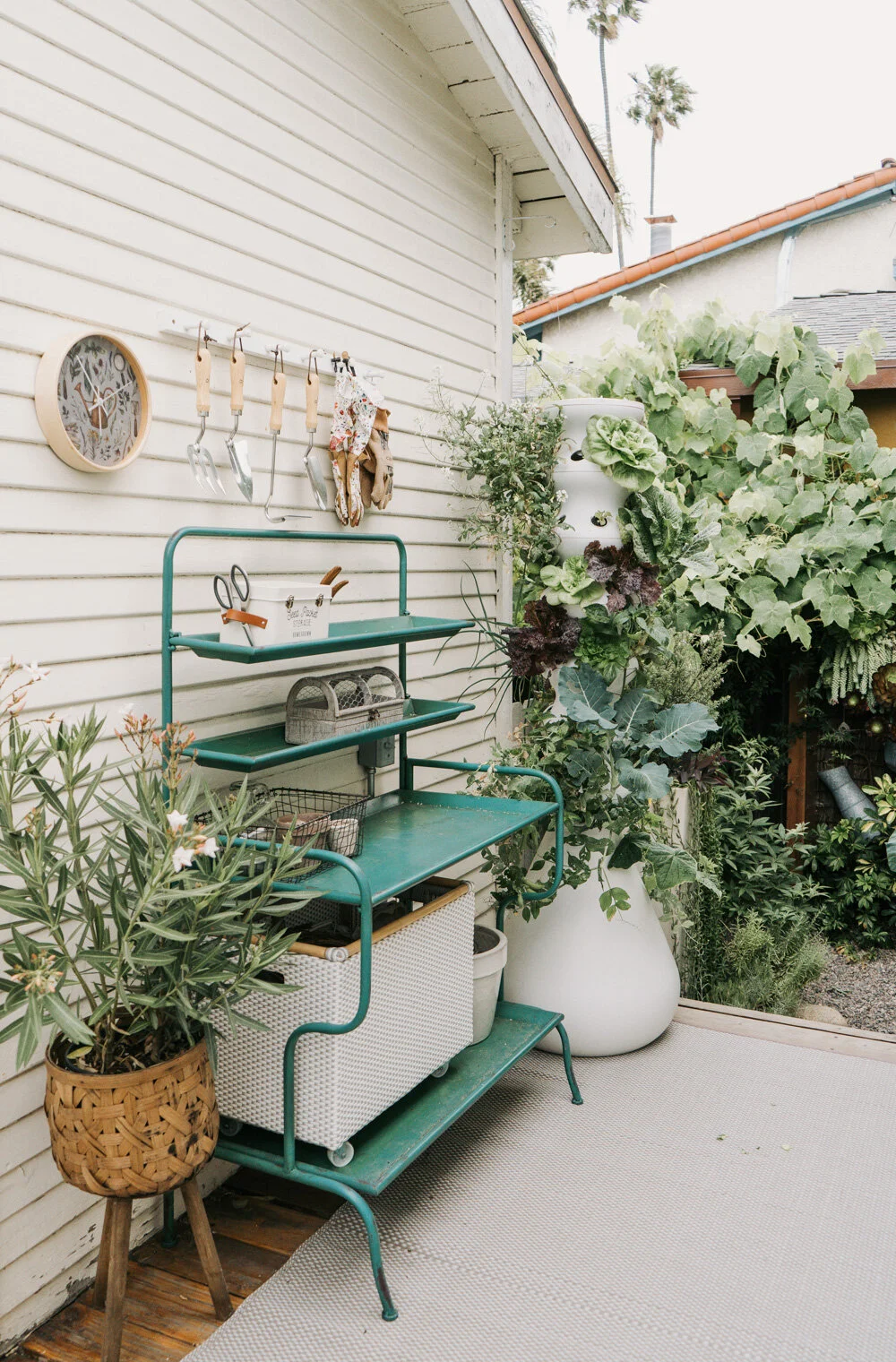
Decluttering & Remaining Clutter-Free for the Long Run (Updated)
Have you ever gone through the process of decluttering and downsizing, only to find yourself slipping back into an overstuffed life a few months down the road? You’re not alone. Every day I receive questions about how to declutter and maintain the results.

First and foremost, I think it’s important to find a dedicated home for everything with which you part ways, as 80+% of donations end up in landfills, and there’s a bunch of privilege wrapped up in the concept of decluttering in the first place.

Secondly, before you declutter, I’d recommend pledging to stop the influx of new, unnecessary goods after doing so. Otherwise the cycle repeats itself, which is no good for your space, wallet, the planet, and the disenfranchised populations who statistically live closer to landfills and toxic manufacturing and waste facilities.

Finally, if an item no longer works for you and can be put to better use with someone else, then letting go is a gift for both parties! I’d suggest asking yourself what purpose(s) each piece serves if any, and then take it from there responsibly.
With that, here are some easy tips for remaining clutter-free for the long run.

Avoid Triggers
Identify your more reckless spending triggers, then take care to avoid them. For example, do you find yourself buying items off social media links or major retail sites when you’re bored, stressed or unable to sleep? Tuck the phone away and pick up a book, meet a friend, or take a walk instead. Do you buy junk at the airport during layovers? Bring your own snacks, bottles and entertainment with you, and don’t even step foot in the shops within the terminal.
Pause Before Purchasing
When online shopping, challenge yourself to wait at least 24 hours before checking out. Chances are you’ll realize that you don’t actually need all (or any) of the items in your cart.
Get One, Give Two
If you do commit to acquiring a new item, try giving away two items in its place. Keep in mind that it’s important to find a dedicated home for everything with which you part ways, as 80+% of donations end up in landfills.
Reduce Opportunities for Impulse Purchases
Once you’ve swapped your common disposable goods (such as paper towels, cotton rounds, cleaning supplies, diapers, and tampons) for reusable options, you’ll have far less shopping to do. And with fewer trips to the store, you’ll have fewer opportunities to make impulse purchases.
Decline Freebies
You don’t need to accept every free item and bit of SWAG dangled in front of you. Just walk away, or use the magic words: “No thank you.” If you still somehow end up with freebies of wellness products or clothing that can be of use to organizations in need, leave the goods sealed/unopened and donate them as soon as possible.
Donating Gifts
If someone gives you a gift you can’t use and/or don’t like, shake off the guilt and donate it immediately. It doesn’t do anyone any good for the thing to rot away in a box under your bed. Pay their generosity forward by regifting the item(s) to a fitting non-profit, local school, etc.
Ask Qualifying Questions
Before you purchase a new object, ask yourself the following questions— you might be surprised by how few items actually clear these hurdles to earn a coveted place in your home:
Do I already own something that serves the same purpose as this new item?
Was this product produced ethically and with sustainability in mind?
Can this piece multitask? (Of course this question doesn’t apply to all goods, but it can apply to many. Multi-functional pieces will reduce the number of items you need in your home, saving you money and reducing your footprint.)
Where will this item be stored when NOT in use? And do I have the space for it?
Lastly, if the piece(s) you’re considering pass all of the questions above, then ask yourself: Is there a vintage or handmade option of this item that I can find locally instead?

You can do it. For your sanity, for your wallet, for your home, for your busy schedule, and — above all — for the planet.
First/key photo from the cottage taken by Lucia Doynel.

Some Items You Can Probably Go Without (Part 12)
While it's productive to share stories about designs and practices that help us live comfortably and less wastefully in small spaces, I think it’s just as important to discuss the things that we can happily live WITHOUT— particularly in this era of climate crisis. After all, making a home in a small space isn’t about figuring out how to puzzle a life’s worth of belongings into your compact quarters. It’s about experiencing more by owning less.
The following is just a small sampling of items you may want to reconsider before you buy. (View all the entries in this series here.)
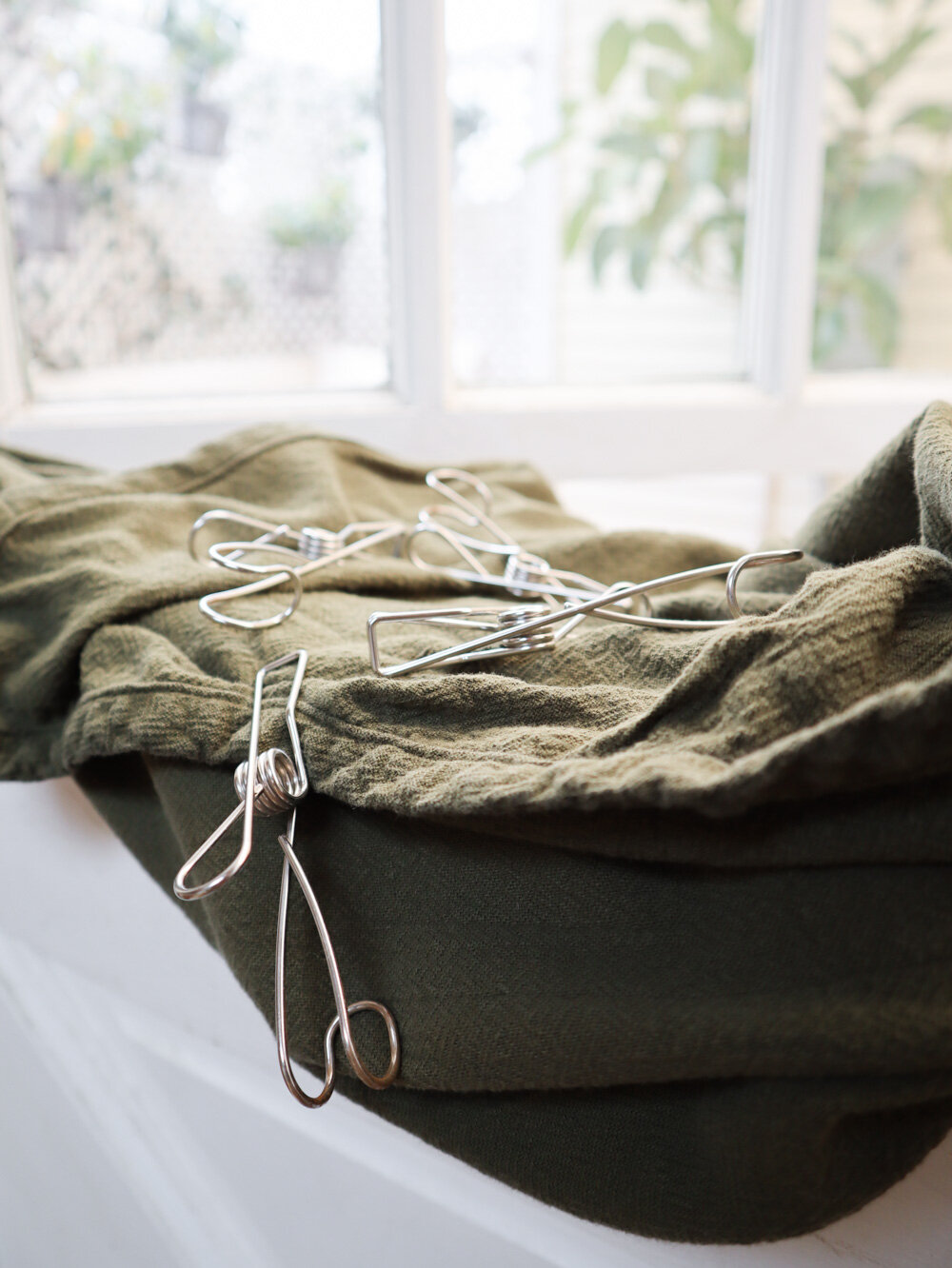
Plastic shower curtains and liners:
Depending on the style of your shower, you might be able to skip the standard plastic liners and synthetic blend curtains. Here we use a simple linen tablecloth / throw blanket (handmade locally for Gjusta Goods), which we suspend from the curtain rod via metal clothespin hooks. We simply throw the fabric into the machine with similar washing about once every-other week for a good soapy bath of its own. If the bottom of the sheet gets overly wet during a shower and stretches out the linen, we just make a fold up top and clip it an inch or so higher. Hemp fabric and/or upcycled, patchwork pieces could work well for this purpose, too, and add a unique touch to your bathroom. (As always, please keep safety — such as slip risks — in mind.)

New outfits for every special event:
Between photo shoots, work events, speaking engagements and social gatherings, I frequently found myself feeling like I constantly needed a new outfit. I tried a rental service for a while. I think they’re good solutions to reducing fashion waste for many people, but I still found their carbon footprint to be too high for my comfort. I realized that the clothing itself wasn’t the issue— it was my mindset that needed to change. I’ve since found comfort and satisfaction in deliberately wearing the same garments repeatedly on camera and at events. We all know that fast fashion and over consumption of new styles is a major source of pollution — from dyes in water supplies, to transport and packaging, to discarded garments themselves. Plus most people in small homes struggle with wardrobe space, and the best solution is to simply own less clothing. It feels good to strike a truce with yourself and rock the same clothes you wore last week… and last month… and last year… and the year before that.
Toys that replicate safe, every day goods:
A good friend of mine sent me a photo of a toy lace-up shoe that her daughter received as a gift. The image was captioned: “WHY?!” (Why indeed!) Can we not teach our kids to lace on *actual* shoes? Do we need to mass manufacture fake shoes for this purpose? While we can all surely agree that items like child-safe scissors (which are available as hand-me-downs and second-hand purchases) are obviously well worth it, we probably don’t need items like fake (often plastic!) baby bottles for play when the real things are already sitting here in our homes taking up space— we might as well use them!
Novelty games / activities:
Okay. I liked Tetris and Super Mario as much as any child of the 80s. But to now purchase newly manufactured handheld (plastic!) gaming devices or mini arcade games as novelties when countless games are available on our phones is absurd. And Adam recently told me he saw a (plastic!) mini-golf game intended for use while you’re sitting on the toilet, and a quick web search confirmed that this is indeed available via at least three very prominent international retailers. Our planet is going up in flood and flames, and we’re all complaining about having too much stuff, so let’s convey as consumers that makers must stop producing total junk like this. It’s pointlessly wasteful, and ultimately it just ends up cluttering our homes before cluttering up a landfill.
An entire home gym:
There are many understandable reasons why someone might have a piece or several pieces of work out equipment in their home. (And I imagine that most people who could fit a home gym into their space are probably not reading this blog.) But if it’s not a necessity to you and yours, exercising outdoors or sharing equipment at a gym are simple ways to cut down on the number of large machines being manufactured, packaged, shipped, and — ultimately — discarded.
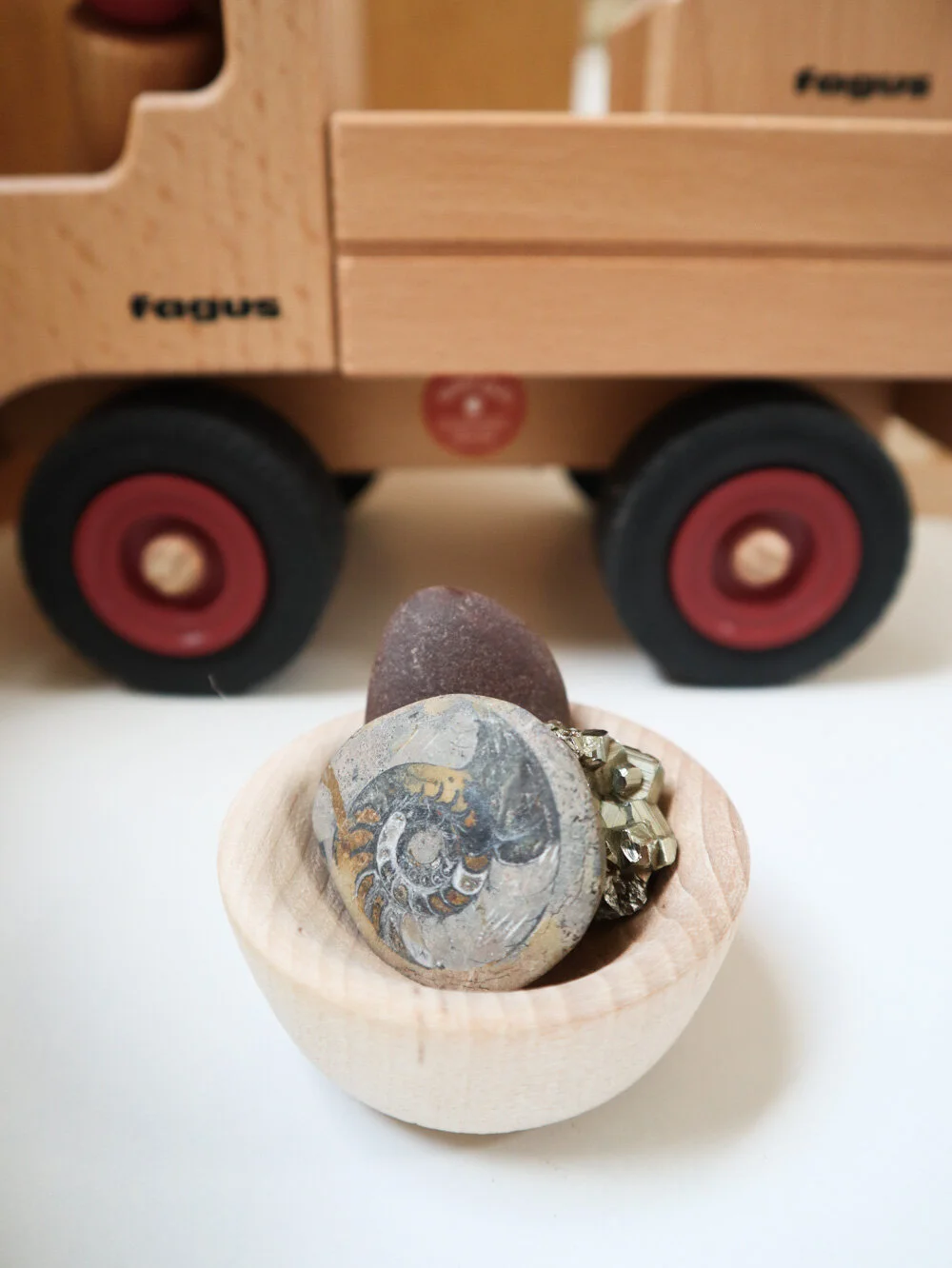
Catch-all dishes:
If you’re shopping vintage or supporting an artist by buying their handmade ring or catch-all dishes, great! But mass made valet caddies, ring dishes + holders, and coin trays are things that can easily be made from numerous repurposed items that are probably already available around your home. Or maybe you don’t need them in the first place! (For example, I just put my rings in a safe spot on top of our first aid box when I shower.) After all, items like this take up valuable surface space in a small home.


Where to Donate After Decluttering
My previous blog post was dedicated to the topic of how to keep homes, apartments, and/or offices decluttered for the long-haul. Once you’ve simplified your space, you’ll likely have a number of items left over to donate.
A simple Google search of nearby non-profits can provide you with a list of organizations within your community that might be able to put the goods to use. Just give them a quick call or send them an email to inquire what they need. For those in the LA area, I’ve provided a brief round-up of diverse organizations that accept a myriad of donations, outlined below.
The RightWay Foundation
The RightWay Foundation works with current or emancipated foster youth to move from a point of pain and disappointment to a point of power, productivity, and self-sufficiency.
(323) 903-5021
info@therightwayfoundation.org
Items Needed:
Toiletries
Grooming + Beauty Products
Interview/Workplace Attire, including Bags + Accessories + Shoes
Diapers, Toys and Books (for the young children of the former foster youth)
Mail or Drop-Off:
3650 West Martin Luther King Jr. Blvd. #195
Los Angeles, CA, 90008
(If dropping off, please call (323) 903-5021 in advance.)
L.A. Shares
L.A. SHARES is a nonprofit materials reuse program, which takes donations from the local business community and individuals of reusable goods and materials (both new and used) and then redistributes these items FREE-OF-CHARGE to nonprofits and schools in the City of Los Angeles.
(213) 485-1097
donate@lashares.com
Items Needed:
Office Furniture
Office Supplies
Office Equipment and Electronics
Sports Gym and Athletic Equipment
Musical Equipment
(Click here for a list of items that L.A. Shares cannot accept.)
Pick-Up:
Click here for easy steps to begin donation process and schedule pick-up
Children’s Hospital Los Angeles
Children's Hospital Los Angeles (CHLA) is a 501(c)(3) nonprofit institution that provides pediatric health care and helps our patients more than half a million times each year in a setting designed just for their needs.
323-361-2308
DonorRelations@chla.usc.edu
Items Needed:
CHLA’s patients and families appreciate donated items, including those on their toy wish list and book wish list . You can also donate your vehicle and other miscellaneous items to benefit CHLA. Click here for a complete list of items that the hospital can and cannot use, and to browse drop-off locations.
S.P.Y. (Safe Place for Youth)
Safe Place for Youth’s mission is to inspire, nurture, and empower the resilient human spirit of homeless youth by providing immediate and lasting solutions, one young person at a time.
310.902.2283
info@safeplaceforyouth.org
Items Needed:
New underwear
New or good condition Men's clothing
Gloves
New sleeping bags
Drop-Off:
Monday 10:00 AM - 5:00 PM or Friday 10:00 AM - 5:00 PM
2469 Lincoln Blvd.
Venice, CA 90291
Hav-A-Sole
Hav A Sole’s mission is to provide the homeless and at risk youth population with quality footwear to encourage healthier lifestyles and prevent disease, while fostering a sense of community along the way.
info@havasole.com
Items Accepted:
New + good condition footwear.
Mail Donations to:
10736 Jefferson Blvd. #636
Culver City, CA 90230
Downtown Women’s Center
The Downtown Women’s Center (DWC) is the only organization in Los Angeles focused exclusively on serving and empowering women experiencing homelessness and formerly homeless women. Their mission is to end homelessness for women in greater Los Angeles through housing, wellness, employment, and advocacy. Your donations directly benefit women experiencing homelessness and are an important boost to our programs.
Items Needed:
Clothing & Accessories
Emergency Items
Household Items
Personal Hygiene Items & Toiletries
Arts and Enrichment Activities
Vehicle Donations
(Unable to Accept: Razors, tampons, cribs, strollers, toys, clothing, mattresses, televisions, old computer monitors, large furniture, soiled or broken items, and most food donations.)
Drop-Off
442 S. San Pedro Street
Los Angeles, CA 90013
Friday - Tuesday, 8 a.m. - 2 p.m.

Remaining Clutter-Free for the Long Run
This weekend I conducted a “Living with Less” workshop at Create & Cultivate. Several of the attendees shared that they’d gone through the cathartic (albeit tedious) process of decluttering and downsizing, only to find themselves slipping back into an overstuffed life a few months down the road. This is something I hear repeatedly. So here are some tips for remaining clutter-free for the long run.

Photo by Smith House Photo for Create & Cultivate
Avoid Triggers
Identify your more reckless spending triggers, then take care to avoid them. For example, do you find yourself buying items off social media links or major retail sites when you’re bored, stressed or unable to sleep? Tuck the phone away and pick up a book, meet a friend, or take a walk instead. Do you buy junk at the airport during layovers? Bring your own snacks, bottles and entertainment with you, and don’t even step foot in the shops within the terminal.

Pause Before Purchasing
When online shopping, challenge yourself to wait at least 24 hours before checking out. Chances are you’ll realize that you don’t actually need all (or any) of the items in your cart.
Get One, Give Two
If you get something new, give away two items in its place. But make sure the items with which you’re parting have a dedicated home, as 80+% of donations end up in landfills.

Reduce Opportunities for Impulse Purchases
Once you’ve swapped your common disposable goods (such as paper towels, cotton rounds, cleaning supplies, diapers, and tampons) for reusable options, you’ll have far less shopping to do. And with fewer trips to the store, you’ll have fewer opportunities to make impulse purchases.

Decline Freebies
You don’t need to accept every free item and bit of SWAG dangled in front of you. Just walk away, or use the magic words: “No thank you.” If you still somehow end up with freebies of wellness products or clothing that can be of use to communities and organizations in need, leave the goods sealed/unopened and donate them as soon as possible.
Donating Gifts
If someone gives you a gift you can’t use and/or don’t like, shake off the guilt and donate it immediately. It doesn’t do anyone any good for the thing to rot away in a box under your bed. Pay their generosity forward by regifting the item(s) to a fitting non-profit.

Ask Qualifying Questions
Before you purchase a new object, ask yourself the following questions— you might be surprised by how few items actually clear these hurdles to earn a coveted place in your home:
Do I already own something that serves the same purpose as this new item?
Was this product produced ethically and with sustainability in mind?
Can this piece multitask? (Of course this question doesn’t apply to all goods, but it can apply to many. Multi-functional pieces will reduce the number of items you need in your home, saving you money and reducing your footprint.)
Where will this item be stored when NOT in use? And do I have the space for it?
Lastly, if the piece(s) you’re considering pass all of the questions above, then ask yourself: Is there a vintage or handmade option of this item that I can find locally instead?
Let’s do this— for our sanity, for our wallets, for our homes, for our busy schedules, and, above all, for the planet.

Roundup: 5 small ways to start decluttering
Feeling the need to declutter amidst all the holiday layers and gifts? It's easy to get overwhlemed quickly, so start small, tackling one compartmentalized topic/area at a time. Here are five easy ways to get going:
Sewing Kit
Unless you sew on a regular basis, there's probably no need for an entire box of spare buttons, thread, and so forth. A simple jar or pocket-sized tin can most likely contain the basics that most folks need on-hand to repair slight tears and loose hardware.

Hangers
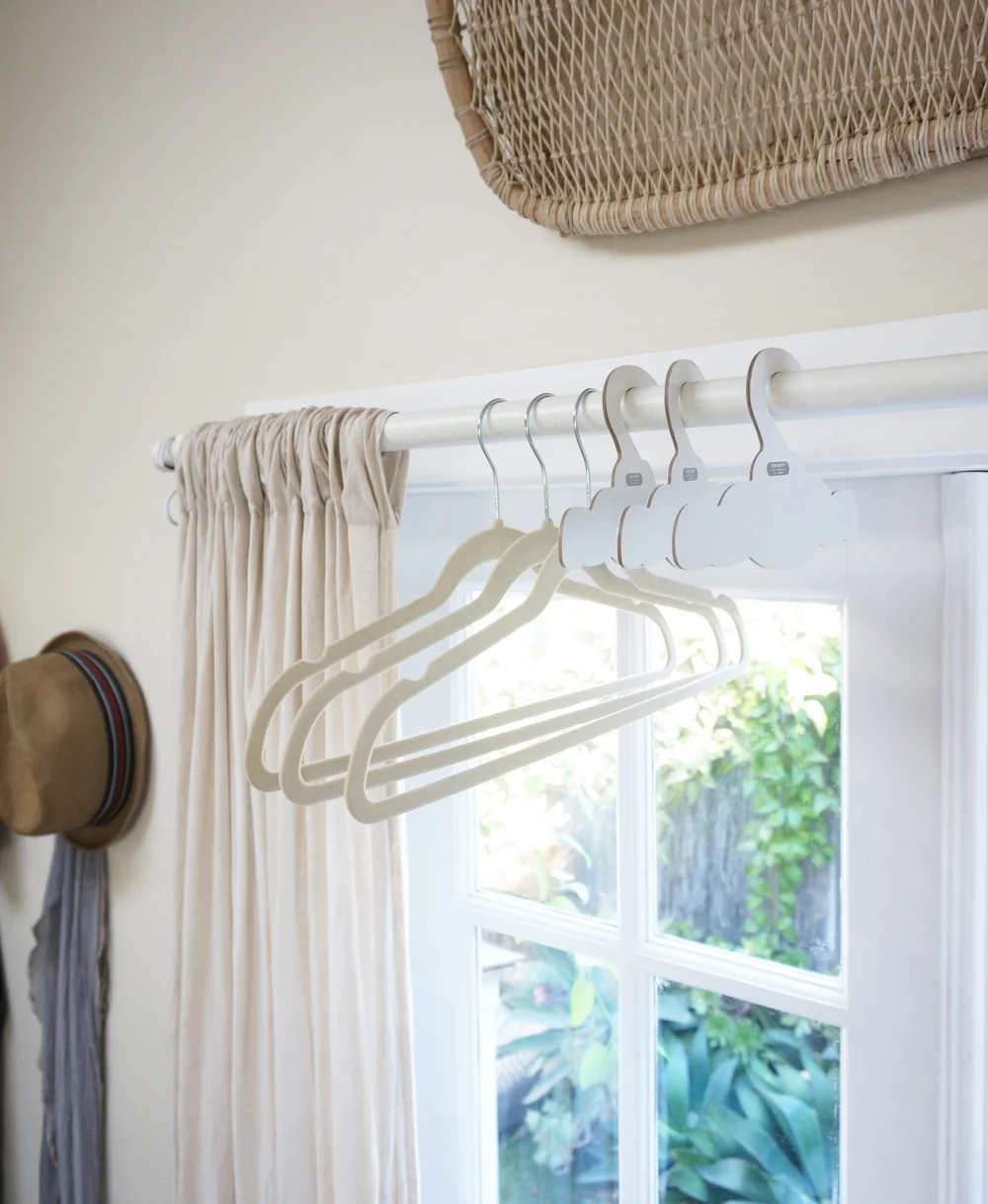
While it clearly helps to reduce the number of items in your wardrobe, don't forget to take a fresh look at the closet itself. Cleverly designed, slender, no-slip hangers can help your clothing last longer, while also freeing up much-needed space on the dowel. (Just round up all those old wire and plastic hangers and recycle them at your local dry cleaner.) If you have children's clothing that needs to be suspended as well, opt for recyclable cardboard hangers, which you can drop in the blue bin once your kids outgrow them.
Receipts
This project takes a bit longer, but it's an easy task to plow through while you chat on the phone, listen to podcasts, or watch a movie. For those of us who don't need to keep physical paper receipts and can use digital copies for our business and personal record-keeping purposes and taxes, a slim, speedy scanner can eliminate binders (or even boxes upon boxes) of old paperwork, freeing up surprising amounts of storage space in the home.

Desk Drawer
It bugs me that most pens and pencils-- along with other miscellaneous office supplies-- are sold in multiples. Why buy (and store) a dozen duplicates of something when you only need two or three? Consider donating your excess office items to a public school, and just rely on the small number of high-quality, beautiful, practical items that you actually need. Eliminate duplicate charging cords if possible as well, and check your local resources to find tech waste recycling options. Try keeping everything easily accessible and well organized via zipper pouches, or in kits primarily designed for travel use.

Cabinet Beneath the Sink
For years I've intended to make my own cleaning supplies in order to save space. But I have to admit that I just never get around to it. I do, however, make sure to manage our bottle build-up, keeping only what we need regularly on-hand. I don't buy in bulk, and I always make sure that we have no more than what can fit into our small upcycled cleaning crate or repurposed garden caddy. This ensures that we actually go through all the products in our home, rather than losing track of what we have and buying duplicates while older bottles expire and go to waste. Go through your cleaning and beauty items and get rid of anything out-of-date or unhealthy. You'll most likely find that you'll be more mindful of your future purchases once you've taken the time to organize your products back at home.

These are small steps, but in a tiny home or apartment they'll make a difference. And just remember to go easy on yourself-- it's the holiday season! Let's spend less time worrying about our stuff, and more time with our families, friends and/or communities.