
Our New Cottage's Combo Bathroom + Laundry Room
We didn’t expect this, but our favorite room in the new house has turned out to be the bathroom / laundry room combo.

While it’s bright and airy thanks to the windows and venting skylights, it is also intimate and grotto-like with it’s plastered walls and stone floors.

The entire space was an experiment. If we had windows on the three surrounding walls, could we manage the extra long shower down-rods? If we used a neglected slab of recovered Cypress wood as both a counter and a backsplash, could we waterproof it, customize the faucet, and get it all to fit within our slim parameters? If I designed a custom hutch, would it offer all the storage space needed for bath + cleaning + self-care products for a family of four? Could the shower remain in use throughout the day for laundry and rehabilitating plants? Could we create privacy while also keeping everything so exposed? Would the ventless washer / dryer combo take up too much space?

Somehow it all worked out exactly as we’d hoped. It’s not perfect— there are wonky lines and odd dimensions and out-of-the-ordinary combinations of materials and textures. And we are loving it all.

Due to its versatile design, the room is constantly in use by the entire family for activities beyond the obvious, so the square-footage (about 8’w x 10’l) is earning its keep.

At some point I’ll publish a detailed before + progress + after post about this unique space, but after seeing it under construction for so long, the last thing I want to do now that we’ve finally moved in is relive that lengthy process.

For now, I simply want to enjoy how it all came together. I hope you do, too! More images + sources are below.

Sources are listed at the bottom of this post, and below are some responses to commonly-asked questions:
• While we were initially eyeing raised-tank, vintage-style toilets, we eventually opted for a toilet / bidet combo and are happy we did so.
• We string up a basic line of twine and an oilcloth tablecloth for a curtain when we shower, offering complete privacy from the rest of the room.
• We chose a pocket door to save space, as always.
• The stacked washer + dryer combo is ventless, allowing it to be enclosed in a custom cubby. We pull the curtain aside when the machines are on, just to be safe.
• The pull-down drying surface is a vintage French bakery cooling rack, which we attached to the wall with four mug hooks and leftover leather cords. The lock that holds it flat against the wall when it’s not in use is a scrap of driftwood.
• The wooden sink vanity is coated with matte Rove & Dwell Finish Coat.
• The items attached to the sink backsplash on the right of the faucet are a vintage match holder and a rotating French soap holder.
• The skylights both vent / open, and have screens.
• The casement windows have optional screens, and the hardware isn’t problematic for water given their height and the rain-style showerheads.
• The concealing curtain over the laundry zone is cut from a flat sheet.


Thank you as always for sharing our li’l home with us by visiting my blog.

Sources:
Tadelakt Plaster (Color: Nue) by Color Atelier
Montpellier Stone Floors by Historic Decorative Materials
Custom Hutch by Tumbleweed & Dandelion
Skylights by VELUX
Windows by Marvin
Curb (Color: Colton) by Cambria
Recovered Cypress Slab from Goodwin Company
Small Space, Ventless Washer + Dryer from Haier
Linen Hanging: Garnet Hill
Folding Laundry Cart: Vintage via Etsy
Two-Tier Basket Table: Vintage via Etsy
Folding Drying Rack: Vintage Bread Drying Rack via Etsy
Wood Sealer: Rove & Dwell Finish Coat
French Wall Soap via Vivi et Margot
Baskets via Connected Goods
Fixtures via Delta and Signature Hardware
Extra-Long Hand Towel + Robes for the Entire Family via OddBird
Sconce: Reveal Home via Etsy
9 Tips for a Lower-Impact, Practical, Temporary Living Space
Ways to make a temporary space function efficiently and less wastefully through planning, decor, creativity, and patience.
We’re starting off the new year exactly as we closed out the previous year…. in limbo. (I should note that I’m typing these words with a lack of gusto, but no lack of gratitude.)

At this point last year, we started packing up our holiday decorations at the Tiny Canal Cottage and, once the festive frills were gone, we simply kept packing. We eventually wrapped up our small business and 10 years of life into a fraction of a shared, cross-country moving van, and relocated too a temporary space on the East Coast. (Read about our attempt at a low waste, long distance move here.)

The space was meant to be our home for around six months while we awaited the build of a little ADU cottage in the woods of North Central Florida. However, we didn’t find a general contractor for months, as new construction is having a (stomach-turning, tree-uprooting) boom in North Central Florida. Then permit process took an additional five months, and — on top of that — global supply chain snags then came into play.

So six months turned into eleven, and here we are. But the build is, thankfully, FINALLY underway.
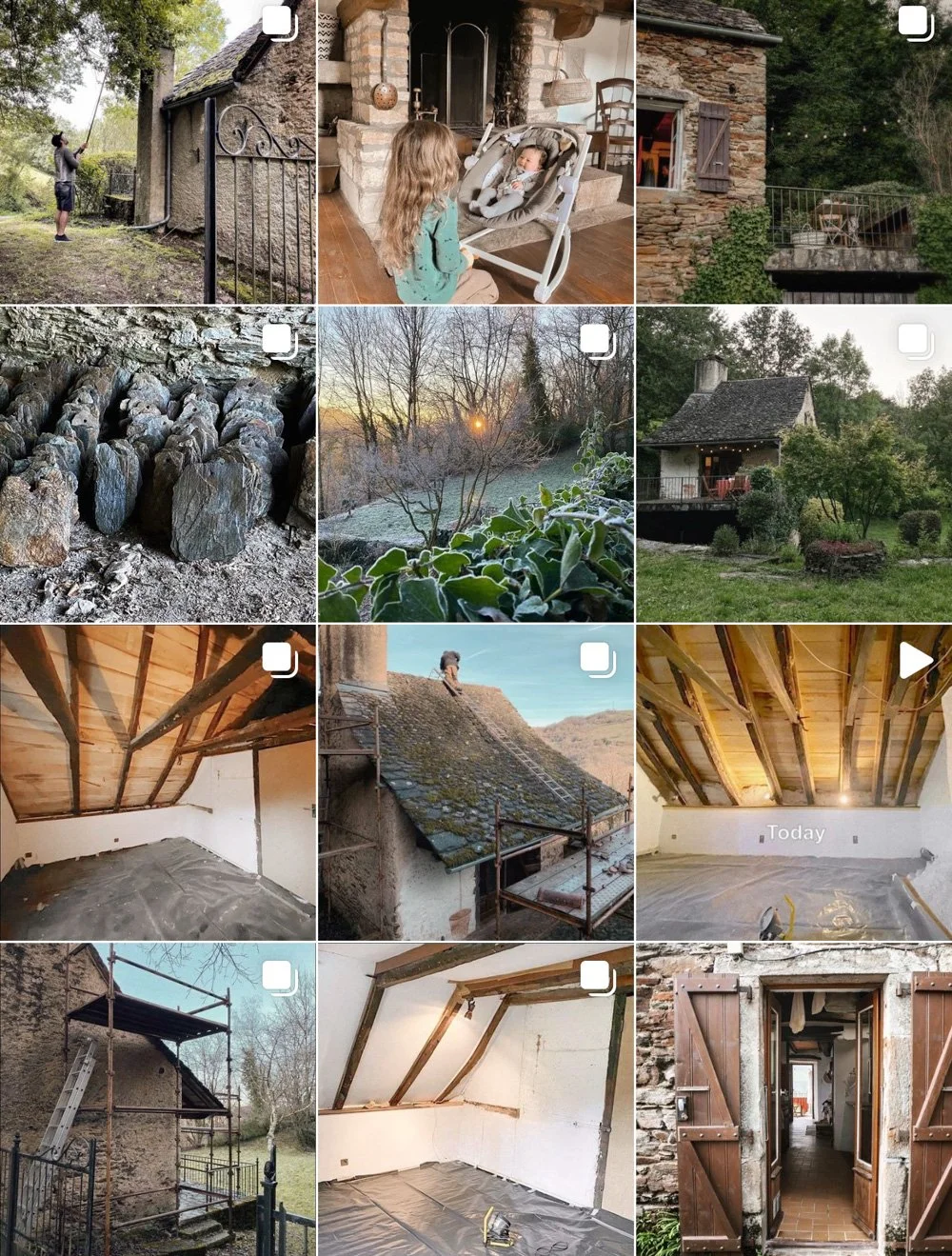
Surprisingly, we’ve had better luck in France with our little, shared Farmhouse. Thanks to our long-standing roots in the region, we quickly found local contractors and friends to begin the restoration of the our little, shared farmhouse since we can’t be there year-round just yet. I’m giddy with delight that this unique project is humming along marvelously, and I’m publishing regular updates on a secondary Instagram account: @TinyFrenchFarmhouse.
Overall, 2021 was a doozy of a year for us to uproot our lives and dive willingly into a state of ongoing upheaval. But the situation, while not ideal, has certainly had some very significant perks. All in all, I believe the move was the right decision. But the right decision is often not the easiest one to make, and this has been a bumpy road to traverse.
As someone with a full business and career in the Home industry, I’ve been looking for ways to take this experience and turn it into something helpful. I’m still seeking the mental bandwidth and available moments to conceptualize and execute whatever that would look like. So, for now, a humble blog post will have to suffice.

As far as personal matters are concerned, my main concerns regarding our temporary living arrangements were two-fold:
How would we make a temporary space designed for adults FUNCTION well (and safely) for us as a family with a pre-schooler, a newborn, two dogs, and a small business?
How would we keep environmental impact light without our usual belongings, practices and habits in place? (Especially during the pandemic, and in a far less eco-minded community than we were used to.)
Note: Before I jump into the following takeaways, I should distinguish what I mean by a “temporary space.”
First off, I’m not a young graduate just starting out on my own, nor am I in an industry that requires me to travel often for long stretches of time. I’m 40 years old, and I have a family, as well as a business based on the Art of Home. As such, I had believed my days of nomadic living to be behind me.
Secondly, technically our Tiny Canal Cottage was temporary, as we were renters who could’ve been asked to vacate at any time. But, despite the fact that we rented, it was our HOME. We knew that we wanted to invest in it as fully as possible, because we intended to live our lives to the fullest there as long as we could.
Our current situation is like a bridge for us. We’re slowly crossing over, sweetly mourning the life we left (as I expect we always will), while excitedly tackling two very different living projects ahead of us. The rooms to which we currently have access are not open for us to transform as we normally would. I liken our current existence to living in a loving, comfortable Airbnb. We’ve moved in and are using it to the fullest, but it’s not our own.
So, with that, here’s some of what I’ve learned, hugely condensed.

Don’t Be Trapped by a Space’s Intended Use
As is often the case with a small space, temporary living situations might need to multitask, or function in entirely different ways than their intended use. And that’s okay.
It’s. Just. Temporary.
For example, we’re using the upper floor of a single family home. The kitchen is on the ground floor, and the sounds from it carry throughout the entire house. When I was expecting the arrival of our second child in April, I knew that the last thing I’d want to do after breastfeeding and then pumping every two hours is trudge up and down the loud stairs in the middle of the night while exhausted and attempting to not wake the dogs or disturb the rest of the household. So I had to find a way to lightly convert part of the second floor bathroom into an area where I could clean / boil / dry pump parts, safely store breastmilk until he morning, and so forth. Was all this the stuff of Instagram dreams? Definitely not. But did it work just fine, while keeping everyone else asleep and preventing me from tumbling bleary-eyed down the stairs at 3am? Yes indeed.
Fully Ignore Decor Rules
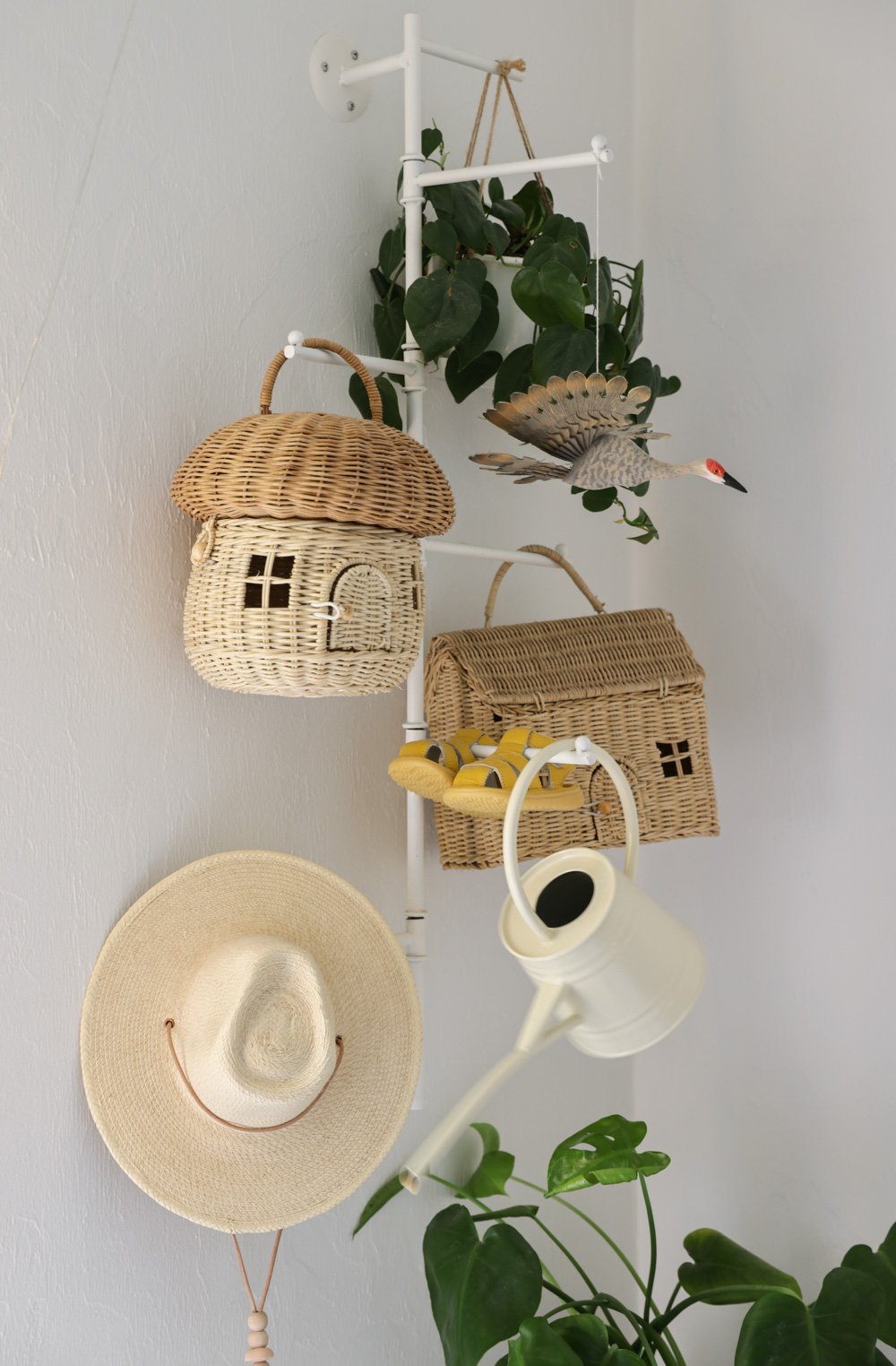
To piggy-back on the above, sometimes you just need a means to an end in a space that’s not yours, so go ahead and break the rules if that’s what works. In our case, we have access to two bedrooms (filled with furnishings and items that aren’t ours), but the typical two bedroom layout was no longer working for our daily lives based on safety of the children and various parenting responsibilities. So Adam and I recently squeezed the provided queen bed + full bed, and our daughter’s crib into one (packed) room, freeing up a safe play area for both of our kids in the remaining bedroom. For now, it all functions exactly as we need it to, and we can put up with the unusual layout since we know it’s not forever.
Note: Our farmhouse and future cottage only have 2 bedrooms as well, but we will have the ability to equip and arrange them in a way that suits everyone’s needs.)

Pack with a Plan / Take What You Need
I’ve never been a fan of storage spaces. Ashlee Piper goes into the waste and excess involved in the storage industry in her book, Give a Sh*t, which I both recommend and refer to often. But my family has had to keep the vast majority of our belongings in a storage unit for the past 11 months while our little cottage is still being constructed and the shared farmhouse is being restored. Knowing that this would be the case for quite some time, we wanted to prevent financially and ecologically wasteful practices, like the repeat buying of items we already own but lost track of in storage, or keeping reusable goods tucked away in moving boxes while we churn through single-use alternatives for the time being.
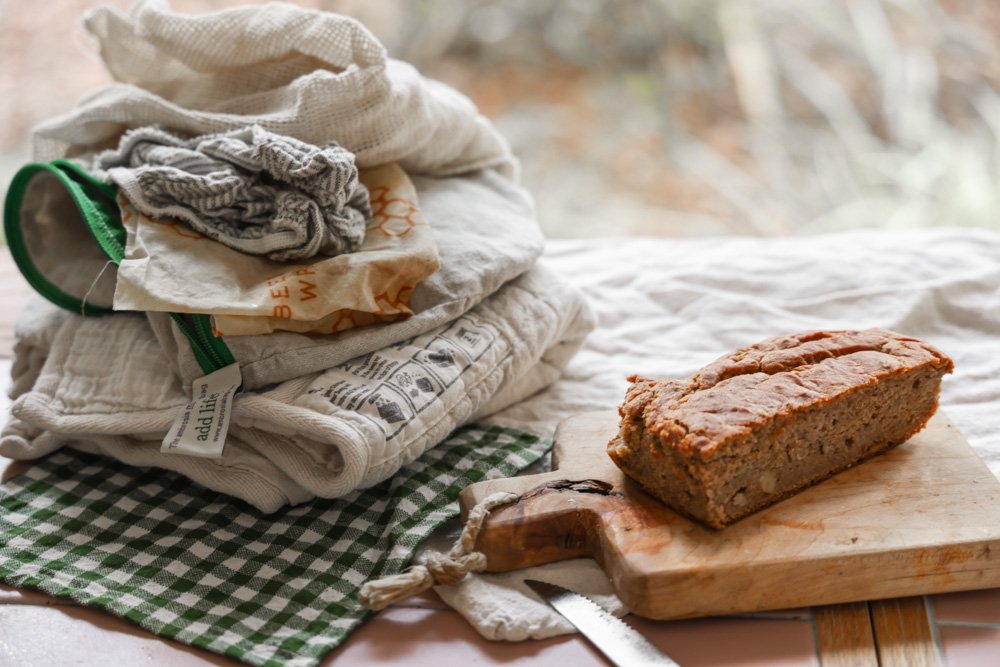
So we planned accordingly, either dragging what we needed with us in our suitcases across the country, or making sure that the moving boxes we needed most for our attempt at a lower waste lifestyle were clearly marked and easily accessible upon pickup and delivery.

Plan for Setbacks
What we didn’t plan for was the (very) extended time our Cottage construction would take, so we failed to wisely pack and mark our first child’s hand-me-down items for his little sibling beyond a certain point. In other words, we considered the need for access to newborn goods, but not 9+ month goods. Same for seasonal garments. While there is only so much we can accommodate in our temporary space, we could’ve better planned the packing, labeling and placement of things we’d need if and when our finish line became pushed further back.

Do What You Can (Within Reason) via Limited Decor
Functional decor such as plants, portable lighting sources, mirrors, bedding, and rugs can make a large impact in both the look and feel of a room. If these are items that you already have on-hand, or ones that can be repurposed in your next space, why not go for it— temporary space or not.
Find a Stop-Gap with Extended Uses If Needed
Our homes can make all the difference in our lives— this why I love what I do for a living. If a living space is preventing you from being able to function the way you need for your mental health or livelihood, perhaps search for a stop-gap if possible. (A rental studio, an external office, a gym membership, a library card, etc.) Personally, I need a small space for my job of course… but small spaces are also my muse. For whatever reason, I feel infinitely more creative in limited square footage. This is one of the reasons why we built our 114 sqft greenhouse over the summer. It scratched an itch both personally and professionally, while also providing us with a versatile structure that we’ll hopefully have the opportunity to enjoy in evolving ways for years to come, extreme weather events permitting.

Set Ego Aside
I’d flat-out be lying if I said I didn’t struggle with our current setup. Again, I’m ever-so grateful, but it’s still a pride-swallowing situation as a 40 year old who is also the main earner in the family to tuck her family and business into someone else’s home. However, I can say with all sincerity that when I take external voices and societal pressures out of the picture and just listen to my family’s needs, this situation is 100% fine for us for the time being. We’re learning what we need — and don’t need — in this region and community, and we’re experiencing incredible moments as a multi-generational family that will stay with us forever.
Stick to a Budget
It can be tempting to go all out in a temporary space. (“I should add some on-trend bead board! This carpet has to go! That lighting fixture is not my style!”) But if you know for a fact that a more preferable living situation is just around the corner — and if budget is a consideration for you as it is for us — then consider every decor and design project you forego in your current space to be another project you can tackle in your more accommodating future home.

Work With What You’ve Got
Look around you to find the hidden uses and unexpected joys of your temporary space.

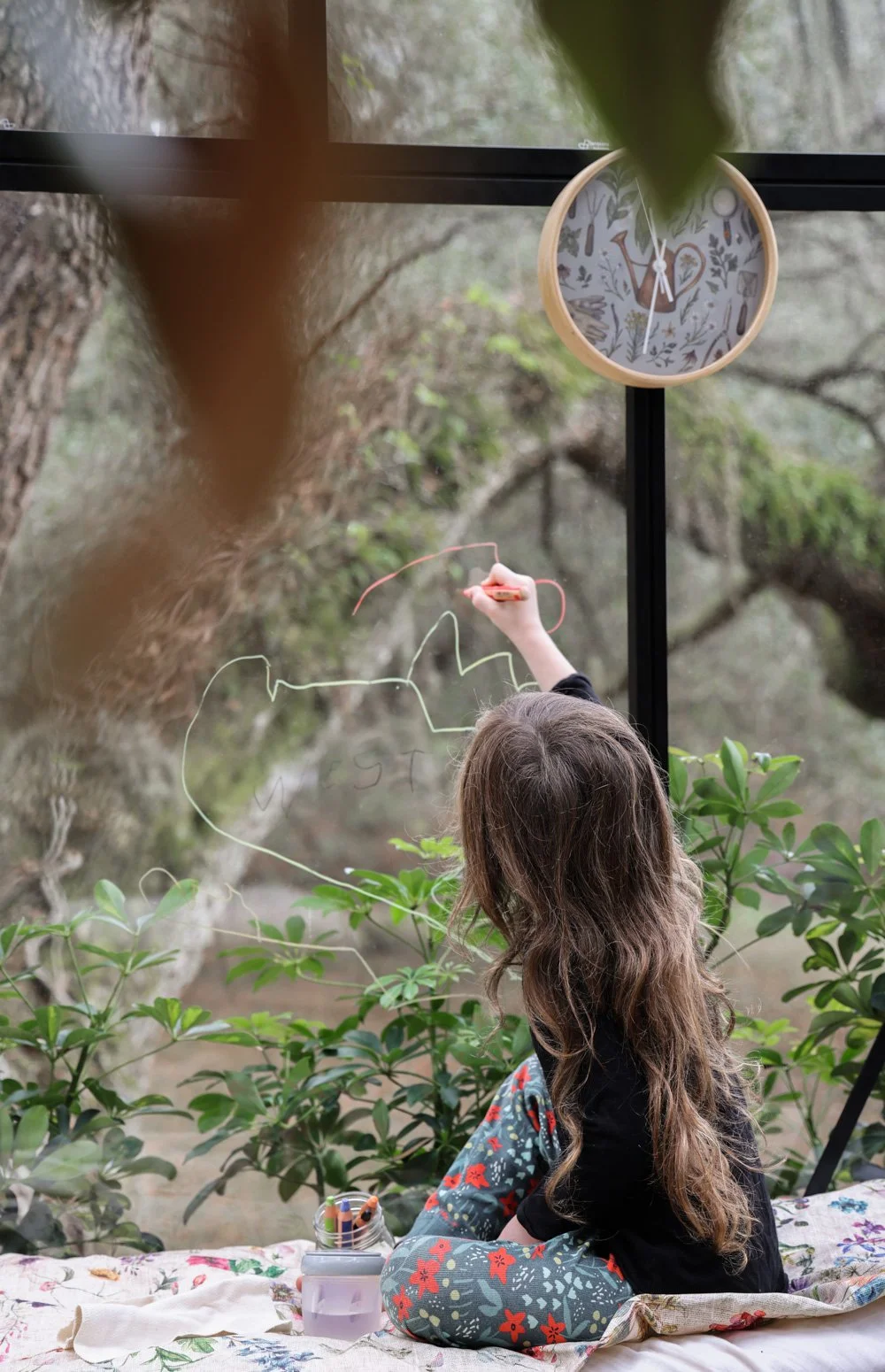
The following is an extremely specific example, but I think it’s a good one: Our Venice cottage had a built-in bed with an integrated headboard that turned out to be a perfectly cushioned spot for hours and hours of playing games of suction cup darts with our little one. Now he uses zero waste Stabilo art sticks to safely draw on the greenhouse windows while I work.

Put your temporary space to extended use whenever possible— unanticipated gems might perhaps reveal themselves, sparking moments that make a less-than-ideal situation into something you’ll cherish down the road.


Repurposed Gift Wrap with a Story
Repurpose items from around your home into low waste / reusable holiday gift wrap.
(Original post from 2020)
We haven’t bought wrapping paper or gift bags in years. Even though we live in a small space and don’t have many spare supplies of any sort sitting around, it’s still surprisingly easy to shop our own home for items that can be repurposed as playful packaging.

While the end result is rarely perfect, there’s so much to love— it’s original, it’s free, and it generates less waste. (Related post: Playful Low Waste Gift Wrap)

These handmade bars of soap were wrapped with completed pages from one of West’s work booklets, and topped with salvaged ribbon and tree clippings.


What I enjoy just as much as the searching and wrapping is passing along the stories behind each repurposed ribbon, book jacket, muslin bag, or fabric scrap.

Dust jackets remain my go-to for wrapping presents for kids. (We store most of these paper covers beneath our mattress throughout the year to flatten out the lines, and then grab one whenever we need some colorful packaging.)

While the illustration art is the attraction for the recipient, there’s usually a tale behind the rest of the bundle for the parents / guardians to share.

This method of wrapping is also friendly for folks who aren’t hugely into DIYs (that’s me). Plus it’s also safer this year than going to the store, as we’re meant to shelter at home whenever possible.

Below are a few glimpses of this year’s very quickly completed wrappings, as well as cleverly designed bundles that needed no wrapping whatsoever.

Above: Brown paper biodegradable tape from Net Zero Co.
Almost everything used above has a story to tell— a ribbon that has been passed down through multiple generations and households. A remnant that once held a stone that traveled the country. A string that once wrapped the weighted blanket that helped improve my sleep habits. A spare/unused shoelace from a pair of sneakers designed by a well-known creative and dear friend.

(And, of course, customized boxes of dog treats that shows the sweet faces of our pups— why would we want to cover those up?!)






Attempting a Low Waste, Long Distance Move
When we decided to leave our little home in Venice and relocate across the country, we knew we’d need to hire movers. Despite having a small indoor-outdoor space that isn’t hard to pack up compared to a traditional home, the realities of uprooting 10 years of live/work life while working full-time during a pandemic in the middle of a high-risk pregnancy with a 4 year old and two pups made it very clear that packing up a truck ourselves and driving it from one coast to the other would just be too much.

Thanks to my line of work, I’ve seen a fair amount of larger moves and installations, despite never requiring one myself. (Until now, for my own relocations in the past, I always just packed up whatever car I had and bopped on to my new setting.) In 2019, it was my experience with a client’s local move within LA that inspired me to halt my one-on-one interior decor and design work. The waste was staggering, and I didn’t want to play such a helpless role within it.

Above: Our “Company Car” the day it arrived from California.
I remember two key moments from that job that sparked the shift in my career. The first was unwrapping a box mislabeled as books that actually contained food, including an open stick of butter swathed in it’s own, massive slice of of brand new bubblewrap and kraft paper. (WHY?!) The second was standing in an expansive living space that was covered wall-to-wall in tape and single-use plastic sheeting to protect the shiny new wooden floor. As the wind slipped through the home, the plastic rippled dramatically, and I imagined that miles of it must end up in landfills within disenfranchised communities, and/or floating in the ocean beyond our tiny cottage, confusing and choking wildlife.
I was adamant about avoiding any similar situations with our own move. So we decided we’d pack everything ourselves, and then hire a moving service for the loading/unloading of the boxes and the transport.

Above: With the exception of one clipping that we brought with us, all of our houseplants went to loving homes in SoCal.
SUCCESSES / FAILURES
When attempting our low waste move, we succeeded in some areas, but failed in others.
GAS
We looked for a moving company that had bio-diesel trucks, and discovered that Northstar in L.A. has a fleet. We were delighted to confirm upon their arrival at the Cottage that the truck was indeed bio-diesel. However, we later learned that these specific trucks aren’t necessarily what are used for the long-haul trip, depending on the logistics of the move. (See below.)
SHARED LONG-HAUL TRANSPORT
Instead of hiring a dedicated individual or team to manage the relocation of our goods via one truck from door to door on set dates, we opted for a company that bundles the contents of numerous moves so that the long-haul ride is shared across clients. (Think of it as UberPool for your stuff.) So even though we were disappointed to find that our belongings didn’t arrive on the bio-diesel truck, we were happy to learn of all the additional stops the truck made and had scheduled. We were initially given a 30-day window for delivery due to this ride-share style of business, but it only took about 2 weeks for the contents of our Cottage to arrive (and we were of course provided with a 48-hour heads-up prior to drop off.)

PROTECTIVE PACKAGING SUPPLIES
To my absolute relief and joy, we were able to avoid buying any new protective packing supplies— no bubble wrap, no peanuts, no packing paper. Instead, we used every blanket, towel item of clothing, pillow or rug we had as protective materials.
The big positives were that this tactic saved us money, resulted in fewer boxes, and meant we had no fillers to trash or recycle. From what we’ve seen thus far, everything we packed this way arrived in tact. We’ve not unpacked it all, as we’re in a temporary space for the time being, but so far we’ve been pleasantly surprised by the effectiveness of our make-shift protective layers.
The negative side of packing this way is that the contents of our moving boxes are wildly varying. For example, our ceramic Walter Filter was stuffed with crochet clothes, wrapped in a baby quilt and, and padded within its container by winter coats. As such, there is basically no categorizing boxes for streamlined organization when they’re prepared in this manner.

BOXES
We failed spectacularly with the boxes themselves, as most of them were purchased new. (I know, I know. I’m not proud of this, folks.) We didn’t have the space to hoard used cardboard in advance, and most of what we did save in the bike/laundry shed suffered mild water damage that was enough to render the cardboard useless.
I had long hoped to drive around to local shops and marketing businesses and nab their used boxes, but between the risks pertaining to the COVID-19 outbreak in Los Angeles, but gave up due to the logistics of driving around the city for hours collecting and breaking down boxes (while pregnant and working and watching a 4 year old).
I researched renting reusable, collapsible crate-style boxes from Rent-a-Crate, but the hauling company required our entire relocation budget, and I was unable to allot the additional sum for crates that would not only need to be hauled, but also stored (and thus rented in an ongoing capacity) for several months.

TAPE
We spent a few extra dollars on two large rolls of brown paper tape instead of plastic packing tape. This tape needs no plastic cutter or dispenser, and was easy to use and effective at securing the boxes. I also find it far easier to remove paper tape when the time comes.
Repurposed Gift Wrap with a Story
We haven’t bought wrapping paper or gift bags in years. Even though we live in a small space and don’t have many spare supplies of any sort sitting around, it’s still surprisingly easy to shop our own home for items that can be repurposed as playful packaging.
While the end result is rarely perfect, there’s so much to love— it’s original, it’s free, and it generates less waste. (Related post: Playful Low Waste Gift Wrap)
These handmade bars of soap were wrapped with completed pages from one of West’s work booklets, and topped with salvaged ribbon and tree clippings.
What I enjoy just as much as the searching and wrapping is passing along the stories behind each repurposed ribbon, book jacket, muslin bag, or fabric scrap.
Dust jackets remain my go-to for wrapping presents for kids. (We store most of these paper covers beneath our mattress throughout the year to flatten out the lines, and then grab one whenever we need some colorful packaging.)
While the illustration art is the attraction for the recipient, there’s usually a tale behind the rest of the bundle for the parents / guardians to share.
This method of wrapping is also friendly for folks who aren’t hugely into DIYs (that’s me). Plus it’s also safer this year than going to the store, as we’re meant to shelter at home whenever possible.
Below are a few glimpses of this year’s very quickly completed wrappings, as well as cleverly designed bundles that needed no wrapping whatsoever.
Above: Brown paper biodegradable tape from Net Zero Co.
Almost everything used above has a story to tell— a ribbon that has been passed down through multiple generations and households. A remnant that once held a stone that traveled the country. A string that once wrapped the weighted blanket that helped improve my sleep habits. A spare/unused shoelace from a pair of sneakers designed by a well-known creative and dear friend.
(And, of course, customized boxes of dog treats that shows the sweet faces of our pups— why would we want to cover those up?!)

UPDATE: Repurposing & Recycling Leftover Paint
PSA Time: If you have leftover cans of paint sitting around after buying too much for a project (like we did after repainting our interior 2 years ago), you can take them to be safely and responsibly recycled for free.
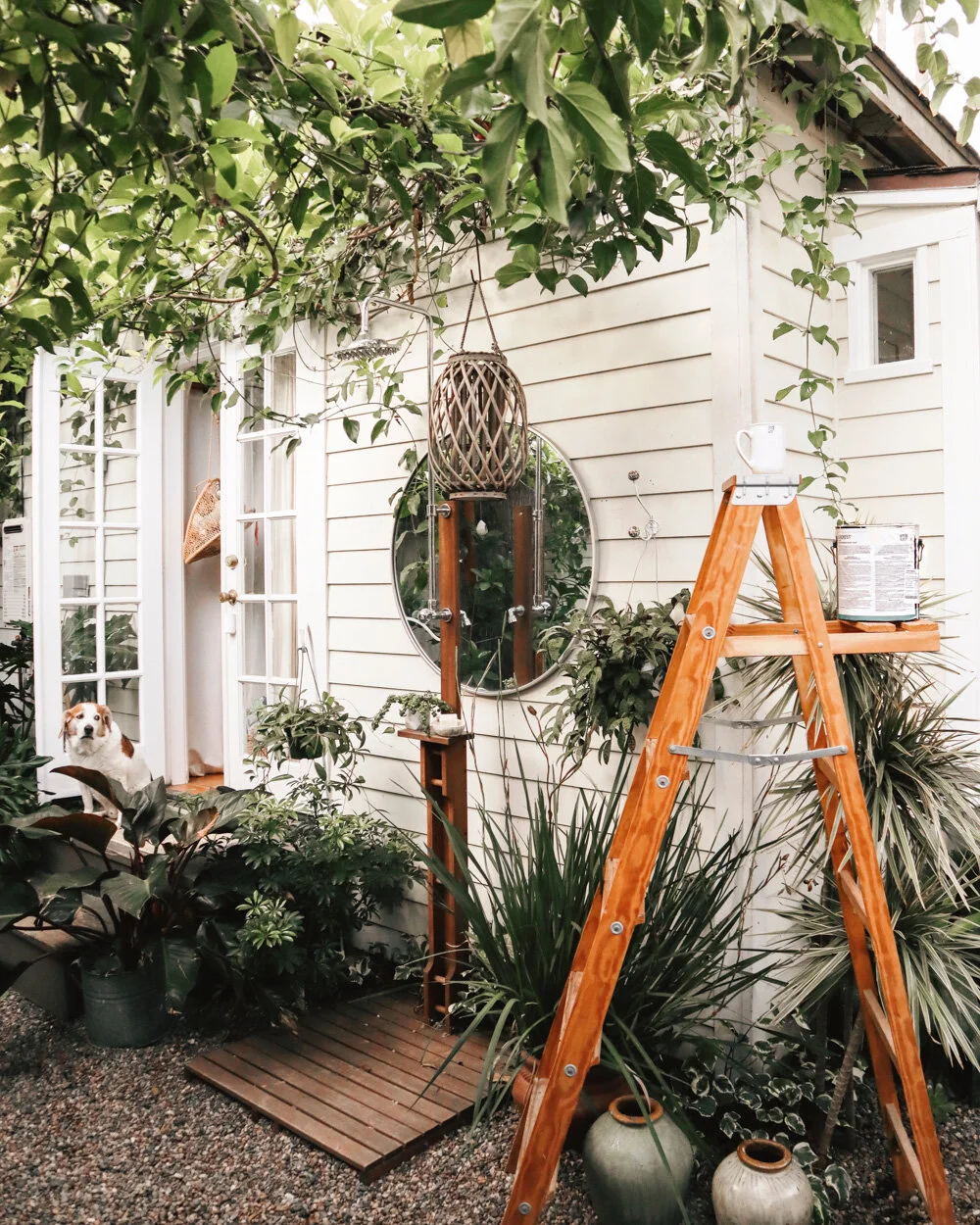
Our house is almost 100 years old, so every now and then it needs a bit of a touch up. I try to use any leftover paint we have on-hand to brighten interior and exterior spots when needed. Since America Recycles Day is in mid-November,, it’s a good time to remind folks that leftover paint can be safely and responsibly recycled for free via the non-profit PaintCare.

In parts of the United States where the non profit PaintCare operates, households, businesses, and individuals can take their unwanted, leftover paint to a drop-off site. From there it is sorted and managed for reuse, recycling, energy recovery, or safe disposal. (There’s even information regarding their protocol for managing their services during the COVID-19 outbreak on their site.)
Visit PaintCare.org to learn how to:
Estimate and buy the right amount of paint for future projects
Store your paint wisely to extend its lifespan
Discover fun projects for using up leftover paint
Donate your paint to organizations that might need it
Recycle your leftover paint

Note: This blog post was not sponsored, but the corresponding Instagram post was paid for by PaintCare.

Vintage and Handmade Homewares for Small Spaces (Roundup 1)
I flat-out don’t like shopping.
There.
I said it.
However, I do find myself looking for handmade or vintage items online or in our local thrift stores when we need a particular something-or-another for the Cottage, and that’s something I rather enjoy.
I don't just browse aimlessly or on impulse. When I shop, I’m on a specific mission. For me, the key is to search for the general function I need an item to serve, rather than search by a item’s dedicated name directly.
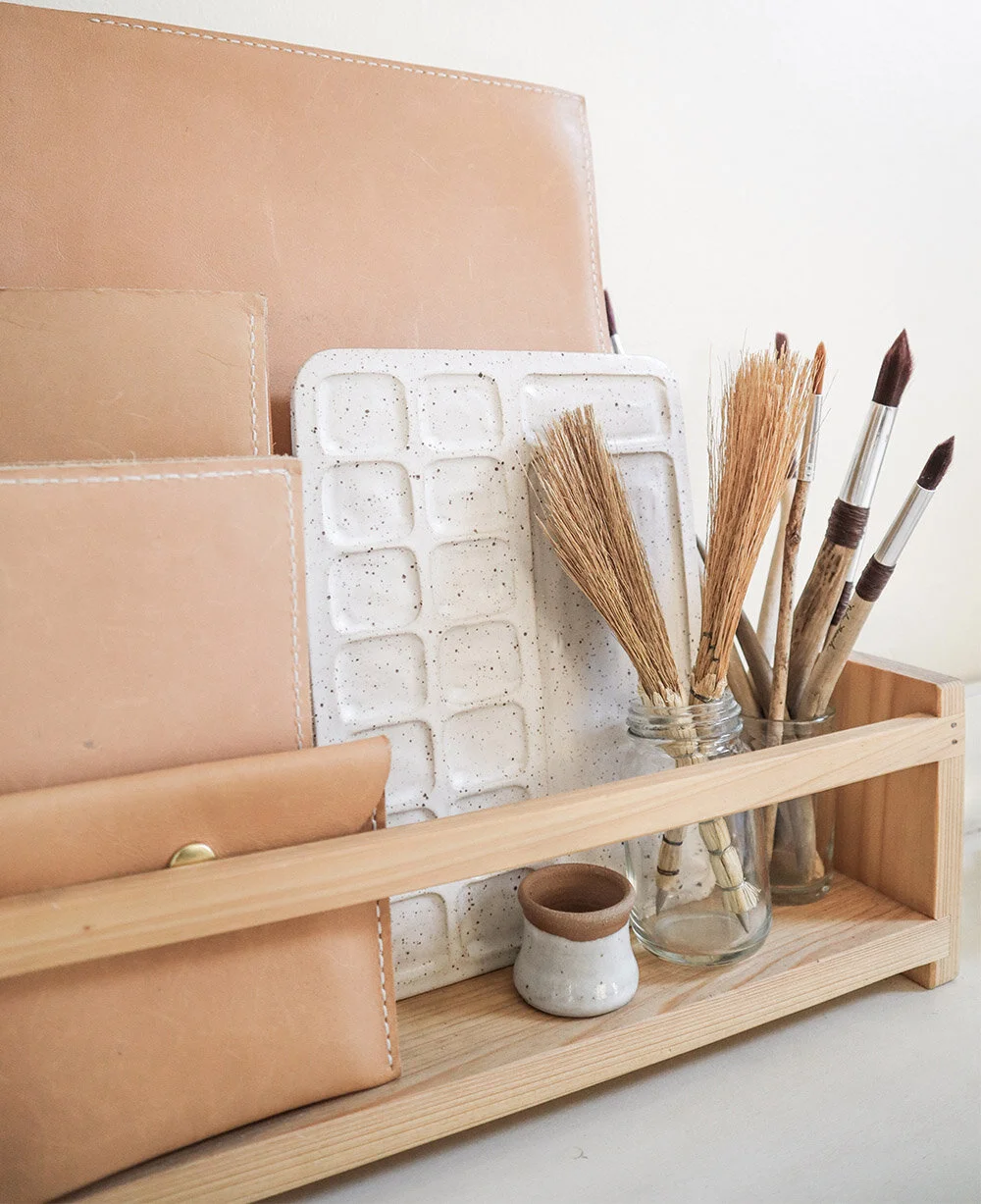
For example, when I need linens that can serve as towels, tablecloths, couch covers, and shoulder wraps, I just search for "linen throw" and explore the results from there, selecting a piece that serve multiple functions while appealing to my aesthetic.

By searching for items via detail and function descriptors, I discover creative and unique homewares that serve the purposes my family needs, in formats I might not have previously considered. This is one of the traits that makes our lil' home so personal and special to us.

Many people have told me that they don’t know “how” to shop vintage or handmade on sites such as Etsy. As such, I’m going to start doing a weekly roundup of beautiful and functional one-of-a-kind vintage or handmade items I’ve found in passing that I like but won’t buy because we already have something similar. My hope is that these roundups help some readers find homewares made by independent artisans or from second-hand curators who have salvaged incredible pieces from within the waste stream, and are redirecting them for a new life.

When purchasing a piece, you can further cut back on the associated carbon footprint by messaging the vendor to assure them you’re fine with repurposed packaging and don’t need any flair.
I’ve chosen to use Etsy for these roundups, as it’s the first major online shopping destination to offset 100% of carbon emissions from shipping.
Kitchen Racks

Garment Racks
Vintage Lap Trays/Desks
Misc. Goods for Kids or the Home

Lower Waste Pet Goods
In recent years, one of the habits we’ve shifted the most drastically is how we select goods for our pups, StanLee and Sophee. For example, we’ve switched from food delivery services to preparing their meals here at home, and we’ve found bags, tools and accessories work well for our their needs as well as our evolving, greener lifestyle. As always, it’s a work in progress— we are constantly learning new information and pivoting accordingly. But the following is our current set of practices, coupled with a product roundup.


LINT BRUSH
After Sophee chewed up our last plastic lint roller (WHY, SOPH?!), I refused to buy another. We now use a wooden lint brush that effectively removes animal hair and lint from clothes and upholstery. It’s constructed from beechwood and natural rubber strips, then bound together with copper wire.

SHAMPOO
We don’t have to bathe the pups too often— a perk of the breed. But when we do, we have a pet shampoo bar that’s effective and virtually waste-free. It comes in compostable, minimal packaging.
WASTE BAGS
We use BioBags pet bags, which are 100% compostable. They’re also fragrance-free, not tested on animals, and packaged with minimal materials.
Our neighbor simply uses junk mail papers to pick up after her pup so she doesn’t have to buy anything new. This is clearly ideal for cutting back on waste and saving money. I tried it once, but it was just too tricky for me to use that method flawlessly when walking through the city with both pups and West.

DESHEDDER TOOL
A decade or more ago, I bought a deshedding brush for StanLee that works extremely well. Every time I do a pass through his coat there’s enough hair caught in the brush to make a new small animal. But this undercoat tool is (unfortunately) wrapped in plastic and rubber from the head to the handle. As such, I’m going to use it until the end of time. No point in swapping it out for something “greener” since I already have it.

BEDS
If you’re at all craft-inclined, a DIY pet bed stuffed with old clothes, towels and scraps presumably isn’t the hardest thing to make. (I’m a total disaster at such things.) But I stopped buying dedicated beds for the dogs. We use West’s old, washable baby blankets/mats for the pups here in the house, and outside they have wicker beds that we can cushion with any smaller blanket or pad. We have one P.L.A.Y. crate-liner style cushion, which was made from 100% recycled materials. That one washable mat sometimes sits on in the wicker bed, sometimes rests on the floor, and sometimes travels with us when we take longer trips in the car with StanLee and Sophee. (No sense in buying multiples if you’re trying to reduce your footprint.)

COLLARS
I wish I’d discovered Ike & Stella’s handmade, updatable collars years ago. They’re easy to refresh when parts begin to age or fray (meaning that they don’t have to be entirely discarded over the years). These sturdy leather-and-metal collars have removable (and sometimes washable) decorative + cushioned slide-on sleeves. I got collars and sleeves for both of the pups last year, and they’re definitely here to stay.

LEASHES
If you’re limited on storage space and wanting to avoid buying new plastics, handmade leashes are a good option. Plus they can be surprisingly pretty if displayed on your walls via hooks when not in use.

FOOD
In the past, we had food delivered for the pups, but the amount of waste it generated was just too much to bear. After first discussing a diet change with the Vet, Adam found a vegetarian recipe to prepare for the dogs. He makes it about twice a week, and stores the batch in the fridge. It includes olive oil, sweet pepper, zucchini, yellow squash, eggplant, egg, rice, cheese, beans, potato, or some combination thereof. (We also keep a tin of kibble in the bathroom, which we mix into Sophee’s dish.)

PET BOWLS
We’re currently using stainless steel mixing bowls for the pups since West broke all but one of the ceramic pet dishes when he was little and I don’t want to buy anything new. But there are many artfully crafted bowls available via Etsy.
TOYS
Adam and I sometimes upcycle worn-out, everyday items into games for the pups, but I’ll also admit that we do still buy new toys for special occasions via a discount retailer nearby. (Not ideal, I know.)

I’ve seen some great DIY dog activities online that don’t require anything new. My favorite find was a cupcake tin filled with tennis balls with a nibble hiding under (or within) one of the orbs. This clever little game will give your best friend a fun challenge to tackle before devouring his or her treat. (Although I myself have never tried it, as I’ve never owned a cupcake tin.)
Here, we sometimes opt for a basic water-soaked cloth left in the freezer and transformed into a cold, soft chew. This is particularly effective in cooling down the pups while also keeping them entertained during the hotter summer months.
Another easy DIY is the ol’ bottle-in-the-sock toy. We eliminated plastic bottles from our lives long ago, but they still randomly surface every now and then, whether via a guest or some unexpected chain of events. When that happens, we insert the empty bottles into a clean but tired old sock that needs to be retired, and this simple toy can keep one or both of our dogs occupied for a while. Ultimately, the bottle goes in the recycling bin. But only a small percentage of plastic is actually collected for recycling, so this isn’t something we do often.


Space Saving, Low Waste Drinkware for All Ages
Our kitchen isn’t tiny, but it is of course compact. One double-door cabinet above our sink holds all of our drinkware.

When selecting our glasses, cups and related accessories, we’ve tried to stick to items that will save space and reduce waste through their versatility and adaptability.

For example, when our child began to drink out of a bottle, I started to notice how many styles of drinkware for children there are. The designs are often tailored to stage and age, meaning they need to be entirely replaced at several milestones. We are certainly guilty of going through a few styles of bottles and cups before understanding what we actually needed, and how we could reduce our waste while saving space within our home. As it turns out, all we needed was a small number of stainless steel bottles that could be adapted for babies, toddlers, kids, adults, and travel via their tops.

Similarly, I had mason jars in use for a job here-or-there around the house, but I also bought soap dispensers, to-go cups, and specialty containers (which all broke or wore out over time) before realizing that the jars could function for years in a number of ways with the help of a minor accessory every now and then.

We now use the same old supply of jars for food and household cleaner refills, for toting our snacks to go, as drinkware (for adults and children), for storing food, as coffee cups, as soap dispensers, as beauty product containers, and more.

We do have a small set of recycled, stacking glasses, as well as some stemware and mugs that were gifted. But other than that, we pretty much use our collection of jars or stainless steel the majority of the time.
Having worked in the event industry and home decor world for years now, I have seen the eye rolls and heard the complaints about mason jars again and again. But on such a strained planet, it’s our responsibility to stop buying new items we don’t need, and to get the most milage and creative use out of what we’ve got.

While this certainly isn’t a zero waste system, it is lower waste than most of what I see on a daily basis. It helps us avoid single use adult and kid cups, and enables one type of object to play many roles, saving us both space and money.
Playful, Low Waste Gift Wrap
In a recent post, I shared visuals demonstrating the simple way in which we wrap our son’s gifts. We use linen napkins, scarves and tea towels from around the house. They’re zero waste, easy for little hands to untie, and once the wrapping is no longer needed we can simply toss the cloths into the laundry bin or return them to our drawer. But what about presents that are destined for homes other than our own?
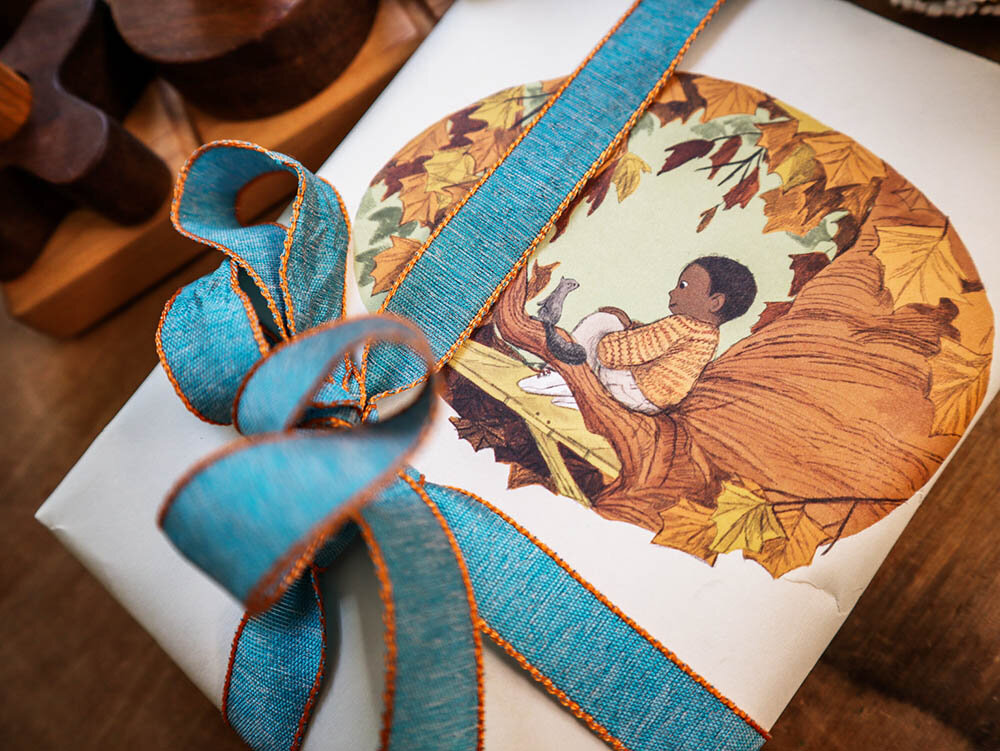
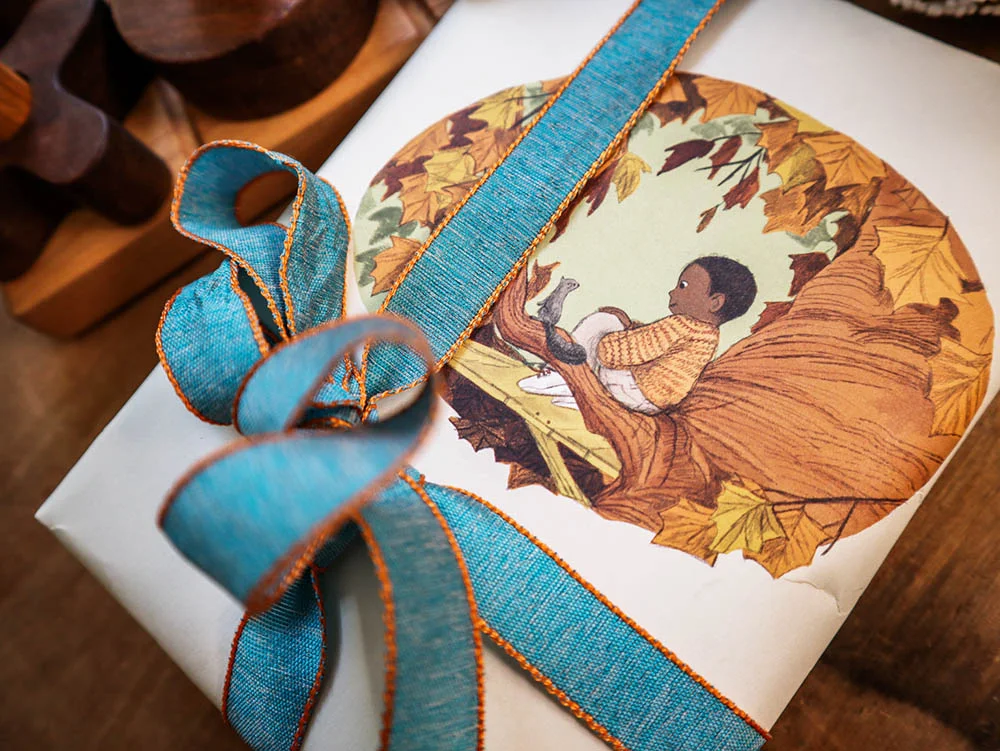
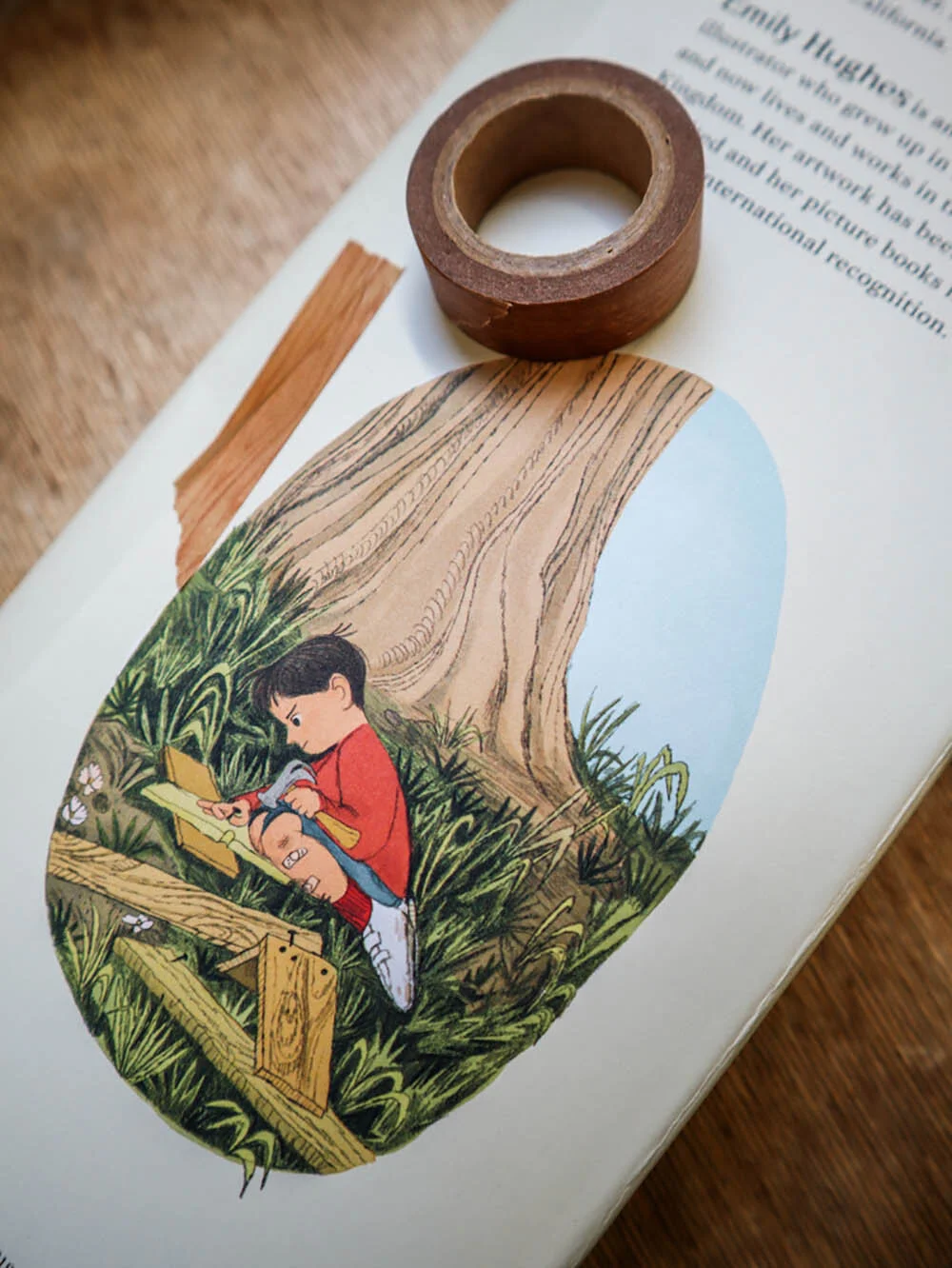
As we head into the holidays, Adam and I have somehow already found ourselves wrapping little items for our friends’ children. Instead of using linens or traditional wrapping paper, we use picture book dust jackets.
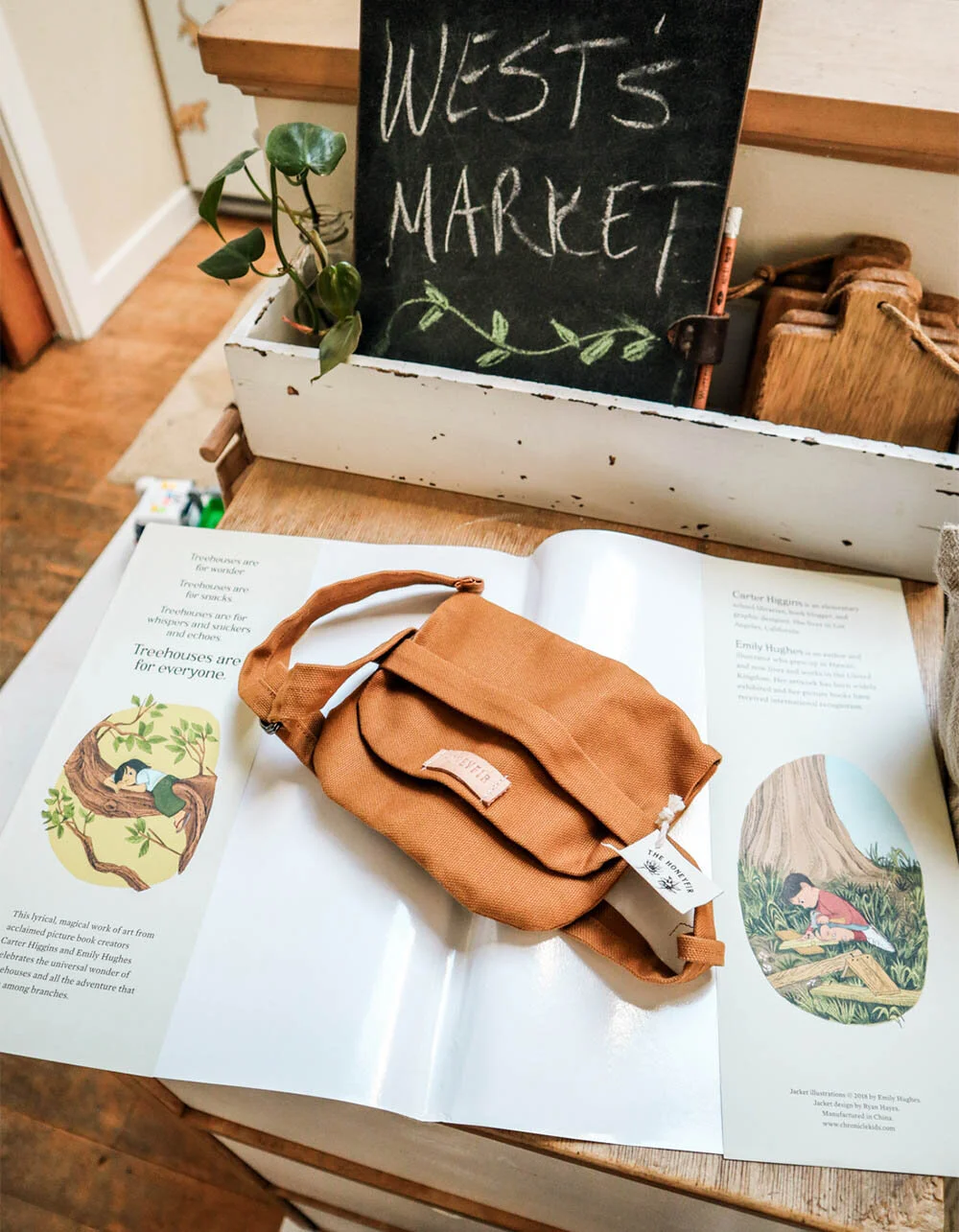
This idea is not new. I’ve seen it before, and I’ve heard it discussed and suggested a few times over the years. But now that our son is 3 and is well into picture books, we’ve accumulated enough beautiful yet impractical covers to create our own little pile of unique wrapping paper.
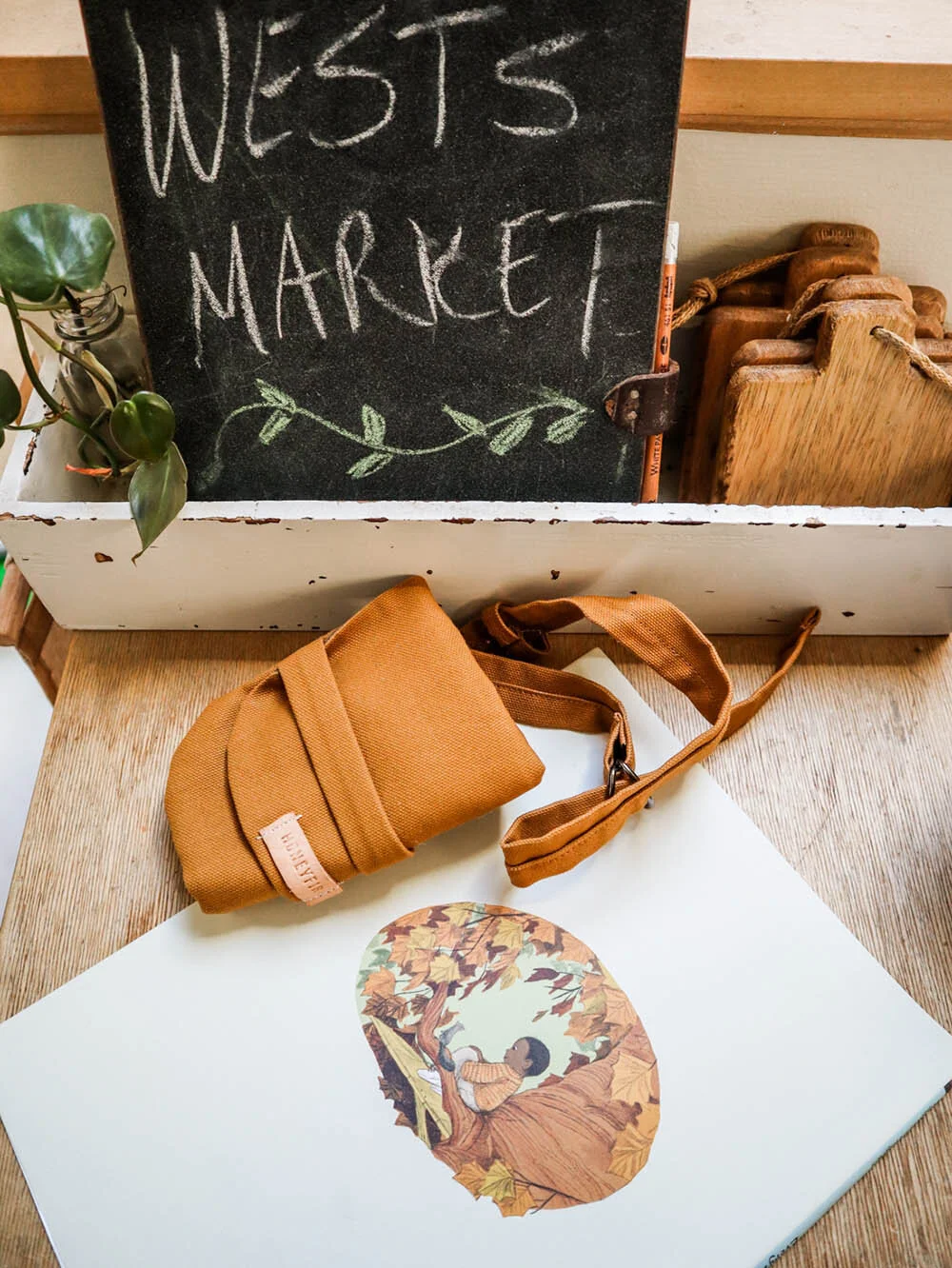
When we get a new book that has a dust jacket, we inevitably remove it within a day or two. I can’t bear to just chuck the paper into the recycling bin, as it’s usually so lovely. Instead, I unfold the paper and lay it under a project board beneath our mattress. (This is the best place for it in our tiny house, as none of our shelves are quite big enough to hold most unfurled pages.)
Earlier this year when the back wall of our bedroom was partially destroyed from water damage, we had to part with the covers we’d been gathering for a couple of years, as they’d gotten damp. It was a bummer, but we’ve already begun to rebuild our collection.
Once we’ve wrapped up an object with a book jacket, we use some spare/repurposed bits of ribbon or twine from around the house, and sometimes top the present(s) off with a sprig of greenery from the garden.
Is the end result perfect? Nah. But is it creative, less wasteful, thoughtful and beautiful? Personally, I believe so.
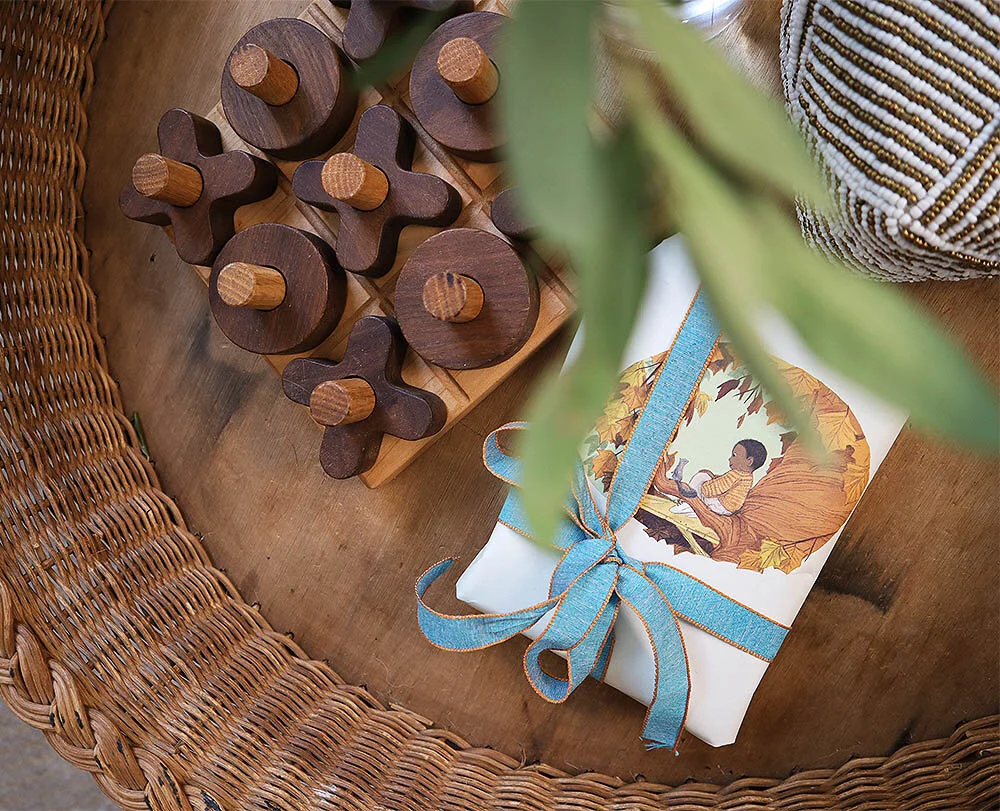
Book jacket pictured in this post: Everything You Need for a Treehouse, written by Carter Higgins and illustrated by Emily Hughes.