
Cloth Diapering (Again!)
We used cloth diapers with our first child, and are happy to return to a slightly modified version of our diapering routing with our newborn. While they’re a financial investment up-front, they end up saving money over time, in our experience.

It's estimated that disposable diapers make up over 2% of the garbage in American landfills each year-- that's millions of tons. One of the key criticisms of cloth diapers is that they require an increase in water to wash, but that amount of water is far less than the amounts required to manufacture new diapers and packaging— to say nothing of the toll of transport and disposal of single-use goods. Parts of cloth diapers must be washed after every use, but shells from hybrid styles can be used multiple times in a row, depending on the circumstance. If a cloth diaper is well maintained, it can be put to use for years and passed on to other families.

Here is a simple run-down of our process and resources.
Diapers
We use Grovia all-in-one cloth diapers. Since it’s not recommended to go more than 2-3 days between washing, we find that we need about 10. We have the newborn styles (which we’ll soon pass on to a friend and/or a Buy Nothing Group), and about 15 of the larger size, which get more use since they are adaptable and grow with the child.

Cloths
We’ve collected reusable cloths over the years, and have a stack of about 25 for diapering. Grovia cloths are super soft and gentle, and we also use some we sourced via Etsy.

Turning Cloths into Wipes
For a gentle alternative to conventional baby wipes, we spray this all-purpose solution onto a moist cloth. We also have a stack of Water Wipes in case we’re out of any supplies, or if we’re on-the-go.

Changing Surface
We prefer Gathre mats for changing, and always have 1 hand on the baby since there are no safety straps. We have one padded mat, and one foldable mat that can be used on softer surfaces.
Rinsing + Storing (after use / pre-laundry)
After changing the baby and relocating her to a safe spot, we rinse soiled diapers above the toilet with a handheld sprayer / bidet nozzle. This ensures that no major messes make it into the washer/dryer. (It takes about 5-10 minutes to install, and works with most toilets.)

Mop Bucket
We temporarily store rinsed, used diapers in an open-top mop bucket (which we suspend from a shower curtain rod in order to save space) so they can breathe. After emptying the bucket for laundry, I spray the container with an all-purpose, non-toxic solution and let it sit while starting the wash wash. Then I wipe out the bucket with a washable cloth so it’s clean and ready for the next round.
Solids
To catch solids (to then dispose of in the toilet), we prefer bioliners. They’re not zero waste, but compared to a full disposable diaper, these dryer sheet-sized liners aren’t hugely wasteful and make cloth diapering much more doable for folks who wash at home. One roll of liners lasts a long time.

Laundry
After removing fecal matter from diapers via our rinse method (outlined above), we run diapers on rinse/spin cycle on cold with no detergent. Then we wash using hot water and 1 Tbsp of concentrate, and 1-2 scoops of Oxygen Boost. (I personally am not obsessed with keeping the diapers pure white. As long as they’re clean, I’m not bothered by slight discolorations when they happen.)

Drying
When possible, we dry the diapers in the sun on our retractable clothing line. It helps bleach the cloth while saving energy.

Travel / Diaper Bag
We tote a zippered wet bag around for used diapers while on-the-go.
Averting Fuss
Our newborn is too young to require entertaining during changes. However, when our son was of an age when he needed some entertainment to get him through the cleanings, we showed him musical greeting cards that folks had sent him over time. They offered plenty of amusement with no need for a screen.


Our Newest Family Member
Post Summary: My shortened, high-risk third trimester, my attempts to engage in hypnobirthing practices during an induced hospital birth, how our family navigated the NICU experience, and how overjoyed we are with our baby’s safe arrival.
I’m pretty sure that this is what magic looks like, folks. Introducing the new member of our cottage crew, little Léa (pronounced “lay-uh”) Lou:
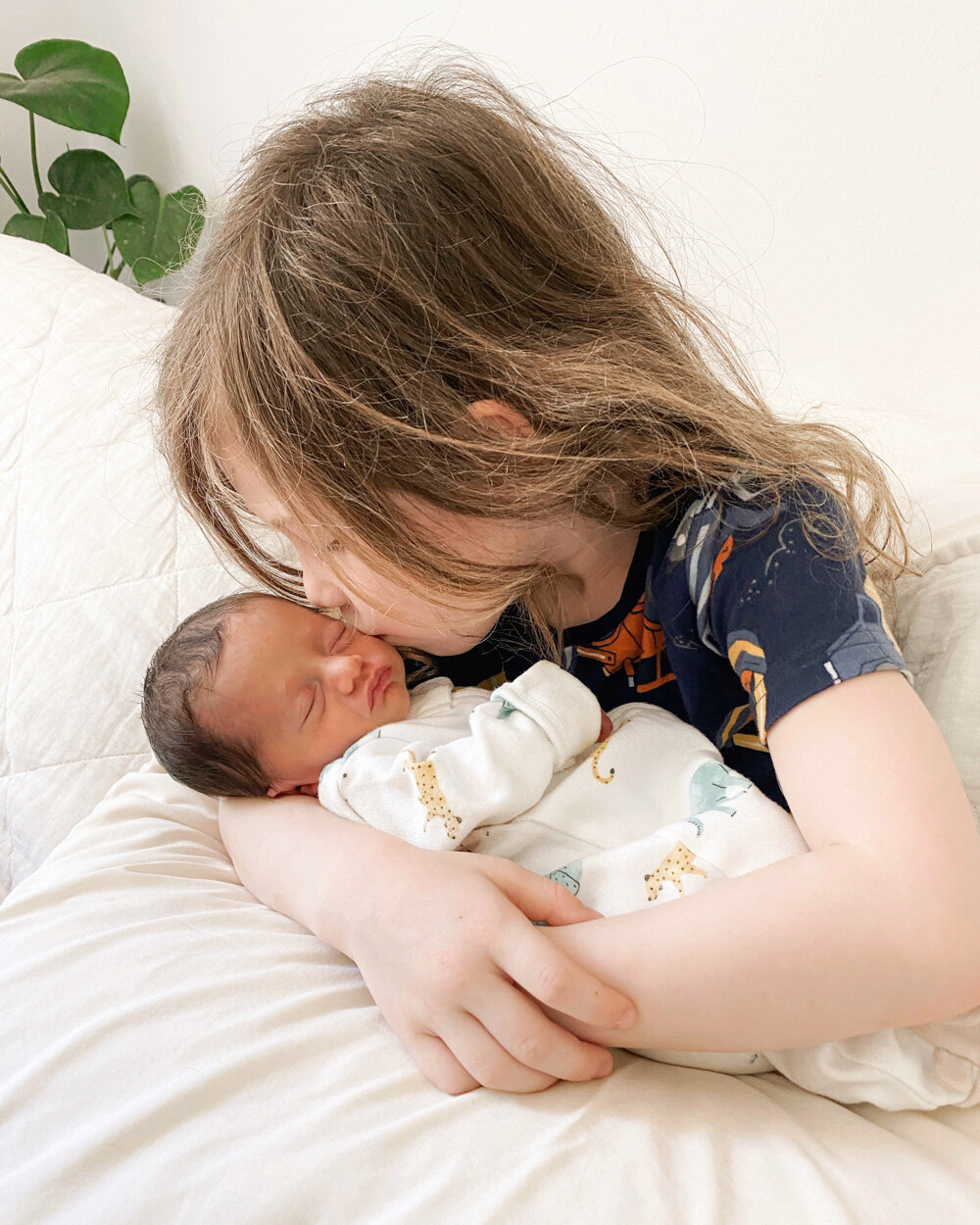
Today is Léa Lou’s original estimated date of arrival, but she was born three weeks ago through induced labor.

PREGNANCY & COMLPICATIONS
When I was 29 weeks pregnant, we had a medical scare that set the pace for the remainder of my time carrying. What had initially been labeled a “normal” elderly multigravida pregnancy for the first two trimesters was then revealed to be truly high-risk, as it turned out that our baby was classified low birthweight, and measuring below the 1st percentile across several parts of her body. While identifying her fetal growth restriction (known as IUGR), the doctors also discovered that I had a 2-vessel umbilical cord, which was the only contributing factor we could pinpoint regarding WHY my baby was so extremely small. (It was especially perplexing, as I’m nearly 6’ tall, and my husband is several inches taller than I am.)
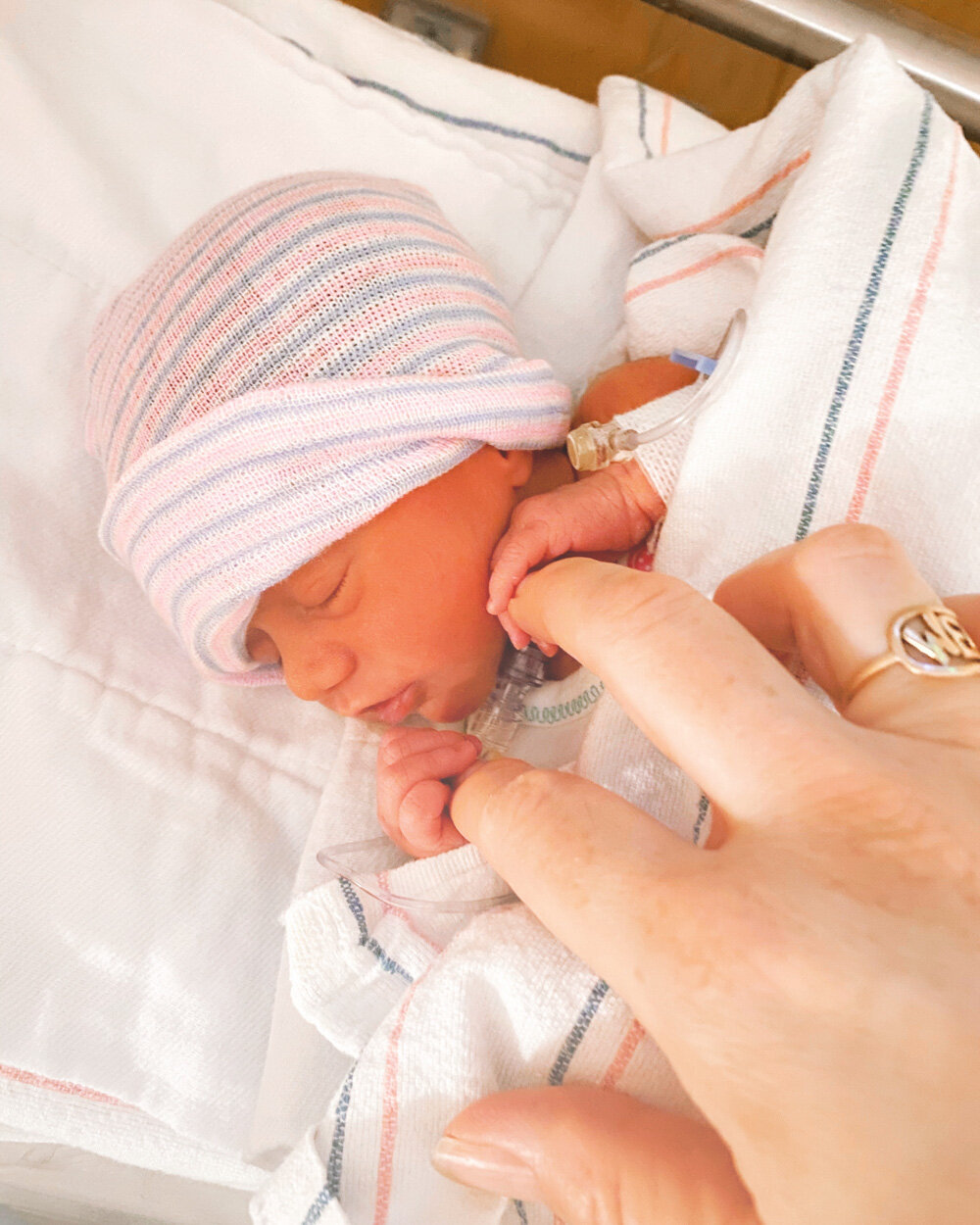
From then on, I went to the doctor twice-weekly for fetal heart rate monitoring, blood pressure checks (always normal), and routine evaluations of the baby’s measurements, weight, and practice breathing capabilities. Every visit carried with it the possibility of emergency induction, but, thankfully, it never came to that.
LABOR & DELIVERY
Over time, our family and the medical team dared to hope that the baby was simply on her own timeline, and growing small with no other health complications. Still, I’d been advised to remain on alert for a potentially urgent delivery— possibly via c-section, if it appeared that the baby’s tiny body couldn’t handle the stress of the journey through the birth canal.

When I reached week 36, I was scheduled for an induction for week 37.
I practiced hypnobirthing with West, and had been planning the use of similar labor techniques for this upcoming birth experience. Inducing labor was not part of my vision, but it become apparent that the benefits of delivering our baby early outweighed the benefits of maintaining the pregnancy until full term, as her growth remained alarmingly slow.
I was induced with Pitocin and the use of a foley bulb, which is a catheter that’s inserted into the cervix. Both were unpleasant, but the other elements of the birthing process were as wonderful as I imagine a hospital birth could be.

As I’d hoped, I was able to labor without the assistance of pain management medication, just like I did with West. However, this decision wasn’t without risk. By foregoing an epidural well into the delivery process, I was making a gamble. If the baby needed an urgent C-section that far into labor, I would have to be fully put under for the surgery, and Adam wouldn’t be allowed in the operating room. Our child would be born without a parent witnessing and having a voice at the birth.
But I felt confident that our baby knew what she was doing, and that— again— she was simply on her own timeline.
During active labor, I focused heavily on my breath, and on breathing the baby down. I listened to breath-work audio tracks and a small selection of music via my AirPods. I managed surges by picturing myself in the ocean, pressed fluidly against firm but safe currents and waves. And, randomly and unexpectedly, I also found myself mentally choreographing movements that corresponded with the songs playing, which also helped guide me through the contractions in a meditative-like state.
When I progressed to the stage that’s almost entirely debilitating, Adam and the incredible medical staff were there to encourage and support me. They did so with respect, allowing me to maintain a sense of dignity as a birthing mother in a highly medicalized environment. I remember expressing my gratitude to them in moments between rapid contractions, as I felt exhausted but overall relieved and empowered thanks to their expertise and approach.

Although Adam and I had a few favorite names standing by, we agreed to wait until we met our baby before assigning one. But, in the otherworldly moments of the final push that ushered our hummingbird into this world, I surprised us all by instinctively crying out Léa without conscious thought as she transitioned out of my body.
It was with the greatest relief that we were able to witness her beautiful little body entering this world— tiny, but healthy.

A Week in the NICU
After some precious minutes nursing, as well as skin-to-skin time with Adam, Léa was tenderly relocated to the NICU. Even though she wasn’t technically a preemie at 37 weeks + 1 day, her low birthweight resulted in some similar conditions to that of premature babies. For example, our daughter was having issues regulating her body temperature, and she had newborn hypoglycemia (as we were warned she likely would).

I spent the majority of my 2 recovery days/nights in the hospital by the side of her bassinet, feeding her every 3 hours between her blood tests, temperature checks, and other newborn exams. The IV and needles were tough to accept as a parent, but as I looked around at the other babies in the NICU, there was no way of losing sight over how fortunate our family was. We were alerted to the details of worst case scenarios, but she sidestepped them all. There were a few sleepless nights when our daughter toed the line of needing further medical intervention, but she always pulled across the required thresholds in the end.
The skilled NICU nurses and staff worked 12 hour shifts, and there was almost always someone near Léa’s station. Adam spent the days with West and the early nights by Léa’s bedside. After being discharged myself, I drove back and forth to the hospital multiple times per day to nurse the baby and deliver pumped milk.
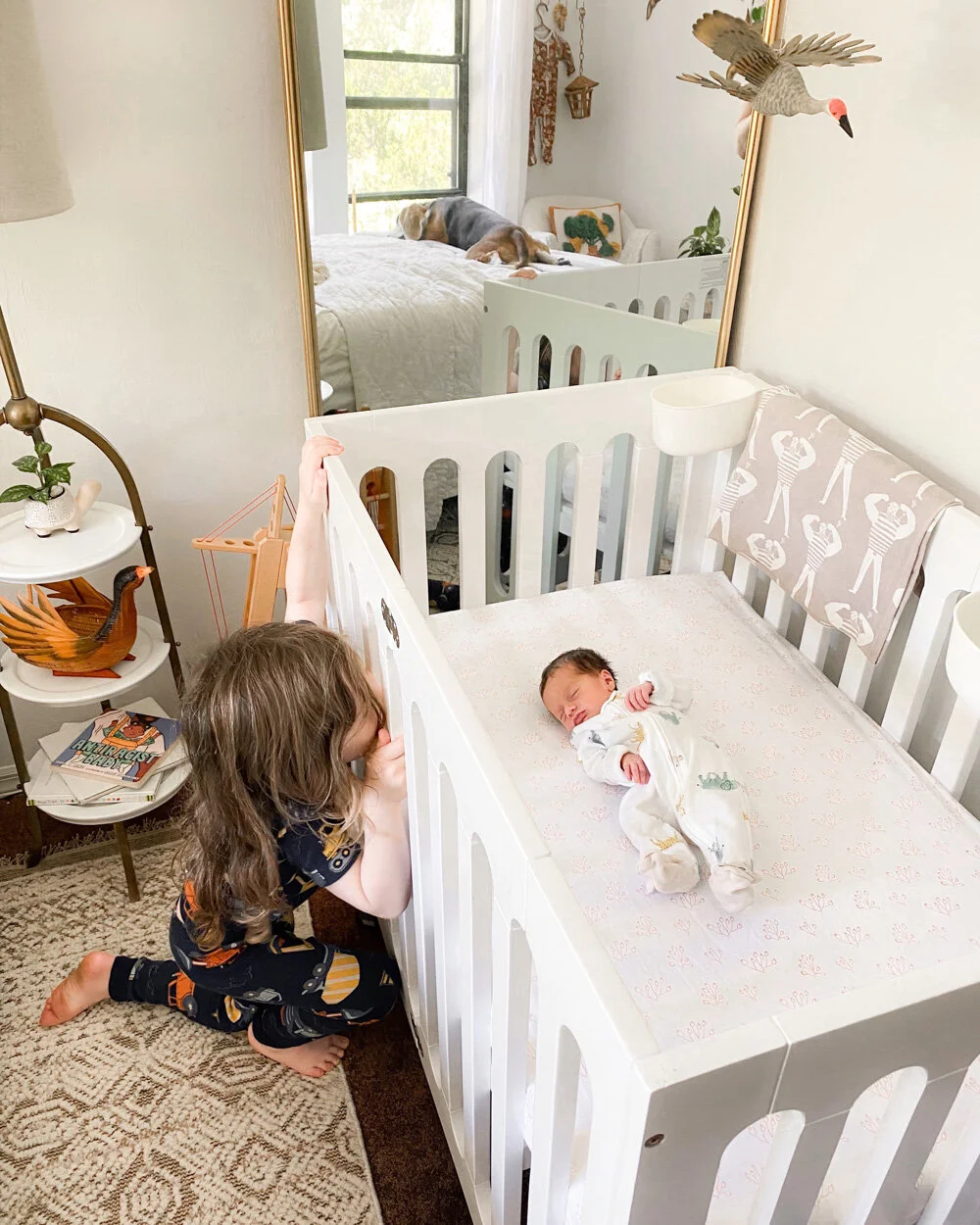
After Léa regained the ounces lost after birth, along with an additional ounce to get her to a carseat-safe weight, we were permitted to take her home. Our tiny NICU graduate left the hospital with warm encouragement from the staff, and even soft cheers from passers-by.
As I sit here typing this with my daughter on my chest and the laptop on my thighs, I still can’t believe she’s here-- our mighty Léa Lou, a 3lb, 15oz (now 5lb!) miracle who takes my breath away and completes our family.

Acknowledgement of Privilege
Meaningful and tangible support is not provided for all pregnant women when it’s needed most. Systemic and interpersonal racism in America have lead to disparities in maternity care that result in a higher risk of complications and death for Black women and women of color. We are not powerless to help rectify this issue. Our voices matter, independently and collectively, so let’s get + stay vocal about the fact that equitable care must be accessible for all. Our elected officials are meant to represent us, so let’s champion those who support anti-racist policies that are geared towards a safer existence for women and children of color from conception through all stages of life. Visit Every Mother Counts for more information and ways to take action.