
Packing Carry-On Only Bags for Family Travel
Packing light for air travel with children.
When I showed glimpses of the carry-on only luggage that our family took to the Tiny French Farmhouse this summer, I received a cascade of unanticipated comments and questions: “How?” “Impossible.” “Packing list, please.”
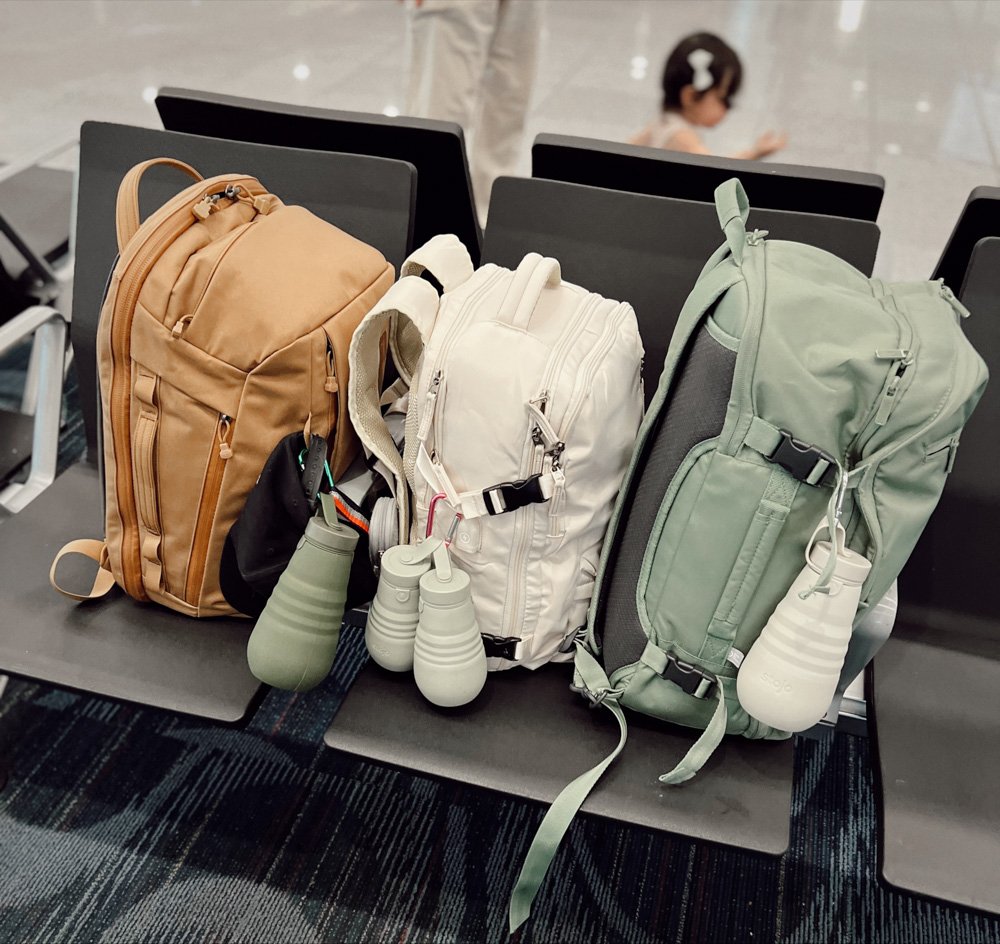
First and foremost, we have somewhat of a cheat when it comes to packing for this particular destination, as the farmhouse is our home and we plan to leave items there over time for increasingly lighter packing in the future. However, since this was only our second visit — and three out of four of us have VERY different bodies and needs than we did the last trip — these were pretty much fully packed bags.
Since most of us are operating on minimal mental bandwidth these days, I’m breaking down what/how we packed into simplified categories below:
BAGS
3 backpacks:
~25L juvenile overnight-style backpack (I wouldn’t recommend the one we have — but this one would’ve worked better.)
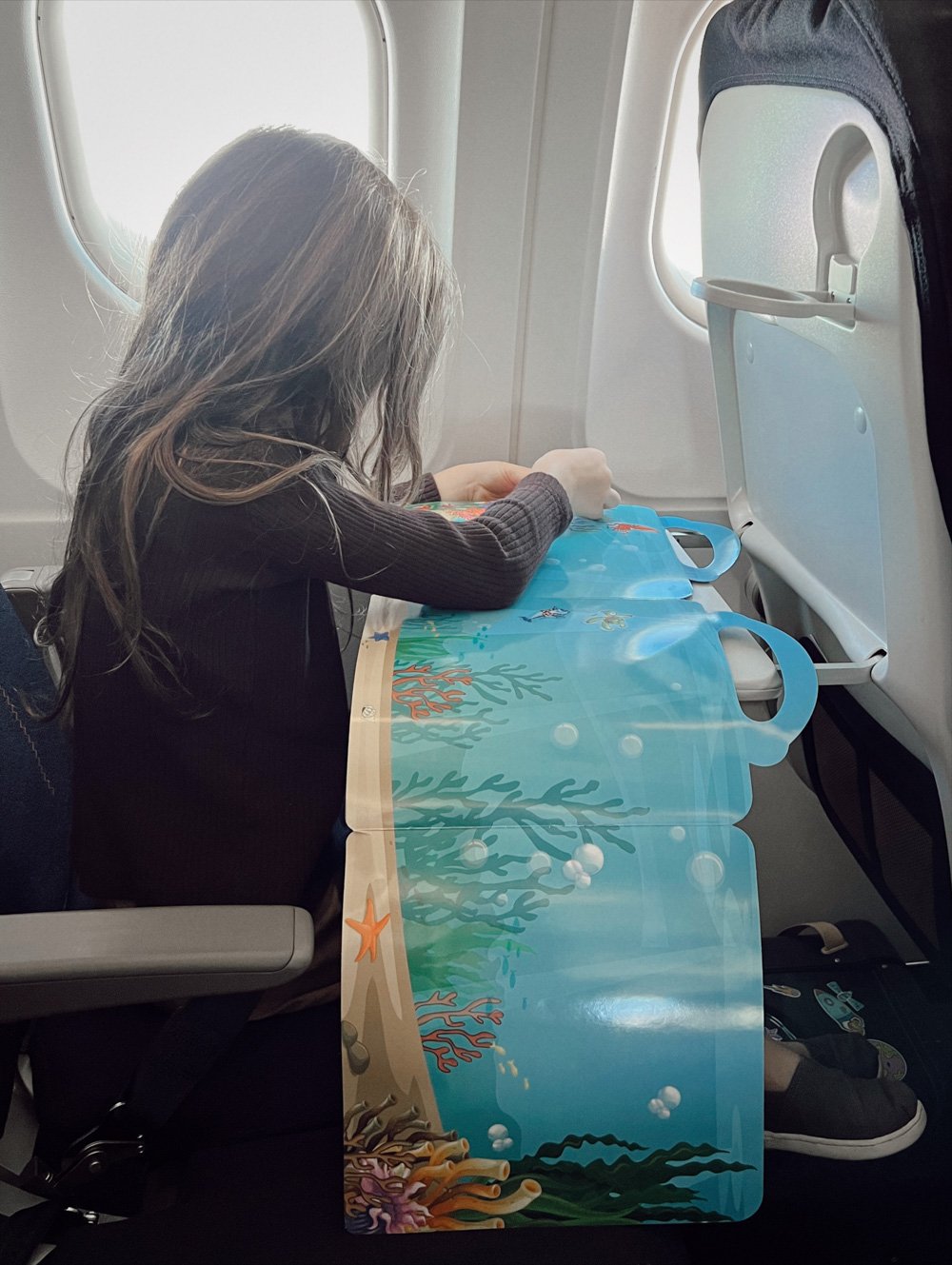
1 kid’s ride-along convertible suitcase / seat extender
1 washable paper catch-all Palermo tote by UASHMAMA for miscellaneous overflow items
Baby Carrier Mini, in lieu of a stroller (Note: our youngest is small — please read specifications to find a carrier that suits your child.)
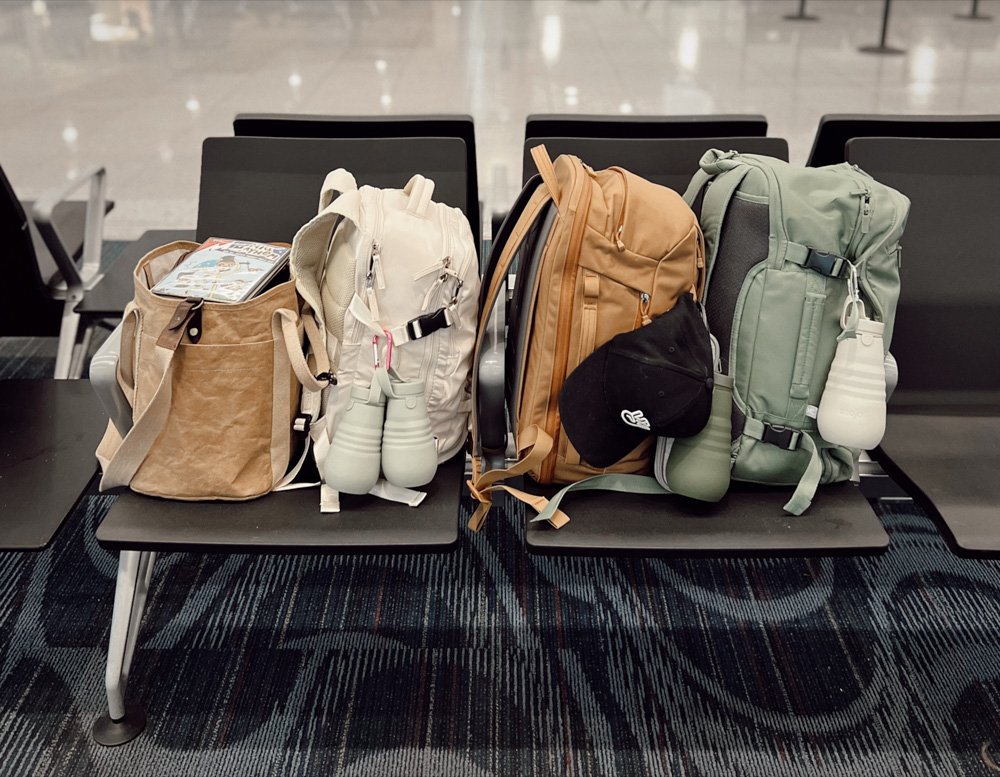
BOOKS
While I prefer hard-copy books, Adam and I use an e-reader for travel
For our baby/toddler: Indestructibles (lightweight, slim, flexible, waterproof)
For our young reader, paperback library books / series selected for content AND weight/size

FOOD + BEVERAGE
2 Stojo adult collapsible bottles, latched to backpacks with carabiners
2 Stojo children’s collapsible bottles, latched to backpacks with carabiners
1 Stojo collapsible, lidded bowl/to-go container
4 Sets of to-go cutlery with straws and washable napkins (minus the matching knives
1 Set of beeswax cloths

FOOTWEAR
I find that shoes from the following brands usually travel + wash well, as they’re slim but sturdy and flexible:
Rothy’s
AllBirds
Bensimon
FEIT slippers
Note: Rothy’s — both the men’s and women’s styles — are also versatile for dressing either up or down.
TOILETRIES
Shampoo + conditioner bar
All-age tin of sunscreen
Toothpaste tablets
Travel first aid kit
One shared travel-sized bamboo brush
Menstrual cup
LastSawb ear swab
Cadence magnetic honeycombs for smaller/specialty liquids.
A clear Stasher bag for all bottles, for easier TSA inspection when required. We then wash and use the bag for other things while abroad.

Above: A TSA-approved size bottle of multi-use Branch Basics cleaner from concentrate for use as detergent and more
TECH
We kept our tech to a minimum, editing cords and plugs and sharing as much as possible between necessary devices. We use a portable, zip-around cord book / organizer to keep everything streamlined.
TOYS
We repurposed small canvas pouches and reusable clear baggies to further organize and corral figurines, activities for fine motor skills, reusable-sticker books, and art supplies. All the pouches fit in the ride-along case with room to spare, since everything becomes undone in travel and needs to fit pell-mell, too. Once in France, we use the pouches and baggies to syphon off activities for car rides and unexpected waits while out-and-about.

CLOTHES + OUTERWEAR
This is so specific to preference, region, time of year and individual needs that I see no point in getting TOO specific. But since we knew we’d be able to wash our clothes, we only needed the following:
A TSA-approved size bottle of multi-use Branch Basics cleaner from concentrate for use as detergent and more
3 days worth of outfits each
1 overnight outfit each
Specialty gear like swimsuits and water-repellent jackets

9 Tips for a Lower-Impact, Practical, Temporary Living Space
Ways to make a temporary space function efficiently and less wastefully through planning, decor, creativity, and patience.
We’re starting off the new year exactly as we closed out the previous year…. in limbo. (I should note that I’m typing these words with a lack of gusto, but no lack of gratitude.)

At this point last year, we started packing up our holiday decorations at the Tiny Canal Cottage and, once the festive frills were gone, we simply kept packing. We eventually wrapped up our small business and 10 years of life into a fraction of a shared, cross-country moving van, and relocated too a temporary space on the East Coast. (Read about our attempt at a low waste, long distance move here.)

The space was meant to be our home for around six months while we awaited the build of a little ADU cottage in the woods of North Central Florida. However, we didn’t find a general contractor for months, as new construction is having a (stomach-turning, tree-uprooting) boom in North Central Florida. Then permit process took an additional five months, and — on top of that — global supply chain snags then came into play.

So six months turned into eleven, and here we are. But the build is, thankfully, FINALLY underway.
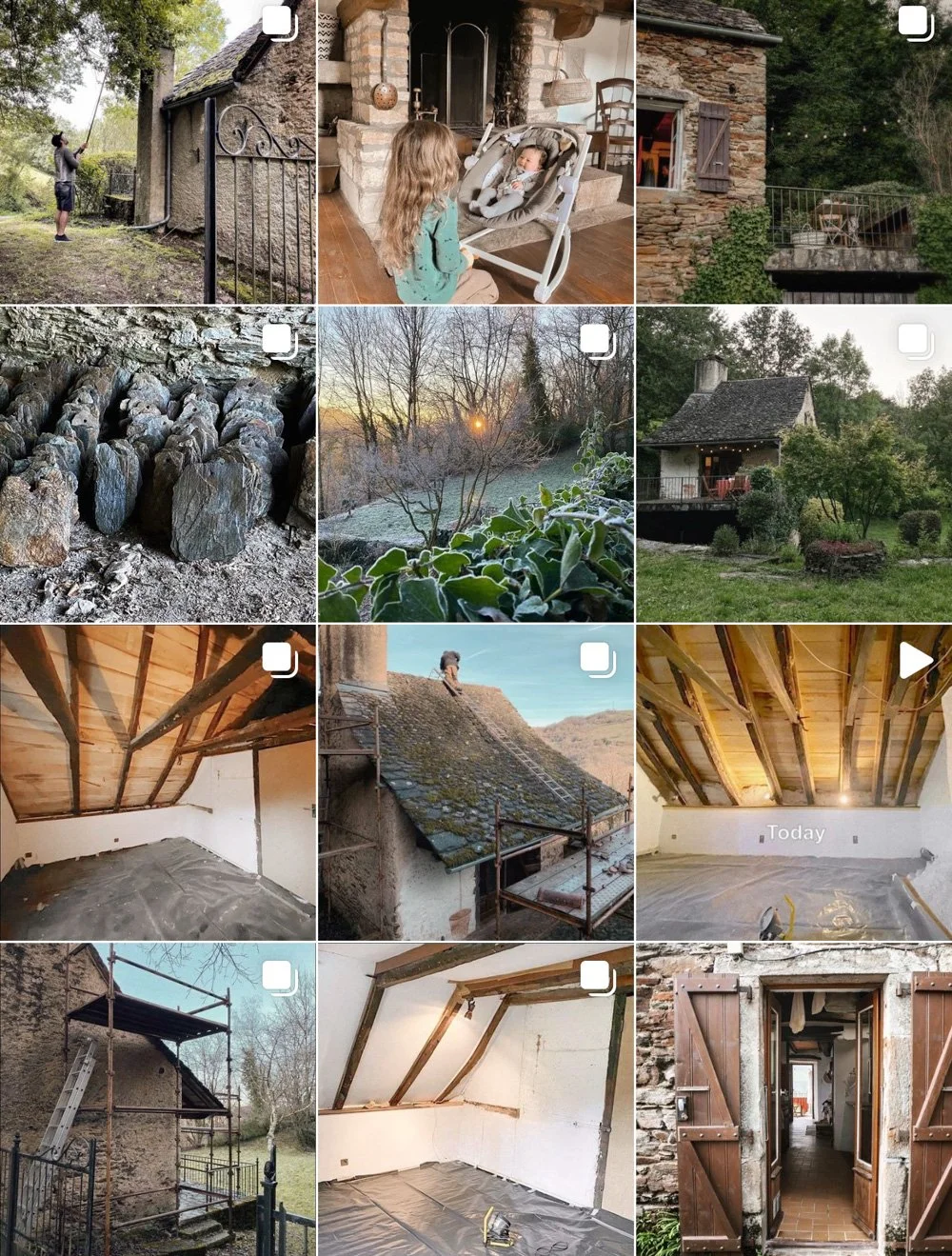
Surprisingly, we’ve had better luck in France with our little, shared Farmhouse. Thanks to our long-standing roots in the region, we quickly found local contractors and friends to begin the restoration of the our little, shared farmhouse since we can’t be there year-round just yet. I’m giddy with delight that this unique project is humming along marvelously, and I’m publishing regular updates on a secondary Instagram account: @TinyFrenchFarmhouse.
Overall, 2021 was a doozy of a year for us to uproot our lives and dive willingly into a state of ongoing upheaval. But the situation, while not ideal, has certainly had some very significant perks. All in all, I believe the move was the right decision. But the right decision is often not the easiest one to make, and this has been a bumpy road to traverse.
As someone with a full business and career in the Home industry, I’ve been looking for ways to take this experience and turn it into something helpful. I’m still seeking the mental bandwidth and available moments to conceptualize and execute whatever that would look like. So, for now, a humble blog post will have to suffice.

As far as personal matters are concerned, my main concerns regarding our temporary living arrangements were two-fold:
How would we make a temporary space designed for adults FUNCTION well (and safely) for us as a family with a pre-schooler, a newborn, two dogs, and a small business?
How would we keep environmental impact light without our usual belongings, practices and habits in place? (Especially during the pandemic, and in a far less eco-minded community than we were used to.)
Note: Before I jump into the following takeaways, I should distinguish what I mean by a “temporary space.”
First off, I’m not a young graduate just starting out on my own, nor am I in an industry that requires me to travel often for long stretches of time. I’m 40 years old, and I have a family, as well as a business based on the Art of Home. As such, I had believed my days of nomadic living to be behind me.
Secondly, technically our Tiny Canal Cottage was temporary, as we were renters who could’ve been asked to vacate at any time. But, despite the fact that we rented, it was our HOME. We knew that we wanted to invest in it as fully as possible, because we intended to live our lives to the fullest there as long as we could.
Our current situation is like a bridge for us. We’re slowly crossing over, sweetly mourning the life we left (as I expect we always will), while excitedly tackling two very different living projects ahead of us. The rooms to which we currently have access are not open for us to transform as we normally would. I liken our current existence to living in a loving, comfortable Airbnb. We’ve moved in and are using it to the fullest, but it’s not our own.
So, with that, here’s some of what I’ve learned, hugely condensed.

Don’t Be Trapped by a Space’s Intended Use
As is often the case with a small space, temporary living situations might need to multitask, or function in entirely different ways than their intended use. And that’s okay.
It’s. Just. Temporary.
For example, we’re using the upper floor of a single family home. The kitchen is on the ground floor, and the sounds from it carry throughout the entire house. When I was expecting the arrival of our second child in April, I knew that the last thing I’d want to do after breastfeeding and then pumping every two hours is trudge up and down the loud stairs in the middle of the night while exhausted and attempting to not wake the dogs or disturb the rest of the household. So I had to find a way to lightly convert part of the second floor bathroom into an area where I could clean / boil / dry pump parts, safely store breastmilk until he morning, and so forth. Was all this the stuff of Instagram dreams? Definitely not. But did it work just fine, while keeping everyone else asleep and preventing me from tumbling bleary-eyed down the stairs at 3am? Yes indeed.
Fully Ignore Decor Rules
To piggy-back on the above, sometimes you just need a means to an end in a space that’s not yours, so go ahead and break the rules if that’s what works. In our case, we have access to two bedrooms (filled with furnishings and items that aren’t ours), but the typical two bedroom layout was no longer working for our daily lives based on safety of the children and various parenting responsibilities. So Adam and I recently squeezed the provided queen bed + full bed, and our daughter’s crib into one (packed) room, freeing up a safe play area for both of our kids in the remaining bedroom. For now, it all functions exactly as we need it to, and we can put up with the unusual layout since we know it’s not forever.
Note: Our farmhouse and future cottage only have 2 bedrooms as well, but we will have the ability to equip and arrange them in a way that suits everyone’s needs.)

Pack with a Plan / Take What You Need
I’ve never been a fan of storage spaces. Ashlee Piper goes into the waste and excess involved in the storage industry in her book, Give a Sh*t, which I both recommend and refer to often. But my family has had to keep the vast majority of our belongings in a storage unit for the past 11 months while our little cottage is still being constructed and the shared farmhouse is being restored. Knowing that this would be the case for quite some time, we wanted to prevent financially and ecologically wasteful practices, like the repeat buying of items we already own but lost track of in storage, or keeping reusable goods tucked away in moving boxes while we churn through single-use alternatives for the time being.

So we planned accordingly, either dragging what we needed with us in our suitcases across the country, or making sure that the moving boxes we needed most for our attempt at a lower waste lifestyle were clearly marked and easily accessible upon pickup and delivery.

Plan for Setbacks
What we didn’t plan for was the (very) extended time our Cottage construction would take, so we failed to wisely pack and mark our first child’s hand-me-down items for his little sibling beyond a certain point. In other words, we considered the need for access to newborn goods, but not 9+ month goods. Same for seasonal garments. While there is only so much we can accommodate in our temporary space, we could’ve better planned the packing, labeling and placement of things we’d need if and when our finish line became pushed further back.

Do What You Can (Within Reason) via Limited Decor
Functional decor such as plants, portable lighting sources, mirrors, bedding, and rugs can make a large impact in both the look and feel of a room. If these are items that you already have on-hand, or ones that can be repurposed in your next space, why not go for it— temporary space or not.
Find a Stop-Gap with Extended Uses If Needed
Our homes can make all the difference in our lives— this why I love what I do for a living. If a living space is preventing you from being able to function the way you need for your mental health or livelihood, perhaps search for a stop-gap if possible. (A rental studio, an external office, a gym membership, a library card, etc.) Personally, I need a small space for my job of course… but small spaces are also my muse. For whatever reason, I feel infinitely more creative in limited square footage. This is one of the reasons why we built our 114 sqft greenhouse over the summer. It scratched an itch both personally and professionally, while also providing us with a versatile structure that we’ll hopefully have the opportunity to enjoy in evolving ways for years to come, extreme weather events permitting.

Set Ego Aside
I’d flat-out be lying if I said I didn’t struggle with our current setup. Again, I’m ever-so grateful, but it’s still a pride-swallowing situation as a 40 year old who is also the main earner in the family to tuck her family and business into someone else’s home. However, I can say with all sincerity that when I take external voices and societal pressures out of the picture and just listen to my family’s needs, this situation is 100% fine for us for the time being. We’re learning what we need — and don’t need — in this region and community, and we’re experiencing incredible moments as a multi-generational family that will stay with us forever.
Stick to a Budget
It can be tempting to go all out in a temporary space. (“I should add some on-trend bead board! This carpet has to go! That lighting fixture is not my style!”) But if you know for a fact that a more preferable living situation is just around the corner — and if budget is a consideration for you as it is for us — then consider every decor and design project you forego in your current space to be another project you can tackle in your more accommodating future home.

Work With What You’ve Got
Look around you to find the hidden uses and unexpected joys of your temporary space.

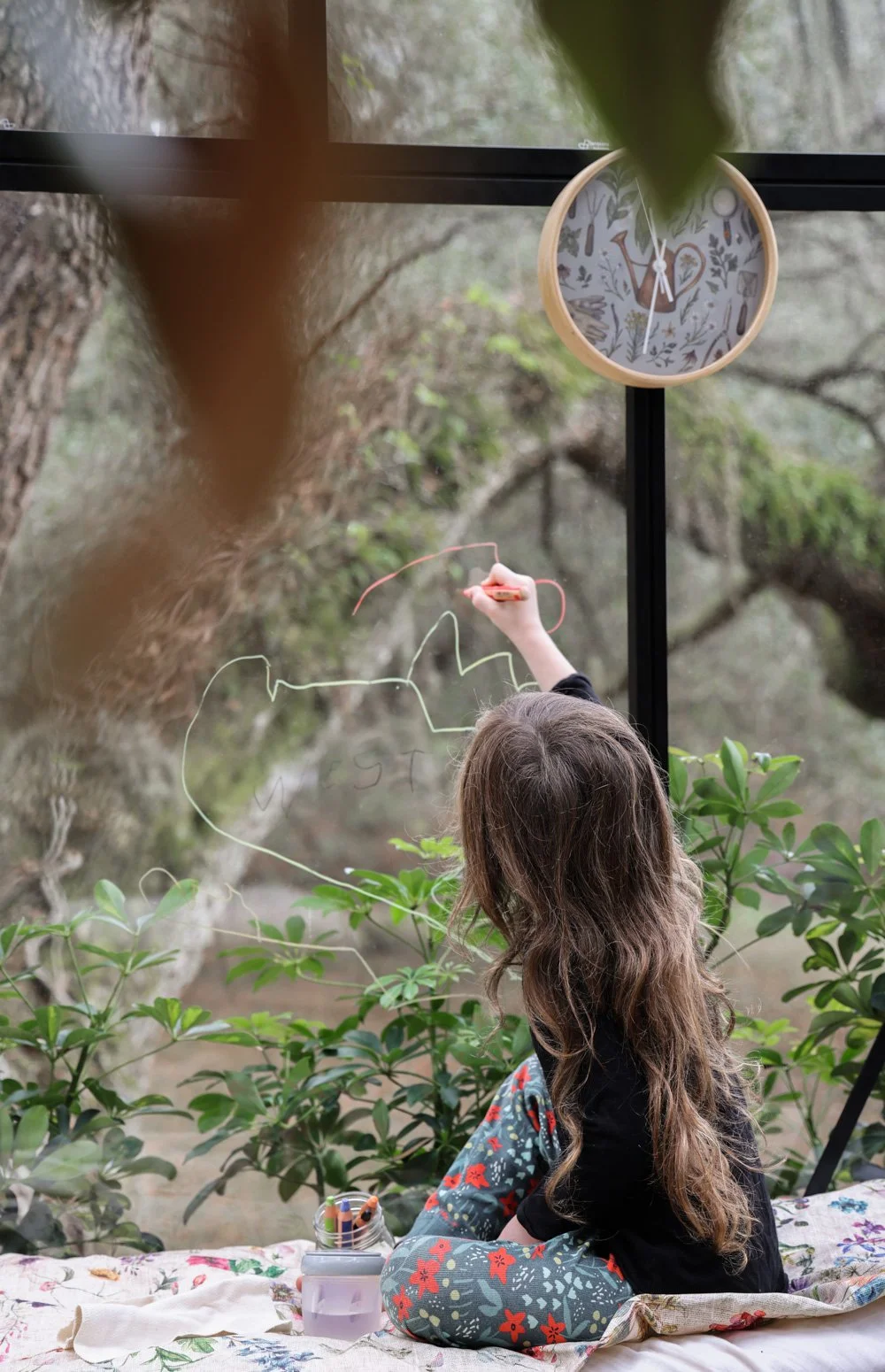
The following is an extremely specific example, but I think it’s a good one: Our Venice cottage had a built-in bed with an integrated headboard that turned out to be a perfectly cushioned spot for hours and hours of playing games of suction cup darts with our little one. Now he uses zero waste Stabilo art sticks to safely draw on the greenhouse windows while I work.

Put your temporary space to extended use whenever possible— unanticipated gems might perhaps reveal themselves, sparking moments that make a less-than-ideal situation into something you’ll cherish down the road.


Attempting a Low Waste, Long Distance Move
When we decided to leave our little home in Venice and relocate across the country, we knew we’d need to hire movers. Despite having a small indoor-outdoor space that isn’t hard to pack up compared to a traditional home, the realities of uprooting 10 years of live/work life while working full-time during a pandemic in the middle of a high-risk pregnancy with a 4 year old and two pups made it very clear that packing up a truck ourselves and driving it from one coast to the other would just be too much.

Thanks to my line of work, I’ve seen a fair amount of larger moves and installations, despite never requiring one myself. (Until now, for my own relocations in the past, I always just packed up whatever car I had and bopped on to my new setting.) In 2019, it was my experience with a client’s local move within LA that inspired me to halt my one-on-one interior decor and design work. The waste was staggering, and I didn’t want to play such a helpless role within it.

Above: Our “Company Car” the day it arrived from California.
I remember two key moments from that job that sparked the shift in my career. The first was unwrapping a box mislabeled as books that actually contained food, including an open stick of butter swathed in it’s own, massive slice of of brand new bubblewrap and kraft paper. (WHY?!) The second was standing in an expansive living space that was covered wall-to-wall in tape and single-use plastic sheeting to protect the shiny new wooden floor. As the wind slipped through the home, the plastic rippled dramatically, and I imagined that miles of it must end up in landfills within disenfranchised communities, and/or floating in the ocean beyond our tiny cottage, confusing and choking wildlife.
I was adamant about avoiding any similar situations with our own move. So we decided we’d pack everything ourselves, and then hire a moving service for the loading/unloading of the boxes and the transport.

Above: With the exception of one clipping that we brought with us, all of our houseplants went to loving homes in SoCal.
SUCCESSES / FAILURES
When attempting our low waste move, we succeeded in some areas, but failed in others.
GAS
We looked for a moving company that had bio-diesel trucks, and discovered that Northstar in L.A. has a fleet. We were delighted to confirm upon their arrival at the Cottage that the truck was indeed bio-diesel. However, we later learned that these specific trucks aren’t necessarily what are used for the long-haul trip, depending on the logistics of the move. (See below.)
SHARED LONG-HAUL TRANSPORT
Instead of hiring a dedicated individual or team to manage the relocation of our goods via one truck from door to door on set dates, we opted for a company that bundles the contents of numerous moves so that the long-haul ride is shared across clients. (Think of it as UberPool for your stuff.) So even though we were disappointed to find that our belongings didn’t arrive on the bio-diesel truck, we were happy to learn of all the additional stops the truck made and had scheduled. We were initially given a 30-day window for delivery due to this ride-share style of business, but it only took about 2 weeks for the contents of our Cottage to arrive (and we were of course provided with a 48-hour heads-up prior to drop off.)

PROTECTIVE PACKAGING SUPPLIES
To my absolute relief and joy, we were able to avoid buying any new protective packing supplies— no bubble wrap, no peanuts, no packing paper. Instead, we used every blanket, towel item of clothing, pillow or rug we had as protective materials.
The big positives were that this tactic saved us money, resulted in fewer boxes, and meant we had no fillers to trash or recycle. From what we’ve seen thus far, everything we packed this way arrived in tact. We’ve not unpacked it all, as we’re in a temporary space for the time being, but so far we’ve been pleasantly surprised by the effectiveness of our make-shift protective layers.
The negative side of packing this way is that the contents of our moving boxes are wildly varying. For example, our ceramic Walter Filter was stuffed with crochet clothes, wrapped in a baby quilt and, and padded within its container by winter coats. As such, there is basically no categorizing boxes for streamlined organization when they’re prepared in this manner.

BOXES
We failed spectacularly with the boxes themselves, as most of them were purchased new. (I know, I know. I’m not proud of this, folks.) We didn’t have the space to hoard used cardboard in advance, and most of what we did save in the bike/laundry shed suffered mild water damage that was enough to render the cardboard useless.
I had long hoped to drive around to local shops and marketing businesses and nab their used boxes, but between the risks pertaining to the COVID-19 outbreak in Los Angeles, but gave up due to the logistics of driving around the city for hours collecting and breaking down boxes (while pregnant and working and watching a 4 year old).
I researched renting reusable, collapsible crate-style boxes from Rent-a-Crate, but the hauling company required our entire relocation budget, and I was unable to allot the additional sum for crates that would not only need to be hauled, but also stored (and thus rented in an ongoing capacity) for several months.

TAPE
We spent a few extra dollars on two large rolls of brown paper tape instead of plastic packing tape. This tape needs no plastic cutter or dispenser, and was easy to use and effective at securing the boxes. I also find it far easier to remove paper tape when the time comes.
From Cottage to Castle
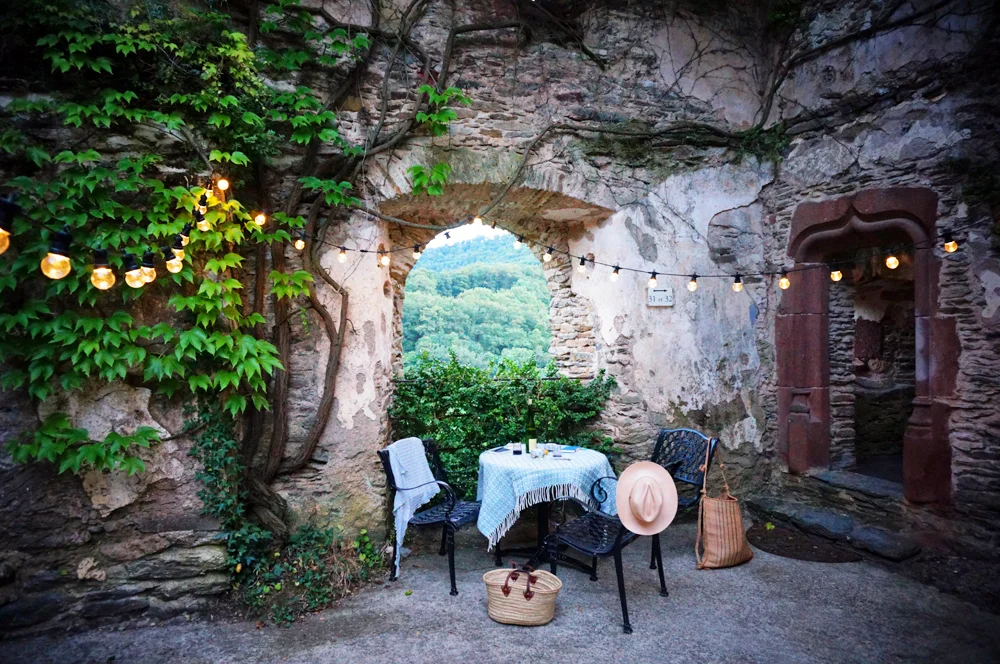
In late July, we journeyed from our tiny house in Venice to a tiny village in France for a two week vacation in Belcastel. This little medieval town is nestled in the Aveyron Valley, and has been my home-away-from-home for a decade. The Château de Belcastel, which sits atop the village, is a striking and stunning historic monument, owned by my dear friend Heidi Leigh. I usually stay in her castle during my visits, but this year I was joined by more friends and family members than ever before, so I rented us all a gîte instead. It was the best of both worlds-- we were nestled in the heart of the village, and we were also fortunate enough to have access to the gorgeous castle. (When I could find wifi, I documented the stay on Instagram via Stories, and via #FromCottageToCastle.)




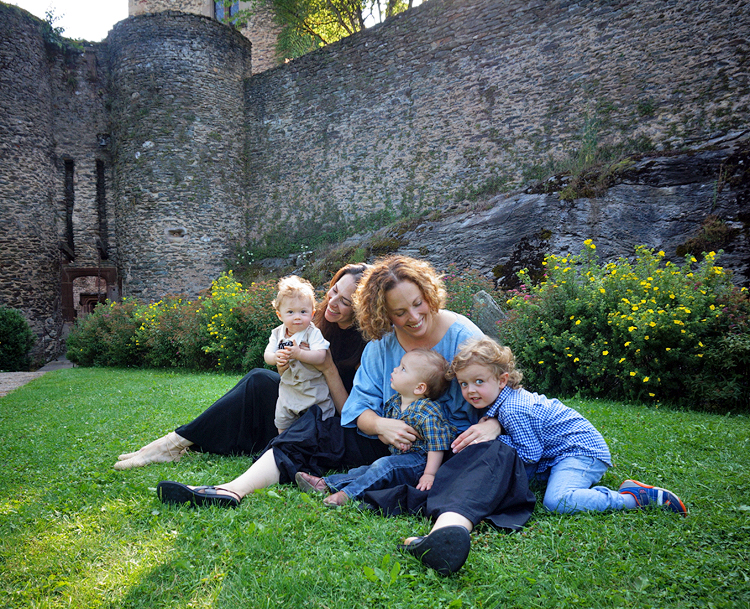
This year's trip was particularly magical for a few reasons: it was our first time in Belcastel with Baby West, it was the first time my sister visited the village, and we all got to see and celebrate an original mural that two of my close friends from LA-- Chandler Wood and Darren Le Gallo-- painted for one of the art galleries within the castle. It was extraordinary to be in one of my favorite places with so many of my favorite people:





One of the things I love most about Belcastel in summer is its Friday night market series. Artisans, bakers, wineries and more set up booths along the river and offer their specialty items to residents and visitors:
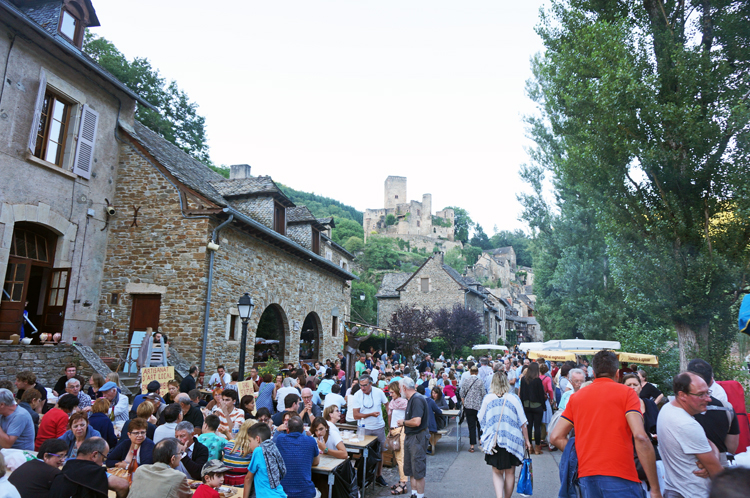

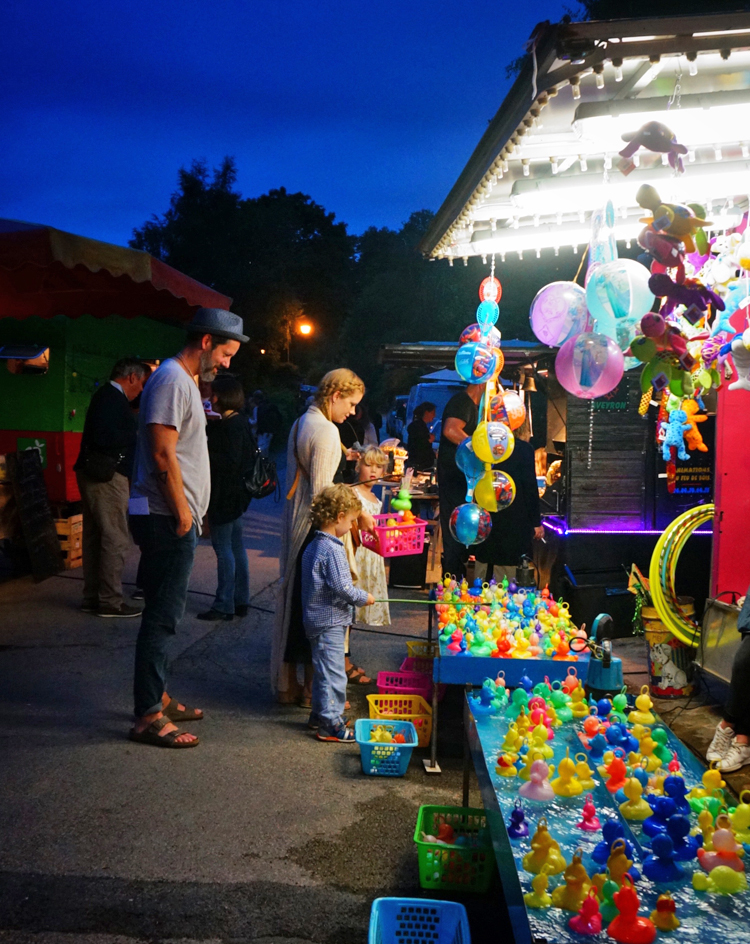



Both the village and the castle are spectacular. Adam and I are seriously considering finding a little cottage in the area...


I wore an outfit that was super practical for traveling-- particularly with a baby who I'm still nursing. I selected a button-down one-piece from Tysa, flats by Mohinders, an ascot (so West can yank on it) from Late Sunday Afternoon, and a teething necklace from Etsy. We requested a bassinet seat from Air France, and were thrilled with the results (even though our 10-month-old West is almost too big for it). We dressed him in a one-piece from Primary, which was extremely easy to manage on board.


Oh, Belcastel-- we all love you so much. We cannot wait to return next summer.

Coverage of our trip to Belcastel is also up on Domino! Click here to view.