
Climate Action Landscaping
Post Summary: Your garden, no matter the size, can have a positive impact.

When we first moved into our tiny cottage by the canals, we found cracked dirt throughout our L shaped yard, which was little more than a shared thoroughfare with our neighbors. Over the years, the earth was transformed into rich soil, vines and plants began to grow and thrive — providing us with food and shade while supplying a habitat for hummingbirds and pollinators, and our vertical gardens produced colorful, low maintenance herbs, veggies, fruits and flowers that enhanced our privacy and cooled our small space in the hot SoCal summers.

If you steward any amount of outdoor space — whether it’s a small thoroughfare garden like ours at the Cottage in the city, a suburban yard, or rolling acreage, you can transform it into space that has a positive environmental impact.

Our friends at Shades of Green Permaculture are offering a free, 1-hour training class entitled: Intro to Climate Action Landscaping. This training focuses on how a garden or landscape, no matter the size, can have a positive impact on the planet.

If you find what you learn to be of interest to your home and lifestyle, Shades of Green Permaculture also offers an incredible Regenerative Backyard Blueprint: A step-by-step guide to transform your yard into an eco-friendly paradise. The “RBB” will teach you how to create a thriving outdoor space that protects biodiversity; grows food, medicine, and pollinator habitat; builds soil; and restores the water cycle.

By the end of the Regenerative Backyard Blueprint program, you will have:
An understanding of the climate context and why your decisions matter so you can build your garden in alignment with your values, knowing the bigger impact of your decisions.
Clearly articulated your project goal, and have a realistic idea of phasing, timeline and budget.
Made a basemap, and put pen to paper to get accurate measurements and map necessary existing conditions, having identified priority areas and elements to include in your plan.
Correctly diagnosed the challenges you face with water in your yard, and know how to manage that water as a resource.
Spotted opportunities to build soil on your site, and identified which techniques are best for your site.
Made sound choices for plant palettes, have a sense of vegetation types, and know where to go and what questions to ask when searching for the perfect plant.
Crafted a solid plan for your landscape, with associated material and plant calculations, and have a clear understanding of what is needed to execute your project.
Registration is open from October 12th through October 25th at Shades of Green Permaculture.

Small Space Gardening for Kids
Earlier this year, Adam and I both read The Future We Choose: Surviving the Climate Crisis, and felt inspired to make changes to the way we live our lives here at the cottage according to what we learned from the book. As part of that lifestyle shift, we decided to grow much of our own produce here at home. So we began converting our sunny 8’ porch into a tiny grow zone.

I’ve shared the following quote before, but I’m doing so again because it was this particular passage that helped me visualize exactly how I wanted to start our growing efforts:
“Every vacant lot, every grimy unused alley, has been repurposed and turned into a shady grove. Every rooftop has been converted to either a vegetable or floral garden. Windowless buildings that were once scrawled with graffiti are instead carpeted with verdant vines… Things that used to be done individually are now done communally— growing vegetables, capturing rainwater, and composting… In community gardens, on rooftops, at schools, and even hanging from vertical gardens on balconies, food sometimes seems to be growing everywhere.” - The Future We Choose: Surviving the Climate Crisis

That passage made me feel like every space — no matter how small — is an opportunity to plant and nurture something green and good, both for the planet and for our bodies.

As discussed in a recent post, we got two 6’ tall Farmstand growstands from Lettuce Grow (which we are absolutely loving). But we also wanted to create some raised garden beds so that all three of us could tackle growing fruit and vegetables in containers in our compact outdoor space in this big city.
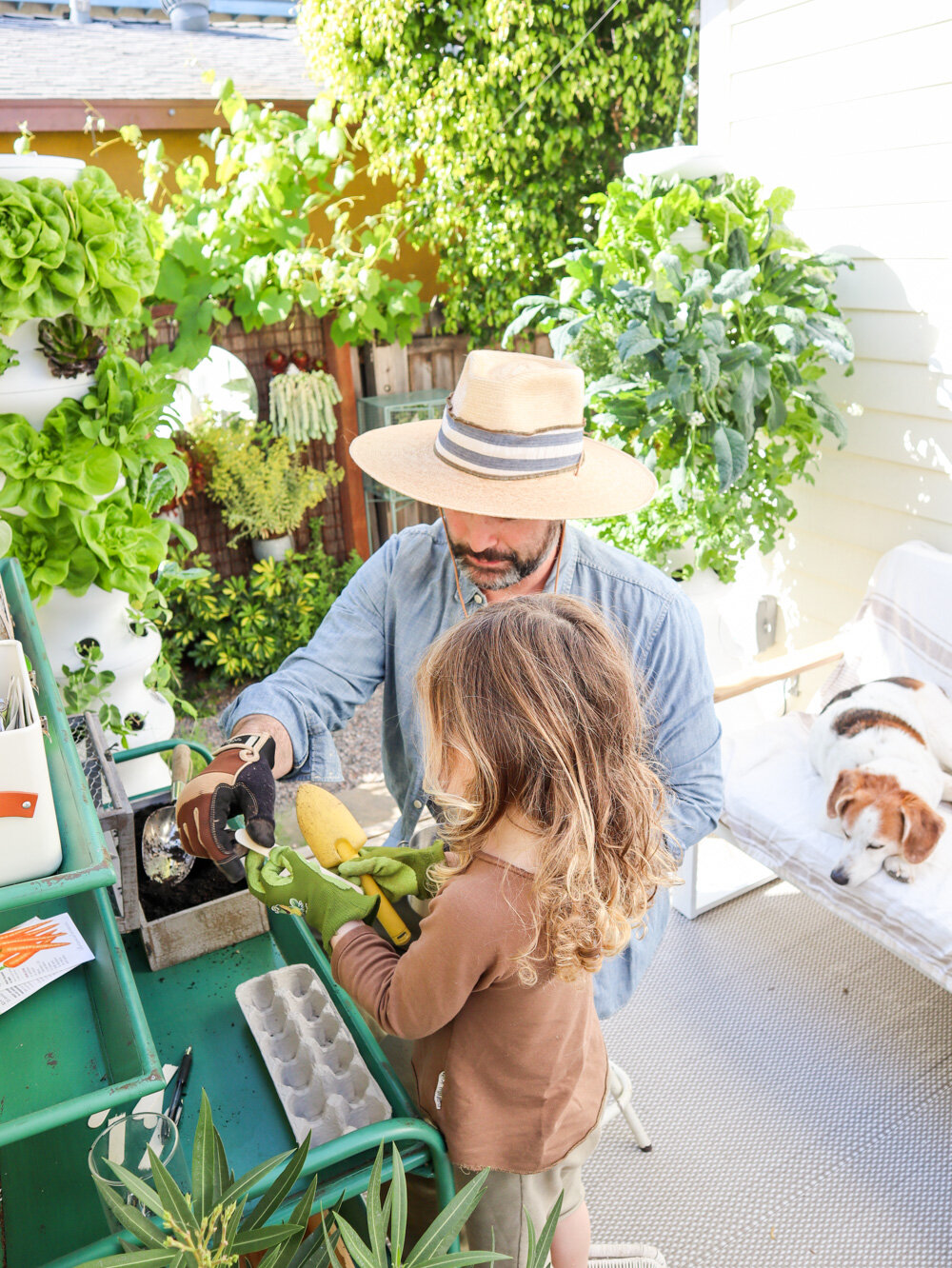
I’ll share our hack for creating the raised beds in the near future. But first we started out by getting some seedlings going in compostable egg cartons.


We’re attempting to grow several different plants on our little porch, from carrots to tomatoes to squash. We’re expecting plenty of failures, of course, but we’re hoping for some successes as well. To experiment, we’re trying a mix of soil types— some enriched with compost, some peppered with small doses of rinsed coffee grounds, and some sprinkled with fragments of nutrient-rich soil amendment courtesy of our FoodCycler.

West has been helping with it all, planting seeds and tending to the Farmstands. But we also got him a Root Viewer, so he could plant radishes, onions, and carrots and then watch them grow downward over time.


This family activity has been productive and entertaining as we shelter at home during the pandemic. I’ll share more from our experience soon, as this is just the beginning of our greener journey together.
