
Home Learning - Tracing Tools for Children
Now that our little one is home almost non-stop for the seventh month in a row, we’ve started setting up morning mini lessons designed for his current interests and skills. At 4 years old, he’s ready for some semblance of schooling. But due to the ever-rising cost of pre-school in Los Angeles coupled with the COVID-19 rates throughout the city, my husband and I made the tough decision to not send our child to classes for the foreseeable future.

West has been spelling out short words and expressing a more in-depth understanding of numbers (particularly since counting down to his birthday), so we introduced some tracing tools to his daily mix of learning materials.

Our friends at Timberchild (who, years ago, crafted the wooden plates that our kiddo still uses daily), sent him this beautifully made, double-sided tracing board for his recent birthday.

These number boards are made from one solid, smoothly sanded piece of wood. With one side, children can start to recognize and learn numbers 1 through 10, and then progress to 11 through 20 on the flip side. The numbers can be traced with a finger, or by using the wooden stylus provided. Our son likes to invent various ways to count out the numbers, scrounging up crafting supplies, rocks, marbles, and even the annoying ficus seeds from the garden to fit into the numerous, divots — perfectly sized for tiny fingertips — on the board.
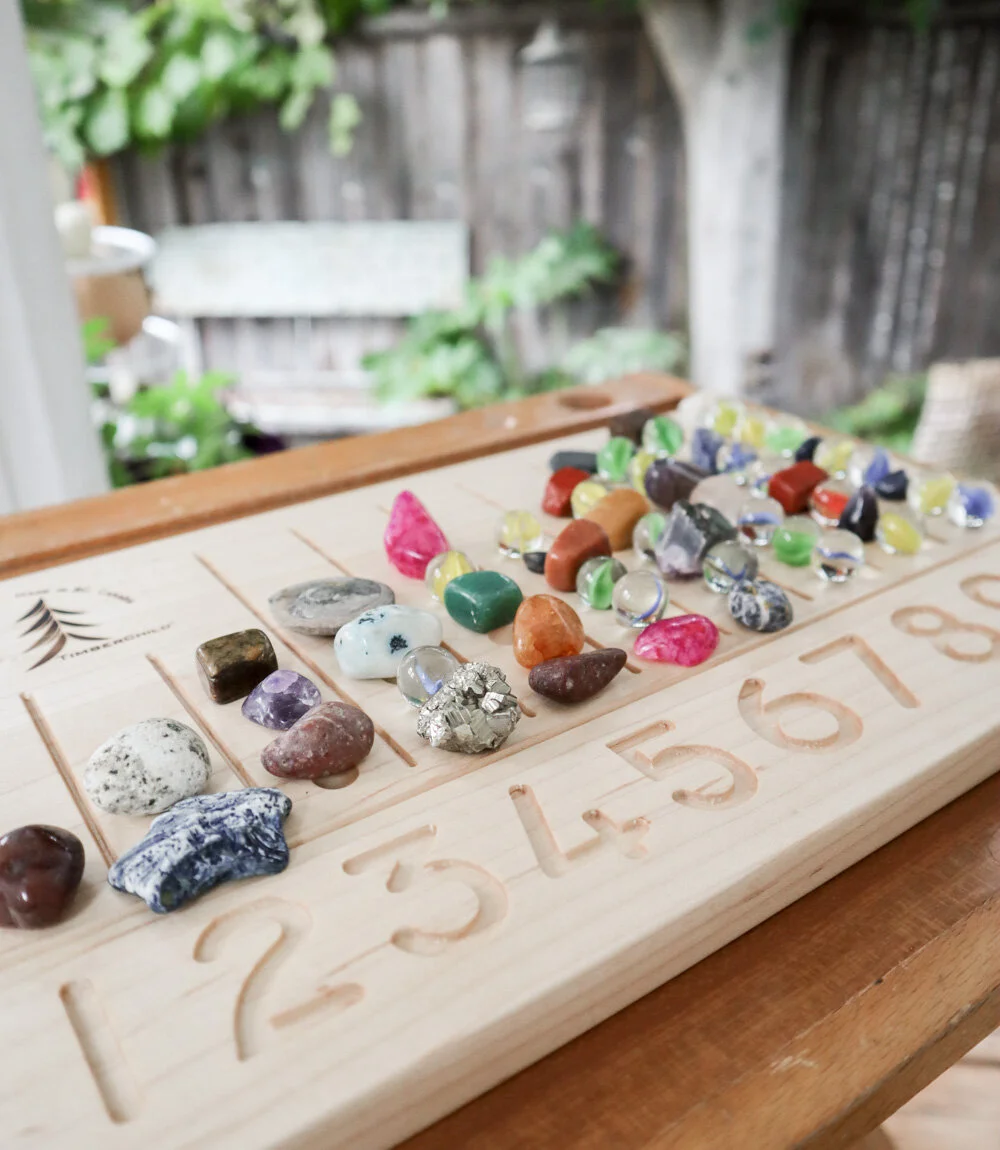
I appreciate the minimal design, which allows us to keep the board out without contributing to a feeling of clutter or overcrowding. This is always a consideration for us given the small size of our home, and the lack of a dedicated play space / bedroom for our youngest family member.


Manageable Home Learning
Like millions of Americans right now, we are exhausted.
We are fortunate for countless reasons, and we are grateful for even more. Still, we are simply worn down.
Adam and I don’t want West to feel the weight of our fatigue.
At almost 4 years old, he’s ready for some semblance of schooling. But due to the ever-rising cost of pre-school in Los Angeles, coupled with the Covid-19 rates throughout the city, we are not sending our child to classes in the foreseeable future.

In order to give West a preschool-like feeling at the start of the weekdays, Adam and I have been packing themed lessons together at night for our little one to discover and explore the following mornings.

Spoiler alert: We’re not acing it as parents, folks. These are (very) low-lift lessons. I’m trying to be forgiving of such shortcomings, as we’re trying to run our small business in a recession, navigate family life in a big city during the pandemic, and attempt to figure out some major life changes and decisions (more on that later).

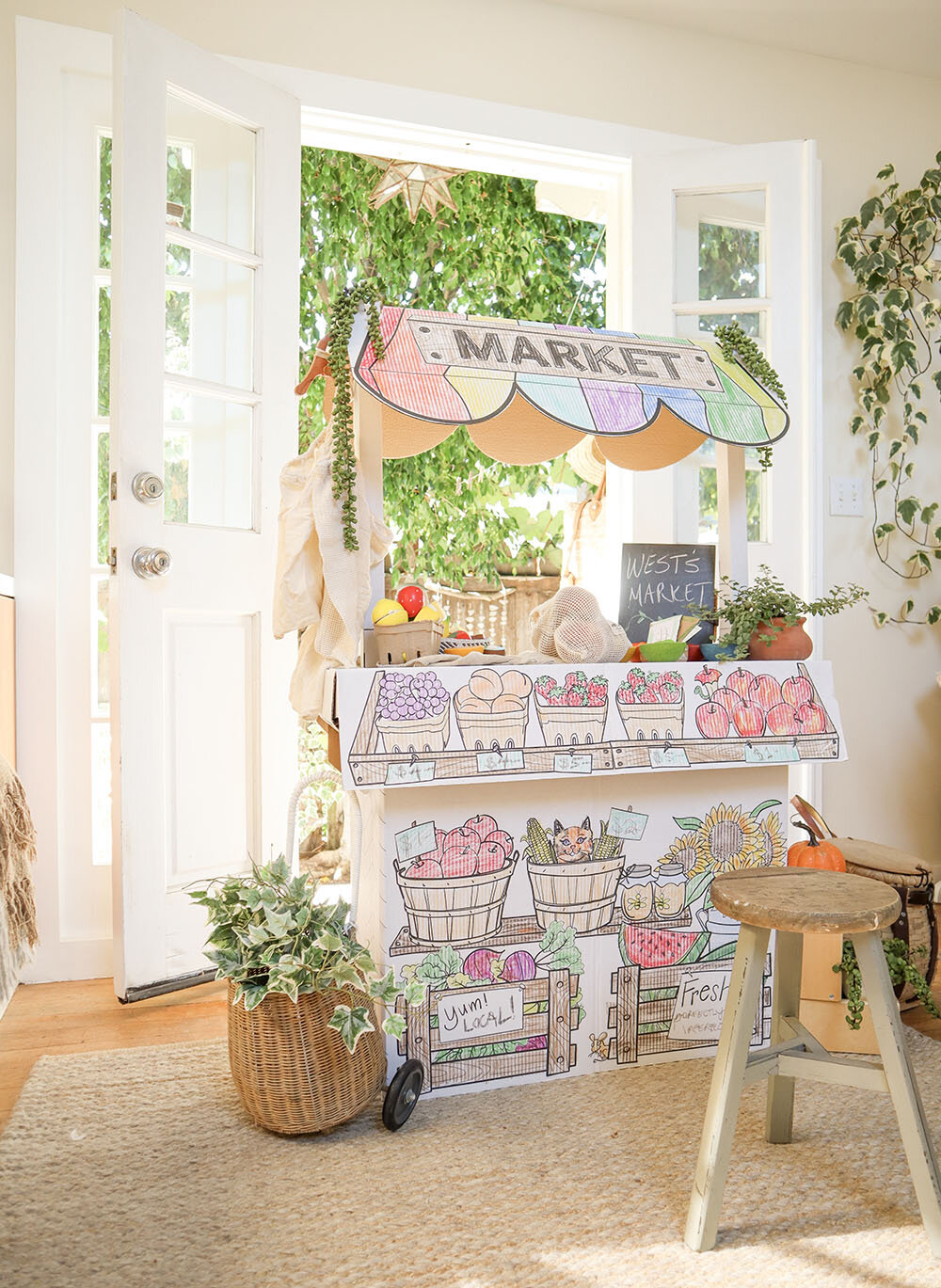
Just like with my office, we create a pop-up school space filled with workbook pages (usually from Highlights for Children), books, activities, and tools that support the morning’s theme. The theme is always something very general— like autumn, swimming, space, plants, etc. The obtuse nature of the themes helps us keeps things flexible, and prevents us from having to buy anything new in order to bring a fresh topic to life every day.

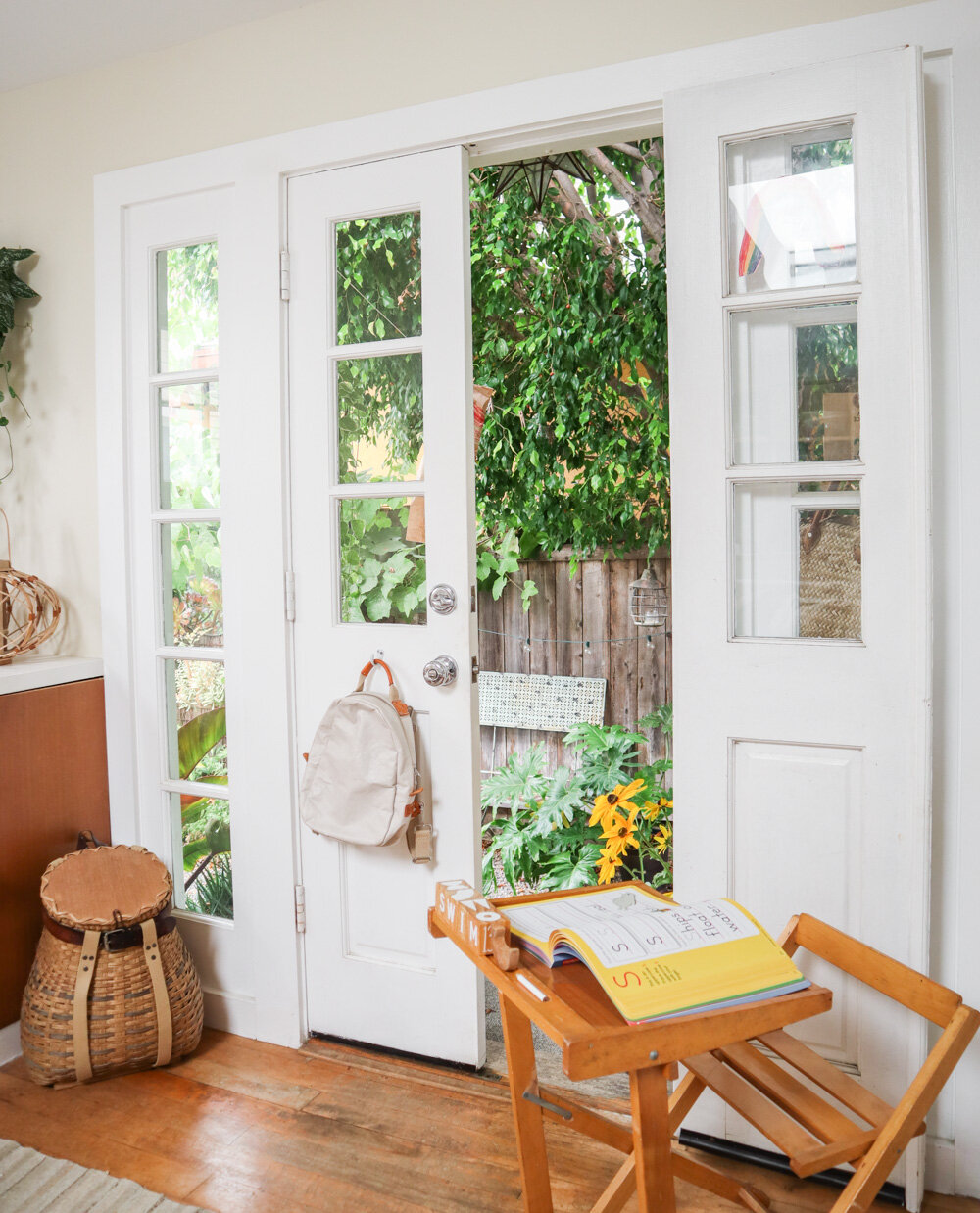
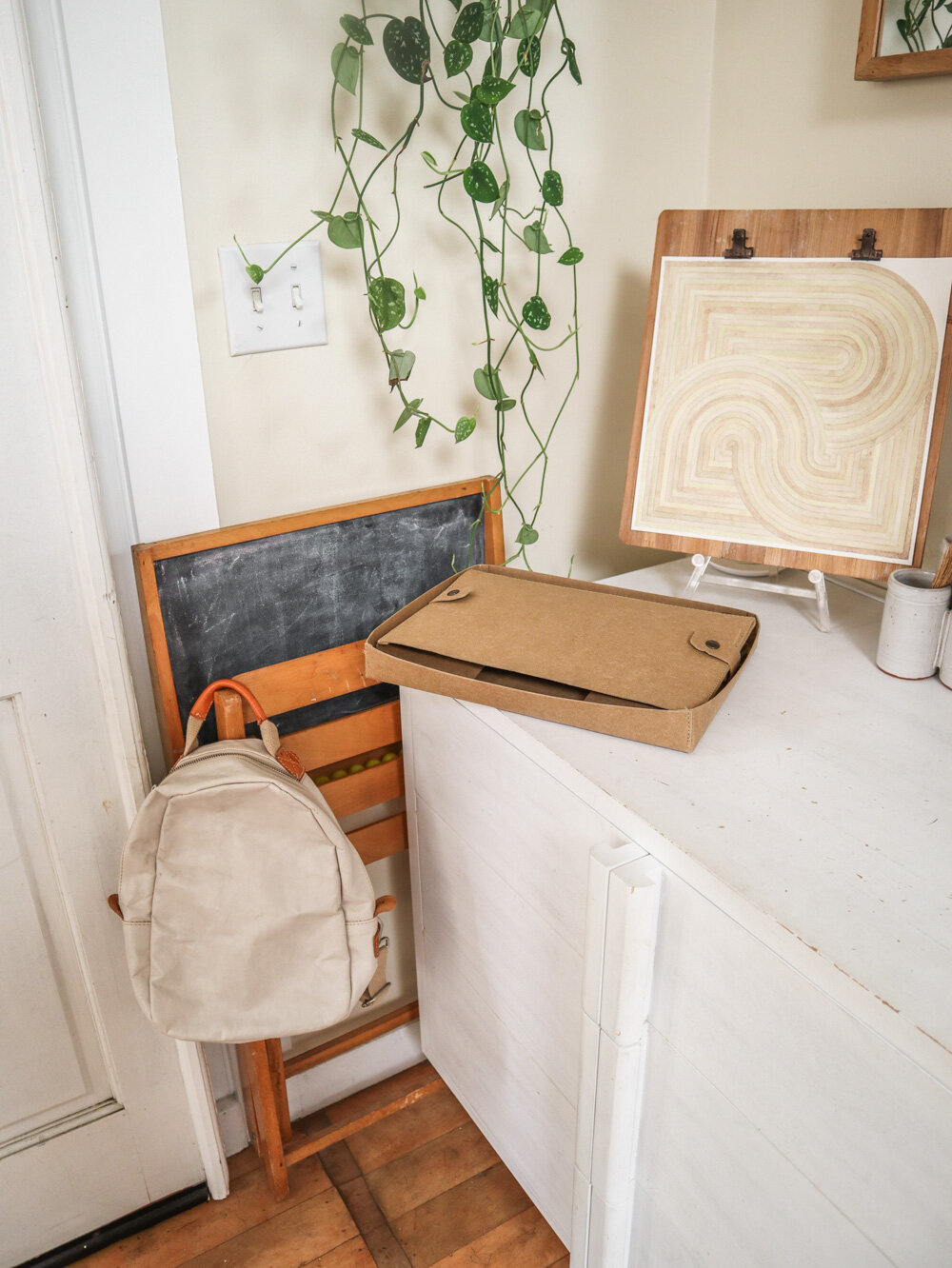
I’ve been filling West’s Uashama 100% organic paper backpack and collapsible, washable paper boxes / containers with the on-subject items he and Adam will use throughout the morning while I work.

And around lunchtime, we end up breaking it down for unstructured, open-ended play.

These sorts of mini lessons feel productive and doable. So while they’re not elaborate or innovative, they’re exactly what we can manage right now. And, most importantly, West is enjoying them.

More photos are below for those who are interested. (And while I have your attention: don’t forget to check your voter registration status or register to vote!)


Keeping Our Small Space Organized While on Lockdown
Our family was practicing strict social distancing for a week prior to Los Angeles issuing its “Safer at Home” lockdown order. And while life beyond our walls has changed drastically— as it has for everyone— our existence at home is oddly similar to how it’s been for years.
For example:
We are used to being mere inches from one another for days on end.
We rarely use the car, as we have no daily commute and are lucky enough to be able to bike around town instead.
We don’t use disposable goods (such as tissues, paper towels, toilet paper, cotton rounds, tampons/pads, disposable razors, or ear swabs), so there’s no need to stock up.
We’ve long spent the majority of each week with our son here at home as we balance the full-time operations of our small business. As such, we’re used to both the challenges and joys that such a situation presents.
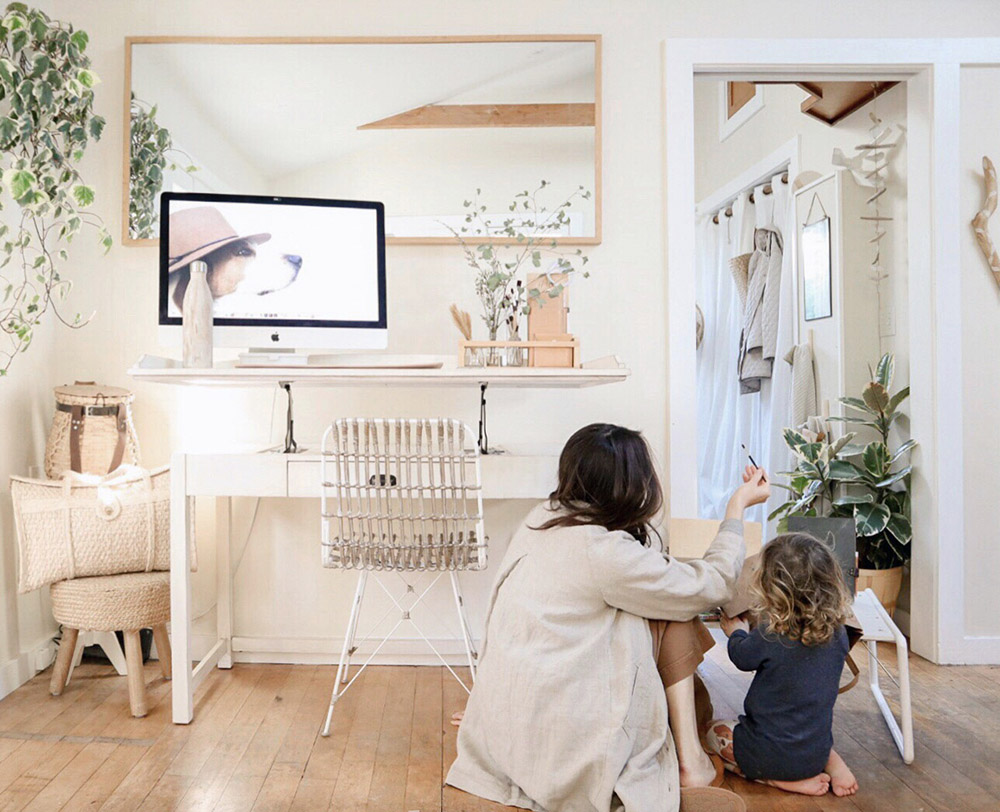
In recent months, while working from home as usual, I found myself perched at the kitchen counter more, and seated at my desk less. Since West usually plays in the main room (behind my desk chair), it no longer felt natural to sit with my back towards that area. By contrast, from the kitchen counter I can observe him while going about all of my administrative work, which is why started to transform it into my office every morning.
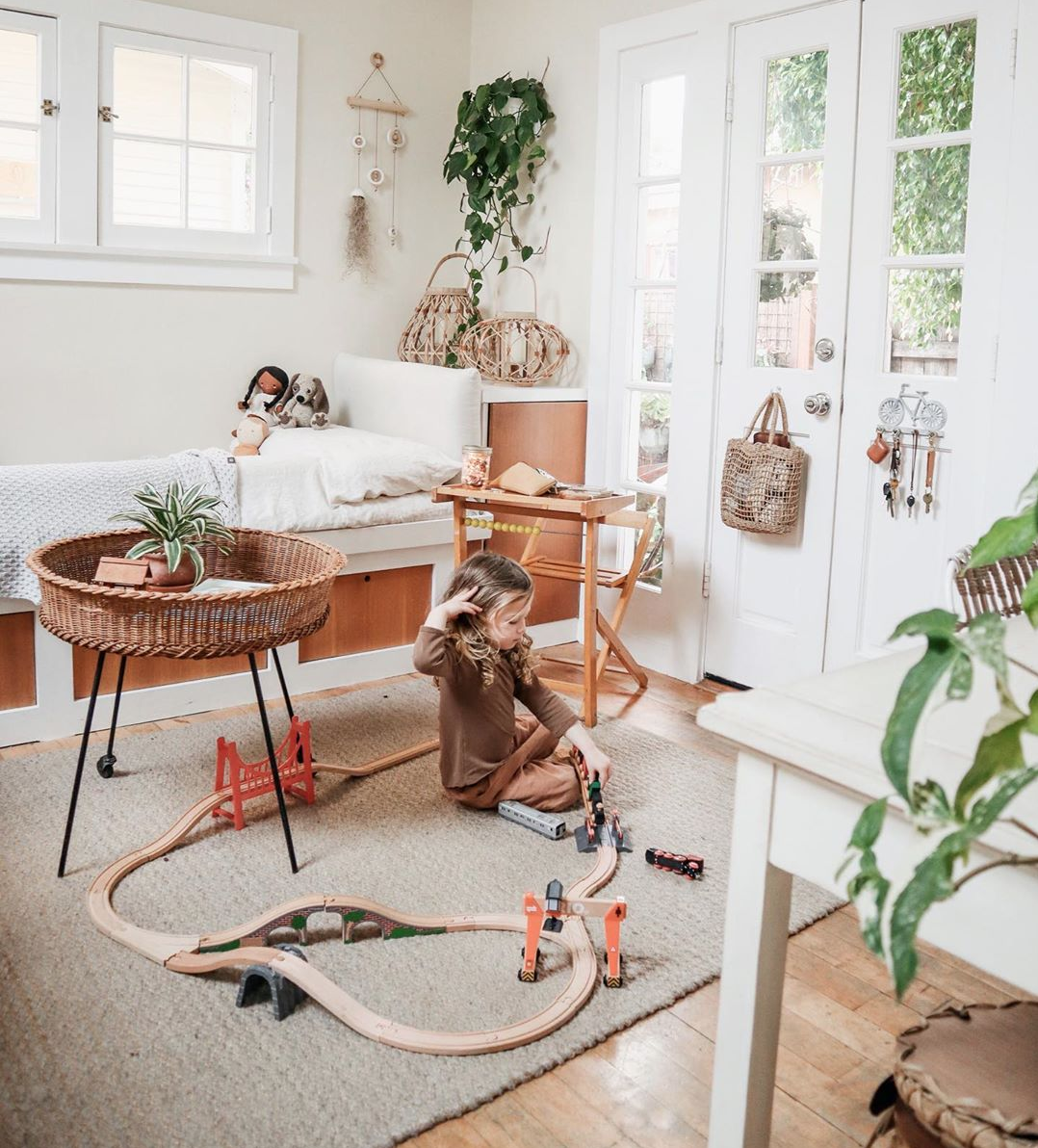
Above photo: February 2019
In its neglect, the area around my desk began to get visually overrun from oversized toy trucks, canvas bags of puzzle pieces, instruments and so forth. While I firmly believe that it’s better for the planet and for our wallets to focus on curbing our belongings rather than constantly searching for storage solutions, sometimes adjustments simply need to be made to furnishings and accessories in order to cultivate comfort and calm in a small space.
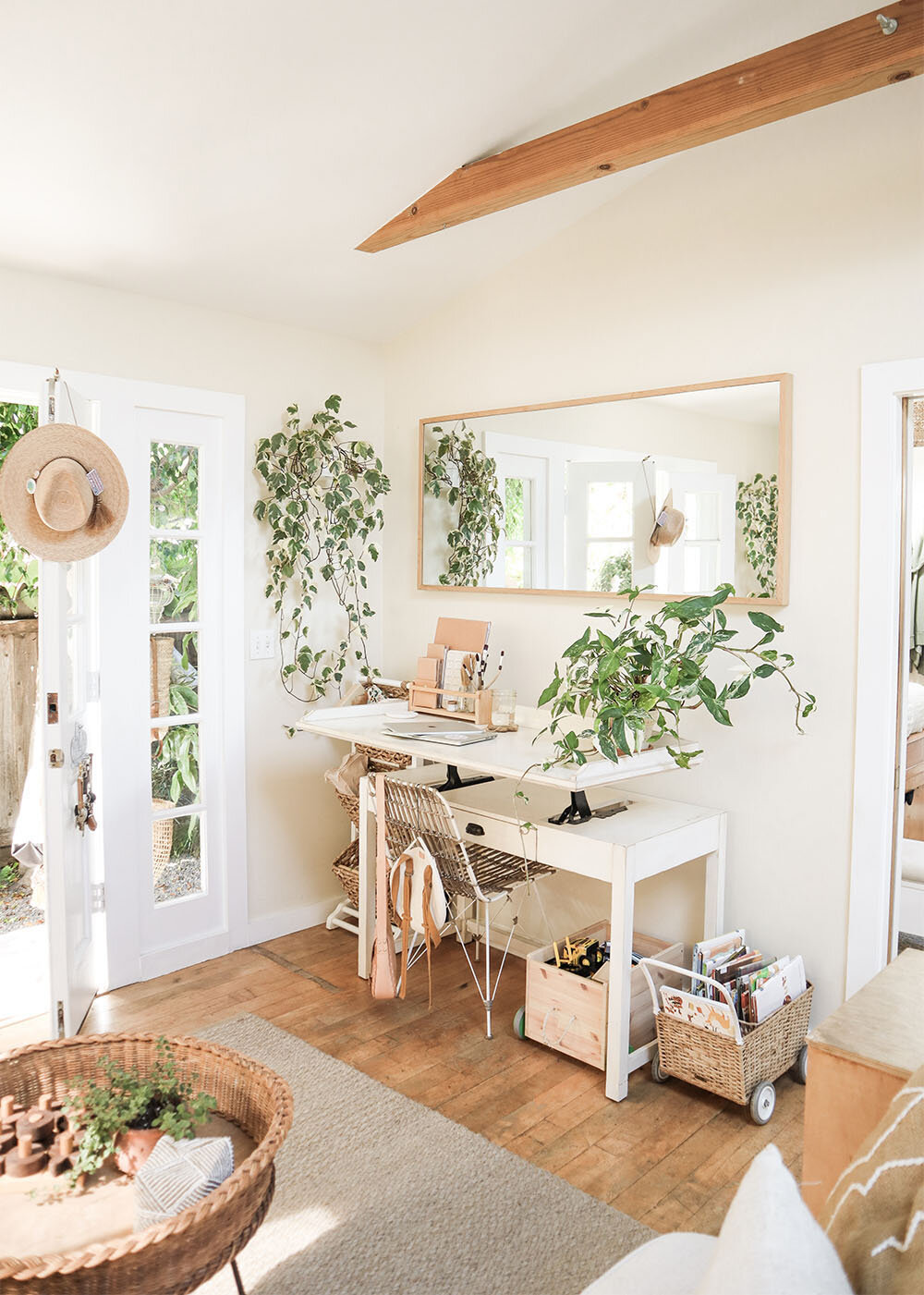
Above photo: September 2019
So, despite the fact that I really love my convertible desk that transitions from a standing workspace to a seated one, I loaned it out so that I could replace it with concealed storage. (In doing this I broke one of my own rules— holding on to something that we no longer need. But one day I know I’ll require a desk again, and the lift desk has been perfect for me.)
Before selecting anything new, Adam and I reviewed how we wanted to be able to better navigate the main room, starting with the rug.
The old rug deliberately divided our multi-purpose room into 2 zones: the play space and the work space. There was just enough wiggle room for me to scoot my desk chair back on our worn hardwood floor before bumping into the “living room” rug., where West plays for several hours per day.
We decided we wanted a few extra inches of exposed floor by the front door since we have no entryway or dedicated landing zone. And while the old rug served us beautifully in this immensely high-traffic room for years, it had become too dirty to deep clean, and it was too close to the front door to fully escape grimy shoes and muddy paws.
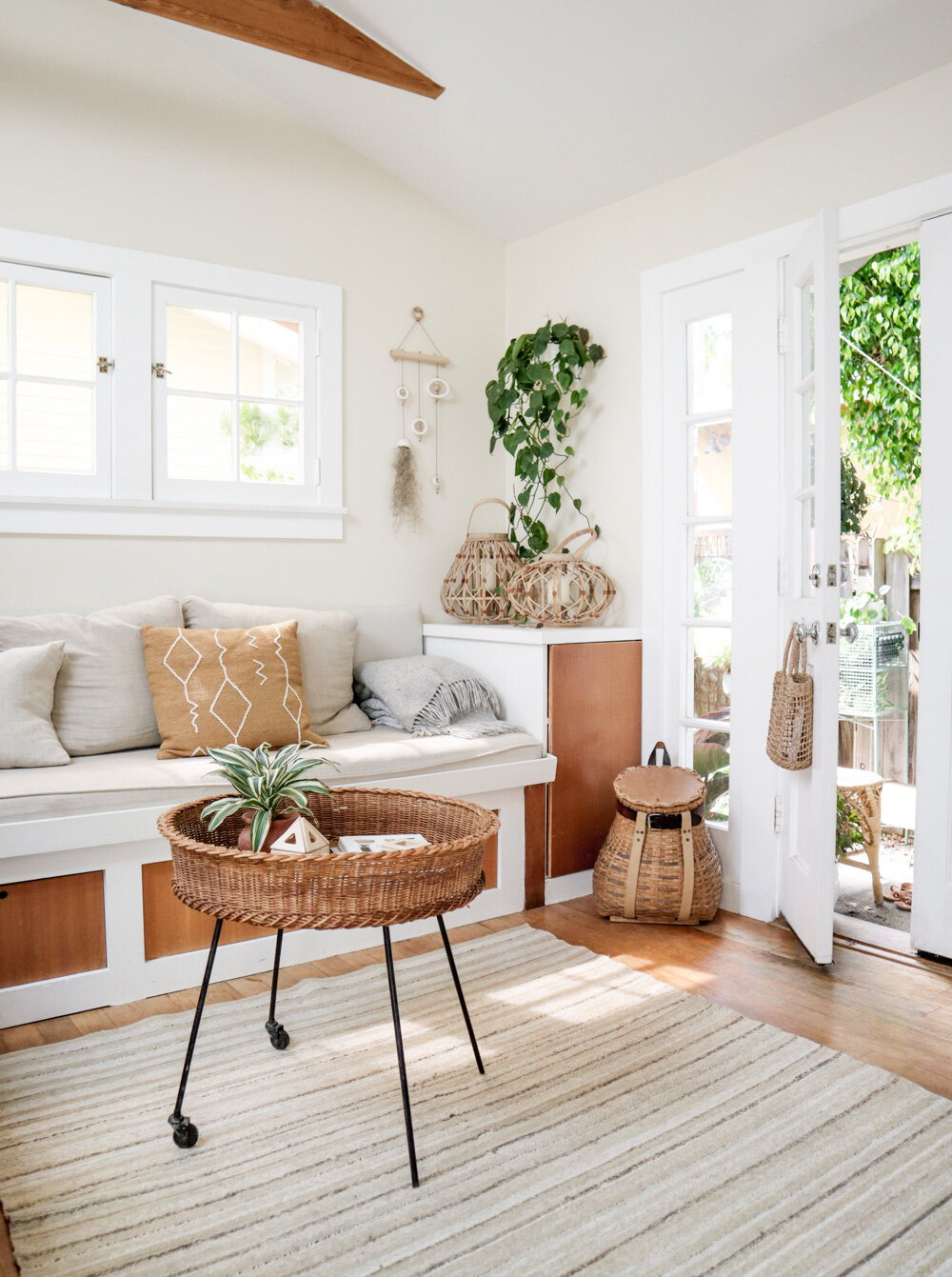
At the same time, we wanted a few extra inches of rug where my desk chair used to be, so that the room felt like the unified space into which it had naturally evolved.

I knew I wanted a vintage piece, but I was having a hard time finding something in the abnormal size our funny little space requires, which is around 5’ x 6’. Eventually I found THE ONE via Lulu & Georgia, which has numerous vintage home goods, as well revolving capsule collections of vintage rugs.

I’d also had my eye on some vintage dressers to put in place of my beloved desk, but I kept running into hurdles. They were too big, too restrictive in the design of the cubbies/drawers/slots, or they weren’t the right height, color or shape.
Since I was getting the rug from Lulu & Georgia, a business with which I worked in the past to outfit parts of Amy Adams’ production offices, I asked them if they had a flawed or damaged version of their Maci Dresser that they couldn’t sell that I could take off their hands. The Maci measures very close to the dimensions I’d wanted, and has 9 practical drawers. To my delight, we were able to rescue a piece, which we then introduced it to its new (tiny) home.

Above photo was styled for a shoot, rather than set up for our standard use.
The instant we brought the Maci into the cottage I knew that it was the right piece for our needs, but it still took some getting used to. We’ve always had an open-backed, slim-legged desk in that space, which kept the line of sight open.

But after about 2 days, our routine has greatly benefitted from this new addition.

Throughout the drawers, I’m able to store West’s sofa-bed linens and our guest bedding, our reusable to-go food and beverage supplies and bulk shopping bags, and all of West’s toys and supplies. We even have some drawers to spare for the future.


These pieces have allowed us to function more efficiently and comfortably within our compact space, and are particularly helpful as we hunker down in our tiny home-office together.

Small Space Preschooler Desk
After adding the adaptable book storage to West’s desk zone last week, we realized just how much space we could save by putting a few more tools and supplies up on the low walls.
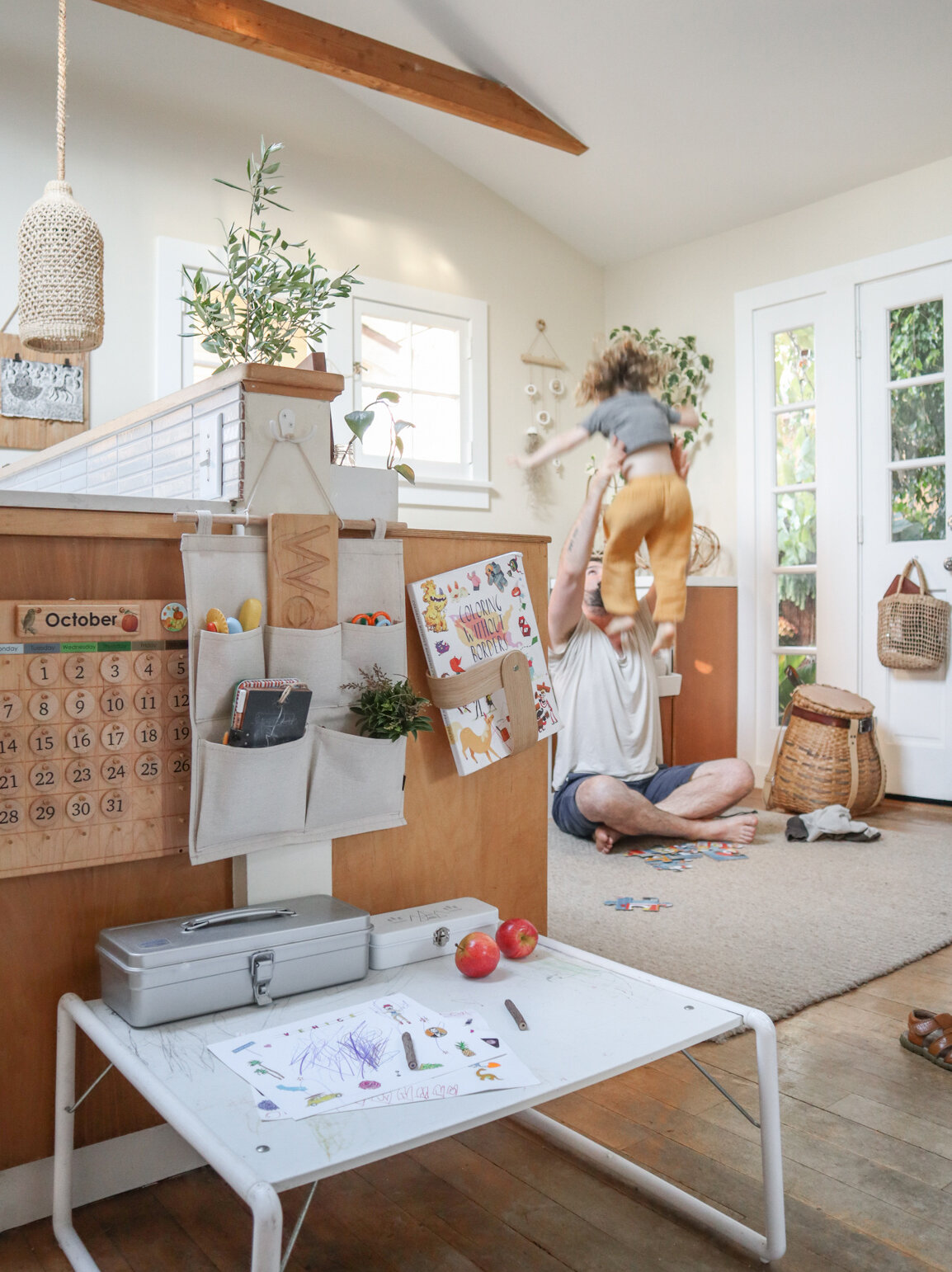

This is a tricky little area in the house. It’s our only hallway, connecting all 4 zones within our cottage: the kitchen, living space, bathroom and bedroom. As such, it has to remain easily passable for foot traffic, and yet we also want it to be functional for West as an art and play zone. The low wall here is actually divided into three little parts, each of which stands frustratingly at different depths. This means that West’s desk cannot sit flush against the entire stretch, and that we can’t use one big organizer or shelf— we instead have to accommodate three different widths and surface materials.

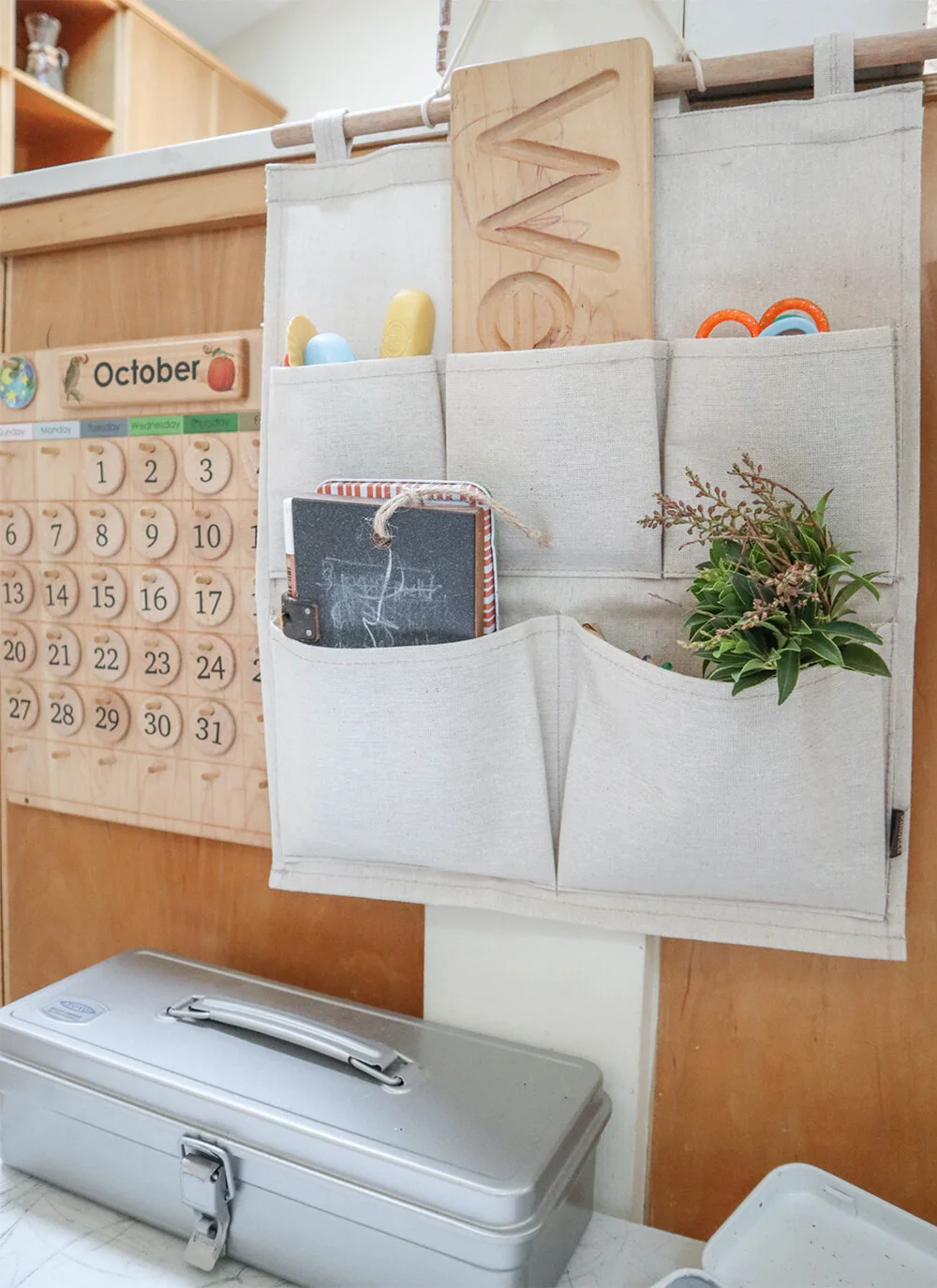
We found that one book holder, one canvas pocket organizer, and his perpetual calendar were the perfect trio for the space above the folding table.

The canvas pockets hold pencils, scissors, paints, a tracing board, dough tools, a chalkboard and more. On the desk, a small tin holds crayon rocks, and another larger tool box holds West’s figurines.

The result is an organized but playful space that leaves ample open surface inches for little hands to craft and create.

Where We Find Toys, Games & Supplies
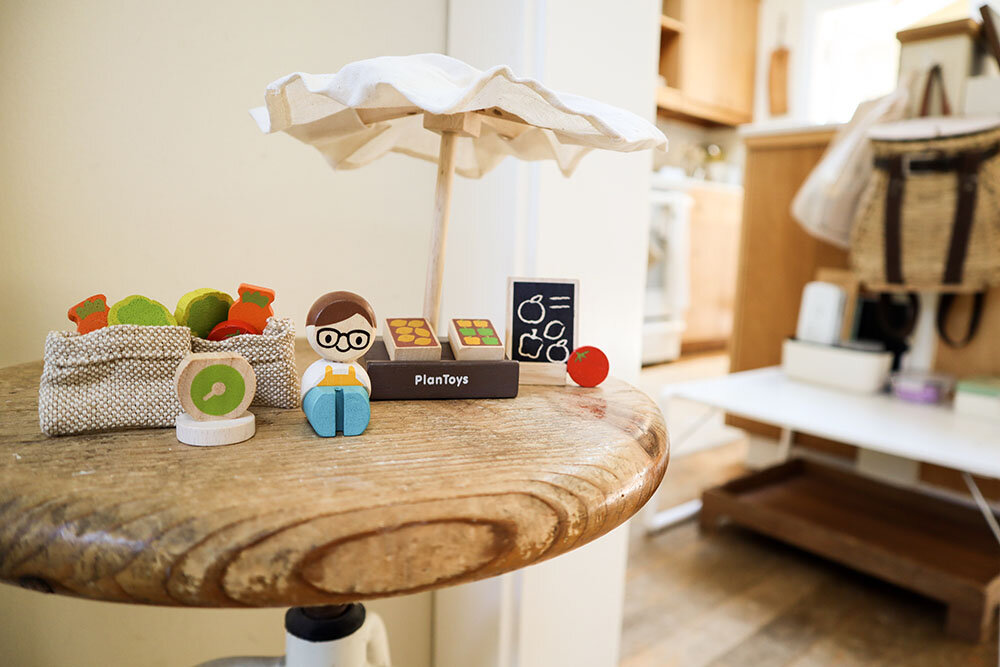
We don’t buy an overwhelming number toys for West. As long as he has access to lil’ trucks (new or old) and a stack of library books (refreshed weekly), he’s usually pretty content.

But we do, of course, have a mix of playful games and activities at-the-ready throughout our home, hiding in plain sight.


Here are the most common sources we explore when searching for toys:
Hand-me-downs from neighbors and friends
Local art festivals and pop-up markets
City and county libraries
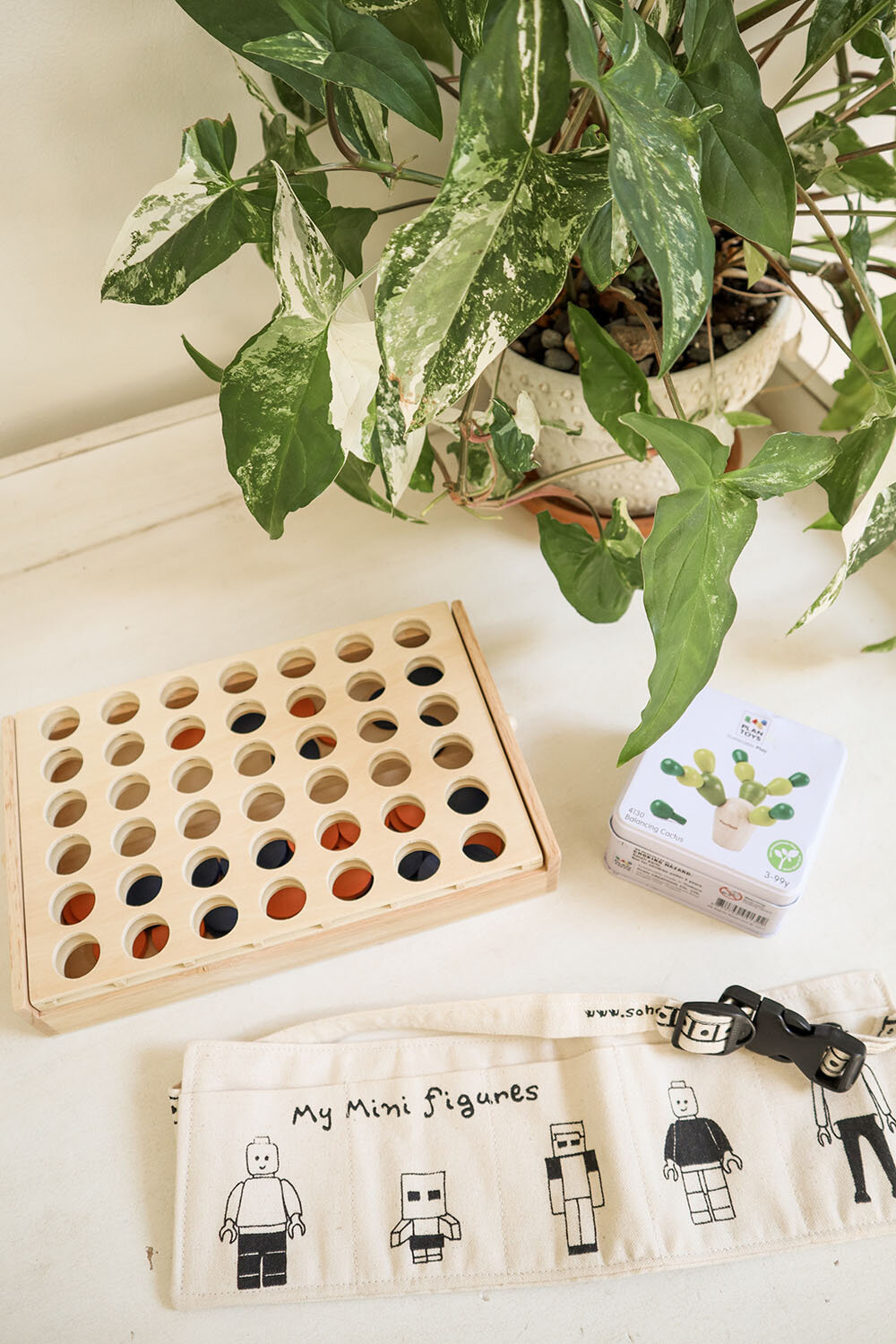
(Additional photos are provided below, with some specific product links.)







Functional Decor - Perpetual Calendar
I often talk about the concept of “functional decor.” With the planet suffering from the effects of our overconsumption and staggering waste, it’s more important than ever that we cut back in general. I aim to avoid purchasing new, mass produced, unsentimental, decorative tchotchkes for the sake of decor. Instead, I try to enrich our home with sustainable, ethically-produced, practical goods that can serve a function while delighting our senses.
When it comes to toys, I usually prefer hand-me-downs— particularly with items such as LEGOs, things-that-go, and magnetic tiles. They cost very little (if anything), and since they’ve already been produced, transported and purchased, there’s no point in dooming them to a landfill or storage after they’ve been used by a single household. We might as well pass these items down the line as long as possible, especially since most are made of plastic that won’t biodegrade.


West’s toy collection is also largely made up of handmade wooden designs that we enjoy using (and seeing… and stepping over) throughout our home and garden.

Thanks to library books and interactions with friends, there’s no lack of “new” games and activities for our son to experience. But some months have passed since we got him anything more permanent, so I decided to invest in a beautiful, playful, wooden perpetual calendar I found on Etsy.

A perpetual calendar is a handy, lower-waste item for spaces of any size, and I found this one to be the perfect tool-meets-toy for our tiny home/office.

At 2 ½ years old, West is creating his own daily rhythm, and understands that particular days of the week mean that set activities will be taking place. I figured that a functional, updatable, interactive calendar would be useful to him for years to come.

So far, he loves it, even though he doesn’t fully understand it... and even though he insists the weather tiles be stored in his wheelbarrow.


Toys For Little Ones Living in Little Spaces
When you’re living in a compact space, finding suitable toys and gear for babies and toddlers can be difficult if you only search via big box stores and typical bestsellers. The following are some key considerations I’d recommend keeping in mind— particularly if you’re trying to be more eco-friendly this year.
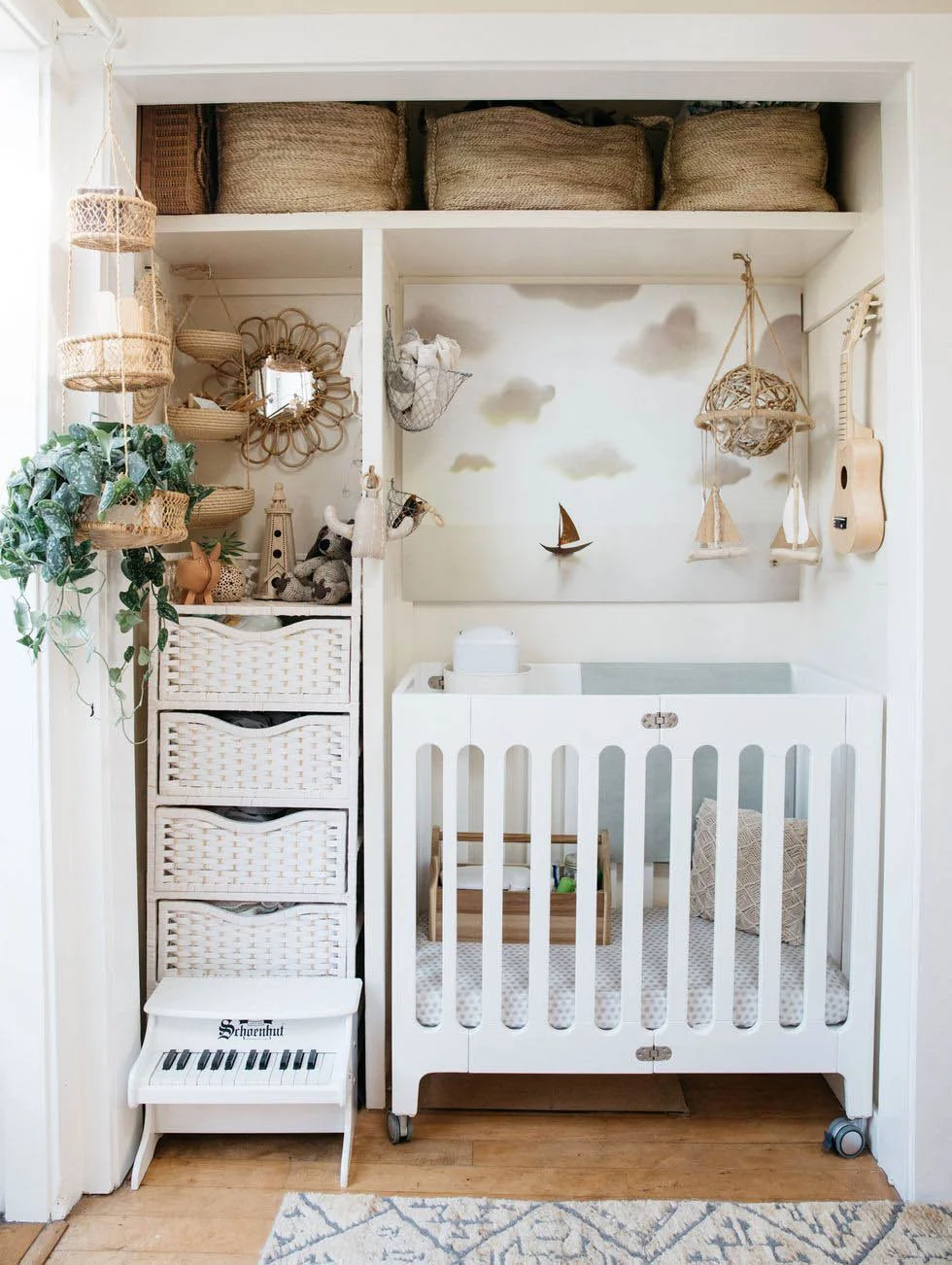
Above: Photo of the Cottage nursery by Sami Drasin for Cosmo (2017)
DESIGN
Is the toy beautiful for the adults to see while also being interesting and educational for the child/children? Toys are always left lying around, meaning they’re most likely visible from almost anywhere in a compact apartment or home. It really makes a huge difference if toys are well-designed with colors, materials, and/or shapes that compliment your space.

MATERIALS
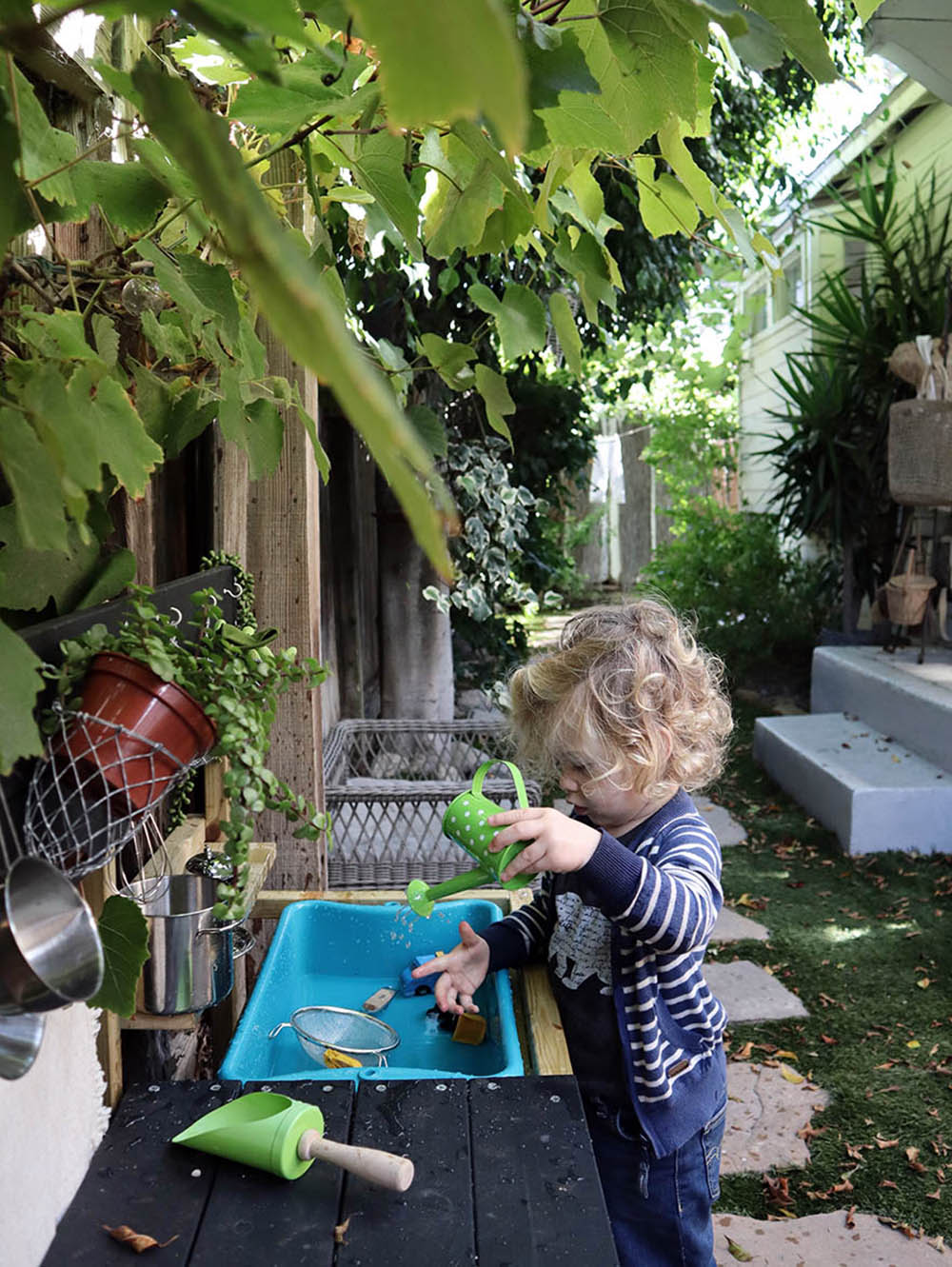
Can you opt for a hand-me down or vintage piece rather than something new? Plastic and metal toys from decades past are still sitting on this Earth, so why not make repeated use of them and save them from landfills?
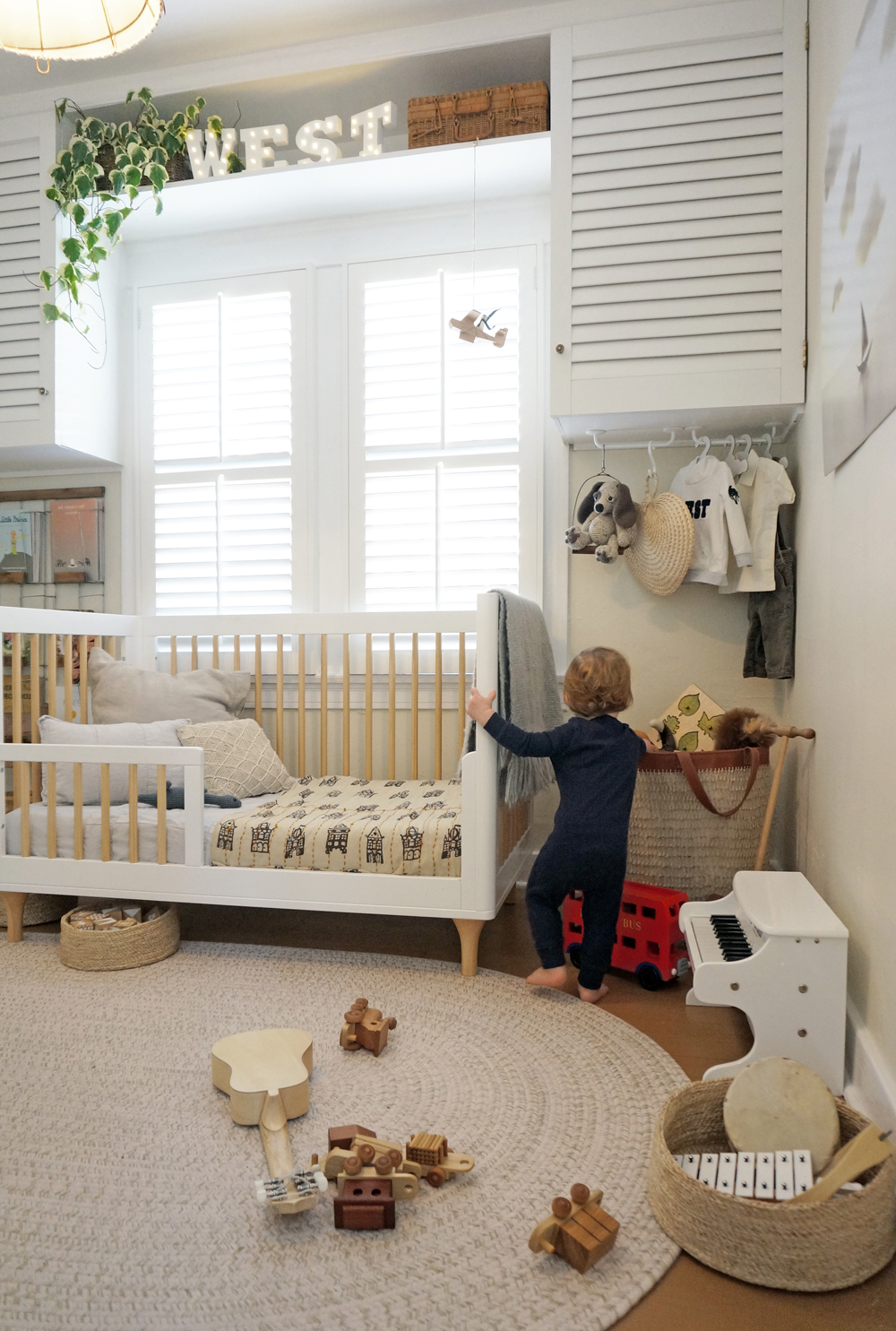
Above: Photo from West’s temporary room (for 5 months) in the front tiny house, which we no longer rent.
SUSTAINABILITY
If the item is new, are the materials sustainable?
SIZE + SHAPE
Does the toy wrap, fold, collapse, nest, stack, or can it be tucked away? Is the piece designed to be tall rather than wide? Can it slide under a table or lay flat under a mattress or cushion when not in use?
CUSTOMIZATION
Can the item work creatively with the current items within your home? For example, a hallway tent takes up no extra space— same goes for a tablecloth fort, or a set of wooden magnets that can live on the exterior of your larger kitchen appliances.
MANUFACTURING
Do the manufacturing, packaging and delivery have a light footprint?
ADAPTABLITY
Can the item work just as well on-the-go as it does within your home, reducing the number of toys your child requires? Compact books, storage play-mats, roll-up gear, travel games, folding tools, and to-go sets are easy to tuck into a canvas bag and suspend from wall hooks within the house at the end of the day, and can also be tossed effortlessly into strollers and carry-ons when needed.

LIFESPAN
Is this a piece that can be handed down to a children’s hospital, library, or pre-school after it’s not longer needed in your home?
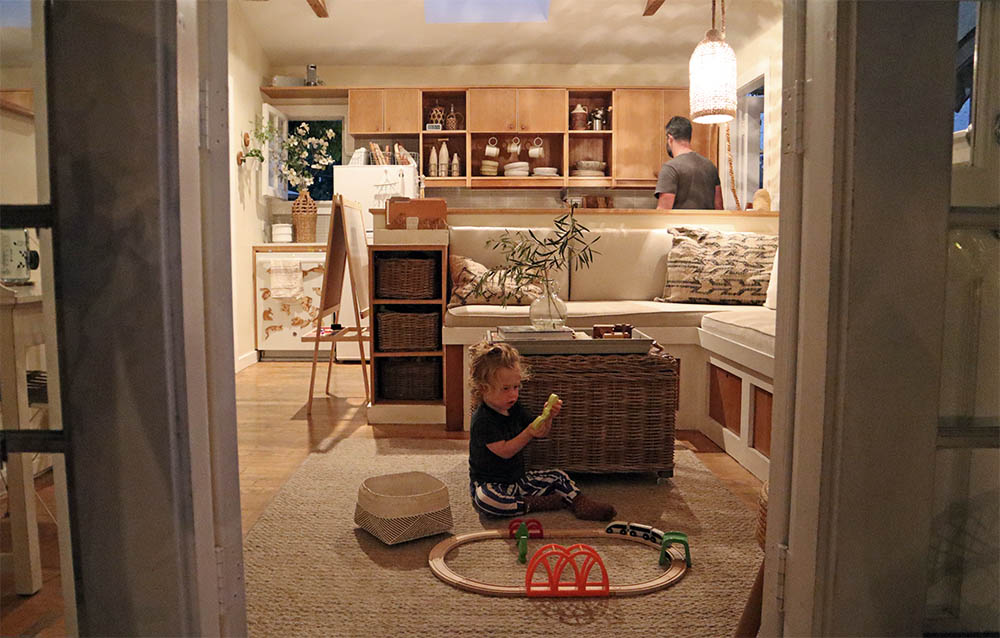
As always, Etsy is my favorite resource for all things handmade and vintage. (You can even write to the seller to inform them that the packaging doesn’t need to be fancy, decorative or even new, which can help cut back on shipping materials and waste in general.) But there are many other sites and shops to explore, depending on your region, tastes and shopping preferences.
And don’t forget your local library! Borrowing books is a great way to cut back on clutter, waste, and cost— all without disappointing your little one(s).
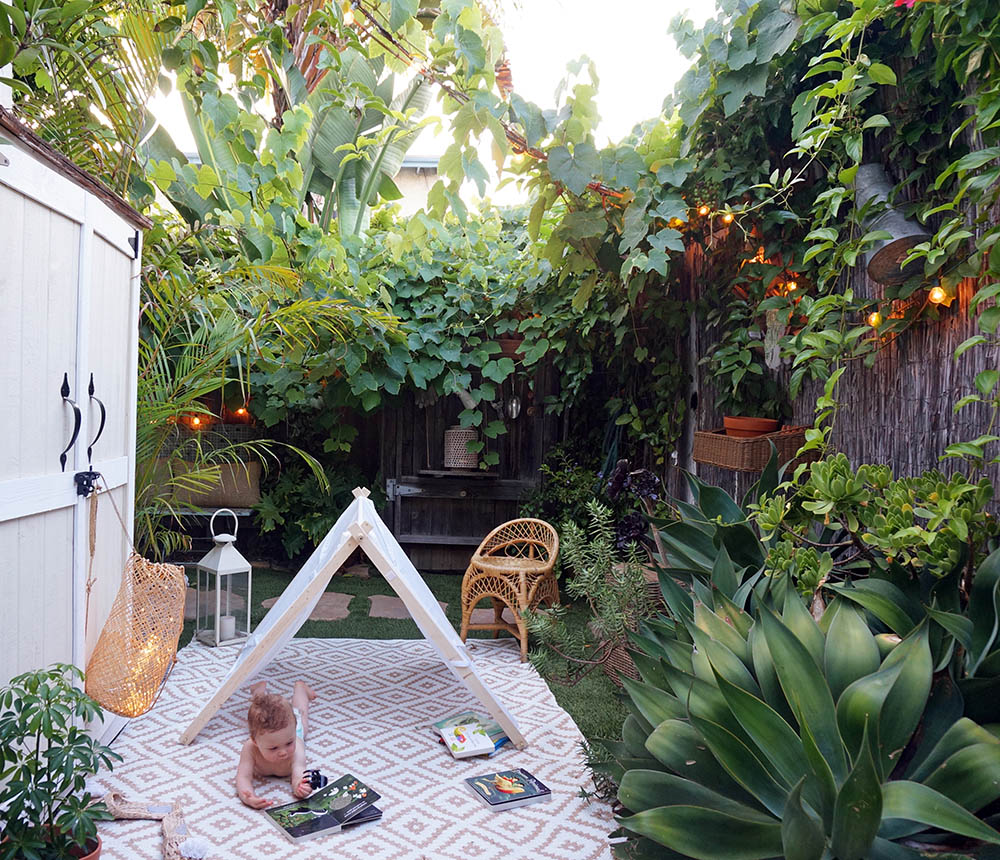
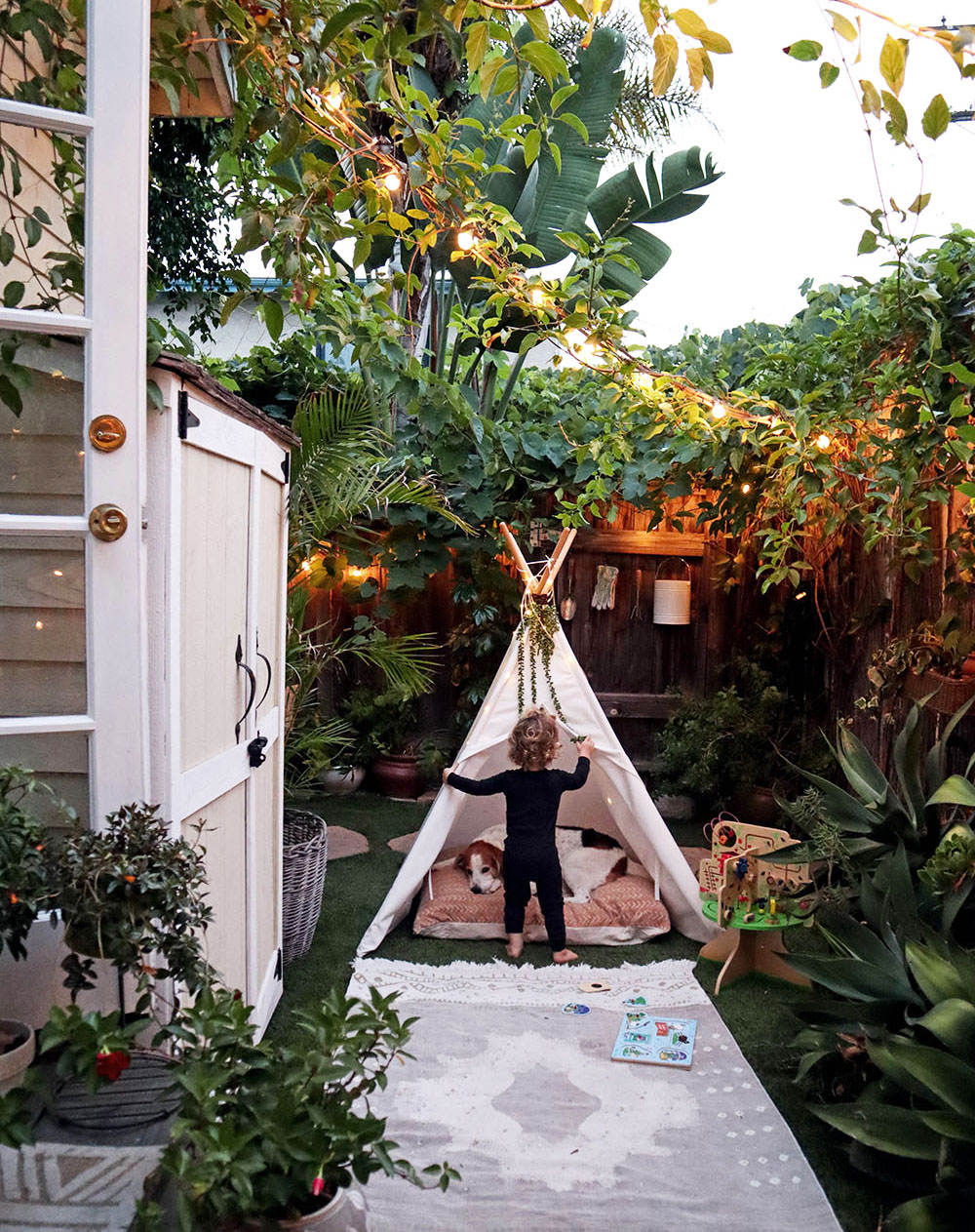
Here are some items (and similar designs) that we have and love for our son and our home. They are a mix of materials, sources, and production methods. Hopefully you’ll find some options that suit you and yours. Happy holidays!

Space-Saving Toy Tents for Kids
Children (and pets) so enjoy tents and forts. But in a small home, a store-bought toddler tent can easily eat up an entire room (if it even fits at all), and a DIY fort can quickly eliminate the limited space required for your daily routine.

Tablecloth tents could be a handy solution for your little one(s) in your little home. I found this one via Etsy, and it's a big hit here at our tiny cottage. Folding card-table sizes are also available, and custom-sized options are also commissionable. Throw one over your dining table or desk to encourage a child's creativity while also working within the realities of your square-footage. (And if you can't fit a tablecloth tent, not to worry-- use a doorway or hallway hanging playhouse instead!)


Update: Many of you loved West's beagle pants, so I thought I should share the details on those! They're handmade by an Etsy artist-- some of my favorites from her shop are below: