
Simple, low-waste homewares for fall
Gifting is a low frills affair here. We rarely wrap things, and we almost always opt for simple designs. But that doesn’t mean we don’t give the process a good deal of thought— on the contrary, actually.


We typically give bundles containing beverages or edible goods, along with local floral bunches. On special occasions, we add handmade or vintage artful homewares that hopefully support beautiful and less wasteful living.
I discovered this handmade loose leaf tea caddy (made in the USA with sustainable walnut) on Etsy, which has long been my go-to source for vintage and handmade goods. The caddy is such a lovely and functional item that can encourage the recipient to slow down and enjoy a quiet moment, particularly during this fast-paced time of year.

I also found a nesting set of stainless steel cups (perfect for little ones) that are bound together with a lid and strap for easy toting. Other items I’ve gathered for gifts this fall include a handmade baby spoon (the same one we got for West when he was 6 months old), some color twig pencils, and locally-made olive oil and bread.

(Not pictured: My trusty bike basket bungee net, which is an absolute necessity but killed the vibe of the photos. 😜)

Note: While this blog entry was not sponsored, the tea caddy and stainless steel cups (which I selected based on our home and gifting style,) were provided to us by Etsy in conjunction with a sponsored Instagram post.

Minimalism Fail: My Daily Bag
We prefer to keep things clean and simple over here. For us, it makes life in a small space much more manageable. Sometimes we succeed, other times we don’t. My daily bag is a stellar example of a notable minimalism fail.

When not in use, the placement of the bag within our house is nice and practical. It either hooks on to the back of our front door, or it hangs from an s-hook on the exterior of the closet. In both places it’s easy to access throughout the day or when in a hurry, all without taking up any surface or closet space needed for other activities or items.

It’s the stuff inside the bag that’s a bit of a cluster. The blend of running the business, parenting and trying to be less wasteful with single-use items prevent me from keeping the contents to a minimum. But the system works, so I’ve come to embrace it all.

Reusable tissues/cloths, a canvas bulk food baggie, a larger sheet of beeswax paper, a cutlery roll for myself, a combo play mat + cutlery roll for West, a stainless water bottle and adaptable kid’s bottle, and a piece of collapsible tupperware with a lid make up the items that most often help us prevent waste related to food, beverage and packaging while on the go.
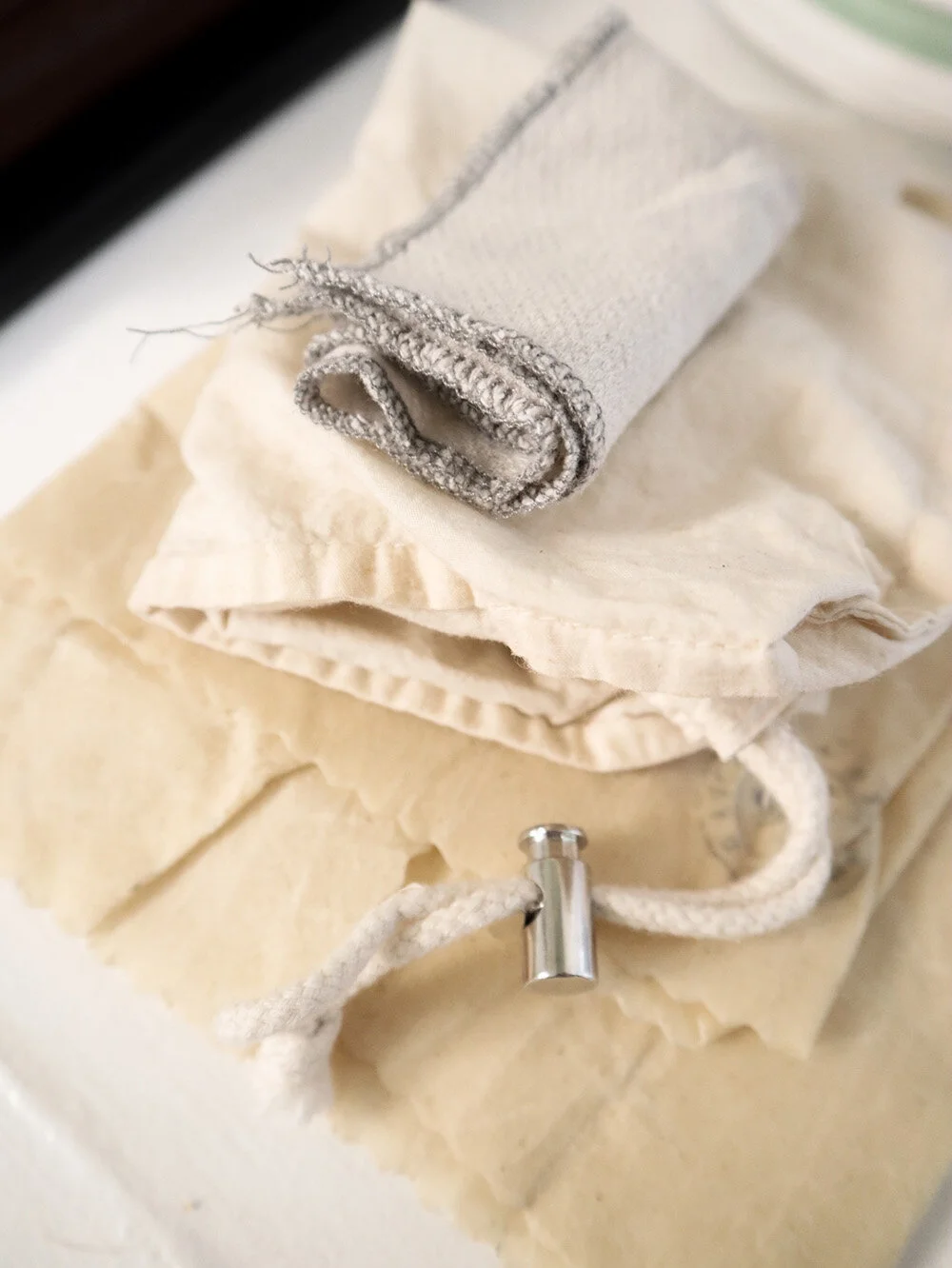


I also carry a small smattering of compact toys / activities that can help entertain our 3 year old in a pinch, and can serve as a jumping off point for imaginative play if we’re out for longer than expected. This roll-up play mat (that can also serve as a placemat) with storage for a small truck, a crayon roll (no more pre-packaged restaurant crayons), and a single-piece wooden 3-d puzzle have saved the day several times.

I carry my sunglasses and a brush, as I like to bike most places. And since I almost always work 7 days/week, I carry my iPad and my Nimble for Good portable wireless charger, which was made from recycled plastic bottles and plant-based bio-plastics, and arrived in plastic-free packaging.

On the outside of the bag, I've attached a hat clip that helps when I’m switching between indoors/outdoors, or from my hat to a bike helmet.

The bag itself is the Momo by Olli Ella, which was made by hand with sustainably-sourced materials, and produced ethically. (When I’m going into a more professional environment, I use my Elle by Teddi Joelle.)

Lots of these items can be made from goods you might have already in your home. An old cotton garment beyond repair can be sewn into small squares for reusable cloths. Bedding that’s no longer in use can be redesigned into drawstring bags. And a Stasher bag can keep crayons, little toys, and even utensils from home organized in your bag while on-the-go.


Lower Waste Pet Goods
In recent years, one of the habits we’ve shifted the most drastically is how we select goods for our pups, StanLee and Sophee. For example, we’ve switched from food delivery services to preparing their meals here at home, and we’ve found bags, tools and accessories work well for our their needs as well as our evolving, greener lifestyle. As always, it’s a work in progress— we are constantly learning new information and pivoting accordingly. But the following is our current set of practices, coupled with a product roundup.


LINT BRUSH
After Sophee chewed up our last plastic lint roller (WHY, SOPH?!), I refused to buy another. We now use a wooden lint brush that effectively removes animal hair and lint from clothes and upholstery. It’s constructed from beechwood and natural rubber strips, then bound together with copper wire.

SHAMPOO
We don’t have to bathe the pups too often— a perk of the breed. But when we do, we have a pet shampoo bar that’s effective and virtually waste-free. It comes in compostable, minimal packaging.
WASTE BAGS
We use BioBags pet bags, which are 100% compostable. They’re also fragrance-free, not tested on animals, and packaged with minimal materials.
Our neighbor simply uses junk mail papers to pick up after her pup so she doesn’t have to buy anything new. This is clearly ideal for cutting back on waste and saving money. I tried it once, but it was just too tricky for me to use that method flawlessly when walking through the city with both pups and West.

DESHEDDER TOOL
A decade or more ago, I bought a deshedding brush for StanLee that works extremely well. Every time I do a pass through his coat there’s enough hair caught in the brush to make a new small animal. But this undercoat tool is (unfortunately) wrapped in plastic and rubber from the head to the handle. As such, I’m going to use it until the end of time. No point in swapping it out for something “greener” since I already have it.

BEDS
If you’re at all craft-inclined, a DIY pet bed stuffed with old clothes, towels and scraps presumably isn’t the hardest thing to make. (I’m a total disaster at such things.) But I stopped buying dedicated beds for the dogs. We use West’s old, washable baby blankets/mats for the pups here in the house, and outside they have wicker beds that we can cushion with any smaller blanket or pad. We have one P.L.A.Y. crate-liner style cushion, which was made from 100% recycled materials. That one washable mat sometimes sits on in the wicker bed, sometimes rests on the floor, and sometimes travels with us when we take longer trips in the car with StanLee and Sophee. (No sense in buying multiples if you’re trying to reduce your footprint.)

COLLARS
I wish I’d discovered Ike & Stella’s handmade, updatable collars years ago. They’re easy to refresh when parts begin to age or fray (meaning that they don’t have to be entirely discarded over the years). These sturdy leather-and-metal collars have removable (and sometimes washable) decorative + cushioned slide-on sleeves. I got collars and sleeves for both of the pups last year, and they’re definitely here to stay.

LEASHES
If you’re limited on storage space and wanting to avoid buying new plastics, handmade leashes are a good option. Plus they can be surprisingly pretty if displayed on your walls via hooks when not in use.

FOOD
In the past, we had food delivered for the pups, but the amount of waste it generated was just too much to bear. After first discussing a diet change with the Vet, Adam found a vegetarian recipe to prepare for the dogs. He makes it about twice a week, and stores the batch in the fridge. It includes olive oil, sweet pepper, zucchini, yellow squash, eggplant, egg, rice, cheese, beans, potato, or some combination thereof. (We also keep a tin of kibble in the bathroom, which we mix into Sophee’s dish.)

PET BOWLS
We’re currently using stainless steel mixing bowls for the pups since West broke all but one of the ceramic pet dishes when he was little and I don’t want to buy anything new. But there are many artfully crafted bowls available via Etsy.
TOYS
Adam and I sometimes upcycle worn-out, everyday items into games for the pups, but I’ll also admit that we do still buy new toys for special occasions via a discount retailer nearby. (Not ideal, I know.)

I’ve seen some great DIY dog activities online that don’t require anything new. My favorite find was a cupcake tin filled with tennis balls with a nibble hiding under (or within) one of the orbs. This clever little game will give your best friend a fun challenge to tackle before devouring his or her treat. (Although I myself have never tried it, as I’ve never owned a cupcake tin.)
Here, we sometimes opt for a basic water-soaked cloth left in the freezer and transformed into a cold, soft chew. This is particularly effective in cooling down the pups while also keeping them entertained during the hotter summer months.
Another easy DIY is the ol’ bottle-in-the-sock toy. We eliminated plastic bottles from our lives long ago, but they still randomly surface every now and then, whether via a guest or some unexpected chain of events. When that happens, we insert the empty bottles into a clean but tired old sock that needs to be retired, and this simple toy can keep one or both of our dogs occupied for a while. Ultimately, the bottle goes in the recycling bin. But only a small percentage of plastic is actually collected for recycling, so this isn’t something we do often.

Playful, Low Waste Gift Wrap
In a recent post, I shared visuals demonstrating the simple way in which we wrap our son’s gifts. We use linen napkins, scarves and tea towels from around the house. They’re zero waste, easy for little hands to untie, and once the wrapping is no longer needed we can simply toss the cloths into the laundry bin or return them to our drawer. But what about presents that are destined for homes other than our own?
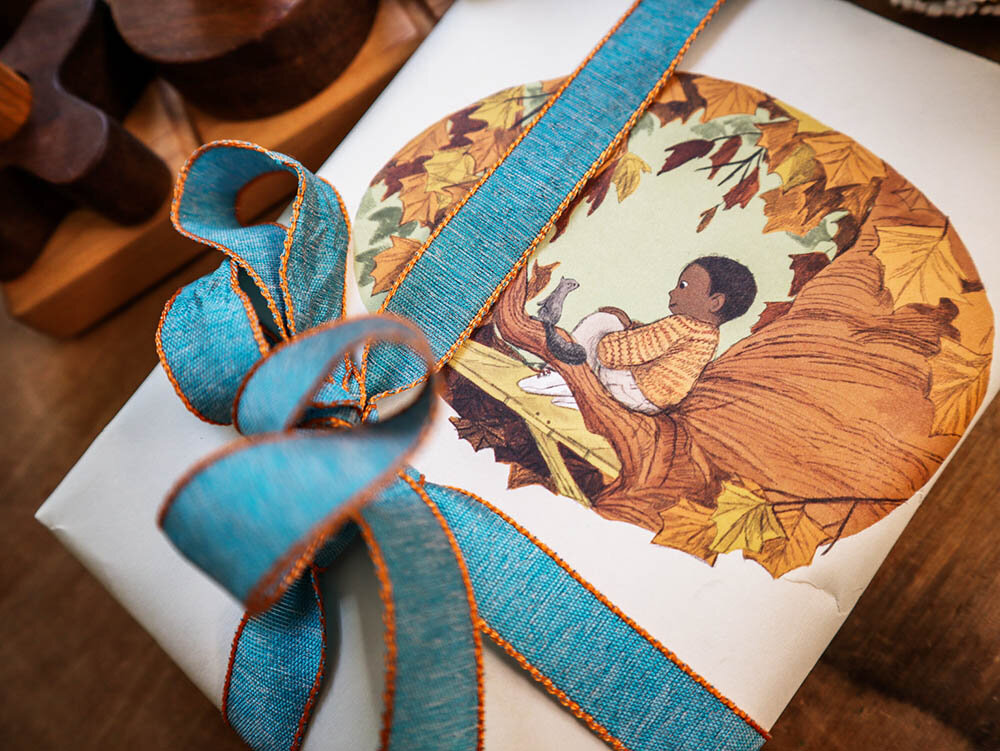
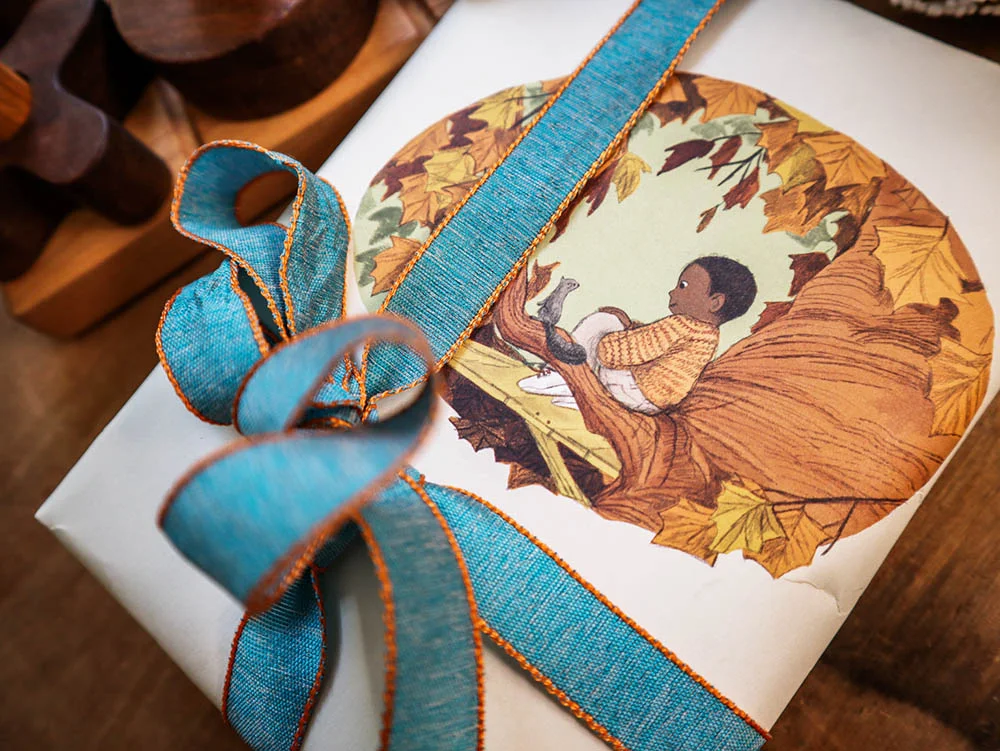
As we head into the holidays, Adam and I have somehow already found ourselves wrapping little items for our friends’ children. Instead of using linens or traditional wrapping paper, we use picture book dust jackets.
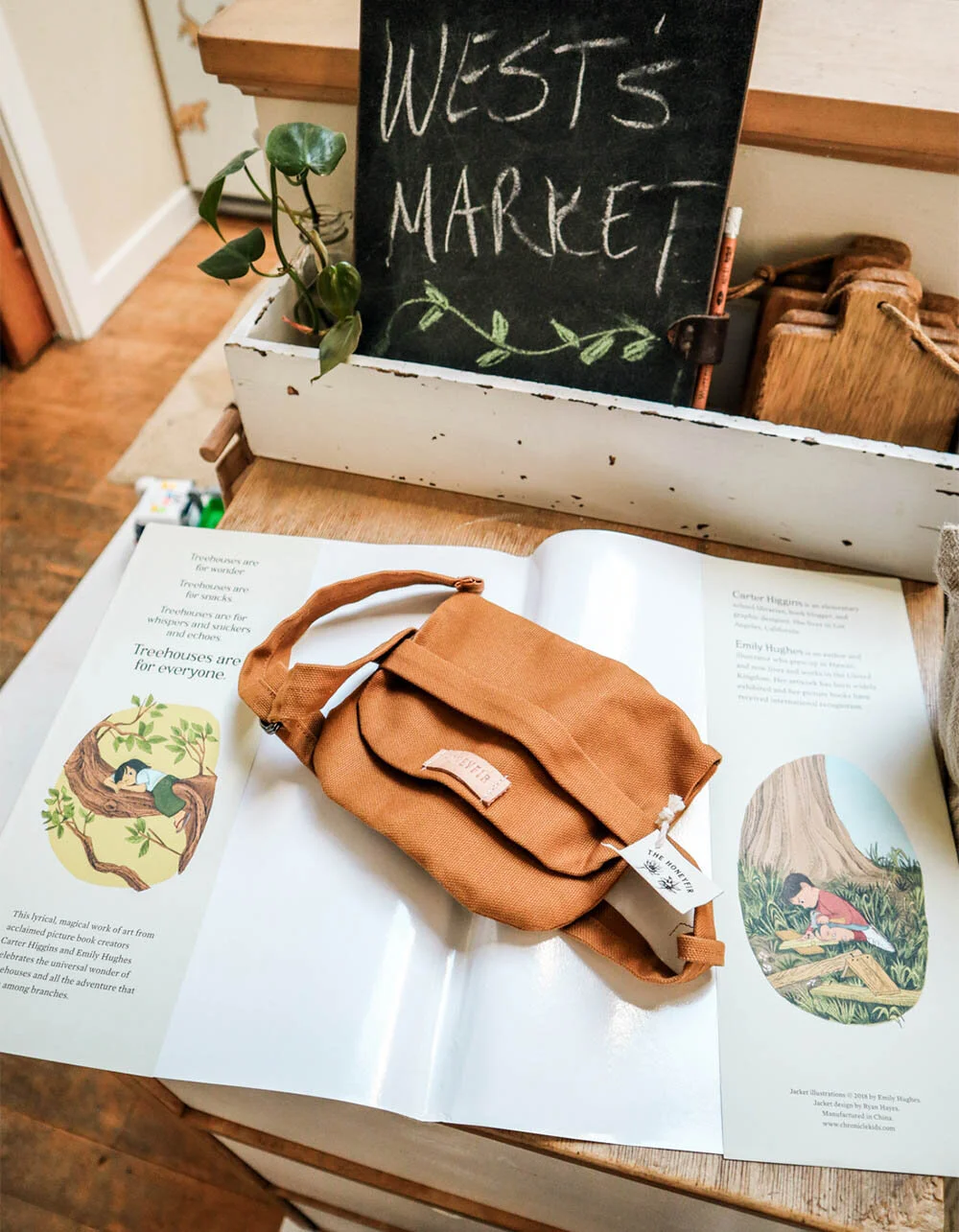
This idea is not new. I’ve seen it before, and I’ve heard it discussed and suggested a few times over the years. But now that our son is 3 and is well into picture books, we’ve accumulated enough beautiful yet impractical covers to create our own little pile of unique wrapping paper.
When we get a new book that has a dust jacket, we inevitably remove it within a day or two. I can’t bear to just chuck the paper into the recycling bin, as it’s usually so lovely. Instead, I unfold the paper and lay it under a project board beneath our mattress. (This is the best place for it in our tiny house, as none of our shelves are quite big enough to hold most unfurled pages.)
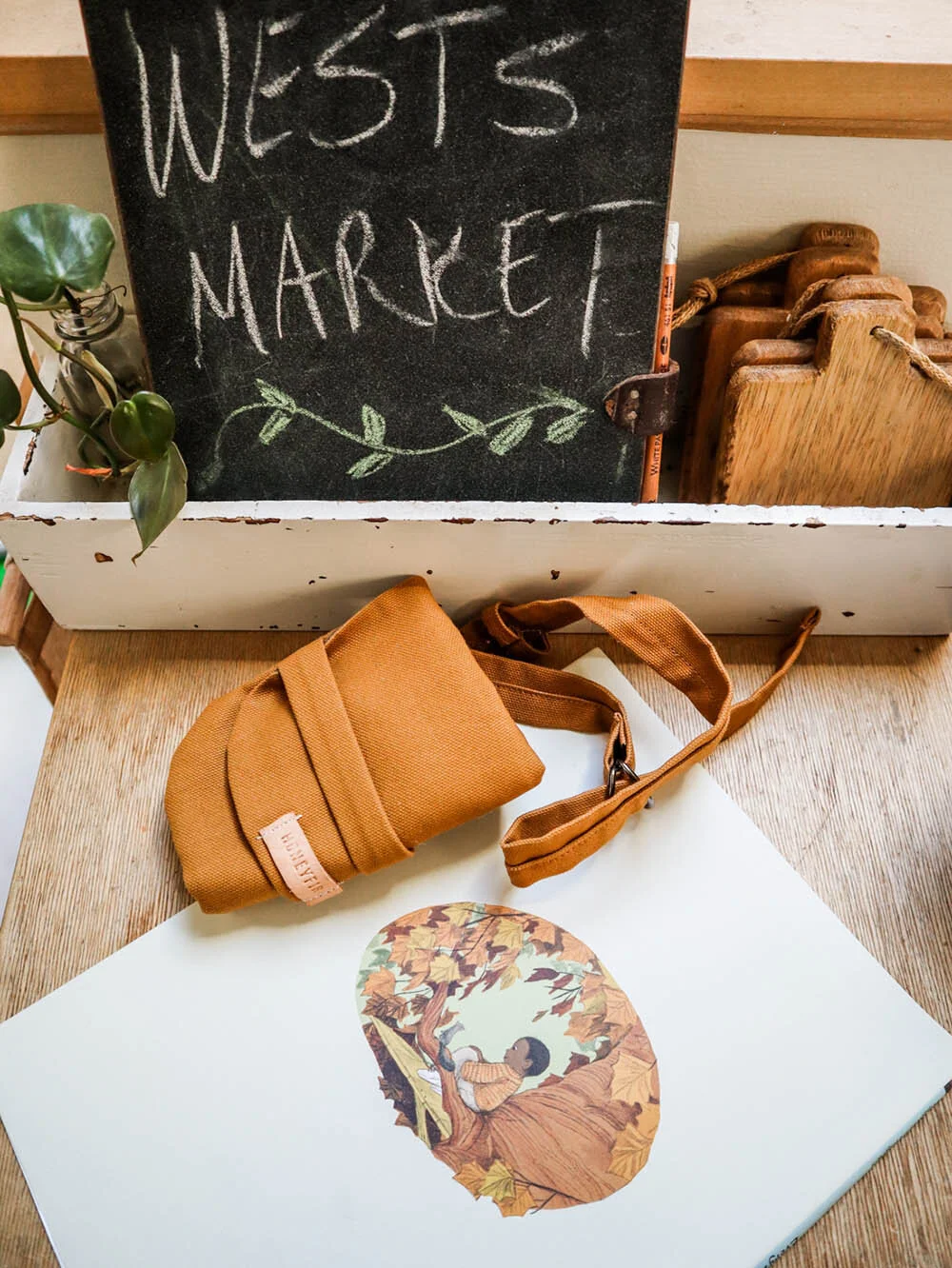
Earlier this year when the back wall of our bedroom was partially destroyed from water damage, we had to part with the covers we’d been gathering for a couple of years, as they’d gotten damp. It was a bummer, but we’ve already begun to rebuild our collection.
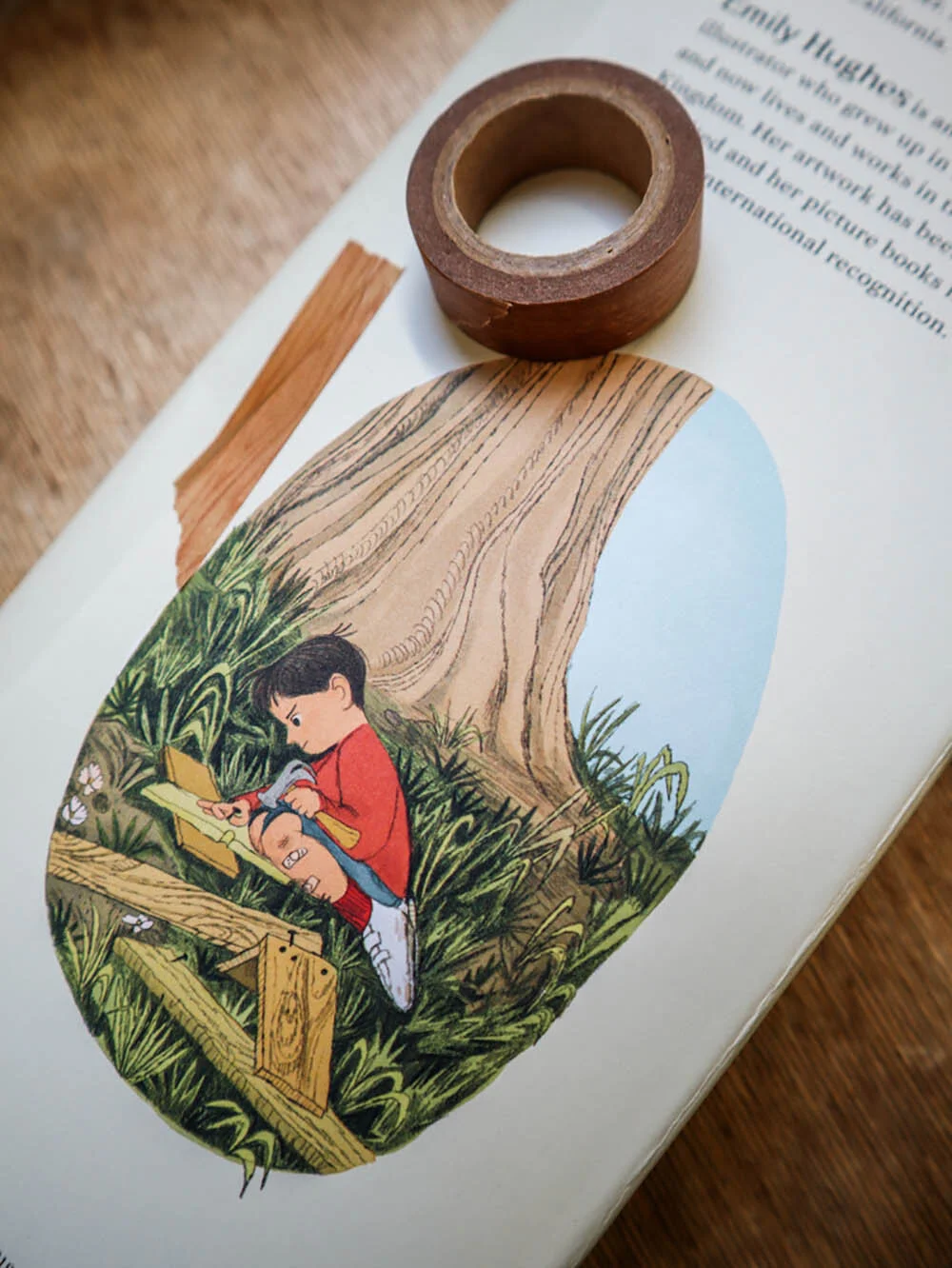
Once we’ve wrapped up an object with a book jacket, we use some spare/repurposed bits of ribbon or twine from around the house, and sometimes top the present(s) off with a sprig of greenery from the garden.
Is the end result perfect? Nah. But is it creative, less wasteful, thoughtful and beautiful? Personally, I believe so.
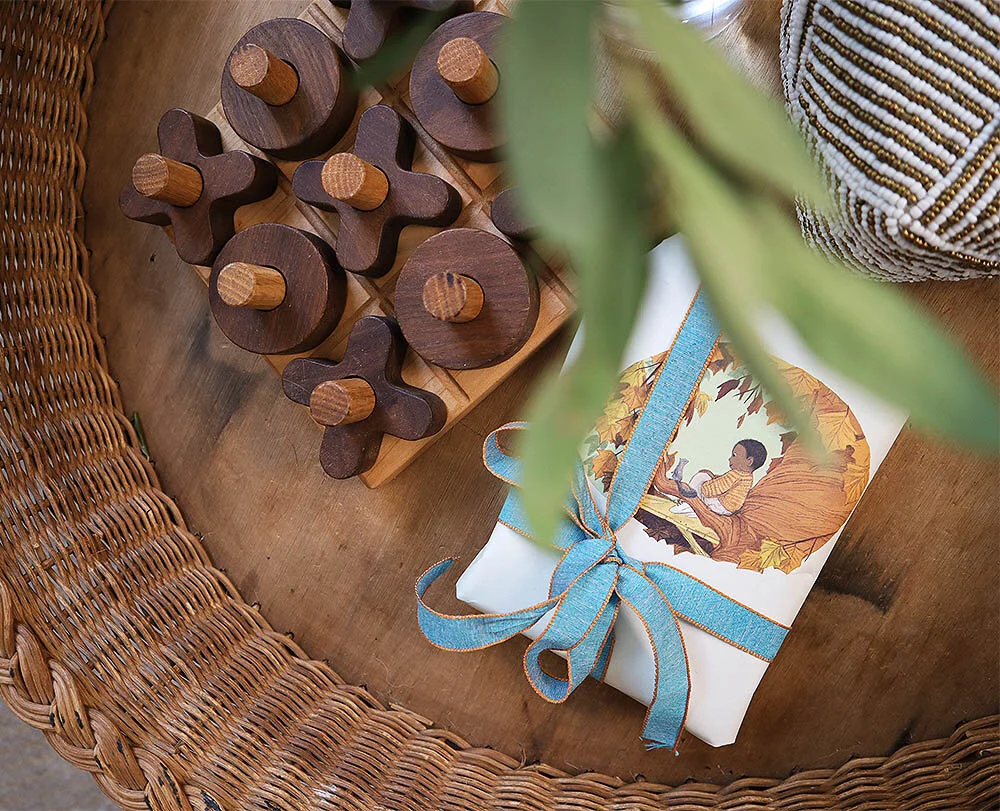
Book jacket pictured in this post: Everything You Need for a Treehouse, written by Carter Higgins and illustrated by Emily Hughes.

Easy, Low Waste Dental Routine
I realized recently that it’s been months since I emptied our tiny bin in the Cottage bathroom. Thanks to the changes we’ve made to our bath and body care habits, we almost never have any trash/recycling leftover. Making some simple modifications to our long-standing home dental care routine was one of the easiest ways to reduce our waste.

The products we use now are just as economical, consume no extra space, and even beautify our little bathroom. (Who knew that dental hygiene products could be so lovely to look at?!)

Toothpaste
By 2050, there will be more plastic in our oceans than fish. Over 1 billion plastic toothpaste tubes are thrown away annually, ending up in landfills and oceans. What can you do to help? A simple shift in our small daily practices can help us all make a dent. Bite makes cruelty-free, plastic-free, zero waste toothpaste tablets sent in refillable glass containers. When you need to replenish your supply, Bite sends new tablets in compostable kraft envelopes padded with post-consumer recycled newspapers. Just pour them into the glass bottle they shipped upon your initial purchase, and voila.
Toothbrush (Adult)
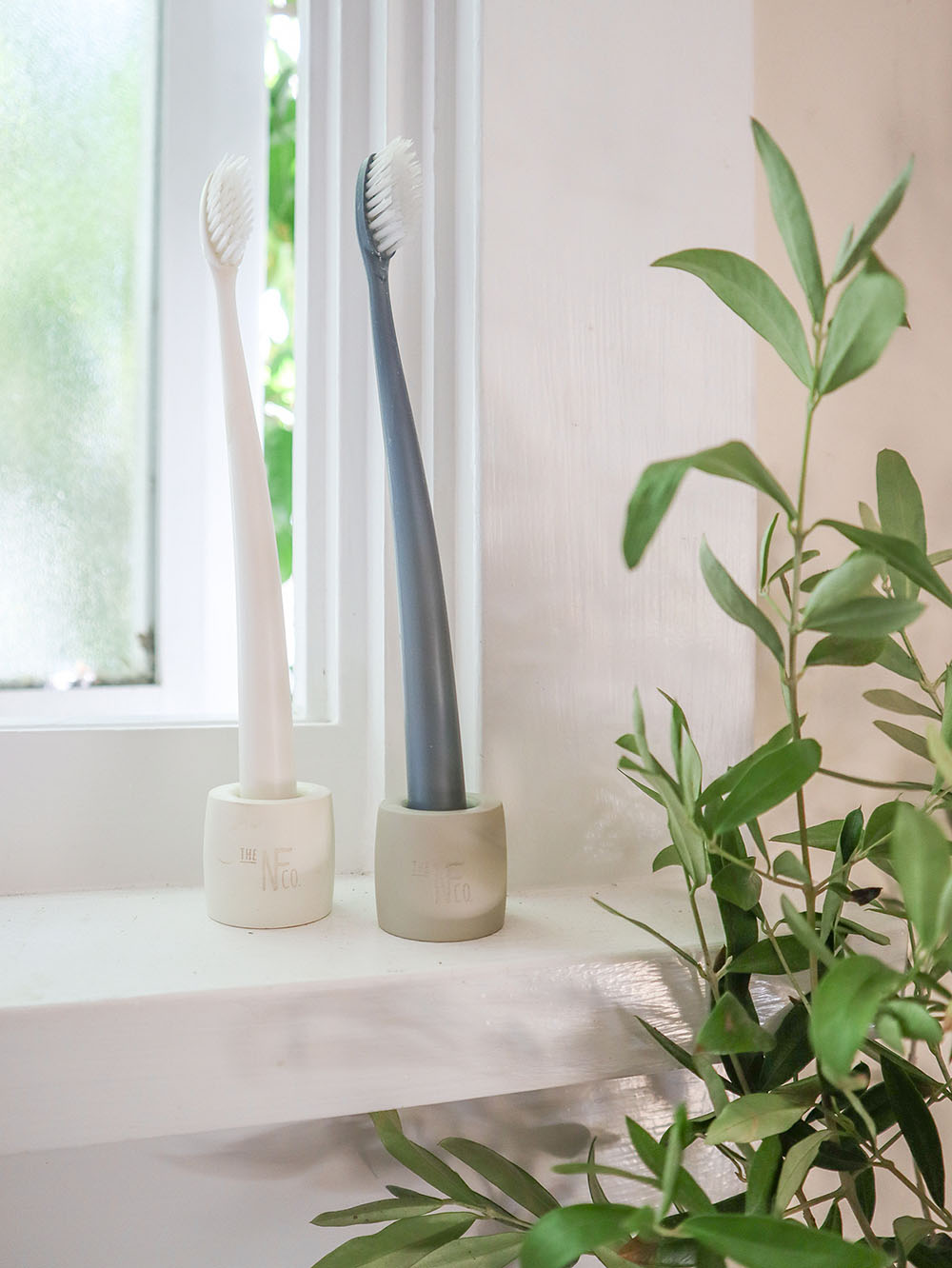
Adam and I like our compostable brushes from The Natural Family Co. Their Bio Toothbrush handles, stands and packaging are all compostable. The handle is made from non-GMO corn starch, and the packaging is cornstarch, too. The nylon bristles are BPA free and recyclable. To dispose, break off the toothbrush head for recycling, and place the rest of the toothbrush into your compost tumbler or pile. It usually takes about 1 year to break down into a chalk like stick in a home compost, and 90 days to break down in a commercial compost.

Toothbrush (Child)
Our child uses either a 100% natural, plant-based, biodegradable bamboo child’s travel brush from Helen Milan Home, or his Foreo, which was gifted to him when he was a baby. The Foreo is NOT zero waste, but since we have it we decided to put it to good use until it stops functioning. I like that the head is replaceable, and that it’s a sleek design— especially for a child’s electric brush. West enjoys brushing with this device, so we use it whenever we are home.

Mouthwash
We are lucky enough to have a home and hygiene supply refill station (ReContained) within biking distance. It’s where we stock up on locally-made Ujjayi mouthwash in our reusable apothecary bottle. But for those who don’t have a refill shop nearby, Simply By Christine shared an excellent zero waste mouthwash recipe and tutorial, here.

Floss
We use refillable floss, which arrives initially in a small glass bottle, and can then be refilled as needed. The floss is cruelty-free and compostable, and the refills arrive in compostable paper packaging.

Global Climate Strike
The Global Climate Strike begins this week, running from September 20th - 27th.

The strike is powered by young people all around the world who have been speaking out on behalf of our planet and its inhabitants, and fighting for just and equitable solutions to the climate crisis.

On the 20th and 27th of this month, our family and our small business will be striking with the youth who’ve organized this week’s events to demand climate justice for all.

We aim to demonstrate to political powers around the world that the urgency of the climate crisis requires a new, swift, impactful, and meaningful response that will serve the health of the planet while also focusing on human rights, equity, and justice.

Find out how you can get involved by clicking here.

Our Fleet of “Company Cars”
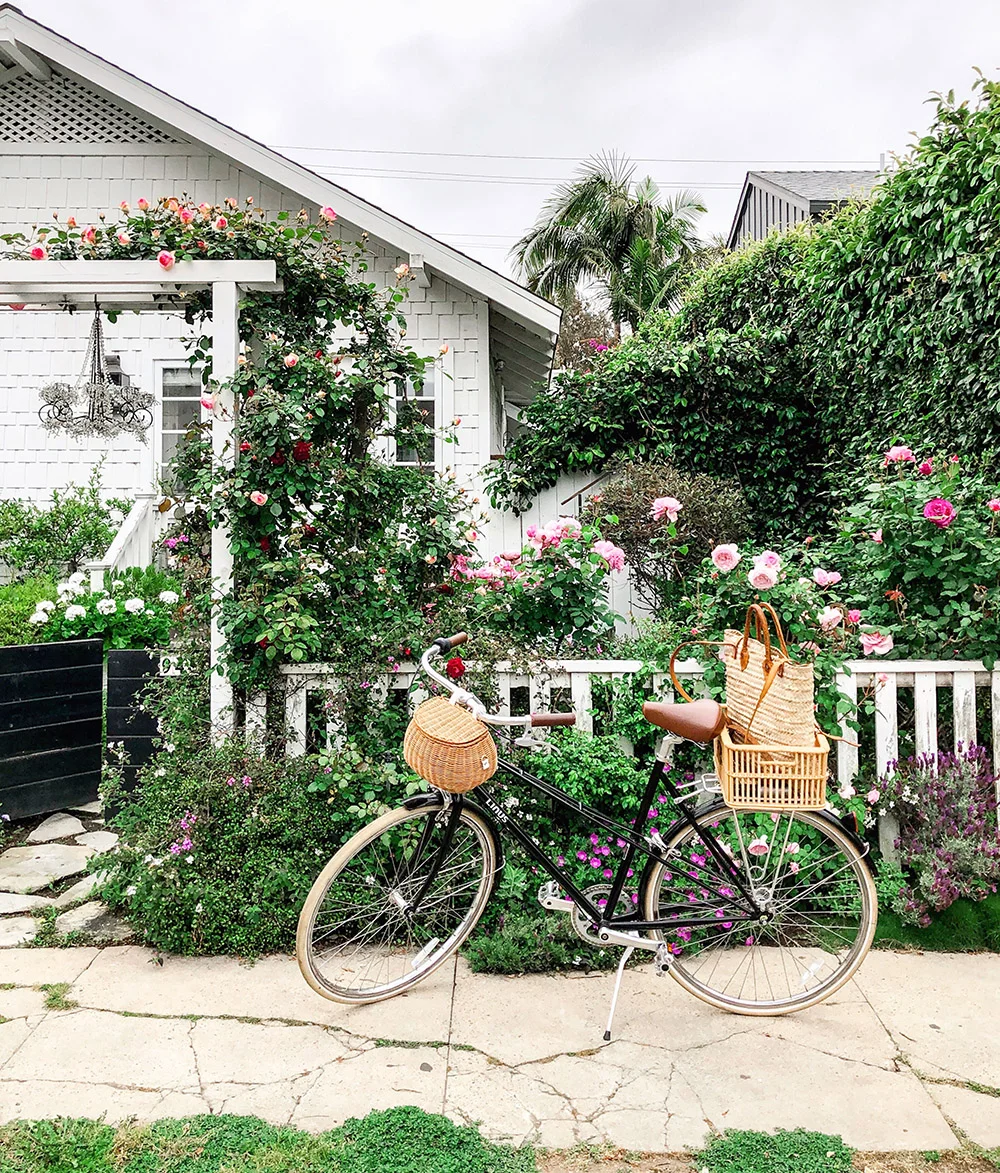
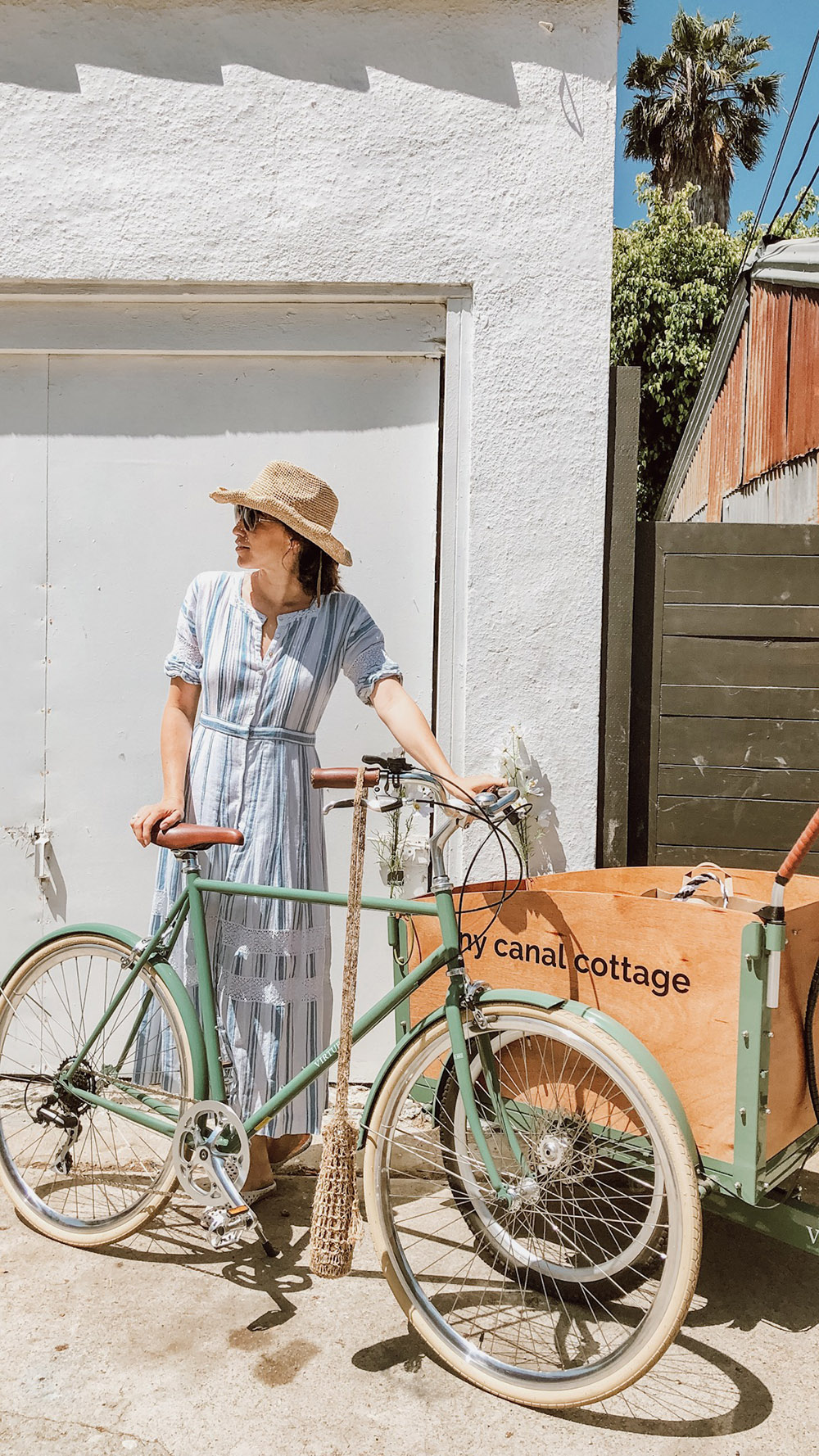
I post a fair amount of content on Instagram featuring our family’s fleet of bikes, which we affectionately refer to as our “Company Cars.”
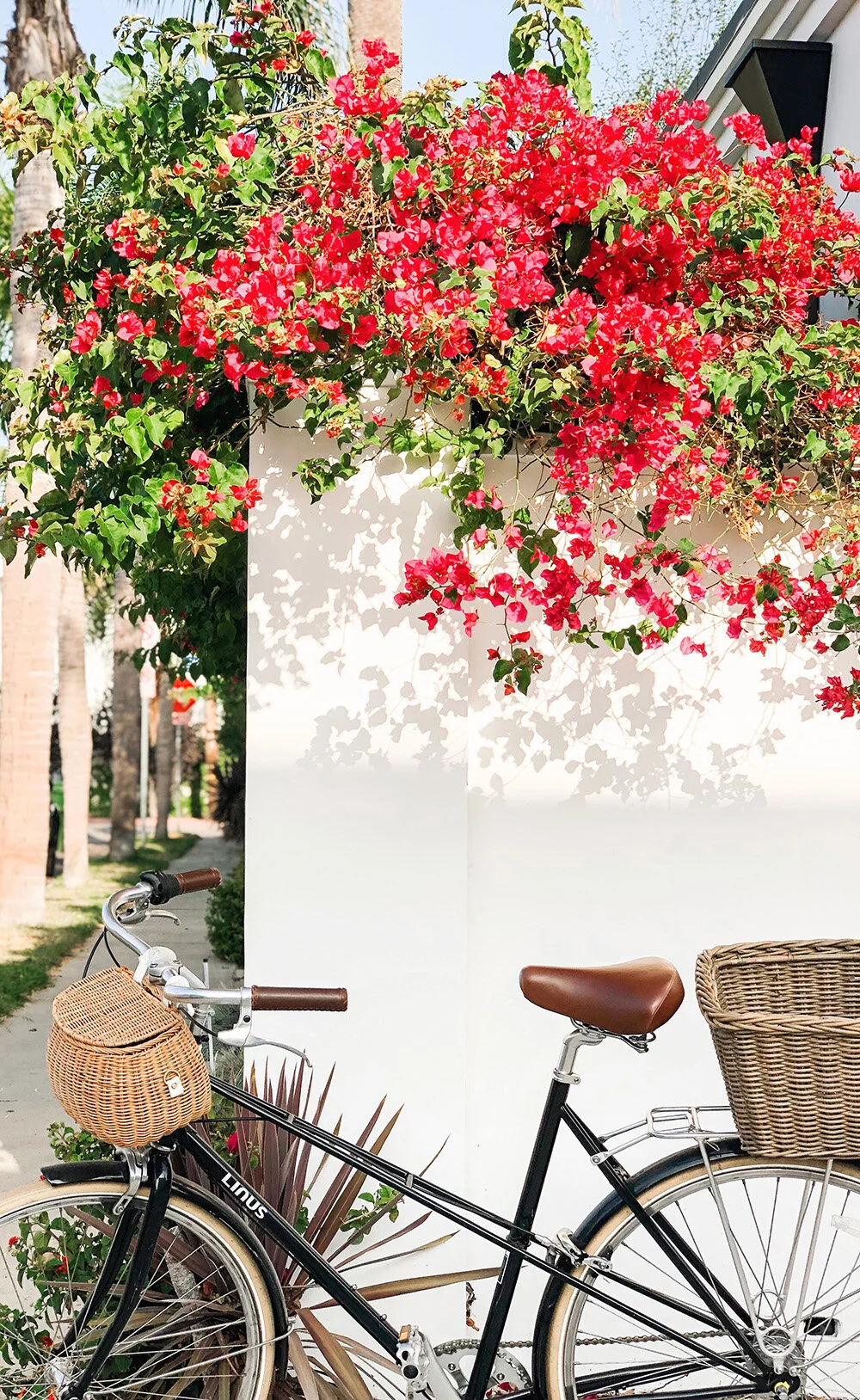
Most of the time I’m simply offering glimpses into our daily routines and lifestyle habits— rarely do I discuss WHY we bike so much and drive so little.

First, I should state outright that pedaling here-and-there as a family like we do is a mix of planning and privilege. This lifestyle works for us because of a myriad of factors that don’t apply to everyone.

Yes, we go out of our way to accommodate the mildly inconvenient realities of biking, such as waking up earlier, carving out more time, bringing changes of clothes, awkwardly carrying bulky cargo, wandering around events or this crowded city with a trio of helmets fastened to our belt loops, etc.

But these are things we are privileged to have the opportunity to do. We are able-bodied, we do not have to commute for work, and we live in an agreeable climate year-round.
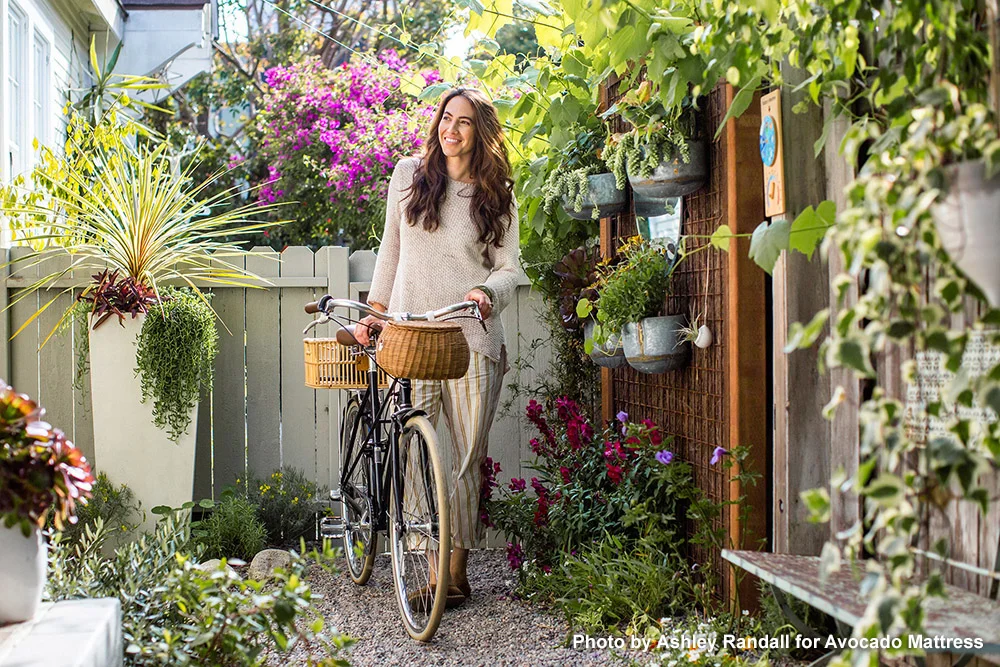
In other words, we’re on no pedestal about our bikes > cars mentality. My goal in this blog entry is merely to share why we bike, and what it means to us.
Environmental Benefits
In a recent article from the Climate Fwd: Newsletter offered by The New York Times, we learned that if Americans cut back on their driving habits just 10%, we can have a big and meaningful impact on greenhouse gas emissions. Light-duty vehicles (which are basically the models used for everyday life) account for about 1/5th of our country’s total emissions footprint, and more than 1/3 of all car trips are within 2 miles. If those who are able to do so use public transportation, bikes or simply rely on walking instead, a 10% decrease in driving would prevent about 110 million metric tons of carbon dioxide from entering our atmosphere.

Family Activity or Solo Relaxation
We’ve found biking— both as a family (with the pups included) and solo— to be such a therapeutic and enjoyable activity. Unlike an errand in the car, a bike ride (with or without an end goal) is a wonderful way to be more engaged within our community and aware of its current state. West and the pups clearly delight in the sights we encounter while out. And when Adam and/or I bike alone or as a couple, it’s a wonderfully refreshing way to get outside and clear our minds.
Health Benefits
I find it extremely hard to allot time in our schedule for working out. We don’t have a nanny or a babysitter or family nearby, nor do we have help with our small business. Because of these realities, it’s tough to find a chunk of time in which we’re available for something other than work, life’s necessities or childcare. (I’m not complaining— just sharing.) Biking has been a great way to stay active and get our heart rates up on a daily basis without having to hire assistance.
Simplicity
In L.A. (and in other cities in which I’ve lived and biked), cycling has a lot of perks. Due to heavy auto traffic, biking is often more time-savvy and efficient than driving on local roads, and there’s always a place to park easily, quickly and for free. Plus it’s a great way to get unplugged. (Yes, we should ALL be unplugged when on the road, but when I look around I see just how many drivers are glued to their smartphones in traffic, and it’s terrifying. As such, ALWAYS WEAR YOUR HELMET! I love my Bern, and West and Adam are into their magnetic-clasp Nutcase helmets.)

Video: Tiny Takeaways (Ep.7)
This is the 7th installment of our mini video series, Tiny Takeaways. In this episode, we’re continuing to highlight some easy, space-saving swaps that might make your home or apartment a bit more eco-friendly. For 200+ more tips for making the most of your compact home or apartment, explore our lil’ book: Small Space Style.


Laundry as a Family Activity
There’s no getting around the chore of laundry— even in a tiny house. This is especially true for residences that with young children, pets who shed, a full-time office, and a slew of reusable/washable goods in lieu of disposable single-use supplies. (🙋🏻)

In order to make laundry feel like more of a game and less like an obligation, we’ve made washing and drying into a family activity at the cottage.

We take our vintage children’s chair out beside the bistro table set, pair it with an old restaurant bus tub (left over from our wedding), and add some water and a soap bar to then hand-wash a few garments with West.


We end up tossing everything in the washing machine, of course. But we’re constantly reevaluating and exploring ways in which to reduce our environmental footprint during the laundry process.

We only do full loads (rather than small or partial washes), and run most of them on cold, since 90% of energy used during a typical wash cycle is used for heating the water. *

We share an old, stacked washer + dryer with the neighboring tiny house. Despite the notable uptick in the loads of wash that result from practices like using reusable wipes, cloth diapers and washable toiletry supplies, our water consumption hasn’t increased drastically enough for us to see a marked difference in our utlity bills. (The only time we do see a difference is when we’re trying to get establish “large” sections of new plants. Even many of the drought-tolerant ones need more water than usual when settling in and taking root.)

Whenever possible, we try to dry everything on an all-natural folding rack, which can fit indoors easily, as well as out.

We also have a few makeshift clotheslines (made of twine and held up by tacks) strung about the garden where we can suspend additional items. West enjoys putting the linens out on the rack and lines, as well as picking them back up once they’re dry.

When we need to use the dryer, we’ve begun to add all-natural, hypoallergenic dryer balls, which can last for 1000 loads, and cut back on drying time by 25%, thus saving time and energy while softening clothes and reducing wrinkles. (We never use dryer sheets, as they’re usually filled with toxic ingredients that are routinely tested on animals.)

This whole process has become one of our go-to summer activities. And, oddly enough, we’re into it.

Source: Give a Sh*t by Ashlee Piper

Reducing Air Travel
In summers past, Adam and I would always take at least one trip away via plane. The summer after West was born we journeyed back to to Belcastel. Last year we met up with our family in Idaho. This year, however, Adam and I agreed to ease up on air travel, as we’re monitoring our collective carbon footprint as both a family and a business. Flying less often is such a simple way to significantly cut back our negative impact on the planet, as a single cross-country flight here in the US represents about 1/18th of a person’s annual carbon emissions.* Plus, we live in a tourist destination— we might as well stay home and enjoy it!

Then, unexpectedly, a friend of mine called and invited me to join her in Hawaii for an August mini-break. For a few personal reasons, I decided to go. As a result, I began exploring the ways in which I can lessen my impact both from and during the trip. (goop recently published an article entitled How to Travel Responsibly in an Era of Climate Change, and it’s definitely worth reading.)

We opted to fly Alaska Air, which has been ranked by the International Council on Clean Transportation as the most fuel efficient carrier in the United States for 7 years in a row. They burn 12-13% less fuel (and emit 12-13% less CO2) than the average US carrier, and are investing in alternative, sustainable aviation fuel. Additionally, Alaska Airlines has the most comprehensive inflight recycling programs of any U.S. airline. (They even compost their coffee grounds from inflight travel.)

Learning about Alaska Air’s sustainability efforts at a Create & Cultivate event with Jaclyn R . Johnson.
Earlier this month, The Guardian published an article about offsetting carbon emissions, and how to navigate the options. After reading it, I purchased a carbon offset for 5500 miles (slightly more than the equivalent of the round trip journey) by contributing to Alaska’s verified nonprofit partner, Carbonfund.org Foundation.

Additional actions help, such as flying coach, packing light, bringing a reusable coffee/water bottle to fill after security, shutting the window shades when instructed by flight attendants, and flying direct whenever possible.

My handbag necessities for home or travel, including a Nimble wireless charging kit (made from a sustainable blend of recycled water bottles & organic hemp), bamboo cutlery, reusable bottles, stainless steel to-go food containers, and more.
A trip such as this is — to quote Katrina Fischer Kuh — “a privilege paired with responsibility—responsibility to cognize the full human and environmental impacts of climate change, responsibility to shrink your own environmental footprint, and responsibility to push for better environmental policies.”
*Source: The New York Times

Lower Waste Days in LA
This post was sponsored by Garnet Hill. The words an opinions expressed are my own. As always, any imagery showing West and/or the pups was taken as they interacted in their own natural ways.

An individual’s journey to a more eco-friendly existence doesn’t have to be completed overnight. It doesn’t need to be traversed flawlessly in a straight line, and no one is fast-tracked to the high road by shaming others or one-upping our peers. The transition is about caring and trying. Really trying. Both when the eyes of others are upon us, and when they’re not.
For me, this journey began when Adam, StanLee and I moved into our tiny home, as small space living is inherently more environmentally friendly. But, looking back, we certainly amassed a regrettable amount of waste in the years that followed. It wasn’t until after out son was born that we became far more aware of our footprint, and our role in the climate crisis.

Since then, we’ve been working towards the goal of as low waste of as lifestyle as is reasonably possible here in our live/work family home in Los Angeles.

Dropping off beverage bottles for return and reuse at Erewhon Natural Food Market.

Refilling our own glass containers with household and beauty products at Recontained.

We still have much to learn and accomplish. But we’ve shifted our habits enough to enjoy a marked change in our spending, health, spare time, energy consumption, and material waste.

Biking to the library to borrow books, rather than driving to buy our own copies. On a daily basis, we swap the car for our bikes whenever it feels safe to do so. Whether we’re traveling solo or with our son and pups, we pedal our way through our errands.
There are always times of exception: client purchases, hospital visits, the occasional new toy for our son, props for brand shoots, and sporadic deliveries in packaging that can be greatly improved upon. But we are attempting to eliminate those instances, or offset their impact through other actions.

Giving the cottage plants a bath with the leftover water from West’s activity table.
Across all categories, we’ve realized the importance of versatility when it comes to any item we acquire. Whether it's new or vintage, for the house or for our wardrobe, we now understand the value of having pieces that are timeless in style, versatile in function, and durable in construction. When considering new purchases, we'll ask ourselves several questions— one of which pertains to versatility. (Can that new bistro table we're considering for the garden be easily carried and fit inside the house or on the porch so we don’t need multiples? Yes! Can we adapt our existing glassware with a few add-on accessories to make it suitable for our young son so he doesn’t need his own set of cups? Yes! Can these bath towels also be used at the beach and even as curtains and tablecloths? Yes!)
These sorts of adaptable goods save us money and space, while lessening our waste.
No one in our family regularly gets new articles of clothing— even little West, who is growing quickly as children his age do. We share a single compact closet, which is also where we keep West’s permanent collection of board and picture books, as well as our bedding. While the space is not overstuffed, there's admittedly very little room to spare. So when we add something to the closet, we give TWO pieces away to family, friends or non-profits. (I wrote in greater depth about this topic in a recent post entitled Remaining Clutter-Free for the Long Run.

If we add something new to our shared closet, we donate at least two pieces to help us avoid over-accumulation. We reuse product packaging in art projects with West, and refill the bags or boxes with giveaway items for friends and/or local non-profits.
Nearly everything that earns a place in our wardrobe has to be an item that can work year-round, and be dressed up or down.

When it comes to recreation, we usually chose to stay local and enjoy our neighborhood and community resources. We take our son to nearby playgrounds, rather than buying or building one in our own (tiny) yard. We bring a small selection of toys and crafting supplies with us when we're out so we’re less likely to make impulse purchases or require new packs of crayons, etc. As a healthy way of unwinding at the end of the day, we paddle through the neighborhood in our hand-me-down canoe.
This month, I treated myself to a few items from Garnet Hill:
A simple, solid maxi dress that can be dressed up for work or down for beachside strolls
A crinkled, double-gauze shirt-dress to be worn as-is, with leggings, or over jeans
An unfussy A-line knit dress that is suitable from day to night.


We bring our own reusable drinkware, bags and utensils wherever we go.
Each piece is made with Tencel™ and/or organic cotton.
Adam and I recently discovered that— for whatever reason— Tencel™ doesn’t attract or hold nearly as much pet hair as some fabrics, and yet it is still breathable, flexible and absorbent. We have two rescue beagles, one of whom sheds more than any dog I’ve ever met, so this is hugely helpful. A strong, easy-care fabric, TENCEL™ is made of natural cellulose derived from sustainably harvested wood pulp from renewable tree farms. This modern and eco-friendly fabric is buttery-soft, smooth and elegant. It pairs well with other fabrics, like organic cotton.

Walking to our closest farmers market to buy in-season, regional produce from local growers.
Garnet Hill’s organic cotton is made with fibers farmed without harmful pesticides, GMOs or chemical defoliants, which is not only better for your skin but also for the land on which the cotton is grown.

If florals are being sold in plastic sleeves, I remove them on-site so the vendor can reuse them.

We bring our coffee thermoses with us on our errands, just in case we decide to buy a sip while on-the-go.
During transitions between seasons, I usually layer my outfits with linen— one of the oldest and strongest natural textile fibers. It is breathable, has naturally-occurring antibacterial properties, is comfortable in fluctuating weather, has excellent color fastness, and — in my opinion — gets more beautiful over time.

These pieces have worked well for our lifestyle. Whether I’m biking through our errands, reading with West at the library, playing with the pups in the garden, visiting clients, or attending events, I’ve appreciated the comfort and versatility of them all. I plan to wear them year-round, and for years to come.

Less Shopping, More Time
There’s something unrelentingly frenetic about the pace of family life in a major city. Between traffic, crowds, and prices, simply putting a foot out the door can feel like stepping into a whirlwind.


However, since curtailing our dependency on disposable / single-use items, Adam and I have realized that we rarely have to go shopping, which means we have reduced those frenzied family missions to an absolute minimum.

Once we no longer needed to replenish our stock of cleaning goods, household supplies and toiletries— and since we reprogrammed ourselves to stop bringing new items into our home— there became significantly fewer errands to run. (This is, of course, partially achievable through online shopping, but the carbon footprint of packing + shipping are far too taxing on the environment to warrant frequent deliveries.)

Other than our regular trips to the market or to pick up canister refills for our Sodastream, we usually only leave when we are meeting people, working, or creating lil’ field trips for our son and dogs. In other words, less shopping us has given us the magical gift of more time.

Lil’ apple basket by Olli Ella

That’s not to say that I ever feel caught up on business, or that we have found time for things like traditional workouts or lengthy catch-up sessions with our friends. For us, the reality of running our own business and raising a family with no hired help for either is that we are always behind on something. (I imagine that most people feel this way.) But, when it comes to time with our son, we feel like we’re squeezing in every moment possible— and we don’t have to drive him all over the city for this-and-that while we’re at it.
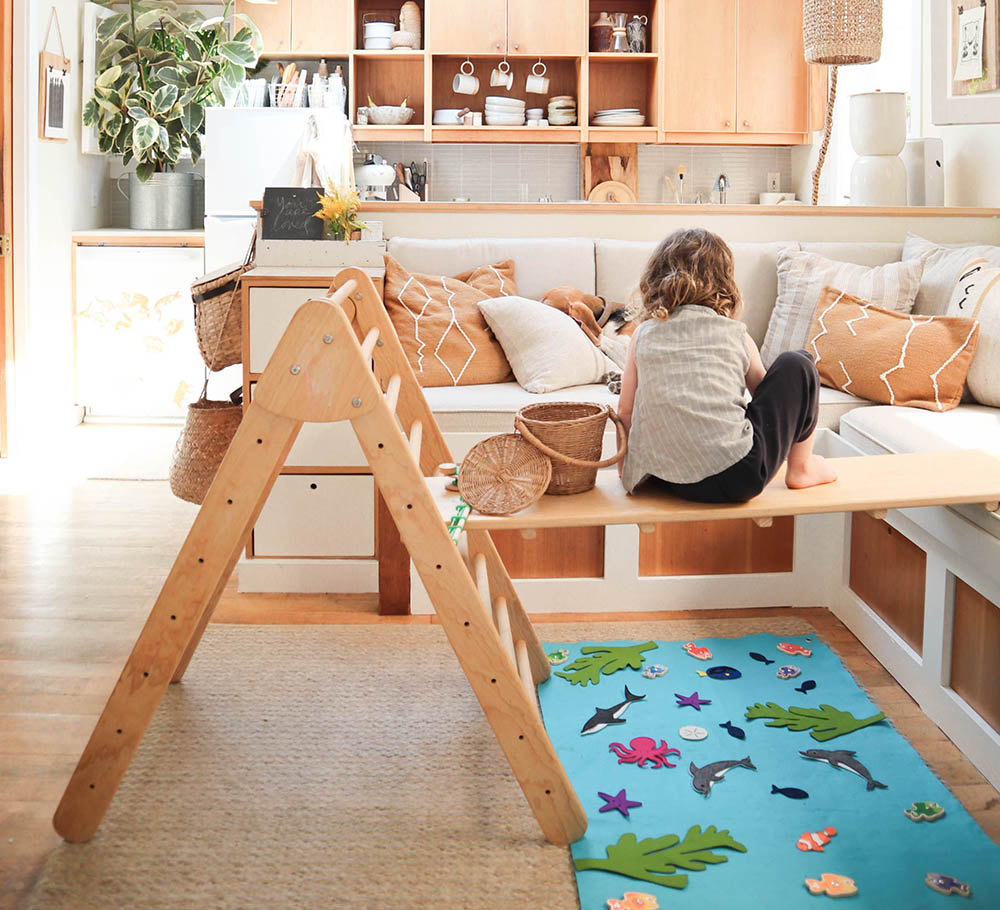
This leaves time for impromptu explorations on foot or by bike within our local community, and opportunities for countless imaginary games in our tiny home and garden.

Here’s to reduced waste, less stuff, and more adventure.


Video: Tiny Takeaways (Ep. 6)
This is the 6th installment of our mini video series, Tiny Takeaways. In this episode, we’re highlighting some easy, space-saving swaps to make your home or apartment a bit more eco-friendly. For 200+ more tips for making the most of your compact home or apartment, explore our lil’ book: Small Space Style.

Updates for a greener, simpler bathroom
In my recent “Space-Savvy, Low Waste Bathroom Swaps” post, I mentioned a product that we hadn’t yet tried, but intended to purchase: a bidet attachment.

Clearly this is not the chicest topic to cover on the blog. But after having the bidet attachment for a couple of weeks we see just how much toilet paper it saves, and I think that’s well-worth sharing. Plus, when I posted videos on Instagram Stories of us installing the bidet in the Cottage, the response was notably high, indicating to me that it was something I should discuss in greater detail. (Many viewers also inquired about our space-saving toddler training seat attachment, which I share and discuss below as well.)

Americans make, move and use 34 million rolls of toilet paper every day. The problem is not just the 54 million trees cut each year to keep up with demand, but also the enormous amounts of water, chemicals, and energy used in the destructive production process of toilet paper.*
It takes just 1 pint of water to properly wash with a modern bidet like the TUSHY. This modern bidet attachment easily attaches to your toilet in minutes— no extra inches required… and no need to continue store tons of extra toilet paper in your small home, apartment or office.

The Tushy isn’t the only thing that’s saving inches in the bathroom. West’s potty-training seat does too, since we don’t need to allocate floorspace for a stand-alone toddler toilet. The seat adapter even fits onto the bowl perfectly with the bidet attachment in place. (The Topseat comes in 2 sizes, for oval or circular seat models.)

We use Grovia’s multi-purpose wipes to dry off. They come in a variety of hues, so you can designate certain colors for certain uses. (An easy way to contain them for cleaning is via washable paper bags.)
So that’s it! Our most recent changes for a greener, less cluttered lil’ bathroom.
*Source: HelloTushy

Simplified Skincare
I don’t enjoy blogging about beauty-related topics. Women are often told in one way or another that we need to invest extraordinary time and money in beauty and youth at nearly every age, and I don’t want contribute to that narrative.
However, I can’t deny that my simplified skincare approach over the past 1-2 years has saved me time, money, and space. It has also reduced so much bottle, palette and canister waste that I feel as though it’s worth sharing here— especially since I’ve received several requests recently to post about my favorite resources for skincare and makeup.

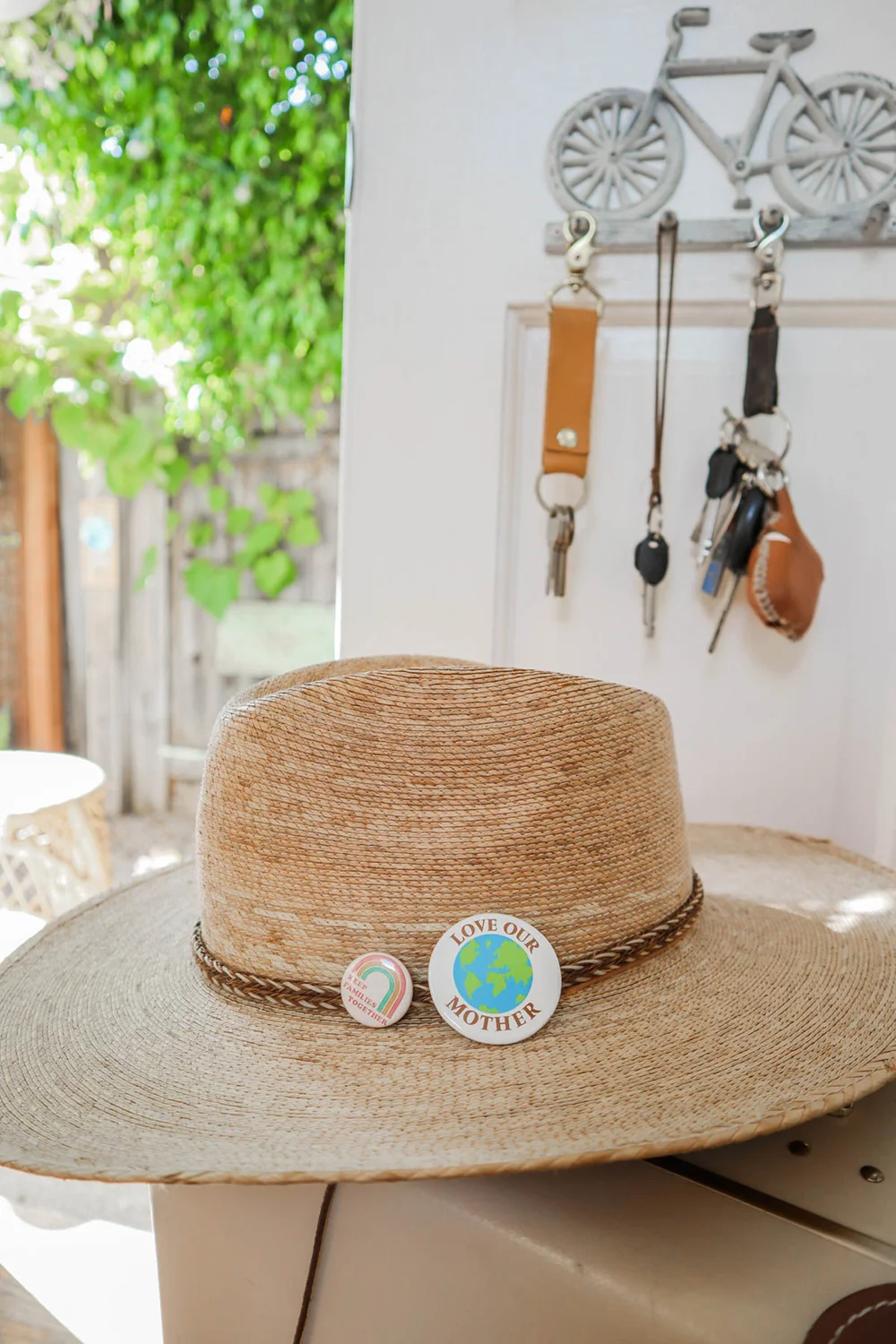
First, some context: I’m 38 years old, covered in freckles, and have visible sun damage from decades spent outdoors in Florida and Southern California. (That’s why I’m constantly wearing my West Perro hat.)
I have never used injectables such as botox or fillers, and I have never had any cosmetic surgery.
I’ve been regrowing my eyebrows for 2 years by never, ever tweezing them, and I recently got temporary Microfeathering by Kristie Streicher to lightly fill in some patches that are slower to grow back.
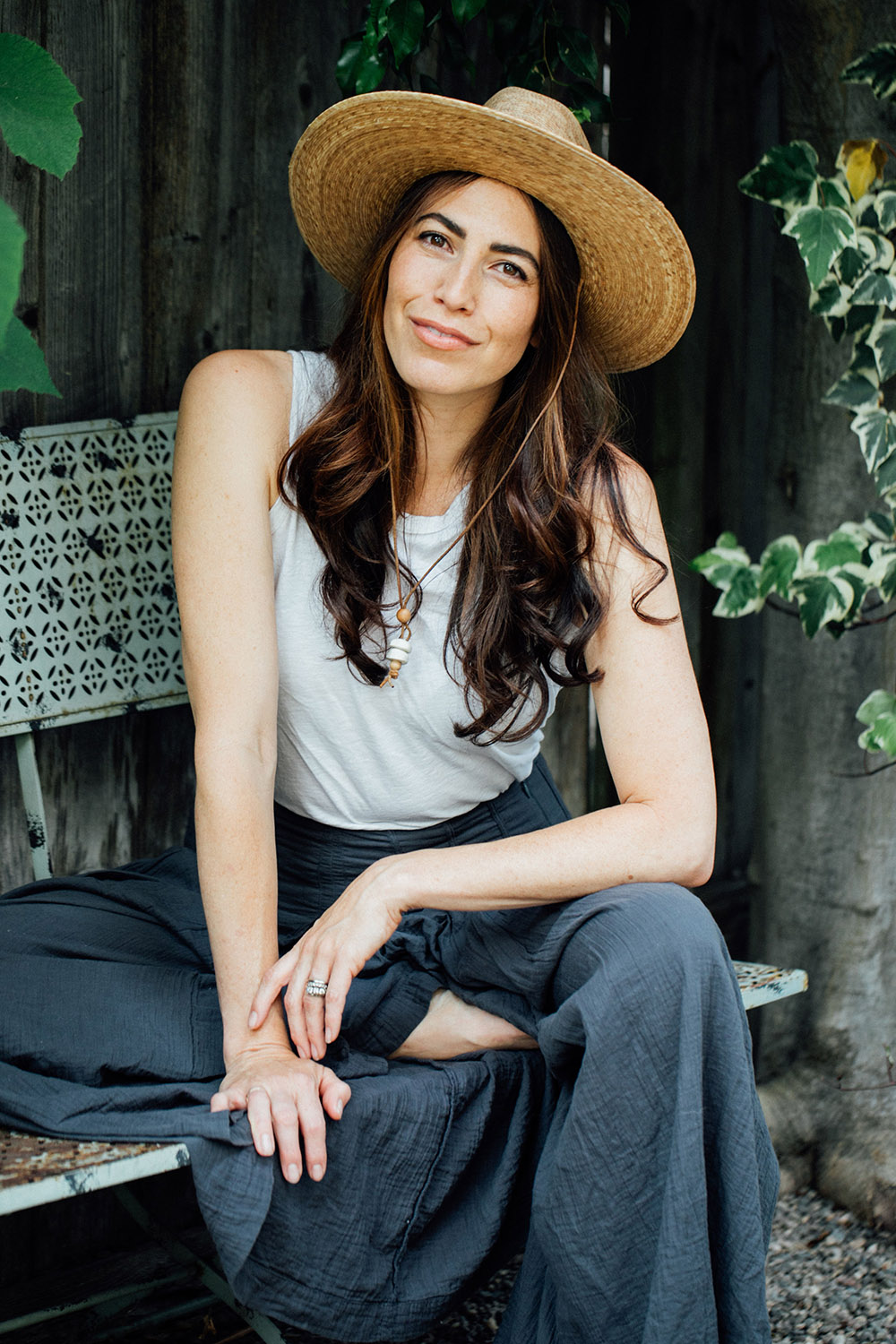
Rather than ramping up my skincare and makeup habits as I grow older, I’ve pared them down in an effort to improve my overall health, better suit our limited physical space, and reduce my environmental footprint.
Instead of my skin rebelling at my scaled-back approach, it has responded favorably. Of course, my smile lines and crows feet all get deeper as the years pass. But my tone has evened-out, and my complexion has transformed.

For my face, my skincare routine is as follows:
I wash twice per day, alternating between this cleanser (which also doubles as a makeup remover balm) and this facial bar soap.
2x per week, I use this dual-action microdermabrasion exfoliator that delivers the benefits of both physical and chemical exfoliation.
I apply Active Treatment Essence twice per day (Note: This has been the most effective product I’ve ever used on my face)
I apply Active Botanical Serum at night
In the morning, I apply a tinted SPF20 moisturizer.
That’s it. No peels, no wipes, no moisturizers, no masks, no primers.
Although the Essence and Serum have higher price tags, they actually end up saving me money, since the contents of those 2 small glass bottles are long-lasting, and are all I really need. (If I want a little extra spot treatment, the Essence combined with an application of roll-on serum from this tiny bottle from Package Free Shop have helped me out 100% of the time. )
On my body I use a Leaping Bunny certified body stone that softens on contact with the skin. It’s available in a sustainably farmed, re-usable bamboo canister, or simply as a refill.

My makeup is limited as well— it’s mainly multi-use Olio E Osso balms and a few select Beauty Counter products. My collection consists of: Eyeshadow / Mascara / Sheer Lipstick / Eye Pencil / Highlighter / Brow Gel / Tinted Face Oil / Lip + Cheek Balm
I chose my makeup carefully after searching extensively for healthier products that actually work. While serious health issues are on the rise due in large part to our ongoing exposure to toxic chemicals, Beautycounter (a certified B-Corp) prohibits 1,500 questionable or harmful chemicals from being used in their products. Plus I appreciate their ongoing approach to lighten their environmental impact. Last year alone they also offset 3,628 metric tons of CO2 to match 100% of their yearly HQ consumption, planted the equivalent of 4,270 acres of trees to offset carbon usage, and invested in 1,284 Water Restorative Certificates to offset 120% of their water usage. They’re also constantly adapting their packaging to be increasingly eco-friendly. A good example of this is their eyeshadow palette, which has a mirror that can be removed for use elsewhere, allowing the entire palette to then be recycled:

I also trust all things Goop, as their team approaches skin care from both inside and out, using high-performance, active ingredients and totally clean, nontoxic formulas for powerful results and healthy, glowing skin.
I use washable washable makeup remover pads to wipe off my makeup in the evenings, and washable cotton rounds for general cleansing. For folks who prefer to use wipes, here is a compostable option. (Read more about that via our “Space-savvy + Low Waste Bathroom Swaps” post here.)

Everything fits easily into a canvas pouch I found on Etsy, for use at the Cottage or on-the-go.
Here’s to simplifying our routines, and freeing up both time and space for the things that truly matter in this world.

Long-Lasting, Eco-Friendly Kids Clothing
Our son (who turns 3 this fall,) has very few articles of clothing. Nearly everything he needs fits into three jute baskets in our closet, while his undergarments and overnight cloth diapers fit in one additional small drawer.

It’s been the same ever since he was an infant. We never buy for his next stage of growth, and focus solely on comfort in the present. We donate anything that he’s clearly outgrown so as to avoid a build-up of articles, and we keep the number of garments that all of us own to a minimum.

The key is finding versatile pieces that can be layered regardless of season, as well as designs that continue to grow over time. Pants with legs that can be rolled up (and then back down again all too soon), and tops with sleeves that can do the same have been helped us keep certain garments in use for well over a year.

Whether we’re here on the beach or visiting our family up north during winter, our son remains comfortable. (We always have 1 major coat, 1 bathing suit, and 1 pair of gloves that fit him at his current size. All of these items fit year-round into one of his designated baskets— nothing is stored separately during off-seasons.)


We prefer to use hand-me-down clothing from West’s cousins, or pieces crafted in sustainable materials that are responsibly manufactured.

Here’s a list of our main resources.
Primary dot com: West basically lived in their zip-up rompers, day and night, until he was 18 months old.
Caribou Kids Clothing: These handmade pants grow 5-6 inches with your child, and the bamboo tops are incredible at keeping skin cool or warm, depending. West has 4 of the tops and they’re our favorites.
Arq Undies: Now that West is out of diapers (he pretty much potty-trained himself somewhere around 30 months old), he wears durable (and adorable) Arq underpants.
O.N.E. Grovia Cloth Diapers: Just to be safe overnight!
Go Gently Nation: We have a Go Gently Nation dress that our son wears at night, or any time he doesn’t feel like wearing pants. We also have a few of their lightweight long-sleeve shirts for nicer occasions. Again, these have fit our son for several months, and I believe he’ll get about another year out of them. I appreciate that they’re produced ethically and locally, cutting back on transport/emissions.
Red Creek Kids: The pants and rompers by Red Creek Kids are stylish, easy to wash, responsibly produced in small batches, and long-lasting.
Rudy Jude: Simple, natural, responsible, sustainable clothing for kids , babies and adults.
Neve & Hawk: We got West’s favorite sweatshirt here. I appreciate their bright, creative designs.
Exceptions: We try to never buy clothing from “fast fashion” sources, as they’re contributing hugely to the climate crisis. However, I’ll admit that in a pinch I found a couple pairs of West’s pants that we like for everyday use on Amazon. While they weren’t my wisest purchases, they are getting a ton of use. They will either be passed down to another child, or used as cleaning rags in the future if they fall apart.
Etsy: If we want to support a cause, get a bit more playful, or find a handmade accessory for our son, we source via Etsy.


Declutter with the Help of Greenery
Rather than buying new, purely decorative tchotchkes that will sit on the planet for hundreds (or thousands) of years, we try instead to outfit our lil’ home with multi-functional items, and/or organic decor that will naturally decay once the time comes. This is one of the many reasons I have happily embraced the houseplant craze.
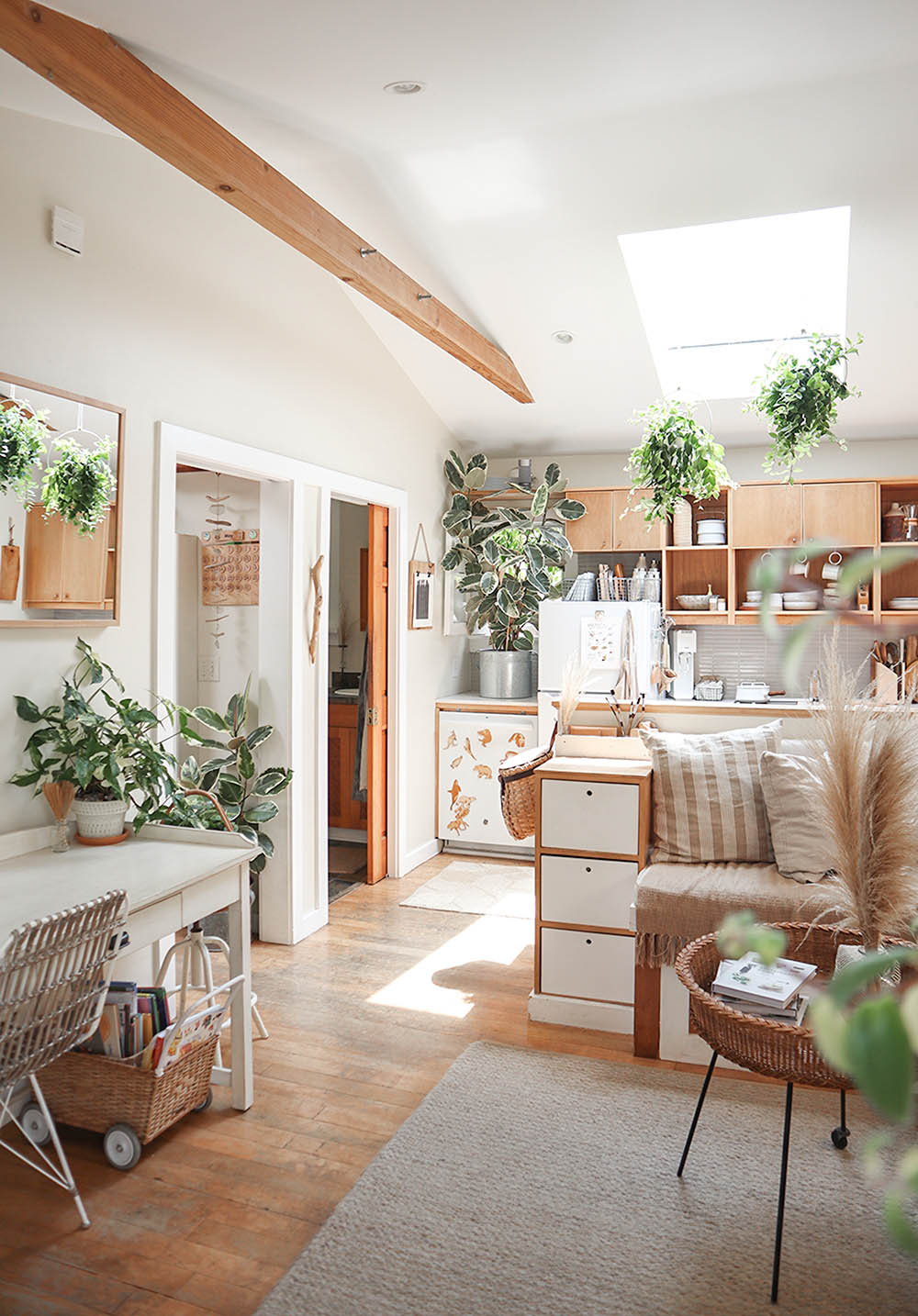
By now, we all know that plants clean the air, eliminating harmful toxins while releasing oxygen and reducing carbon dioxide. They can also decrease stress, while increasing our feelings of happiness.
But a lesser discussed reason to decorate with plants is that— depending on how you go about it— it can reduce your level of consumer waste.
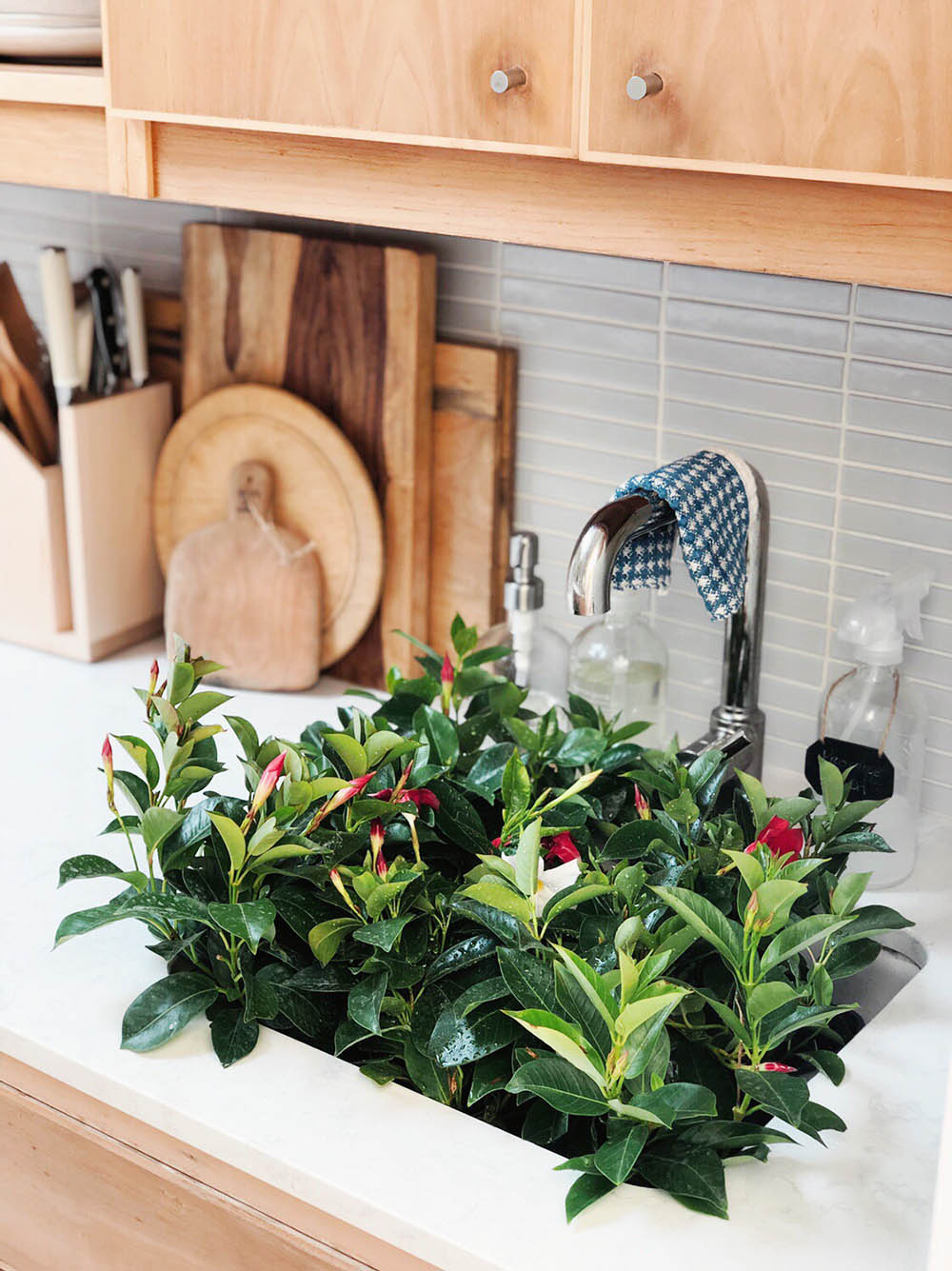
Most obviously, plants replace the need for superfluous decor throughout your home. And, when all is said and done, they can be composted or planted elsewhere, meaning that there will be no “stuff” left over to throw away or donate if your tastes shift or your needs change.
In my book, Small Space Style: Because You Don’t Need to Live Large to Live Beautifully, there are numerous tips for ways to incorporate greenery into even the most compact spaces— both indoor and outdoor. (There’s also a feature of my favorite plant guru, Hilton Carter.)

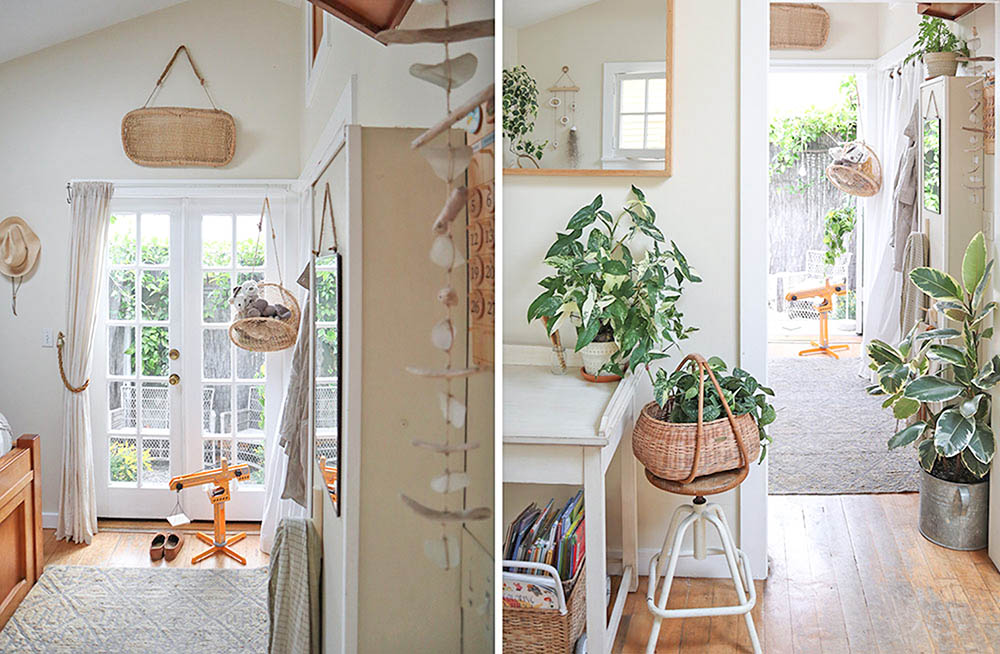
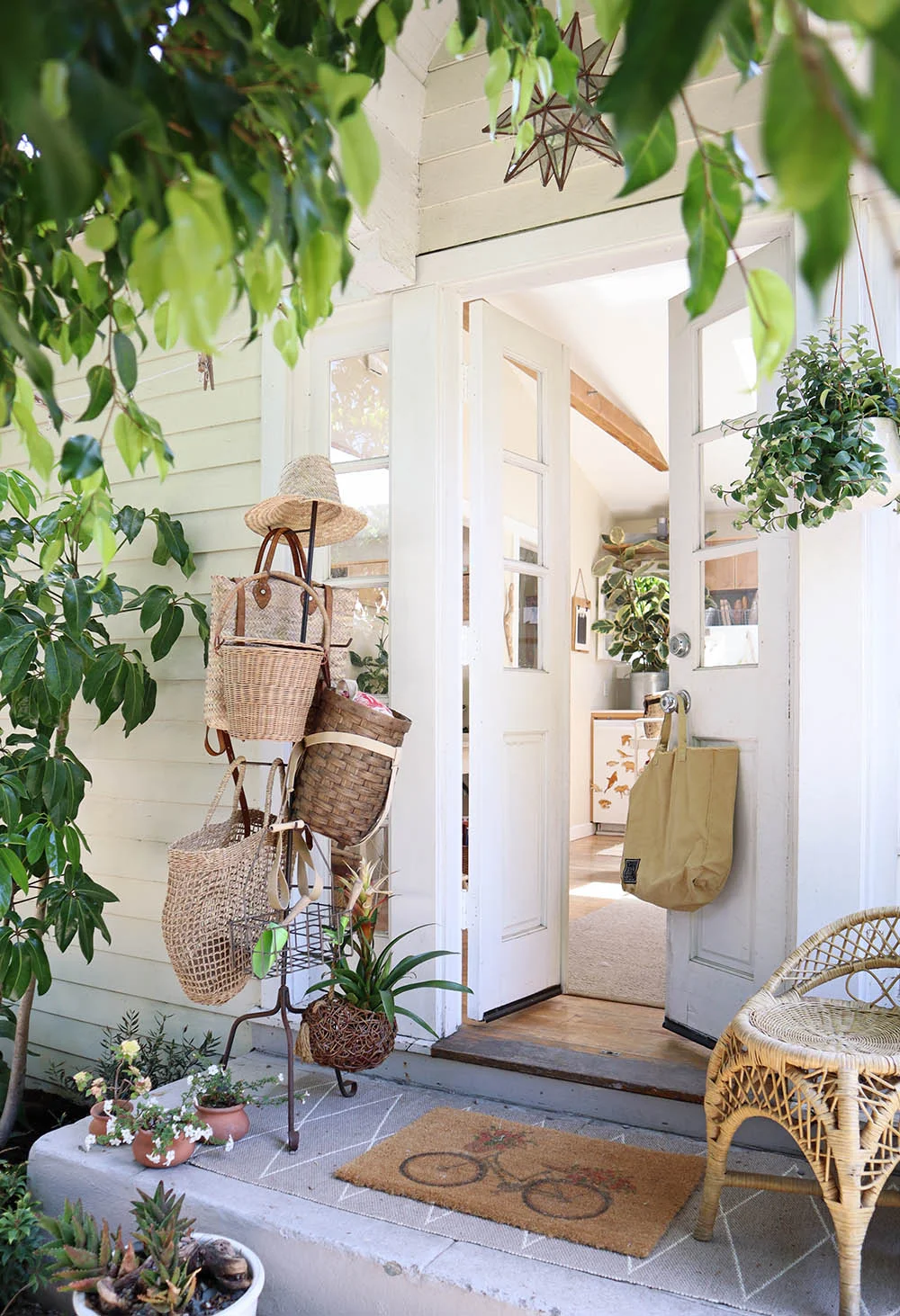
Our tiny home feels bare without plants, as demonstrated by the photos in this post, all taken on the same April morning. Just a handful of wisely placed varieties can make a huge difference in a small space, and create a visual that’s entirely unique. (After all, unlike a mass-produced print or accessory, no two plants are exactly the same.) We use a mix of invisible floating shelves, lightweight hanging planters, and vintage pots to display our indoor greenery.



Some Items You Can Probably Go Without (Part 10)
While it's great to share stories about designs and practices that help us live comfortably and contentedly in small spaces, I think it’s just as important to discuss the things that we can happily live WITHOUT. After all, making a home of a small space isn’t mainly about figuring out how to cram as much stuff as possible into your compact quarters— it’s about experiencing more by owning less, and reducing our footprint on this strained planet.
As always, before we jump on in, here’s a lil’ disclaimer: To each their own. While these items might be easy for easy for some folks to forego, they might be gems elsewhere. You know your own needs and space best. Habits shift, tastes change, lives and practices evolve. Design and decor should be different and enjoyable for everyone. The following is just a small sampling of everyday items you might want to reconsider if you’re starting to outfit a new home or apartment, or approaching a makeover of your existing space.
(View all the entires in this series here.)

Plastic Shoe Storage Boxes
I appreciate the look and feel of an organized closet as much as the next person. But those single-pair plastic shoe storage boxes take up space themselves, and will sit on our withering planet until the end of time. If your shoes are concealed in a closet or under the bed, simply use their original packaging for continued storage. If your footwear storage is exposed in the open, upcycled wine crates are a good option for a clean, streamlined look. Or perhaps choose a multi-purpose accent piece, such as a slim concealed shoe console table or bench, reducing the number of furnishings you buy from 2 (or more) to 1.

Gag Gifts
Everyone enjoys a good laugh. But we can make each other smile without gifting single-use, custom or mass produced junk goods. Gag gifts tend to get a chuckle… and then get tucked away in a drawer. Consider saving money, reducing waste, and further eliminating clutter by curbing your impulse to order that box of custom printed event t-shirts.
Toilet Paper Organizers
Americans produce, transport and use 34 million rolls of toilet paper every day. You can cut back on your toilet paper usage— and thus your paper storage needs— by coupling Tree-Free Bath Tissue and a simple attachment bidet.

SWAG
Why is our knee-jerk reaction to accept anything if it’s free? SWAG bags from events are typically loaded with promotional goodies and gifts tailored to a wide audience, which means that they likely don’t contain items you need. I almost always politely decline them, unless I know they contain something I’ve been hoping to try, or unless they contain products I know will be of use to local non-profits.

Coloring Books
We bought a round of coloring books for West before I realized how silly that was. He can create art out of endless repurposed goods around our house, such as cardboard boxes, used brown paper packaging, leaves and more. (I do not, however, regret buying his Coloring Without Borders book— that one is a keeper. All proceeds from the sale of this clever paperback, which features illustrations by over 80 professional artists from all over the globe, go to Families Belong Together.)

Dedicated “Bag Ties” + “Chip Clips”
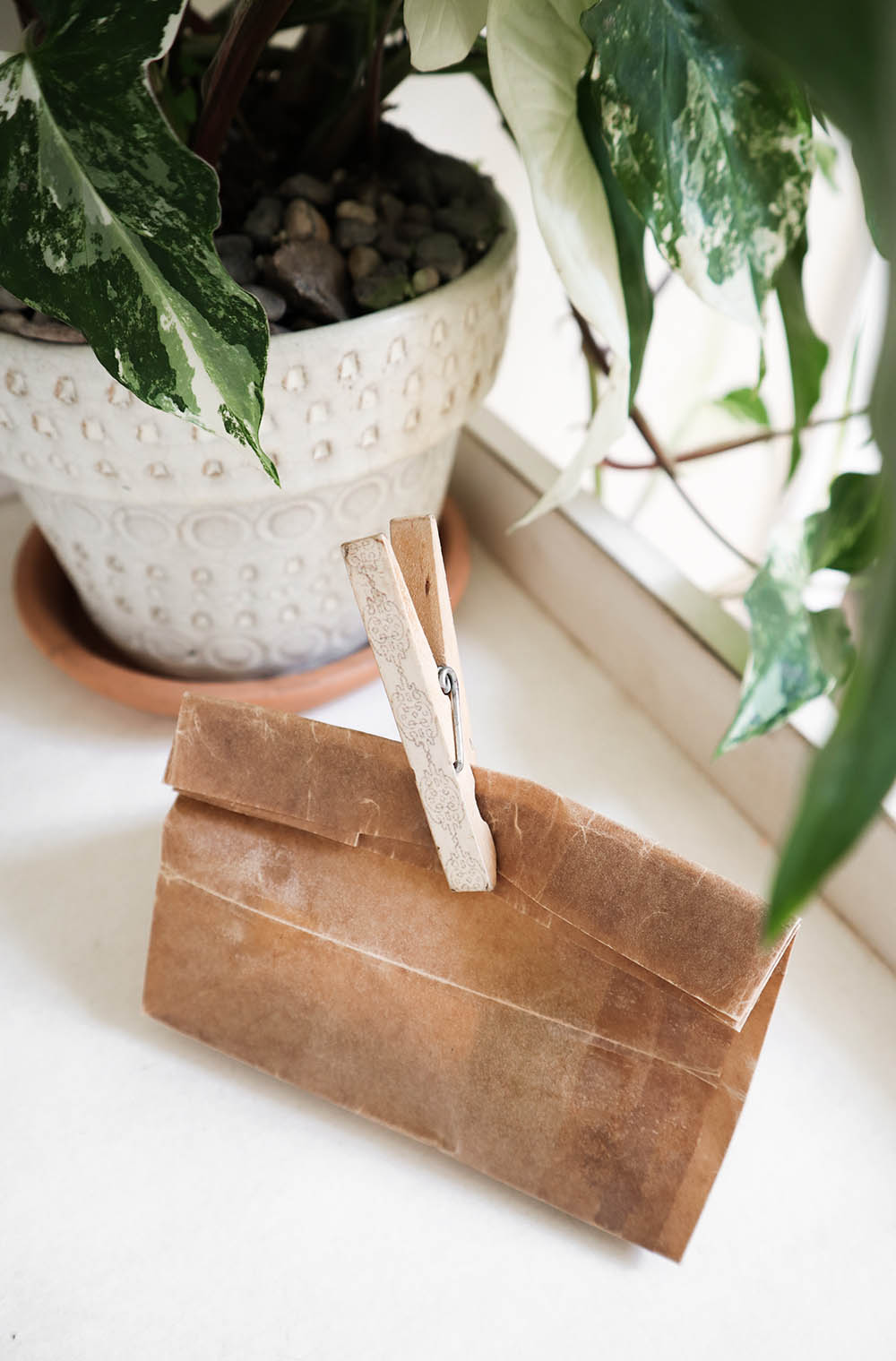
Plastic chip clips and bag ties are certainly things we can all go without. Wooden and metal clothespins can be used in a myriad of ways around the home, including in the kitchen pantry. (Plus the wooden clips can also lead to creative art projects with your kids!)

Makeup Organizer
I regretfully admit that throughout my 20s, I had one of those acrylic makeup holders to contain the sea of (toxic) products I used on my face and hair. Looking back, I can’t believe I applied all those chemicals to my skin in the name of beauty. And I shudder to think of all the money and materials I wasted in the process. I understand the appeal of organizational tools, but can we all find ways to organize with goods we already own, rather than buying new items that were designed for a single purpose only? (Perhaps a multi-tiered hanging basket, or a vintage, treated art supply case.) I reduced my makeup + skincare routine so drastically (more on that topic soon,) that I only need a little zipper pouch to hold everything. This has saved me so much time throughout the day, and frees up useful inches in our lil’ bathroom.

Door Accessories
Thousands of items can double as a cute residential doorstop by day— why buy a plastic wedge or a novelty doorstop? Similarly, there are numerous ways to childproof doors that don’t require buying anything new. From rubber bands that prevent hardware from automatically latching to DYI door knob covers, you probably already have everything you need to apply some temporary hacks to your house while your child is in their toddler phase. (Note: I do think doors can be useful spots for touches of extra small space storage!)

Environmental Benefits of Small Space Living
"I'm a huge fan of small-space living because it forces us to do what larger spaces often discourage: Minimize. It's been proven that America has more self-storage facilities than all U.S. Starbucks and McDonald's combined, and that Americans waste 55 minutes a day just looking for things (that's 3000 hours or 30 days per year). Having less space means we are hopefully buying fewer, better items, using fewer precious resources (including our own time and sanity), and being gentler over all on the planet."
- Ashlee Piper (for The Tiny Canal Cottage)
Author: Give a Sh*t: Do Good. Live Better. Save the Planet.

Oddly enough, as much as I’ve discussed the steps we’re taking to live more sustainably, I’ve somehow failed to discuss outright the general, eco-friendly benefits of small space living itself.

As the planet becomes more and more populated, and as swaths of land become uninhabitable due to climate change, it’s reasonable to predict that small space living will only become more relevant to increasingly larger groups of people.
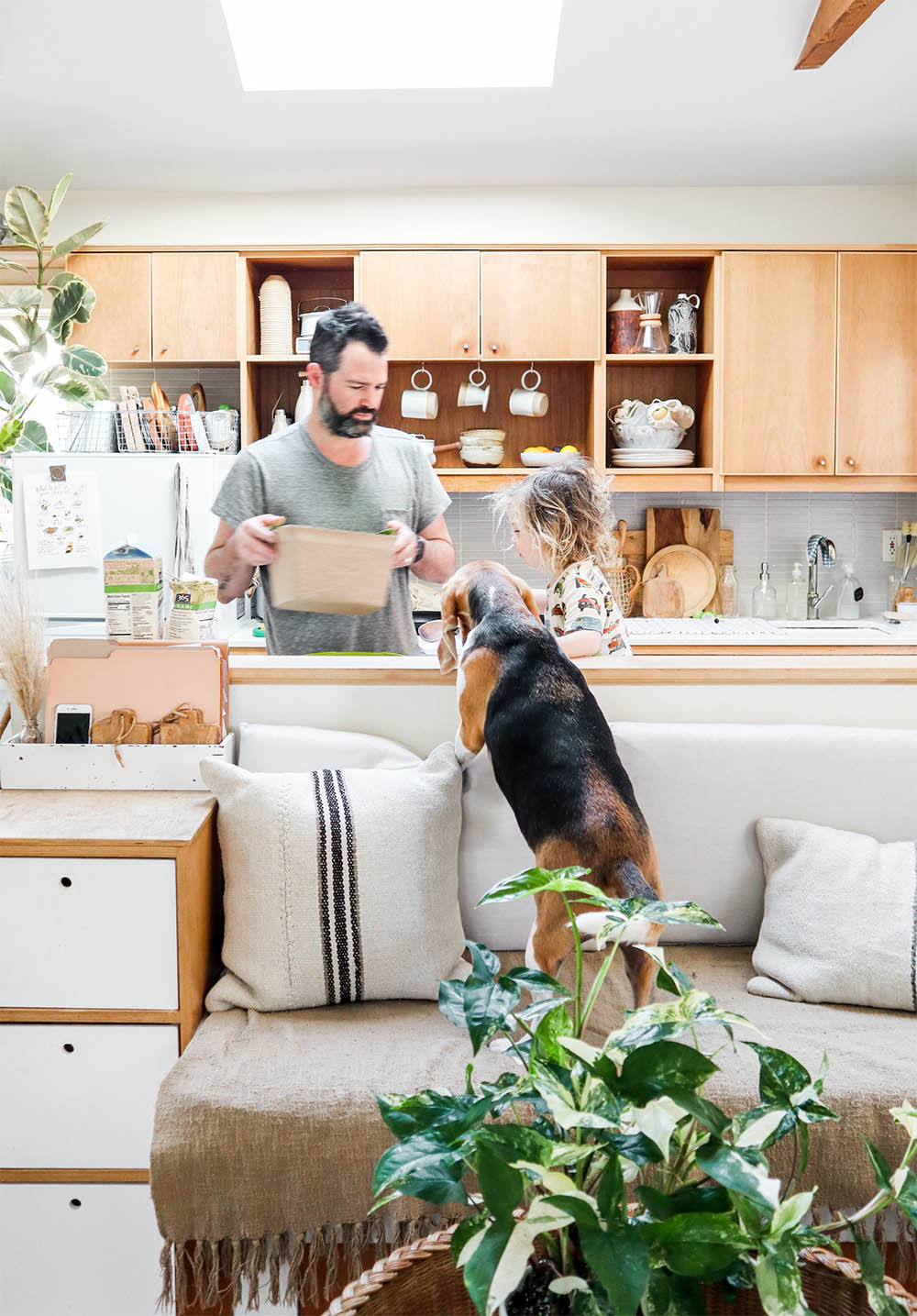
Luckily, small space living can significantly reduce the environmental footprint of your home. From the amount of materials used in crafting a tiny house, to its daily operations once occupied, there are a myriad of ways in which living within a modest floorpan can help you lead a greener existence.

From the start, there are fewer materials to use and transport when building a tiny home, which can widen the possibilities of using more eco-friendly supplies, and lessen corresponding emissions overall.

Similarly, there are far fewer interior spaces to outfit with fixtures, appliances, furnishings and more. This also means that eventually there will be fewer items to fix and/or update. This cuts back on production, transport, packaging, and general waste.

And with less space to furnish and decorate, you naturally curtail your possessions. Thus your overall retail consumption and affiliated carbon footprint can be vastly reduced.

The average American home is about 2,500 square feet, and uses a commensurate amount of energy. Homes in the US account for 38% of the country’s energy usage— and that amount surges to 80% when indirect usage is factored in.* A small space runs on a sliver of energy by comparison. After all— it doesn’t take much to warm up, cool down, or illuminate a 400 square foot home.

The secondary benefits of small space living are not to be overlooked. On a daily basis, this lifestyle encourages folks to get outside and enjoy the natural world and community offerings more.

This means that there’s even less energy being used within the home, as residents are often outdoors (requiring no utilities), or in shared local spots that are serving numerous people. Plus getting outside can have extraordinary health benefits.

Recent studies show that being around natural landscapes can notably reduce stress, enhance work performance, boost healing, and promote relaxation.**

Down the line, all of these advantages can make us healthier, which can mean less time spent in hospitals and fewer goods and medicines required for sustained wellness, all of which helps us lighten our impact on this precious planet.

While our family still has so much to learn on our journey to more sustainable living, it’s encouraging to know that our lil’ Cottage is helping us stick to a positive path.

Sources:
*Give a Sh*t, by Ashlee Piper
**How to Raise a Wild Child, by Scott D. Sampson
Special thanks to Ashlee Piper for generously offering some of her thoughts on Small Space Living for this post. Ashlee’s book is available in e-reader format, as an audiobook, and via paperback: Give a Sh*t: Do Good. Live Better. Save the Planet.
Space-savvy + Low Waste Bathroom Swaps

It’s easy to be tricked into thinking that reusable goods consume more space than disposables, and thus are not small space friendly. However, I find the opposite to be true! Let’s look at some quick, affordable, and effortless bathroom swaps. If you select your eco-friendly bath items carefully, not only will they take up less storage space and fewer surfaces inches, but they’ll also look better than their single-use or plastic counterparts.


HAIR CARE
Shampoo + conditioner bars are becoming increasingly available. I found mind on Etsy, and will continue to test out various types instead of buying disposable shampoo, conditioner, and body wash bottles. And a simple wall-mounted, hanging or standard wooden soap dish is all one needs to accommodate these bars.

SHAVING
Adam and I recently made the switch to Leaf (for me) and Rockwell (for him) razors. Up front the cost is higher, but over time they save so much money and reduce a ton of unnecessary waste. (And let’s be real— they’re far prettier on the eyes than loud plastic designs.)
BIDET
It takes just 1 pint of water to properly wash with a modern bidet like the TUSHY. It takes 437 billion gallons of water, 253,000 tons of bleach, and 15 million trees to make toilet paper annually. And Americans make, move and use 34 million rolls of toilet paper every day. The problem is not just the 54 million trees cut each year to keep up with demand, but also the enormous amounts of water, chemicals, and energy used in the destructive production process of toilet paper.* And a modern bidet attachment simply attaches to your toilet in minutes— no extra space required… and no need to continue stockpile toilet paper.
* Source: HelloTushy.com

EAR SWABS
Reusable ear cleaning tips are arguably more effective than Q-tips, and are easy to clean and require far less storage space. (Since taking this photo, we switched to LastSwab, which we really like. They come in both cosmetic swab and ear swab formats.)

COTTON ROUNDS
Machine-washable cotton rounds are every bit as effective as disposables. They’re a one-time purchase that can last a lifetime. No need to store backups. 10 or so should be just fine if you do laundry at least once per week.

MAKEUP REMOVER WIPES
Similarly, machine-washable makeup remover pads are an easy alternative to disposables. If you prefer wipes or simply need a single-use alternative while on-the-go, these compostable wipes are a solid choice. (And don’t forget that coconut oil can make a great, low-waste makeup remover!)

TOOTHPASTE + FLOSS
Refillable floss and recyclable metal toothpaste tubes are lighter on the environment. Like everything else here, they take up no extra space and, in my opinion, look great on counters and shelves.

CLOTH TISSUES
Reusable tissues can serve as miscellaneous cloths as well. We keep small baskets of them stashed around the Cottage. No need to buy and store tissues, tissue box covers, or wipes.

DRYING RACK
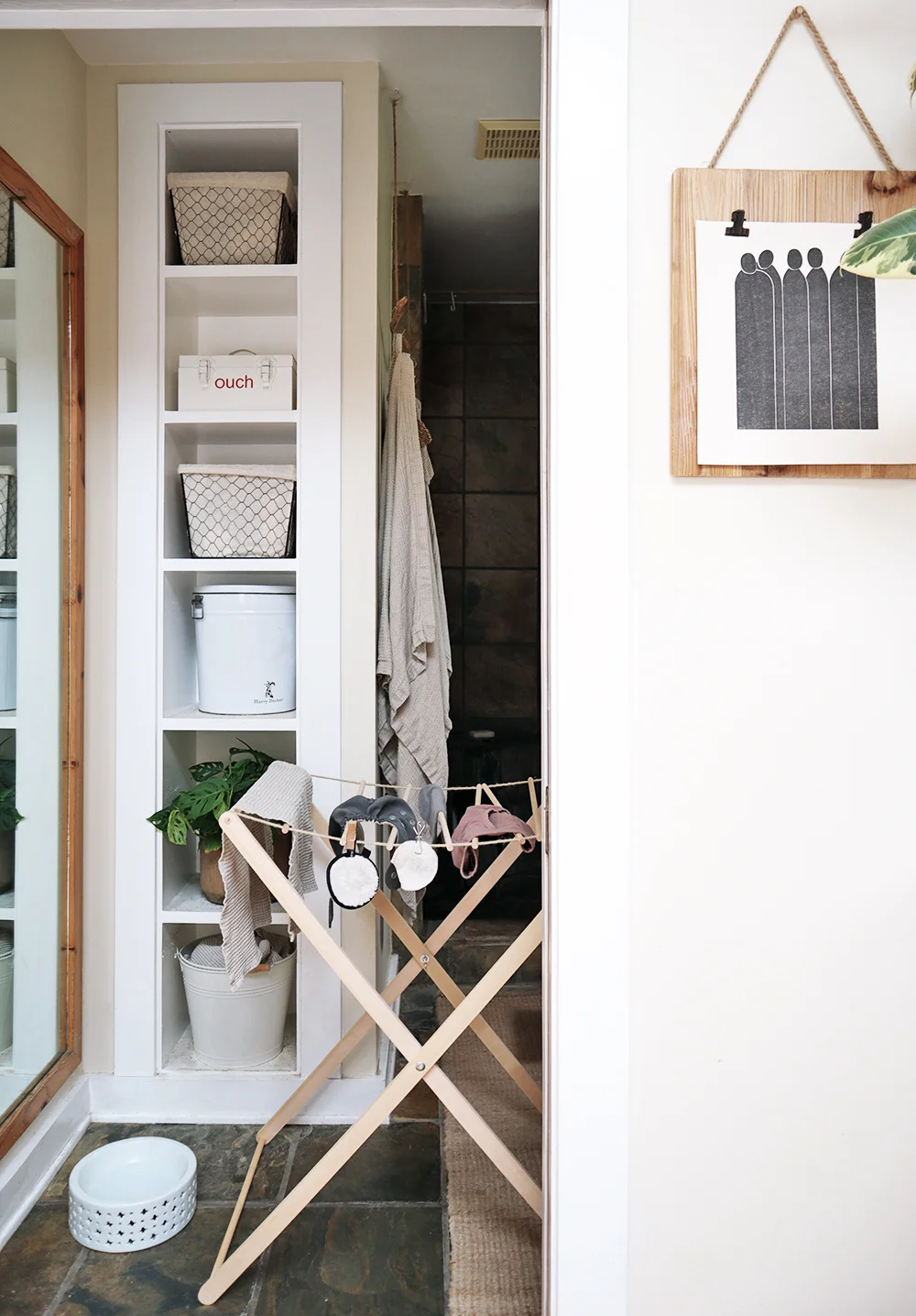
To dry your towels, reusable rounds, cloth diapers, laundry, and even wraps and bags in your small space, consider the foldable Helen Milan Birch Clothes Horse. When folded up, it tucks tightly against a small stretch of wall. (And it’s so lightweight that it can also be kept on a hook if you’d prefer to keep it off the ground when stored.) Even when it is in use, the rack consumes very little space (26″ L x 19.5″ W x 33.5″ H). Or a good old fashioned clothing line made of twine and tacks can work just as well, depending on your space and needs.

AIR FRESHENER
Skip the plastic plug-ins and synthetic air fresheners. When used safely (and in accordance with your building’s codes, etc.), hand-poured scented candles are effective and lovey little touches for a small bathroom. When the wax is burned out, you can clean and repurpose the container for a number of uses… such as holding your reusable bath goods!
HANDSOAP
We’ve started refilling glass containers with liquid soaps from ReContained instead of buying entirely new bottles.

Some other easy swaps include:
Upcycled containers and organizers (rather than store-bought bath sets)
(Note: This post was initially published on the blog in October 2018. It was updated with additional imagery and ideas in April 2019.)