
Video: New "About Us" Video
I uploaded a new 2-minute "About Us" video here on the site, briefly recapping our journey since we moved into the Cottage, and explaining why we share what share.
As always, thank you for being here and experiencing life in under 400 sqft with us.


Voting for the Planet (at the Ballot Box and at the Check Out Line)
While using my ever-present mason jar with its sippy lid is better than using plastic bottles, these sorts of daily lifestyle habit shifts and swaps are just smaller components of our greater responsibility, which is to get active. Voting (both at the ballot box in all levels of government AND with/without our dollars as consumers,) is one of the most meaningful actions we can possibly take.
I refuse to believe that we are helpless in this climate crisis— it is reckless. And it is wrong.

As my 3 year-old likes to say, we need: “ALL HANDS ON DECK!” As voters. As investors. As members of our communities. As learners. As civilians. As allies. And as neighbors— because our independent decisions (such as what we buy, which candidates we support, and whether or not we engage in acts of civil disobedience) have collective consequences that impact us all.

But while our responsibilities go well beyond sustainable swaps, the swaps are indeed important. Here’s an example of why:
Package Free Shop has kept over 4 million plastic straws, 3 million plastic bags, and more than 1.5 million non-recyclable bottles and cups out of landfills. They ship everything 100% plastic free in an upcycled or 100% post-consumer box with paper wrapping and paper tape, and all of their shipping materials are 100% recyclable and compostable. And they’re setting new standards for businesses and consumers across multiple industries— a ripple effect with far-reaching implications.

“We believe that it should be easy to make choices that positively benefit the environment and that no matter who you are, where you come from, what you believe in, how many zeros you have (or don’t have) in your bank account, what president you voted for, what gender you identify with, or what part of town you live in, we can all take simple steps to reduce our waste.” - Package Free Shop

I’ve rounded up a small sampling of some of my favorite items from their site that we’ve found to be of great use here in our (tiny) home.

Note: This post was not sponsored. Some items were gifted, but most were purchased. I’m sharing this strictly because of our positive experiences with the products and their impact within our household.

Washable Duster
This duster is made from multiple layers of organic cotton and viscose bamboo. Duster tendrils will curl after washing to make the collection of dust more effective. To wash, simply remove the duster from the custom made wood handle and slide back on once dry. Includes cotton strap for hanging. To clean, machine wash warm with like colors, dry in dryer or air dry.
Organic Pad
Good for your body and the earth, this reusable day pad is free of plastics, artificial fragrances, adhesives, and chemical gels, and keeps disposable pads out of landfills. Not to mention, overtime, reusable feminine products will save you loads of cash.

Reusable Beauty & Ear Swabs
Nearly 25.5 billion single use swabs are produced and discarded every year in the U.S. But not this swab. It lasts up to 1,000 uses as it's able to be cleaned with soap and water. It also comes in a biodegradable, corn based case so you can use it on the go.

Organic Hair Ties
Organic cotton and natural rubber hair tie set on compostable paper backing.
Kid’s Brush
This soft bristled brush is 100% compostable.

Comb & Brush Rake
Helps your brushes last longer by keeping them clean between the bristles.
Wire: 100% recyclable with metal recycling / Wood: 100% compostable
Razor Cleaning Brush
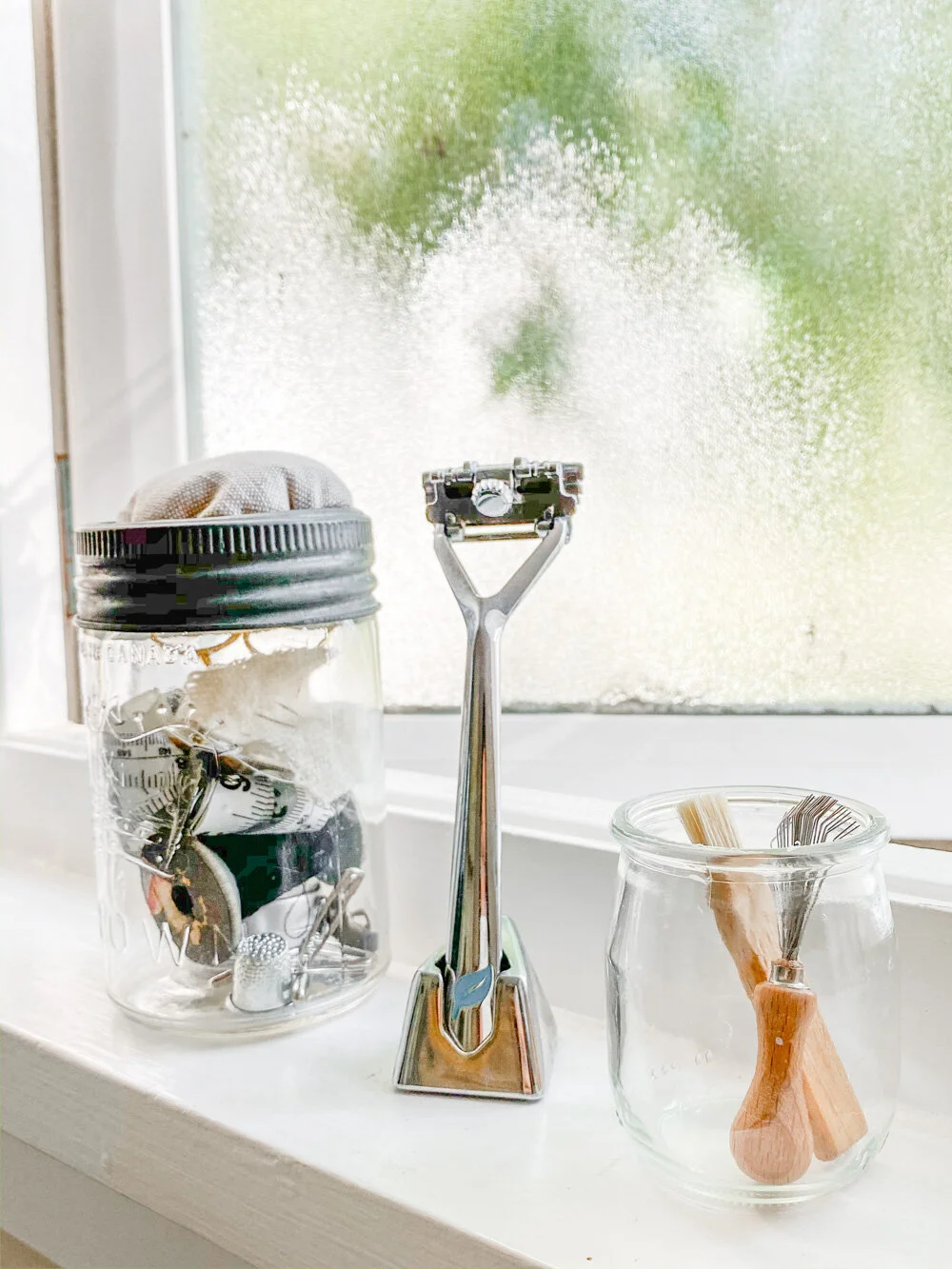
100% compostable razor cleaner, which works great for the pivot-head LEAF shave razor.
Tea Tree & Charcoal Face Soap
A balanced and gentle facial soap, this bar detoxifies skin with absorbent activated charcoal. Cocoa butter promotes a healthy complexion, while ground oats soothe and mildly exfoliate. Fresh and herbaceous tea tree and eucalyptus oils act as a natural astringent to combat skin blemishes. Also great for the whole body.

Travel Soap Box
Slice off a bit of the face soap, body soap, shampoo + conditioner bars, and/or body stones to use on-the-go with this soap box.
Washing Bag
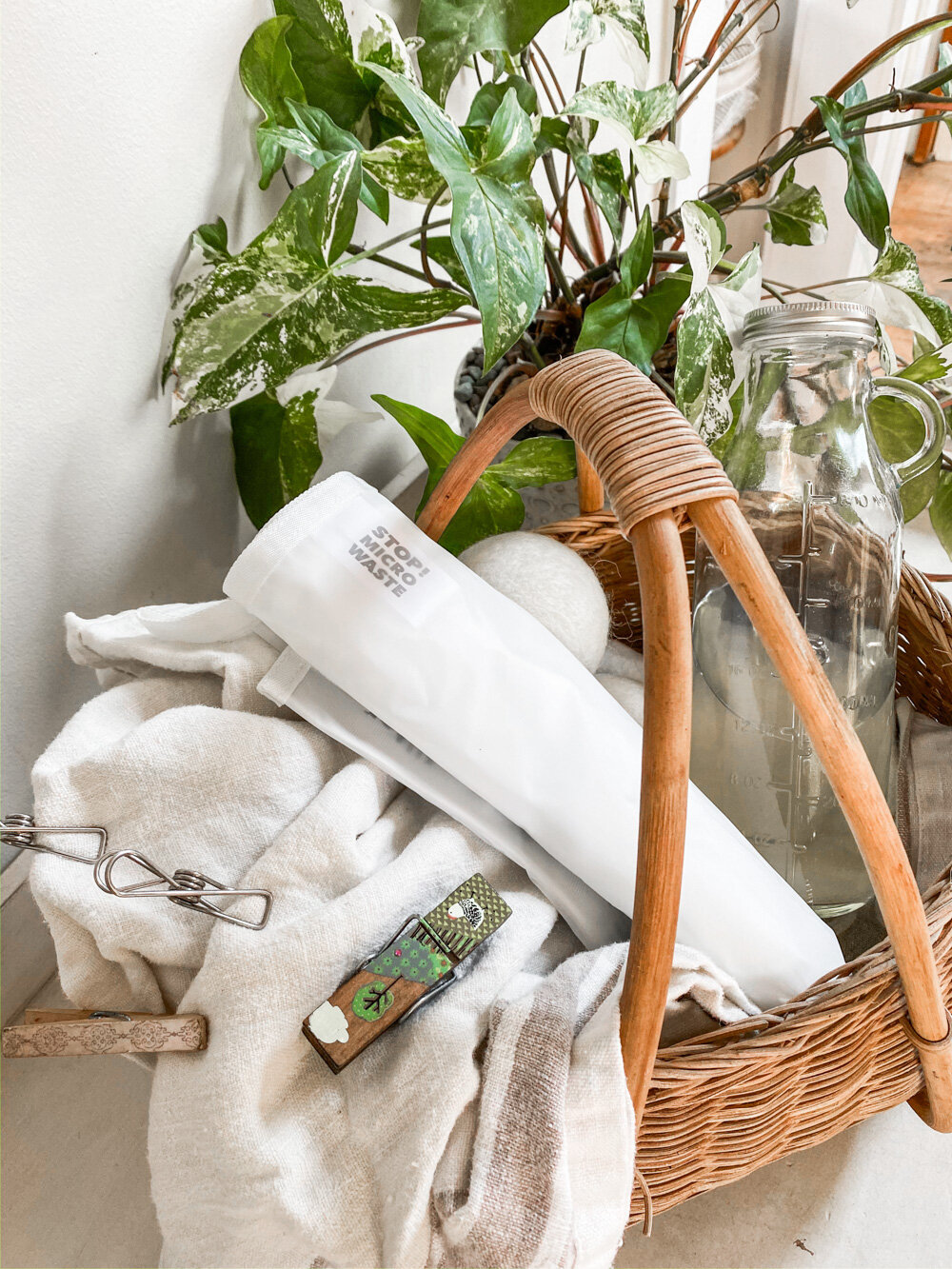
This washing bag is a scientifically-approved filter solution to stop micro plastic pollution caused by washing synthetic textiles. It reduces fiber from breaking significantly and thus extends the lifetime of your textiles. Using the washing bag reduces the breaking of synthetic textiles by 86% on average. The fibers that do break during washing are captured inside the bag and can easily be removed.

Natural Dog Brush
100% natural and compostable two-sided dog brush for both long and short haired best friends.
Water Filter Pod
One of these little guys filters 99% of lead and arsenic and 97% of chlorine and flouride right out of your regular tap water. Just drop this wine cork-sized pod into any water vessel, pitcher, bottle, glass, camelback, coffee maker and more for clean, healthy and great-tasting water everywhere you go.

Slowly Crafting a One-of-a-Kind Space with Plants & Vintage Goods
When we moved into our cottage, the first place I biked in order to find items for our new home was our neighborhood vintage shop. My favorite discovery from those days was a compact wicker chair — unlike any other I’ve ever seen— that sits on our front stoop, serving as the perfect lil’ perch for removing shoes and dropping mail and leashes.

Our world is awash with consumer goods that are designed and manufactured with unsustainable resources to swiftly become outdated and discarded, then heavily and wastefully packaged and transported thousands of miles. Rerouting our dollars away from such practices and directing them towards buying local and vintage instead can almost feel like a tiny, quiet act of rebellion.
The same goes for prohibiting ourselves from being tricked into believing that our personalities can be formed, solidified and/or validated through our purchases, and that the more we buy, the happier and fuller we’ll feel. Instead of decorating (and redecorating routinely) with the same products as everyone else, vintage invites us to slow down and patiently find exactly what we love and need, rather then being told what we love and need.
And when we walk away from a second-hand shop with our unpackaged items that we salvaged from within our own town, we’re also walking away with pre-loved, story-rich treasures that form a collection that’s entirely unique.

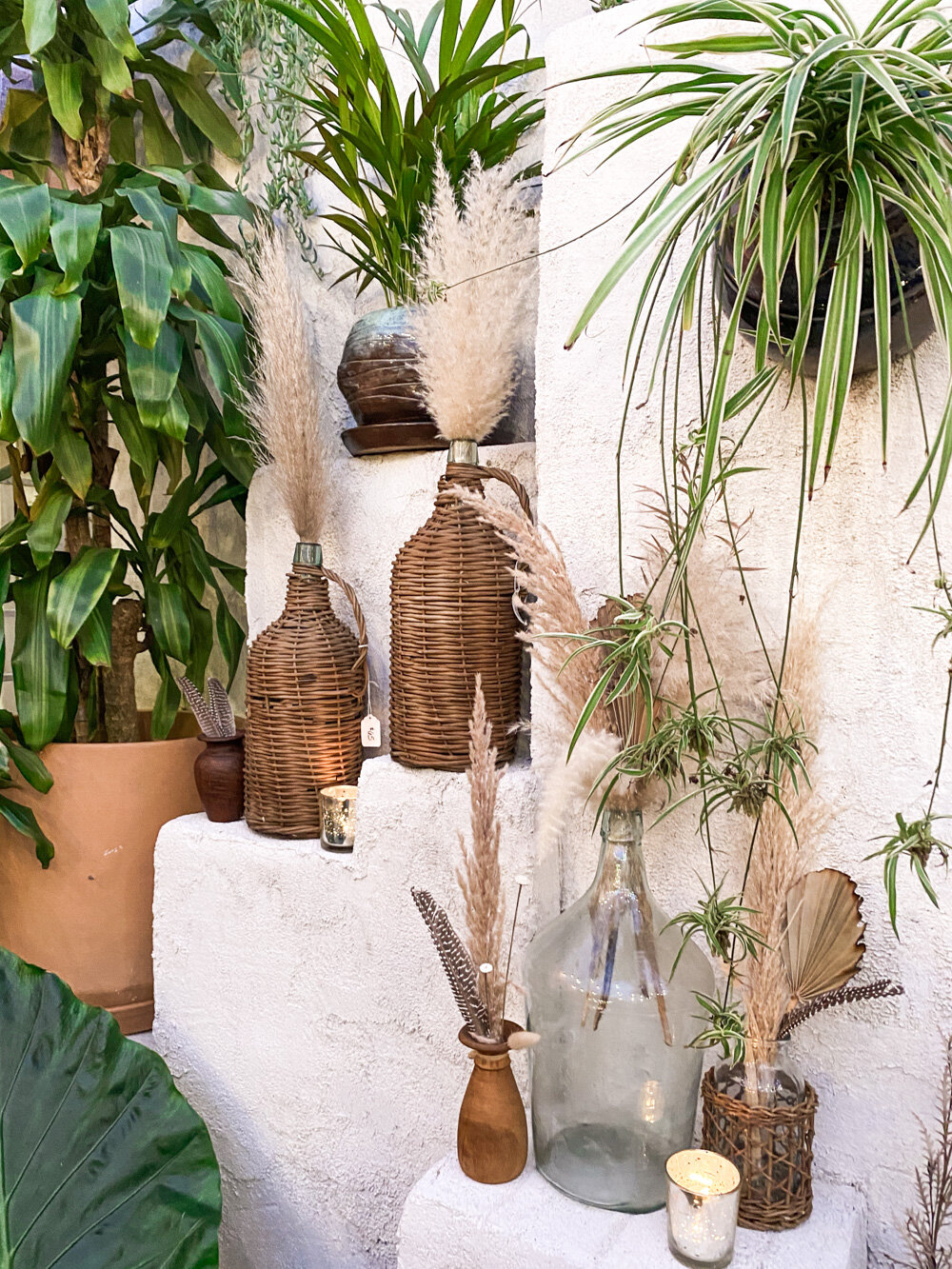
It’s for these reasons (and several more,) that I appreciate Venice Vintage Paradise, our family’s closest source for vintage goods. Recently, this long-standing business within our quirky beachside community converted their back patio into a small, beautiful plant studio, which they’ve named Venice Roots.

The plant pots they sell are mix of handmade and second-hand, and the space is outfitted with vintage furnishings and accessories. (They even used reclaimed materials in order to construct their show-stopping back wall.) If you’re in the area, it’s absolutely worth a visit.

A note from the shop:
Venice Vintage Paradise has been a local Venice favorite on Abbot Kinney providing one of a kind vintage goods to our community for over 16 years. With the new addition of our plant studio,Venice Roots, we now offer a plethora of outdoor and indoor plants. We are providing creative and informative workshops and sourcing vintage and locally handmade ceramic planters to beautify your space.
Sustainability is on everyone’s mind these days, and how to better reduce, reuse and recycle. It’s always been part of our mission to inform and educate our community that when we incorporate vintage into our lives, we are being more environmentally friendly.
- Venice Roots at Venice Vintage Paradise

Thoughts on Wearing the Same Outfits on Repeat
A while back, I decided to stop buying (or even renting) new outfits for big events, video shoots, interviews and speaking engagements, opting instead to wear my usual collection on repeat.
As my friend Ashlee Piper wrote in her book, Give a Sh*t: Do Good. Live Better. Save the Planet:
“The ills of fast fashion exist solely because consumers create demand, which means we can easily right this wrong by pairing down, refreshing our habits, and pumping the breaks on our purchasing.”
Remember: we are by no means powerless.
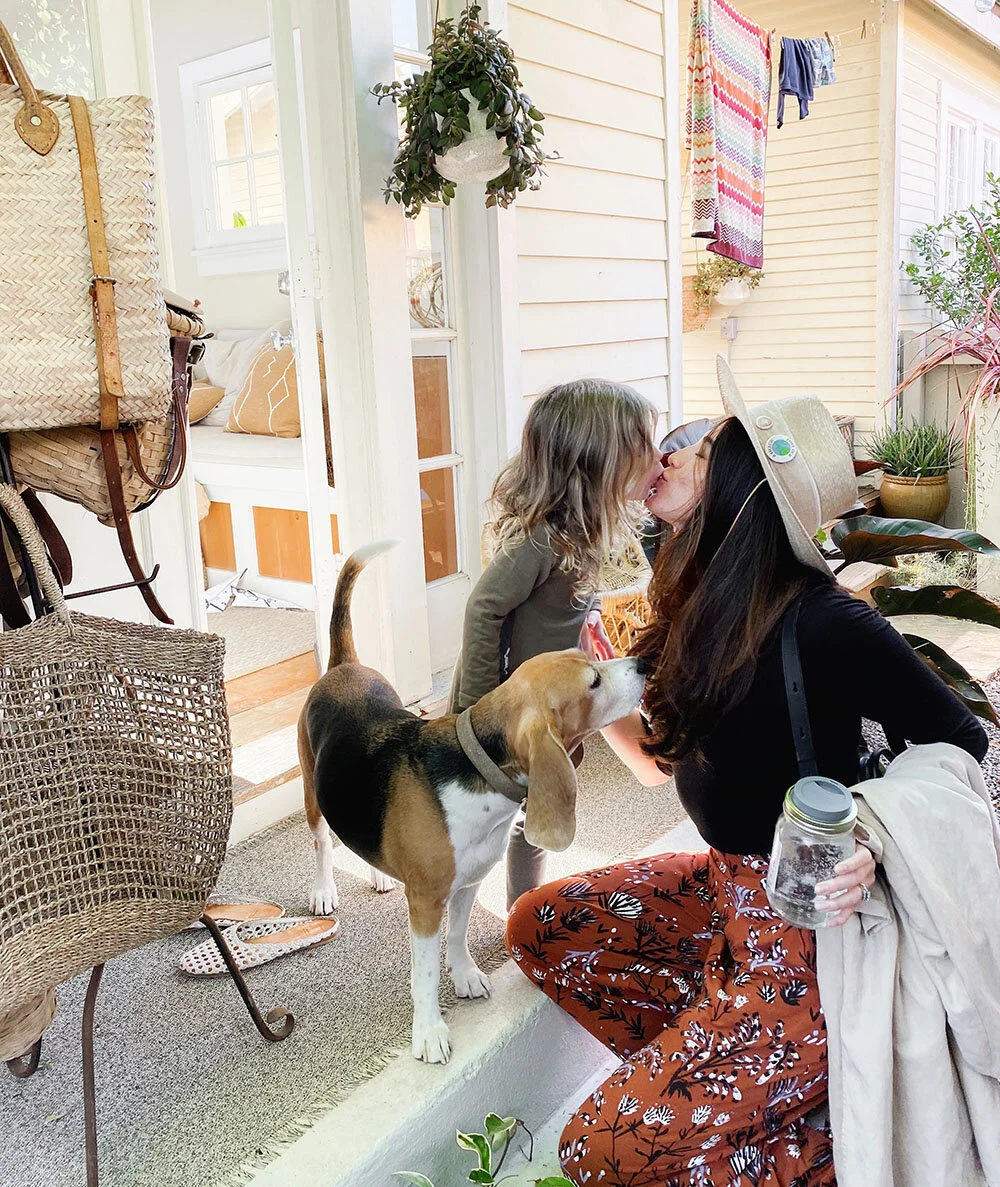
Shopping vintage and second-hand, exploring swaps and exchange groups in communities, and repairing and repurposing garments and accessories are all of course great options. But thus far I’ve really just enjoyed keeping things pared down by sticking to my current collection and finding new permutations within it. It simplifies a remarkable part of my daily routine— laundry, organizing, dressing and packing are all much more streamlined.
All it takes is a mindset shift to keep us from caving into pressure to wear something new and on-trend for every notable occasion. We don’t necessarily have to approach this from the angle of “living with less.” It can also be perceived as living with more. More time, more space and more savings. (And besides— most Americans only wear 13-20% of the items from our closets anyway!*)
This week I’m headed to speak at a Create & Cultivate pop-up, and plan to wear one of the same outfits I’ve appeared in time and time again, as it’s comfortable, easy to pack and I know where and how the pieces were made.
At this point, we’re all aware that the garment industry is one of the top polluters of our planet. At this pivotal period in time — an era ominously dubbed the Anthropocene — we have the necessary strength (provided by our voices and our wallets) to pull focus back towards the environment, labor and health, and social justice, and to force the industry to catch up with us quickly, before it’s too late.
*Ashlee Piper: Give a Sh*t

Some Items You Can Probably Go Without (Part 13)
In recent years, the average size of the American single-family home has grown to over 2,600 square feet. As I walk around our neighborhood and see the smaller, still livable, single-story bungalows being torn down and replaced with zero-lot-line behemoths, I can’t help but wonder why… (For investment purposes? And if so, to what end, ultimately?)
Not only are we living in an unprecedented time during which we have to do everything necessary to curb our emissions and consumption to combat the climate crisis, but we are also living in a technological era in which entire collections of goods that once lived in our homes are now contained within our smart devices.
If we’re spending more time absorbed in our phones and less time interacting with the tangible, and if items such as movies, music collections, reference guides, books, photo albums, and more all live digitally, why do our homes need to further expand? And expand in ways that are often highly environmentally burdensome?
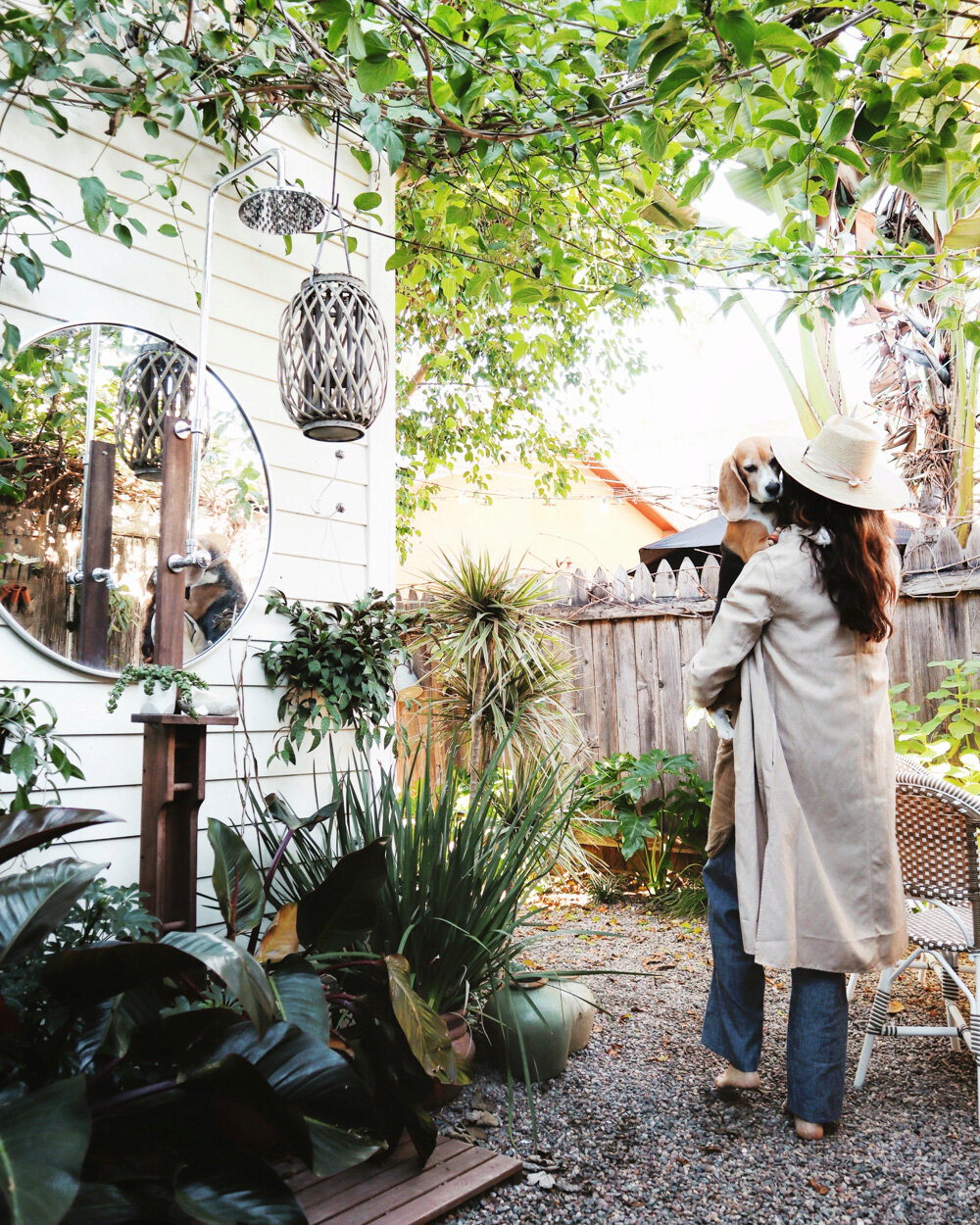
Of course it's important to note that a bigger house doesn't necessarily mean more stuff, and that I am indeed excited about green construction in the future. Homes that operate with renewable energy, “smart” features that keep energy down and efficiency high, and self-sustaining systems that better manage waste while generating power and resources are possibilities on the horizon. I’m not suggesting that tiny houses/apartments are “the” answer or suitable for everyone.
Our son is only 3, and as I type this post, he is the only child in our household. I have yet to live this tiny life as a parent of a pre-teen/teen or of multiple children. One day, one way or another, my family's needs and tastes will change, and I have no idea what’s next for us.

But as we adapt to the future, I plan to keep in mind that leaving behind a sprawling home filled with stuff for my son is not my goal, whereas leaving behind a healthy Earth for his entire generation is.

With that, here are some home / kitchen items you can probably go without, whether you live in a big house or a small one. (View all the entries in this series here.)
Faux plants and florals
The world needs far more plants and far less plastic. I know there are some situations that make having real plants a challenge, but if you’re not in one of those situations, perhaps consider skipping the artificial greenery and nurturing some air cleaning plants instead. (Bonus points for vintage and repurposed pots! Give those plastic starter pots back to your local plant nursery so they can reuse them.)

Select sports / camping equipment
If you’re not a regular player of a particular sport, opt to borrow or rent athletic and adventure equipment when you need it. This will save you money, free up storage space, and reduce your footprint.
Spinners, Choppers (etc)
Salad spinners, veggie choppers… unless you use them daily to feed large numbers of people, you probably don’t need them. We’re all saying we want to slow down, so let’s do it. Wash that fresh lettuce by hand, chop those veggies or eggs one by one, and let your toast fall sideways on your plate— it’ll all taste just as delicious.

Fridge containers
Add-on plastic produce keepers, egg holders, soda can organizers, novelty ice cube trays… you don’t need them. Linen produce bags— such as those by Ambrosia and The Swag — can help extend the life of your produce and reduce your food waste without the use of plastic, and without taking up huge amounts of inflexible space in a compact fridge.
Stands
Laptop storage stands, paper towel stands, banana hanger stands, and napkin holders all take up space and ultimately increase waste in one way or another. It’s past time to cut our dependency on disposable paper towels + napkins, which means we don’t need stands to hold them. And there are plenty of ways to suspend fruit to save space via simple hooks or vintage / repurposed baskets. Get creative when getting your fruit up off the counter— it’ll make your home that much more unique.

The Pros and Cons of that Rumpled Look
Post Summary: Drying clothes and household linens in a small home/apartment.
Recently I discovered that our ridiculously extendable curtain rod is actually quite useful in our tiny space on laundry day:

Above: West’s handmade bamboo tops from Caribou Kids drying on the extendable curtain rod.

The pros of air drying are, of course, that it conserves energy and curbs the associated costs. For us, the cons are that it doesn’t remove all the dog hair (and there is SO MUCH OF IT here) from fabric, and that even a little bit of laundry can overwhelm a small space.

Above: West and I wear basics / undergarments from Arq.
Honestly though, for whatever reason, I don’t mind having garments out drying throughout our home and garden. (Dirty dishes, however, bother me— no patience for those here! Everyone has their hang ups…)

Above and below: West and I have matching robes from Odd Bird Company.


Since we all share one compact closet, our clothes are usually a bit (or a lot) rumpled.

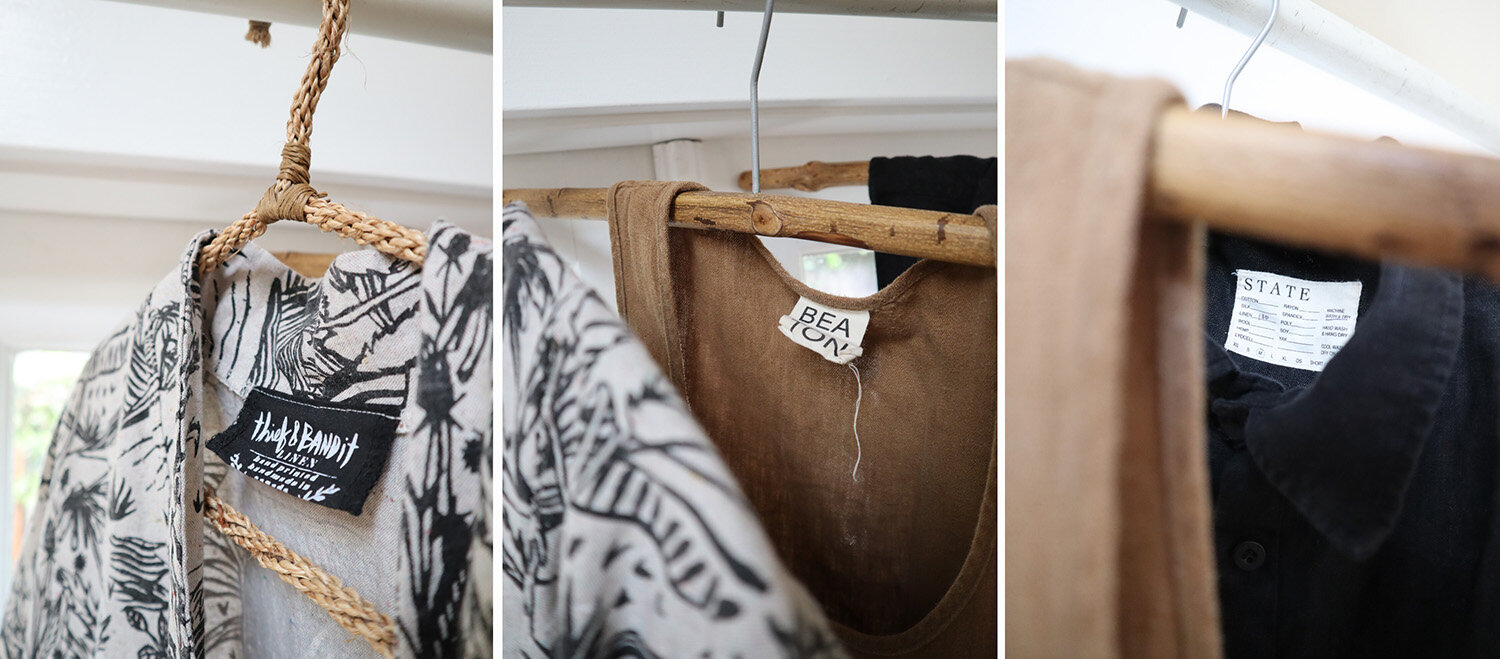
Above: Wearing linen from Beaton and Garnet Hill.
It’s something I’ve long accepted, and it’s one of the reasons I love wearing and decorating with linen, which looks just as lovely when somewhat wrinkled.

Same goes for organic cotton and bamboo, of which most of West’s clothing is made.

Above: Child’s underwear from Arq, cloth overnight diaper from Grovia. (Photo by Tinylicious.)
We have a tiny iron, but we probably only use it a handful of times per year.

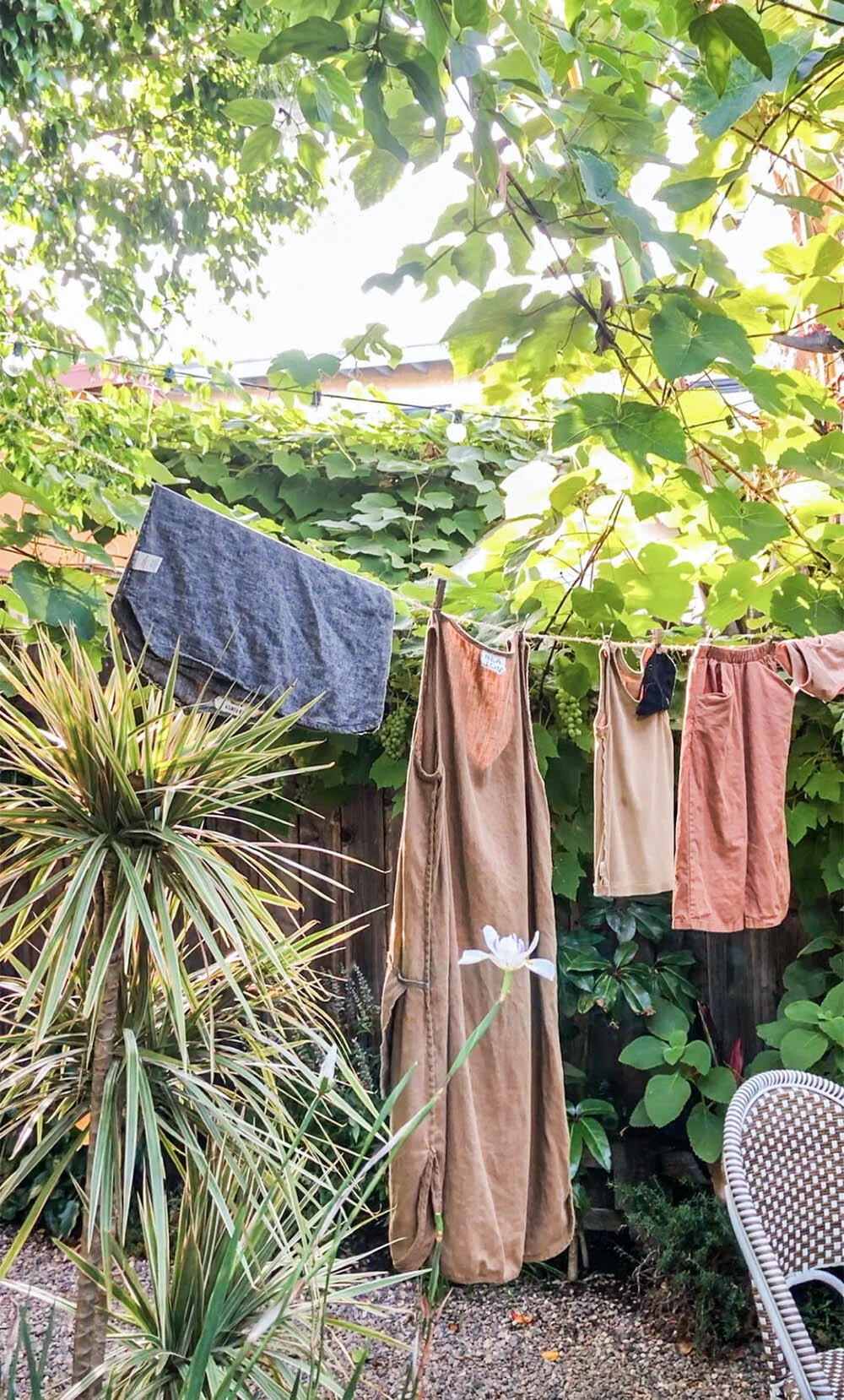


The more we love our clothes, the more I don't mind seeing them drying from the beams, seat-backs and doorways.

Above: Our folding drying rack from Helen Milan Home. (Photo by Tinylicious.)
Looking to start air-drying your clean laundry in your small home/apartment? Scroll to the bottom of this post for a collection of space-savvy accessories that might come in handy.

Keep in mind that a string safely secured from one end of the room to the other can work just as well— you might not need to buy a thing.

But just in case you do, here’s a mix of vintage, handmade and a couple new items that might help.


Interior Decor x Sustainability
The intersection of interior design and sustainability has increasingly been on my mind.

I’ve recently found myself turning almost entirely away from freshly manufactured goods— even those made with renewable resources— and returning instead to vintage, repurposed and found objects.


The tug in this direction is, of course, partially due the environmental footprint associated with creating new items. But it’s also a result of being uninspired by seeing the same designs seemingly on repeat for years in the digital and physical worlds.


Even if a place that’s cobbled together with vintage goods isn’t exactly my style, I appreciate its originality, and the limitless number of unique permutations a space designed with a wide array of pre-loved items can take.


As it pertains to this topic, I was particularly roused by three moments over the weekend:
• I gave my son a small vintage wooden wishing well that I found on Etsy. The piece is a bit of a mess, with exposed, dried glue and wonky hardware, but West is enamored with it all the same. I used some pliers to swap out the rope that came with the well, replacing the accessory with an old garden chain and hook. I added a “bucket” made from a stainless steel creamer cup wrapped in a rubber band, and thus far, this delightfully pell-mell contraption has kept my son engaged in HOURS of imaginary play. And weirdly, it’s quite pretty.

• I indulged in reading The Foraged Home, and found myself reveling in every out-of-the-ordinary detail. Not only did I admire the artistic designs showcased on the pages, but I also appreciated the accessibility of many of the spaces. Here in Los Angeles, buying vintage furnishings and accessories can often cost more than buying new, which makes second-hand shopping prohibitive for many (if not most). This book was a spirited reminder that “found” can just as beautiful as “sourced” if we take our time, and if we approach our spaces with pared down needs and expanded creativity.


• Suay Sew Shop, a local business that uses repurposed and deadstock textiles to craft their designs, posted this photo on Instagram, and part of their caption read: “Developing sentimental attachments to material things is something we have worked against, except now we might have to reinvent what that means. Loving our clothes, making them last along with our daily adventures in life will in fact improve the health of our planet. Being so disconnected to something that took our planet’s precious resources to create isn’t an option anymore.” The balance between not getting too invested in our belongings versus valuing and loving what we do have (and keeping items out of the waste stream) is something I’ve been considering in depth— especially since decluttering is a topic I’m often asked about.


I agree with Suay's caption, and look forward (with excitement for the shift and anxiety over the urgency) to seeing where that takes us in the months and years to come.

These moments all reminded me that heart, resourcefulness and imagination are major elements of what drew me to the tiny life so many years ago.


Today, the evolving overlap of small space living and greener living remains one of my greatest inspirations, interests, and joys.

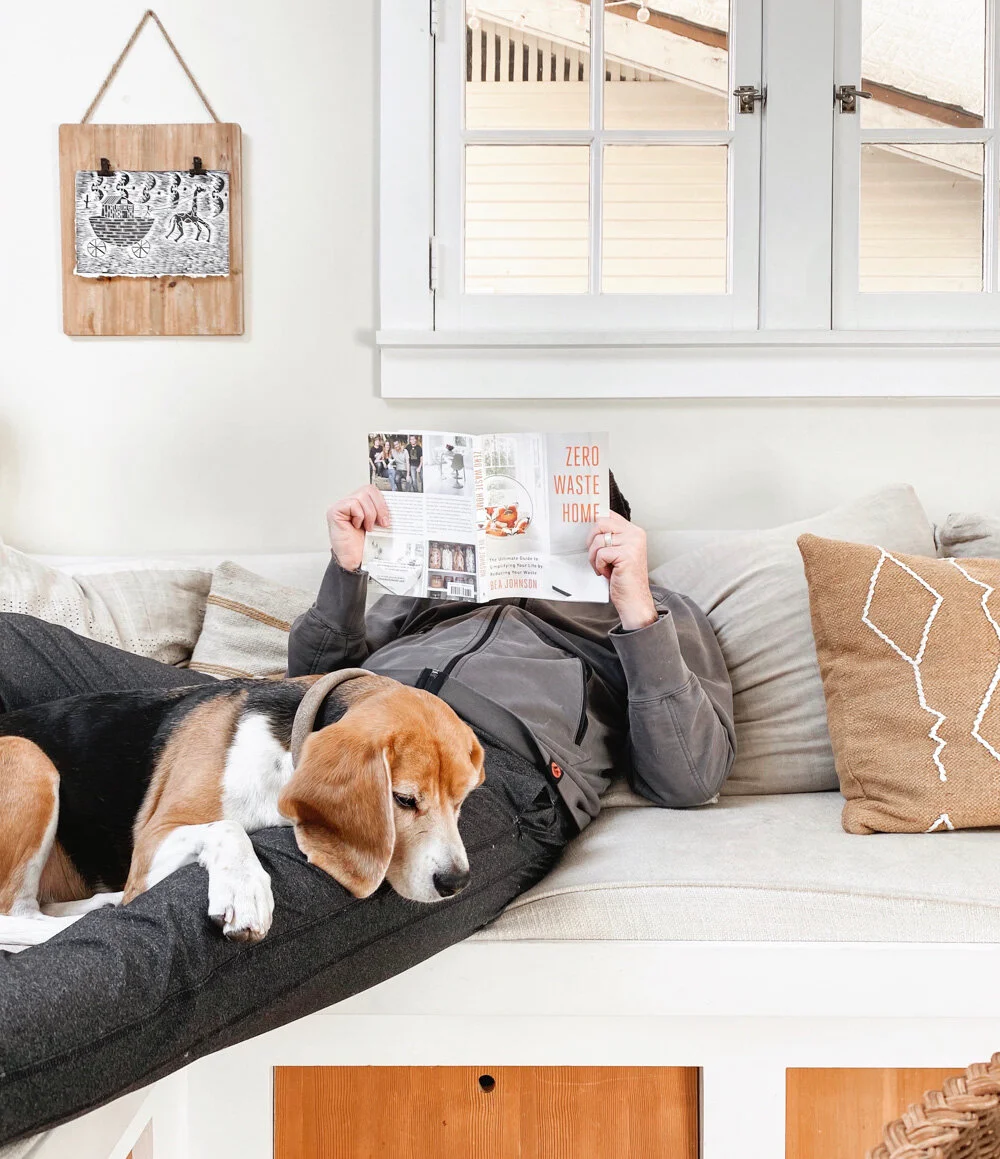
Encouraging Household Shifts in Light of the Climate Crisis
I’ve long taken for granted that my husband and I are on the same page when it comes to most elements of our home and lifestyle. Since we operate in such close quarters every day and night as we both work from home, we’ve continued to learn and adapt together over all these years. So when I started educating myself more about the climate crisis and my role within it, Adam was right there by my side, literally and figuratively.

Together, we began to understand that while governments around the globe and huge corporations are doing the vast amount of damage to the planet, we still owe it to the earth, wildlife, communities who are currently suffering and being displaced, and younger generations to immediately curb our personal consumer habits.
We also realized that the most meaningful action we could possibly take is to vote for leaders and policies that operate with climate justice at the forefront, and to continue listening to, learning from, and supporting organizations and individuals who are doing meaningful work on the subject, far beyond echoing trends and buzzwords.
Several readers of this blog have written in to share that they’ve been struggling to encourage others within their household to adjust habits in light of the climate crisis. Here are some angles/approaches that we hope might help::

Avoid New Spending
The the up-front cost of some eco-friendlier alternative products can be prohibitive or discouraging, and turn folks away from lower waste living. (And many of those products are marketed as being greener, when in fact they’re problematic in certain regards.) Perhaps avoid acquiring new items, and start instead by making changes within your current budget and by using your existing belongings. For example, you don’t need new glass bottles with pre-marked tare weights to do your bulk shopping— a washed and repurposed glass jar that once held pasta, apple sauce, jelly, etc. can work just as well, and since it’s already in the waste stream it further reduces your footprint. (These jars can also be outfitted with very inexpensive spout or pump style tops to become soap dispensers, and/or they can be used with just as inexpensive beverage tops to become to-go water or coffee containers.) Similarly, you don’t need items like mesh produce bags— just skip bags altogether when in the market, or simply use larger tote bags to corral loose produce. By cutting back on new materials and using what you already have on-hand, you will keep your spending at bay while also putting your current belongings to more extended use.
Start Small (& Save)
If your family feels like what we do on an individual basis won’t make any difference so there’s no point in trying, perhaps start with small steps that require little-to-no effort and appeal instead to the narrowed scope of household energy efficiency. From unplugging appliances that aren’t in use, to taking shorter showers (and fewer baths), to bundling up when the house feels a bit cold (as opposed to cranking up the heat), to replacing burned out bulbs with energy-efficient alternatives, you can lighten your impact while reducing your utilities. When the results become apparent via your monthly bill, the effects of these tiny efforts might start to feel more tangible on a personal scale.

Appeal to Time
For a myriad of reasons, we often opt for immediate conveniences, that overlook long-term environmental inconveniences. If members of your household feel pressed for time (who doesn’t?), perhaps appeal to the angle of efficiency. While it might indeed take an extra minute in the morning to pack a bag of reusable to-go goods, and it might take a few extra seconds for a cashier to get a tare weight on a container, none of this compares to the amount of time it takes to go shopping for disposable household goods once your current ones run out. (Plus you’ll no longer have to budget for as many disposable goods, and can instead save that money to pay off debt, save for necessities, and/or use some of it to support organizations and individuals who are investing in regenerative practices for our collective future.)
Go About Your Day Your Way
As you continue to educate yourself and further adopt your own philosophy and rituals, your family will likely take notice. Presumably no amount of badgering is going to convince anyone to change their ways, and a judgmental or greener-than-thou attitude will rightfully discourage and repel more than it attracts. But if you continue to transition your own habits, others within your home could be influenced by your actions. When you start composting, repurposing food scraps for stock, repairing clothes and household items, biking or taking public transportation over driving solo when possible, and stop buying unnecessary goods, it will likely cause a ripple effect.

Be Patient
As with any lifestyle transformation, change doesn’t happen all at once. Learning healthier habits and unlearning old ones takes time, as well as trial and error. Plus new (and conflicting) information is always being presented, so we all have to keep educating ourselves and adapting together. We don’t all need to live a flawless low waste lifestyle in order to make a dent in our output and overflowing landfills, and to communicate to governments and manufacturers that the tides are turning.

Focus on Those Being Impacted Most, and Future Generations
If none of the above works, it might be helpful to remind folks of the impact our material consumption and waste has on younger/future generations and current wildlife, and to reiterate to them that the people who contribute the least to the crisis suffer the most. If the physical condition of the planet isn’t shaking your household, hopefully the paramount issue of human rights will.
Vote
Stay informed of your elections on the local and larger levels. Make sure others know when and where to vote. Show up. Cast your ballot. Give a damn. Your enthusiasm can energize and assist others.

Vintage and Handmade Homewares for Small Spaces (Roundup 1)
I flat-out don’t like shopping.
There.
I said it.
However, I do find myself looking for handmade or vintage items online or in our local thrift stores when we need a particular something-or-another for the Cottage, and that’s something I rather enjoy.
I don't just browse aimlessly or on impulse. When I shop, I’m on a specific mission. For me, the key is to search for the general function I need an item to serve, rather than search by a item’s dedicated name directly.
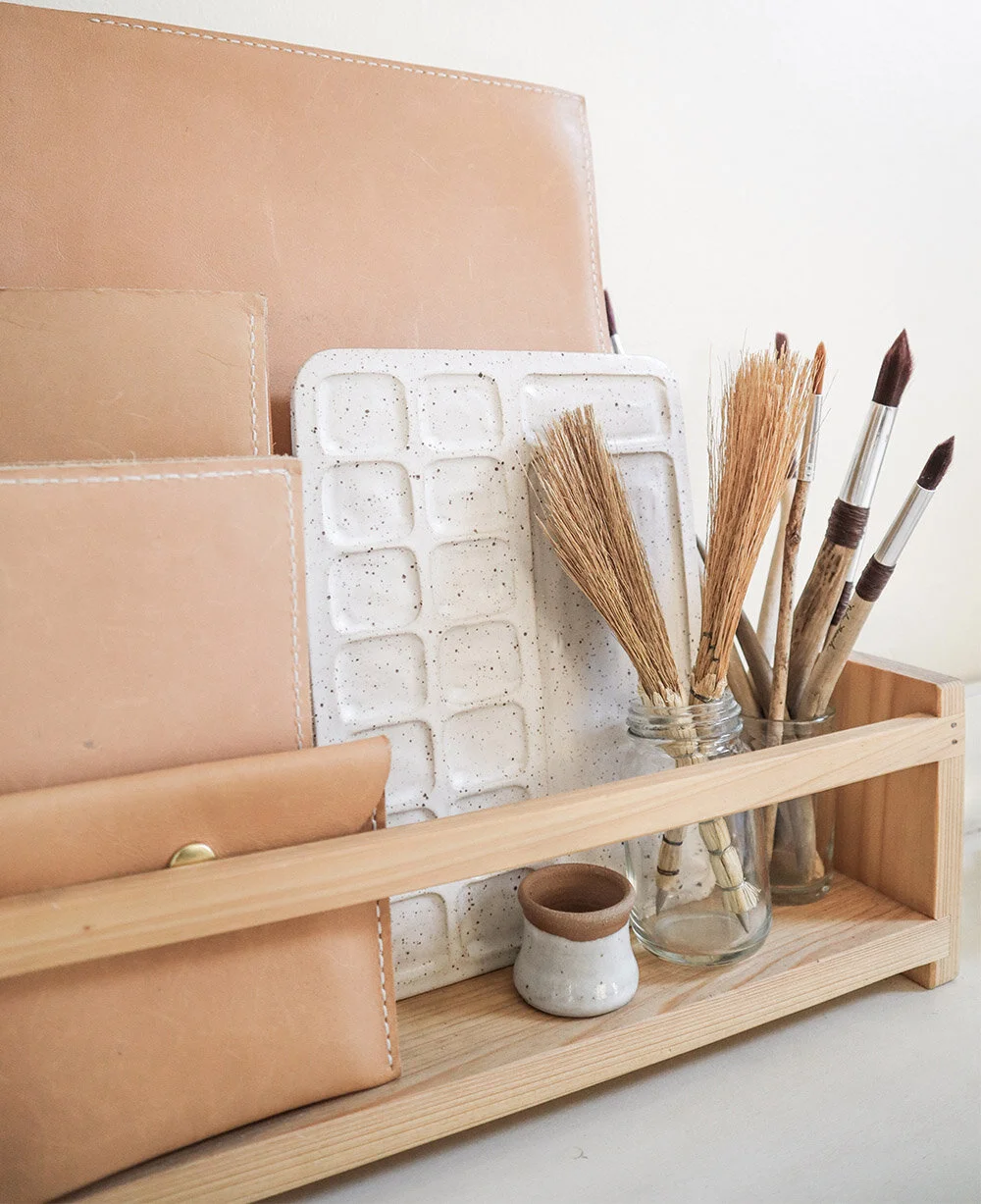
For example, when I need linens that can serve as towels, tablecloths, couch covers, and shoulder wraps, I just search for "linen throw" and explore the results from there, selecting a piece that serve multiple functions while appealing to my aesthetic.

By searching for items via detail and function descriptors, I discover creative and unique homewares that serve the purposes my family needs, in formats I might not have previously considered. This is one of the traits that makes our lil' home so personal and special to us.

Many people have told me that they don’t know “how” to shop vintage or handmade on sites such as Etsy. As such, I’m going to start doing a weekly roundup of beautiful and functional one-of-a-kind vintage or handmade items I’ve found in passing that I like but won’t buy because we already have something similar. My hope is that these roundups help some readers find homewares made by independent artisans or from second-hand curators who have salvaged incredible pieces from within the waste stream, and are redirecting them for a new life.

When purchasing a piece, you can further cut back on the associated carbon footprint by messaging the vendor to assure them you’re fine with repurposed packaging and don’t need any flair.
I’ve chosen to use Etsy for these roundups, as it’s the first major online shopping destination to offset 100% of carbon emissions from shipping.
Kitchen Racks

Garment Racks
Vintage Lap Trays/Desks
Misc. Goods for Kids or the Home

Our 3 Year Old Doesn’t Have His Own Bedroom or Playroom (And So Far We Are All Okay With That)
When folks speak down to me about West not having his own dedicated bedroom or playroom, I take a deep breath and picture this:


I don’t think that our way of living is inferior, nor do I believe it to be superior. It’s just different. The typical American home is about 2500 square feet, whereas ours measures under 400. But given the strained state of our planet, I am certainly fine with “different.”

• Read my post on the environmental benefits of tiny living
• Read my post about our sofa-turned-child’s-bed
We are comfortable and content spending time within the walls of our tiny home. But small space living joyfully encourages us to step outside and explore our community, and take daily pleasure in the natural world.

The general decrease of public “green spaces” coupled with the increase in access to screens has left most children in the US and UK spending less time outdoors per day than prison inmates do on average.

Of course other important factors such as local climate, income levels, and parental worries play their roles in how much time children spend inside. But the stats remain what they are: most kids are spending less than 30 minutes outside every day, which has negative impacts on their physical and mental health.
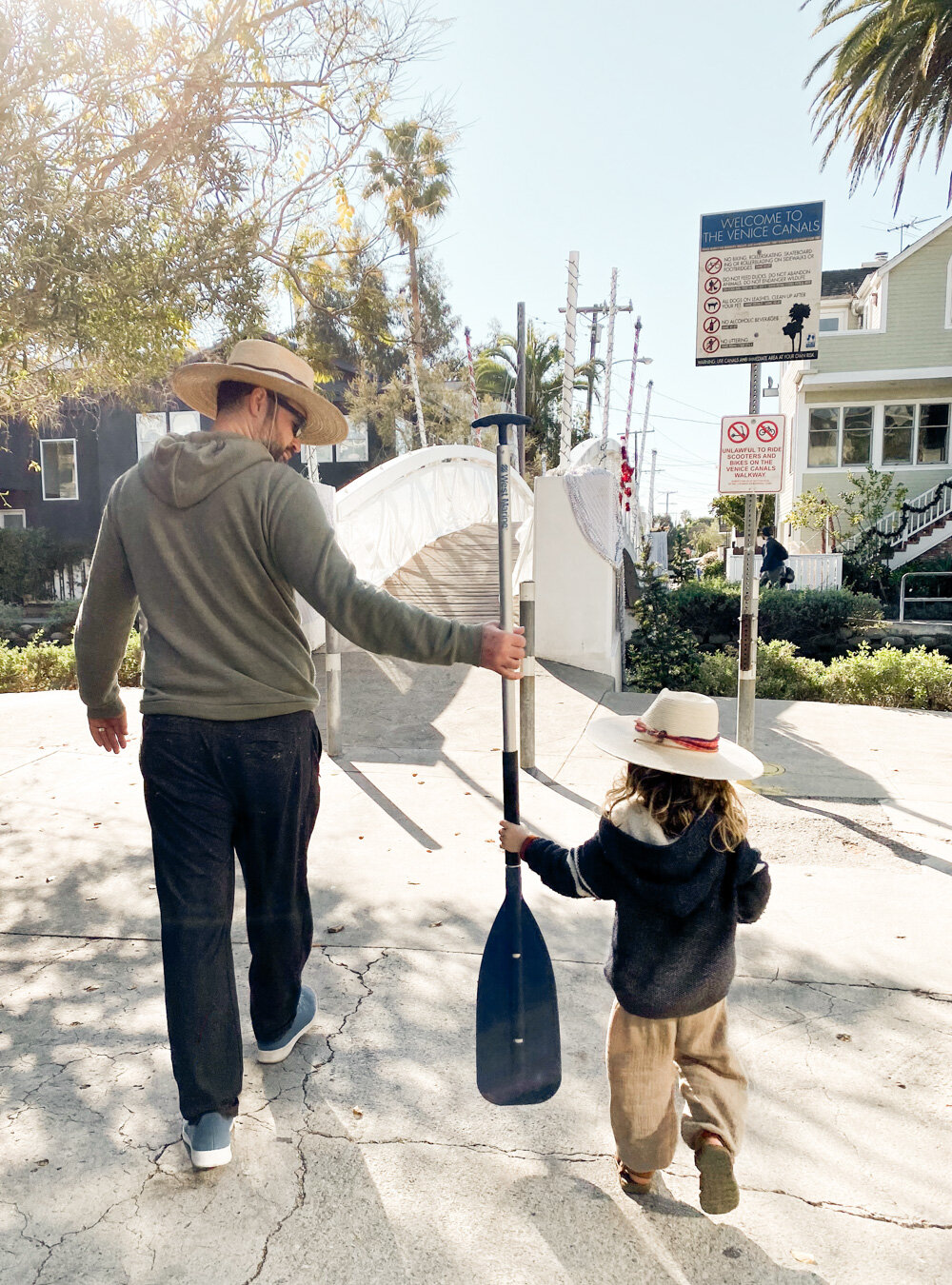
This spike in time spent indoors also untethers children from the natural world during what is an unprecedented and pivotal moment in our human-planet relationship.

As we raise West to be responsible for and aware of his (and our collective) impact on the earth, we believe it’s important for him to experience the natural world so he can understand why it’s vital to protect and restore it.

Obviously we are fortunate to be located in Venice, where the weather is steady year-round and where we’re in close proximity to the ocean and mountains. (If I consider my time living in places like Syracuse during the winter months, I am extra grateful to be here.)

But Los Angeles is still a car and trash filled city. When I worry that our family is too surrounded by concrete, I remember these words from How to Raise a Wild Child:
“Too often, we think of nature as something wholly separate from us, sequestered in national parks, forests and seaside beaches that require organized trips. But nature is all around us, in backyards, schoolyards, gardens and empty lots… Nature isn’t just a bunch of far-off plants, animals and landscapes to learn about and visit once or twice a year. It’s an environment to be immersed in daily, especially during our childhood years.”
- Scott D Sampson, How to Raise a Wild Child, 2015.


Kate Arends of Wit & Delight (based in St Paul Minnesota), commented on the benefits of getting outside during cold and busy days in this recent post, which stuck with me:
“Winter became a lot more tolerable once I realized complaining about the weather wouldn't change the weather.
It’s long. It's dark. It's inconvenient. SAD is a real thing. Kids go crazy. Parents lose their patience. And while going outside feels like the last thing you need, it's actually the thing we need most, both for improving our mood and overall health.
We did our quick walk this morning with Winnie in the snow and it made all the difference in my ability to just cope with this darker season. It's pretty beautiful if you can find enough headspace to appreciate it.
15 minutes. That’s all you need.”

Whether you live in 300 sqft or 3000 sqft, the far-reaching benefits of getting outside are all the same.

And as long as the inside of your home is safe and filled with love, it’s okay to not have a separate space for every family member if that’s how you need or choose to live.


Some Items You Can Probably Go Without (Part 12)
While it's productive to share stories about designs and practices that help us live comfortably and less wastefully in small spaces, I think it’s just as important to discuss the things that we can happily live WITHOUT— particularly in this era of climate crisis. After all, making a home in a small space isn’t about figuring out how to puzzle a life’s worth of belongings into your compact quarters. It’s about experiencing more by owning less.
The following is just a small sampling of items you may want to reconsider before you buy. (View all the entries in this series here.)
Plastic shower curtains and liners:
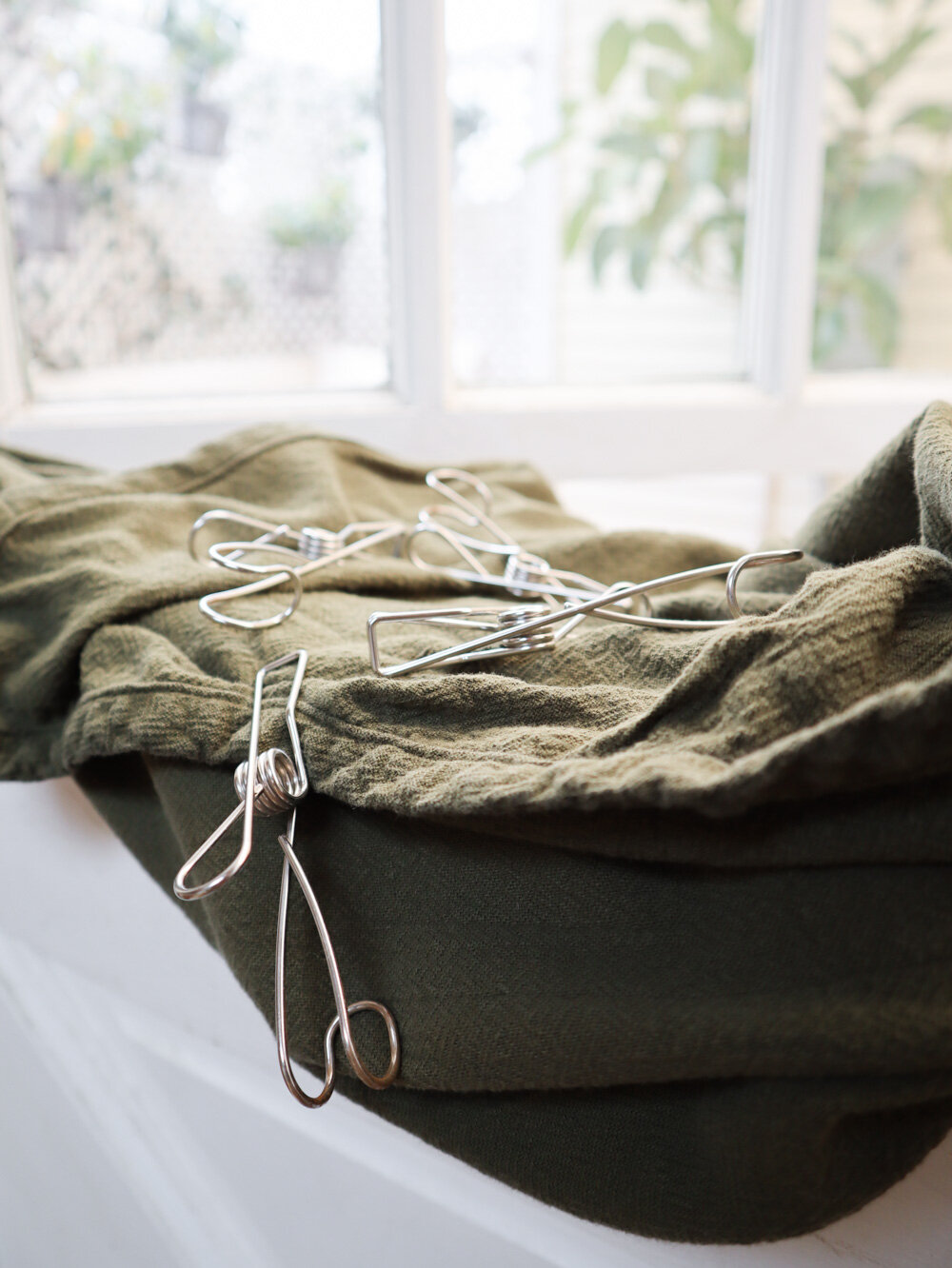
Depending on the style of your shower, you might be able to skip the standard plastic liners and synthetic blend curtains. Here we use a simple linen tablecloth / throw blanket (handmade locally for Gjusta Goods), which we suspend from the curtain rod via metal clothespin hooks. We simply throw the fabric into the machine with similar washing about once every-other week for a good soapy bath of its own. If the bottom of the sheet gets overly wet during a shower and stretches out the linen, we just make a fold up top and clip it an inch or so higher. Hemp fabric and/or upcycled, patchwork pieces could work well for this purpose, too, and add a unique touch to your bathroom. (As always, please keep safety — such as slip risks — in mind.)

New outfits for every special event:
Between photo shoots, work events, speaking engagements and social gatherings, I frequently found myself feeling like I constantly needed a new outfit. I tried a rental service for a while. I think they’re good solutions to reducing fashion waste for many people, but I still found their carbon footprint to be too high for my comfort. I realized that the clothing itself wasn’t the issue— it was my mindset that needed to change. I’ve since found comfort and satisfaction in deliberately wearing the same garments repeatedly on camera and at events. We all know that fast fashion and over consumption of new styles is a major source of pollution — from dyes in water supplies, to transport and packaging, to discarded garments themselves. Plus most people in small homes struggle with wardrobe space, and the best solution is to simply own less clothing. It feels good to strike a truce with yourself and rock the same clothes you wore last week… and last month… and last year… and the year before that.
Toys that replicate safe, every day goods:
A good friend of mine sent me a photo of a toy lace-up shoe that her daughter received as a gift. The image was captioned: “WHY?!” (Why indeed!) Can we not teach our kids to lace on *actual* shoes? Do we need to mass manufacture fake shoes for this purpose? While we can all surely agree that items like child-safe scissors (which are available as hand-me-downs and second-hand purchases) are obviously well worth it, we probably don’t need items like fake (often plastic!) baby bottles for play when the real things are already sitting here in our homes taking up space— we might as well use them!
Novelty games / activities:
Okay. I liked Tetris and Super Mario as much as any child of the 80s. But to now purchase newly manufactured handheld (plastic!) gaming devices or mini arcade games as novelties when countless games are available on our phones is absurd. And Adam recently told me he saw a (plastic!) mini-golf game intended for use while you’re sitting on the toilet, and a quick web search confirmed that this is indeed available via at least three very prominent international retailers. Our planet is going up in flood and flames, and we’re all complaining about having too much stuff, so let’s convey as consumers that makers must stop producing total junk like this. It’s pointlessly wasteful, and ultimately it just ends up cluttering our homes before cluttering up a landfill.
An entire home gym:
There are many understandable reasons why someone might have a piece or several pieces of work out equipment in their home. (And I imagine that most people who could fit a home gym into their space are probably not reading this blog.) But if it’s not a necessity to you and yours, exercising outdoors or sharing equipment at a gym are simple ways to cut down on the number of large machines being manufactured, packaged, shipped, and — ultimately — discarded.
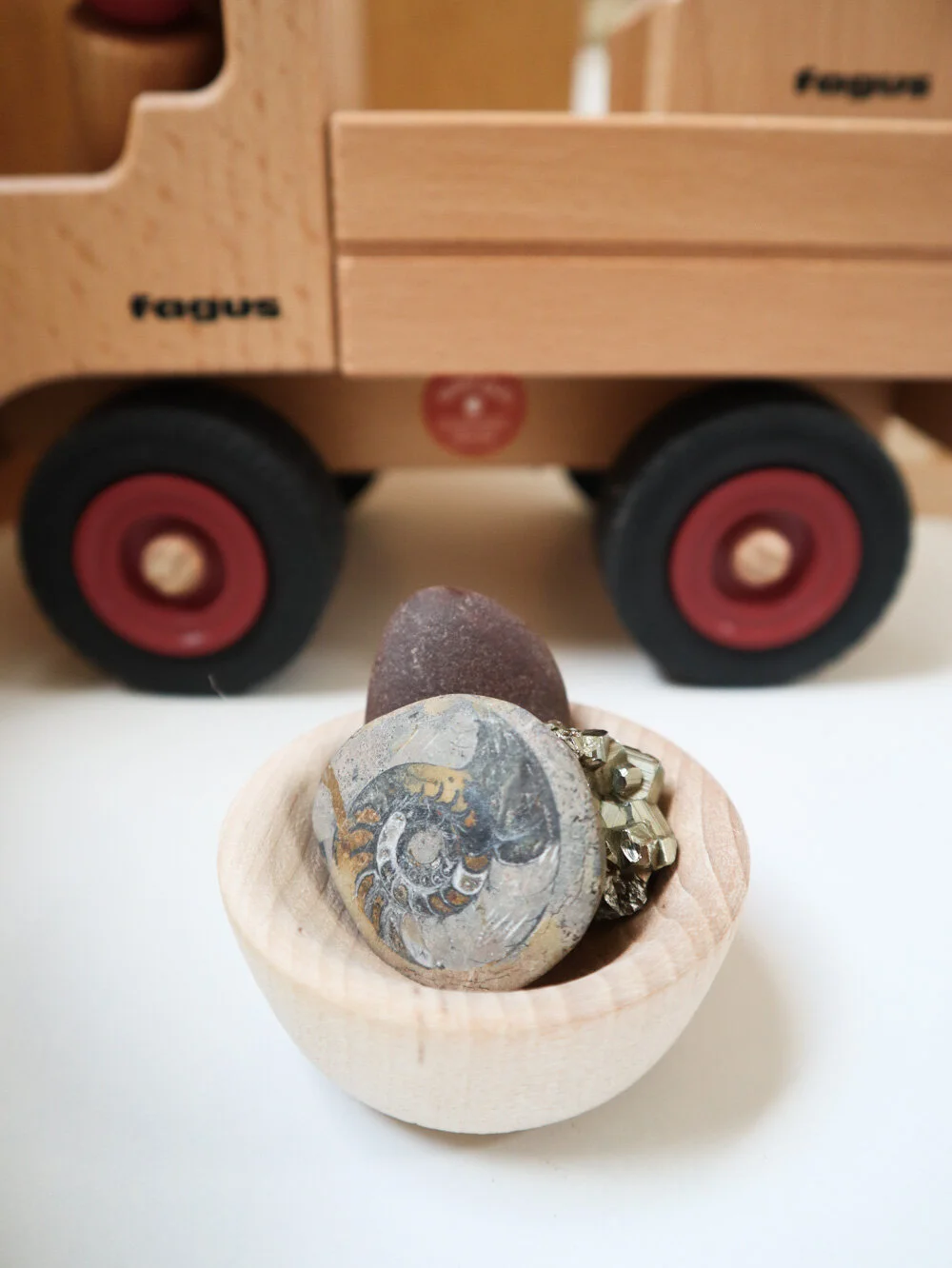
Catch-all dishes:
If you’re shopping vintage or supporting an artist by buying their handmade ring or catch-all dishes, great! But mass made valet caddies, ring dishes + holders, and coin trays are things that can easily be made from numerous repurposed items that are probably already available around your home. Or maybe you don’t need them in the first place! (For example, I just put my rings in a safe spot on top of our first aid box when I shower.) After all, items like this take up valuable surface space in a small home.


A Greener New Year
Not even two weeks into 2020 and climate change is loudly reminding us that it’s not just at our doorsteps— it’s deep within our homes, ravaging spaces and lives, displacing families, and devastating wildlife and plant life in unthinkable numbers.

Here on this blog, I aim to continue to focus on our company’s cornerstone subject of organized and simplified small space living, but to always do so with the climate crisis at the top of mind. And, as it’s an election year here in the US, I want to share less about eco-friendlier products, and more about policies and organizations that operate with climate justice at the forefront.
From our small space to yours, we’re wishing you a greener New Year.


Nothing "New"
Post Summary: Why I’ve loved photographing the same tiny space for over 8 years, and why “newness” is not the point— especially in this era of climate crisis.
When folks ask me how I’m going to “find new angles” of our tiny house so I can continue to share photos on Instagram, I comfortably reply that I ran out of new angles several years ago (especially since we have built-in furnishings). I honestly prefer it that way, and here’s why:

While I always want to grow, improve, take chances and try different things, one of the aspects I treasure most about our space is that “new” isn’t the point.

The rapid cycle of replacing belongings once the next trend hits is one of the factors contributing to the climate crisis.

For me, the point of showing our tiny home and garden again (and again) is to demonstrate how a small space can continue to accommodate evolving lives over time.

We moved to the cottage in early 2011 as new couple with one dog. We progressed to a married couple with two dogs. And we’re now married business partners with two dogs and a 3 year old child.

Nothing lasts forever, but I’m looking forward to documenting our tiny world as long as we’re here. While it’s not new, it’s ever-changing in my eyes.


Repairing and Repurposing Clothing and Accessories
Post Summary: How repairing shoes and attending Moving Thread sewing classes forever changed my feelings on buying new in an era of climate crisis.
During last year’s winter, we discovered some water damage in the wall of our built-in bed. It wasn’t until months later— when fall rolled around— that we reached for our cold/wet weather boots and realized that half of our shoes had also been harmed by exposure to the moisture.

In evaluating the damage, we had a choice to make: either get rid of all 8 pairs and purchase just 2 or 3 new pairs in their place, or invest in repairing the sets.
As we’d recently learned that about 80+% of donations end up in landfills, we decided to spend on professional restoration. After all, one of my goals for 2020 is to repair and repurpose as many belongings as possible instead of acquire anything new, which is why I began taking sewing lessons— but more on that later in this post.

The repairs weren’t cheap, but they cost far less than replacing each pair, and probably the same price as buying 2-3 new styles. Plus we knew where our money was going; to skilled and friendly crafters who’ve been restoring goods here in West LA for nearly 4 decades.

In chatting with the team at Buster’s on Main Street in Santa Monica, I learned that not only do they repair boots, but they also work on all sorts of leather goods, handbags, luggage, zippers, dyeing and more.

I was eager to share that information, as I’ve seen mountains of bags, coats and suitcases pressed up against the glass in the nearest Goodwill, destined for who-knows-where, and I imagine that shoe repair shops in other communities are likely multi-service like Buster’s is.


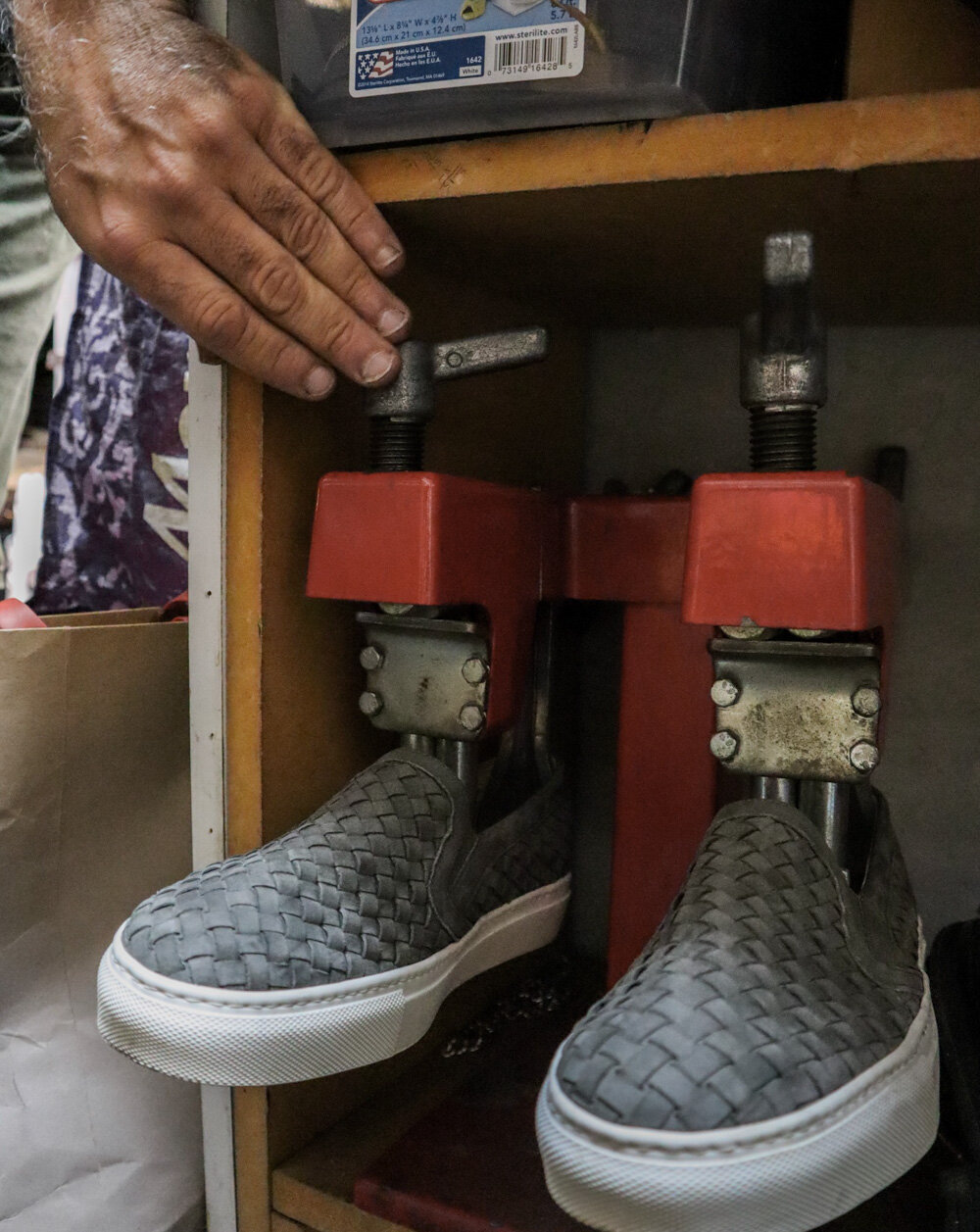


A month or so later when I pedaled the cargo bike over to collect our like-new boots, it was so satisfying to see them all ready to live our a second life, WITHOUT requiring manufacturing, shipping, and packaging like new shoes would have.
Inspired by this, I signed up for introductory sewing classes at Moving Thread. The classes have a maximum of 4 participants each, and are conducted within a beautiful home-studio space in Venice. Lead by Lissa, an expert who has been sewing and designing garments for over 25 years, Moving Thread offers intro and beginner workshops during which students can learn to make their own bags, and ultimately repair or alter an existing article of clothing.
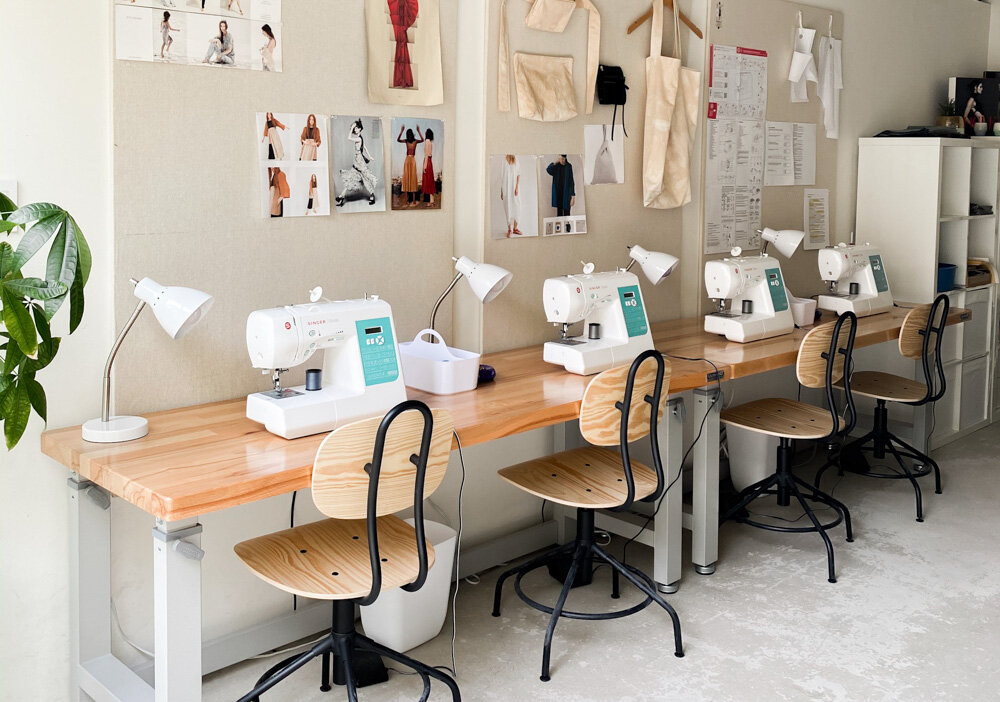
One of the things that struck me about Lissa’s mission was this statement from her website:
“Today, we could all have less. The fashion industry is one of the most polluting industries in the world and a massive contributing factor to global warming. A lot of change needs to be made to undo what we’ve already done but there are some small steps we, as individuals, can take. By repairing or making our own clothes and refusing to buy from companies that don’t do their part to improve our environmental standards is just one bit closer towards a cleaner Earth.”
I signed up immediately.

Moving Thread was one of the highlights of my holiday break. I’m eager to attend a few more classes, and then thrift a sewing machine of my own so we can begin to alter and repair our own clothes and repurpose linens around the cottage.

(On a fun side note, Lissa has a lovely outdoor shower, as well as a cargo bike similar to ours. I feel as though we were destined to meet and become close. She even attended my low waste holiday decor workshop at Big Red Sun, which was such a sweet surprise.)

So, while we’re still not one of those single-mason-jar-of-household-waste-per-year families, I’m determined to get there before it’s too late.

Video: Low Waste Holiday Decor Workshop
With just over a week until the holidays, we decided to do a little low waste decor and upcycling workshop here in Venice at one of my favorite small businesses, Big Red Sun. (Note: Scroll to the bottom of this post for the event video.)

I broke the workshop down into several components / activities:
Repurposing old clothing into reusable gift wrap
Wrapping the clutter-free, low waste gift of biodynamic wine with leaves in lieu of disposable packaging
Creating a zero waste centerpiece entirely from foraged materials
Wreath making (as a low-lift warm up activity to tackle while getting to know new friends)
Discussing the low waste materials and methods used to plan and execute the event itself

ACTIVITY 1: REPURPOSING OLD CLOTHING INTO REUSABLE GIFT WRAP
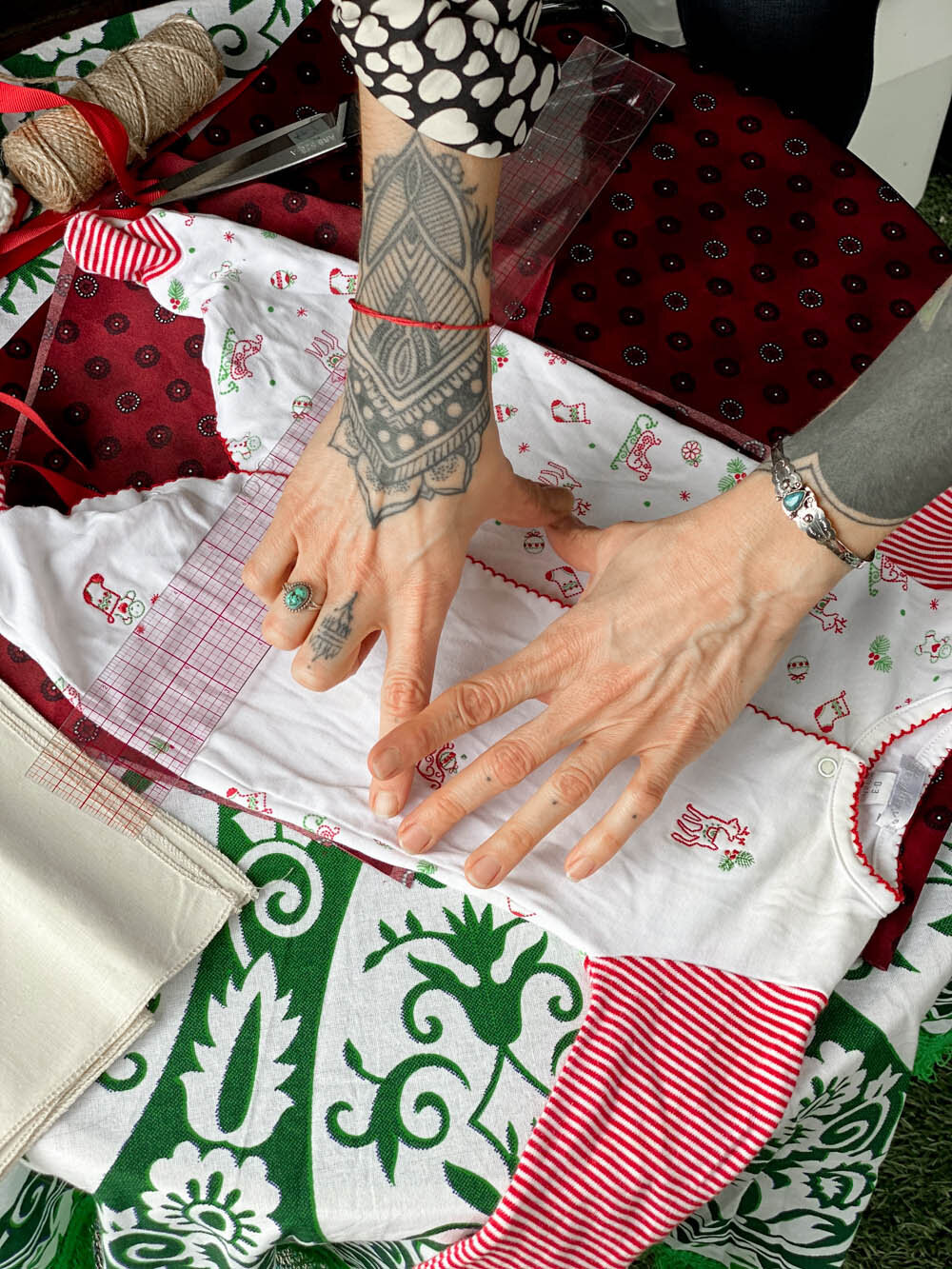
We hired a Thumbtack Pro to attend the event and repurpose old garments brought in by attendees while the workshop took place. The Pro, Keyra, has been a seamstress, designer and tailor for over 20 years, mainly working in costume fabrication and sewing home decor items.
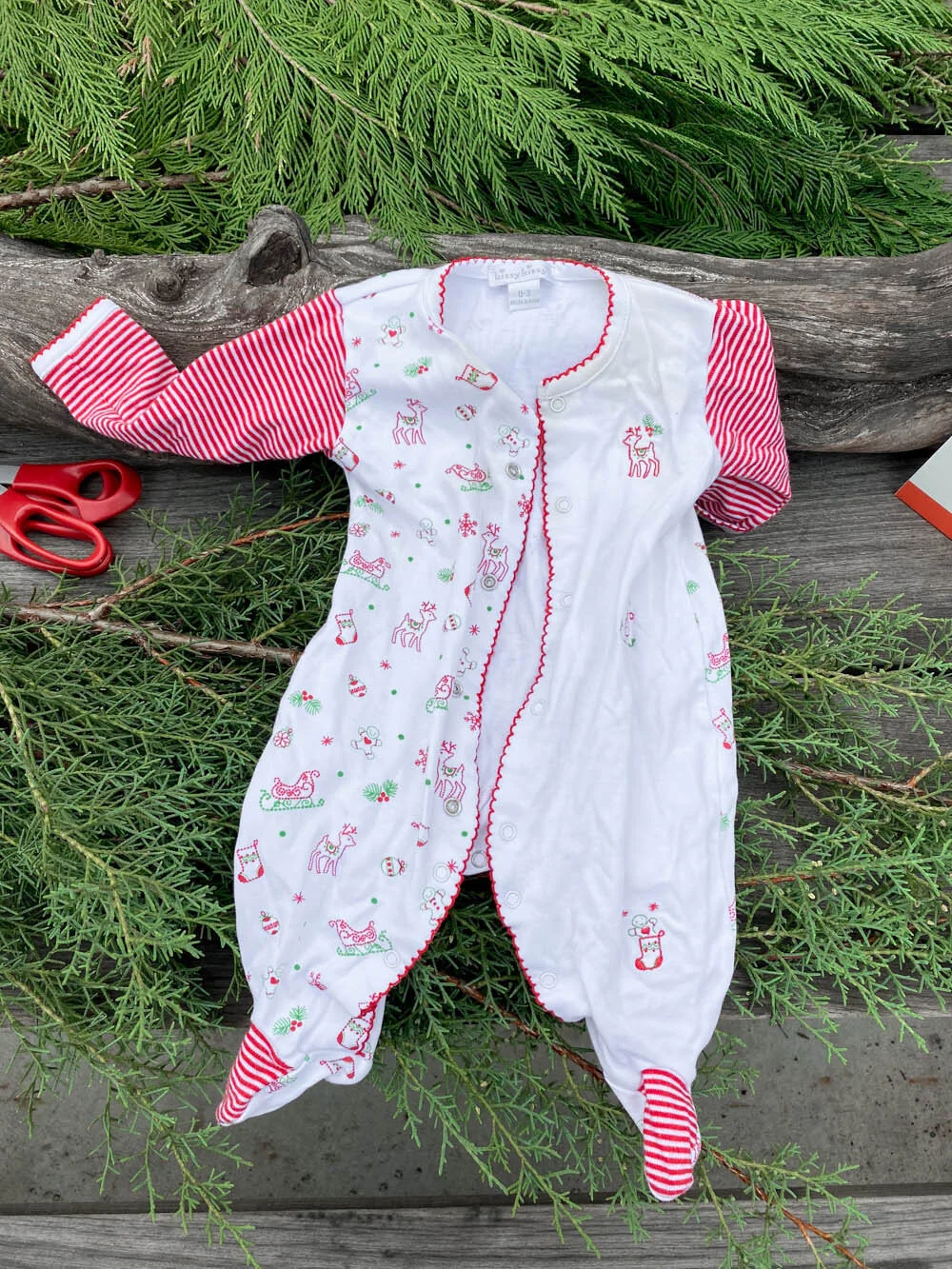
I brought a stained old holiday romper that once belonged to West’s cousin, and was passed on to West. Kira transformed the piece into a sweet little buttoned pouch for stocking stuffers, and even turned remnants from the jumper into ribbons and ties for miscellaneous use throughout the season. Other attendees brought garments such as lace skirts, bandanas and tops.


ACTIVITY 2: USING LEAVES TO WRAP WINE BOTTLES FOR LOW WASTE, CLUTTER-FREE GIFTING
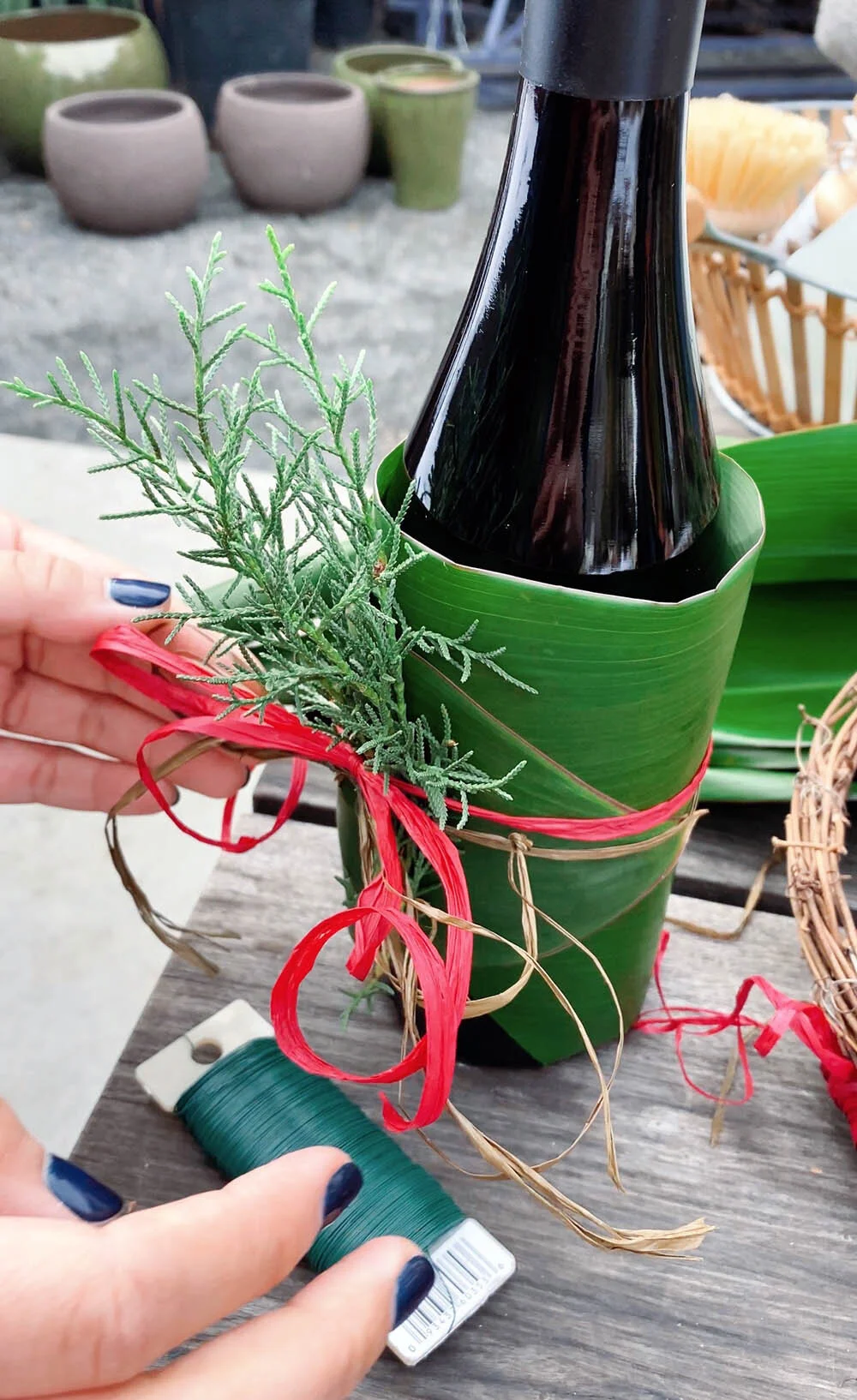
Our friend at Winc have a line of eco-friendly wines, and they generously gifted us several bottles of one of their biodynamic varieties to use in a zero-waste wrapping activity. The grapes used for this wine are farmed organically and biodynamically, resulting in a wine that’s good for those in search of sustainably farmed, small lot bottles in lieu of mass production and additives.

We wrapped the bottles in soft, flexible leaves, and added decorative organic touches. Each participant had their own style. I chose to show the label, while others wrapped theirs up entirely so the reveal would be part of the gifting process. Some folks chose to wrap only the neck of the bottle, or to create a little trivet of greenery at the base.



ACTIVITY 3: CREATING ZERO WASTE CENTER PIECES WITH FORAGED COMPONENTS
The owner of Big Red Sun, Selena, creates the most gorgeous centerpieces entirely from found organic materials she forages here in Venice.

She turns husks, bark and fronds into oversizes vessels that can be filled with fruit, veggies, acorns, pine cones, moss, flowers, branches, leaves, and a myriad of texture-rich, sweetly scented compostable materials.


For the workshop, we used some of the smaller pieces to craft festive, zero waste decor for our homes and for gifting.


ACTIVITY 4: MAKING LOW WASTE WREATHS
Wreath-making is a great intro activities for a workshop like this. They get attendees warmed up and into the crafting mood, while encouraging conversation that sparks new relationships in the spirit of the holiday.


ACTIVITY 5: ADDRESSING LOW WASTE SOURCING, EVENT SUPPLIES, SIGNAGE, INVITATIONS & TRANSPORT
We tried to keep our carbon footprint in mind from start to finish with this event. From biking whenever possible, to foraging local material rather than buying, to using remnant twine and wire, to bringing existing supplies like clippers and scissors, to using washable drinkware, cloth napkins, and porcelain / glass / ceramic pitchers and platters, we were able to throw a delightful gathering with minimal waste.


I had such a fantastic time conducting the workshop, and getting to see old friends while meeting new ones. Thank you to our event sponsors and attendees for such a joyful holiday experience.


Note: This blog post and the corresponding video were not sponsored, but the event itself was sponsored by our friends at Thumbtack. The biodynamic wine was generously gifted by Winc. (The final photo in this post was taken by Sara Toufali of Black & Blooms.)

Earth-Friendlier Jewelry
Recently I participated in a discussion conducted for The New York Times about jewelry. The conversation inspired me to post a lil’ roundup of some Earth-friendlier brands and styles for folks who are interested in gifting greener jewelry this holiday season.


CLED
I discovered CLED via Ashlee Piper, the author of Give a Sh*t: Do Good, Live Better, Save the Planet. In forming their brand, CLED aimed to leverage high-quality existing materials to create upcycled and beautiful pieces. Their pieces are hand-formed from recycled glass (a natural material mainly composed of sand). This renewable resource can be recycled endlessly, and can be made without causing harm to animals or the environment. CLED’s pieces arrive in their minimal and elegant circular box, which is made from post consumer contents.

BAYOU WITH LOVE
On recent occasions, I’ve been able to chat with the delightful Nikki Reed about her recycled jewelry brand, Bayou With Love. This small company uses recycled gold, mainly sourced from used technology recovered and responsibly extracted from tech recycling programs. (Only 12.5% of electronics are responsibly recycled globally, and in phones alone Americans throw away more than $60 million in gold and/or silver every year.) Most of the pieces are out of my spending zone, but I do have and very much like this recycled brass scarf ring. (I pair it regularly with my scarves from Late Sunday Afternoon— for every scarf they sell, they create and gift a handmade blanket to children in the foster system in Los Angeles.)

ASCOTS FROM LATE SUNDAY AFTERNOON
Ascots can be worn in a myriad of ways— around your neck, on your wrist, in your hair, on your bag/pack/basket, and around the brim of your hat. And while they’re clearly not jewelry, they can be styled as such, which is particularly nice when you have a small child or baby who likes to tug on and taste everything. Our friends at Late Sunday Afternoon use locally sourced deadstock fabrics to create their ascots in-house. Any scraps are used to stuff handmade dog beds that they then donate to animal shelters.

VINTAGE PIECES
What’s better than working with what we already have, rather than creating something entirely new? Vintage pieces, or jewelry that’s hand-crafted with vintage elements, can be such striking one-of-a-kind finds that we can feel good about wearing. For example, Rack and Ruin does a beautiful job of incorporating old components into their modern designs. One of my favorite pieces is this handmade bracelet, which is set with a vintage coin.

SCULPTURAL WOODEN WORKS
I am drawn to wooden jewelry, such as the handmade works of Sophie Monet (who I first discovered via my friends at Midland). Sophie’s pieces are works of art that can withstand the strong grip of my son, and not get trapped in the wild nest of my hair.

SEEDS, LEAVES, FLOWERS, SEA GLASS, SHELLS
I have a handmade, eco-friendly tin necklace pendant that contains a piece of dandelion and a magnifying glass, and 2 bracelets that showcase real dried and pressed greenery. I acquired all of these not only due to their appearance, but also for my son. When we are out and about together and he starts to get impatient with whatever we’re doing, these designs keep him occupied for a few minutes more, and are durable and safe in his lil’ hands. I also have some sea glass pieces from the beachcombers at Sea & Glass, as well as a shell pendant that my mother found at an arts festival in Gainesville, Florida.


HANDMADE & HEIRLOOM
These are the three rings I wear daily— my wedding band (which was my grandmother’s), my engagement ring (which was Adam’s grandmother’s), and a handmade ring by Indra West bearing the name of my son. My favorite source for such pieces (if they’re not handed down directly) is Etsy.

Note: Select photos above were taken at/for Midland by Ashley Randall earlier this year as part of a contributor blog post.

Some Items You Can Probably Go Without - Holiday Edition
(NOTE: This original post was published on 11/17/2018, and has been updated for 2019.)
While it's nice to share stories about designs and practices that help us live comfortably and contentedly in small spaces, I think it’s just as important to discuss the things that we can happily live WITHOUT— particularly during the holidays, when “stuff” just of all sorts just seems to swell. After all, making a home of a small space isn’t mainly about figuring out how to cram as much stuff as possible into your compact quarters— it’s about experiencing more by owning less.

As always, before we jump on in, here’s a lil’ disclaimer: To each her or his own. While these items might be easy for easy for some folks to forego, they might be gems elsewhere. You know your own needs and space best. Habits shift, tastes change, lives and practices evolve. Design and decor should be different and enjoyable for everyone. The following is just a small sampling of Holiday items you may want to reconsider. (View all the entries in this series here.)

Disposable Batteries
Love those little warm, battery-operated twinkle lights? Me too! Do you have flameless candles in your child-proofed home? So do we! A great way to cut down own spending and waste is to use rechargeable batteries. A simple 4-slot charger set can usually handle both AA and AAA sized batteries.

Tree Skirt and Tree Pots
Getting a potted, living tree from a responsible grower? Amazing. Depending on your plant nursery, you might even be able to leave their standard plastic pot there for the staff to reuse if you have one on-hand already that you intend to use instead. (Or you can return the pot to the store once you’ve planted your tree.)
Did you get a more traditional tree? Lovely! Challenge yourself to skip a “tree skirt.” Investigate your existing belongings— perhaps you have a washable scarf, Turkish towel, or table runner might work perfectly. Then it can go back to its intended use after the holidays.
Skipping the standard set up? An upcycled wine crate or basket might fit your lil’ tree juuuust right.
Excessive Travel Gear
View my full post: Some Items You Can Go Without: The Travel Edition, here.

Wrapping Paper, Packs of Generic Greeting Cards, and Tags
No need to buy and stash all of those paper goods. Make your own from by repurposing book jackets, newspaper, craft packing paper, canvas shopping bags, tea towels, and more. A bit of twine can cinch it all up with understated elegance, and a creative tag can be made of almost anything— including fallen leaves.
To me, clever packaging such shows more care than the typical store-bought formats. But if you have any shiny new packaging set aside, go ahead and finally put it all to use… then stop the influx of similar purchases in the future. (View my recent post regarding Playful, Low Waste Gift Wrap here.)

New Things
Generic heading, I know. But here’s a typical example of what I mean: Did you get an invite to yet another ugly sweater party? Skip the retailer sweater, which you’ll likely wear once and then toss out, or cram into the back of a drawer for 364 days. “Fast fashion” is terrible for the planet, and there’s no reason to spend real money on a moment like this— particularly since other people will probably have shopped in the same place, and be sporting the same attire. Thrift shops usually have a myriad of options, and there’s oftentimes a charitable element that’s threaded through such businesses. As such, you can feel good about supporting their cause via your discounted, second-hand purchase.

Seasonal Tabletop Decorative Tchotchkes
I love the look of those little holiday villages all lit up on a mantle, but they’re a bit silly in a small space. Same goes for random “winter” objects, artificial pine cones and similar vase-fillers, and seasonal figurines.

Want a festive display that looks great on a surface, doesn’t cost much money (if any), and requires zero storage space? Simple winter branches and florals, dunked into an existing glass, pitcher, watering can, or vase. When they’ve passed their prime, simply compost them or drop them in your city’s green bins. (Don’t get me started on seasonal napkin rings and name card holders. Is there anything more unnecessary?)

Party Supplies
With some greenery, you can easily holiday-up your small space gatherings without buying themed plates, cups, napkins, etc. Just use your everyday tableware, candles and/or twinkly lighting, and then let the clippings, food, and beverage round out the seasonal experience.

Tangible Gifts
There are endless causes for us to support every day of the year. There are millions of people in need of food, clothing, and safe shelter. There are children lacking basic school supplies. There are folks who need financial support for out-of-the-ordinary medical issues and family emergencies. Consider donations instead of tangible gifts.

If you’d still prefer to give something to your recipient directly, perhaps an experience would be welcome. A museum membership, a quick getaway, or a meal with friends and family are all lovely options.

We all know this, but it’s helpful to remind ourselves that it’s NOT ABOUT THE STUFF.
Decorating for the season can be so delightful, but it’s really all about making human connections, giving back to our communities, engaging with one another, loving each other, and sharing the responsibilities of protecting our planet.

Festive, Outdoor Vibe for Indoor, Small Space Dining
Gathering with friends and/or family around a table in a small home or apartment can be such a uniquely intimate experience. But during the holidays— when we tend add extra decorative touches and welcome more people to the table than usual— surface space needed for tabletop essentials can suddenly become extra challenging to preserve.
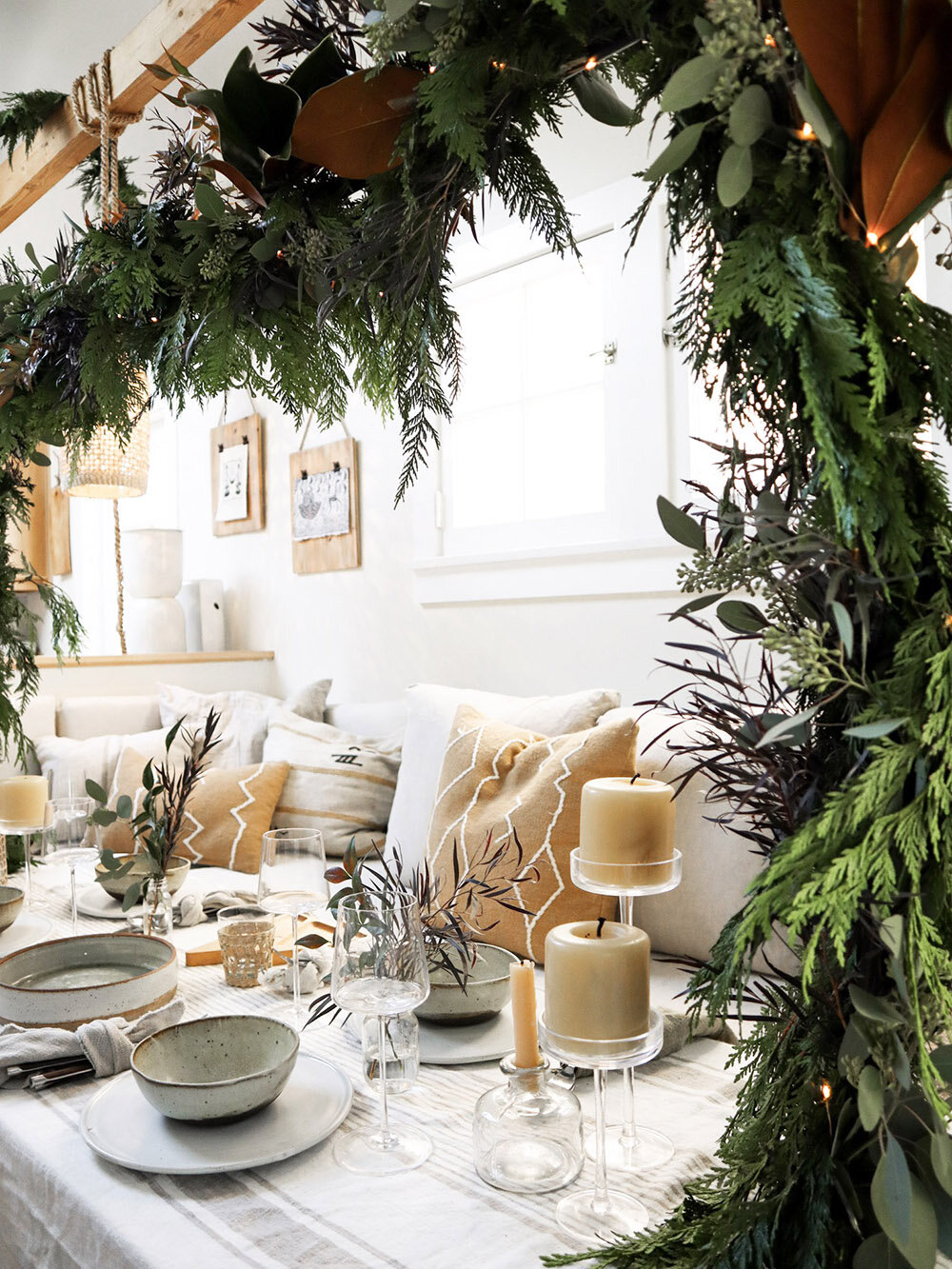
Certain items can help with this, such as rectangular plates and pedestal/cake stands. (Skipping some of the superfluous things you don’t need, such as napkin rings, chargers and placemats can save inches as well.) But if you want to add some wild branches or lush floral/greenery/dried bouquets to your table, you might be out of luck. As such, I wanted to demonstrate an easy, low waste way to add striking decor to your table without sacrificing your dining surface. (I also offer up additional suggestions in my book: Small Space Style.)
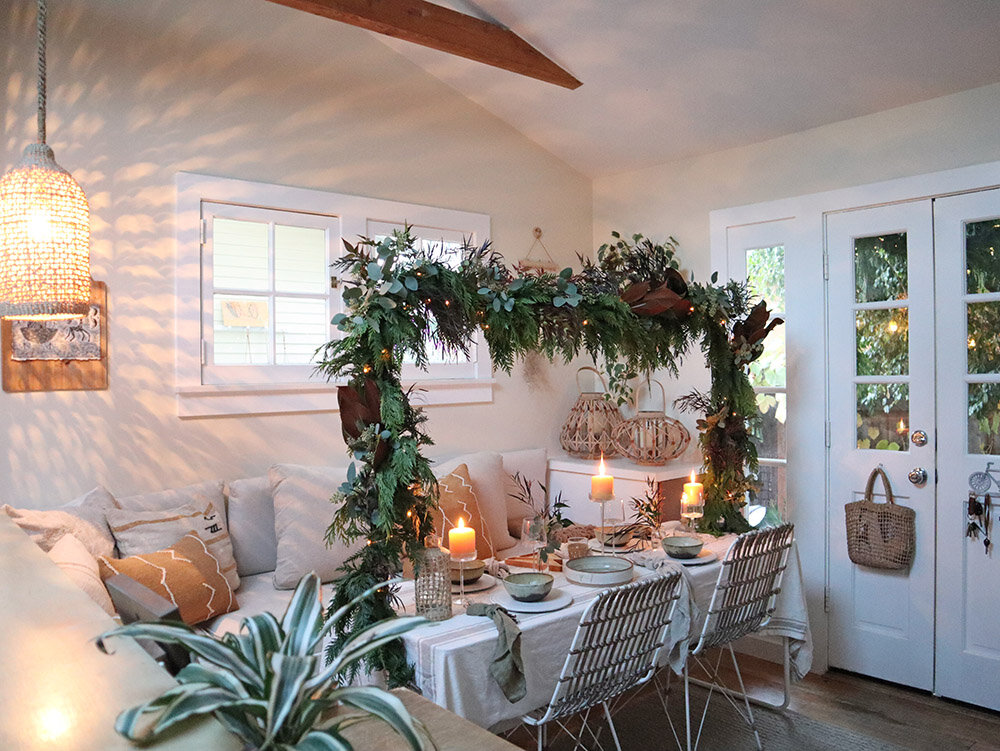
This display cost me about $150. I bought the garland and branches from a local shop, and used an over-the-table adjustable iron rod and battery operated twinkle lights (with rechargeable batteries) to create an overgrown and glittering display indoors. (I used real candles for the photos, but swapped them out for battery operated versions for safety after we snapped the images.) A bit of floral wire (and a vacuum) were the only other items I needed to attain the look.


Setting up the iron display rod took only a few minutes. The height is fixed, but the width is adjustable. When the setup is no longer needed, it breaks down easily for slim storage.

I used all living branches and clippings, so everything can be composted when the time comes.


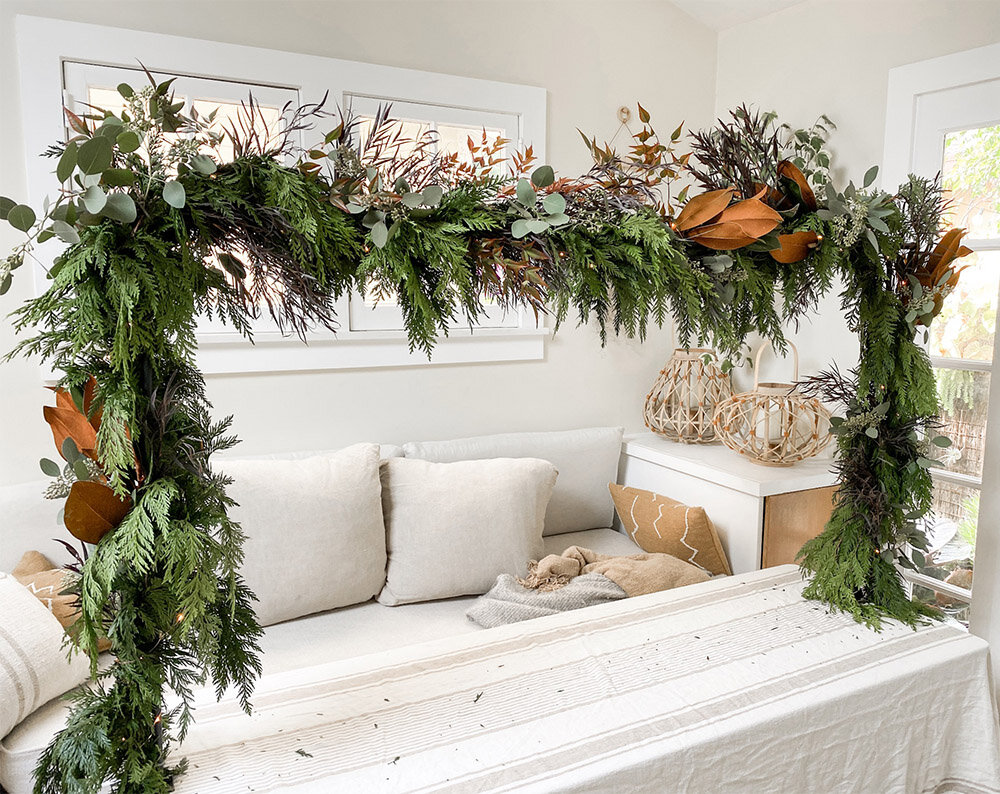
Adding the clippings to the garland took the longest, but was simple enough.

The entire process took about 90 minutes, and it was a surprisingly relaxing activity for me.

I (still) don’t really cook, nor do we host that often these days, so I enjoyed going out of my way to do something special for the guests we’ll have over in the coming days.

I’ll share a small space, low waste holiday decor video and post in early December.


In the meantime, I’m looking forward to spending time with our friends and family here at home. (And I’ll be following along with The Conscious Kid for insights and information regarding Native American Heritage Month.)

Whatever you and yours are doing this holiday, we wish you a safe and happy long weekend.


Reduced Waste Skin Care while Traveling
On our recent back-to-back trips to New Mexico and Oregon, I shared a few glimpses into my low waste, travel skincare products/routine. Upon request, I’m going into greater detail about it here on the blog. Much like my routine at home, it’s fairly simple and low on packaging:


Makeup Removal
I have a few refillable glass pots from ReContained, and I use one for a bit of coconut oil for makeup removal when traveling. (I simply siphon off a lump from my standard mason jar of coconut oil at home.) I’ve found that this type of oil is entirely effective at naturally removing both standard and waterproof makeup, without drying out the skin or wearing thin the sensitive skin beneath the eyes.

Wash
A combination charcoal + tea tree oil bar soap from Package Free Shop is my favorite new nearly-zero-waste addition/swap to my routine. When traveling, I don’t even have a dedicated container for it. I simply make sure that it’s completely dry, and then I pop it into a beeswax wrap and add it to my toiletries pouch.

Above: Wearing a coverall jumpsuit inspired and co-created by my friend Ellen Marie Bennett.
Exfoliate
This product isn’t zero waste (it comes in a petite plastic tub), but it is very long lasting, small enough to clear TSA, and was the final piece of the puzzle for me when it comes to attaining a clear complexion. The products I mention in the next category fully transformed my skin for the infinitely better, but this exfoliation component was something I was missing. Since using this product I’ve had zero cysts, and an even tone across all areas of my face (rather than having zones with differing qualities).

Moisturize & Repair
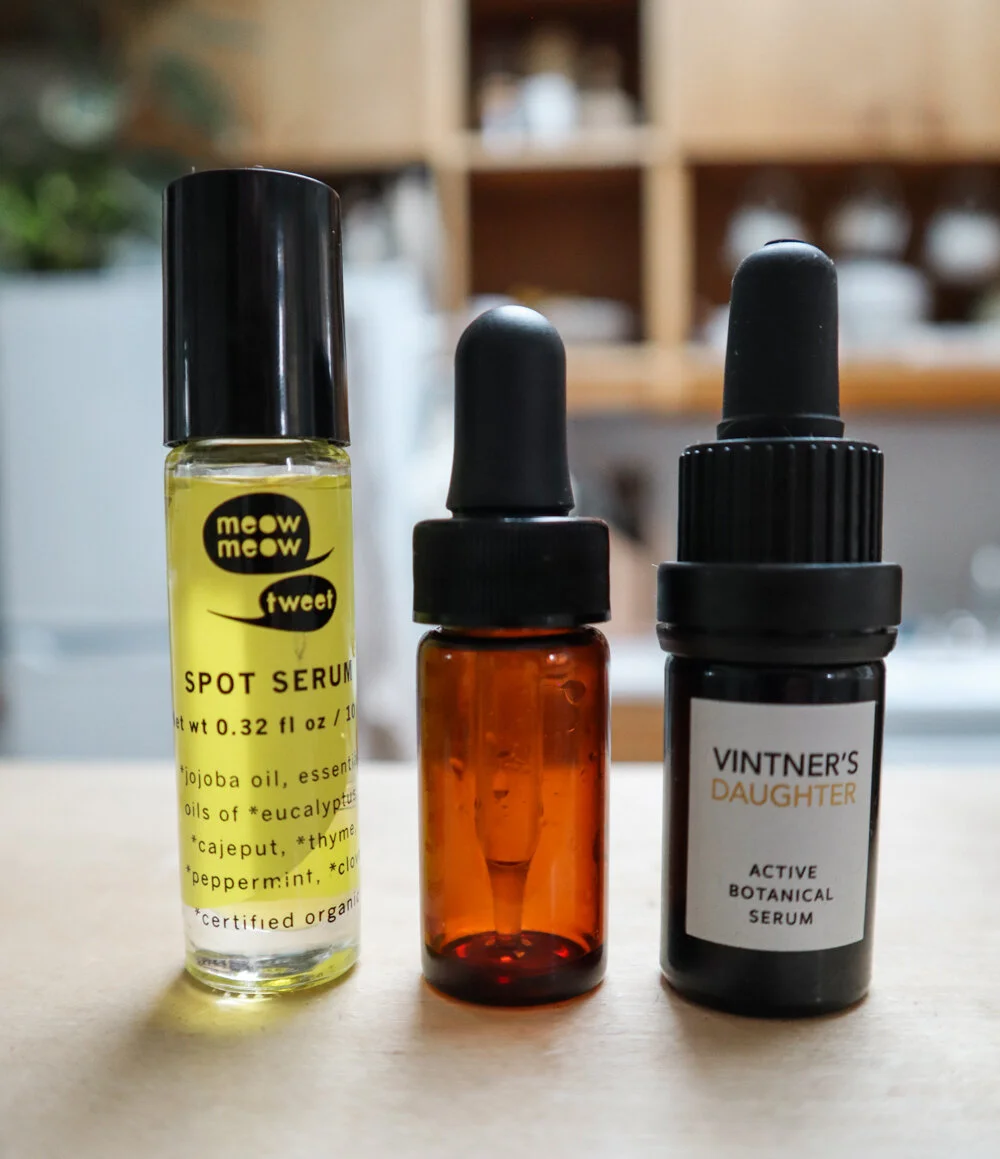
My 2 must-haves are a (newly released) travel bottle of Vintner’s Daughter Active Botanical Serum, plus their second product— Active Treatment Essence— dropped into a generic glass travel vial.
Spot Treat
I recently switched to a tea tree oil spot treatment (a more natural alternative to the one I’d been using) that comes in a slim, glass roll-on serum from the Package Free Shop. So far it has been music to my skin, and it’s easy to pop into a medicine cabinet, pocket, wallet or zipper pouch for local or long distance adventures.
Full Body Moisturizing
I use The Body Stone, a safe and effective moisturizing stone that comes in a refillable bamboo canister. After dozens of uses, the stones break down into smaller pieces, which are perfect for continued use and also conveniently smaller for travel. (You can even drop a bit or two into a tub for a relaxing body soak.)

Tone
I’ll sometimes bring my NuFace FIX if I’m attending work events or shoots while away. (View my post on this product line here.) I also toss a few washable face pads and makeup wipes into my toiletries pouch.


Gifts Made at Home or From Recycled Materials
Note: This post was sponsored by GOLDTOE® in promotion of their “Recycled Lodge Collection” socks. All opinions are my own. All words are my own, with the exception of exact products descriptions, which are unchanged to maintain accuracy. As always, any imagery showing the pups was captured while they interacted in their own natural ways.
This tiny cottage has not only been our home for nearly nine years— it has also been an unexpected teacher.

Long ago we began to reevaluate how and what we consume, and modified our habits accordingly. We actively consider each and every item (and I mean each and every item) before we introduce it to our small space, and we also put the same amount of thought into each and every item we acquire for gifting purposes.
Adam and I try to be as certain as possible that the recipient will use and enjoy anything we gift, rather than feel weighed down by yet another object given simply for the sake of giving. However, it can be a bit of a challenge to select presents for folks when you aren’t fully familiar with their lifestyle and preferences.

(For example: What do we give our neighbor 2 doors down with whom we chat daily, but whose home we’ve never been into? And what do we offer the lovely woman at our corner coffee shop who greets West every morning with a genuine smile and loving hug before stepping aside to chat with us at length, but whose tastes we know very little about?)

To avoid generating waste and excess while also providing something that’s hopefully practical and delightful, we usually come up with some sort of yearly bundle.

This year, we’ve opted for a simple collection of low waste goods, outlined below.
Contents:
Homemade concord jam made from the grapes off the cottage vine
Cozy socks made from recycled water bottles
A refillable stainless steel water bottle and/or glass household soap container
Locally made olive oil in a reusable glass bottle
Packaging:
A dried or clipped flower/branch
A dish towel or multi-use cloth (in lieu of tissue paper or filler)
An upcycled wine crate or repurposed basket (in lieu of a new box or bag)

HOMEMADE JAM
The jam is far more the handiwork of our neighbors than our own. (See my full post about that here.) Adam and I have made it before and enjoy the cottage grapes annually, but it’s the hard work of our neighbor, Kevin, that produces the jam we end up giving to friends and family.
What I love most about this item is that it’s something unique to our home. The grapes are grown here, and the jam is crafted in a tiny space with love and care. It’s then given in an endlessly reusable glass mason jar.
“RECYCLED LODGE COLLECTION” SOCKS
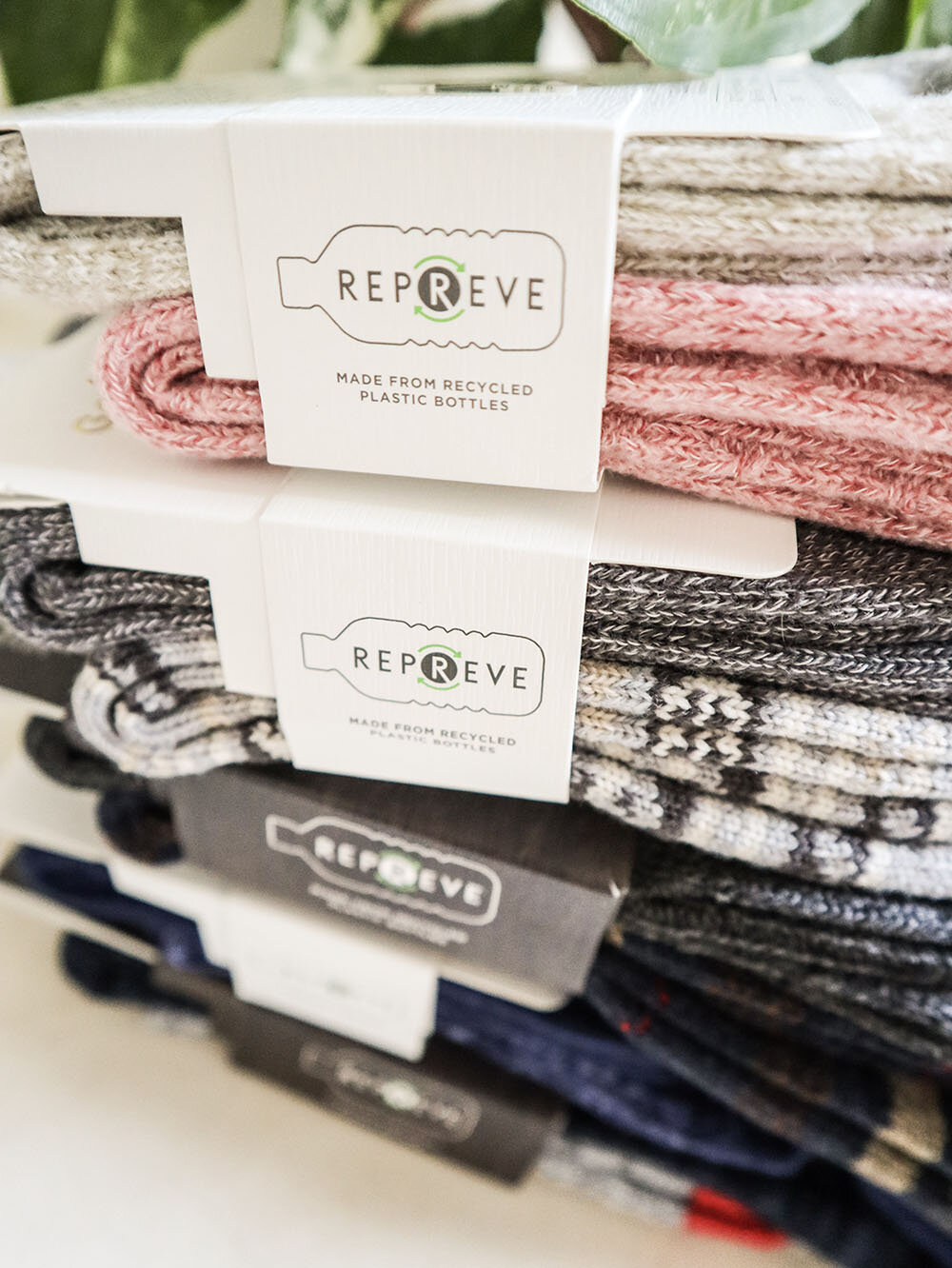
The socks are the newcomers to our bundles this year, because who doesn’t need socks? And GOLDTOE® is now making boot socks knit with Repreve® yarns, which are made from recycled plastic bottles, while still delivering premium quality and comfort.
Repreve® has recycled over 17 billion bottles, effectively keeping them from landfills and waterways. (Remember— only about 9% of recyclables ACTUALLY end up getting recycled.) Instead of making what's called virgin fiber, making REPREVE® offsets using new petroleum, emitting fewer greenhouse gases and conserving water and energy in the process.

GOLDTOE® uses this fiber in their sophisticated yet playfully designed socks, which are durable, moisture wicking, and provide adaptive warming + cooling.
Since GOLDTOE® socks have become our favorites here at home (particularly at this time of year), we feel like they make for sensible and thoughtfully created gifts for almost any recipient.

REFILLABLE CONTAINERS
A stainless steel bottle and/or a refillable jar for household liquids is another type of gift we enjoy giving. It might seem generic, but when I see just how often the bottles I gave to my friends as part of my book release bundle are used, I realize what a dent an item like that can actually make towards helping individuals and families reduce their single-use plastic waste.

OLIVE OIL
Food and beverage can make for such excellent clutter-free presents. But when you don’t know the dietary preferences and restrictions of certain recipients, olive oil can jump in as a neutral (though not boring) option. We get ours from a local bakery, and the contents are just as beautiful as they are delicious.

Here’s to showing love and appreciation to others with the help of thoughtful, greener gifting this holiday season.