
Displaying & Storing Children’s Art in a Small Space
In the past, I’ve been asked by magazines, blogs and clients how to best store, display and manage kid’s art in small spaces. Over the years my responses have remained the same, but it wasn’t until this year that I started having to put them into practice myself in our tiny home.
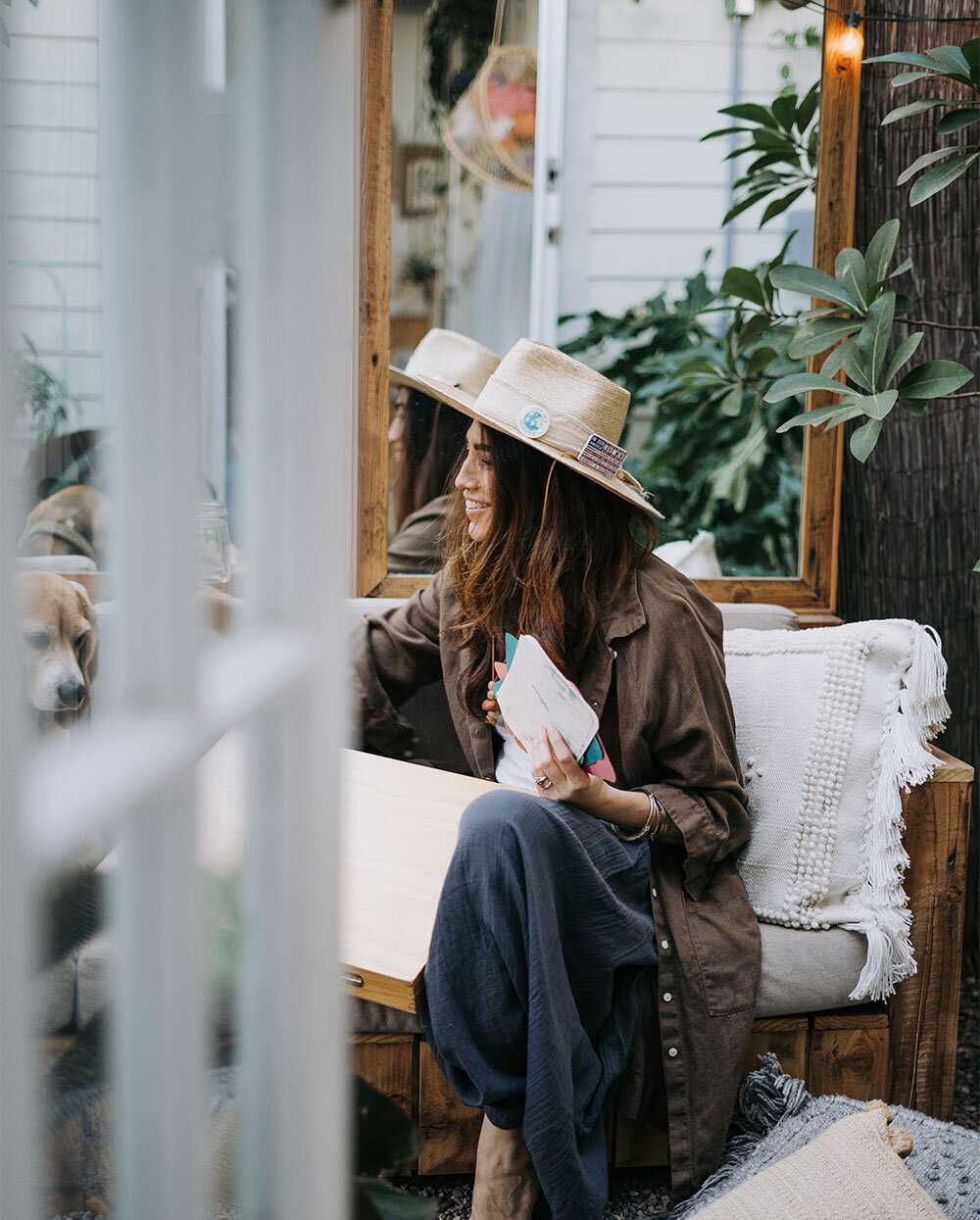

My typical solutions are as follows:
Keep a single, dedicated art portfolio for the most recent and beloved pieces that your child is likely to remember and want to revisit.
Scan or photograph pieces to compile for a photo/art book to be organized, printed and bound by a magazine/book printing service online.
Use string + clips and/or Washi tape to create a magical little secret, ever-changing gallery on the inside of a closet door.
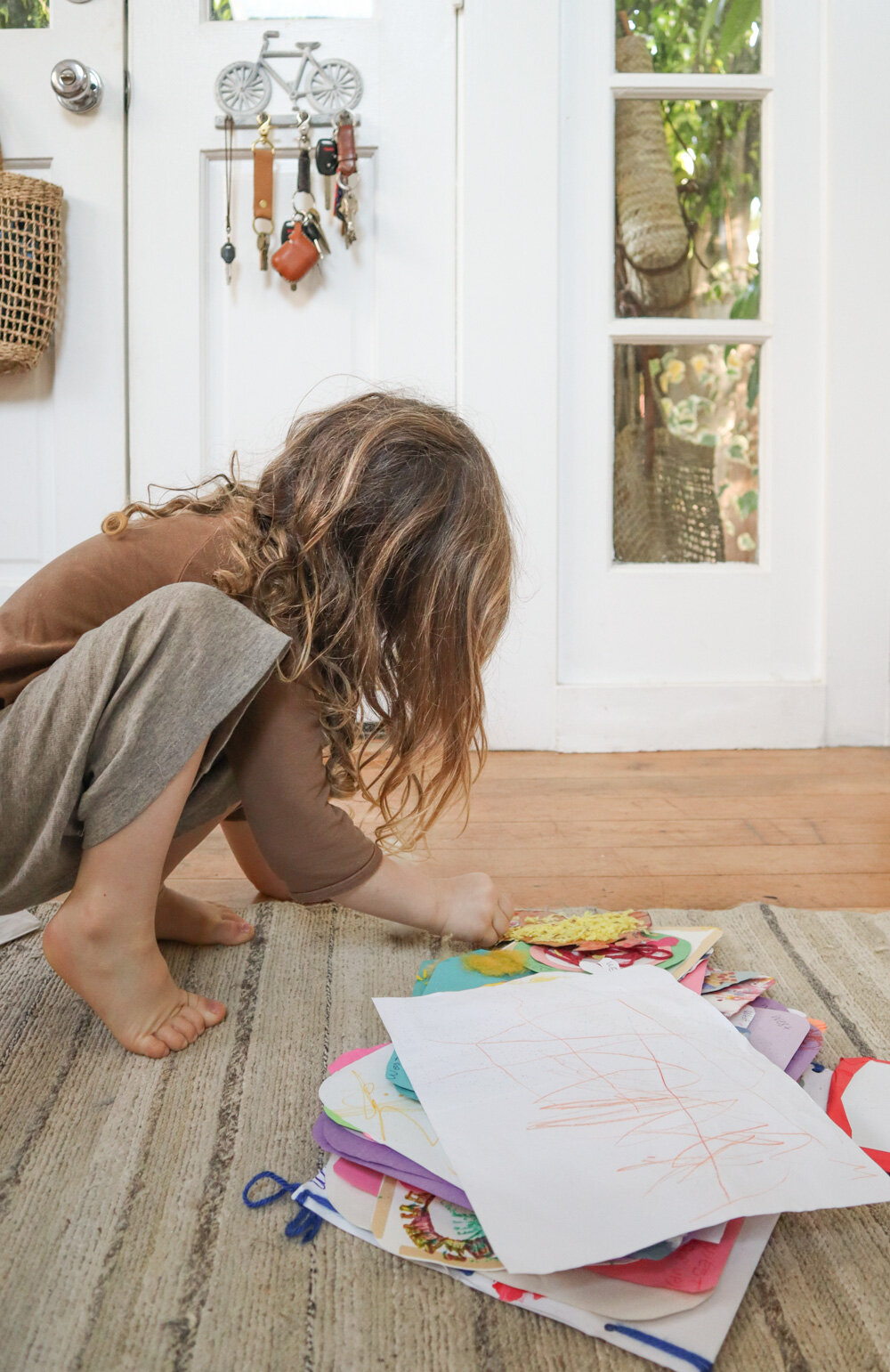
West is now 3½, and he’s into nearly any art project for up to 30 minutes or so.

From simple drawings to molding clay to crafting sculptures with upcycled items from around the cottage, he’s been creating with Adam’s guidance for a while now.
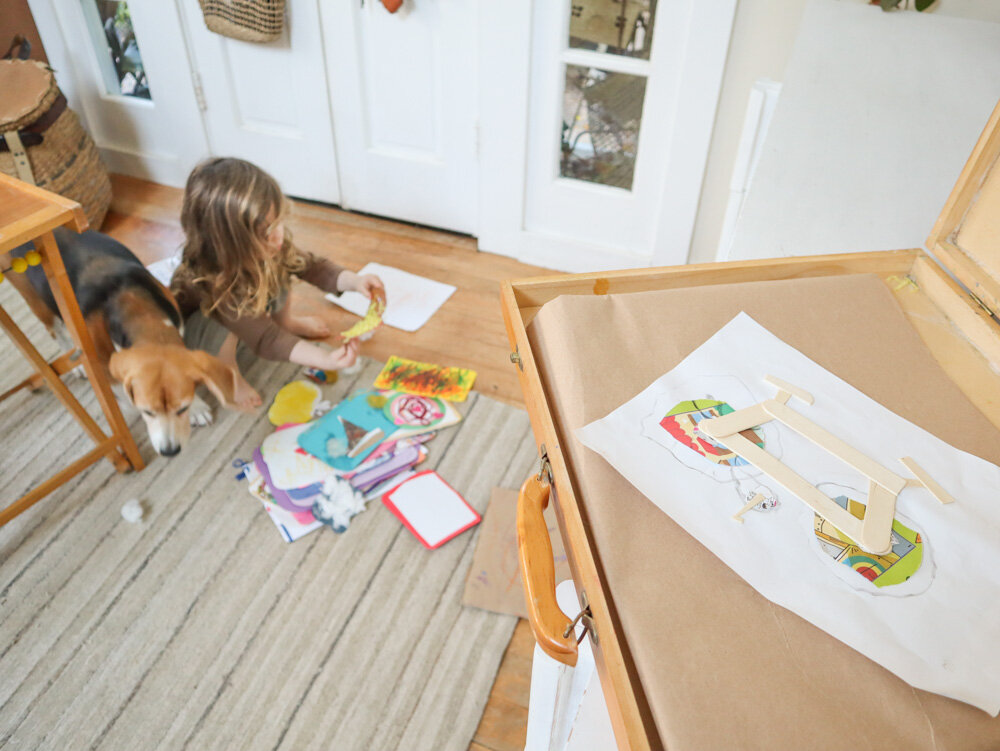
To corral the art, we initially we used a paper portfolio that was hacked together from a brown bag.
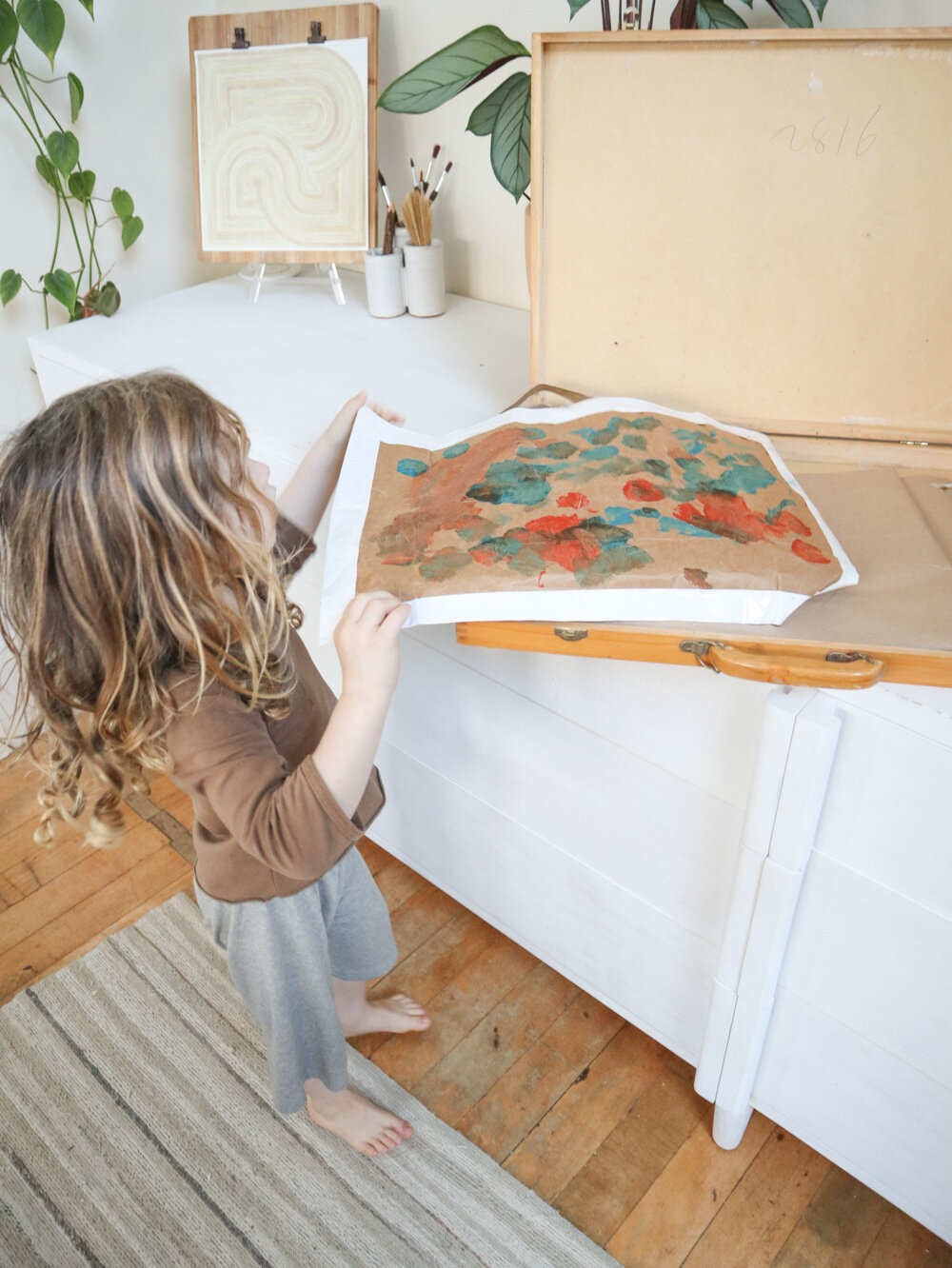
I later found a second-hand, wooden art portfolio at The Mart Collective here in Venice, which I purchased with the intention of organizing West’s art until I get the chance to have it printed and bound at regular intervals throughout the year.

When it comes to the sculptures, they usually get pulled apart to make something else, or they get used on West’s garden table or Fairy Garden.

To display the art for photographing, I simply use magnets or hold it by hand against our white refrigerator.

I started searching for an accessible online printing service for custom art and photo books/magazines, and decided to try Recently as recommended by 600 Sqft & a Baby in this lovely blog post of hers: Kid Art in a Book.

As for repurposing old pieces and putting them to clever, extended use without holding on to them permanently, I pull a lot of wonderful ideas from this “Kid Art” post from Reading My Tea Leaves.
For those who prefer to hold on to the tangible a bit longer, Oh Joy! created a delightful how-to via her post entitled: How to Organize Your Kid’s Art.


Small Space Gardening for Kids
Earlier this year, Adam and I both read The Future We Choose: Surviving the Climate Crisis, and felt inspired to make changes to the way we live our lives here at the cottage according to what we learned from the book. As part of that lifestyle shift, we decided to grow much of our own produce here at home. So we began converting our sunny 8’ porch into a tiny grow zone.

I’ve shared the following quote before, but I’m doing so again because it was this particular passage that helped me visualize exactly how I wanted to start our growing efforts:
“Every vacant lot, every grimy unused alley, has been repurposed and turned into a shady grove. Every rooftop has been converted to either a vegetable or floral garden. Windowless buildings that were once scrawled with graffiti are instead carpeted with verdant vines… Things that used to be done individually are now done communally— growing vegetables, capturing rainwater, and composting… In community gardens, on rooftops, at schools, and even hanging from vertical gardens on balconies, food sometimes seems to be growing everywhere.” - The Future We Choose: Surviving the Climate Crisis

That passage made me feel like every space — no matter how small — is an opportunity to plant and nurture something green and good, both for the planet and for our bodies.

As discussed in a recent post, we got two 6’ tall Farmstand growstands from Lettuce Grow (which we are absolutely loving). But we also wanted to create some raised garden beds so that all three of us could tackle growing fruit and vegetables in containers in our compact outdoor space in this big city.
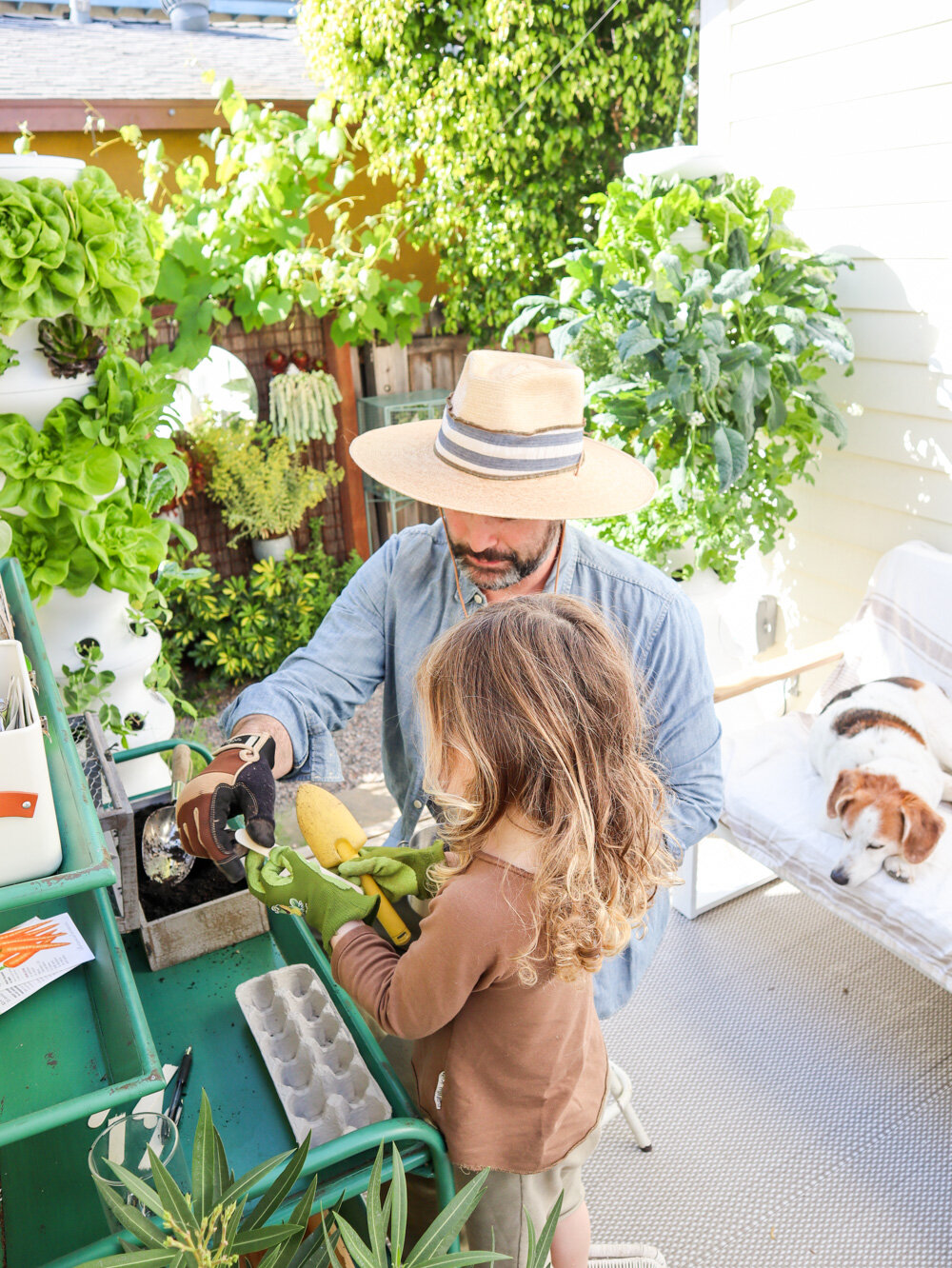
I’ll share our hack for creating the raised beds in the near future. But first we started out by getting some seedlings going in compostable egg cartons.


We’re attempting to grow several different plants on our little porch, from carrots to tomatoes to squash. We’re expecting plenty of failures, of course, but we’re hoping for some successes as well. To experiment, we’re trying a mix of soil types— some enriched with compost, some peppered with small doses of rinsed coffee grounds, and some sprinkled with fragments of nutrient-rich soil amendment courtesy of our FoodCycler.

West has been helping with it all, planting seeds and tending to the Farmstands. But we also got him a Root Viewer, so he could plant radishes, onions, and carrots and then watch them grow downward over time.


This family activity has been productive and entertaining as we shelter at home during the pandemic. I’ll share more from our experience soon, as this is just the beginning of our greener journey together.


Activities for Sheltering at Home in a Small Space (Week 6)
Sheltering at home looks different for every household. Here at the cottage, we haven’t deep cleaned the house, nor have we started taking new classes, learning new skills, or watching new shows.
Our home is a daycare from 7am - 9pm.
And it’s a small business office from 6am - 11pm.
7 days a week.
I’m not complaining. Being able to shelter from home with my family is a privilege.

And thankfully, to my surprise, West still hasn’t asked to go anywhere the entire time. I was expecting daily questions and requests, but they never really manifested. I find myself holding my breath for a breakdown that has yet to come.

Above: West speaking to our neighbor from across the 8’ porch that separates our homes.
The days go by quickly, some smoother than others.

West sweetly requests more undivided attention than I can necessarily give, I fall behind on work, I’m out of shape, I’m distracted during most calls and meetings, I’m making more typos in my writing, and days go by without being able to touch base with my parents.

But this is a time for heightened flexibility, compassion and patience— with others, and with ourselves.

WORK
As a far as conducting business is concerned, I stick to many of my Tips for Working Effectively from a Small Home / Apt During the Outbreak. Even though I can’t work uninterrupted for more than a 30-60 minutes at a time, I do try to practice helpful habits like separating myself from the rest of the family, clocking-in for the task and clocking-out when it’s completed, and having necessities and comforts within arm’s reach (and notifications off) so I’m not sidetracked.


PLAY
We are turning nearly everything into an activity to do with West. Our days usually consist of the following:
Reading (about 2 hours each day)
Listening to Pinna audiobooks / stories while playing with trucks, building blocks/tiles, train tracks, etc.
Watching episodes of Sarah & Duck or Puffin Rock with our mini projector
“Painting” the fence with water
Bubbles
Cooking, baking, cleaning and laundry as family games
Dance parties
Playdough (I refer to Erin Boyle’s DIY instructions here)
Building forts (on the couch, with a tablecloth tent, and with play silks / scarves)
Window darts (these are plastic, but I’m glad we have them—- they’re fun for the whole family and we use them constantly)
Running around the house and yard with the pups
Art class (stickers, simple crafts, color pencils and crayons, paper planes, etc)
1 hour of French zoom class with friends, 4x / week
Gardening, Farmstand harvesting and monitoring, and careful watering of the indoor/outdoor plants
Puzzles (we only have 4-5 small ones, but they’re enough at this point)
Basketball
Video / Portal calls with family and friends
Chatting over fences and through windows with our neighbors
“Fishing” in the main room or garden
Switching up meal and snack formats in the PlanetBox for in-home picnics



Outdoor Shower
In searching my own blog recently, I realized I never shared a dedicated entry about the garden shower we installed a year ago. As we receive inquiries about it daily, I figured it was finally time to add this post.

During the warmer times of year, this simple outdoor shower brings us so much joy. Whether it’s being used strictly for cleaning or purely for relaxation, the shower has proven exceptionally useful here at our tiny home. We live a short walk from the beach and right next to the canals, so — when we’re not practicing social distancing, of course — the 5 of us often return home with sand or muck on our skin (or fur and paws), clothes and gear.

By digging out a bit of pea gravel and sliding a shallow potting or boot tray beneath the shower’s built-in teak platform (and by using a simple, organic shampoo + soap bar), we can collect water to then reuse on our non-edible plants.

This particular model uses a basic hose hook-up, and doesn’t have hot a water connection. This actually helps us limit our shower time, and encourages us to turn the knob on/off only when we truly need the water running.

As such, it’s been a great way to teach West about water conservation. (And he’s used to showering since he outgrew his portable folding tub between year 1 and 2 and we don’t have a tub at the Cottage.)
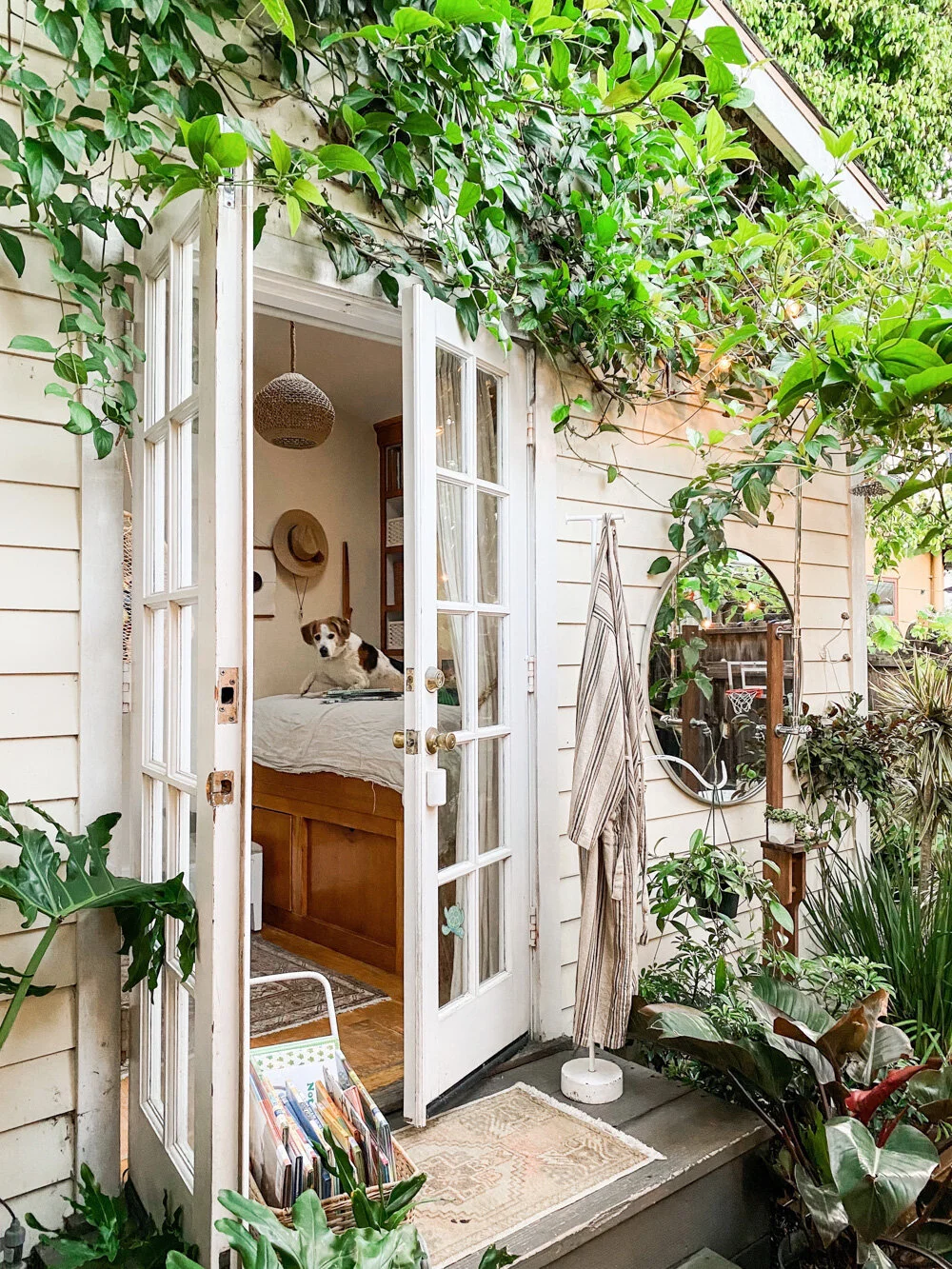
This past weekend I decided to try a sunset shower as a form of self-care. It was a bit cold, but it was well worth it. It found that, when paired with a mug of hot lemon water and some music from our portable bluetooth speaker, a shower under the vines and twinkle lights was a healthy way to sooth my mind and calm my nerves.


Adjusting Business and Expenses During the Pandemic
Talking about money makes me uncomfortable— it always has. But at the request of readers, I’m writing this post to share some of the ways in which our small business and family have been financially impacted by the ripple effects of the pandemic, and how we’re adjusting to stay afloat.

Our larger monthly expenses are the typical ones: our home, healthcare, education, food, and various business fees (which are hefty here in California). We don’t spend much on things like clothing (we buy very few garments since we share one closet and are trying to reduce our fashion footprint), accessories (we don’t dress ourselves up, as we work from the house), home goods (I try to decorate with what we already own and use daily), gas (we share one car and rarely drive), or books (we borrow most from our libraries).
Like countless others, we’ve lost a significant amount of revenue during the shutdown. I’ve tried really hard to separate my business as much as possible from the selling and promotion of tangible goods, and focus instead on services. Obviously my contracts for in-person events and speaking engagements were canceled. And campaigns that I’d already conceptualized, shot and edited were also pulled due to COVID, as they were mainly rendered for service-based companies. And while it’s normal for me to get numerous requests daily for various forms of unpaid labor, those requests have skyrocketed, as nearly everyone has felt a squeeze.
As a single-income family running our own small business, it’s all scary, of course. For a while now, money has been steadily going out without steadily coming in. But when I think about the fact that we are able to shelter together here at home and that we have food in our kitchen, I cannot complain.
Here’s what we’ve cut back on:
Education
One of our 2020 goals was to actively work towards learning more. Adam and I signed up for courses from Kiss The Ground and SkillShare, and were looking into continuing our educations via classes at local colleges, either in person or online. We had also enrolled West in classes for 3 days per week to diversify his experiences while simultaneously helping Adam and I get through our workload, volunteer commitments, and learning endeavors. We’re now no longer engaging in new spending with respect to the above.

Dining
One of the reasons we love living in Venice is that it has some of the most incredible, healthy food. Going out here— even for just a juice or coffee— is pricey. It’s one of the reasons we live tiny, so we can balance out spending. Now, as much as we yearn to support local small restaurants and their staff, we just can’t afford the expense of takeout. We get a fresh market box from a regional farm once per week, and one batch of groceries delivered per week. We’ve prepared every morsel of food here at home for the past month. Again, this is a privilege, and we know it. While we’re not in a position to donate funds right now, we are still looking into ways to get food routed to local nonprofits who are working to feed at-risk groups. (I’ve committed to donating a part of every sponsored campaign to select organizations, but I have to book and be paid for the campaigns before I can pass a portion of those dollars onward.)
Production
We’d been working on the 2nd season of our educational video series from the Cottage, as well as other shoots regarding sustainable small space living. We’ve canceled those plans, and are in the process of navigating the production of other content at no cost.
Contractors
We’ve had to cut back on the work we do with independent contractors. This upsets me on a personal level, as I care about these individuals and the work they do with us. But I’ll only hire someone if I can afford to pay them on the same day they invoice me— I never want to make anyone wait for payment for services already rendered.
Savings
Since we run our own business, we have to save for our own healthcare expenses, retirement and insurances— and we try to save for West’s education. All of that is on hold, as we shift our focus instead towards not going into real debt.

Subscriptions
We canceled most of our subscriptions, with the exceptions of the ones we use daily, or the ones we rely upon for news and information we trust.
Entrance Fees and Transportation Costs
Since museums and community events are shuttered, our family and business is no longer allotting the money required for those, including the associated transportation costs. West and Adam used to visit at least 1 or 2 museums/attractions per week while I worked.

Above: Handmade masks by our friends and neighbors at Late Sunday Afternoon.
New Purchases
We’ve committed to using up everything we have at home before buying anything new. Every single bar soap/shampoo. Every toothpaste tablet. Every drop of oil. Every candle. Etc. Same goes for toys. West has plenty already, and if we put them on rotation, he doesn’t get bored. (I must say, I really, really miss our library though. “New” books would be great…) We did, however, invest in some masks for the family from our friends at Late Sunday Afternoon and Hedley & Bennett, and I also got a mini projector since we don’t have a TV.

Holistic Medicine and Practices
I’ve been trying to get pregnant for over a year. I’d recently been visiting my doula, trying dietary supplements and probiotics, and doing acupuncture. (The acupuncture was also for the back injury I’ve had since September that has yet to heal.) All of those are luxuries I could afford because we live tiny, but I’ve stopped them all, with the exception of my Ritual Prenatal vitamins, which I find to be both affordable and easily digestible.

One more thing of note:
I know that reusable goods aren’t possible for all. Not everyone has easy access to a washing machine, for example, and not everyone can afford the up-front costs of reusable goods. But I will say that our reusable bath and kitchen goods, as well as our Lettuce Grow Farmstand, are really coming in handy right now. For example: we haven’t bought toilet paper for months, thanks to our bidet. We never have to go to the store for paper towels and wipes, as we have our washable cloths. I didn’t need to buy tampons or pads when the time came and I discovered that, for yet another month, I wasn’t pregnant. And we no longer have to go out to buy heads of lettuce or bundles of spinach, as they’re growing outside our door on our tiny porch. I want to be delicate about this, but I also want to provide this information in case it’s helpful to others.

Above: Our Lettuce Grow Farmstand outside of the living room window.
Stay safe, folks, and know that we appreciate you being here with us. Any time you visit this blog, you support us. For anyone reading this who works in essential services: my family thanks you from the bottom of our hearts.

9 Years in the Cottage
This month marks the 9th anniversary Adam and I moving into our lil’ cottage. I’ve now lived here longer than any other residence during my life.
Since sheltering in place like countless others across the globe, I’ve received the same question from someone at least once a day: How do I feel about tiny living now that we’re at home around the clock?
The truth is, Adam and I have been practicing this style of 24/7 live-work tiny life ever since he left his digital advertising job 3 years ago shortly after West was born and began working with me at home.

While the virus outbreak is devastating and extremely upsetting on so many levels, the “Safer at Home” order has changed very little for our family in terms of our day-to-day routine. While our hearts are aching for communities across the globe and our minds are racing from current events, our schedule and practices here at home are largely unchanged.
In Hilton Carter’s new book, WILD INTERIORS (which comes out on Tuesday!), the author, filmmaker and plant stylist wrote:
“When I visited [the cottage], I was amazed by the choreographed dance I saw taking place throughout their home. One person steps here so another person can step there... one two, step, one two, step.”
I love doing this dance with Adam every day, and am thrilled to mark this 9th anniversary of living here together. I can’t imagine a more comforting place to be with my husband, child and pups during this pandemic.

Thank you for being here with us. While we’re all physically separate, we remain emotionally (and digitally) together.
Photos by Lucia Doynel.

Nurturing a Sense of Wonder in a Tiny Garden (Part II)
A month ago, I introduced a fairy door + window to the cottage garden. The full post is here, but here’s a brief excerpt for context:
In a small space, it’s arguably easier to pick up on the mood shifts of your family members due to proximity and the level of familiarity that comes with such closeness. And while I always want to be honest with my 3 year old and nurture his sense of empathy, I certainly don’t want him to be negatively impacted by the way I operate when I’m feeling off. So, in order to redirect the focus away from my issues and towards something joyful, I decided to nurture West’s sense of wonder with a lil’ addition to our tiny garden.
Now the entire world is feeling off.

Since we’ve been home 24/7 for weeks, West and I decided to add a ladder to the fairies’ tree.

As I’ve mentioned several times before, I’m not great with DIY activities.

Luckily, things that look ridiculously flawed to adults can still be just as magical for kids.

I’m more of a DIY-lite kind of person, so this simple activity was perfect for both of us.

All we needed were some acorns, scissors, and twigs.

Our friends at Big Red Sun are making handmade fairy kits for families at home during the COVID-19 outbreak.
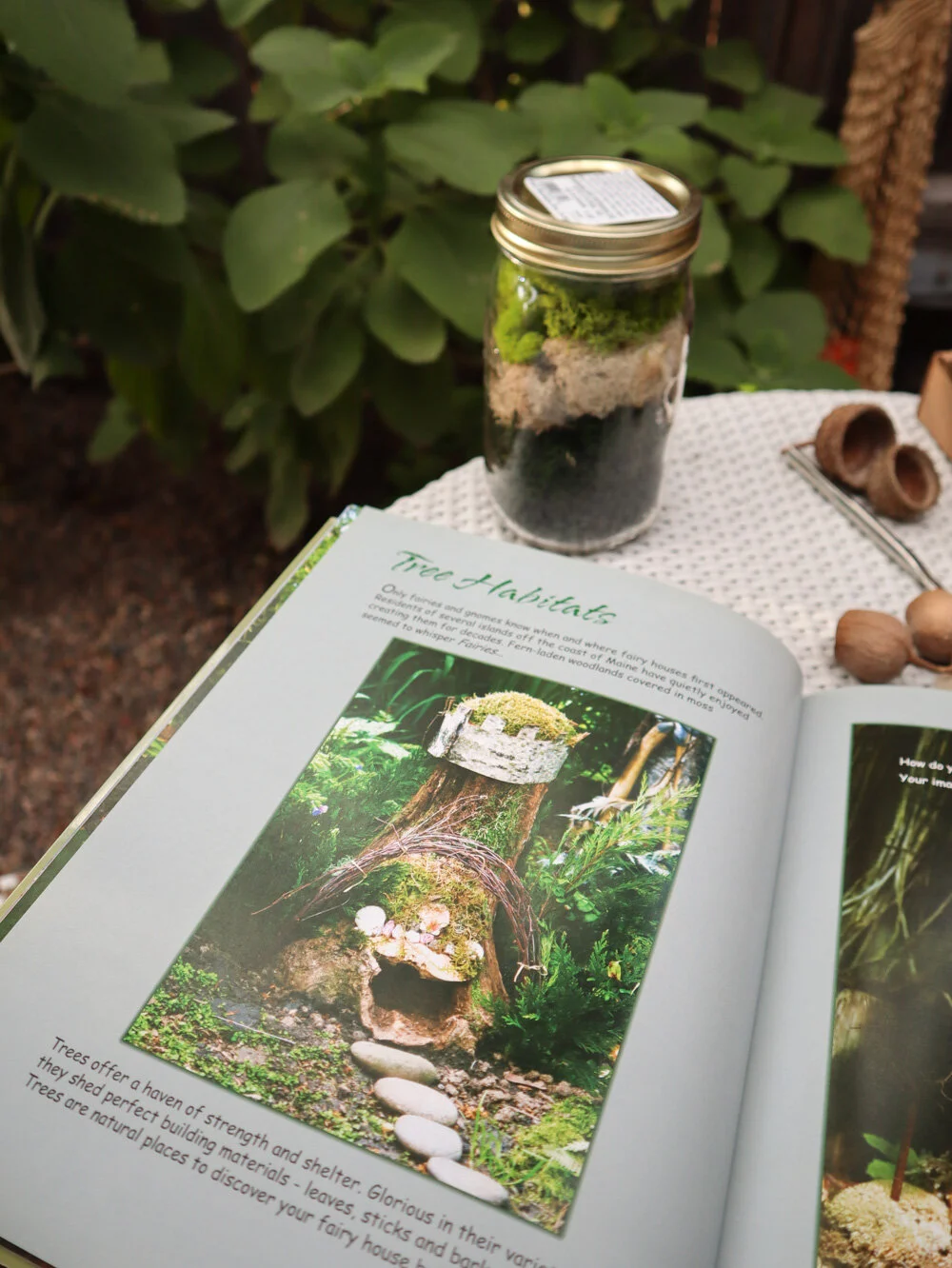
If you’re interested in being added to the release list, just send Big Red Sun an email: info@bigredsun.com. The kits should be in a week or so!


Growing Food in a Small Space
How do we grow some of our own food in very limited square-footage? Vertically!
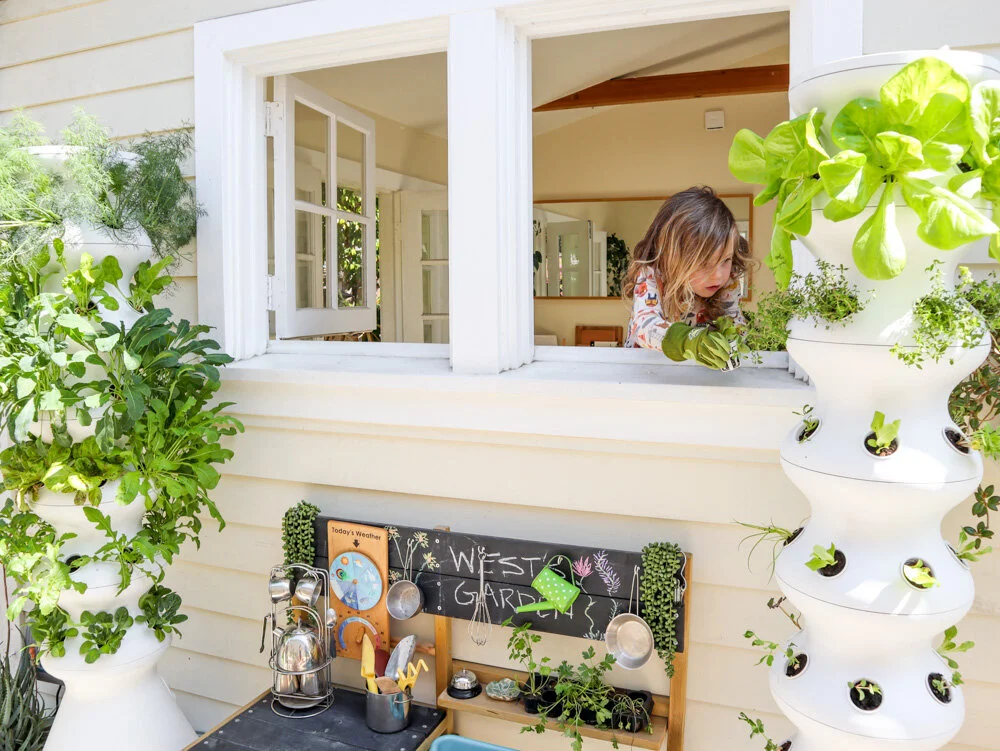
We are extremely lucky to have a small but highly usable garden space (which also serves as a shared thoroughfare with our neighbor), but for several reasons we’ve chosen to use it as an outdoor living space.
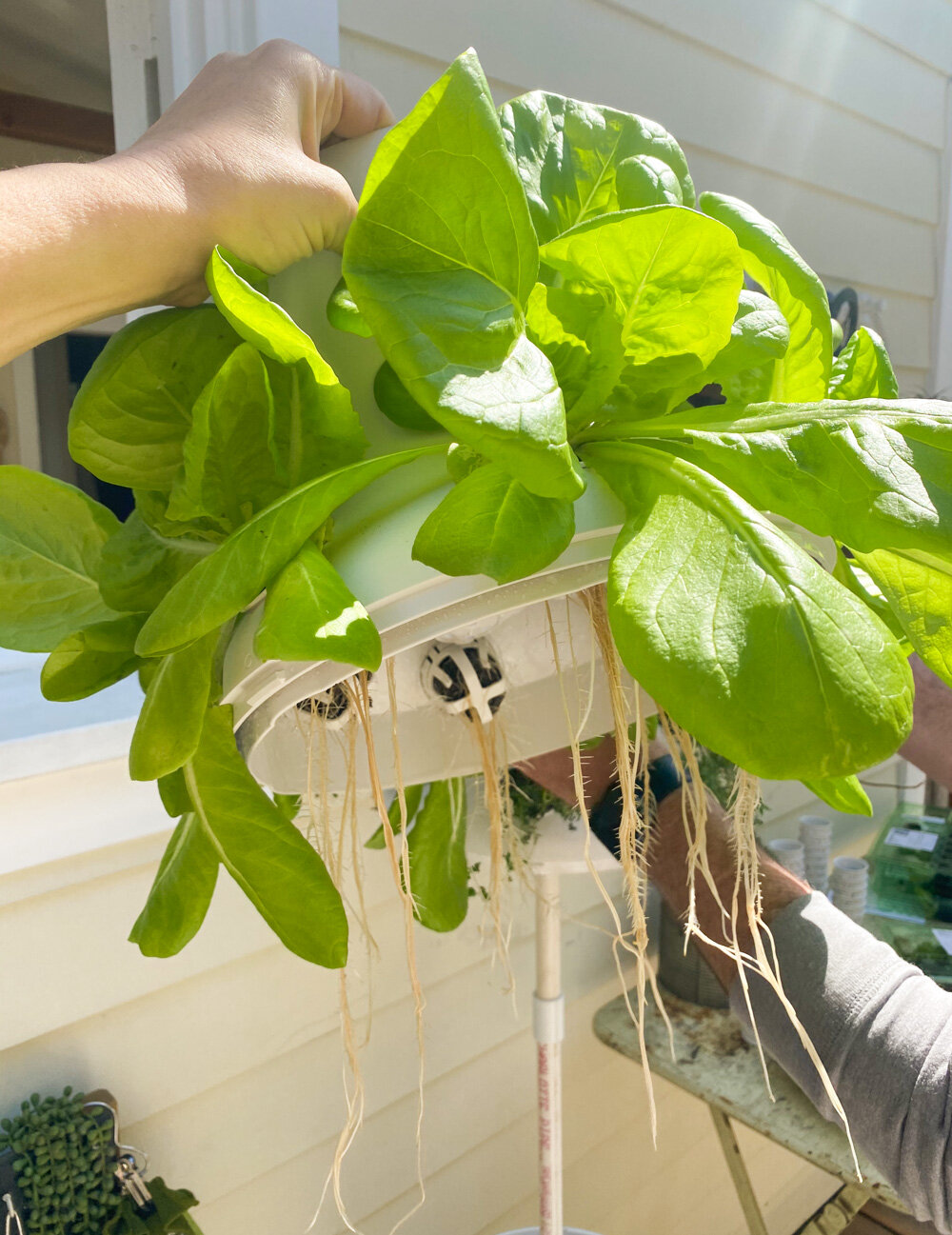
So, in order to produce veggies, herbs and fruit this year, we’re converting our sunny 8’ porch into a tiny house grow zone!

It’s is still very much a work in progress, but we started it all off with two Lettuce Grow Farmstands, enabling us to grow 72 plants within about 4 sqft.

The stands are made in the USA with plastic recovered from coastal communities lacking recycling facilities.
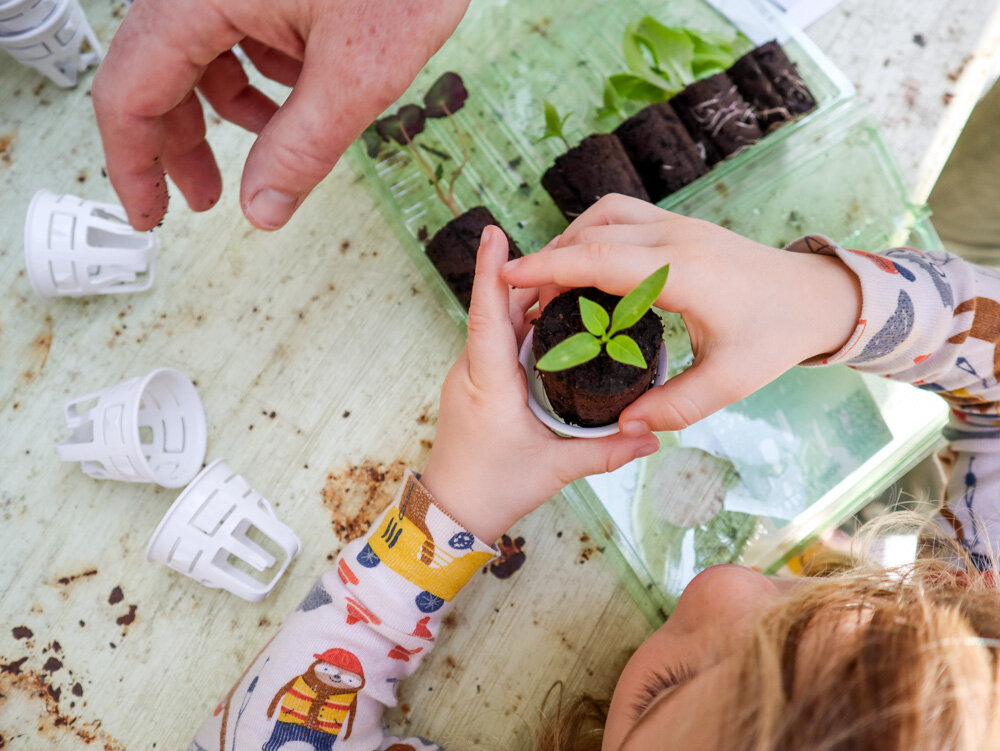
They require only a fraction of the amount of water needed for growing in soil, which helps here in drought-prone Los Angeles.

We’re just getting started, but already Adam has made meals using greens from the stands.
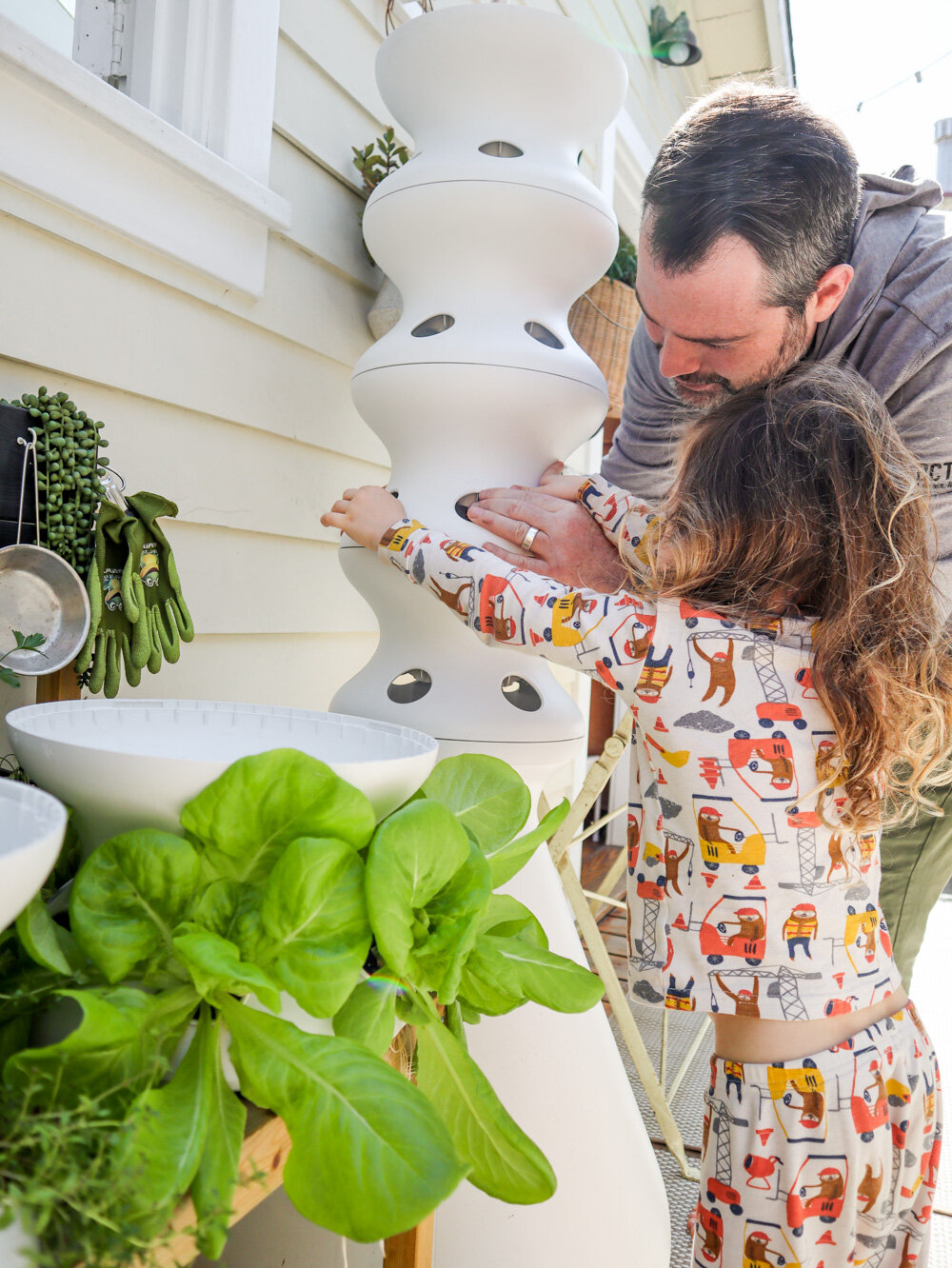
We’ll continue to share our grow journey with you throughout the year.


An At-Home Cinema in a Small Space (Without a TV)
We don’t have a television at the Cottage. I haven’t had one in nearly 11 years, and I genuinely have never missed it. However, I will wholeheartedly admit that since we’ve been following the Safer at Home protocol for the past 3 weeks, I have absolutely wished for a larger screen while watching the occasional random Netflix show or movie. (We used to use my old iMac — even while in the garden — but that machine has since passed on.)
So instead of caving and getting a television, which I really, really don’t want, we got a tiny, wireless, portable CINEMOOD, which is basically a stay-at-home cinema. (Update: Cinemood saw this post and provided me with a promo code to share with readers for a free smart cover: tinycanalcottage.)
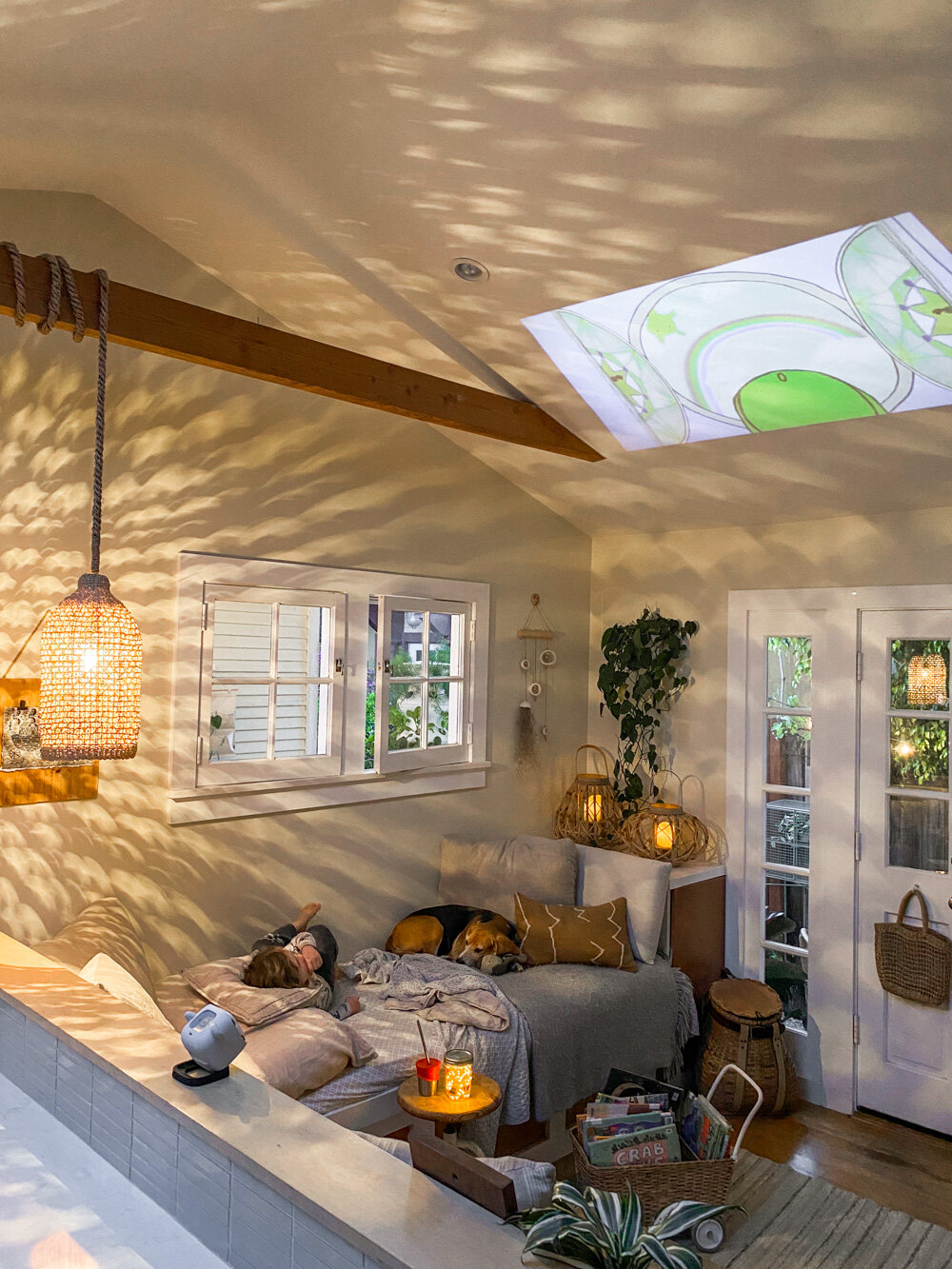
Suddenly we are able to watch movies and shows in the living room, bedroom, porch, and garden on a giant scale. (Where has this thing been for the past 9 years?!)
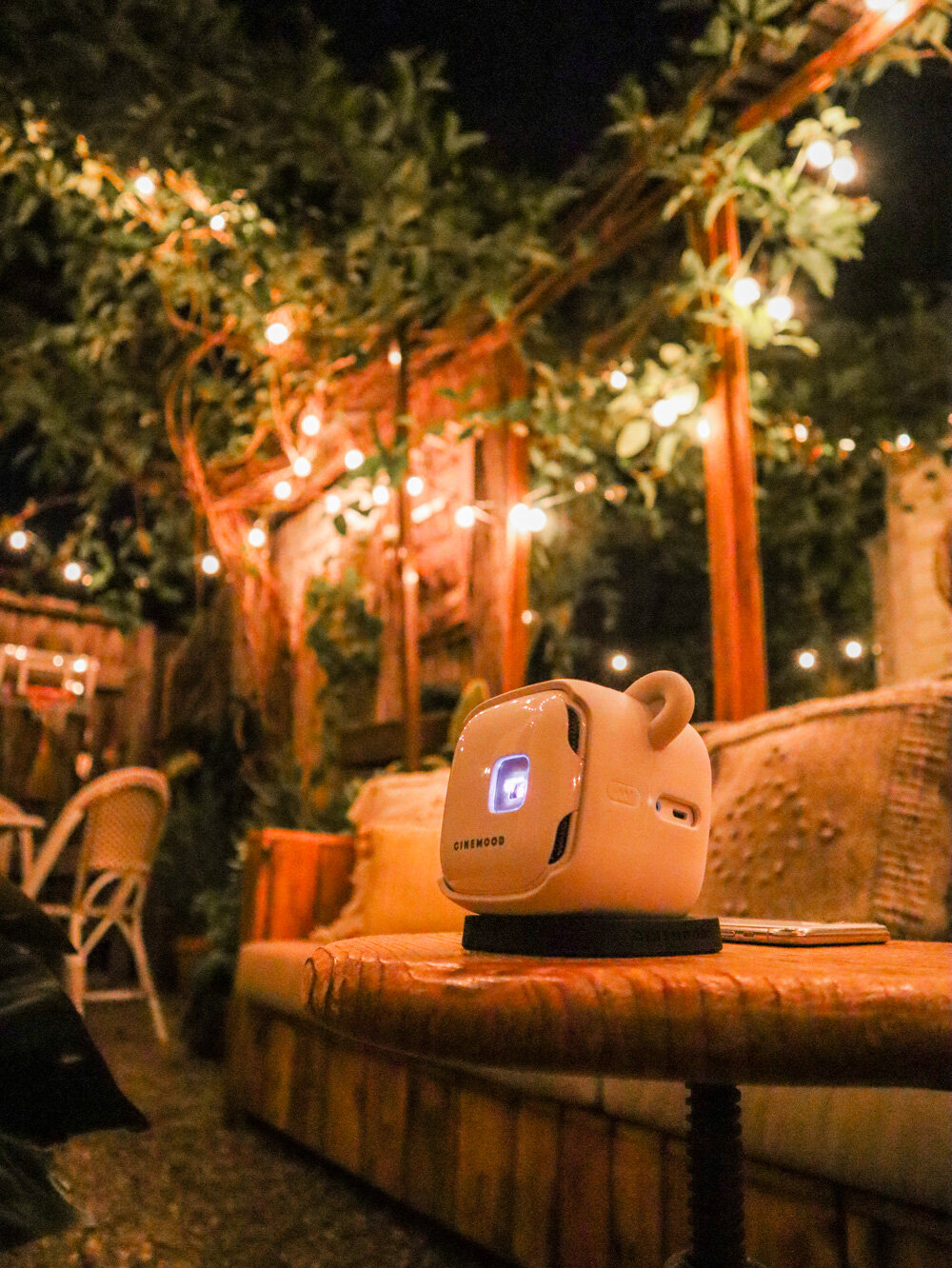
But my favorite thing of all is that there’s no bulky screen to attempt to hide (or roll up for storage) when we’re through. The projector itself can fit in the palm of my hand. (And we added a playful little case to keep it safe while West is holding it.)

Plus there are no cords. A quick charge is all that’s required, and then the device can go anywhere.

And, since our house and garden are so tiny, we can project from nearly any point on the property and the picture makes it clearly to the viewing wall. (The set-up was easy, but the app and functionality took me a bit to get used to. But I got there!)


West still watches shows sparingly. (His favorites remain Sarah & Duck and Puffin Rock.) Projecting the CINEMOOD on to the ceiling, walls, or even our closet and window curtains prevents our child from having to droop his lil’ neck to watch a show on a handheld screen.

I also feel like the cinema-style projection adds a new dose of magic to our normal day-to-day activities. That extra spark is particularly welcome in this odd time of being tethered so completely to our homes during the COVID-19 outbreak.

(Above: West’s Casa Straw Clutch by Olli Ella, which we turned into a nightlight with battery-operated twinkle lights.)
Since we’re practicing strict social distancing, we can’t gather with friends or family for a movie night, of course. But I do hope that I can come up with clever ways to watch something on the porch with our neighbors during the warmer months to come. (I’ll definitely share photos if we do.)

I’m all for creative solutions for simplified small space living, and this lil’ gadget is a perfect example of a way to think beyond a traditional setup without sacrificing comfort or style.

Note: This post was not sponsored.

Making Space for Schooling in a Small Home / Apartment
At 8 a.m. every morning, I prep our tiny house for a hodgepodge of learning activities for our little one. It’s not homeschooling. It’s... what? Home learning? I’m not sure what to call it. But whatever it is, I hope I don’t mess it up, and that I grow and learn right by my child’s side.

Despite the fact that my mom was an educator for nearly 50 years, I’m terrible at this sort of thing. Not even just with West, but for myself as well. I’ve always been better at working and reading than at formal schooling.

I should note that my child is only 3½, so I’m focused on making sure he’s exposed to new experiences within our tiny home in the months to come, as opposed to focusing on a curriculum. And, of course, Adam is doing all of this with me.
Some resources we’ve found useful this week:
Authors and actors reading children’s books on Instagram Live. This helps enhance our library since we can’t go to the library for new books at this time. Some examples are Save with Stories and Oliver Jeffers, but there are SO many more.
Running spreadsheets, texts and DMs with friends, family and our Instagram community.
As the days and weeks progress, I’ll share more snippets of what we’re doing, and how we’re navigating this new version of life within our limited space. In the meantime, stay safe and well.

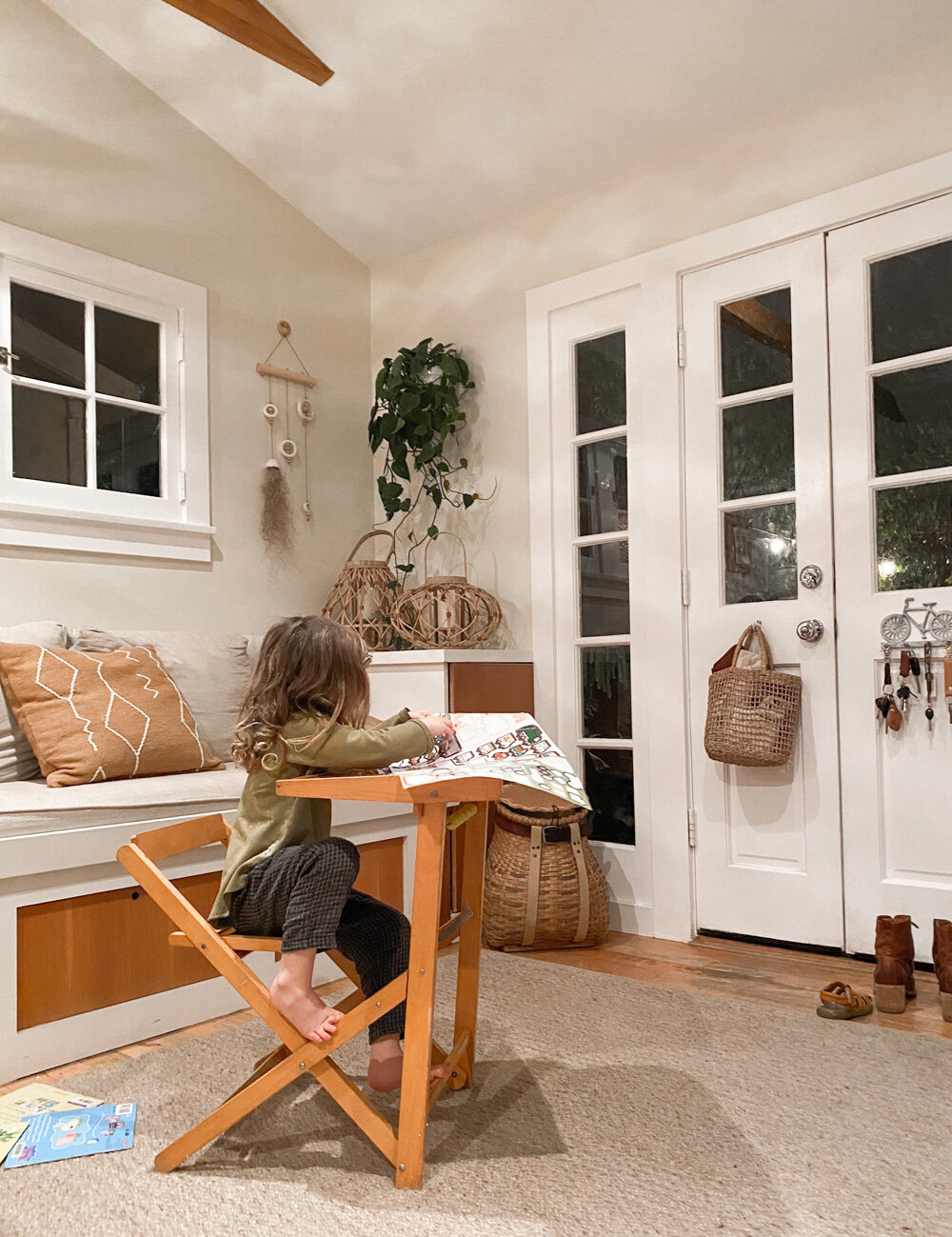
Note: The folding desk + chair pictured in this post was a vintage find on Etsy. I searched for months until I discovered the exact item I’d been envisioning. I aim to responsibly produce a handful of small space items like this for those who want them. Hopefully once we’re on the other side of this thing...
(The photos featuring Whitney were taken at the cottage by tinylicious.co.)

Choosing a Single New Toy
Time and time again, Adam and I are reminded that our child (who is now 3½) rarely needs new toys to keep him happy— even in the familiar and rather confined setting of our tiny home and garden. Instead, he simply replies upon a handful of crucial goods: library books, toy trucks, rocks, bubble solution, and toy building materials.

While other objects and activities certainly entertain him and spark new experiences, these are the cornerstones to which he always returns.

We get new library books weekly. (And last week we stocked up on the largest haul yet since we’re now practicing social distancing.)

I try to keep West’s collection of trucks on a random rotation, so he doesn’t become weary of or reliant upon one distinct style or another.
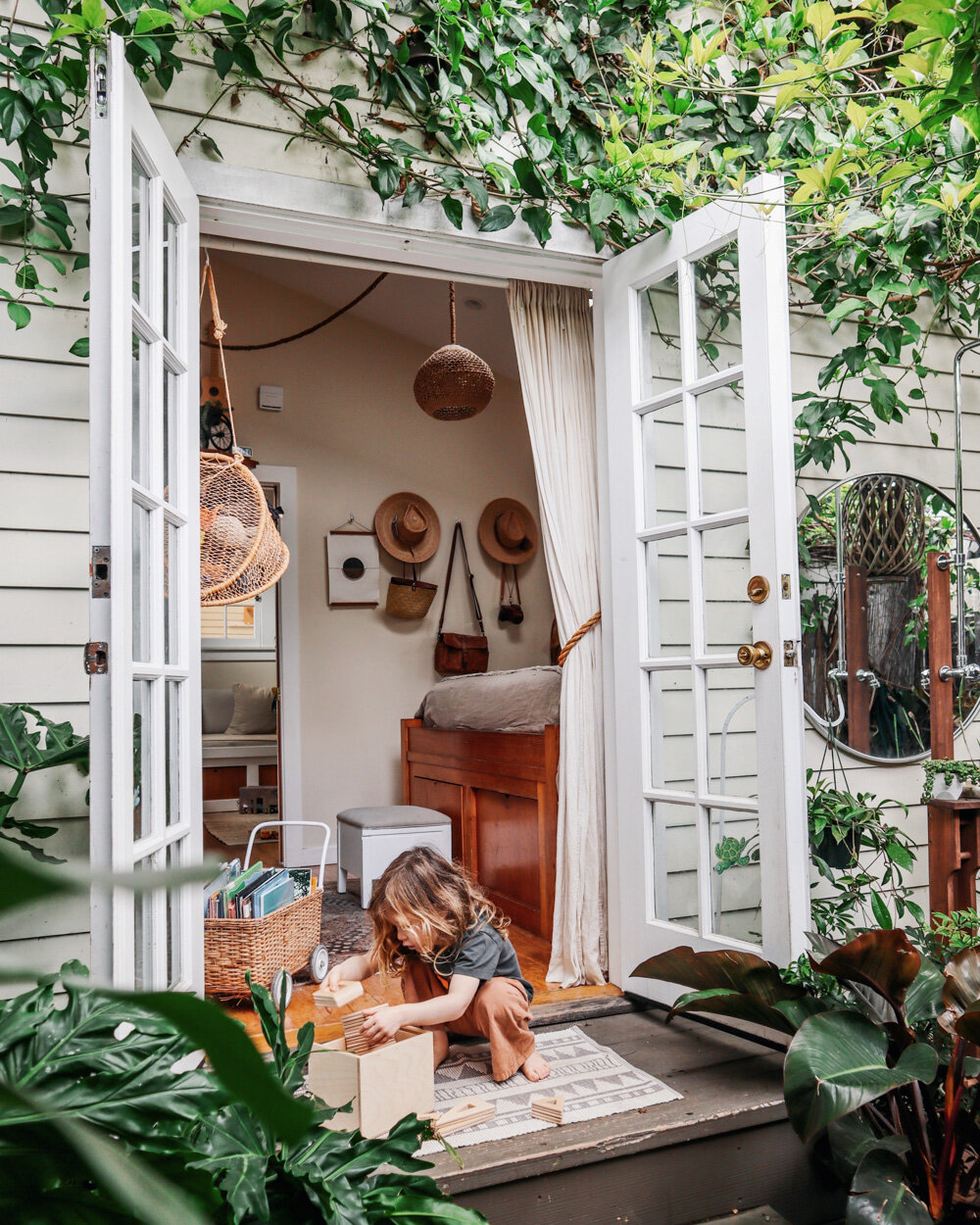
Lately I’ve been considering what items we should ideally have here in our home to entertain West in case prolonged distancing / confinement is recommended to help keep our community’s most vulnerable members safe during the pandemic.

With the exception of library books and a wooden pulley, he hasn’t gotten anything “new” since the holidays.
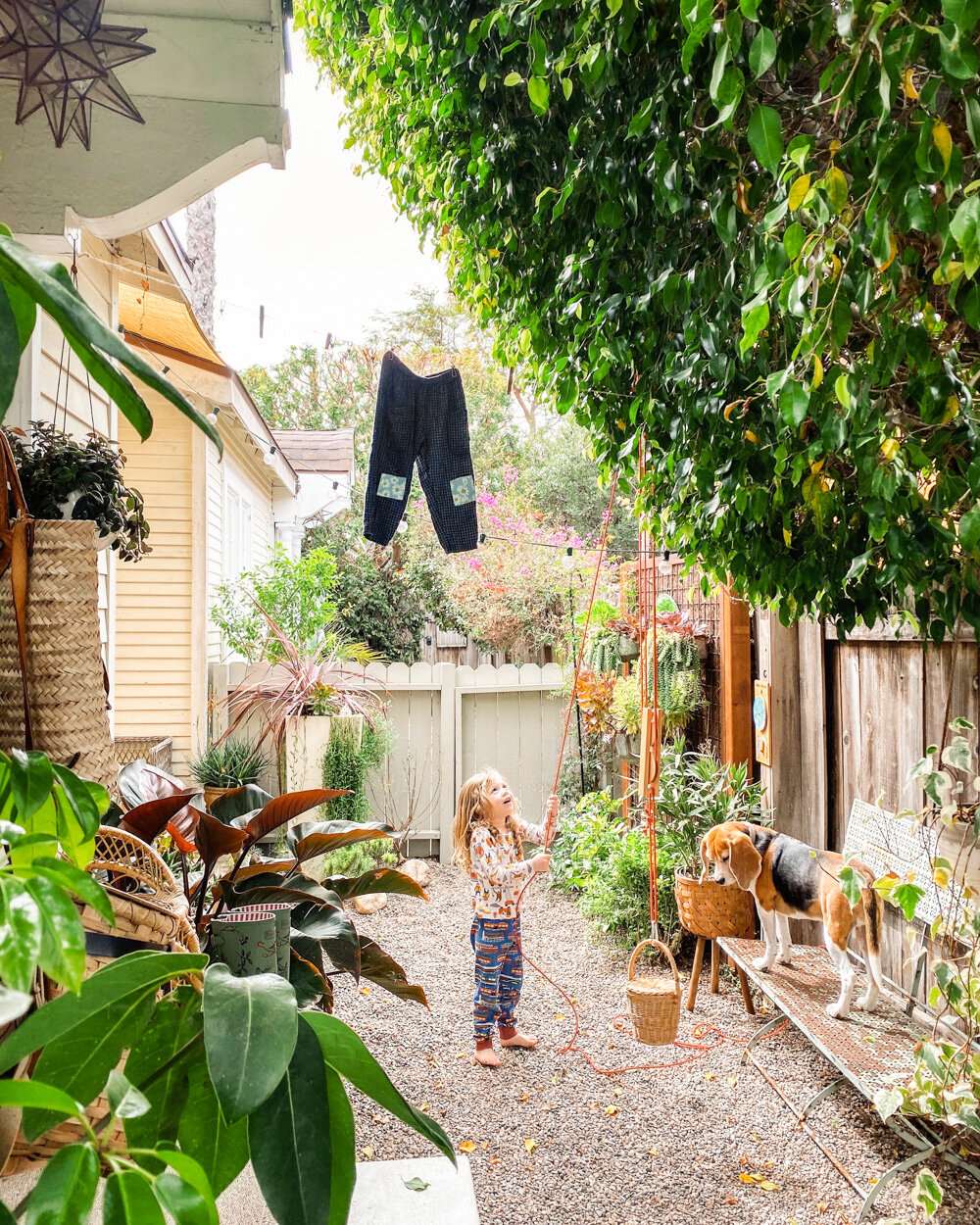
Since then, I’ve had my eye on a bundle of magnetic, wooden Earthtiles from Big Future Toys.

Not only are they beautifully designed, but I appreciate that they can be used for hours of structured or unstructured creative play and in numerous permutations.

They’re made of non-toxic wood that’s sustainably sourced from FSC-certified sources, and with every purchase from their site, Big Future Toys plants a tree.


But before introducing ANYTHING new into our home, we consider what happens to that item at the end of its life cycle.

Ultimately we decided on these tiles, as we’ll undoubtedly enjoy them with West for years, and can then extend their use by donating them to our library, or returning them to Big Future Toys for refurbishment and rehousing.

We’re giving away a set of these brilliant lil’ tiles over on Instagram. Visit the post to enter for a chance to win what has quickly become our favorite toy here in the tiny house.


On My 39th Birthday
Today is my 39th birthday, and I want to celebrate in a meaningful way.

If you’ve ever found any information we’ve shared to be valuable, and if it’s comfortably within your means, I’m asking you to please give $5 to The RightWay Foundation this weekend as a way of celebrating with me! (If you make a donation, please make a note of why in the digital Donor Scroll so I can personally thank you!)

We have everything we could possibly need here in our tiny home. We want everyone to be able to have those same comforts. Our friends at this marvelous nonprofit provide transitional age and emancipated foster care youth with mental health and employment services, all within the framework of a safe and loving community, putting them on a path for a prosperous future.
Thank you, as always, for being here and supporting our small home/business/family, as well as the organizations that our near and dear to our hearts.
Here’s to 39!

Happily Going Gray
I decided a while back to let my hair go through its natural graying process without interfering with it or trying to cover it up. I figured this was just one more way to save time and money— plus I really don’t mind the pops of silver.

I know that the wiry strands are nearly imperceptible in some photos, but there are plenty there— especially when I pull it all up into a bun.

Since I pretty much fall asleep by 9 each night, I think they suit me well. 👵🏼

Photos taken by Tinylicious

Trading 3-4 Hours of Sleep For 7-9 Hours
This is an out of the ordinary post for me, as it has nothing to do with small space living (though it is tied to sustainability). Instead, it’s about sleep— something with which I’ve struggled for years without a full understanding of why.
I’ll preface this entry with a spoiler alert: there are no easy takeaways contained below.
I didn’t pop a pill.
I didn’t find a magical meditation app.
I didn’t simply switch up my pillow.
I didn’t study sleep or sleep habits and make changes accordingly.

In fact, this was something that happened entirely unexpectedly. However, I can clearly identify why the shift occurred.
For context: I’ve not slept well for about 12+ years. While there were some outlier nights of either 2 hours or 8 hours of sleep, my average night was somewhere around 3-4 hours. I can fall asleep easily— that’s always been the case. (Shout out to my parents and big sister for carrying me up the stairs night after night, from early childhood well into my teenage years.) But since my late 20s I’ve not been able to stay asleep.
Prior to living in the cottage, I rented a tiny studio on the beach, and StanLee and I would get out of bed and jog whenever I couldn’t sleep. We logged about 9 miles a day, spread out over 3 outings over the day and night. It was a great way to prevent the lack of sleep from negatively impacting my energy levels or mindset.
When I was pregnant with West, I rested a lot. (I’ve never been a napper, but I certainly became one during my first and third trimesters.) Still, I never slept soundly through the nights, even as everyone kept warning me that I needed to sleep urgently, NOW NOW NOW, as I’d be unable to rest once the baby was arrived. (I never found that advice to be productive. In retrospect, it was downright obnoxious. I vow to never say such things to expecting parents.)

There are of course times in life when sleep becomes more of a challenge than others. Notable examples from my life include the 18 months of nursing, frequent bed-sharing, injury, sickness, phases of heightened stress (hello, tax season), etc. But my nightly habits for the past ~12 years pretty much made EVERY night feel like one of those notable times.
So what changed? Why did I abruptly go from getting 2-3 hours of light rest to 7-9 hours of sleep, with nearly half of that being blissfully deep sleep?
I’ll get to the point, I promise. But first, there were certainly gradual adjustments that helped when all added up, even if they weren’t what eventually tipped the scale.

Tackling Manageable Worries: I can remember spending dozens of nights awake wondering things like: I feel so tired— is it something serious? Should I go get tests done? What will we do when our Cobra health insurance runs out while I’m pregnant? Can I even get pregnant again? The planet is on fire and I feel like I’m not doing enough. What do I do? How much will I have to pay during tax season, and will we be able to afford it? Is there mold in our built-in headboard? Is the artificial grass filled with chemicals that are unhealthy for West’s skin and lungs? (That grass— which has since been replaced— was something we got in a hurry several years ago, which I fully regret.) All of these questions have answers, so I finally made a point to chip away at them every day until they were fully addressed. Converting those thoughts into actions made a HUGE difference in my buzzing brain. It might seem foolish to have waited so long, but money, logistics and time play heavy roles in tackling such topics, and I hadn’t prioritized them the way I should have. It was a mistake I’ll never make again.
Beverages: For about 6 months, I’ve been drinking water from a 32”oz mason jar, which I fill up about 4x per day. Oddly enough, I find this vessel effective due to how bulky and cumbersome it is— it simply cannot be overlooked or neglected. Because I drink so much throughout the day, I rarely have the desire to drink before bed, meaning I don’t wake up due to thirst or to visit the bathroom. As far as alcohol is concerned, I’ve been trying to get pregnant for so long that I rarely drink, or will have just 1 glass of beer/wine/champagne on occasion. As for caffeine, I love an oat milk coffee or latte, but I only drink one cup in the mornings. Limiting these beverages can only assist in achieving sounder sleep.

Bed: After reading about how manufactured fibers and treated textiles contain chemicals absorbed by our skin, I decided to invest in a quality mattress, bedding, pillows and pajamas. This is certainly an investment, so we approached it gradually over time, occasionally with the help of sponsors.
Relationships: I’m lucky to be surrounded by the most wonderful humans. They love. They care. The give. They show up. Still, there are some people who require vast amounts of energy on a normal basis, even if they don’t mean to. I made a point to be available to these individuals as much as possible without letting them inadvertently highjack my ability to focus on my family and my work. There will always be highs and lows in all of our lives, and I intend to be supportive during those moments, as well as the ones in between. But as far as the day-to-day is concerned, reasonable and loving boundaries are required. And they’ve helped… a lot.
Phone: We all know that it’s healthiest to put the phone away at night, curbing our urge to scroll, which can often result in buying things we don’t need while disrupting our minds and bodies during periods of time in which they should be relaxing and recovering. But it’s easier said than done for some of us. I always turned my phone on night mode, but between running my own small business and wanting to be available if a friend or family member was distressed or had an emergency, I would still check throughout the night to be sure that everything was fine. When I realized I was too tired to construct intelligible emails or even drive the car in case of an urgent matter, I knew that putting the phone in another room at night was necessary in order for me to be my healthiest self, and to best make myself of use for others.
While all of the above helped, something that happened to us towards the close of February was the turning point.
The Big Shift… Stress: Stress plays a prominent roll in about 75 - 90% of illnesses and doctor visits, and is considered one of the primary heath problems in America today. I knew this, and I knew that stress was absolutely keeping me awake at night. But I didn’t know how to shut it down. And while all the above steps helped decrease my stress for clear reasons, I was still tracking just 3-4 hours of sleep per night on my Ava bracelet, with only a sliver of that time being deep sleep.
Then, unexpectedly, my business experienced a major change from external factors. The system we’d had in place for years to help us earn income (via advertising) to supplement the bulk of our work (about 90% of which is unpaid), ceased to be beneficial for all parties involved, and came to an end. To put it in more traditional terms, Adam and I basically both suddenly lost our highest paying jobs at the same time.
I could’ve taken this the opposite way, becoming more stressed and even increasingly more sleepless. Especially because it happened shortly after I decided to shut down parts of my business that accepted small amounts of affiliate money from Amazon, as well as interior decor services that I found to be unnecessarily harmful to the planet.
But, down deep, I knew this bigger change needed to happen. Because I believe what I read in The Future We Choose: Surviving The Climate Crisis— we all have to do what is necessary to deal effectively with the climate crisis. And, for me, this new chapter in our lives in part of doing what is necessary— not necessarily what is lucrative.
I’m not patting my own back. Indigenous groups and mindful individuals and communities around the world have managed to be responsible stewards of the planet while providing enough for their families since day one. My actions within this culture of consumption got us here in the first place. It’s time I work harder to correct the the damage done while I was busy being complicit in it.
This is just another step towards (re)training myself and acquiring new skills and habits to help us reduce our negative footprint, increase our positive footprint, and to then share our experiences with our readers. And while it’s absolutely terrifying to suffer a huge slide in income as both a business and a family, I believe that it’s infinitely more important to leave behind an inhabitable earth for our children than it is to leave behind mounds of flashy stuff they don’t need.
I’ll keep creating, and if if people continue to deem it worthwhile hopefully the money will follow. This time around, I’ll be the one setting my company’s goals. This investment in myself has dissolved my stress to a degree I would’ve never believed possible just a few short weeks ago.
It is not the easy thing, but it is — beyond a doubt — the right thing. And in the end, THAT is what helps me sleep at night.

The Future We Choose - Regenerative Small Space Living
I recently finished reading, The Future We Choose: Surviving the Climate Crisis, which is a cautionary but inspiringly optimistic book about the future of humanity in this crucial time for our planet. Written by Christiana Figueres and Tom Rivett-Carnac (lead negotiators for the United Nations during the Paris Agreement), this incredible book offers two scenarios for the near future: one in which we fail to meet the goals set forth by the Agreement, and another in which governments, corporations and individuals confront the climate crisis head-on and create a carbon-neutral and regenerative world.

Needless to say, I want to live in the scenario in which humanity and wildlife survive and thrive. But hope is not enough— action is required across all levels. It might not seem like there’s much we can do on a household basis, but Figueres and Rivett-Carnac provide a very clear and compelling argument for why every individual’s actions matter in this moment, and what our culture can do to enact immediate change.
My family and business are adjusting our ways accordingly.

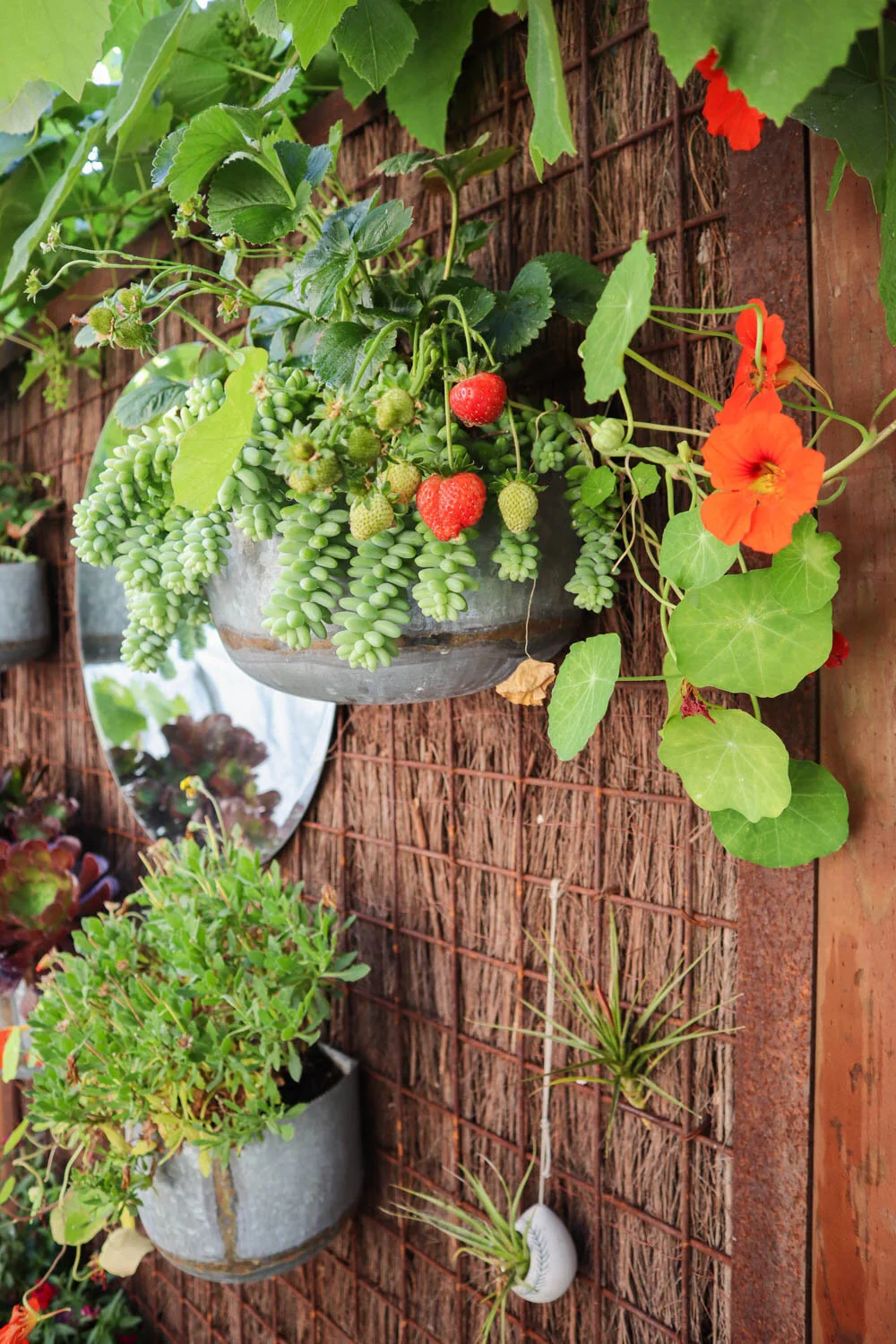
I will continue to center my business upon sharing stories and solutions pertaining to living comfortably and contentedly in small spaces. After all, as humanity adapts to the necessary changes required to combat the climate crisis, we will need to learn how to better share, and live with less stuff (yet with no less abundance). Additionally, Adam and I are also diving headlong into learning about regenerative gardening and practices for small urban spaces.
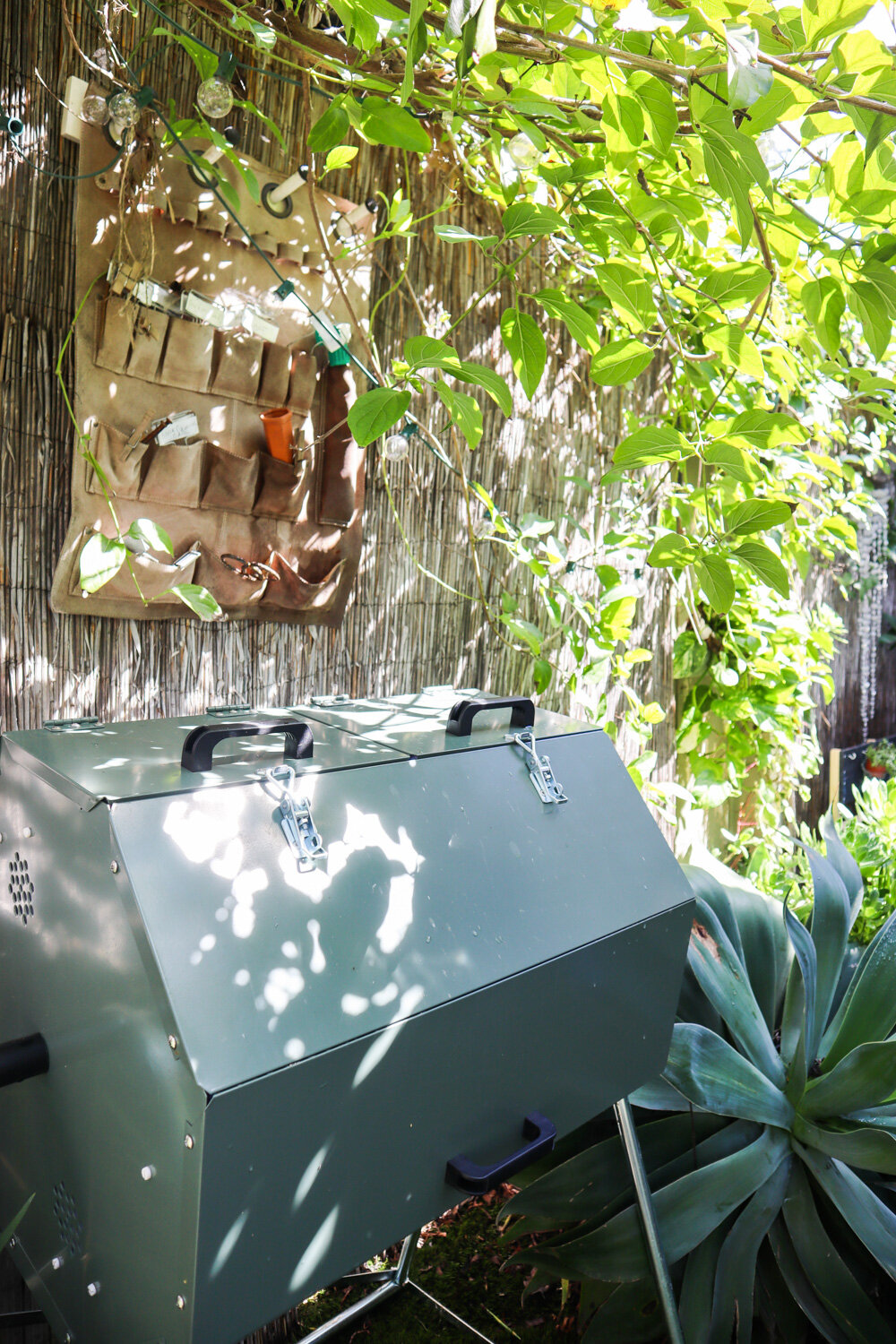
We want to be more than just a resource for comfortable and adaptable small space living. We’re also striving to be a resource for those who are interested in self-sufficient and restorative small space living, requiring less of the Earth, while also giving back to it.

According to The Future We Choose, we must create a greener planet in every space possible. Cities can become exceptional, with more trees, more parks for our children and wildlife, fewer cars, and plenty of urban agriculture.
“Every vacant lot, every grimy unused alley, has been repurposed and turned into a shady grove. Every rooftop has been converted to either a vegetable or floral garden. Windowless buildings that were once scrawled with graffiti are instead carpeted with verdant vines… Things that used to be done individually are now done communally— growing vegetables, capturing rainwater, and composting… In community gardens, on rooftops, at schools, and even hanging from vertical gardens on balconies, food sometimes seems to be growing everywhere.”

Adam and I will share what we learn as we go. We’re starting with our own research online and at our local libraries, and taking courses via Kiss The Ground. We’ll listen to folks who’ve had their hands in the regenerative practices for years (such as our friends at Apricot Lane Farms). We’ll also work towards making our home more efficient via renewable energy whenever possible within our financial means.
And we will, of course, continue to bike over drive, refuse single-use plastics, be mindful of our clothing and food, cut back drastically on unnecessary air travel, use our voices as citizens and consumers, vote at the ballot box, and vote with/without our hard-earned dollars.

Let’s see what folks in small urban spaces such as ours can do to take less, give more, and create the future we choose.
* The Future We Choose: Surviving the Climate Crisis, by Christiana Figueres and Tom Rivett-Carnac

Nurturing a Sense of Wonder in a Tiny Garden
I had a challenging week. Several issues were chipping away at me, and I was sleeping even worse than normal (which is saying something, as I’m always a lousy sleeper).

In a small space, it’s arguably easier to pick up on the mood shifts of your family members due to proximity and the level of familiarity that comes with such closeness. And while I always want to be honest with my 3 year old and nurture his sense of empathy, I certainly don’t want him to be negatively impacted by the way I operate when I’m feeling off.

In order to redirect the focus away from my issues and towards something joyful, I decided to nurture West’s sense of wonder with a lil’ addition to our tiny garden.


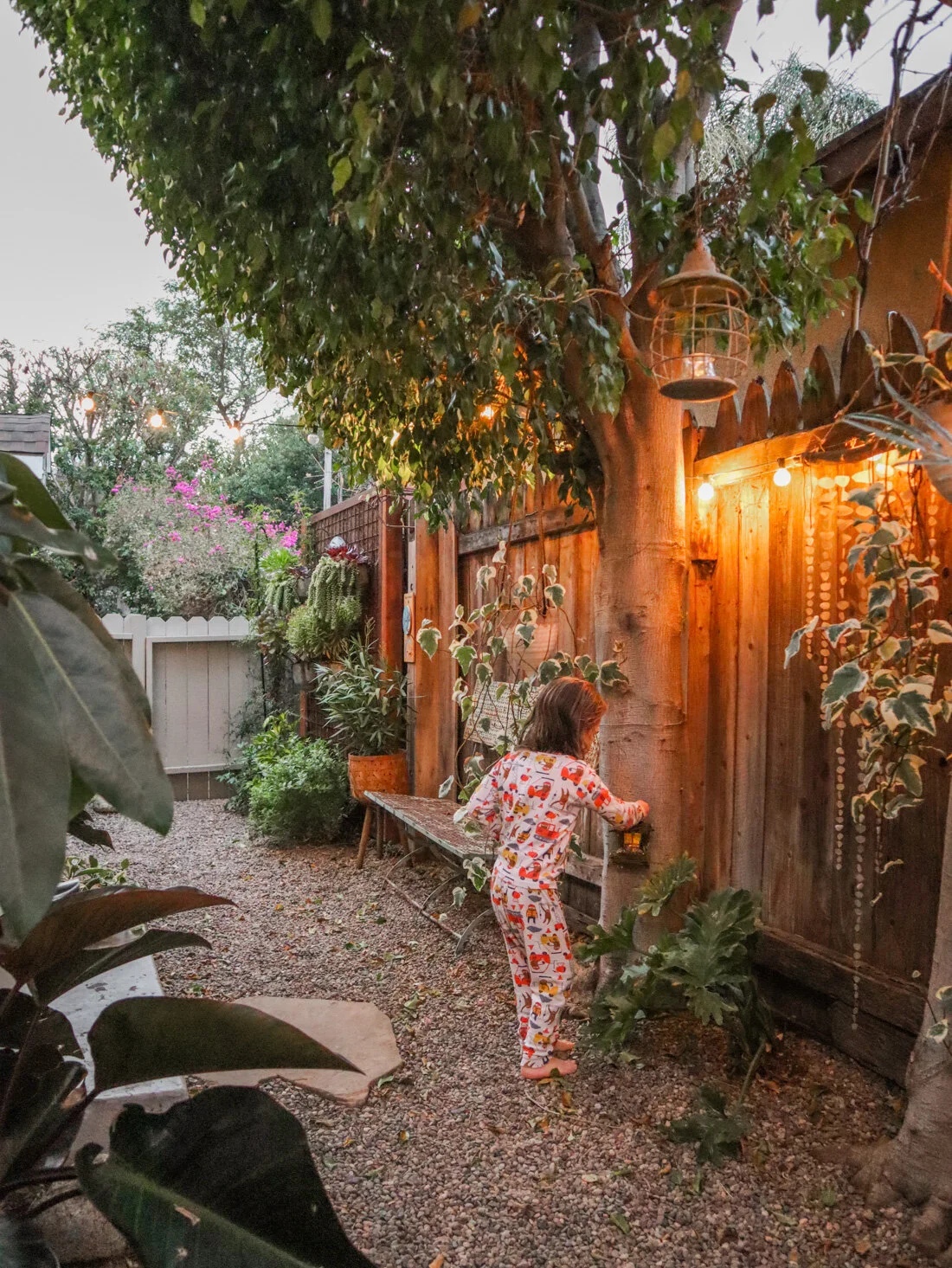
I’d recently discovered the sweetest little handmade fairy door and window on Etsy (via a maker/vendor who has sadly since closed up her shop— hopefully only temporarily). While West was occupied, I installed the pieces in the tree just beyond our front stoop, and added a miniature, battery-operated tea light into the recess of the window.


When West stepped outside and saw the flickering light through the window and the minuscule door, he was enthralled. (Kids do endless adorable things, but West’s reaction to learning that a Fairy family had moved into our garden was particularly memorable…)

He knocked. He whispered. He wondered about them aloud and searched the sky and the garden for more signs of their presence.

He even asked to further decorate their window by adding some colorful stones to its mossy top, and by using one of the bowls he made in a ceramic workshop as a “fairy pool.”
West was so fascinated that he asked if we could make more doors and windows. I’m not much of a crafter— I’m only mildly comfortable with DIY-lite activities. (Having written that, I’m quite proud that in the past week I made the sandals I’m wearing in these photos, and that I also patched West’s pants with some cheerful floral fabric.)


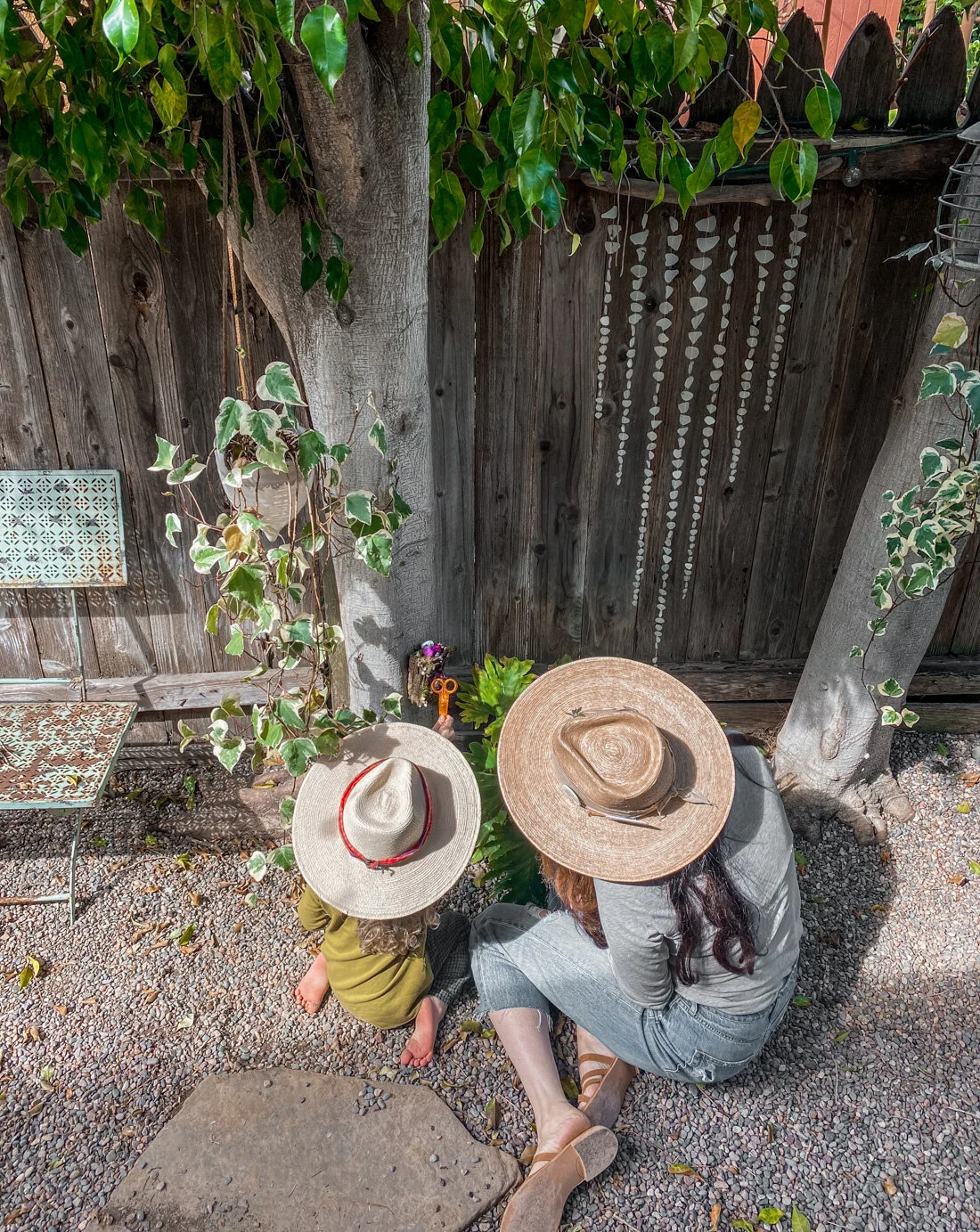
But we pulled some twigs, vines and scraps from around the yard, and visited our friends at Big Red Sun to grab some moss, acorns and a book entitled Fairy Houses.


We also scrounged up two balsa wood boxes we’d been using as drawer organizers, which provide the perfect framework for additional windows.

We haven’t finished creating our pieces yet (crafting has about a 15 minute life-span right now).

But I expect that a bit of these natural materials coupled with some glue (and patience) will be enough to produce a magical addition for the fairy family’s home, even if our versions aren’t quite as beautiful as the ones on Etsy.


The most wondrous thing of all was that sharing this experience and activity with my child not only kept him from picking up on my mood shift, but it also snapped me out of my dark cloud. The week could’ve spiraled into something much more bleak, but instead it ended with such huge happiness and hope.
In their hunt for a new home, I’m so glad the fairies picked the cottage.


Library Book Roundup (2.16.20)
“One of the greatest lessons I have learned is that all people — young or old, big or small, girl or boy — have power. We can achieve the life we want for ourselves and our families when we pay attention to protecting our environment. We must not wait for others to do it. We can practice the Four Rs [Reduce, Reuse, Repair, and Recycle] wherever we live, whether we are rich or poor, or live in the country or the city.” - Wangari Maathai via “The Little Hummingbird” by Michael Nicole Yahgulanaas.
I’ve written repeatedly about our profound appreciation for our local library— the ultimate accessible zero waste learning center.

Beyond being the place where we can checkout 29 books per person per visit, it’s also where we go to sit in quiet and read the newspaper, keep informed about local elections and refresh our knowledge of our local voting systems, attend workshops/classes with our 3 year old, and donate our used books (since we don’t have much room to hold on to them here in our tiny house).

We pop into our city and county branches about 3-4 times per month. West usually gets about 15 titles every time we go, and Adam and I usually grab a small stack for ourselves as well.

I’d estimate that our library has saved us anywhere between $10,000 - $15,000 annually. I should note that we couldn’t spend that sort of money on books if we had to buy them all, and we would thus scale back our reading habits accordingly.

Luckily our library makes us feel as though our access to books is virtually unlimited, so we stock up with each visit.

Not only does borrowing books save us money— it of course saves us huge amounts of space as well. Plus it avoids all the waste that comes with with packaging and shipping from online shopping.

Here are some of our favorites from this week’s haul, along with a few additional titles we purchased because they were unavailable at our nearby branches. Once we’re done with them, we’ll tote them to the library with us during our return run and leave them there for others to enjoy.

Children’s Books:
The Little Hummingbird
Author: Michael Nicole Yahgulanaas, with a message from Wangari Maathai
Why we borrowed it: This book sends the message that all of us have the power to make a difference.
Yeti and the Bird
Author: Madia Shireen
Why we borrowed it: This book sense the message that it’s never too late to become who you want to be.
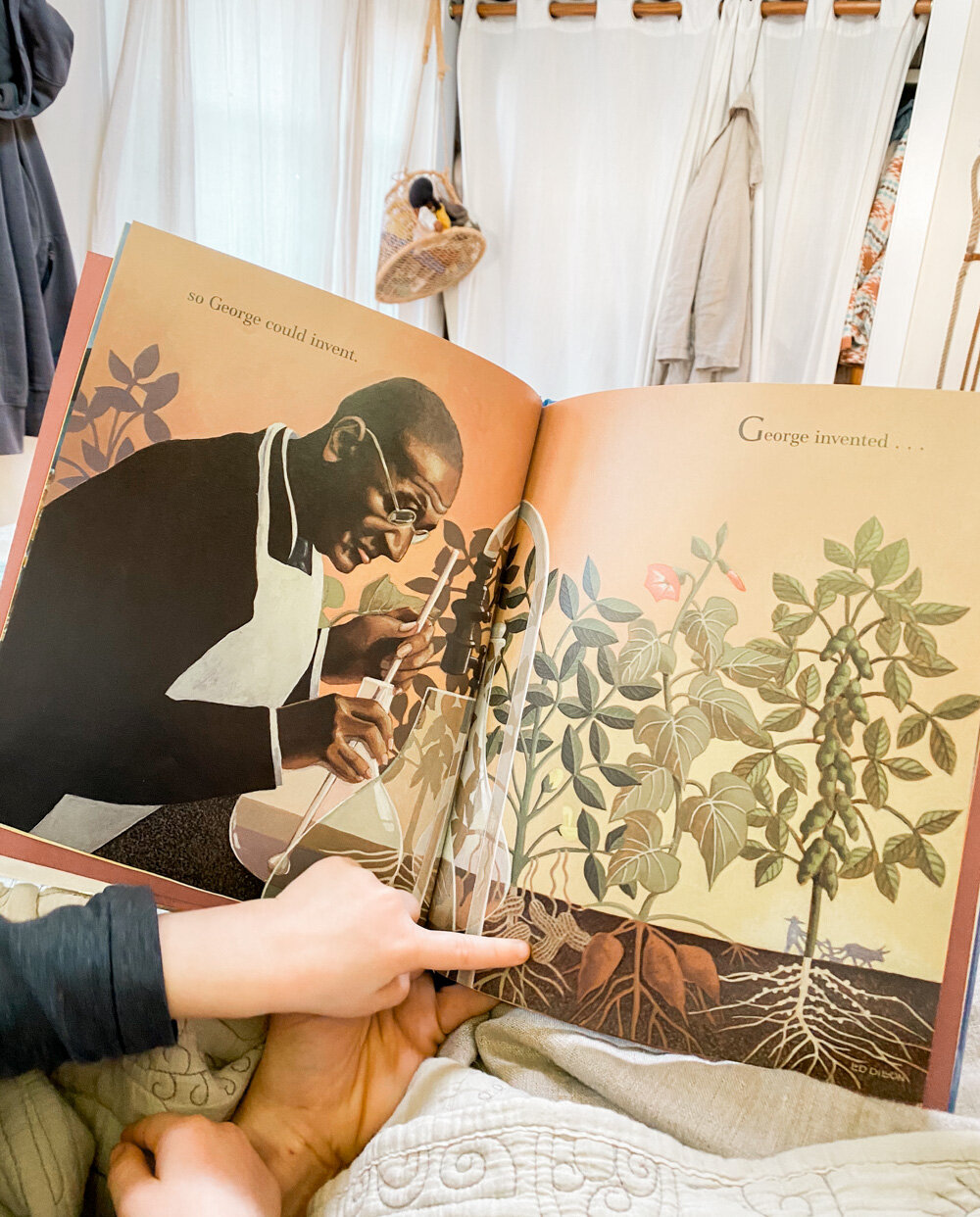
Our Children Can Soar
Author: Michelle Cook
Why we borrowed it: This book progresses through the story of the US Civil Rights Movement, showing how select pioneers' achievements eventually led to the country electing its first black president.
Ball & Balloon
Author: Rob Sanders
Why we borrowed it: This book sends the message that the grass is not always greener on the other side, and that we all have setbacks and fortes, no matter what our lives might look like to those around us.
The Hueys in: The New Sweater
Author: Oliver Jeffers
Why we borrowed it: Oliver Jeffers always makes us either laugh uproariously or experience a deep and meaningful tug in our hearts. This book always gets a cackle out of our child, while sending a message about authenticity.
Nature’s Art Box
Author: Laura C. Martin
Why we bought it: Nature is full of art materials, all right here at our fingertips. This book demonstrates ways in which acorns, moss, shells, leaves and so much more can be used to create beautiful, natural works of art.


Books for Adults:
Green Dog, Good Dog
Author: Dominique De Vito
Why we borrowed it: This book was written in 2009 and contains some outdated material, but overall it’s a helpful way to step back from the booming pet industry and explore the simple ways to cut back carbon paw prints.

The New Self-Sufficient Gardener
Author: John Seymour
Why we borrowed it: We’ve yet to read this book, but we were interested to see what we could learn about training vines, harvesting and preserving homegrown food.
Me & White Supremacy
Author: Layla F. Saad
Why we bought it: “Me and White Supremacy: A 28-Day Challenge to Combat Racism, Change the World, and Become a Good Ancestor leads readers through a journey of understanding their white privilege and participation in white supremacy, so that they can stop (often unconsciously) inflicting damage on black, indigenous and people of color, and in turn, help other white people do better, too.”
Fibershed
Author: Rebecca Burgees
Why we bought it: “There is a major disconnect between what we wear and our knowledge of its impact on land, air, water, labor, and human health. Even those who value access to safe, local, nutritious food have largely overlooked the production of fiber, dyes, and the chemistry that forms the backbone of modern textile production. While humans are 100 percent reliant on their second skin, it’s common to think little about the biological and human cultural context from which our clothing derives. Fibershed is a resource for fiber farmers, ranchers, contract grazers, weavers, knitters, slow-fashion entrepreneurs, soil activists, and conscious consumers who want to join or create their own fibershed and topple outdated and toxic systems of exploitation.”


Tiny Adventures: Asheville
I believe that one of the ways that we can inspire each other to protect and regenerate the earth together is by deeper imbedding ourselves within the natural world year-round. This is one of the many reasons why I appreciate tiny living— it encourages us to get outside and dive into the environments that exist beyond our four walls.

“It’s an indisputable fact that we are deeply connected with nature. From the most past, we simply fail to realize this connection. From the perspective of ecology, our bodies are made of all-natural stuff... Greater than 95% of our tenure as humans has been spent living in intimate contact with the nonhuman world. Our bodies, minds, and emotions were fashioned by evolution in wild places where a deep sense of connection was essential for survival.”
- “How to Raise a Wild Child”
West doesn’t get to explore a traditional winter since we live in Southern California. It’s a season that he mainly experiences via stories and illustrations in the books we borrow from our local library.
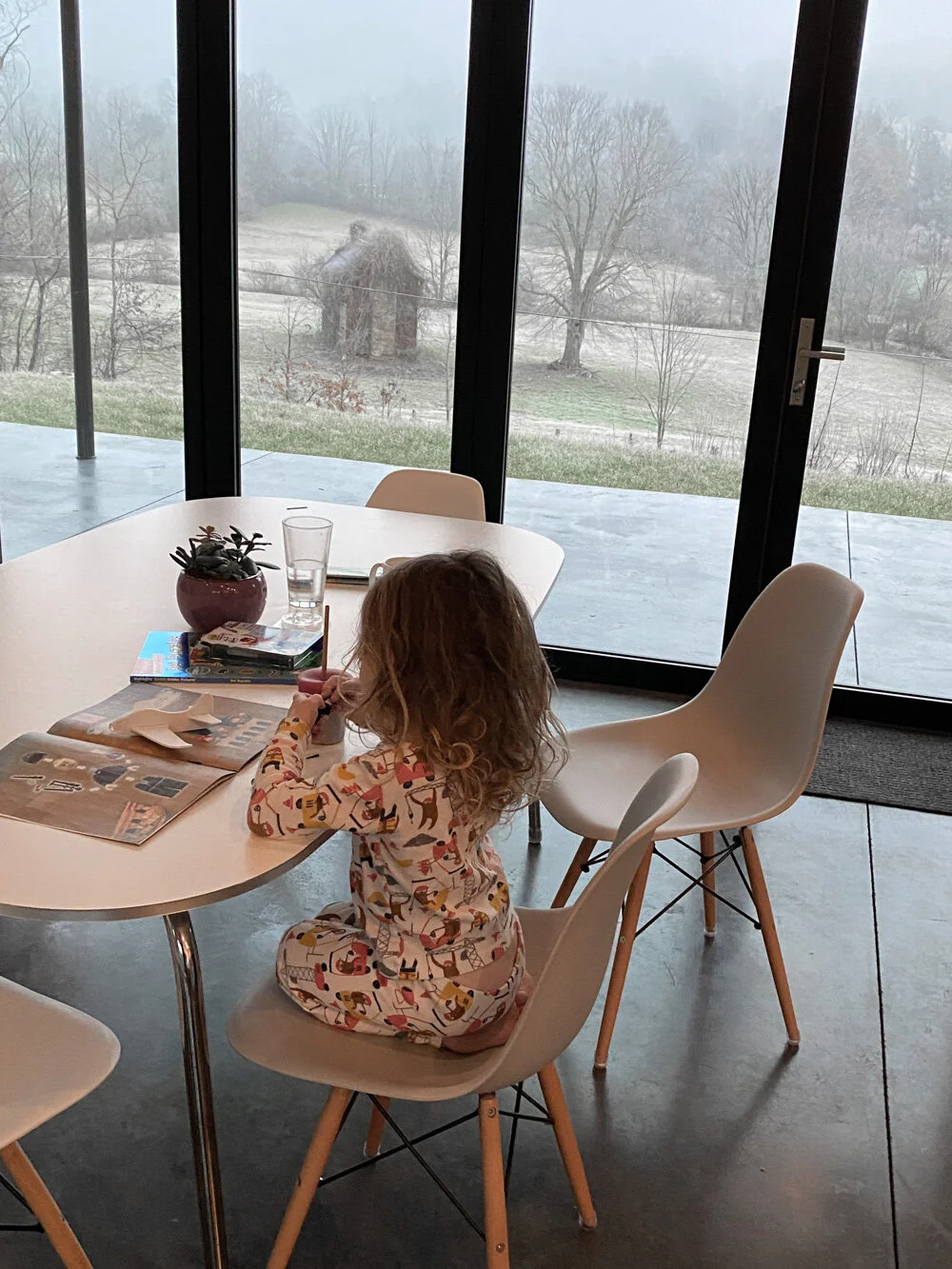
So for the past two winters we’ve taken him to places where he can breathe the cold air, see and touch the snow, and see beautifully sparse trees and vines before the burst of spring. (Of course there were personal reasons for both of those trips as well, which I’m not prepared to share. Ideally we would skip the plane ride altogether, since air travel is so staggeringly damaging for the planet. What good does it do to fly to experience new views of the natural world if we’re harming it in the process?)
Last week we visited Asheville, North Carolina with my parents. We saved up for an extraordinary, minimalist, 2 bed/2bath Airbnb that was built to usher the outdoors in.
Click here for the Airbnb listing.
Click here for our 1-minute video journal from the trip.
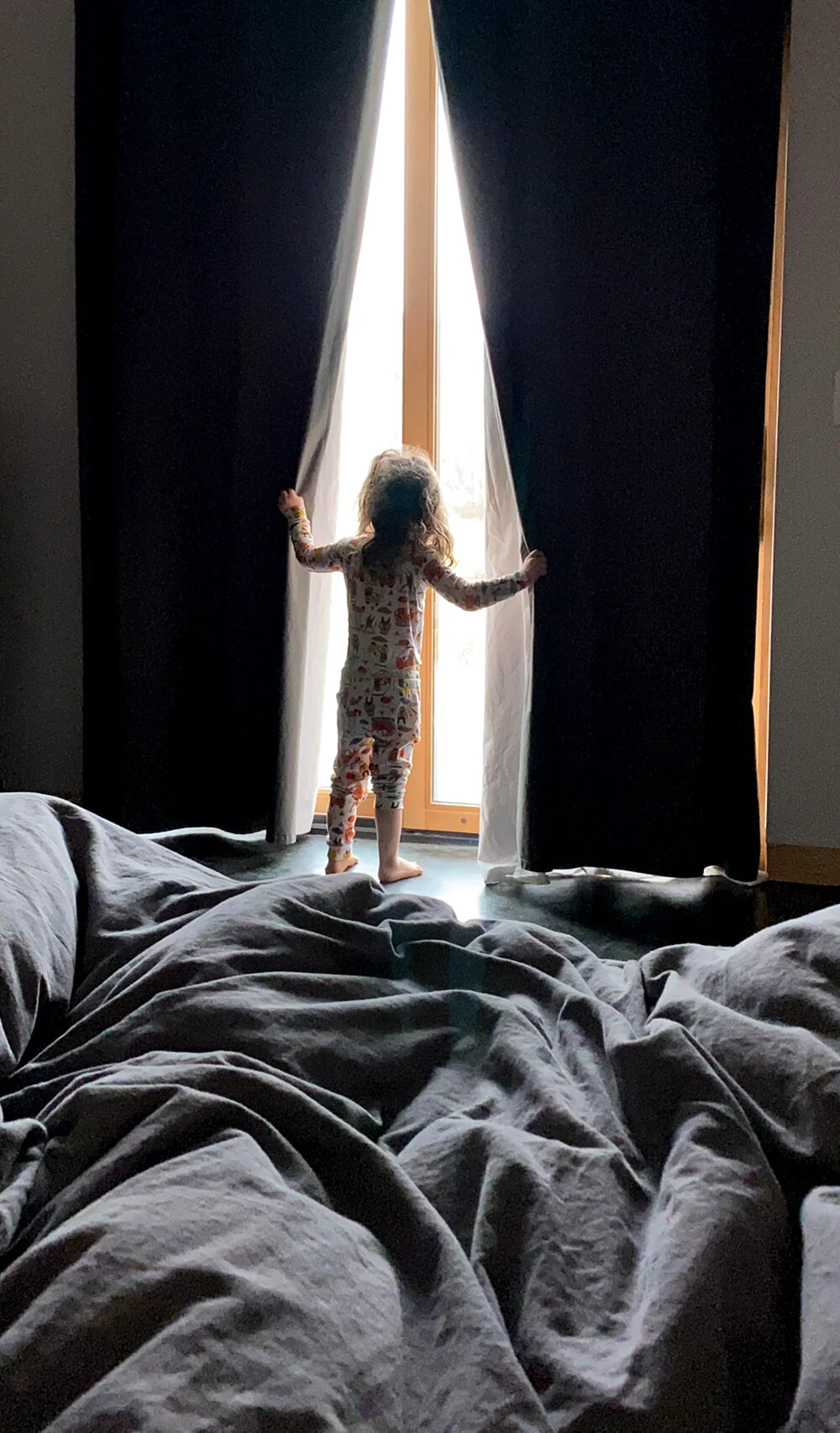
We arrived at night, so we couldn’t see much of the land around the house— we could just hear the bubbling of a nearby creek. When I pulled back our bedroom curtains in the morning I actually gasped so loudly I woke Adam up. The view was staggering, and it was was visible from nearly every room of the home.
In addition to the generous windows, there were additional natural elements within the space that were unique, and made us feel like we were outside, even as we tucked ourselves into bed.

Bark-lined walls, sculptural boulders, and mollusk shells + agate stones inlaid throughout the concrete floors and custom furnishings reminded us that there’s nothing more beautiful than the diverse treasures scattered abundantly throughout the natural world.

As such, we spent 2 of our 3 days there almost entirely outdoors while exploring the community.

For our last day in town, we rested and enjoyed the home from sunrise to sunset.

I’m no expert on Asheville, so I’ll skip the “what to do” guide, as the community is tourist-savvy and has no shortage of expertly compiled tips available via a bit of research. Instead, I’ll simply say that the town is unique, gorgeous, eco-minded, and welcoming, and our family is thankful for the time we spent there.


Preschooler Sofa-Bed Updates
About a year ago, we began converting our sofa into a bed at night for our child, who’d previously been bed-sharing with us since we removed his closet nursery. Now that he’s transitioned from a toddler to a preschooler, we’ve made some minor yet meaningful changes to the space to reignite his excitement about his “bedroom.”

A full post about the sofa bed can be found here. (It’s similar to the same setup we create for our overnight guests, but with a dedicate set of sheets, a safety bumper and no privacy curtain.)
West often prefers to sleep with us in the built-in queen bed within our single bedroom. My husband and I welcome those moments— such time with a child is precious and finite.


But in order to renew West’s excitement about his dedicated sleep space and keep him comfortable in either bed, we’ve added a “big kid” pillow at his request.

We opted for a king size pillow that has just the right amount of give and support, and also fits the size of the sofa cushion perfectly..

(On a side note, Adam and I liked the pillow so much too that we’ve since gotten ourselves a set for ourselves.)

We also upgraded his sheets to natural linen to match the ones he’s used to in our bed:
We topped the update off with a soft, richly-textured throw blanket made entirely of recycled yarn:

I picked these pieces from Tuft & Needle after visiting their new store in Los Angeles. As I got to better know the company, I felt compelled to inquire if they’d be interested in helping me get a selection of their quality products to some children and youth in need. (I’ve spent years outfitting spaces for myself and others who are in a place a privilege— it’s high time I redirect much of that energy to assisting organizations that help individuals and families in need.) To my absolute joy, they were enthusiastically on board.

View the full post about West’s second-hand folding desk + chair here.
Tuft & Needle helped us supply mattresses, pillows and sheets to children entering foster care in Florida as they await reunification with their biological families. Not only that, but the company also helped us provide new bedding and pillows to several of the wonderful youth at The RightWay Foundation here in LA.
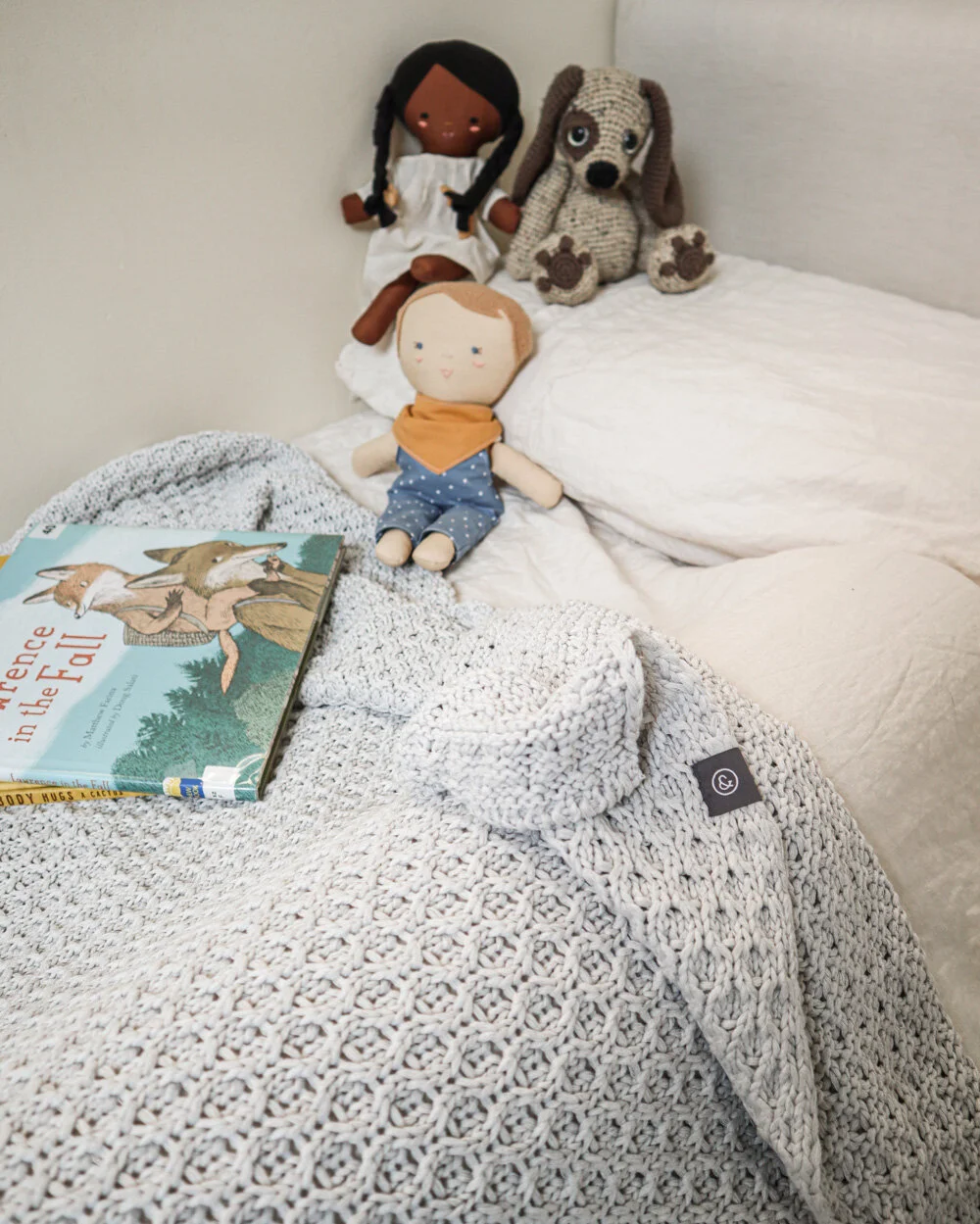
As I curl up with my son— whether on his cozy sofa bed or in our delightfully crowded “family bed” — I can’t believe our extraordinary fortune. We are safe, comfortable and surrounded by love. It’s our privilege and duty to pay that forward— to our neighbors, to strangers, and to the earth. So many resources aren’t equally accessible to all, and the climate crisis further exacerbates social inequalities and injustices. We won’t look away.

This post was not sponsored. As mentioned, product was generously gifted by Tuft & Needle. For anyone wishing to make a contribution to The RightWay Foundation, please use the cottage contact form to get in touch with us.

Adapting a Small Home for a Growing Child
Arts and crafts, coloring, carving pumpkins, playing with trucks, and dining with friends— these are just a sliver of the many activities our son enjoyed while at his compact, collapsable table. He used it daily, indoors and out, and it suited him from the time he began to walk until 2 years later. Now he’s a (tall) 3 year-old, and has officially outgrown the much-loved table. (Luckily we were able to fold it up and stash it in the back of the closet to keep for beach trips, canoe rides, etc., putting it to continued use.)
I quashed the we-need-a-replacement-right-now! impulse, and instead took some time to find a suitable replacement. I knew I wanted West’s next desk to be pre-used, space-savvy, and able to accommodate his current size plus a reasonable amount of growth.

After browsing our local vintage shops and checking Etsy repeatedly over the course of a month or so, I finally found a unique piece that was perfect for our space and West’s needs.
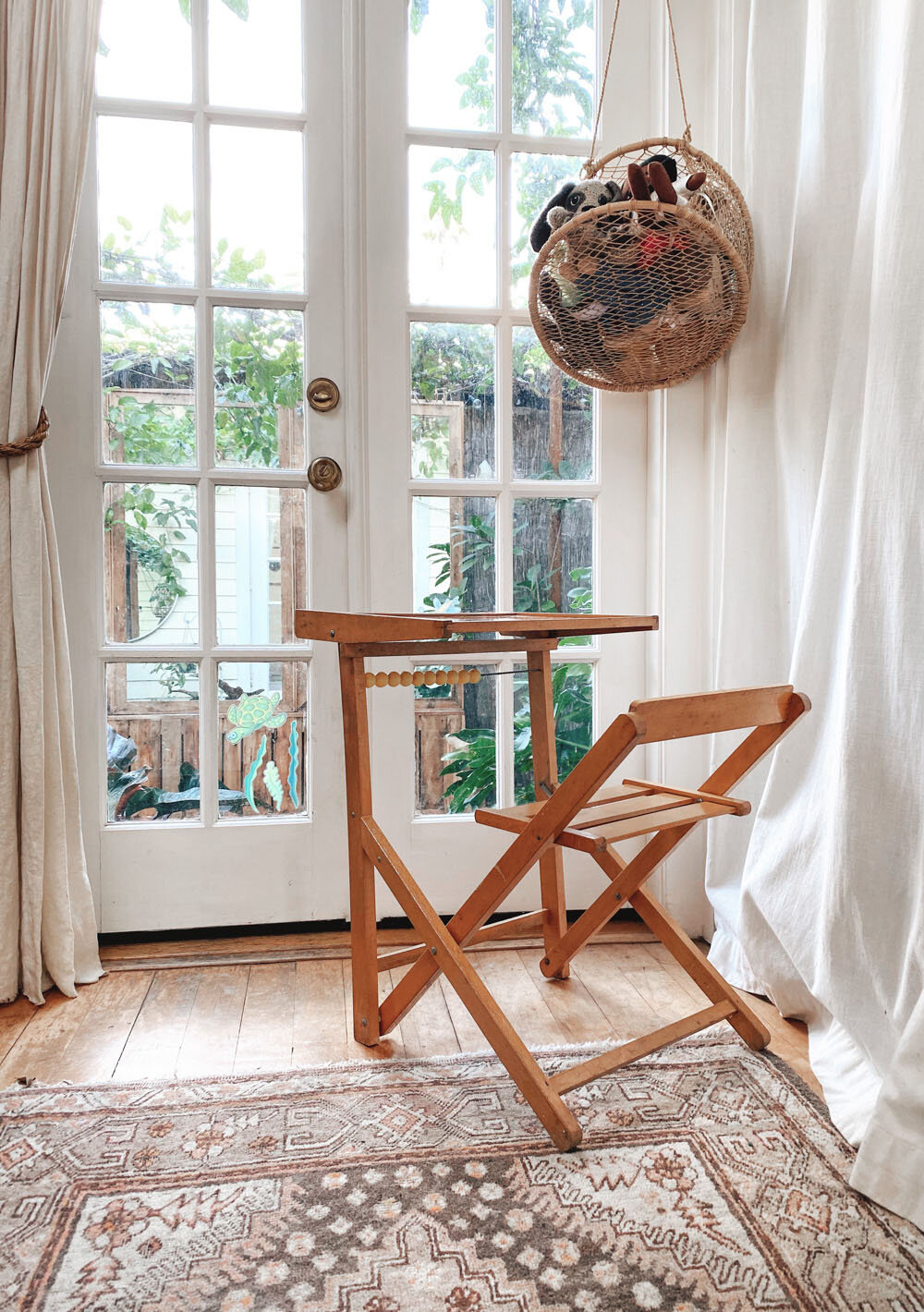
It’s a vintage folding chair + desk combo with a tabletop surface and a flip-up chalkboard.
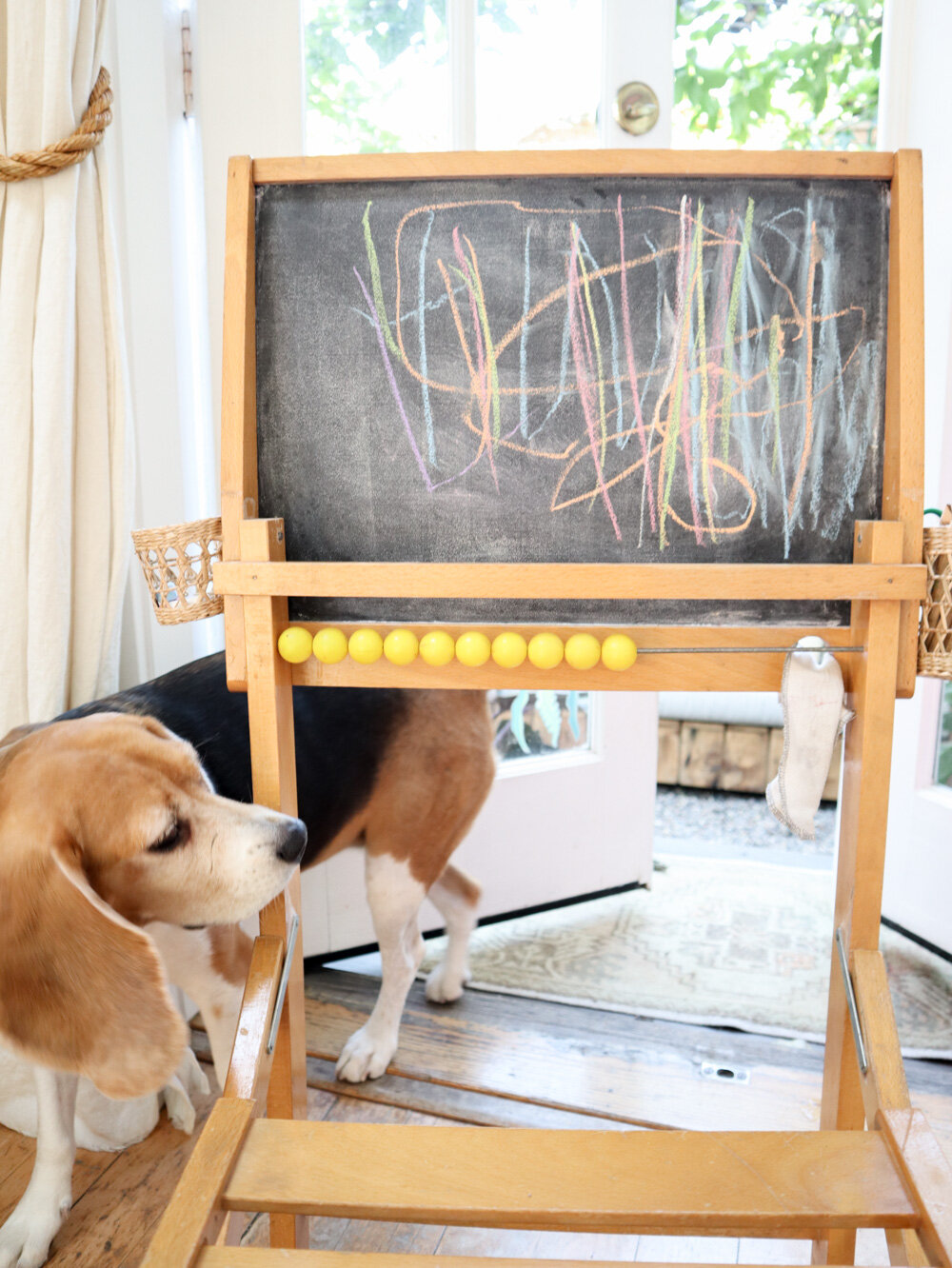

The only thing lacking is a bit of storage, but we cobbled that together on our own with a couple of cupholders whose glass inserts broke long ago.


After eyeing the desk suspiciously upon introduction, West finally hopped up onto the chair when he was ready, and he has since been routinely using the desk for long stretches of time. (Success!)
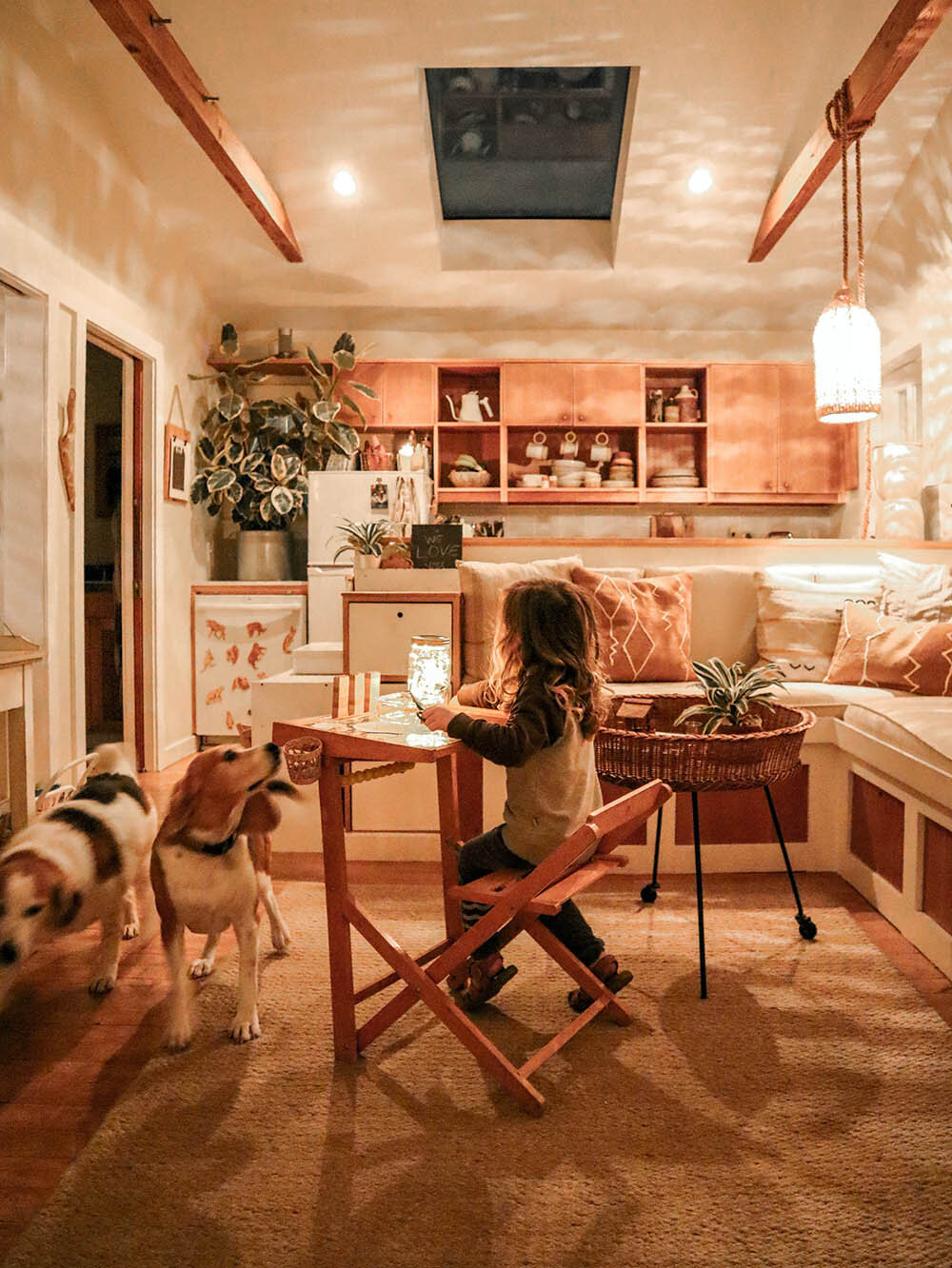

All this to say that a second-hand purchase (which can enrich the style of your home while reducing your household’s environmental impact) can be well worth the wait— we just have to let go of our modern urge for instant gratification.


