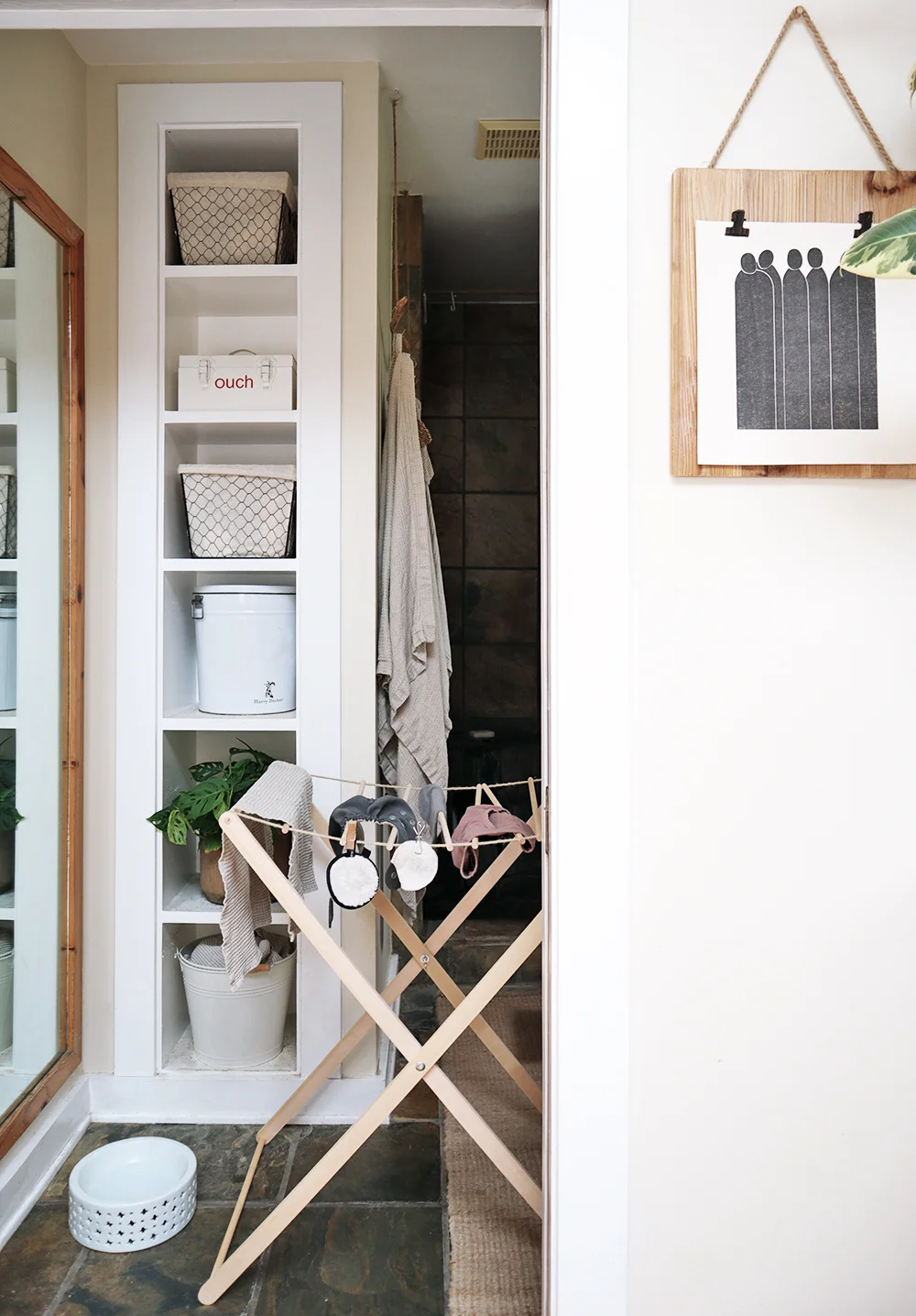
Space-savvy + Low Waste Bathroom Swaps

It’s easy to be tricked into thinking that reusable goods consume more space than disposables, and thus are not small space friendly. However, I find the opposite to be true! Let’s look at some quick, affordable, and effortless bathroom swaps. If you select your eco-friendly bath items carefully, not only will they take up less storage space and fewer surfaces inches, but they’ll also look better than their single-use or plastic counterparts.


HAIR CARE
Shampoo + conditioner bars are becoming increasingly available. I found mind on Etsy, and will continue to test out various types instead of buying disposable shampoo, conditioner, and body wash bottles. And a simple wall-mounted, hanging or standard wooden soap dish is all one needs to accommodate these bars.

SHAVING
Adam and I recently made the switch to Leaf (for me) and Rockwell (for him) razors. Up front the cost is higher, but over time they save so much money and reduce a ton of unnecessary waste. (And let’s be real— they’re far prettier on the eyes than loud plastic designs.)
BIDET
It takes just 1 pint of water to properly wash with a modern bidet like the TUSHY. It takes 437 billion gallons of water, 253,000 tons of bleach, and 15 million trees to make toilet paper annually. And Americans make, move and use 34 million rolls of toilet paper every day. The problem is not just the 54 million trees cut each year to keep up with demand, but also the enormous amounts of water, chemicals, and energy used in the destructive production process of toilet paper.* And a modern bidet attachment simply attaches to your toilet in minutes— no extra space required… and no need to continue stockpile toilet paper.
* Source: HelloTushy.com

EAR SWABS
Reusable ear cleaning tips are arguably more effective than Q-tips, and are easy to clean and require far less storage space. (Since taking this photo, we switched to LastSwab, which we really like. They come in both cosmetic swab and ear swab formats.)

COTTON ROUNDS
Machine-washable cotton rounds are every bit as effective as disposables. They’re a one-time purchase that can last a lifetime. No need to store backups. 10 or so should be just fine if you do laundry at least once per week.

MAKEUP REMOVER WIPES
Similarly, machine-washable makeup remover pads are an easy alternative to disposables. If you prefer wipes or simply need a single-use alternative while on-the-go, these compostable wipes are a solid choice. (And don’t forget that coconut oil can make a great, low-waste makeup remover!)

TOOTHPASTE + FLOSS
Refillable floss and recyclable metal toothpaste tubes are lighter on the environment. Like everything else here, they take up no extra space and, in my opinion, look great on counters and shelves.

CLOTH TISSUES
Reusable tissues can serve as miscellaneous cloths as well. We keep small baskets of them stashed around the Cottage. No need to buy and store tissues, tissue box covers, or wipes.

DRYING RACK
To dry your towels, reusable rounds, cloth diapers, laundry, and even wraps and bags in your small space, consider the foldable Helen Milan Birch Clothes Horse. When folded up, it tucks tightly against a small stretch of wall. (And it’s so lightweight that it can also be kept on a hook if you’d prefer to keep it off the ground when stored.) Even when it is in use, the rack consumes very little space (26″ L x 19.5″ W x 33.5″ H). Or a good old fashioned clothing line made of twine and tacks can work just as well, depending on your space and needs.

AIR FRESHENER
Skip the plastic plug-ins and synthetic air fresheners. When used safely (and in accordance with your building’s codes, etc.), hand-poured scented candles are effective and lovey little touches for a small bathroom. When the wax is burned out, you can clean and repurpose the container for a number of uses… such as holding your reusable bath goods!
HANDSOAP
We’ve started refilling glass containers with liquid soaps from ReContained instead of buying entirely new bottles.

Some other easy swaps include:
Upcycled containers and organizers (rather than store-bought bath sets)
(Note: This post was initially published on the blog in October 2018. It was updated with additional imagery and ideas in April 2019.)

Growing Goodness Indoors
This blog post was sponsored by Miracle-Gro. As always, the imagery and words are my own. Any images with the pups and/or our son were taken as they interacted under adult supervision in their own natural ways.

Here at our small home-office, we are so lucky to have a compact yet highly usable outdoor space. The yard was one of the reasons why Adam and I picked the cottage to be our first house together. But every other tiny apartment I rented in the past had no garden.

From my <200 sqft beach studio, to my 300 sqft East Village walk-up, to my shared spaces in DC, Florida, and Upstate NY, I always longed to tend to my own lil’ garden indoors. I know I wasn’t alone in my frustration. Many readers of this blog / my Instagram account who live in compact spaces with no yard and limited natural lighting have written to express similar sentiments.

For that reason (and for others that I’ll discuss later in this post,) we decided to try the Miracle-Gro® Twelve™ Indoor Growing System.

The easy-to-use Miracle-Gro Twelve unit allows us to grow herbs, leafy greens and flowers year-round without taking up too much space or our time.

The Miracle-Gro® Twelve™ Indoor Growing System has a minimalist outer design, which can adapt to the vibe of your home by styling the top in the same way you would dress any accent table (which is essentially what it is at 28” high and 16.5” wide/deep). Or you can stack two of the systems using their dedicated stacking kit, doubling your grow surface without requiring more floorspace.
The Miracle-Gro® Twelve™ Indoor Growing System makes growing fresh herbs and leafy greens simple. First, add plants or seeds to the system. We simply placed our plants in the liner, put the liner in the provided net cup, then dropped the cup into Miracle-Gro Twelve’s base. Water circulates through the system to provide the plant with continual moisture and nutrients that the roots need to grow. There’s also a specially-designed LED grow light for growing plants indoors— at any stage of growth, and at any time of year.

The Miracle-Gro Twelve app allows you to connect your indoor growing system with Bluetooth wireless technology so you can set your growing schedule, change your lighting mode, monitor your water level, and manage your calendar all from your smartphone.

I found three places where I could set up and plug in the system. I decided that the best spot was next to my desk in the living room/office, which is just a couple of steps from our kitchen and from West’s activity table. I did this on purpose to inspire the lil’ gardener in West, and demonstrate how plants can be grown indoors, too.

Ever since we redid our garden this winter, West has been highly interested in gardening.

Sadly, critters ate most of his plants before he really got to enjoy them.

The experience was valuable, but it was also a bummer. Now, with The Miracle-Gro Twelve Indoor Growing System inside the Cottage, West is going to be able to eat the food he helps grow. In tandem with using Miracle-Gro Twelve, we will continue to garden with our son outdoors, and we’ll teach him how to transplant certain greens over time.

Since we got the unit at the start of spring, we put it to immediate use with the included Transplanting Kit. The kit includes strong coin fiber liners that hold soil and net cups. The liners allow you to start growing from a plant that's already been started for you, like a Bonnie Plant, and save weeks of growing time.
We put Chocolate Mint, Nasturtium, Parsley, and Basil in the system.

Next, we’ll try leafy greens such as Swiss Chard and Lettuce. (But in the meantime, I’m particularly excited for the Nasturtium— I’ve been meaning to introduce some to our home for years.)

Later in the season we will grow new plants from seeds. We already picked out the seeds we want to use because I am ridiculously eager to get started. I’ll share another blog post on that process down the road!
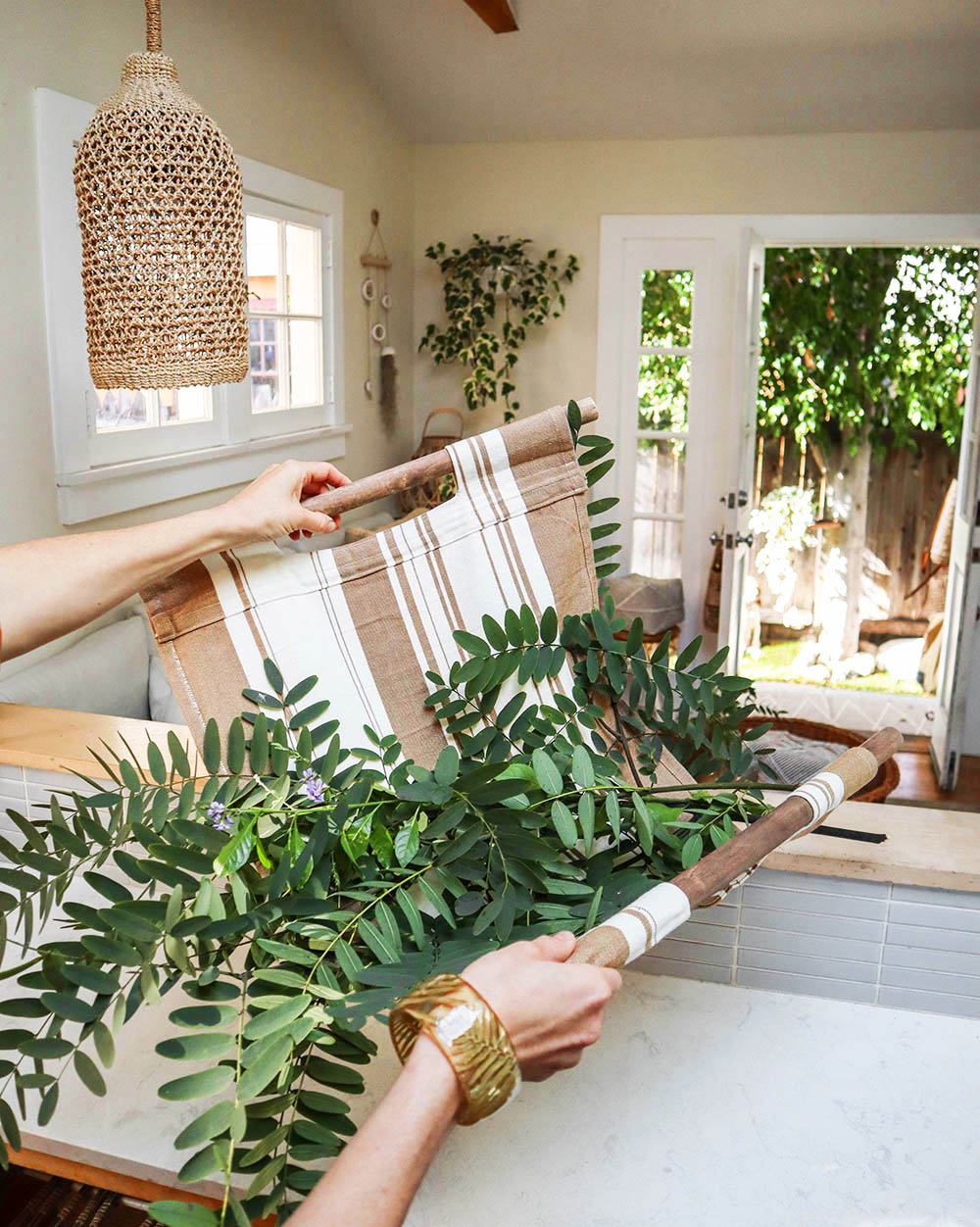
Easy Small Space Swaps (General Roundup)
You’re likely pressed for usable inches in your tiny home or apartment. Consider these alternatives to your everyday household items to help reclaim stretches of open space on your countertops, shelves, in your closet, and more. There are over 200 more suggestions in my book, Small Space Style: Because You Don’t Need to Live Large to Live Beautifully.
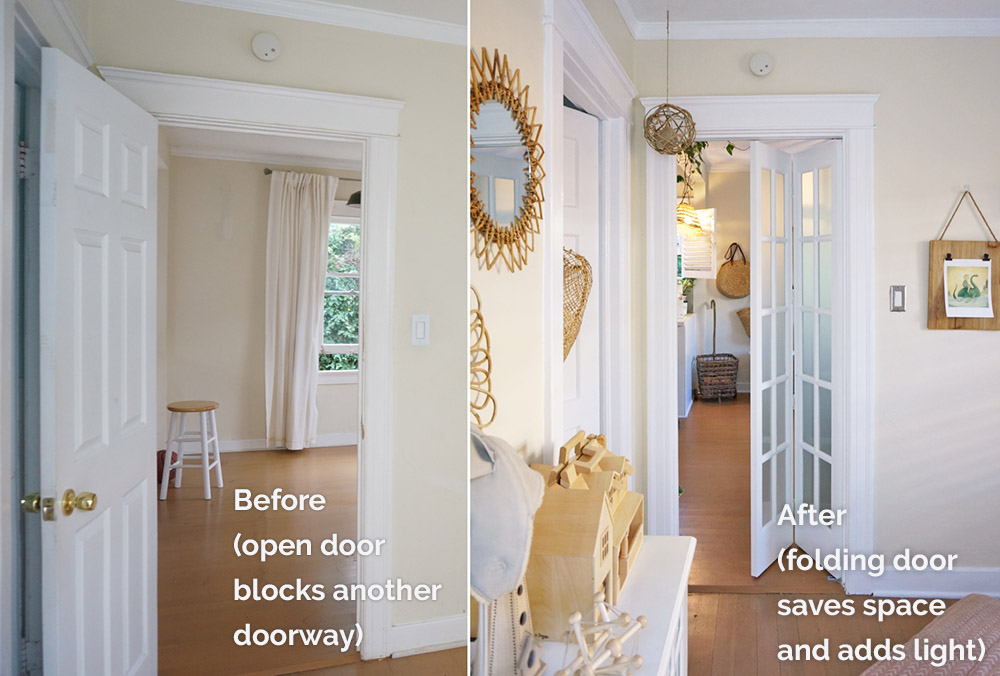
Doors
Traditional doors can be headaches in tight quarters. Accordion doors are economical, construction-free alternatives to pocket doors.Or, if you have wall space to spare, a sliding barn door might work for you as well. (See my full post on this topic here.)
Utensil Caddy
If you only have a sliver of a kitchen, skip as many unnecessary countertop items as possible so you always have some room at-the-ready to prep your food. Perhaps use a hanging herb rack to suspend your cooking utensils, rather than keeping them in a valuable drawer or in a standard caddy.

Above images via Pinterest

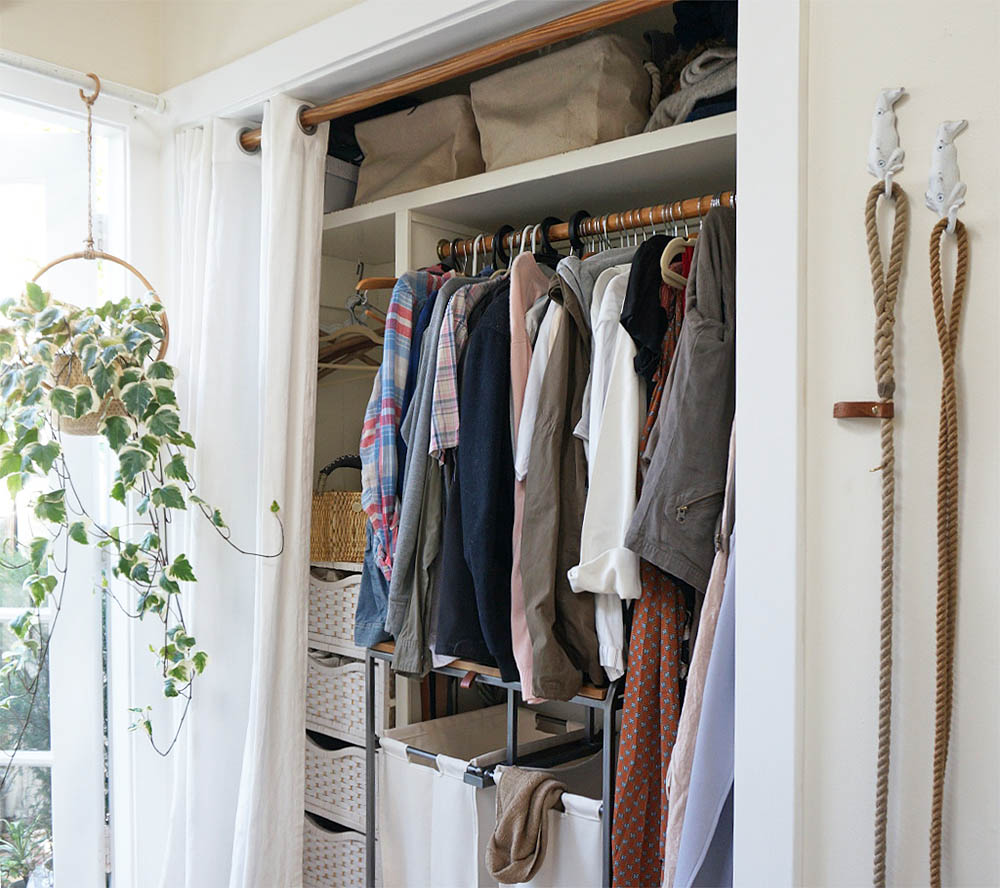
Hangers
Don’t let hardware and accessories consume your much-needed clothing storage space. Slim, no-slip hangers and vertical hanging loops can free up room for that puffy winter coat. (The image below shows our only closet here at the Cottage. The silver-topped hangers are all part of a skinny, slip-free set, and it’s evident how much space they save compared to those few scattered, bulky plastic hangers.)
Dish rack
Skip the countertop dish rack and opt for a roll-up version or a drying mat instead.
Child’s Chalkboard Easel
We have one. But we didn’t need to buy it. If your family is sharing a small space, perhaps try a folding, travel-travel-sized chalkboard instead, or a wall-mounted roll.

Left image from our Cottage. Middle image via Crate and Barrel. Right image via George & Willy.
Paper Towel Holder
Skip the paper towels if possible— they’re needlessly wasteful and costly over time. A set of reusable cloth wipes will save space and money, and reduce your footprint on this planet. (Personally I love the cloths from Grovia.) And if you don’t buy paper towels, you won’t need a bulky, awkward paper towel holder. A small wire basket can hold more than enough cloth wipes between use/washes, and can also be repurposed to help organize a myriad of other kitchen items as well if your needs change.
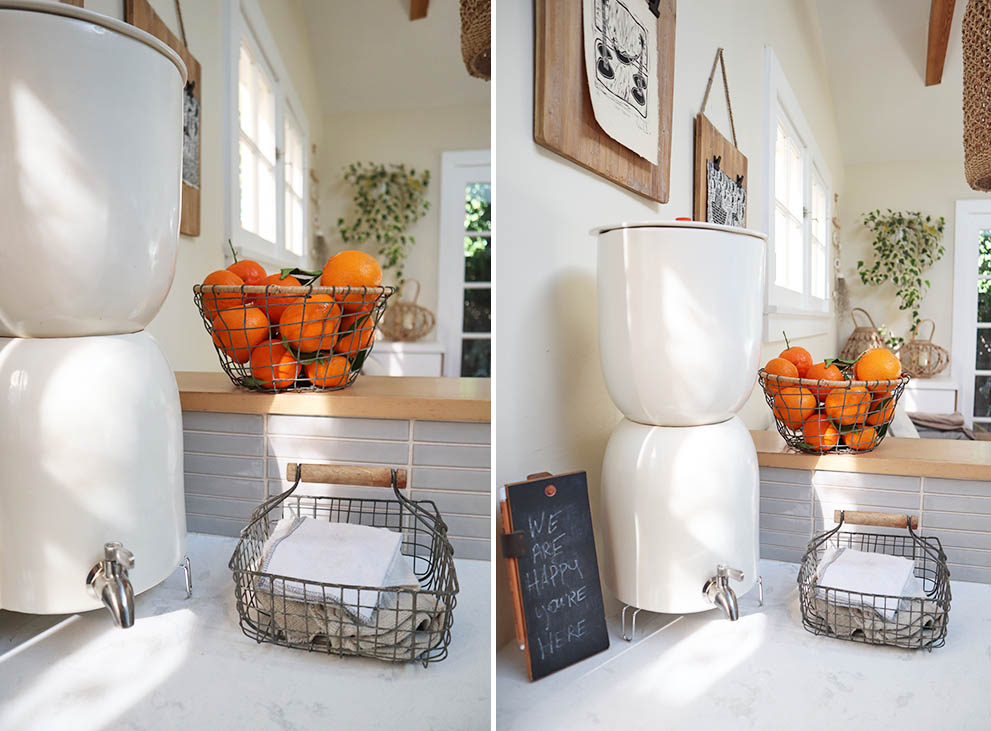
Water Filter
As shown above, we have a handmade, sculptural water filter from Walter Filter that we love. But if you don’t have room on your counters or even in your fridge for a pitcher-style filter, try a faucet version right on your sink if your faucet is compatible. .
Market Baskets
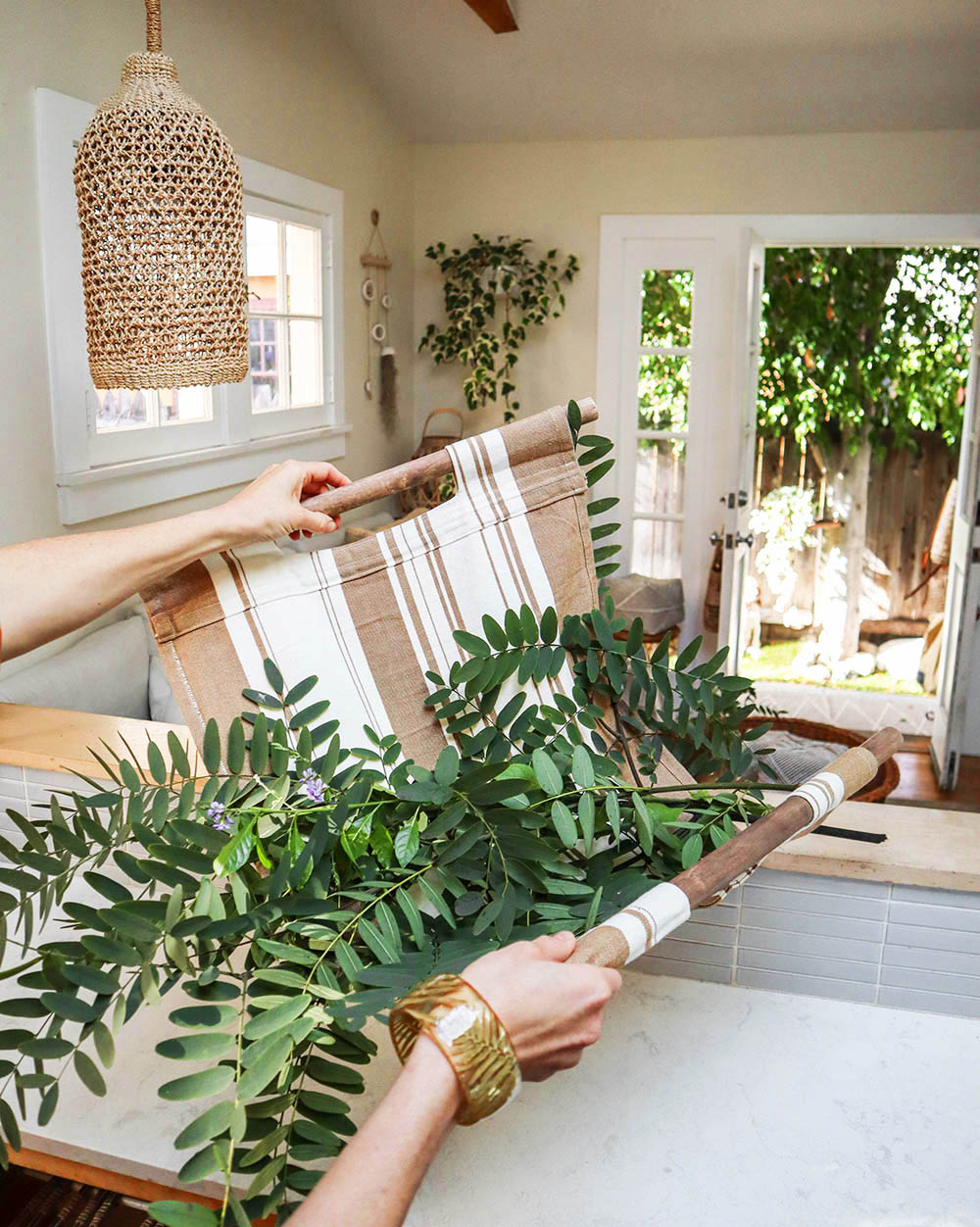
I have a collection of market baskets on our stoop, and I love them. But if we didn’t have that space, I’d probably reply on simple canvas bags for produce, and a log carrier for oversized items like branches, florals and even baguettes. Log carriers can roll up easily.
Toy Bins
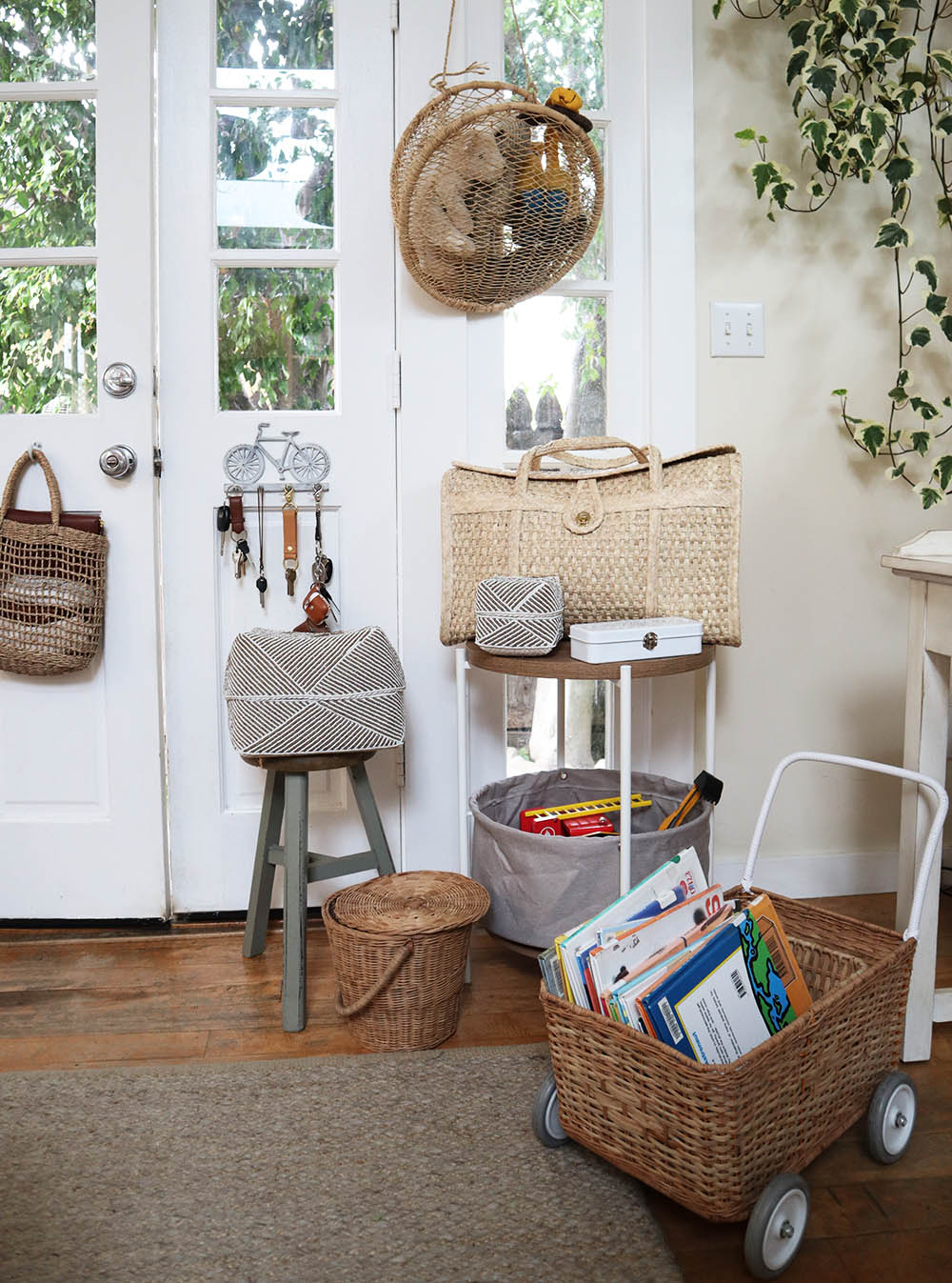
Toy bins are bulky. Try breaking up toys by category or size, and store them in containers that look and feel right for your space. This way you can spread these items around your home into vacant spots, rather than trying to keep them all corralled into one lumpy space. Everything from magazine racks to suitcases to apple baskets can work.

Built-In Bed Refresh
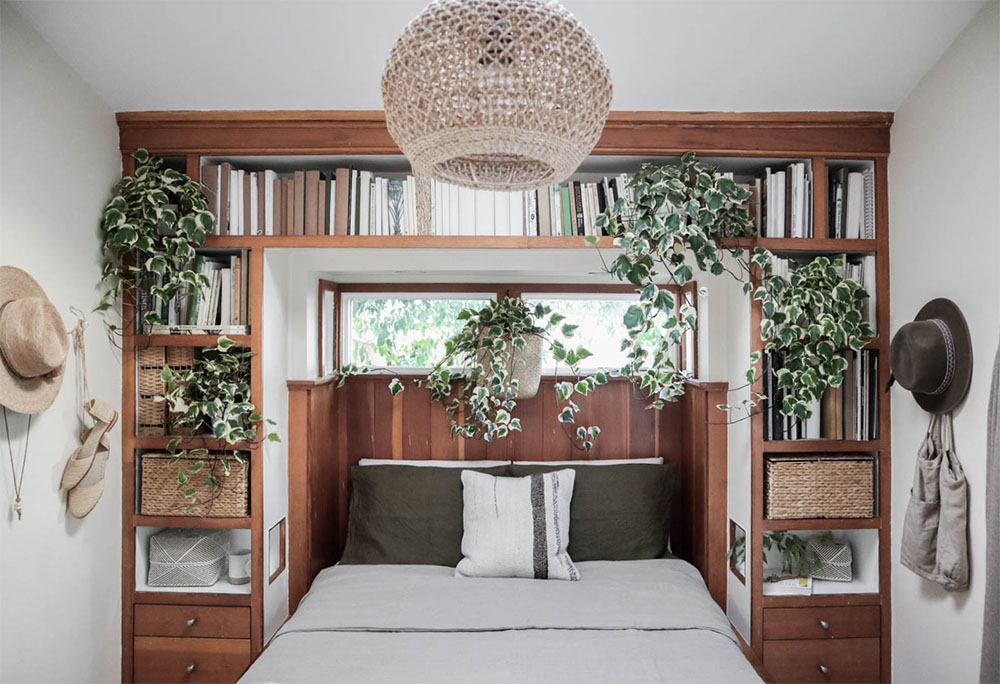
Now that West is accustomed to sleeping in his “big kid bed” (wail!), Adam and I felt like it was time for a refresh of our built-in bed. All of the linens here weather a daily storm of heavy use— in part due to the realities of life with a toddler and two pups, but also due to the small size of our home. As inches decrease, use of each and every space increases. As such, the bed takes on numerous roles throughout the day before being slept in all night, so our bedding has to be durable as well as beautiful.
Additionally, we strive to use ethically-produced and natural products as often as possible, so we also wanted to modify our bedding with this in mind.
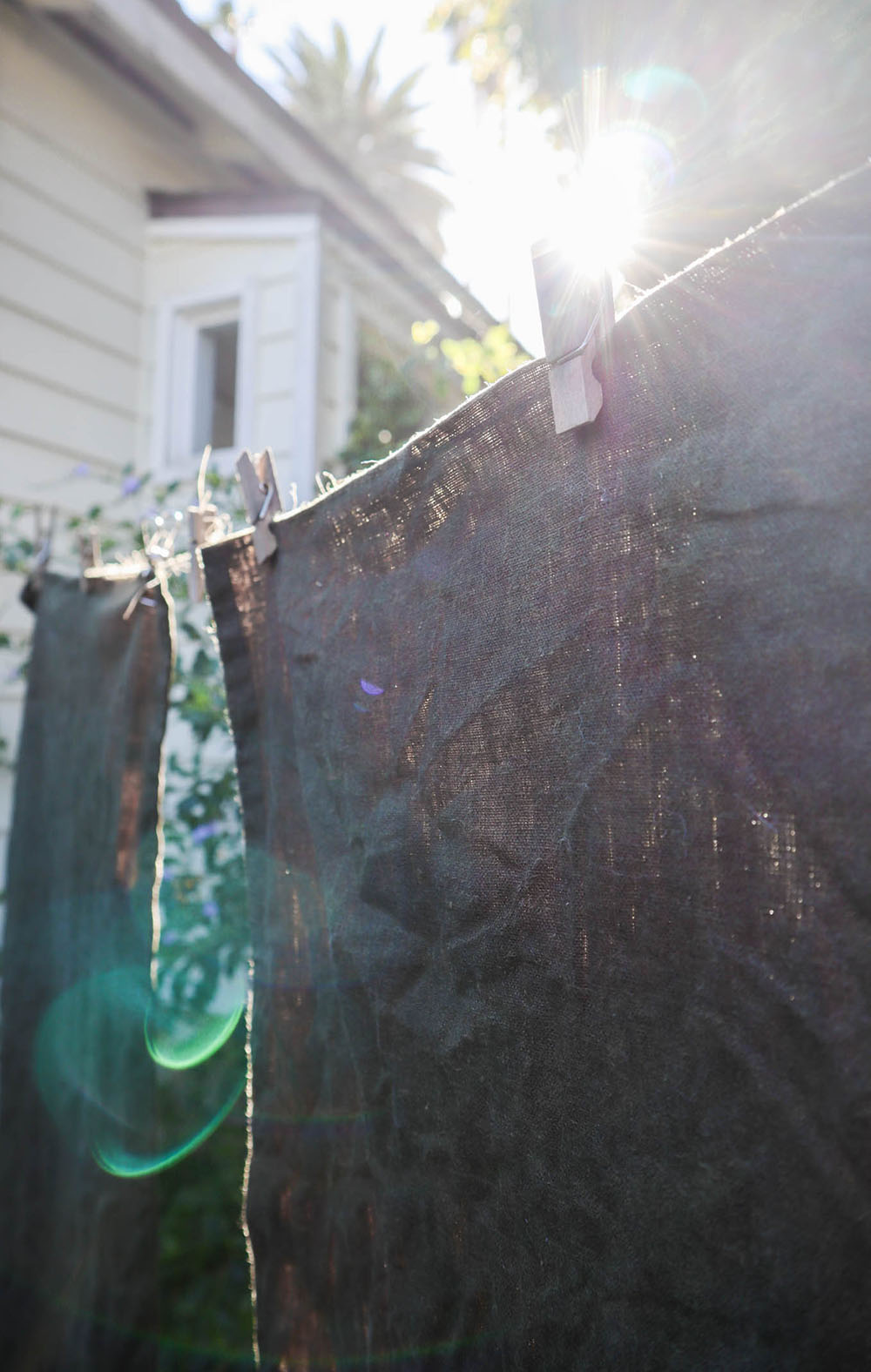
In our search for the perfect fit for our needs and preferences, we decided to upgrade our bedding with Rough Linen.

I’ve purchased a few items from Rough Linen in the recent past. After years of using the same two traditional bath towels, Adam and I finally needed replacements, so we purchased and fell in love with Rough Linen’s waffle-weave towels.
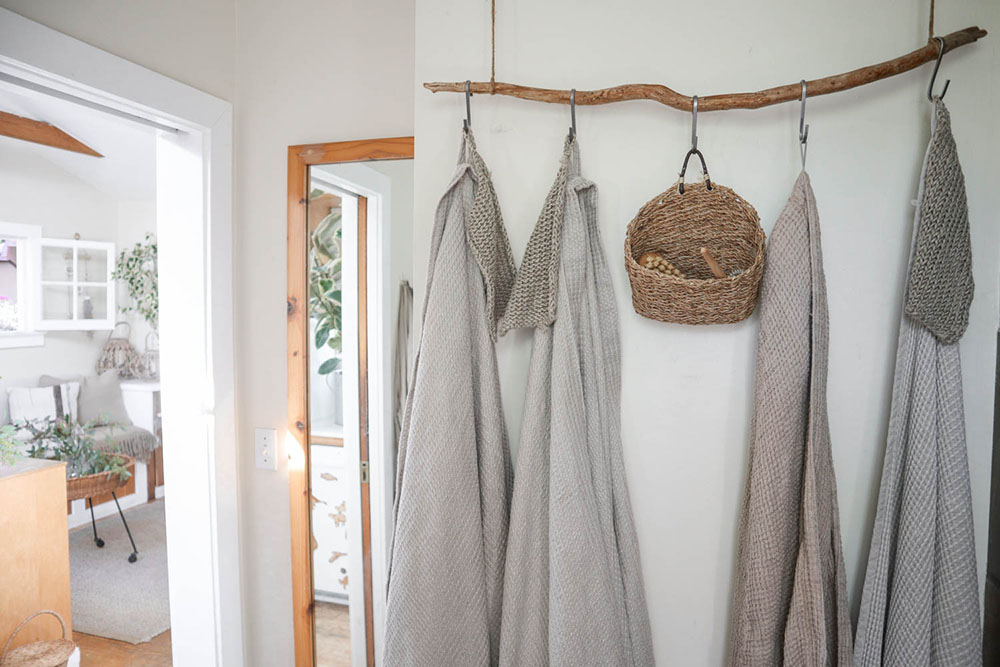
We also got a linen runner, which fits our compact table like a full tablecloth, and a child’s apron for West.

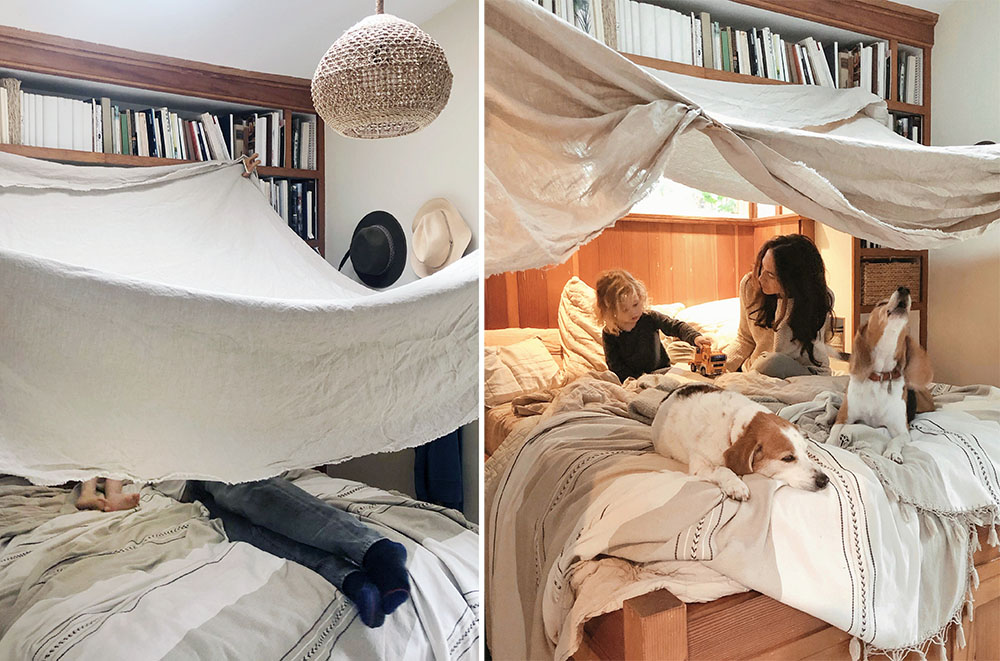
After feeling and using these items in the kitchen, bath, and living room for a couple of months, I knew I also wanted to introduce Rough Linen to our bedroom. We started out with a lightweight, Raw Edge Linen Summer Cover, which we thought would work perfectly for our SoCal home. (And we soon discovered during a rainy day that the cover doubles splendidly as a toddler fort with the help of some oversized wooden clips.)
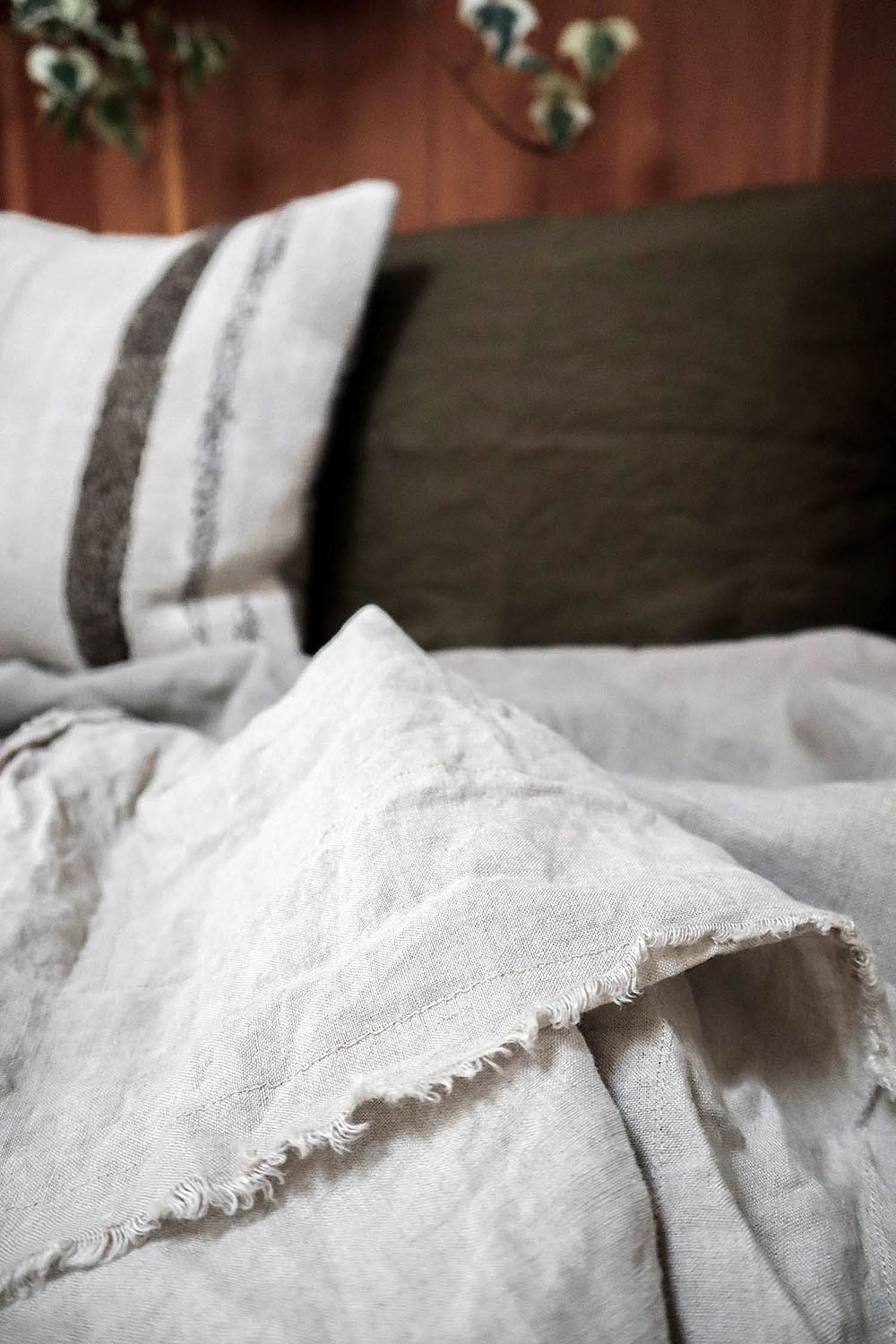
We added some standard pillow shams with invisible zippers, which I prefer over buttons or a typical envelope-style version. The design is so clean and minimal, which sings to me.

Lastly, we got a linen coverlet. (I’m not a fan of duvets.) The coverlet is simple but elegant, rich with texture and slightly naturally varying tones It’s dry clean only, but I expect that its high quality combined with the ease of washing the summer cover that we drape over it will make it easy to maintain.

We added some more variegated english ivy plants to the bookshelf to bring the built-in to life. I simply placed a slim porcelain plate beneath each to collect water and protect the wood.

The central plant in the Ollie Ella Hanging Book Basket on the headboard is still snug in its nursery pot, and wrapped in a waterproof liner.
I miss how West used to fall asleep with us here every night. I don’t think I would have ever been ready for that to end, but HE was ready.

He’s so happy in his big kid bed. And Adam and I are delighted with our newly upgraded bed, too.

Under One Tiny Roof While Under the Weather
’Tis the time of year to get sick… repeatedly, apparently. Adam, West and I all got our first colds of the season on our recent trip home from the East Coast, and none of us have quite gotten back to 100% since. This week, West and I caught a new round of something— his was symptomatic of a rude stomach bug, whereas mine was an epic assault on my sinuses.
When possible, our family prefers to stick with natural approaches to healing. (However, we’re not opposed to taking prescribed medications when necessary— for example, we all have our flu shots.) Since our tools for soothing and healing are rarely contained in a pharmaceutical pill bottle, they could quickly overrun sections of our small home if weren’t deliberate with them.
However, when you’re sick it’s tough to summon the energy to pick up a sock, let alone clean up larger messes after they’re made. But it’s obviously unhealthy to leave certain items sitting around when you’re sharing a tiny petri dish of a home-office as a sniffling, sleepless family. So, as I sit here, bleary-eyed with my hot water and lemon at 4am, I figured I might as well share a roundup of the items we have, and why they work for our small space.
I was intentional when I acquired the following goods for our Cottage. And, of course, I’m considering them in detail now as I formulate this post. But the great thing about these pieces is that they require very little consideration while we’re in the throws of cleaning up toddler vomit, managing migraines, or moping together in bed.

An Out-of-the-Ordinary Indoor Activity
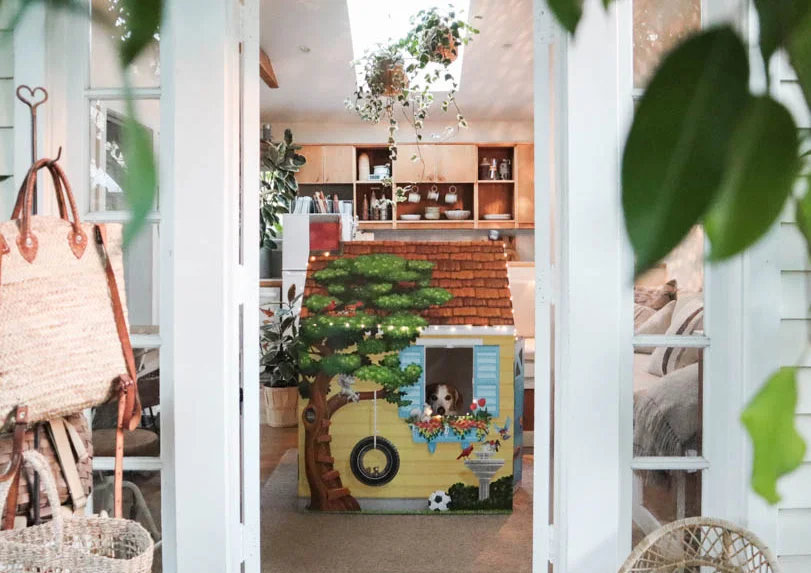
Since our little one can’t go on his usual adventures when sick, Adam and I feel like it’s wise to offer him a major new activity to calmly enjoy while recovering. As we don’t like the idea of him sitting in front of a screen for hours on end, we got him a cardboard playhouse, which we shuttle between the main room and the covered porch, depending on time and temperature. It’s HUGE, yes, but it’s also completely perfect for the occasion. We’ve decorated it with twinkle lights— inside and out— and West retreats to it for long stretches of time to color and sticker the inside walls, or build with his legos and blocks.
When it’s no longer needed and West is back playing outdoors and with other kids from the community, we can deconstruct the playhouse and store it behind our clothing in the closet. I like that it’s a grand, plastic-free, special present that can be tucked away until another sick day.

Tissues
We don’t use tissues— instead, we use little reusable cloths from Etsy and Grovia that we stash around the house. After we use one, we toss it in a washable paper bag that we usually keep on the built-in seat/shelf in our shower, where the cloths sit contained until the next round of laundry. The Grovia ones in particular are super soft and don’t irritate our skin (like standard tissues), and little cloth squares don’t take up space on the bedside as an entire tissue box would. This also helps us avoid accumulating mounds of paper in the recycling bin.


Humidifier
I remember the humidifier my parents used to fill up for my sister and me when we were young. It was HUGE, and it was loud… and mildly terrifying for a young, ill child. Thankfully, design has come a looong way. At the Cottage, we use a slim Muji humidifier that is almost silent, and at 3.5” in diameter it’s slim enough to slide onto a bookshelf or cabinet when not in use. Since our “nightstands” are cut-outs within our built-in, I can’t keep it there when it’s on. So I simply pull out a drawer next to the bed (slightly below the mattress), and cover it with a wine box top to create a stable surface on which to keep the humidifier overnight. It works perfectly.

We also use a simple drying rack in the bedroom at these times for a hint of extra moisture in the air.

Neti Pot
I’m a big fan of our Eco Neti Pot. It works wonders while also being affordable, petite and durable. When I’m using it regularly, I let it dry out on an s-hook on our towel rack. And when I don’t need it, it only takes up bout as much space as a hairbrush, so I just hang it from a tack-and-string on the interior, upper perimeter of the bathroom vanity.

Clean Drinking Glasses
Since you’re supposed to drink clear fluids when sick, I want to be sure that West always has access to water. But I also don’t want him drinking from a straw and bottle that are just incubating the germs. A space-savvy way to offer up clean vessels without having to constantly stand over the sink and clean cup after cup is to use stainless steel ramekins or a removable silicon sleeve on a 4oz mason jar. Both of these “cups” can be used for many other things around the house as well.

Ouch Box
Our First Aid kit is accessible for adults, while out of reach of the littles. It holds any medications we’re currently taking, as well as our most-needed supplies. (Our full emergency preparedness kits are stored elsewhere.)

Kettle
We have a compact Muji electric kettle that’s so small and cleanly designed that it can stay on the counter for weeks at a time without consuming many inches. It slides into a cabinet by the stove when not in regular use. (We don’t use a stovetop model, as our stove is usually in use as a dish drying spot and as a surface for cutting boards when it’s not in operation.)
Plate / Platter per person
To keep mugs, cloth tissues, stirrers and more separated so we know whose is whose (so as to keep from passing serious germs back and forth to one another while our bodies are trying to heal), we dedicate individual small plates or platters to everyone on the countertops. We try to corral our individual collections here, whenever possible. It also makes things easy to move around, which helps when we need to open up space for cooking, crafts, and/or work.
Hot Compress
I don’t bother with a dedicated compress. A simple washcloth or small towel can be heated with hot water (and salt, depending,) and used in the same manner. (Just be careful!)

Heater
We are extremely satisfied with our Dyson Hot-Cool Link Air Purifier, which manages our entire tiny home. But if we need a boost of concentrated heat— like while I’m at my desk, or when West is in his bed— we use a very small, personal heater. In limited square-footage such as ours, it’s all that’s needed. It’s footprint is small enough that it can rest on the low wall between our kitchen and main room when it’s on. (When it’s off, we just place it into the cabinet by the stove between the kettle and the mini-Vitamix.)

Tiny Update for a Tidier Built-In
Now that West is sleeping in his “big kid bed,” Adam and I figured it was time to address a few issues we’ve been having around the couch, starting with aspects of the built-in shelving. As such, we outfitted the exposed cubbies in our main room with custom drawers that allow us to use the entire height, width and depth of the cavity. (This is what these ledges looked like for 7+ years prior to this lil’ update. I very much liked the relaxed, natural look, but it just wasn’t the most efficient use of the interior space.)

I intended to add drawer pulls of some sort (probably vegetable-tanned leather) to the front, but West has had so much fun putting pebbled and crayons in the finger outlets recently that I haven’t had the heart to change them quite yet. Plus they match the holes in the under-sofa storage doors, and they are most likely keeping our son from pulling the drawers out onto the floor (and onto his adorable feet). Meh, I’m in no rush.
I am so accustomed to seeing the old baskets there that these white, squared-off drawers make me feel a bit like I’m at Space Camp. But They brighten up the space, and they’re so much more useful.

While I’m always an advocate for fewer belongings over more storage, it made no sense for us to continue to ignore the inches being lost by the baskets, which only filled up about 2/3 of the cubbies. Now this funny little built-in zone feels cavernous to us.

The middle drawer holds my office supplies, such as envelopes, tech dopp kits, and a few small accessories in pouches.

The top is where we keep StanLee and Sophee’s pet bags, deshedding brush, harnesses for the cargo bike and car, and specialty collars (like a safety collar and the one StanLee wore during our home wedding). I also keep a lint roller in here, though I plan to switch to a sustainable brush once this one is worn out or chewed up.

The bottom drawer holds West’s wooden train track parts. (The apple basket in which they were stored before made a perfect plant holder for a new variegated rubber plant that we found at Venice Plants.)

I’m always amazed by what an impact a tiny change like this can have on the appearance and function of a space our size.


Sofa → Toddler Bed → Sofa
From a mini-crib, to a Dock-a-Tot, to bed-sharing, we’ve tried a few different sleep environments on for size here to see what works best for our lil’ family and space. I wrote a comprehensive post on that topic here, in which I explain why (and when) we made the decisions we did. Now that West is 2y3mo old, we feel as though it’s time to get him comfortable with his own bed, even though we’re not fully shutting the door on bed-sharing.

For a while, we debated: Do we craft a mini-Murphy bed in the closet? Do we create a daybed-style built-in? Do we make a fold-out platform at the foot of the bed? Ultimately we decided on the simplest course of action— a bumper pillow for the couch.
While this particular move won’t land us in any decor magazines (what— no picturesque telescoping guard-rail or accordion extension on the build-ins?!), it is easy, affordable and practical. And while it’s admittedly not the most aesthetically-rewarding choice, it’s not an eyesore either. Plus it’s easy to for others to recreate in their own small homes or apartments, without requiring extra inches or big budgets.

Above all, it works— at least for our family. All it took for us is a slip-proof bumper pillow and a waterproof, fitted twin mattress protector.

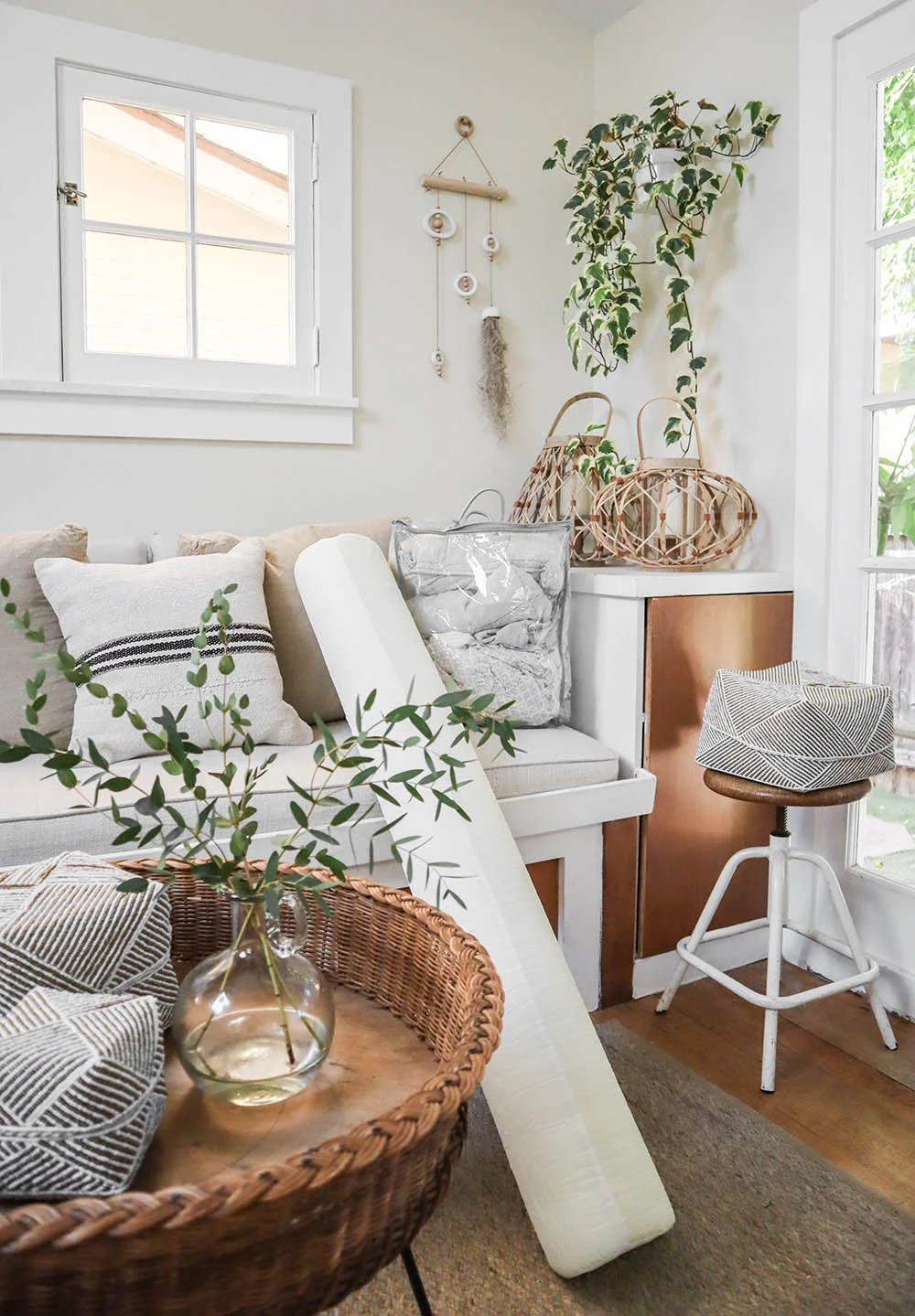
When we make our bed in the morning, we slip the bumper out of sight against the headboard behind our normal pillows. Unless the linens need to be washed, the mattress protector and fitted sheet fit within a repurposed plastic bag, and are stashed under the bed or sofa. West’s Ketzal Blanket folds up and remains by the couch, while his Parachute Baby Quilt + Pillow go onto our bed, as they always have.

(Ah, Sophee, why must you stick your nose in EVERYTHING? Please note that we do not leave plastic bags out where the pups or our son can get to them. This repurposed storage bag is usually tucked safely away unless actively in-use. Safety first, folks!)
The whole thing takes about 5 minutes to set up / and 5 minutes to break down. Adam or I encourage West to join us so that he can find joy and pride in the process of constructing his own space at night, and deconstructing it for the entire family’s use in the morning.
By adding books (which West chooses every night), a hand-me-down rotating nightlight gifted by his cousins, and a few plushies (which we only bring out at bedtime so that the dogs don’t mistake them for their toys), the space instantly becomes West’s own little zone.
We are really relaxed when it comes to hid bedtime routine. We go through the same motions nearly every night, but we are flexible with time and place.
If he is sleepy and wants to get in bed at 7, great. If it’s more like 8, that’s fine, too. If he wants to read 10 books instead of 5, we go for it. And if he’s only in the mood for a single story and wants to sing and watch the night lamp rotate in lieu of finishing the stack of books, we do that together instead.

Similarly, we ask him which bed he prefers. He can choose his “big kid bed” on the couch, or the “family bed.” This has allowed him to naturally gravitate towards his dedicated sleep space comfortably and at his own pace. He chooses it now more than our family bed, and is clearly excited about his independence. There was no fighting, no bribery, no pleading, and and no struggling to stick to arbitrary rules. West still loves getting in bed and falling asleep, as he did before— it remains easy and delightful for everyone.
As far as noise and light are concerned once our son falls asleep… we lucked out. The kid seems to be blissfully immune. (I discussed this more comprehensively in our bed-sharing post from January 2018.)

When we have visitors over after our son’s bedtime, if we’re hosting an overnight guest, or if West has a rough night, he’s fine to simply sleep in the middle of our built-in queen bed in the bedroom instead, as he’s done for years. The great thing about bed-sharing for so long is that West contentedly falls asleep nearly anywhere and in any reasonable conditions, and he isn’t upset by change.

I know that many people can’t imagine parenting life without a crib— I completely get it, and I’m not advocating for or against any sleep methods or tools. But it has been such a happy surprise to discover that 12+ hours of sleep per night for West is doable thanks to inexpensive and space-savvy gear, such as a Dock-a-Tot (initially) and now the bumper.

While we’ve had fun trying out and reviewing other methods and products (both for our lifestyle and for our business), we continue to learn over and over that pared-down and simple solutions are usually the best for our family and our tiny home.
Toddler Folding Table
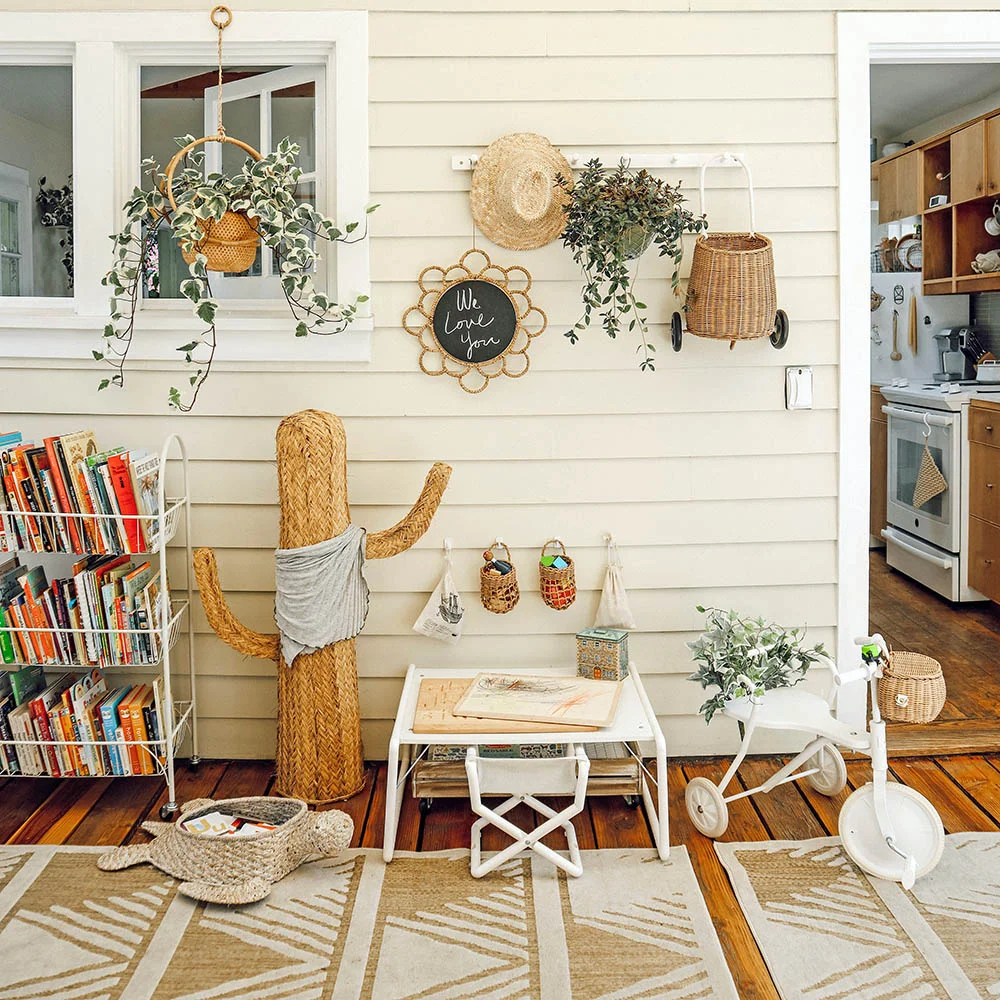
I moved West’s folding table from the porch back into the Cottage today, as he hadn’t been using the setup too often lately. Thanks to the minor change of scenery, he suddenly fell in love with the table again, and played here for hours.

One of my goals for 2019 is to reinvent/repair/repurpose far more, so this has been the perfect way to spend the first evenings of the new year.
When he outgrows this piece, we can fold it away and stash it in the back of the closet when it’s not needed, but still continue to use it regularly in other ways around the house and on adventures.

Here’s to making it work with what we’ve got. It is better for our wallets, better for the planet, and can even spark a lil’ creativity.



Corralling and Concealing Toys in a Small Space
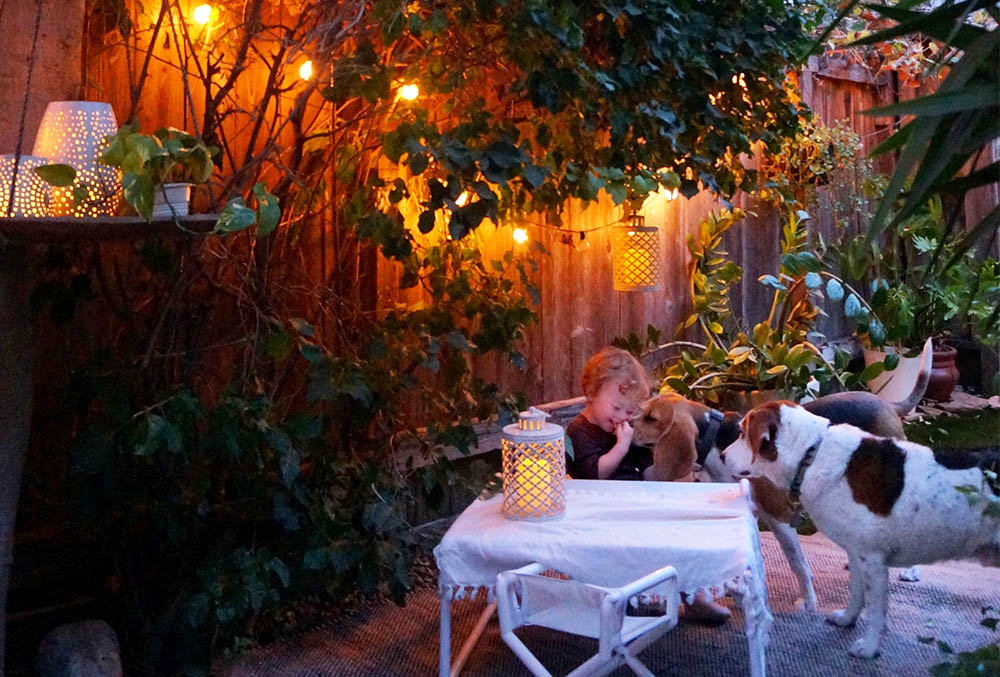
You wouldn’t know it upon first glance, but the main room of our cottage is filled with a reasonable amount of books and toys— they’re simply hidden in plain sight.

Rather than opting for traditional “toy storage,” we simply use items from around the house, or pieces we’ve found locally or via Etsy that suit our aesthetic while being easy for West to open and close.

By breaking the storage up throughout the space where possible, we’ve eliminated the need for bulky, dedicated playroom trunks and similar storage furnishings.

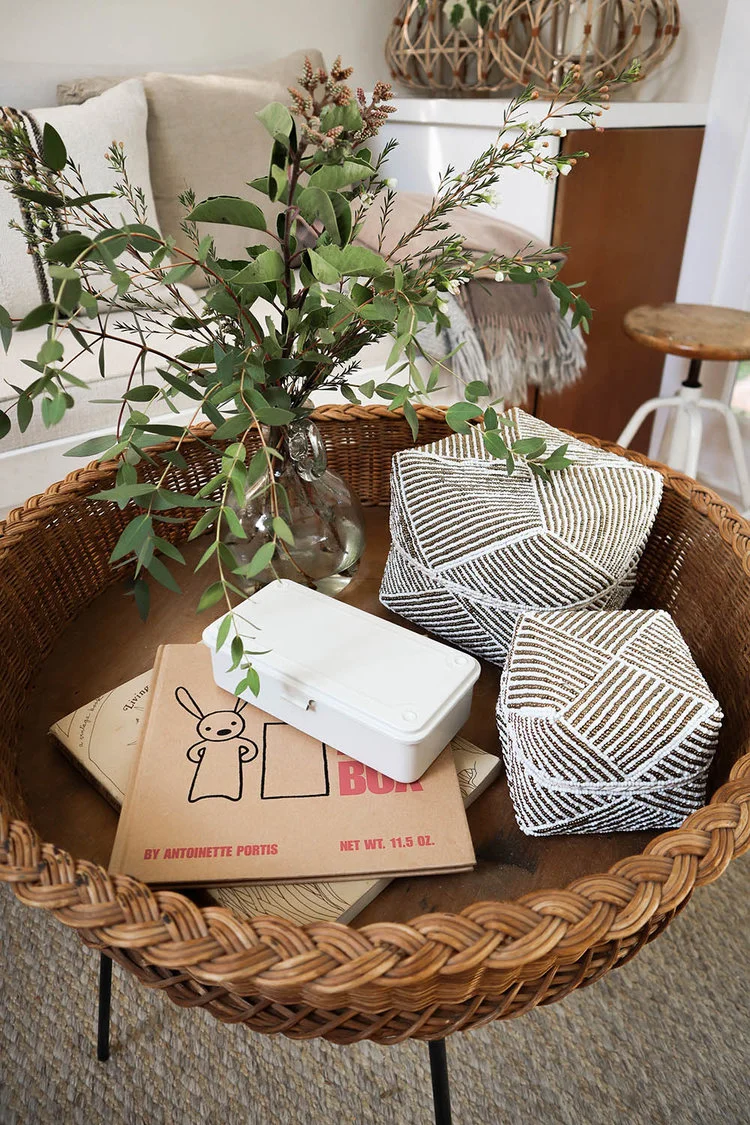
Above: Baskets from Kembali collective, tin from muji. vintage coffee table from super marché.
It only takes a few minutes for our home to turn into a disaster zone. But, luckily, one joy of a tiny house is that it only takes about takes about 3-10 minutes to put everything back together again.

While we strive to only purchase responsibly-sourced and ethically-produced eco-friendly toys and accessories, we are also fine with using hand-me-down plastic and metal toys, because if the products are already out there we might as well put them to good use. They’re already sunk goods, so there’s no point in sending them directly to a landfill where they’ll sit until the end of time. Our hope is to pass on all items to friends, families in need, and places like the library where they’ll live out new adventures.


Between a woven suitcase, a book trolley, a built-in drawer, and a few baskets, we can accommodate nearly every toy West uses on a daily basis right here in our mini home without it looking or feeling overwhelming.

Small Space Skylight
In less than 400 square feet, we’re lucky to have, not one, but two beautiful skylights. The window over the main room (which is the space that serves as our living room, kitchen, office, dining room, playroom, guest room, entryway, and more,) is generously sized, and is the unsung hero of our lil’ home. It permits the SoCal sunlight to pour abundantly into nearly every area within the Cottage.

I can’t imagine our house without this skylight, but during the winter months it poses a bit of a challenge for my workspace. The sun moves in a path that lands smack on my monitor for about two crucial hours of the workday (10-12), meaning that I can’t shoot, adjust photos, or edit videos at my desk during that time.

Obviously this is a great problem to have, and clearly there are several easy work-arounds, such as moving the iMac or using the laptop. But more often than not, I end up jumping up on the roof and throwing an old tablecloth over the window so I can continue my work uninterrupted.
I took to Instagram Stories to make fun of myself for doing this when my friend Hilton Carter (the talented creator of Jungle By The Falls) sent me a DM suggesting that perhaps I block the bulk of the temporary, problematic light with… plants. (I’ve suspended plants from our beams before, but I’d never, ever thought to dangle them from the skylight as a decorative solution to harsh sunlight.)

I’m a big fan of Hilton’s. He possesses such a rare blend of talent, humor, kindness, creativity, and style. (And his feature in our book, Small Space Style, is one of my absolute favorite parts of the entire publication.)

All it took was a sturdy tension rod, ever-handy s-hooks from the toolbox, a couple of my favorite hanging baskets from around the Cottage, and some variegated English Ivy to bring his recommendation to life. Et voila:

Problem solved— and solved simply and beautifully, with minimal purchasing.

The tension rod and s-hooks are only clearly visible if you’re standing directly under the skylight when the plants aren’t in the baskets. Within moments, everything can be scooted over to block transitioning sunlight, or taken down for watering or alternative placement.

And hallelujah— I can finally see my desk for the duration of the workday!

Thank you, Hilton. (As always.) Our house is a happier place because of you!


An Ode to Washable Paper Containers
Ah, storage. While I believe that we should strive for fewer belongings (as opposed to more containment methods), stylish and space-savvy storage is undeniably something we can’t entirely do without. As a result, I have a mild love-hate feeling about crates, baskets, buckets, and bins (of which I admittedly have several).

With the new year around the corner, folks are forming lifestyle resolutions and establishing fresh habits in their homes. The urge to tidy, downsize and start anew is widely shared at the close of the holidays, so curbing clutter while beatifying the home will undoubtedly lead many to seek out organizational/storage accents. For those living in limited square-footage, operating with a tight budget, and trying to be more environmentally-minded with their purchases, the options narrow.

Well-designed storage can get fairly pricy, and pieces are often made of synthetic materials. And some moments in life require more storage than others, but then there’s no place to stash typical containers in a small home or apartment when they’re no longer necessary for the time-being. Inevitably you end up getting rid of them, only to need more later down the line. (The cycle rolls on.)

Washable paper bags are clever options for customizable, affordable, simple, eco-friendly, easily-to-clean, small space storage.

Depending on the design and format, washable paper bags can be used for nearly everything: toiletries storage, laundry, plants, pantry goods, toys, tabletop organization and display, and even as a market tote.

When you no longer need them, they fold flat to fit on a bookshelf, in a drawer, or behind stacked items such as cutting boards or books, where they wait unobtrusively to be called into action once again in the future.

There are numerous makers on Etsy selling washable paper bags, and there’s also UASHMAMA, which makes a myriad of additional items from washable paper. Their designs look and feel like leather, but washe with ease and stay soft while remaining resilient. They’re also made of a cultivated fibre and does not contribute to deforestation.

We use washable paper bags everywhere around the house lately. The applications are ever-changing, without being wasteful.


Some Items You Can Probably Go Without - Travel Edition
While it's great to share stories about designs and practices that help us live comfortably and contentedly in small spaces, I think it’s just as important to discuss the things that we can happily live WITHOUT— particularly during the holidays, when “stuff” just of all sorts just seems to swell. After all, making a home of a small space isn’t mainly about figuring out how to cram as much stuff as possible into your compact quarters— it’s about experiencing more by owning less. As always, before we jump on in, here’s a lil’ disclaimer: To each their own. While these items might be easy for easy for some folks to forego, they might be gems elsewhere. You know your own needs and space best. Habits shift, tastes change, lives and practices evolve. Design and decor should be different and enjoyable for everyone! The following is just a small sampling of travel items you may want to reconsider. (View all the entries in this series here.)
Neck Pillow
These silly things always, always make me laugh… until I imagine how many are likely disposed of between trips, and how many new ones are purchased daily. Try rolling up a scarf or a sweater… or dare we simply make-do with ever-so-mild discomfort for a few hours and then move on with our clutter-free lives.

Luggage Scale
If you have a regular scale at your home, then you have a luggage scale. If your bags are hard to weight by themselves, just weight yourself with each suitcase in your arms, and then subtract your weight sans-suitcase. My 5 year old nephew can manage it— you got this.

The Overzealous Skincare Routine
At home and on-the-go, I used to use an obnoxious (and expensive + space-space-consuming) number of products: makeup remover, face wipes, cleanser, toner, face oil, serum, add-in powders for the serum, moisturizer, under-eye cream, sunscreen, and primer. It was absurd, costly, cumbersome, and wreaking havoc on my skin. I’ve since updated my routine to something simpler and less wasteful in terms of spending, packaging and space. View my post about it here.

Disposable Makeup Remover Wipes
I was guilty of keeping a stash of these disposable goods in my bedside drawer, in the medicine cabinet, and in my travel toiletries pouch for years. Then, recently, we were paddling down the canals and I saw a crane pecking the discarded plastic packaging from the same product. So… no more. I now have three reusable makeup remover pads, which can be washed up to 200 times each. If I’m wearing particularly stubborn eye makeup after a en event or shoot, I just use a bit of coconut oil on a washable cotton round and it’s managed.

Pre-Packaged Travel Convenience Kit
These drugstore kits are usually filled with plastic bottles containing filler-laden formulas with toxic ingredients. And, most likely, you probably don’t even need (or want) all the products, but accept them as a bundle. Invest in a few reusable travel-sized bottles and containers instead— then just syphon off an appropriate amount of your everyday necessities within them and go. Sample sizes work well for this, too.

Passport Cover
I’m not going to lie— we have these. I bought a handmade trio for our first trip out of the country with West, simply because I was so excited about the journey. But it was silly of me. As long as you keep your passport safe while at home and on the go, you don’t need a dedicated cover. And, according to NPR, e-pickpocketing by RFID-hackers can be blocked by wrapping your wallet, cards, or passports in aluminum foil when you’re in places in which they’re potentially more vulnerable. (Consumer Reports claims that this works just as well as most RFID protectors on the market.) Our passport envelopes are pretty for sure, but we really only see them for a minute or so per year. I should’ve taken that bit of money and put it into West’s education account instead.

Conversation Cards
What? No. These are on par with neck pillows. Don’t be fooled into thinking that you require a deck of cards to carve a path through your social interactions during long rides.
Airplane Footrest
Some people have injuries and conditions that require special gear for travel. However, if you don’t have a medical issue, then you probably don’t need things like airplane footrests. Can you prop your feet on your under-the-seat bag or nearby hardware? Can you perhaps walk up and down the aisle, or do some basic stretches if you get achy? I have faith that most folks can make-do without their own suspended footrest.

“Shoe Bags”
I wrap up my shoes when I travel, but I do so with washable canvas totes, cotton drawstring sacks, or even the unfortunate plastic bags that still come with various deliveries. (Does your dry cleaner wrap your attire in plastic, even when you’ve asked them not to? You might as well get some more milage out of it all… better than just throwing it directly in the trash, right?)

Compact Blanket
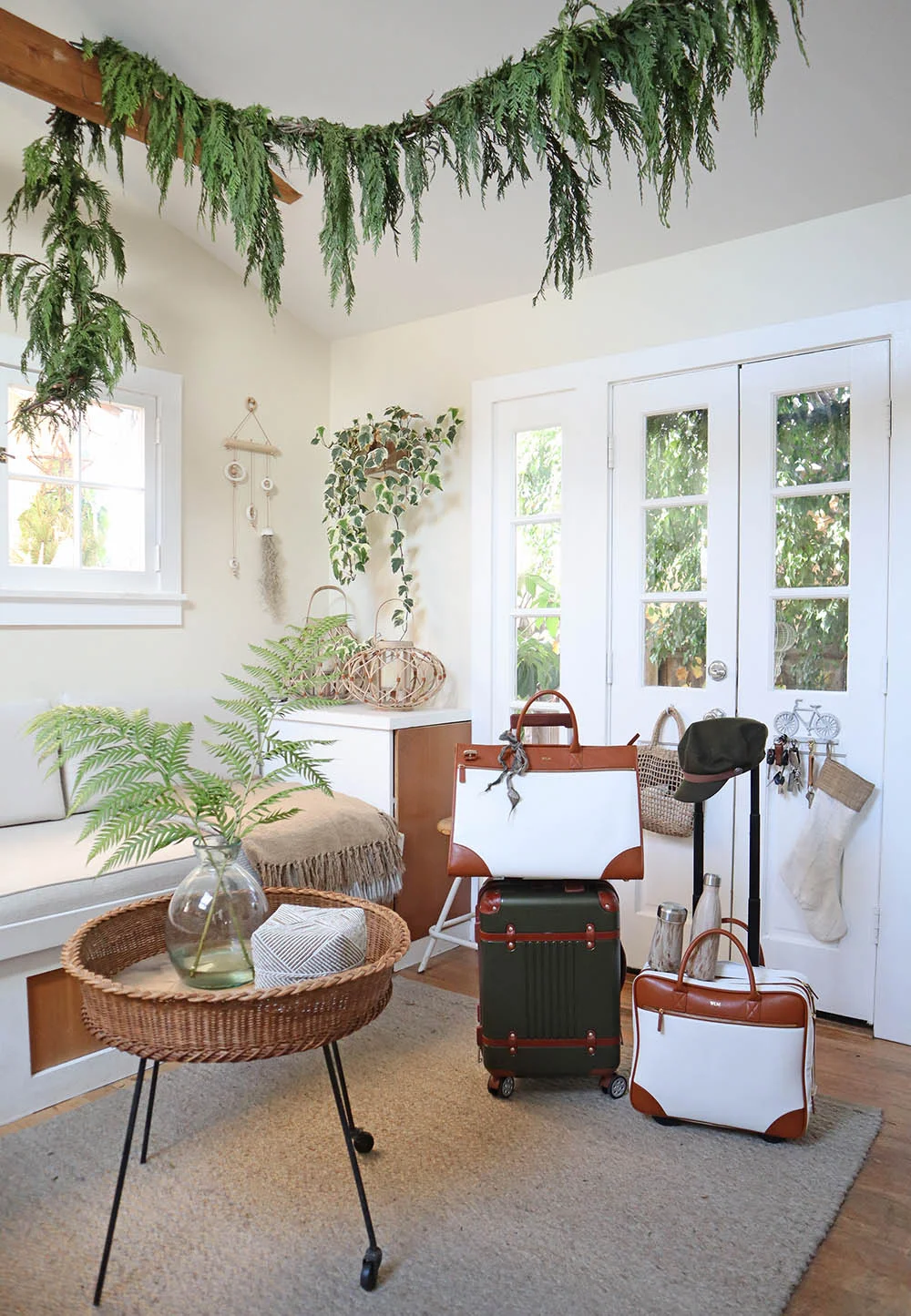
These dedicated blankets roll up tight into their own clever little built-in pouches, but they’re likely unnecessary, and usually manufactured in conditions and with materials much like fast-fashion apparel. Just use your coat or an oversized large scarf when you get a bit chilly in-flight or on a drive. Adam, West and I wear our larger LSA scarves (as seen above in a photo by Sebastian Artz) when we travel for this exact purpose.

Above: Folks always ask how we get the pups to pose. We don’t. We just catch them doing what they do best: adorably photobombing.
Travel Accessories With Which I’m Unapologetically, Totally on Board
I personally like the following because I use them to stay organized every day, whether in our tiny home or when we’re away:
Dock-A-Tot & Carrying Case (We used both sizes of these constantly until West was about 18 months old.)

Tiny House Hibernation
For most of the year, I appreciate the ways in which our lil’ home encourages us to get outside and enjoy our neighborhood and be involved in the community. But, with longer stretches of night and colder days, we love staying in— or at least staying close. Looking back at the photos in my camera roll from the past week or so, it’s apparent that our tiny house hibernation has definitely begun for the season.

We’ve discovered a lifestyle balance that works well for our family by creating a space that lovingly reminds us that there’s so much more to the world beyond our walls, while it simultaneously provides us with everything we need and want within this compact square-footage.
We’ll be staying here for the holidays, soaking up the rare quiet that falls over Venice, reading piles of library books with West, strolling slowly with the pups, canoeing through the canals, and biking through the streets to enjoy the twinkling holiday displays.

Below are some iPhone and compact camera shots from December thus far. We’ll be blogging and ‘gramming through the holidays, but we still want to take this opportunity to wish you and yours a happy and healthy holiday season. (And, if you’re feeling in the giving spirit, please consider donating to The RightWay Foundation. Your contribution will go directly to providing our youth with the gift of a safe, warm, and welcoming environment and community, so they won’t be alone for the holidays.)


Housing a Crowd Without Overcrowding
How we navigated overnight hosting + holiday decor + rainy weather realities in our tiny house with three adults, one wild toddler, and two active 40-lb dogs over this past week.

There are just three rooms in our miniature home— the bedroom, the bathroom, and the main room. The main room is divided by a low wall into two sections: the kitchen and the living space. The living space is about 10’ x 12’ and operates daily as our sitting room, my full-time office, a play space, and an entryway. However, this compact rectangle also multitasks as a guest room, a dining room, and a pop-up office when needed. (Read about hosting overnight guests in a tiny home, here.)

For the past week, we hosted one of our closest friends (Emily) here at the Cottage. She is the greatest houseguest and the most delightful person in general, so it was an absolute joy to have her here for every precious minute. (She’s one of my nearest and dearest, and was included in my book’s dedication.) But the logistics of her stay in our home could’ve easily become a mess for a variety of reasons...

Between having a sixth being in our small home for a decent stretch of time, accommodating her corresponding luggage (2 carry-ons), our holiday tree, and the rain that kept us all within under 400 sqft for the first part of her vacation (and ensured muddy paw-prints and wet pup hair during the subsequent days), there was a lot going on in the 10’ x 12’ from which I’m writing this post. (Read about the downside of rain and our tiny house, here.)
But with a few adjustments that required minimal effort, the week breezed by too quickly. While we enjoyed many lil’ adventures (a trip to the museum, a paddle on the canals while neighbors decorated bridges overhead for the holidays, bike and scooter rides around Venice, dining out, visits to local shops, reunions with old friends, holiday parties, and strolls down the beaches), I actually wish she could’ve stayed longer.

Here’s how we navigated overnight hosting + holiday decor + rainy weather realities as three adults, one wild toddler, and two active 40-lb dogs in our tiny house:

Rolling, Collapsible & Nesting Furnishings/Accessories
Since moving into the Cottage over 7 years ago, we’ve had the same rattan storage trunk coffee table, and the same white folding dining table. Last month, I decided to make finally make some changes to those pieces to better accommodate our current lifestyle and tastes.
We once needed the storage trunk in order to store our guest bed sheets and throw blankets, but I donated almost all of our spare linens and eliminated the need for that extra storage space. We now keep any throws out on the couch (either folded up or spread over the cushions), and the basic guest bed linens fold up tight and fit within the pillowcase, which I now stash in a protective bag under our bed.
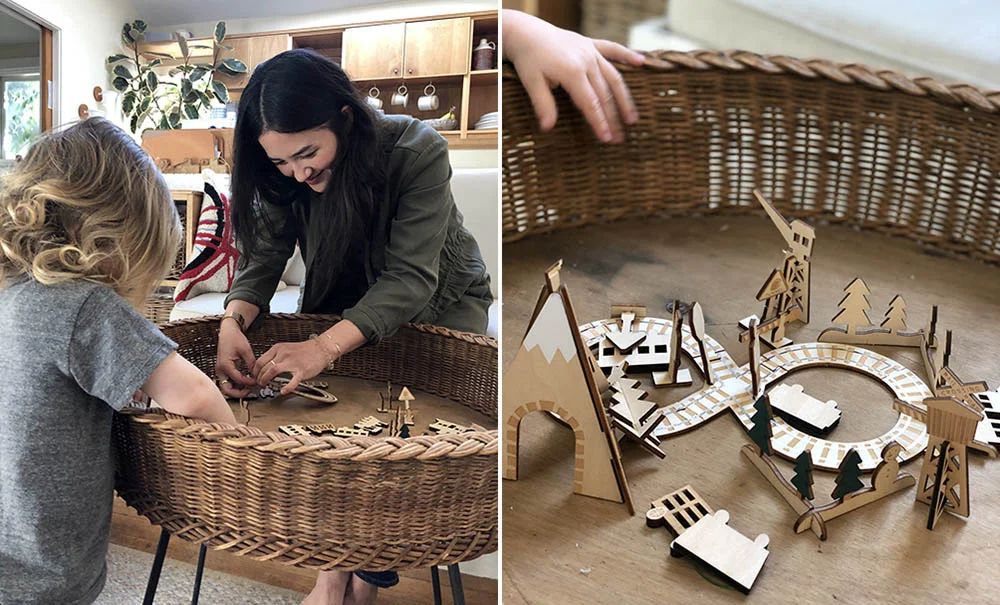
In place of the trunk, we now have a vintage, rolling basket-style table, which I found via @ShopSupermarché. I love this piece for so many reasons beyond its unique appearance. It’s easy to scoot around the house, it offers a perfectly contained play surface for West, and its narrow, metal legs free up the floor in our living room, making the space look bigger.

I can easily roll this new piece of furniture beneath my workspace without removing my desk chair.

Even with the coffee table tucked under my desk, I can nest West’s rolling “Strolley” (which contains his ever-changing collection of library books) and maintain immediate access to everything.

A camping style stool was a perfect luggage stand and kept Emily’s carry-on bags off the ground, making it easier for her to organize and reach her belongings within a dedicated space.
Our new (pre-used) metal folding dining table that I found at a local garden center is longer yet narrower than our previous collapsible dining table, so it offers all the surface space needed for meals while simultaneously freeing up inches to navigate the rest of the room.

We brought in West’s apple baskets of toys/activities from the play porch, as we do whenever it rains. They are easy to slide into spare inches, cavities, and corners around the Cottage.

His drawstring toy-storage play-mat kept little toys contained, and is a breeze to cinch up and hang on the wall.


Extra Guest Bed Considerations
We didn’t want to make and remove Emily’s bed (aka our built-in couch) every day, but we still needed to use the sofa. Due to the rain, I was worried her linens would get destroyed by the dogs and West, who is a big fan of climbing on everything. As such, we draped a large flax Gathre Mat (which we cut into 2 pieces) over the cushions/bedding to keep everything looking relatively normal while also offering protection from mud, pet hair and paw prints, toy truck tires, and chalk-covered hands. Thankfully, the mats functioned as intended.
Blank Space at the Entryway and In the Bathroom
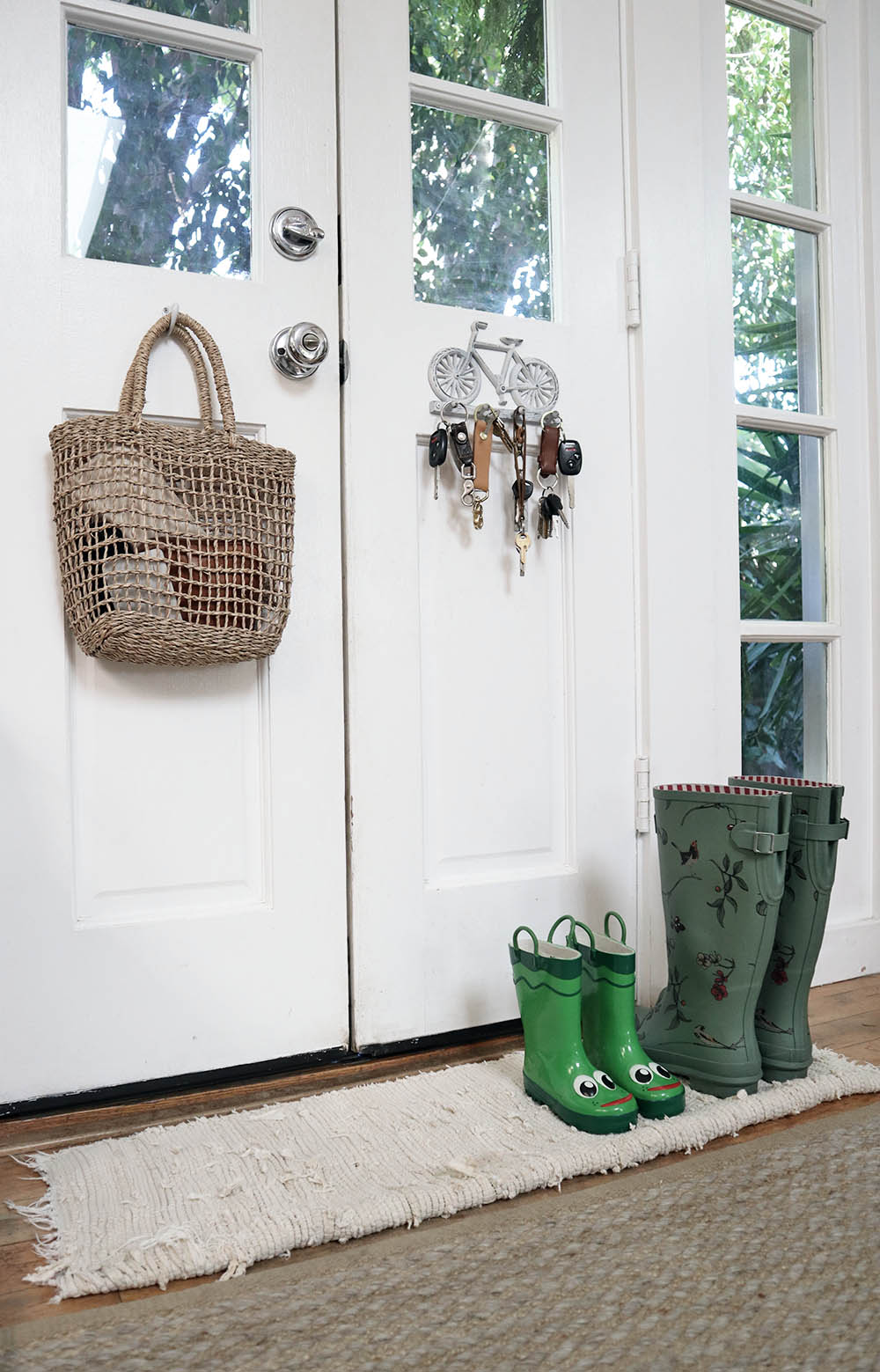
Having zero entry space beyond your front door can be rough in rainy conditions. But we make it work with a machine-washable woven bath mat that we fold horizontally in half. When not in use, I keep it in our bathroom vanity. When in use, it’s basically an interior doormat and boot tray. Our door-mounted key rack temporarily holds a quick-dry travel towel, which we use to wipe down the dogs after walks. It also accommodates umbrellas when needed, as they simply drip down onto the mat until we’ve removed our boots and are able to relocate umbrellas to the shower to dry off there. These adjustments to our 12-inch “entryway” took up none of Emily’s space. (Plus Adam was in Florida for 2 days during Emily’s stay, which helped ease the rain gear build-up.)
In the bathroom, we temporarily cleared a shelf for Emily’s toiletries, and added an extra s-hook to our branch towel rack for her towels. This allowed us to manage rain-soaked clothing and gear, as well as West’s cloth diaper hanging hamper, without cramping the space or consuming the blank space needed for everyone’s daily routines.

Above left: The bathroom cubby we cleared for Emily (aka “Shmoo”). Above right: Sophee before we added the Gathre Mat to the guest bed to keep the pup prints + hairs off of it.
Carefully Considered Holiday Decor
We have a 4.5’-tall holiday tree, which we displayed on a slim, tall accent table / plant stand and placed by my desk. It makes the entire main room of our small house look plenty festive. Other than that (and a throw pillow cover), we have no additional holiday decor within the living space. Thanks to the absence of decorative trinkets and seasonal tabletop accents, Emily had the surface space she needed for her things, West had room to play with his toys and scatter his books, and the pups could still romp around per usual— all within the warm glow of the tree’s twinkle lights.
Come back, Emily— we miss you. (And West keeps opening the pocket door and calling out for his “Auntie Shmoo.”)

Toys For Little Ones Living in Little Spaces
When you’re living in a compact space, finding suitable toys and gear for babies and toddlers can be difficult if you only search via big box stores and typical bestsellers. The following are some key considerations I’d recommend keeping in mind— particularly if you’re trying to be more eco-friendly this year.
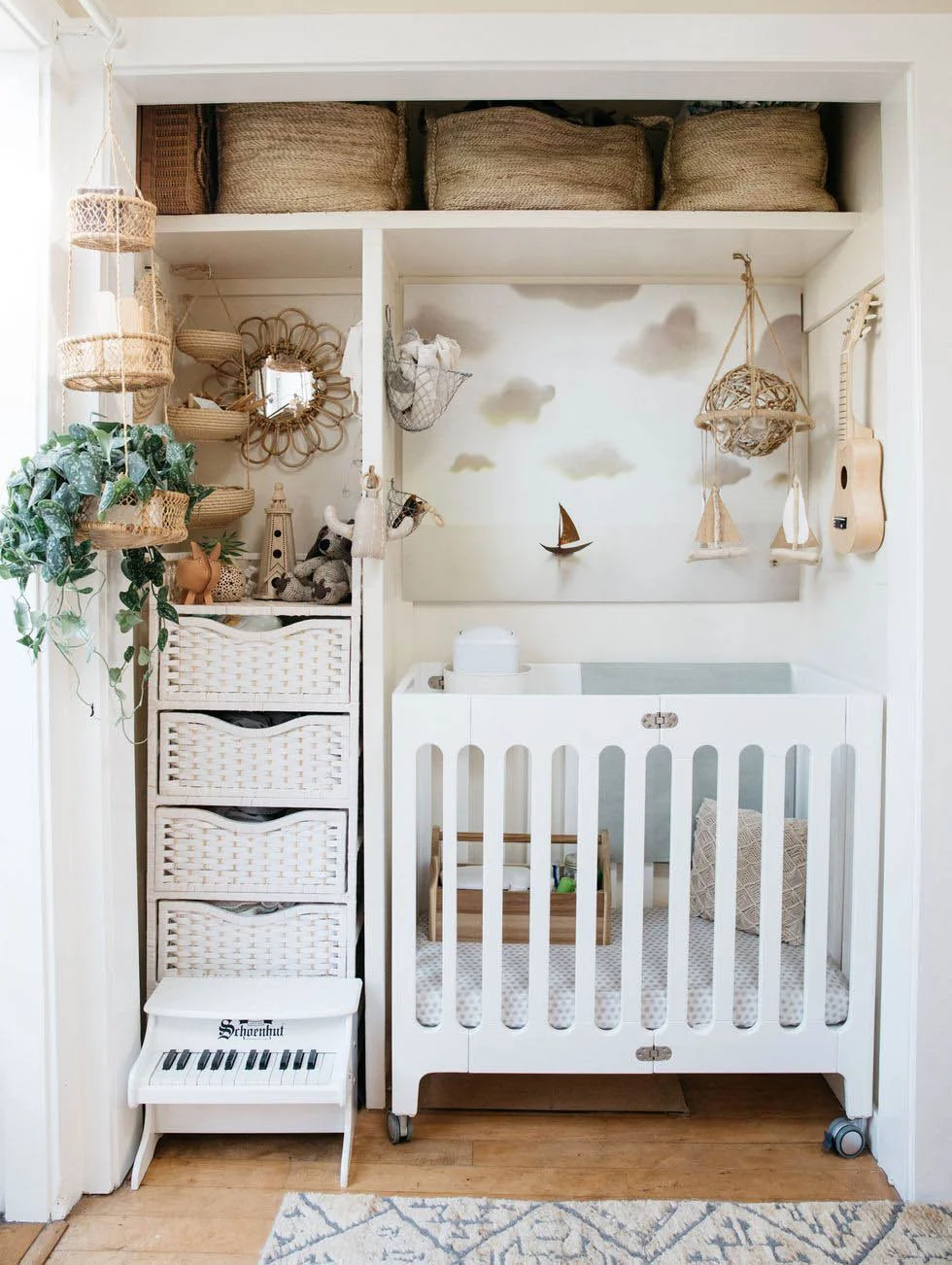
Above: Photo of the Cottage nursery by Sami Drasin for Cosmo (2017)
DESIGN
Is the toy beautiful for the adults to see while also being interesting and educational for the child/children? Toys are always left lying around, meaning they’re most likely visible from almost anywhere in a compact apartment or home. It really makes a huge difference if toys are well-designed with colors, materials, and/or shapes that compliment your space.

MATERIALS
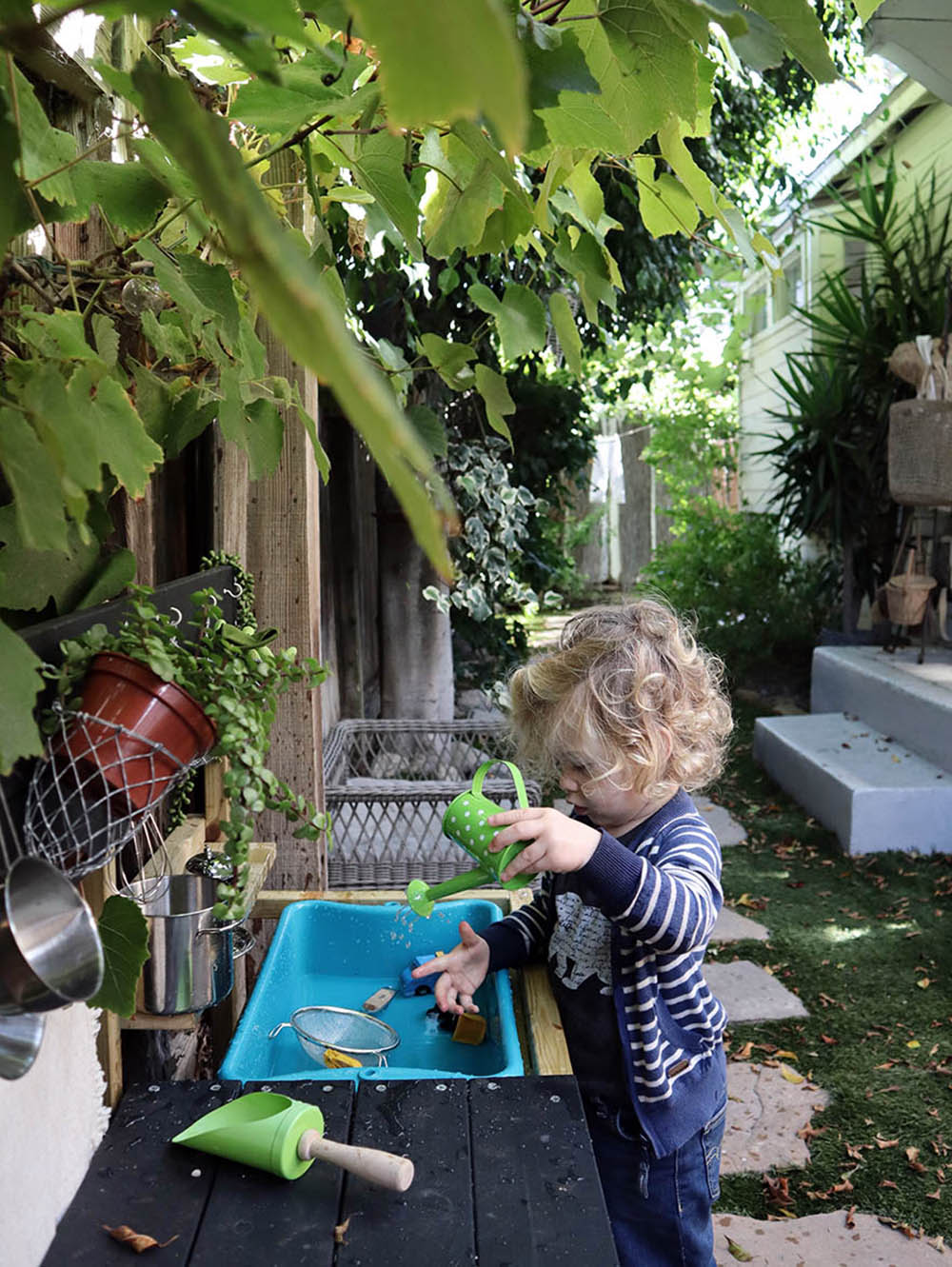
Can you opt for a hand-me down or vintage piece rather than something new? Plastic and metal toys from decades past are still sitting on this Earth, so why not make repeated use of them and save them from landfills?
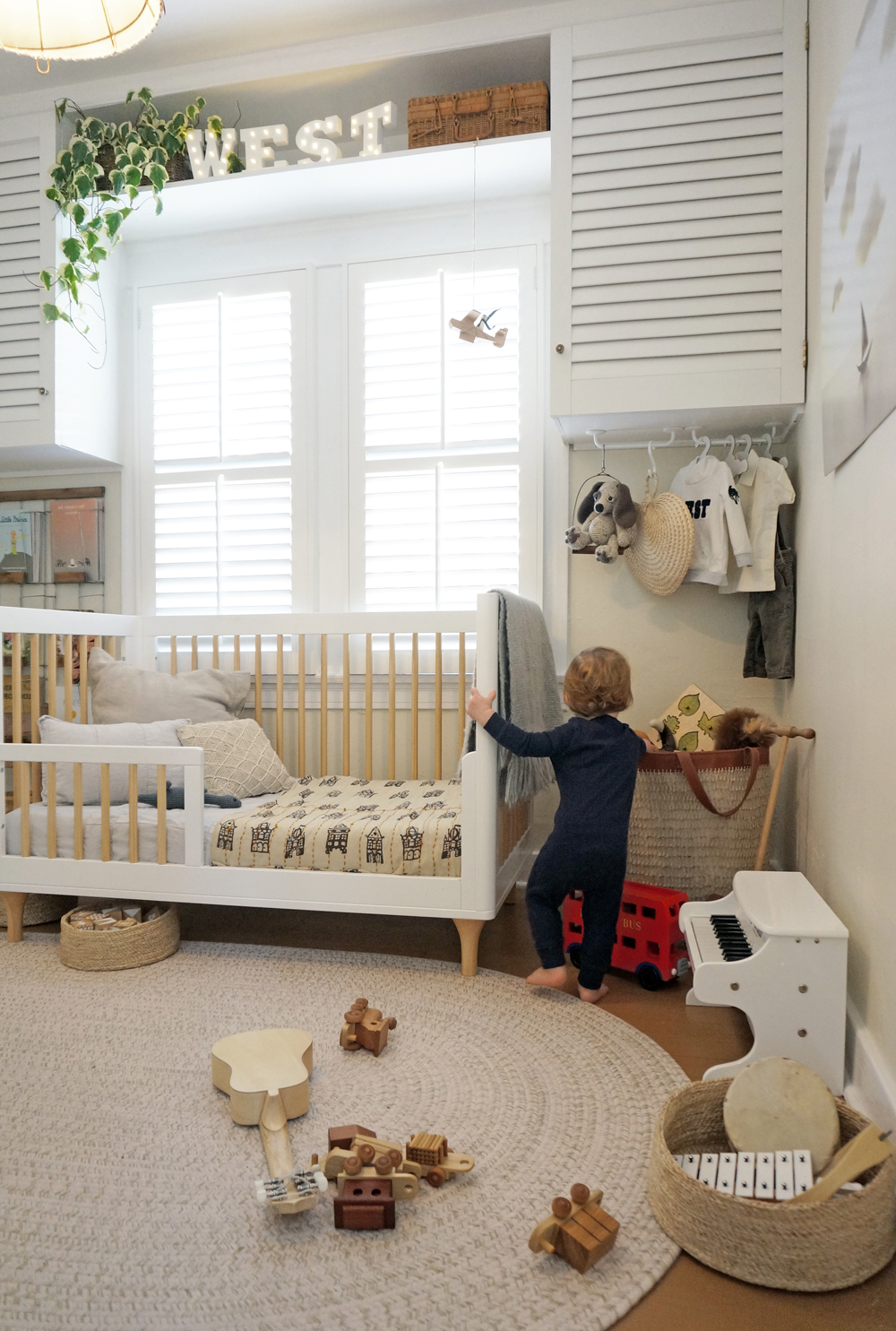
Above: Photo from West’s temporary room (for 5 months) in the front tiny house, which we no longer rent.
SUSTAINABILITY
If the item is new, are the materials sustainable?
SIZE + SHAPE
Does the toy wrap, fold, collapse, nest, stack, or can it be tucked away? Is the piece designed to be tall rather than wide? Can it slide under a table or lay flat under a mattress or cushion when not in use?
CUSTOMIZATION
Can the item work creatively with the current items within your home? For example, a hallway tent takes up no extra space— same goes for a tablecloth fort, or a set of wooden magnets that can live on the exterior of your larger kitchen appliances.
MANUFACTURING
Do the manufacturing, packaging and delivery have a light footprint?
ADAPTABLITY
Can the item work just as well on-the-go as it does within your home, reducing the number of toys your child requires? Compact books, storage play-mats, roll-up gear, travel games, folding tools, and to-go sets are easy to tuck into a canvas bag and suspend from wall hooks within the house at the end of the day, and can also be tossed effortlessly into strollers and carry-ons when needed.

LIFESPAN
Is this a piece that can be handed down to a children’s hospital, library, or pre-school after it’s not longer needed in your home?
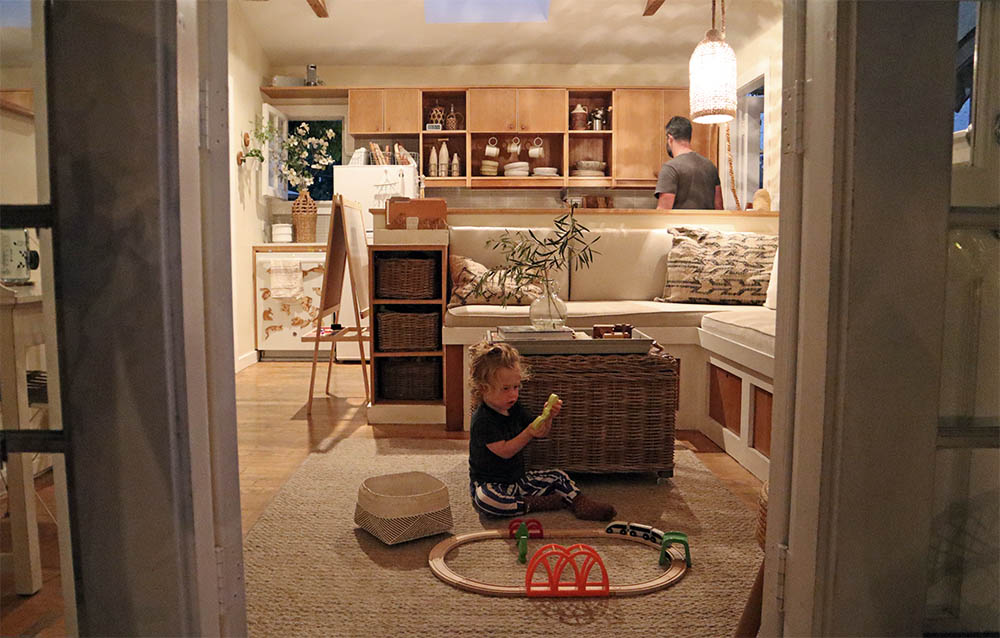
As always, Etsy is my favorite resource for all things handmade and vintage. (You can even write to the seller to inform them that the packaging doesn’t need to be fancy, decorative or even new, which can help cut back on shipping materials and waste in general.) But there are many other sites and shops to explore, depending on your region, tastes and shopping preferences.
And don’t forget your local library! Borrowing books is a great way to cut back on clutter, waste, and cost— all without disappointing your little one(s).
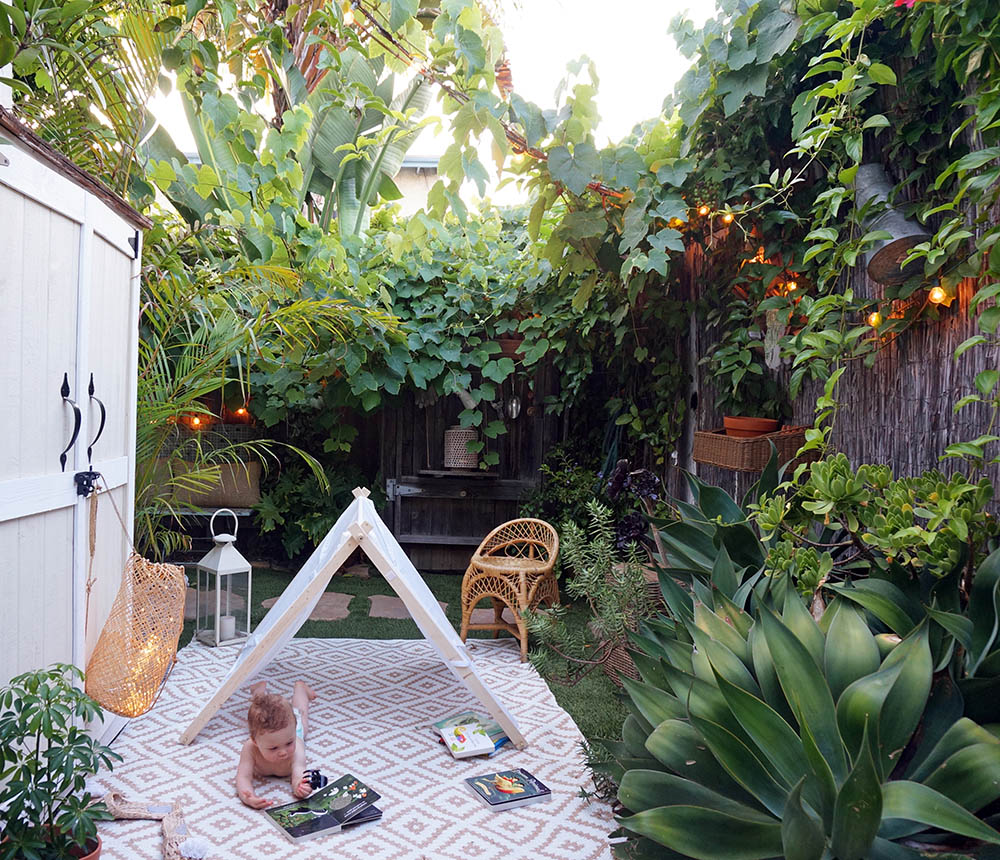
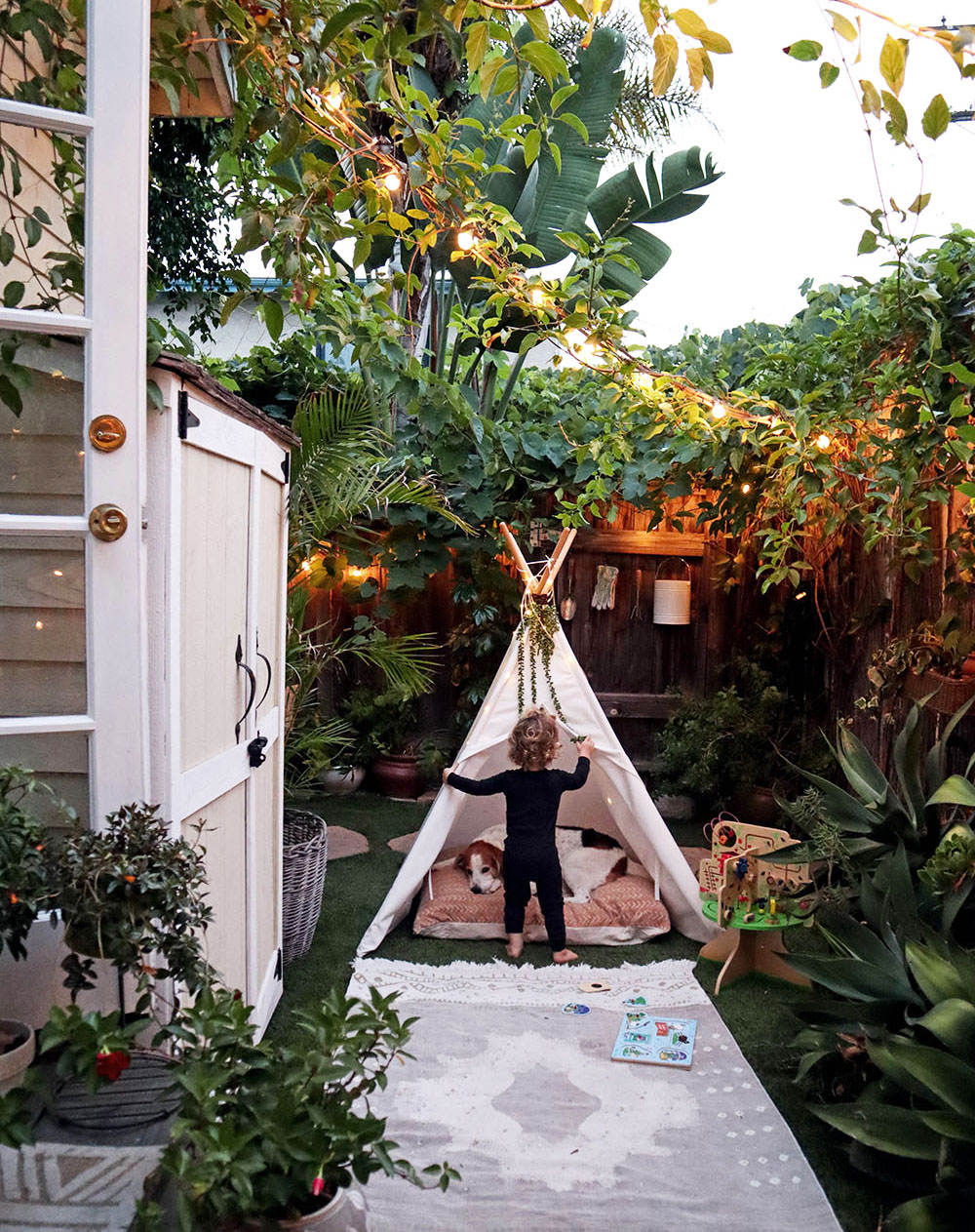
Here are some items (and similar designs) that we have and love for our son and our home. They are a mix of materials, sources, and production methods. Hopefully you’ll find some options that suit you and yours. Happy holidays!
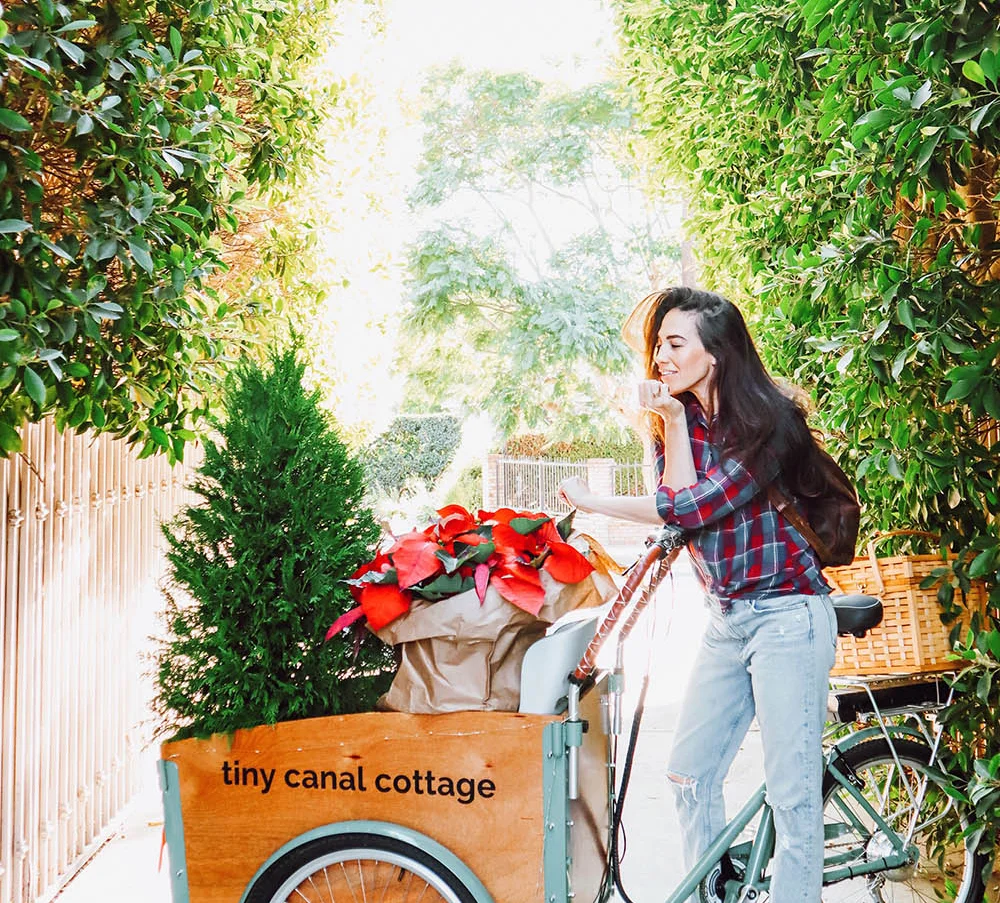
Embracing a Green Holiday Season
This blog post was sponsored by Garnet Hill. As always, the images and words are my own. Any photographs of my son and/or the pups were taken as they interacted happily in their own natural ways.

If you’re living in a small space and/or trying to be more eco- conscious, the holidays can feel a bit like a bit of a trap. The idea of additional, decorative home goods, mounds of gifts, and festive attire can squeeze compact square-footage while generating unwanted waste— from production, to transport, to (ultimately) removal.

Plus, when you’re in a region similar to ours here in Southern California, the weather doesn’t help you cut corners. If you want it to look and feel like the romantic start of a snowy-white winter season we see in movies, you have to get creative. To all of this I say— why not embrace a green season?

Here are a few enjoyable and easy ways to welcome a “greener” winter into your home, wardrobe and gifts.

Green Home
No room to store oversized decor year-round? You’re not alone.

However, throw pillow covers, strands of lights, minimal garlands, and lightweight linens are tiny-yet-mighty ways to liven up your home for the season— particularly when paired with organic decor, such as potted plants and fresh clippings.

Tea towels and mini or lightweight festive throws and covers can be layered on top of your everyday home goods, adding a touch of warmth and forming a seasonal theme. We’ve gotten almost all of our tiny holiday touches from Garnet Hill. Most of these items can be folded away in a small, space-saving travel or “vacuum” bag when not in use.

I stash all manner of holiday strands (lights, bunting, etc.) behind our paperback books on the shelves after the season is through.

Don’t forget to compost or recycle your clippings and other such seasonal greenery per your regions specifications come January 1. (Or even better— opt for potted plants that can take root in your home or garden and become part of the family.

Green Gifting
I prefer to gift edible goods and beverages over the holidays, as they take up no space over time, and generate little-to-no waste. But for the rare occasions when I want to gift a more permanent item, I look for eco-friendly, versatile items that can adapt to a myriad of environments and roles.
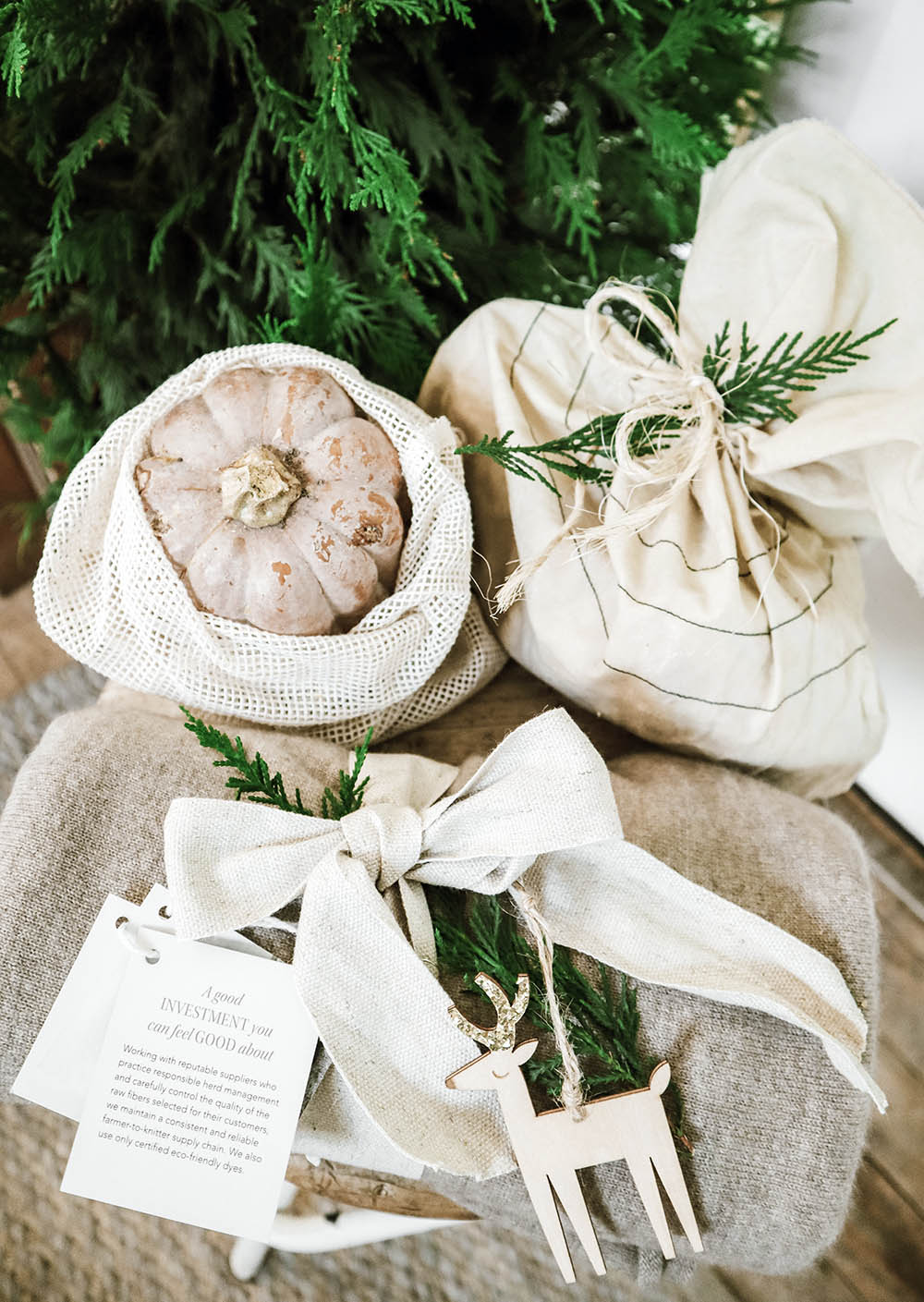
A simple yet stylish scarf can be worn and put to work in many ways, and can be displayed as functional decor when not in use. A neutral cashmere scarf/wrap, for example, is flexible for numerous wardrobe looks, and can last a lifetime when properly maintained.

Breathable, twisted, two-ply yarns can reduce piling and prolong lifespan, all while getting softer with age. When gifted in tandem with a favorite beverage, a charitable contribution, or locally-grown specialty produce, a gift such as this can be suited to nearly any recipient. Simple twine and/or reusable produce bags or bread pouches are every bit as beautiful as wrapping paper, but can be used as daily household items again and again.
Green Fashion
For our little ones: West has finally outgrown the overnight jumpsuits that we relied upon so heavily these past two years (sob!), so we ordered these eco-friendly, stretchy-yet-snug, Green Cotton® pajamas for him. For over a quarter of a decade, the makers of these particular PJs have upheld strict environmental standards for harvesting, processing, dyeing, and finishing their cotton. (West loves their holiday hedgehog set the most.)

My goal is for this set to last him as long as possible, and then either be handed down to a friend’s child, or kept in case we have a second child.

For him: Adam is at home most of the time, though he spends more time with West than I do, and less time at a desk. Since we don’t have want too many items crowding our single, shared closet, he usually wears one of two pairs all day long— so much so that no matter how often we wash them they still seem to maintain a hilarious, lived-in shape. So, as an early holiday gift, I got Adam a long, organic cotton robe, and a pair of plaid pajama pants, which are much cozier for days spent around the Cottage and our garden.

For her: I want to embrace the season with my attire, but I live in sunny SoCal, and I’m always carrying around a child, chasing after the pups, working alone from my home-office, or biking around town. So I need versatile, no-fuss wardrobe staples. Despite the fact that I work from the Cottage, I don’t want to look like a zombie. I find that I’m more confident and more productive when I feel put together, though I never want to spend more than a couple minutes picking out an outfit and getting dressed. (I mean, I found my wedding dress within an hour.)

An organic-cotton plaid shirt in a flattering cut can blend such needs and realities beautifully, and do so without containing harmful pesticides, GMOs, or chemical defoliants. It breathes, it adapts to both warm and cool temperatures, and feels good against your skin all day. It’ll get a lot of milage this time of year, and that’s the whole point.

Decluttering Hurdle: Aligning with Your Significant Other
Recently I asked readers to share their biggest hurdles with decluttering. I was surprised and fascinated by the fact that the number one reply was that it’s tough to get a partner/spouse on-board with the idea of downsizing the household’s possessions. (This response was followed closely in numbers by “sentiment,” which I’ll address in a future post.)

I’ve long taken for granted the fact that my husband and I are on the same page when it comes to a simplified home, so I spent some time considering whether we just hit the jackpot with our lifestyle alignments, or if perhaps we evolved into our shared mindsets in tandem with one another. (I think it’s a bit of both.)

As such, I’m no expert on how to magically transform your significant other into someone who is as enthusiastic about a simplified lifestyle as you are. But I don’t see that as a negative thing— why should we aspire to switch on and off various components of the people we love? But naturally, over time, we can demonstrate first-hand to our partners the overwhelming benefits that a pared-down home can offer, and allow them to form their own opinions from there.

GIVE IT TIME
Decluttering takes time— it’s a rolling series of actions that ultimately result in a significant lifestyle shift. And decluttering only works after you’ve managed to curb your new acquisitions and purchases, and have become stricter about and mindful of the things you bring into your home.
Go through your own process gradually. Your partner will likely take notice once it’s no longer deemed a passing phase, and as you make the ongoing process a part of your own philosophy and ritual. It’s fairly safe to assume that no amount of badgering is going to convince your significant other to change her/his ways. But if you quietly transition your habits, your partner will hopefully be influenced by your resulting joy, and catch-on out of proximity and solidarity.
BACK TO BASICS
When I look back at my last significant relationship, I realize how happy my ex and I were with very little, versus how unhappy we were towards the end when we had a giant apartment and far more possessions than we ever needed. Rather than channeling my energy towards our failing relationship, I focused on filling our place as a hopeful remedy to our problems:
“If I buy this giant desk for my home-office, I’ll have more space to be creative with my work and thus be happier! And if we have this expansive dining table, our future children will all dine here together— can’t you picture it?!”
It was foolish of me for so many reasons. And it’s not unique.

The “we didn’t have much, but we were so happy,” refrain pops up again and again, and there’s a reason for it. With fewer belongings comes fewer responsibilities, coupled with the possibility of more time and mental space for exploration. Couples have a heightened opportunity to truly connect. Perhaps you can remind your partner about the satisfaction and spark that comes with an less complicated life. (A huge an ongoing inspiration for me on this topic and lifestyle is the insightful and endearing couple behind @BrownKids.)

REFOCUS ON THE ENVIRONMENTAL IMPACT AND FUTURE GENERATIONS
If the above won’t work, it might be helpful to subtly and routinely remind your significant other about the impact our material consumption and waste has on younger/future generations. (Read more about this via the hilarious yet sobering book by Ashlee Piper, “Give a Sh*t: Do Good. Live Better. Save the Planet.”

For example, is your husband/wife/girlfriend/boyfriend addicted to fast fashion? Without hounding your partner, gently educate and inform them of the devastating environmental impacts of the industry, and how it’s indisputably damaging to the wilting planet we’re leaving for our children. (Not to mention the microplastics it’s shedding into the liquids and foods we consume, chipping away out our health.)

SHOW CONFIDENCE
If that’s too obtuse, then bring it even closer home. Won’t they be happy and more confident when they can reach into a carefully curated, compact wardrobe, grab ANYTHING in there and then be content with how they look? The prospect is so much better than shuffling discontentedly through drawers and racks of garments for long stretches of time, debating about what fits right.

I’m not suggesting that this lifestyle is suitable for all folks. Small homes and streamlined living are not for everyone, and that’s fine. Perhaps your partner finds immense pleasure in having a large home, or delights in his or her overflowing collection of shoes.

But as the population continues to climb, and as the impacts of climate change roll ferociously across the globe, more and more of us will have to share resources. As such, I believe that getting our partners enthusiastically on board (at a reasonable pace) with a less wasteful, more compact way of living is certainly worth the gentle, subtle, yet deliberate effort.
Some Items You Can Probably Go Without (Part 7)
While it's great to share stories about designs and practices that help us live comfortably and contentedly in small spaces, I think it’s just as important to discuss the things that we can happily live WITHOUT. After all, making a home of a small space isn’t mainly about figuring out how to cram as much stuff as possible into your compact quarters— it’s about experiencing more by owning less.
As always, before we jump on in, here’s a lil’ disclaimer: To each her or his own. While these items might be easy for easy for some folks to forego, they might be gems elsewhere. You know your own needs and space best. Habits shift, tastes change, lives and practices evolve. Design and decor should be different and enjoyable for everyone.
The following is just a small sampling of everyday items you may want to reconsider. (View all the entries in this series here.)

Traditional Window Treatments
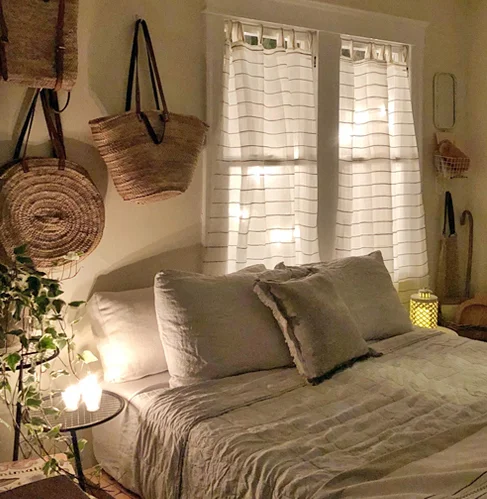
Not only are curtains and blinds oftentimes expensive, but they take up a surprising amount of both visual and physical space in a small home or apartment. Depending on the moulding around your windows, you might be able to skip the usual hardware and go for a more inexpensive and removable (yet lovely) design with the help of a basic tension rod and lightweight linens and curtain clips. When we temporarily rented the front house on our shared property earlier this year, we tried this method out and loved it. We only popped the window covers into place when needed, which is when we converted the couch into a bed. When not in use, the window covers and telescoping rods tucked away with ease, requiring no more space than a t-shirt. We were also able to reuse the tension rods and linens for other various purposes when not in use within the window frames.

An Entryway
No dedicated entryway at your front door? No problem. You can still make a lovely, functional space to support your needs and belongings as you come and go with the help of a few clever, petite, inexpensive accessories. I wrote about this in greater detail via our new book, Small Space Style.
An Umbrella/Yoga Mat Stand
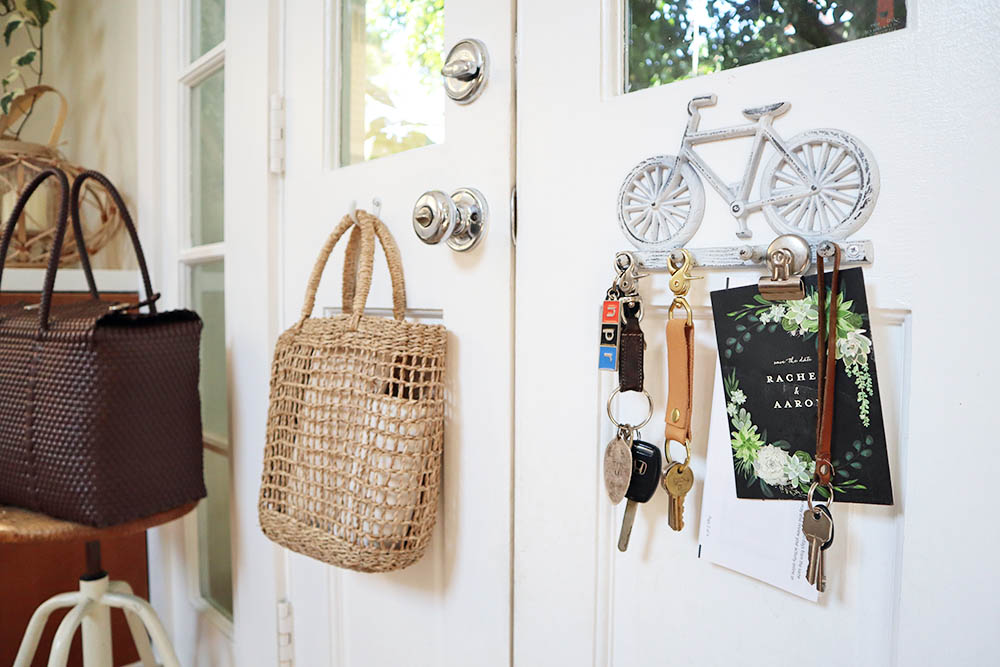
I actually find umbrella stands to be most useful as small space waste-bins, as they’re typically tall and slim, and oftentimes quite stylish. But if you’re pressed for inches in your compact home, skip the door-side stand and opt instead to hang your umbrella and/or mats from wall hooks, either on display, or tucked inside a closet or on the back of a door. If one is wet and needs to air out, simply hang it from the curtain rod or shower-head in your bathroom.
Gift Wrapping Station
Very few people require a full box, drawer, closet, or cart dedicated to gift wrapping, and yet we weirdly tend to hoard decorative papers and ribbons. Challenge yourself to find creative ways to wrap gifts that don’t involve single-use products. For example, I love using tea towels, scarves, and extra canvas shopping bags— all of which can be repurposed by the recipient. A simple piece of twine, a strand of leather (vegan or otherwise), and/or some fresh clippings from around your neighborhood can top it all off beautifully while demonstrating that you put mindful effort into the presentation, even if it isn’t enveloped in shiny new paper and dressed with a fluffy bow.

An Extensive Sewing Kit
Unless you sew on a regular basis, there's probably no need for an entire box of spare buttons, thread, and so forth. A simple jar or pocket-sized tin can most likely contain the basics that most folks need on-hand to repair slight tears and loose hardware.

Watering Can
To be honest, we have one. But most folks in a small home or apartment— including us— don’t need one. Do you have a drinking glass? (Of course you do.) Or even better— a reusable water bottle? Guess what?! Those make for mighty fine watering tools.
Serving / Salad Bowl
If you have a mixing bowl, then you have a serving bowl. Pick a classic stainless steel design, or perhaps an enamel model, both of which could function as a serving bowl, salad bowl, and a mixing bowl. They’re timeless, simple, versatile, and attractive.

A Magazine File
Traditional magazine files consume precious inches. Challenge yourself to update all your physical magazine subscriptions to a digital format, which will reduce waste (in production, transport, and materials), and require zero space in your home. No magazines? Then voila— no need for a clunky file.
One thing you cannot go without is VOTING. See you at the polls on Nov. 6, America!

Tiny House Halloween
I never realized how odd the tradition of Halloween is until I tried explaining it to my 2 year old child.

On our daily walks, he’s suddenly seeing skeletons coming out of the ground, massive faux-webs and spiders clinging to hedges, and all sorts of strange objects hanging from stoops and trees. Some of it he likes. Some of it he doesn’t. (I feel the same way.)

I’m sure that our level of Halloween decor will fluctuate as West grows. But for now we’re still keeping things simple and nearly waste-free. We’ve done this by focusing more on fall-related activities, rather than crowding the Cottage with temporary flair.

Our decor consists of real pumpkins, autumnal flowers/branches from the market, and small number of die-cut paper pumpkins (which we’ve suspended with twine from the branches above our front stoop).
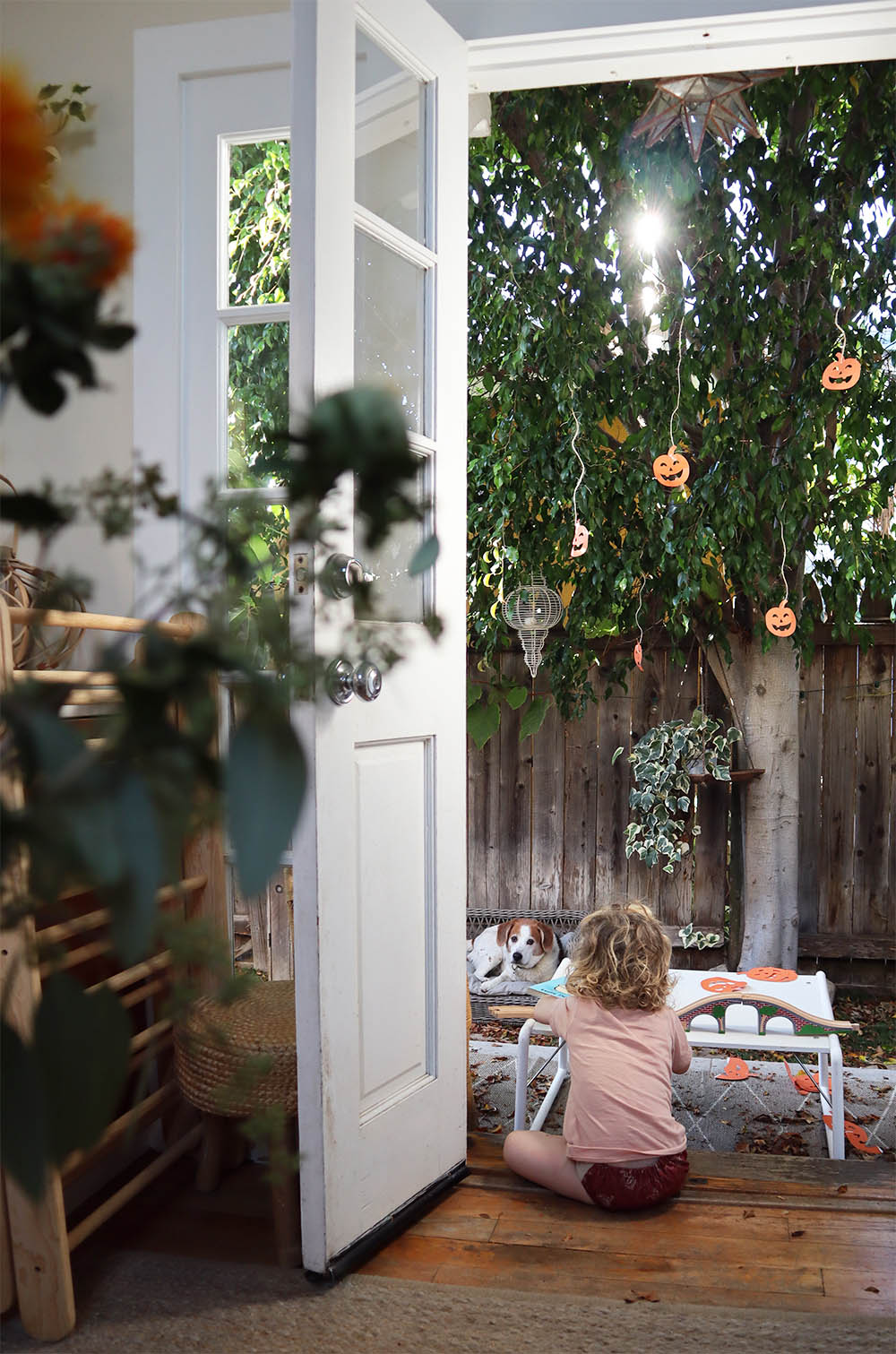

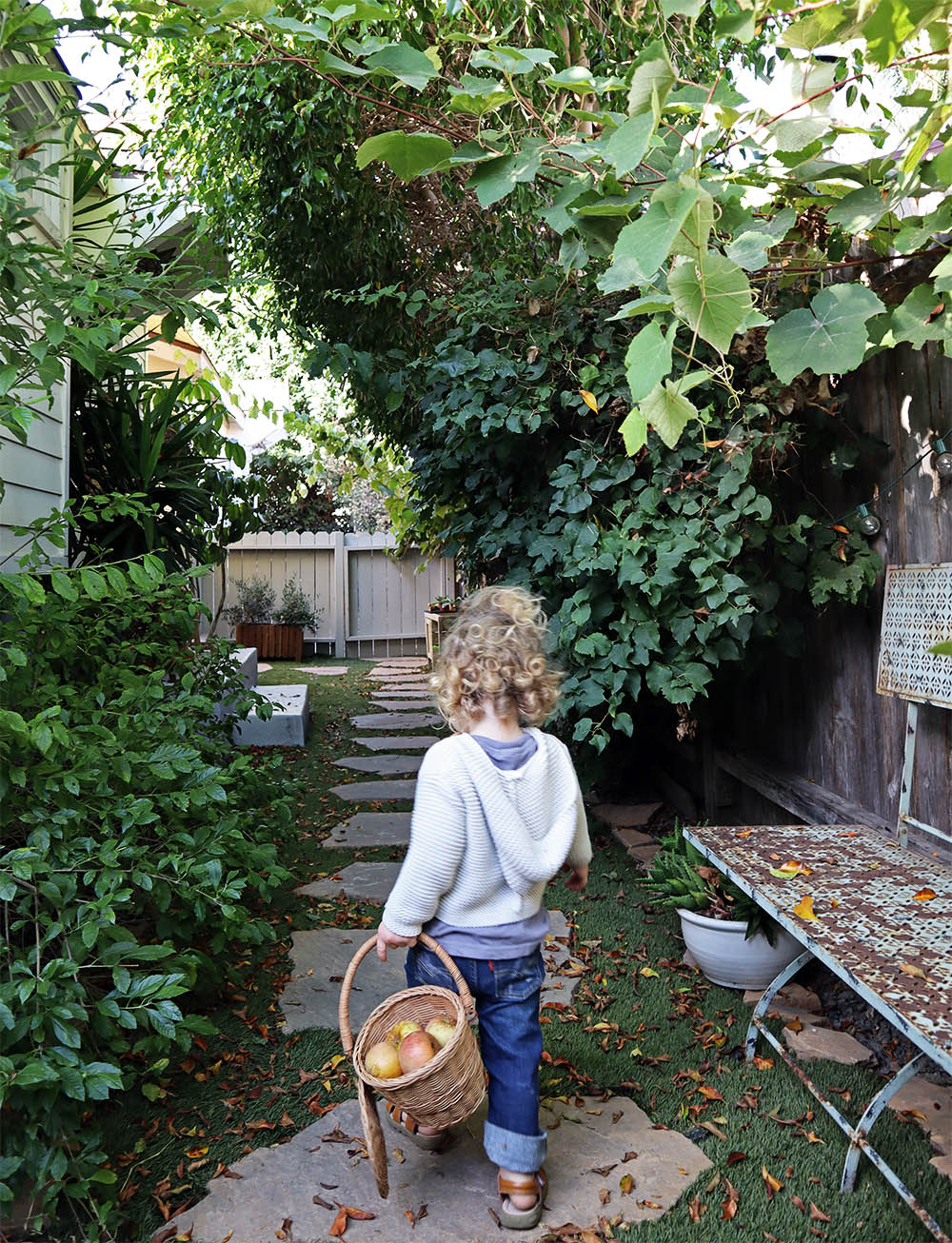
Southern California doesn’t get too fall-ish, but we’ve faked it by getting overflowing Ollie Ella baskets of apples from the farmers markets, checking out Halloween and seasonal books from our two nearby local libraries, visiting the pumpkin patch, and heading outside in the rare rain and cooler weather whenever possible.


West really loves the gargantuan spiderwebs spread throughout the neighborhood, but rather than buying them for the Cottage (and then inevitably tossing them in the trash), we use his enthusiasm for them as an excuse to take more walks with the pups and hunt for web displays that many of our neighbors have installed.

I’m not sure yet what West will wear as a costume, but we’ll figure something out. (A bit of cleverly-cut + penciled cardboard paired with an everyday basic from Primary can go a long way.)
Keeping holiday decor simple might seem a bit grinch-y, but I don’t feel like we’re lacking in spirit at all thanks to all the wonderful community offerings and activities.

By avoiding the delightful-yet-superfluous decorative trappings of Halloween we save money, prevent excess waste, and eliminate the need to store anything in our tiny house until the fall rolls around year after year.

However you and yours decide to celebrate Halloween, have fun and be safe! And don’t forget the most important fall date of all— election day! See you at the polls on Nov. 6, America.





A Look Inside: Food Wrap Storage
Many of you have asked for an unstyled look inside our drawers and cubbies here at the Cottage to show how we store our homewares. Since The United Nations' Intergovernmental Panel on Climate Change just released a bleak and urgent report concerning the health of our planet, I figured toady’s entry could show how we almost always stick to reusable food wraps and baggies, and how we accommodate them in our tiny house. While we don’t use any clever tactics for stashing these items, I’ll share a few no cost (or low cost) space-savvy methods towards the end of this post as well.

We’re lucky enough to have several drawers in our kitchen. (I’ve lived in numerous apartments that had 0-2 drawers, and I know that can be a struggle.) We don’t need to stash much in terms of our baggies and wraps, so we’re able to fit everything in a shallow space between the range and refrigerator.
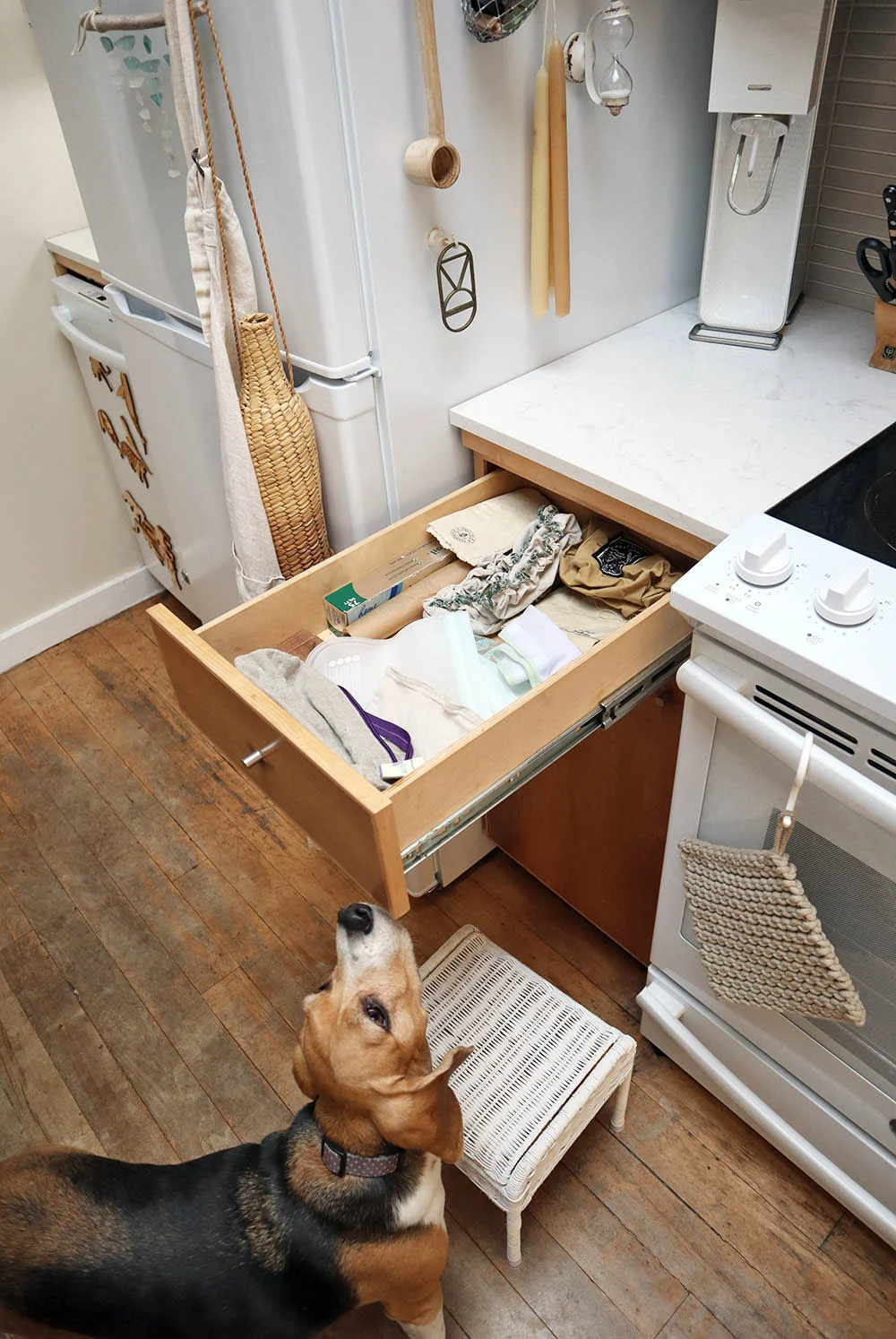
We have a roll of foil (and we reuse sheets as often as possible) along with some wax paper, but other than that, all of our baggies, wraps and kitchen linens are reusable/non-disposable.

Above: About 6 reusable bags in 3 different styles are all we need for snacks for the entire family. (We also have a PlanetBox, and some stainless steel to-go containers.)

Above: Beeswax wrap folds or rolls up tight, leaving more room in your kitchen than a standard roll of cling wrap.

Above: We have two, roomy waxed bread bags. We use them for fresh loaves of bread about twice per week.

Above: Waxed brown paper bags help us carry miscellaneous little goods. We only use about one per month and could go without them, but they’ve turned out to be fun with West for a myriad of mini items and snacks.

Above: Mesh produce bags consume less space than plastic bags. They can be washed easily, and are great for stashing in a drawer until needed, and/or in your daily backpack or handbag.

Above: Linen bowl covers are pretty, lightweight, slim, and eco-friendly. Since they simply pop over your everyday dining and cooking bowls, there’s no need to buy extra storage containers for your basic, everyday leftovers.

Above: Our Ambrosia Bags, which I shared in this post, are also kept in this drawer when not in use. They help us preserve our produce longer, greatly reducing our food waste.

Above: I have an entire “Bake House” bag set, handmade by Peg and Awl. I use these for a bit of everything, from carrying full market groceries, to transporting little pastries for West.
STORAGE
If you’re struggling to fit all of these items in your compact kitchen, first explore what items you can potentially live without, and consider donating those to a nearby non-profit. If you don’t have an available drawer as we do and are seeking some no-cost, simple storage solutions, see two examples below— one from our neighbor’s home, and one from the Cottage.

Above: Our neighbor, @ZiaFinds, who lives in a tiny cottage like ours, simply keeps her baggies and loose wrap grouped together in a net bag hanging beside aprons in her kitchen.

Above: An illustration from our upcoming book Small Space Style demonstrating an easy, no-cost way to store boxes of foils, wraps and baggies on the inside of a kitchen cabinet door. Want to go green? Good news— it’s just as easy, and is FAR better for the environment. Simply nail or tack an old magazine file (as seen on the right) or a similarly slim box on the inside of the cabinet door and fill that with your reusables instead of disposables.
Explore more posts from our “A Look Inside” series: