
Transforming a Tiny Play Space for $30
The other day we stopped by a craft store to pick up a specific item for our son. While running through the aisles chasing after him, I spotted a simple market/lemonade stand for $30. I jumped at the rare impulse purchase.


I appreciated the simple, unfinished, all cardboard design for what it offered, and also for the room it provided for customization and creativity.

With some crayons, toys, books and goods from around the house, as well as a mix of real and faux produce and plants we already had on-hand for West, it was easy and entertaining to completely transform our main room (and the stoops) for hours of play and learning.

We used the scraps of cardboard from the packaging to make little notes and cash for the stand. West’s existing sorting bowls and their corresponding wooden chips became perfect coins.

It was tempting to buy a wooden cash register set, but Adam and I agreed that manufactured toy money was definitely on the list of items we can do without.

The stand has been great for unstructured enjoyment, but it has also been a practical outlet for communicating some lessons and addressing habits that we think are important.

We use mesh produce bags, we express gratitude, we discuss where food comes from and how it’s grown, and we talk about flawed produce and why it’s crucial to not waste it.

We’ve also enjoyed pulling some small florals and herbs up from the garden and giving those to one another. (And then our next activity is usually to plant a couple seeds, or tend to the soil.)

For us, this was $30 so well spent. (And we haven’t even gotten to the lemonade side of the stand…)


Video: Tiny Takeaways (Ep.8)
This is the 8th installment of our mini video series, Tiny Takeaways. In this episode, we’re demonstrating some of the many ways in which a single, simple, compact room can be transformed throughout the day. Why this topic? Because in an era of climate crisis, we believe it’s important to share true to life examples of how living in (and with) a smaller footprint as a family is not only doable, but delightful.
For 200+ more tips for making the most of your compact home or apartment, explore our lil’ book: Small Space Style.
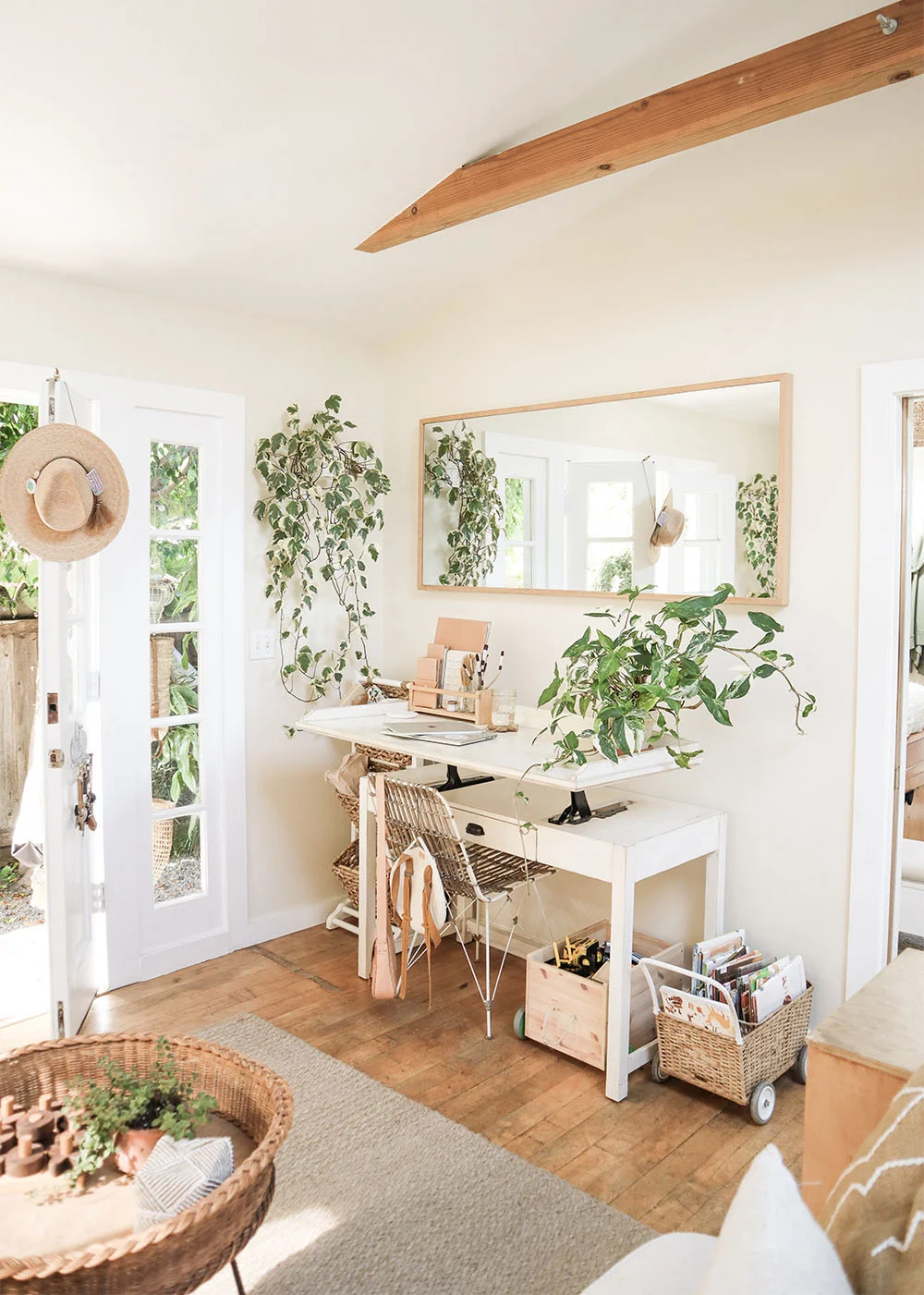
Small Home-Office Modifications
Our tiny home-office has been the full-time workspace for my small business since we moved into the Cottage 8+ years ago. (See our short video about streamlining a compact home-office here.)
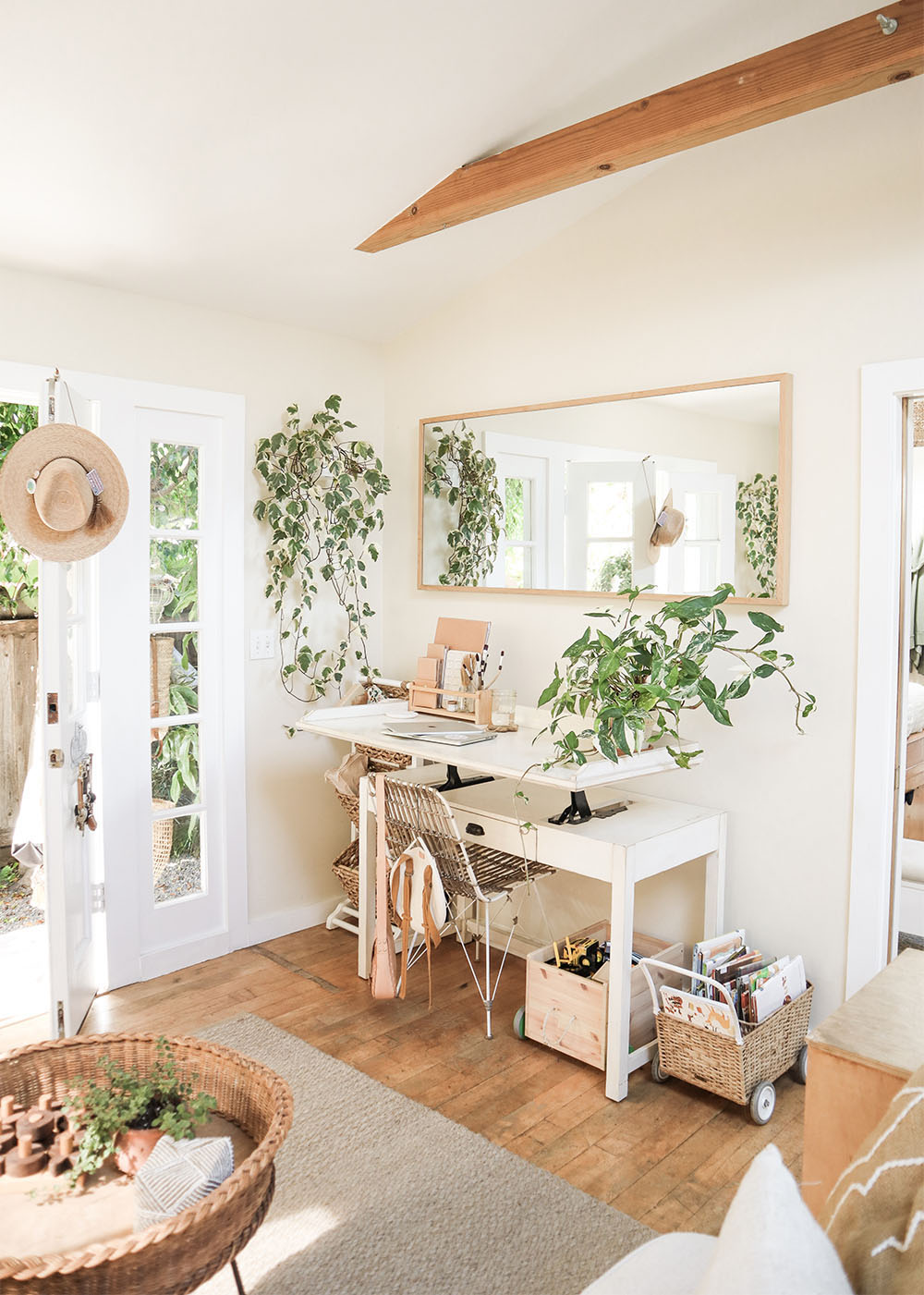
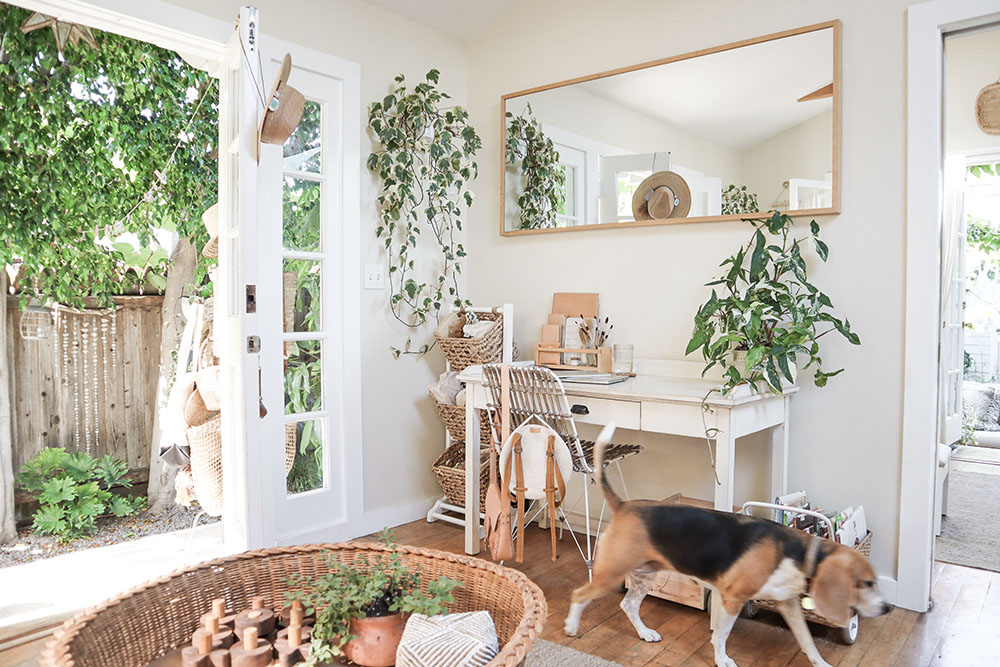
My convertible sitting/standing desk is located in our main room, which is connected to the kitchen through an open floor-plan. This area also serves as our living room, a playroom, a pop-up dining room, West’s sleep space, and a guest room.
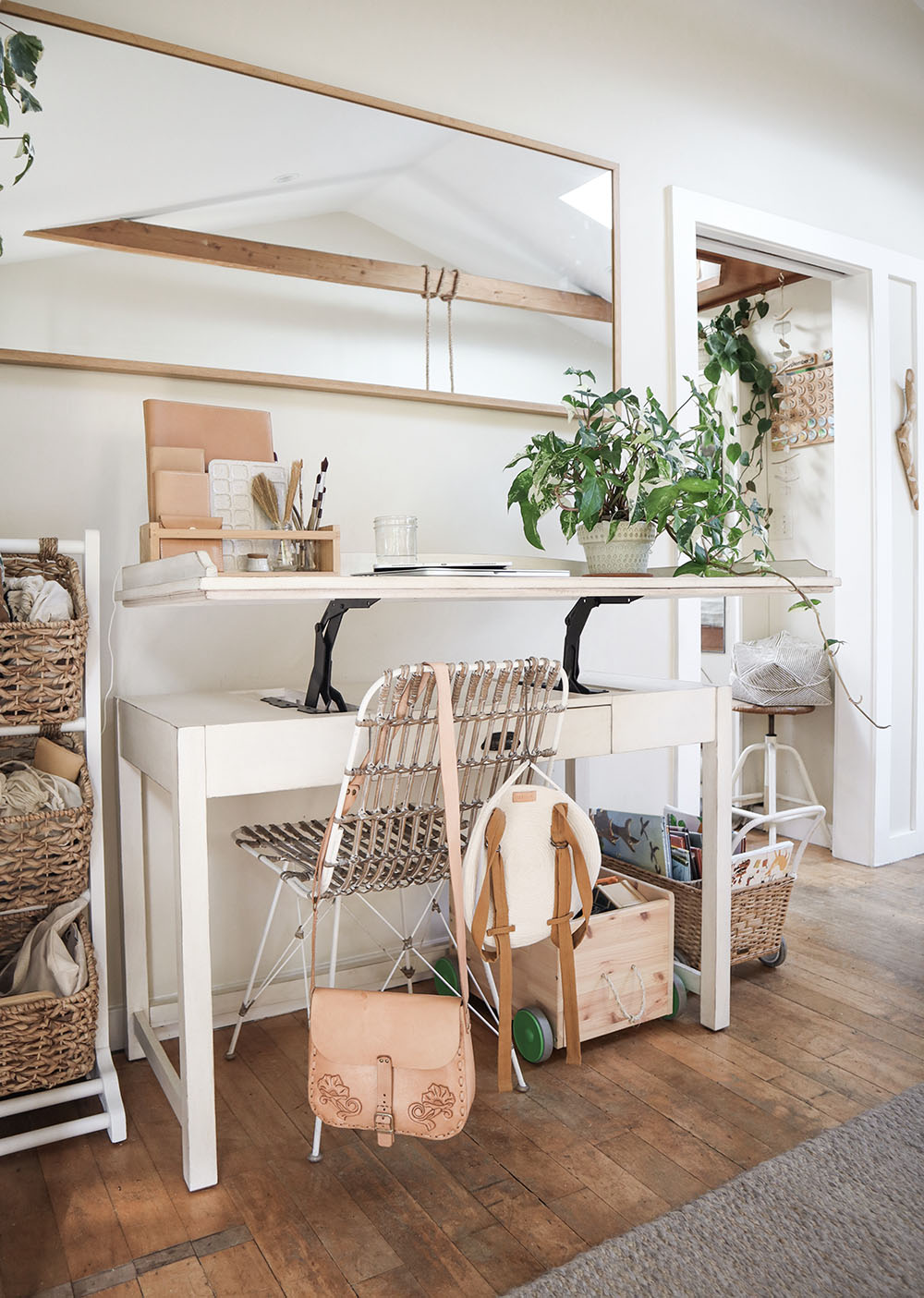

Lately I’ve disliked having my back turned to West as I face the iMac while working. So a few months ago I decided to test going without my large desktop computer. I backed up my files and put the machine in our only closet. I figured if I could conduct my creative business as effectively from a laptop and iPad that I could pass the iMac on to a family member who needs a newer device.

It’s been an adjustment, but I’ve preferred the versatility of working on my laptop. It makes me feel more mobile, and less tethered to one spot as West and Adam dart around the house throughout the day.
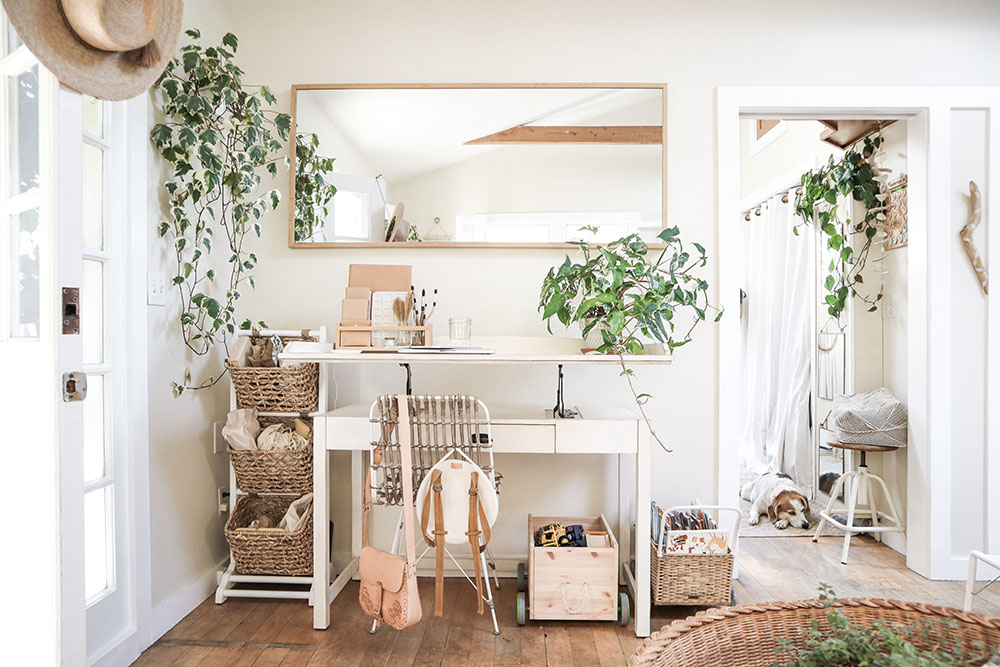
The absence of the desktop computer also helps the small space feel less office-like, which is nice for West, who enjoys playing with his trucks on the desk, and tinkering with toys beneath it.
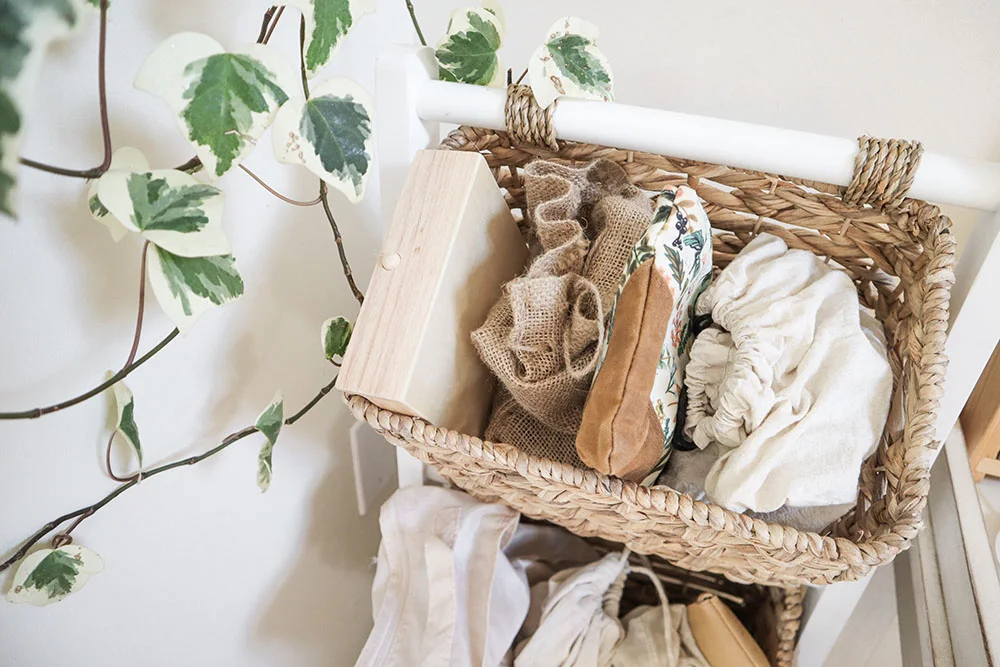
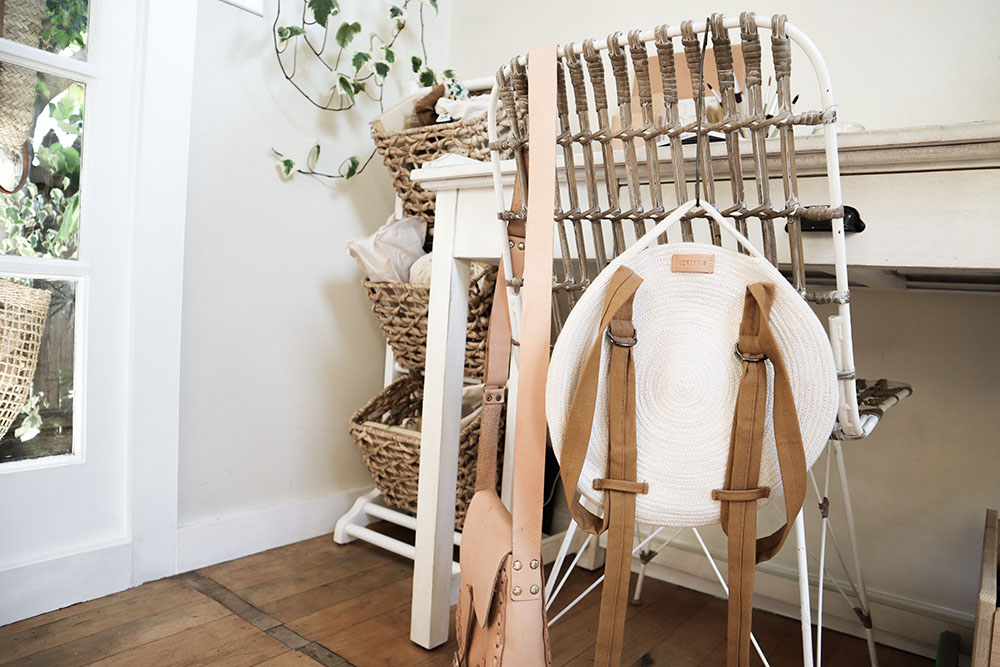
I’ve enveloped my workspace with my son’s activities and books, making it a more friendly space for ALL of us during the day. I added a 3-tiered basket to one side of the lift-desk, and it contains repurposed pouches and boxes that hold various toys and puzzles. On the back of my chair I’ve added small hooks to suspend West’s backpack and my handbag.
In terms of office supply storage, everything has remained the same. I keep most items in a single drawer in our sofa’s built-in end table. A small number of paper files that we need to keep in hard-copy format are worked into our built-in bookshelf in the bedroom, or stored in a vintage wicker picnic basket under the bed.

It is, of course, a challenge to accomplish a full-time work load from home with a child playing and chatting mere inches away. But Adam and West often seek and create adventures outside of the house while I plug away at my to-do list. Plus I can easily work remotely at a hotel lounge or coffee shop if the need arises.

I’ve enjoyed updating my work surface with practical handmade items that are not only pieces of art, but also functional tools.


Driftwood brushes, a ceramic paint palette, bristle pens, and small batch leather folios sit in a slim wooden shelf that keeps everything nice and neat, but also on display.

I’ve taken such pleasure in implementing these minimal updates as our business has transformed, and as our son has grown. They’re modifications that we’ve made based on how we use our little home, and the ways in which we move within it. In being patient and observing our shifting habits and needs (and sitting in them for some time before acting), we’ve been able to reduce waste by avoiding decisions and purchases made in anticipation of the next phase of life. Instead, we’ve found such joy in letting time unfold, and embracing what we need when we truly need it.

Video: Tiny Takeaways (Ep.7)
This is the 7th installment of our mini video series, Tiny Takeaways. In this episode, we’re continuing to highlight some easy, space-saving swaps that might make your home or apartment a bit more eco-friendly. For 200+ more tips for making the most of your compact home or apartment, explore our lil’ book: Small Space Style.

Less Shopping, More Time
There’s something unrelentingly frenetic about the pace of family life in a major city. Between traffic, crowds, and prices, simply putting a foot out the door can feel like stepping into a whirlwind.


However, since curtailing our dependency on disposable / single-use items, Adam and I have realized that we rarely have to go shopping, which means we have reduced those frenzied family missions to an absolute minimum.

Once we no longer needed to replenish our stock of cleaning goods, household supplies and toiletries— and since we reprogrammed ourselves to stop bringing new items into our home— there became significantly fewer errands to run. (This is, of course, partially achievable through online shopping, but the carbon footprint of packing + shipping are far too taxing on the environment to warrant frequent deliveries.)

Other than our regular trips to the market or to pick up canister refills for our Sodastream, we usually only leave when we are meeting people, working, or creating lil’ field trips for our son and dogs. In other words, less shopping us has given us the magical gift of more time.

Lil’ apple basket by Olli Ella

That’s not to say that I ever feel caught up on business, or that we have found time for things like traditional workouts or lengthy catch-up sessions with our friends. For us, the reality of running our own business and raising a family with no hired help for either is that we are always behind on something. (I imagine that most people feel this way.) But, when it comes to time with our son, we feel like we’re squeezing in every moment possible— and we don’t have to drive him all over the city for this-and-that while we’re at it.
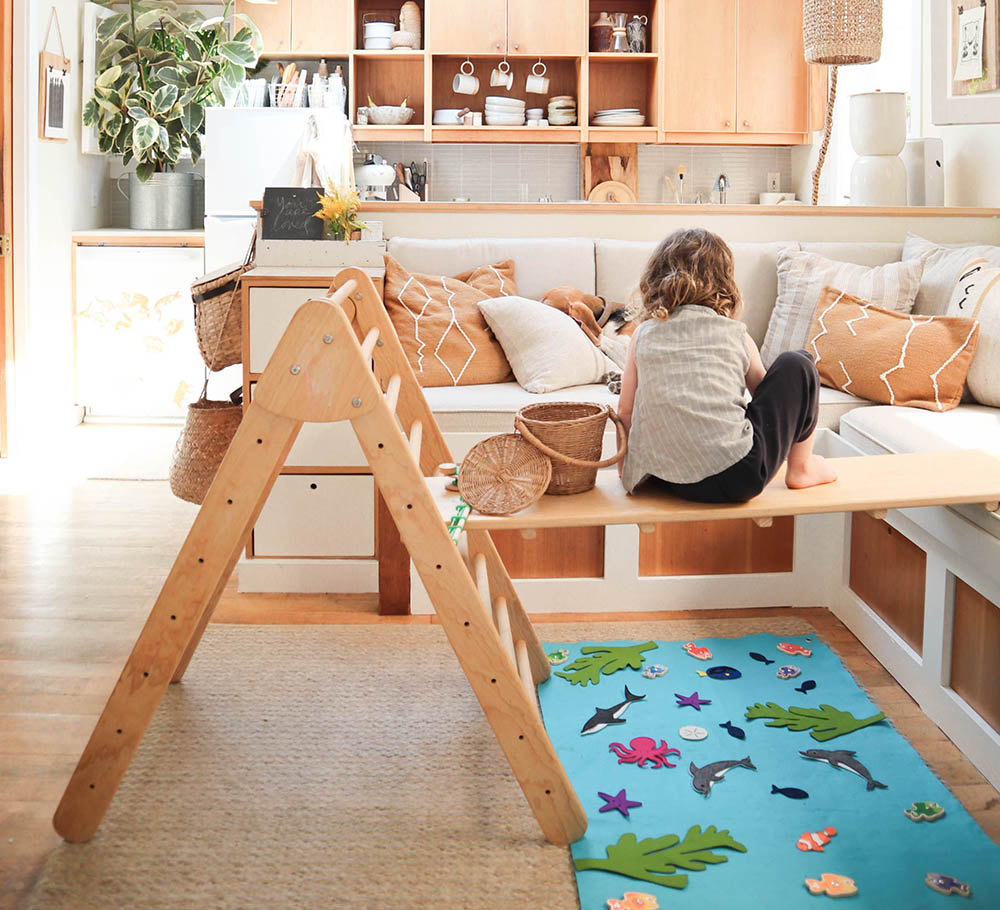
This leaves time for impromptu explorations on foot or by bike within our local community, and opportunities for countless imaginary games in our tiny home and garden.

Here’s to reduced waste, less stuff, and more adventure.


Video: Tiny Takeaways (Ep. 6)
This is the 6th installment of our mini video series, Tiny Takeaways. In this episode, we’re highlighting some easy, space-saving swaps to make your home or apartment a bit more eco-friendly. For 200+ more tips for making the most of your compact home or apartment, explore our lil’ book: Small Space Style.

Video: Tiny Takeaways (Ep.5)
This is the fifth installment of our mini video series, Tiny Takeaways. In this episode, we’re highlighting some easy ways to maximize outdoor spaces! For 200+ more tips for making the most of your compact home or apartment, explore our lil’ book: Small Space Style.

Remaining Clutter-Free for the Long Run
This weekend I conducted a “Living with Less” workshop at Create & Cultivate. Several of the attendees shared that they’d gone through the cathartic (albeit tedious) process of decluttering and downsizing, only to find themselves slipping back into an overstuffed life a few months down the road. This is something I hear repeatedly. So here are some tips for remaining clutter-free for the long run.

Photo by Smith House Photo for Create & Cultivate
Avoid Triggers
Identify your more reckless spending triggers, then take care to avoid them. For example, do you find yourself buying items off social media links or major retail sites when you’re bored, stressed or unable to sleep? Tuck the phone away and pick up a book, meet a friend, or take a walk instead. Do you buy junk at the airport during layovers? Bring your own snacks, bottles and entertainment with you, and don’t even step foot in the shops within the terminal.

Pause Before Purchasing
When online shopping, challenge yourself to wait at least 24 hours before checking out. Chances are you’ll realize that you don’t actually need all (or any) of the items in your cart.
Get One, Give Two
If you get something new, give away two items in its place. But make sure the items with which you’re parting have a dedicated home, as 80+% of donations end up in landfills.

Reduce Opportunities for Impulse Purchases
Once you’ve swapped your common disposable goods (such as paper towels, cotton rounds, cleaning supplies, diapers, and tampons) for reusable options, you’ll have far less shopping to do. And with fewer trips to the store, you’ll have fewer opportunities to make impulse purchases.

Decline Freebies
You don’t need to accept every free item and bit of SWAG dangled in front of you. Just walk away, or use the magic words: “No thank you.” If you still somehow end up with freebies of wellness products or clothing that can be of use to communities and organizations in need, leave the goods sealed/unopened and donate them as soon as possible.
Donating Gifts
If someone gives you a gift you can’t use and/or don’t like, shake off the guilt and donate it immediately. It doesn’t do anyone any good for the thing to rot away in a box under your bed. Pay their generosity forward by regifting the item(s) to a fitting non-profit.

Ask Qualifying Questions
Before you purchase a new object, ask yourself the following questions— you might be surprised by how few items actually clear these hurdles to earn a coveted place in your home:
Do I already own something that serves the same purpose as this new item?
Was this product produced ethically and with sustainability in mind?
Can this piece multitask? (Of course this question doesn’t apply to all goods, but it can apply to many. Multi-functional pieces will reduce the number of items you need in your home, saving you money and reducing your footprint.)
Where will this item be stored when NOT in use? And do I have the space for it?
Lastly, if the piece(s) you’re considering pass all of the questions above, then ask yourself: Is there a vintage or handmade option of this item that I can find locally instead?
Let’s do this— for our sanity, for our wallets, for our homes, for our busy schedules, and, above all, for the planet.

Sustainable Small Space Styling Feature
It’s my goal to assist others in embracing and enjoying life in— and with— a smaller footprint. Our friends at Olli Ella invited me to share a few tips pertaining to this on their lovely blog, since we have and use so many of their products here in our tiny home. A preview of the feature is below— visit their post and scroll to the bottom to shop the collection.

Tip 1: Use Your Local Library
Save money, preserve space, and reduce your environmental footprint by borrowing books from your local library— particularly if you have children. While we do have a permanent assortment of books in our home, the most used and efficient collections are those we borrow from the city and county libraries. We keep our son’s borrowed books in the Strolley as it’s easy and safe for him to roll around the house, and it keeps everything organized and easily accessible.

Tip 2: BYO... Everything
We all know that single-use plastics are responsible for a staggering amount of damage to the planet and its inhabitants. Bring your own reusable produce bags, bulk good containers, reusable to-go boxes, utensils, linens, coffee and water vessels, and refillable jars for cleaning and body products whenever possible. It doesn’t have to be as cumbersome as it sounds once you figure out a system that works for you. And since these items are constantly in varying stages of use, they’re easier to stash around your tiny home than you might think. We tote ours daily, and use our Luggys to transport them to and from our local farmers markets and grocery stores.

Tip 3: Organize In Style
You can stylishly organize toys, games, accessories, equipment and more within your small space by skipping the bulky plastic storage bins, and opting instead to use beautiful, versatile baskets made of natural materials. Instead of storing everything together, arrange the containers throughout your home. Use simple hardware, such as coat racks, s-hooks and wall hooks to mount and hang select baskets. This will free up some precious floor space, while enriching the look, feel and function of your home.

Tip 4: Get Some Fresh Air
Whenever possible, skip the car. Clearly this planet needs us all to cut back drastically on emissions from transportation. Plus riding a bike is better for your body, and getting outside is good for the soul. If your town offers shared/rental bikes, use them. If not, there are numerous handmade small space storage solutions for bikes available on sites such as Etsy. Our family shares one car, but we ride our funny little fleet of bikes far more often than we drive. I have a multi-tasking Mamachari for holding my phone and keys while I’m on my bike, and my son has a sweet little Mini Chari on his tricycle.

Tip 5: Decorate With Greenery
Adding a diverse array of air-cleansing plants to your home is not only a wonderful way to make your space visually striking and unique, but it’s also a creative way to avoid filling your home with mass-produced decorative objects. The less manufacturing that is required to create your residence and the items within it, the less harm you’re doing to the Earth. Choose plants that suit your vibe and location, and be mindful of selecting varieties that are safe for your family and pets. (Our son loves to water our houseplants at the kitchen sink while standing on his Storie Stool!)


Video: Tiny Takeaways (Ep.4)
This is the fourth installment of our mini video series, Tiny Takeaways. In this episode, we’re highlighting 5 easy ways to create a soothing small space by reducing visual clutter. We hope you enjoy! (For 200+ more tips for making the most of your compact home or apartment, explore our lil’ book: Small Space Style.)
(Note: This episode is formatted vertically for optimal mobile viewing. To watch it on a desktop/laptop, please click the full screen icon on the control bar at the bottom of the video player. )

Basket Roundup
In our new video series I’ve been showing ways in which we use our diverse basket collection to reduce visual clutter and increase functionality in our small home (and office). Similarly, Instagram Stories videos from our bikes, canoe, and our single car have offered a look at how we also use baskets while on-the-go. In response, I’ve received several requests to share some of my favorite designs and resources.
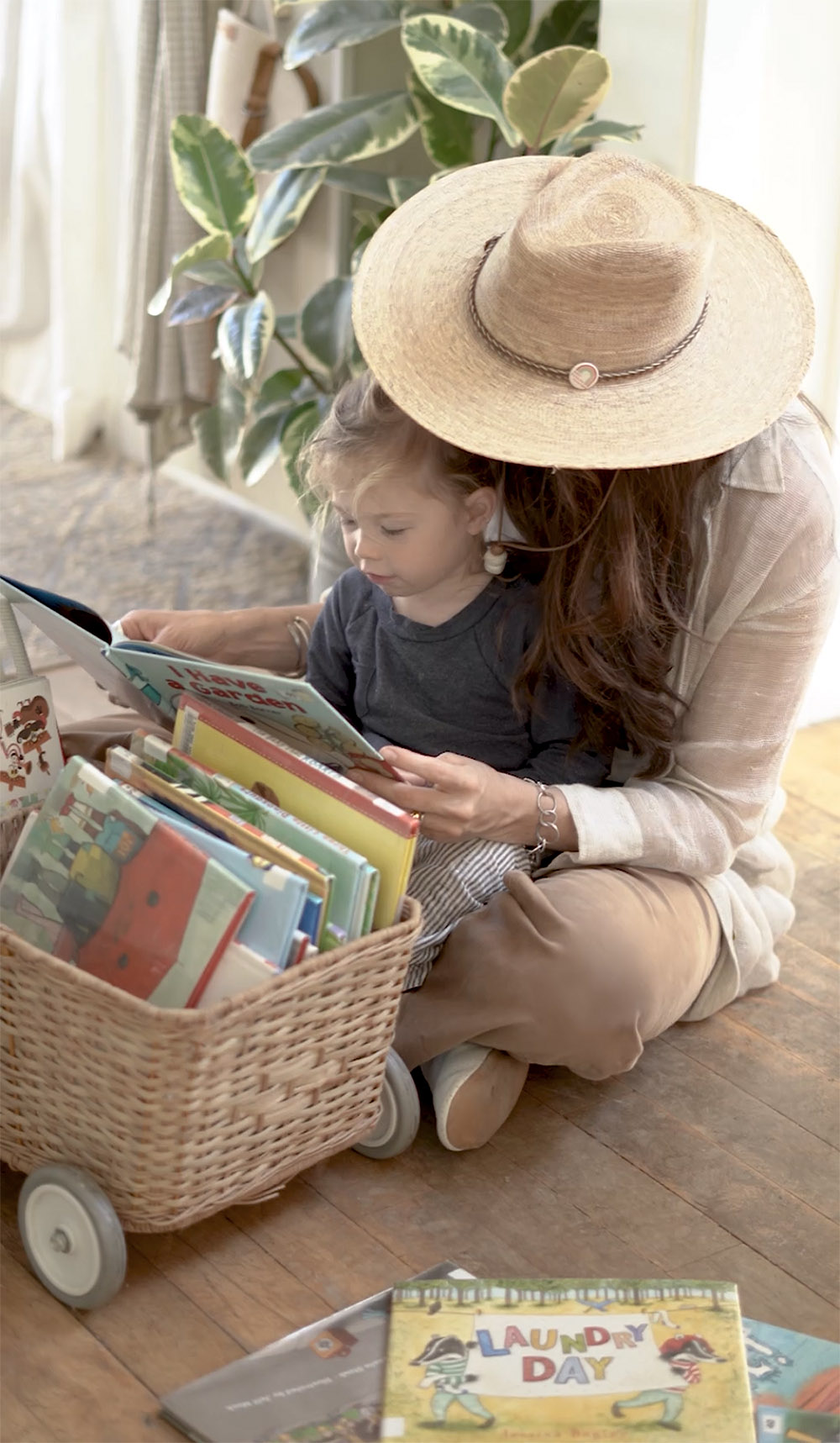
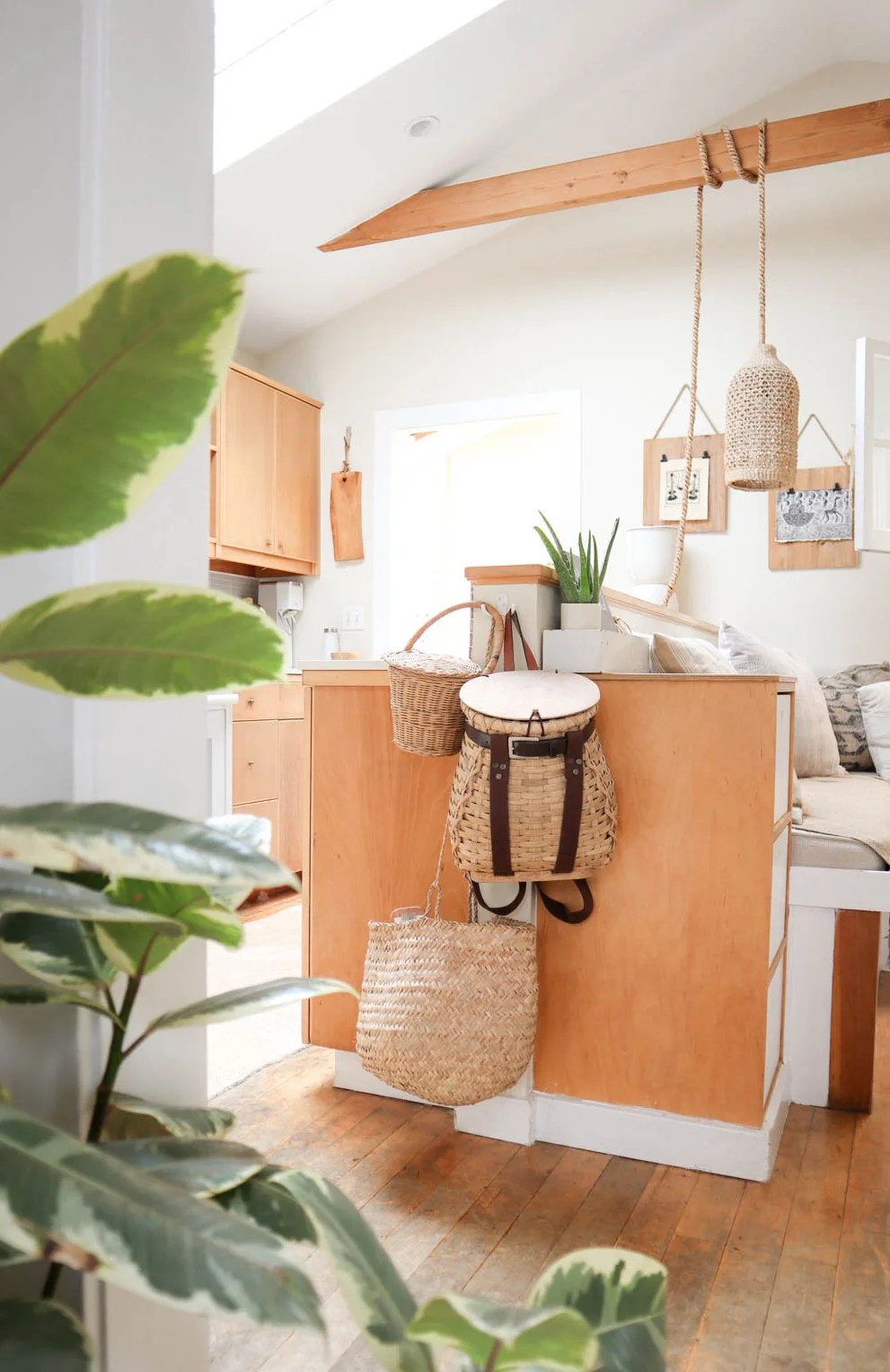
I’ve included a shopping round-up of baskets we use often (or used repeatedly in the past). When you look at the photos in this post, these scattered containers might not look like much. But in reality, they corral everything from art sets to reusable shopping accessories to dolls to instruments, and so much more. It’s all hiding right here in plain sight.

For me, the key is to find baskets that can be used in multiple ways. For example, the petite bag on the front of my bike can also be converted to a shoulder bag or backpack. And the rolling cart I take to the library and market holds larger garden toys while it’s parked at home. Versatile pieces such as these ultimately save space, money and waste.
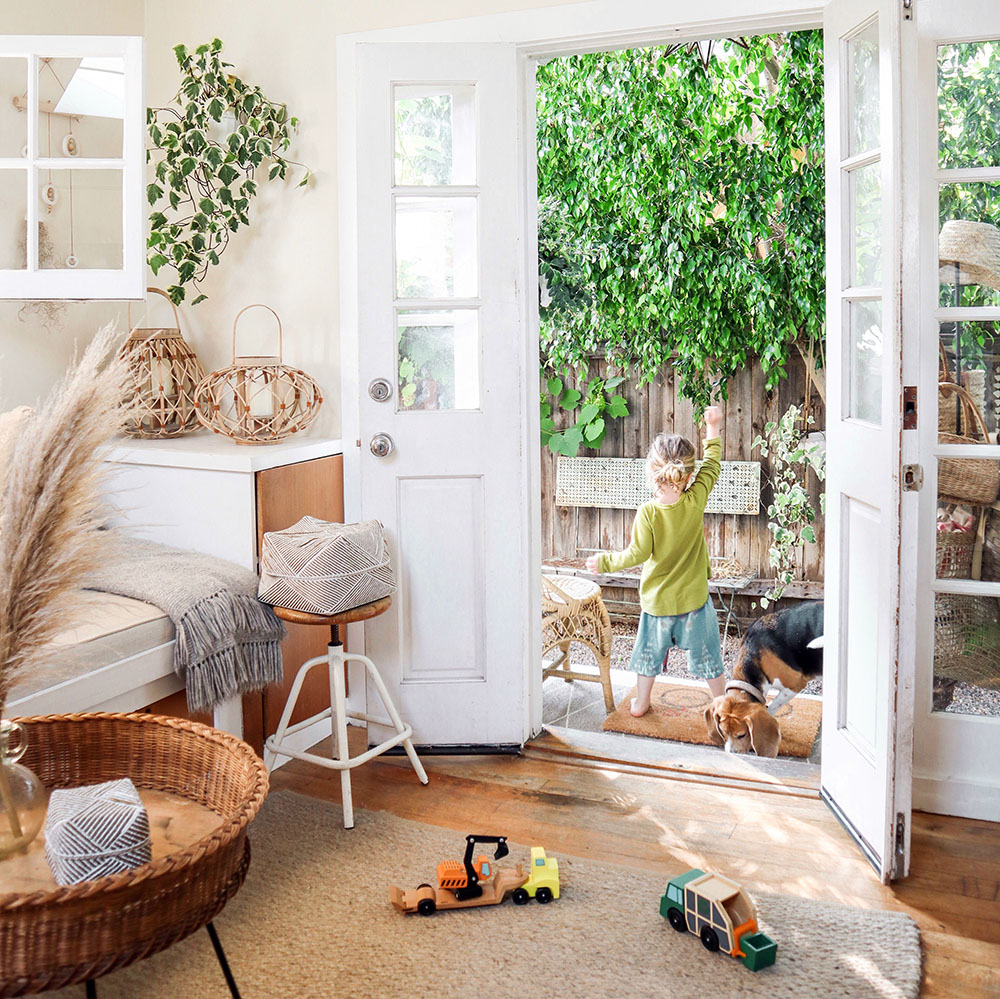
When a container is no longer needed for one purpose, we adapt its use to suit our changing needs, rather than buying something new. The best example of this would be our beaded nesting set from Kembali Collective, which we repurpose at least once per month.
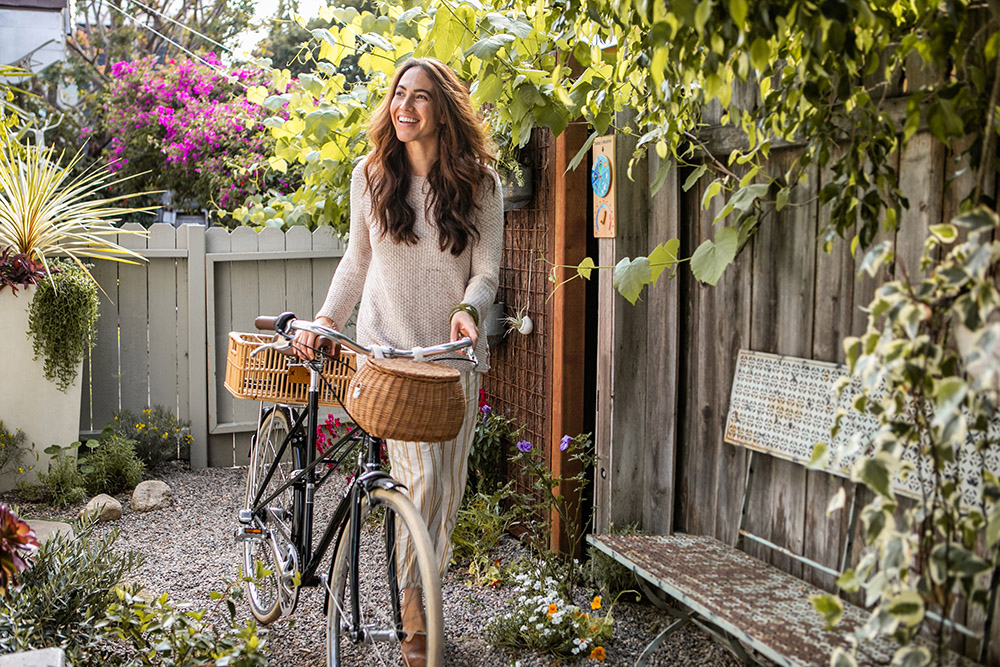
A SPECIAL NOTE REGARDING BIKE BASKETS - Across our 4 bikes, we use the following styles of baskets. (It might seem like a lot, but biking is our family’s primary mode of transport— even when we travel locally with the dogs.)
Child’s bike front basket, which converts to a shoulder bag or backpack
Matching adult front basket, which converts to a shoulder bag or backpack
Wide-rim rear basket for larger goods and jackets
A rear basket with a bottle holder
When riding, I usually wear a straw backpack for taller items, like wine bottles or branches. If I need something that closes at the top so goods don’t tip out if I bend over (which happens a lot when I’m traveling with West), then I wear this canvas minimalist backpack.
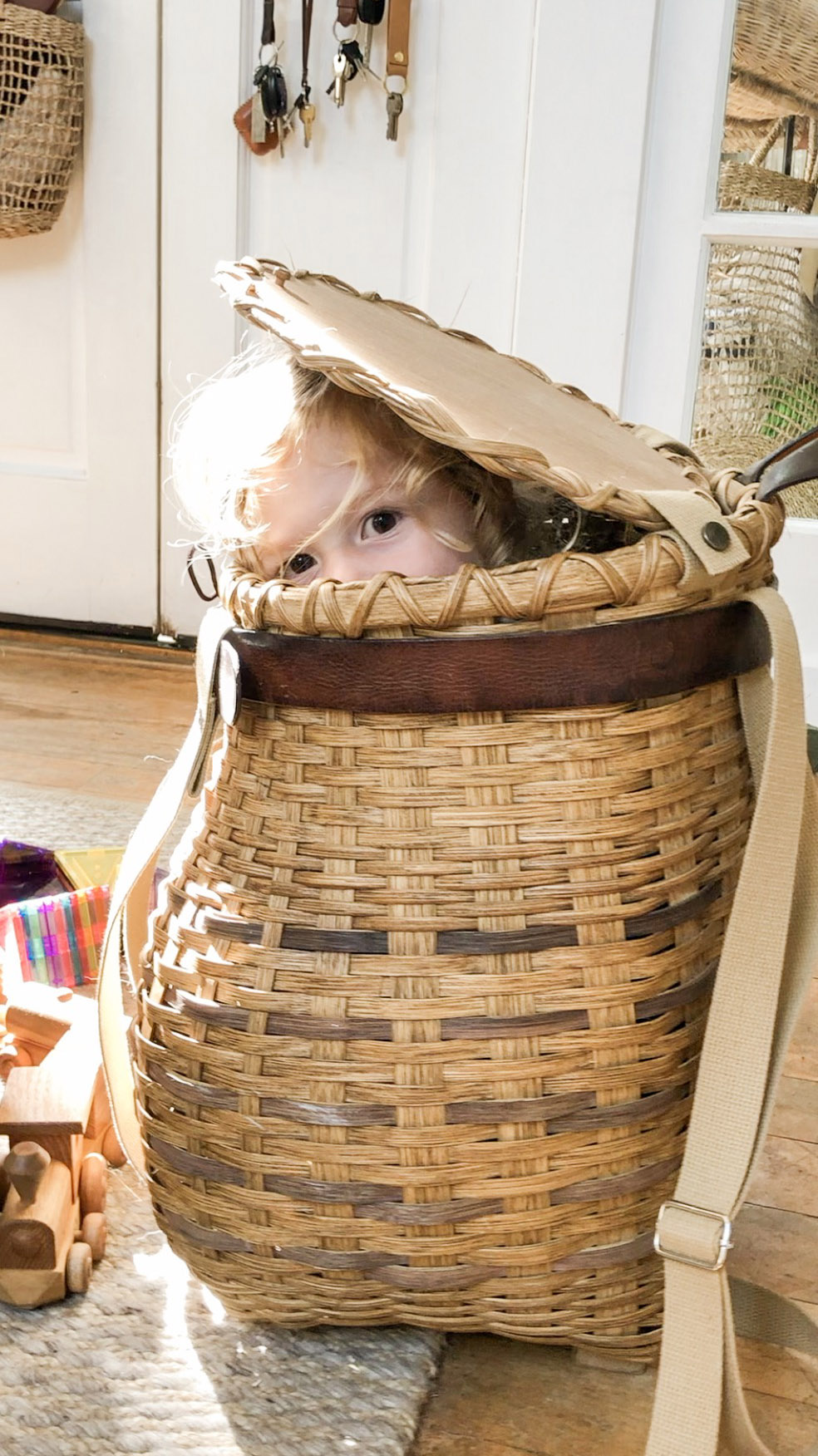


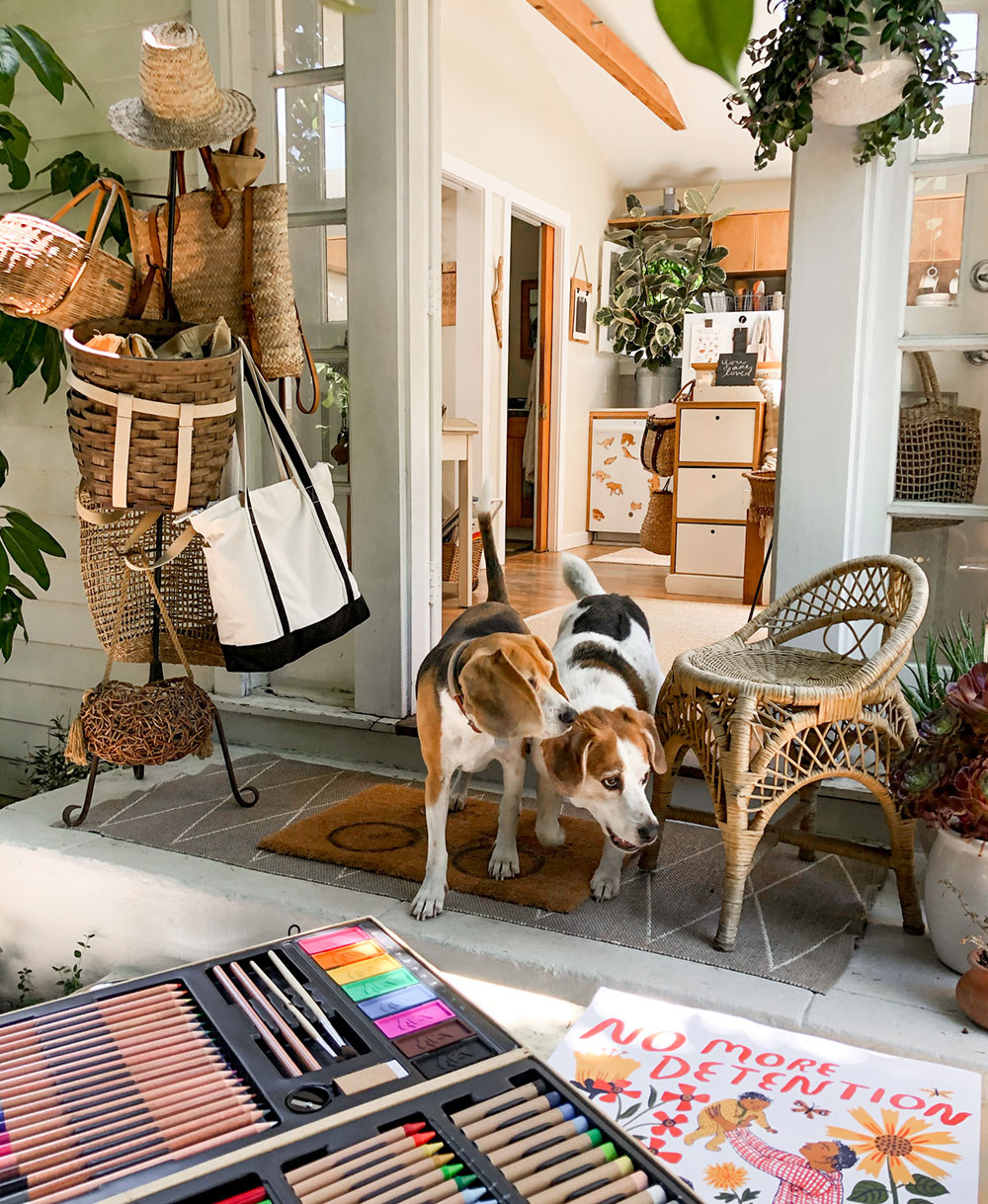
Photo Credits / Notes:
Whitney and West reading by Tinylicious.
Images of Whitney walking bike and West + StanLee on bridge by MindBodyGreen for Avocado Green Mattress.
As always, any images of West and/or the pups were taken as they interacted (under adult supervision) in their own natural ways.

Less Space, More Creativity
Often when I show my son playing games in our garden, readers send me sweet messages in which they lament the fact they they have no outdoor space where their kids can engage in similar activities. I understand completely— this is the first home I’ve ever had as an adult that includes a yard, an I’m grateful for our tiny patch of Earth every day. But I wanted to suggest another perspective and a few work-arounds for those feeling confined indoors with their baby, toddler or pre-schooler at any point during the year.

When it comes to certain activities (regardless of whether or not they’re considered indoor our outdoor), perhaps you don’t need more square-footage… just dive a bit deeper into your creative side.

When I was a pre-schooler, I had access to an oversized flannel board wall for paying with felt cut-outs, as well as numerous large trunks containing dress-up costumes and creative play accessories. Here, we have no room for either. Yet West can still partake in those games any time he likes.
We have 3’ panel of flannel that we simply tuck into the end of our bed or the edge of our couch, and suddenly those surfaces become adequate stretches of space for felt storyboards. (We keep the felt cut-outs in my favorite market basket so they’re easy to tote around.)

Similarly, there’s no ideal wall that we could paint and turn into a practical chalkboard. We had one of those lightweight Ikea chalkboard easels, but we kept running into it since it didn’t collapse. So we gave it to other parents in the neighborhood, and instead we got a flat chalkboard that we can tuck in the closet or flat up against a wall when not in use. We suspend it from a doorknob with a piece of twine or place it on the floor when West wants to draw on a larger surface.


As for dress-up trunks, we skip the bulky container and just spread the contents throughout the house in spaces that make the most sense for each particular piece. West always knows where to find his butterfly wings, binoculars, rain boots, and duck hat. They’re just not all clumped together in one oversized container.
When it comes to traditional outdoor activities, such as sand boxes and water play, it is clearly more environmentally-minded, space-savvy and budget-friendly to explore community resources, rather than default to buying something of your own. However, for the times when you want your child to be able to explore a messy game at home and don’t have a yard, there are compact and low-waste options available.

A small folding table topped with a collapsible tub, inflatable tray or a compact suite of eco-friendly, water-safe toys can work well for water, sand or other sensory elements. (West enjoys adding petals, rocks and leaves to his PlanToys water set, which is made with 100% sustainable rubber + wood and coated with a non-toxic finish. All colors are made from vegetable dye.)

If you don’t have a bathroom or tub large enough to accommodate such a set-up (we don’t either!), meet your new best friend: The Gathre Mat.
I’ve blogged about Gathre many times before, as we’ve used their mats for a bit of everything. We have one dedicated mid-sized mat that we used for diaper time back when West was in his Grovia cloth diapers, but we also have another, larger mat (which we cut into 2 pieces to suit our needs. We use this 2nd mat for covering the couch when it rains to protect it from puppy paws, and for covering the floor when our son uses watercolor paints, or plays with splash toys indoors.

Normally we do these things outside. But when it rains, during fires when the air quality becomes unhealthy, and other unique situations, we just drop down the mats and let West make a proper mess in the Cottage. The mats are stylish, easy to clean, and fold up tight. They can also be used time and time again as beach mats, picnics blankets, crafting surfaces, rug protectors under highchairs, and so forth.
While there are admittedly no groundbreaking small space ideas in this post, the point is to remind us all that we don’t necessarily need a larger home. We can work creatively with what we’ve got, while keeping our footprint small… and stylish.
(Note: As always, please keep safety in mind when it comes to your home and kid(s). The set-ups and activities that succeed in one environment for a particular child might not be suitable for a different type of home or another family.)
Video: Tiny Takeaways (Ep.3)
Lately I’ve been reflecting quite a bit on why I do what I do for a living. My goal is for the readers of this blog and my book to be confident and fulfilled in their small homes or apartments, and I want to be one of their primary, go-to resources for reliable, low-cost, eco-friendly takeaways that can help them spend less time organizing and searching for their stuff, and more time with the ones they love. Adam and I created a mini video series that we hope offers creative, no/low cost styling and storage solutions to folks living in smaller spaces.
This is the third episode of Tiny Takeaways, in which we focus on ways to free up floor and surface space by going vertical with functional decor.

Video: Tiny Takeaways (Ep.2)
Lately I’ve been reflecting quite a bit on why I do what I do for a living. My goal is for the readers of this blog and my book to be confident and fulfilled in their small homes or apartments, and I want to be one of their primary go-to resources for reliable, low-cost, eco-friendly takeaways that can help them spend less time organizing and searching for their stuff, and more time with the ones they love. Adam and I created a mini video series that we hope offers creative, no/low cost styling and storage solutions to folks living in smaller spaces. This is the second episode, in which we focus on ways to streamline a compact home-office. As always, thank you for your encouragement and continued support of our lil’ home, family and business.

Before + After: Back Garden Sofa
Our lil’ back garden suddenly looks twice its actual size thanks to a new custom sofa + mirror set (made here in LA with reclaimed materials) by our friends at Tumbleweed & Dandelion!

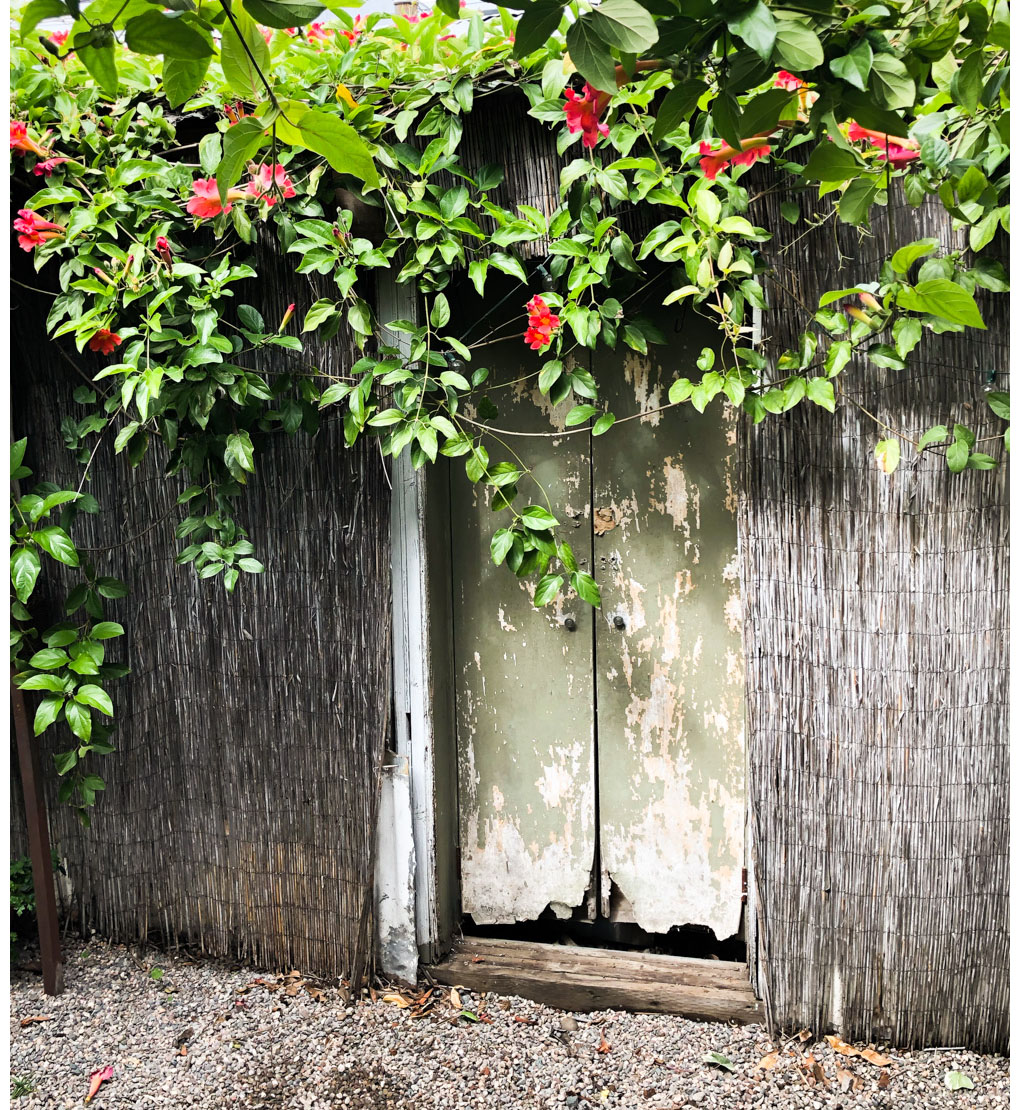
When we first moved into our tiny home 8 years ago (photo below), we wanted to redo the wall that runs the length of this outdoor space, which is the back of the ramshackle shed we share with our neighbor— it holds our washer/dryer, bikes, and lots of his camping gear. But that makeover has simply never been within our financial means.

Over the years we added plants and furnishings that were mainly run-off products from various shoots and client projects. But nothing was ever just right for our space.
Recently we were hosting some friends for a little catch-up session, and I realized that our friend Jeff was basically sitting with his head in a plant the entire time. I’d put the plant there to cover up part of an unsightly, unused garden door. It was meant to be a placeholder, but it ended up living there for years.
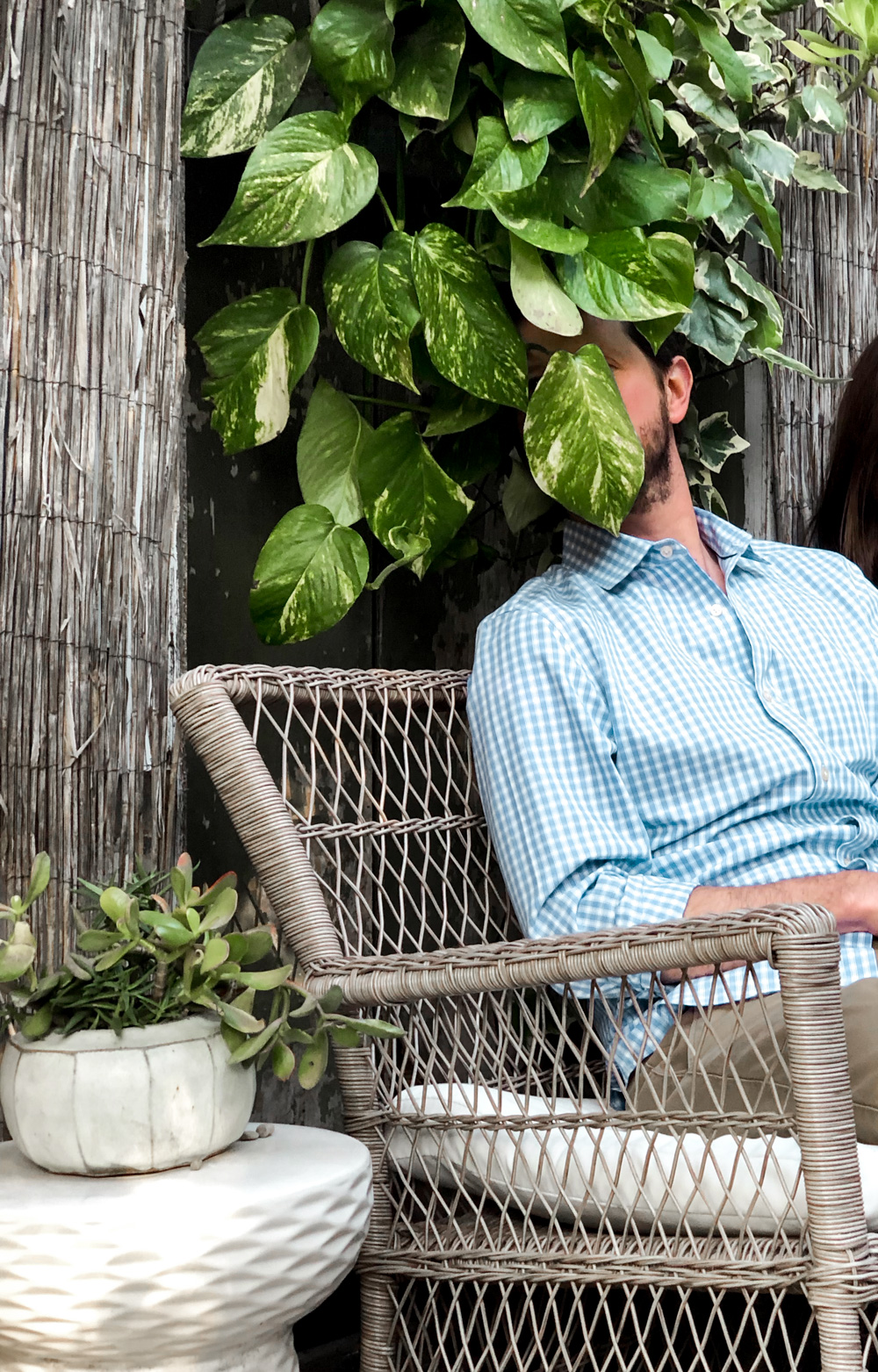
Poor Jeff.
The next day, I called Lizzie of Tumbleweed & Dandelion to request her help in creating something more practical for our space. Lizzie is very accustomed to designing, furnishing and styling small spaces. For example, in her shop, which is located in a small, original Venice bungalow, she has giant mirrored panels that help enlarge her porch and garden while brightening up the beautifully tree-covered areas. I asked her if we could bring the same look-and-feel to our yard, but in a more compact footprint.

This wasn’t our first time working with Lizzie— she also created the accordion bench/bed in the West Cottage for the 6 months we rented it. For this particular project, she came up with a simple yet brilliant idea: to mount mirrors to the back of the narrow couch, saving inches without putting weight on the walls of the old shed.
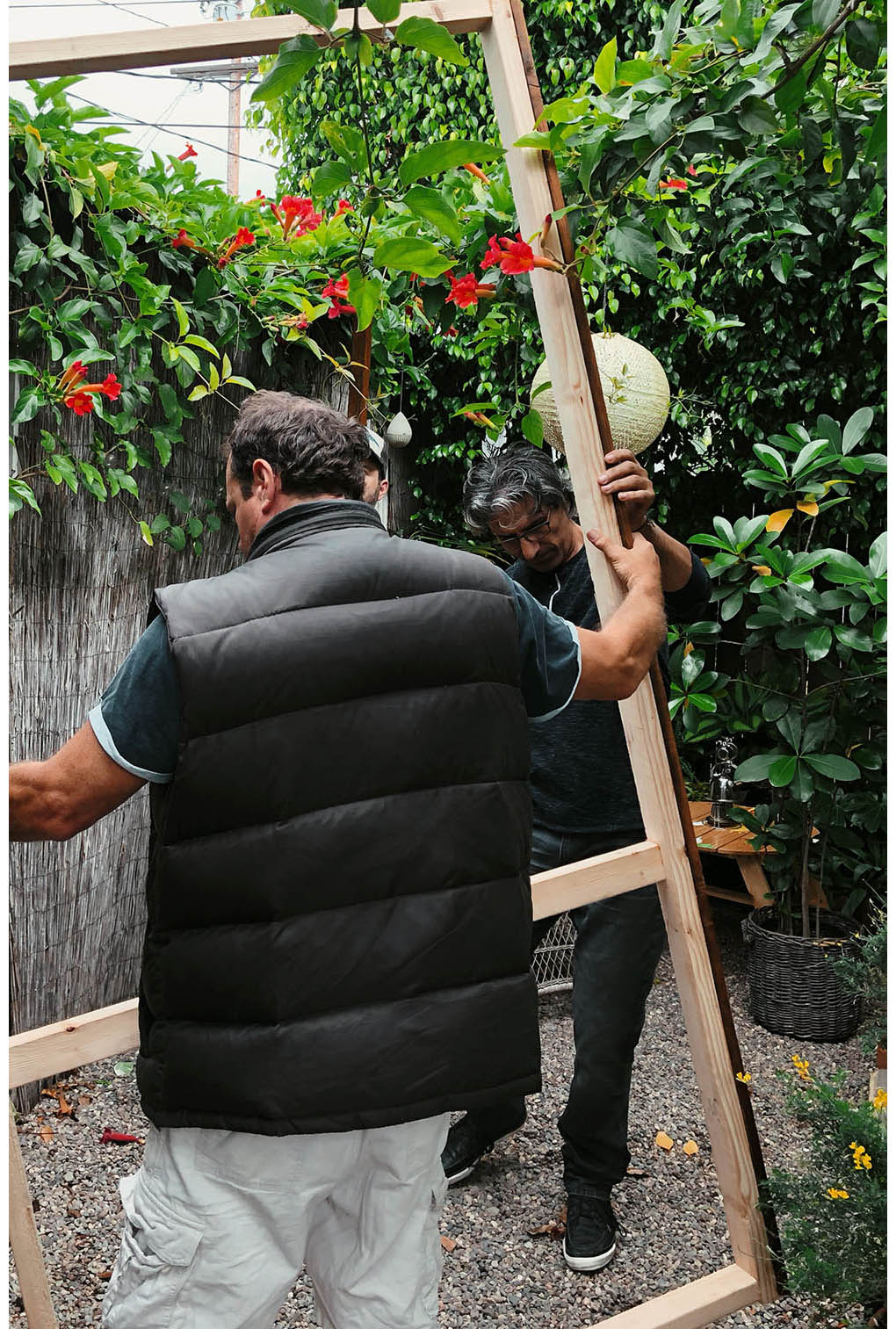
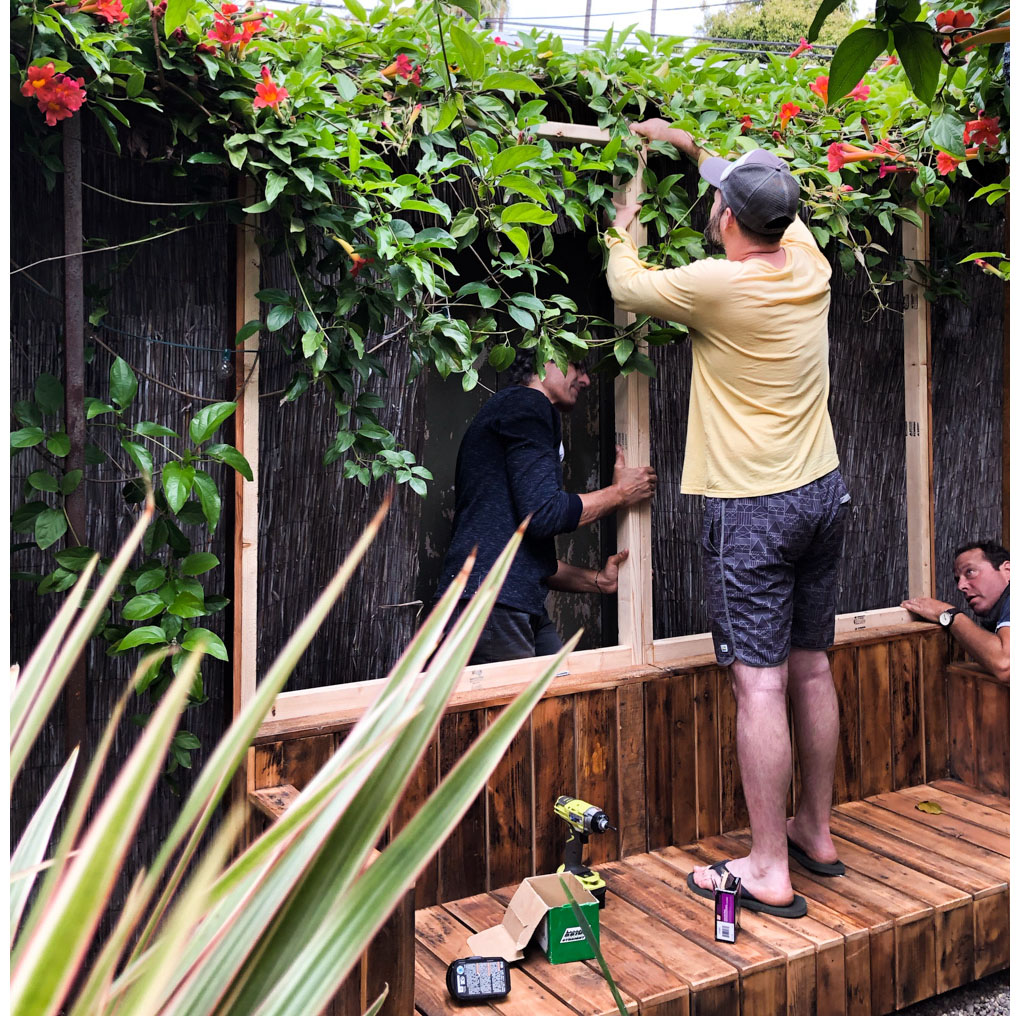
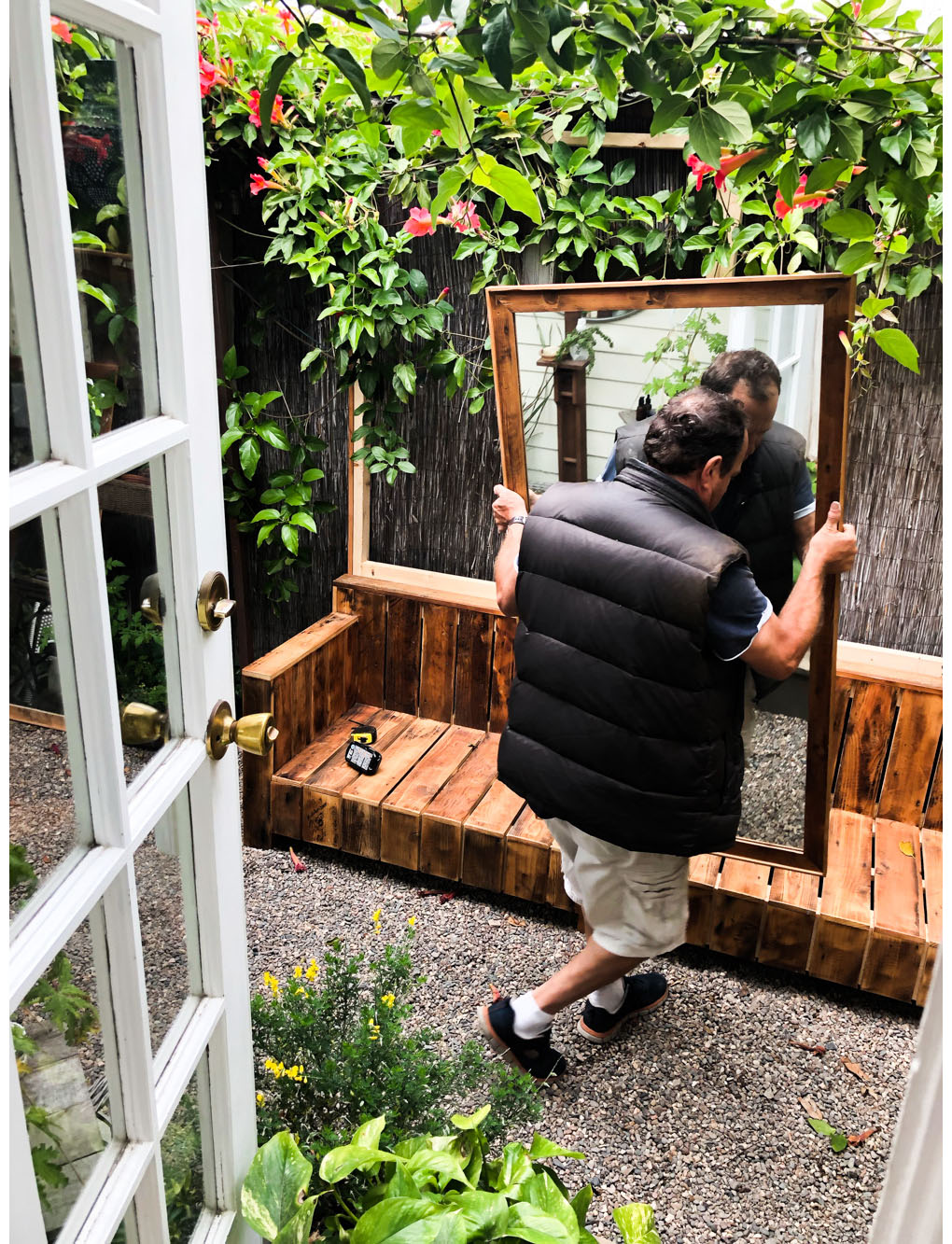
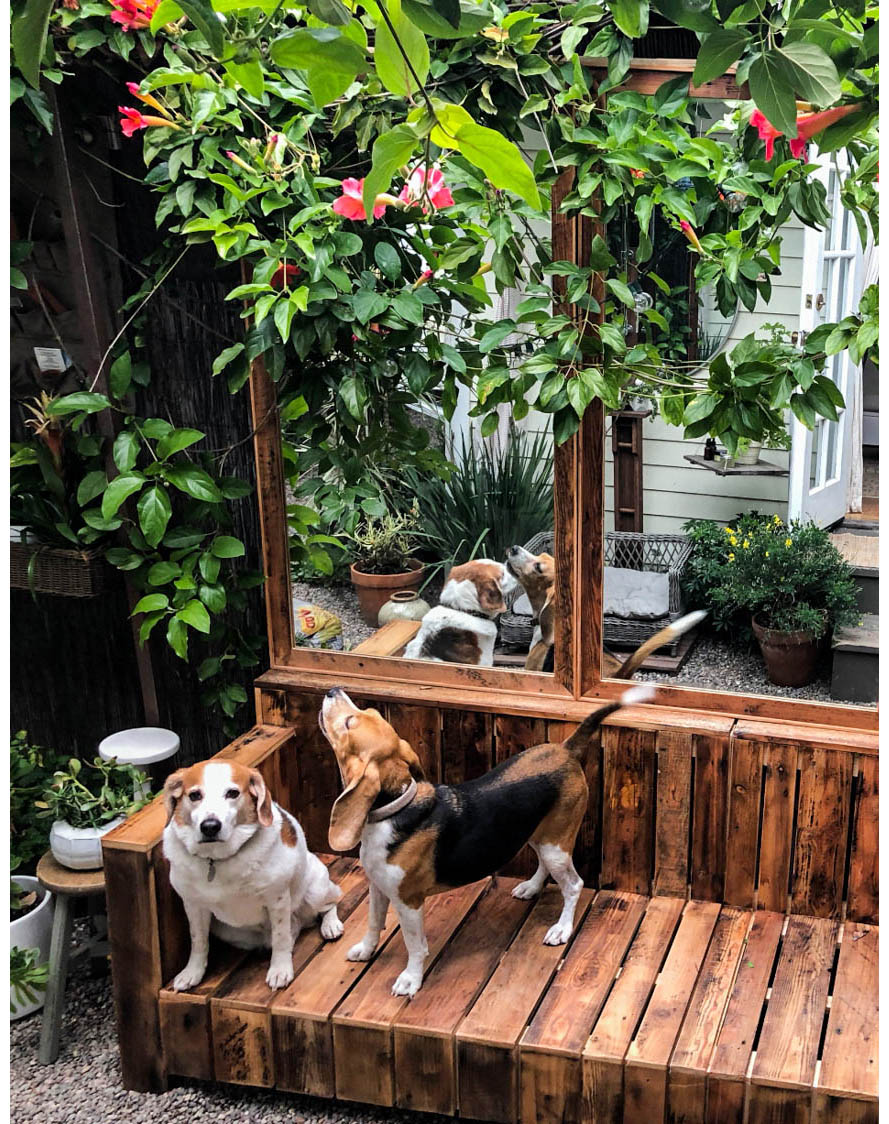
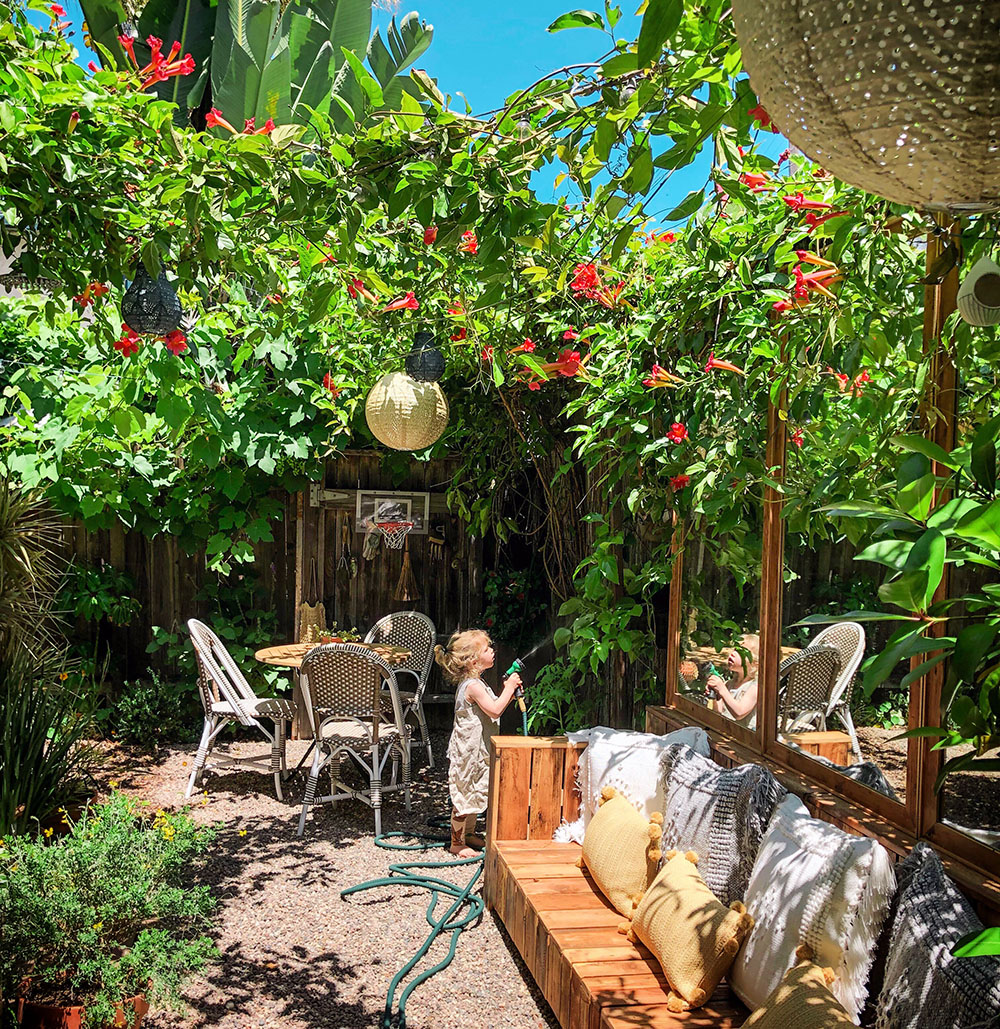
The results are better than I could’ve ever hoped for. We now have a cozy EIGHT FOOT LONG sofa, which is ideal for our tall family. It’s shallow enough that it doesn’t jut out too far from the wall, and yet it’s still deep enough for comfortable lounging. Lizzie kept the arms wide so that we can rest beverages and phones within arm’s reach without requiring accent tables. Best of all, the couch is backed by a set of 3 mirrors that brighten and enlarge the entire space.

The mirrors also make our bedroom feel bigger. Since the back garden is located just off the bedroom stoop, we can see the reflection of the cottage and the outdoor shower through the French doors. It makes everything feel even more open and airy than it was to begin with— all without taking up any extra square-footage.
Here are some detailed shots showing the seams of the sofa components, and the reclaimed wood that Lizzie used throughout the design:


We also added a little dining spot off to the side, with chairs I found at Serena & Lily:
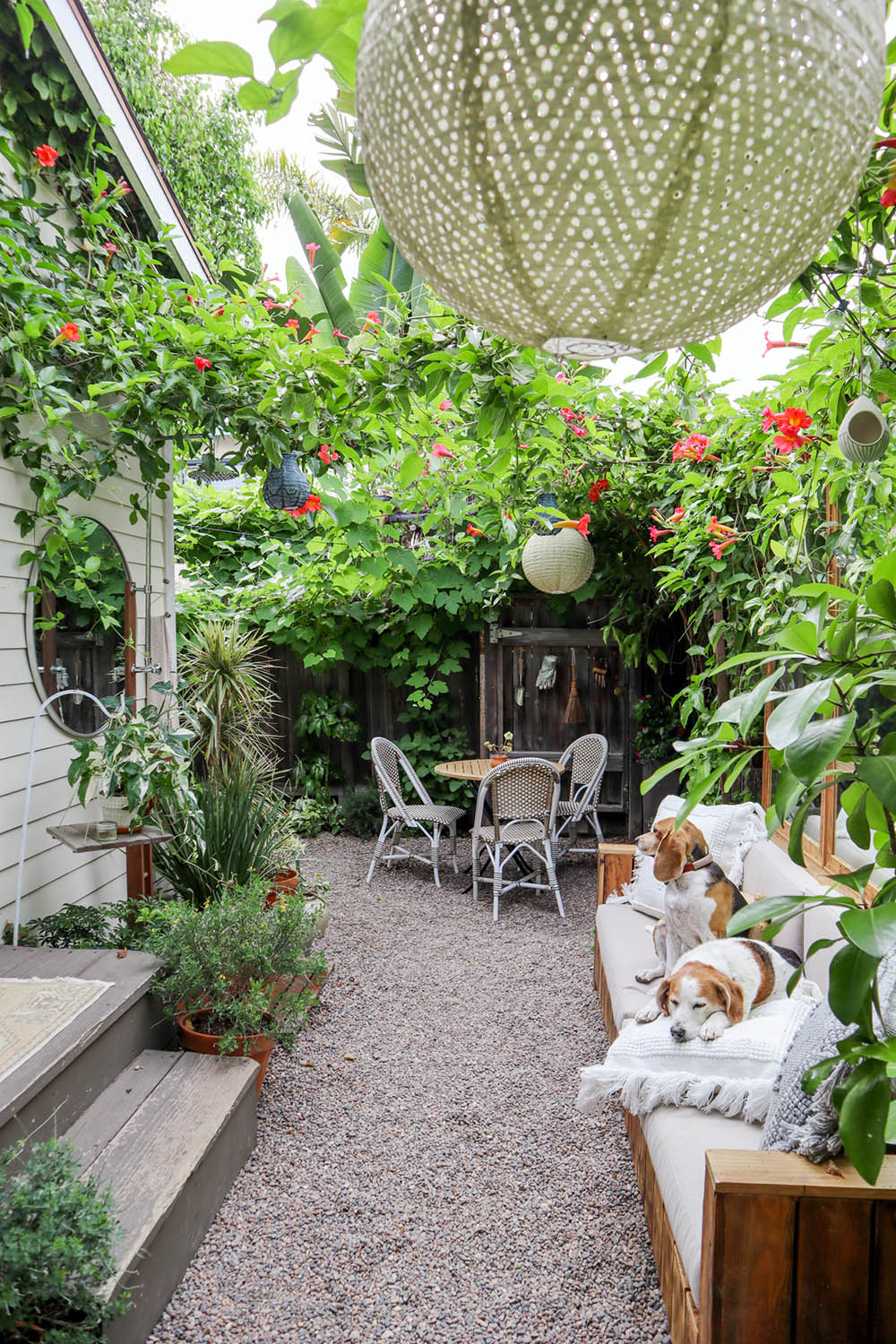
Thanks to the wires that Big Red Sun strung between the shed, fence and Cottage, we now have a natural overhead canopy of green to help shade the entire space throughout the day.

I also added an outdoor, white bistro table to match. Its pedestal legs make it easy for tall folks like us to sit down for a snack without smashing our knees against any crossbars.

Tumbleweed made the custom, weather-proof cushions for the sofa. I added some decorative outdoor throws in white, grey and natural/tan from Serena and Lily for texture and interest:

The redesign provided us with more space for our compost tumbler, which is nestled in a nice shady spot under the ficus trees. Now that this zone is no longer our lounge or dining area, we’re not constantly cleaning up leaves. We just scoop a handful now and then and toss them in the composter.


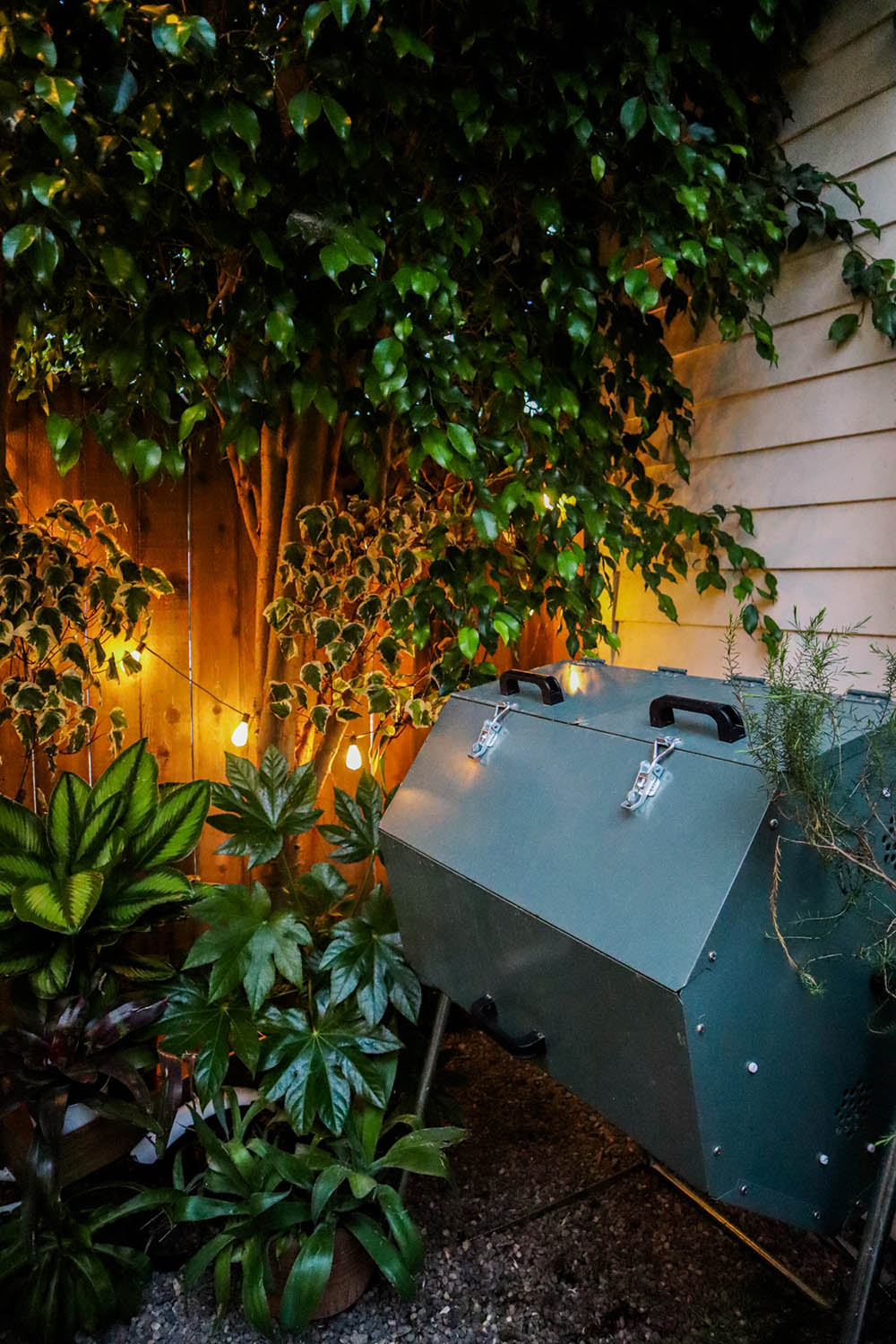
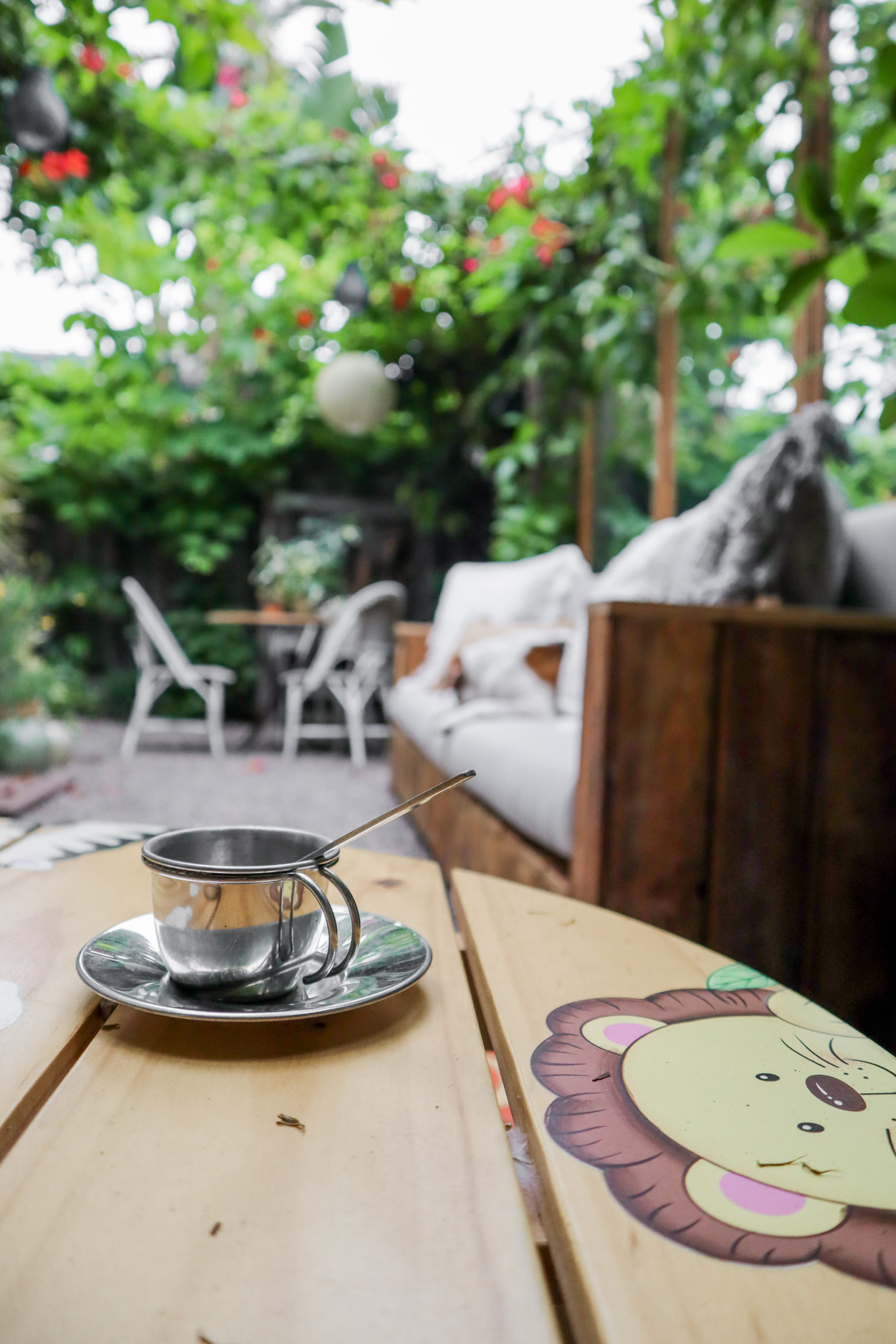
The sofa and shower feel like built-ins, so they’re more fitting for our Cottage, which is almost entirely furnished with wooden, built-in designs.

This summer we’re trying to cut back on our air travel for environmental purposes. As such, it feels nice to have a special “new” place right here at home where all 5 of us can play and relax during our region’s hottest months.


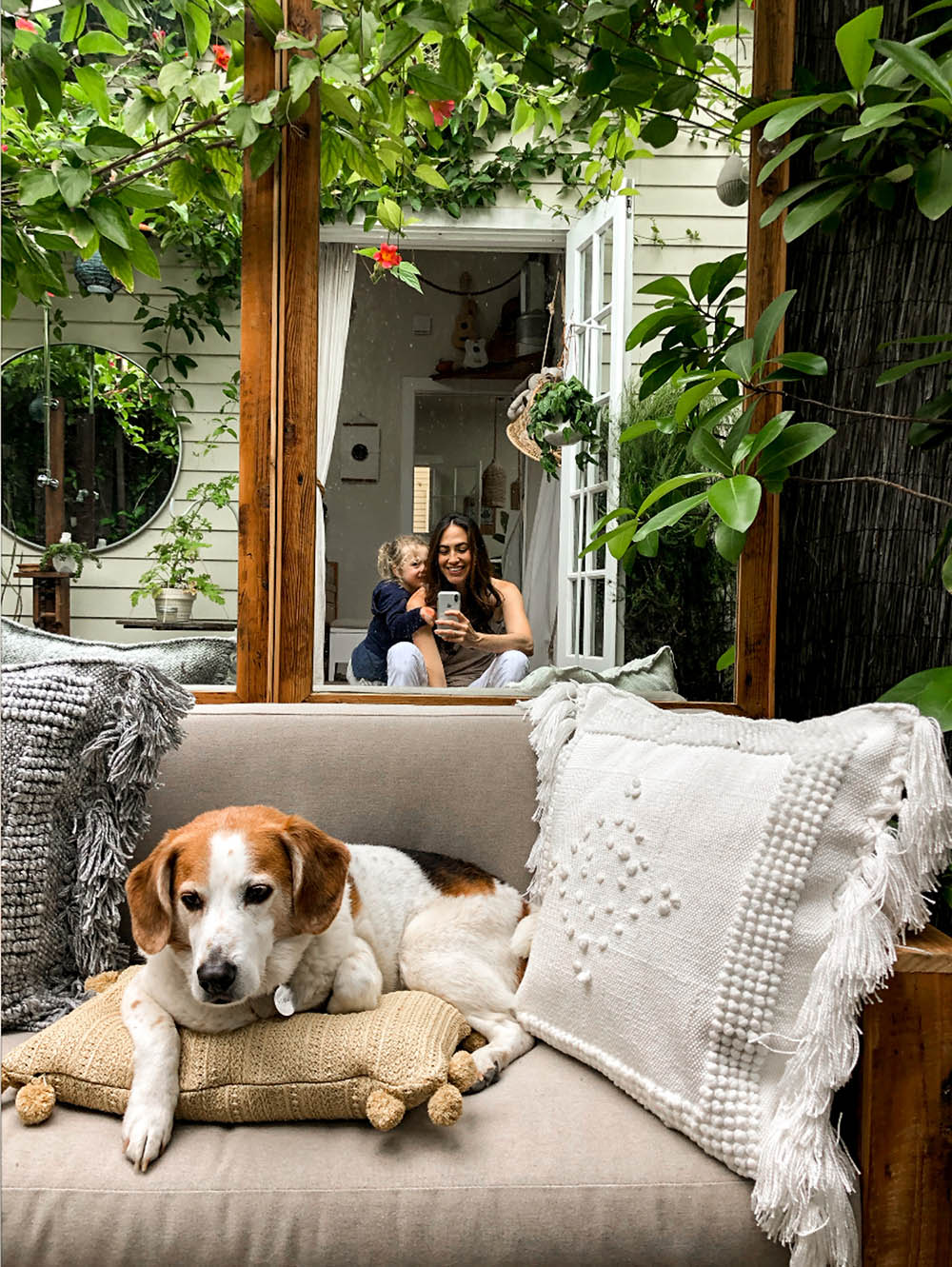

Thank you, Tumbleweed & Dandelion and Big Red Sun for helping us create this happy, healthy lil’ outdoor extension of our home. We absolutely love it.

Before + After: Living Garden Wall
Back in February, we revamped the front half of the Cottage garden with the landscape design team at Big Red Sun. One of the most notable changes of the makeover was the addition of a 5-foot wide by 6-foot high garden wall at the entrance to our property.

The Cottage is surrounded by an old wooden fence. From late spring and throughout the summer, it’s masked by cascading grapevine tendrils and leaves. But during the other half of the year, the fence feels barren and looks pretty worn after years of water and termite damage. It’s not in our budget to replace it right now, but we can’t dress it up with planters either as it’s not strong enough in all areas to support the weight.

When the creative minds at Big Red Sun suggested beautifying the fence with a custom garden panel, I was thrilled. I’d seen examples in their shop before (shown below), and while I couldn’t picture exactly how one might look at our lil’ home, I knew it’d be the perfect spot for hanging pots, training plants to climb from the ground, and even buttressing part of the heavy grapevine canopy. (And any vertical design such as this is great for a small space.)

Above: A custom panel by/at Big Red Sun.
The custom steel panel was woven with brushwood by the BRS team on-site, and then braced by wooden posted that were cemented into the ground. See the before/during/after in the following image carousel:


Beyond making the entrance to our home more lively, the wall also saves space by allowing us to grow select plants off the ground, leaving those extra inches of garden floor for our son and dogs to enjoy when playing outside.

Sweet StanLee, in particular, likes to nestle deep into the bushes when he sits outside, and he’s killed quite a few plants in the process. It’s been nice to have some greenery up on the wall and immune to his actions.

The planters are simply suspended with heavy-duty zip ties. They’re brimming with succulents, nasturtium, strawberries, and more.

I added a round garden mirror to amplify the light and visually enlarge the space, we well as some ceramic air-plant hangers to layer up the wall.

Thank you, Big Red Sun, for such a unique and beneficial addition to our home. The panel and plants bring us joy. (More photos below!)


Video: Tiny Takeaways (Ep.1)
I don’t want everything I publish to be shoppable. (That’s why I started my “Items You Can Probably Go Without” blog entries.) I don’t wan’t to earn income by constantly encouraging people to buy more, when I know that most of us can (and should, for environmental reasons,) live with less. What I do want is for folks to be comfortable, confident and content in their small homes or apartments. And I want to be a resource for reliable takeaways that can help you spend less time searching for your stuff, and more time with the ones you love.
Adam and I created a mini video series that we hope offers creative, no/low cost organizational and storage solutions to folks living in smaller spaces. This is the first episode, and I so deeply hope that it’s useful to some of you. As always, thank you for your encouragement and continued support of our lil’ home, family and business!
Some Items You Can Probably Go Without (Part 10)
While it's great to share stories about designs and practices that help us live comfortably and contentedly in small spaces, I think it’s just as important to discuss the things that we can happily live WITHOUT. After all, making a home of a small space isn’t mainly about figuring out how to cram as much stuff as possible into your compact quarters— it’s about experiencing more by owning less, and reducing our footprint on this strained planet.
As always, before we jump on in, here’s a lil’ disclaimer: To each their own. While these items might be easy for easy for some folks to forego, they might be gems elsewhere. You know your own needs and space best. Habits shift, tastes change, lives and practices evolve. Design and decor should be different and enjoyable for everyone. The following is just a small sampling of everyday items you might want to reconsider if you’re starting to outfit a new home or apartment, or approaching a makeover of your existing space.
(View all the entires in this series here.)

Plastic Shoe Storage Boxes
I appreciate the look and feel of an organized closet as much as the next person. But those single-pair plastic shoe storage boxes take up space themselves, and will sit on our withering planet until the end of time. If your shoes are concealed in a closet or under the bed, simply use their original packaging for continued storage. If your footwear storage is exposed in the open, upcycled wine crates are a good option for a clean, streamlined look. Or perhaps choose a multi-purpose accent piece, such as a slim concealed shoe console table or bench, reducing the number of furnishings you buy from 2 (or more) to 1.

Gag Gifts
Everyone enjoys a good laugh. But we can make each other smile without gifting single-use, custom or mass produced junk goods. Gag gifts tend to get a chuckle… and then get tucked away in a drawer. Consider saving money, reducing waste, and further eliminating clutter by curbing your impulse to order that box of custom printed event t-shirts.
Toilet Paper Organizers
Americans produce, transport and use 34 million rolls of toilet paper every day. You can cut back on your toilet paper usage— and thus your paper storage needs— by coupling Tree-Free Bath Tissue and a simple attachment bidet.

SWAG
Why is our knee-jerk reaction to accept anything if it’s free? SWAG bags from events are typically loaded with promotional goodies and gifts tailored to a wide audience, which means that they likely don’t contain items you need. I almost always politely decline them, unless I know they contain something I’ve been hoping to try, or unless they contain products I know will be of use to local non-profits.

Coloring Books
We bought a round of coloring books for West before I realized how silly that was. He can create art out of endless repurposed goods around our house, such as cardboard boxes, used brown paper packaging, leaves and more. (I do not, however, regret buying his Coloring Without Borders book— that one is a keeper. All proceeds from the sale of this clever paperback, which features illustrations by over 80 professional artists from all over the globe, go to Families Belong Together.)

Dedicated “Bag Ties” + “Chip Clips”
Plastic chip clips and bag ties are certainly things we can all go without. Wooden and metal clothespins can be used in a myriad of ways around the home, including in the kitchen pantry. (Plus the wooden clips can also lead to creative art projects with your kids!)

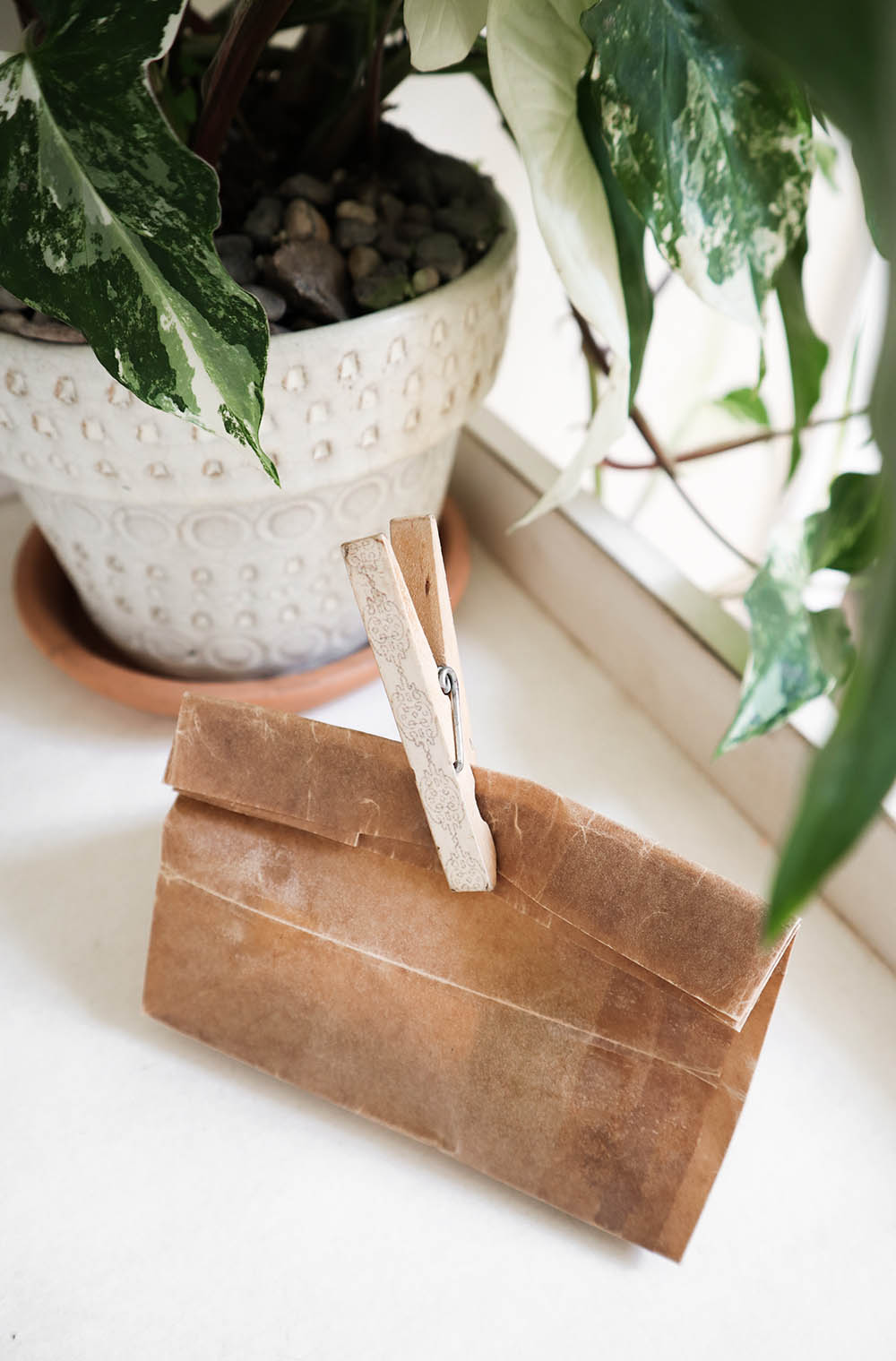
Makeup Organizer
I regretfully admit that throughout my 20s, I had one of those acrylic makeup holders to contain the sea of (toxic) products I used on my face and hair. Looking back, I can’t believe I applied all those chemicals to my skin in the name of beauty. And I shudder to think of all the money and materials I wasted in the process. I understand the appeal of organizational tools, but can we all find ways to organize with goods we already own, rather than buying new items that were designed for a single purpose only? (Perhaps a multi-tiered hanging basket, or a vintage, treated art supply case.) I reduced my makeup + skincare routine so drastically (more on that topic soon,) that I only need a little zipper pouch to hold everything. This has saved me so much time throughout the day, and frees up useful inches in our lil’ bathroom.

Door Accessories
Thousands of items can double as a cute residential doorstop by day— why buy a plastic wedge or a novelty doorstop? Similarly, there are numerous ways to childproof doors that don’t require buying anything new. From rubber bands that prevent hardware from automatically latching to DYI door knob covers, you probably already have everything you need to apply some temporary hacks to your house while your child is in their toddler phase. (Note: I do think doors can be useful spots for touches of extra small space storage!)

Environmental Benefits of Small Space Living
"I'm a huge fan of small-space living because it forces us to do what larger spaces often discourage: Minimize. It's been proven that America has more self-storage facilities than all U.S. Starbucks and McDonald's combined, and that Americans waste 55 minutes a day just looking for things (that's 3000 hours or 30 days per year). Having less space means we are hopefully buying fewer, better items, using fewer precious resources (including our own time and sanity), and being gentler over all on the planet."
- Ashlee Piper (for The Tiny Canal Cottage)
Author: Give a Sh*t: Do Good. Live Better. Save the Planet.

Oddly enough, as much as I’ve discussed the steps we’re taking to live more sustainably, I’ve somehow failed to discuss outright the general, eco-friendly benefits of small space living itself.

As the planet becomes more and more populated, and as swaths of land become uninhabitable due to climate change, it’s reasonable to predict that small space living will only become more relevant to increasingly larger groups of people.
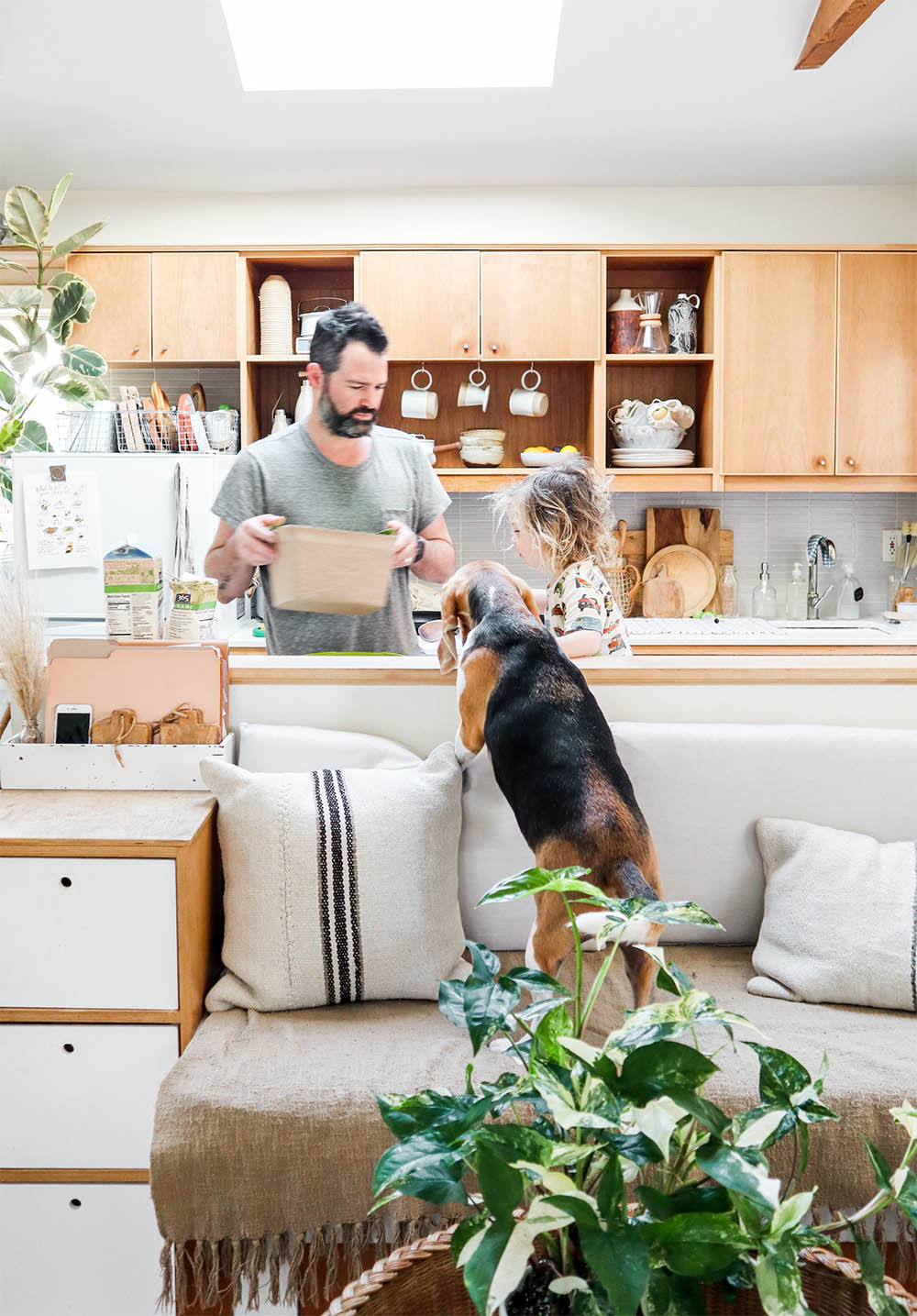
Luckily, small space living can significantly reduce the environmental footprint of your home. From the amount of materials used in crafting a tiny house, to its daily operations once occupied, there are a myriad of ways in which living within a modest floorpan can help you lead a greener existence.

From the start, there are fewer materials to use and transport when building a tiny home, which can widen the possibilities of using more eco-friendly supplies, and lessen corresponding emissions overall.

Similarly, there are far fewer interior spaces to outfit with fixtures, appliances, furnishings and more. This also means that eventually there will be fewer items to fix and/or update. This cuts back on production, transport, packaging, and general waste.

And with less space to furnish and decorate, you naturally curtail your possessions. Thus your overall retail consumption and affiliated carbon footprint can be vastly reduced.

The average American home is about 2,500 square feet, and uses a commensurate amount of energy. Homes in the US account for 38% of the country’s energy usage— and that amount surges to 80% when indirect usage is factored in.* A small space runs on a sliver of energy by comparison. After all— it doesn’t take much to warm up, cool down, or illuminate a 400 square foot home.

The secondary benefits of small space living are not to be overlooked. On a daily basis, this lifestyle encourages folks to get outside and enjoy the natural world and community offerings more.

This means that there’s even less energy being used within the home, as residents are often outdoors (requiring no utilities), or in shared local spots that are serving numerous people. Plus getting outside can have extraordinary health benefits.

Recent studies show that being around natural landscapes can notably reduce stress, enhance work performance, boost healing, and promote relaxation.**

Down the line, all of these advantages can make us healthier, which can mean less time spent in hospitals and fewer goods and medicines required for sustained wellness, all of which helps us lighten our impact on this precious planet.

While our family still has so much to learn on our journey to more sustainable living, it’s encouraging to know that our lil’ Cottage is helping us stick to a positive path.

Sources:
*Give a Sh*t, by Ashlee Piper
**How to Raise a Wild Child, by Scott D. Sampson
Special thanks to Ashlee Piper for generously offering some of her thoughts on Small Space Living for this post. Ashlee’s book is available in e-reader format, as an audiobook, and via paperback: Give a Sh*t: Do Good. Live Better. Save the Planet.

Video: Our Small Space Living Feature on CNN
A lil’ video from the Cottage is on CNN today in a feature entitled, “Living big and eco-friendly in a small space.”
View the video below, or click here to watch via CNN’s IMPACT YOUR WORLD page.