Some Items You Can Probably Go Without (Part 10)
While it's great to share stories about designs and practices that help us live comfortably and contentedly in small spaces, I think it’s just as important to discuss the things that we can happily live WITHOUT. After all, making a home of a small space isn’t mainly about figuring out how to cram as much stuff as possible into your compact quarters— it’s about experiencing more by owning less, and reducing our footprint on this strained planet.
As always, before we jump on in, here’s a lil’ disclaimer: To each their own. While these items might be easy for easy for some folks to forego, they might be gems elsewhere. You know your own needs and space best. Habits shift, tastes change, lives and practices evolve. Design and decor should be different and enjoyable for everyone. The following is just a small sampling of everyday items you might want to reconsider if you’re starting to outfit a new home or apartment, or approaching a makeover of your existing space.
(View all the entires in this series here.)

Plastic Shoe Storage Boxes
I appreciate the look and feel of an organized closet as much as the next person. But those single-pair plastic shoe storage boxes take up space themselves, and will sit on our withering planet until the end of time. If your shoes are concealed in a closet or under the bed, simply use their original packaging for continued storage. If your footwear storage is exposed in the open, upcycled wine crates are a good option for a clean, streamlined look. Or perhaps choose a multi-purpose accent piece, such as a slim concealed shoe console table or bench, reducing the number of furnishings you buy from 2 (or more) to 1.

Gag Gifts
Everyone enjoys a good laugh. But we can make each other smile without gifting single-use, custom or mass produced junk goods. Gag gifts tend to get a chuckle… and then get tucked away in a drawer. Consider saving money, reducing waste, and further eliminating clutter by curbing your impulse to order that box of custom printed event t-shirts.
Toilet Paper Organizers
Americans produce, transport and use 34 million rolls of toilet paper every day. You can cut back on your toilet paper usage— and thus your paper storage needs— by coupling Tree-Free Bath Tissue and a simple attachment bidet.

SWAG
Why is our knee-jerk reaction to accept anything if it’s free? SWAG bags from events are typically loaded with promotional goodies and gifts tailored to a wide audience, which means that they likely don’t contain items you need. I almost always politely decline them, unless I know they contain something I’ve been hoping to try, or unless they contain products I know will be of use to local non-profits.

Coloring Books
We bought a round of coloring books for West before I realized how silly that was. He can create art out of endless repurposed goods around our house, such as cardboard boxes, used brown paper packaging, leaves and more. (I do not, however, regret buying his Coloring Without Borders book— that one is a keeper. All proceeds from the sale of this clever paperback, which features illustrations by over 80 professional artists from all over the globe, go to Families Belong Together.)

Dedicated “Bag Ties” + “Chip Clips”
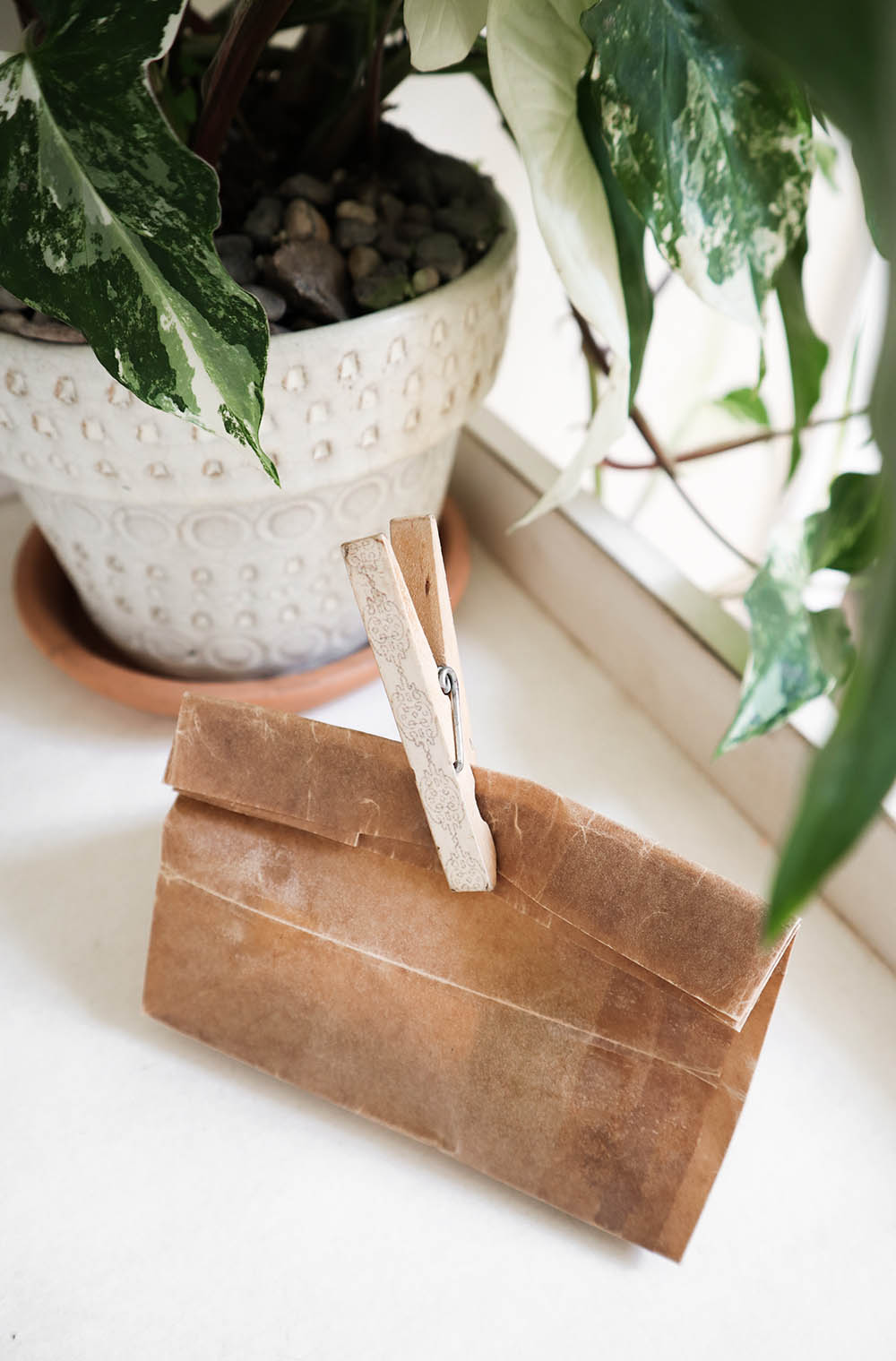
Plastic chip clips and bag ties are certainly things we can all go without. Wooden and metal clothespins can be used in a myriad of ways around the home, including in the kitchen pantry. (Plus the wooden clips can also lead to creative art projects with your kids!)

Makeup Organizer
I regretfully admit that throughout my 20s, I had one of those acrylic makeup holders to contain the sea of (toxic) products I used on my face and hair. Looking back, I can’t believe I applied all those chemicals to my skin in the name of beauty. And I shudder to think of all the money and materials I wasted in the process. I understand the appeal of organizational tools, but can we all find ways to organize with goods we already own, rather than buying new items that were designed for a single purpose only? (Perhaps a multi-tiered hanging basket, or a vintage, treated art supply case.) I reduced my makeup + skincare routine so drastically (more on that topic soon,) that I only need a little zipper pouch to hold everything. This has saved me so much time throughout the day, and frees up useful inches in our lil’ bathroom.

Door Accessories
Thousands of items can double as a cute residential doorstop by day— why buy a plastic wedge or a novelty doorstop? Similarly, there are numerous ways to childproof doors that don’t require buying anything new. From rubber bands that prevent hardware from automatically latching to DYI door knob covers, you probably already have everything you need to apply some temporary hacks to your house while your child is in their toddler phase. (Note: I do think doors can be useful spots for touches of extra small space storage!)
Video: 8 Years in The Cottage
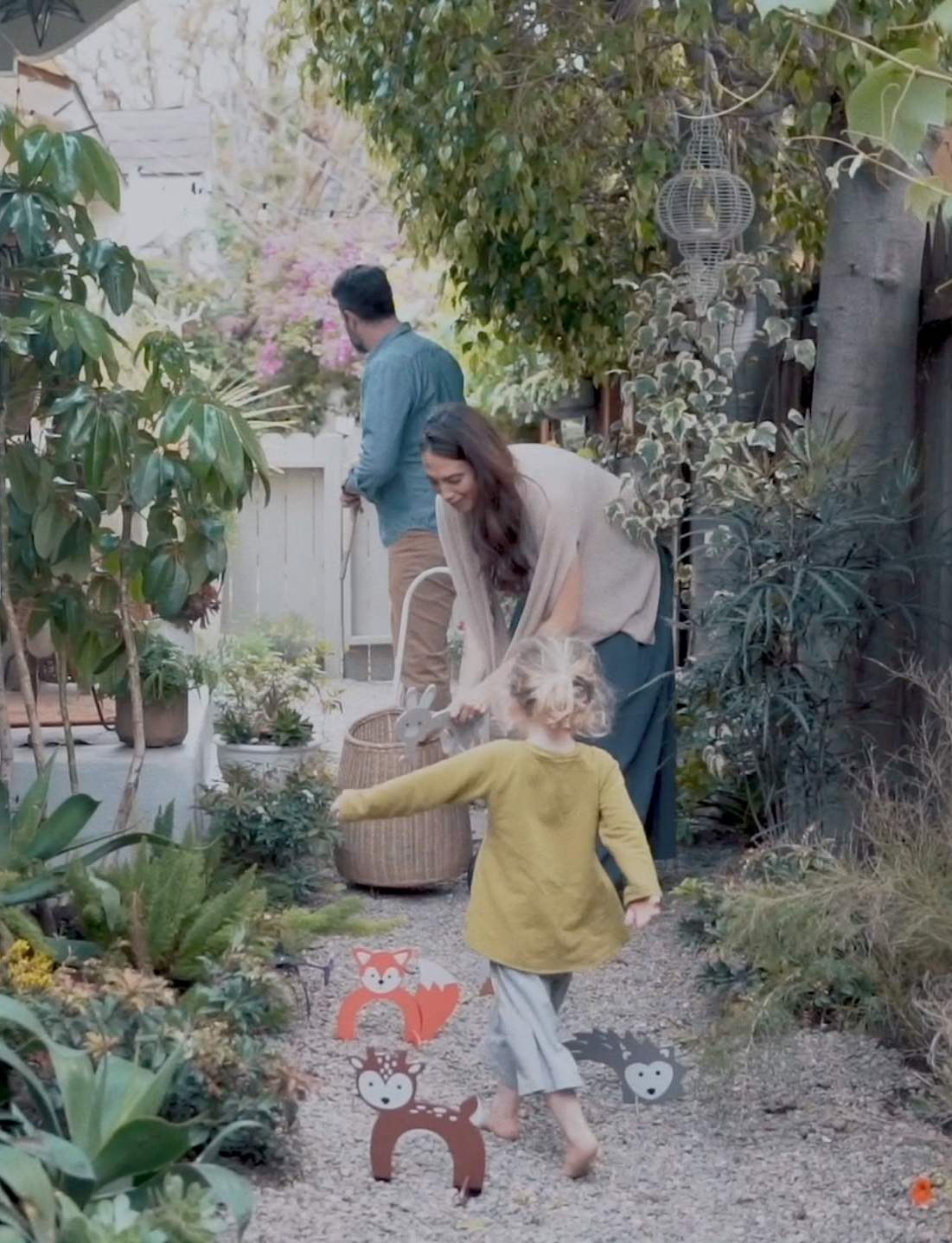
This spring marked our 8th anniversary of living in our lil’ home! We always want to remember this time, so we made a video that we can revisit later in life.
Thank you to Lucia Doynel of Tinylicious for capturing this footage so naturally while we went about our day at home. And thank you to Eric Mellgren of Vigilant Healing Solutions for permitting us to use his original song, Up To Something, in this video.
(See our “Then & Now” post from our 7th year anniversary here.)

Environmental Benefits of Small Space Living
"I'm a huge fan of small-space living because it forces us to do what larger spaces often discourage: Minimize. It's been proven that America has more self-storage facilities than all U.S. Starbucks and McDonald's combined, and that Americans waste 55 minutes a day just looking for things (that's 3000 hours or 30 days per year). Having less space means we are hopefully buying fewer, better items, using fewer precious resources (including our own time and sanity), and being gentler over all on the planet."
- Ashlee Piper (for The Tiny Canal Cottage)
Author: Give a Sh*t: Do Good. Live Better. Save the Planet.

Oddly enough, as much as I’ve discussed the steps we’re taking to live more sustainably, I’ve somehow failed to discuss outright the general, eco-friendly benefits of small space living itself.

As the planet becomes more and more populated, and as swaths of land become uninhabitable due to climate change, it’s reasonable to predict that small space living will only become more relevant to increasingly larger groups of people.
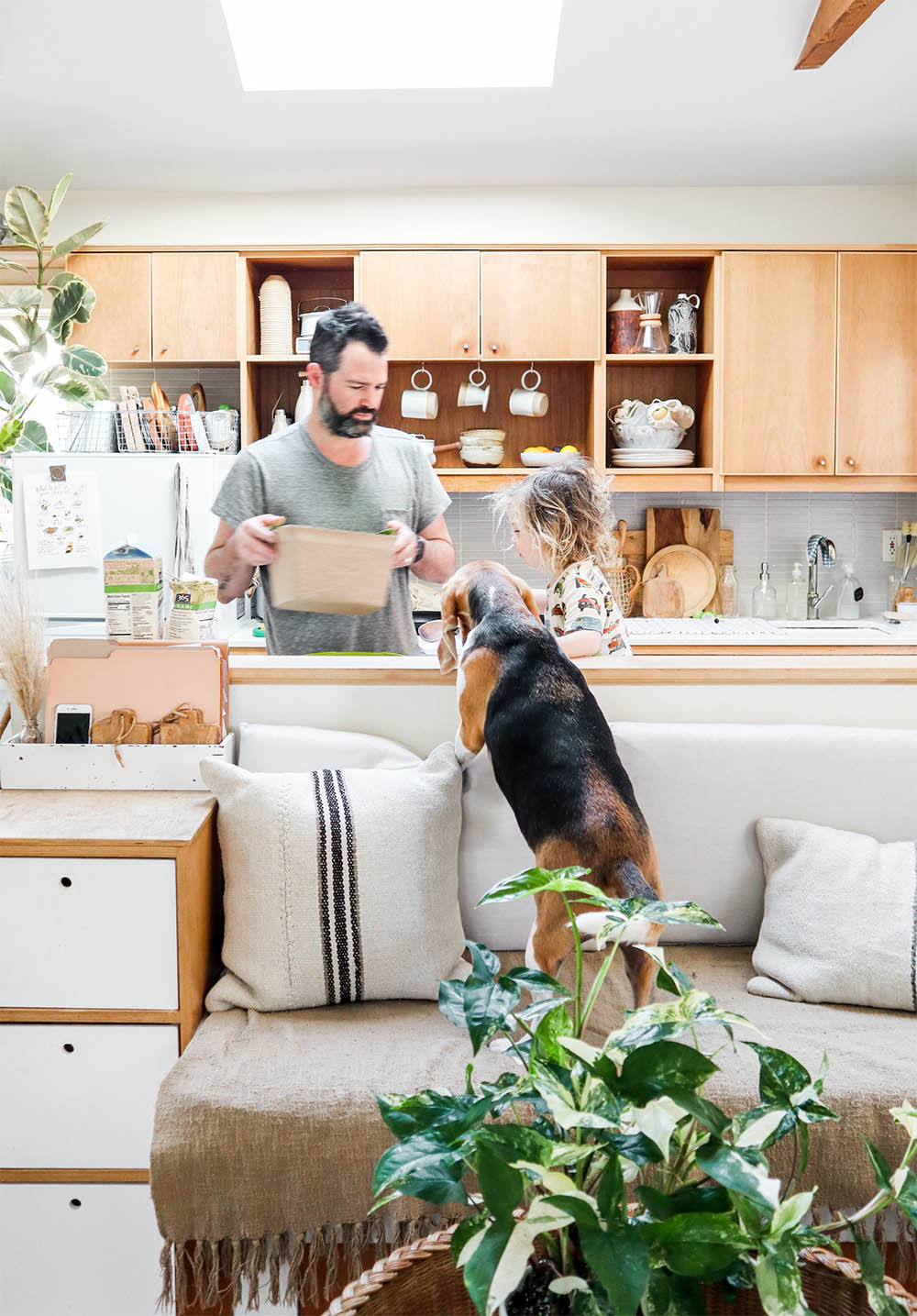
Luckily, small space living can significantly reduce the environmental footprint of your home. From the amount of materials used in crafting a tiny house, to its daily operations once occupied, there are a myriad of ways in which living within a modest floorpan can help you lead a greener existence.

From the start, there are fewer materials to use and transport when building a tiny home, which can widen the possibilities of using more eco-friendly supplies, and lessen corresponding emissions overall.

Similarly, there are far fewer interior spaces to outfit with fixtures, appliances, furnishings and more. This also means that eventually there will be fewer items to fix and/or update. This cuts back on production, transport, packaging, and general waste.

And with less space to furnish and decorate, you naturally curtail your possessions. Thus your overall retail consumption and affiliated carbon footprint can be vastly reduced.

The average American home is about 2,500 square feet, and uses a commensurate amount of energy. Homes in the US account for 38% of the country’s energy usage— and that amount surges to 80% when indirect usage is factored in.* A small space runs on a sliver of energy by comparison. After all— it doesn’t take much to warm up, cool down, or illuminate a 400 square foot home.

The secondary benefits of small space living are not to be overlooked. On a daily basis, this lifestyle encourages folks to get outside and enjoy the natural world and community offerings more.

This means that there’s even less energy being used within the home, as residents are often outdoors (requiring no utilities), or in shared local spots that are serving numerous people. Plus getting outside can have extraordinary health benefits.

Recent studies show that being around natural landscapes can notably reduce stress, enhance work performance, boost healing, and promote relaxation.**

Down the line, all of these advantages can make us healthier, which can mean less time spent in hospitals and fewer goods and medicines required for sustained wellness, all of which helps us lighten our impact on this precious planet.

While our family still has so much to learn on our journey to more sustainable living, it’s encouraging to know that our lil’ Cottage is helping us stick to a positive path.

Sources:
*Give a Sh*t, by Ashlee Piper
**How to Raise a Wild Child, by Scott D. Sampson
Special thanks to Ashlee Piper for generously offering some of her thoughts on Small Space Living for this post. Ashlee’s book is available in e-reader format, as an audiobook, and via paperback: Give a Sh*t: Do Good. Live Better. Save the Planet.

Video: Our Small Space Living Feature on CNN
A lil’ video from the Cottage is on CNN today in a feature entitled, “Living big and eco-friendly in a small space.”
View the video below, or click here to watch via CNN’s IMPACT YOUR WORLD page.
Space-savvy + Low Waste Bathroom Swaps

It’s easy to be tricked into thinking that reusable goods consume more space than disposables, and thus are not small space friendly. However, I find the opposite to be true! Let’s look at some quick, affordable, and effortless bathroom swaps. If you select your eco-friendly bath items carefully, not only will they take up less storage space and fewer surfaces inches, but they’ll also look better than their single-use or plastic counterparts.


HAIR CARE
Shampoo + conditioner bars are becoming increasingly available. I found mind on Etsy, and will continue to test out various types instead of buying disposable shampoo, conditioner, and body wash bottles. And a simple wall-mounted, hanging or standard wooden soap dish is all one needs to accommodate these bars.

SHAVING
Adam and I recently made the switch to Leaf (for me) and Rockwell (for him) razors. Up front the cost is higher, but over time they save so much money and reduce a ton of unnecessary waste. (And let’s be real— they’re far prettier on the eyes than loud plastic designs.)
BIDET
It takes just 1 pint of water to properly wash with a modern bidet like the TUSHY. It takes 437 billion gallons of water, 253,000 tons of bleach, and 15 million trees to make toilet paper annually. And Americans make, move and use 34 million rolls of toilet paper every day. The problem is not just the 54 million trees cut each year to keep up with demand, but also the enormous amounts of water, chemicals, and energy used in the destructive production process of toilet paper.* And a modern bidet attachment simply attaches to your toilet in minutes— no extra space required… and no need to continue stockpile toilet paper.
* Source: HelloTushy.com

EAR SWABS
Reusable ear cleaning tips are arguably more effective than Q-tips, and are easy to clean and require far less storage space. (Since taking this photo, we switched to LastSwab, which we really like. They come in both cosmetic swab and ear swab formats.)

COTTON ROUNDS
Machine-washable cotton rounds are every bit as effective as disposables. They’re a one-time purchase that can last a lifetime. No need to store backups. 10 or so should be just fine if you do laundry at least once per week.

MAKEUP REMOVER WIPES
Similarly, machine-washable makeup remover pads are an easy alternative to disposables. If you prefer wipes or simply need a single-use alternative while on-the-go, these compostable wipes are a solid choice. (And don’t forget that coconut oil can make a great, low-waste makeup remover!)

TOOTHPASTE + FLOSS
Refillable floss and recyclable metal toothpaste tubes are lighter on the environment. Like everything else here, they take up no extra space and, in my opinion, look great on counters and shelves.

CLOTH TISSUES
Reusable tissues can serve as miscellaneous cloths as well. We keep small baskets of them stashed around the Cottage. No need to buy and store tissues, tissue box covers, or wipes.

DRYING RACK
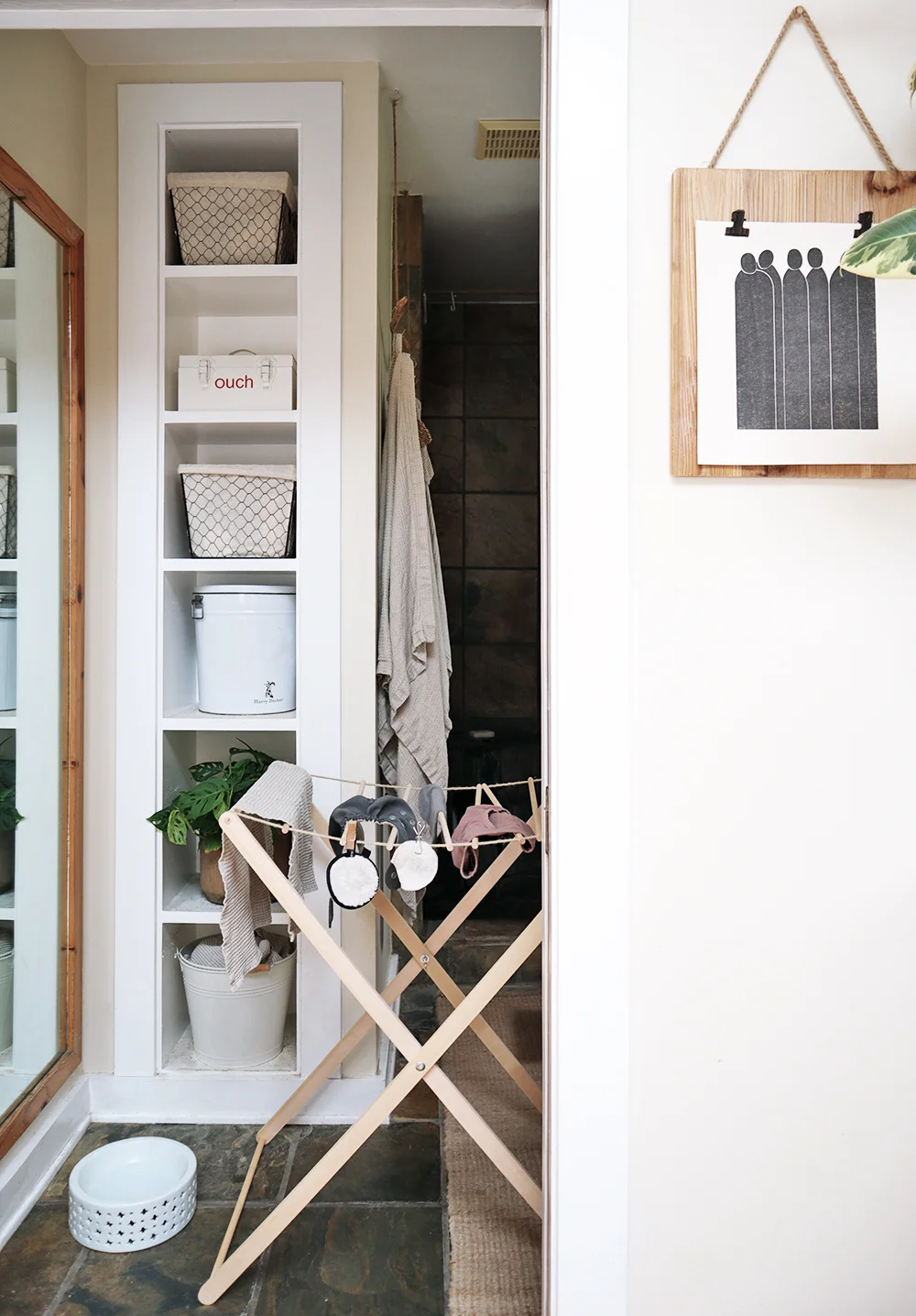
To dry your towels, reusable rounds, cloth diapers, laundry, and even wraps and bags in your small space, consider the foldable Helen Milan Birch Clothes Horse. When folded up, it tucks tightly against a small stretch of wall. (And it’s so lightweight that it can also be kept on a hook if you’d prefer to keep it off the ground when stored.) Even when it is in use, the rack consumes very little space (26″ L x 19.5″ W x 33.5″ H). Or a good old fashioned clothing line made of twine and tacks can work just as well, depending on your space and needs.

AIR FRESHENER
Skip the plastic plug-ins and synthetic air fresheners. When used safely (and in accordance with your building’s codes, etc.), hand-poured scented candles are effective and lovey little touches for a small bathroom. When the wax is burned out, you can clean and repurpose the container for a number of uses… such as holding your reusable bath goods!
HANDSOAP
We’ve started refilling glass containers with liquid soaps from ReContained instead of buying entirely new bottles.

Some other easy swaps include:
Upcycled containers and organizers (rather than store-bought bath sets)
(Note: This post was initially published on the blog in October 2018. It was updated with additional imagery and ideas in April 2019.)

Growing Goodness Indoors
This blog post was sponsored by Miracle-Gro. As always, the imagery and words are my own. Any images with the pups and/or our son were taken as they interacted under adult supervision in their own natural ways.

Here at our small home-office, we are so lucky to have a compact yet highly usable outdoor space. The yard was one of the reasons why Adam and I picked the cottage to be our first house together. But every other tiny apartment I rented in the past had no garden.

From my <200 sqft beach studio, to my 300 sqft East Village walk-up, to my shared spaces in DC, Florida, and Upstate NY, I always longed to tend to my own lil’ garden indoors. I know I wasn’t alone in my frustration. Many readers of this blog / my Instagram account who live in compact spaces with no yard and limited natural lighting have written to express similar sentiments.

For that reason (and for others that I’ll discuss later in this post,) we decided to try the Miracle-Gro® Twelve™ Indoor Growing System.

The easy-to-use Miracle-Gro Twelve unit allows us to grow herbs, leafy greens and flowers year-round without taking up too much space or our time.

The Miracle-Gro® Twelve™ Indoor Growing System has a minimalist outer design, which can adapt to the vibe of your home by styling the top in the same way you would dress any accent table (which is essentially what it is at 28” high and 16.5” wide/deep). Or you can stack two of the systems using their dedicated stacking kit, doubling your grow surface without requiring more floorspace.
The Miracle-Gro® Twelve™ Indoor Growing System makes growing fresh herbs and leafy greens simple. First, add plants or seeds to the system. We simply placed our plants in the liner, put the liner in the provided net cup, then dropped the cup into Miracle-Gro Twelve’s base. Water circulates through the system to provide the plant with continual moisture and nutrients that the roots need to grow. There’s also a specially-designed LED grow light for growing plants indoors— at any stage of growth, and at any time of year.

The Miracle-Gro Twelve app allows you to connect your indoor growing system with Bluetooth wireless technology so you can set your growing schedule, change your lighting mode, monitor your water level, and manage your calendar all from your smartphone.

I found three places where I could set up and plug in the system. I decided that the best spot was next to my desk in the living room/office, which is just a couple of steps from our kitchen and from West’s activity table. I did this on purpose to inspire the lil’ gardener in West, and demonstrate how plants can be grown indoors, too.

Ever since we redid our garden this winter, West has been highly interested in gardening.

Sadly, critters ate most of his plants before he really got to enjoy them.

The experience was valuable, but it was also a bummer. Now, with The Miracle-Gro Twelve Indoor Growing System inside the Cottage, West is going to be able to eat the food he helps grow. In tandem with using Miracle-Gro Twelve, we will continue to garden with our son outdoors, and we’ll teach him how to transplant certain greens over time.

Since we got the unit at the start of spring, we put it to immediate use with the included Transplanting Kit. The kit includes strong coin fiber liners that hold soil and net cups. The liners allow you to start growing from a plant that's already been started for you, like a Bonnie Plant, and save weeks of growing time.
We put Chocolate Mint, Nasturtium, Parsley, and Basil in the system.

Next, we’ll try leafy greens such as Swiss Chard and Lettuce. (But in the meantime, I’m particularly excited for the Nasturtium— I’ve been meaning to introduce some to our home for years.)

Later in the season we will grow new plants from seeds. We already picked out the seeds we want to use because I am ridiculously eager to get started. I’ll share another blog post on that process down the road!

Camping in the Cottage
Our little Cottage is nearly 100 years old-- naturally it’s going to suffer the aches and pains of age. With hot, dry summers, obnoxious termites (they seems to be everywhere in Venice), and wet winters, the wood here has been through quite a bit. So it was no shock to us when we recently discovered some structural damage in the wall of our bedroom.

After we cleared the hurdles of assessing for mold (luckily there was hardly any,) and talking with West’s physicians about potential negative health impacts from exposure by proximity (thankfully they determined that there was nothing to worry about), we settled in for weeks of camping in the main room of our tiny house while the repairs took place in the bedroom.

While I don’t want to live in an even smaller space, it was actually fascinating to experiment with 2/3 of the square footage to which we’re accustomed. We definitely still needed our closet, but we found ourselves doing just fine without the bookshelf and the dedicated bedroom.

Don’t get me wrong— I love our bookshelf and built-in bed, and I much prefer to have and enjoy them. But Adam and I found ourselves chatting about Murphy beds and trundles, and envisioning a way we could make-do in the living room / office for longer if we had to.

The biggest downside to the displacement within our home was that our mattress temporarily consumed nearly all the floorspace in the main room. There was only a narrow path remaining between the desk and mattress, and the front doors pressed into the bed each time we entered / exited. (When possible, we dragged the mattress into the bedroom and propped it up in there so it would be out of the way during the day.)

But the notable upside was our increased interaction with one another. It was a tough month for each of us for different reasons, but being inches away from each other sparked even deeper communication and observation, which was helpful at this moment in all of our lives.

Another upside was that our limited space encouraged us to do even more of what we love during daylight. We canoed. We used the bikes constantly. We took more trips to the beach and the library.

We stopped by small businesses we love here in Venice, and swapped stories with friends and colleagues.

Adam and West visited museums, playgrounds, climbing gyms, and more.

And we resumed the 2nd part of our outdoor makeover, as we were spending so much time out in the garden.

We are wrapping up the repairs this week.

Looking back, while the experience certainly wasn’t convenient, is wasn’t without some unexpected benefits. As such, I’m weirdly grateful for it. (And it’s a given that West’s clean bill of health after medical review was the most important part of the whole situation.)

As I shared on Instagram: Our house isn’t perfect. We aren’t anywhere near perfect. Our attempts to shift habits to improve our health and lighten our impact on the planet aren’t perfect. I never want to make it sounds as though everything is golden all the time... but it’s all about perspective. Is dragging the mattress through our tiny house (and through dog hair tumbleweeds) the stuff of Instagram dreams? Nah. But is our home standing and our family safe? Yes. Mattress on the floor or not, we are the absolute luckiest. It’s not about perfection. And it’s not about candy-coating the negative bits either. It’s about recognizing what actually matters, being grateful, and giving back.

Easy Small Space Swaps (General Roundup)
You’re likely pressed for usable inches in your tiny home or apartment. Consider these alternatives to your everyday household items to help reclaim stretches of open space on your countertops, shelves, in your closet, and more. There are over 200 more suggestions in my book, Small Space Style: Because You Don’t Need to Live Large to Live Beautifully.
Doors
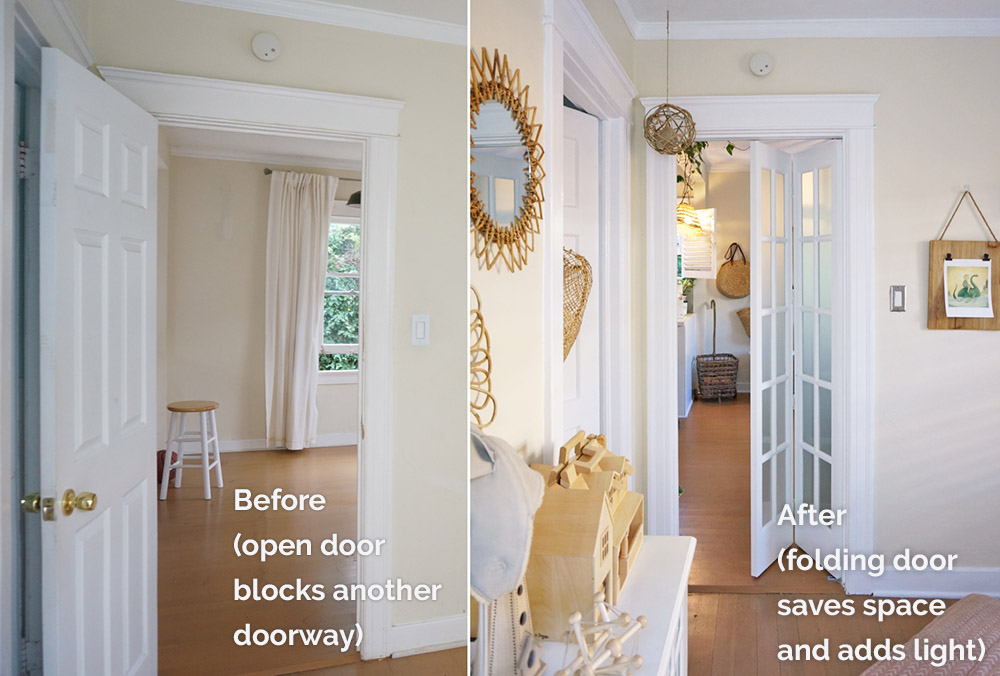
Traditional doors can be headaches in tight quarters. Accordion doors are economical, construction-free alternatives to pocket doors.Or, if you have wall space to spare, a sliding barn door might work for you as well. (See my full post on this topic here.)
Utensil Caddy
If you only have a sliver of a kitchen, skip as many unnecessary countertop items as possible so you always have some room at-the-ready to prep your food. Perhaps use a hanging herb rack to suspend your cooking utensils, rather than keeping them in a valuable drawer or in a standard caddy.

Above images via Pinterest

Hangers
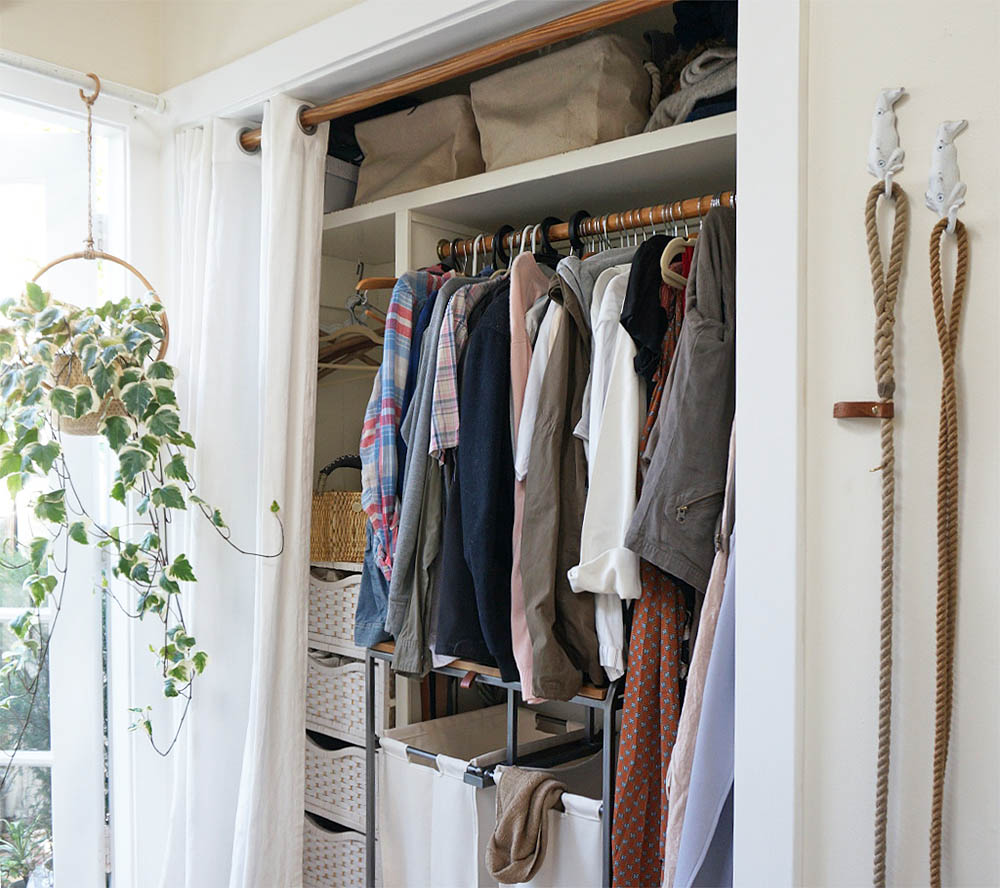
Don’t let hardware and accessories consume your much-needed clothing storage space. Slim, no-slip hangers and vertical hanging loops can free up room for that puffy winter coat. (The image below shows our only closet here at the Cottage. The silver-topped hangers are all part of a skinny, slip-free set, and it’s evident how much space they save compared to those few scattered, bulky plastic hangers.)
Dish rack
Skip the countertop dish rack and opt for a roll-up version or a drying mat instead.
Child’s Chalkboard Easel
We have one. But we didn’t need to buy it. If your family is sharing a small space, perhaps try a folding, travel-travel-sized chalkboard instead, or a wall-mounted roll.

Left image from our Cottage. Middle image via Crate and Barrel. Right image via George & Willy.
Paper Towel Holder
Skip the paper towels if possible— they’re needlessly wasteful and costly over time. A set of reusable cloth wipes will save space and money, and reduce your footprint on this planet. (Personally I love the cloths from Grovia.) And if you don’t buy paper towels, you won’t need a bulky, awkward paper towel holder. A small wire basket can hold more than enough cloth wipes between use/washes, and can also be repurposed to help organize a myriad of other kitchen items as well if your needs change.
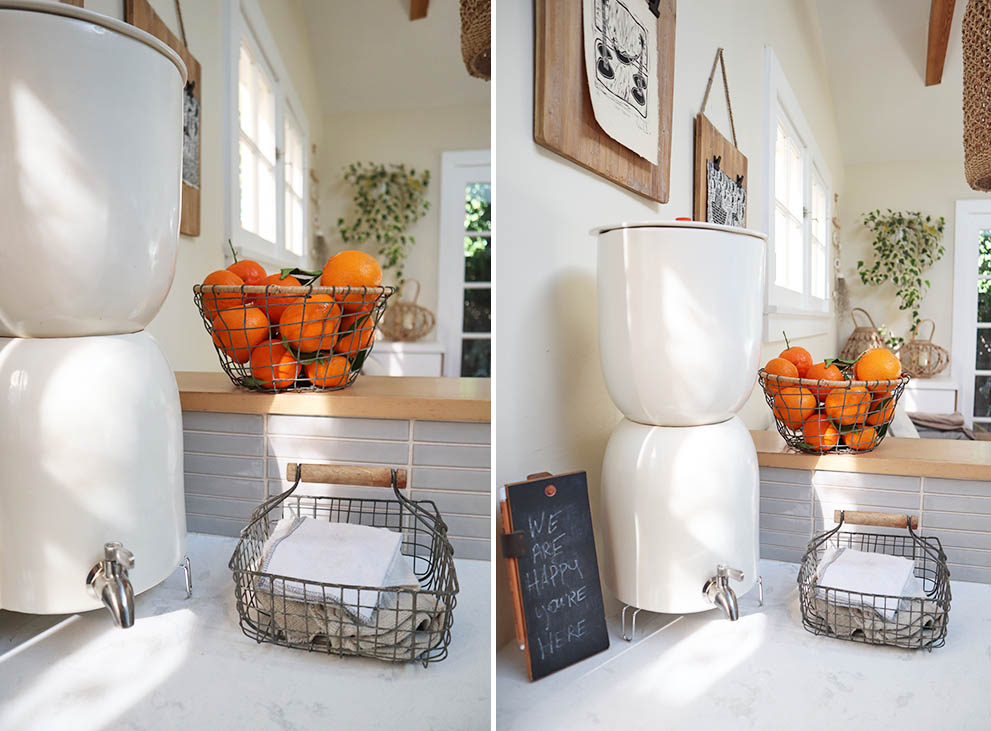
Water Filter
As shown above, we have a handmade, sculptural water filter from Walter Filter that we love. But if you don’t have room on your counters or even in your fridge for a pitcher-style filter, try a faucet version right on your sink if your faucet is compatible. .
Market Baskets
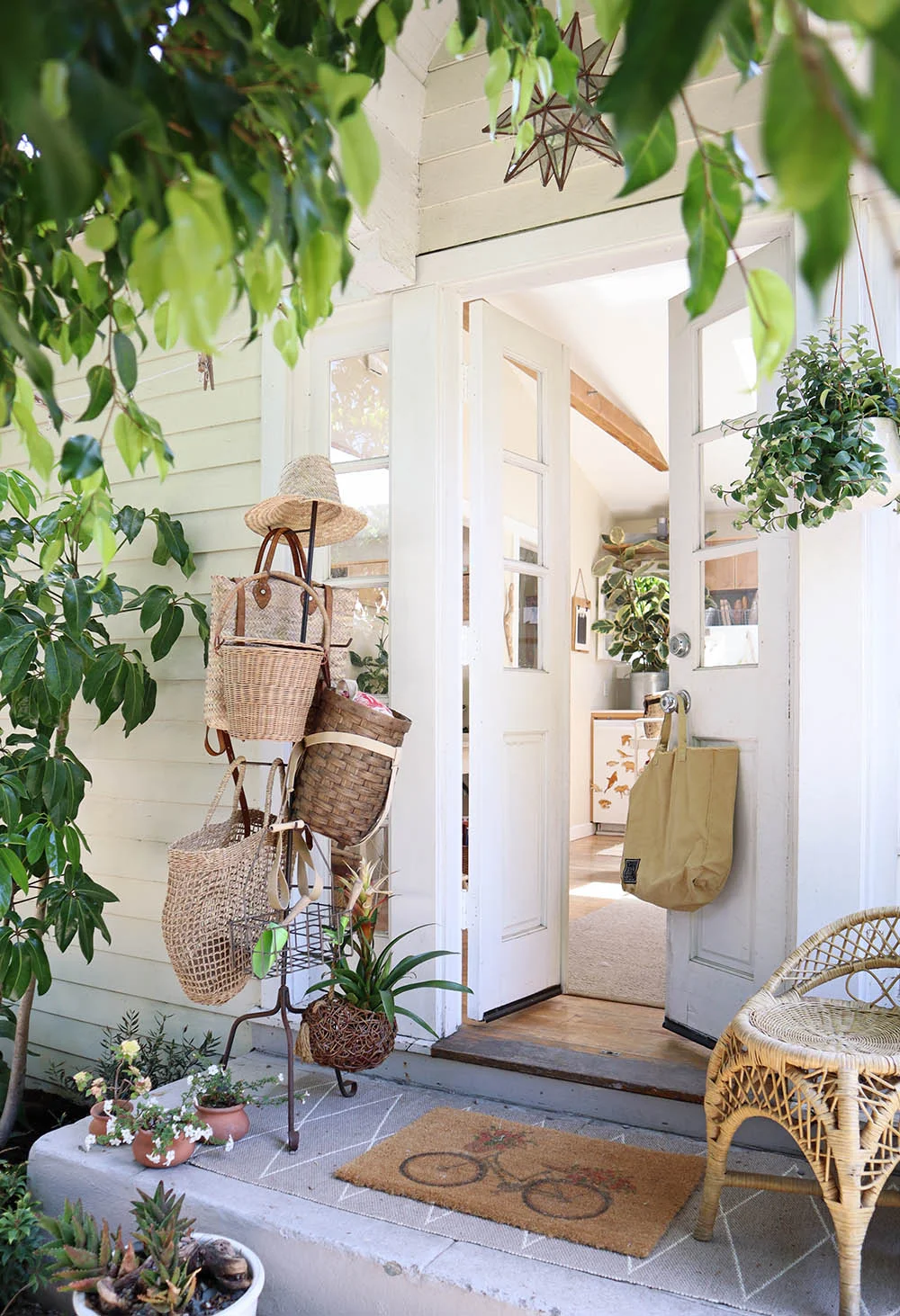
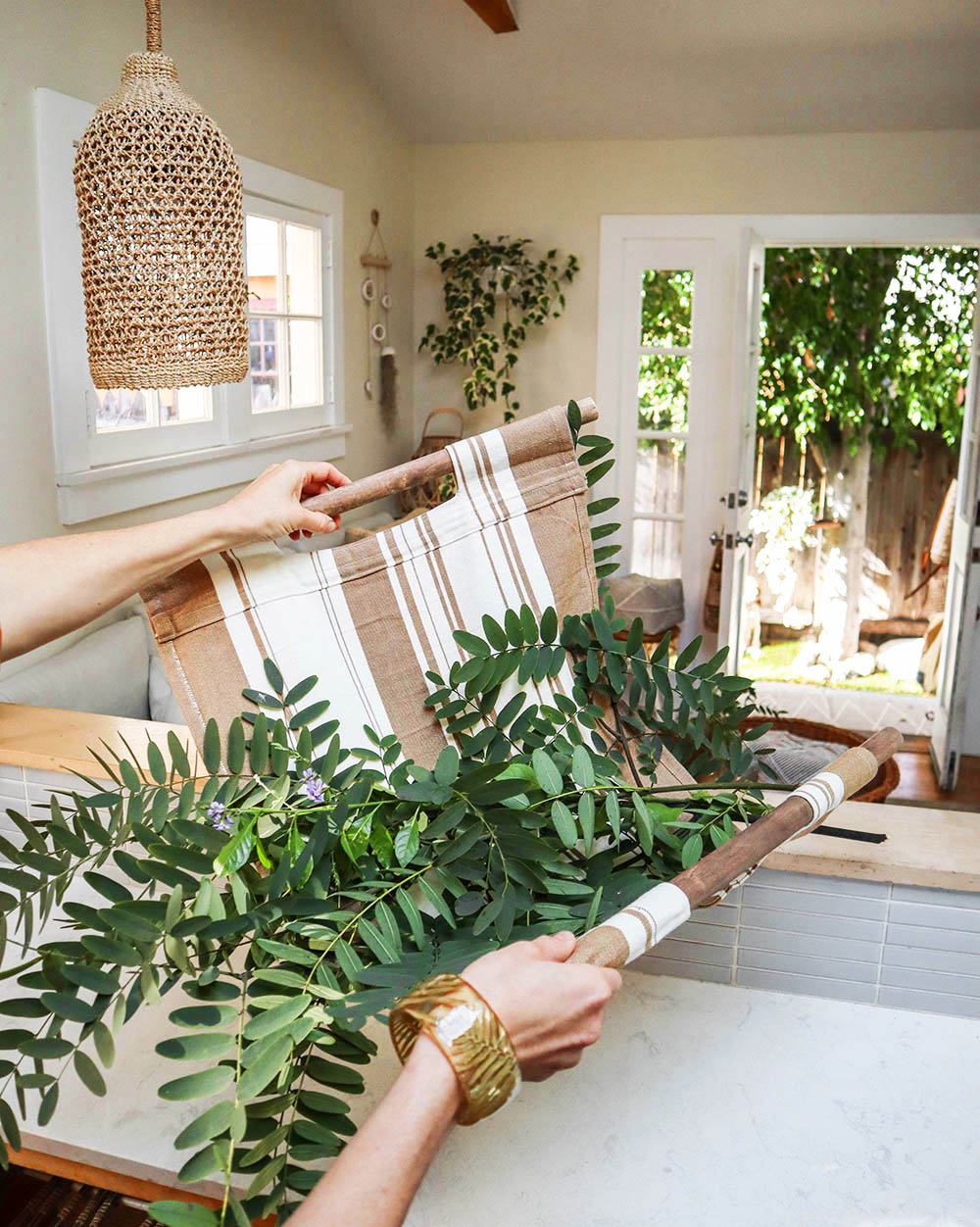
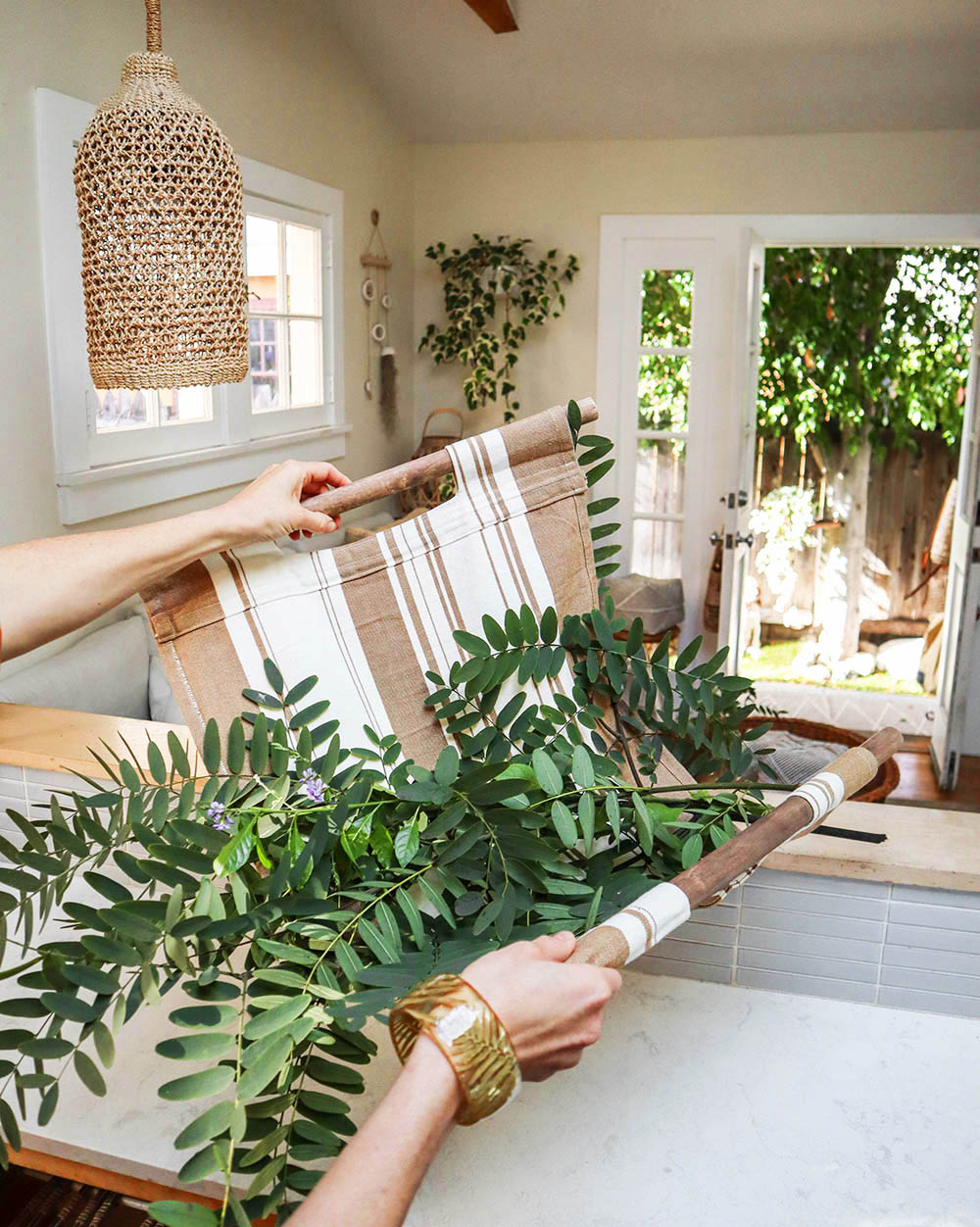
I have a collection of market baskets on our stoop, and I love them. But if we didn’t have that space, I’d probably reply on simple canvas bags for produce, and a log carrier for oversized items like branches, florals and even baguettes. Log carriers can roll up easily.
Toy Bins
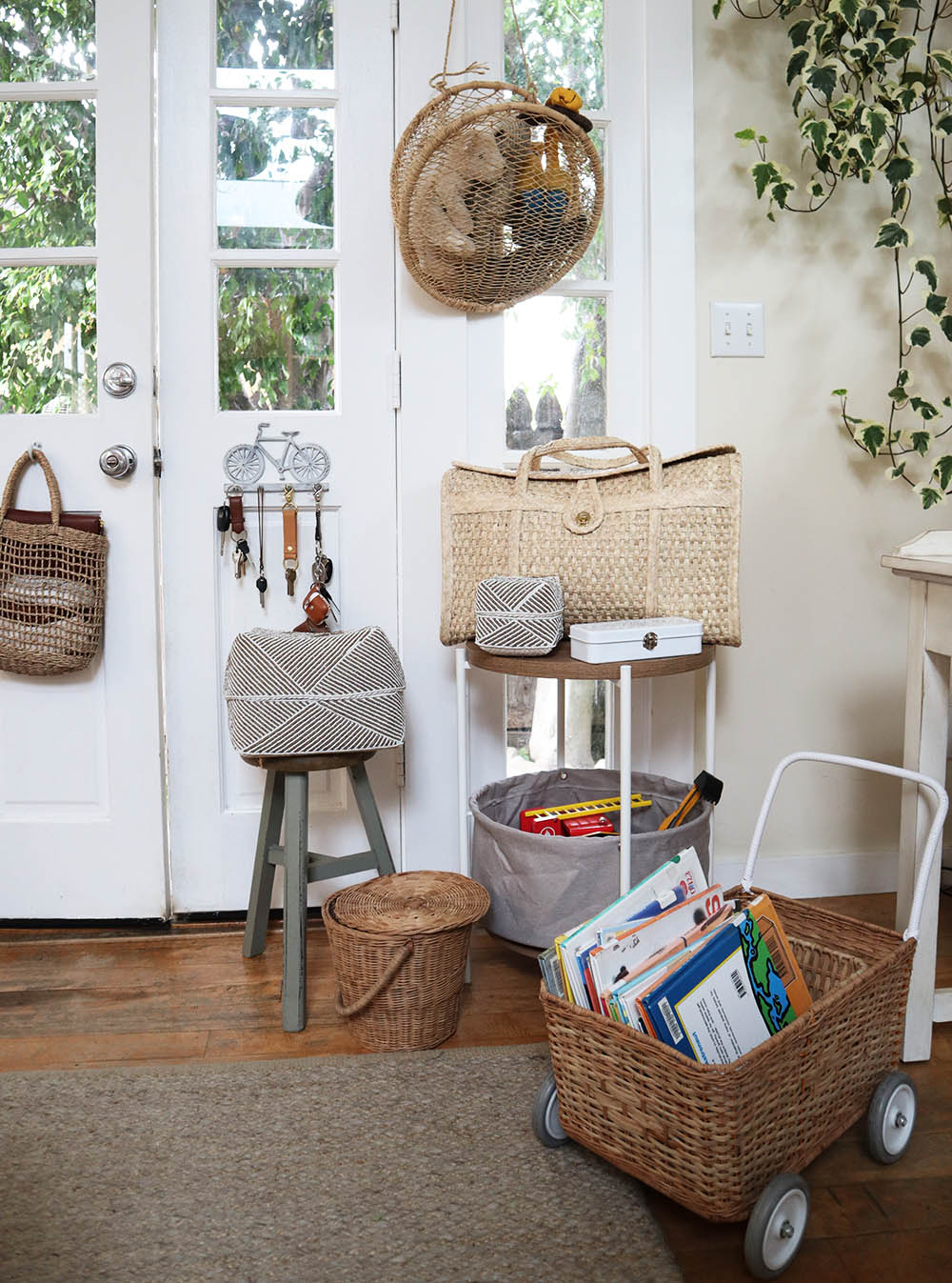
Toy bins are bulky. Try breaking up toys by category or size, and store them in containers that look and feel right for your space. This way you can spread these items around your home into vacant spots, rather than trying to keep them all corralled into one lumpy space. Everything from magazine racks to suitcases to apple baskets can work.


Functional Decor - Perpetual Calendar
I often talk about the concept of “functional decor.” With the planet suffering from the effects of our overconsumption and staggering waste, it’s more important than ever that we cut back in general. I aim to avoid purchasing new, mass produced, unsentimental, decorative tchotchkes for the sake of decor. Instead, I try to enrich our home with sustainable, ethically-produced, practical goods that can serve a function while delighting our senses.
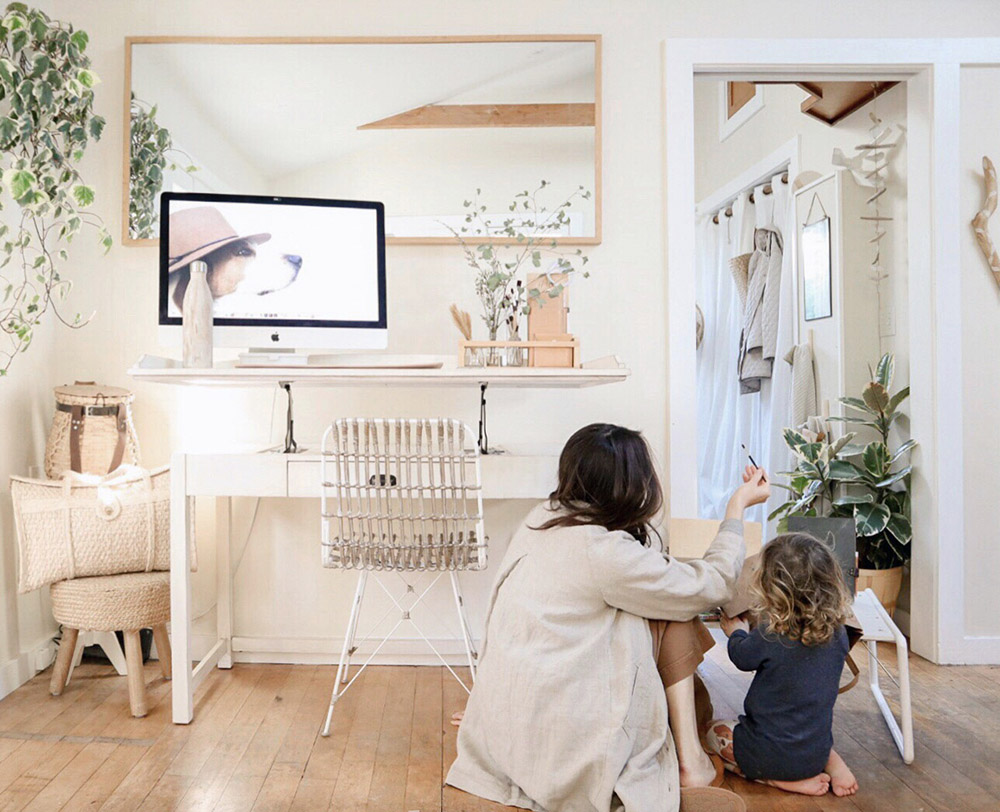
When it comes to toys, I usually prefer hand-me-downs— particularly with items such as LEGOs, things-that-go, and magnetic tiles. They cost very little (if anything), and since they’ve already been produced, transported and purchased, there’s no point in dooming them to a landfill or storage after they’ve been used by a single household. We might as well pass these items down the line as long as possible, especially since most are made of plastic that won’t biodegrade.


West’s toy collection is also largely made up of handmade wooden designs that we enjoy using (and seeing… and stepping over) throughout our home and garden.

Thanks to library books and interactions with friends, there’s no lack of “new” games and activities for our son to experience. But some months have passed since we got him anything more permanent, so I decided to invest in a beautiful, playful, wooden perpetual calendar I found on Etsy.

A perpetual calendar is a handy, lower-waste item for spaces of any size, and I found this one to be the perfect tool-meets-toy for our tiny home/office.

At 2 ½ years old, West is creating his own daily rhythm, and understands that particular days of the week mean that set activities will be taking place. I figured that a functional, updatable, interactive calendar would be useful to him for years to come.

So far, he loves it, even though he doesn’t fully understand it... and even though he insists the weather tiles be stored in his wheelbarrow.


Beyond the Cottage: Bond Group Office Makeover
The cottage blog has been a bit quieter in recent weeks, as I’ve been focusing on work offline. We’ve been diving into several new projects and I’m eager to post the details of those soon. Today I’m introducing one that’s particularly precious to me— an office space for a production company here in Los Angeles.
I don’t usually handle many larger interiors from scratch. I tend to prefer troubleshooting small or tricky spaces, as well as working with existing layouts to make them more efficient, eco-friendly, and/or versatile. But I said yes to this gig without hesitation. Here’s why.
In January, I got a call from a friend, who offered up a delightful challenge: Could I take her newly rented, modern office space in Beverly Hills and make it feel like our old tiny Cottage?
I had hoped and planned to start the new year by tackling a more diverse body of work, so her ask was perfectly timed. I accepted, and we got right to work.


Here’s why I’ve enjoyed this job thus far:
While the entire office is a fairly large area overall, most of the rooms themselves are compact. They feel like 8 unique yet overlapping small spaces.
One of the reasons I do what I do for a living is that I love mixing my personal and business worlds together— it makes my work extra gratifying. As such, I’m so happy to work with and for my friends.
The client and her partners needed me to design within their rental parameters, avoiding bigger changes such as built-ins, wallpaper, paint, overall structure, window treatments, etc. This is something I often prefer, because I feel like it makes the concepts and “takeaways” from each job more relatable for others— particularly renters and folks working within tighter budget constraints.
I’ve liked finding ways in which to weave the partners’ and staff’s personalities into their dedicated spaces, all while keeping the office visually unified through its glass walls.

Above: Lobby decor installation in progress. (Print by Arielle Vey. Handmade ceramics by MQuan. Handmade leather script straps via Etsy. Vintage bowl from Tumbleweed & Dandelion. Wooden tiled buffet from West Elm.)
But here was the trickiest part of all: How could I share this undertaking on my blog and Instagram without leaning into the professional successes of the client? She is a genuine friend of mine, but she also happens to be a well-known and highly-regarded actress. Her name is relevant in the scope of my work— her personality and the background of her production company played heavily into my design choices, and her comments and likeness are part of my before-and-after content— but her privacy is something I deeply honor and respect. I asked her outright about this at the onset, and she generously gave me her blessing to publish this project online.
As such, I look forward to sharing my lil’ makeover of Amy Adams’ Bond Group Entertainment offices with you very soon.

38
I turned 38 this month. I’m not sure what my younger self envisioned I’d be doing by this point in life, but I know I never expected for it to be THIS.

Living and working in a tiny house with a lil’ family.

Sharing an office (in the living room) and a 10 year-old car with my husband and loving it that way.

Finding new grays and lines regularly without being bothered by them (yet). Running a small business that — for better or worse— is all my own. Listening to my child (I have a child! I still can’t believe it!) casually say things like, “I love you too, Mommy,” as he confidently steps out the front door with his father.

Rejoicing at how lucky I am to still have my beloved best friend, StanLee, curled up by my desk during the day, and perched below my side of the bed at night— often with Sophee enjoying him as a pillow.

THIS is not glamorous.
It’s constantly in need of a paint job, a watering, a trim, a disclaimer, a refresher course, and a tune up. It’s covered in dog hair, applesauce, sweat, sand, and muck. It’s pulsing with epic worry, guilt, embarrassment, foolish earnestness, and unrelenting mistakes.

But it’s also overflowing with immense love. It all just makes me feel so much happiness.

As this blog is a major part of my business— and my work is a source of purpose and joy in my life— I wanted to take a quiet, reflective moment to thank you for reading along.

Above: My book, Small Space Style, at Late Sunday Afternoon.

Composting at the Cottage
Our cottage is located in Venice, which is part of Los Angeles County. Our location provides us access to the largest residential curbside recycling program in the United States, which gathers a variety of recyclables from over 750,000 households each week. Among these materials are those that can be tossed in the city’s “Green Bins.” These outdoor containers are reserved for yard clippings, branches, flowers, a variety of grasses, leaves, and fruits / vegetables from any source that have NOT been prepared for consumption and have NOT been partially consumed. But here at our tiny home/office, we still have so much waste left over that can’t be dropped in the bins… but it can be composted. So, when we started our garden makeover earlier this year, one of the things we knew we wanted to have out in the yard was a compact compost tumbler.

Per the EPA, food waste is the largest component within landfills in the USA. We’re hoping that by composting here at the Cottage (and sharing our journey as newcomers to the process) that we can do our part to help divert organic materials from landfills, and cut back on the energy use, wasted resources and emissions that result from hauling away so much organic material.
We’re in the first month of our city-life composting journey, and we have so much to learn. Many resources on the subject offer contrasting advice about what should go in a composter, and what ratios should be maintained. We look forward to discovering what works best for our lifestyle, environment, and gear.

We got a 33 gallon Jora Composter tumbler, which sits in our lil’ back garden. In the kitchen, we have a compostable countertop bin, which we fill up throughout the day before pouring it into the Jora at night.

We eat a vegetation diet, composed primarily of plant-based ingredients. Between those scraps and the greenery from our yard and my styling projects, the Jora is filling up quickly…. which helps us realize just how much unnecessary waste we were generating.

When it comes to food and beverage prep, we strive to stick strictly to refillable and reusable containers and accessories of all sorts.

This saves money and space, and — in my opinion— looks far more beautiful.

We’ll continue to study and try what we can, I’ll share future posts regarding what we learn from our method of composting here at our tiny cottage.

Improving the Functionality of a Small Space
When I’m out helping clients and friends declutter, organize, streamline, simplify, and/or make their homes more eco-friendly, I’m pretty terrible about taking before/after photos to share here and/or on Instagram. I either forget because we’re so deeply into the process, or I don’t want to invade their privacy. (Understandably, most folks aren’t keen on having the personal contents of their overflowing drawers broadcast to the world.)
My latest on-site was no exception. I worked with a friend (and former client from when I used to operate my creative firm,) to help streamline elements of her small bungalow here in Venice, and naturally we got so wrapped up in chatting and troubleshooting that my camera sat neglected on her couch throughout both of my visits. But there were some quick and inexpensive adjustments that we applied to her space that I believe could be helpful to share, regardless of the lack of adequate visuals.
Some background on Eloisa: She lives in an 800 sqft house with her husband (Anderson), their toddler, and their two large rescue dogs. Eloisa is the founder of The Wolf Nest, and runs much of the business from her home. (Tour the space and learn more about this wonderful family here via Apartment Therapy.)

Eloisa’s main hurdles were the following:
Some miscellaneous items were scattered throughout the house and had no set place. They were either hard to find, hard to reach, or totally unnecessary.
The main work hubs are not located in an office. Instead, they’re located in the kitchen and by the couch. As such, papers and wires were piling up haphazardly.
The kitchen counter was crowded, and the dish drying rack stood plates high and upright, preventing Eloisa and Anderson from opening up a crucial upper cabinet.
The back of the laundry room door was so packed with hanging bags that the family couldn’t fully open the main door to access the space.
Anderson’s personal spot for worship and reflection was located in their toddler’s room rather than in a more appropriate setting, as there was no other space for it.
Eloisa and Anderson were having trouble housing spare rolls of paper towels, boxes of wipes, cleaning supplies, and various toiletries.
Eloisa didn’t know how to best get rid of items they no longer needed.

Above: Anderson’s space for reflection and worship was in their toddler’s room (pictured here), as there was no other space available. (Photo © Marisa Vitale for Apartment Therapy.)
We approached each challenge one by one with a fair amount of brevity. Our solution to each issue was as follows:
We made sure that every necessary item that was previously nomadic throughout the home was given a dedicated space. We increased storage by introducing three rolling crates to the spare inches below the couch. This made everything easy to find and access. (Any miscellaneous item that wasn’t essential was flagged for giveaway.)
We added a bamboo power strip box / cord keeper to the living room to corral and conceal the exposed wires. This made everything safer for their young son, and cleaner and better organized. We then added an oversized envelope / laptop sleeve to the kitchen table to temporarily hold pending paperwork without making the area feel like an office. I also told Eloisa about our mini-scanner and tiny shredder, which will hopefully help them eliminate the hard copies of their documents, freeing up storage space and preventing paper build-up.
We swapped the clunky metal drying rack out for a set of machine-washable drying mats, which allow the cabinet above to open and close as intended. We also replaced the paper towel holder with a Uashmama washable paper bag filled with reusable Grovia wipes/cloths. (No more bulky and wasteful paper towels!)
We improved the function of their laundry room by better utilizing vertical space. First, we removed an old, tall laundry cart/rack, as the family was only using the bottom half of it. We replaced it with a rolling laundry cart that includes a lift-top surface that can be used during chores or as basic surface storage. In the newly-exposed stretch of wall behind and beside it, we redistributed several backpacks and bags that were previously hanging on the back of the door in a disorganized clump. Now the door opens completely, and more items in the room are immediately visible and accessible.
We were able to free up space to relocate Anderson’s altar from their son’s room to the main bedroom by making wiser use of surface space. The main bedroom’s horizontal dresser offers ample inches for all of the sculptures, artwork, photos, and artifacts included in the altar, but a bulky changing pad and corresponding diapering accessories were consuming the surface. I asked Eloisa to donate enough clothing in the main bedroom dresser to free up one of the smaller drawers at the top to hold the diapering accessories. Then, we cleaned and flagged the diaper pad for donation, opting instead to use a medium Gathre Mat as a diapering surface. The mat can be suspended by its loop when not in use, and is easy to toss out over the bed with one hand during changing time. This opened up the entire dresser surface for Anderson’s items.
We freed up inches throughout the home by eliminating the need for paper napkins and paper towels. Three to four bundles of 12-pack reusable wipes consume roughly the same space as a single disposible paper towel roll. We also traded the old, oversized, bright, toxic cleaning supplies for new, refillable glass bottles and organic concentrates from Supernatural. I then asked Eloisa to please get rid of all her expired toiletries, along with the “what if I need this some day products that she’d been holding on to for a long time, but never used. From there, everything went into Uashmama washable paper bags, which are particularly handy because they can adjust in size, or fold down for easy storage themselves when no longer needed. Plus they’re beautiful and eco-friendly. (We used them to organize her son’s clothing, too.) I recommended that Eloisa stop bringing products into the home that are not essential.
We then discussed the most fitting donation methods for the items that didn’t make the cut. Books and certain toys can be donated to libraries and children’s hospitals. Unopened or lightly used bath and beauty products are often welcome at shelters and community housing facilities. Clothes can be sold online or to thrift stores, or donated to nearby centers. Larger housewares, if in fair condition, will often be picked up quickly when left on the curb or in an alley on a weekend (depending on your neighborhood)— or many organizations will pick up your oversized home goods. Towels and blankets are helpful for disaster relief organizations, and at homeless shelters.
Note: The following photos are from my iPhone, and were taken for reference purposes. Apologies for the poor image quality.

Above: Adding shallow rolling storage to the inches beneath the couch maximized space and greatly improved ease of accessibility.


Above: We were able to make better use of the main bedroom dresser by replacing the changing pad for a portable hanging mat. This frees up enough space for Anderson’s alter to be relocated from the child’s room into the parents’ bedroom.

We used Uashmama washable paper bags to better organize almost every room / category in Eloisa’s bungalow.
I’ll check in with Eloisa and her family in the near future to see how the little changes are suiting them. But this was a perfect example of how a small number of low cost, simple modifications can have a positive impact on the functionality of a small space.

Lil’ Garden Makeover (Part I)
This blog post was sponsored by The Home Depot. As always, the imagery and words are my own.
When Adam and I were planning our home-wedding 3 years ago, one of the obstacles we had to tackle was our garden. We’d stopped watering our grass long ago due to the California drought, so the grass went from lush to patchy to non-existent. Most of the yard was a giant dirt-patch, surrounded by ficus trees, bougainvillea, and a single succulent barrel (which we’d planted with my mother upon moving into our home several years prior).

We didn’t want our guests standing in a dusty (or muddy) pit. So, in an effort to find a quick, budget-strict solution for the garden floor, we opted to cover the surface with faux grass.
The design of artificial grass has come a loooong way, but despite the more subdued color of the green and the higher, denser blades, I was never comfortable with the concept of glorified turf. (To each her/his own! That’s just me— I’m a North Florida girl at heart, so artificial greenery in general just isn’t my thing.) But the grass served its purpose for our wedding, and for that I’m grateful.

I had hoped to quickly pass along the rolls of turf to someone else and replace the foundation of our yard a few months after our wedding, but by that point I was working non-stop and in my third trimester. Then, once West was born and I began writing my book while working full-time, my available time to tackle a garden makeover completely evaporated.
Luckily, while working with The Home Depot on our more recent kitchen updates last summer, I mentioned my frustrations about the garden, and we realized that we could also partner for the overdue garden makeover. They offer everything from soil to gravel to drought-tolerant greenery to planters... and even outdoor showers.
I set about the redesign of the garden with the local designers at Big Red Sun. (More on that to come via a later post.) When conceptualizing the space, I communicated that I appreciate the delight in the aesthetics and low-maintenance of desert-inspired landscapes, but that our particular setting feels much more like a deeply nestled old cottage than it does a modern beach bungalow. As such, I wanted a design that felt ALIVE, with branches and leaves that would move with the wind and be soft to the touch, all without requiring too much water.
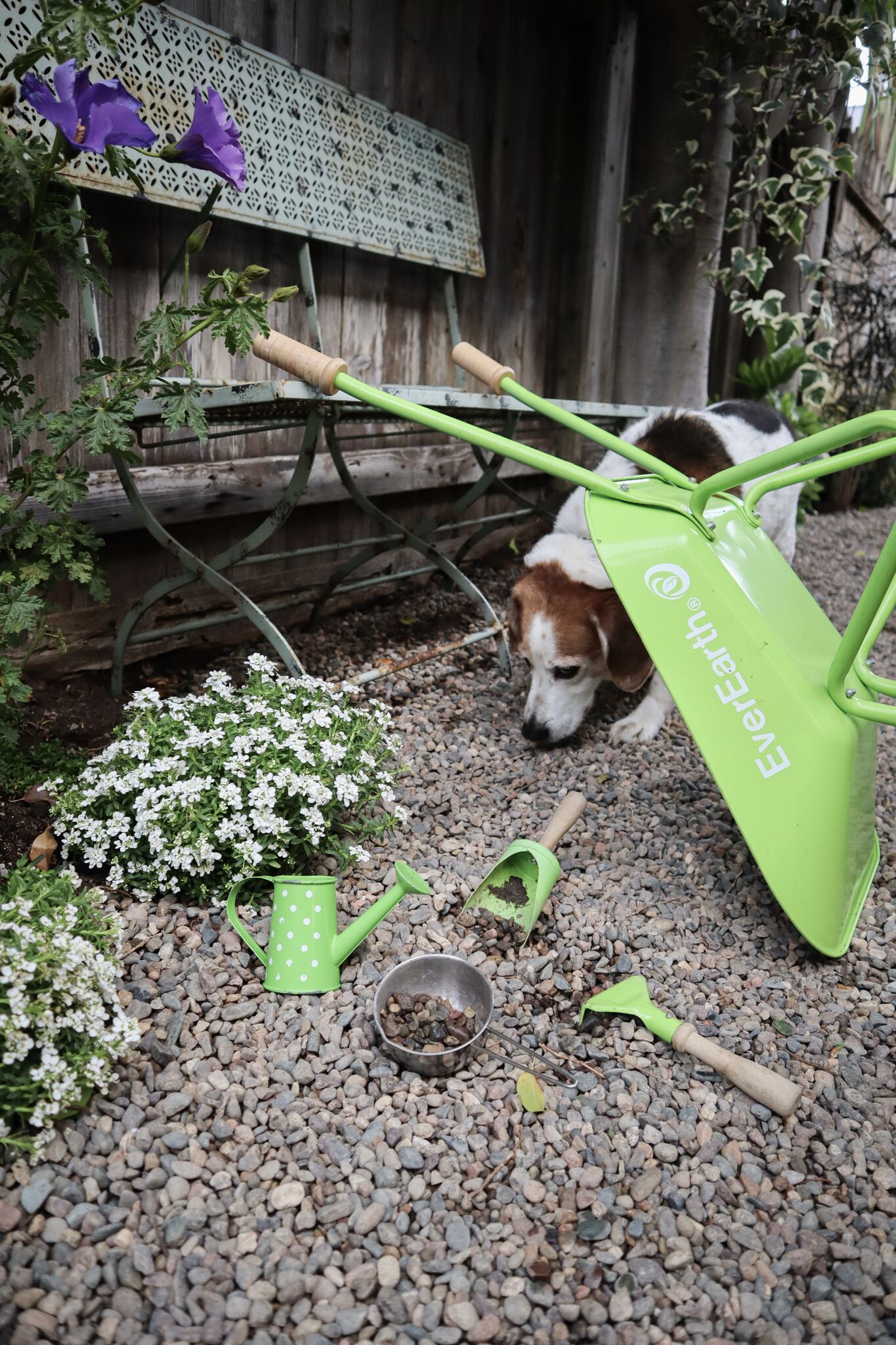
The first step was to determine what would (and wouldn’t) work as the main ground cover. We had several factors to keep in mind:
The main thoroughfares throughout the garden sit above paths of pipes leading to both our home and the neighboring tiny cottage. As such, oversized custom pavers, grasscrete (which I love), and decking were out of the running as options, as they’d be too cumbersome to move if and when we have to dig up the yard.
Depending on the season and size of the Ficus trees, the same spot in our outdoor space will get anywhere from 30 minutes of soft light to 8 hours of blazing sun per day. That pendulum swing is huge and tricky when it comes to selecting grass and creeping ground cover that can actually thrive in such wildly varying conditions.
Our yard gets SO MUCH TRAFFIC. It’s obviously small, so every usable inch is traversed numerous times per day.
We have dogs and a toddler. There WILL be messes... of all sorts. And some surfaces are easier to treat than others.
The main pathway through our garden is not only a racetrack for our delightfully wild son, but it’s also used by our neighbors. We wanted a walkway that wouldn’t easily trip anyone (we used to stumble on our pavers ALL the time), but could also be forgiving in case of a stumble.
The solution appeared to be Pea Gravel.

At first I was hesitant, knowing that the dogs and West would kick it up and deliberately skid through it. However, after dumping out a couple of tester bags and seeing how much they enjoyed the tiny pebbles, which inspired outdoor activities and imaginative play, my fears dissipated.
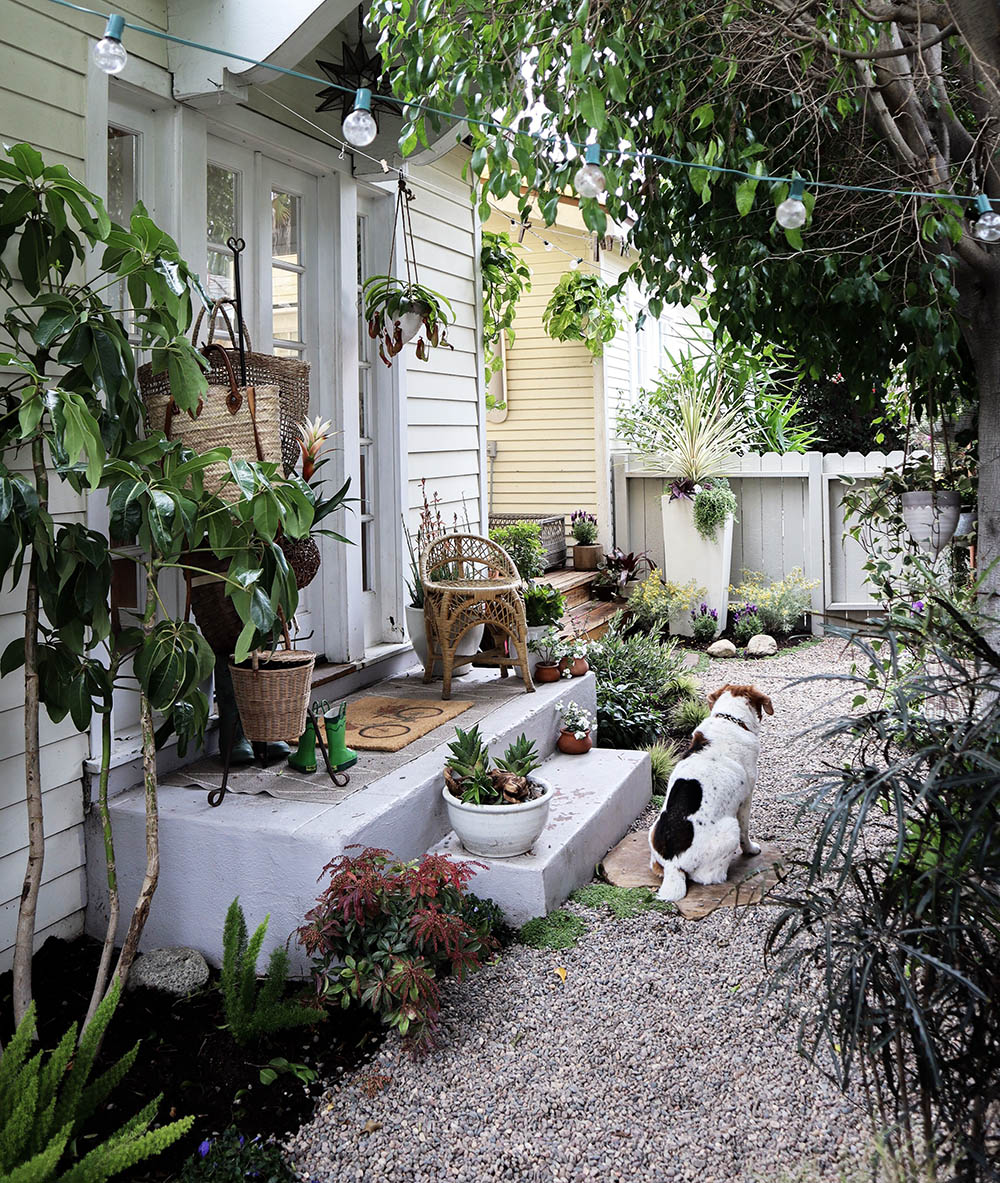
I get such satisfaction from hearing and feeling the crunch of the gravel underfoot, and I like the look of the grey and beige rocks when they’re wet as much as when they’re dry.

The gravel also drains easily and naturally without trapping odors, which helps if the pups have accidents between walks.

Watching the fake grass come out was so satisfying:


I will miss the uniform look of the green (oh how I yearn for REAL, healthy grass). And it goes without saying that I sincerely regret the waste. But I am thrilled to now have a natural foundation in our outdoor space.

We raked and tilled the dirt that had suffocated under the turf, and added fresh new layers of Kellogg organic all natural soil. It helps establish strong roots, and adds organic matter to the soil, and retains valuable nutrients. Plus Kellogg is locally made and family owned.
We topped the soil with the Pea Gravel, which won’t attract pests (a concern here when it comes to termites and ants). The gravel will also help retain moisture and reduce erosion. Plus it will be easy to build upon if ever we have to tinker with the pipes.
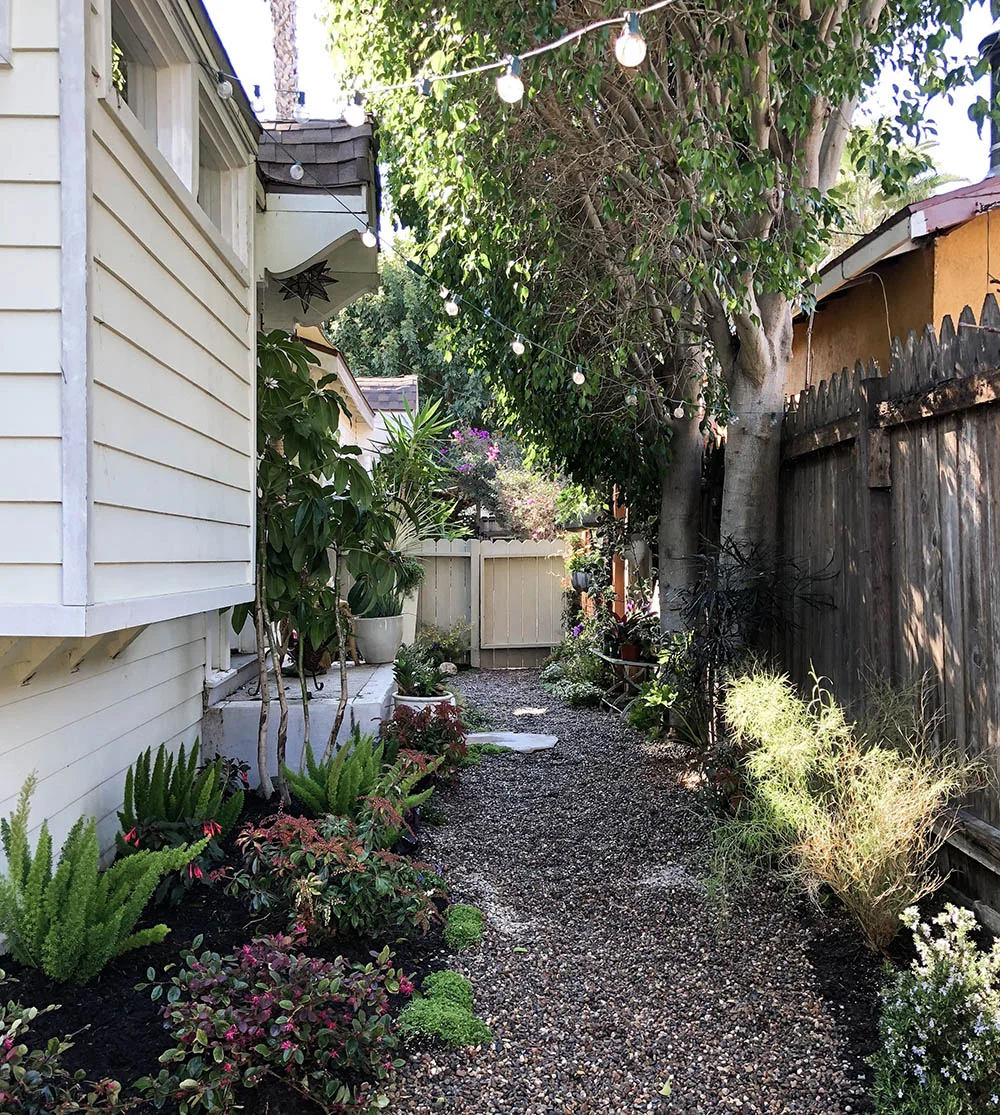
Next came the plants.

We potted most of the greenery that had long been living in scattered pots, and we replaced some of the overgrown plants along the perimeter with alternatives that were more fitting for the space and how we use it.

For example, I really loved the bougainvillea that grew mid-way along our main path, but it caught our hair, skin and clothing multiple times per day. It also wove through the ficus branches and grapevines in a way that made it feel impossible to manage on our own. So it was trimmed down and relocated, as was the plant growing beneath our bedroom window.

The mixture of new plants adds texture, color and depth to the narrow space. Certain types will welcome butterflies and hummingbirds, all while being able to thrive in varying sunlight. When the young plants grow in a bit more, I expect that the yard will appear so lush and lovely.

The Home Depot’s plants are no longer treated with neonicotinoids, so precious bees will be safe, too.
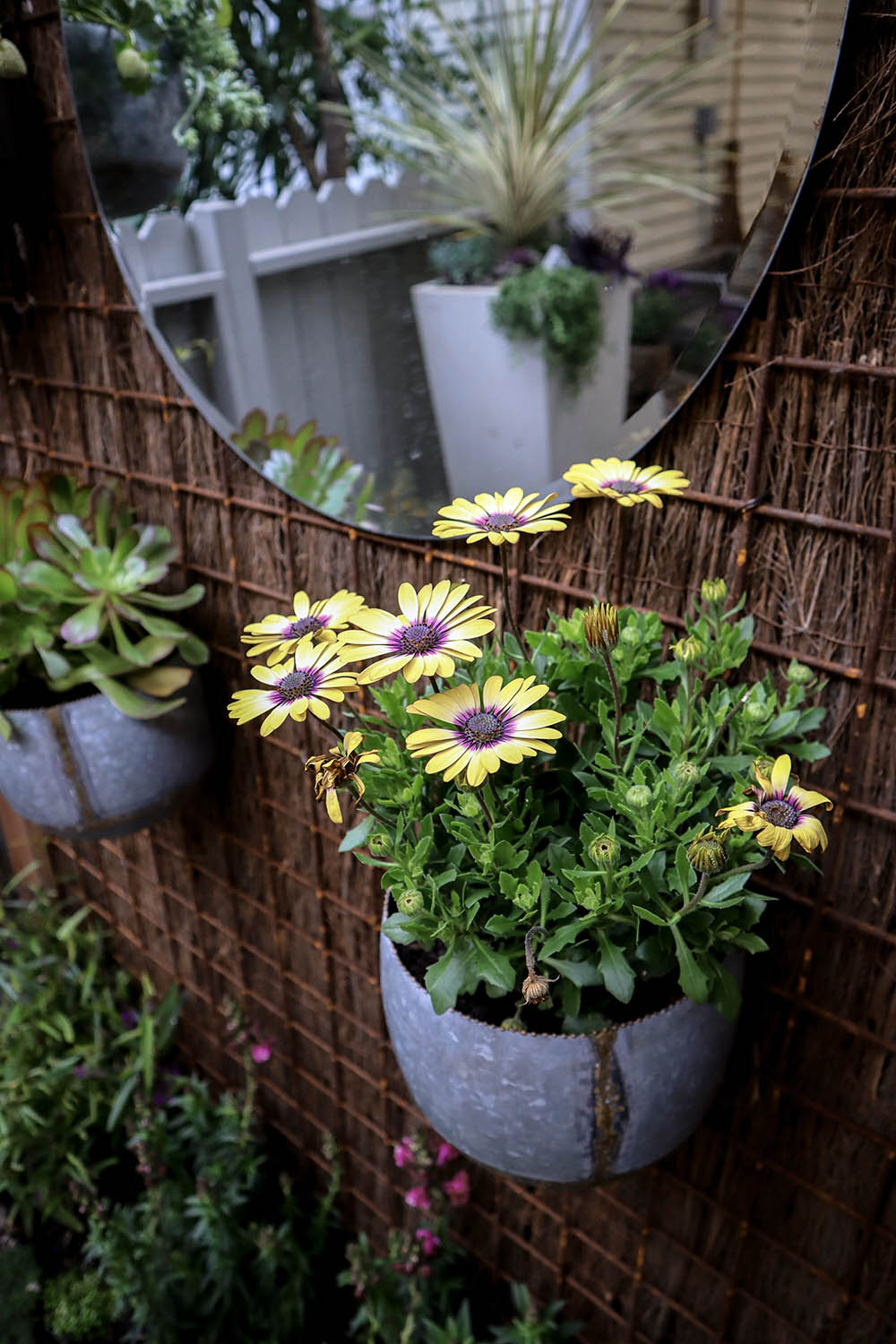
Strategically placed groupings of Mother-of-Thyme, Pennyroyal and other gound cover tucked between the rocks and the plant beds will spread beautifully while smelling deliciously fragrant and repelling fleas and ticks.

If planting Pennyroyal or any new plant in your outdoor space, please research standard toxicity warnings before-hand so you can make your own informed decisions about what will be safe and work best for you and your family. Luckily our pups and son don’t try to ingest things they shouldn’t.

One of the major motivations behind the garden makeover was to provide West with a safer outdoor environment. I was never sure what chemicals were in (or being released from) the fake grass, and I never trusted that it was properly draining, as it was installed in such a rush. Since we’ve gotten heavier rains in recent winters, messier grapevine debris in the summer (thanks, raccoons), and daily wear-and-tear in between, I always cringed when West stepped off of the outdoor rugs or pavers onto the turf.

In fact, that’s the main reason why we converted our 8’ porch into a playroom. But now that the garden is a safer space as far as chemicals and surfaces are concerned, our son has spent hours upon hours outside with the pups by his side, enjoying the gravel and his garden activity table. West is also eager to use the new outdoor shower, as are Adam and I.

Since removing the shed from the back garden, I’d envisioned adding an outdoor shower to the space.

We live a short walk from the beach and right next to the canals, so the 5 of us often return home with sand or muck on our skin (or fur and paws), clothes and gear. In the warmer months, an outdoor shower will be such a joy! By adding a shallow teak tray beneath the platform (and by using a simple, organic shampoo + soap bar), we can collect water to use for the plants.

I’m working on another blog post about the garden design and details, as well as our new composting system. I will share that soon! In the meantime, I want to thank The Home Depot for helping us create a healthier, happier garden here at our tiny cottage.


"What's Next?"
One of the questions I’m asked the most often is: what is the plan for when West gets older and wants more privacy, and if we decide to have a second child?

While these are topics that Adam and I discuss at times, we’re still so content here in our lil’ home that we don’t see the need to leave until/unless the need actually presents itself.
While there are obvious realities for which we need to plan (retirement, West’s education, emergency situations, etc.), I don’t feel the need to adjust our living situation in anticipation of whatever the future might hold.

The same sort of questions popped up time and time again when I was pregnant with West— everyone asked us when and where we’d be moving. But we took things day-by-day, and it all worked out better than we could’ve ever imagined. That’s how I want to live— planning wisely for the fairly standard “givens” in life, but also allowing the future to unfold naturally as we enjoy the present. That way, when the time comes, we will know what we need and why, rather than acting half-heartedly (and perhaps wastefully) on predictions.

People make all sorts of living situations work for them and their families, whether by choice or necessity. (Look at @themayesteam— a family of 6 living on a converted bus, or @readtealeaves— a family of 4 comfortably nestled in a single bedroom in NY.) Diverse lifestyles and homes are all around us, but they’re rarely integrated into entertainment in a way that makes them seem like anything other than a problem or a quirky novelty.

Anyway! To all of you lovely folks who’ve written kind messages and inquired what’s next for us as far as our living situation is concerned, my apologies for not replying— your guess is as good as ours. But in the meantime, we feel so happy (and unbelievably lucky) to be right where we are.


Built-In Bed Refresh
Now that West is accustomed to sleeping in his “big kid bed” (wail!), Adam and I felt like it was time for a refresh of our built-in bed. All of the linens here weather a daily storm of heavy use— in part due to the realities of life with a toddler and two pups, but also due to the small size of our home. As inches decrease, use of each and every space increases. As such, the bed takes on numerous roles throughout the day before being slept in all night, so our bedding has to be durable as well as beautiful.
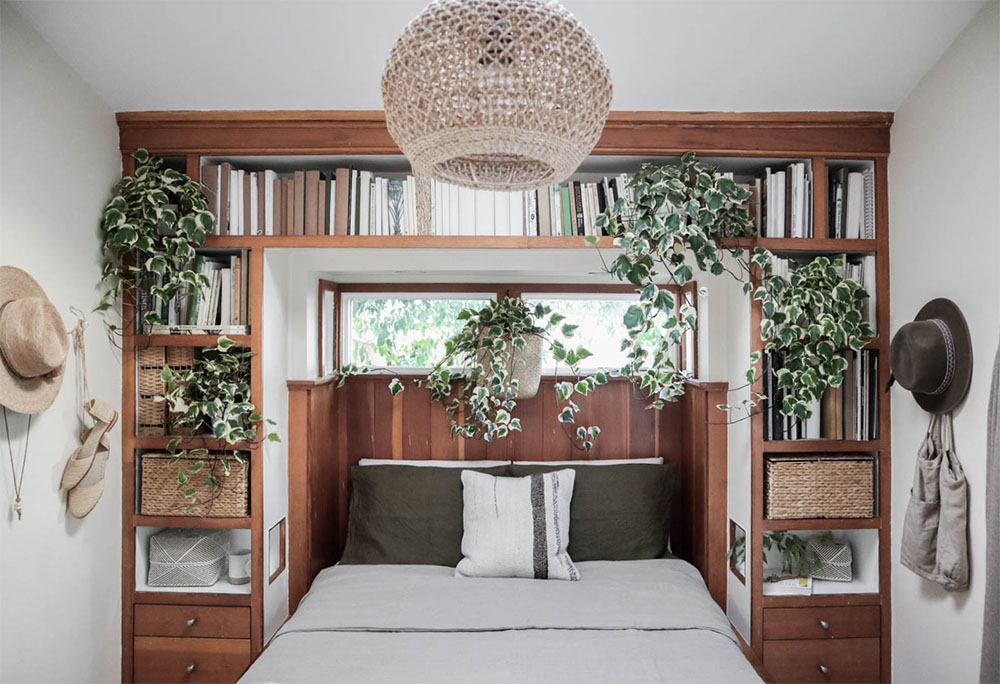
Additionally, we strive to use ethically-produced and natural products as often as possible, so we also wanted to modify our bedding with this in mind.
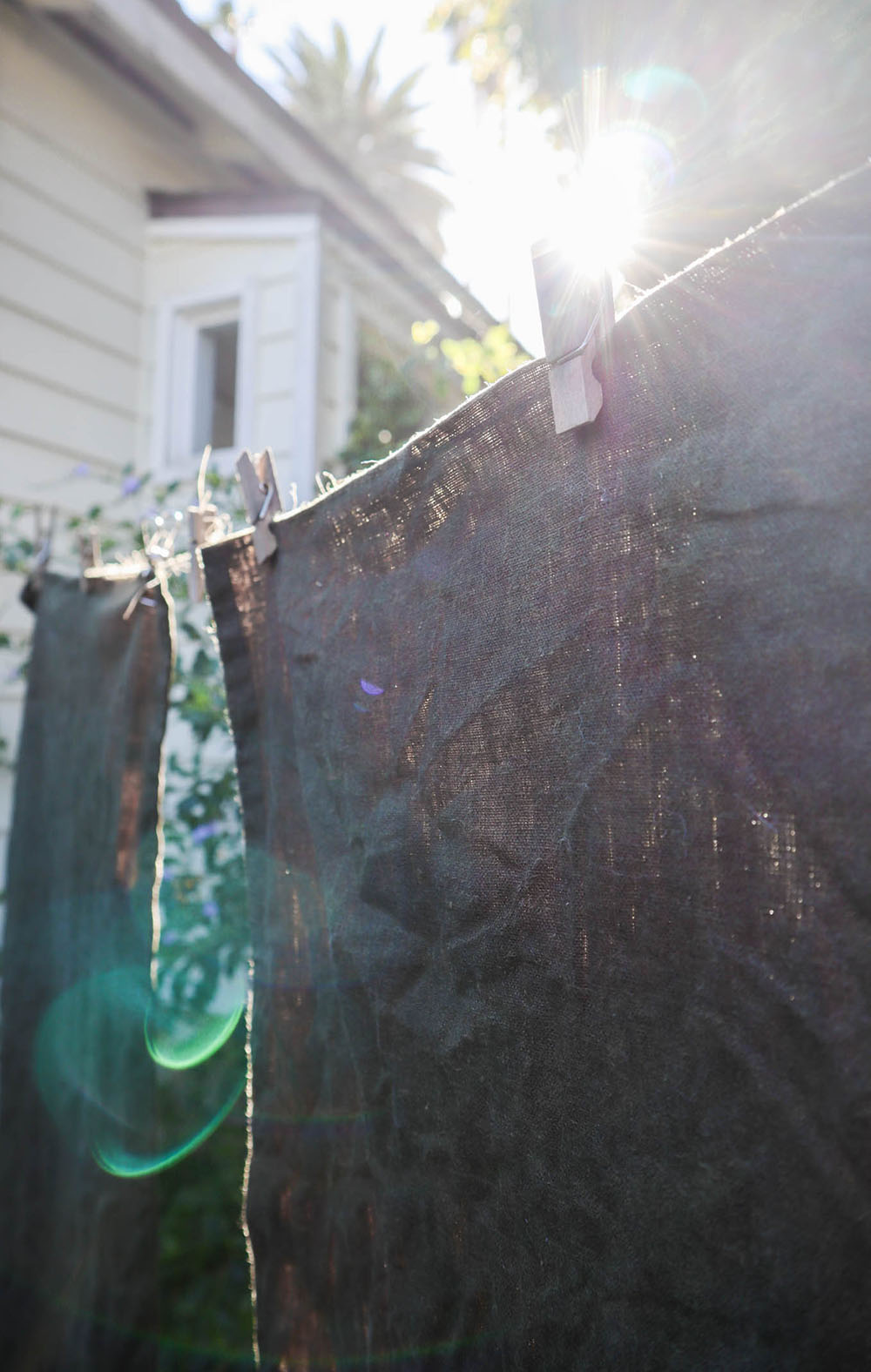
In our search for the perfect fit for our needs and preferences, we decided to upgrade our bedding with Rough Linen.

I’ve purchased a few items from Rough Linen in the recent past. After years of using the same two traditional bath towels, Adam and I finally needed replacements, so we purchased and fell in love with Rough Linen’s waffle-weave towels.
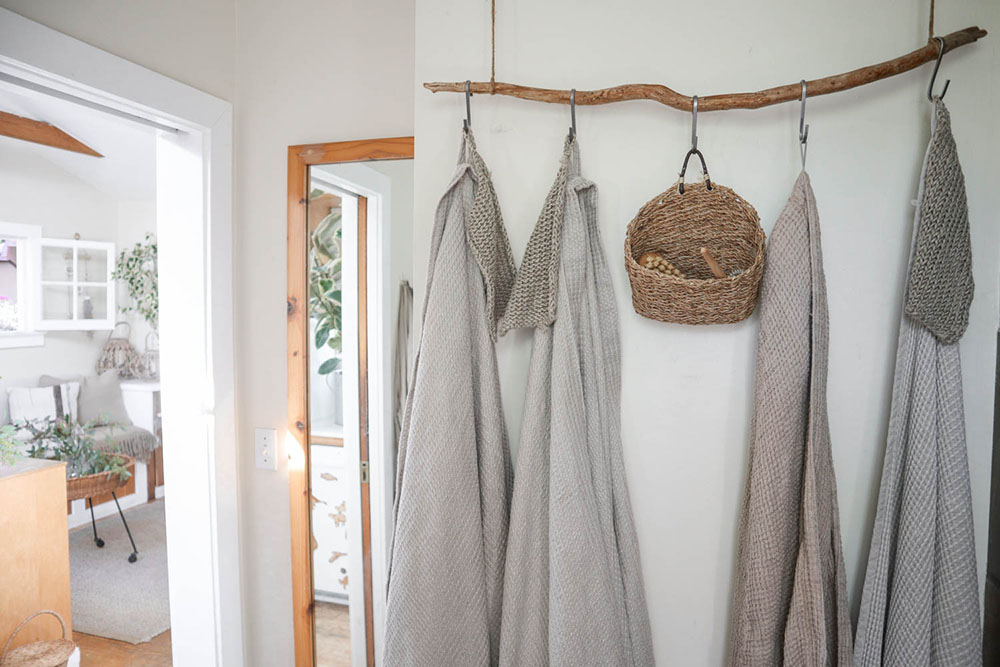
We also got a linen runner, which fits our compact table like a full tablecloth, and a child’s apron for West.

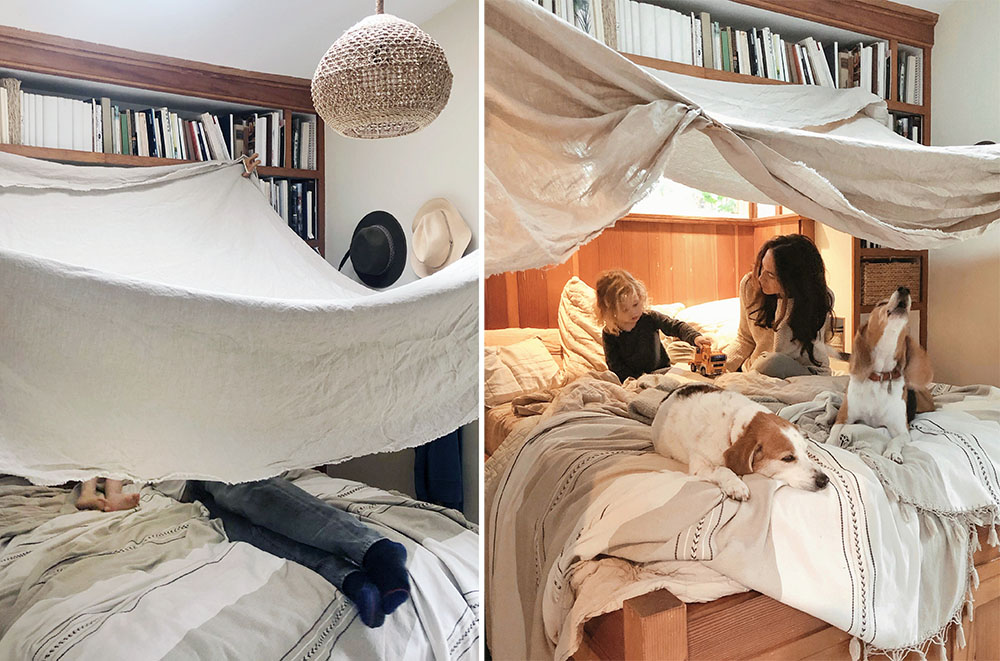
After feeling and using these items in the kitchen, bath, and living room for a couple of months, I knew I also wanted to introduce Rough Linen to our bedroom. We started out with a lightweight, Raw Edge Linen Summer Cover, which we thought would work perfectly for our SoCal home. (And we soon discovered during a rainy day that the cover doubles splendidly as a toddler fort with the help of some oversized wooden clips.)
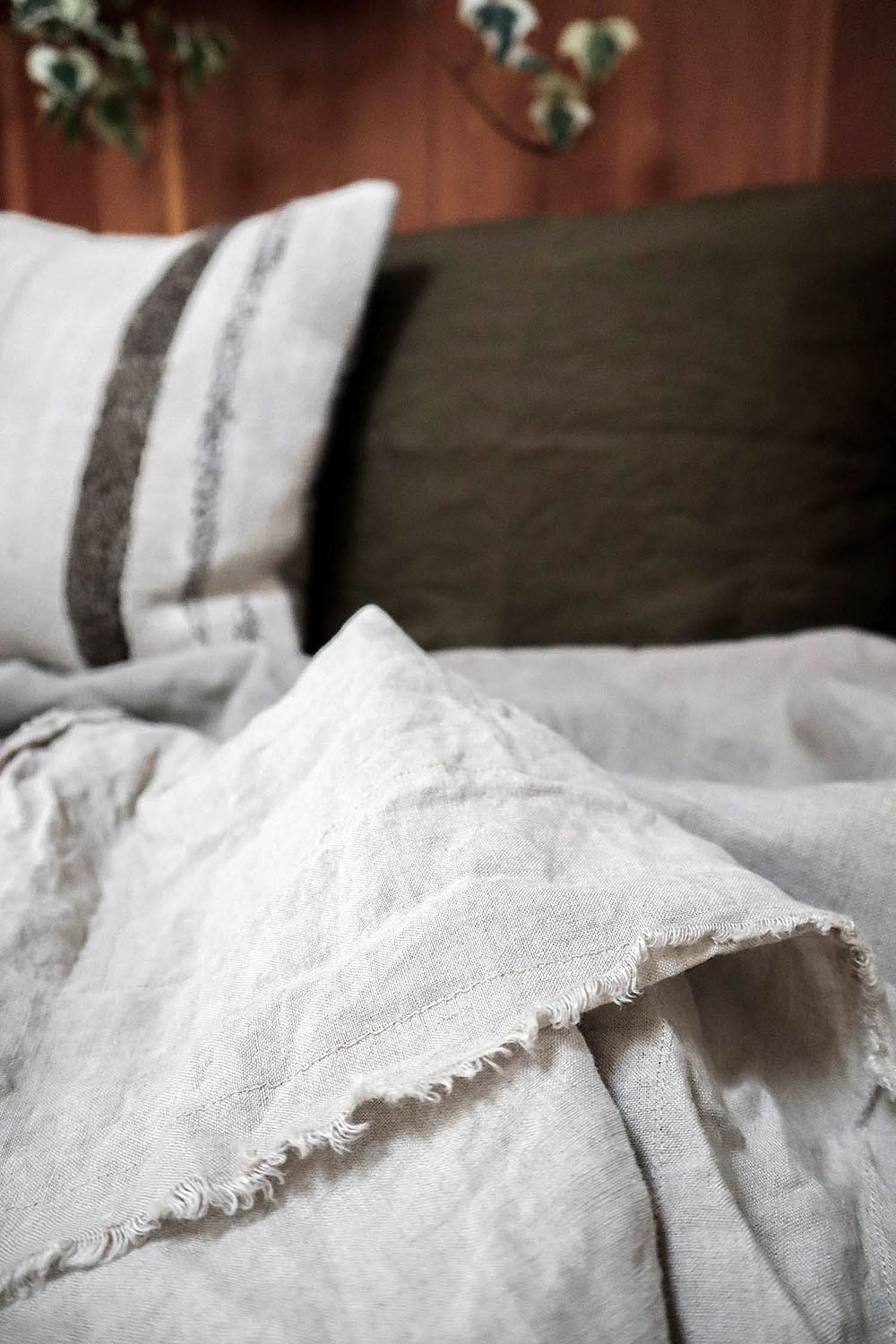
We added some standard pillow shams with invisible zippers, which I prefer over buttons or a typical envelope-style version. The design is so clean and minimal, which sings to me.

Lastly, we got a linen coverlet. (I’m not a fan of duvets.) The coverlet is simple but elegant, rich with texture and slightly naturally varying tones It’s dry clean only, but I expect that its high quality combined with the ease of washing the summer cover that we drape over it will make it easy to maintain.

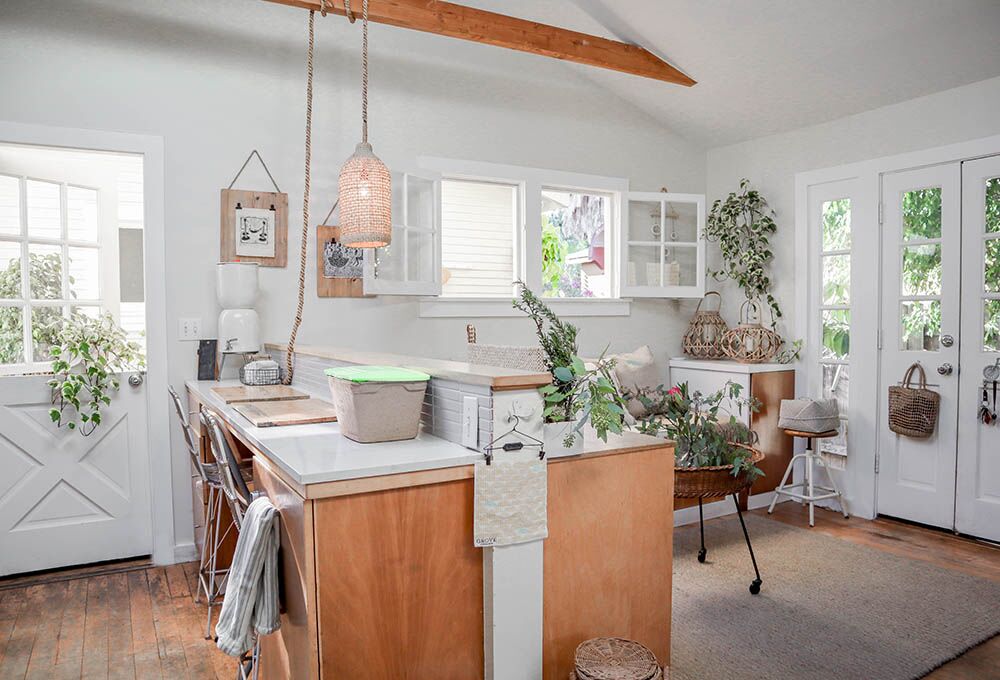
We added some more variegated english ivy plants to the bookshelf to bring the built-in to life. I simply placed a slim porcelain plate beneath each to collect water and protect the wood.

The central plant in the Ollie Ella Hanging Book Basket on the headboard is still snug in its nursery pot, and wrapped in a waterproof liner.
I miss how West used to fall asleep with us here every night. I don’t think I would have ever been ready for that to end, but HE was ready.

He’s so happy in his big kid bed. And Adam and I are delighted with our newly upgraded bed, too.


Greener Solutions for Household Unmentionables
This blog post was sponsored by Grove Collaborative. As always, the opinions and imagery from the Cottage are my own.
I didn’t watch much television when I was growing up, but I do remember seeing ads for toilet paper and feminine products wondering every time: Was the Talent being compensated more for being the faces of such delicate topics on camera? Were they embarrassed? Did the crew feel awkward?
In the subsequent years, I grew up and became comfortable with such household realities— nothing will sober you up to the unmentionables in life like cleaning up after pets, changing diapers, dealing physically with childbirth + recovery, and assisting unwell loved ones.
I began searching for greener alternatives to widely marketed, everyday household products— both for my family, and for the readers of this blog. (I receive numerous direct messages via Instagram inquiring about what sort of pet waste bags and trash bags we use here, along with questions about everything from eco-friendly feminine products to composting options in the city.) I discovered several helpful products via Grove Collaborative, so I reached out to them to inquire if I could do a blog post sharing some details about their compost bins, toilet paper, pet waste bags, bin bags, menstrual cups, and unique sponges.

If you had told me 20 years ago that I’d be volunteering myself up as the “Talent” for a reusable feminine product I would’ve balked. These days, it brings me joy. This planet needs for us to mind our waste, and switch to sustainable products within our homes and beyond.

COMPOST
For a while, we were placing kitchen scraps into LA’s green bins, not knowing that this actually wasn’t permitted. Only yard trimmings such as grass clippings, leaves, branches, and fruits or vegetables that have NOT been prepared for consumption and have NOT been partially consumed are allowed in the green bin. Eggs, partially eaten fruit, and scraps are not contenders.
It’s frustrating how hard it can be to compost in a city. Especially since 52% of all produce in the US goes uneaten*, and that when food is disposed in a landfill it rots and becomes a significant source of methane. Plus, growing and transporting wasted food emits as much carbon pollution as 39 million passenger vehicles.** We have a small garden, so we’re got a compact compost tumbler into which we can toss the scraps from our Kitchen Compost Bin from Grove. But, depending on where you live, there might be local options for community and municipal drop-offs and pick-ups for compost collection.
The Kitchen Compost Bins & Lid Starter Set from Grove is completely biodegradable kitchen food waste bin made from end-of-life recycled cardboard. The cardboard bin is breathable and allows for airflow, helping to avoid smelly, moist contents. Safe for both home and municipal composting. The same bin can be used multiple times. Fill with kitchen food waste, and once full, cover with paper seal provided (or the optional add-on lid) and put out for municipal pick-up (depending on your town) or empty into your home compost pile or tumbler and reuse the bin until it starts to biodegrade.


They’re also fragrance-free, not tested on animals, and packaged responsibly.

ALTERNATIVES TO SYNTHETIC SPONGES & PAPER TOWEL
I have to admit— I purchased a handmade, non-disposable sponge for our kitchen with the best of intentions, but it didn’t work well and thus didn’t last long. It was a bummer and a waste. In searching for responsible alternatives to synthetic sponges, I found my favorites via Grove. The Walnut & Cellulose Scrubber is sustainably made, and is both resilient and subtle in appearance.

Meanwhile, the European Dishcloths are fantastic alternatives to paper towels, as they can be washed in the dishwasher and then reused— plus they are biodegradable. (These have been particularly great for cleaning up my son’s crayon marks and toy scuffs.)

TREE-FREE TOILET PAPER
The Seedling by Grove Tree-Free Bath Tissue is 100% tree-free, and composed from a proprietary blend of bamboo and sugarcane. Bamboo absorbs 5x the amount of CO2 as trees, and takes as little as 3 months to harvest (whereas trees take 20+ years). Also worth noting is that Seedling by Grove has partnered with the Arbor Day Foundation, and a portion of every roll sold goes to plant trees across the United States.

MENSTRUAL CUPS
I liked the idea of a healthy and sustainable alternative to tampons, but it took me a while to get used to the practice of using a menstrual cup. Now I’m fully on-board and can’t imagine ever going back to anything disposable. Not only does using a cup like the Lena prevent an astounding amount of waste, but it saves money and eliminates the need for those urgent and ever-inconvenient dashes to the store for tampons or pads. If you feel like you need a little extra protection while getting used to using a cup, washable cotton liners are effective and easy to use. When not in use, I hide my Lena in plain sight by simply placing the cup + provided pouch in a drawstring sac that matches our decor, and I suspend that from our towel rack.

(It’s also easy to hang the little pouch on the inside of a cabinet door, if you’re pressed for drawer space in a small bathroom.) The Lena is BPA free, fragrance free, gluten free, hypoallergenic, made in the USA, not tested on animals, responsibly packaged, reusable, suitable for sensitive skin, vegan, and is the product of a women owned business.

REPURPOSING PACKAGING
As for the Grove packaging itself in which everything is delivered: we reuse almost every part of it. Any brown paper or small cardboard pieces end up covering West’s drawing table surface and become fresh canvases (and are ultimately recycled). The main cardboard box is always refilled with donations from drop-off, or other outgoing items that we ship from our home. Even the extra compost bins are put to use as toy storage before they step up to their intended role in the kitchen when their time comes.

Everything available via Grove is healthy, effective, sustainably produced, and cruelty-free. You can customize the timing and contents of your refill shipments, which themselves are eco-minded. Additionally, Grove curates a gift set of some of their favorite household essentials, included in the first order (of $20 or more) by new customers. View a sampling of their gift sent contents, below:

Source: *Give A Sh*t by Ashlee Piper, 2018 |** Forbes, 2018

January Features Roundup
Recently, I consulted with Domino Mag about ways to elevate your string lights, and why this form of lighting is so great for spaces of all sizes. You can view the interview here.
Additionally, we did a shoot and interview earlier this winter with One More Thing. The images and story are live here, and a preview is below. (Photos were taken by Angi Welsch, courtesy of One More Thing.)


Under One Tiny Roof While Under the Weather
’Tis the time of year to get sick… repeatedly, apparently. Adam, West and I all got our first colds of the season on our recent trip home from the East Coast, and none of us have quite gotten back to 100% since. This week, West and I caught a new round of something— his was symptomatic of a rude stomach bug, whereas mine was an epic assault on my sinuses.
When possible, our family prefers to stick with natural approaches to healing. (However, we’re not opposed to taking prescribed medications when necessary— for example, we all have our flu shots.) Since our tools for soothing and healing are rarely contained in a pharmaceutical pill bottle, they could quickly overrun sections of our small home if weren’t deliberate with them.
However, when you’re sick it’s tough to summon the energy to pick up a sock, let alone clean up larger messes after they’re made. But it’s obviously unhealthy to leave certain items sitting around when you’re sharing a tiny petri dish of a home-office as a sniffling, sleepless family. So, as I sit here, bleary-eyed with my hot water and lemon at 4am, I figured I might as well share a roundup of the items we have, and why they work for our small space.
I was intentional when I acquired the following goods for our Cottage. And, of course, I’m considering them in detail now as I formulate this post. But the great thing about these pieces is that they require very little consideration while we’re in the throws of cleaning up toddler vomit, managing migraines, or moping together in bed.

An Out-of-the-Ordinary Indoor Activity
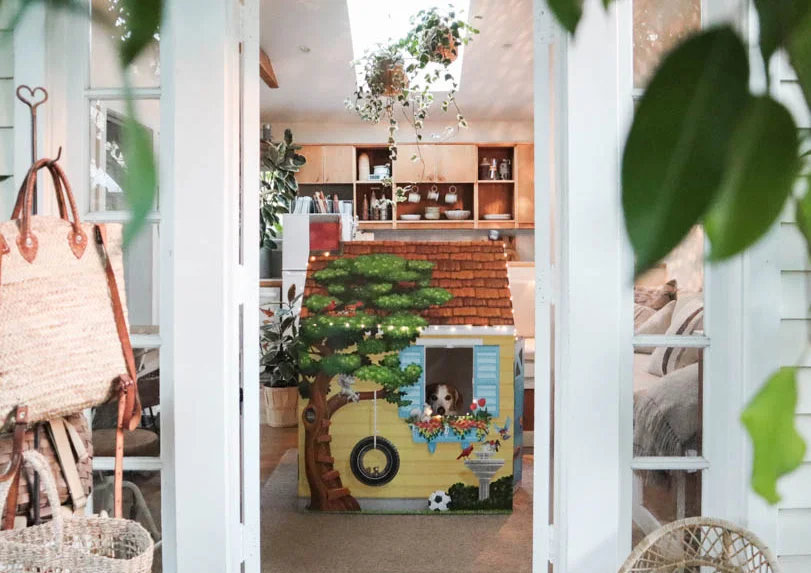
Since our little one can’t go on his usual adventures when sick, Adam and I feel like it’s wise to offer him a major new activity to calmly enjoy while recovering. As we don’t like the idea of him sitting in front of a screen for hours on end, we got him a cardboard playhouse, which we shuttle between the main room and the covered porch, depending on time and temperature. It’s HUGE, yes, but it’s also completely perfect for the occasion. We’ve decorated it with twinkle lights— inside and out— and West retreats to it for long stretches of time to color and sticker the inside walls, or build with his legos and blocks.
When it’s no longer needed and West is back playing outdoors and with other kids from the community, we can deconstruct the playhouse and store it behind our clothing in the closet. I like that it’s a grand, plastic-free, special present that can be tucked away until another sick day.

Tissues
We don’t use tissues— instead, we use little reusable cloths from Etsy and Grovia that we stash around the house. After we use one, we toss it in a washable paper bag that we usually keep on the built-in seat/shelf in our shower, where the cloths sit contained until the next round of laundry. The Grovia ones in particular are super soft and don’t irritate our skin (like standard tissues), and little cloth squares don’t take up space on the bedside as an entire tissue box would. This also helps us avoid accumulating mounds of paper in the recycling bin.

Humidifier
I remember the humidifier my parents used to fill up for my sister and me when we were young. It was HUGE, and it was loud… and mildly terrifying for a young, ill child. Thankfully, design has come a looong way. At the Cottage, we use a slim Muji humidifier that is almost silent, and at 3.5” in diameter it’s slim enough to slide onto a bookshelf or cabinet when not in use. Since our “nightstands” are cut-outs within our built-in, I can’t keep it there when it’s on. So I simply pull out a drawer next to the bed (slightly below the mattress), and cover it with a wine box top to create a stable surface on which to keep the humidifier overnight. It works perfectly.

We also use a simple drying rack in the bedroom at these times for a hint of extra moisture in the air.

Neti Pot
I’m a big fan of our Eco Neti Pot. It works wonders while also being affordable, petite and durable. When I’m using it regularly, I let it dry out on an s-hook on our towel rack. And when I don’t need it, it only takes up bout as much space as a hairbrush, so I just hang it from a tack-and-string on the interior, upper perimeter of the bathroom vanity.

Clean Drinking Glasses
Since you’re supposed to drink clear fluids when sick, I want to be sure that West always has access to water. But I also don’t want him drinking from a straw and bottle that are just incubating the germs. A space-savvy way to offer up clean vessels without having to constantly stand over the sink and clean cup after cup is to use stainless steel ramekins or a removable silicon sleeve on a 4oz mason jar. Both of these “cups” can be used for many other things around the house as well.

Ouch Box
Our First Aid kit is accessible for adults, while out of reach of the littles. It holds any medications we’re currently taking, as well as our most-needed supplies. (Our full emergency preparedness kits are stored elsewhere.)

Kettle
We have a compact Muji electric kettle that’s so small and cleanly designed that it can stay on the counter for weeks at a time without consuming many inches. It slides into a cabinet by the stove when not in regular use. (We don’t use a stovetop model, as our stove is usually in use as a dish drying spot and as a surface for cutting boards when it’s not in operation.)
Plate / Platter per person
To keep mugs, cloth tissues, stirrers and more separated so we know whose is whose (so as to keep from passing serious germs back and forth to one another while our bodies are trying to heal), we dedicate individual small plates or platters to everyone on the countertops. We try to corral our individual collections here, whenever possible. It also makes things easy to move around, which helps when we need to open up space for cooking, crafts, and/or work.
Hot Compress
I don’t bother with a dedicated compress. A simple washcloth or small towel can be heated with hot water (and salt, depending,) and used in the same manner. (Just be careful!)

Heater
We are extremely satisfied with our Dyson Hot-Cool Link Air Purifier, which manages our entire tiny home. But if we need a boost of concentrated heat— like while I’m at my desk, or when West is in his bed— we use a very small, personal heater. In limited square-footage such as ours, it’s all that’s needed. It’s footprint is small enough that it can rest on the low wall between our kitchen and main room when it’s on. (When it’s off, we just place it into the cabinet by the stove between the kettle and the mini-Vitamix.)