
Video: Tiny Takeaways (Ep.7)
This is the 7th installment of our mini video series, Tiny Takeaways. In this episode, we’re continuing to highlight some easy, space-saving swaps that might make your home or apartment a bit more eco-friendly. For 200+ more tips for making the most of your compact home or apartment, explore our lil’ book: Small Space Style.


Laundry as a Family Activity
There’s no getting around the chore of laundry— even in a tiny house. This is especially true for residences that with young children, pets who shed, a full-time office, and a slew of reusable/washable goods in lieu of disposable single-use supplies. (🙋🏻)

In order to make laundry feel like more of a game and less like an obligation, we’ve made washing and drying into a family activity at the cottage.

We take our vintage children’s chair out beside the bistro table set, pair it with an old restaurant bus tub (left over from our wedding), and add some water and a soap bar to then hand-wash a few garments with West.


We end up tossing everything in the washing machine, of course. But we’re constantly reevaluating and exploring ways in which to reduce our environmental footprint during the laundry process.

We only do full loads (rather than small or partial washes), and run most of them on cold, since 90% of energy used during a typical wash cycle is used for heating the water. *

We share an old, stacked washer + dryer with the neighboring tiny house. Despite the notable uptick in the loads of wash that result from practices like using reusable wipes, cloth diapers and washable toiletry supplies, our water consumption hasn’t increased drastically enough for us to see a marked difference in our utlity bills. (The only time we do see a difference is when we’re trying to get establish “large” sections of new plants. Even many of the drought-tolerant ones need more water than usual when settling in and taking root.)

Whenever possible, we try to dry everything on an all-natural folding rack, which can fit indoors easily, as well as out.

We also have a few makeshift clotheslines (made of twine and held up by tacks) strung about the garden where we can suspend additional items. West enjoys putting the linens out on the rack and lines, as well as picking them back up once they’re dry.

When we need to use the dryer, we’ve begun to add all-natural, hypoallergenic dryer balls, which can last for 1000 loads, and cut back on drying time by 25%, thus saving time and energy while softening clothes and reducing wrinkles. (We never use dryer sheets, as they’re usually filled with toxic ingredients that are routinely tested on animals.)

This whole process has become one of our go-to summer activities. And, oddly enough, we’re into it.

Source: Give a Sh*t by Ashlee Piper

Reducing Air Travel
In summers past, Adam and I would always take at least one trip away via plane. The summer after West was born we journeyed back to to Belcastel. Last year we met up with our family in Idaho. This year, however, Adam and I agreed to ease up on air travel, as we’re monitoring our collective carbon footprint as both a family and a business. Flying less often is such a simple way to significantly cut back our negative impact on the planet, as a single cross-country flight here in the US represents about 1/18th of a person’s annual carbon emissions.* Plus, we live in a tourist destination— we might as well stay home and enjoy it!

Then, unexpectedly, a friend of mine called and invited me to join her in Hawaii for an August mini-break. For a few personal reasons, I decided to go. As a result, I began exploring the ways in which I can lessen my impact both from and during the trip. (goop recently published an article entitled How to Travel Responsibly in an Era of Climate Change, and it’s definitely worth reading.)

We opted to fly Alaska Air, which has been ranked by the International Council on Clean Transportation as the most fuel efficient carrier in the United States for 7 years in a row. They burn 12-13% less fuel (and emit 12-13% less CO2) than the average US carrier, and are investing in alternative, sustainable aviation fuel. Additionally, Alaska Airlines has the most comprehensive inflight recycling programs of any U.S. airline. (They even compost their coffee grounds from inflight travel.)

Learning about Alaska Air’s sustainability efforts at a Create & Cultivate event with Jaclyn R . Johnson.
Earlier this month, The Guardian published an article about offsetting carbon emissions, and how to navigate the options. After reading it, I purchased a carbon offset for 5500 miles (slightly more than the equivalent of the round trip journey) by contributing to Alaska’s verified nonprofit partner, Carbonfund.org Foundation.

Additional actions help, such as flying coach, packing light, bringing a reusable coffee/water bottle to fill after security, shutting the window shades when instructed by flight attendants, and flying direct whenever possible.

My handbag necessities for home or travel, including a Nimble wireless charging kit (made from a sustainable blend of recycled water bottles & organic hemp), bamboo cutlery, reusable bottles, stainless steel to-go food containers, and more.
A trip such as this is — to quote Katrina Fischer Kuh — “a privilege paired with responsibility—responsibility to cognize the full human and environmental impacts of climate change, responsibility to shrink your own environmental footprint, and responsibility to push for better environmental policies.”
*Source: The New York Times

Lower Waste Days in LA
This post was sponsored by Garnet Hill. The words an opinions expressed are my own. As always, any imagery showing West and/or the pups was taken as they interacted in their own natural ways.

An individual’s journey to a more eco-friendly existence doesn’t have to be completed overnight. It doesn’t need to be traversed flawlessly in a straight line, and no one is fast-tracked to the high road by shaming others or one-upping our peers. The transition is about caring and trying. Really trying. Both when the eyes of others are upon us, and when they’re not.
For me, this journey began when Adam, StanLee and I moved into our tiny home, as small space living is inherently more environmentally friendly. But, looking back, we certainly amassed a regrettable amount of waste in the years that followed. It wasn’t until after out son was born that we became far more aware of our footprint, and our role in the climate crisis.

Since then, we’ve been working towards the goal of as low waste of as lifestyle as is reasonably possible here in our live/work family home in Los Angeles.

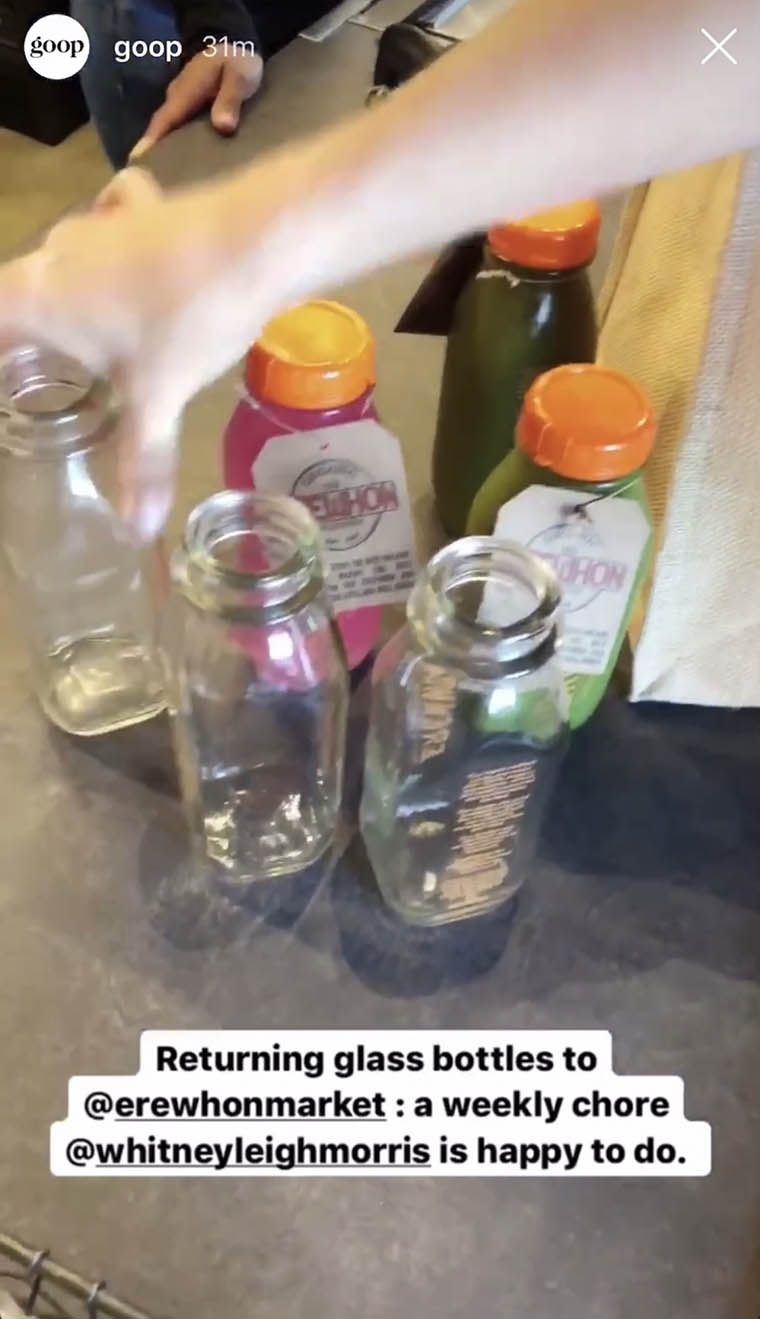
Dropping off beverage bottles for return and reuse at Erewhon Natural Food Market.

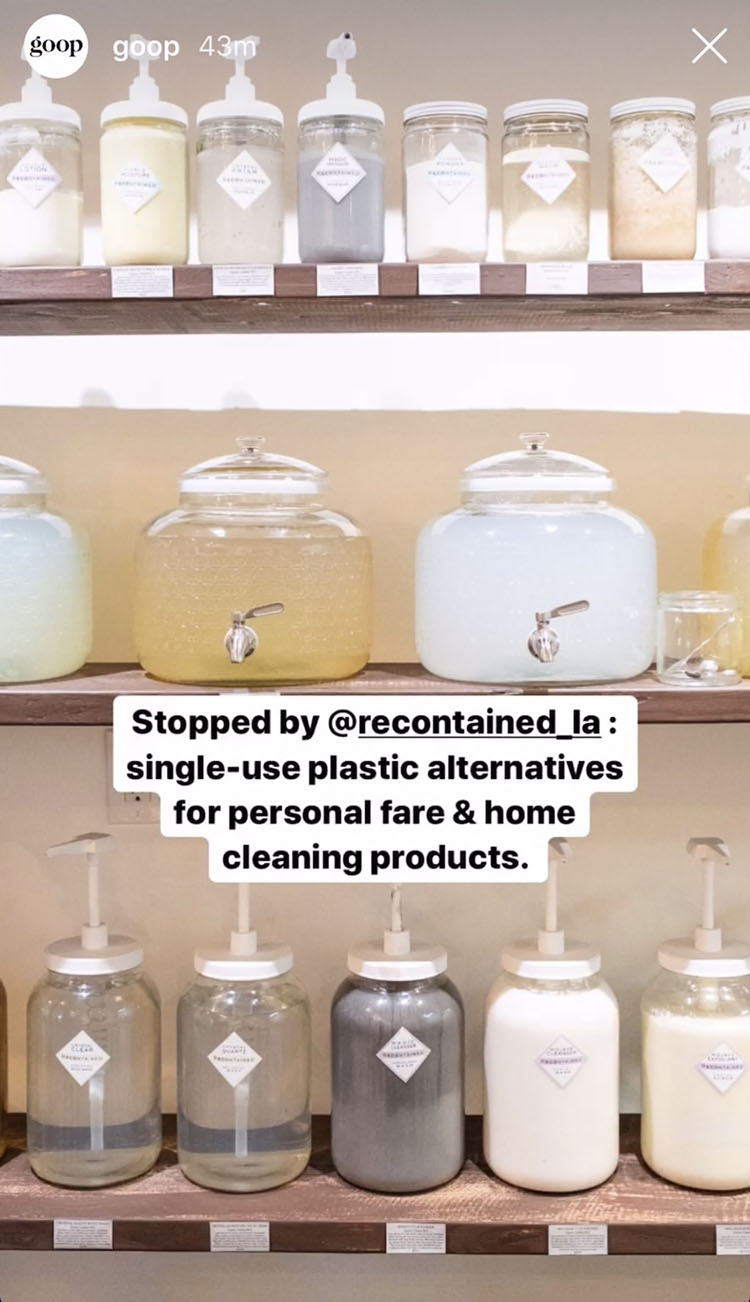
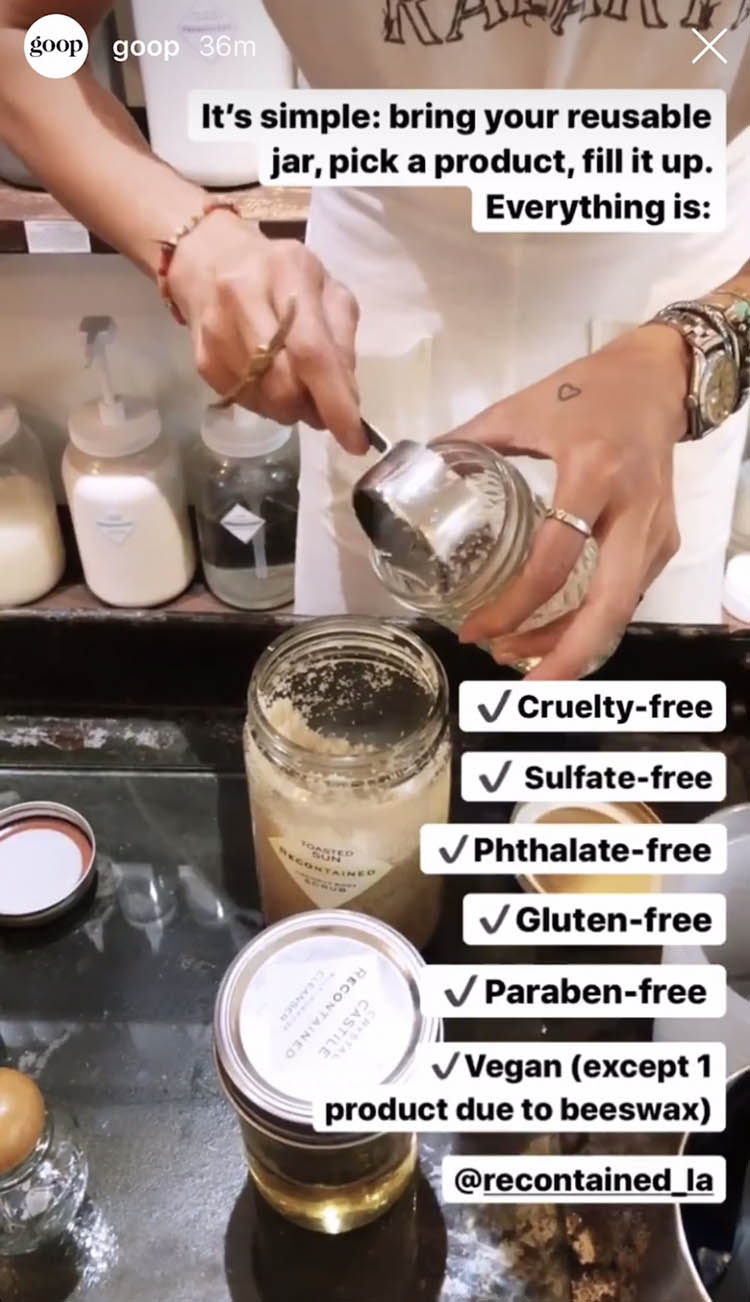
Refilling our own glass containers with household and beauty products at Recontained.

We still have much to learn and accomplish. But we’ve shifted our habits enough to enjoy a marked change in our spending, health, spare time, energy consumption, and material waste.

Biking to the library to borrow books, rather than driving to buy our own copies. On a daily basis, we swap the car for our bikes whenever it feels safe to do so. Whether we’re traveling solo or with our son and pups, we pedal our way through our errands.
There are always times of exception: client purchases, hospital visits, the occasional new toy for our son, props for brand shoots, and sporadic deliveries in packaging that can be greatly improved upon. But we are attempting to eliminate those instances, or offset their impact through other actions.

Giving the cottage plants a bath with the leftover water from West’s activity table.
Across all categories, we’ve realized the importance of versatility when it comes to any item we acquire. Whether it's new or vintage, for the house or for our wardrobe, we now understand the value of having pieces that are timeless in style, versatile in function, and durable in construction. When considering new purchases, we'll ask ourselves several questions— one of which pertains to versatility. (Can that new bistro table we're considering for the garden be easily carried and fit inside the house or on the porch so we don’t need multiples? Yes! Can we adapt our existing glassware with a few add-on accessories to make it suitable for our young son so he doesn’t need his own set of cups? Yes! Can these bath towels also be used at the beach and even as curtains and tablecloths? Yes!)
These sorts of adaptable goods save us money and space, while lessening our waste.
No one in our family regularly gets new articles of clothing— even little West, who is growing quickly as children his age do. We share a single compact closet, which is also where we keep West’s permanent collection of board and picture books, as well as our bedding. While the space is not overstuffed, there's admittedly very little room to spare. So when we add something to the closet, we give TWO pieces away to family, friends or non-profits. (I wrote in greater depth about this topic in a recent post entitled Remaining Clutter-Free for the Long Run.

If we add something new to our shared closet, we donate at least two pieces to help us avoid over-accumulation. We reuse product packaging in art projects with West, and refill the bags or boxes with giveaway items for friends and/or local non-profits.
Nearly everything that earns a place in our wardrobe has to be an item that can work year-round, and be dressed up or down.

When it comes to recreation, we usually chose to stay local and enjoy our neighborhood and community resources. We take our son to nearby playgrounds, rather than buying or building one in our own (tiny) yard. We bring a small selection of toys and crafting supplies with us when we're out so we’re less likely to make impulse purchases or require new packs of crayons, etc. As a healthy way of unwinding at the end of the day, we paddle through the neighborhood in our hand-me-down canoe.
This month, I treated myself to a few items from Garnet Hill:
A simple, solid maxi dress that can be dressed up for work or down for beachside strolls
A crinkled, double-gauze shirt-dress to be worn as-is, with leggings, or over jeans
An unfussy A-line knit dress that is suitable from day to night.


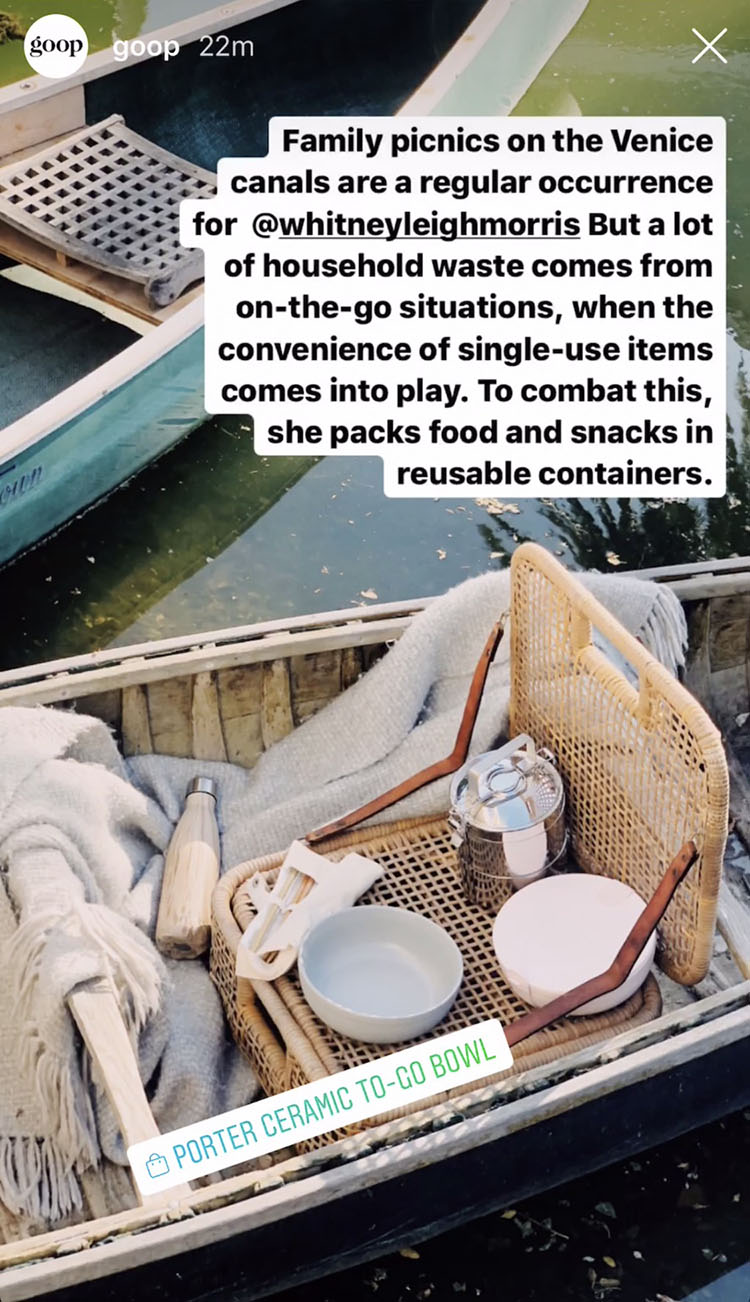
We bring our own reusable drinkware, bags and utensils wherever we go.
Each piece is made with Tencel™ and/or organic cotton.
Adam and I recently discovered that— for whatever reason— Tencel™ doesn’t attract or hold nearly as much pet hair as some fabrics, and yet it is still breathable, flexible and absorbent. We have two rescue beagles, one of whom sheds more than any dog I’ve ever met, so this is hugely helpful. A strong, easy-care fabric, TENCEL™ is made of natural cellulose derived from sustainably harvested wood pulp from renewable tree farms. This modern and eco-friendly fabric is buttery-soft, smooth and elegant. It pairs well with other fabrics, like organic cotton.

Walking to our closest farmers market to buy in-season, regional produce from local growers.
Garnet Hill’s organic cotton is made with fibers farmed without harmful pesticides, GMOs or chemical defoliants, which is not only better for your skin but also for the land on which the cotton is grown.

If florals are being sold in plastic sleeves, I remove them on-site so the vendor can reuse them.

We bring our coffee thermoses with us on our errands, just in case we decide to buy a sip while on-the-go.
During transitions between seasons, I usually layer my outfits with linen— one of the oldest and strongest natural textile fibers. It is breathable, has naturally-occurring antibacterial properties, is comfortable in fluctuating weather, has excellent color fastness, and — in my opinion — gets more beautiful over time.

These pieces have worked well for our lifestyle. Whether I’m biking through our errands, reading with West at the library, playing with the pups in the garden, visiting clients, or attending events, I’ve appreciated the comfort and versatility of them all. I plan to wear them year-round, and for years to come.

Less Shopping, More Time
There’s something unrelentingly frenetic about the pace of family life in a major city. Between traffic, crowds, and prices, simply putting a foot out the door can feel like stepping into a whirlwind.


However, since curtailing our dependency on disposable / single-use items, Adam and I have realized that we rarely have to go shopping, which means we have reduced those frenzied family missions to an absolute minimum.

Once we no longer needed to replenish our stock of cleaning goods, household supplies and toiletries— and since we reprogrammed ourselves to stop bringing new items into our home— there became significantly fewer errands to run. (This is, of course, partially achievable through online shopping, but the carbon footprint of packing + shipping are far too taxing on the environment to warrant frequent deliveries.)

Other than our regular trips to the market or to pick up canister refills for our Sodastream, we usually only leave when we are meeting people, working, or creating lil’ field trips for our son and dogs. In other words, less shopping us has given us the magical gift of more time.

Lil’ apple basket by Olli Ella

That’s not to say that I ever feel caught up on business, or that we have found time for things like traditional workouts or lengthy catch-up sessions with our friends. For us, the reality of running our own business and raising a family with no hired help for either is that we are always behind on something. (I imagine that most people feel this way.) But, when it comes to time with our son, we feel like we’re squeezing in every moment possible— and we don’t have to drive him all over the city for this-and-that while we’re at it.
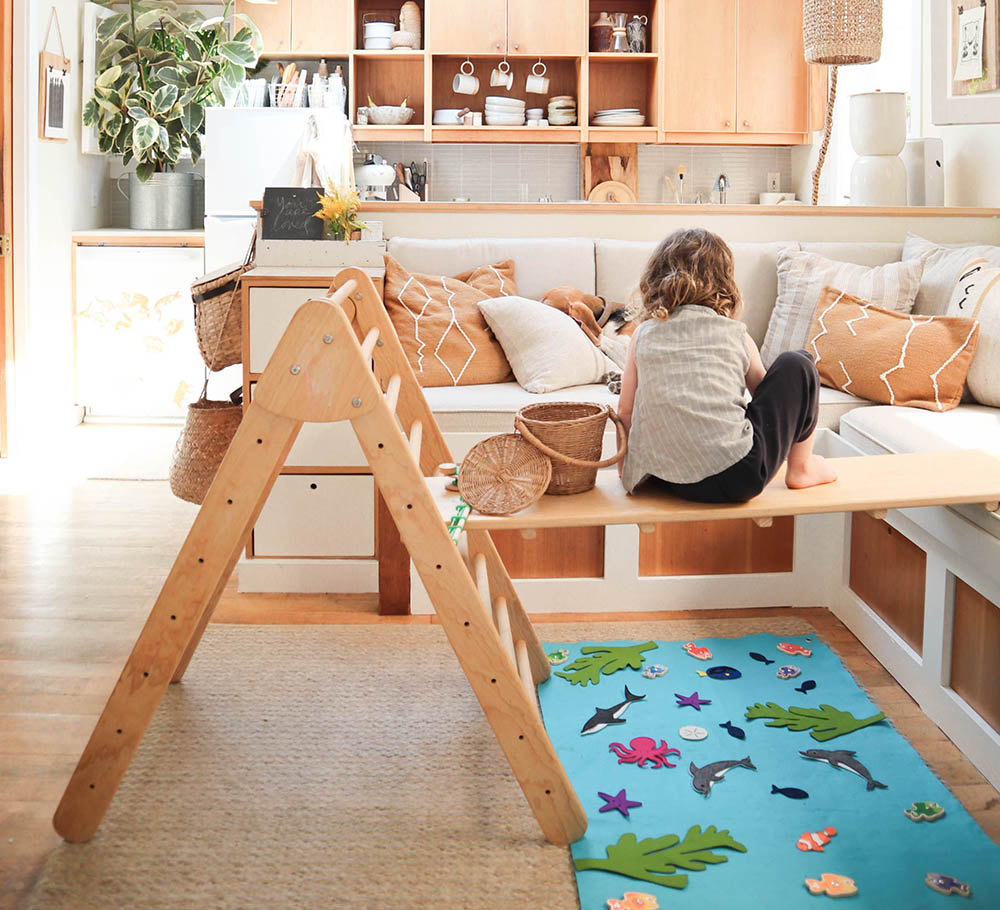
This leaves time for impromptu explorations on foot or by bike within our local community, and opportunities for countless imaginary games in our tiny home and garden.

Here’s to reduced waste, less stuff, and more adventure.


Video: Tiny Takeaways (Ep. 6)
This is the 6th installment of our mini video series, Tiny Takeaways. In this episode, we’re highlighting some easy, space-saving swaps to make your home or apartment a bit more eco-friendly. For 200+ more tips for making the most of your compact home or apartment, explore our lil’ book: Small Space Style.

Recent Features Roundup
Every now and then we like to select a few features from the Cottage that were published by other outlets, and share them via our own blog as well. Our early summer roundup includes stories from goop, Hunker, Domino, Create & Cultivate, and Olli Ella.

Click the links below to explore!
HUNKER HOME: 5 Small-Space Organization Lessons We Learned From Whitney Leigh Morris
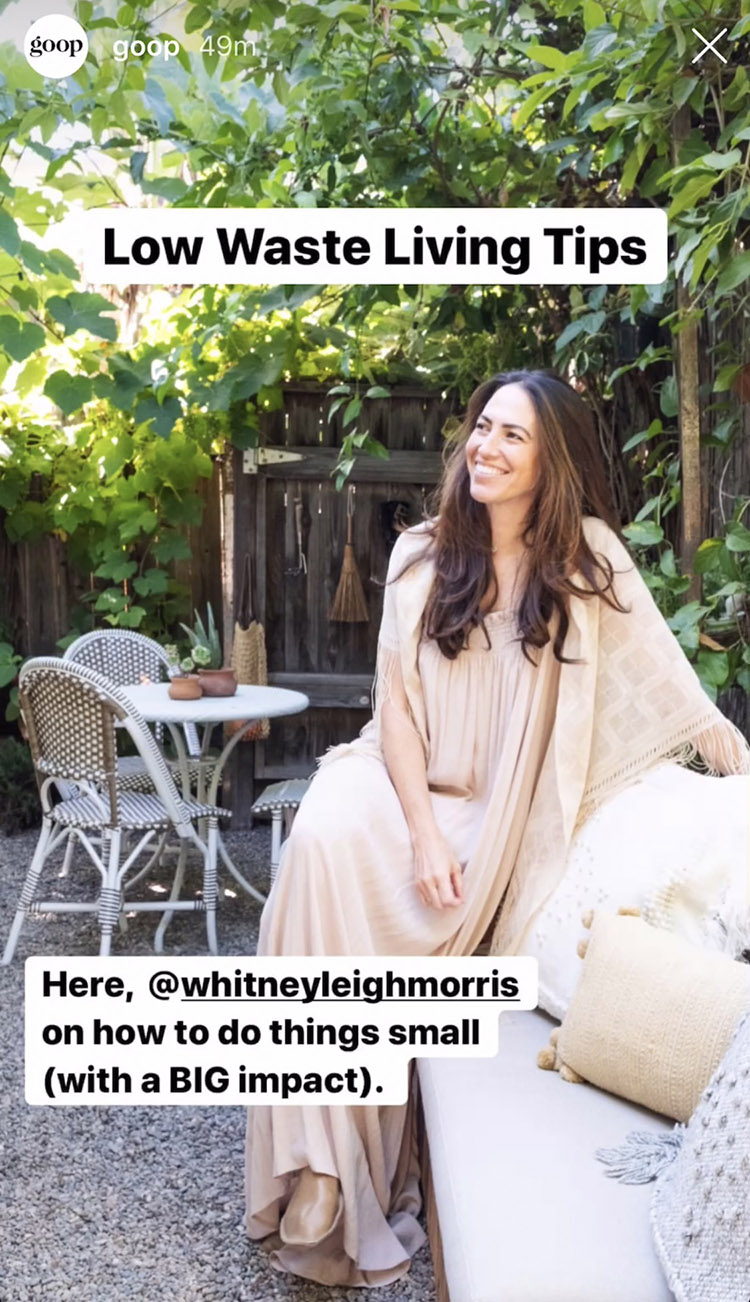
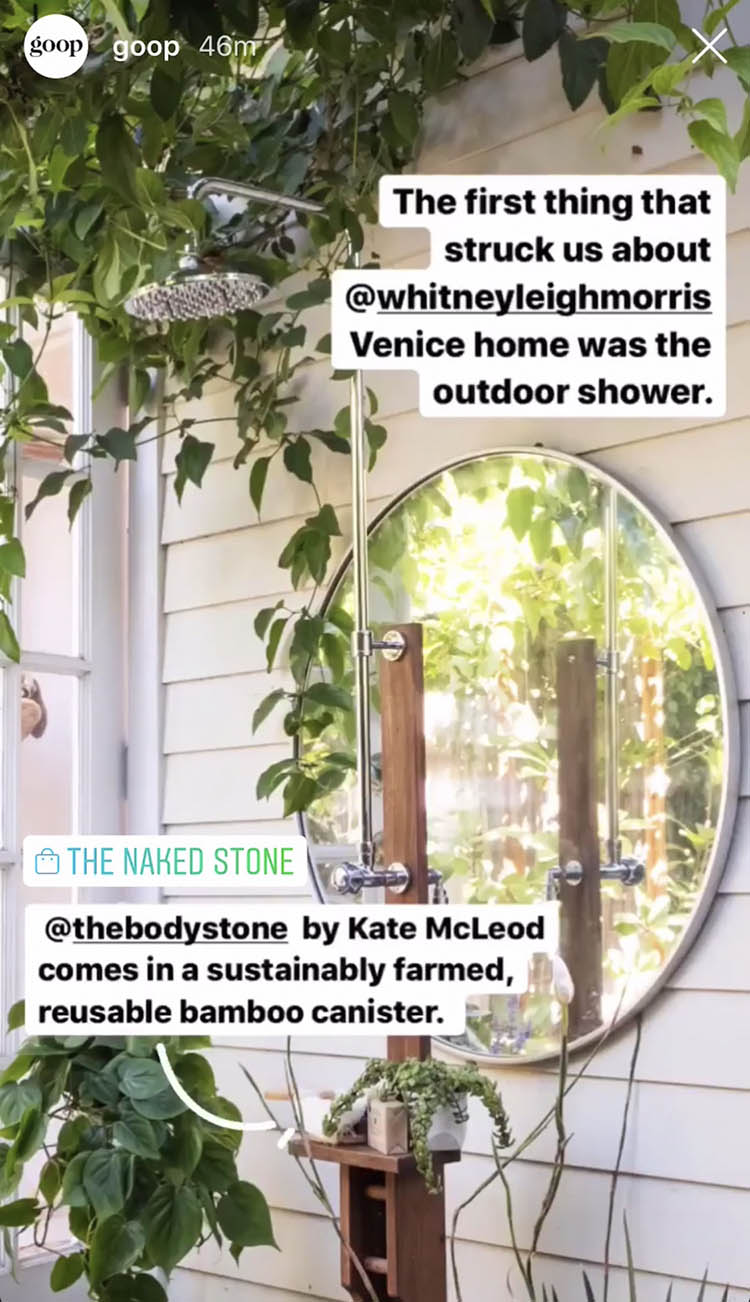
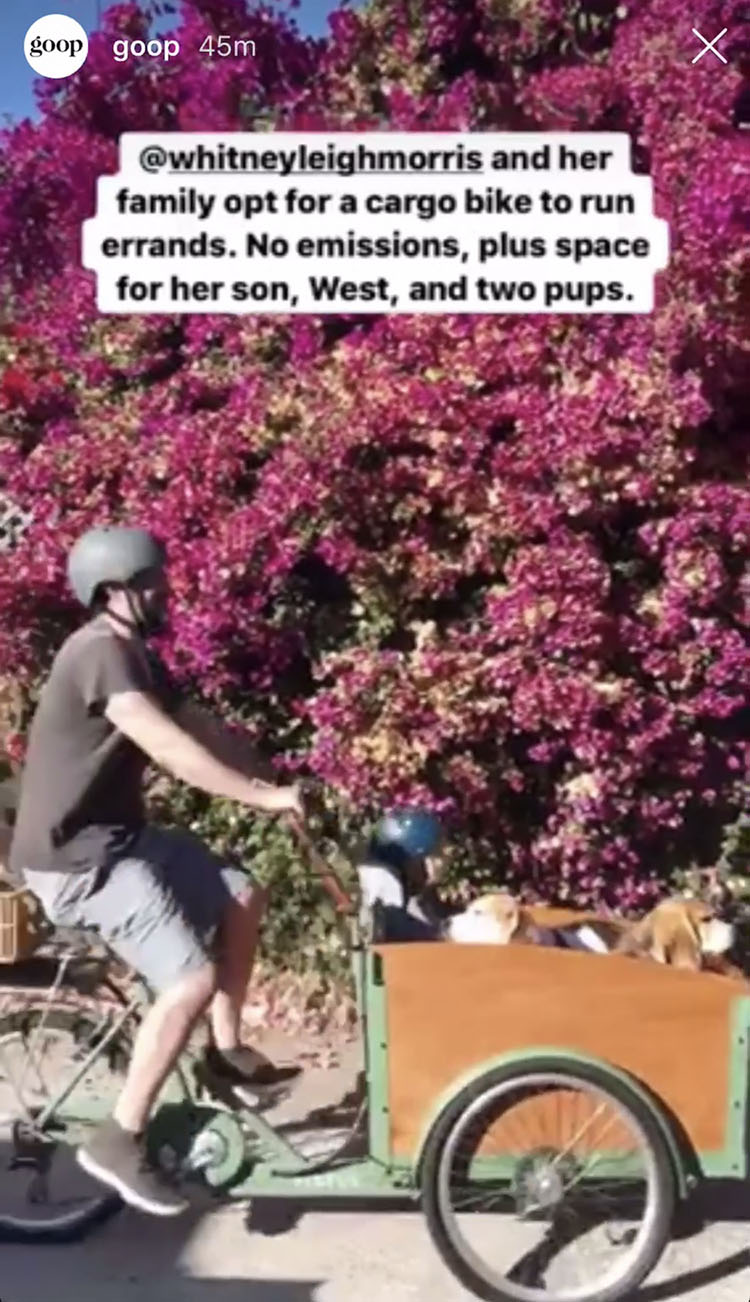
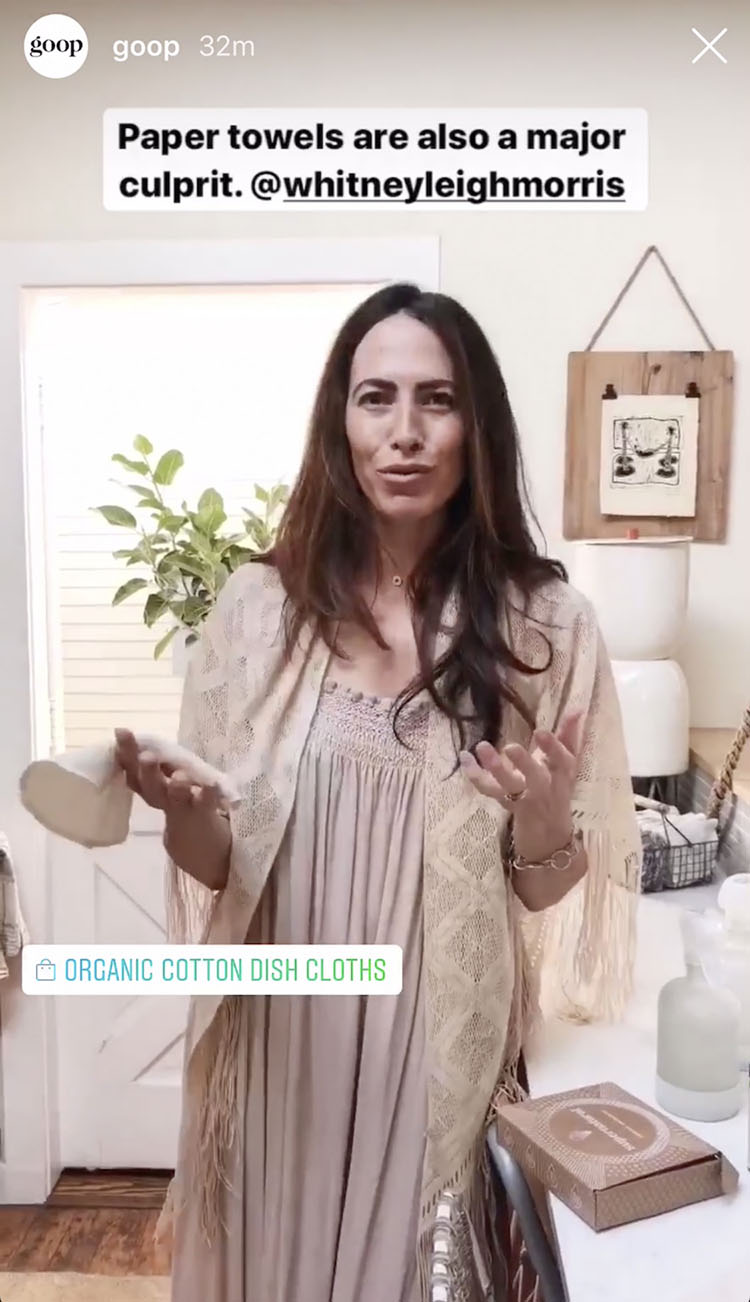
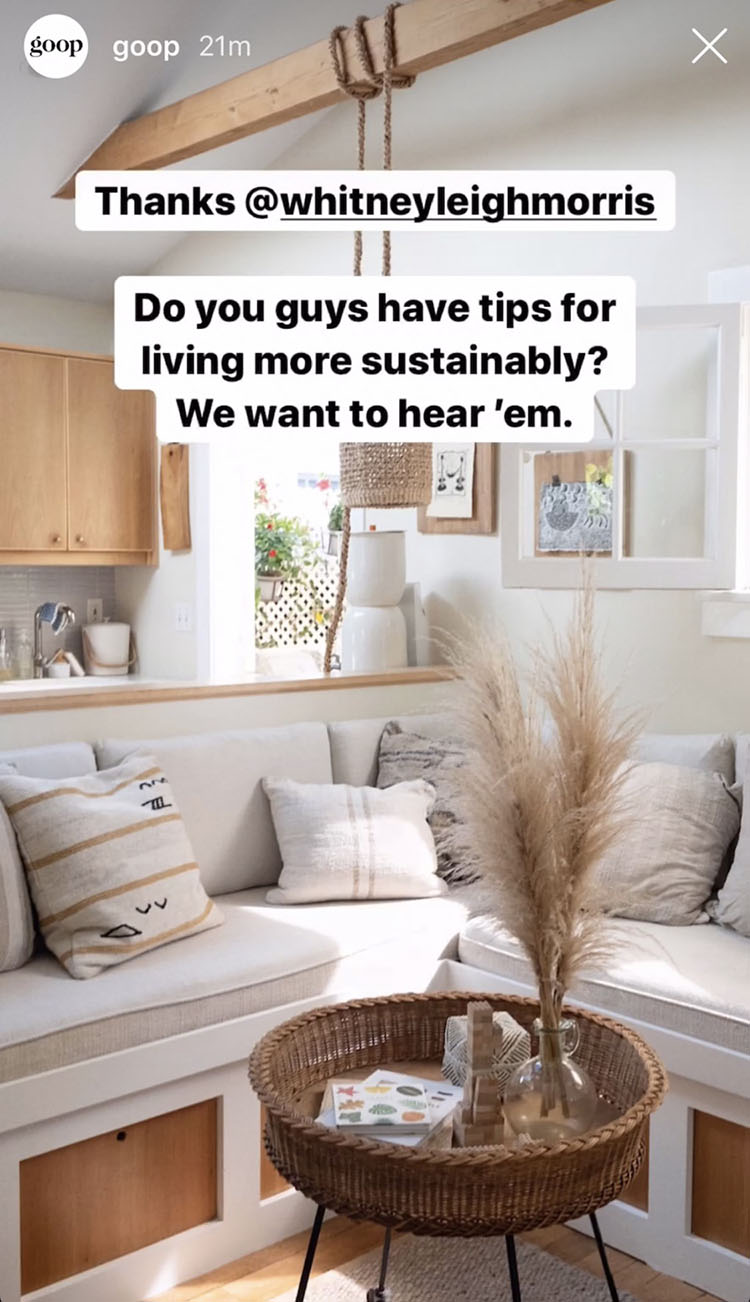
GOOP: Low Waste Living - How to do Things Small with a Big Impact (IG Stories feature*)
CREATE & CULTIVATE: Even CEO's need Their 8 Hours a Night
OLLI ELLA: Sustainable Small Space Styling
* Screenshots from IG Stories feature below.



Video: Tiny Takeaways (Ep.5)
This is the fifth installment of our mini video series, Tiny Takeaways. In this episode, we’re highlighting some easy ways to maximize outdoor spaces! For 200+ more tips for making the most of your compact home or apartment, explore our lil’ book: Small Space Style.

Where to Donate After Decluttering
My previous blog post was dedicated to the topic of how to keep homes, apartments, and/or offices decluttered for the long-haul. Once you’ve simplified your space, you’ll likely have a number of items left over to donate.
A simple Google search of nearby non-profits can provide you with a list of organizations within your community that might be able to put the goods to use. Just give them a quick call or send them an email to inquire what they need. For those in the LA area, I’ve provided a brief round-up of diverse organizations that accept a myriad of donations, outlined below.
The RightWay Foundation
The RightWay Foundation works with current or emancipated foster youth to move from a point of pain and disappointment to a point of power, productivity, and self-sufficiency.
(323) 903-5021
info@therightwayfoundation.org
Items Needed:
Toiletries
Grooming + Beauty Products
Interview/Workplace Attire, including Bags + Accessories + Shoes
Diapers, Toys and Books (for the young children of the former foster youth)
Mail or Drop-Off:
3650 West Martin Luther King Jr. Blvd. #195
Los Angeles, CA, 90008
(If dropping off, please call (323) 903-5021 in advance.)
L.A. Shares
L.A. SHARES is a nonprofit materials reuse program, which takes donations from the local business community and individuals of reusable goods and materials (both new and used) and then redistributes these items FREE-OF-CHARGE to nonprofits and schools in the City of Los Angeles.
(213) 485-1097
donate@lashares.com
Items Needed:
Office Furniture
Office Supplies
Office Equipment and Electronics
Sports Gym and Athletic Equipment
Musical Equipment
(Click here for a list of items that L.A. Shares cannot accept.)
Pick-Up:
Click here for easy steps to begin donation process and schedule pick-up
Children’s Hospital Los Angeles
Children's Hospital Los Angeles (CHLA) is a 501(c)(3) nonprofit institution that provides pediatric health care and helps our patients more than half a million times each year in a setting designed just for their needs.
323-361-2308
DonorRelations@chla.usc.edu
Items Needed:
CHLA’s patients and families appreciate donated items, including those on their toy wish list and book wish list . You can also donate your vehicle and other miscellaneous items to benefit CHLA. Click here for a complete list of items that the hospital can and cannot use, and to browse drop-off locations.
S.P.Y. (Safe Place for Youth)
Safe Place for Youth’s mission is to inspire, nurture, and empower the resilient human spirit of homeless youth by providing immediate and lasting solutions, one young person at a time.
310.902.2283
info@safeplaceforyouth.org
Items Needed:
New underwear
New or good condition Men's clothing
Gloves
New sleeping bags
Drop-Off:
Monday 10:00 AM - 5:00 PM or Friday 10:00 AM - 5:00 PM
2469 Lincoln Blvd.
Venice, CA 90291
Hav-A-Sole
Hav A Sole’s mission is to provide the homeless and at risk youth population with quality footwear to encourage healthier lifestyles and prevent disease, while fostering a sense of community along the way.
info@havasole.com
Items Accepted:
New + good condition footwear.
Mail Donations to:
10736 Jefferson Blvd. #636
Culver City, CA 90230
Downtown Women’s Center
The Downtown Women’s Center (DWC) is the only organization in Los Angeles focused exclusively on serving and empowering women experiencing homelessness and formerly homeless women. Their mission is to end homelessness for women in greater Los Angeles through housing, wellness, employment, and advocacy. Your donations directly benefit women experiencing homelessness and are an important boost to our programs.
Items Needed:
Clothing & Accessories
Emergency Items
Household Items
Personal Hygiene Items & Toiletries
Arts and Enrichment Activities
Vehicle Donations
(Unable to Accept: Razors, tampons, cribs, strollers, toys, clothing, mattresses, televisions, old computer monitors, large furniture, soiled or broken items, and most food donations.)
Drop-Off
442 S. San Pedro Street
Los Angeles, CA 90013
Friday - Tuesday, 8 a.m. - 2 p.m.

Remaining Clutter-Free for the Long Run
This weekend I conducted a “Living with Less” workshop at Create & Cultivate. Several of the attendees shared that they’d gone through the cathartic (albeit tedious) process of decluttering and downsizing, only to find themselves slipping back into an overstuffed life a few months down the road. This is something I hear repeatedly. So here are some tips for remaining clutter-free for the long run.

Photo by Smith House Photo for Create & Cultivate
Avoid Triggers
Identify your more reckless spending triggers, then take care to avoid them. For example, do you find yourself buying items off social media links or major retail sites when you’re bored, stressed or unable to sleep? Tuck the phone away and pick up a book, meet a friend, or take a walk instead. Do you buy junk at the airport during layovers? Bring your own snacks, bottles and entertainment with you, and don’t even step foot in the shops within the terminal.

Pause Before Purchasing
When online shopping, challenge yourself to wait at least 24 hours before checking out. Chances are you’ll realize that you don’t actually need all (or any) of the items in your cart.
Get One, Give Two
If you get something new, give away two items in its place. But make sure the items with which you’re parting have a dedicated home, as 80+% of donations end up in landfills.

Reduce Opportunities for Impulse Purchases
Once you’ve swapped your common disposable goods (such as paper towels, cotton rounds, cleaning supplies, diapers, and tampons) for reusable options, you’ll have far less shopping to do. And with fewer trips to the store, you’ll have fewer opportunities to make impulse purchases.

Decline Freebies
You don’t need to accept every free item and bit of SWAG dangled in front of you. Just walk away, or use the magic words: “No thank you.” If you still somehow end up with freebies of wellness products or clothing that can be of use to communities and organizations in need, leave the goods sealed/unopened and donate them as soon as possible.
Donating Gifts
If someone gives you a gift you can’t use and/or don’t like, shake off the guilt and donate it immediately. It doesn’t do anyone any good for the thing to rot away in a box under your bed. Pay their generosity forward by regifting the item(s) to a fitting non-profit.

Ask Qualifying Questions
Before you purchase a new object, ask yourself the following questions— you might be surprised by how few items actually clear these hurdles to earn a coveted place in your home:
Do I already own something that serves the same purpose as this new item?
Was this product produced ethically and with sustainability in mind?
Can this piece multitask? (Of course this question doesn’t apply to all goods, but it can apply to many. Multi-functional pieces will reduce the number of items you need in your home, saving you money and reducing your footprint.)
Where will this item be stored when NOT in use? And do I have the space for it?
Lastly, if the piece(s) you’re considering pass all of the questions above, then ask yourself: Is there a vintage or handmade option of this item that I can find locally instead?
Let’s do this— for our sanity, for our wallets, for our homes, for our busy schedules, and, above all, for the planet.

Sustainable Small Space Styling Feature
It’s my goal to assist others in embracing and enjoying life in— and with— a smaller footprint. Our friends at Olli Ella invited me to share a few tips pertaining to this on their lovely blog, since we have and use so many of their products here in our tiny home. A preview of the feature is below— visit their post and scroll to the bottom to shop the collection.

Tip 1: Use Your Local Library
Save money, preserve space, and reduce your environmental footprint by borrowing books from your local library— particularly if you have children. While we do have a permanent assortment of books in our home, the most used and efficient collections are those we borrow from the city and county libraries. We keep our son’s borrowed books in the Strolley as it’s easy and safe for him to roll around the house, and it keeps everything organized and easily accessible.

Tip 2: BYO... Everything
We all know that single-use plastics are responsible for a staggering amount of damage to the planet and its inhabitants. Bring your own reusable produce bags, bulk good containers, reusable to-go boxes, utensils, linens, coffee and water vessels, and refillable jars for cleaning and body products whenever possible. It doesn’t have to be as cumbersome as it sounds once you figure out a system that works for you. And since these items are constantly in varying stages of use, they’re easier to stash around your tiny home than you might think. We tote ours daily, and use our Luggys to transport them to and from our local farmers markets and grocery stores.

Tip 3: Organize In Style
You can stylishly organize toys, games, accessories, equipment and more within your small space by skipping the bulky plastic storage bins, and opting instead to use beautiful, versatile baskets made of natural materials. Instead of storing everything together, arrange the containers throughout your home. Use simple hardware, such as coat racks, s-hooks and wall hooks to mount and hang select baskets. This will free up some precious floor space, while enriching the look, feel and function of your home.

Tip 4: Get Some Fresh Air
Whenever possible, skip the car. Clearly this planet needs us all to cut back drastically on emissions from transportation. Plus riding a bike is better for your body, and getting outside is good for the soul. If your town offers shared/rental bikes, use them. If not, there are numerous handmade small space storage solutions for bikes available on sites such as Etsy. Our family shares one car, but we ride our funny little fleet of bikes far more often than we drive. I have a multi-tasking Mamachari for holding my phone and keys while I’m on my bike, and my son has a sweet little Mini Chari on his tricycle.

Tip 5: Decorate With Greenery
Adding a diverse array of air-cleansing plants to your home is not only a wonderful way to make your space visually striking and unique, but it’s also a creative way to avoid filling your home with mass-produced decorative objects. The less manufacturing that is required to create your residence and the items within it, the less harm you’re doing to the Earth. Choose plants that suit your vibe and location, and be mindful of selecting varieties that are safe for your family and pets. (Our son loves to water our houseplants at the kitchen sink while standing on his Storie Stool!)


Updates for a greener, simpler bathroom
In my recent “Space-Savvy, Low Waste Bathroom Swaps” post, I mentioned a product that we hadn’t yet tried, but intended to purchase: a bidet attachment.

Clearly this is not the chicest topic to cover on the blog. But after having the bidet attachment for a couple of weeks we see just how much toilet paper it saves, and I think that’s well-worth sharing. Plus, when I posted videos on Instagram Stories of us installing the bidet in the Cottage, the response was notably high, indicating to me that it was something I should discuss in greater detail. (Many viewers also inquired about our space-saving toddler training seat attachment, which I share and discuss below as well.)

Americans make, move and use 34 million rolls of toilet paper every day. The problem is not just the 54 million trees cut each year to keep up with demand, but also the enormous amounts of water, chemicals, and energy used in the destructive production process of toilet paper.*
It takes just 1 pint of water to properly wash with a modern bidet like the TUSHY. This modern bidet attachment easily attaches to your toilet in minutes— no extra inches required… and no need to continue store tons of extra toilet paper in your small home, apartment or office.

The Tushy isn’t the only thing that’s saving inches in the bathroom. West’s potty-training seat does too, since we don’t need to allocate floorspace for a stand-alone toddler toilet. The seat adapter even fits onto the bowl perfectly with the bidet attachment in place. (The Topseat comes in 2 sizes, for oval or circular seat models.)

We use Grovia’s multi-purpose wipes to dry off. They come in a variety of hues, so you can designate certain colors for certain uses. (An easy way to contain them for cleaning is via washable paper bags.)
So that’s it! Our most recent changes for a greener, less cluttered lil’ bathroom.
*Source: HelloTushy

Video: Tiny Takeaways (Ep.4)
This is the fourth installment of our mini video series, Tiny Takeaways. In this episode, we’re highlighting 5 easy ways to create a soothing small space by reducing visual clutter. We hope you enjoy! (For 200+ more tips for making the most of your compact home or apartment, explore our lil’ book: Small Space Style.)
(Note: This episode is formatted vertically for optimal mobile viewing. To watch it on a desktop/laptop, please click the full screen icon on the control bar at the bottom of the video player. )

Basket Roundup
In our new video series I’ve been showing ways in which we use our diverse basket collection to reduce visual clutter and increase functionality in our small home (and office). Similarly, Instagram Stories videos from our bikes, canoe, and our single car have offered a look at how we also use baskets while on-the-go. In response, I’ve received several requests to share some of my favorite designs and resources.
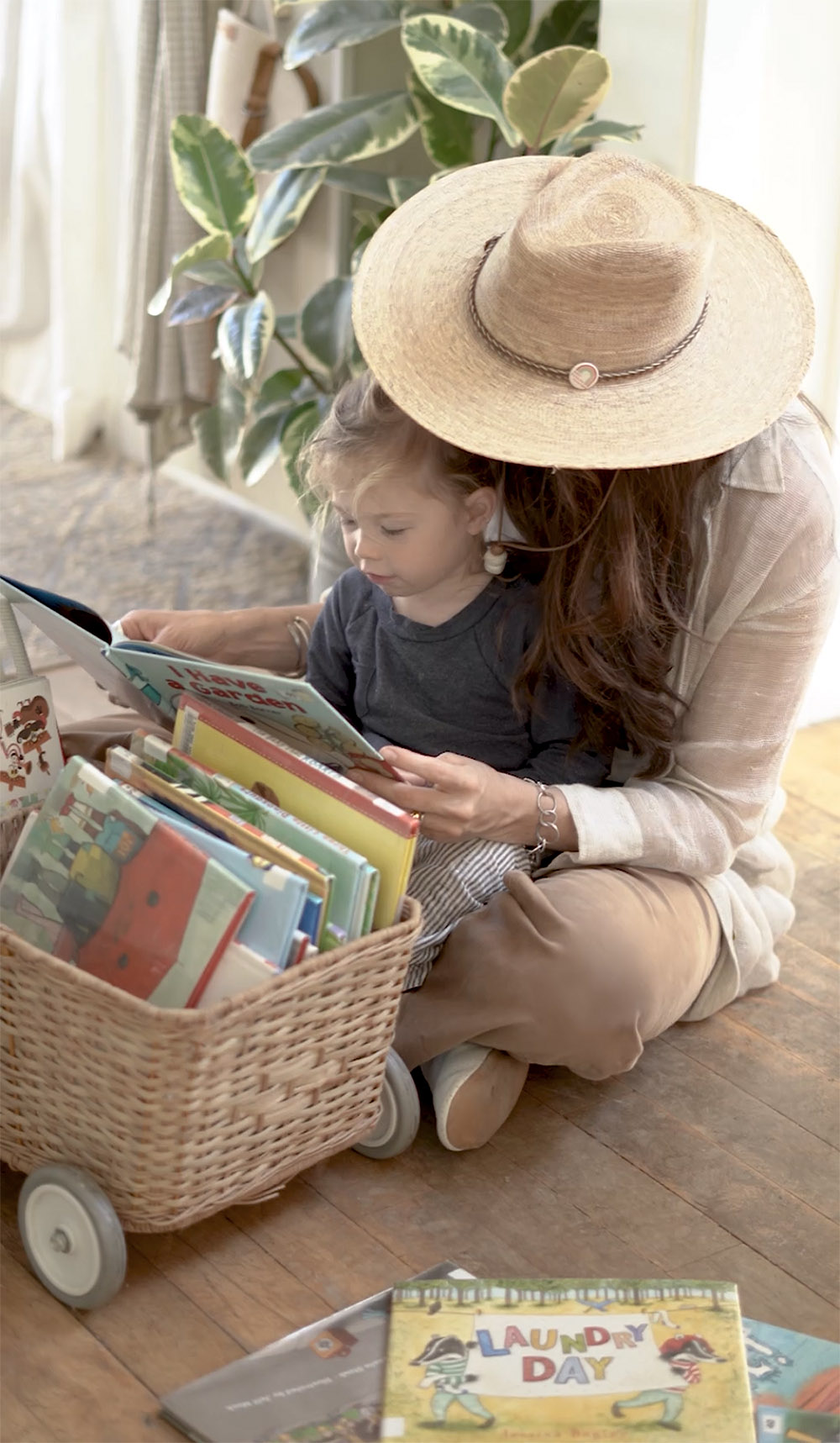
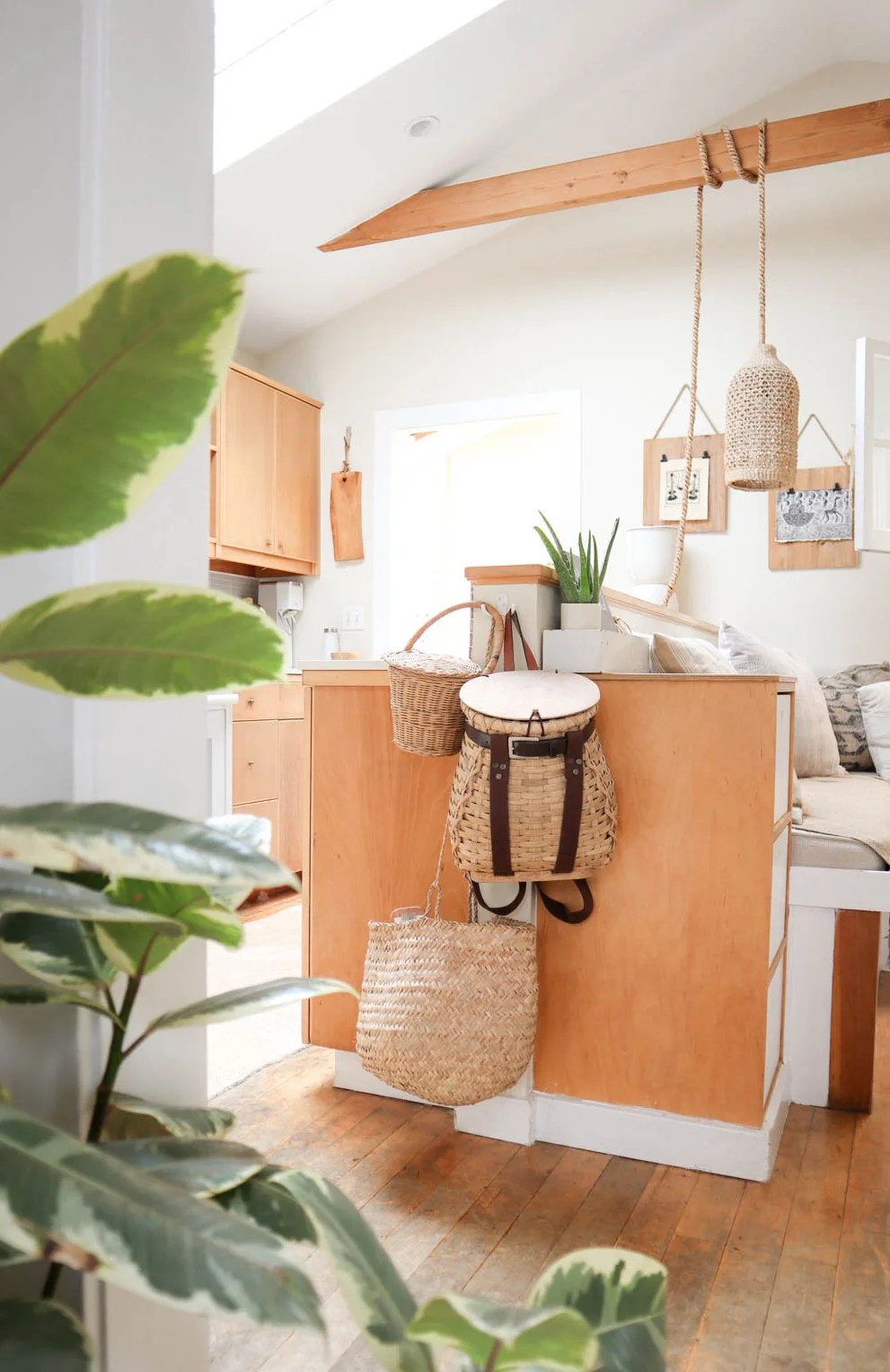
I’ve included a shopping round-up of baskets we use often (or used repeatedly in the past). When you look at the photos in this post, these scattered containers might not look like much. But in reality, they corral everything from art sets to reusable shopping accessories to dolls to instruments, and so much more. It’s all hiding right here in plain sight.

For me, the key is to find baskets that can be used in multiple ways. For example, the petite bag on the front of my bike can also be converted to a shoulder bag or backpack. And the rolling cart I take to the library and market holds larger garden toys while it’s parked at home. Versatile pieces such as these ultimately save space, money and waste.
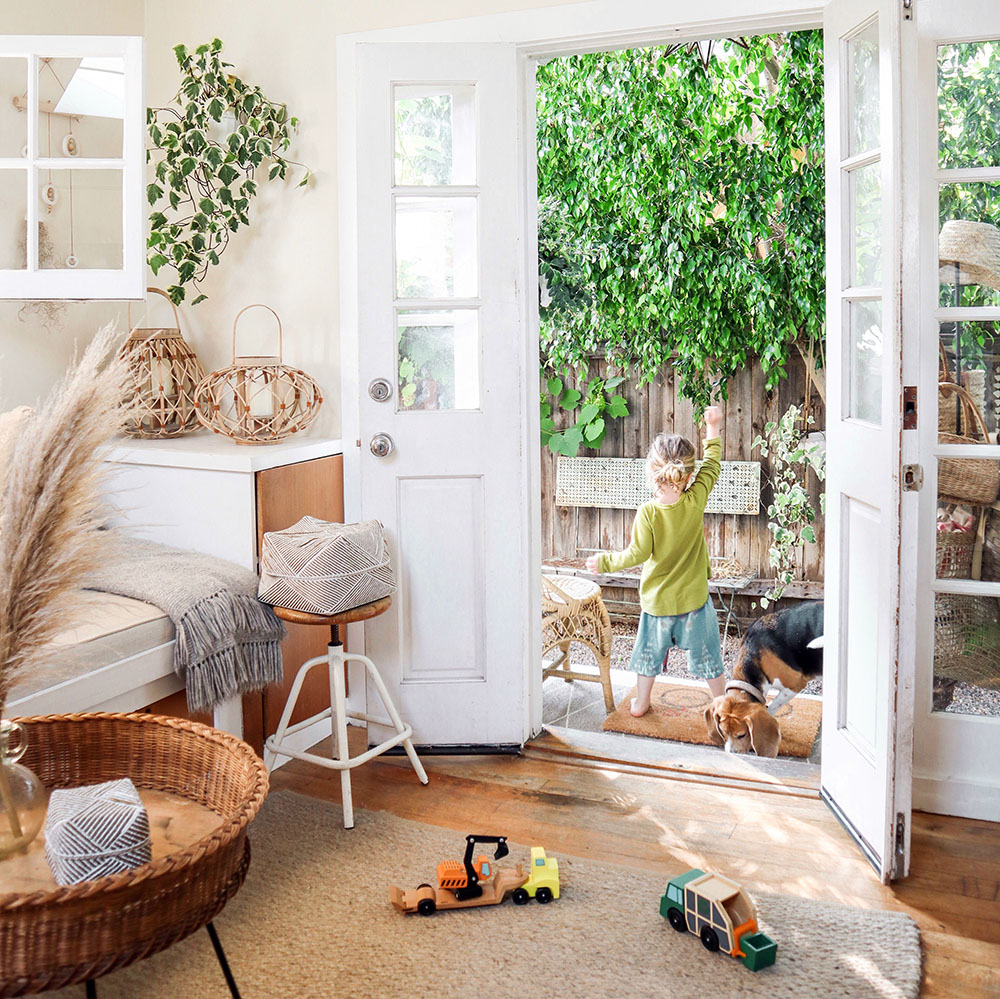
When a container is no longer needed for one purpose, we adapt its use to suit our changing needs, rather than buying something new. The best example of this would be our beaded nesting set from Kembali Collective, which we repurpose at least once per month.
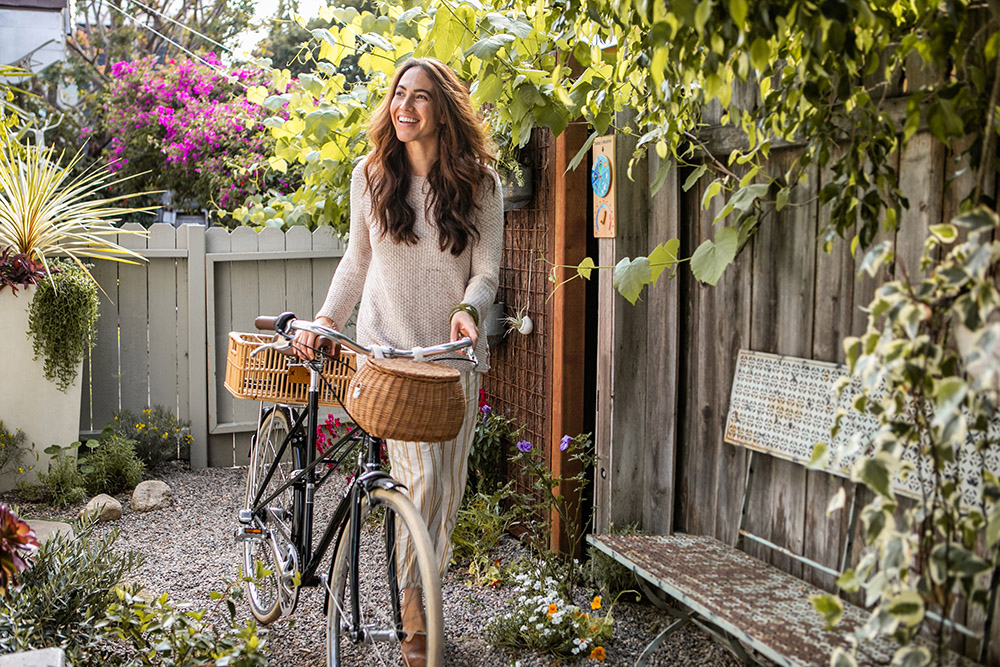
A SPECIAL NOTE REGARDING BIKE BASKETS - Across our 4 bikes, we use the following styles of baskets. (It might seem like a lot, but biking is our family’s primary mode of transport— even when we travel locally with the dogs.)
Child’s bike front basket, which converts to a shoulder bag or backpack
Matching adult front basket, which converts to a shoulder bag or backpack
Wide-rim rear basket for larger goods and jackets
A rear basket with a bottle holder
When riding, I usually wear a straw backpack for taller items, like wine bottles or branches. If I need something that closes at the top so goods don’t tip out if I bend over (which happens a lot when I’m traveling with West), then I wear this canvas minimalist backpack.
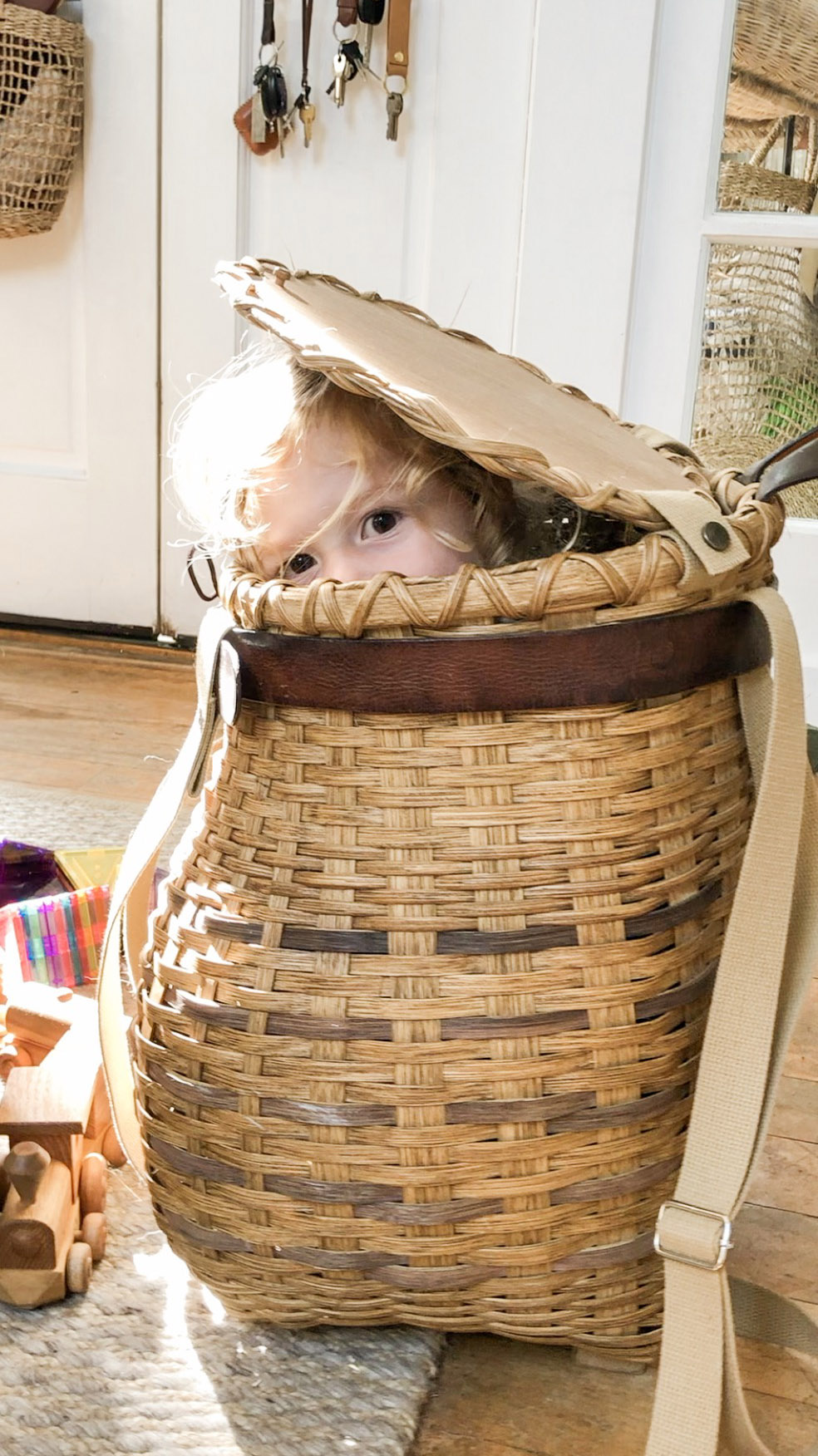


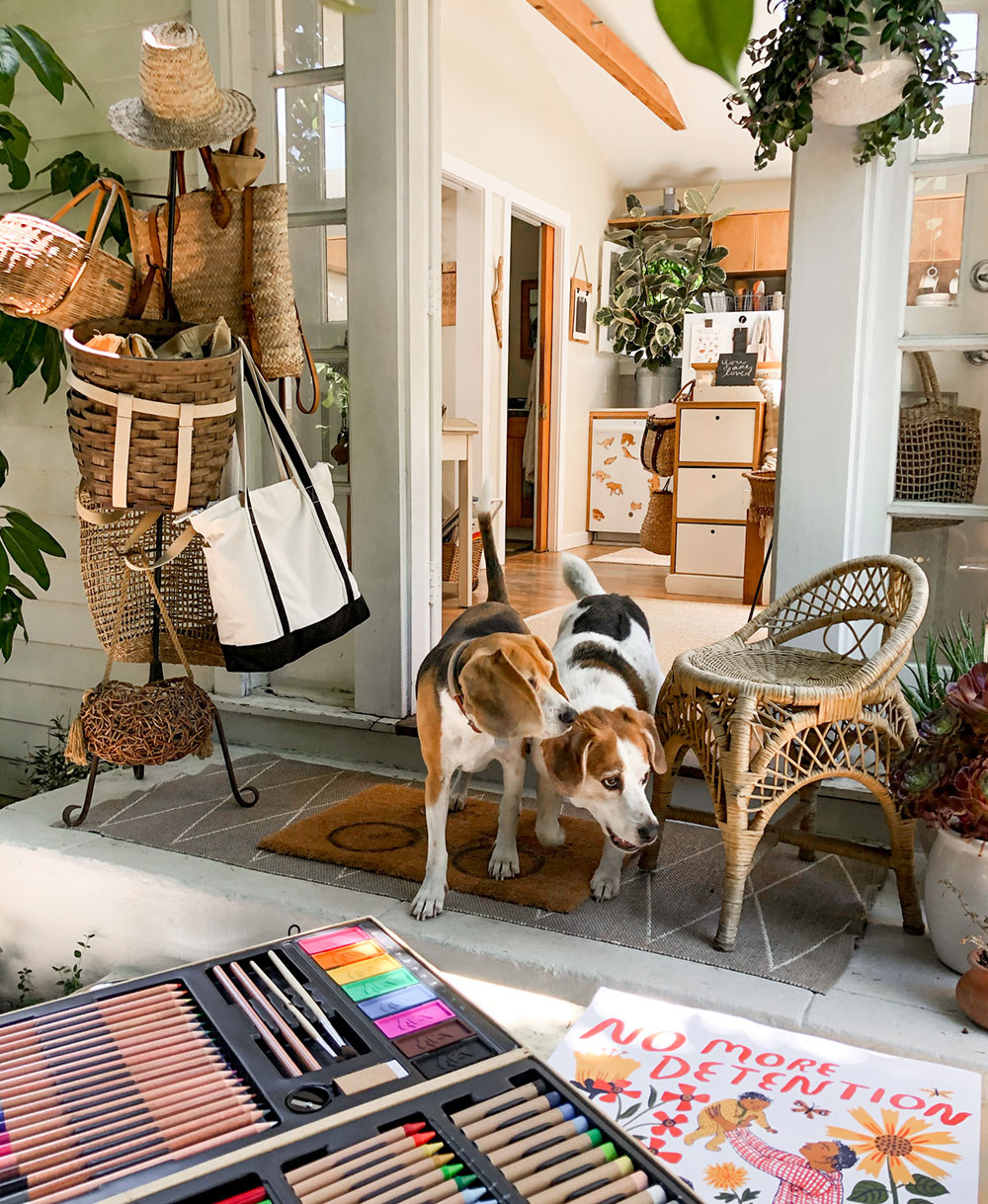
Photo Credits / Notes:
Whitney and West reading by Tinylicious.
Images of Whitney walking bike and West + StanLee on bridge by MindBodyGreen for Avocado Green Mattress.
As always, any images of West and/or the pups were taken as they interacted (under adult supervision) in their own natural ways.

Less Space, More Creativity
Often when I show my son playing games in our garden, readers send me sweet messages in which they lament the fact they they have no outdoor space where their kids can engage in similar activities. I understand completely— this is the first home I’ve ever had as an adult that includes a yard, an I’m grateful for our tiny patch of Earth every day. But I wanted to suggest another perspective and a few work-arounds for those feeling confined indoors with their baby, toddler or pre-schooler at any point during the year.

When it comes to certain activities (regardless of whether or not they’re considered indoor our outdoor), perhaps you don’t need more square-footage… just dive a bit deeper into your creative side.

When I was a pre-schooler, I had access to an oversized flannel board wall for paying with felt cut-outs, as well as numerous large trunks containing dress-up costumes and creative play accessories. Here, we have no room for either. Yet West can still partake in those games any time he likes.
We have 3’ panel of flannel that we simply tuck into the end of our bed or the edge of our couch, and suddenly those surfaces become adequate stretches of space for felt storyboards. (We keep the felt cut-outs in my favorite market basket so they’re easy to tote around.)

Similarly, there’s no ideal wall that we could paint and turn into a practical chalkboard. We had one of those lightweight Ikea chalkboard easels, but we kept running into it since it didn’t collapse. So we gave it to other parents in the neighborhood, and instead we got a flat chalkboard that we can tuck in the closet or flat up against a wall when not in use. We suspend it from a doorknob with a piece of twine or place it on the floor when West wants to draw on a larger surface.


As for dress-up trunks, we skip the bulky container and just spread the contents throughout the house in spaces that make the most sense for each particular piece. West always knows where to find his butterfly wings, binoculars, rain boots, and duck hat. They’re just not all clumped together in one oversized container.
When it comes to traditional outdoor activities, such as sand boxes and water play, it is clearly more environmentally-minded, space-savvy and budget-friendly to explore community resources, rather than default to buying something of your own. However, for the times when you want your child to be able to explore a messy game at home and don’t have a yard, there are compact and low-waste options available.

A small folding table topped with a collapsible tub, inflatable tray or a compact suite of eco-friendly, water-safe toys can work well for water, sand or other sensory elements. (West enjoys adding petals, rocks and leaves to his PlanToys water set, which is made with 100% sustainable rubber + wood and coated with a non-toxic finish. All colors are made from vegetable dye.)

If you don’t have a bathroom or tub large enough to accommodate such a set-up (we don’t either!), meet your new best friend: The Gathre Mat.
I’ve blogged about Gathre many times before, as we’ve used their mats for a bit of everything. We have one dedicated mid-sized mat that we used for diaper time back when West was in his Grovia cloth diapers, but we also have another, larger mat (which we cut into 2 pieces to suit our needs. We use this 2nd mat for covering the couch when it rains to protect it from puppy paws, and for covering the floor when our son uses watercolor paints, or plays with splash toys indoors.

Normally we do these things outside. But when it rains, during fires when the air quality becomes unhealthy, and other unique situations, we just drop down the mats and let West make a proper mess in the Cottage. The mats are stylish, easy to clean, and fold up tight. They can also be used time and time again as beach mats, picnics blankets, crafting surfaces, rug protectors under highchairs, and so forth.
While there are admittedly no groundbreaking small space ideas in this post, the point is to remind us all that we don’t necessarily need a larger home. We can work creatively with what we’ve got, while keeping our footprint small… and stylish.
(Note: As always, please keep safety in mind when it comes to your home and kid(s). The set-ups and activities that succeed in one environment for a particular child might not be suitable for a different type of home or another family.)

StanLee's 13th Birthday
StanLee, our senior adopted beagle-mix, turned 13 this week! We celebrated with long walks, an extra serving of food at breakfast, and a relaxed canoe ride along the canals.

StanLee has been by my side for more than a decade. We’ve chased rabbits on train tracks, tumbled through the snow, romped around beaches, and explored forests and deserts and mountains and prairies. We’ve driven across the country together. We canvassed door to door through the Carolinas. We’ve fallen into ponds, floated in pools, and gotten trapped in thickets. He kept me going during an epic breakup.
He jogged therapeutic miles with me every day and night, and now rides along in the canoe or in the cargo bike with West & Sophee. He fell in love with Adam in an instant, and I’m sure he understood when I did that Adam would become part of our family.
StanLee watches over our tiny cottage, and has even thwarted robbery attempts. He stood next to us on our stoop when Adam and I said our vows. He sat with my Dad and Grandpa Lou in Florida when they were recovering from treatments and surgeries, even though the medical equipment, walkers, and wheelchairs scared him. He protects West if my back is turned.
When I was pregnant, so many people warned me that once my son was born I wouldn’t feel the same level of love for the pups as I did before. But I’ve found that I’ve grown even closer to them both. Yes, sometimes our walks are delayed or cut short, and one-on-one time with either is something that has to be carved into the schedule with effort. But it’s been fascinating to watch them adapt to life with West and interact with him in their own ways. Sophee is still a total menace, but she has grown up, while StanLee has gone grey without losing his playfulness. I love them more than ever.

It might sound childish, but Stanlee is my best friend on the planet. #AdoptDontShop, folks. It can change your life in the most wonderful way.

Upholding Human Rights
There’s no excuse for human rights abuses. We are calling. We are donating. And, when the time comes, we are VOTING.
Click here to read The New York Times’ post entitled, There’s No Excuse for Mistreating Children at the Border. Here’s What To Do About It.” and explore their recommended action steps.


Video: Tiny Takeaways (Ep.3)
Lately I’ve been reflecting quite a bit on why I do what I do for a living. My goal is for the readers of this blog and my book to be confident and fulfilled in their small homes or apartments, and I want to be one of their primary, go-to resources for reliable, low-cost, eco-friendly takeaways that can help them spend less time organizing and searching for their stuff, and more time with the ones they love. Adam and I created a mini video series that we hope offers creative, no/low cost styling and storage solutions to folks living in smaller spaces.
This is the third episode of Tiny Takeaways, in which we focus on ways to free up floor and surface space by going vertical with functional decor.

Simplified Skincare
I don’t enjoy blogging about beauty-related topics. Women are often told in one way or another that we need to invest extraordinary time and money in beauty and youth at nearly every age, and I don’t want contribute to that narrative.
However, I can’t deny that my simplified skincare approach over the past 1-2 years has saved me time, money, and space. It has also reduced so much bottle, palette and canister waste that I feel as though it’s worth sharing here— especially since I’ve received several requests recently to post about my favorite resources for skincare and makeup.

First, some context: I’m 38 years old, covered in freckles, and have visible sun damage from decades spent outdoors in Florida and Southern California. (That’s why I’m constantly wearing my West Perro hat.)
I have never used injectables such as botox or fillers, and I have never had any cosmetic surgery.
I’ve been regrowing my eyebrows for 2 years by never, ever tweezing them, and I recently got temporary Microfeathering by Kristie Streicher to lightly fill in some patches that are slower to grow back.
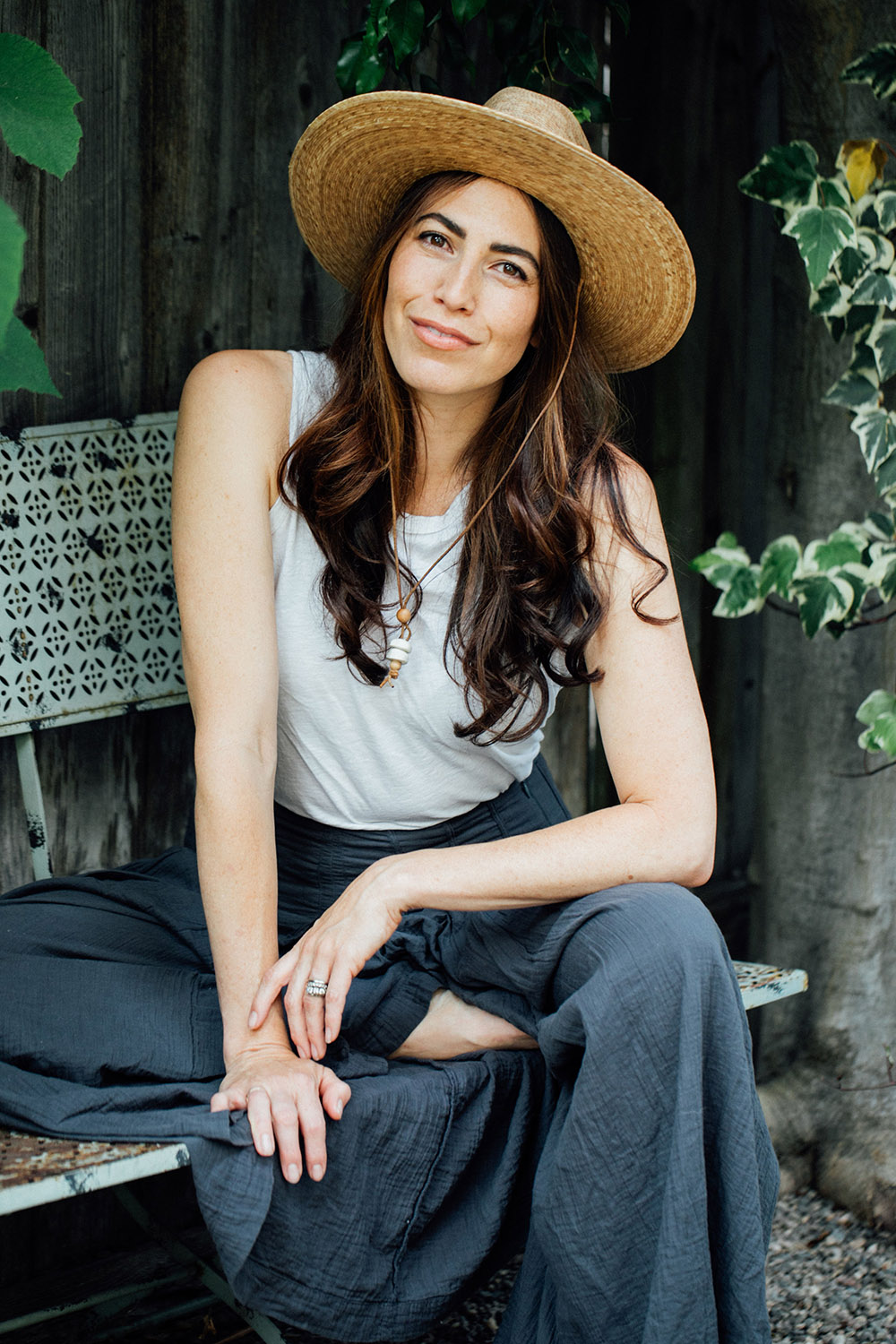
Rather than ramping up my skincare and makeup habits as I grow older, I’ve pared them down in an effort to improve my overall health, better suit our limited physical space, and reduce my environmental footprint.
Instead of my skin rebelling at my scaled-back approach, it has responded favorably. Of course, my smile lines and crows feet all get deeper as the years pass. But my tone has evened-out, and my complexion has transformed.

For my face, my skincare routine is as follows:
I wash twice per day, alternating between this cleanser (which also doubles as a makeup remover balm) and this facial bar soap.
2x per week, I use this dual-action microdermabrasion exfoliator that delivers the benefits of both physical and chemical exfoliation.
I apply Active Treatment Essence twice per day (Note: This has been the most effective product I’ve ever used on my face)
I apply Active Botanical Serum at night
In the morning, I apply a tinted SPF20 moisturizer.
That’s it. No peels, no wipes, no moisturizers, no masks, no primers.
Although the Essence and Serum have higher price tags, they actually end up saving me money, since the contents of those 2 small glass bottles are long-lasting, and are all I really need. (If I want a little extra spot treatment, the Essence combined with an application of roll-on serum from this tiny bottle from Package Free Shop have helped me out 100% of the time. )
On my body I use a Leaping Bunny certified body stone that softens on contact with the skin. It’s available in a sustainably farmed, re-usable bamboo canister, or simply as a refill.

My makeup is limited as well— it’s mainly multi-use Olio E Osso balms and a few select Beauty Counter products. My collection consists of: Eyeshadow / Mascara / Sheer Lipstick / Eye Pencil / Highlighter / Brow Gel / Tinted Face Oil / Lip + Cheek Balm
I chose my makeup carefully after searching extensively for healthier products that actually work. While serious health issues are on the rise due in large part to our ongoing exposure to toxic chemicals, Beautycounter (a certified B-Corp) prohibits 1,500 questionable or harmful chemicals from being used in their products. Plus I appreciate their ongoing approach to lighten their environmental impact. Last year alone they also offset 3,628 metric tons of CO2 to match 100% of their yearly HQ consumption, planted the equivalent of 4,270 acres of trees to offset carbon usage, and invested in 1,284 Water Restorative Certificates to offset 120% of their water usage. They’re also constantly adapting their packaging to be increasingly eco-friendly. A good example of this is their eyeshadow palette, which has a mirror that can be removed for use elsewhere, allowing the entire palette to then be recycled:

I also trust all things Goop, as their team approaches skin care from both inside and out, using high-performance, active ingredients and totally clean, nontoxic formulas for powerful results and healthy, glowing skin.
I use washable washable makeup remover pads to wipe off my makeup in the evenings, and washable cotton rounds for general cleansing. For folks who prefer to use wipes, here is a compostable option. (Read more about that via our “Space-savvy + Low Waste Bathroom Swaps” post here.)

Everything fits easily into a canvas pouch I found on Etsy, for use at the Cottage or on-the-go.
Here’s to simplifying our routines, and freeing up both time and space for the things that truly matter in this world.

Long-Lasting, Eco-Friendly Kids Clothing
Our son (who turns 3 this fall,) has very few articles of clothing. Nearly everything he needs fits into three jute baskets in our closet, while his undergarments and overnight cloth diapers fit in one additional small drawer.

It’s been the same ever since he was an infant. We never buy for his next stage of growth, and focus solely on comfort in the present. We donate anything that he’s clearly outgrown so as to avoid a build-up of articles, and we keep the number of garments that all of us own to a minimum.

The key is finding versatile pieces that can be layered regardless of season, as well as designs that continue to grow over time. Pants with legs that can be rolled up (and then back down again all too soon), and tops with sleeves that can do the same have been helped us keep certain garments in use for well over a year.

Whether we’re here on the beach or visiting our family up north during winter, our son remains comfortable. (We always have 1 major coat, 1 bathing suit, and 1 pair of gloves that fit him at his current size. All of these items fit year-round into one of his designated baskets— nothing is stored separately during off-seasons.)

We prefer to use hand-me-down clothing from West’s cousins, or pieces crafted in sustainable materials that are responsibly manufactured.

Here’s a list of our main resources.
Primary dot com: West basically lived in their zip-up rompers, day and night, until he was 18 months old.
Caribou Kids Clothing: These handmade pants grow 5-6 inches with your child, and the bamboo tops are incredible at keeping skin cool or warm, depending. West has 4 of the tops and they’re our favorites.
Arq Undies: Now that West is out of diapers (he pretty much potty-trained himself somewhere around 30 months old), he wears durable (and adorable) Arq underpants.
O.N.E. Grovia Cloth Diapers: Just to be safe overnight!
Go Gently Nation: We have a Go Gently Nation dress that our son wears at night, or any time he doesn’t feel like wearing pants. We also have a few of their lightweight long-sleeve shirts for nicer occasions. Again, these have fit our son for several months, and I believe he’ll get about another year out of them. I appreciate that they’re produced ethically and locally, cutting back on transport/emissions.
Red Creek Kids: The pants and rompers by Red Creek Kids are stylish, easy to wash, responsibly produced in small batches, and long-lasting.
Rudy Jude: Simple, natural, responsible, sustainable clothing for kids , babies and adults.
Neve & Hawk: We got West’s favorite sweatshirt here. I appreciate their bright, creative designs.
Exceptions: We try to never buy clothing from “fast fashion” sources, as they’re contributing hugely to the climate crisis. However, I’ll admit that in a pinch I found a couple pairs of West’s pants that we like for everyday use on Amazon. While they weren’t my wisest purchases, they are getting a ton of use. They will either be passed down to another child, or used as cleaning rags in the future if they fall apart.
Etsy: If we want to support a cause, get a bit more playful, or find a handmade accessory for our son, we source via Etsy.


