
Earth-Friendlier Jewelry
Recently I participated in a discussion conducted for The New York Times about jewelry. The conversation inspired me to post a lil’ roundup of some Earth-friendlier brands and styles for folks who are interested in gifting greener jewelry this holiday season.


CLED
I discovered CLED via Ashlee Piper, the author of Give a Sh*t: Do Good, Live Better, Save the Planet. In forming their brand, CLED aimed to leverage high-quality existing materials to create upcycled and beautiful pieces. Their pieces are hand-formed from recycled glass (a natural material mainly composed of sand). This renewable resource can be recycled endlessly, and can be made without causing harm to animals or the environment. CLED’s pieces arrive in their minimal and elegant circular box, which is made from post consumer contents.

BAYOU WITH LOVE
On recent occasions, I’ve been able to chat with the delightful Nikki Reed about her recycled jewelry brand, Bayou With Love. This small company uses recycled gold, mainly sourced from used technology recovered and responsibly extracted from tech recycling programs. (Only 12.5% of electronics are responsibly recycled globally, and in phones alone Americans throw away more than $60 million in gold and/or silver every year.) Most of the pieces are out of my spending zone, but I do have and very much like this recycled brass scarf ring. (I pair it regularly with my scarves from Late Sunday Afternoon— for every scarf they sell, they create and gift a handmade blanket to children in the foster system in Los Angeles.)

ASCOTS FROM LATE SUNDAY AFTERNOON
Ascots can be worn in a myriad of ways— around your neck, on your wrist, in your hair, on your bag/pack/basket, and around the brim of your hat. And while they’re clearly not jewelry, they can be styled as such, which is particularly nice when you have a small child or baby who likes to tug on and taste everything. Our friends at Late Sunday Afternoon use locally sourced deadstock fabrics to create their ascots in-house. Any scraps are used to stuff handmade dog beds that they then donate to animal shelters.

VINTAGE PIECES
What’s better than working with what we already have, rather than creating something entirely new? Vintage pieces, or jewelry that’s hand-crafted with vintage elements, can be such striking one-of-a-kind finds that we can feel good about wearing. For example, Rack and Ruin does a beautiful job of incorporating old components into their modern designs. One of my favorite pieces is this handmade bracelet, which is set with a vintage coin.

SCULPTURAL WOODEN WORKS
I am drawn to wooden jewelry, such as the handmade works of Sophie Monet (who I first discovered via my friends at Midland). Sophie’s pieces are works of art that can withstand the strong grip of my son, and not get trapped in the wild nest of my hair.

SEEDS, LEAVES, FLOWERS, SEA GLASS, SHELLS
I have a handmade, eco-friendly tin necklace pendant that contains a piece of dandelion and a magnifying glass, and 2 bracelets that showcase real dried and pressed greenery. I acquired all of these not only due to their appearance, but also for my son. When we are out and about together and he starts to get impatient with whatever we’re doing, these designs keep him occupied for a few minutes more, and are durable and safe in his lil’ hands. I also have some sea glass pieces from the beachcombers at Sea & Glass, as well as a shell pendant that my mother found at an arts festival in Gainesville, Florida.


HANDMADE & HEIRLOOM
These are the three rings I wear daily— my wedding band (which was my grandmother’s), my engagement ring (which was Adam’s grandmother’s), and a handmade ring by Indra West bearing the name of my son. My favorite source for such pieces (if they’re not handed down directly) is Etsy.

Note: Select photos above were taken at/for Midland by Ashley Randall earlier this year as part of a contributor blog post.

Tiny Adventures: Snowy Stroll in LA
One of the things I enjoy the most about small space living is that it inspires us to seek new experiences beyond our four walls. This is why I occasionally share Tiny Adventures posts here on the Cottage blog. While these posts are personal in nature and not packed with takeaways for readers, the overarching point is that tiny living has helped us save resources that we can occasionally redirect on special lil’ moments such as these. After all, this lifestyle isn’t about all the things you have— it’s about the things you don’t have, and the flexibility that absence can potentially provide.

After years of passing by the faux snow-topped castle of Hogwarts on the freeway here in Los Angeles, Adam and I decided this week to make a last-minute visit the Harry Potter park at Universal. I love rollercoasters, but theme parks in general aren’t really my thing any more. (Thanks to my childhood in Florida, and more than a dozen years here in LA,I’ve visited my share.) The crowds, the noise and the waste have sent me into panic mode on more than one occasion.

But, on this overcast weekday between holidays, we hoped that the park would be less crowded. Luckily this was indeed the case, and we were able to stroll leisurely, avoid any lines, enjoy the holiday decor draped throughout the grounds, and discuss the point at which West might be able to visit this delightfully compact attraction. We expect he’ll be fascinated by the wonky buildings, the creatures, and the secret spots where kids can stand and wave their wands to spark special effects that do indeed feel a bit like magic…

And since the park wasn’t too crowded, we were even able to find quiet areas in which to take business calls, do fundraising and donating for Giving Tuesday, and meet up with our friends from Access Live, which made the half-day out of the office feel satisfyingly productive.

There were drinking fountains readily accessible for filling our collapsible, pocket-sized Stojo cups with water, and we packed our own fruit and nuts to avoid the waste and up-charge on food and beverages. Though I’ll admit that I forked over a silly sum in exchange for a single ornament to add to our holiday garland.

There are major benefits and drawbacks to running your own small business. The ability to enjoy a day such as this is an undeniable benefit (and privilege) for which we are grateful.


Gathering (Lower Waste) Essentials for Unhoused Children
Recently Adam and I learned that there are an estimated 317 boys and girls (ages 5-17) living in cars, on the streets, in shelters, tents and temporary homes here in our part of Los Angeles.* None of these children have a permanent home to return to at the end of a school day. As such, the unified schools in the area have embarked upon a mission to provide these young ones with backpacks stocked with educational and hygiene essentials.


Along with West and our friend Sara Toufali of Black & Blooms, we gathered supplies nearby and then filled some backpacks together at the cottage.

Above: West greeting Sara


Above: Sara took photos of the list and supplies to share with her community to help spread the word.
We tried to avoid plastic products and packaging where possible within our budget limitations. (We failed in several categories, including glue sticks and pencil sharpeners.)

For example, we opted for combination shampoo+conditioner bars (which we think will hopefully last the children longer), Bite Toothpaste Bits and their bamboo brushes, and select items bought in a single bulk package and then divided up into smaller bunches with twine.

(In retrospect, it would’ve been wise to do some of the supply shopping at an office or art store where we could’ve gotten pens and other smaller goods with no packaging involved.)

If you have the means and would like to donate (before December 9th), the link is here. Donations will go to directly to buying backpacks and stocking them with:
blankets
brushes
combs
$25.00 Target/Walmart gift cards
shampoo & conditioner
socks
toothbrushes & toothpaste
wide-ruled paper
color pencils
color markers
erasers
pencils
glue sticks
highlighters
ink pens
notebooks
sharpeners

*Information provided via the Education Committee of the Venice Chamber of Commerce and the unified schools within the area.

Some Items You Can Probably Go Without - Holiday Edition
(NOTE: This original post was published on 11/17/2018, and has been updated for 2019.)
While it's nice to share stories about designs and practices that help us live comfortably and contentedly in small spaces, I think it’s just as important to discuss the things that we can happily live WITHOUT— particularly during the holidays, when “stuff” just of all sorts just seems to swell. After all, making a home of a small space isn’t mainly about figuring out how to cram as much stuff as possible into your compact quarters— it’s about experiencing more by owning less.

As always, before we jump on in, here’s a lil’ disclaimer: To each her or his own. While these items might be easy for easy for some folks to forego, they might be gems elsewhere. You know your own needs and space best. Habits shift, tastes change, lives and practices evolve. Design and decor should be different and enjoyable for everyone. The following is just a small sampling of Holiday items you may want to reconsider. (View all the entries in this series here.)

Disposable Batteries
Love those little warm, battery-operated twinkle lights? Me too! Do you have flameless candles in your child-proofed home? So do we! A great way to cut down own spending and waste is to use rechargeable batteries. A simple 4-slot charger set can usually handle both AA and AAA sized batteries.

Tree Skirt and Tree Pots
Getting a potted, living tree from a responsible grower? Amazing. Depending on your plant nursery, you might even be able to leave their standard plastic pot there for the staff to reuse if you have one on-hand already that you intend to use instead. (Or you can return the pot to the store once you’ve planted your tree.)
Did you get a more traditional tree? Lovely! Challenge yourself to skip a “tree skirt.” Investigate your existing belongings— perhaps you have a washable scarf, Turkish towel, or table runner might work perfectly. Then it can go back to its intended use after the holidays.
Skipping the standard set up? An upcycled wine crate or basket might fit your lil’ tree juuuust right.
Excessive Travel Gear
View my full post: Some Items You Can Go Without: The Travel Edition, here.

Wrapping Paper, Packs of Generic Greeting Cards, and Tags
No need to buy and stash all of those paper goods. Make your own from by repurposing book jackets, newspaper, craft packing paper, canvas shopping bags, tea towels, and more. A bit of twine can cinch it all up with understated elegance, and a creative tag can be made of almost anything— including fallen leaves.
To me, clever packaging such shows more care than the typical store-bought formats. But if you have any shiny new packaging set aside, go ahead and finally put it all to use… then stop the influx of similar purchases in the future. (View my recent post regarding Playful, Low Waste Gift Wrap here.)

New Things
Generic heading, I know. But here’s a typical example of what I mean: Did you get an invite to yet another ugly sweater party? Skip the retailer sweater, which you’ll likely wear once and then toss out, or cram into the back of a drawer for 364 days. “Fast fashion” is terrible for the planet, and there’s no reason to spend real money on a moment like this— particularly since other people will probably have shopped in the same place, and be sporting the same attire. Thrift shops usually have a myriad of options, and there’s oftentimes a charitable element that’s threaded through such businesses. As such, you can feel good about supporting their cause via your discounted, second-hand purchase.

Seasonal Tabletop Decorative Tchotchkes
I love the look of those little holiday villages all lit up on a mantle, but they’re a bit silly in a small space. Same goes for random “winter” objects, artificial pine cones and similar vase-fillers, and seasonal figurines.

Want a festive display that looks great on a surface, doesn’t cost much money (if any), and requires zero storage space? Simple winter branches and florals, dunked into an existing glass, pitcher, watering can, or vase. When they’ve passed their prime, simply compost them or drop them in your city’s green bins. (Don’t get me started on seasonal napkin rings and name card holders. Is there anything more unnecessary?)

Party Supplies
With some greenery, you can easily holiday-up your small space gatherings without buying themed plates, cups, napkins, etc. Just use your everyday tableware, candles and/or twinkly lighting, and then let the clippings, food, and beverage round out the seasonal experience.

Tangible Gifts
There are endless causes for us to support every day of the year. There are millions of people in need of food, clothing, and safe shelter. There are children lacking basic school supplies. There are folks who need financial support for out-of-the-ordinary medical issues and family emergencies. Consider donations instead of tangible gifts.
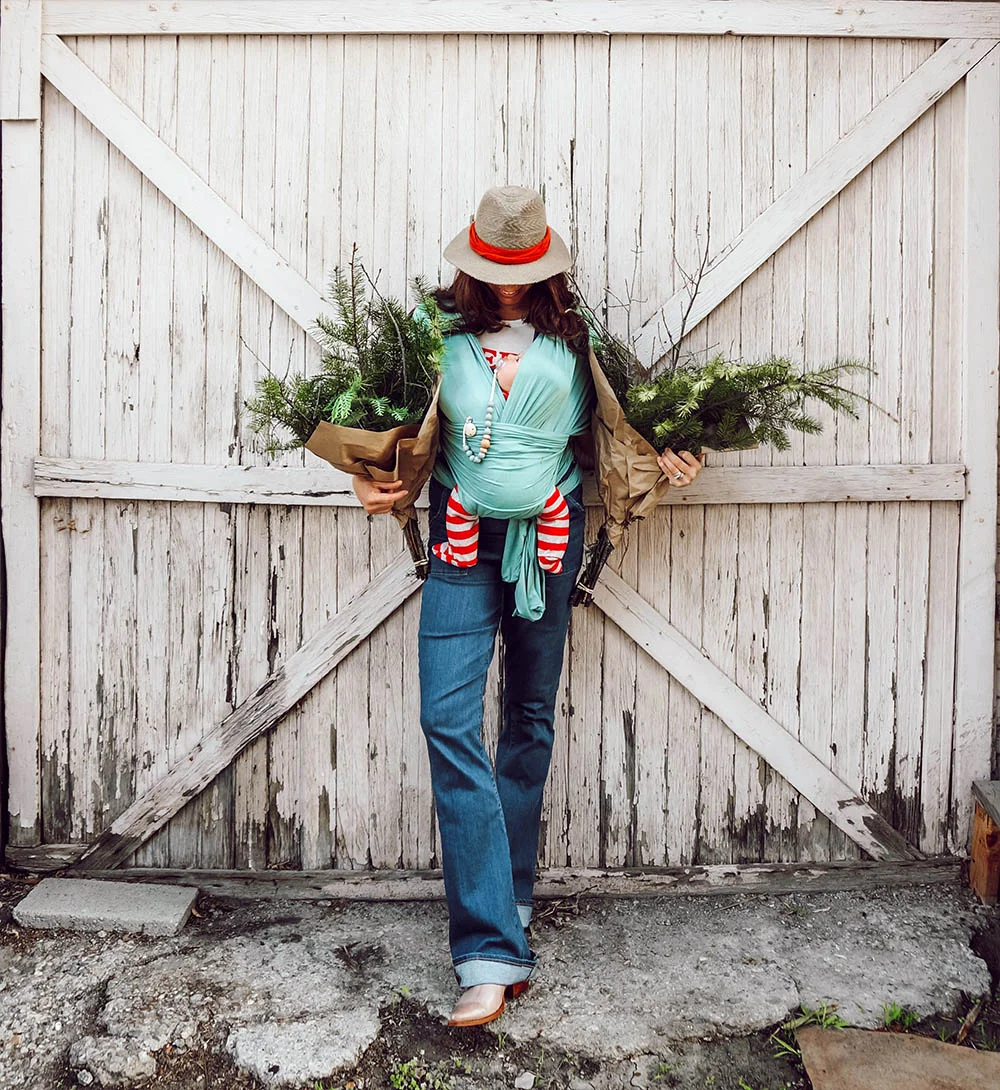
If you’d still prefer to give something to your recipient directly, perhaps an experience would be welcome. A museum membership, a quick getaway, or a meal with friends and family are all lovely options.

We all know this, but it’s helpful to remind ourselves that it’s NOT ABOUT THE STUFF.
Decorating for the season can be so delightful, but it’s really all about making human connections, giving back to our communities, engaging with one another, loving each other, and sharing the responsibilities of protecting our planet.

Festive, Outdoor Vibe for Indoor, Small Space Dining
Gathering with friends and/or family around a table in a small home or apartment can be such a uniquely intimate experience. But during the holidays— when we tend add extra decorative touches and welcome more people to the table than usual— surface space needed for tabletop essentials can suddenly become extra challenging to preserve.
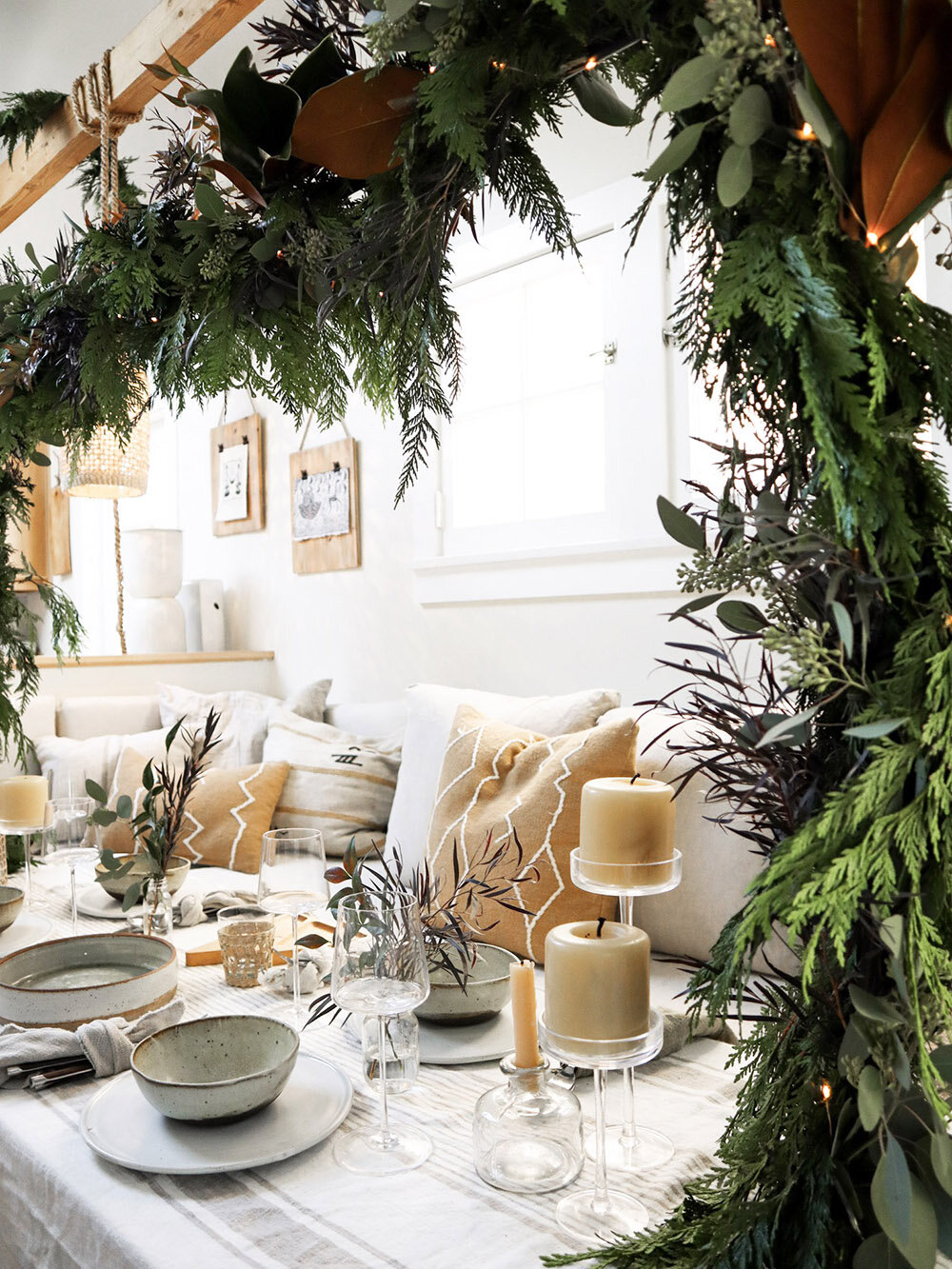
Certain items can help with this, such as rectangular plates and pedestal/cake stands. (Skipping some of the superfluous things you don’t need, such as napkin rings, chargers and placemats can save inches as well.) But if you want to add some wild branches or lush floral/greenery/dried bouquets to your table, you might be out of luck. As such, I wanted to demonstrate an easy, low waste way to add striking decor to your table without sacrificing your dining surface. (I also offer up additional suggestions in my book: Small Space Style.)
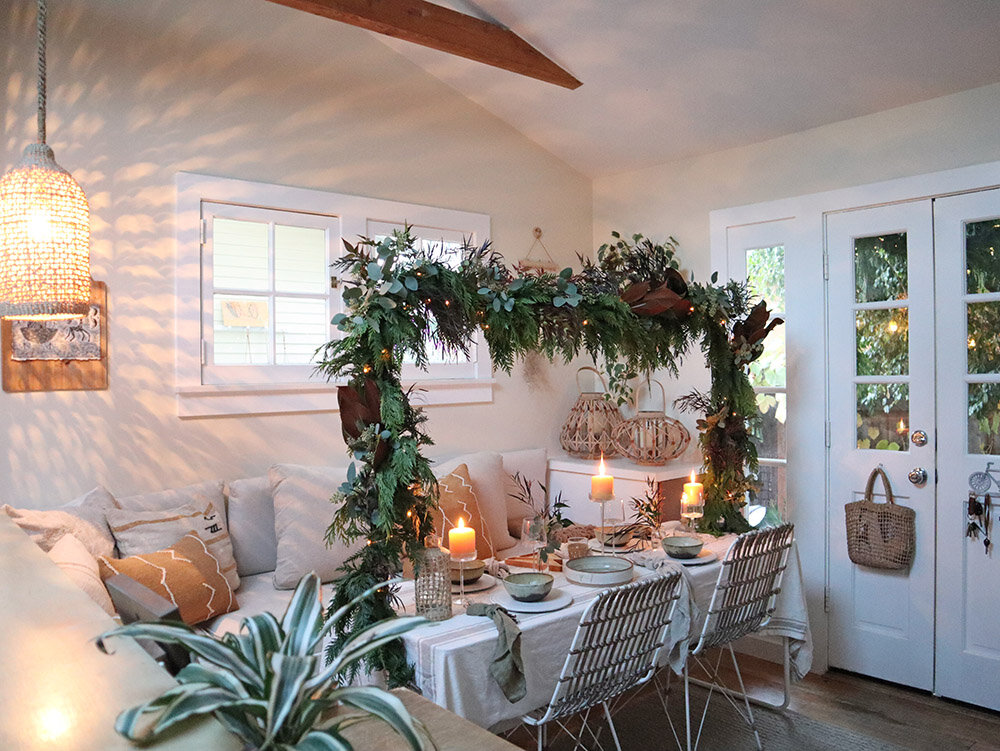
This display cost me about $150. I bought the garland and branches from a local shop, and used an over-the-table adjustable iron rod and battery operated twinkle lights (with rechargeable batteries) to create an overgrown and glittering display indoors. (I used real candles for the photos, but swapped them out for battery operated versions for safety after we snapped the images.) A bit of floral wire (and a vacuum) were the only other items I needed to attain the look.


Setting up the iron display rod took only a few minutes. The height is fixed, but the width is adjustable. When the setup is no longer needed, it breaks down easily for slim storage.

I used all living branches and clippings, so everything can be composted when the time comes.


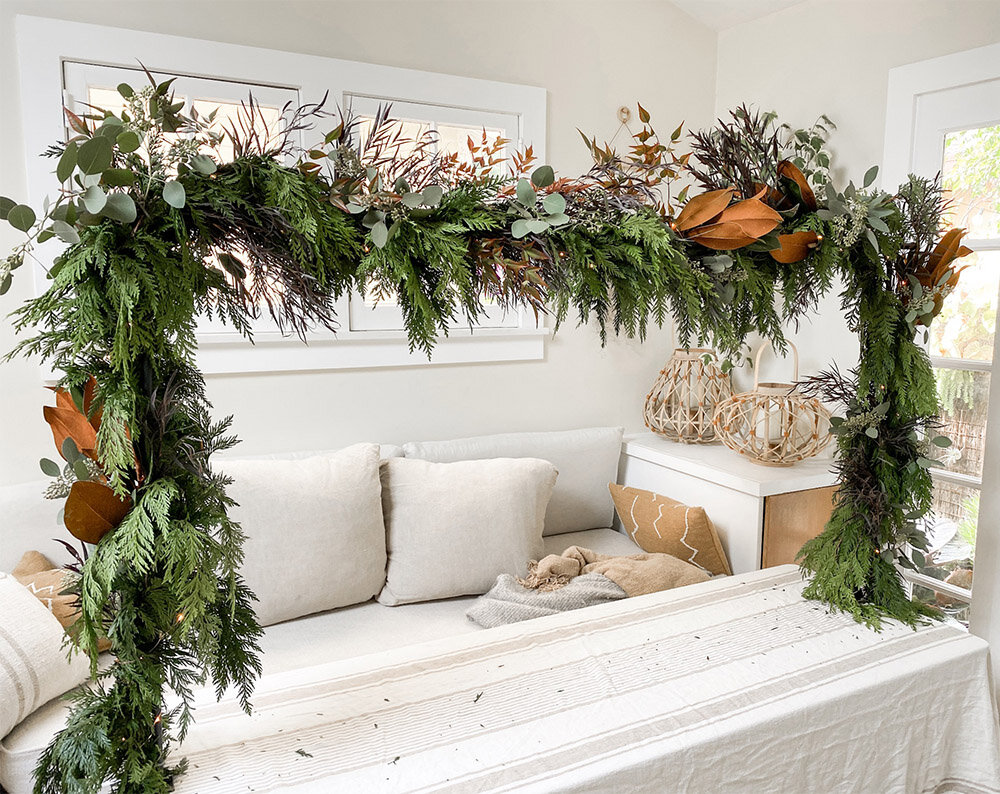
Adding the clippings to the garland took the longest, but was simple enough.

The entire process took about 90 minutes, and it was a surprisingly relaxing activity for me.

I (still) don’t really cook, nor do we host that often these days, so I enjoyed going out of my way to do something special for the guests we’ll have over in the coming days.

I’ll share a small space, low waste holiday decor video and post in early December.


In the meantime, I’m looking forward to spending time with our friends and family here at home. (And I’ll be following along with The Conscious Kid for insights and information regarding Native American Heritage Month.)

Whatever you and yours are doing this holiday, we wish you a safe and happy long weekend.


Gifting Books
I’m very vocal about my love of libraries. We have 2 within walking/biking distance of our tiny home, and we visit them weekly.

When journeying beyond LA, we always try to explore the library of the town we’re exploring.

Above: West at the library in Santa Fe, NM (November 2019)
Any time we discover a book we particularly love, I try to support the author (and illustrator, when applicable).


Sometimes we will buy a copy of a book for ourselves or as a gift. Sometimes we’ll share our favorable opinion with friends and family, or publish our thoughts via Instagram. (As an author myself, I find this sort of word of mouth to be of such value— both personally and professionally.)
This holiday season, I wanted to share a few of our recent favorites that we are reading and gifting. Some were recently published, some are older. I’m posting them here to thank their makers for creating such informative or delightful publications.

For those who want to better understand why repurposing matters:
Secondhand, by Adam Minter
In a world that craves shiny and new, is there room for it all? Secondhand offers hopeful answers and hard truths, while revealing the marketing practices, design failures, and racial prejudices that push used items into landfills instead of new homes. Secondhand shows us that it doesn't have to be this way, and what really needs to change to build a sustainable future free of excess stuff.

For those who love tiny houses:
Tiny House, by Brent Heavener
This fittingly compact yet stunningly beautiful book by Brent Heavener (the founder of @TinyHouse) showcases some of the dreamiest and most clever small space residences I’ve ever seen. (I snapped a few preview shots below to share some of my personal favorites in the book.) It’s a great lil’ coffee table book that can easily be wrapped up in a reusable cloth napkin and slide into a stocking for a lucky recipient.


For those who love crafts:
Modern Rug Hooking by Rose Pearlman
If you’re into crafting items by hand for your home by hand, Rose’s exquisite new book is filled with how-tos for creating clever, lovely, low waste needle projects.

For those striving to live a greener lifestyle:
Sustainable Home by Christine Lu
Give a Sh*t by Ashlee Piper
For those raising little ones to be in tune with the natural world:
How to Raise a Wild Child by Scott D. Sampson
Picture books (with messages of love) for the lil’ ones:
Here We Are: Notes for Living on Planet Earth by Oliver Jeffers
The Big Umbrella by Amy June Bates
Mae Among the Stars by Roda Ahmed





For folks who want bright and colorful homes:
Living With Color by Rebecca Atwood
For those who want help styling and maintaining houseplants:
Wild at Home by Hilton Carter

For Americans who want to create and protect policies for a safer and more just existence for all:
Fight Like a Mother by Shannon Watts
How to Be an Antiracist by Ibram X. Kendi
Additional books we enjoy and intend to share:
Woman of Color by Latonya Yvette
Simple Matters by Erin Boyle
Foxfire Living by Eliza Clark & Tim Trojian
The Way of the Woodshop by Aleksandra Zee

Reduced Waste Skin Care while Traveling
On our recent back-to-back trips to New Mexico and Oregon, I shared a few glimpses into my low waste, travel skincare products/routine. Upon request, I’m going into greater detail about it here on the blog. Much like my routine at home, it’s fairly simple and low on packaging:


Makeup Removal
I have a few refillable glass pots from ReContained, and I use one for a bit of coconut oil for makeup removal when traveling. (I simply siphon off a lump from my standard mason jar of coconut oil at home.) I’ve found that this type of oil is entirely effective at naturally removing both standard and waterproof makeup, without drying out the skin or wearing thin the sensitive skin beneath the eyes.

Wash
A combination charcoal + tea tree oil bar soap from Package Free Shop is my favorite new nearly-zero-waste addition/swap to my routine. When traveling, I don’t even have a dedicated container for it. I simply make sure that it’s completely dry, and then I pop it into a beeswax wrap and add it to my toiletries pouch.

Above: Wearing a coverall jumpsuit inspired and co-created by my friend Ellen Marie Bennett.
Exfoliate
This product isn’t zero waste (it comes in a petite plastic tub), but it is very long lasting, small enough to clear TSA, and was the final piece of the puzzle for me when it comes to attaining a clear complexion. The products I mention in the next category fully transformed my skin for the infinitely better, but this exfoliation component was something I was missing. Since using this product I’ve had zero cysts, and an even tone across all areas of my face (rather than having zones with differing qualities).

Moisturize & Repair
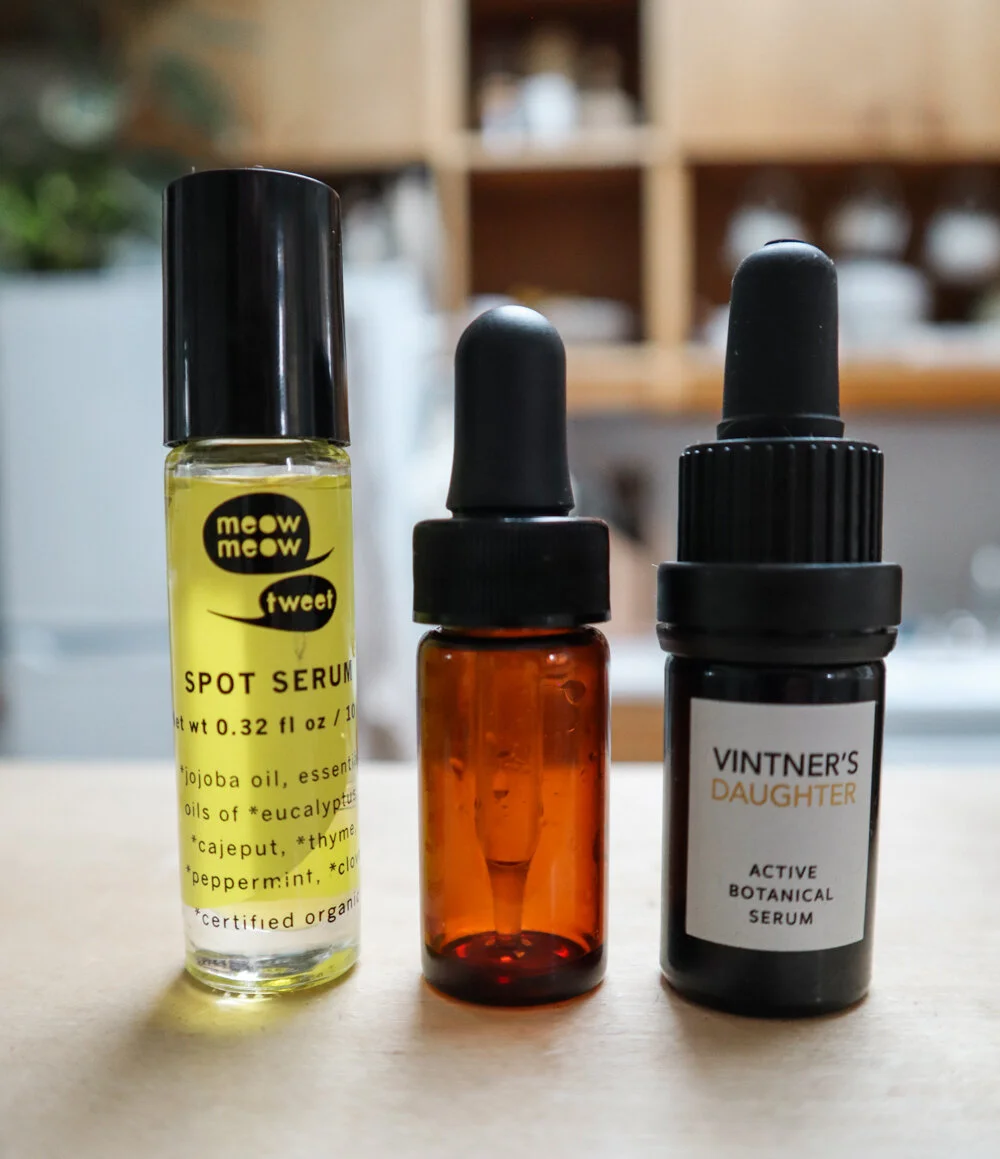
My 2 must-haves are a (newly released) travel bottle of Vintner’s Daughter Active Botanical Serum, plus their second product— Active Treatment Essence— dropped into a generic glass travel vial.
Spot Treat
I recently switched to a tea tree oil spot treatment (a more natural alternative to the one I’d been using) that comes in a slim, glass roll-on serum from the Package Free Shop. So far it has been music to my skin, and it’s easy to pop into a medicine cabinet, pocket, wallet or zipper pouch for local or long distance adventures.
Full Body Moisturizing
I use The Body Stone, a safe and effective moisturizing stone that comes in a refillable bamboo canister. After dozens of uses, the stones break down into smaller pieces, which are perfect for continued use and also conveniently smaller for travel. (You can even drop a bit or two into a tub for a relaxing body soak.)

Tone
I’ll sometimes bring my NuFace FIX if I’m attending work events or shoots while away. (View my post on this product line here.) I also toss a few washable face pads and makeup wipes into my toiletries pouch.


Gifts Made at Home or From Recycled Materials
Note: This post was sponsored by GOLDTOE® in promotion of their “Recycled Lodge Collection” socks. All opinions are my own. All words are my own, with the exception of exact products descriptions, which are unchanged to maintain accuracy. As always, any imagery showing the pups was captured while they interacted in their own natural ways.
This tiny cottage has not only been our home for nearly nine years— it has also been an unexpected teacher.

Long ago we began to reevaluate how and what we consume, and modified our habits accordingly. We actively consider each and every item (and I mean each and every item) before we introduce it to our small space, and we also put the same amount of thought into each and every item we acquire for gifting purposes.
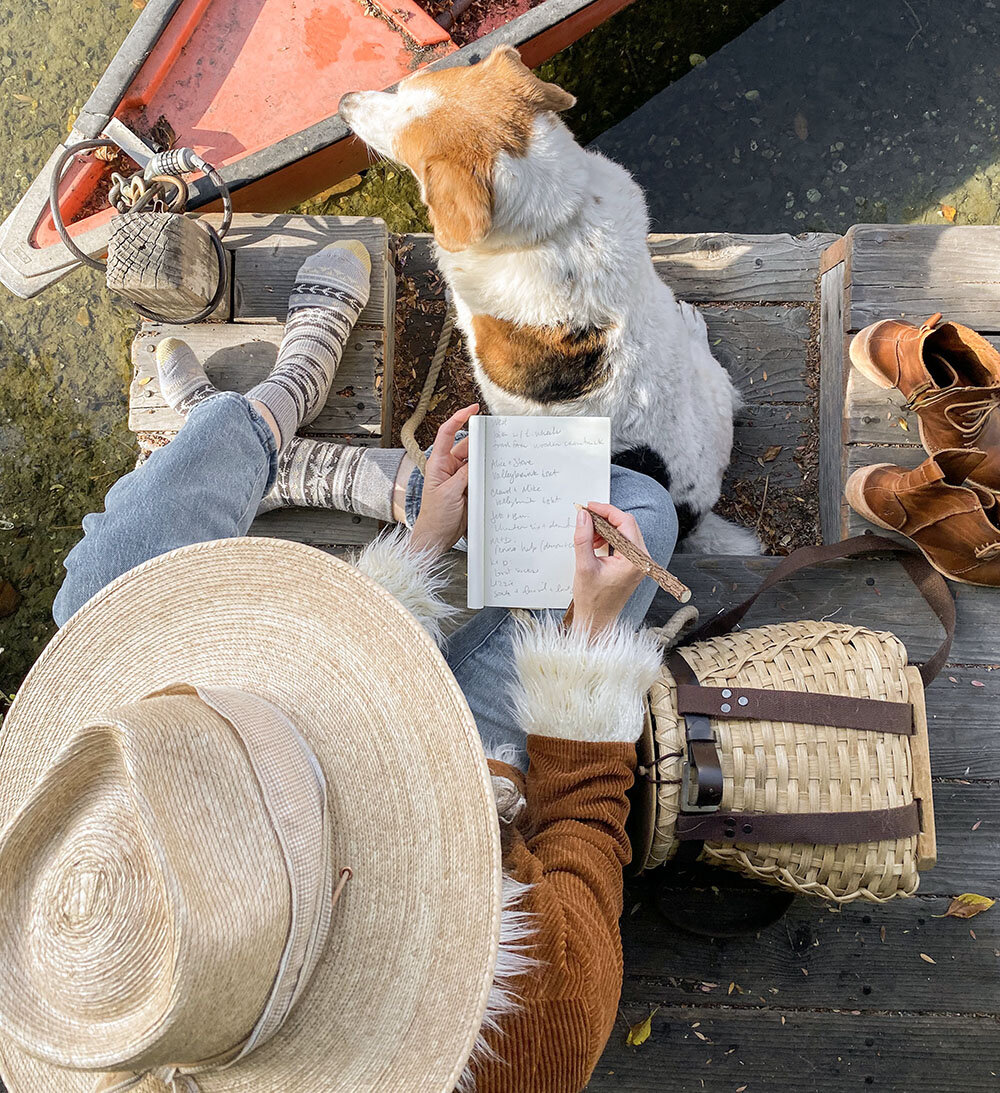
Adam and I try to be as certain as possible that the recipient will use and enjoy anything we gift, rather than feel weighed down by yet another object given simply for the sake of giving. However, it can be a bit of a challenge to select presents for folks when you aren’t fully familiar with their lifestyle and preferences.

(For example: What do we give our neighbor 2 doors down with whom we chat daily, but whose home we’ve never been into? And what do we offer the lovely woman at our corner coffee shop who greets West every morning with a genuine smile and loving hug before stepping aside to chat with us at length, but whose tastes we know very little about?)

To avoid generating waste and excess while also providing something that’s hopefully practical and delightful, we usually come up with some sort of yearly bundle.

This year, we’ve opted for a simple collection of low waste goods, outlined below.
Contents:
Homemade concord jam made from the grapes off the cottage vine
Cozy socks made from recycled water bottles
A refillable stainless steel water bottle and/or glass household soap container
Locally made olive oil in a reusable glass bottle
Packaging:
A dried or clipped flower/branch
A dish towel or multi-use cloth (in lieu of tissue paper or filler)
An upcycled wine crate or repurposed basket (in lieu of a new box or bag)

HOMEMADE JAM
The jam is far more the handiwork of our neighbors than our own. (See my full post about that here.) Adam and I have made it before and enjoy the cottage grapes annually, but it’s the hard work of our neighbor, Kevin, that produces the jam we end up giving to friends and family.
What I love most about this item is that it’s something unique to our home. The grapes are grown here, and the jam is crafted in a tiny space with love and care. It’s then given in an endlessly reusable glass mason jar.
“RECYCLED LODGE COLLECTION” SOCKS
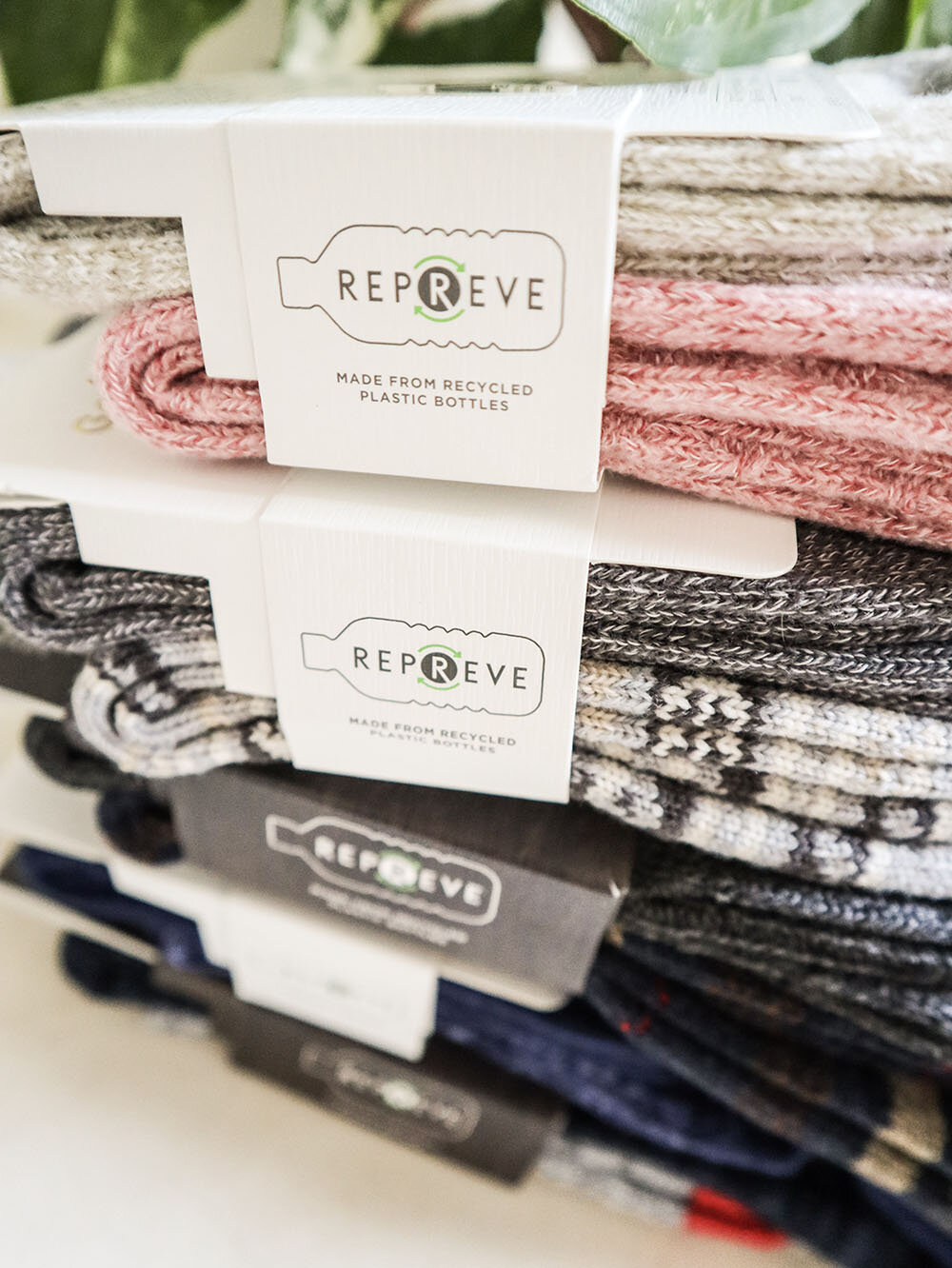
The socks are the newcomers to our bundles this year, because who doesn’t need socks? And GOLDTOE® is now making boot socks knit with Repreve® yarns, which are made from recycled plastic bottles, while still delivering premium quality and comfort.
Repreve® has recycled over 17 billion bottles, effectively keeping them from landfills and waterways. (Remember— only about 9% of recyclables ACTUALLY end up getting recycled.) Instead of making what's called virgin fiber, making REPREVE® offsets using new petroleum, emitting fewer greenhouse gases and conserving water and energy in the process.

GOLDTOE® uses this fiber in their sophisticated yet playfully designed socks, which are durable, moisture wicking, and provide adaptive warming + cooling.
Since GOLDTOE® socks have become our favorites here at home (particularly at this time of year), we feel like they make for sensible and thoughtfully created gifts for almost any recipient.

REFILLABLE CONTAINERS
A stainless steel bottle and/or a refillable jar for household liquids is another type of gift we enjoy giving. It might seem generic, but when I see just how often the bottles I gave to my friends as part of my book release bundle are used, I realize what a dent an item like that can actually make towards helping individuals and families reduce their single-use plastic waste.

OLIVE OIL
Food and beverage can make for such excellent clutter-free presents. But when you don’t know the dietary preferences and restrictions of certain recipients, olive oil can jump in as a neutral (though not boring) option. We get ours from a local bakery, and the contents are just as beautiful as they are delicious.

Here’s to showing love and appreciation to others with the help of thoughtful, greener gifting this holiday season.

Tiny Adventures: Oregon
Adam and I decided it was time for a last minute tiny adventure with our little one.

We booked a quick, 3 day trip to Oregon (with some vouchers generously provided to us by our preferred airline, Alaska Air).


I’ve always wanted to visit Portland, so we rented a little Airbnb and took a few days to explore the city, and worked in a drive to the coast to see Cannon Beach.


We used every minute we could, eagerly exploring sights such as the Japanese Botanical Gardens, Caravan: The Tiny House Hotel, the Oregon Museum of Science and Industry, Nob Hill (where our Airbnb was located), the sky tram, the Portland street car (West’s request), and numerous restaurants, parks and streets.


The journey to and from Cannon Beach was spectacular, offering foggy views of towering conifers, and green fields dotted with enormous elk. (And of course the beach and tiny town were both breathtaking.)

This post serves as our lil’ photo journal of the trip.


I am hoping to return soon to visit some of the smaller towns surrounding Portland, as well as Bend. Those lush woods and green hillsides are calling...


Small Space Clothing Storage in Cold Climate Regions
Small homes/apartments located in regions with colder climates face their own unique storage challenges. When one sweater or jacket requires as much room as a small stack of summer clothing, or when a single pair of boots are all you can fit by the front door, space suddenly becomes that much more challenging to find, create and/or maintain. And, as storage space gets eaten up, spare inches intended for relaxation, work or play are often infringed upon, just when you need them most while spending more time indoors.

I have rented several small apartments (with no outdoor space) in regions with freezing weather the past. From living in a makeshift, triangle-shaped bedroom that doubled as a close friend’s home office, to spending years with a partner in a typical New York City walk-up (which was not only tiny, but was also booby trapped with exposed heating pipes that sizzled my skin any time I reached for a book or bent over to put on my socks, I have grappled with storing cold weather gear in a compact home.


Still, I’ve hesitated to regularly approach the topic of how to manage clothing in small spaces that properly experience all 4 seasons, as it’s been a decade since I’ve lived full-time in a compact residence in an area that experiences temperatures ranging from 10° to 100°F. But in a recent round of open questions, several readers requested that I tackle the topic. So here I am.

Before looking directly at the wardrobe solutions, I’d like to back up and approach the issue from a wider view. Because In order to preserve space needed for boots, layers, gear and dripping umbrellas or hats, it can help to first have smart and hardworking furnishings in place.
FURNISHINGS
By selecting multitasking furnishings, you might be able to open up spots throughout your home for everyday cold weather wear that is too bulky for a standard drawer or bin.
A dresser desk (preferably one with a folding or telescoping work surface) can store clothing while also operating as an workspace for kids and/or adults. Similarly, a transforming coffee/dining table combo can easily merge the bulkiest furnishings between a dining and living room. And, if you have room for a nightstand, opting for one that can perform the duties of a vanity, dresser, or bookshelf is highly useful.
Luckily, many of these items have been around for decades, and can be found via vintage and second-hand sources.)
HOME DECOR & ACCESSORIES
Try to avoid home accessories that use valuable floor space.
For example, instead of leaning your mirrors, mount them on doors or walls. (Or if you are going to use a leaning mirror, find one that comes layered with hooks, shelves or ledges so it can multitask.) And rather than selecting tabletop and floor planters, try suspending your year-round greenery from the ceiling hooks or from your existing hardware such as curtain dowels. Collapsible/folding, hanging or soft-form hampers will provide more versatility than bulky inflexible bins, allowing them to move into new locations when you switch things up in your home as life evolves.
WARDROBE SOLUTIONS
I hesitate to share many clothing storage solutions. They’re often made of plastic, and were invented to deal with our overflow of belongings. The less stuff we have, the fewer organizers we need, and the lighter our environmental footprint.
Yet there’s no denying that a smart space-saving tool here and there can work wonders (and prevent daily frustration) in a minuscule closet. So here are a few of my favorites concepts from my previous lives in colder climates.
Single Wall-Mounted Hooks - Consider hanging your largest and/or most-used coats from simple, single hooks mounted to your walls (rather than clumping them together on an over-burdened multi-prong coatrack or in a closet). They’ll be easier to access, and will have more room to dry without battling other clothing for space. Not every hook has to go by the door. If you have a long narrow hallway, put it to further use by dotting it with generously-spaced hooks. If you have awkward corners in your room or barren inches on the exteriors of bookcases or dressers, they might all be perfect spots for hooking up a jacket and/or scarf.
Dowels or Tension Rods - There are oftentimes lost inches inside wardrobes and closets. Tucked above and behind your standard hanging rack you might be able to mount another rod where your scarves can drape. Hook gloves and hats to it easily with hanger-top boot clips.
Hanging Chain / String - When suspended vertically from the ceiling in an unused corner, a chain paired with s-hooks or a string coupled with clothespins can organize your family’s hats and gloves while allowing them to air out.
Wall Mounted Drying Rack - A multi swinging arm wall mounted drying rack is not only smart for laundry, but it can hold your daily coat, scarf, tote and gloves as well. When it’s not in use, just tuck it back up against the wall.
Vacuum Bags - I’d be lying if I said I didn’t buy vacuum bags during the many years in which I lived in the Northeast. I used them for on AND off-season clothing storage. Once the clothes are in and sealed, the bag itself can slide under a bed, or behind hanging clothes in a closet— the pack doesn’t need to go in yet another storage bin. I also used hanging vacuum bags for a couple of bigger coats that I kept in the closet because they were not my daily pieces. (In retrospect, I should’ve donated them upon moving in, but for sentimental reasons I’d yet to conquer at that point in my life, I didn’t.) Once you’re done with this style of bag, pass them on to someone who can continue to use them— there’s no shortage of folks in the city looking for ways to save space.
DIY or Adjusted Shoe Racks - I find that most shoe racks are obnoxiously squat between levels. This renders them nearly useless with cold weather boots. And when nothing fits well, the whole thing becomes a complete mess. With certain models of shoe racks, you can opt to skip a shelf in the middle, providing more space for tall or bulky boots. (Too many shoes for the rack? Stop buying new pairs until you absolutely need to, and consider donating a pair or two to a local homeless shelter.) Better yet— upcycled/repurposed old wine crates can be secured together (and to the wall) and positioned like cubbies against a wall for a dynamic and customizable shoe gallery. The tops of the crates are often just the right depth for small items like keys, eyewear, handbags, small plants, lunchboxes, and mail catchalls.
Unexpected Shelving - Over the door ledges, corner platforms, and upper wall shelving than runs a foot or so beneath the ceiling are all additional ways to seize vertical space either for your winter gear, or for other items that will then free up drawer, shelf and closet space for your bulkier garments. If your small home or apartment is starting to feel cramped or cluttered with so much exposed storage, streamline the look via baskets to suit your decor style. It’s remarkable how a row of mismatched vintage baskets, or a collection of natural repurposed crates, or a tidy line of matching modern bins can add personality to your home while organizing and concealing your essentials.

Tiny Adventures: Montecito
Nine years ago, I met Adam. It was the day that changed everything for me, and it’s one that I honor annually with more emotion than even our wedding anniversary. (Without that day, I might never have met my partner in love & business... I might never have moved into the Cottage... and, most unfathomable of all, there would be no West.)

This year we wanted to celebrate by spending some time in Montecito with our family.

We were generously provided with a luxuriously designed 2020 Lincoln Aviator for our drive and overnight stay so that all 6 of us could get around town together safely and comfortably.

Above/Below: Handmade pants by Thief and Bandit

An epic sunset, a morning at the beach, some family meals, and quiet moments together in the hammocks throughout the property made our short getaway feel therapeutic in a way that was much appreciated.

We stayed at the Rosewood Miramar Resort, where we were able to catch up with our friends from goop and enjoy an outdoor wine tasting and dinner that they orchestrated to introduce their new Sundries boutique that opened at the hotel.


Travel, whether near or far, sometimes makes me anxious. I think it’s because there is no real “vacation mode” for our small business— we’re constantly on.

Above: Hat from West Perro // Ascot by Late Sunday Afternoon // Click here for hat clip
Luckily, this wasn’t one of those times. I was able to relax and rejoice by this exquisite coastline on which I met my extraordinary husband, and after which I named my child.

Note: This blog post was not sponsored, but a corresponding Instagram feature was sponsored by Lincoln, and the goop items and experience were generously gifted. As always, all words, opinions and photos are my own.

Simple, low-waste homewares for fall
Gifting is a low frills affair here. We rarely wrap things, and we almost always opt for simple designs. But that doesn’t mean we don’t give the process a good deal of thought— on the contrary, actually.


We typically give bundles containing beverages or edible goods, along with local floral bunches. On special occasions, we add handmade or vintage artful homewares that hopefully support beautiful and less wasteful living.
I discovered this handmade loose leaf tea caddy (made in the USA with sustainable walnut) on Etsy, which has long been my go-to source for vintage and handmade goods. The caddy is such a lovely and functional item that can encourage the recipient to slow down and enjoy a quiet moment, particularly during this fast-paced time of year.

I also found a nesting set of stainless steel cups (perfect for little ones) that are bound together with a lid and strap for easy toting. Other items I’ve gathered for gifts this fall include a handmade baby spoon (the same one we got for West when he was 6 months old), some color twig pencils, and locally-made olive oil and bread.

(Not pictured: My trusty bike basket bungee net, which is an absolute necessity but killed the vibe of the photos. 😜)

Note: While this blog entry was not sponsored, the tea caddy and stainless steel cups (which I selected based on our home and gifting style,) were provided to us by Etsy in conjunction with a sponsored Instagram post.

Minimalism Fail: My Daily Bag
We prefer to keep things clean and simple over here. For us, it makes life in a small space much more manageable. Sometimes we succeed, other times we don’t. My daily bag is a stellar example of a notable minimalism fail.

When not in use, the placement of the bag within our house is nice and practical. It either hooks on to the back of our front door, or it hangs from an s-hook on the exterior of the closet. In both places it’s easy to access throughout the day or when in a hurry, all without taking up any surface or closet space needed for other activities or items.

It’s the stuff inside the bag that’s a bit of a cluster. The blend of running the business, parenting and trying to be less wasteful with single-use items prevent me from keeping the contents to a minimum. But the system works, so I’ve come to embrace it all.

Reusable tissues/cloths, a canvas bulk food baggie, a larger sheet of beeswax paper, a cutlery roll for myself, a combo play mat + cutlery roll for West, a stainless water bottle and adaptable kid’s bottle, and a piece of collapsible tupperware with a lid make up the items that most often help us prevent waste related to food, beverage and packaging while on the go.
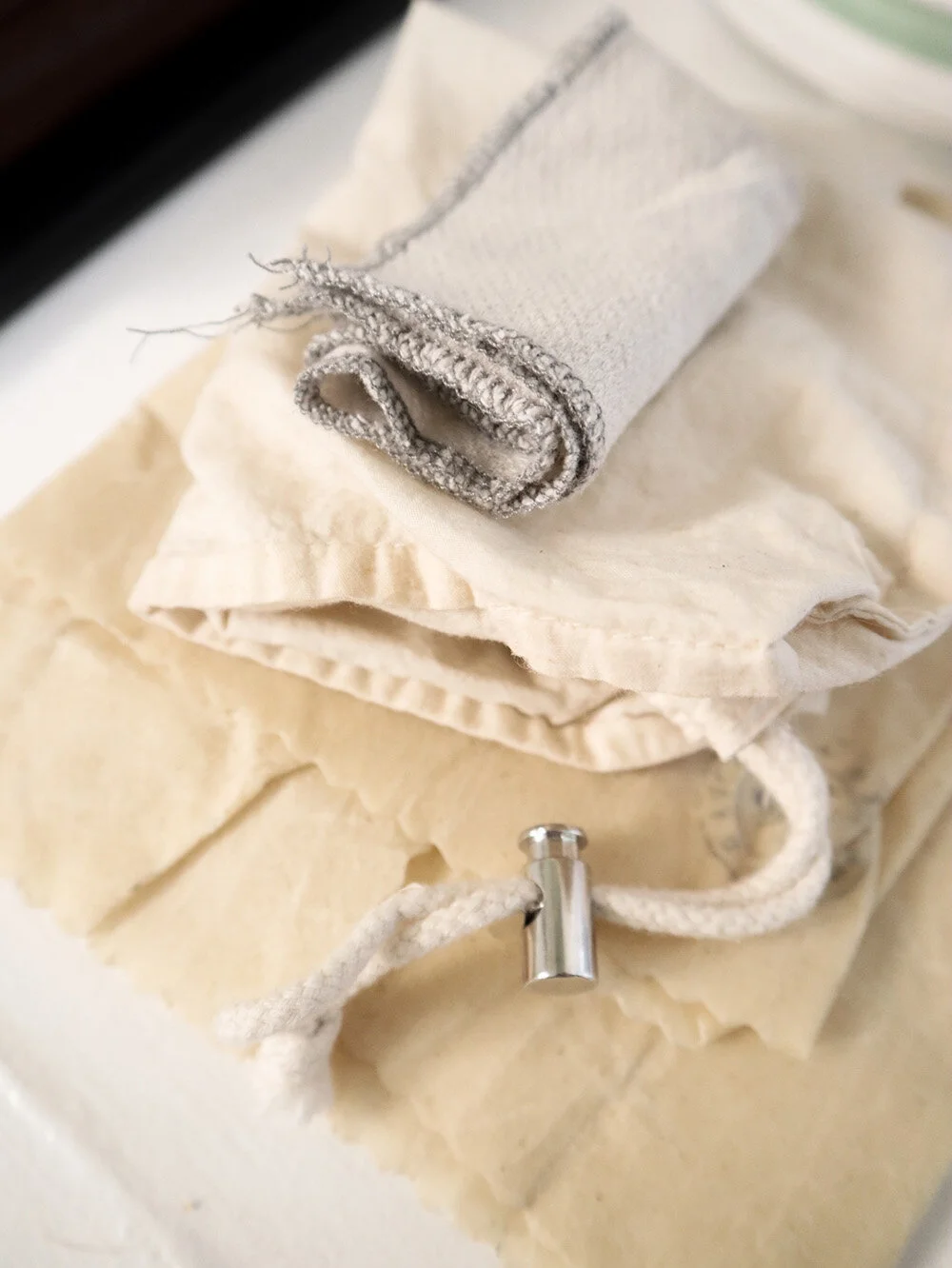


I also carry a small smattering of compact toys / activities that can help entertain our 3 year old in a pinch, and can serve as a jumping off point for imaginative play if we’re out for longer than expected. This roll-up play mat (that can also serve as a placemat) with storage for a small truck, a crayon roll (no more pre-packaged restaurant crayons), and a single-piece wooden 3-d puzzle have saved the day several times.

I carry my sunglasses and a brush, as I like to bike most places. And since I almost always work 7 days/week, I carry my iPad and my Nimble for Good portable wireless charger, which was made from recycled plastic bottles and plant-based bio-plastics, and arrived in plastic-free packaging.

On the outside of the bag, I've attached a hat clip that helps when I’m switching between indoors/outdoors, or from my hat to a bike helmet.

The bag itself is the Momo by Olli Ella, which was made by hand with sustainably-sourced materials, and produced ethically. (When I’m going into a more professional environment, I use my Elle by Teddi Joelle.)

Lots of these items can be made from goods you might have already in your home. An old cotton garment beyond repair can be sewn into small squares for reusable cloths. Bedding that’s no longer in use can be redesigned into drawstring bags. And a Stasher bag can keep crayons, little toys, and even utensils from home organized in your bag while on-the-go.


Lower Waste Pet Goods
In recent years, one of the habits we’ve shifted the most drastically is how we select goods for our pups, StanLee and Sophee. For example, we’ve switched from food delivery services to preparing their meals here at home, and we’ve found bags, tools and accessories work well for our their needs as well as our evolving, greener lifestyle. As always, it’s a work in progress— we are constantly learning new information and pivoting accordingly. But the following is our current set of practices, coupled with a product roundup.


LINT BRUSH
After Sophee chewed up our last plastic lint roller (WHY, SOPH?!), I refused to buy another. We now use a wooden lint brush that effectively removes animal hair and lint from clothes and upholstery. It’s constructed from beechwood and natural rubber strips, then bound together with copper wire.

SHAMPOO
We don’t have to bathe the pups too often— a perk of the breed. But when we do, we have a pet shampoo bar that’s effective and virtually waste-free. It comes in compostable, minimal packaging.
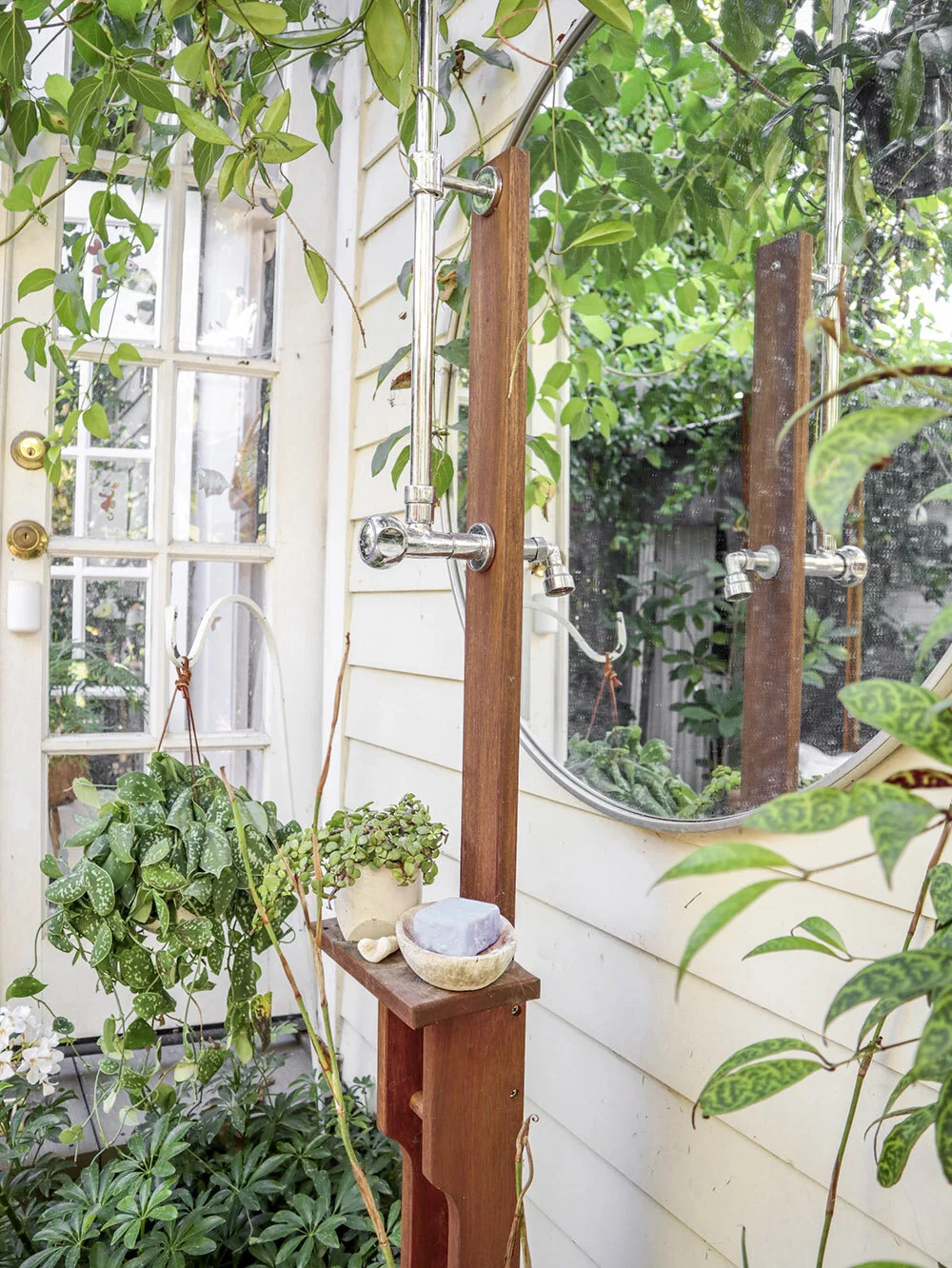
WASTE BAGS
We use BioBags pet bags, which are 100% compostable. They’re also fragrance-free, not tested on animals, and packaged with minimal materials.
Our neighbor simply uses junk mail papers to pick up after her pup so she doesn’t have to buy anything new. This is clearly ideal for cutting back on waste and saving money. I tried it once, but it was just too tricky for me to use that method flawlessly when walking through the city with both pups and West.

DESHEDDER TOOL
A decade or more ago, I bought a deshedding brush for StanLee that works extremely well. Every time I do a pass through his coat there’s enough hair caught in the brush to make a new small animal. But this undercoat tool is (unfortunately) wrapped in plastic and rubber from the head to the handle. As such, I’m going to use it until the end of time. No point in swapping it out for something “greener” since I already have it.

BEDS
If you’re at all craft-inclined, a DIY pet bed stuffed with old clothes, towels and scraps presumably isn’t the hardest thing to make. (I’m a total disaster at such things.) But I stopped buying dedicated beds for the dogs. We use West’s old, washable baby blankets/mats for the pups here in the house, and outside they have wicker beds that we can cushion with any smaller blanket or pad. We have one P.L.A.Y. crate-liner style cushion, which was made from 100% recycled materials. That one washable mat sometimes sits on in the wicker bed, sometimes rests on the floor, and sometimes travels with us when we take longer trips in the car with StanLee and Sophee. (No sense in buying multiples if you’re trying to reduce your footprint.)

COLLARS
I wish I’d discovered Ike & Stella’s handmade, updatable collars years ago. They’re easy to refresh when parts begin to age or fray (meaning that they don’t have to be entirely discarded over the years). These sturdy leather-and-metal collars have removable (and sometimes washable) decorative + cushioned slide-on sleeves. I got collars and sleeves for both of the pups last year, and they’re definitely here to stay.

LEASHES
If you’re limited on storage space and wanting to avoid buying new plastics, handmade leashes are a good option. Plus they can be surprisingly pretty if displayed on your walls via hooks when not in use.

FOOD
In the past, we had food delivered for the pups, but the amount of waste it generated was just too much to bear. After first discussing a diet change with the Vet, Adam found a vegetarian recipe to prepare for the dogs. He makes it about twice a week, and stores the batch in the fridge. It includes olive oil, sweet pepper, zucchini, yellow squash, eggplant, egg, rice, cheese, beans, potato, or some combination thereof. (We also keep a tin of kibble in the bathroom, which we mix into Sophee’s dish.)

PET BOWLS
We’re currently using stainless steel mixing bowls for the pups since West broke all but one of the ceramic pet dishes when he was little and I don’t want to buy anything new. But there are many artfully crafted bowls available via Etsy.
TOYS
Adam and I sometimes upcycle worn-out, everyday items into games for the pups, but I’ll also admit that we do still buy new toys for special occasions via a discount retailer nearby. (Not ideal, I know.)

I’ve seen some great DIY dog activities online that don’t require anything new. My favorite find was a cupcake tin filled with tennis balls with a nibble hiding under (or within) one of the orbs. This clever little game will give your best friend a fun challenge to tackle before devouring his or her treat. (Although I myself have never tried it, as I’ve never owned a cupcake tin.)
Here, we sometimes opt for a basic water-soaked cloth left in the freezer and transformed into a cold, soft chew. This is particularly effective in cooling down the pups while also keeping them entertained during the hotter summer months.
Another easy DIY is the ol’ bottle-in-the-sock toy. We eliminated plastic bottles from our lives long ago, but they still randomly surface every now and then, whether via a guest or some unexpected chain of events. When that happens, we insert the empty bottles into a clean but tired old sock that needs to be retired, and this simple toy can keep one or both of our dogs occupied for a while. Ultimately, the bottle goes in the recycling bin. But only a small percentage of plastic is actually collected for recycling, so this isn’t something we do often.


Sick Day in a Small Space
Earlier this year, I wrote a blog post about our family being under the weather while under one (tiny) roof. At that time, all of us were sick and struggling to avoid passing germs on to one another on repeat while sharing such a small space. This weekend I’m circling back on that topic, but from another angle.

This time, our 3 year old is experiencing typical cold symptoms, whereas Adam and I are feeling healthy. So we’ve been coming up with calm activities to do together in our tiny home to help West keep entertained without the use of a screen, and without overexerting himself.

Our go-tos have been creating pillow-lined paths for West’s new wooden trucks, reading stacks of books (we’re extra careful when handling the library books in this context), laundry as a family activity, doing flash cards and puzzles, watching dino eggs hatch, and playing with organic flour dough and dough tools made from recycled plastics.


I also went out early on Saturday morning to get West a compact, fold-up wooden train set as a little “sick day” surprise. It’s easy to set up in bed, and can be reconfigured and mixed-and-matched with other toys.


For West, I believe the highlight of the weekend was the dough games.

For his mom, the highlight was a snuggly and sweet three hour nap on Saturday afternoon.


Space Saving, Low Waste Drinkware for All Ages
Our kitchen isn’t tiny, but it is of course compact. One double-door cabinet above our sink holds all of our drinkware.

When selecting our glasses, cups and related accessories, we’ve tried to stick to items that will save space and reduce waste through their versatility and adaptability.

For example, when our child began to drink out of a bottle, I started to notice how many styles of drinkware for children there are. The designs are often tailored to stage and age, meaning they need to be entirely replaced at several milestones. We are certainly guilty of going through a few styles of bottles and cups before understanding what we actually needed, and how we could reduce our waste while saving space within our home. As it turns out, all we needed was a small number of stainless steel bottles that could be adapted for babies, toddlers, kids, adults, and travel via their tops.

Similarly, I had mason jars in use for a job here-or-there around the house, but I also bought soap dispensers, to-go cups, and specialty containers (which all broke or wore out over time) before realizing that the jars could function for years in a number of ways with the help of a minor accessory every now and then.

We now use the same old supply of jars for food and household cleaner refills, for toting our snacks to go, as drinkware (for adults and children), for storing food, as coffee cups, as soap dispensers, as beauty product containers, and more.

We do have a small set of recycled, stacking glasses, as well as some stemware and mugs that were gifted. But other than that, we pretty much use our collection of jars or stainless steel the majority of the time.
Having worked in the event industry and home decor world for years now, I have seen the eye rolls and heard the complaints about mason jars again and again. But on such a strained planet, it’s our responsibility to stop buying new items we don’t need, and to get the most milage and creative use out of what we’ve got.

While this certainly isn’t a zero waste system, it is lower waste than most of what I see on a daily basis. It helps us avoid single use adult and kid cups, and enables one type of object to play many roles, saving us both space and money.

Convertible sofa cushion storage solutions
This week, a reader sent me a message requesting recommendations for what to do with spare sofa cushions and pillows when converting a living space into a sleeping space for overnight guests or a child. In a truly small home or apartment such as ours, just tossing the cushions aside isn’t an answer, as they clog up floor and surface space that’s needed for navigation and everyday life. And when you’re already pressed for storage inches within your closet, under the bed, and in/around cabinets and shelves, it can often feel like there’s zero room for bulky temporarily displaced items such as these.
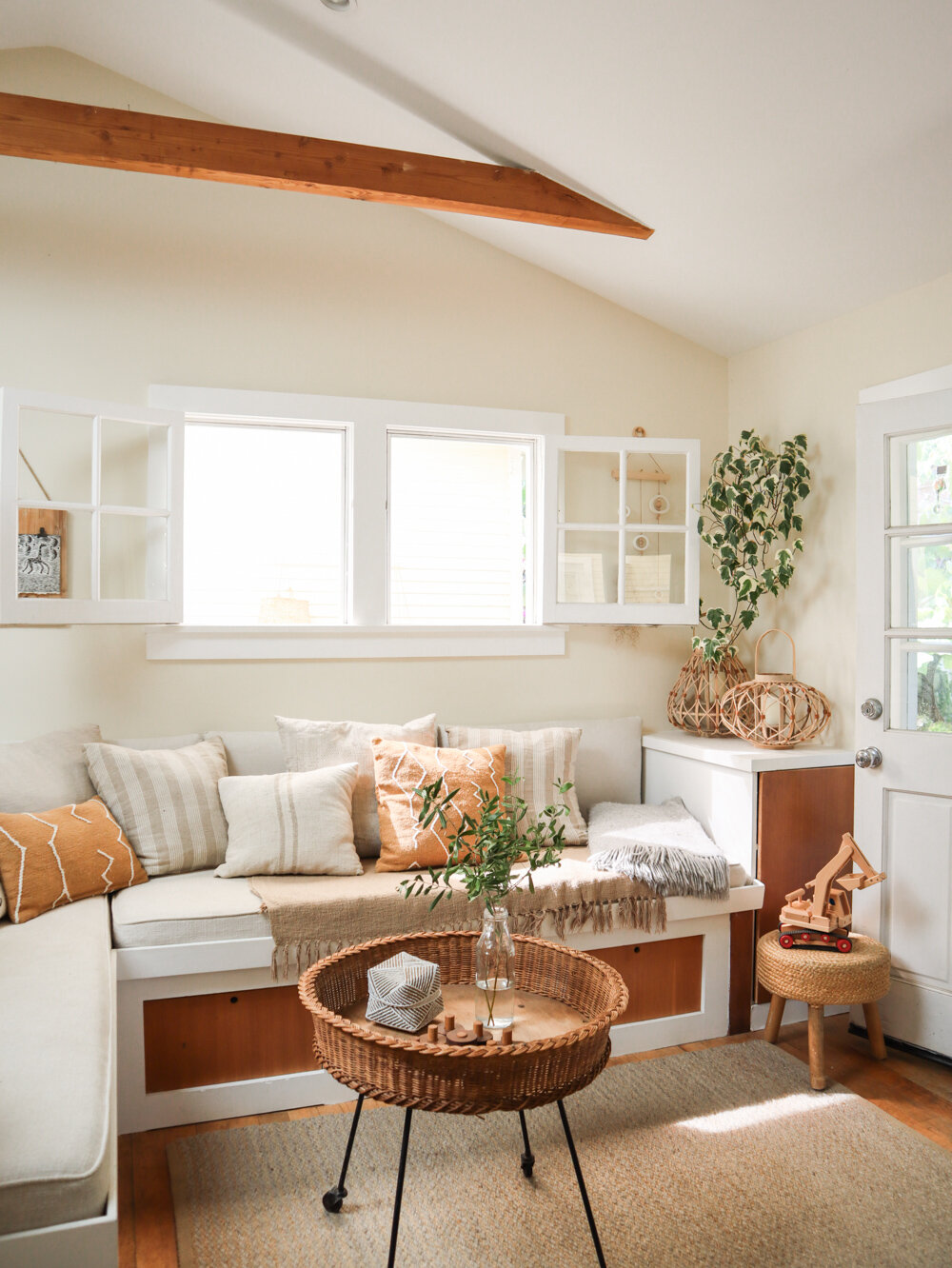

As always, my recommendation is to go vertical, and to work with what you have.
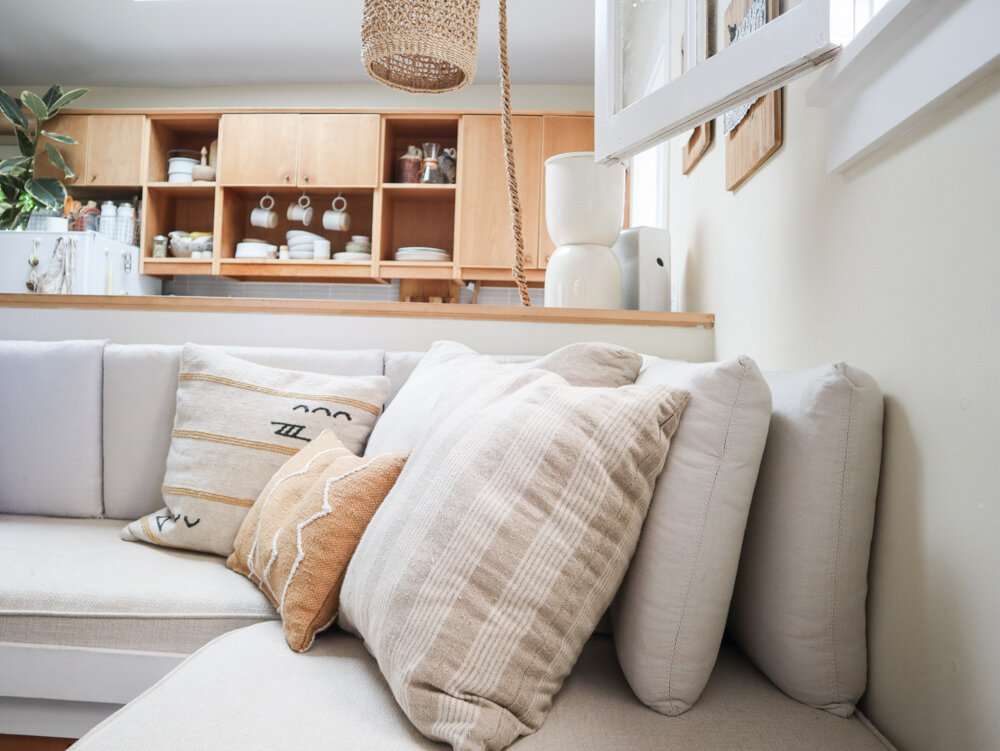
First, we double-up the cushions that we can keep on the couch without getting in the way of the sitting or sleep space. And we always use a cushion as a headboard, which makes the setup feel more bed-like, while also putting good use to an otherwise displaced cushion.

In our case, we scatter the cushions around so that no one area of our tiny house feels overcrowded.

We drop the pillows into functional decor, such as the basket hanging over our bedroom doors

We also use s-hooks to suspend some via market totes from the outside of our closet.

A hamper (or even a a trademark blue Ikea bag) could help, but they’re not the sightliest things to have out in a compact home. Luckily you can easily make your own Santa bag.
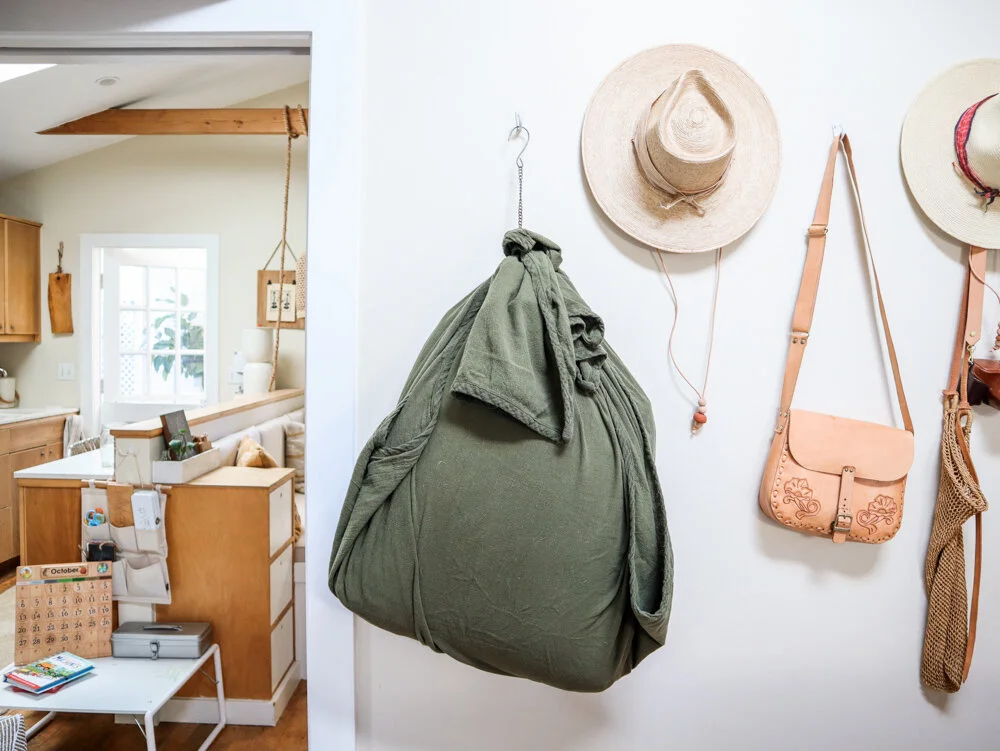
All you need is a spare sheet or tablecloth, gathered at the top with a simple tool like a garden hook so that it securely holds the makeshift sack together while also hanging from something like a curtain rod or wall hook.

It’s not the most elegant of solutions, but it’s effective, and it can keep your home feeling and functioning the way you want it to. Plus I personally prefer to work with what we have readily available, rather than searching for fabricated storage and organization solutions. It’s better for our wallets, our small spaces and our environmental impact


Minimal Halloween Decor
When I look back at the way my family celebrated Halloween when I was growing up, I have strong (and positive) memories of the events, the costumes and the decor at home and in school. But in this time of climate crisis, and with a child who is fascinated but clearly unsettled by certain settings and setups, I’ve found that opting for less during the holidays in general is currently the best fit for our lil’ home and family. (See our Tiny House Halloween post from last year, here.)

If we had piles of picturesque fall leaves here, I imagine would gather some to string into garlands to drape around our home. But, despite the fact that it’s mid-October, Venice is still in late-summer mode— plus we don’t have an abundance of trees here to begin with. I’ll admit that I found myself searching for real leaves online before I realized how silly that was. I closed the computer, annoyed with myself for even considering purchasing leaves (the Florida girl in me is still shaking her head), and then having them packaged and shipped to our house— a completely unnecessary expense and add-on to our carbon footprint.

We chose instead to do the following:
Buy pumpkins to decorate them with borrowed and existing accessories
Take daily strolls and rides around our neighborhood to scout out the decor set up by the businesses and members of our community
Borrow fall and Halloween themed children’s books from our local libraries
We found the pumpkins at long-standing nearby garden center that is a member of the Master Nursery Garden Centers— a co-op of independent garden centers throughout the country.

We carved a small pumpkin with West. It was his first time creating a jack-o-lantern, and he clearly enjoyed it.

We borrowed the carving tools from our neighbor, so we didn’t have to buy one of those cheap sets that often breaks and ends up in the trash. We dressed up another pumpkin as “Scary Potter,” which has been a tradition of ours for several years. (I purchased the glasses from an Etsy maker long ago, and they’re one of the only pieces of holiday decor of any sort that I own.)

Adam later baked the seeds with oil, cinnamon and sugar. (The cottage smelled fantastic.)

Multiple times per day, we stroll, bike or take the wagon through the neighborhood to visit West’s favorite yard installations, and to discover newly situated decor.

This little activity gets us outside, prevents us from spending money we don’t need to spend, and ensures that we don’t have bulky decorations to store in our tiny home for 11 months out of the year.

Shoes: Garnet Hill. Bike: Virtue.
While we’re out, I’ll sometimes clip some fall-like branches from the nearby alleyways for an extra pop of warmth in the house.
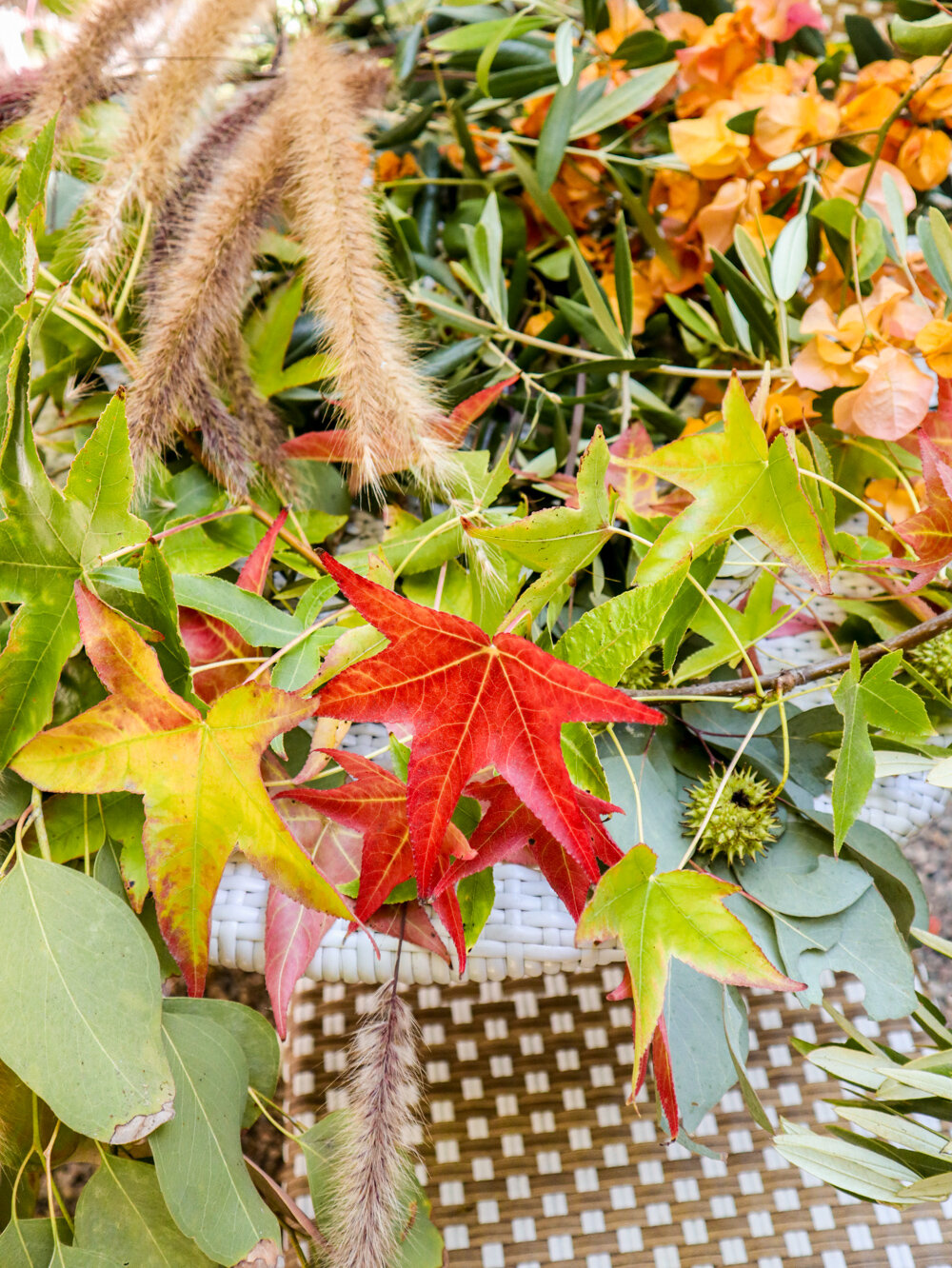
The main reason that West wanted to carve a pumpkin and is so excited to see (most) decor is that we borrow fall and Halloween books from our local library, starting in late September. After reading a few titles about harvesting pumpkins, he asked that we grow our own next year.

As West gets older, we’ll see how his interests evolve. But for now, pumpkins, some pops of autumnal toned florals or clippings, and the creativity of our neighbors is all we need to make it feel like Halloween here... even when it’s 80 degrees under the palm trees.
Playful, Low Waste Gift Wrap
In a recent post, I shared visuals demonstrating the simple way in which we wrap our son’s gifts. We use linen napkins, scarves and tea towels from around the house. They’re zero waste, easy for little hands to untie, and once the wrapping is no longer needed we can simply toss the cloths into the laundry bin or return them to our drawer. But what about presents that are destined for homes other than our own?
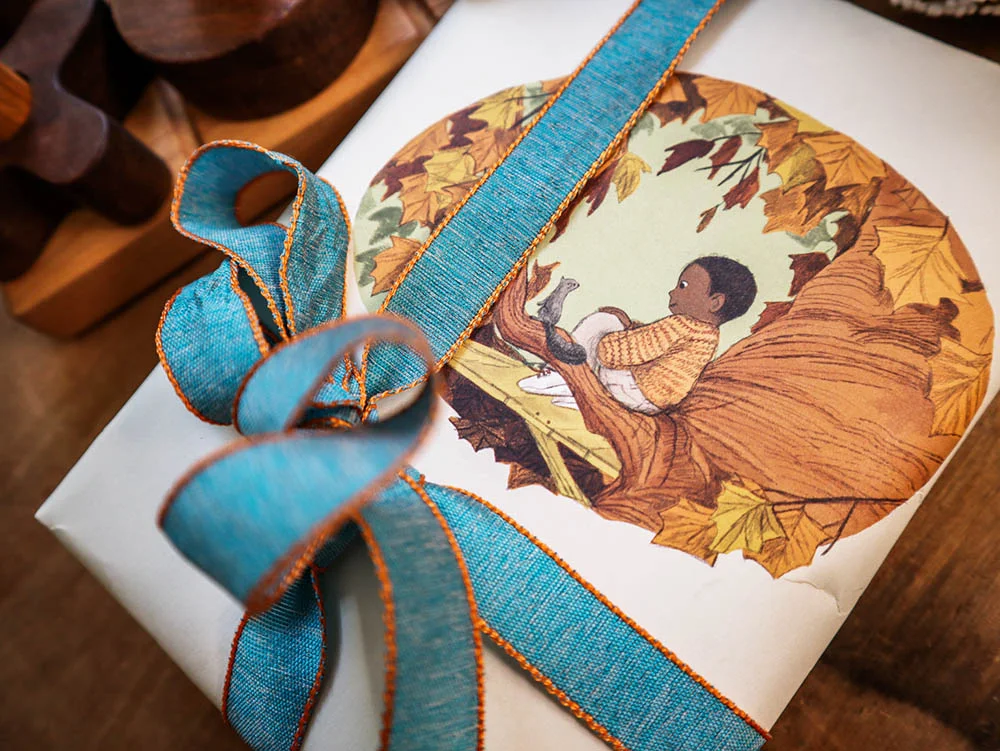
As we head into the holidays, Adam and I have somehow already found ourselves wrapping little items for our friends’ children. Instead of using linens or traditional wrapping paper, we use picture book dust jackets.
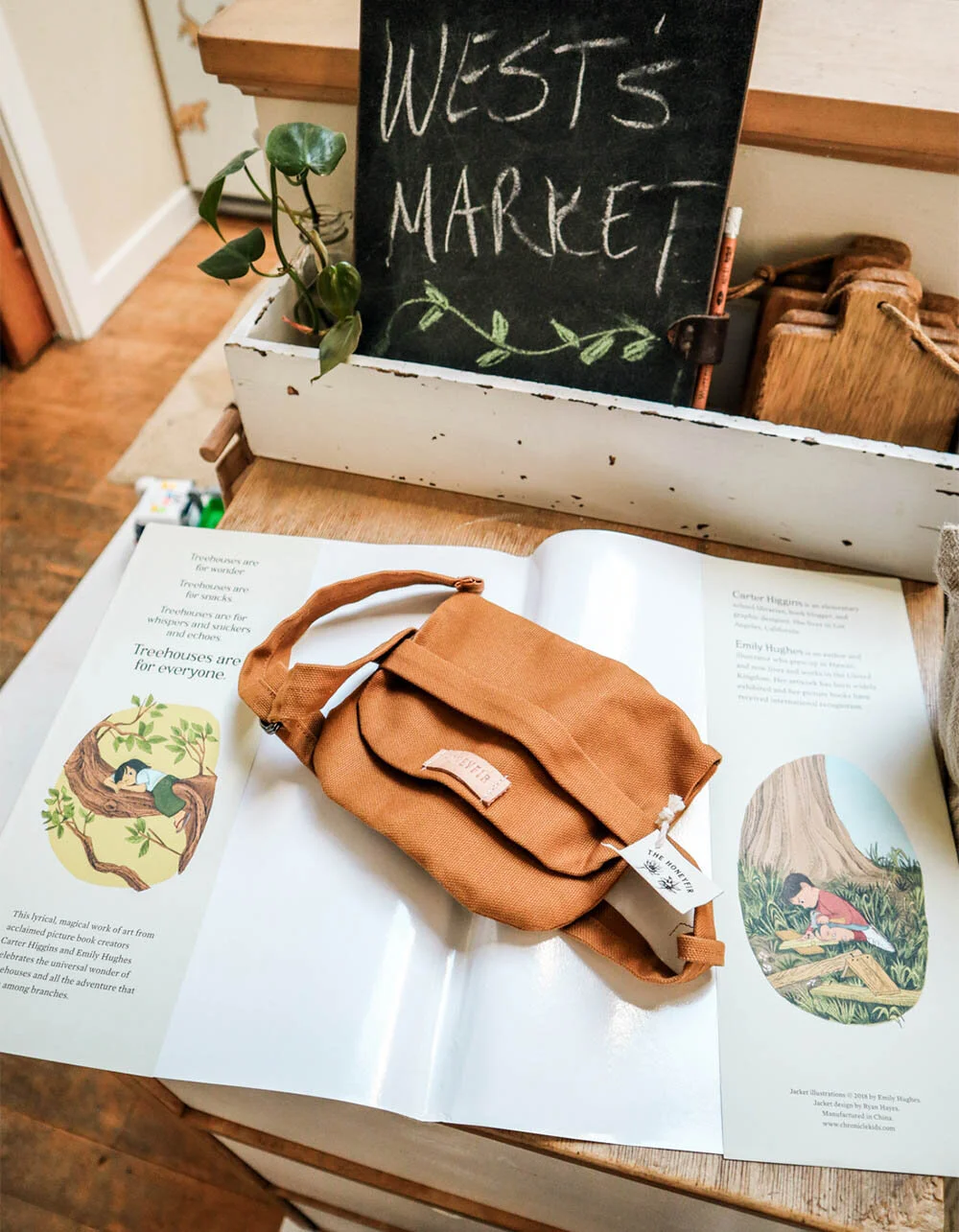
This idea is not new. I’ve seen it before, and I’ve heard it discussed and suggested a few times over the years. But now that our son is 3 and is well into picture books, we’ve accumulated enough beautiful yet impractical covers to create our own little pile of unique wrapping paper.
When we get a new book that has a dust jacket, we inevitably remove it within a day or two. I can’t bear to just chuck the paper into the recycling bin, as it’s usually so lovely. Instead, I unfold the paper and lay it under a project board beneath our mattress. (This is the best place for it in our tiny house, as none of our shelves are quite big enough to hold most unfurled pages.)
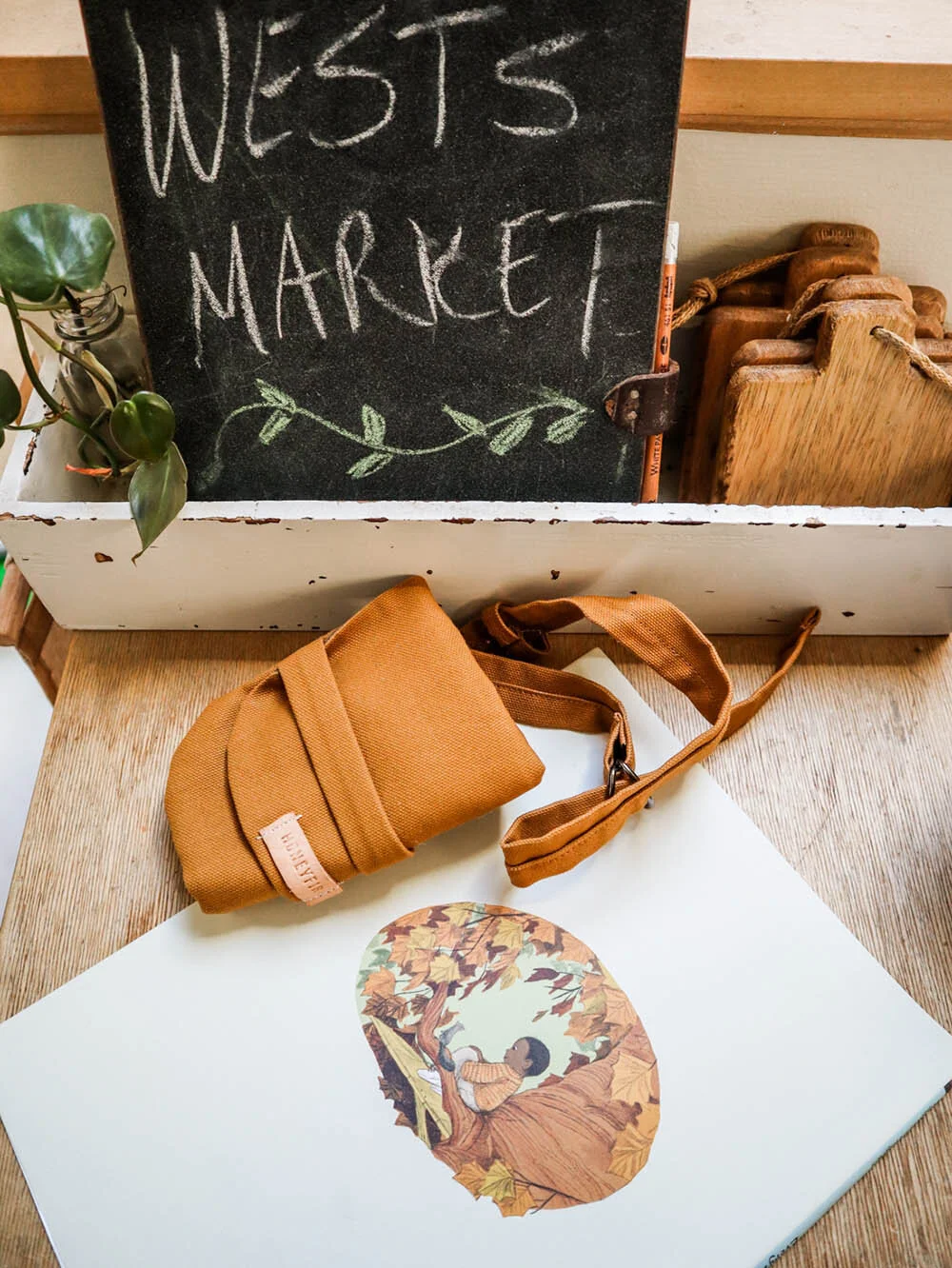
Earlier this year when the back wall of our bedroom was partially destroyed from water damage, we had to part with the covers we’d been gathering for a couple of years, as they’d gotten damp. It was a bummer, but we’ve already begun to rebuild our collection.
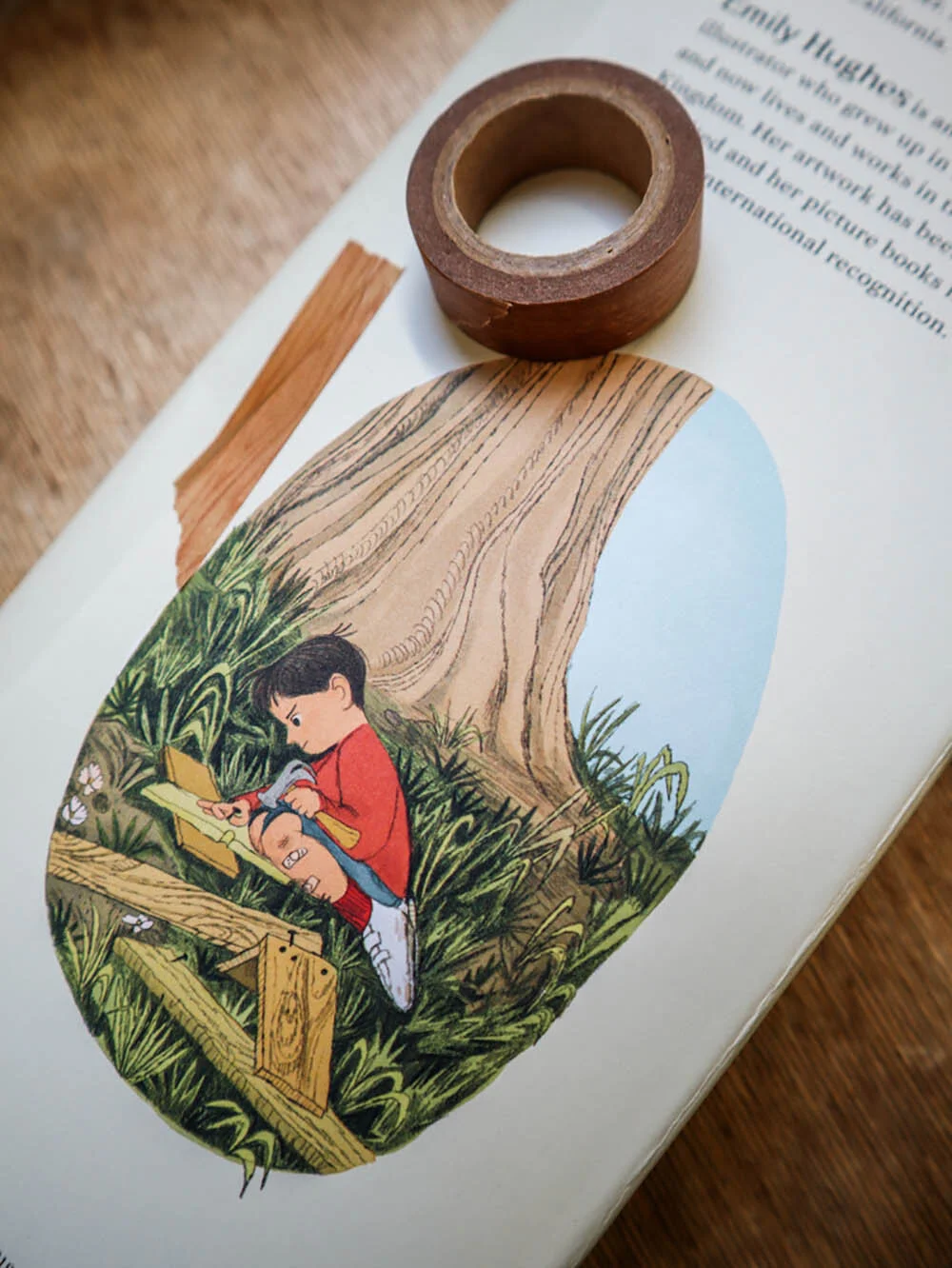
Once we’ve wrapped up an object with a book jacket, we use some spare/repurposed bits of ribbon or twine from around the house, and sometimes top the present(s) off with a sprig of greenery from the garden.
Is the end result perfect? Nah. But is it creative, less wasteful, thoughtful and beautiful? Personally, I believe so.
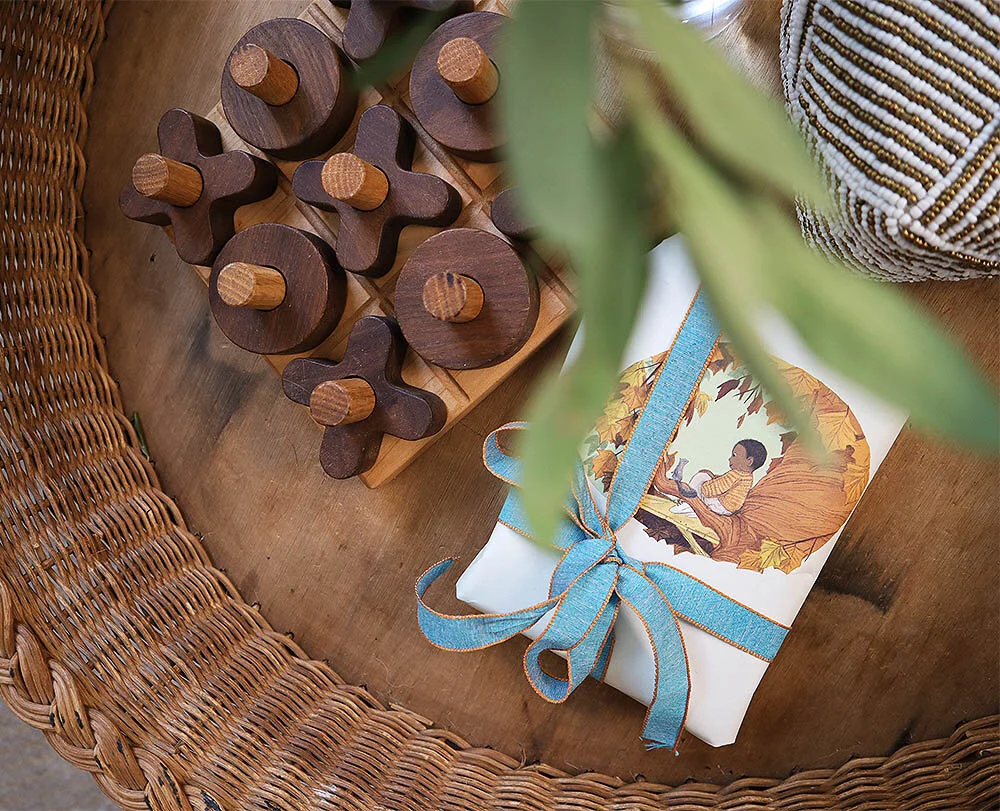
Book jacket pictured in this post: Everything You Need for a Treehouse, written by Carter Higgins and illustrated by Emily Hughes.
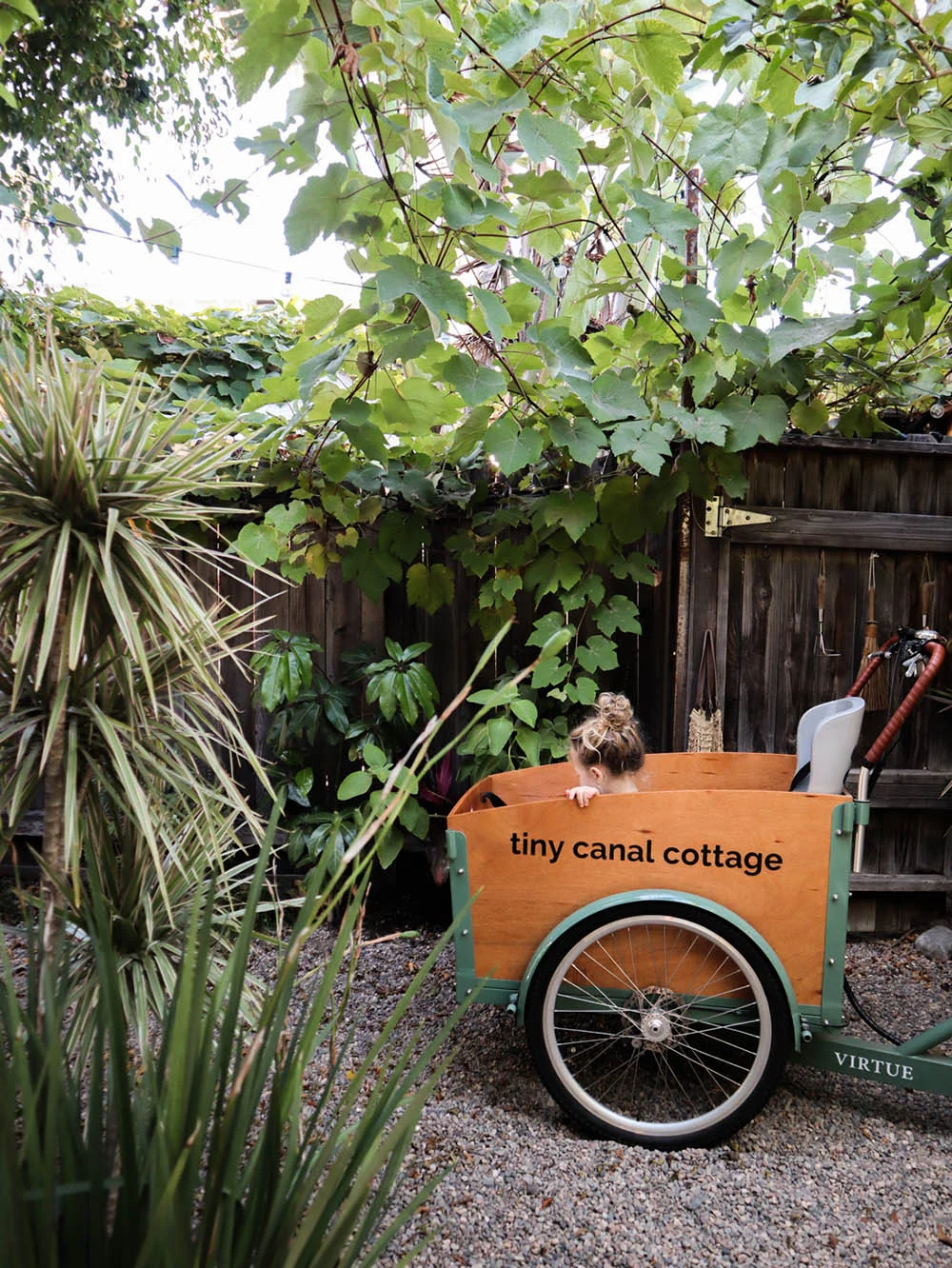
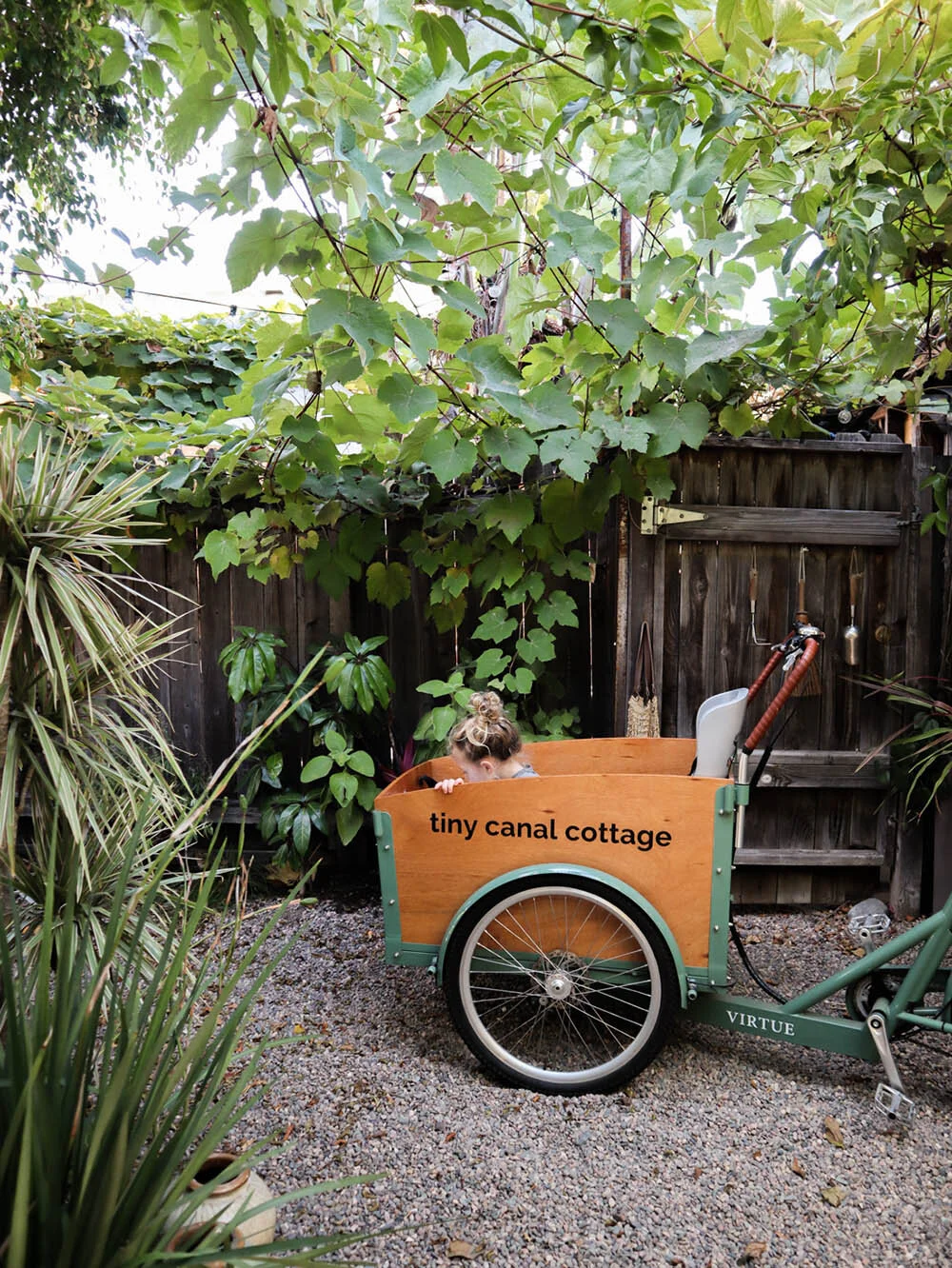
Painting the "Company Car"
Since our bucket bike is our primary mode of transportation (as both a business and a family), we decided it’s finally time to spruce up our “company car” before 2020 rolls in. (Read my recent posts about our bikes, here.)
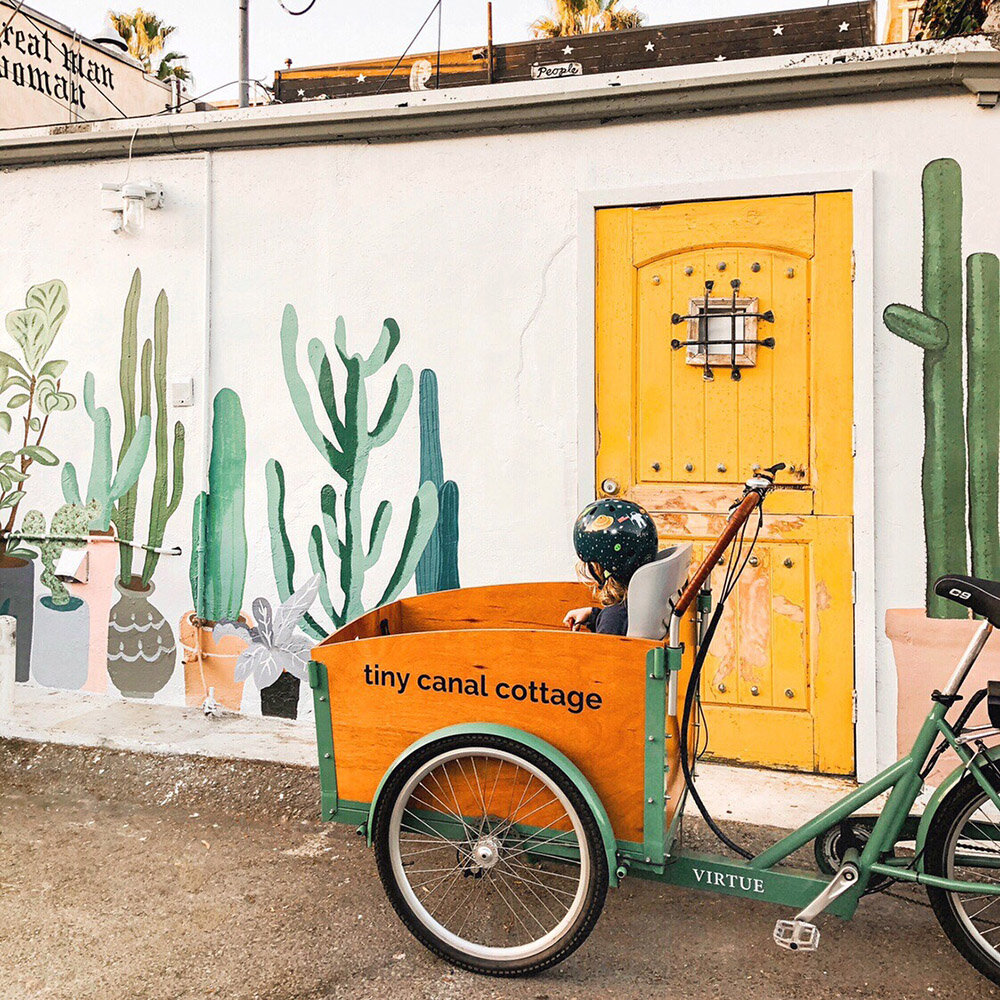
We’ll be working with local artist Brittney Banks to create custom designs for the exterior or the bucket. (I’m looking forward to finally removing the bland text-only decal from the side.)
Fun fact: Brittney created the cards we gave to all the guests who attending our home-wedding. I appreciate her playful style, and the ways in which she manages to capture Venice with her brush.
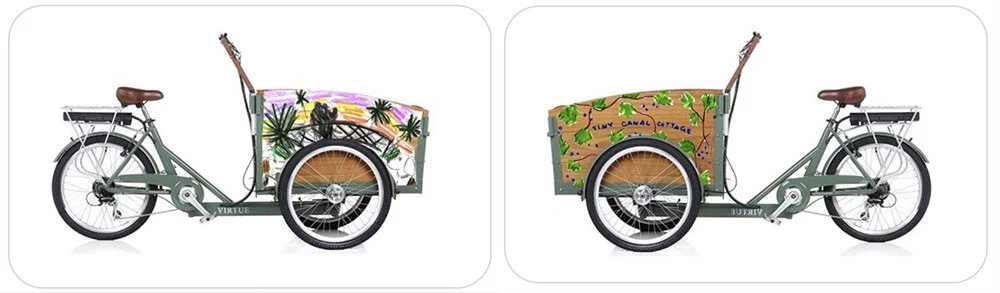
These are very quick prelim designs she made after we rolled the bike into our garden and chatted about the direction we wanted to take with the art. We’ve since modified the concepts somewhat, but the vibe will be the same, and the scenes will be tailored to our funny lil’ live/work world here by the Canals.
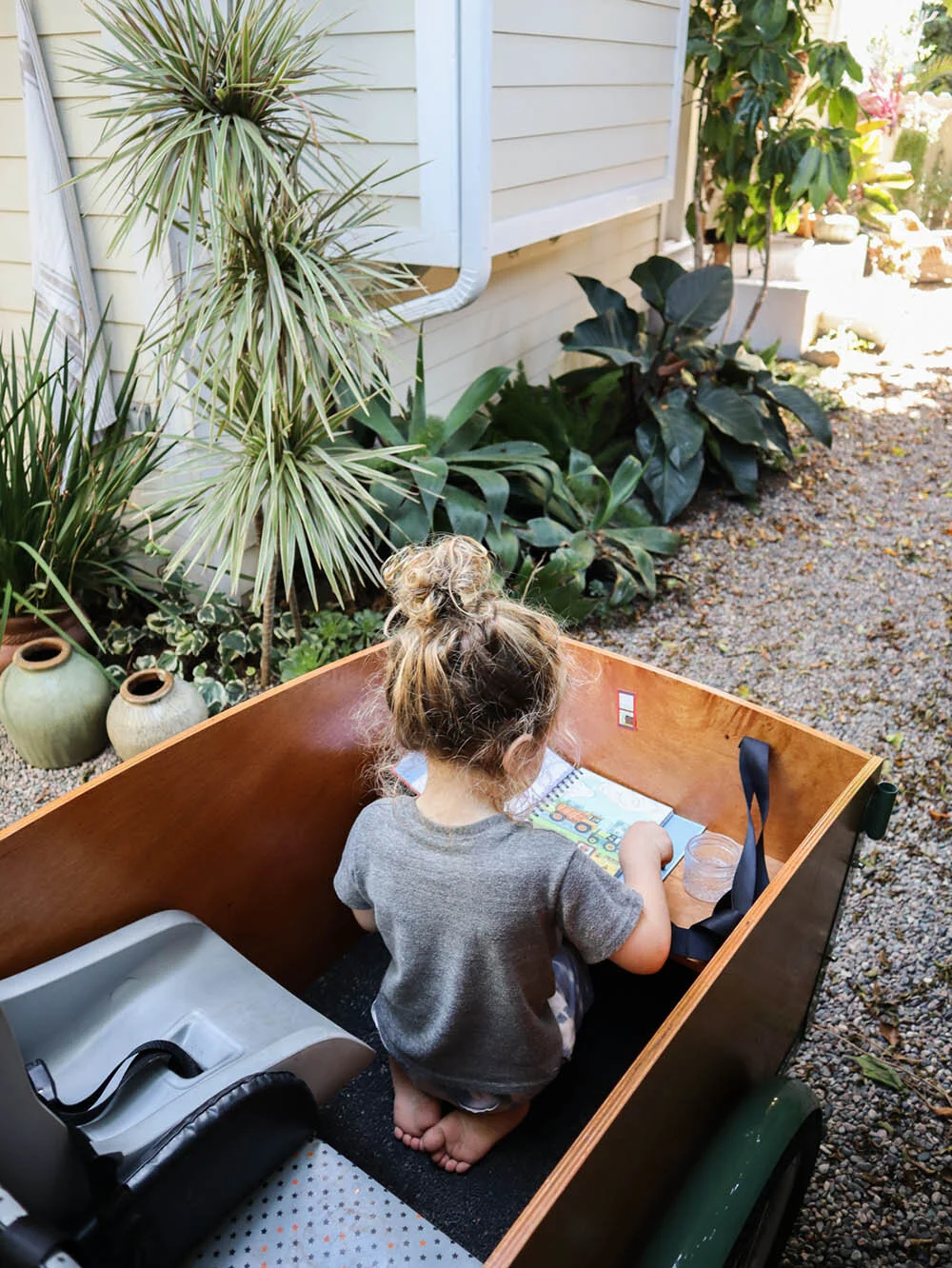
After Brittney left, West said he wanted to practice painting in the bike.
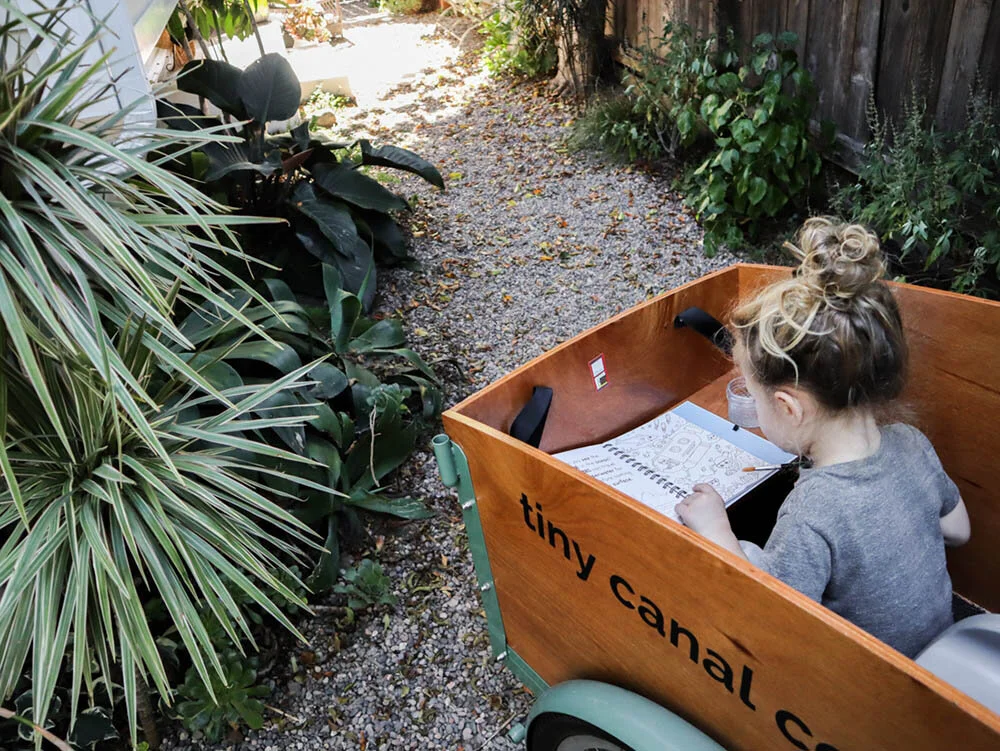
The front bench was still in place from his cousins’ recent visit, and it served as an ideal surface for a bit of water painting for the afternoon.

I’ll be sharing the customization process as it progresses. More soon!