
Library Book Roundup (2.16.20)
“One of the greatest lessons I have learned is that all people — young or old, big or small, girl or boy — have power. We can achieve the life we want for ourselves and our families when we pay attention to protecting our environment. We must not wait for others to do it. We can practice the Four Rs [Reduce, Reuse, Repair, and Recycle] wherever we live, whether we are rich or poor, or live in the country or the city.” - Wangari Maathai via “The Little Hummingbird” by Michael Nicole Yahgulanaas.
I’ve written repeatedly about our profound appreciation for our local library— the ultimate accessible zero waste learning center.

Beyond being the place where we can checkout 29 books per person per visit, it’s also where we go to sit in quiet and read the newspaper, keep informed about local elections and refresh our knowledge of our local voting systems, attend workshops/classes with our 3 year old, and donate our used books (since we don’t have much room to hold on to them here in our tiny house).

We pop into our city and county branches about 3-4 times per month. West usually gets about 15 titles every time we go, and Adam and I usually grab a small stack for ourselves as well.

I’d estimate that our library has saved us anywhere between $10,000 - $15,000 annually. I should note that we couldn’t spend that sort of money on books if we had to buy them all, and we would thus scale back our reading habits accordingly.

Luckily our library makes us feel as though our access to books is virtually unlimited, so we stock up with each visit.

Not only does borrowing books save us money— it of course saves us huge amounts of space as well. Plus it avoids all the waste that comes with with packaging and shipping from online shopping.

Here are some of our favorites from this week’s haul, along with a few additional titles we purchased because they were unavailable at our nearby branches. Once we’re done with them, we’ll tote them to the library with us during our return run and leave them there for others to enjoy.

Children’s Books:
The Little Hummingbird
Author: Michael Nicole Yahgulanaas, with a message from Wangari Maathai
Why we borrowed it: This book sends the message that all of us have the power to make a difference.
Yeti and the Bird
Author: Madia Shireen
Why we borrowed it: This book sense the message that it’s never too late to become who you want to be.
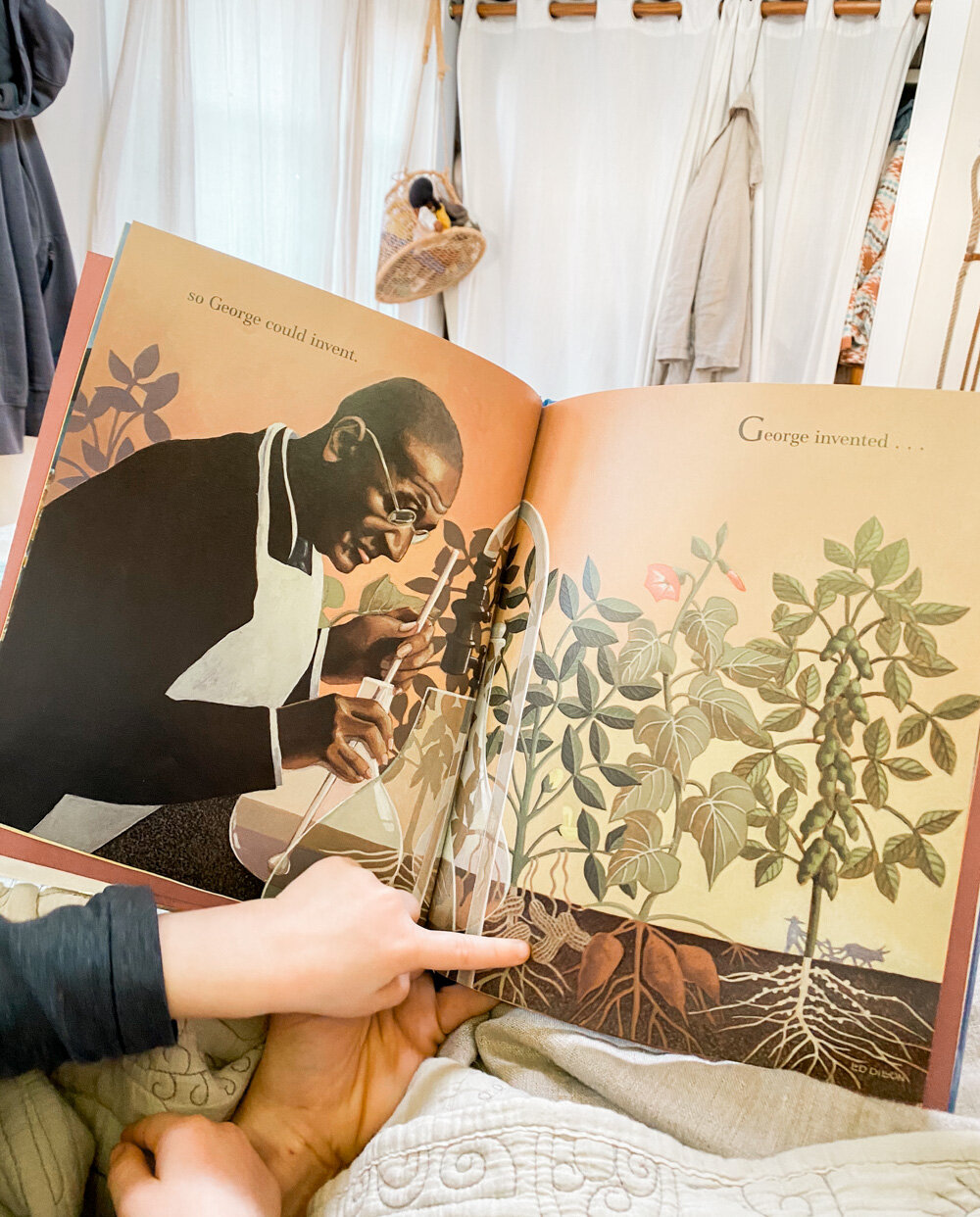
Our Children Can Soar
Author: Michelle Cook
Why we borrowed it: This book progresses through the story of the US Civil Rights Movement, showing how select pioneers' achievements eventually led to the country electing its first black president.
Ball & Balloon
Author: Rob Sanders
Why we borrowed it: This book sends the message that the grass is not always greener on the other side, and that we all have setbacks and fortes, no matter what our lives might look like to those around us.
The Hueys in: The New Sweater
Author: Oliver Jeffers
Why we borrowed it: Oliver Jeffers always makes us either laugh uproariously or experience a deep and meaningful tug in our hearts. This book always gets a cackle out of our child, while sending a message about authenticity.
Nature’s Art Box
Author: Laura C. Martin
Why we bought it: Nature is full of art materials, all right here at our fingertips. This book demonstrates ways in which acorns, moss, shells, leaves and so much more can be used to create beautiful, natural works of art.


Books for Adults:
Green Dog, Good Dog
Author: Dominique De Vito
Why we borrowed it: This book was written in 2009 and contains some outdated material, but overall it’s a helpful way to step back from the booming pet industry and explore the simple ways to cut back carbon paw prints.

The New Self-Sufficient Gardener
Author: John Seymour
Why we borrowed it: We’ve yet to read this book, but we were interested to see what we could learn about training vines, harvesting and preserving homegrown food.
Me & White Supremacy
Author: Layla F. Saad
Why we bought it: “Me and White Supremacy: A 28-Day Challenge to Combat Racism, Change the World, and Become a Good Ancestor leads readers through a journey of understanding their white privilege and participation in white supremacy, so that they can stop (often unconsciously) inflicting damage on black, indigenous and people of color, and in turn, help other white people do better, too.”
Fibershed
Author: Rebecca Burgees
Why we bought it: “There is a major disconnect between what we wear and our knowledge of its impact on land, air, water, labor, and human health. Even those who value access to safe, local, nutritious food have largely overlooked the production of fiber, dyes, and the chemistry that forms the backbone of modern textile production. While humans are 100 percent reliant on their second skin, it’s common to think little about the biological and human cultural context from which our clothing derives. Fibershed is a resource for fiber farmers, ranchers, contract grazers, weavers, knitters, slow-fashion entrepreneurs, soil activists, and conscious consumers who want to join or create their own fibershed and topple outdated and toxic systems of exploitation.”


Voting for the Planet (at the Ballot Box and at the Check Out Line)
While using my ever-present mason jar with its sippy lid is better than using plastic bottles, these sorts of daily lifestyle habit shifts and swaps are just smaller components of our greater responsibility, which is to get active. Voting (both at the ballot box in all levels of government AND with/without our dollars as consumers,) is one of the most meaningful actions we can possibly take.
I refuse to believe that we are helpless in this climate crisis— it is reckless. And it is wrong.

As my 3 year-old likes to say, we need: “ALL HANDS ON DECK!” As voters. As investors. As members of our communities. As learners. As civilians. As allies. And as neighbors— because our independent decisions (such as what we buy, which candidates we support, and whether or not we engage in acts of civil disobedience) have collective consequences that impact us all.

But while our responsibilities go well beyond sustainable swaps, the swaps are indeed important. Here’s an example of why:
Package Free Shop has kept over 4 million plastic straws, 3 million plastic bags, and more than 1.5 million non-recyclable bottles and cups out of landfills. They ship everything 100% plastic free in an upcycled or 100% post-consumer box with paper wrapping and paper tape, and all of their shipping materials are 100% recyclable and compostable. And they’re setting new standards for businesses and consumers across multiple industries— a ripple effect with far-reaching implications.

“We believe that it should be easy to make choices that positively benefit the environment and that no matter who you are, where you come from, what you believe in, how many zeros you have (or don’t have) in your bank account, what president you voted for, what gender you identify with, or what part of town you live in, we can all take simple steps to reduce our waste.” - Package Free Shop

I’ve rounded up a small sampling of some of my favorite items from their site that we’ve found to be of great use here in our (tiny) home.

Note: This post was not sponsored. Some items were gifted, but most were purchased. I’m sharing this strictly because of our positive experiences with the products and their impact within our household.

Washable Duster
This duster is made from multiple layers of organic cotton and viscose bamboo. Duster tendrils will curl after washing to make the collection of dust more effective. To wash, simply remove the duster from the custom made wood handle and slide back on once dry. Includes cotton strap for hanging. To clean, machine wash warm with like colors, dry in dryer or air dry.
Organic Pad
Good for your body and the earth, this reusable day pad is free of plastics, artificial fragrances, adhesives, and chemical gels, and keeps disposable pads out of landfills. Not to mention, overtime, reusable feminine products will save you loads of cash.

Reusable Beauty & Ear Swabs
Nearly 25.5 billion single use swabs are produced and discarded every year in the U.S. But not this swab. It lasts up to 1,000 uses as it's able to be cleaned with soap and water. It also comes in a biodegradable, corn based case so you can use it on the go.

Organic Hair Ties
Organic cotton and natural rubber hair tie set on compostable paper backing.
Kid’s Brush
This soft bristled brush is 100% compostable.

Comb & Brush Rake
Helps your brushes last longer by keeping them clean between the bristles.
Wire: 100% recyclable with metal recycling / Wood: 100% compostable
Razor Cleaning Brush
100% compostable razor cleaner, which works great for the pivot-head LEAF shave razor.
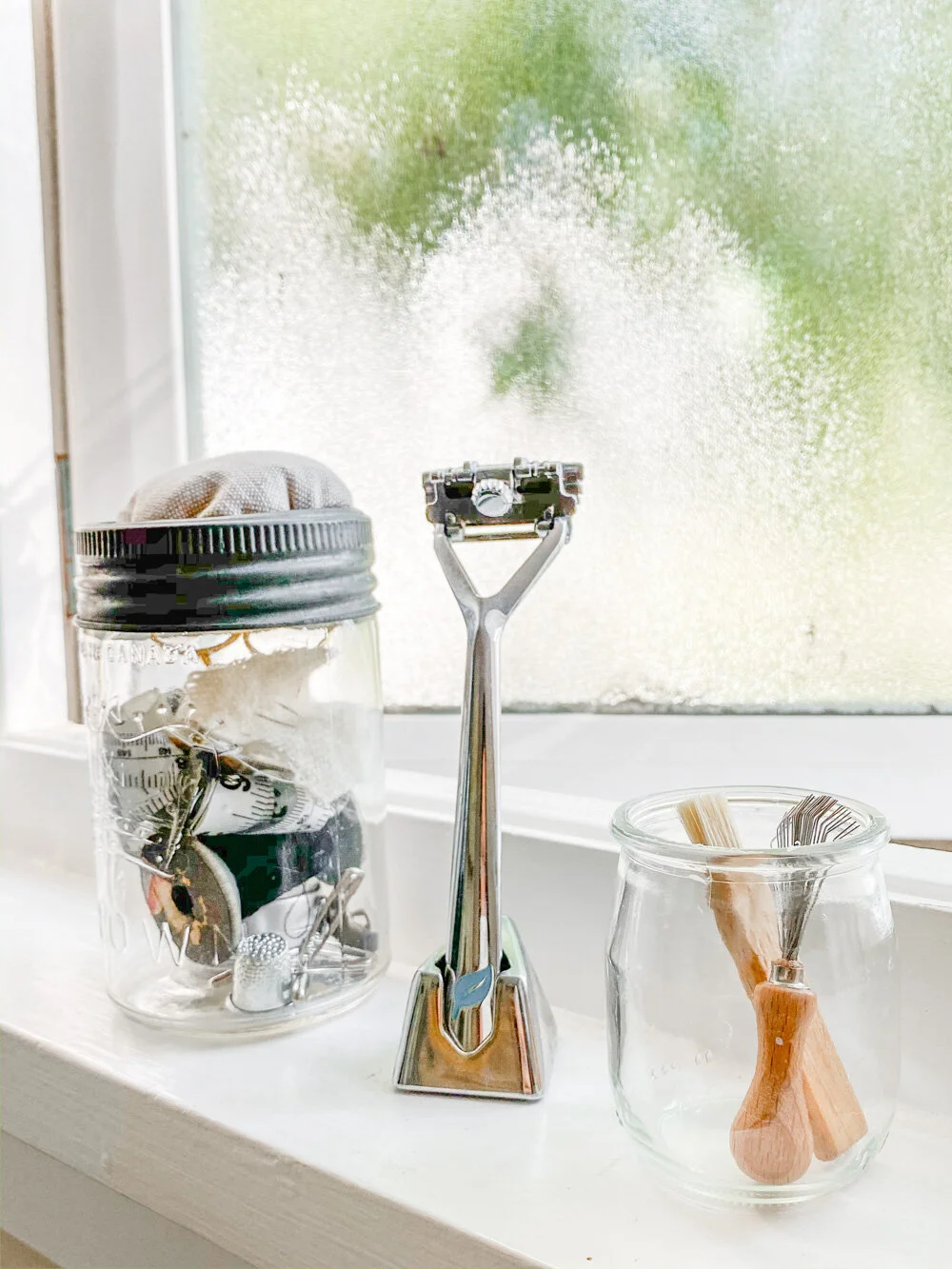
Tea Tree & Charcoal Face Soap
A balanced and gentle facial soap, this bar detoxifies skin with absorbent activated charcoal. Cocoa butter promotes a healthy complexion, while ground oats soothe and mildly exfoliate. Fresh and herbaceous tea tree and eucalyptus oils act as a natural astringent to combat skin blemishes. Also great for the whole body.

Travel Soap Box
Slice off a bit of the face soap, body soap, shampoo + conditioner bars, and/or body stones to use on-the-go with this soap box.
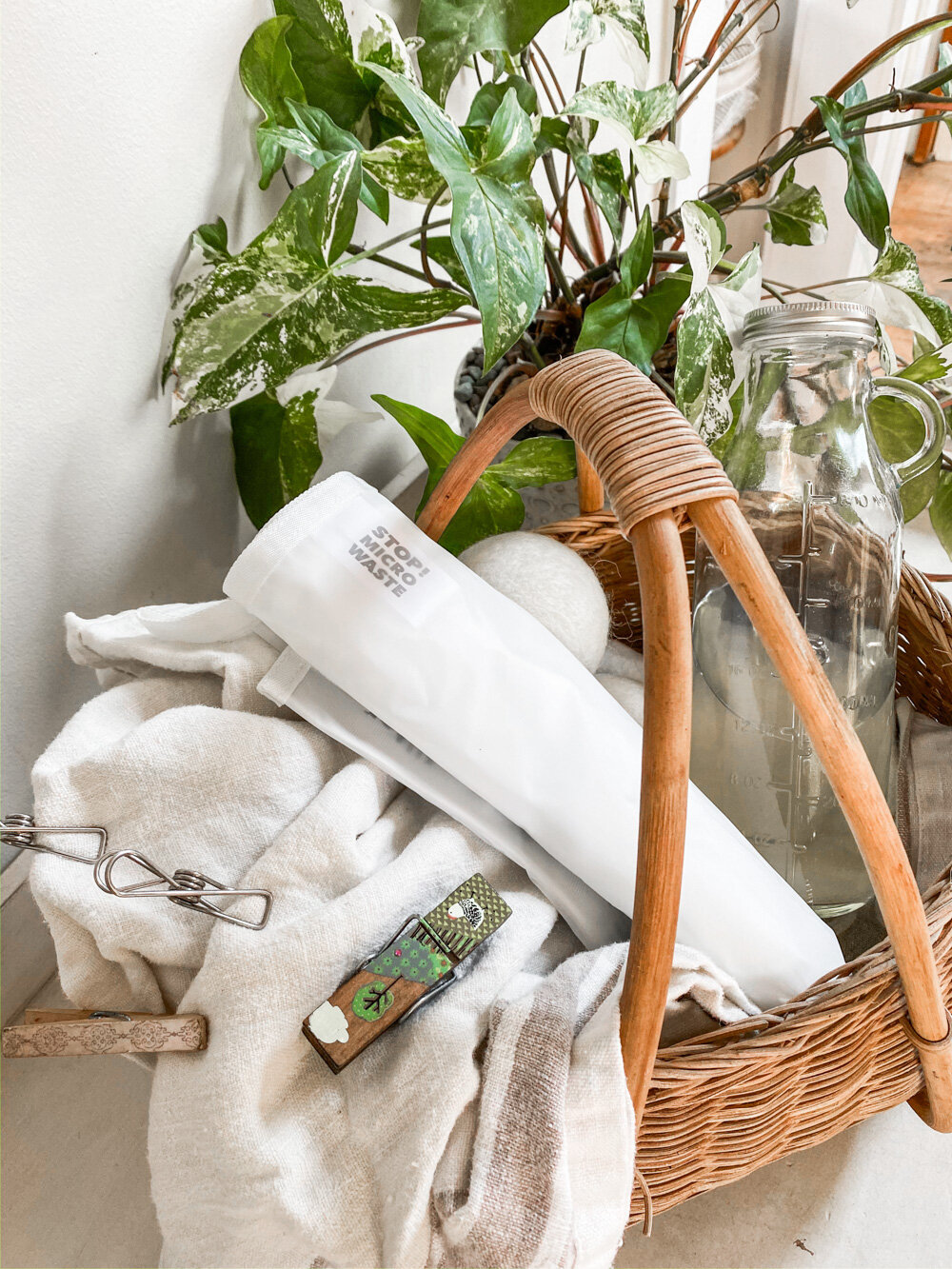
Washing Bag
This washing bag is a scientifically-approved filter solution to stop micro plastic pollution caused by washing synthetic textiles. It reduces fiber from breaking significantly and thus extends the lifetime of your textiles. Using the washing bag reduces the breaking of synthetic textiles by 86% on average. The fibers that do break during washing are captured inside the bag and can easily be removed.

Natural Dog Brush
100% natural and compostable two-sided dog brush for both long and short haired best friends.
Water Filter Pod
One of these little guys filters 99% of lead and arsenic and 97% of chlorine and flouride right out of your regular tap water. Just drop this wine cork-sized pod into any water vessel, pitcher, bottle, glass, camelback, coffee maker and more for clean, healthy and great-tasting water everywhere you go.

Slowly Crafting a One-of-a-Kind Space with Plants & Vintage Goods
When we moved into our cottage, the first place I biked in order to find items for our new home was our neighborhood vintage shop. My favorite discovery from those days was a compact wicker chair — unlike any other I’ve ever seen— that sits on our front stoop, serving as the perfect lil’ perch for removing shoes and dropping mail and leashes.

Our world is awash with consumer goods that are designed and manufactured with unsustainable resources to swiftly become outdated and discarded, then heavily and wastefully packaged and transported thousands of miles. Rerouting our dollars away from such practices and directing them towards buying local and vintage instead can almost feel like a tiny, quiet act of rebellion.
The same goes for prohibiting ourselves from being tricked into believing that our personalities can be formed, solidified and/or validated through our purchases, and that the more we buy, the happier and fuller we’ll feel. Instead of decorating (and redecorating routinely) with the same products as everyone else, vintage invites us to slow down and patiently find exactly what we love and need, rather then being told what we love and need.
And when we walk away from a second-hand shop with our unpackaged items that we salvaged from within our own town, we’re also walking away with pre-loved, story-rich treasures that form a collection that’s entirely unique.

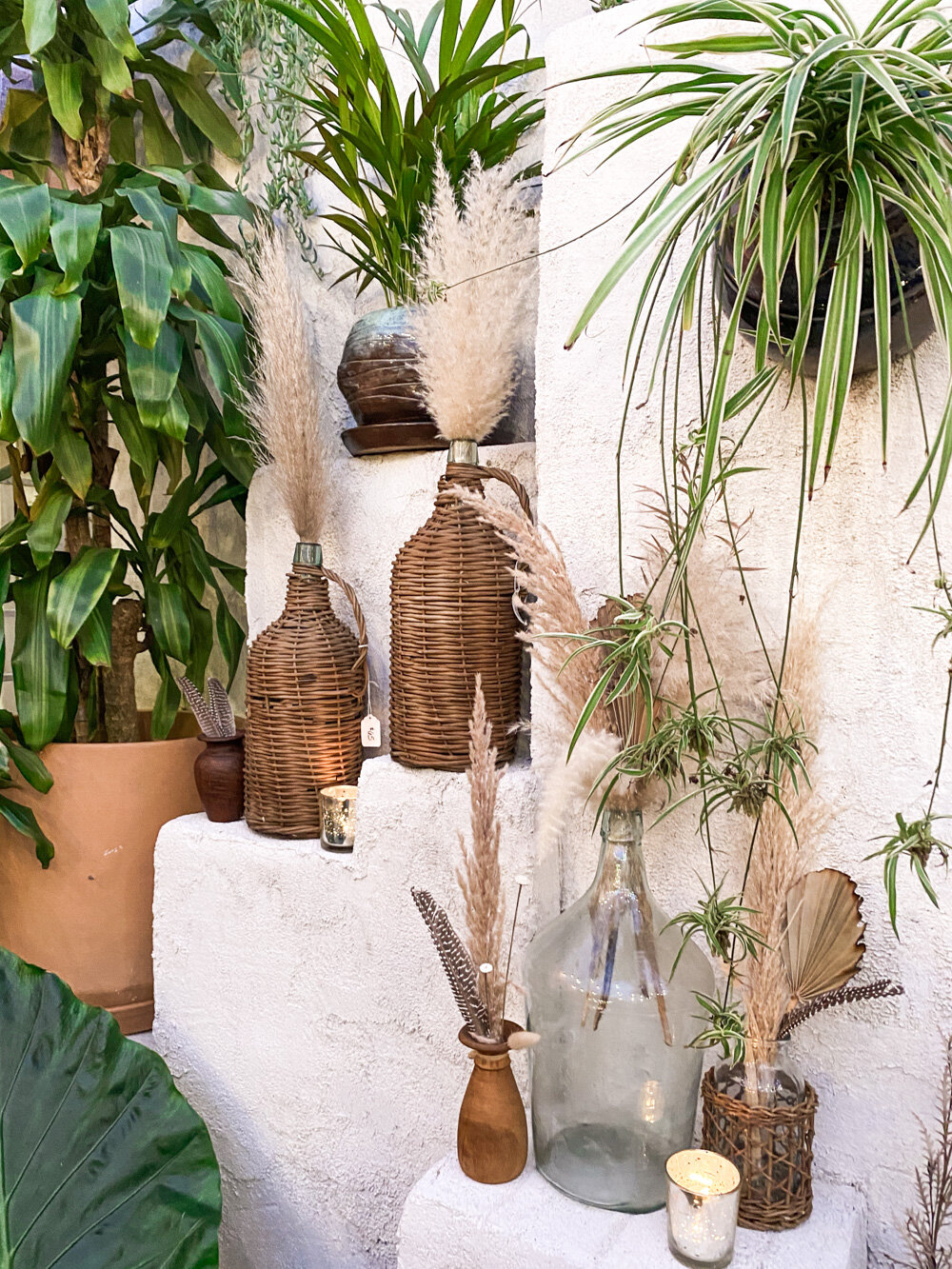
It’s for these reasons (and several more,) that I appreciate Venice Vintage Paradise, our family’s closest source for vintage goods. Recently, this long-standing business within our quirky beachside community converted their back patio into a small, beautiful plant studio, which they’ve named Venice Roots.

The plant pots they sell are mix of handmade and second-hand, and the space is outfitted with vintage furnishings and accessories. (They even used reclaimed materials in order to construct their show-stopping back wall.) If you’re in the area, it’s absolutely worth a visit.

A note from the shop:
Venice Vintage Paradise has been a local Venice favorite on Abbot Kinney providing one of a kind vintage goods to our community for over 16 years. With the new addition of our plant studio,Venice Roots, we now offer a plethora of outdoor and indoor plants. We are providing creative and informative workshops and sourcing vintage and locally handmade ceramic planters to beautify your space.
Sustainability is on everyone’s mind these days, and how to better reduce, reuse and recycle. It’s always been part of our mission to inform and educate our community that when we incorporate vintage into our lives, we are being more environmentally friendly.
- Venice Roots at Venice Vintage Paradise

Tiny Adventures: Asheville
I believe that one of the ways that we can inspire each other to protect and regenerate the earth together is by deeper imbedding ourselves within the natural world year-round. This is one of the many reasons why I appreciate tiny living— it encourages us to get outside and dive into the environments that exist beyond our four walls.

“It’s an indisputable fact that we are deeply connected with nature. From the most past, we simply fail to realize this connection. From the perspective of ecology, our bodies are made of all-natural stuff... Greater than 95% of our tenure as humans has been spent living in intimate contact with the nonhuman world. Our bodies, minds, and emotions were fashioned by evolution in wild places where a deep sense of connection was essential for survival.”
- “How to Raise a Wild Child”
West doesn’t get to explore a traditional winter since we live in Southern California. It’s a season that he mainly experiences via stories and illustrations in the books we borrow from our local library.
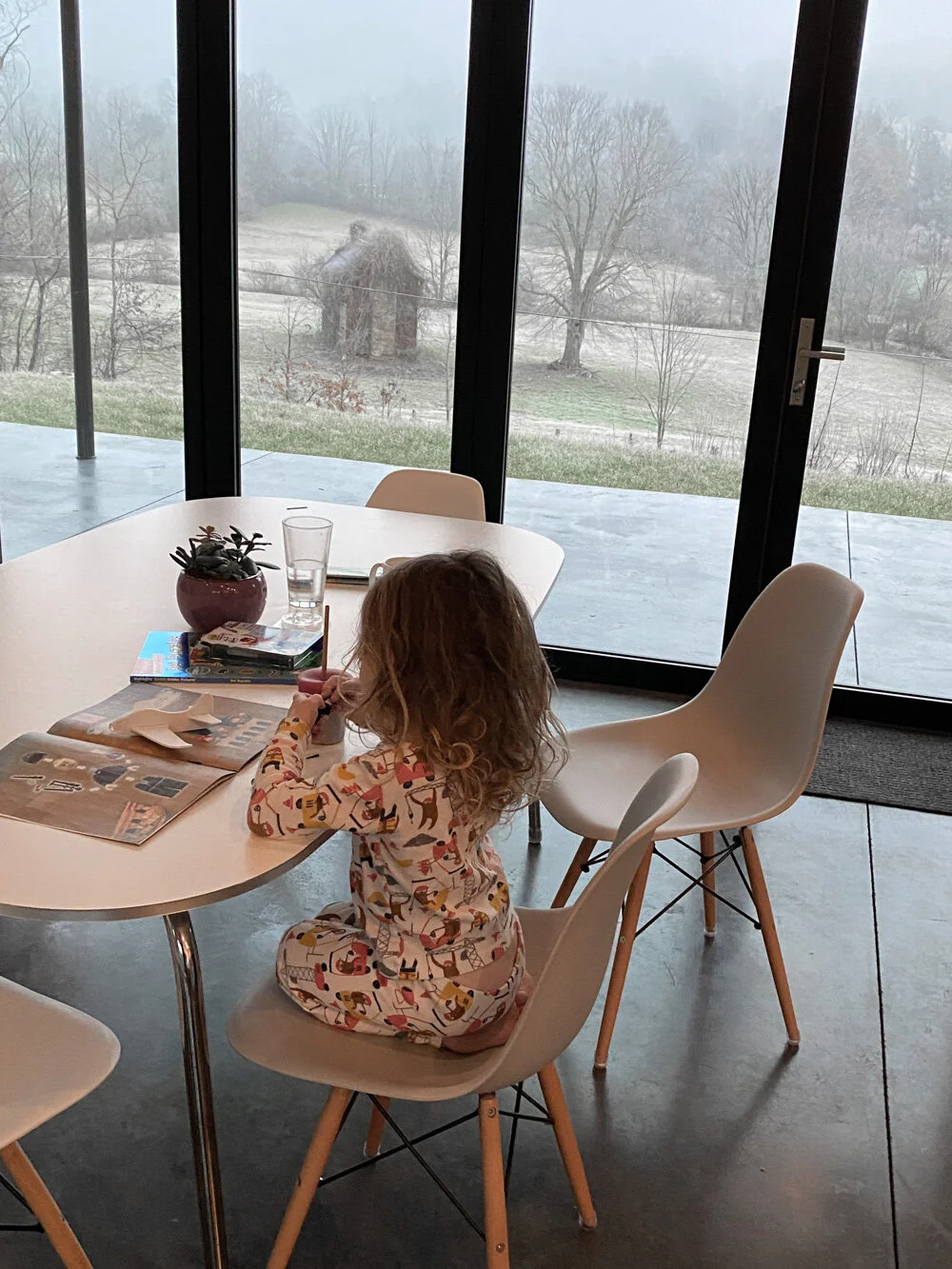
So for the past two winters we’ve taken him to places where he can breathe the cold air, see and touch the snow, and see beautifully sparse trees and vines before the burst of spring. (Of course there were personal reasons for both of those trips as well, which I’m not prepared to share. Ideally we would skip the plane ride altogether, since air travel is so staggeringly damaging for the planet. What good does it do to fly to experience new views of the natural world if we’re harming it in the process?)
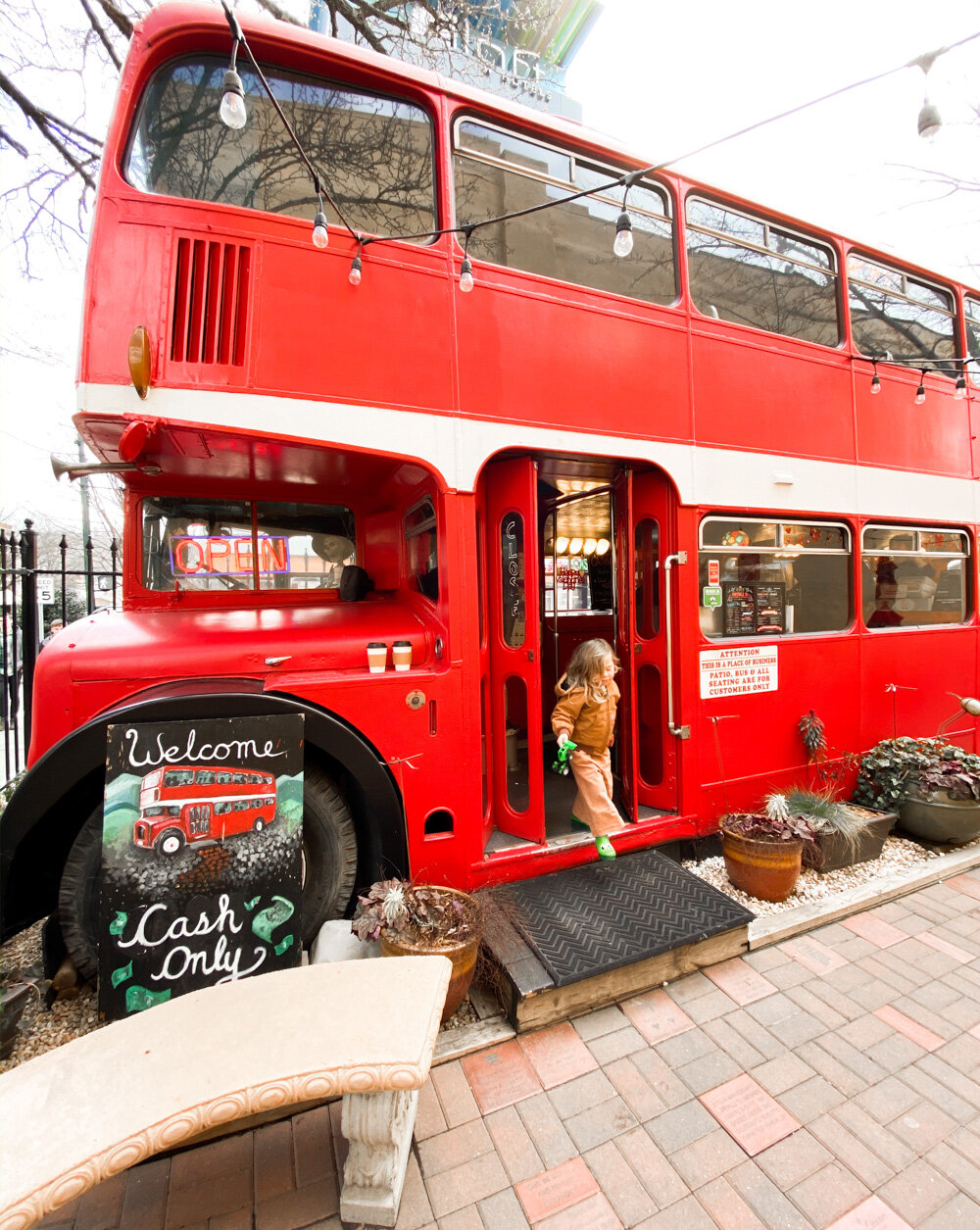
Last week we visited Asheville, North Carolina with my parents. We saved up for an extraordinary, minimalist, 2 bed/2bath Airbnb that was built to usher the outdoors in.
Click here for the Airbnb listing.
Click here for our 1-minute video journal from the trip.
We arrived at night, so we couldn’t see much of the land around the house— we could just hear the bubbling of a nearby creek. When I pulled back our bedroom curtains in the morning I actually gasped so loudly I woke Adam up. The view was staggering, and it was was visible from nearly every room of the home.
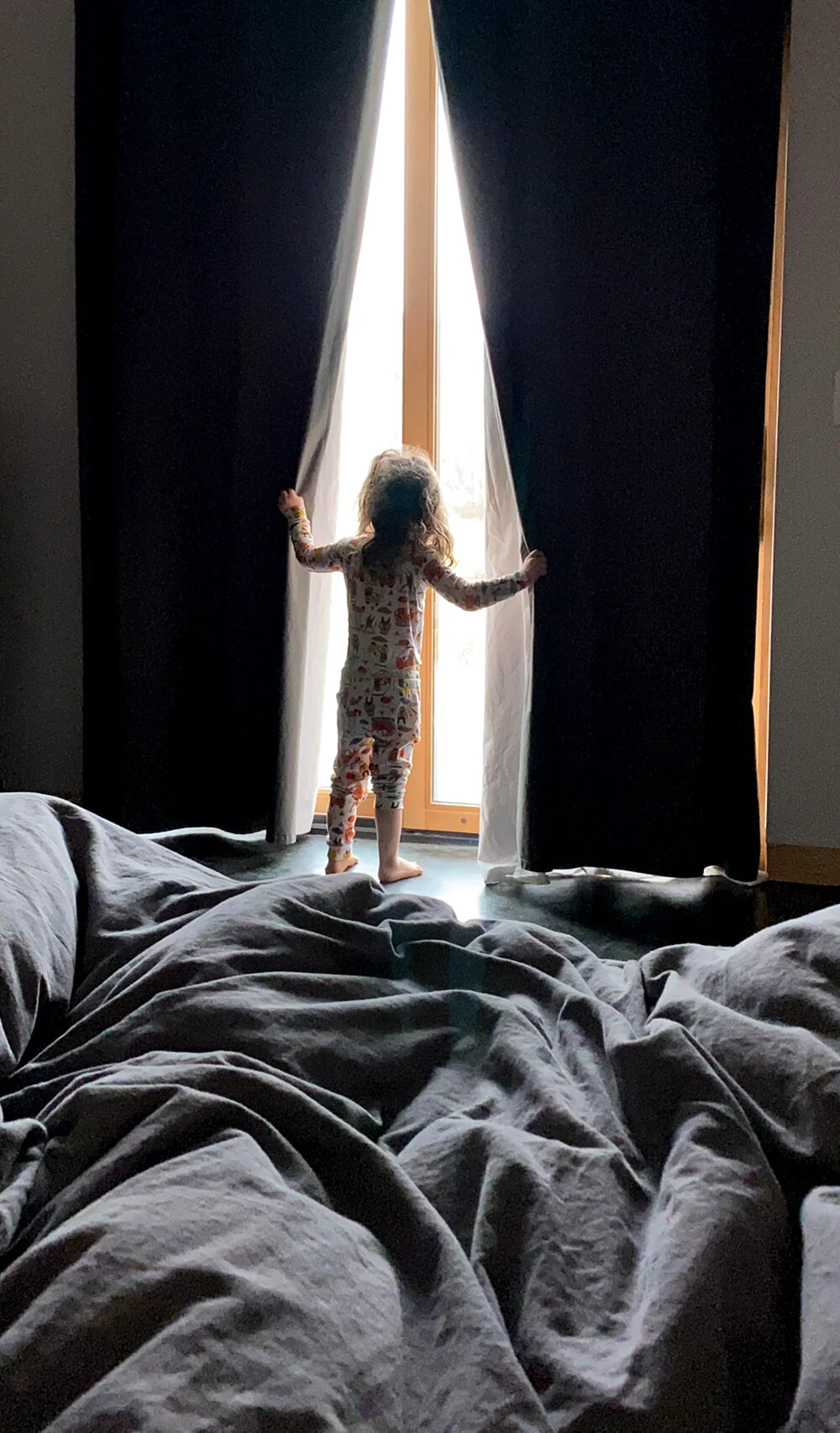
In addition to the generous windows, there were additional natural elements within the space that were unique, and made us feel like we were outside, even as we tucked ourselves into bed.

Bark-lined walls, sculptural boulders, and mollusk shells + agate stones inlaid throughout the concrete floors and custom furnishings reminded us that there’s nothing more beautiful than the diverse treasures scattered abundantly throughout the natural world.

As such, we spent 2 of our 3 days there almost entirely outdoors while exploring the community.

For our last day in town, we rested and enjoyed the home from sunrise to sunset.

I’m no expert on Asheville, so I’ll skip the “what to do” guide, as the community is tourist-savvy and has no shortage of expertly compiled tips available via a bit of research. Instead, I’ll simply say that the town is unique, gorgeous, eco-minded, and welcoming, and our family is thankful for the time we spent there.


Preschooler Sofa-Bed Updates
About a year ago, we began converting our sofa into a bed at night for our child, who’d previously been bed-sharing with us since we removed his closet nursery. Now that he’s transitioned from a toddler to a preschooler, we’ve made some minor yet meaningful changes to the space to reignite his excitement about his “bedroom.”

A full post about the sofa bed can be found here. (It’s similar to the same setup we create for our overnight guests, but with a dedicate set of sheets, a safety bumper and no privacy curtain.)
West often prefers to sleep with us in the built-in queen bed within our single bedroom. My husband and I welcome those moments— such time with a child is precious and finite.


But in order to renew West’s excitement about his dedicated sleep space and keep him comfortable in either bed, we’ve added a “big kid” pillow at his request.

We opted for a king size pillow that has just the right amount of give and support, and also fits the size of the sofa cushion perfectly..

(On a side note, Adam and I liked the pillow so much too that we’ve since gotten ourselves a set for ourselves.)

We also upgraded his sheets to natural linen to match the ones he’s used to in our bed:
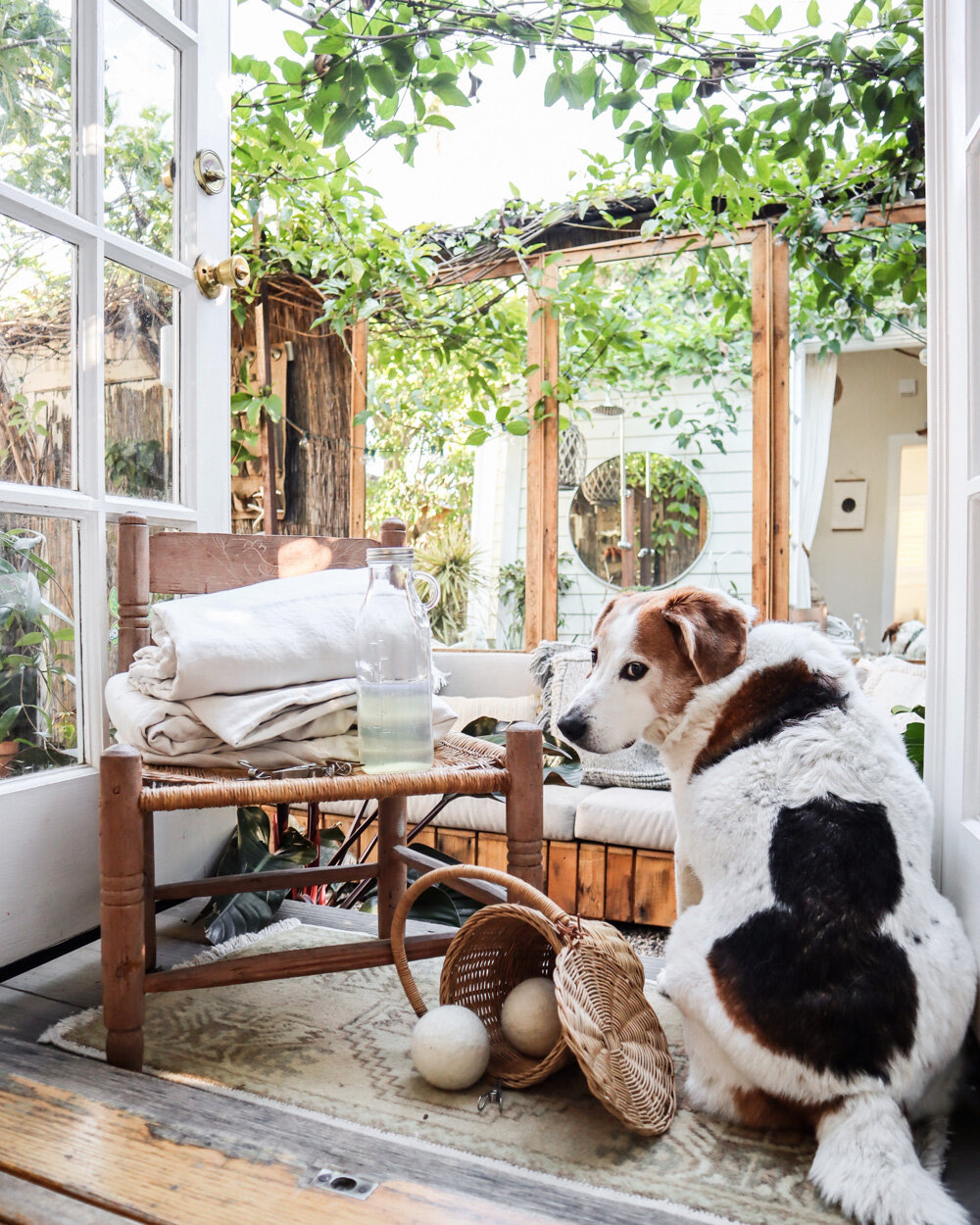
We topped the update off with a soft, richly-textured throw blanket made entirely of recycled yarn:

I picked these pieces from Tuft & Needle after visiting their new store in Los Angeles. As I got to better know the company, I felt compelled to inquire if they’d be interested in helping me get a selection of their quality products to some children and youth in need. (I’ve spent years outfitting spaces for myself and others who are in a place a privilege— it’s high time I redirect much of that energy to assisting organizations that help individuals and families in need.) To my absolute joy, they were enthusiastically on board.

View the full post about West’s second-hand folding desk + chair here.
Tuft & Needle helped us supply mattresses, pillows and sheets to children entering foster care in Florida as they await reunification with their biological families. Not only that, but the company also helped us provide new bedding and pillows to several of the wonderful youth at The RightWay Foundation here in LA.
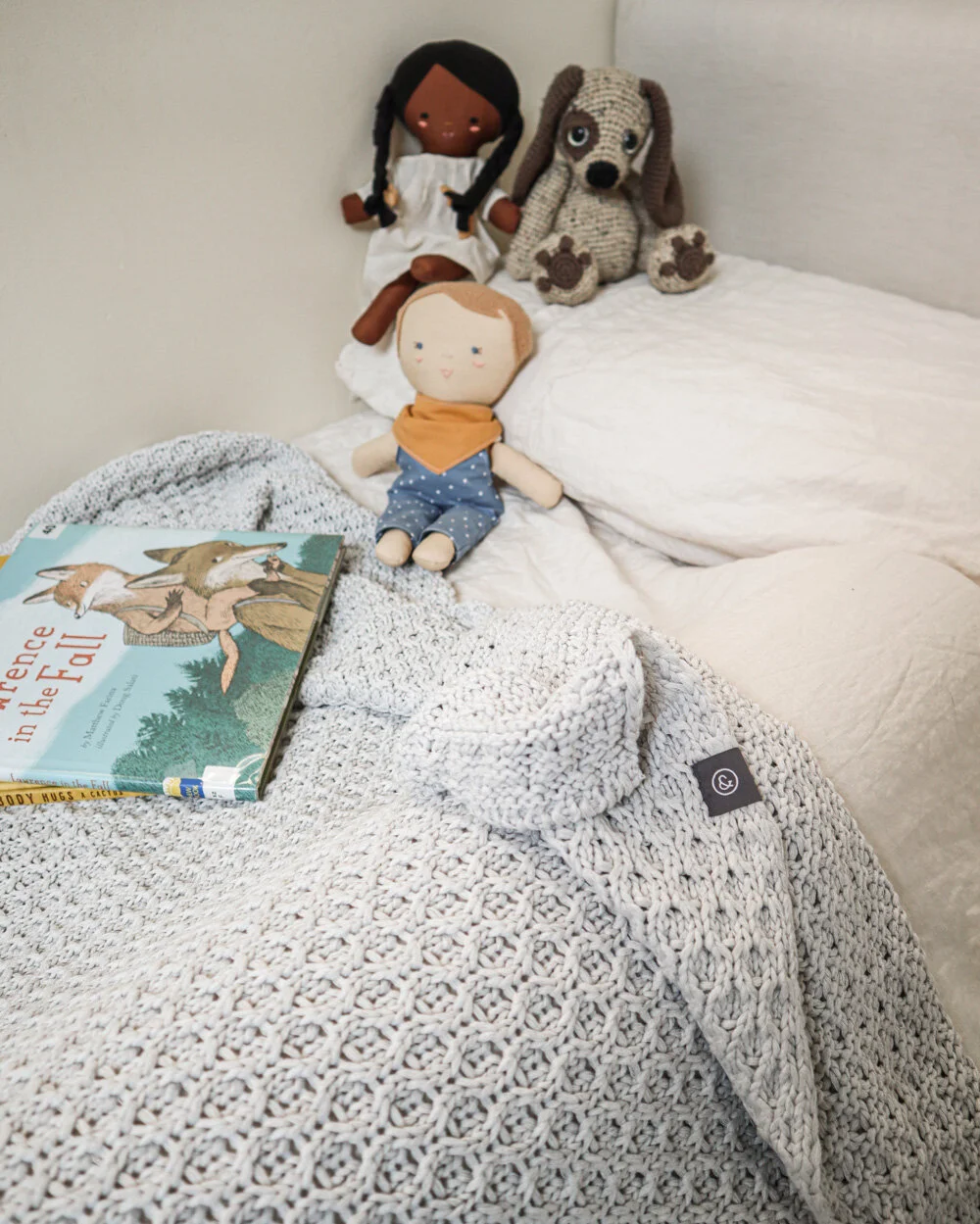
As I curl up with my son— whether on his cozy sofa bed or in our delightfully crowded “family bed” — I can’t believe our extraordinary fortune. We are safe, comfortable and surrounded by love. It’s our privilege and duty to pay that forward— to our neighbors, to strangers, and to the earth. So many resources aren’t equally accessible to all, and the climate crisis further exacerbates social inequalities and injustices. We won’t look away.

This post was not sponsored. As mentioned, product was generously gifted by Tuft & Needle. For anyone wishing to make a contribution to The RightWay Foundation, please use the cottage contact form to get in touch with us.

Thoughts on Wearing the Same Outfits on Repeat
A while back, I decided to stop buying (or even renting) new outfits for big events, video shoots, interviews and speaking engagements, opting instead to wear my usual collection on repeat.
As my friend Ashlee Piper wrote in her book, Give a Sh*t: Do Good. Live Better. Save the Planet:
“The ills of fast fashion exist solely because consumers create demand, which means we can easily right this wrong by pairing down, refreshing our habits, and pumping the breaks on our purchasing.”
Remember: we are by no means powerless.
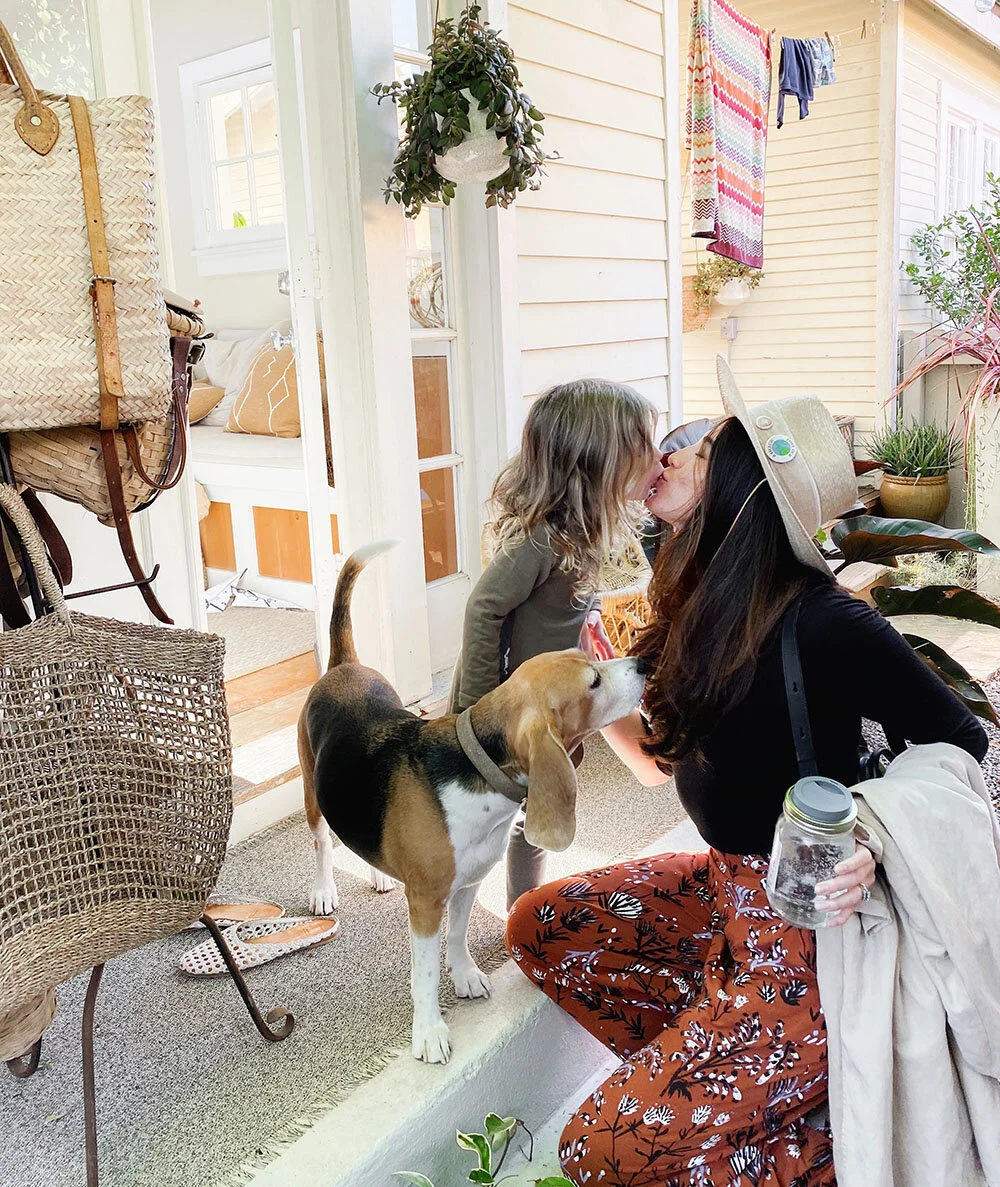
Shopping vintage and second-hand, exploring swaps and exchange groups in communities, and repairing and repurposing garments and accessories are all of course great options. But thus far I’ve really just enjoyed keeping things pared down by sticking to my current collection and finding new permutations within it. It simplifies a remarkable part of my daily routine— laundry, organizing, dressing and packing are all much more streamlined.
All it takes is a mindset shift to keep us from caving into pressure to wear something new and on-trend for every notable occasion. We don’t necessarily have to approach this from the angle of “living with less.” It can also be perceived as living with more. More time, more space and more savings. (And besides— most Americans only wear 13-20% of the items from our closets anyway!*)
This week I’m headed to speak at a Create & Cultivate pop-up, and plan to wear one of the same outfits I’ve appeared in time and time again, as it’s comfortable, easy to pack and I know where and how the pieces were made.
At this point, we’re all aware that the garment industry is one of the top polluters of our planet. At this pivotal period in time — an era ominously dubbed the Anthropocene — we have the necessary strength (provided by our voices and our wallets) to pull focus back towards the environment, labor and health, and social justice, and to force the industry to catch up with us quickly, before it’s too late.
*Ashlee Piper: Give a Sh*t

Recent Features Roundup
As we close out the first month of 2020, here are a few stories by other outlets that featured the Cottage. Click the links below to explore.


Some Items You Can Probably Go Without (Part 13)
In recent years, the average size of the American single-family home has grown to over 2,600 square feet. As I walk around our neighborhood and see the smaller, still livable, single-story bungalows being torn down and replaced with zero-lot-line behemoths, I can’t help but wonder why… (For investment purposes? And if so, to what end, ultimately?)
Not only are we living in an unprecedented time during which we have to do everything necessary to curb our emissions and consumption to combat the climate crisis, but we are also living in a technological era in which entire collections of goods that once lived in our homes are now contained within our smart devices.
If we’re spending more time absorbed in our phones and less time interacting with the tangible, and if items such as movies, music collections, reference guides, books, photo albums, and more all live digitally, why do our homes need to further expand? And expand in ways that are often highly environmentally burdensome?
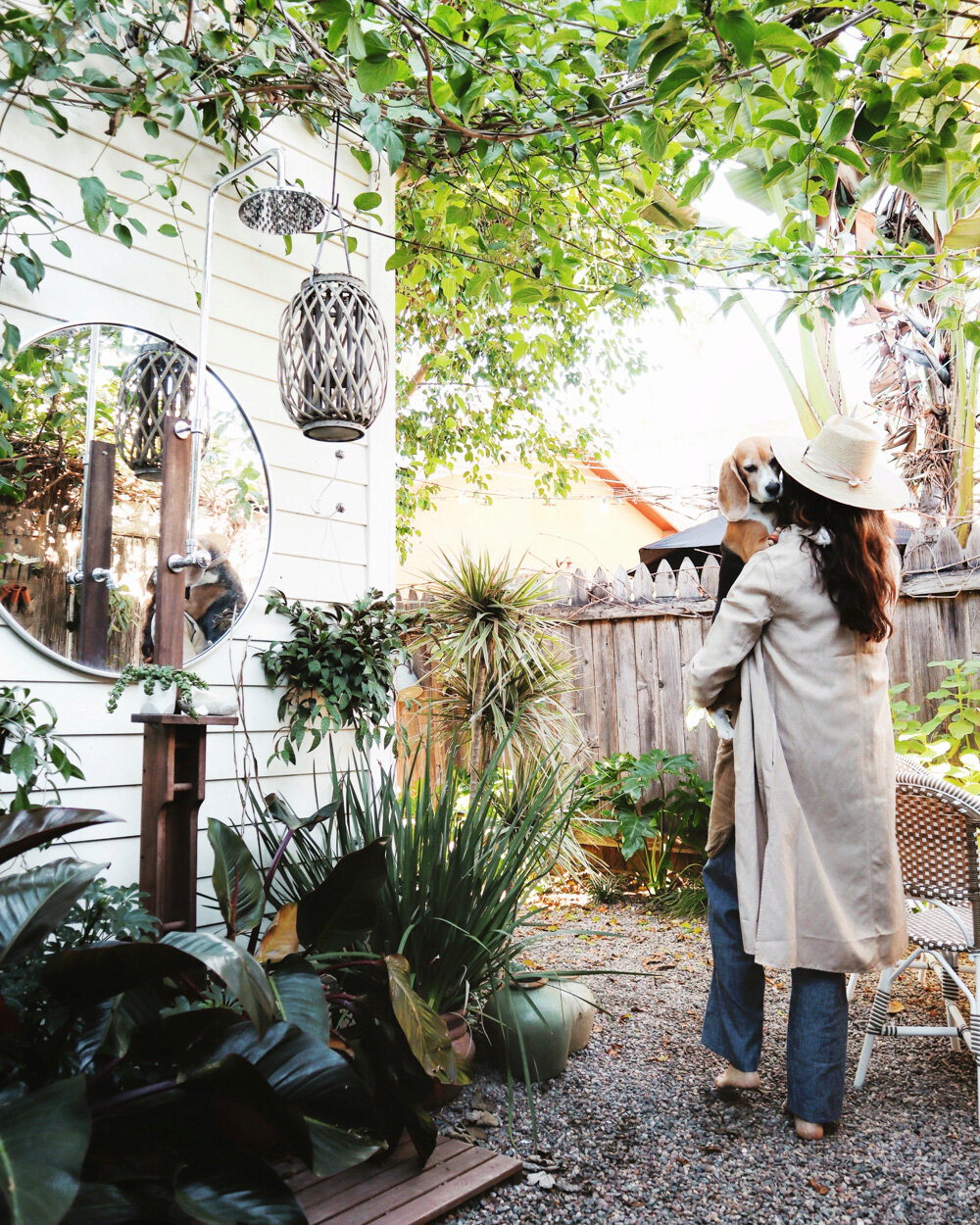
Of course it's important to note that a bigger house doesn't necessarily mean more stuff, and that I am indeed excited about green construction in the future. Homes that operate with renewable energy, “smart” features that keep energy down and efficiency high, and self-sustaining systems that better manage waste while generating power and resources are possibilities on the horizon. I’m not suggesting that tiny houses/apartments are “the” answer or suitable for everyone.
Our son is only 3, and as I type this post, he is the only child in our household. I have yet to live this tiny life as a parent of a pre-teen/teen or of multiple children. One day, one way or another, my family's needs and tastes will change, and I have no idea what’s next for us.

But as we adapt to the future, I plan to keep in mind that leaving behind a sprawling home filled with stuff for my son is not my goal, whereas leaving behind a healthy Earth for his entire generation is.

With that, here are some home / kitchen items you can probably go without, whether you live in a big house or a small one. (View all the entries in this series here.)
Faux plants and florals
The world needs far more plants and far less plastic. I know there are some situations that make having real plants a challenge, but if you’re not in one of those situations, perhaps consider skipping the artificial greenery and nurturing some air cleaning plants instead. (Bonus points for vintage and repurposed pots! Give those plastic starter pots back to your local plant nursery so they can reuse them.)

Select sports / camping equipment
If you’re not a regular player of a particular sport, opt to borrow or rent athletic and adventure equipment when you need it. This will save you money, free up storage space, and reduce your footprint.
Spinners, Choppers (etc)
Salad spinners, veggie choppers… unless you use them daily to feed large numbers of people, you probably don’t need them. We’re all saying we want to slow down, so let’s do it. Wash that fresh lettuce by hand, chop those veggies or eggs one by one, and let your toast fall sideways on your plate— it’ll all taste just as delicious.

Fridge containers
Add-on plastic produce keepers, egg holders, soda can organizers, novelty ice cube trays… you don’t need them. Linen produce bags— such as those by Ambrosia and The Swag — can help extend the life of your produce and reduce your food waste without the use of plastic, and without taking up huge amounts of inflexible space in a compact fridge.
Stands
Laptop storage stands, paper towel stands, banana hanger stands, and napkin holders all take up space and ultimately increase waste in one way or another. It’s past time to cut our dependency on disposable paper towels + napkins, which means we don’t need stands to hold them. And there are plenty of ways to suspend fruit to save space via simple hooks or vintage / repurposed baskets. Get creative when getting your fruit up off the counter— it’ll make your home that much more unique.

Why Details Matter (More) in a Small Space
Post Summary: Why seemingly minor details can make or break a compact home/apartment/office.
Minor features can make a surprising impact within a room, regardless of its size. But details are particularly crucial in compact spaces, where everything claims noteworthy real estate and catches the eye. Little touches can influence a space just as much (if not more so,) than a piece of furniture or even paint color.

I think this is a good thing— it means that you can potentially transform a home/office without investment much money.


In fact, depending on what you already have available in your space, you might not even need to purchase a single new item.

We’ve chosen to keep our small space neutral and natural in tone and materials. As such, our functional decor (bags, leashes, storage containers, etc.) all suit our decision and our tastes.

But a cohesive and considered look is of course attainable for all styles— not just the one demonstrated via our home.

While our home is relatively monochromatic (we rely on textures as well as the plants outside our windows to usher in rich tones and depth), attention to detail can enhance any color scheme and style of decor.

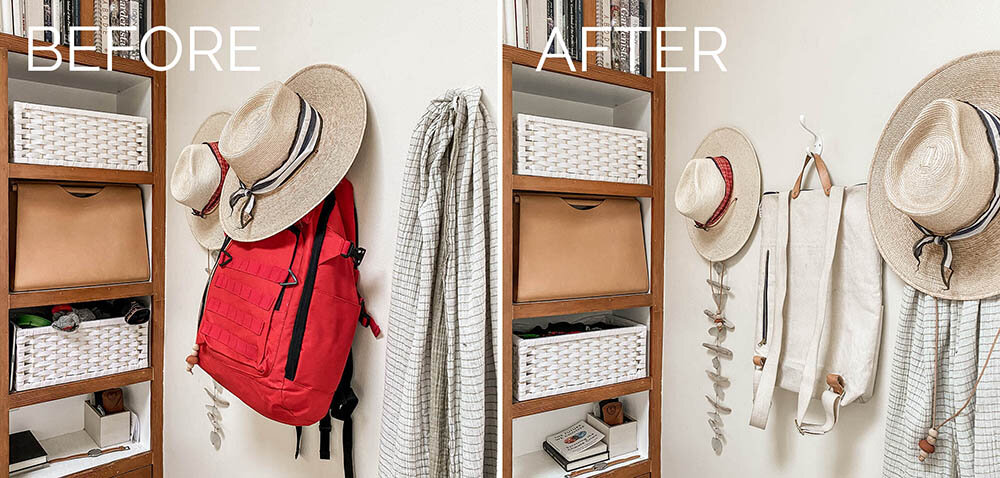
This post contains some examples of some seemingly inconsequential choices we made (camera straps, backpacks, nested bags and corner accents) that, when combined, help make our space the light and functional and, in our eyes, beautiful.



Before + After: Enhancing Small Indoor & Outdoor Spaces with Mirrors
It’s no secret that mirrors are particularly powerful accents in small spaces. Not only do they make an area appear much bigger than it actually is, but they amplify light and create a feeling of depth while enhancing overall visual interest. Mirrors are such a “Small Space 101” topic that I hesitated to do this post, but the number of inquiries and comments I’ve received about our collection of indoor and outdoor mirrors inspired me to do a little before/after roundup from our home and from a client’s office to demonstrate the impact that mirrors can have on a small space.
Outdoor Shower Mirror (After + Before)
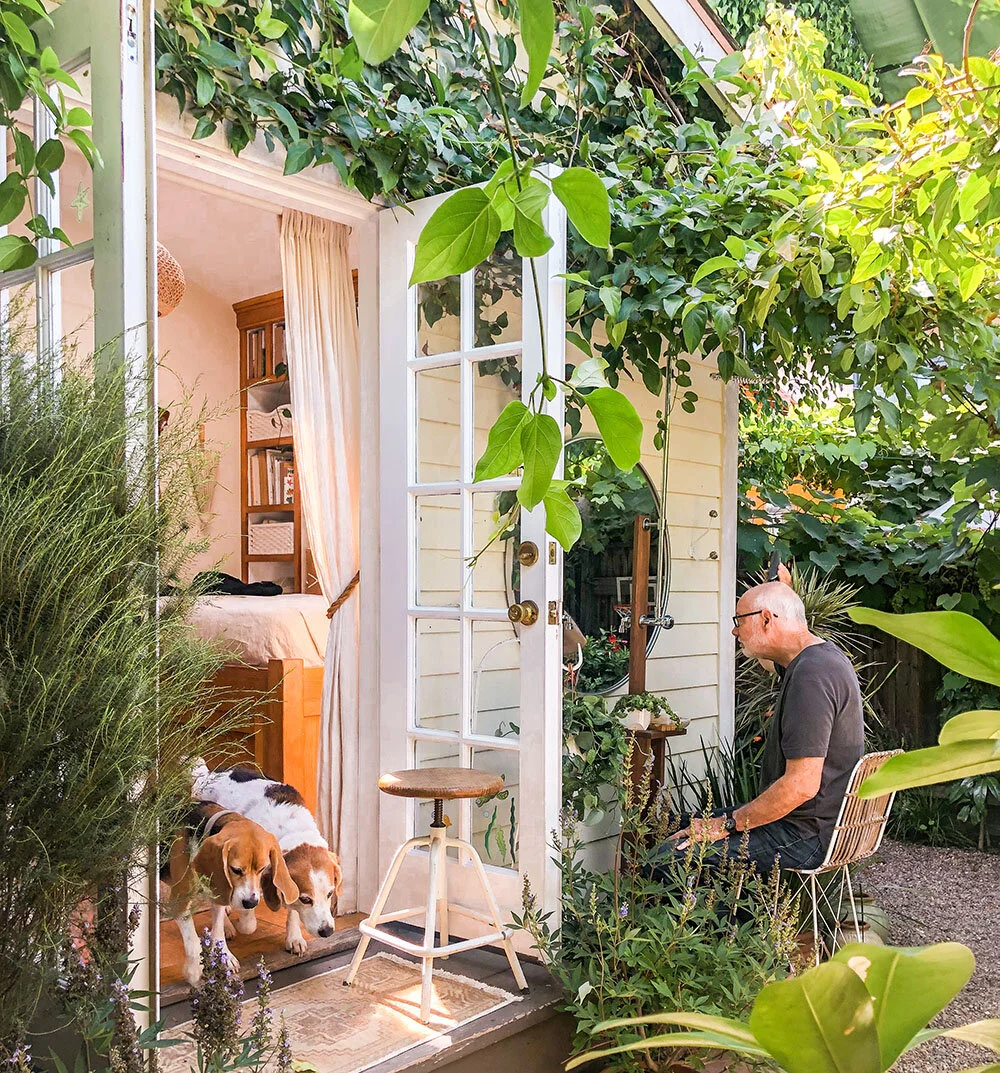
Above: AFTER - My father shaving at the outdoor shower mirror.

Above: BEFORE - The outdoor shower wall upon our move-in nearly 9 years ago.
Living Wall Mirror (After + Before)
(View the full below/after from the living wall installation here.)
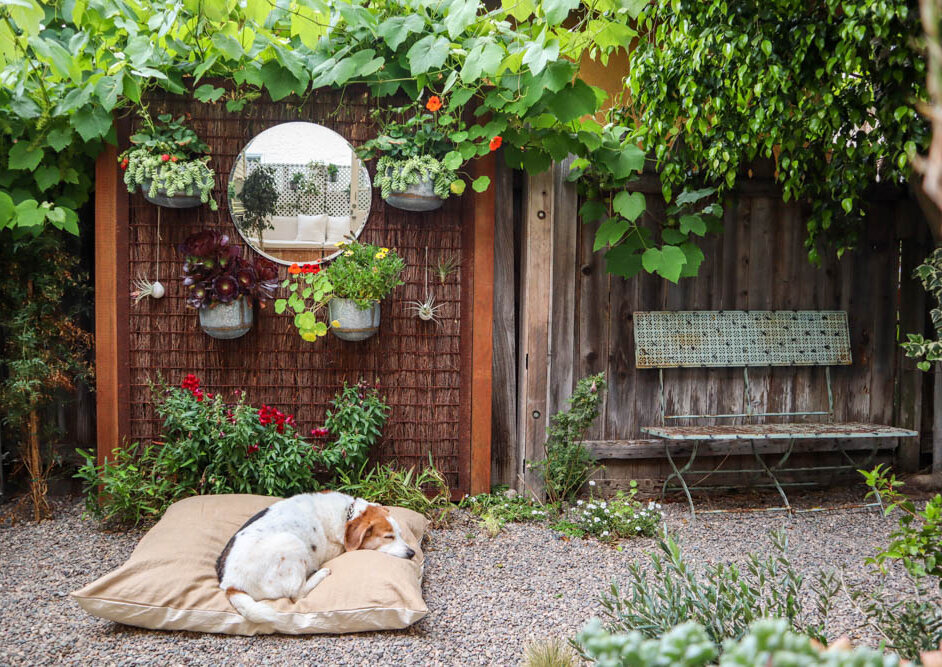
Above: AFTER - The living wall with a circular garden mirror that reflects the sun as it rises over our pocket of LA.

Above: BEFORE - The living wall looking particularly static prior to the installation of the mirror.
Sofa Garden Mirrors (After + Before)
(View the full before/after of the garden sofa installation here.)

Above: AFTER - The outdoor sofa with three mirrors mounted to its back wall.

Above: BEFORE - The back garden prior to the creation of the custom sofa + mirror combo.
Nursery/Bedroom Mirrors (After + Before)

Above: AFTER - The only closet in the cottage, which we converted into a nursery. Our custom heater cover holds three mirrors to reflect the light from the build-in windows in our headboard on the opposite wall.

Above: BEFORE - The cottage closet and heater upon our move-in almost 9 years ago.
Multi-Purpose Room Mirror (After + Before)

Above: AFTER - We mounted this large mirror to the main room wall the first day we moved in. It helps to make our home feel far bigger than it is.

Above: BEFORE - One of the only images we have of the office / living room wall without the mirror, as installing it was one of the very first things we did upon moving in.
Client Makeover: Reception Area Mirror (After + Before)
(View the full before/after from the Bond Group offices here.)

Above: AFTER - I added the Rivera Mirror from Crofthouse to brighten up the reception corner in the lobby.

Above: BEFORE - The dark and flat reception corner of the Bond Group offices lobby.
Client Makeover: Office Kitchen Mirror (After + Before)
(View the full before/after from the Bond Group offices here.)

Above: AFTER - I added a large but simply framed mirror to brighten up this windowless office kitchen without cramping the small space.

Above: BEFORE - The small, windowless, industrial office kitchen.
If you’re searching for mirrors for your compact home, apartment, garden or office, don’t forget to explore second-hand shops and other vintage sources first before buying new!

Adapting a Small Home for a Growing Child
Arts and crafts, coloring, carving pumpkins, playing with trucks, and dining with friends— these are just a sliver of the many activities our son enjoyed while at his compact, collapsable table. He used it daily, indoors and out, and it suited him from the time he began to walk until 2 years later. Now he’s a (tall) 3 year-old, and has officially outgrown the much-loved table. (Luckily we were able to fold it up and stash it in the back of the closet to keep for beach trips, canoe rides, etc., putting it to continued use.)
I quashed the we-need-a-replacement-right-now! impulse, and instead took some time to find a suitable replacement. I knew I wanted West’s next desk to be pre-used, space-savvy, and able to accommodate his current size plus a reasonable amount of growth.

After browsing our local vintage shops and checking Etsy repeatedly over the course of a month or so, I finally found a unique piece that was perfect for our space and West’s needs.
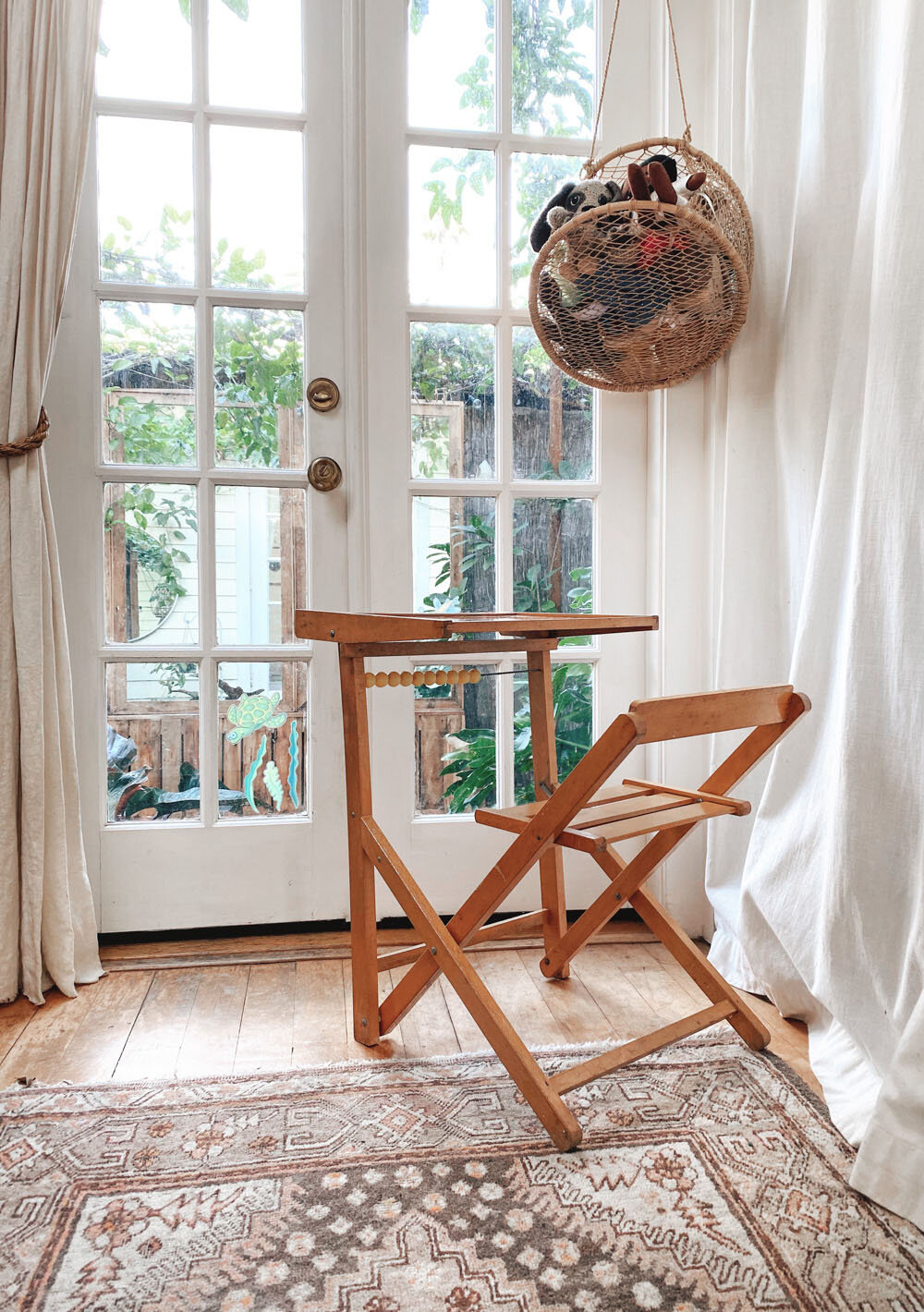
It’s a vintage folding chair + desk combo with a tabletop surface and a flip-up chalkboard.
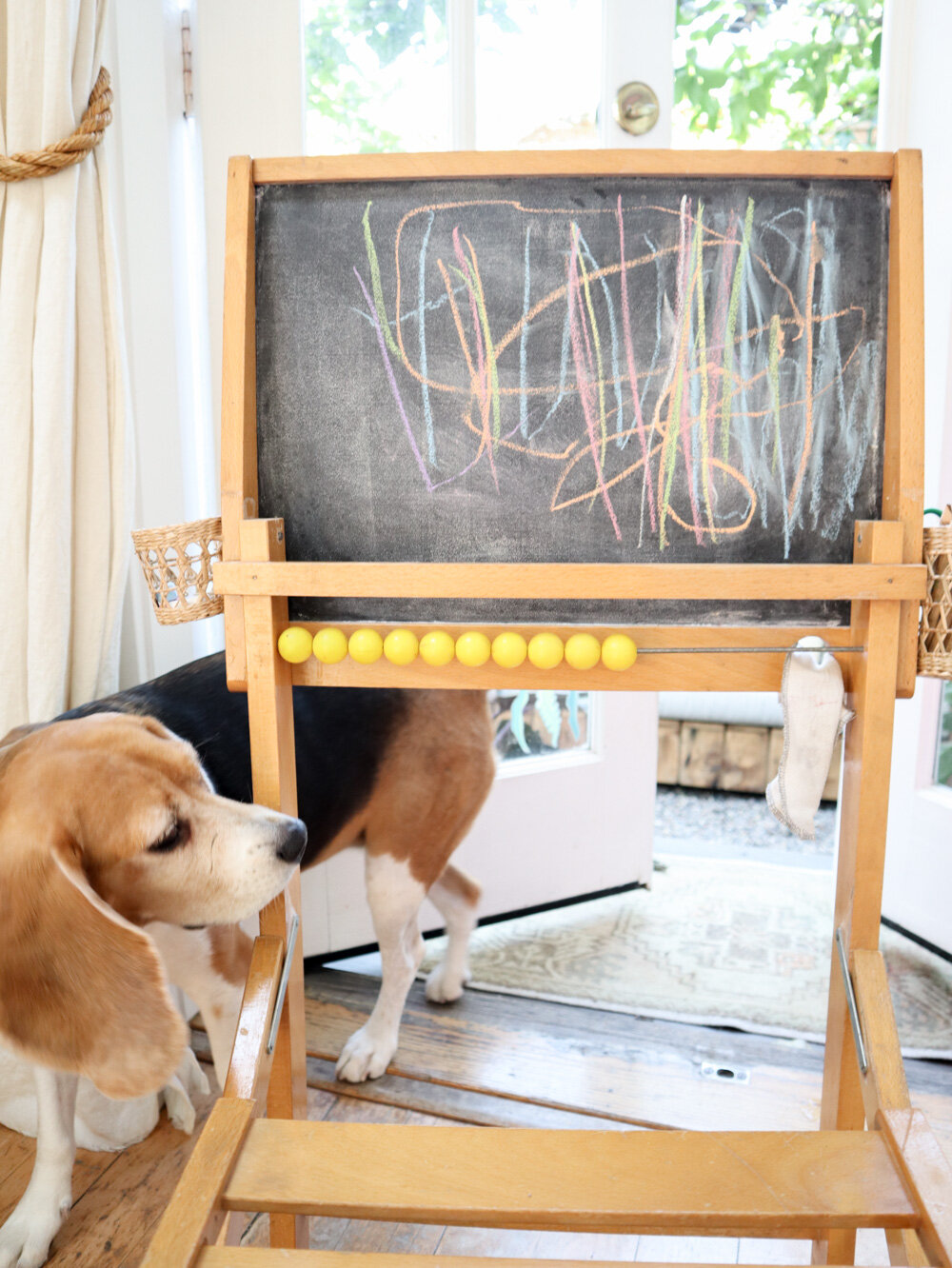

The only thing lacking is a bit of storage, but we cobbled that together on our own with a couple of cupholders whose glass inserts broke long ago.


After eyeing the desk suspiciously upon introduction, West finally hopped up onto the chair when he was ready, and he has since been routinely using the desk for long stretches of time. (Success!)
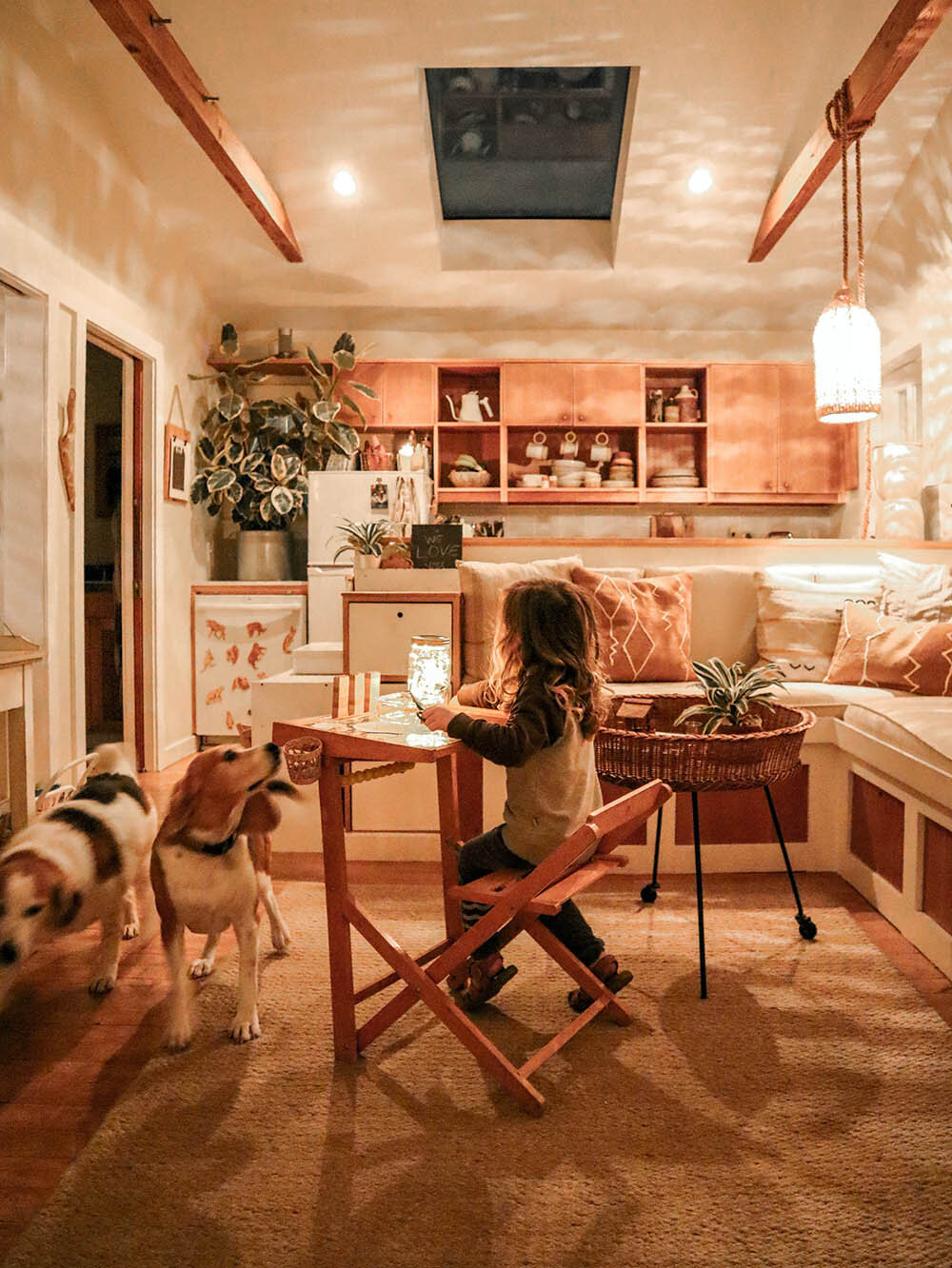

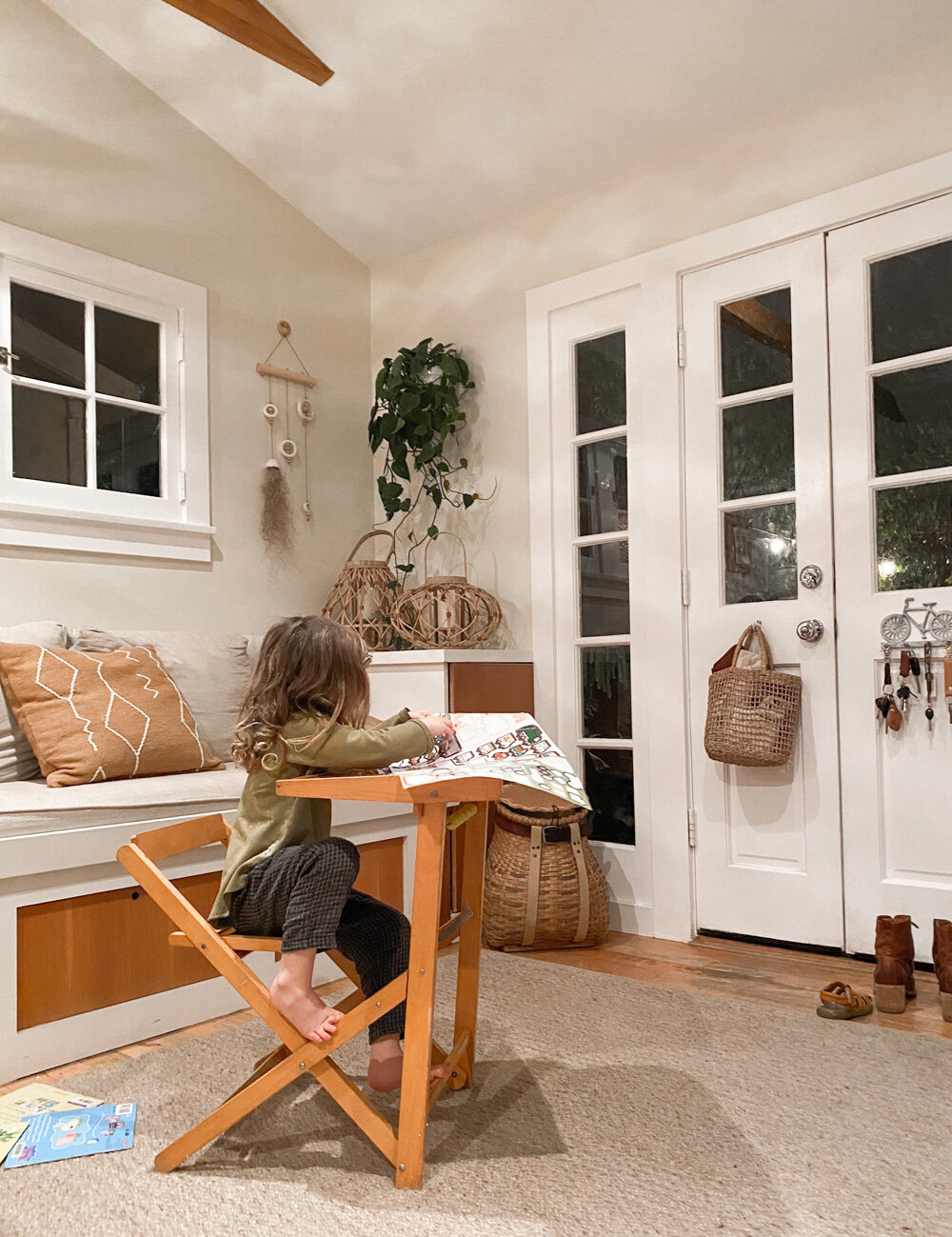
All this to say that a second-hand purchase (which can enrich the style of your home while reducing your household’s environmental impact) can be well worth the wait— we just have to let go of our modern urge for instant gratification.


VINTAGE AND HANDMADE HOMEWARES FOR SMALL SPACES (ROUNDUP 2)
I flat out don’t like shopping. (There. I said it.) However, I do find myself looking for handmade or vintage items online or in our local thrift stores when we need a particular something-or-another for the Cottage, and that’s something I rather enjoy. I don't just browse aimlessly or on impulse. When I shop, I’m on a specific mission. For me, the key is to search for the general function I need an item to serve, rather than search by a item’s dedicated name directly.

For example, when I need linens that can serve as towels, tablecloths, couch covers, and shoulder wraps, I just search for "linen throw" and explore the results from there, selecting a piece that serve multiple functions while appealing to my aesthetic. By searching for items via detail and function descriptors, I discover creative and unique homewares that serve the purposes my family needs, in formats I might not have previously considered. This is one of the traits that makes our lil' home so personal and special to us.

Many people have told me that they don’t know “how” to shop vintage or handmade on sites such as Etsy. As such, I’m going to start doing a weekly roundup of beautiful and functional one-of-a-kind vintage or handmade items I’ve found in passing that I like but won’t buy because we already have something similar. My hope is that these roundups help some readers find homewares made by independent artisans or from second-hand curators who have salvaged incredible pieces from within the waste stream, and are redirecting them for a new life.

When purchasing a piece, you can further cut back on the associated carbon footprint by messaging the vendor to assure them you’re fine with repurposed packaging and don’t need any flair. I’ve chosen to use Etsy for these roundups, as it’s the first major online shopping destination to offset 100% of carbon emissions from shipping.

CLEVER DESKS, CHAIRS & TABLES

UNIQUE STORAGE
FUNCTIONAL DECOR
PRE-LOVED BAGS (THAT WOULD LOOK GREAT ON DISPLAY)

The Pros and Cons of that Rumpled Look
Post Summary: Drying clothes and household linens in a small home/apartment.
Recently I discovered that our ridiculously extendable curtain rod is actually quite useful in our tiny space on laundry day:

Above: West’s handmade bamboo tops from Caribou Kids drying on the extendable curtain rod.

The pros of air drying are, of course, that it conserves energy and curbs the associated costs. For us, the cons are that it doesn’t remove all the dog hair (and there is SO MUCH OF IT here) from fabric, and that even a little bit of laundry can overwhelm a small space.

Above: West and I wear basics / undergarments from Arq.
Honestly though, for whatever reason, I don’t mind having garments out drying throughout our home and garden. (Dirty dishes, however, bother me— no patience for those here! Everyone has their hang ups…)

Above and below: West and I have matching robes from Odd Bird Company.


Since we all share one compact closet, our clothes are usually a bit (or a lot) rumpled.

Above: Wearing linen from Beaton and Garnet Hill.
It’s something I’ve long accepted, and it’s one of the reasons I love wearing and decorating with linen, which looks just as lovely when somewhat wrinkled.

Same goes for organic cotton and bamboo, of which most of West’s clothing is made.

Above: Child’s underwear from Arq, cloth overnight diaper from Grovia. (Photo by Tinylicious.)
We have a tiny iron, but we probably only use it a handful of times per year.

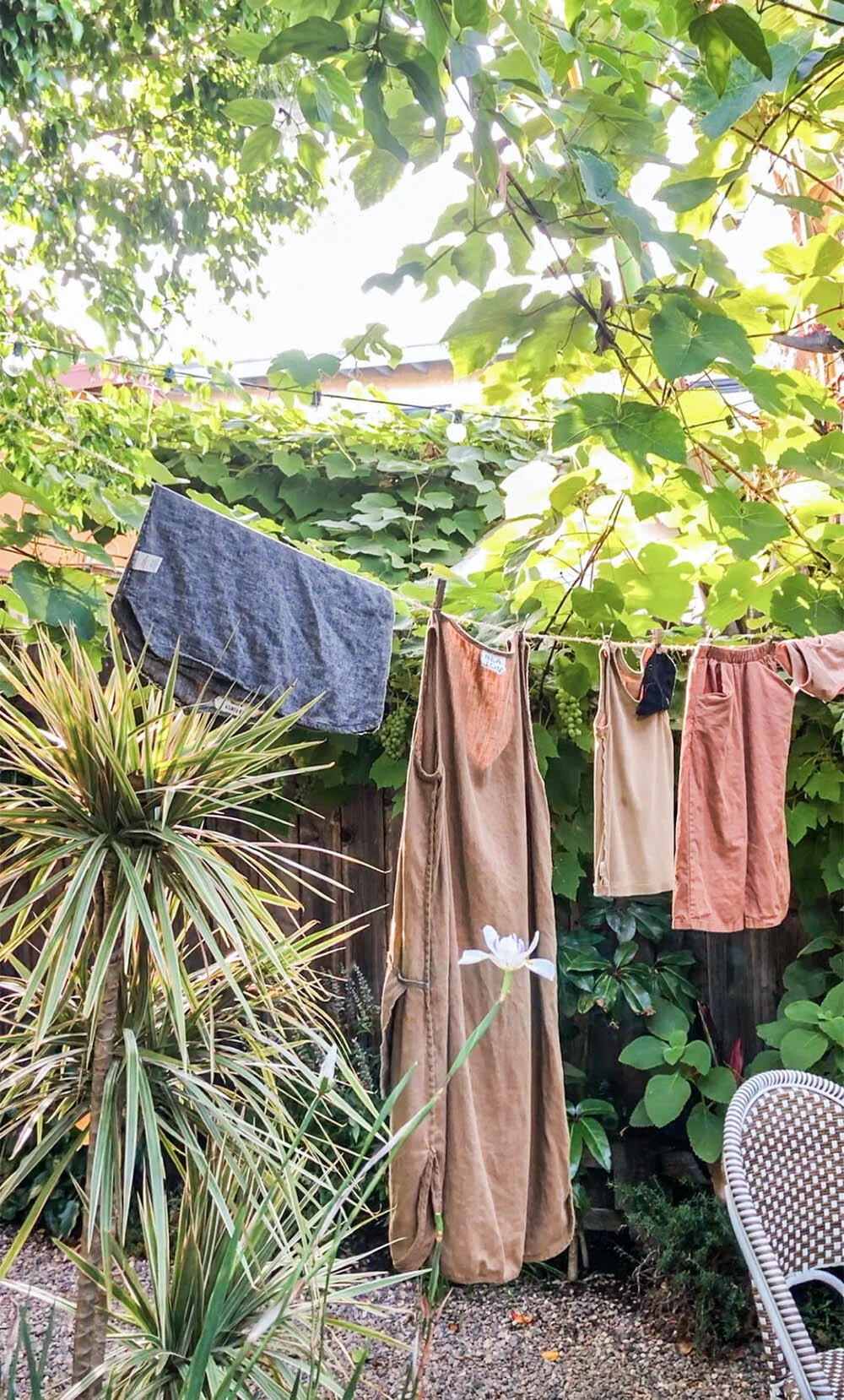


The more we love our clothes, the more I don't mind seeing them drying from the beams, seat-backs and doorways.

Above: Our folding drying rack from Helen Milan Home. (Photo by Tinylicious.)
Looking to start air-drying your clean laundry in your small home/apartment? Scroll to the bottom of this post for a collection of space-savvy accessories that might come in handy.

Keep in mind that a string safely secured from one end of the room to the other can work just as well— you might not need to buy a thing.

But just in case you do, here’s a mix of vintage, handmade and a couple new items that might help.

Interior Decor x Sustainability
The intersection of interior design and sustainability has increasingly been on my mind.

I’ve recently found myself turning almost entirely away from freshly manufactured goods— even those made with renewable resources— and returning instead to vintage, repurposed and found objects.


The tug in this direction is, of course, partially due the environmental footprint associated with creating new items. But it’s also a result of being uninspired by seeing the same designs seemingly on repeat for years in the digital and physical worlds.


Even if a place that’s cobbled together with vintage goods isn’t exactly my style, I appreciate its originality, and the limitless number of unique permutations a space designed with a wide array of pre-loved items can take.


As it pertains to this topic, I was particularly roused by three moments over the weekend:
• I gave my son a small vintage wooden wishing well that I found on Etsy. The piece is a bit of a mess, with exposed, dried glue and wonky hardware, but West is enamored with it all the same. I used some pliers to swap out the rope that came with the well, replacing the accessory with an old garden chain and hook. I added a “bucket” made from a stainless steel creamer cup wrapped in a rubber band, and thus far, this delightfully pell-mell contraption has kept my son engaged in HOURS of imaginary play. And weirdly, it’s quite pretty.

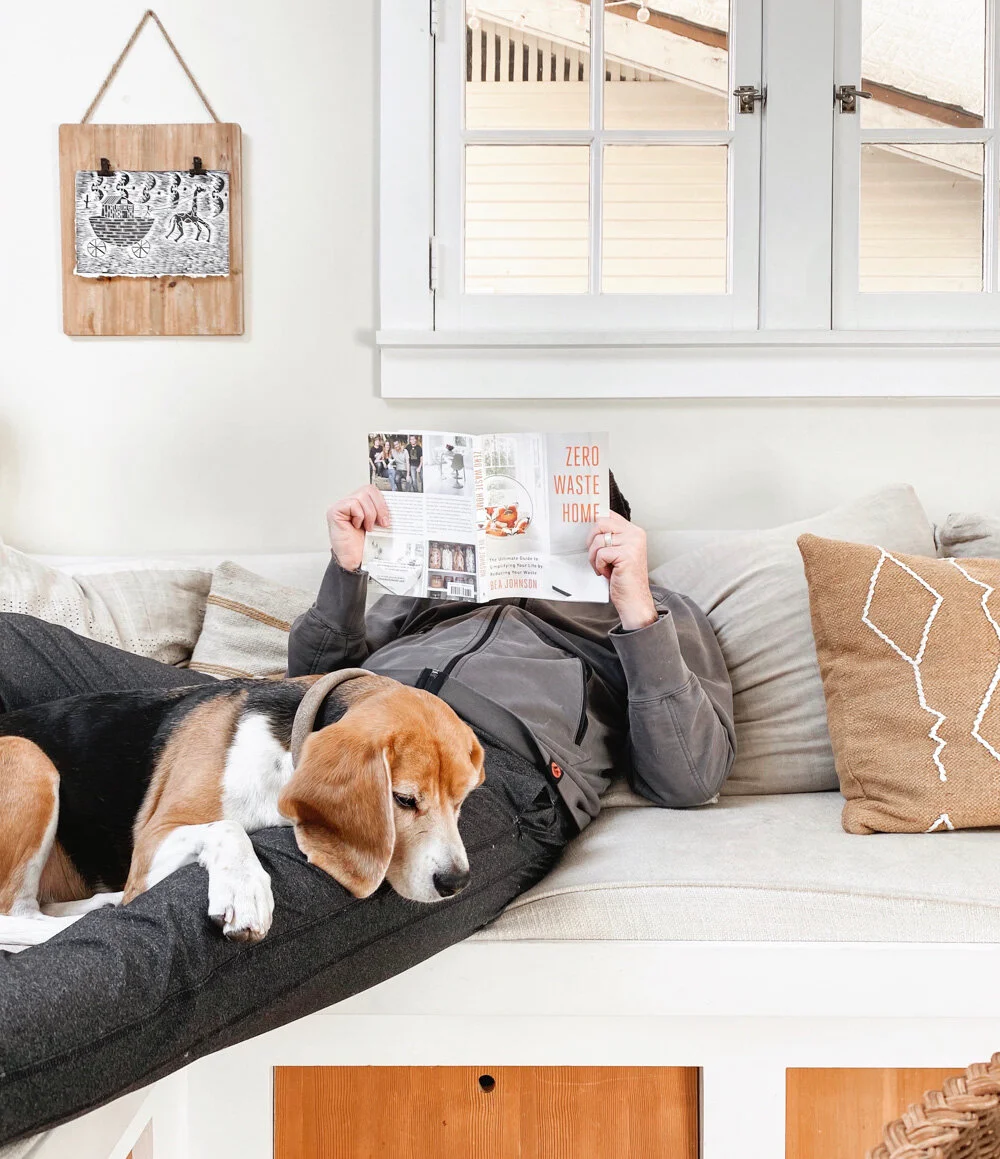
• I indulged in reading The Foraged Home, and found myself reveling in every out-of-the-ordinary detail. Not only did I admire the artistic designs showcased on the pages, but I also appreciated the accessibility of many of the spaces. Here in Los Angeles, buying vintage furnishings and accessories can often cost more than buying new, which makes second-hand shopping prohibitive for many (if not most). This book was a spirited reminder that “found” can just as beautiful as “sourced” if we take our time, and if we approach our spaces with pared down needs and expanded creativity.


• Suay Sew Shop, a local business that uses repurposed and deadstock textiles to craft their designs, posted this photo on Instagram, and part of their caption read: “Developing sentimental attachments to material things is something we have worked against, except now we might have to reinvent what that means. Loving our clothes, making them last along with our daily adventures in life will in fact improve the health of our planet. Being so disconnected to something that took our planet’s precious resources to create isn’t an option anymore.” The balance between not getting too invested in our belongings versus valuing and loving what we do have (and keeping items out of the waste stream) is something I’ve been considering in depth— especially since decluttering is a topic I’m often asked about.


I agree with Suay's caption, and look forward (with excitement for the shift and anxiety over the urgency) to seeing where that takes us in the months and years to come.

These moments all reminded me that heart, resourcefulness and imagination are major elements of what drew me to the tiny life so many years ago.


Today, the evolving overlap of small space living and greener living remains one of my greatest inspirations, interests, and joys.

Encouraging Household Shifts in Light of the Climate Crisis
I’ve long taken for granted that my husband and I are on the same page when it comes to most elements of our home and lifestyle. Since we operate in such close quarters every day and night as we both work from home, we’ve continued to learn and adapt together over all these years. So when I started educating myself more about the climate crisis and my role within it, Adam was right there by my side, literally and figuratively.

Together, we began to understand that while governments around the globe and huge corporations are doing the vast amount of damage to the planet, we still owe it to the earth, wildlife, communities who are currently suffering and being displaced, and younger generations to immediately curb our personal consumer habits.
We also realized that the most meaningful action we could possibly take is to vote for leaders and policies that operate with climate justice at the forefront, and to continue listening to, learning from, and supporting organizations and individuals who are doing meaningful work on the subject, far beyond echoing trends and buzzwords.
Several readers of this blog have written in to share that they’ve been struggling to encourage others within their household to adjust habits in light of the climate crisis. Here are some angles/approaches that we hope might help::

Avoid New Spending
The the up-front cost of some eco-friendlier alternative products can be prohibitive or discouraging, and turn folks away from lower waste living. (And many of those products are marketed as being greener, when in fact they’re problematic in certain regards.) Perhaps avoid acquiring new items, and start instead by making changes within your current budget and by using your existing belongings. For example, you don’t need new glass bottles with pre-marked tare weights to do your bulk shopping— a washed and repurposed glass jar that once held pasta, apple sauce, jelly, etc. can work just as well, and since it’s already in the waste stream it further reduces your footprint. (These jars can also be outfitted with very inexpensive spout or pump style tops to become soap dispensers, and/or they can be used with just as inexpensive beverage tops to become to-go water or coffee containers.) Similarly, you don’t need items like mesh produce bags— just skip bags altogether when in the market, or simply use larger tote bags to corral loose produce. By cutting back on new materials and using what you already have on-hand, you will keep your spending at bay while also putting your current belongings to more extended use.
Start Small (& Save)
If your family feels like what we do on an individual basis won’t make any difference so there’s no point in trying, perhaps start with small steps that require little-to-no effort and appeal instead to the narrowed scope of household energy efficiency. From unplugging appliances that aren’t in use, to taking shorter showers (and fewer baths), to bundling up when the house feels a bit cold (as opposed to cranking up the heat), to replacing burned out bulbs with energy-efficient alternatives, you can lighten your impact while reducing your utilities. When the results become apparent via your monthly bill, the effects of these tiny efforts might start to feel more tangible on a personal scale.

Appeal to Time
For a myriad of reasons, we often opt for immediate conveniences, that overlook long-term environmental inconveniences. If members of your household feel pressed for time (who doesn’t?), perhaps appeal to the angle of efficiency. While it might indeed take an extra minute in the morning to pack a bag of reusable to-go goods, and it might take a few extra seconds for a cashier to get a tare weight on a container, none of this compares to the amount of time it takes to go shopping for disposable household goods once your current ones run out. (Plus you’ll no longer have to budget for as many disposable goods, and can instead save that money to pay off debt, save for necessities, and/or use some of it to support organizations and individuals who are investing in regenerative practices for our collective future.)
Go About Your Day Your Way
As you continue to educate yourself and further adopt your own philosophy and rituals, your family will likely take notice. Presumably no amount of badgering is going to convince anyone to change their ways, and a judgmental or greener-than-thou attitude will rightfully discourage and repel more than it attracts. But if you continue to transition your own habits, others within your home could be influenced by your actions. When you start composting, repurposing food scraps for stock, repairing clothes and household items, biking or taking public transportation over driving solo when possible, and stop buying unnecessary goods, it will likely cause a ripple effect.
Be Patient
As with any lifestyle transformation, change doesn’t happen all at once. Learning healthier habits and unlearning old ones takes time, as well as trial and error. Plus new (and conflicting) information is always being presented, so we all have to keep educating ourselves and adapting together. We don’t all need to live a flawless low waste lifestyle in order to make a dent in our output and overflowing landfills, and to communicate to governments and manufacturers that the tides are turning.

Focus on Those Being Impacted Most, and Future Generations
If none of the above works, it might be helpful to remind folks of the impact our material consumption and waste has on younger/future generations and current wildlife, and to reiterate to them that the people who contribute the least to the crisis suffer the most. If the physical condition of the planet isn’t shaking your household, hopefully the paramount issue of human rights will.
Vote
Stay informed of your elections on the local and larger levels. Make sure others know when and where to vote. Show up. Cast your ballot. Give a damn. Your enthusiasm can energize and assist others.

Vintage and Handmade Homewares for Small Spaces (Roundup 1)
I flat-out don’t like shopping.
There.
I said it.
However, I do find myself looking for handmade or vintage items online or in our local thrift stores when we need a particular something-or-another for the Cottage, and that’s something I rather enjoy.
I don't just browse aimlessly or on impulse. When I shop, I’m on a specific mission. For me, the key is to search for the general function I need an item to serve, rather than search by a item’s dedicated name directly.
For example, when I need linens that can serve as towels, tablecloths, couch covers, and shoulder wraps, I just search for "linen throw" and explore the results from there, selecting a piece that serve multiple functions while appealing to my aesthetic.

By searching for items via detail and function descriptors, I discover creative and unique homewares that serve the purposes my family needs, in formats I might not have previously considered. This is one of the traits that makes our lil' home so personal and special to us.

Many people have told me that they don’t know “how” to shop vintage or handmade on sites such as Etsy. As such, I’m going to start doing a weekly roundup of beautiful and functional one-of-a-kind vintage or handmade items I’ve found in passing that I like but won’t buy because we already have something similar. My hope is that these roundups help some readers find homewares made by independent artisans or from second-hand curators who have salvaged incredible pieces from within the waste stream, and are redirecting them for a new life.

When purchasing a piece, you can further cut back on the associated carbon footprint by messaging the vendor to assure them you’re fine with repurposed packaging and don’t need any flair.
I’ve chosen to use Etsy for these roundups, as it’s the first major online shopping destination to offset 100% of carbon emissions from shipping.
Kitchen Racks

Garment Racks
Vintage Lap Trays/Desks
Misc. Goods for Kids or the Home

Our 3 Year Old Doesn’t Have His Own Bedroom or Playroom (And So Far We Are All Okay With That)
When folks speak down to me about West not having his own dedicated bedroom or playroom, I take a deep breath and picture this:


I don’t think that our way of living is inferior, nor do I believe it to be superior. It’s just different. The typical American home is about 2500 square feet, whereas ours measures under 400. But given the strained state of our planet, I am certainly fine with “different.”

• Read my post on the environmental benefits of tiny living
• Read my post about our sofa-turned-child’s-bed
We are comfortable and content spending time within the walls of our tiny home. But small space living joyfully encourages us to step outside and explore our community, and take daily pleasure in the natural world.

The general decrease of public “green spaces” coupled with the increase in access to screens has left most children in the US and UK spending less time outdoors per day than prison inmates do on average.

Of course other important factors such as local climate, income levels, and parental worries play their roles in how much time children spend inside. But the stats remain what they are: most kids are spending less than 30 minutes outside every day, which has negative impacts on their physical and mental health.
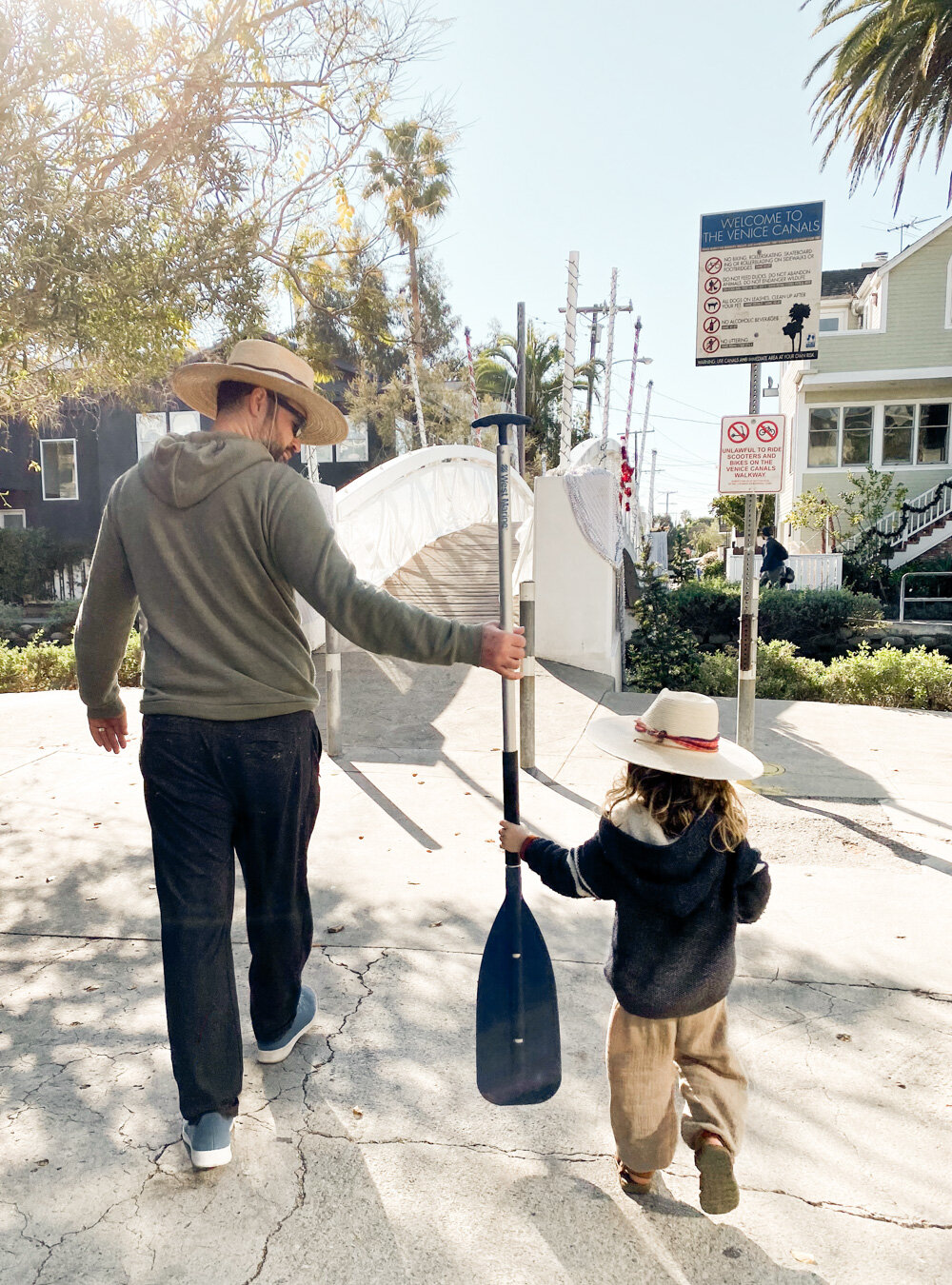
This spike in time spent indoors also untethers children from the natural world during what is an unprecedented and pivotal moment in our human-planet relationship.

As we raise West to be responsible for and aware of his (and our collective) impact on the earth, we believe it’s important for him to experience the natural world so he can understand why it’s vital to protect and restore it.

Obviously we are fortunate to be located in Venice, where the weather is steady year-round and where we’re in close proximity to the ocean and mountains. (If I consider my time living in places like Syracuse during the winter months, I am extra grateful to be here.)

But Los Angeles is still a car and trash filled city. When I worry that our family is too surrounded by concrete, I remember these words from How to Raise a Wild Child:
“Too often, we think of nature as something wholly separate from us, sequestered in national parks, forests and seaside beaches that require organized trips. But nature is all around us, in backyards, schoolyards, gardens and empty lots… Nature isn’t just a bunch of far-off plants, animals and landscapes to learn about and visit once or twice a year. It’s an environment to be immersed in daily, especially during our childhood years.”
- Scott D Sampson, How to Raise a Wild Child, 2015.


Kate Arends of Wit & Delight (based in St Paul Minnesota), commented on the benefits of getting outside during cold and busy days in this recent post, which stuck with me:
“Winter became a lot more tolerable once I realized complaining about the weather wouldn't change the weather.
It’s long. It's dark. It's inconvenient. SAD is a real thing. Kids go crazy. Parents lose their patience. And while going outside feels like the last thing you need, it's actually the thing we need most, both for improving our mood and overall health.
We did our quick walk this morning with Winnie in the snow and it made all the difference in my ability to just cope with this darker season. It's pretty beautiful if you can find enough headspace to appreciate it.
15 minutes. That’s all you need.”

Whether you live in 300 sqft or 3000 sqft, the far-reaching benefits of getting outside are all the same.

And as long as the inside of your home is safe and filled with love, it’s okay to not have a separate space for every family member if that’s how you need or choose to live.


Some Items You Can Probably Go Without (Part 12)
While it's productive to share stories about designs and practices that help us live comfortably and less wastefully in small spaces, I think it’s just as important to discuss the things that we can happily live WITHOUT— particularly in this era of climate crisis. After all, making a home in a small space isn’t about figuring out how to puzzle a life’s worth of belongings into your compact quarters. It’s about experiencing more by owning less.
The following is just a small sampling of items you may want to reconsider before you buy. (View all the entries in this series here.)
Plastic shower curtains and liners:
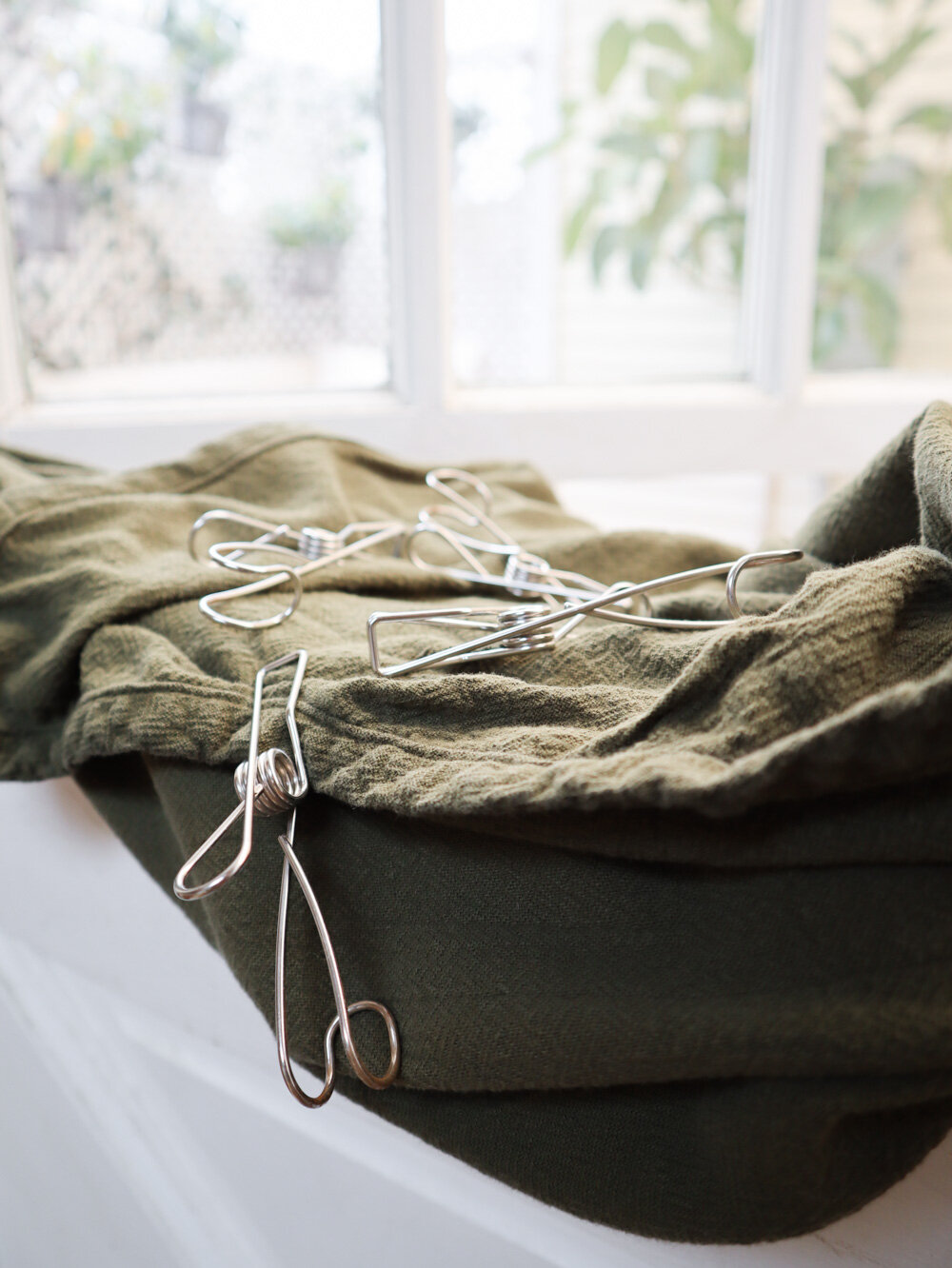
Depending on the style of your shower, you might be able to skip the standard plastic liners and synthetic blend curtains. Here we use a simple linen tablecloth / throw blanket (handmade locally for Gjusta Goods), which we suspend from the curtain rod via metal clothespin hooks. We simply throw the fabric into the machine with similar washing about once every-other week for a good soapy bath of its own. If the bottom of the sheet gets overly wet during a shower and stretches out the linen, we just make a fold up top and clip it an inch or so higher. Hemp fabric and/or upcycled, patchwork pieces could work well for this purpose, too, and add a unique touch to your bathroom. (As always, please keep safety — such as slip risks — in mind.)

New outfits for every special event:
Between photo shoots, work events, speaking engagements and social gatherings, I frequently found myself feeling like I constantly needed a new outfit. I tried a rental service for a while. I think they’re good solutions to reducing fashion waste for many people, but I still found their carbon footprint to be too high for my comfort. I realized that the clothing itself wasn’t the issue— it was my mindset that needed to change. I’ve since found comfort and satisfaction in deliberately wearing the same garments repeatedly on camera and at events. We all know that fast fashion and over consumption of new styles is a major source of pollution — from dyes in water supplies, to transport and packaging, to discarded garments themselves. Plus most people in small homes struggle with wardrobe space, and the best solution is to simply own less clothing. It feels good to strike a truce with yourself and rock the same clothes you wore last week… and last month… and last year… and the year before that.
Toys that replicate safe, every day goods:
A good friend of mine sent me a photo of a toy lace-up shoe that her daughter received as a gift. The image was captioned: “WHY?!” (Why indeed!) Can we not teach our kids to lace on *actual* shoes? Do we need to mass manufacture fake shoes for this purpose? While we can all surely agree that items like child-safe scissors (which are available as hand-me-downs and second-hand purchases) are obviously well worth it, we probably don’t need items like fake (often plastic!) baby bottles for play when the real things are already sitting here in our homes taking up space— we might as well use them!
Novelty games / activities:
Okay. I liked Tetris and Super Mario as much as any child of the 80s. But to now purchase newly manufactured handheld (plastic!) gaming devices or mini arcade games as novelties when countless games are available on our phones is absurd. And Adam recently told me he saw a (plastic!) mini-golf game intended for use while you’re sitting on the toilet, and a quick web search confirmed that this is indeed available via at least three very prominent international retailers. Our planet is going up in flood and flames, and we’re all complaining about having too much stuff, so let’s convey as consumers that makers must stop producing total junk like this. It’s pointlessly wasteful, and ultimately it just ends up cluttering our homes before cluttering up a landfill.
An entire home gym:
There are many understandable reasons why someone might have a piece or several pieces of work out equipment in their home. (And I imagine that most people who could fit a home gym into their space are probably not reading this blog.) But if it’s not a necessity to you and yours, exercising outdoors or sharing equipment at a gym are simple ways to cut down on the number of large machines being manufactured, packaged, shipped, and — ultimately — discarded.
Catch-all dishes:
If you’re shopping vintage or supporting an artist by buying their handmade ring or catch-all dishes, great! But mass made valet caddies, ring dishes + holders, and coin trays are things that can easily be made from numerous repurposed items that are probably already available around your home. Or maybe you don’t need them in the first place! (For example, I just put my rings in a safe spot on top of our first aid box when I shower.) After all, items like this take up valuable surface space in a small home.


A Greener New Year
Not even two weeks into 2020 and climate change is loudly reminding us that it’s not just at our doorsteps— it’s deep within our homes, ravaging spaces and lives, displacing families, and devastating wildlife and plant life in unthinkable numbers.

Here on this blog, I aim to continue to focus on our company’s cornerstone subject of organized and simplified small space living, but to always do so with the climate crisis at the top of mind. And, as it’s an election year here in the US, I want to share less about eco-friendlier products, and more about policies and organizations that operate with climate justice at the forefront.
From our small space to yours, we’re wishing you a greener New Year.


Nothing "New"
Post Summary: Why I’ve loved photographing the same tiny space for over 8 years, and why “newness” is not the point— especially in this era of climate crisis.
When folks ask me how I’m going to “find new angles” of our tiny house so I can continue to share photos on Instagram, I comfortably reply that I ran out of new angles several years ago (especially since we have built-in furnishings). I honestly prefer it that way, and here’s why:

While I always want to grow, improve, take chances and try different things, one of the aspects I treasure most about our space is that “new” isn’t the point.

The rapid cycle of replacing belongings once the next trend hits is one of the factors contributing to the climate crisis.

For me, the point of showing our tiny home and garden again (and again) is to demonstrate how a small space can continue to accommodate evolving lives over time.

We moved to the cottage in early 2011 as new couple with one dog. We progressed to a married couple with two dogs. And we’re now married business partners with two dogs and a 3 year old child.

Nothing lasts forever, but I’m looking forward to documenting our tiny world as long as we’re here. While it’s not new, it’s ever-changing in my eyes.
