
Small Space Gardening for Kids
Earlier this year, Adam and I both read The Future We Choose: Surviving the Climate Crisis, and felt inspired to make changes to the way we live our lives here at the cottage according to what we learned from the book. As part of that lifestyle shift, we decided to grow much of our own produce here at home. So we began converting our sunny 8’ porch into a tiny grow zone.

I’ve shared the following quote before, but I’m doing so again because it was this particular passage that helped me visualize exactly how I wanted to start our growing efforts:
“Every vacant lot, every grimy unused alley, has been repurposed and turned into a shady grove. Every rooftop has been converted to either a vegetable or floral garden. Windowless buildings that were once scrawled with graffiti are instead carpeted with verdant vines… Things that used to be done individually are now done communally— growing vegetables, capturing rainwater, and composting… In community gardens, on rooftops, at schools, and even hanging from vertical gardens on balconies, food sometimes seems to be growing everywhere.” - The Future We Choose: Surviving the Climate Crisis

That passage made me feel like every space — no matter how small — is an opportunity to plant and nurture something green and good, both for the planet and for our bodies.

As discussed in a recent post, we got two 6’ tall Farmstand growstands from Lettuce Grow (which we are absolutely loving). But we also wanted to create some raised garden beds so that all three of us could tackle growing fruit and vegetables in containers in our compact outdoor space in this big city.
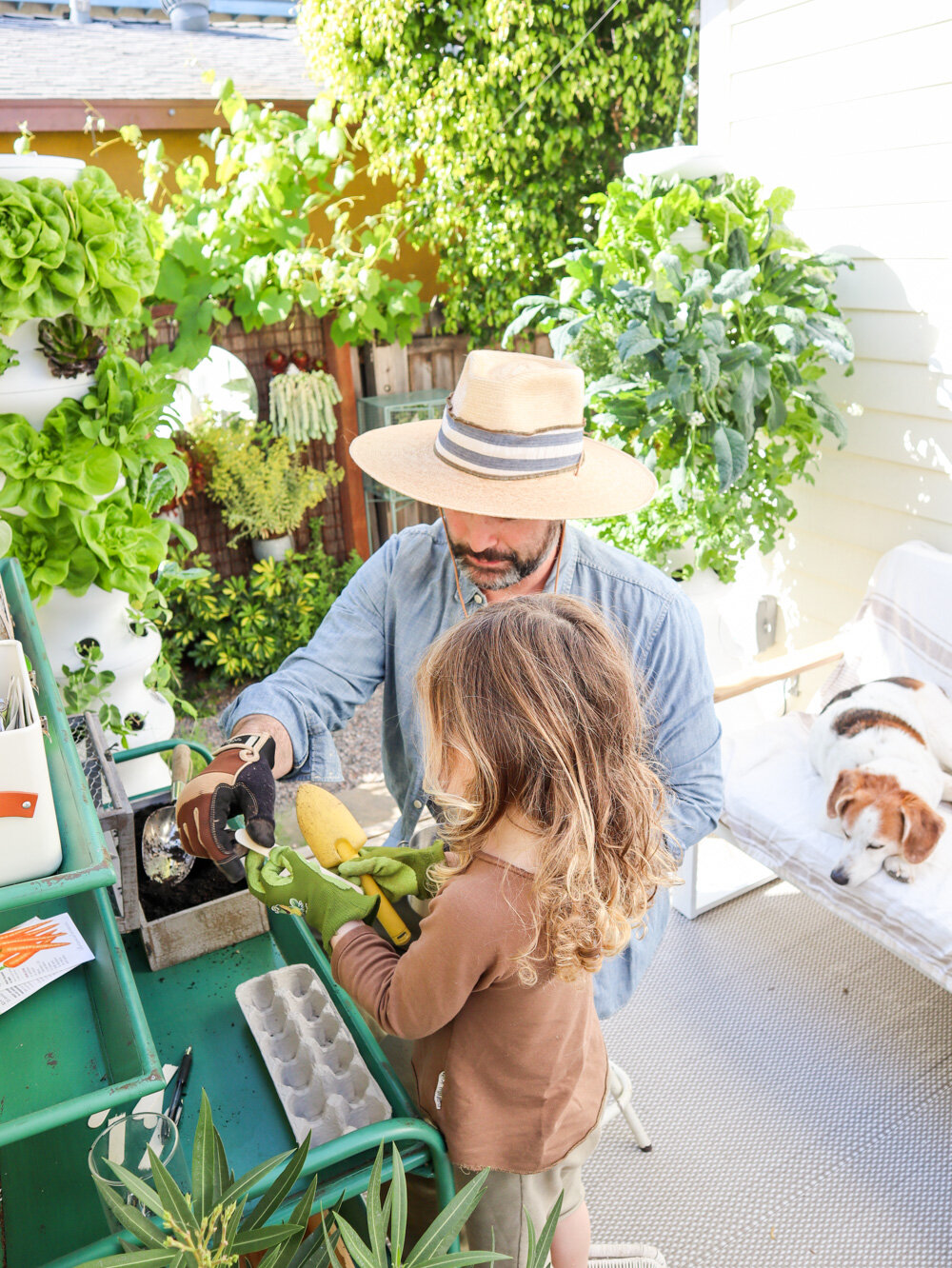
I’ll share our hack for creating the raised beds in the near future. But first we started out by getting some seedlings going in compostable egg cartons.


We’re attempting to grow several different plants on our little porch, from carrots to tomatoes to squash. We’re expecting plenty of failures, of course, but we’re hoping for some successes as well. To experiment, we’re trying a mix of soil types— some enriched with compost, some peppered with small doses of rinsed coffee grounds, and some sprinkled with fragments of nutrient-rich soil amendment courtesy of our FoodCycler.

West has been helping with it all, planting seeds and tending to the Farmstands. But we also got him a Root Viewer, so he could plant radishes, onions, and carrots and then watch them grow downward over time.


This family activity has been productive and entertaining as we shelter at home during the pandemic. I’ll share more from our experience soon, as this is just the beginning of our greener journey together.


How to Apply the “Three Rs” to Your Skincare & Cosmetic Products
Note: This post was sponsored by Josie Maran Cosmetics in celebration of Earth Day, and as part of their partnership with One Tree Planted and TerraCycle, along with their donation efforts to support workers on the frontlines of the COVID-19 crisis. All words (with the exception of direct explanation of products or services) and opinions are my own. As always, any content featuring our child and/or pups was taken as they interacted in their own natural ways.
We all want to be healthy and feel confident — especially now, as the world is in such a challenging and stressful state of flux and uncertainty. But we can no longer embrace beauty and wellness products that incorporate ingredients, production methods and packaging that take such a massive collective toll on the environment, and on the individuals working throughout supply channels.

In this crucial decade for the protection of our planet and the health of its inhabitants, consumers can choose to do better.

Reduce
Reduce (or ideally eliminate) your dependency on single-use beauty supplies. Items like ear swabs, cosmetic swabs, cotton rounds/swabs and wipes are all available in washable, reusable formats. You can also cut back on single-use plastics by swapping bottled shampoo, conditioner and body wash for their counterparts in bar-form.

Select multi-tasking, long-lasting products that aren’t formulated with wasteful filler ingredients helps reduce vast amounts of transport and packaging waste.


Products like Josie Maran’s 100% Pure Argan Oil — a powerful oil that’s packaged in a compact glass bottle— performs multiple functions. It’s a moisturizer, cuticle oil, lip salve, eye treatment, and hair serum.


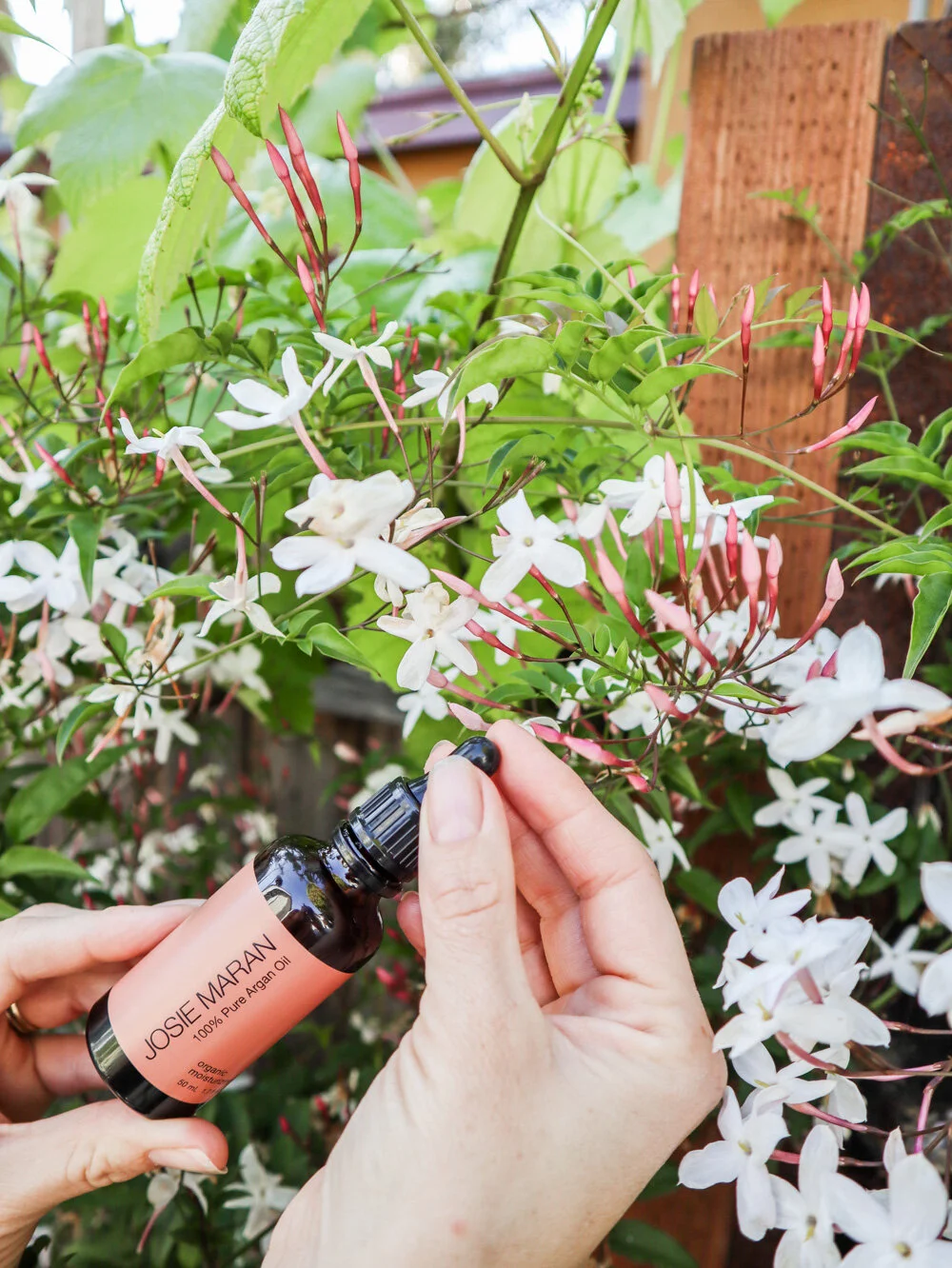

And with each bottle of it sold at Sephora, they’re currently donating $5 towards One Tree Planted. (Additionally, for every purchase of their 100% Pure Argan Oil, customers will have the option of either donating $10 of the purchase towards helping provide resources to healthcare workers on the frontlines of the COVID-19 crisis, or simply taking $10 off the purchase altogether.)

You can also curb your intake in general by vetting the origin of a product’s ingredients, as well as the social responsibility policies and supply lines behind the brands you considering supporting with your hard-earned dollars. If a company isn’t in compliance with environmentally-friendly practices and human rights protections, first, don’t buy from them. (Next, make some noise about it.)
Josie Maran Cosmetics sustainably harvests their Argan Oil from a UNESCO-protected region to help prevent deforestation and overharvesting. A single Argan tree can survive for more than 600 years and can give fruit throughout its entire lifecycle (including trees that are 600+ years old). And Josie Maran Cosmetic’s 100% organic, full-spectrum CBD products are sun grown in California using sustainable farming practices.

As this decade is paramount in fighting the Climate Crisis (see “The Future We Choose: Surviving the Climate Crisis” for full details), look to products and brands who have a plan for the future. For example, by 2021, Josie Maran Cosmetics has pledged to: print all product boxes using only 100% recycled materials, recycled material will be both Green e-certified and FSC-certified, meaning it’s always held to the highest social and environmental standards, and shift box printing to a carbon-neutral facility so less waste created during the production process. (Currently, several of their products are already being produced in facilities that utilize 77% renewable energy.)

Recycle
Don’t just toss your empties into the bin— they might be fully recyclable, no matter where you live in the US, and can be used to create something new and useful (like office supplies and furnishings, for example). All of Josie Maran’s products are recyclable via TerraCycle. You don’t even have to clean your containers out to do you part. Just box up your empties, print your free shipping label from your account on TerraCycle, and UPS will ship your package for free. (Visit the UPS + TerraCycle websites to verify safest practices during the pandemic.) To date, over 202 million people have helped to collect and recycle enough waste to generate TerraCycle points that have raised raise over 44 million dollars for non-profits around the world.

Reuse
Arguably the number one way to tackle the issue of how to minimize landfill and ocean-bound trash is to stop generating generating so much of it. Products like Josie Maran Argan Sugar Balm Body Scrub are cleverly packaged in beautiful containers that, once used up, can be cleaned to then hold a myriad of things (like reusable cotton rounds). The teardrop shaped bottle that holds Pure Argan Milk Intensive Hydrating Treatment (or most of Josie Maran bottles, for that matter,) is the perfect size for a little bedside bud vase for calming lavender clippings to encourage a soothing sleep.


Let’s all do our part— we are facing these global challenges together.
(Thank you, as always, for supporting the businesses that help us keep our tiny cottage’s twinkle lights glowing— especially now.)

Activities for Sheltering at Home in a Small Space (Week 6)
Sheltering at home looks different for every household. Here at the cottage, we haven’t deep cleaned the house, nor have we started taking new classes, learning new skills, or watching new shows.
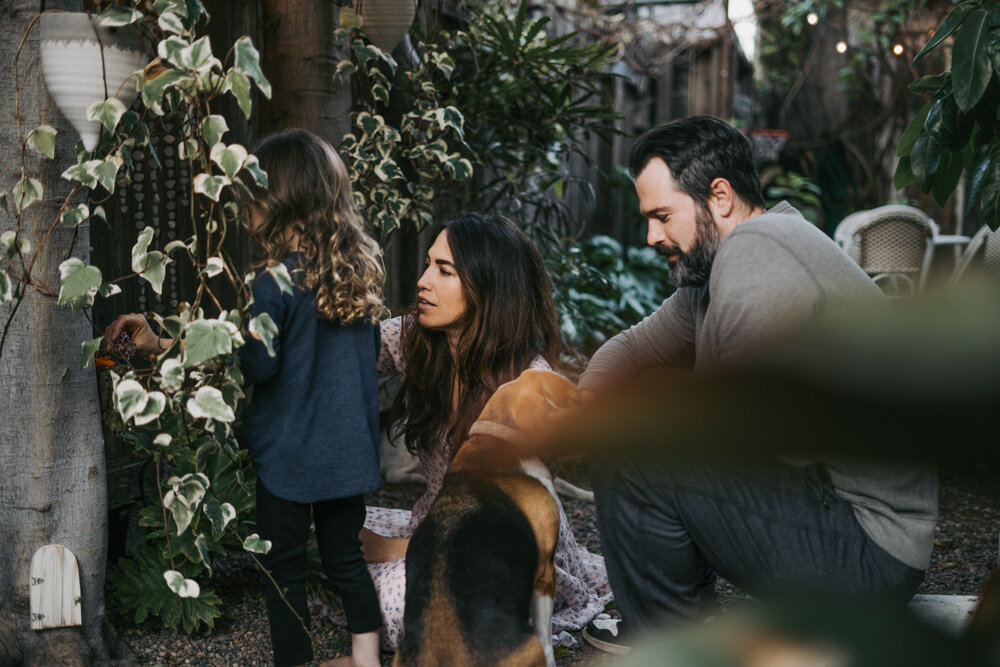
Our home is a daycare from 7am - 9pm.
And it’s a small business office from 6am - 11pm.
7 days a week.
I’m not complaining. Being able to shelter from home with my family is a privilege.

And thankfully, to my surprise, West still hasn’t asked to go anywhere the entire time. I was expecting daily questions and requests, but they never really manifested. I find myself holding my breath for a breakdown that has yet to come.

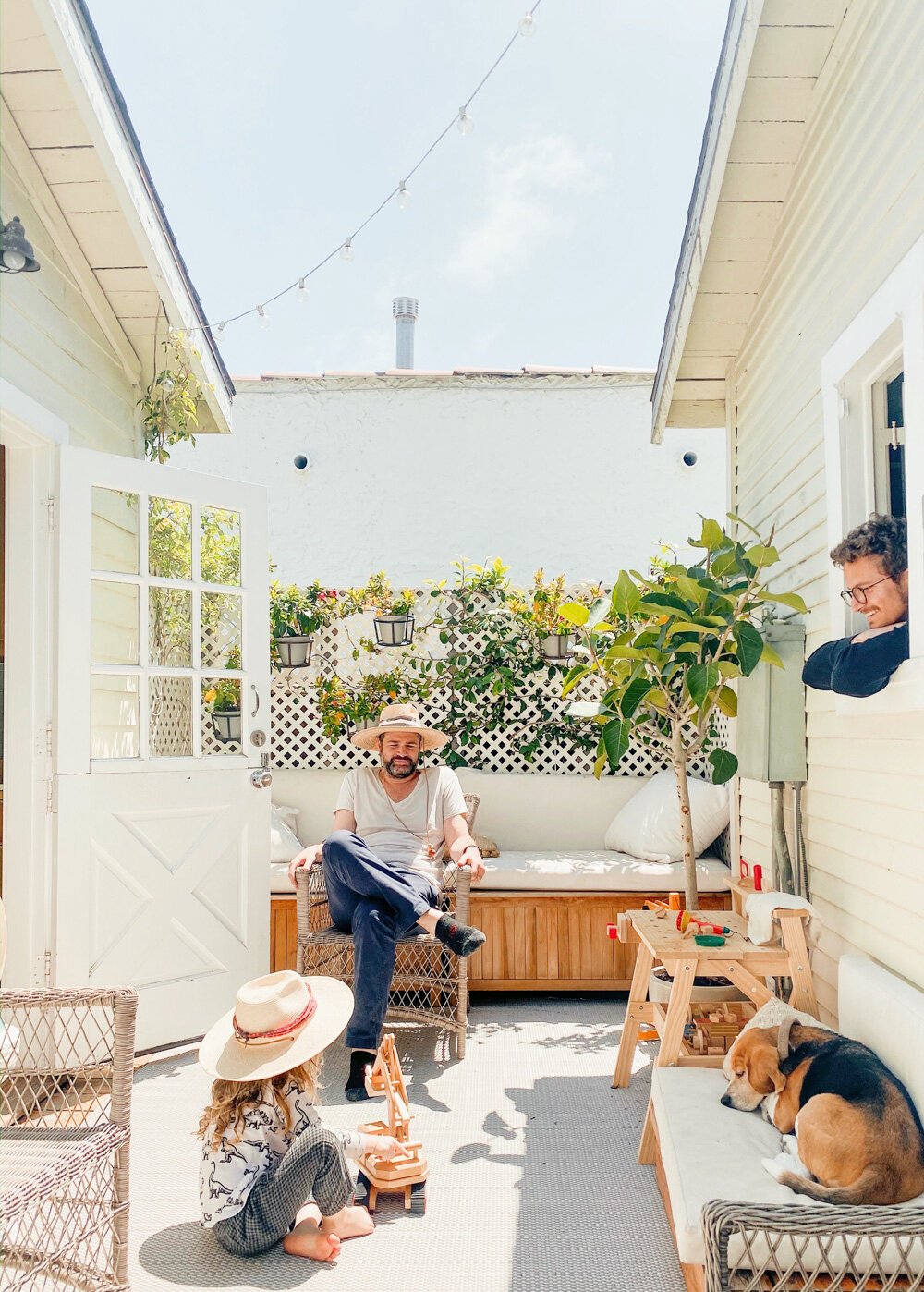
Above: West speaking to our neighbor from across the 8’ porch that separates our homes.
The days go by quickly, some smoother than others.

West sweetly requests more undivided attention than I can necessarily give, I fall behind on work, I’m out of shape, I’m distracted during most calls and meetings, I’m making more typos in my writing, and days go by without being able to touch base with my parents.

But this is a time for heightened flexibility, compassion and patience— with others, and with ourselves.

WORK
As a far as conducting business is concerned, I stick to many of my Tips for Working Effectively from a Small Home / Apt During the Outbreak. Even though I can’t work uninterrupted for more than a 30-60 minutes at a time, I do try to practice helpful habits like separating myself from the rest of the family, clocking-in for the task and clocking-out when it’s completed, and having necessities and comforts within arm’s reach (and notifications off) so I’m not sidetracked.


PLAY
We are turning nearly everything into an activity to do with West. Our days usually consist of the following:
Reading (about 2 hours each day)
Listening to Pinna audiobooks / stories while playing with trucks, building blocks/tiles, train tracks, etc.
Watching episodes of Sarah & Duck or Puffin Rock with our mini projector
“Painting” the fence with water
Bubbles
Cooking, baking, cleaning and laundry as family games
Dance parties
Playdough (I refer to Erin Boyle’s DIY instructions here)
Building forts (on the couch, with a tablecloth tent, and with play silks / scarves)
Window darts (these are plastic, but I’m glad we have them—- they’re fun for the whole family and we use them constantly)
Running around the house and yard with the pups
Art class (stickers, simple crafts, color pencils and crayons, paper planes, etc)
1 hour of French zoom class with friends, 4x / week
Gardening, Farmstand harvesting and monitoring, and careful watering of the indoor/outdoor plants
Puzzles (we only have 4-5 small ones, but they’re enough at this point)
Basketball
Video / Portal calls with family and friends
Chatting over fences and through windows with our neighbors
“Fishing” in the main room or garden
Switching up meal and snack formats in the PlanetBox for in-home picnics



Outdoor Shower
In searching my own blog recently, I realized I never shared a dedicated entry about the garden shower we installed a year ago. As we receive inquiries about it daily, I figured it was finally time to add this post.

During the warmer times of year, this simple outdoor shower brings us so much joy. Whether it’s being used strictly for cleaning or purely for relaxation, the shower has proven exceptionally useful here at our tiny home. We live a short walk from the beach and right next to the canals, so — when we’re not practicing social distancing, of course — the 5 of us often return home with sand or muck on our skin (or fur and paws), clothes and gear.

By digging out a bit of pea gravel and sliding a shallow potting or boot tray beneath the shower’s built-in teak platform (and by using a simple, organic shampoo + soap bar), we can collect water to then reuse on our non-edible plants.

This particular model uses a basic hose hook-up, and doesn’t have hot a water connection. This actually helps us limit our shower time, and encourages us to turn the knob on/off only when we truly need the water running.

As such, it’s been a great way to teach West about water conservation. (And he’s used to showering since he outgrew his portable folding tub between year 1 and 2 and we don’t have a tub at the Cottage.)
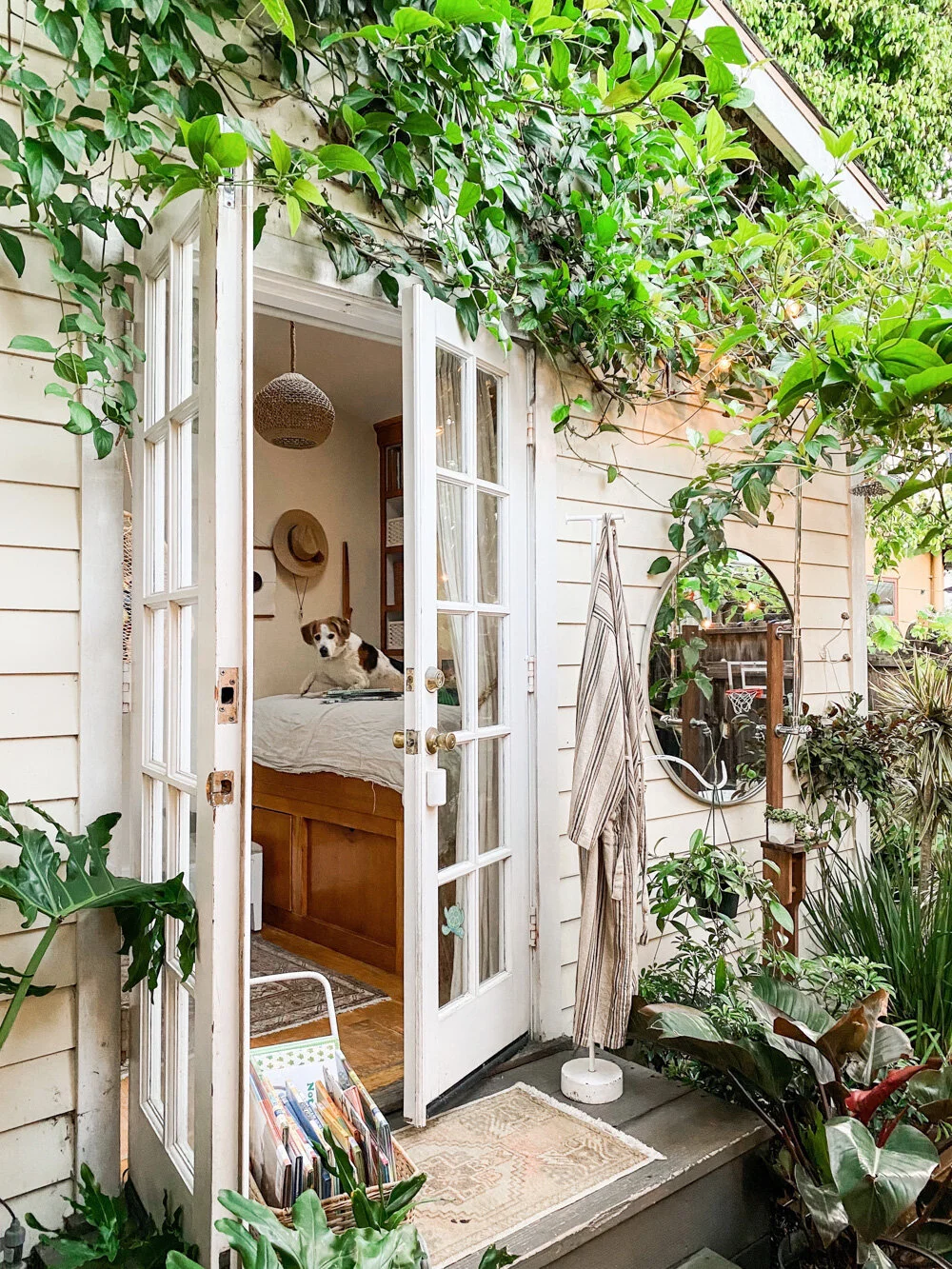
This past weekend I decided to try a sunset shower as a form of self-care. It was a bit cold, but it was well worth it. It found that, when paired with a mug of hot lemon water and some music from our portable bluetooth speaker, a shower under the vines and twinkle lights was a healthy way to sooth my mind and calm my nerves.


Adjusting Business and Expenses During the Pandemic
Talking about money makes me uncomfortable— it always has. But at the request of readers, I’m writing this post to share some of the ways in which our small business and family have been financially impacted by the ripple effects of the pandemic, and how we’re adjusting to stay afloat.

Our larger monthly expenses are the typical ones: our home, healthcare, education, food, and various business fees (which are hefty here in California). We don’t spend much on things like clothing (we buy very few garments since we share one closet and are trying to reduce our fashion footprint), accessories (we don’t dress ourselves up, as we work from the house), home goods (I try to decorate with what we already own and use daily), gas (we share one car and rarely drive), or books (we borrow most from our libraries).
Like countless others, we’ve lost a significant amount of revenue during the shutdown. I’ve tried really hard to separate my business as much as possible from the selling and promotion of tangible goods, and focus instead on services. Obviously my contracts for in-person events and speaking engagements were canceled. And campaigns that I’d already conceptualized, shot and edited were also pulled due to COVID, as they were mainly rendered for service-based companies. And while it’s normal for me to get numerous requests daily for various forms of unpaid labor, those requests have skyrocketed, as nearly everyone has felt a squeeze.
As a single-income family running our own small business, it’s all scary, of course. For a while now, money has been steadily going out without steadily coming in. But when I think about the fact that we are able to shelter together here at home and that we have food in our kitchen, I cannot complain.
Here’s what we’ve cut back on:
Education
One of our 2020 goals was to actively work towards learning more. Adam and I signed up for courses from Kiss The Ground and SkillShare, and were looking into continuing our educations via classes at local colleges, either in person or online. We had also enrolled West in classes for 3 days per week to diversify his experiences while simultaneously helping Adam and I get through our workload, volunteer commitments, and learning endeavors. We’re now no longer engaging in new spending with respect to the above.

Dining
One of the reasons we love living in Venice is that it has some of the most incredible, healthy food. Going out here— even for just a juice or coffee— is pricey. It’s one of the reasons we live tiny, so we can balance out spending. Now, as much as we yearn to support local small restaurants and their staff, we just can’t afford the expense of takeout. We get a fresh market box from a regional farm once per week, and one batch of groceries delivered per week. We’ve prepared every morsel of food here at home for the past month. Again, this is a privilege, and we know it. While we’re not in a position to donate funds right now, we are still looking into ways to get food routed to local nonprofits who are working to feed at-risk groups. (I’ve committed to donating a part of every sponsored campaign to select organizations, but I have to book and be paid for the campaigns before I can pass a portion of those dollars onward.)
Production
We’d been working on the 2nd season of our educational video series from the Cottage, as well as other shoots regarding sustainable small space living. We’ve canceled those plans, and are in the process of navigating the production of other content at no cost.
Contractors
We’ve had to cut back on the work we do with independent contractors. This upsets me on a personal level, as I care about these individuals and the work they do with us. But I’ll only hire someone if I can afford to pay them on the same day they invoice me— I never want to make anyone wait for payment for services already rendered.
Savings
Since we run our own business, we have to save for our own healthcare expenses, retirement and insurances— and we try to save for West’s education. All of that is on hold, as we shift our focus instead towards not going into real debt.

Subscriptions
We canceled most of our subscriptions, with the exceptions of the ones we use daily, or the ones we rely upon for news and information we trust.
Entrance Fees and Transportation Costs
Since museums and community events are shuttered, our family and business is no longer allotting the money required for those, including the associated transportation costs. West and Adam used to visit at least 1 or 2 museums/attractions per week while I worked.

Above: Handmade masks by our friends and neighbors at Late Sunday Afternoon.
New Purchases
We’ve committed to using up everything we have at home before buying anything new. Every single bar soap/shampoo. Every toothpaste tablet. Every drop of oil. Every candle. Etc. Same goes for toys. West has plenty already, and if we put them on rotation, he doesn’t get bored. (I must say, I really, really miss our library though. “New” books would be great…) We did, however, invest in some masks for the family from our friends at Late Sunday Afternoon and Hedley & Bennett, and I also got a mini projector since we don’t have a TV.

Holistic Medicine and Practices
I’ve been trying to get pregnant for over a year. I’d recently been visiting my doula, trying dietary supplements and probiotics, and doing acupuncture. (The acupuncture was also for the back injury I’ve had since September that has yet to heal.) All of those are luxuries I could afford because we live tiny, but I’ve stopped them all, with the exception of my Ritual Prenatal vitamins, which I find to be both affordable and easily digestible.

One more thing of note:
I know that reusable goods aren’t possible for all. Not everyone has easy access to a washing machine, for example, and not everyone can afford the up-front costs of reusable goods. But I will say that our reusable bath and kitchen goods, as well as our Lettuce Grow Farmstand, are really coming in handy right now. For example: we haven’t bought toilet paper for months, thanks to our bidet. We never have to go to the store for paper towels and wipes, as we have our washable cloths. I didn’t need to buy tampons or pads when the time came and I discovered that, for yet another month, I wasn’t pregnant. And we no longer have to go out to buy heads of lettuce or bundles of spinach, as they’re growing outside our door on our tiny porch. I want to be delicate about this, but I also want to provide this information in case it’s helpful to others.

Above: Our Lettuce Grow Farmstand outside of the living room window.
Stay safe, folks, and know that we appreciate you being here with us. Any time you visit this blog, you support us. For anyone reading this who works in essential services: my family thanks you from the bottom of our hearts.

9 Years in the Cottage
This month marks the 9th anniversary Adam and I moving into our lil’ cottage. I’ve now lived here longer than any other residence during my life.
Since sheltering in place like countless others across the globe, I’ve received the same question from someone at least once a day: How do I feel about tiny living now that we’re at home around the clock?
The truth is, Adam and I have been practicing this style of 24/7 live-work tiny life ever since he left his digital advertising job 3 years ago shortly after West was born and began working with me at home.

While the virus outbreak is devastating and extremely upsetting on so many levels, the “Safer at Home” order has changed very little for our family in terms of our day-to-day routine. While our hearts are aching for communities across the globe and our minds are racing from current events, our schedule and practices here at home are largely unchanged.
In Hilton Carter’s new book, WILD INTERIORS (which comes out on Tuesday!), the author, filmmaker and plant stylist wrote:
“When I visited [the cottage], I was amazed by the choreographed dance I saw taking place throughout their home. One person steps here so another person can step there... one two, step, one two, step.”
I love doing this dance with Adam every day, and am thrilled to mark this 9th anniversary of living here together. I can’t imagine a more comforting place to be with my husband, child and pups during this pandemic.

Thank you for being here with us. While we’re all physically separate, we remain emotionally (and digitally) together.
Photos by Lucia Doynel.

Nurturing a Sense of Wonder in a Tiny Garden (Part II)
A month ago, I introduced a fairy door + window to the cottage garden. The full post is here, but here’s a brief excerpt for context:
In a small space, it’s arguably easier to pick up on the mood shifts of your family members due to proximity and the level of familiarity that comes with such closeness. And while I always want to be honest with my 3 year old and nurture his sense of empathy, I certainly don’t want him to be negatively impacted by the way I operate when I’m feeling off. So, in order to redirect the focus away from my issues and towards something joyful, I decided to nurture West’s sense of wonder with a lil’ addition to our tiny garden.
Now the entire world is feeling off.

Since we’ve been home 24/7 for weeks, West and I decided to add a ladder to the fairies’ tree.

As I’ve mentioned several times before, I’m not great with DIY activities.

Luckily, things that look ridiculously flawed to adults can still be just as magical for kids.

I’m more of a DIY-lite kind of person, so this simple activity was perfect for both of us.

All we needed were some acorns, scissors, and twigs.

Our friends at Big Red Sun are making handmade fairy kits for families at home during the COVID-19 outbreak.
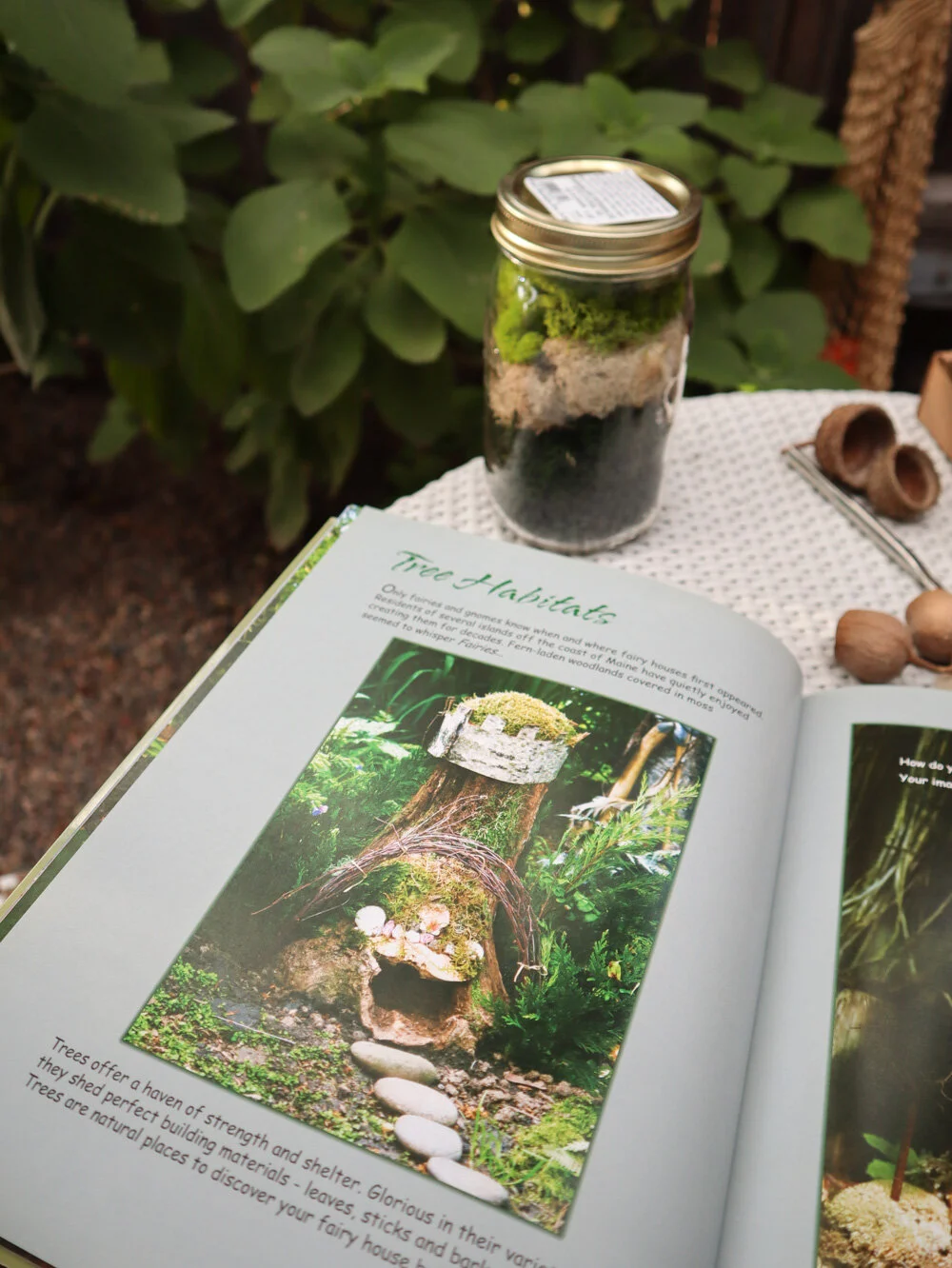
If you’re interested in being added to the release list, just send Big Red Sun an email: info@bigredsun.com. The kits should be in a week or so!


Growing Food in a Small Space
How do we grow some of our own food in very limited square-footage? Vertically!
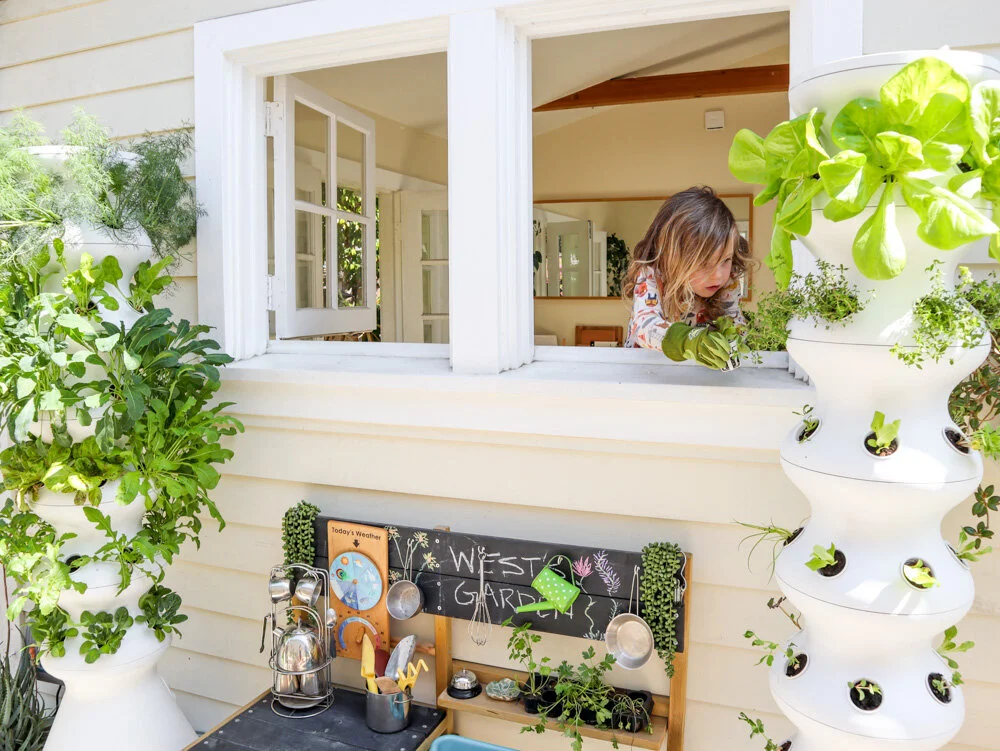
We are extremely lucky to have a small but highly usable garden space (which also serves as a shared thoroughfare with our neighbor), but for several reasons we’ve chosen to use it as an outdoor living space.
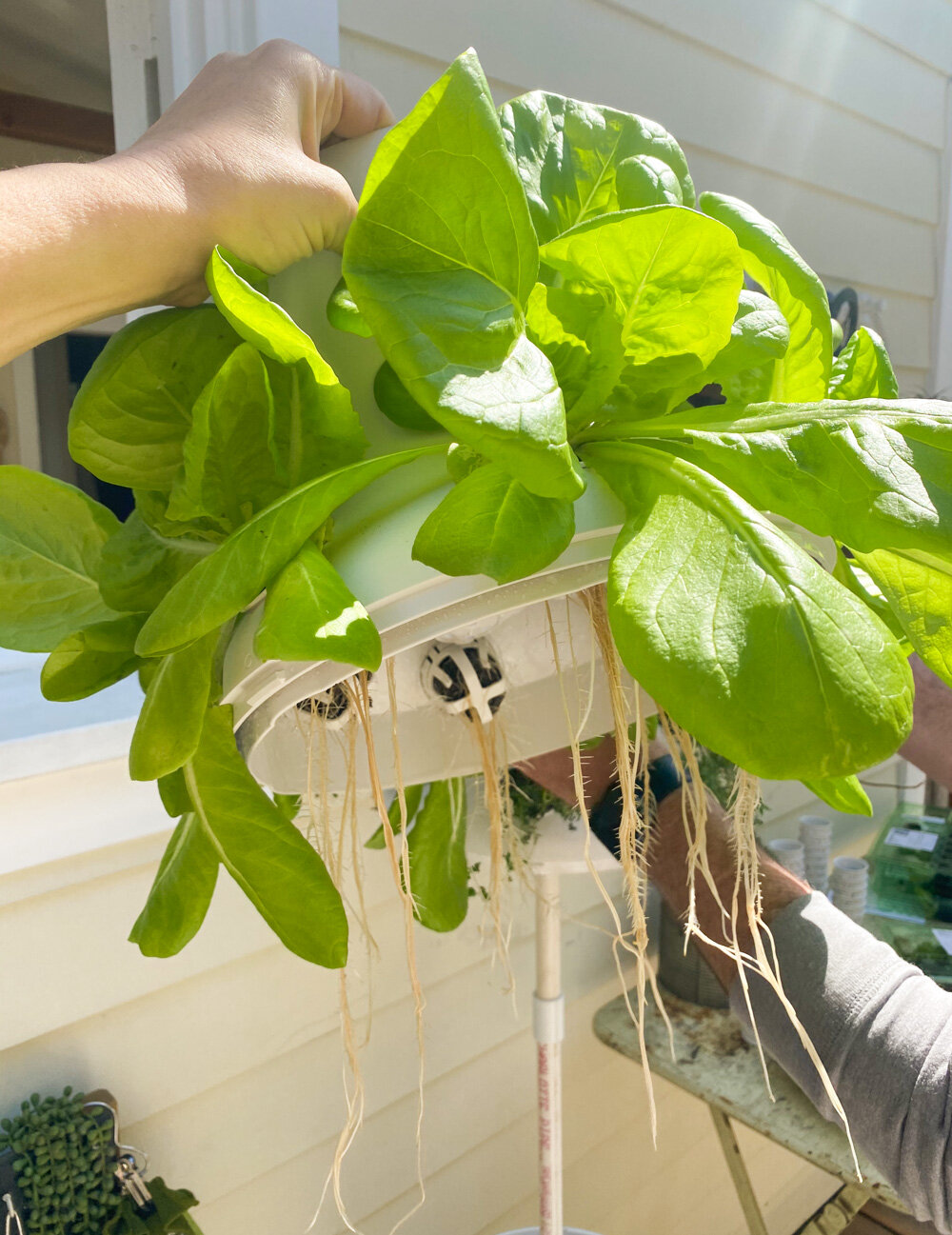
So, in order to produce veggies, herbs and fruit this year, we’re converting our sunny 8’ porch into a tiny house grow zone!

It’s is still very much a work in progress, but we started it all off with two Lettuce Grow Farmstands, enabling us to grow 72 plants within about 4 sqft.

The stands are made in the USA with plastic recovered from coastal communities lacking recycling facilities.
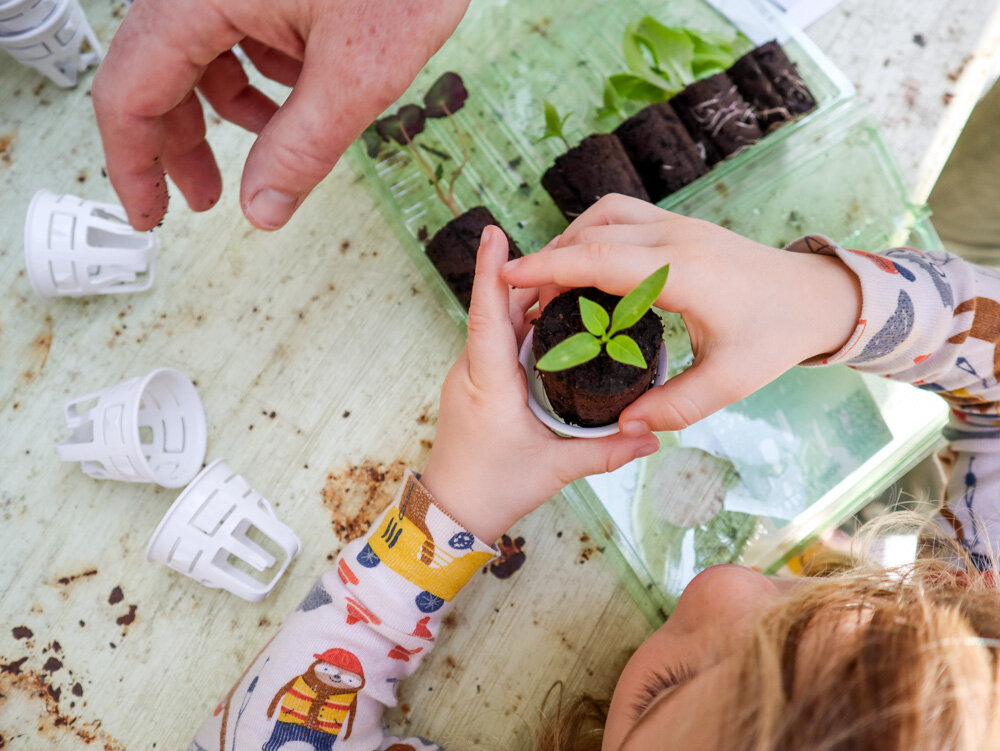
They require only a fraction of the amount of water needed for growing in soil, which helps here in drought-prone Los Angeles.

We’re just getting started, but already Adam has made meals using greens from the stands.
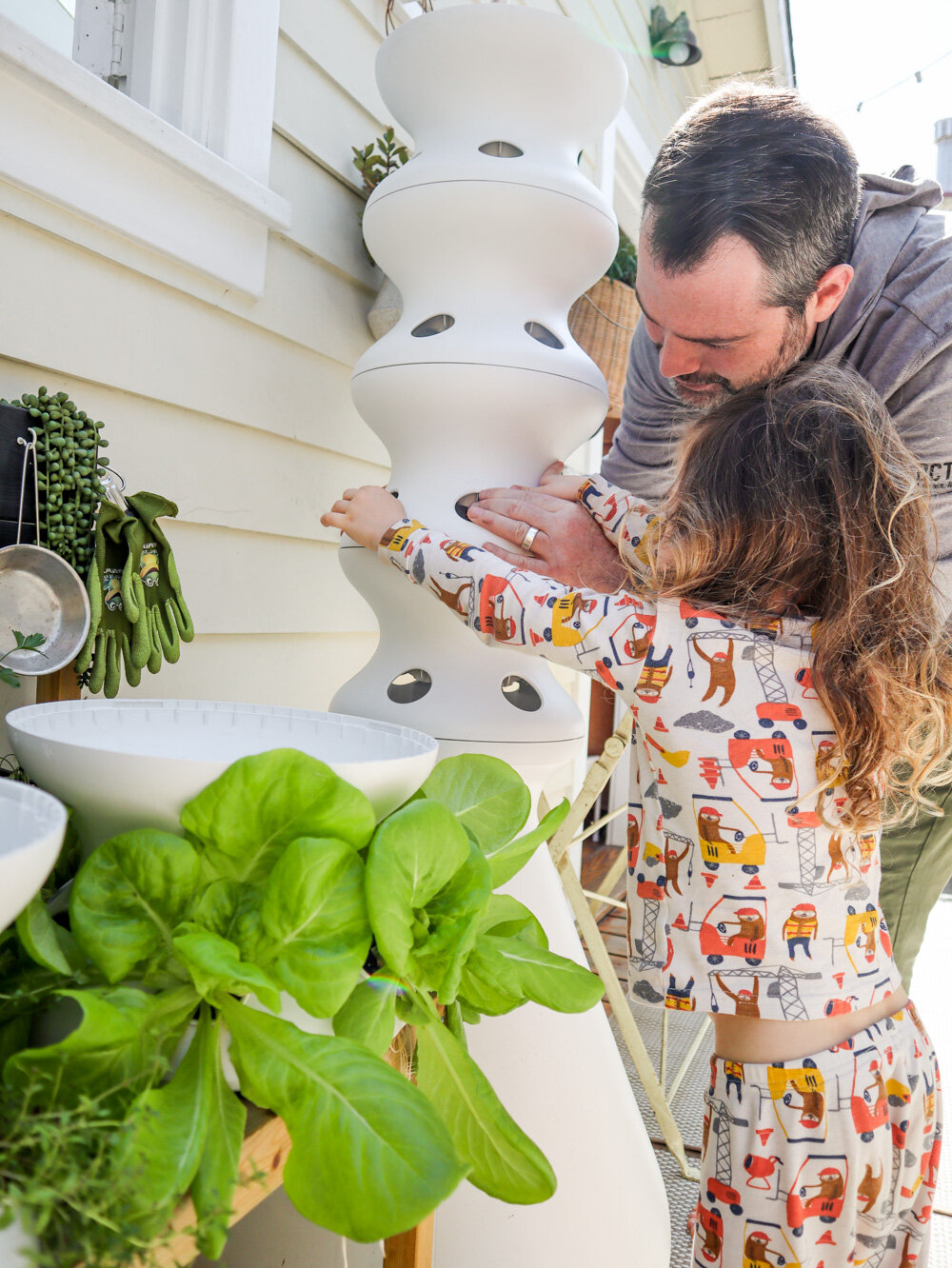
We’ll continue to share our grow journey with you throughout the year.


An At-Home Cinema in a Small Space (Without a TV)
We don’t have a television at the Cottage. I haven’t had one in nearly 11 years, and I genuinely have never missed it. However, I will wholeheartedly admit that since we’ve been following the Safer at Home protocol for the past 3 weeks, I have absolutely wished for a larger screen while watching the occasional random Netflix show or movie. (We used to use my old iMac — even while in the garden — but that machine has since passed on.)
So instead of caving and getting a television, which I really, really don’t want, we got a tiny, wireless, portable CINEMOOD, which is basically a stay-at-home cinema. (Update: Cinemood saw this post and provided me with a promo code to share with readers for a free smart cover: tinycanalcottage.)
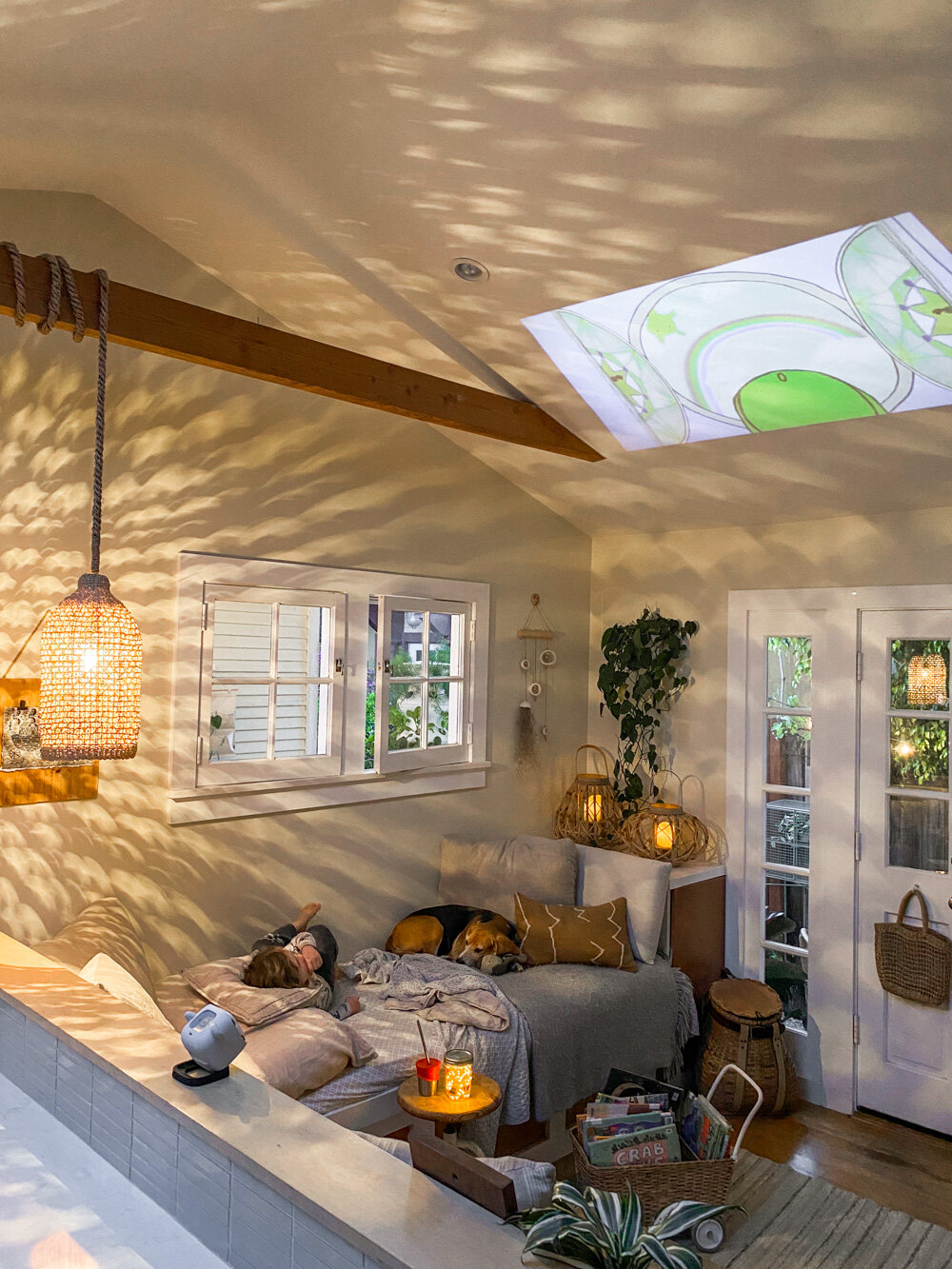
Suddenly we are able to watch movies and shows in the living room, bedroom, porch, and garden on a giant scale. (Where has this thing been for the past 9 years?!)
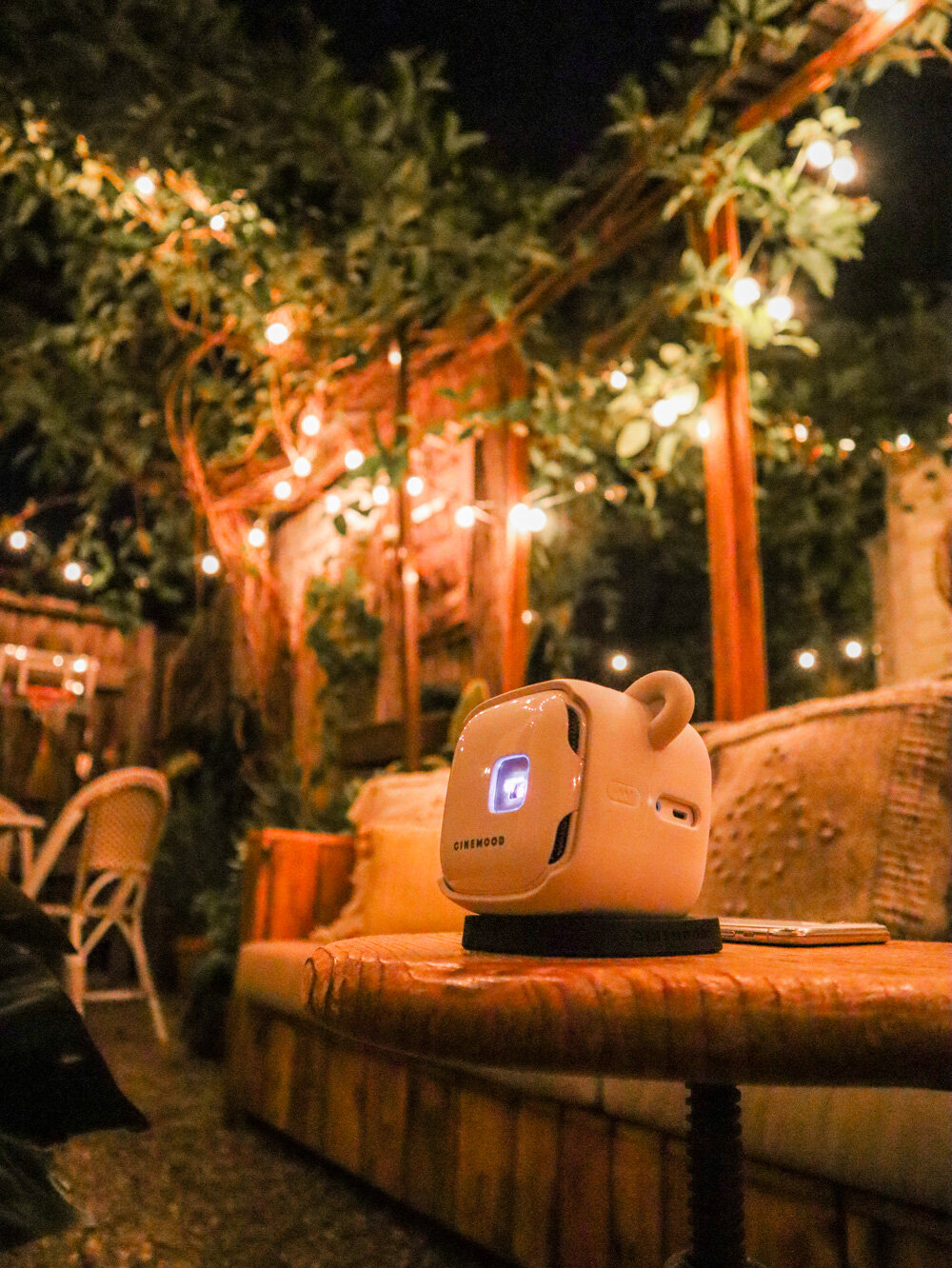
But my favorite thing of all is that there’s no bulky screen to attempt to hide (or roll up for storage) when we’re through. The projector itself can fit in the palm of my hand. (And we added a playful little case to keep it safe while West is holding it.)

Plus there are no cords. A quick charge is all that’s required, and then the device can go anywhere.

And, since our house and garden are so tiny, we can project from nearly any point on the property and the picture makes it clearly to the viewing wall. (The set-up was easy, but the app and functionality took me a bit to get used to. But I got there!)


West still watches shows sparingly. (His favorites remain Sarah & Duck and Puffin Rock.) Projecting the CINEMOOD on to the ceiling, walls, or even our closet and window curtains prevents our child from having to droop his lil’ neck to watch a show on a handheld screen.

I also feel like the cinema-style projection adds a new dose of magic to our normal day-to-day activities. That extra spark is particularly welcome in this odd time of being tethered so completely to our homes during the COVID-19 outbreak.

(Above: West’s Casa Straw Clutch by Olli Ella, which we turned into a nightlight with battery-operated twinkle lights.)
Since we’re practicing strict social distancing, we can’t gather with friends or family for a movie night, of course. But I do hope that I can come up with clever ways to watch something on the porch with our neighbors during the warmer months to come. (I’ll definitely share photos if we do.)

I’m all for creative solutions for simplified small space living, and this lil’ gadget is a perfect example of a way to think beyond a traditional setup without sacrificing comfort or style.

Note: This post was not sponsored.

My Functional Uniform While Staying "Safer at Home"
My friends and Venice neighbors over at Late Sunday Afternoon made an epic hoodie that was intended for use while traveling and on adventures, but I must say— I’ve found it to be pretty damn useful at home. Especially as we progress through our 3rd week of adhering to Los Angeles’ Safer at Home + social distancing orders.
Plus, it pretty much sums up my mood lately:

Per my previous post, I find it super helpful to stick to a set of tips and rules when attempting to juggle the live/work realities of life in our small space during unique time.

For example, I always get dressed in the morning (even if it’s swapping one pair of stretchy pants for another).

And I aim to keep essentials (such as my password book, my phone, and my lemon water) at-hand… not because walking the whopping 6 steps across our tiny home is an inconvenience, but because when I somehow manage to accomplish a chunk of work during the day, I don’t want anything unnecessary to derail my train of thought or productivity.

And I usually cocoon myself with some sort of personal audio buffer while I work. The combination of my AirPods and the built-in padding around the ears on this hoodie are surprisingly effective at muffling the delightful but highly distracting sounds of my 4 beloved housemates.

I’m also partial to this piece because Late Sunday Afternoon makes baby blankets for children in foster care with the first and last yard of every roll of deadstock fabric they use for their signature ascots and multi-functional scarves, which they sew in-house. And their Venice store operates at nearly zero waste, using fabric scraps to stuff dog beds that they then donate to local shelters.

For this unisex hoodie, The Apollo 1, which was entirely designed, knitted and loomed here in LA, they used 30oz Natural, undyed French Terry Cotton. Some of the hoodie’s clever features include:
Extra padding for the ears
A secret iPhone pocket in the kangaroo pouch (made from antimicrobial fabric) that supports the weight of the phone without slouching the belly of the sweatshirt
A built-in eye-mask
An interior loop for keys (or, in my case, my iPhone earbud holder)
Extra padding on the elbows

This ethically-produced, functional top feels like a protective hug, which is something I appreciate now more than ever.

Note: This post was not sponsored. I simply love Late Sunday Afternoon, along with their unique and magical team and creations.

Tips for Working Effectively from a Small Home / Apt During the Pandemic
I recently published a post entitled: Creating a Makeshift Home-Office in a Small Space, and it sparked further questions from readers who are feeling cramped and distracted while trying to maintain a productive workflow since relocating their workspaces to their compact, shared residences due to COVID-19..

Above: Screenshots from our 1-minute IGTV video about streamlining a small home-office.
Many of you have requested help with establishing and maintaining more efficient practices for working in tight quarters with a partner, roommate and/or children ever-present, so here are 14 accessible tips I’ve learned over the course of a dozen years of operating a business full-time from small residences.
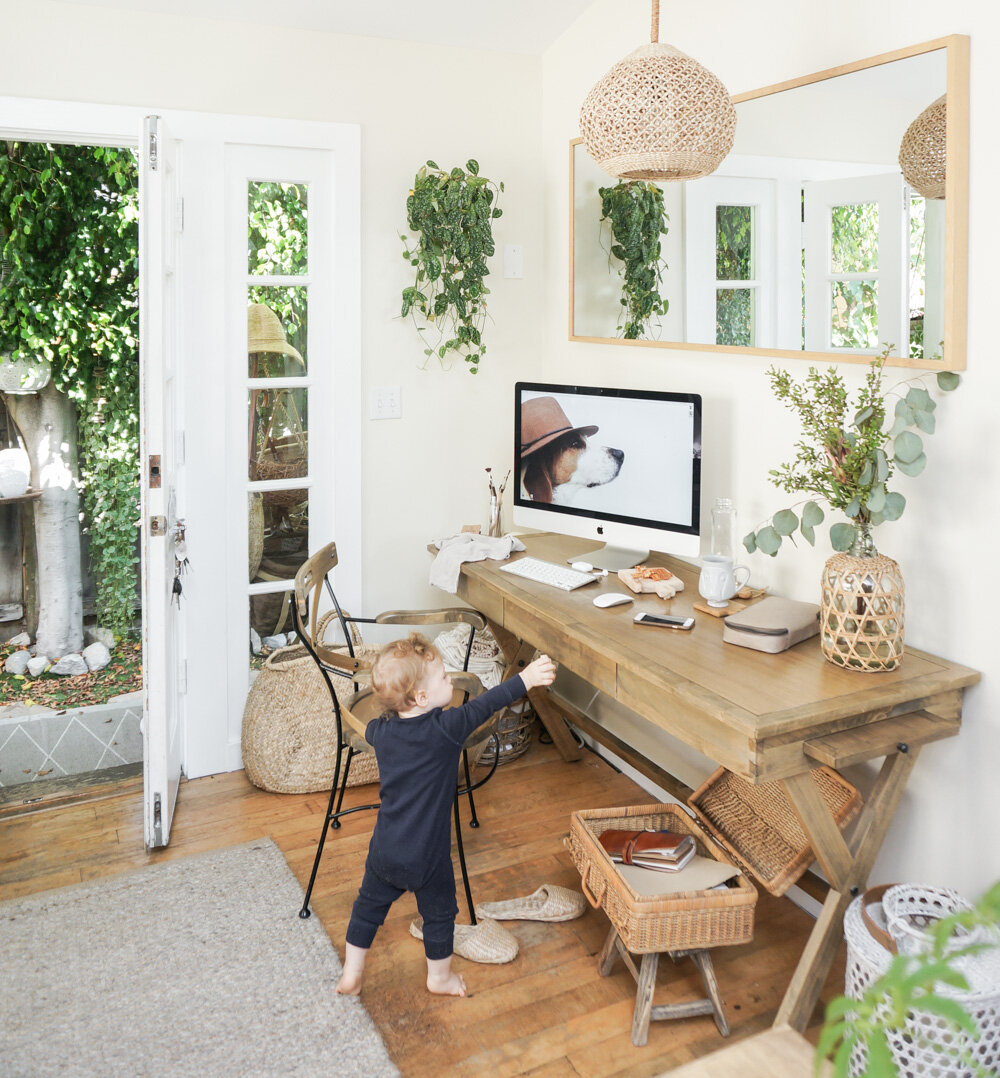
Photo from 2017
Keep in mind that some days will undoubtedly be more challenging than others, but the privilege of working from home is something to acknowledge and keep in mind. So many people are suddenly out of work across the globe, and medical professionals, delivery personnel and workers tied to essential businesses are putting themselves at risk to keep the rest of us safe. Staying home— even if it’s not your preference— is important for our communities, so let’s make it work.

Make your bed
Studies show that people who make their beds tend to be more productive. But in a small space, I think that making the bed is doubly important. With limited square footage, the bed can become a useful surface for random tasks throughout the day, such as sorting/filing/printing papers.
Carve out time for self care
Whether it’s as simple as brushing your teeth, washing your face or taking a shower— or more involved, like doing Yoga, making coffee/tea/a smoothie, putting on makeup if that’s your preference, and/or taking your pets for a (responsible!) walk, make sure to carve out time in your morning before work to accomplish the things you’d normally do before leaving your home for an office job.
Get dressed
I know this is often recommended to the point of exhaustion. Still, it really is helpful— even if you’re not on Zoom / FaceTime meetings during the day.
Set up a pop-up workspace if you don’t have a dedicated one
If you have a dedicated desk or dining table, fantastic. If not, create a pop-up workspace. Depending on your living situation, this might mean converting an end table into an office, employing a collapsible bistro table, or using a lap tray in bed. Whatever it is, set yourself up with the tools you’ll need throughout the day, so that you won’t loose your train of thought or productivity by having to get up and find supplies (and thus risk getting distracted) while you’re in a positive workflow. If possible, set up shop by a window, or place a mirror nearby to reflect the natural light from the closest window. In situations like these, I believe it can be emotionally beneficial to get some exposure to nature and/or your community while you work.
Clock-in
Set a time to start and stick to it. I believe this is why I have been so productive at working from home over the past dozen years. When I first began working remotely, I had a client with whom I had to check in every morning at 8AM, and that obligation provided a me with a sense of formal structure, much like a standard office does.
Set your phone timer for scheduled breaks
When you’re working from home, it can be tempting to hop up and take care of chores around the house. Overall, it’s a great gift to be able to check off your personal to-do list while simultaneously addressing your professional duties. But the reality is that this can be distracting and derailing. Instead of succumbing to the urge to steal random moments to manage chores, set timers on your phone to coincide with the times of day you’ll likely need a brief break to stretch and use the bathroom. At those intervals, allot an extra handful of minutes for calling a friend, getting a snack, doing the dishes, watering the plants, tending to personal matters, etc. Let your parter / child / roommate know when these breaks are scheduled so you can touch base or get out of each others way if needed. When your timer sounds again to signify the break is up, back to work!
Try earbuds or noise-canceling headphones
Whether you prefer to listen to music, need silence, or simply can’t stand another minute of your housemate’s keyboard clacking, invest in a pair of earbuds or noise canceling headphones if possible.
Consider a curtain or screen
It might be worthwhile to use a makeshift curtain, accordion screen or a room divider of some sort to cordon off your work zone. (There’s plenty more about this topic in my book, Small Space Style.) Beyond adding a sense of privacy, this can provide physical and symbolic boundaries for those with whom you share your home. It can also keep your eager eyes in check when they’re tempted to wander over to the snack shelf or laundry pile when they should be focused on your work instead.
Practice In-House Texting
This might seem absurd in a small home or apartment, but consider texting your partner/roommate/etc. or asking them to text you if something needs to be discussed. That way you will see the text when you choose to look at your phone and can then respond accordingly, rather than being yanked abruptly from a focused moment. (Adam and I often do this, even though we live in under 400 sqft… it works.)
Explore storing your administrative supplies in more than one area if you’re feeling cramped
While it’s handy to keep your must-haves within arm’s reach (as mentioned in tip 4, above), you don’t need to cram ALL of your supplies into one area in your small home office. If you rarely use a printer but have one, perhaps store it somewhere else so that you don’t feel like your work zone is taking over your home. (Examples of this can be found in the IGTV video linked at the start of this post.) Same goes for bulky files, business tools, etc— especially if you’re sharing them with someone else in the home. Spreading accessories out will aid with storage, but it will also allow all parties to use the same items throughout the day without distracting each other when crossing zones to borrow this-or-that.
Temporarily delete apps that distract
If you’re tempted to check non-essential apps on your phone, consider deleting them during the work day, and reinstalling them after you’ve “clocked out”.
Clock out
Just like clocking in, a clocking out routine can be useful for maintaining a live/work divide. Stow office items until the next work day, freeing up your home for personal activities and family time.
The night before, set up an activity for your kid(s) for the morning
If you’re feeling like the mornings are too hectic, analyze why. Do your kids need something to keep them safely occupied while you go about your self care routine and/or prepping your workspace? Perhaps plan and set up an activity for the morning that will keep them happy so you can stick to your schedule.
Prep Meals
If you find yourself hanging out in the kitchen more than you normally do, perhaps prep your meals and snacks in advance. This can prevent wasted time, and while potentially encouraging a healthier diet since we all need to keep our immune systems healthy while this virus circulates through our communities. Not only that, but preparing food in advance is a wise way to ration food within your household, limiting possible exposure from potentially avoidable grocery shopping trips and/or deliveries.
Remember: We’re all in it together. You’ve got this.

"Small Wonder" Feature in "Wild Interiors"
Despite the fact that Adam and I have been together for more than a quarter of my life (WHAT IS TIME?!), we really have so few photos together. Our extraordinary friend Hilton Carter (@hiltoncarter) took this portrait here at the cottage while he was snapping imagery for his new book, Wild Interiors.

Above: Outtake photo from the Cottage by Hilton Carter for his new book, Wild Interiors.
At one point during the photoshoot, Hilton paused to adjust the settings on his camera, and Adam and I kept standing there in the garden, arms locked around each other. Hilton eventually looked up at us and said: “you two know I’m not taking photos now, right?”

Above: Outtake photo from the Cottage by Hilton Carter for his new book, Wild Interiors.
We knew. But even after being in such close proximity to one other for day and night, year after year, we still want to wrap ourselves together and hold one another up. I’m so thankful to Hilton for capturing that love, and for including us in his second book.

Above: Author, filmmaker, and plant + interior stylist Hilton Carter at the Cottage in 2019.
Hilton’s newest book, Wild Interiors, is as stunningly beautiful to look as it is informative (and often hilarious) to read.

The pages are overflowing with his signature texture-rich photographs, layered with depths of lush greenery and brilliantly orchestrated interiors.

Above: The outdoor shower at the Cottage featured in Wild Interiors.
Wild Interiors opens with Hilton guiding readers through his own epic plant journey, and sharing his inspirations and favorite house plants. It then showcases the residences of 12 plant parents (Adam and myself gratefully included), that demonstrate the versatility of decorating with plants.

Above: Photo from the Cottage by Hilton Carter as seen in his new book, Wild Interiors.
From there, Hilton ushers audiences through a room-by-room profile of the plants that are most suited to each type of space within a home.

About the book:
Wild Interiors is my follow up to my first book, Wild at home. Instead of showcasing my home and studio, I traveled the world to show you the beautiful spaces of others. First I take you through my own plant journey, inspirations, and my top ten favorite house plants of the moment. I then grab your hand and take you along with me on a Journey in Greenery where I showcase the homes of 12 inspiring plant parents that demonstrate the versatility of decorating with plants. From a tiny house in Venice, California and a light-filled loft in New York City, to a Berlin apartment decorated with vintage finds, and the Barcelona home of a ceramic artist, there are ideas for all types of spaces and budgets. I then set you off on your very own plant journey, taking you room by room, profiling the plants that are most suited to each: those that thrive in the tropical humidity of bathrooms, the erratic heat changes of kitchens, and plants that can live happily in the indirect light of an entryway or bedroom. Packed full of interior design advice such as using “statement plants” like Fiddle-leaf figs to create a focal point, how to layer your greenery by using hanging baskets, and how to assemble the perfect plant shelf, I show you how bringing houseplants into your home creates instant impact. Be inspired to create your own Wild Interiors with my styling advice, plus my hints and tips on plant care that take the mystery out of looking after your green friends.

Above: Author, filmmaker, and plant + interior stylist Hilton Carter at the Cottage in 2019.
I am in such awe of Hilton Carter and his myriad of talents, and I’m honored that the Cottage and my family are part of his gorgeous new book. We are lucky and endlessly grateful that Hilton and his wife, Fiona, are part of our lives.


Keeping Our Small Space Organized While on Lockdown
Our family was practicing strict social distancing for a week prior to Los Angeles issuing its “Safer at Home” lockdown order. And while life beyond our walls has changed drastically— as it has for everyone— our existence at home is oddly similar to how it’s been for years.
For example:
We are used to being mere inches from one another for days on end.
We rarely use the car, as we have no daily commute and are lucky enough to be able to bike around town instead.
We don’t use disposable goods (such as tissues, paper towels, toilet paper, cotton rounds, tampons/pads, disposable razors, or ear swabs), so there’s no need to stock up.
We’ve long spent the majority of each week with our son here at home as we balance the full-time operations of our small business. As such, we’re used to both the challenges and joys that such a situation presents.
In recent months, while working from home as usual, I found myself perched at the kitchen counter more, and seated at my desk less. Since West usually plays in the main room (behind my desk chair), it no longer felt natural to sit with my back towards that area. By contrast, from the kitchen counter I can observe him while going about all of my administrative work, which is why started to transform it into my office every morning.
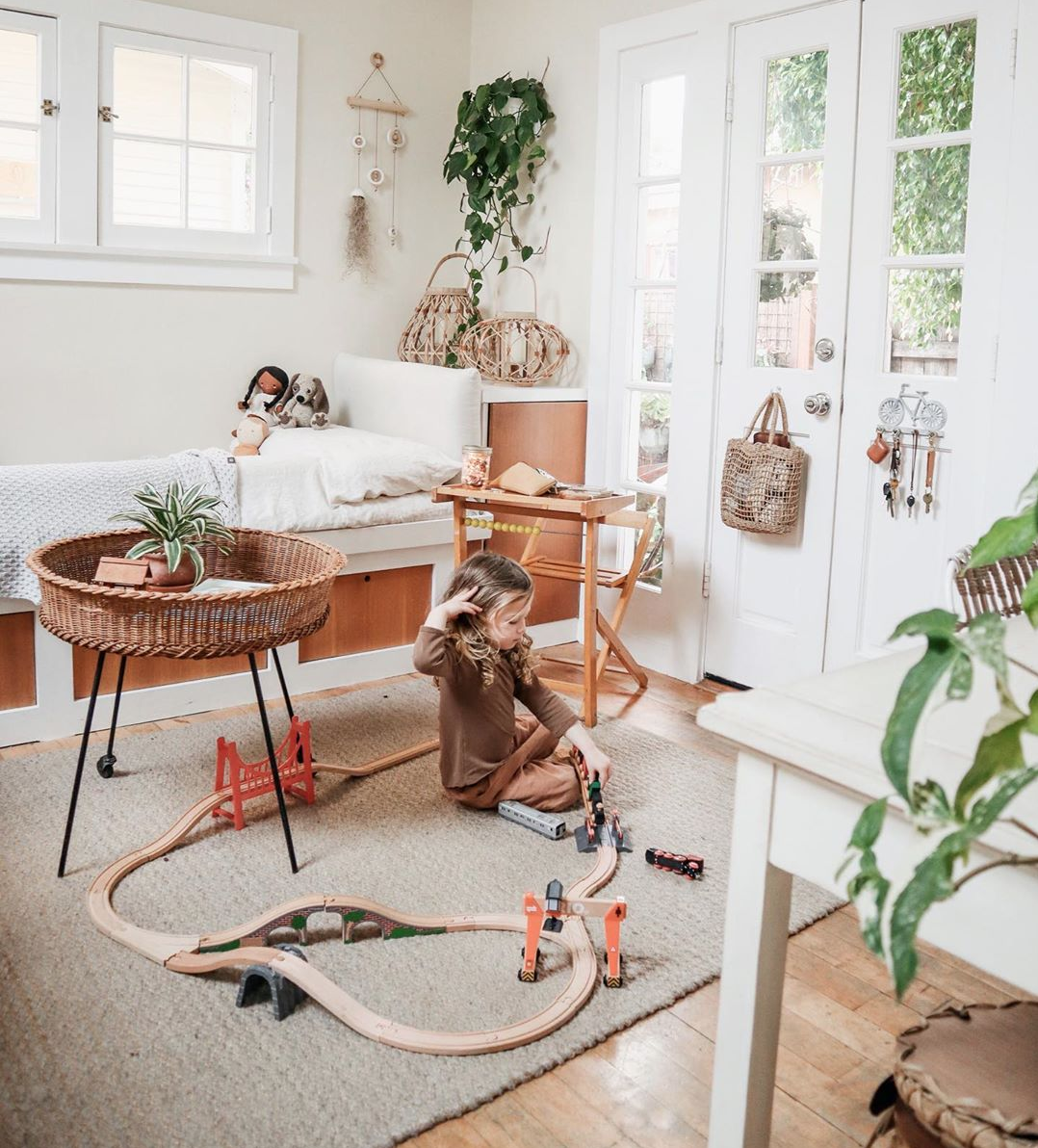
Above photo: February 2019
In its neglect, the area around my desk began to get visually overrun from oversized toy trucks, canvas bags of puzzle pieces, instruments and so forth. While I firmly believe that it’s better for the planet and for our wallets to focus on curbing our belongings rather than constantly searching for storage solutions, sometimes adjustments simply need to be made to furnishings and accessories in order to cultivate comfort and calm in a small space.
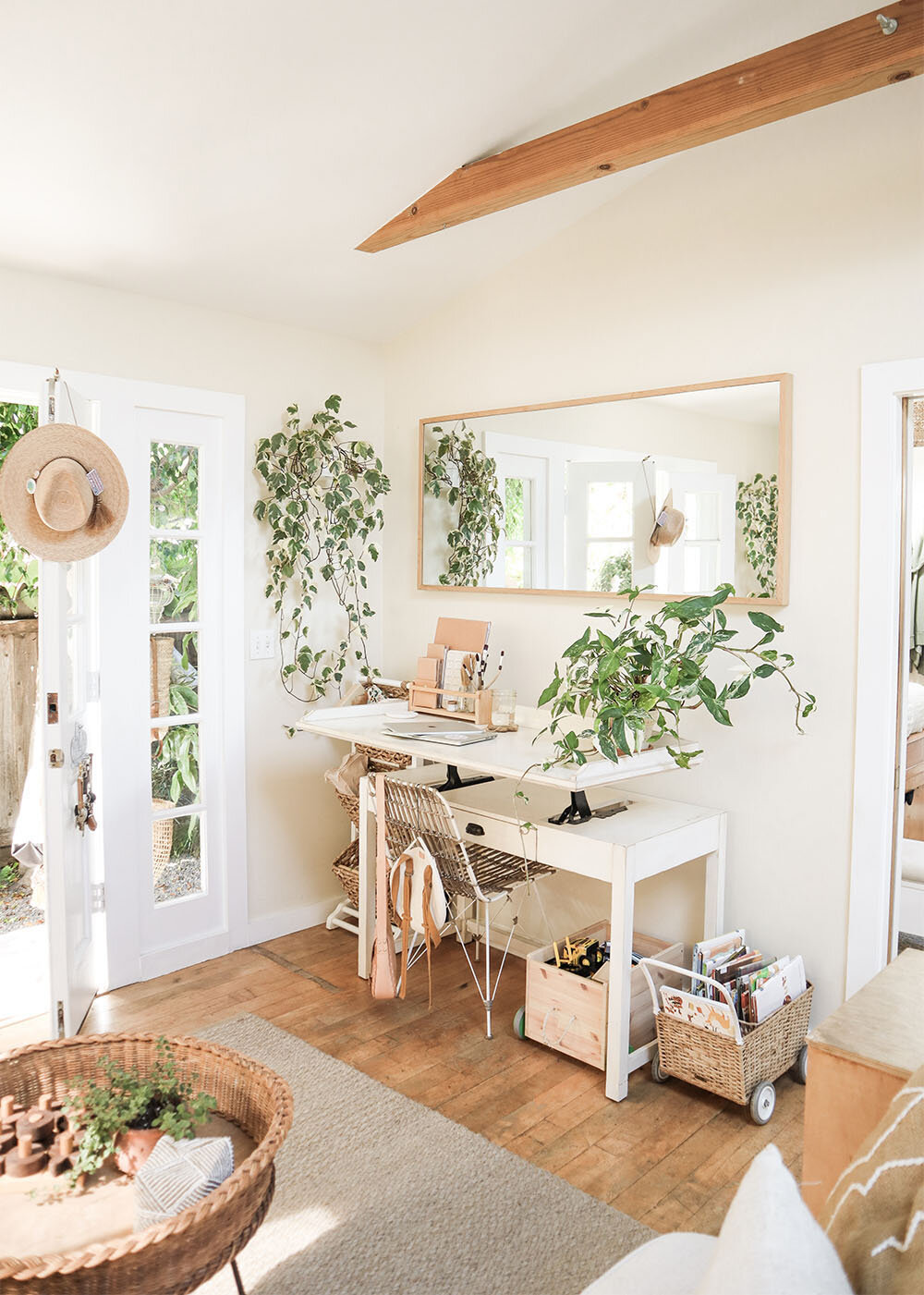
Above photo: September 2019
So, despite the fact that I really love my convertible desk that transitions from a standing workspace to a seated one, I loaned it out so that I could replace it with concealed storage. (In doing this I broke one of my own rules— holding on to something that we no longer need. But one day I know I’ll require a desk again, and the lift desk has been perfect for me.)
Before selecting anything new, Adam and I reviewed how we wanted to be able to better navigate the main room, starting with the rug.
The old rug deliberately divided our multi-purpose room into 2 zones: the play space and the work space. There was just enough wiggle room for me to scoot my desk chair back on our worn hardwood floor before bumping into the “living room” rug., where West plays for several hours per day.
We decided we wanted a few extra inches of exposed floor by the front door since we have no entryway or dedicated landing zone. And while the old rug served us beautifully in this immensely high-traffic room for years, it had become too dirty to deep clean, and it was too close to the front door to fully escape grimy shoes and muddy paws.
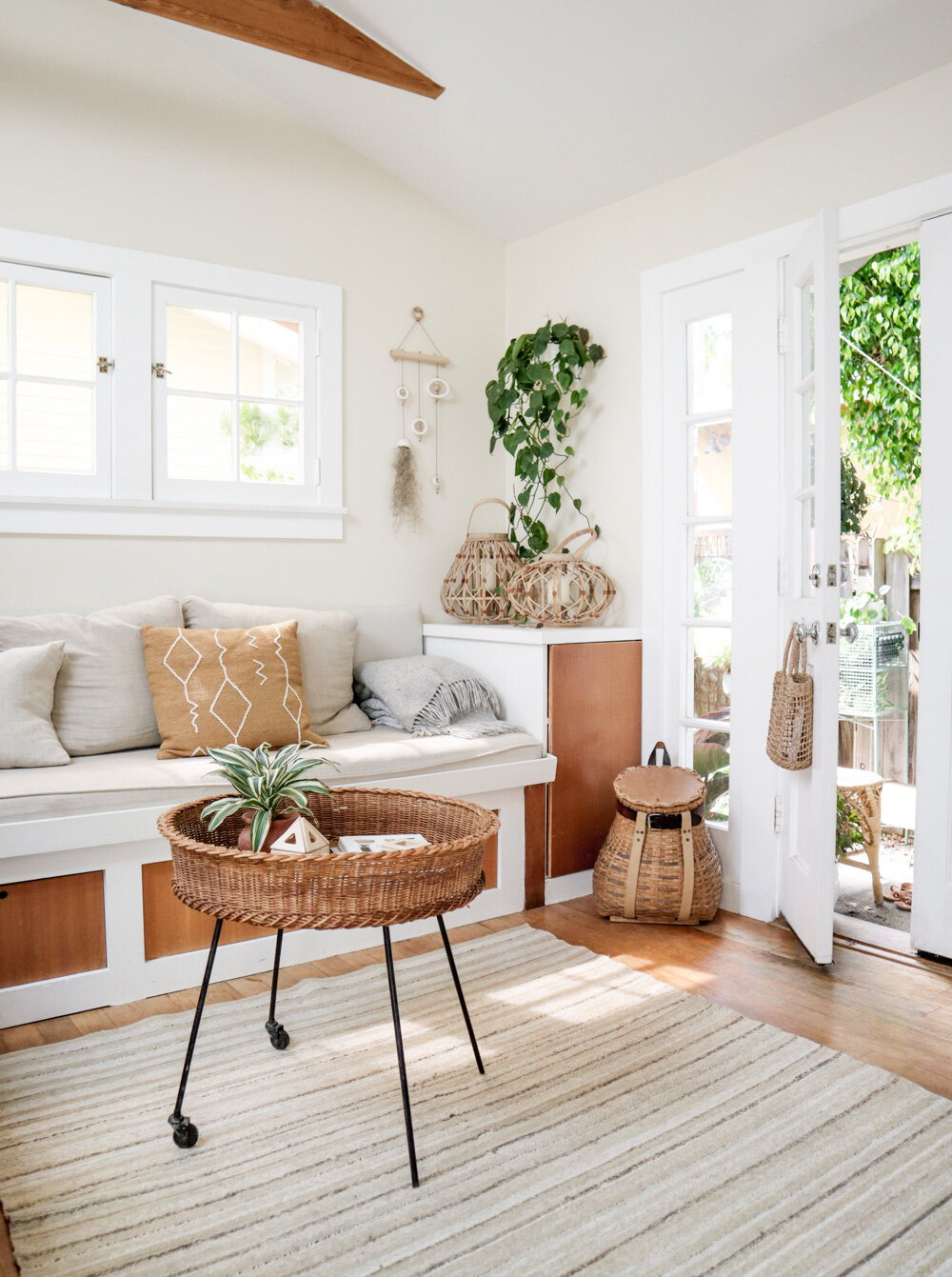
At the same time, we wanted a few extra inches of rug where my desk chair used to be, so that the room felt like the unified space into which it had naturally evolved.

I knew I wanted a vintage piece, but I was having a hard time finding something in the abnormal size our funny little space requires, which is around 5’ x 6’. Eventually I found THE ONE via Lulu & Georgia, which has numerous vintage home goods, as well revolving capsule collections of vintage rugs.

I’d also had my eye on some vintage dressers to put in place of my beloved desk, but I kept running into hurdles. They were too big, too restrictive in the design of the cubbies/drawers/slots, or they weren’t the right height, color or shape.
Since I was getting the rug from Lulu & Georgia, a business with which I worked in the past to outfit parts of Amy Adams’ production offices, I asked them if they had a flawed or damaged version of their Maci Dresser that they couldn’t sell that I could take off their hands. The Maci measures very close to the dimensions I’d wanted, and has 9 practical drawers. To my delight, we were able to rescue a piece, which we then introduced it to its new (tiny) home.

Above photo was styled for a shoot, rather than set up for our standard use.
The instant we brought the Maci into the cottage I knew that it was the right piece for our needs, but it still took some getting used to. We’ve always had an open-backed, slim-legged desk in that space, which kept the line of sight open.

But after about 2 days, our routine has greatly benefitted from this new addition.

Throughout the drawers, I’m able to store West’s sofa-bed linens and our guest bedding, our reusable to-go food and beverage supplies and bulk shopping bags, and all of West’s toys and supplies. We even have some drawers to spare for the future.


These pieces have allowed us to function more efficiently and comfortably within our compact space, and are particularly helpful as we hunker down in our tiny home-office together.

Making Space for Schooling in a Small Home / Apartment
At 8 a.m. every morning, I prep our tiny house for a hodgepodge of learning activities for our little one. It’s not homeschooling. It’s... what? Home learning? I’m not sure what to call it. But whatever it is, I hope I don’t mess it up, and that I grow and learn right by my child’s side.

Despite the fact that my mom was an educator for nearly 50 years, I’m terrible at this sort of thing. Not even just with West, but for myself as well. I’ve always been better at working and reading than at formal schooling.

I should note that my child is only 3½, so I’m focused on making sure he’s exposed to new experiences within our tiny home in the months to come, as opposed to focusing on a curriculum. And, of course, Adam is doing all of this with me.
Some resources we’ve found useful this week:
Authors and actors reading children’s books on Instagram Live. This helps enhance our library since we can’t go to the library for new books at this time. Some examples are Save with Stories and Oliver Jeffers, but there are SO many more.
Running spreadsheets, texts and DMs with friends, family and our Instagram community.
As the days and weeks progress, I’ll share more snippets of what we’re doing, and how we’re navigating this new version of life within our limited space. In the meantime, stay safe and well.

Note: The folding desk + chair pictured in this post was a vintage find on Etsy. I searched for months until I discovered the exact item I’d been envisioning. I aim to responsibly produce a handful of small space items like this for those who want them. Hopefully once we’re on the other side of this thing...
(The photos featuring Whitney were taken at the cottage by tinylicious.co.)
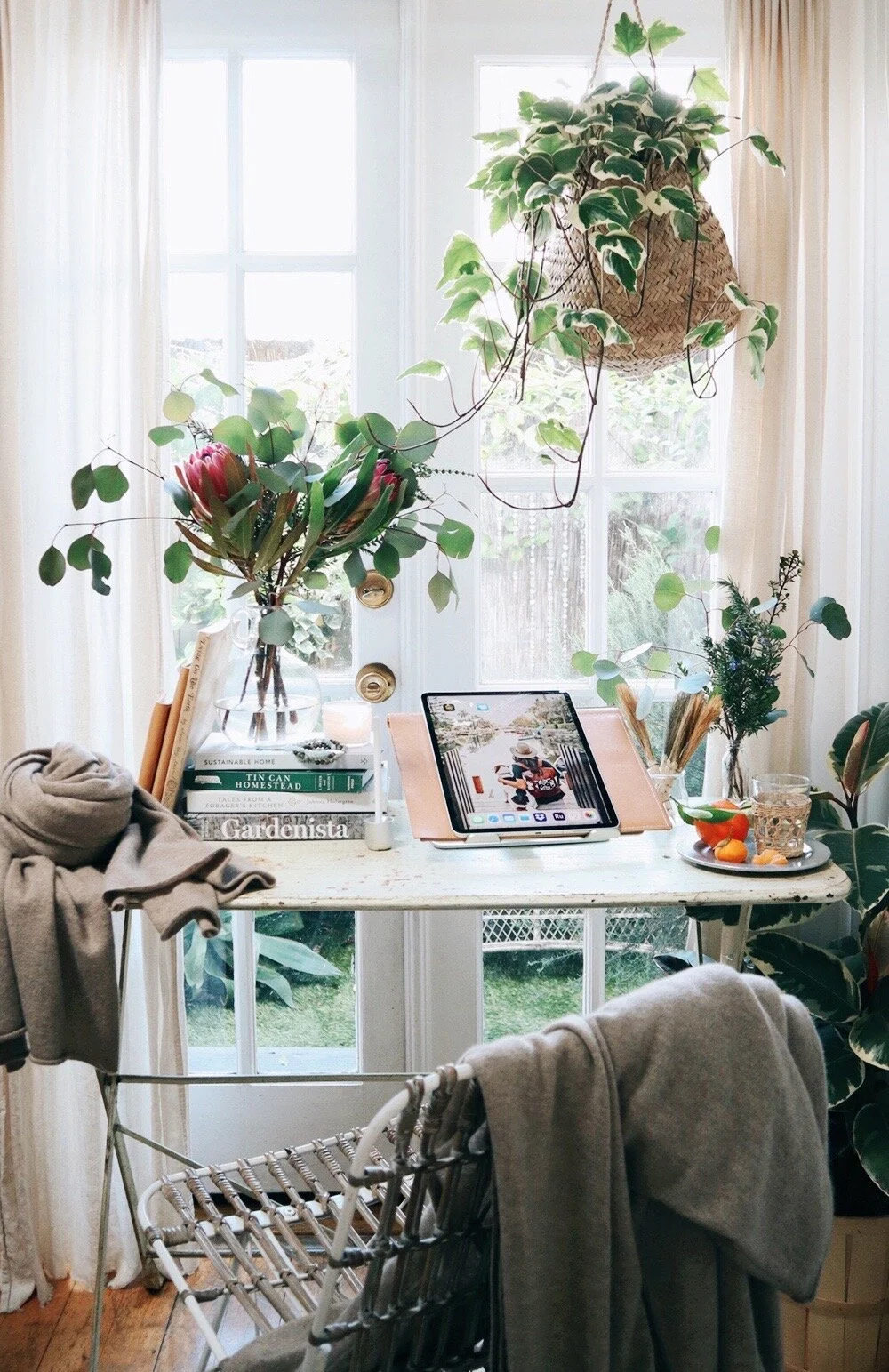
Working From Home: Creating a Makeshift/Temporary Home-Office in a Small Space
With so many people practicing social distancing and suddenly working remotely from their small homes/apartments, I wanted to share this 1-minute Tiny Takeaways episode (embedded below or viewable via my IGTV channel on Instagram) that I created last year about streamlining a compact home office.

Our tiny home-office has been the full-time workspace for my small business since we moved into the Cottage 9 years ago. And, for the past 3 years, Adam has worked here with me as well.

We float all over our tiny house, working from the desk, the breakfast counter, or on a folding table around the interior and exterior.

The video demonstrates a few tips and tools that help us make it work. More small space office solutions are available via my book, Small Space Style: Because You Don’t Need to Live Large to Live Beautifully.


Choosing a Single New Toy
Time and time again, Adam and I are reminded that our child (who is now 3½) rarely needs new toys to keep him happy— even in the familiar and rather confined setting of our tiny home and garden. Instead, he simply replies upon a handful of crucial goods: library books, toy trucks, rocks, bubble solution, and toy building materials.

While other objects and activities certainly entertain him and spark new experiences, these are the cornerstones to which he always returns.

We get new library books weekly. (And last week we stocked up on the largest haul yet since we’re now practicing social distancing.)

I try to keep West’s collection of trucks on a random rotation, so he doesn’t become weary of or reliant upon one distinct style or another.
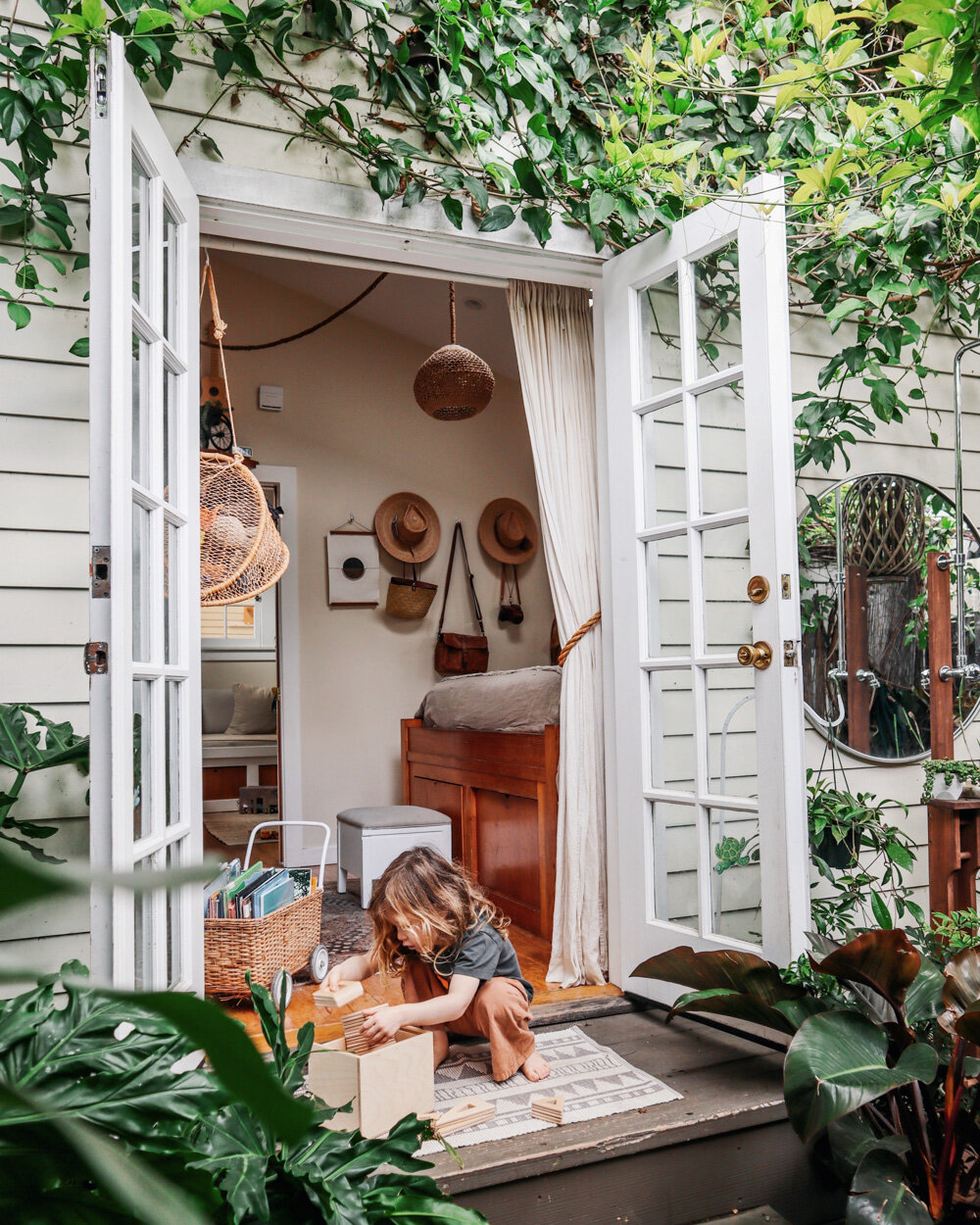
Lately I’ve been considering what items we should ideally have here in our home to entertain West in case prolonged distancing / confinement is recommended to help keep our community’s most vulnerable members safe during the pandemic.

With the exception of library books and a wooden pulley, he hasn’t gotten anything “new” since the holidays.
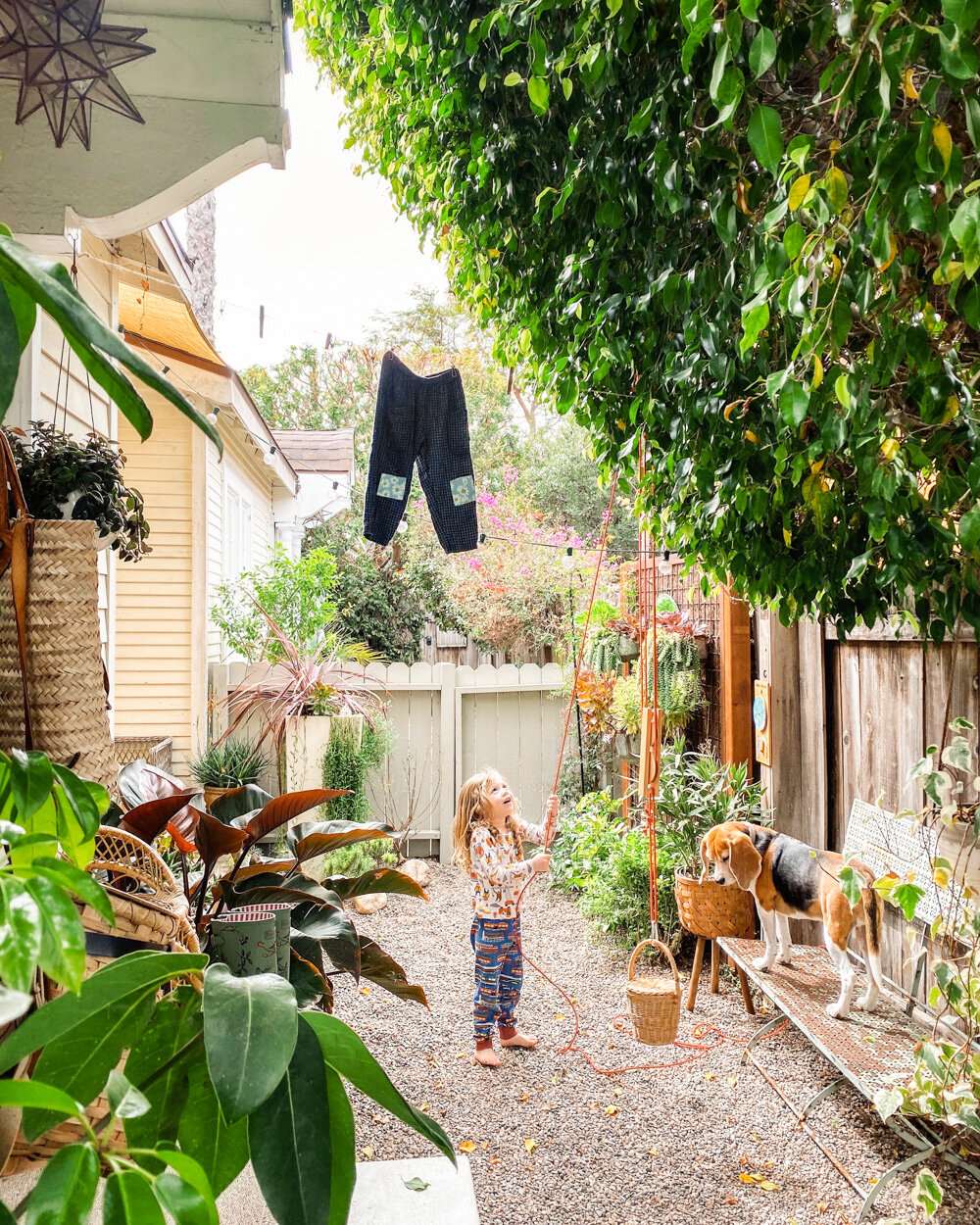
Since then, I’ve had my eye on a bundle of magnetic, wooden Earthtiles from Big Future Toys.

Not only are they beautifully designed, but I appreciate that they can be used for hours of structured or unstructured creative play and in numerous permutations.

They’re made of non-toxic wood that’s sustainably sourced from FSC-certified sources, and with every purchase from their site, Big Future Toys plants a tree.


But before introducing ANYTHING new into our home, we consider what happens to that item at the end of its life cycle.

Ultimately we decided on these tiles, as we’ll undoubtedly enjoy them with West for years, and can then extend their use by donating them to our library, or returning them to Big Future Toys for refurbishment and rehousing.

We’re giving away a set of these brilliant lil’ tiles over on Instagram. Visit the post to enter for a chance to win what has quickly become our favorite toy here in the tiny house.


Physical Distancing (Weekend 1)
In the coming days and weeks, I’ll share organizing + decluttering guides for those remaining inside their small homes or apartments, coupled with stories and images showing what we’re doing in this time of physical separation. In the meantime, a few thoughts…

“Our mindset is so powerful that it can convince us that a scarcity exists, throwing us into unnecessary competition and thereby objectively creating the scarcity we initially feared. Key to this shift away from competition is that giving makes us happy, so while we act primarily in service to others during times of great hardship, we are also, in fact, acting in service to ourselves. In times of profound suffering and great need, we rise to the occasion, we stand shoulder to shoulder in support. The impulse to gather in a circle of care for one another must be extended to our efforts to address the climate crisis.” - The Future We Choose: Surviving the Climate Crisis
On our first weekend of social distancing, we’ve kept busy inside our tiny cottage as welcome storms have rolled through our region. We connected with our next door neighbor across the porch (through our Dutch door and his closet window). We chatted with the couple on the other side of the fence. We reached out to thank friends in the medical field. We offered assistance to some nearby folks who might need it in the weeks to come. We FaceTimed family. We group texted friends. I caught up on some DMs.

We are physically at a distance, but we’re all emotionally joined. Let’s remain together, shall we? Not just through this crisis, but through larger one that encompasses everything…
Photos taken at the cottage by tinylicious.co.
Jewelry handmade by Maddalena Bearzi.

Slow Fashion: Footwear
One of my goals for 2020 was to learn more offline by taking classes, participating in workshops and reading the books that had been gathering dust on our built-in shelves or at the library.

On the the topic of slow fashion, I started by devouring the book Fibershed (HIGHLY recommended), and signing up for sewing classes at Moving Thread. I followed this up with clothing repair workshops at R[eco]ntained and Rudy Jude with Adam.


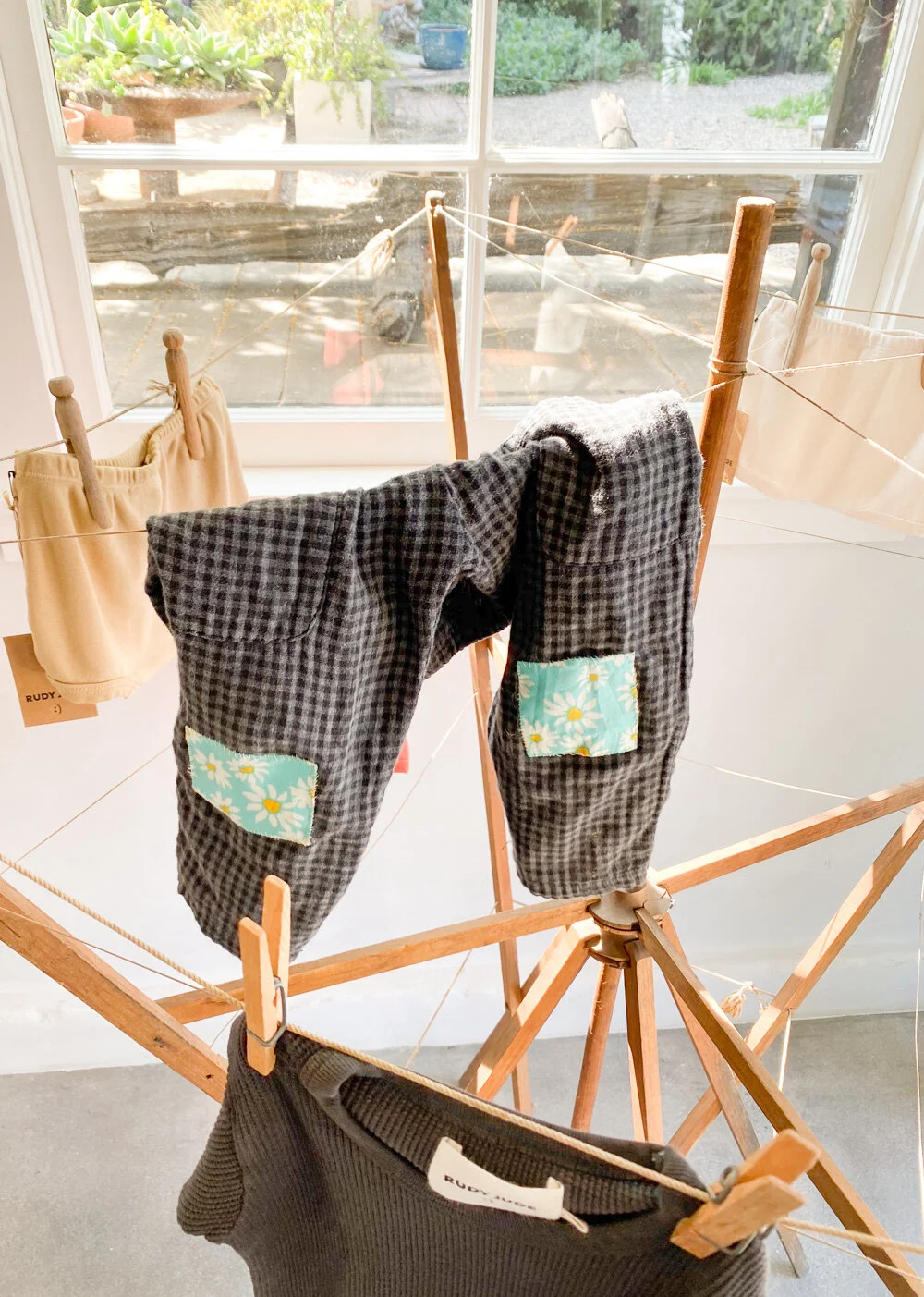
I also subscribed to Aja Barber’s Patreon, so while online I’m also continuing the my sustainable fashion education.
But I was so curious about shoes, too. What does the shoemaking process entail? And if most “vegan leather” is plastic, how do we approach leather products and find life-long pieces that are ethically crafted?

(I should note here that while our family isn’t vegan, we are vegetarian and we eat an almost entirely local, plant-based diet. Even the dogs no longer eat meat. We do, however, still get eggs from a local regenerative farm, Apricot Lane Farms.)
I signed up for a sandal making workshop at These Hands Maker’s Collective, which offers a diverse array of classes.

This one was conducted by Stace Fulwiler, who is driven by sustainability and a ‘less, but better’ approach.

She teaches sandal making workshops in an effort to revive and demystify the lost art of sandal making, and to enable others to reclaim the joy of using their own two hands to finish a project.


Since taking the class, I haven’t been able to look at a pair of shoes the same way. And the only new pair I’ve introduced to my collection (other than the fantastic sandals I made that day) are handmade clogs by Bryr Studio.

Bryr Studio clogs are made by hand in their San Francisco workshop. Their leathers are sourced from US tanneries, using ecological manufacturing processes, while their bases are hand routed out of solid wood that’s lightweight and strong. It’s Bryr’s artistry and style that caught my eye, and their comfortable and simple yet high-quality, durable designs that made me a repeat customer. (These are my second pair. I wish I’d had them for my wedding. Sigh.)
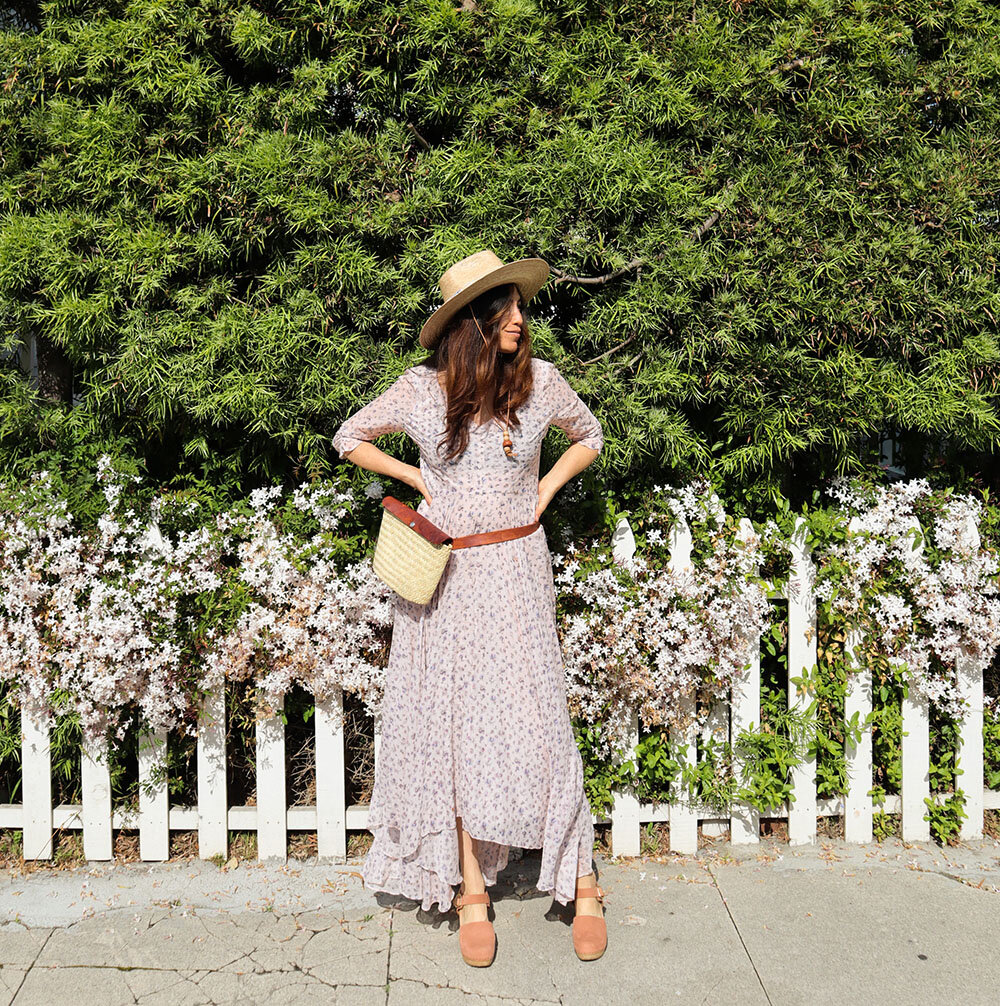
I hope to look back at these photos in the years to come and still have the same pieces in regular use. (As I discussed in this recent post, newness is not the point.)
“Vote with your money. Most important, eliminate waste. Apply the old-fashioned adage of reduce, reuse, recycle. When we need to buy things, our choices should be informed…”
- The Future We Choose: Surviving the Climate Crisis

Note: The dress featured in this post is a dress from years ago, and is not a sustainably made piece. But, since it’s in my wardrobe, I’ll wear it until it falls apart. Much like plastic, I believe it does no good to just chuck our unwise past purchases in a donation box, as we now know that roughly 84% of donations end up in landfills. If I’ve got it, I’m going to use it. And once something truly needs replacing, I’ll buy smarter.

On My 39th Birthday
Today is my 39th birthday, and I want to celebrate in a meaningful way.

If you’ve ever found any information we’ve shared to be valuable, and if it’s comfortably within your means, I’m asking you to please give $5 to The RightWay Foundation this weekend as a way of celebrating with me! (If you make a donation, please make a note of why in the digital Donor Scroll so I can personally thank you!)

We have everything we could possibly need here in our tiny home. We want everyone to be able to have those same comforts. Our friends at this marvelous nonprofit provide transitional age and emancipated foster care youth with mental health and employment services, all within the framework of a safe and loving community, putting them on a path for a prosperous future.
Thank you, as always, for being here and supporting our small home/business/family, as well as the organizations that our near and dear to our hearts.
Here’s to 39!

Happily Going Gray
I decided a while back to let my hair go through its natural graying process without interfering with it or trying to cover it up. I figured this was just one more way to save time and money— plus I really don’t mind the pops of silver.

I know that the wiry strands are nearly imperceptible in some photos, but there are plenty there— especially when I pull it all up into a bun.

Since I pretty much fall asleep by 9 each night, I think they suit me well. 👵🏼

Photos taken by Tinylicious