
Small Space Wardrobes
Note: Discover tips and tricks for small closets — or no closets at all! — via the e-reader and hardback versions of my book, Small Space Style: Because You Don’t Need to Live Large to Live Beautifully.

Our last home had a single closet, which we all shared once our first child aged out of his closet nook nursery. When designing our new cottage, we knew we wanted more closet space since we’re now a family of four, but not that much more closet space. We’ve found that setting firm spacial parameters help us keep our belongings pared down and our essentials in check.

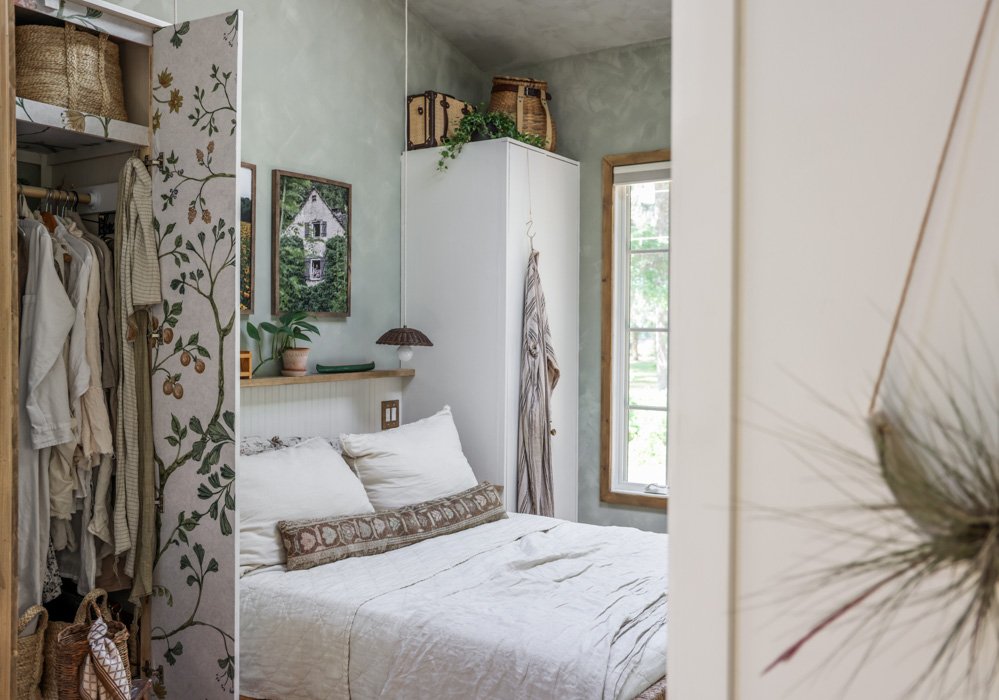
The kids share a slim, adaptable kitchen pantry turned wardrobe— details here. An impromptu hallway coat closet — established with the help of a simple wooden dowel and a linen flat sheet repurposed into a curtain (visible through the smaller doorway here) — contains everyone’s coats. So Adam and I used the space on either side of our built-in headboard to create 28” custom wardrobes for each of us, providing us with much more space per person than we’re used to.

Pictured: A thrifted basket with a baguette scarf from Maison Miette.
Usually I find that moving — or even returning home from a long trip — is such a wonderful opportunity to assess clothing and decide what is truly needed versus what is not.

Above: Steamline luggage made of renewable & sustainably sourced rattan for both travel & decor. Through April 20, 2023 use sale code SPRING 15 for 15% off sitewide at Steamline.
But we were in such a hurry to move into our new home (after 5 months of design + 5 months of permitting + nearly a year of construction — half a year longer than estimated), that we didn’t carefully finish our closets or sort our clothing before shoving it into place. We just tossed everything from the moving boxes pell-mell into the closets, using generic storage solutions that didn’t fit our specific needs.
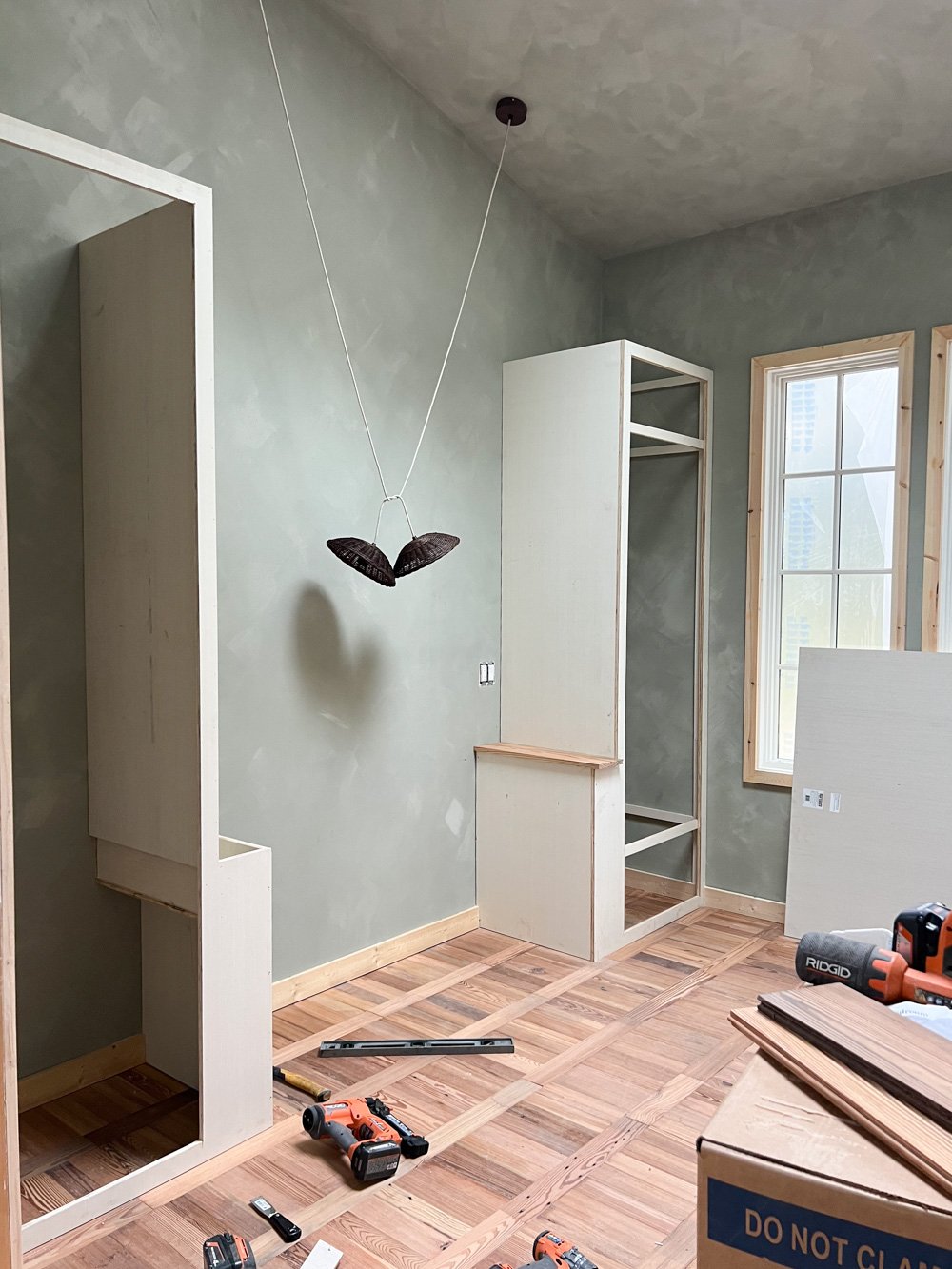

As such, I dreaded opening those doors every day, knowing that items would topple out, and that it might take me several minutes to find what I needed. Admittedly, Adam had an easier time with this, as he has fewer garments and types of clothing.

We took the recent change of seasons and the need to swap out sweaters for swimsuits as an excuse to finally finish this project.

Above: The unfinished backs of the wardrobe doors,
As the inside of the wardrobe doors were completely unfinished and showed measurement markings, we decided that they first needed some dressing up themselves.

We used Rebel Walls paper for the kids’ bedroom mural, and loved how it turned out. So we opted for wallpaper again, rather than just paint. We chose a peel + stick format (in Song Tree Pearl) from Rebel Walls.

The application was straightforward, and the paper is forgiving in instances when repositioning is needed.

Above: Peel & stick wallpaper from Rebel Walls
Here are some of the eco-minded reasons we picked a mural from Rebel Walls:
They offer a customized product, keeping no stock of wallpaper that risks being discarded.
Their wallpapers are printed on Non-woven FSC Certified paper.
Rebel Walls uses printing technology, that is 100% pure from solvents and other harmful substances. The wallpapers are completely free from damaging VOC substances, and have no negative impact on people, animals or nature.
The raw material is transported to Rebel Walls in large quantities in order to need as few deliveries as possible— currently just 2 times a year.
Rebel Walls produces very little waste, but the waste they do get is recycled locally.

Of all the changes we made to the closets, the wallpaper is certainly the most impactful. It elevates the room, while corresponding nicely with the lime paint and reclaimed wood used on the bed, ledge, side tables, and floors.
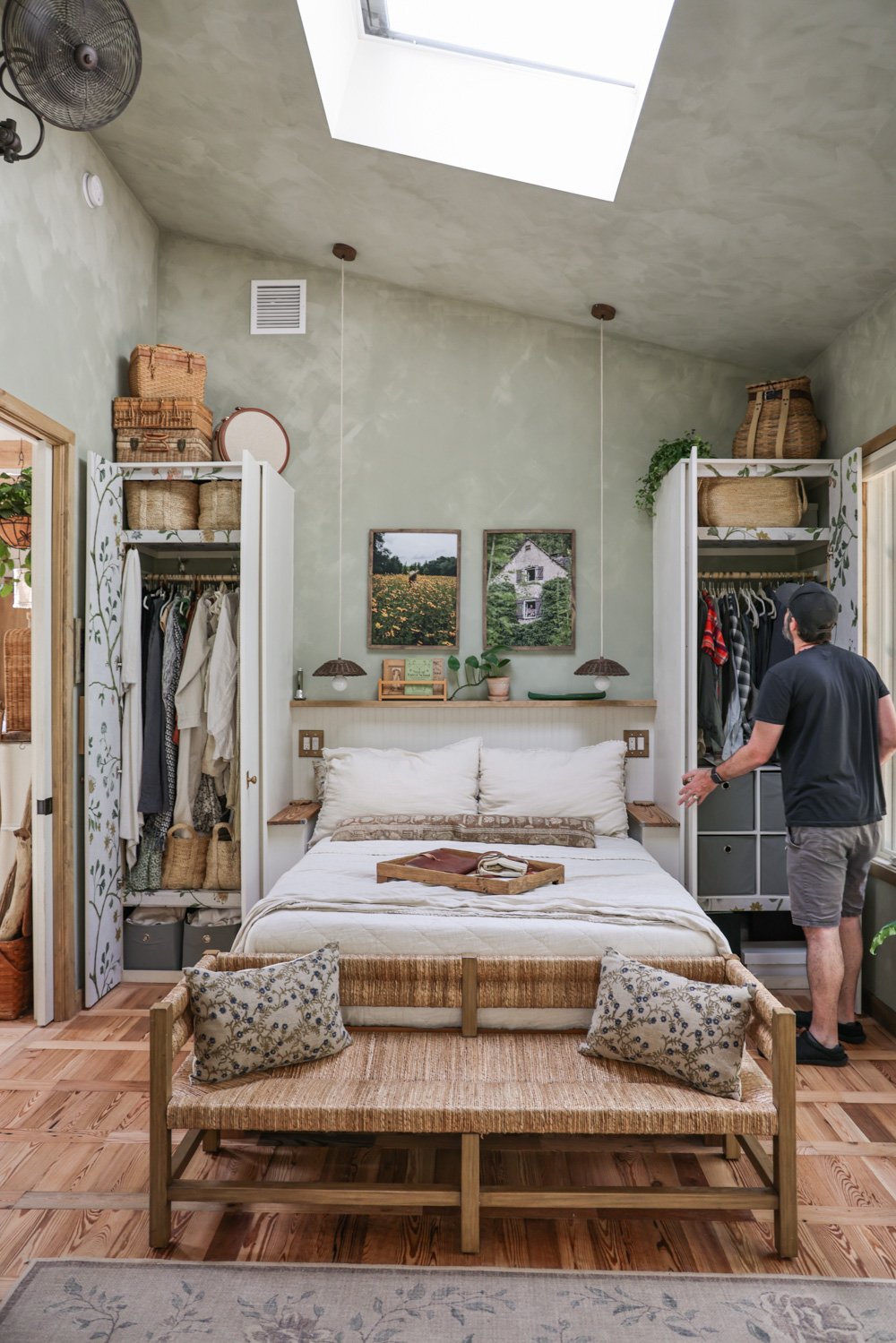
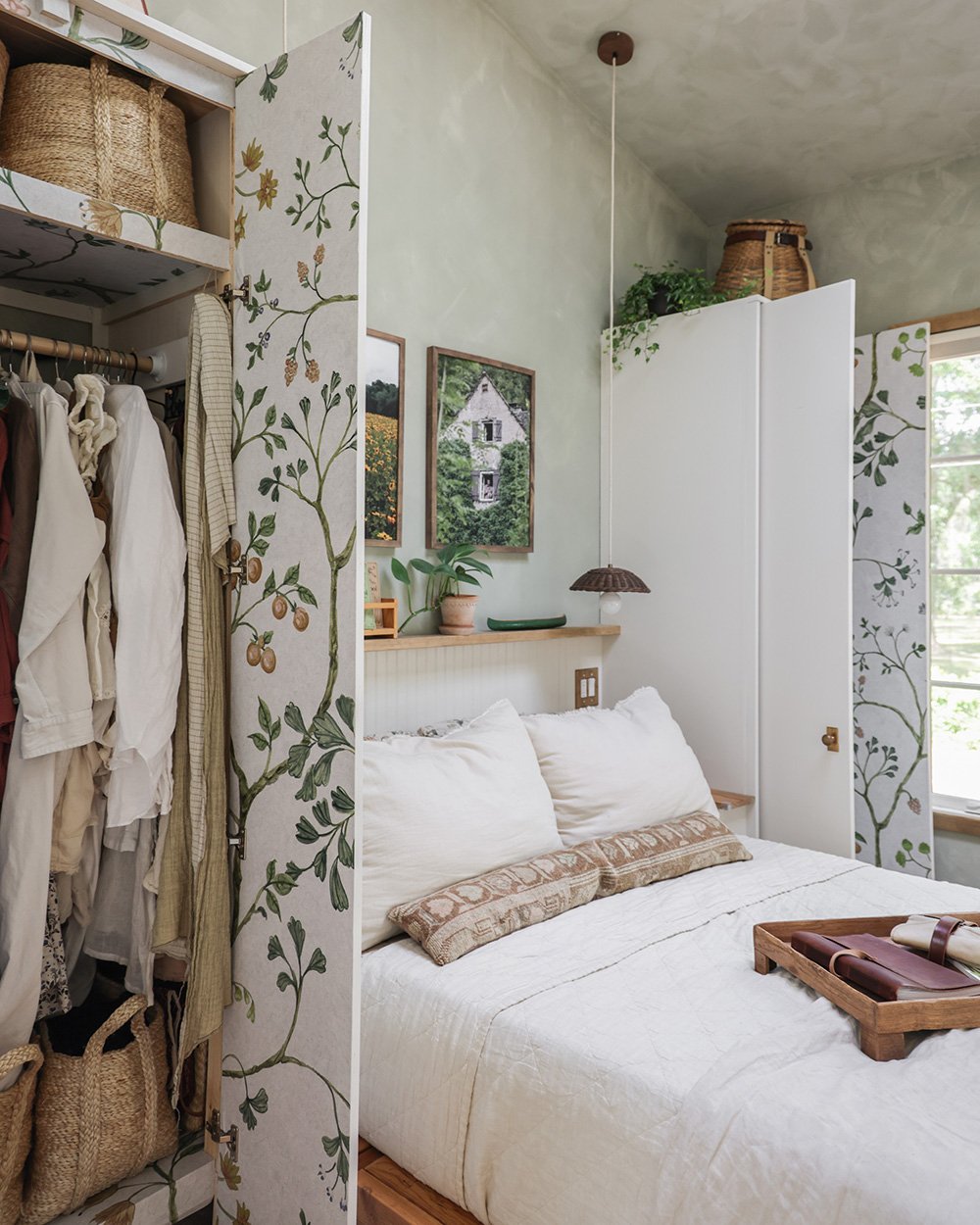
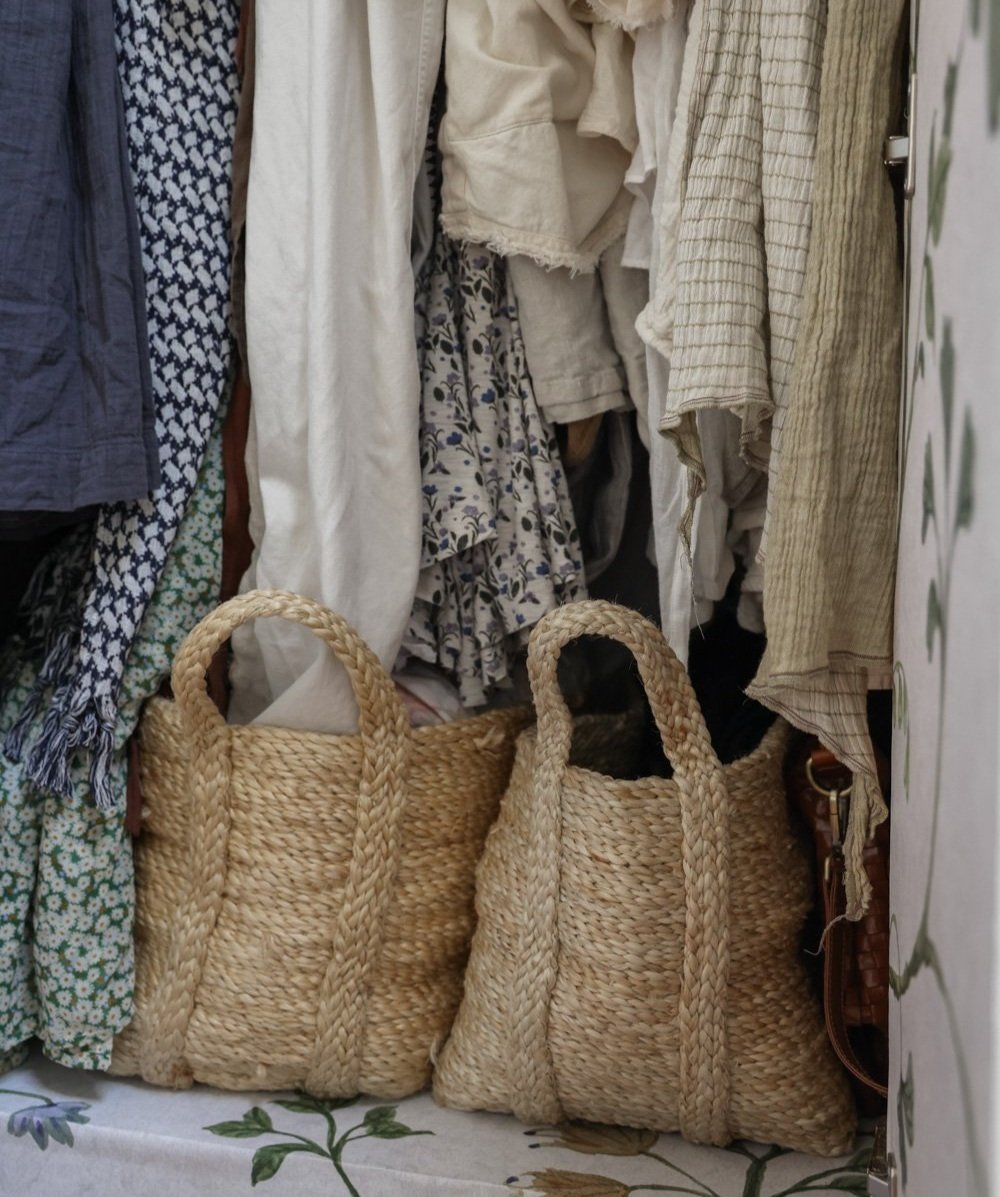
Instead of continuing to employ most of the stiff bins (which we repurposed beneath the kids’ bed for books), I once again used my old favorite, flexible and roomy jute baskets from Will & Atlas. The jute bins hold skirts and undergarments. Off-season clothing has, for now, been relocated to a harder to reach area at the foot of the built-in.

A thrifted wooden stepladder that we use throughout the cottage helps me reach the bathing suits and workout gear in the upper portion of the wardrobe.

Above: Work in progress, as we had wallpaper seams left to trim with a boxcutter— an easy task that requires mere seconds.
The wardrobe doors have burnished unlacquered brass knobs and corresponding backplates.

To maximize space on the dowel, we mainly use slim, metal top + velvet / no-slip coated hangers made with at least 80% recycled PET. We also have a few handmedown and thrifted wooden and specialty hangers. Some hold more than one article of clothing, which helps us fit more garments without needing more hangers.

On one interior wall, I’ve added two basic jewelry hangers, allowing me to keep my accessories by my clothing, without requiring extra surface space for a bulky organizer.

A couple of multi-use scarves made from deadstock fabric from Late Sunday Afternoon flank either side of the interior, suspended from loops of jute for easy access.

While a home is almost ever rarely fully finished — needs evolve, tastes shift, and environments change — we certainly feel more settled now that we were finally able to approach this key component of our cottage with intention and care.

Sharing One Compact Closet as a Family
You know those pin-worthy closet tours that showcase neatly stacked piles of pants, rows of shoes and handbags arranged in artful lines, well-lit full length mirrors, and mid-room island dressers filled with drawers of diverse accessories? This is most certainly not one of those tours.
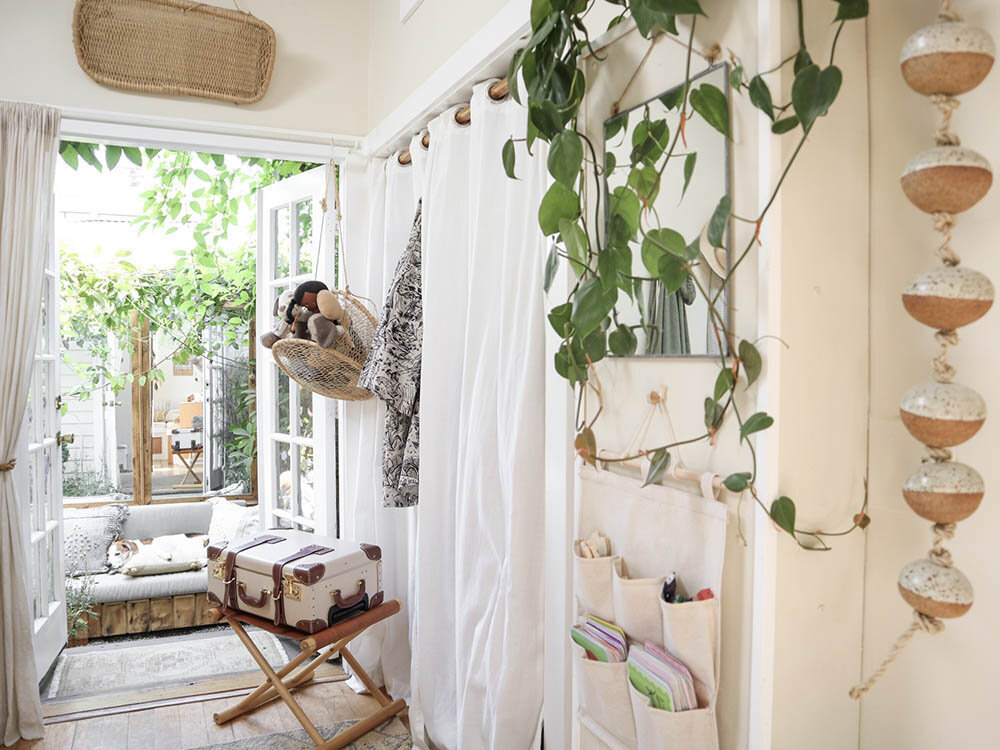
Instead, this is an honest look at how we make a small closet (which was once a nursery) work for 2 adults, 1 preschooler, a collection of books, and A LOT of dog hair.


Clearly I’m no fashion blogger. I usually feel such joy and satisfaction when arranging a space, but for some reason I’ve never derived much pleasure from composing an outfit. But I do appreciate a beautiful garment— so much so that I often end up incorporating clothing into the decor of our home.

Luckily, this also helps us make better use of our small space when it comes to finding storage solutions. (For example, West’s apron dangles from a hooked magnet on the fridge, our scarves and hats drape along the bedroom walls, and our backpacks and market bags border our front stoop.)
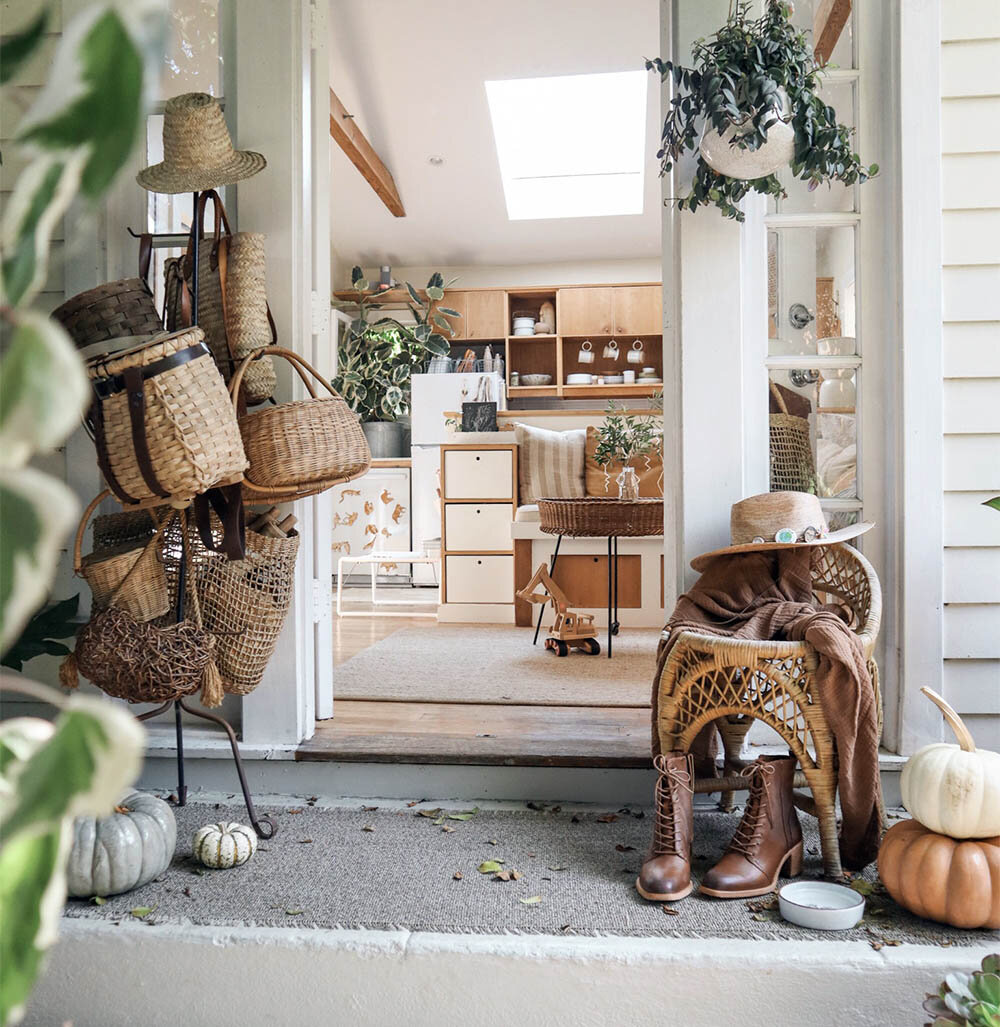
My husband, our son and I all share our single closet.

The closet also doubles as storage for guest/spare bedding, picture and board books, our cloth diapering system, and more. (West only uses his Grovia diapers overnight now, but we’re holding on to our sets in case we have another child.)


In recent years, we’ve acquired far less clothing. We’re making an effort to restore, adjust and repair our existing pieces for extended use to lighten our environmental footprint. If we do get a new article, we donate two in its place to help keep clutter at bay.

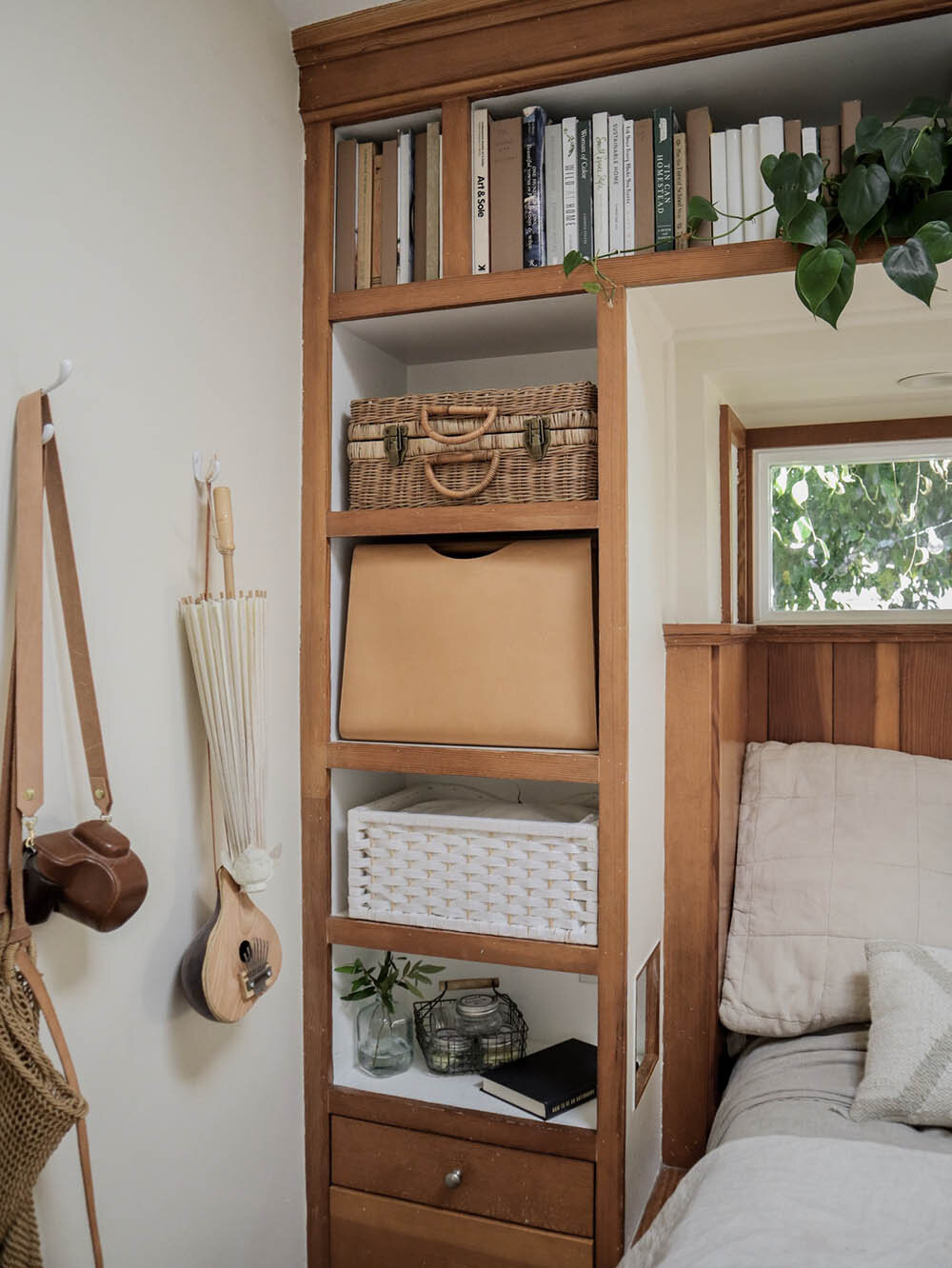
Most of the clothing I have is similar to our home decor in the sense that it’s usually muted in tone. This way it layers easily and can be combined effortlessly into countless outfits. (In the photo below, my scarves are stored in the white basket, while my socks and hats are kept in the picnic basket.)
If I find something I really love, I tend to get it in a few colors so I can mix and match without having to think much about it on sleepy mornings, or in the rush to get out the door.

For example, I have 3 pairs of wide-leg handmade pants by Thief and Bandit, 4 pairs of cropped pants from Everlane, 3 linen maxi dresses from Garnet Hill, 3 mid-length dresses from Olli Ella, 3 long sleeve tops from Everlane, and 4 versatile tanks from Garnet Hill. I also own several pairs of Rothy’s, and when I was pregnant I wore the same style of Pons in 2 different colors. I have additional garments, of course, but the above make up the backbone of my wardrobe. (Read my recent post on West’s clothing, here.)

Our lifestyle definitely influences how we dress. We are constantly biking, walking the dogs, canoeing, and running around with our son in the garden and on the beach. As such, most of our garments have to support these sorts of activities.
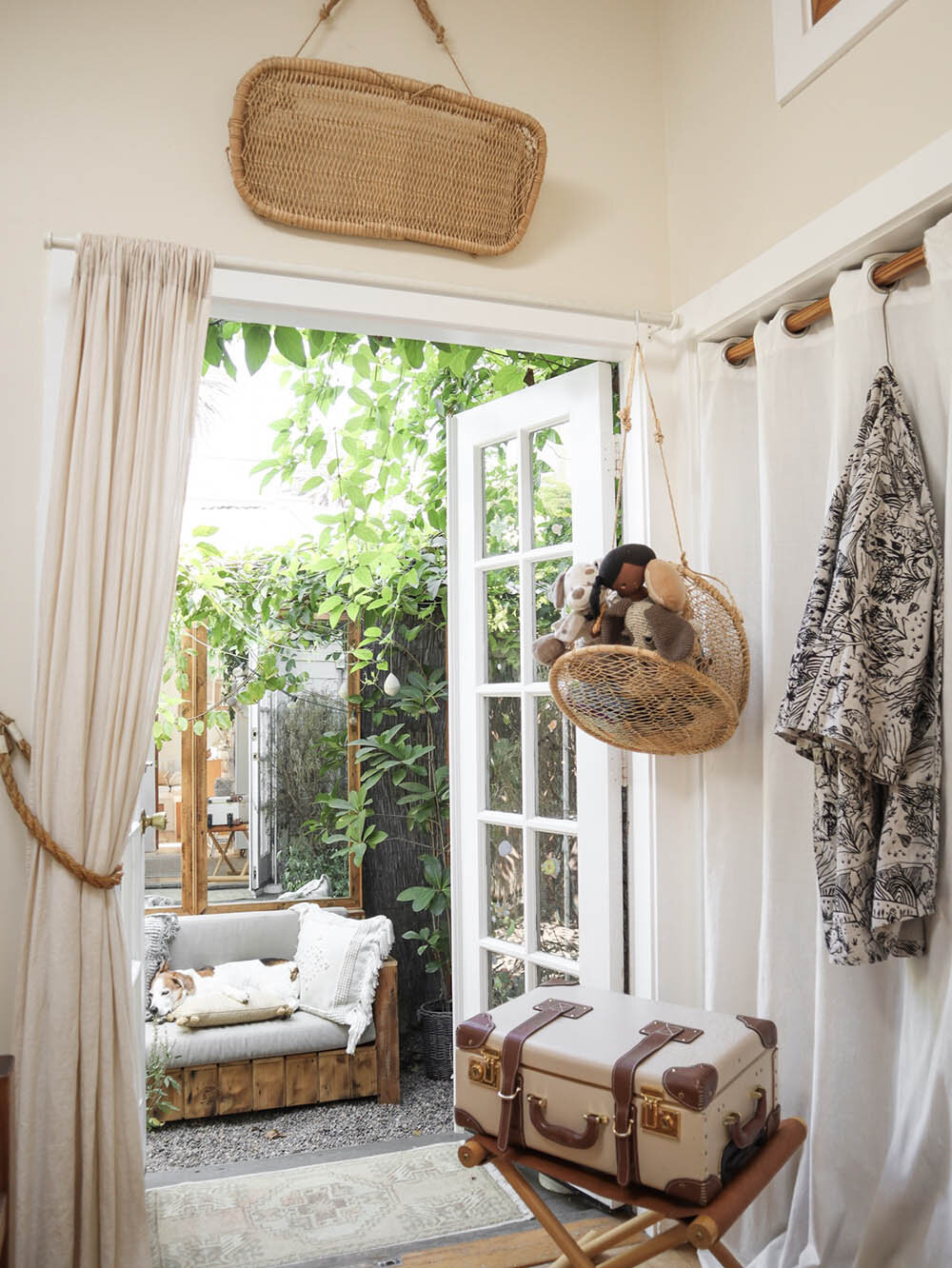
Thanks to the climate here in Los Angeles, my two (sometimes three) winter coats are stashed away for the majority of the year so they don’t consume inches in or around our compact wardrobe during the warmer months. I keep them in a vintage-style suitcase that is often left out in the open here in our house, or rolled into the storage cubby beneath the bed.
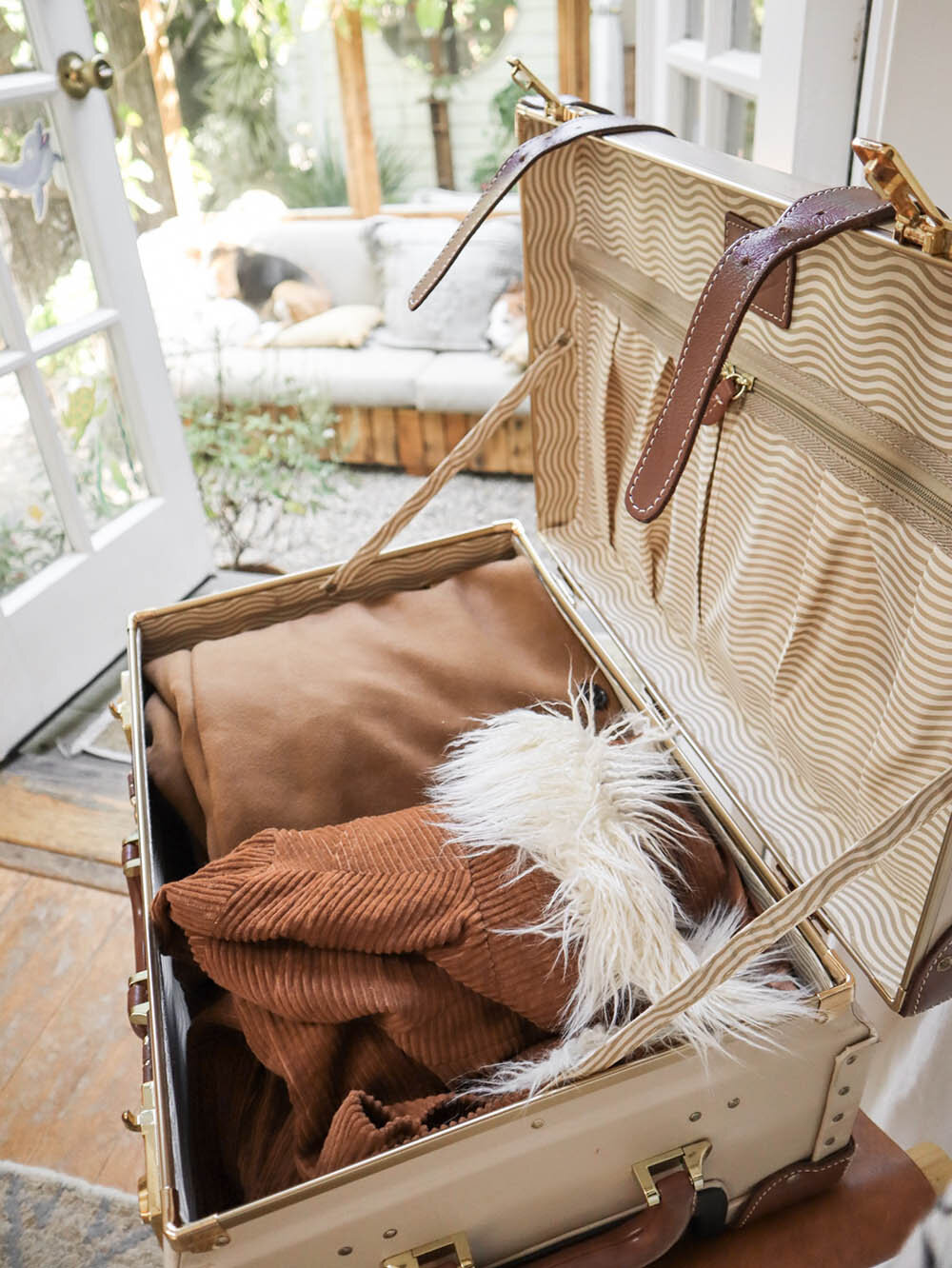
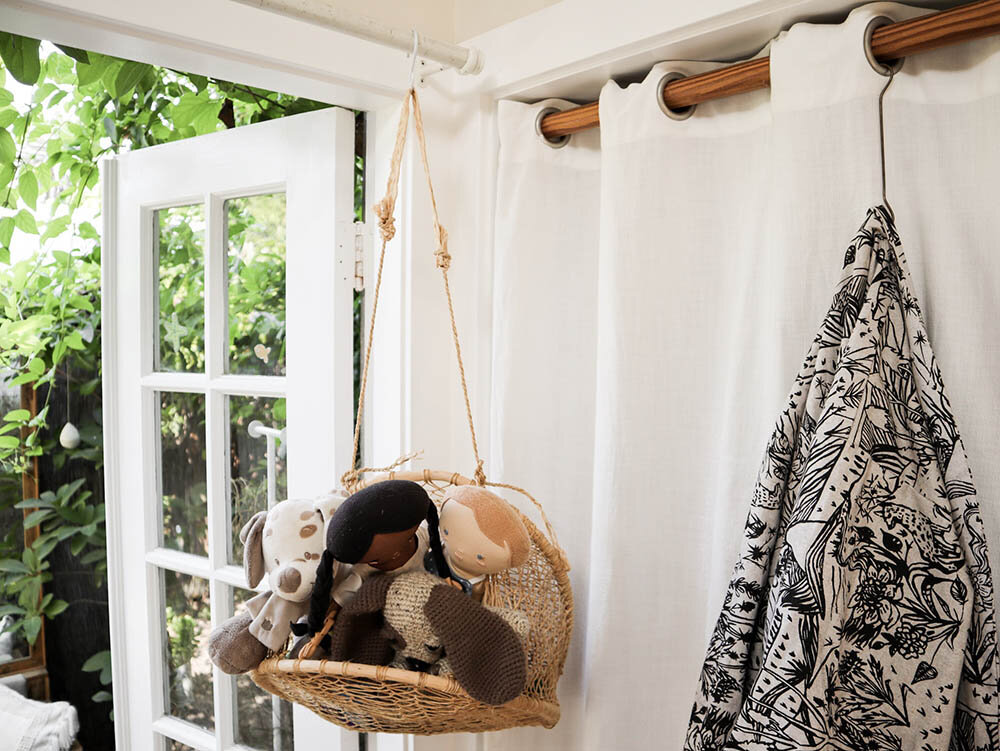
When the coats are in use for a few months on-end, I hang them up via garden hooks or S-hooks on the exterior of the closet curtain. (I tend to suspend several of my go-to items this way, such as our robes and commonly used backpacks or handbags.)

I use the S-hook hack inside the closet as well. It’s a practical way to keep my full-length hoodies (which I wear daily) within easy reach without requiring additional hangers. It’s also helpful for temporarily corralling items until I have the time to put them away properly.

In the fall and winter, I zip a small number of summer pieces into a storage bag that I keep on the closet’s upper shelf. The same bag holds my wedding dress and a handful of essential maternity pieces that I’m still holding on to... just in case.

While we organize most of our shoes under the couch, we also suspend select pairs from unused corners high inside the closet. This lets the shoes breathe a bit, without getting in the way of the nearby clothing or accessories.

While our closet is not the stuff of Instagram interior decor fantasies, it still makes me happy. On a planet that cannot sustain our hunger for fast fashion and new styles, Adam and I think it’s important to demonstrate our child that we can live comfortably with well-worn items, and with less overall. And while our clothes perhaps look a little rumpled and wrinkly day to day thanks to the realities of sharing a small space, we appreciate and use each and every single piece we have.

Sustainable Threads for a Compact Wardrobe
I’m over on the Garnet Hill blog today sharing some thoughts on longevity, quality and sustainability in our clothing and our homes. A preview is below— click here for the full post on Threads.



This post was sponsored by Garnet Hill. As always, the opinions are my own.