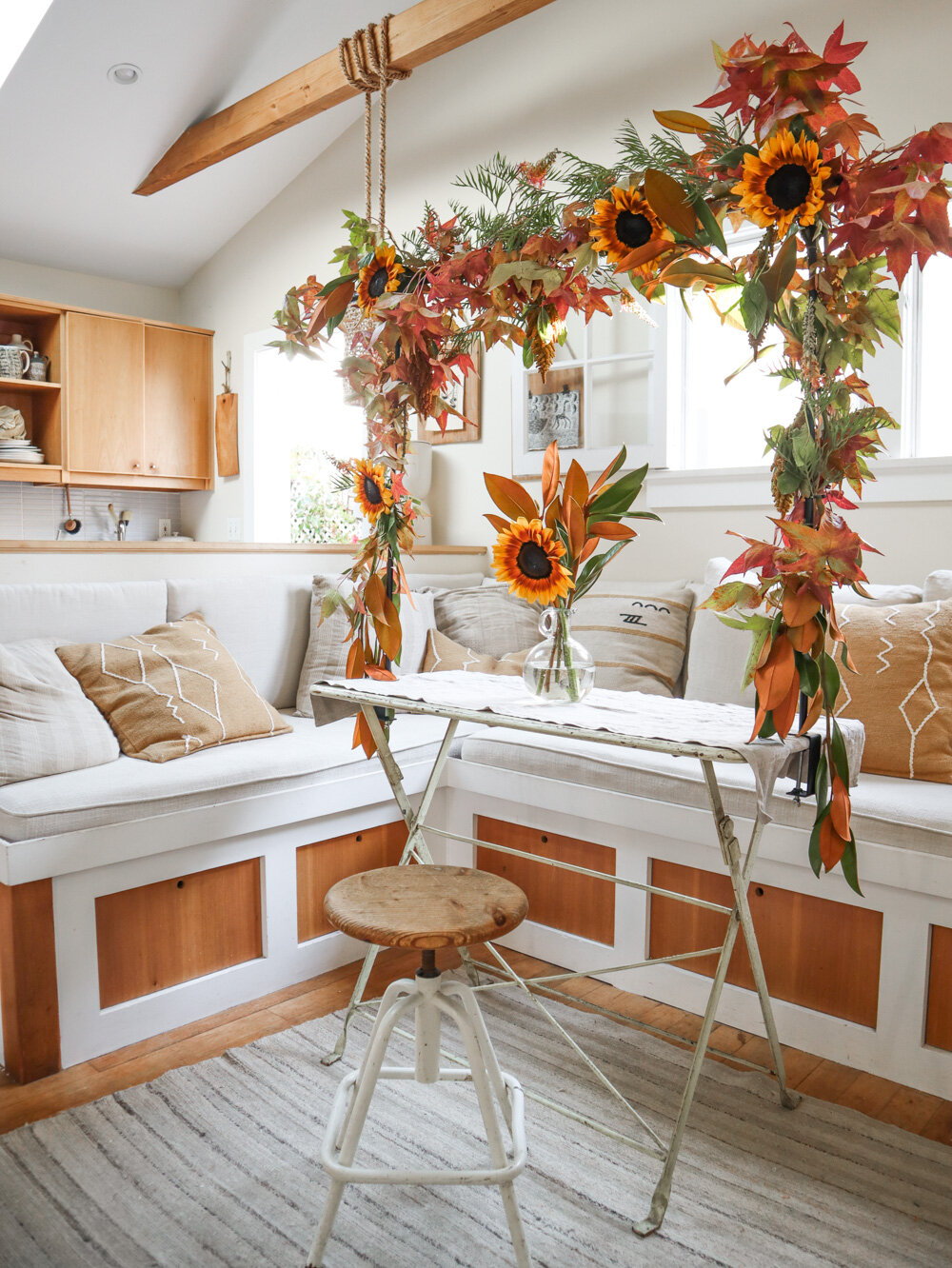
A Living, Over-the-Table Display of Fall Foliage for a Festive Occasion
Post Summary: How we created a space-saving, over-the-table canopy of real branches and flowers in celebration of the little one’s 4th birthday.

Time continues to boggle my mind— our little one turned 4 this week.

I believe this was the first year that he really understood the concept of his birthday. But, of course, it’s also the first year in which a proper party was out of the question due to the pandemic.

We pieced together a simple but festive celebration, replacing hugs with FaceTime calls (sigh), balloons with branches, wrapping paper with household linens (view more photos of this in last year’s birthday post), and a traditional cake with what I imagine must have been the world’s actual biggest donut.

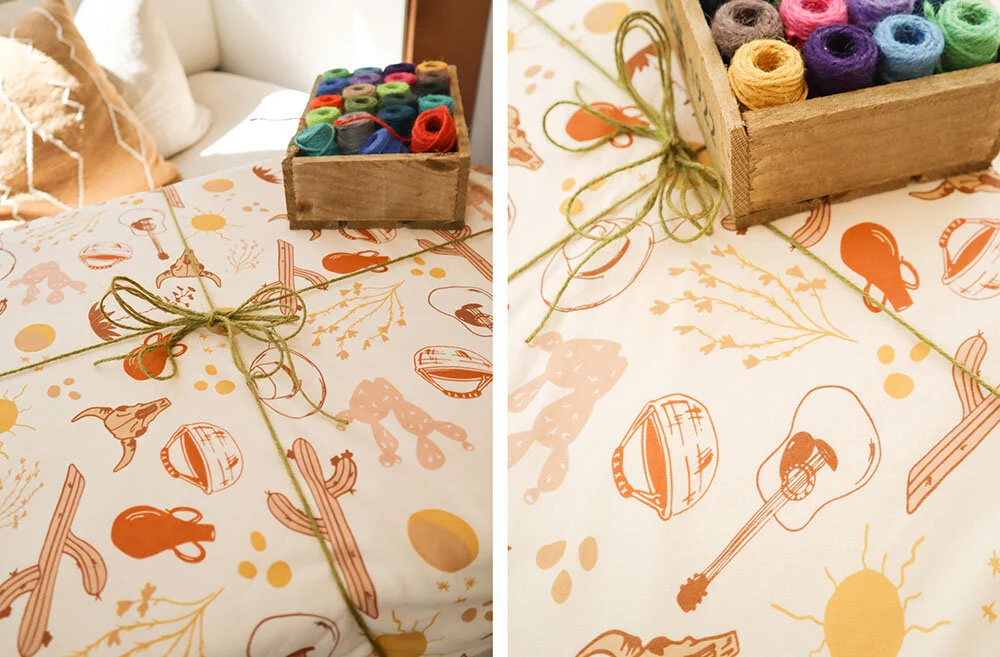
Above: A child’s blanket designed by our friends, New Darlings, doubles as wrapping paper.
The birthday kid helped me create an arrangement of living fall foliage and sunflowers, which we picked up during a swift, masked visit to the flower market.


We used this adjustable, over-the-table system to frame the space-saving display.

What I appreciate about this design is that it consumes no tabletop inches, but instantly creates usable vertical space for a dynamic visual when paired with greenery, hanging lights, and/or decorative accents.

I use zip ties sparingly, as they’re single-use plastic, but I admit to using a handful for this display.

We’d run out of floral wire, as Adam uses it to train the cherry tomatoes on the grow porch, and twine couldn’t support the larger branches.

So the zip ties came to the rescue, making the process faster and much more secure— helpful, given that a (4 year old!) child was actively participating in the creation process.

An hour later, we had a cheerful little spot to quietly sing West a birthday song and attempt to make a dent in that enormous donut.

It was the activity more than the finished product that my son clearly relished the most. Brushing each other’s hands as we reached for the same magnolia branch, our sincere deliberations about where to place the prized sunflowers, and our cartoon-like exclamations when parts of the arrangement tumbled off the rods and crashed to the floor before being properly secured.

When the display dries out later this week, we’ll disassemble it together and tote the greenery to the compost and green bin via our fold-up wheelbarrow, which he loves to hitch a ride in once it’s empty. I vow to indulge him on every wobbly ride he requests— even when my back is sore and I’m behind on work. Time is boldly reminding me that my little one is swiftly becoming not-so-little, and that he won’t fit or delight in our sweet wheelbarrow rides forever.


How the Pandemic is Reshaping Our Living Situation
The following is part of a contributor article I wrote for Food52 / Home52. Click here to view the original piece.
My family has long lived and worked in a small space. Since the onset of the pandemic in our region, I’ve been relieved that the walls haven’t closed in on us. While our worlds have shrunk, our beloved tiny home, thankfully, has not.
We’ve lived in our less-than-400-square-foot cottage in Venice Beach, Calif., for nearly a decade, and I’ve operated my small business from home that entire time. In recent years, my husband and business partner, our preschooler, our two rescue beagles, and I have lived side by side, day in, day out.
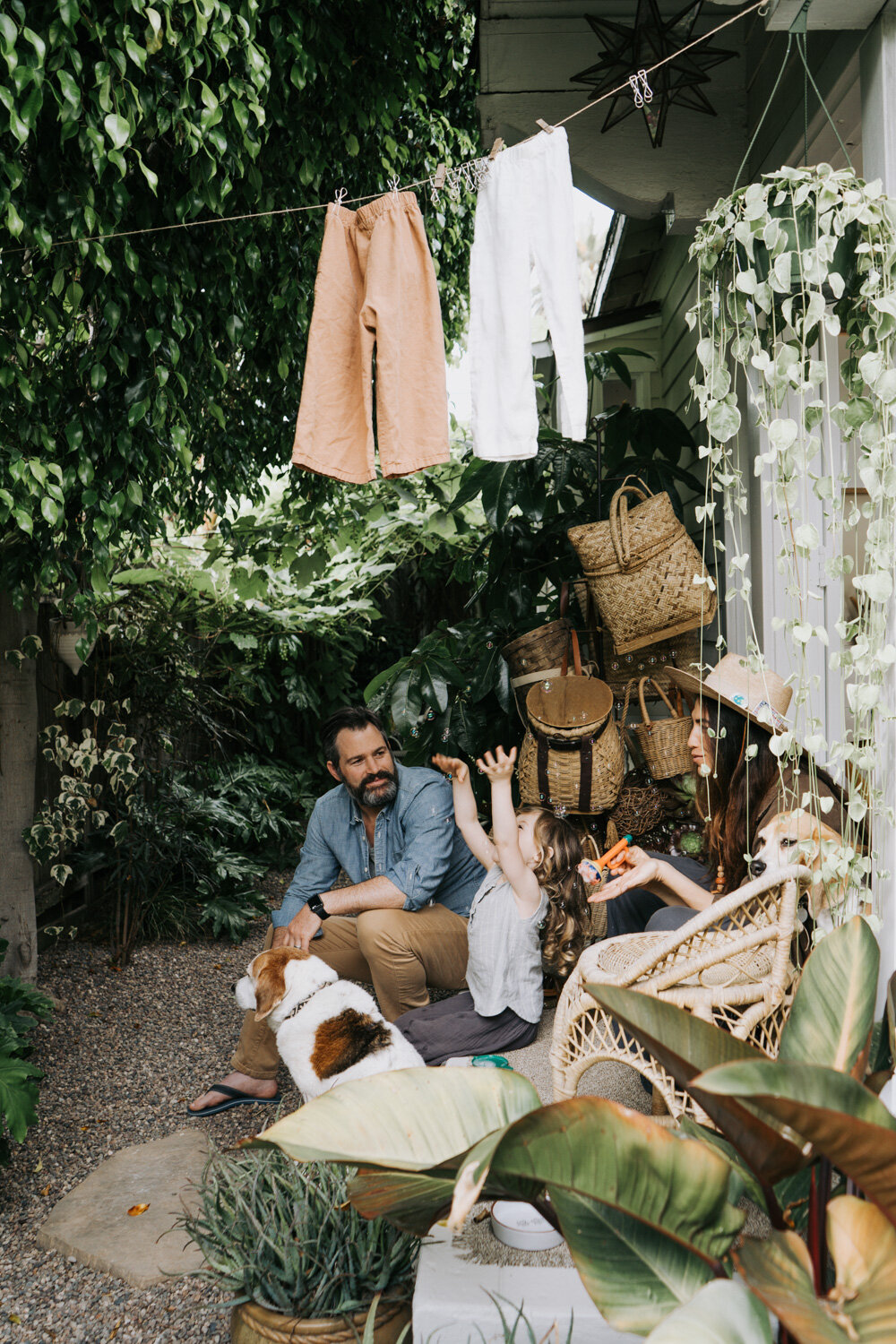
On some mornings pre-COVID-19, my husband and our son would pair off to tackle adventures around town, providing me with time alone to write, edit, and consult with clients. Such casual excursions are now no longer an option for those living in large cities.
Getting outside is different here than it is in less-populated towns. The sheer number of people we pass while walking our dogs or biking to conduct essential errands is high enough without risking nonessential activities—most of which are inaccessible anyway. Our beloved local library remains closed. The museums at which we hold memberships have shut their doors. And some local shops are slowly locking up for good.
While our home and its narrow thoroughfare garden are a safe haven that we’re fortunate to be able to continue to rent, our bubble basically stops at the lot line. And, in the long run, that is the problem—not the size of our cherished little cottage.
When my husband and I first stumbled across our house, we didn’t give a single thought to its square footage (or lack thereof). We were drawn to its numerous windows, vaulted ceilings, pocket doors, and functional form. Every single day since, we’ve noted in one way or another just how much we love this spot, and how lucky we are to be here.
Some might see our space as limiting, but in truth, it has expanded our world immensely.
For years we’ve enjoyed the ease with which we could pedal our cargo bike to the beach, walk to the market, and canoe among the ducks and cormorants while waving to our neighbors strolling over nearby footbridges. We’ve delighted in the fact that it never takes more than half an hour to clean our entire cottage from top to bottom. And we’ve learned to dance with and around each other over our worn-out floors in a natural, joyful rhythm.

The decision to live in the sprawling, expensive, and often inconvenient city of Los Angeles is one that our family continued to commit to for the regional and cultural benefits. There is an abundance of public parks and natural retreats, access to museums, close proximity to a never-ending list of live performances, and (mostly) temperate weather that encourages a myriad of daily outings and events, year-round.
Now, abruptly, all of those things are inaccessible. So we’re left wondering what remains. We have no family here, and our friends are scattered throughout the region, each with their own teetering schedules and safety protocols. The question isn’t whether or not our house is too small for long-term sheltering in place. Instead, it's how sustainable is living within this cocoon—regardless of its square footage?
Still, perspective is key. We have a roof over our heads, access to clean water and healthy food, and devices (paired with connectivity) that help us maintain our workload and relationships. In this moment, as throughout our entire lives, the members of this household have benefited from the kind of societal privilege that needs to be acknowledged and paid forward.
For now, we are letting this ever-smaller world guide us. Outside of our immediate bubble, we discover where to donate food, home goods, bedding and funds. And within our immediate bubble, we check in with folks from over fence lines and from rooftops to ask what is needed by all. We swap books and kitchen supplies. We bundle bulk food orders with our neighbors. We now compost together rather than as an individual household. We share the produce we grow, as others share their bounty with us.
Our home is also more functional and appreciated than ever before. From our garden, Adam and I routinely set up our own, miniature nature school and playground for our child, and do so with whatever items are already available to us. When he’s ready to step inside, I swap places with him and my husband, shuffling my office outside, the dogs by my side.
More than a dozen years of living small (here and elsewhere) has taught us how to manage being within inches of one another for months on end. And, for us, these recent months have solidified our love of living simply. We fine-tuned the art of setting up and breaking down pop-up offices and home learning activities long ago, but what is newer to us since being home together nonstop is that most of our household rules and careful divisions of responsibilities are now fully out the door. Mealtimes are fluid. Activities are devised on the spot rather than planned in advance (unlike those early, ambitious weeks in March). Family movie night can be any night. Yet, these sorts of changes have been surprisingly welcome.
What we were not prepared for, however, was the whittling away of the area surrounding us—that expanded world we so deeply relished—and how each step beyond our home and garden now feels like a step into the unknown.
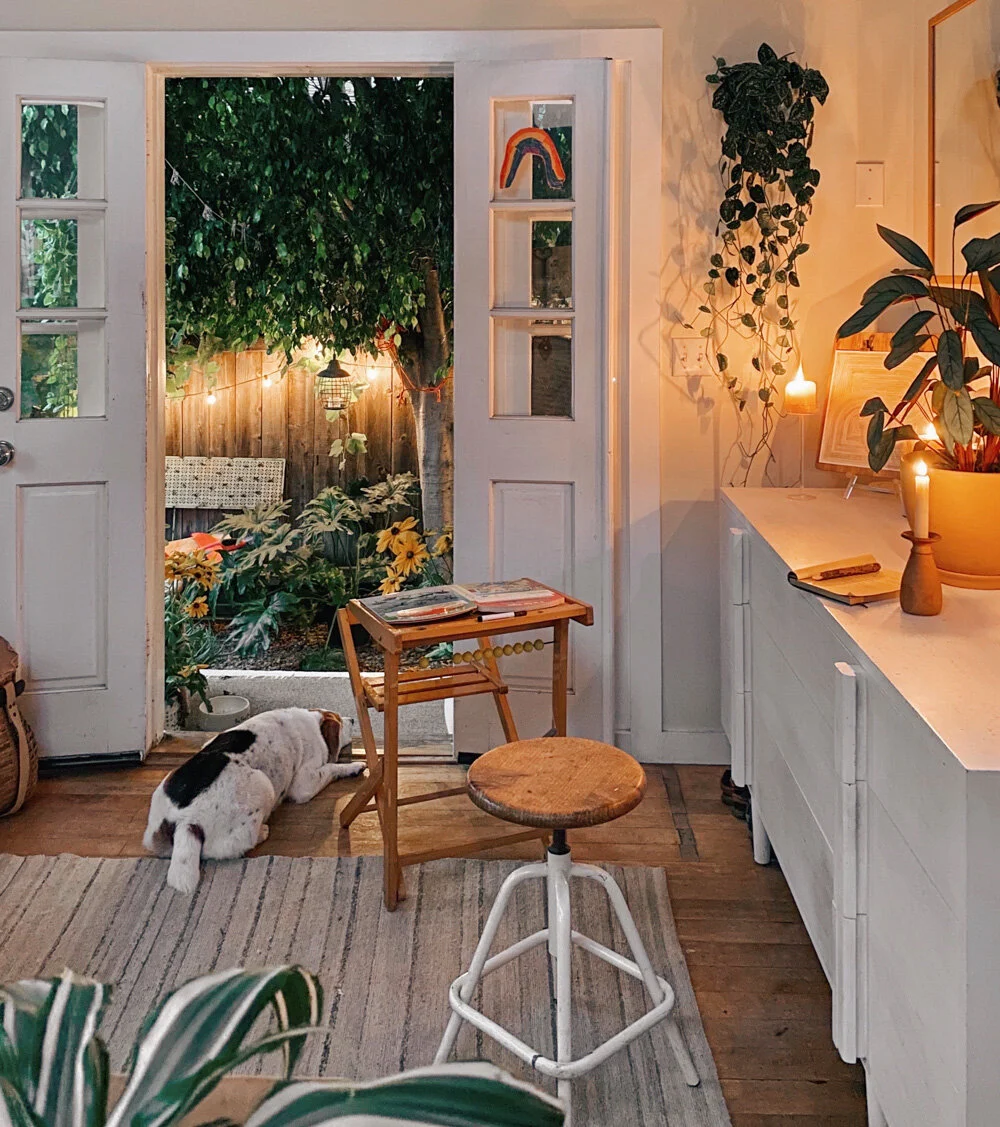
Note: First / key photo by Lucia Doynell.

Manageable Home Learning
Like millions of Americans right now, we are exhausted.
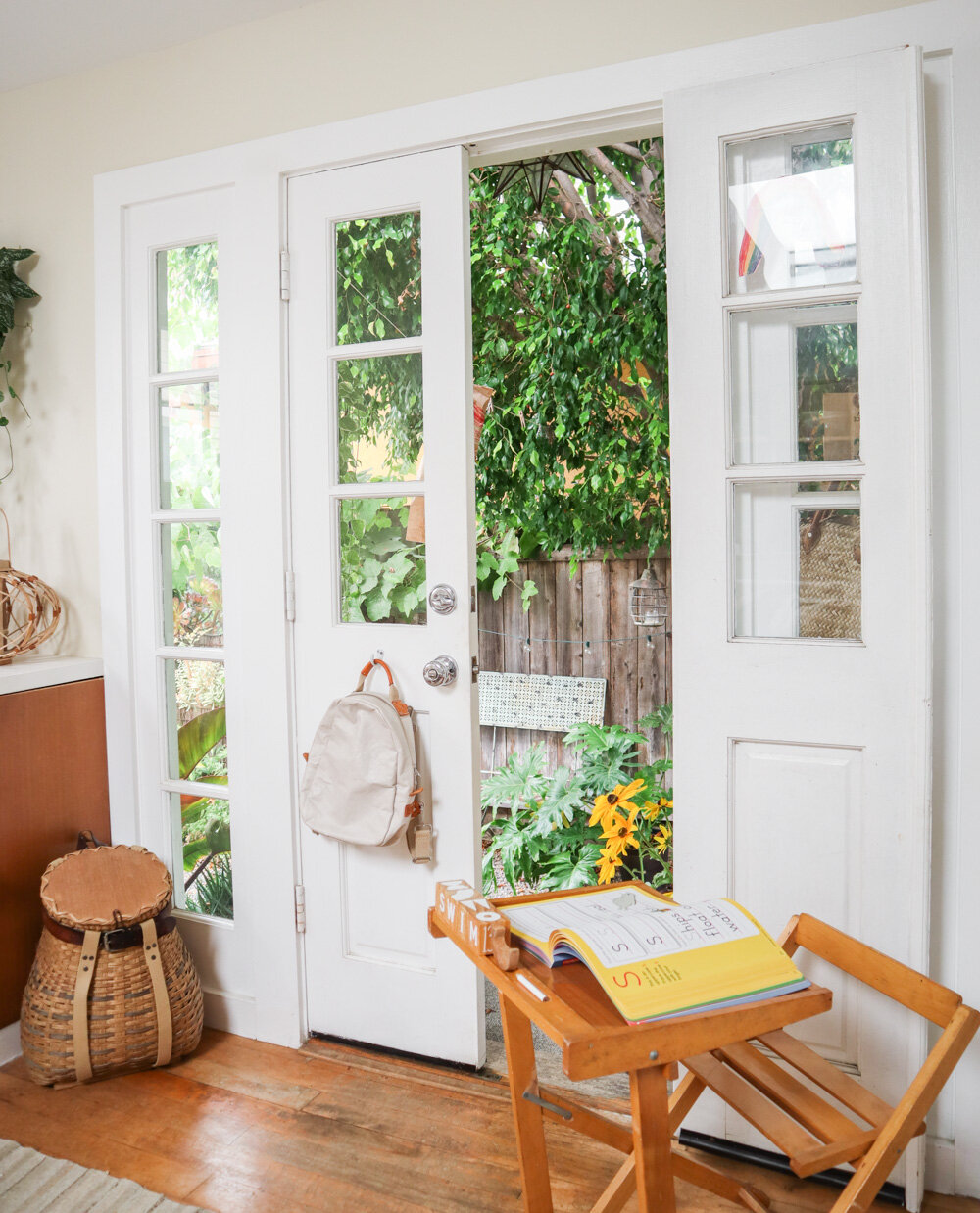
We are fortunate for countless reasons, and we are grateful for even more. Still, we are simply worn down.
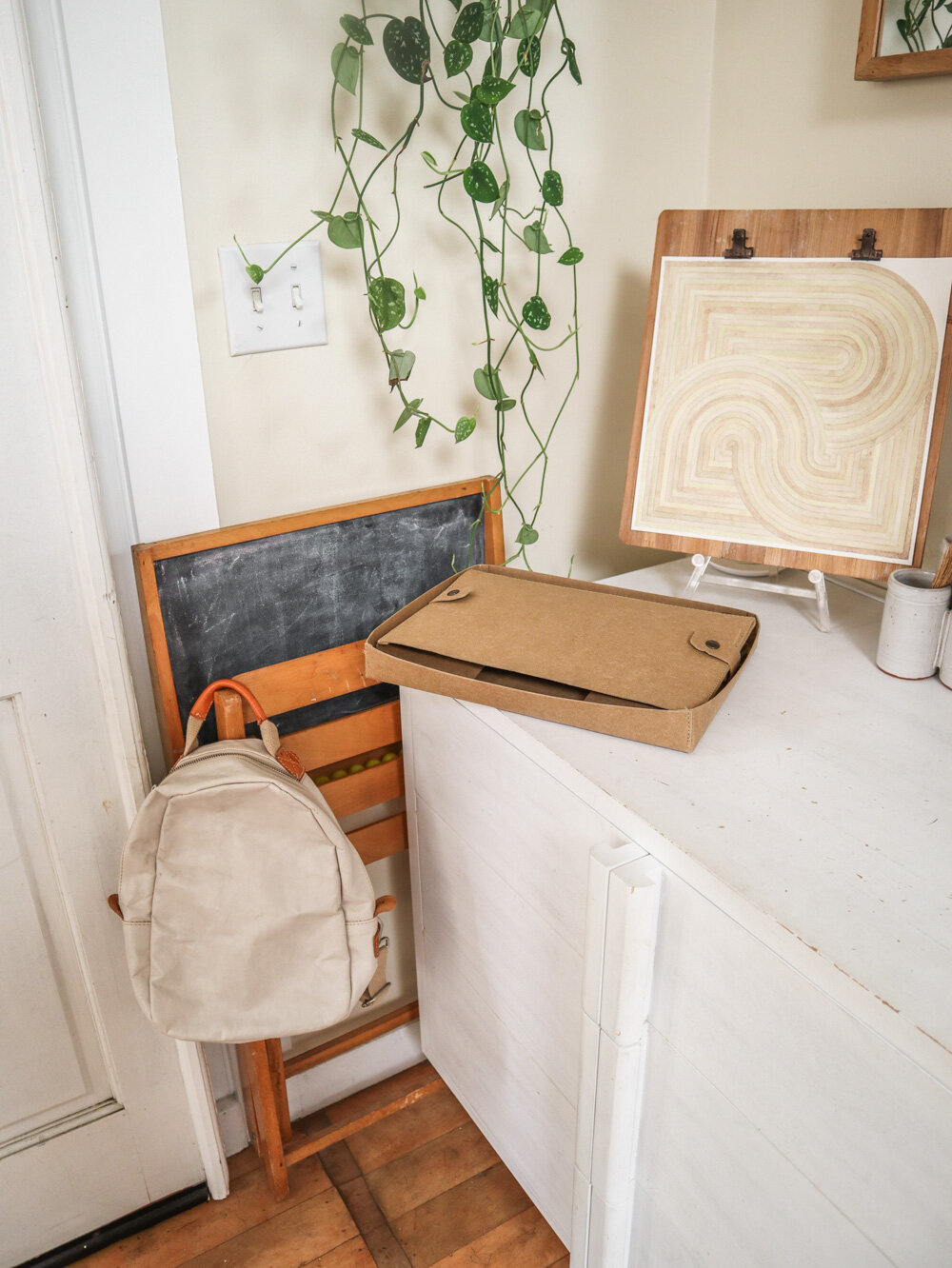
Adam and I don’t want West to feel the weight of our fatigue.
At almost 4 years old, he’s ready for some semblance of schooling. But due to the ever-rising cost of pre-school in Los Angeles, coupled with the Covid-19 rates throughout the city, we are not sending our child to classes in the foreseeable future.

In order to give West a preschool-like feeling at the start of the weekdays, Adam and I have been packing themed lessons together at night for our little one to discover and explore the following mornings.

Spoiler alert: We’re not acing it as parents, folks. These are (very) low-lift lessons. I’m trying to be forgiving of such shortcomings, as we’re trying to run our small business in a recession, navigate family life in a big city during the pandemic, and attempt to figure out some major life changes and decisions (more on that later).

Just like with my office, we create a pop-up school space filled with workbook pages (usually from Highlights for Children), books, activities, and tools that support the morning’s theme. The theme is always something very general— like autumn, swimming, space, plants, etc. The obtuse nature of the themes helps us keeps things flexible, and prevents us from having to buy anything new in order to bring a fresh topic to life every day.

I’ve been filling West’s Uashama 100% organic paper backpack and collapsible, washable paper boxes / containers with the on-subject items he and Adam will use throughout the morning while I work.

And around lunchtime, we end up breaking it down for unstructured, open-ended play.

These sorts of mini lessons feel productive and doable. So while they’re not elaborate or innovative, they’re exactly what we can manage right now. And, most importantly, West is enjoying them.

More photos are below for those who are interested. (And while I have your attention: don’t forget to check your voter registration status or register to vote!)


Making a Voting Plan
“To meet the challenges of the climate crisis and preserve all that we hold dear; to retain democracy, social justice, human rights, and other hard-won freedoms in the future, we must part ways with that which threatens to destroy them. Now is the time to make profound shifts in how we live, work, and relate to each other.”
- The Future We Choose: Surviving the Climate Crisis

In the upcoming presidential election, I’ll be voting (early) for Joe Biden and Kamala Harris.
For those who think that politics has no place on a blog like mine, you’re mistaken. This blog is about home, and all the topics encompassed therein. It’s about running a small business while raising a family. It’s about community. It’s about the climate crisis and our ongoing role within it. It’s about physical and mental health. It’s about learning to be an antiracist. It’s about discovering how to live regeneratively. It’s about connecting with neighbors, as well as folks from all across the world. It’s about exploring what we can share and how we can share it. All of these topics are directly impacted by politics— now more than ever.

I believe that casting a ballot for the incumbent — or refraining from voting altogether — is a vote for an administration that prioritizes the profit, power and comfort of a select few over millions of lives, human rights, the health and future of our shared planet, and our democracy.

John Lewis wrote that: “The vote is the most powerful nonviolent tool we have in a democratic society.” From your local officials to the Senate to the presidency, it’s important to vote up and down the ballot in every election. But voter suppression is happening in America right now, playing out in old ways and new. With a plan, we can each fight to be sure our vote is counted. And we can advocate for the votes of disenfranchised groups to be counted, too.


The Leaf Blower
We have five Ficus trees in our tiny garden. For most of the year they’re easy enough to manage, requiring very little water, and a professional trim twice annually. But during the summer they drop pods. (Lots of them.)

When Sophee was a puppy she began eating the pods, which are toxic to dogs. After much discomfort on her part and worry on ours (along with lofty Los Angeles veterinary bills), she recovered. But we were left wondering: do we get rid of these beautiful trees? The only substantial trees on this lot? The trees that provided us with shade and privacy? The trees that make an otherwise pale space pop with life? The trees whose branches sway in the coastal breeze and gift us with one of the Earth’s most beautiful sounds? Or can we find some way to deal with the pods annually without them poisoning our sweet rescue beagles?
… Should I buy a leaf blower?

Thankfully, as she matured, Soph learned not to eat the pods. As with the grapes that occasionally drop from their vine, the dogs seem to inherently know to steer clear of them.
Over the nine years here, those Ficus trees have grown. And grown.
With (blissfully) more tree comes (not-so-blissfully) more fallen leaves. They aren’t those gorgeous, wide, orange leaves that herald in the changing season. Instead, they’re the little, cracking leaves that flood our pea gravel pathways within hours and make everything feel a bit chaotic in this compact footprint.
Should I buy a leaf blower now ?

Confession: I did buy a leaf blower. (Pre-pandmic, of course.)
It sat on the stoop in its box for a few days. I’d glare at it from my makeshift desk on the kitchen counter and shake my head at it (and myself). Eventually, I decided to return it, unopened, and embrace the leaves instead.
Not only are the leaves helpful with balancing out the matter in our compost tumbler, but they’re also a small part of the natural world that we get to experience here in our tiny patch of land that was once dry, cracked earth.

The soil is becoming healthier. The butterflies and ladybugs and bees are growing in numbers. (So much so that we set up a bug hotel so that some of them hopefully stick around in the winter.)

How lucky are we to shuffle through these little reminders of a regenerated, tiny plot of land? Particularly now, as the light indicates that the summer is coming to a close, but the heat has yet to ease up, so the shade from the trees is deeply appreciated.
On a recent morning, I needed to clean up the walkway to record a video for a client. I began picking up the hundreds (thousands?) of leaves by hand. I could’ve borrowed our neighbor’s rake, but they’re not that much more effective on gravel, and I thought to myself: You’re always trying to slow down. Here’s your chance.
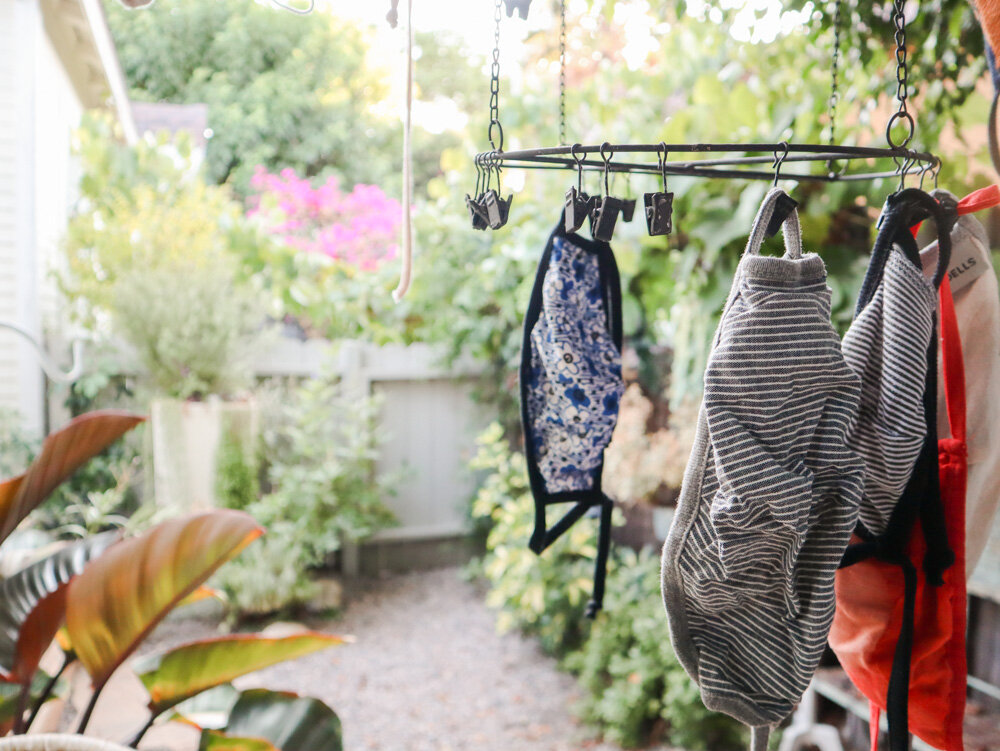
While I was out there, West joined me. We made a game out of gathering the leaves, filling up as many baskets from our rack on the stoop as possible.
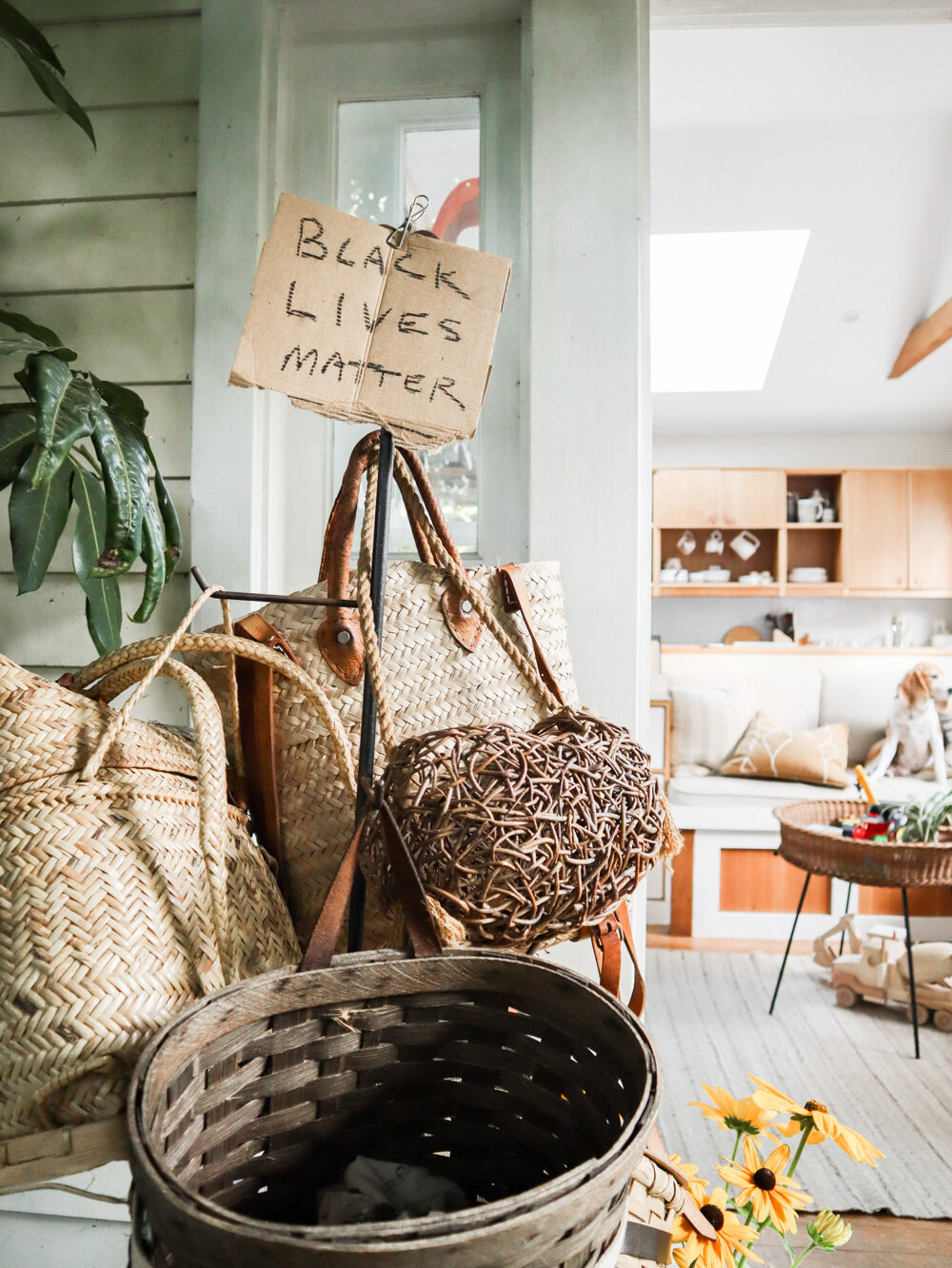
He loved it.
I loved it.
It was slow.
It was simple.
No emails. No phone.
Just our hands and the leaves.

Everyone’s life is complicated enough as it is right now. If someone decides to buy something that makes their everyday feel a bit saner, I’m not here to guilt them for it. But in this context, the leaf blower experience was a good reminder for me that this (largely plastic) item was just one more item I could go without. And in going without, I got a whole lot more in return.

Back to School & WFH: Working & Studying in a Small Space
Post Summary: How to establish and maintain more efficient practices for working and schooling from home in compact quarters with a partner, roommate and/or kid(s) ever-present. (View a related 15 second video here.)
As the new school year approaches and folks around the globe are settling into the idea of potentially working and schooling from home for the long-haul, I thought it might be of assistance to some if I shared this updated post about how we managed our live/work/daycare/school practices here in our small space.

Below are several accessible tips I’ve learned over the course of a dozen years of operating a business full-time from small residences, including some newer points that I’ve adopted in recent years since my husband began working from home, and our son has grown from a baby to a toddler to a preschooler.
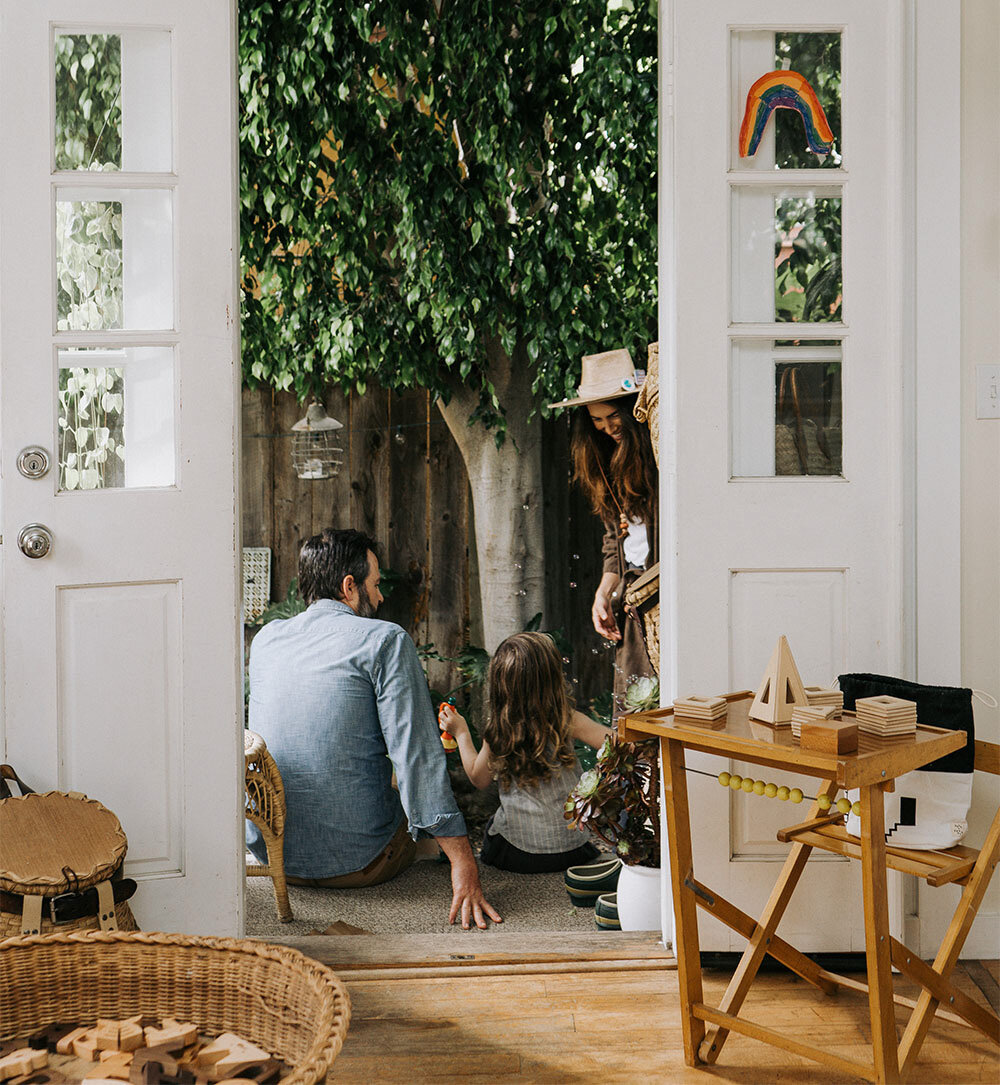
It’s my hope that these ideas will help you work and study effectively from a small house or apartment, whether you have dedicate space for a home-office and a home-school, or if you’re creating pop-up spaces.

Keep in mind that some days will undoubtedly be more challenging than others— there’s no magic solution to this juggling act. But the privilege of working from home during the pandemic is something to acknowledge and keep in perspective. So many people are out of work across the globe, and medical professionals, delivery personnel and workers tied to essential businesses are putting themselves at risk to keep the rest of us safe. Staying home— even if it’s not your preference— is important for our communities, so let’s make it work.
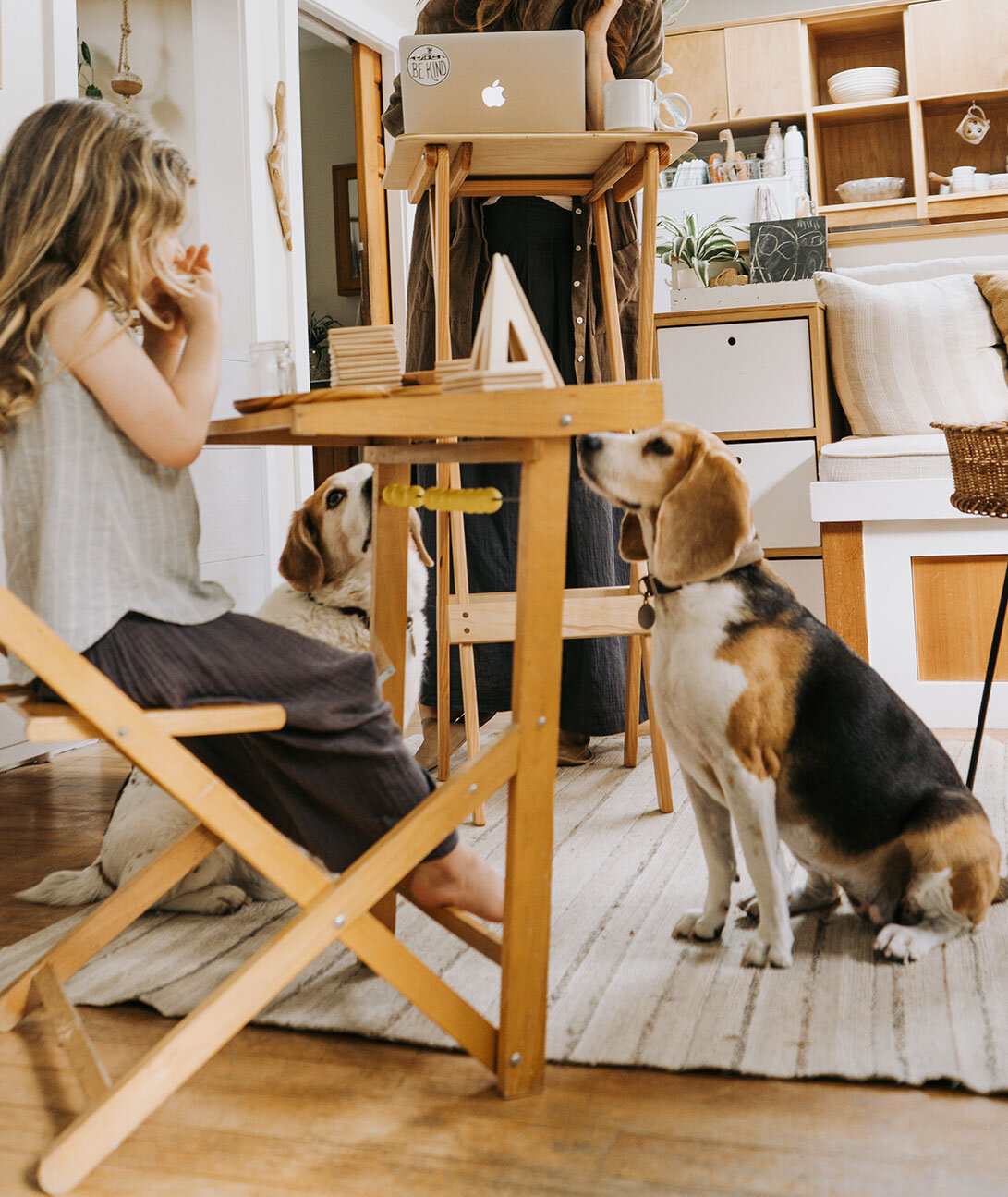
Make your bed
Studies show that people who make their beds tend to be more productive. But in a small space, I think that making the bed is doubly important. With limited square footage, the bed can become a useful surface for random tasks throughout the day, such as sorting/filing/printing papers.
Carve out time for self care
Whether it’s as simple as brushing your teeth and taking a shower— or more involved, like doing Yoga, making coffee/tea/a smoothie, putting on makeup if that’s your preference, and/or taking your pets for a (responsible!) walk, make sure to carve out time in your morning before work to accomplish the things you’d normally do before leaving your home for an office job.
Get dressed
I know this is often recommended to the point of exhaustion. Still, it really is helpful— even if you’re not on Zoom / FaceTime meetings during the day.
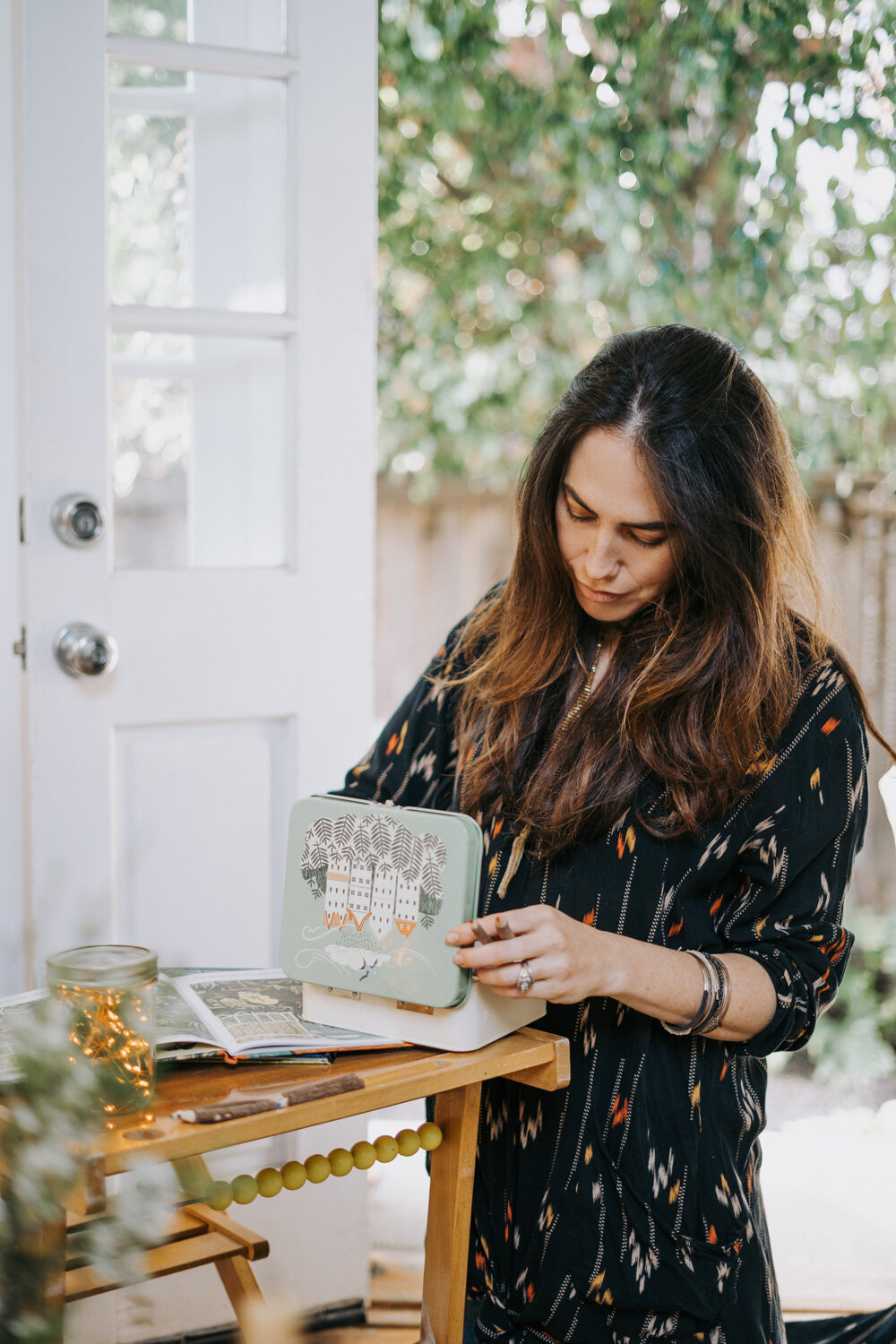
Set up a pop-up workspace (if you don’t already have a dedicated one)
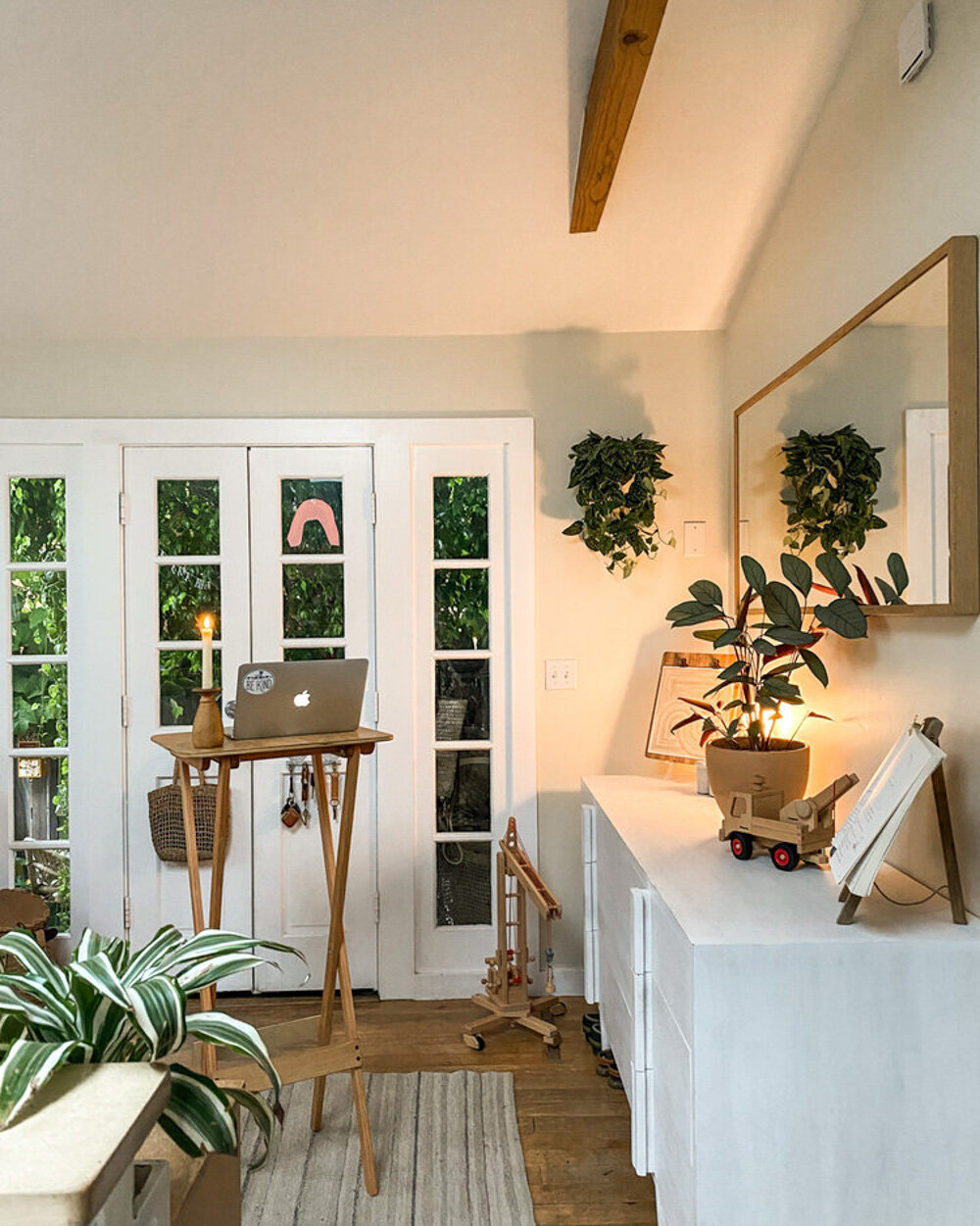
If you have a dedicated desk or dining table, fantastic. If not, create a pop-up workspace. Depending on your living situation, this might mean converting an end table into an office, employing a collapsible bistro table, or using a lap tray in bed. Whatever it is, set yourself up with the tools you’ll need throughout the day, so that you won’t loose your train of thought or productivity by having to get up and find supplies (and thus risk getting distracted) while you’re in a positive workflow. If possible, set up shop by a window, or place a mirror nearby to reflect the natural light from the closest window. It can be emotionally beneficial to get some exposure to nature and/or your community while you work.

Clock-in
Set a time to start and stick to it. I believe this is why I have been so productive at working from home over the past dozen years. When I first began working remotely, I had a client with whom I had to check in every morning at 8AM, and that obligation provided a me with a sense of formal structure, much like a standard office does.
Set your phone timer for scheduled breaks
When you’re working from home, it can be tempting to hop up and take care of chores around the house. Overall, it’s a great gift to be able to check off your personal to-do list while simultaneously addressing your professional duties. But the reality is that this can be distracting and derailing. Instead of succumbing to the urge to steal random moments to manage chores, set timers on your phone to coincide with the times of day you’ll likely need a brief break to stretch and use the bathroom. At those intervals, allot an extra handful of minutes for calling a friend, getting a snack, doing the dishes, watering the plants, tending to personal matters, etc. Let your parter / child / roommate know when these breaks are scheduled so you can touch base or get out of each others way if needed. When your timer sounds again to signify the break is up, back to work.
Try earbuds or noise-canceling headphones
Whether you prefer to listen to music, need silence, or simply can’t stand another minute of your housemate’s keyboard clacking, invest in a pair of earbuds or noise canceling headphones if possible.
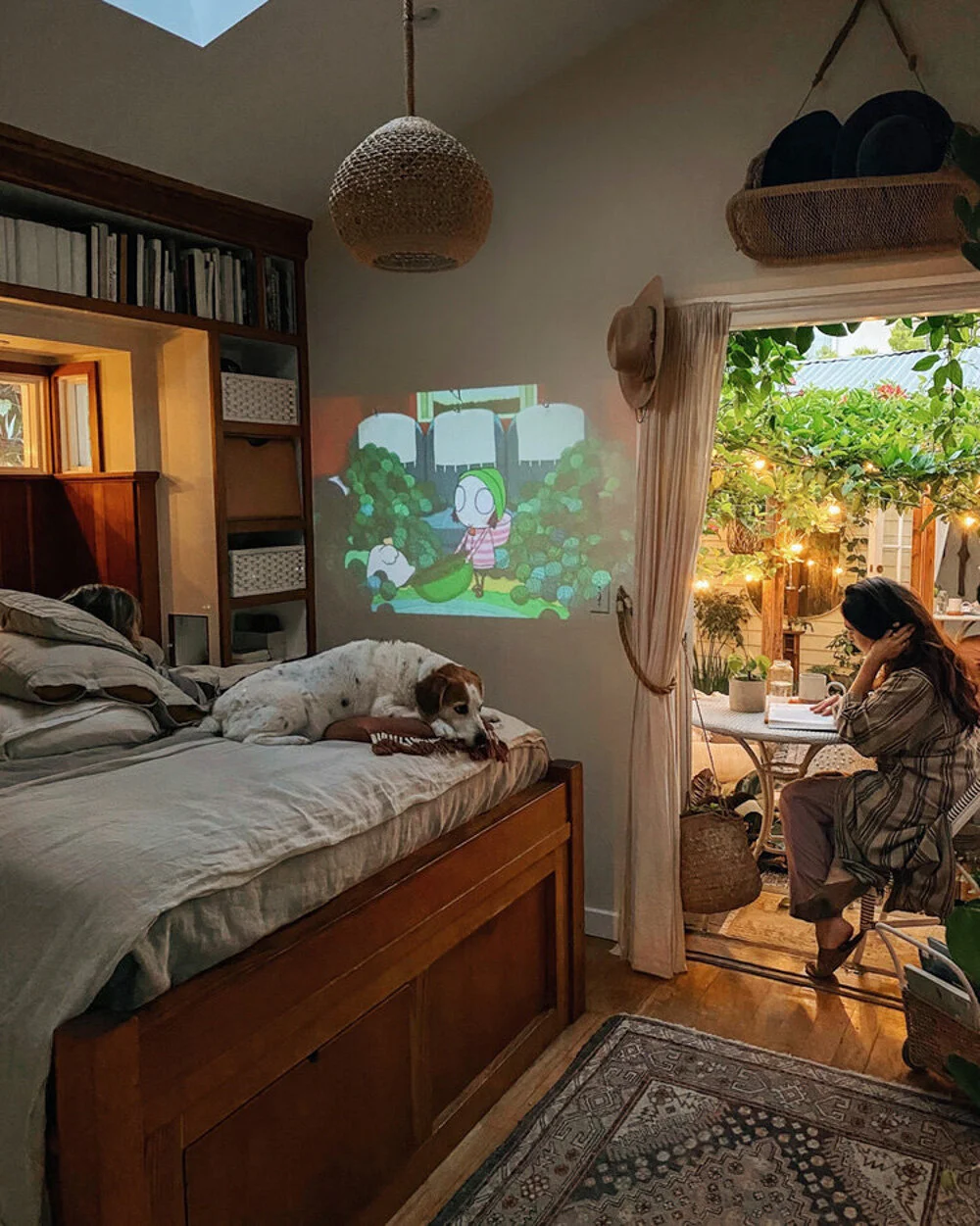
Consider a curtain or screen
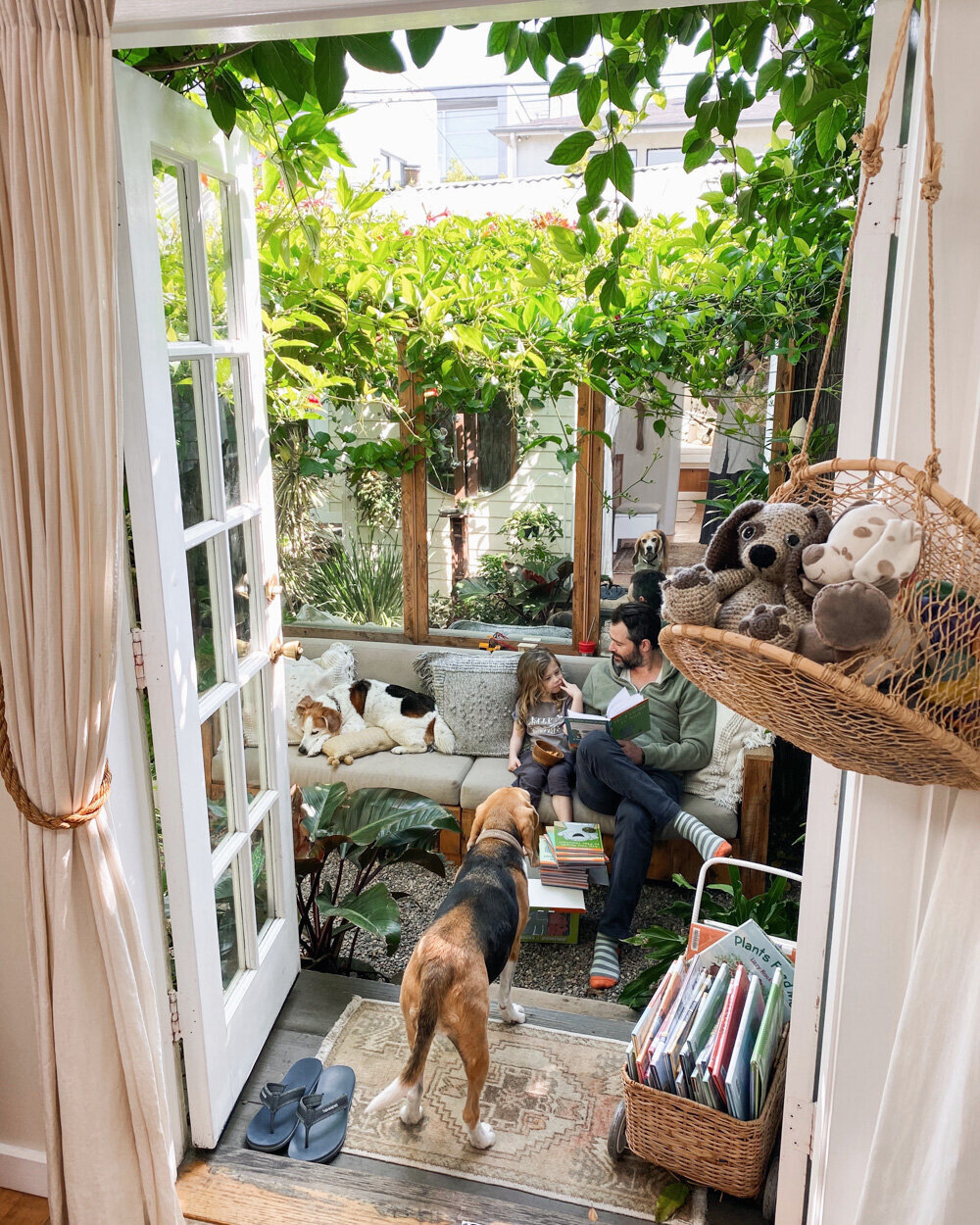
It might be worthwhile to use a makeshift curtain, accordion screen or a room divider of some sort to cordon off your work zone. (There’s plenty more about this topic in my book, Small Space Style.) Beyond adding a sense of privacy, this can provide physical and symbolic boundaries for those with whom you share your home. It can also keep your eager eyes in check when they’re tempted to wander over to the snack shelf or laundry pile when they should be focused on your work instead.
Practice In-House Texting
This might seem absurd in a small home or apartment, but consider texting your partner/roommate/etc. or asking them to text you if something needs to be discussed. That way you will see the text when you choose to look at your phone and can then respond accordingly, rather than being yanked abruptly from a focused moment. (Adam and I often do this, even though we live in under 400 sqft… it works.)

Explore storing your administrative supplies in more than one area if you’re feeling cramped
While it’s handy to keep your must-haves within arm’s reach (as mentioned in tip 4, above), you don’t need to cram ALL of your supplies into one area in your small home office. If you rarely use a printer but have one, perhaps store it somewhere else so that you don’t feel like your work zone is taking over your home. (Examples of this can be found in the IGTV video linked at the start of this post.) Same goes for bulky files, business tools, etc— especially if you’re sharing them with someone else in the home. Spreading accessories out will aid with storage, but it will also allow all parties to use the same items throughout the day without distracting each other when crossing zones to borrow this-or-that.

Temporarily delete apps that distract
If you’re tempted to check non-essential apps on your phone, consider deleting them during the work day, and reinstalling them after you’ve “clocked out”.

Clock out
Just like clocking in, a clocking out routine can be useful for maintaining a live/work divide. Stow office items until the next work day, freeing up your home for personal activities and family time.

The night before, set up an activity for your kid(s) for the morning
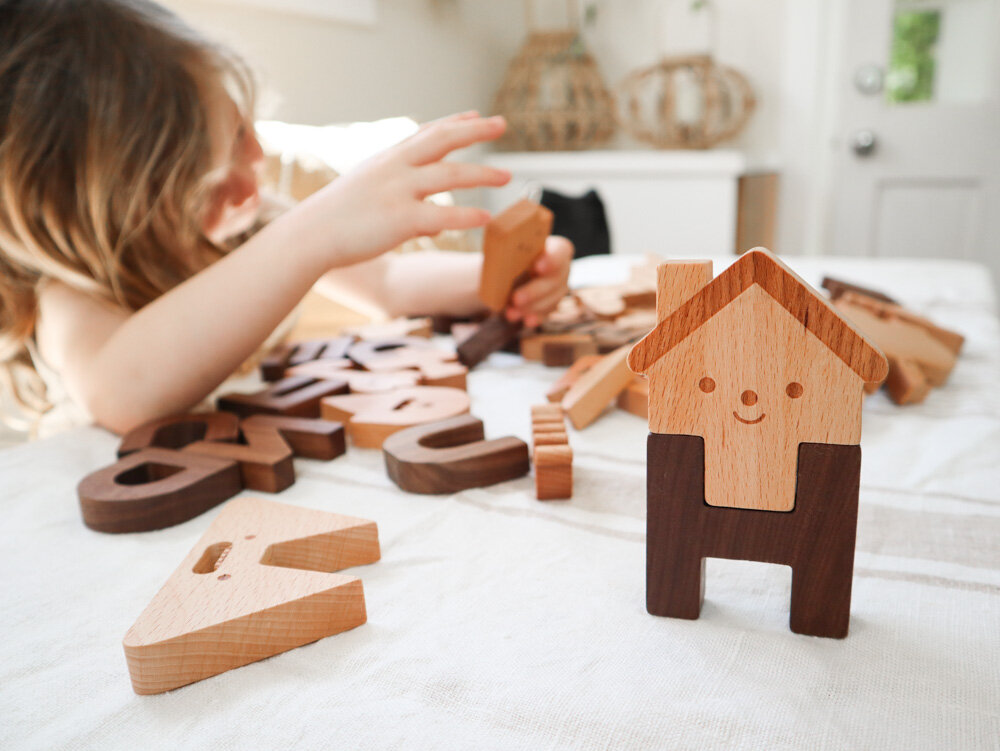
If you’re feeling like the mornings are too hectic, analyze why. Do your kids need something to keep them safely occupied while you go about your self care routine and/or prepping your workspace? Perhaps plan and set up an activity for the morning that will keep them happy so you can stick to your schedule.

Prep Meals
If you find yourself hanging out in the kitchen more than you normally do, perhaps prep your meals and snacks in advance. This can prevent wasted time, and while potentially encouraging a healthier diet since we all need to keep our immune systems in check while this virus circulates through our communities. Not only that, but preparing food in advance is a wise way to ration food within your household, limiting possible exposure from potentially avoidable grocery shopping trips and/or deliveries.
Remember: We’re all in it together. You’ve got this.
Select photos by Lucia Doynel.

A Different Sort of Slow Summer
Folks are always saying that they want a slow and simple life. I think it’s one of the reasons why tiny house + camper living have held the attention of the public in such a tight and tantalizing grip in recent years— the promise of a pared-down life filled with fewer avoidable stresses. The appeal of more time and less noise.
But, as one of Small Space Living’s most enthusiastic cheerleaders, I must say: right now, there is no such thing as slow (at least in the relaxation sense of the word) or simple, no matter the size of your home.
Those who are looking out for one another are either sheltering in their homes for their fifth month, or working in essential positions at their own great risk in order to keep our communities healthy and fed. And while being home is an immense privilege, it’s also an enormous challenge. Even with just one child, the days are exhausting for parents. And as a small business owner, a wave of overwhelm floods every minute of every workday.
This is why our garden-to-kitchen-to-garden habits throughout the summer have been so valuable to me. (Related post: Small Space Gardening to Reduce Anxiety.)

Above: Straw & jar lid from Simply Straws. Jar by Ball.
When we need a momentary a break (from running the business, from parenting around the clock, or from the daunting realities we’re facing as a country), we find ourselves shuffling between the small kitchen and tiny wrap-around garden here a the cottage.

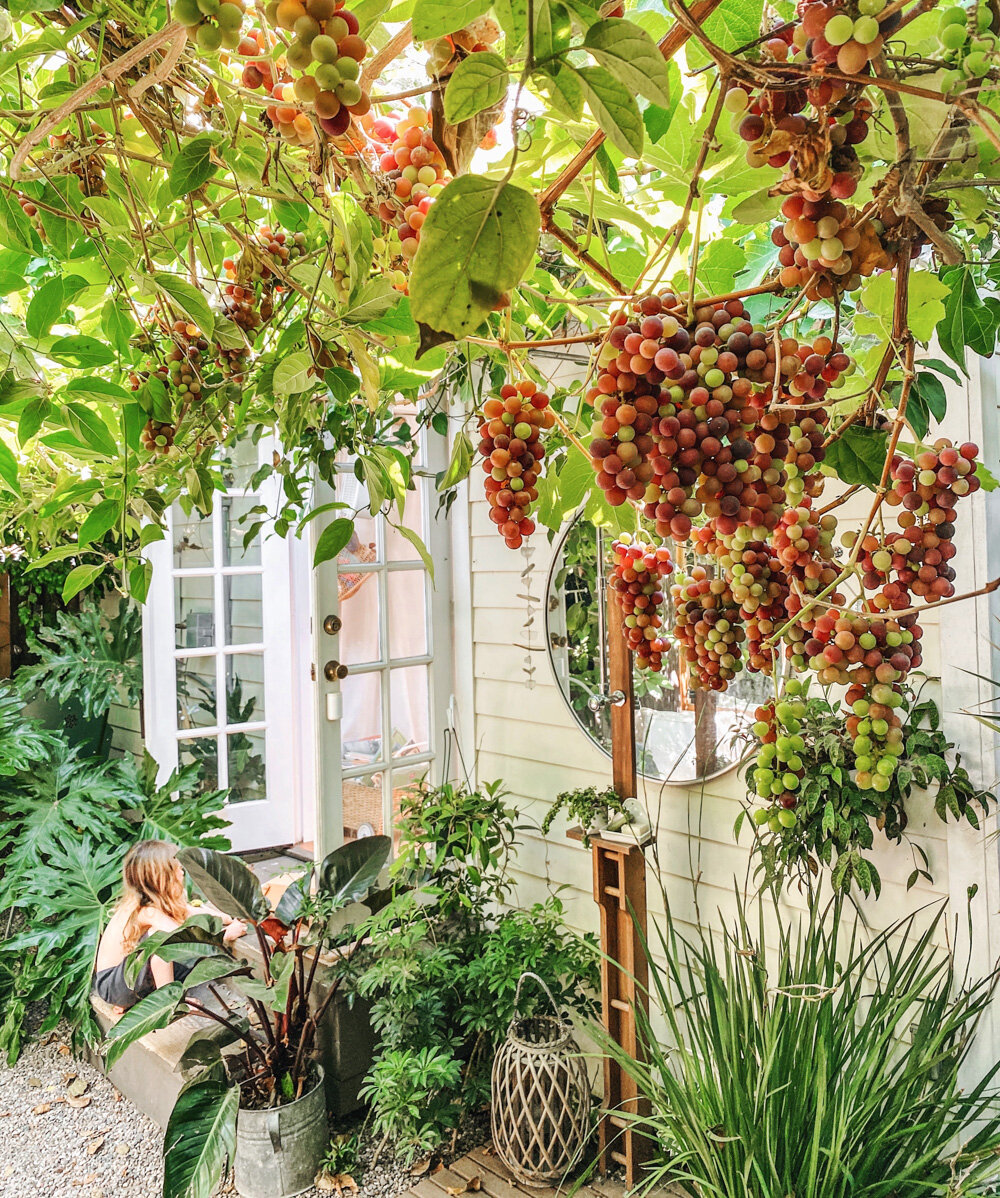
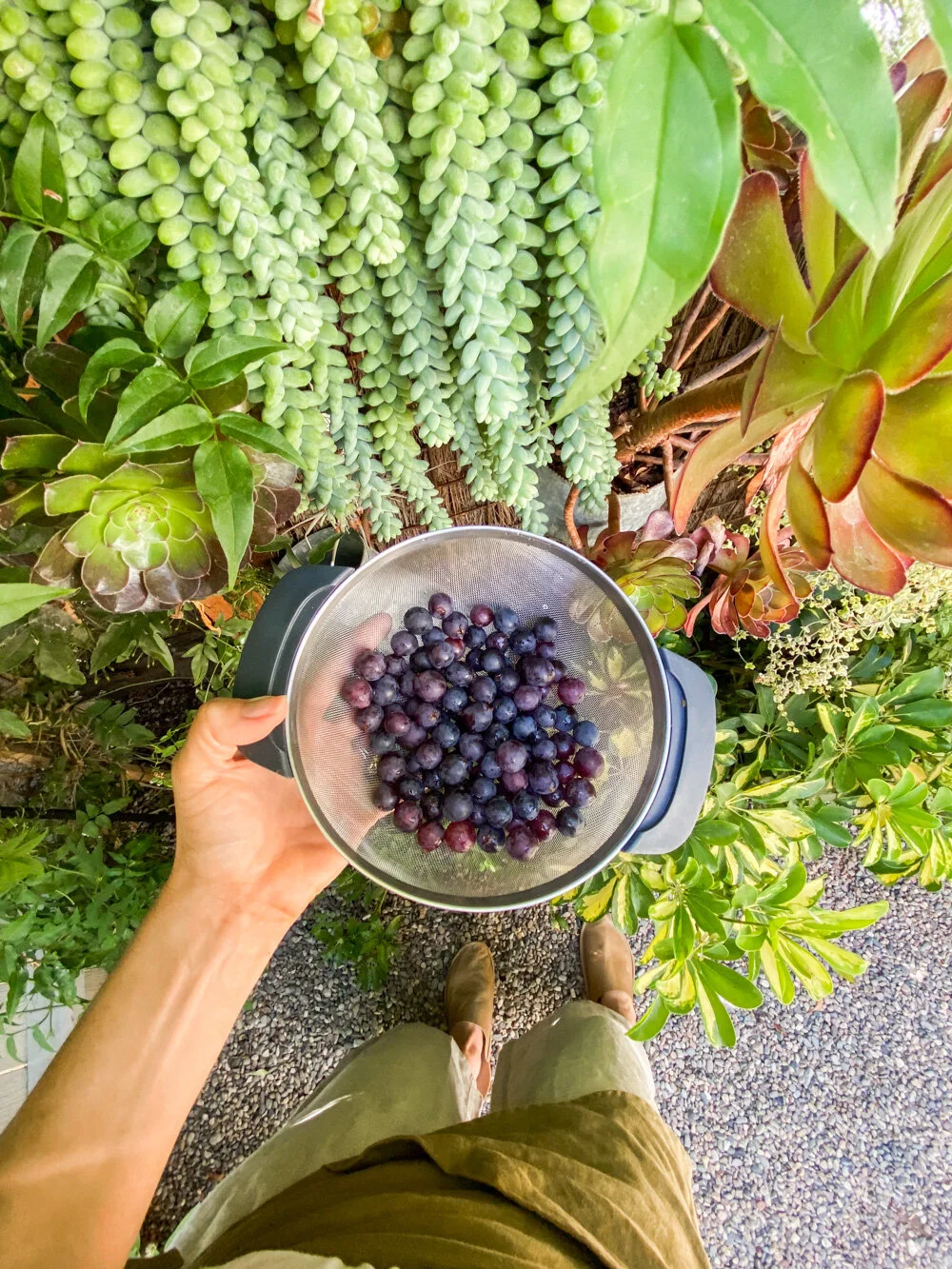
The garden and kitchen have begun to blend together as we clip fruits, vegetables and herbs, tote them inside, prep them in one form or another, then return outdoors to enjoy whatever we’ve made as we escape the heat while beneath the vine canopy. (Related post: Our 2020 Grape Harvest.)

Our neighbors have been making sweet grape juice (which we add to our sparkling water) from this year’s Concord harvest.

Above: Vegan Khala & Co food wrap (to replace single-use cling) drying on the rack.
Meanwhile, Adam has started making jam to accompany his weekly batches of sourdough bread.

Above: Adam’s freshly baked bread.
They’re little indulgences that offer impactful satisfaction. They help us— for a moment— regain that feeling of slow and simple. (The good kind of slow.)

Above: Cherries from our weekly CSA box, piled into a handmade ceramic tumbler by Daniel George of Flying Uke Designs.

100 Days Until the Election - Get Yourself and Others Ready to Vote
“The vote is the most powerful nonviolent tool we have in a democratic society.”
- Rep. John Lewis

The election is just 100 days away. Now is the time to make sure you are registered to vote, and to remind your friends and family to check their registration too. (A reminder from a friend makes them up to 2X more likely to vote.)
Register to vote, check your status and sign up for election reminders / news via When We All Vote and I Am a Voter.
Make your voice heard.


My Fertility Journey
Content alert: This post contains frank and personal stories concerning the process of trying to conceive and stay pregnant.
Yet another month gone by, and I’m still unable to become (or remain) pregnant.
We’ve now been trying for a year and a half. At first, I began the journey with optimistic caution. At 34 years old, we conceived West on the very first try, and it was my first pregnancy ever. The entire experience — including labor — was positive. I knew then how lucky I was. I know it still. (More on that further down in this post.)

In the past 18 months, I’ve had:
negative and positive pregnancy tests
bleeding that my doctor and I suspected was implantation bleeding (which I experienced with West)
months with no periods
months with weeks-long bleeding
normal FSH levels / test results for my age
hormonal & physical fluctuations
I’m sure that there have been a few months along the way during which we missed my ovulation window. I routinely wore an Ava bracelet to track my cycle, but life still gets in the way sometimes, and that’s okay. (Click here to view my post about intimacy in a small space.)
But the mental and physical rollercoaster of trying to conceive (and the unsuccessful starts) takes a toll of sorts. There are the changes in the body (some visible, some not), the extra careful monitoring of everything consumed, the dramatic dips in energy, and, ultimately, the heartbreaking disappointments.

I’ve modified my diet, the contents of our medicine cabinet, and even my wardrobe to accommodate the ride. I now sticking almost entirely to clothing that adapts comfortably to the dramatic waistline inches gained and lost over the months, including pants that accommodate the fluctuations while still being appropriate for business video conference calls and bike rides with my son and dogs at a moment’s notice. (This might seem like a silly detail, but every single time I get dressed I’m somehow reminded of my inability to get or stay pregnant, as well as the need to keep my company going during this pandemic while also still being present with my family. To me, it’s a meaningful consideration, even if it’s a minor one.)

It’s a challenge to discern which emotions are a result of my fertility journey, and which are a result of the pandemic, running a small business, and renting in an expensive city. It all adds up to a tangle of anxiety.

I’ll keep my head up, even during the days that are particularly draining and bleak. Our little family has so much privilege, along with everything we need— we have to pay that forward.

It’s my duty to focus daily on being an anti-racist, raising a feminist and anti-racist child, advocating for voting rights, and fighting for human rights and environmental justice every step of the way.

Throughout my pregnancy and on the day I was ready to deliver West, I had the privilege of safe and respectful maternity care. It wasn’t perfect— there were points at which I believe the hospital got it wrong. For example, some of the medical staff tried to hurry me into having a Caesarean section since my contractions didn’t progress quickly after my water broke, but I had access to a doula team that advocated hard on my behalf for a vaginal delivery without an epidural. This sort of access, along with the opportunity and space be heard, and the successful outcome is by no means a given for every woman in America.
The Centers for Disease Control and Prevention reported that “Black mothers in the U.S. die at three to four times the rate of white mothers, one of the widest of all racial disparities in women's health.” (NPR)
According to Every Mother Counts: “Chronic stress and systemic and interpersonal racism contribute to a higher risk of complications and death for women of color. The number of women who die giving birth in America each year has nearly doubled in the last two decades, and over half of all maternal deaths in the U.S. can be prevented.“
My fertility journey includes working towards dismantling the systemic racism that robs Black women and women of color from potentially having the same wonderful experience with their baby/babies as I had with our lil’ West.

The fight for equitable maternity care is one to engage in every day until quality healthcare is accessible and provided for all mothers. And as for my physical struggle to conceive… well, I’m 39, so it’s still very much within the scope of possibility, but I’m coming to terms with the fact that West might never have a sibling beyond our pups, StanLee & Sophee. (For reasons I’m not yet ready to discuss publicly, we aren’t currently considering IVF or adoption.)

Just when I start to feel overwhelmed with disappointment, West intuitively swoops in and reminds me of my overflowing gratitude for this lil’ family, home and life.

What's Next For Our Family? (Updated)
The following is an updated version of a blog post I published in February of 2019.
One of the questions I’m asked the most often is: What is the plan for when West gets older and wants more privacy? And do we need more space if I’m able to have a second child?

The same sort of questions popped up time and time again when I was pregnant with West— everyone asked us when and where we’d be moving. But we took things day-by-day, and it all worked out better than we could’ve ever imagined. That’s how I want to live— planning wisely the realities of life, but also allowing the future to unfold naturally as we navigate the present. That way, when the time comes, we will know what we need and why, rather than acting half-heartedly (and perhaps wastefully) on predictions.

People make all sorts of living situations work for them and their families, whether by choice or necessity. Diverse lifestyles and homes are all around us, but they’re rarely integrated into entertainment in a way that makes them seem like anything other than a problem or a quirky novelty.

I don’t expect that the issue of space itself will inform any of our family’s decisions making at this time. Instead, the main factors that I expect will determine how long we end up staying in our tiny cottage are financial and family related.
We rent, and we have no family in Los Angeles. While our home and garden have been an exceptionally wonderful spot to Shelter in Place, renting and trying to keep a small business afloat in an expensive city/state during the pandemic heighten insecurity. Plus we miss our families terribly.

We love and appreciate our home and garden more than ever, and are in no rush to leave. But lately I do find myself dreaming of a slower, quiet life, more land, four seasons, and better access to our family… and I wouldn’t mind a fireplace and a tub. When the time comes, I suspect we will look for a place with two bedrooms, or at least a little “extra” space in which to creatively craft a second bedroom. But we’ll deal with that when the time comes. (I want to share some of the places we have in mind, but that’s for a later post…)

When we decide to go, I’ll be sharing the entire process here, as you have supported us tightly throughout the years. But as we move through our current (9th!) year in the Tiny Canal Cottage, I hope we are able to bring you as much joy as you continue to bring us. Thank you.


Summering in a Small Space during the Pandemic
After 4+ months of staying Safer at Home, most of our household rules and practices are now fully out the door.
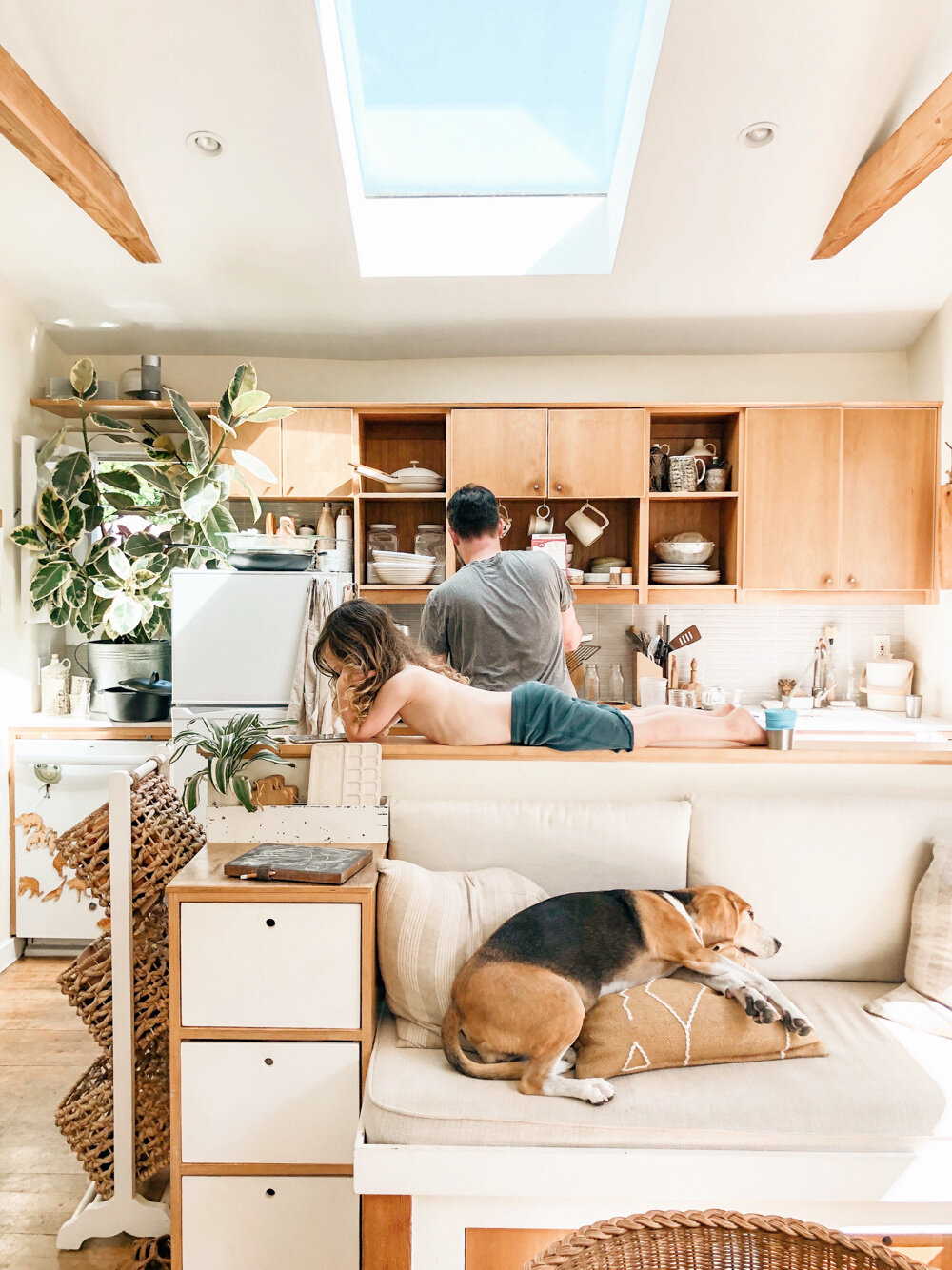
Above: West watching friend Shavonda Gardner during an IG Live.
Mealtimes are fluid.
Activities are devised on the spot, rather than planned in advance (unlike those early, ambitious weeks in March).
Laundry day is any day.
And Adam and I are much more likely become distracted and randomly get absorbed in read articles and updates on our phones, rather than delaying until West is asleep at night like we used to.

Above: West wearing a child-sized mask, handmade at Late Sunday Afternoon in Venice.
I am still working full time, while Adam and West are, of course, still unable to take the local adventures they used to.

Above: Adam Winkleman and West enjoying the remains of what was once an epic pillow fort.
Those field trips once allowed me to focus uninterrupted on my job for valuable chunks of time throughout the day. Now we have to get a bit more creative— a challenge we’re (thankfully) all still into.
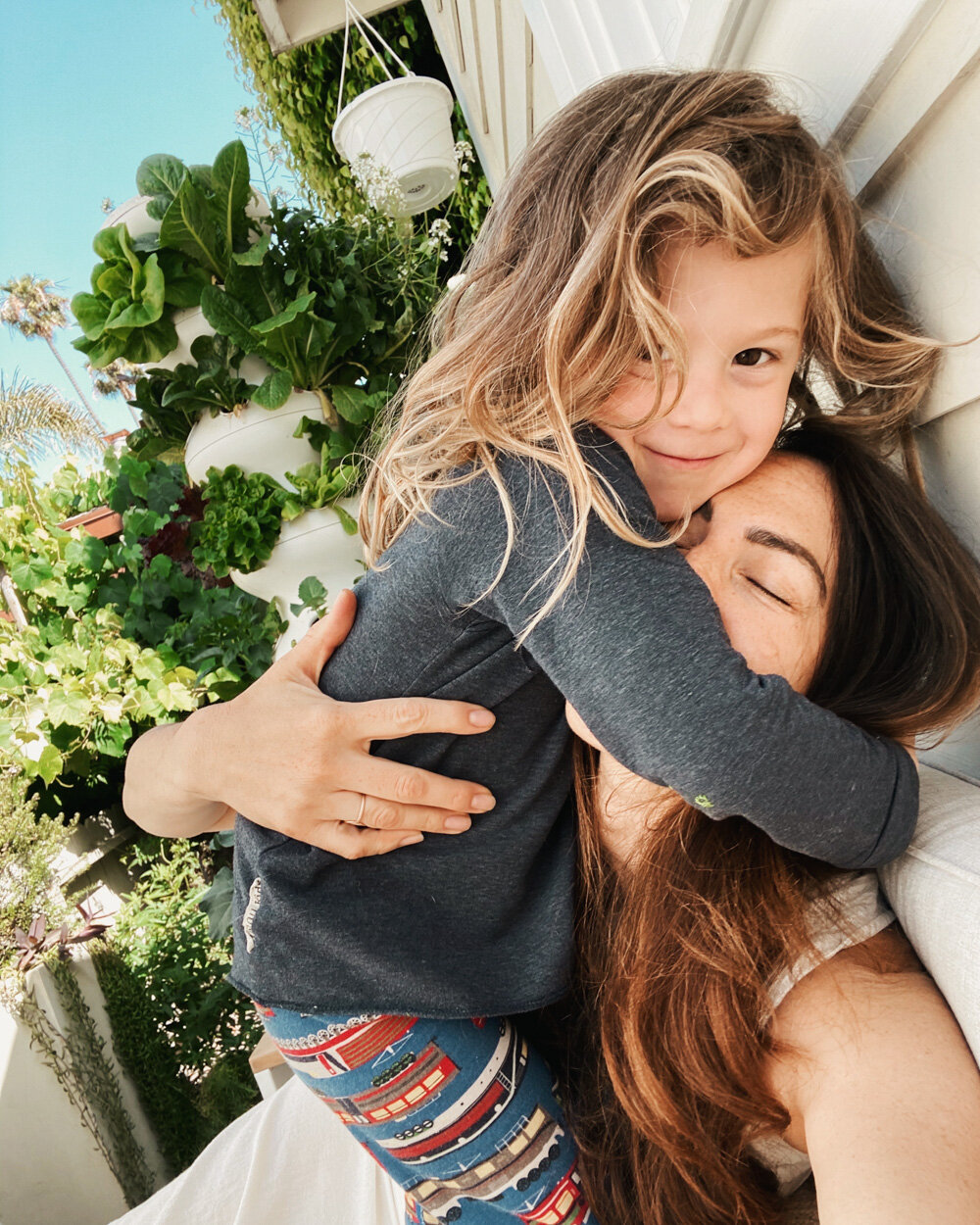
(Click here to read my Tips for Working Effectively from a Small Home / Apt During the Pandemic.)
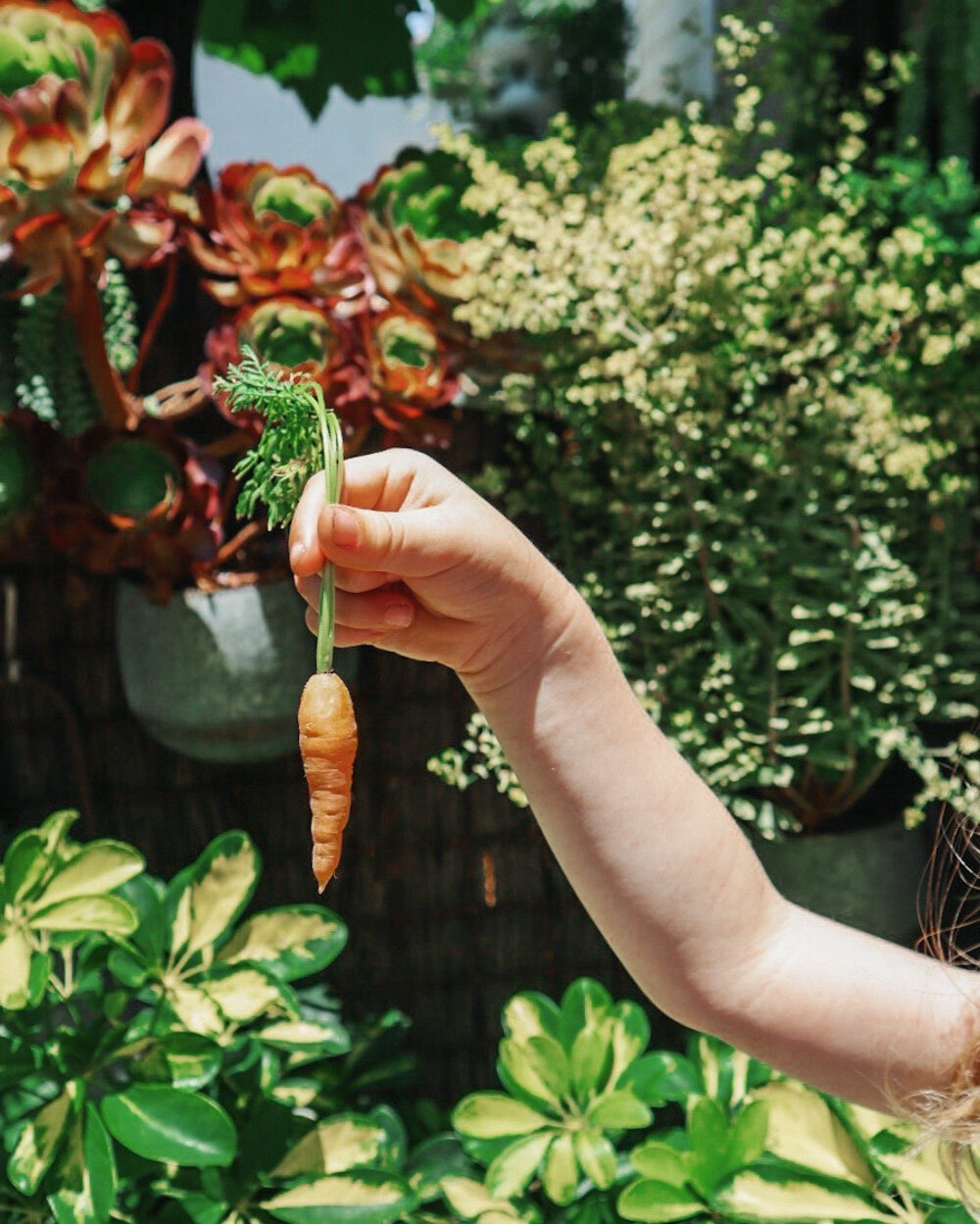
We haven’t gotten West any new toys (except an oversized crane that we’d ordered way back in winter) since the very start of the pandemic.


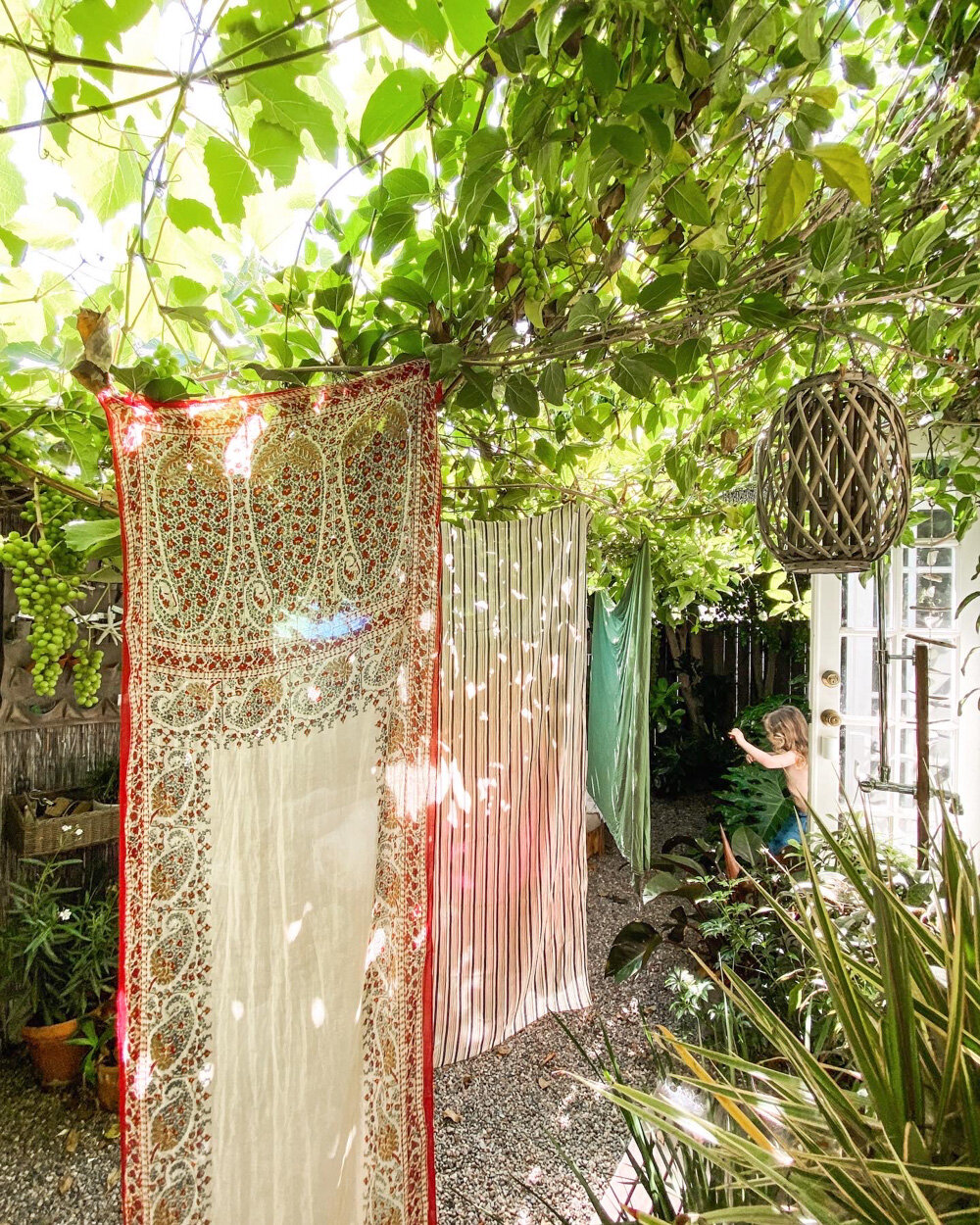
As such, we’ve been doing things like draping oversized linens from the vine canopy as part of an obstacle course, writing letters to friends and mailing them via a city post box (and discussing absentee voting when we do so), and setting up museum exhibitions throughout the house. (This is something West came up with on his own. He gives us slow-guided tours of the works on display, which range from rocks to dolls to pieces of hardware.)

Adam and I are also relying heavily on the Pinna audio app throughout the days. Pinna offers ad-free podcasts, audiobooks and more, helping us keep West entertained without a screen while my husband and I manage our small business.
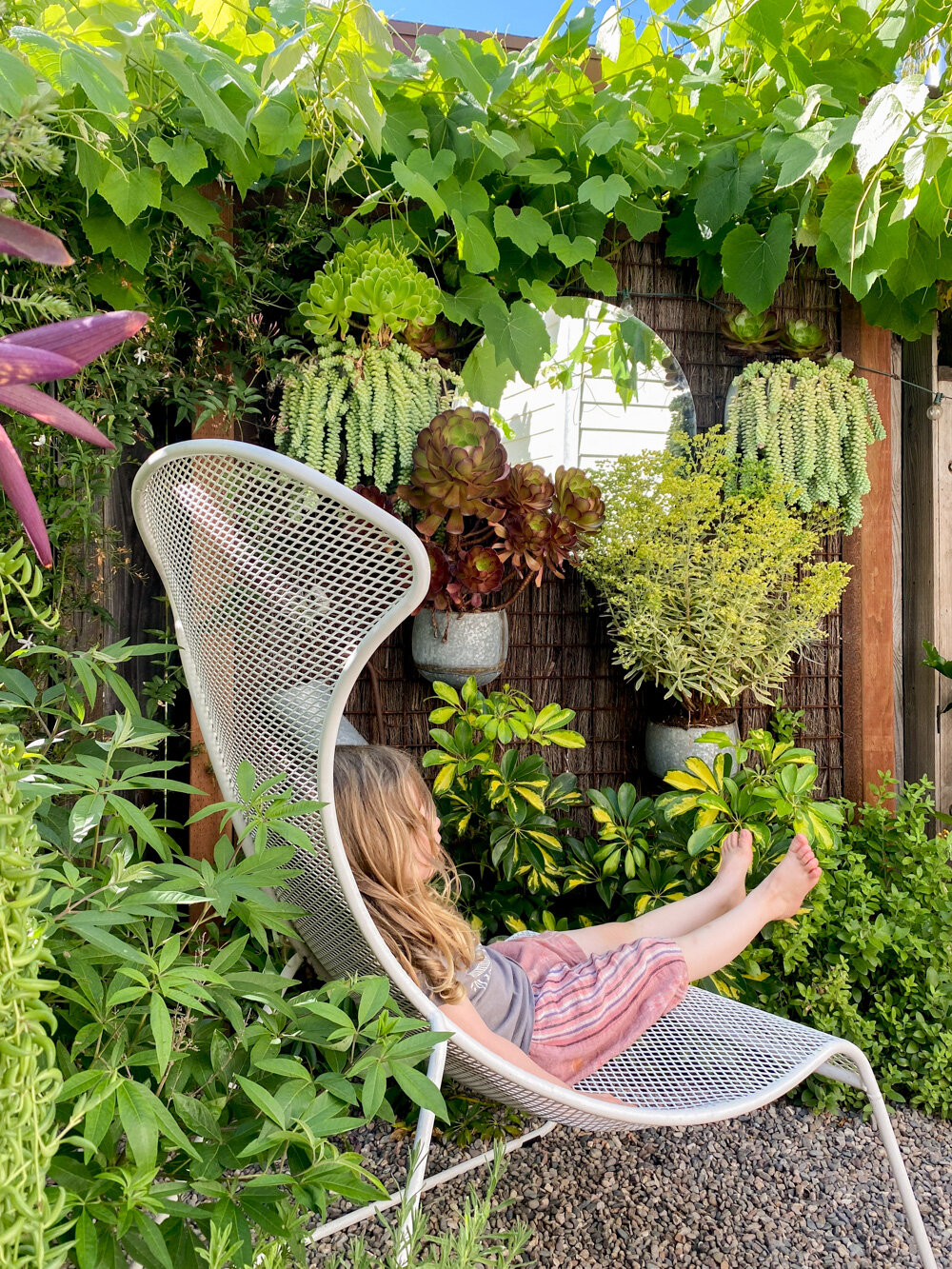
West listens attentively to his long-time favorite series, Sarah & Duck, or his new obsession, Quentin and Alfie's ABC Adventures.
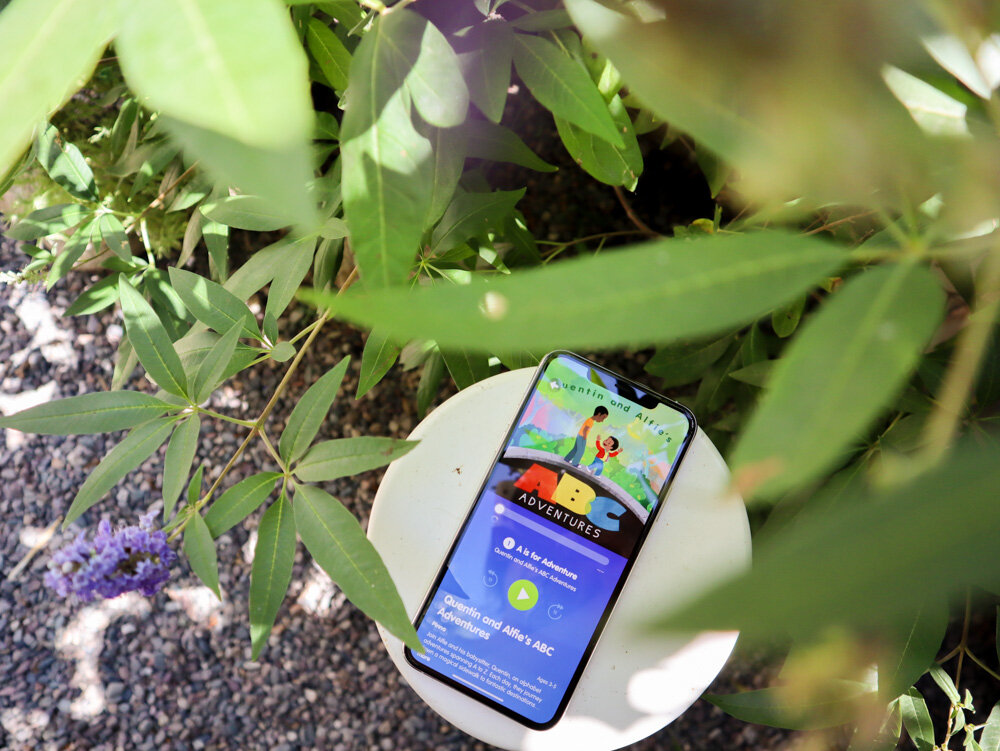
Above: Quentin and Alfie's ABC Adventures on the Pinna app— our go-to for ad-free podcasts and audiobooks for our 3+ year old.
He’s so enamored of the Pinna segments that not only will he listen to them for long stretches of time while playing inside or outside with blocks and trucks, but he also drops a portable speaker in his wagon to listen to the stories on-the-go as we all take the dogs on their walks. (Use this link and the promo code: PINNA3MONTHS for 3 months of free listening.)
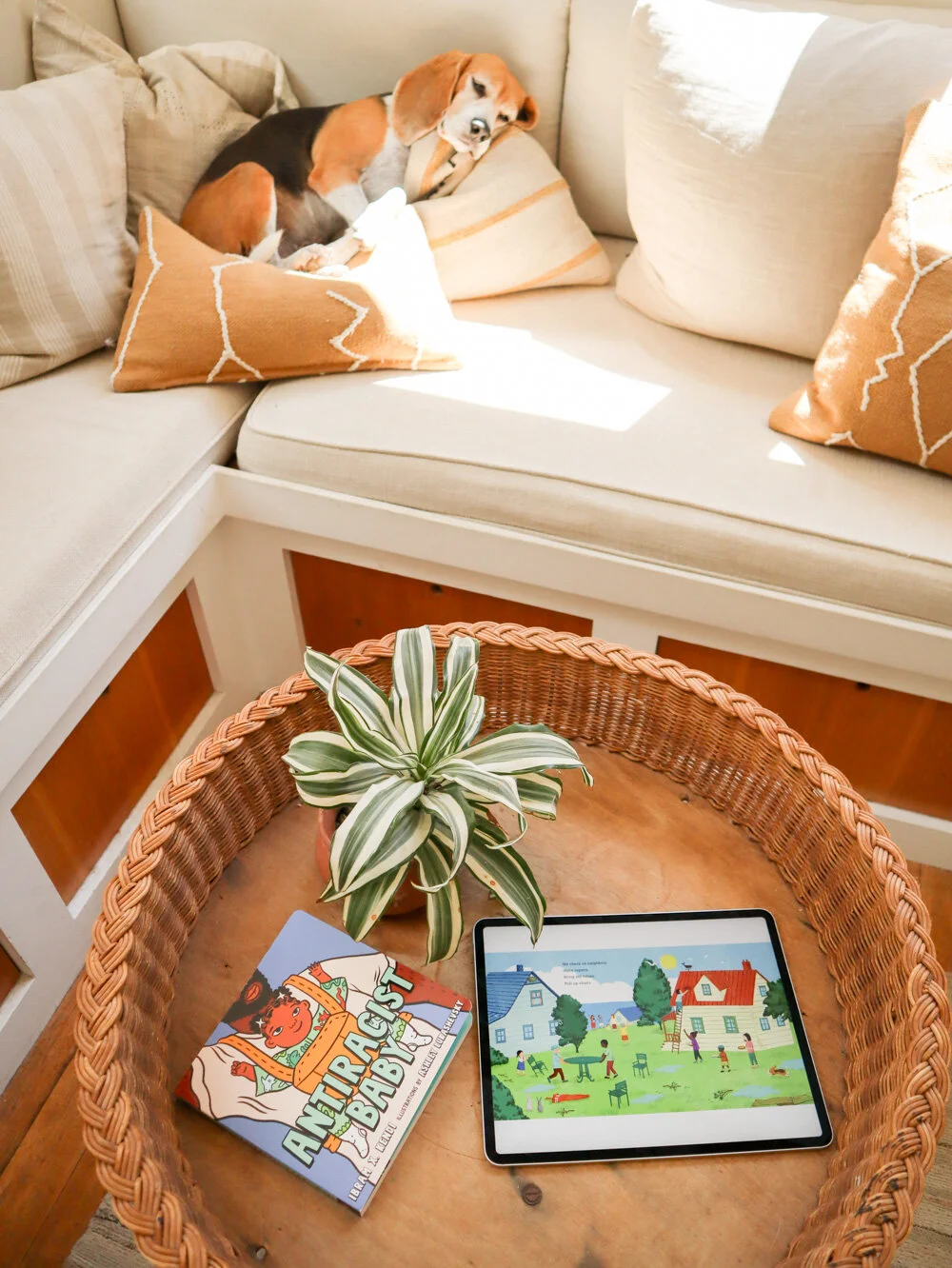
Above: A borrowed library book via The Libby Ap (featuring an illustration by Christian Robinson, and a copy of Antiracist Baby by Ibram X. Kendi.
Other activities we’re still regularly doing with West include:
Reading for about 2 hours each day. In order to expand our collection of books, we downloaded the Libby library app.
Biking in the early mornings (before the heat and crowds set in).
Watching episodes of Sarah & Duck or Puffin Rock with our mini projector
Checking on the fairies’ house and using a pulley to transport foraged supplies their way.
Listening to Pinna audiobooks / stories while playing with trucks, building blocks/tiles, train tracks, etc. (Visit this special link and use the promo code PINNA3MONTHS for a free 3-month trial.)
“Painting” the fence with water
Bubbles
Cooking, baking, cleaning and laundry as family games
Dance parties
Building forts (on the couch, with a tablecloth tent, and with play silks / scarves)
Window darts (these are plastic, but I’m glad we have them—- they’re fun for the whole family and we use them constantly)
Running around the house and yard with the pups
Art class (stickers, simple crafts, color pencils and crayons, paper planes, etc)
Gardening, Farmstand harvesting and monitoring, and careful watering of the indoor/outdoor plants
Puzzles (we only have 4-5 small ones, but they’re enough)
Basketball
Video / Portal calls with family and friends
Chatting over fences and through windows with our neighbors
“Fishing” in the main room or garden
Switching up meal and snack formats in the PlanetBox for in-home picnics

Meanwhile, Adam and I have an ever-growing stack of books we’re eager to read. I ordered some for my e-reader, some from author’s sites, and others through Elizabeth's Bookshop & Writing Centre (fulfilled via bookshop.org). A percentage of all sales from Elizabeth’s goes to The Loveland Foundation to support their mission of making mental healthcare accessible for Black women and girls. West goes to bed around 9:30, so it’s around then that Adam and I finally get to open pages and read.

At this rate, I imagine it will take us quite a while to get through our current reading list. But it’s lifelong work, this learning and unlearning.

And as for the summer, I’m all for foregoing traditional activities in order to keep members of our communities safer, figure out ways to make our planet healthier in this crucial decade, and to take meaningful actions to rectify inequalities throughout our country.
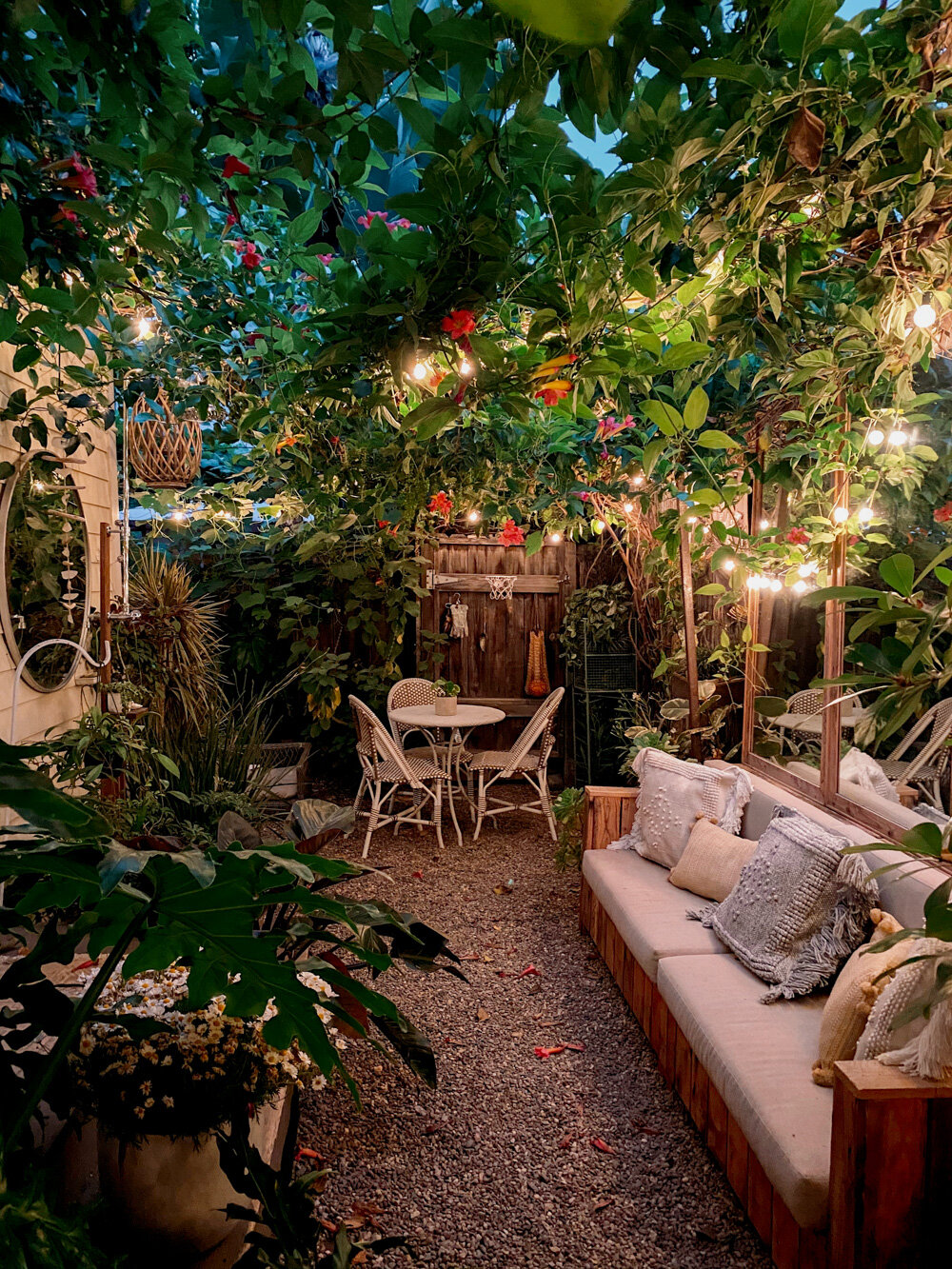

Renovations as a Renter
It might surprise some readers to know that we’re renters.

With the amount of time we’ve been here and the renovations we’ve undertaken across the cottage, garden and even the neighboring tiny house, most people understandably assume that we own the property.
Once folks discover that we rent, they usually ask why we’ve poured so much money and effort into home modifications and improvements.
Does the landlord pay for the work or deduct the costs from our rent?
(No, but I assure you that he is generous, supportive and wonderful.)
Are we on a rent-to-buy plan?
(No.)
My thought on renovating our rental has always been that if the update is reasonable and within our modest, allotted budget, the investment isn’t a waste. Sure, I’ll never get the money back, but I find genuine value in the pleasure sparked by the end results.

Committing a little savings to an improvement here or there slowly over time has helped us stay comfortable in our home as we evolve, and it has sustained our excitement about being here— even after nearly a decade. This is helpful, as we weren’t in a position to buy a home (tiny or otherwise) for the vast majority of that time anyway.
Besides, an improvement to our home is also an improvement to my office, since I’ve worked here, full-time, since day one.

I’ll only consider substantial upgrades if there is something that is really bothering me every single day. Eventually I’ll target the issues, draw up my creative plan, review the scope of work, obtain a realistic estimate, and then consider the following: If we were to unexpectedly leave within the year, would I regret making this investment? If I believe the answer is no, I go for it if it feels doable and responsible, and if our landlord signs off.
Regarding the financial investment, let me be transparent: While we’ve put money behind our upgrades, we’ve also been able to offset some of the costs due to the nature of my small business. Yes, this is a privilege— absolutely. But it’s worth firmly noting that it’s also an enormous amount of work beyond/behind the renovation itself. (Thankfully, I really love my job.)

There are still updates we’d like to make. For example, our floors are extremely distressed, and while I feel somewhat sentimental about the stories that the wear-and-tear tells, they are in such a state that they look grimy 100% of the time. The same goes for the fronts of our cabinets and drawers. Also, the color of the stain on many of the built-ins is more saturated than I like, but there is so much detail and beveling throughout the wood that I can’t bring myself to commit to the time and resources required to change the look.
The updates we have made have brought us so much happiness, and I don’t regret a penny I (carefully) spent. As a result, we are as in love with our home as ever, and we are grateful to be in this cottage— even if we don’t own it.
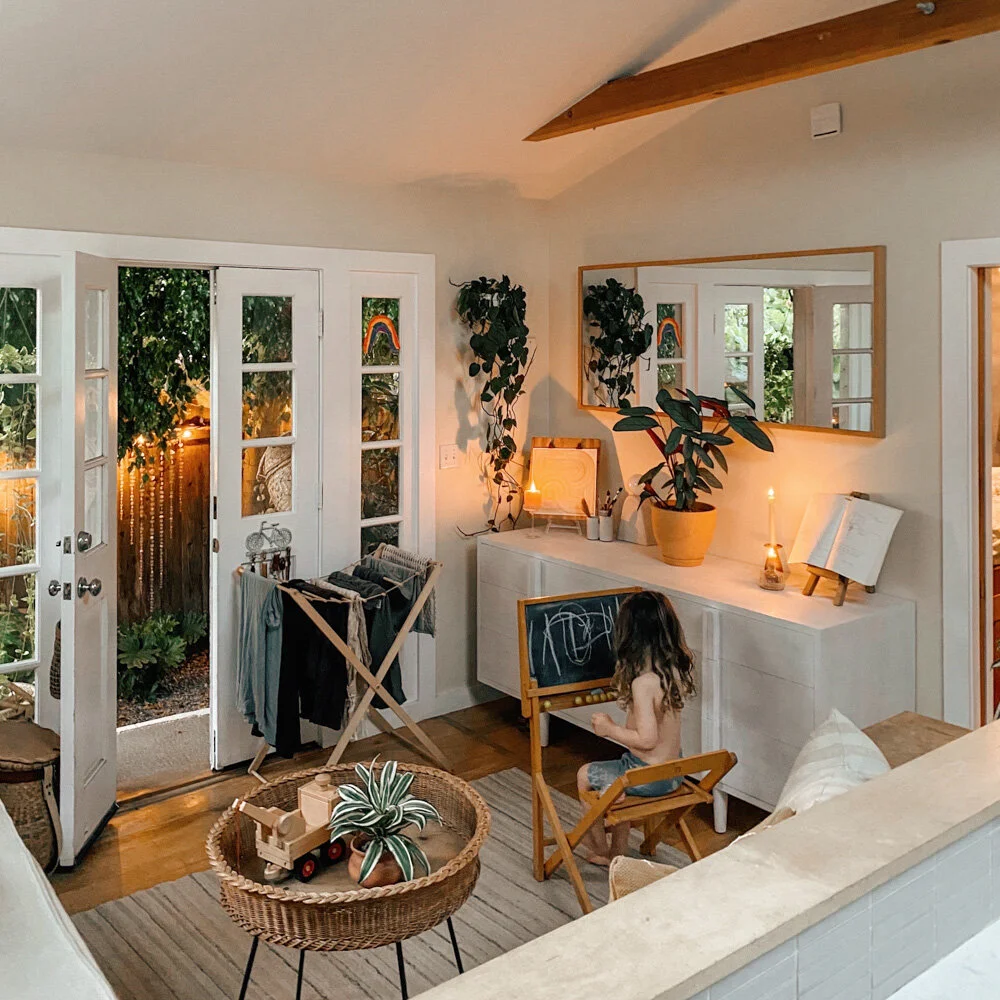
I suspect that most of our larger changes here are done. The economy is in turmoil, our small business is struggling (like so many others), and we’ve already poured so much into this beloved space. As such, I think we’ll stand-by for whatever adventures await us in the years to come…
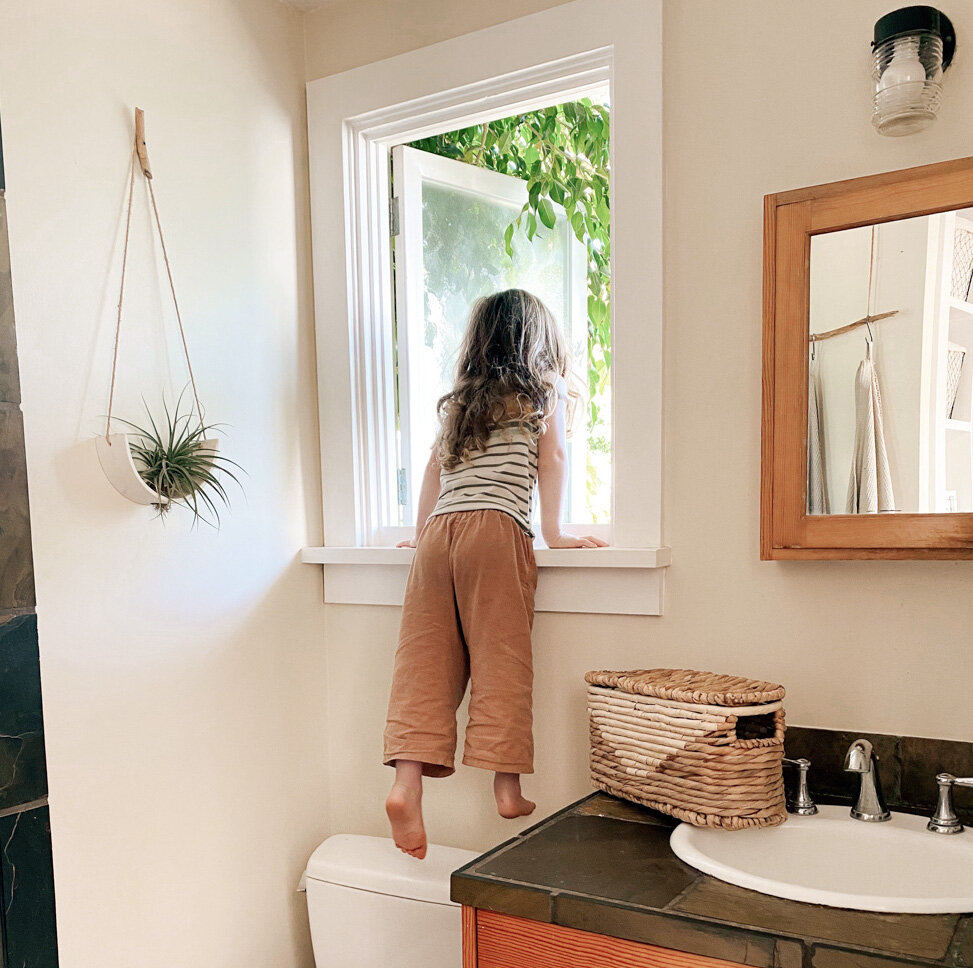
First photo by Lucia Doynel.

Intimacy in a Small Space
At the start of California’s “Safer at Home” order, I was interviewed by a sexual wellness brand and blog that focuses on modern intimacy through arts, science, and relationships. While some of the questions they posed and responses I provided speak specially to general human connection and physical intimacy while sheltering in a small space during the first months of the pandemic, much of the interview is applicable still, even as our state has inched towards reopening.
I’m sharing this slightly updated/modified version of the Q&As here on my blog, as I’ve recently received several messages from folks wondering how we manage time together, time apart, and physical intimacy here in our compact home.

Q: With social distancing & quarantine, how has human contact changed?:
A: Inside our home, not much has changed. We are used to being in close quarters with one another 24/7, although we used to have a few hours of exception sprinkled throughout the week, as we split or paired off to do various activities away from home. But now we’re learning how to connect with others in a whole new way. Thanks to technology, we can instantly be digitally united with our friends, family and colleagues from afar, while also discovering their unprepared homes, their unfiltered moods (many of them raw), their evolving habits, and their struggles along with their daily triumphs. And while we haven’t experienced the abundance of free time that so many others have referenced, we have indeed experienced a transformation in how we perceive and prioritize time throughout the day and night, which leads to increased connection in some ways, and reduced connection in others…
Q: How do you make space & time for intimacy?:
A: Depending on the form of intimacy, it isn’t easy. But I acknowledge what an immense privilege it is to be able to “shelter at home” with the ones I love, so I won’t complain.
In certain respects, our close proximity and constant exposure to one another make our deeply-seated bonds extremely strong, which is one of the reasons we live the lifestyle we do. However, when it comes to uninterrupted in-depth conversations and physical intimacy as a married couple (with a three year old who is constantly mere feet away, and while juggling a very small business that’s been rattled by recent events), those moments are limited and have relatively inflexible boundaries. But that’s okay— it’s certainly a new learning exercise, and we’re open to figuring it out.
Being physically intimate as a couple in a small space with a child always has its minor challenges. But we were creative in the first years of our relationship— now, 10 years in, I think that it’s helpful (though not always convenient,) to have the excuse to be mindful of how and when we connect, rather than lean into routine. And when I think about it, space itself doesn’t play as much of a role in finding places and moments for intimacy as much as general stress and exhaustion do.

Q: How do you carve out solo time?
If Adam or I are in need of a bit of air, one of us can walk the dogs or take a bike ride. But I can’t recall a time in recent memory when this has been necessary. Throughout the day we have the space we need to divide and conquer. For example, Adam and West can play and garden on the porch while I work on the back stoop. And while we can easily access one another (and I can enjoy the sounds of my child’s giggles, and the twinkling of the water circulating through the hydroponic stands ), we still have the space we need to be our independent selves and experience our own unique version of each day.
Q: What is a movie you will definitely watch?
A: We haven’t watched many movies as a couple— when we have time together we usually like to use it in other ways. But we did get a tiny, portable projector that has been a surprisingly fun way to transform several zones throughout our home into a cinema without the need for bulky equipment and wires. It’s proven useful for turning the living space or garden into screening rooms so that the bedroom can remain dedicated to self reflection and physical connection for my husband and myself.
Photos by Lucia Doynel

StanLee, Our Adopted Senior Beagle, Turns 14
I discovered out cottage thanks to my beautiful senior beagle-mix, StanLee. And today, he turns 14 years old. (Truth be told, since he’s a rescue we’re not sure of his actual birthday, but we’re celebrating nonetheless.)

9+ years ago, StanLee and I were living in a 5th floor studio apartment on the beach when we met Adam. As it became clear that it was time to move and begin our lives in a space all together, StanLee and I began the search for a new home.
First and foremost, I wanted a garden so that StanLee could breathe fresh air, chase squirrels and move around indoors/outdoors as he pleased.
I never once considered or cared about square footage.
I didn’t give a thought to parking spots or new appliances or pristine floors.
I simply wanted a sunny place where I could feel safe and inspired while working from home with StanLee, and a place from which Adam and I could easily enjoy the loud heartbeat of Venice while also cultivating a quieter home life.

StanLee and I explored nearly every street in Venice and visited several potential residences before Adam and I found this one and knew it was our spot.
Adam proposed to me here.
I grew my business here.
We then adopted Sophee (who promptly broke her leg and required a temporary crate, which we couldn’t fit anywhere in the house without climbing over it to get from point A to point B... poor Sophnugget).
Adam and I got married on the front stoop.
I was here when I realized I was pregnant, and 9 months later when my water broke.
Our son — now 3½ — loves being here so much that he quite literally never wants to go anywhere (which is currently highly convenient).
Our home means so much to us, and I know I wouldn’t have slowed down enough to discover and enjoy it if not for my beloved StanLee.
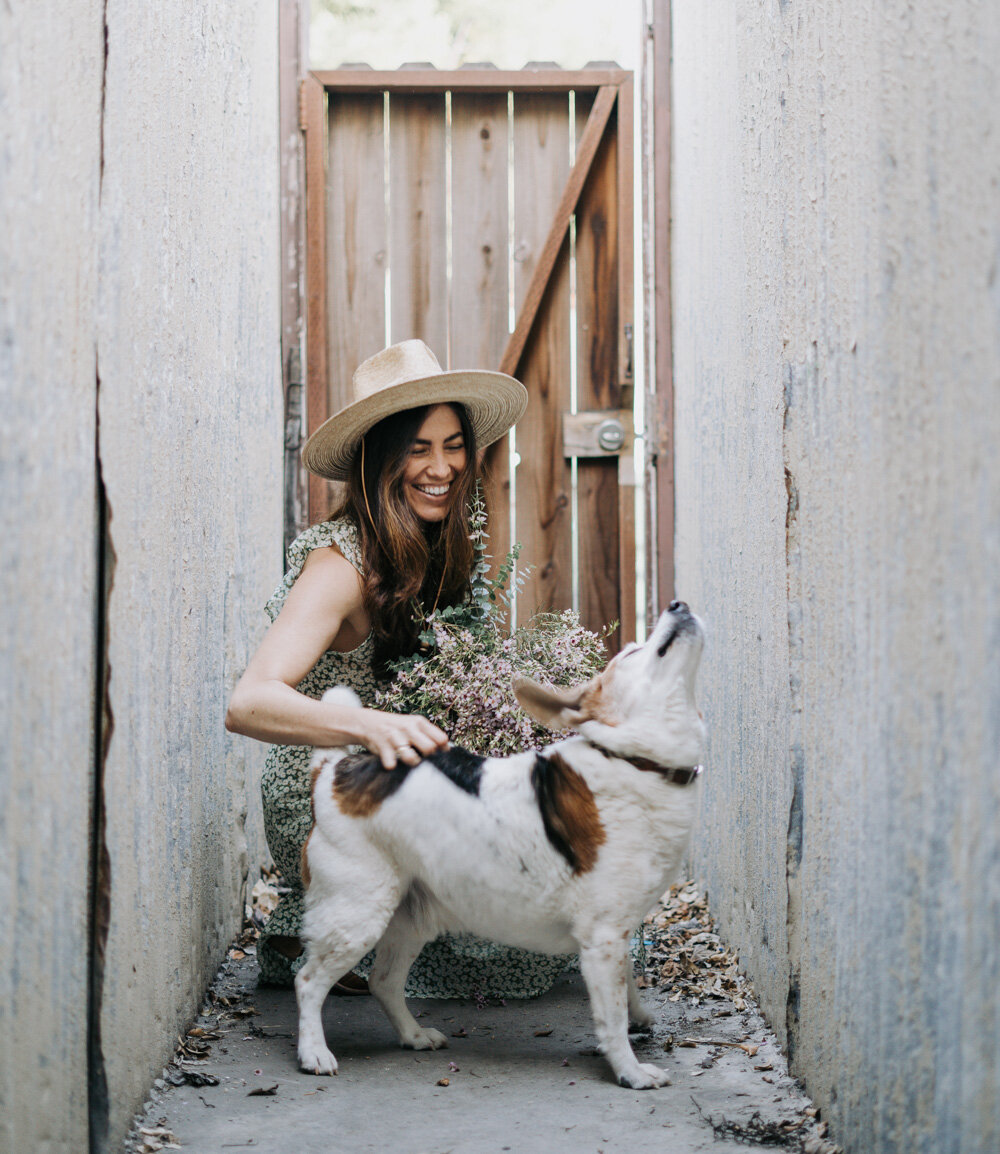
StanLee watches over our tiny cottage, and has even thwarted robbery attempts. He stood next to us on our stoop when Adam and I said our vows. He sat with my Dad and Grandpa Lou in Florida when they were recovering from treatments and surgeries, even though the medical equipment, walkers, and wheelchairs scared him. He protects West if my back is turned. He knows my every mood and move.

Happy birthday, Stanlee-Stubs. You’re the love of my life.
#AdoptDontShop

Photos of StanLee & Whitney by Lucia Doynel

Garden Aprons for the Family
One of the ways we’ve tried to reduce our negative impact on this planet is to not only be mindful of what we’re bringing into our own home, but to also be mindful of what we’re asking others to invite into their homes. This means that we gift rarely and cautiously, and that gift-giving often doesn’t align with a special occasion. Instead, we’ll usually give a present whenever we discover that perfect idea or item. (In other words, we’re fairly disappointing friends/family members sometimes...)

When it comes to gifting to one another as a couple, Adam and I are tricky. He’s one of those people who requires very little, and is content to use whatever he has until it falls apart. And while I’m the buyer for our family and will certainly go after the things we need or really want, I’m certainly not eager to acquire new belongings beyond those.

Back in the spring, Adam let it slip that he liked a garden apron by our friend Hilton Carter. After all, Adam has been spending most of quarantine focused on keeping our plants thriving, and teaching West how to tend to the greenery scattered around our porch, interior and yard.

Our anniversary and Adam’s birthday were coming up (to be followed shortly by Father’s Day), so I nabbed an apron, knowing it would enjoy daily use, and that it was designed by someone we love and admire. (Note: At the time of publishing this post, the aprons are sold out, but they’re due to be restocked before the end of the month.)

Personally I’m into aprons. I’m no cook, but I use mine (an Etsy find) around the house and neighborhood quote a lot.

We always seem to need cloth wipes, hair ties, dog bags, cell phones and doodads on-hand, so an apron with ample pockets is ever-useful for me.

Organic brown linen dress by Eileen Fisher
Even West has an apron, which he uses at his muck table and while watering the interior/exterior plants.

Adam’s apron arrived in mid-May, prior to our anniversary and well before his birthday.

He guessed what I got him right off the bat, so he ended up opening the Things by HC package early. (I saw no need to make him wait. Again, I’m bad at gifting ON specific occasions.) It’s a beautifully designed accessory, with removable leather straps, a ring for a towel or mister, a pen slip, and leather pockets suitable for heavy (and pointy) handheld gardening tools.

In true tiny house fashion, each apron lives in a different place based on how we use it. Adam’s dangles from a point on the porch, mine lives in one of the first drawers I open every morning in the kitchen, and West’s is fastened to the fridge via a magnetic hook for easy access.

For those interested in bringing the outdoors in, here is a roundup of our favorite aprons:
(The Etsy vendor also makes Mini Aprons and Teacher Aprons)

Missing our Library While Sheltering at Home
Our 3 year old’s interest in gardens didn’t begin at home— it began in the pages of borrowed books.

As a mother, a tiny house resident, and curious business owner, the ritual I’ve missed the most while Sheltering at Home is visiting our local library.
“Libraries are essential for the health of our democracy, our communities, and our future.”
— Wanda K. Brown

When West and I are scooting through the aisles and he spots a book we’ve checked out in the past, he greets it as though it’s an old friend. These interactions pushed me past my urge to buy and cling to books, and inspired me to pass along much of our collection to a local branch. (I’ll admit that when I notice one of my old copies on a shelf, I give it a little, loving brush with my fingers as I tip-toe on by...)

Once, while I was chatting with a librarian at the check out counter, West looked up at a photo pinned to a bulletin board and jubilantly exclaimed (at a not-so-library-friendly decibel), “Everyone, look! It’s Mae!” as he recognized Dr. Mae Jemison from the illustrations in books we repeatedly borrow. What kids read MATTERS— even at just 1-3 years old, which is one of the reasons I am so grateful for The Conscious Kid’s ongoing book recommendations.
Even now, when we can’t visit our library due to the pandemic, we can still borrow titles online, free of charge. And while I don’t love reading children’s books to West on a screen (via the Libby App), this has been a wonderful way to incorporate new learning activities and entertainment while on lockdown without having to buy something new.

“Many libraries serve as first responders who take on roles outside of traditional library service that support patrons’ needs and community development. Functioning at various times as career counselors, social workers, teachers and technology instructors, library staff give special care to adopt programs and services that support the most vulnerable and curious.” - American Library Association
Our library teaches and gives us so much. Here’s to supporting and funding community resources that enrich our lives, provide us with an ongoing education, remind us of the delight of sharing, and exist for EVERYONE to enjoy together.

Moving Forward: Seeking Environmental Justice
The primary focus of my work is to help people feel comfortable, confident and content in their small spaces, hopefully emboldening a shift away from the “bigger/newer/more is better” mentality that contributes to hyper-consumerism, allowing us clearer access to a greener and more equal path forward.
In recent years, I began to wake up to the fact that I was — and still am — approaching my work with a vast amount of privilege, and that I needed to start engaging in never-ending research (unlearning and relearning) on topics such as environmental racism, anti-racism and white privilege, which not only surround my work, but surround everything we do and the very air we breathe.
The same air that George Floyd can no longer breathe. The same air that is clean in some communities, and — by no accident — heavily polluted in others.
(Read Up on the Links Between Racism and the Environment by By Somini Sengupta via The NY Times.)
“Intersectional environmentalism is an inclusive version of environmentalism that advocates for both the protection of people and the planet. It identifies the ways in which injustices happening to marginalized communities and the earth are interconnected. It brings injustices done to the most vulnerable communities, and the earth, to the forefront and does not minimize or silence social inequality. The longer racism is not addressed, the harder it will be to save the planet…” - Leah Thomas (Instagram @GreenGirlLeah)
Intersectional Environmental Activist and Eco-Communicator

As I continue to do this job I hold so dear, I’ll do some things differently, and some things louder.
I will carve out much more time to further study, unlearn, relearn, and to listen closely to marginalized voices, and thread their wisdom into my everyday practices and into my business (hopefully without centering myself the way I’m doing right now), and direct readers to other sources while encouraging tangible support of the creators.
I will stick to the Intersectional Environmentalist Pledge created by Leah Thomas.
When it comes to vetting our partnerships, I will now always apply an Inclusion Rider. This is something I’ve done repeatedly in the past (with the wise guidance of my friend and fellow blogger Lily Diamond), but I haven’t advocated fiercely enough 100% of the time. That will no longer be the case.
I will continue to give a portion of the income that our small family/business earns via paid partnerships to The RightWay Foundation. Additionally, we are currently working on an initiative to get 20 former foster youth safely housed here in Los Angeles. (Please click here to read the updated post about this.)
In addition to our work with RightWay, I will routinely seek out other organizations — particularly local ones— that are working towards addressing systemic oppression and inequality, and who we can support with hands-on action and/or with financial contributions.
I will confront overt and covert white supremacy whenever it manifests in both our personal and business interactions.
I will continue to protest in the streets and via creative methods born from the COVID crisis. (Note: In order to best keep all protestors safe, we won’t share the images here without careful consideration. Plus protesting isn’t about performance— it’s about disrupting the status-quo to help spur deep, systemic changes.)
We will join our community in celebrating Black joy and Black healing when our presence is appropriate.
I will devote time and resources to supporting efforts to increase voter registration and ensure equal access to voting.
I will devote time to reading an evening roundup of current articles on environmental racism (Google alerts is a helpful tool for this), in tandem with our book lists and daily discoveries via social outlets.
Adam and I will continue to read and engage with anti-racism and environmental justice work by authors and activists, and apply what we learn to West’s everyday life and education via methods appropriate to his age over time. We will teach our child how to stand up against racial injustice throughout his life, as, in real-time, we learn how to better do so ourselves.
Recent related articles from around the web:
I’m a black climate expert. Racism derails our efforts to save the planet.
‘Turn off the Sunshine’: Why shade is a mark of privilege in LA
Recent related posts on this blog:

We Must be Anti-Racist
The goal of this blog and my work is to help people feel comfortable, confident and content in their small spaces. But I cannot continue to talk about those things without addressing the fact that, here in America, many Black citizens can’t even feel safe in and around their own homes due the extreme and unrelenting dangers and threats that accompany racism. (A recent example of this is the murder of Breonna Taylor.)

To the members of this community who are white: It is our daily responsibility to dismantle white supremacy and the systems of oppression that continue to burden and destroy Black lives. It is our responsibility to learn how to be anti-racist by researching, listening, not centering ourselves, and addressing overt and covert white supremacy whenever it manifests in both our personal and business interactions. It is our responsibility to commit to raising anti-racist children. It is our responsibility to keep Black friends, neighbors and strangers safe from hateful, biased and baseless attacks.
And we need to VOTE for anti-racist leadership at all levels of government.

Thus far, I’ve found the following materials to be particularly helpful regarding recognizing and addressing the issues of internalized racism and white supremacy:
How To Be An Antiracist by Dr. Ibram X. Kendi
Me and White Supremacy by Layla F. Saad
White Fragility: Why It's So Hard for White People to Talk About Racism by Robin DiAngelo, PhD
Also helpful is this list of Anti-racism Resources (articles, books, podcasts, films, social media accounts, organizations, etc.) compiled by Sarah Sophie Flicker, Alyssa Klein in May 2020, and brought to my attention via Brittany Packnett Cunningham.
Our local library and The Conscious Kid routinely suggest excellent children’s books by authors and/or illustrators of color that focus on children of color.

Of course our to-do list reaches far beyond reading and sharing books. Our good intentions aren’t enough. We must translate what we learn into action, and do so every single day.
“There is justice. There is injustice. There is no neutrality. No sideline. No bleachers. No exits. We are all in the human rights struggle to save humanity from human tyranny. Black people, especially, are struggling for the right to live, for the right to breathe.”
- Ibram X. Kendi

How to Politely Handle Unwanted Gifting
Every time I open up the Q & A section on my Instagram Stories, I get a few of the same inquiries on repeat. Without fail, they include:
“What do I do about well-intended friends and family who insist on buying gifts for me / my children when I don’t want anything?”
“How do I kindly tell my child’s grandparents to stop sending toys?”
“What do I do with unwanted gifts?”
My response to the first two questions is pretty simple, and thus far it has worked for us most of the time.
We gently tell our friends and family that the absolute best gift they can give to our son is an inhabitable planet for his generation and those that follow, and that giving him stuff doesn’t help him in the long run.

(For folks who just don’t quite understand the climate crisis or would like further explanation, I ask if they have an e-reader, then I gift them a digital copy of The Future We Choose: Surviving the Climate Crisis. )
We have a cheat, of course, as most people know by now that we live in a tiny house and cannot accommodate excessive belongings. But even if we lived in a bigger home, we’d still take the same approach when it comes to unsolicited gifting.
It’s important to keep in mind that folks usually are just trying to convey their love in a tangible form. As such, it’s productive to provide them with some sort of alternative / example of what sorts of gifts are welcome.
In our case, we tell our loved ones about the types of books West enjoys. (We always welcome books, knowing that we can ultimately give them to our library or a local school once West outgrows them.)

We also talk about museums and activities we enjoy, in case they’d like to gift a membership or admission fee that supports the organization while also providing our family with a new experience.
When it comes to regifting unwanted items, I look at it this way: If someone circles back and asks me to reveal the whereabouts of a present they once gave us, that relationship is probably one that needs some reconsidering or deep work.
And besides, there are so many people, families and organizations in need of certain goods that I feel no guilt in passing along a thing we do not need here, and giving it instead to someone who can put it to good use. And hopefully the gift-giver would understand and support that action.

Photos by Tinylicious.co

Anniversary of Our Wedding at the Cottage
Today is the anniversary of our wedding here at our tiny cottage!

Adam and I had been engaged for years, but it wasn’t until we decided to say our vows here at home that the celebration seemed financially + logistically doable, and right for us.

By the time we got around to it, I was 20 weeks pregnant with West, and I love looking back at the photos and videos from this day and knowing that our little one was with us.

Our family and friends stood or sat all around us— in the garden, within the house, and along the porch.
It was a simple, beautiful and happy day.
View the 20 second recap video via my Instagram account, here.

Photos by Monica Wang.