
Convertible Desks for Small Spaces
Over the years, I’ve learned that versatility is essential for a home-office in a small space.

Can a nightstand also serve as a desk? Can a convertible standing table function as a workspace by day and a dining surface by night? Can a folding table tuck away entirely on the weekends?

There really are so many great options — explore more via my book, Small Space Style.

Small Kitchen Storage
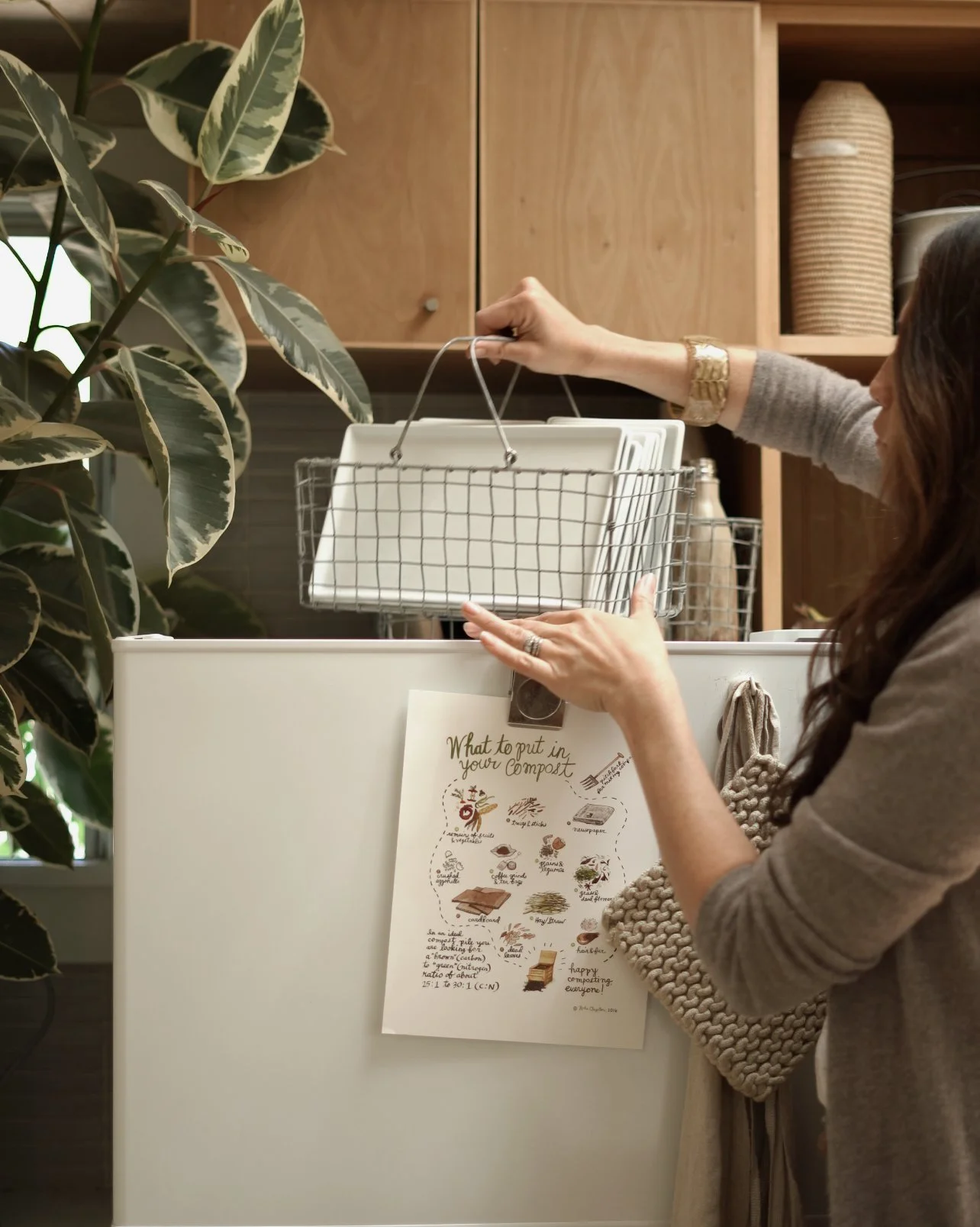
Do you have a small kitchen? Don’t overlook valuable storage space that could be hiding in plain sight — like the top of your fridge.

Small Space Gardening: Our 2020 Grape Harvest
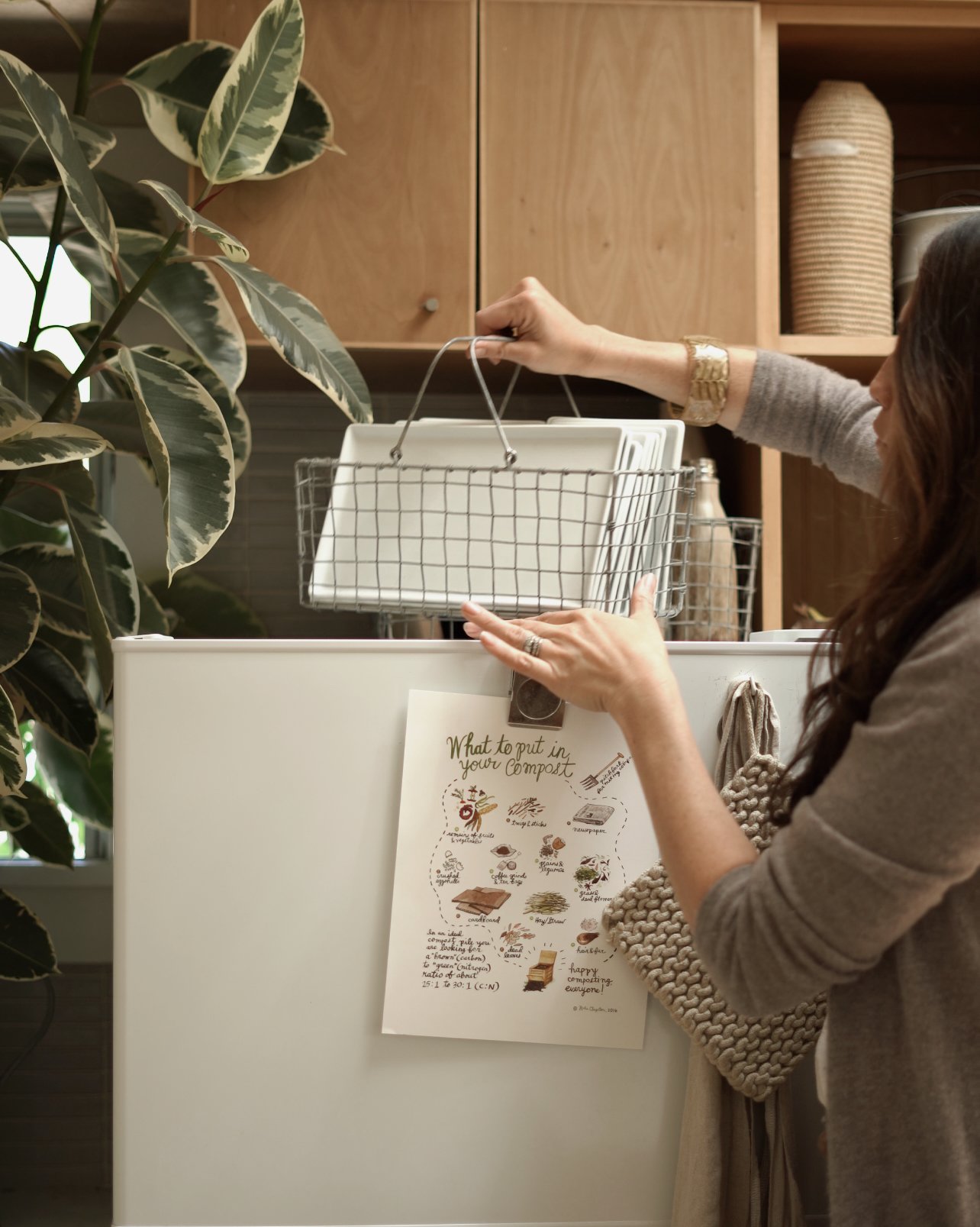
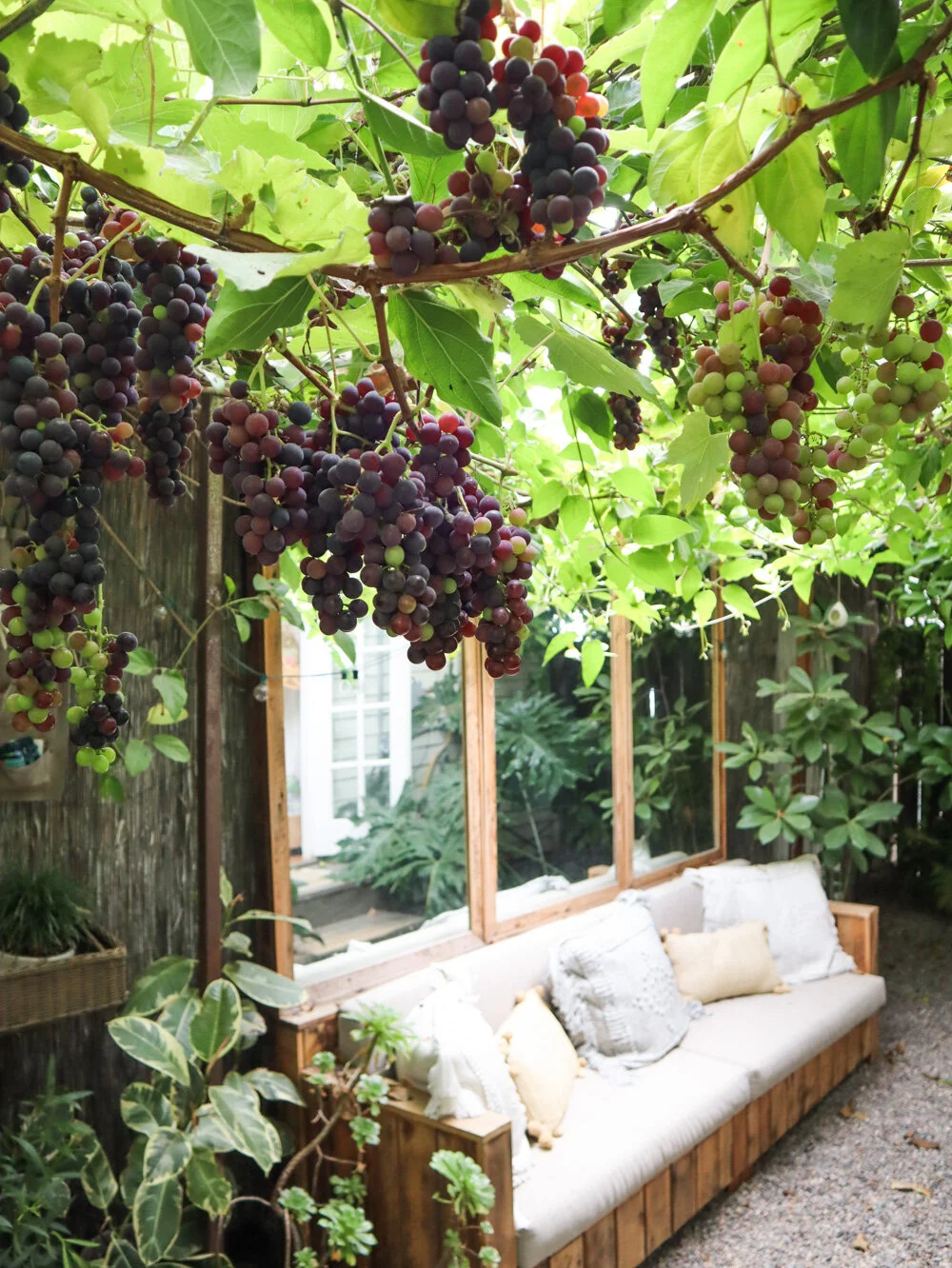
This week, we harvested our first batch of this year’s concord grapes grown on the Cottage vine.
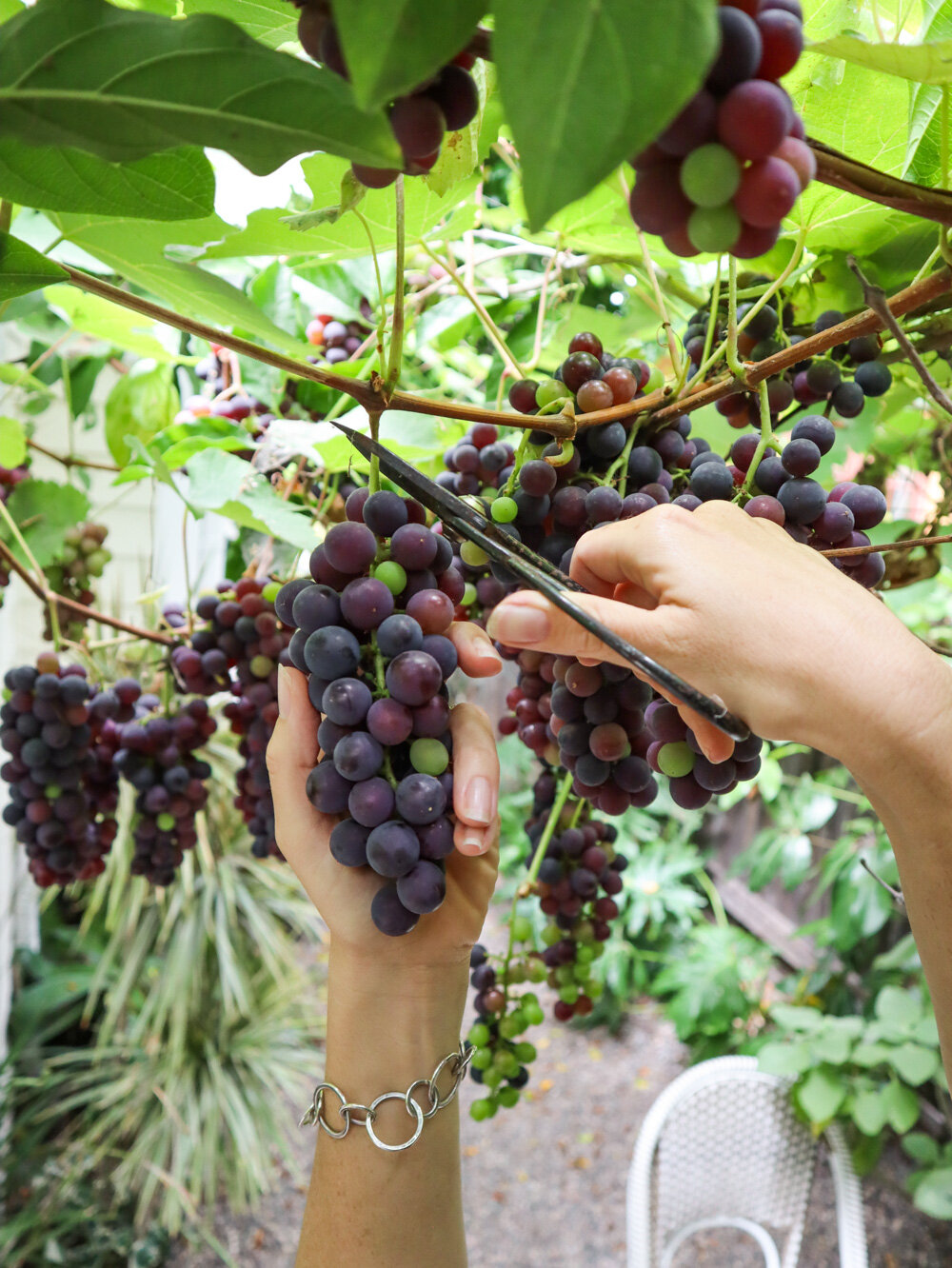
Out of our 9 years here, 2020 has has yielded the most usable grapes for us.

The increase is due to the post + cable system we installed in the back garden in 2019.
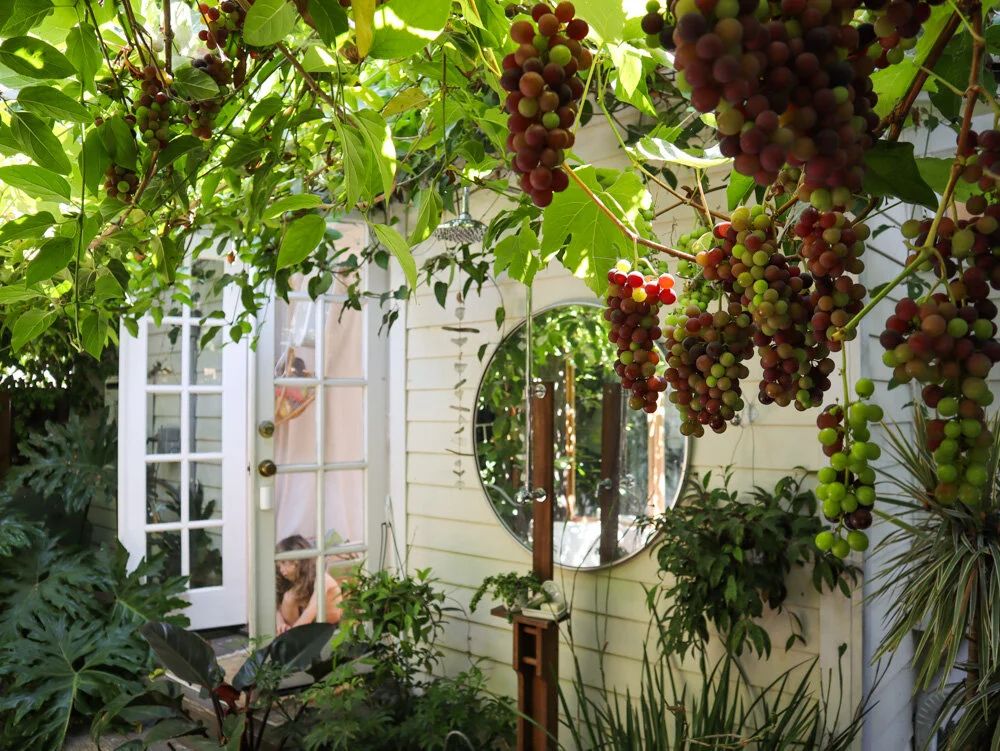
We added the wires primarily to support the red trumpet vine and establish a living canopy for privacy and shade. I didn’t expect that the grapevine would reach so far along the cables and sprawl across the yard, but luckily it did.

In previous seasons, the grapes grew primarily along the fence line, granting easy access to the summer raccoons, squirrels and mice. But the animals seem to have a hard to time reaching the hanging clusters, so the fruit has been allowed to ripen completely without interference.

Above: The grapevine in July 2014.
Below: The grapevine in July 2020.
Adam, West and I picked the first clusters off the vine together.

Thankfully the StanLee and Sophee seem to instinctively know not to eat the grapes, which are toxic to dogs.

View my recent related post: Garden aprons for the family

Even after filling this basket entirely, it looked as though we’d barely made a dent in this year’s bounty.

Above: Wearing Eileen Fisher, which I’ve found to be particularly comfortable during my fertility journey.


After clipping the first round of concord grapes, Adam turned them into jam.
We’ve enjoyed jam, juice and sorbet from the cottage vine for years, but until now it was always thanks to our next door neighbors, Kevin and Donna, who harvested the grapes across both properties.

Using Kevin and Donna’s recipe (and several of their kitchen tools), Adam kicked off our first canning experience.


A few hours later, we had our first batch of sweet, sticky cottage-made jam in-hand. The process is a bit messy for a tiny kitchen, but more importantly it’s satisfying and almost meditative. And despite turning a fair number of wooden kitchen tools purple, I’d say our first foray into canning was a delightful success.

I’m interviewing Kevin & Donna about the grapevine’s history and their maintenance practices, and I’ll publish that follow up post soon…

100 Days Until the Election - Get Yourself and Others Ready to Vote
“The vote is the most powerful nonviolent tool we have in a democratic society.”
- Rep. John Lewis

The election is just 100 days away. Now is the time to make sure you are registered to vote, and to remind your friends and family to check their registration too. (A reminder from a friend makes them up to 2X more likely to vote.)
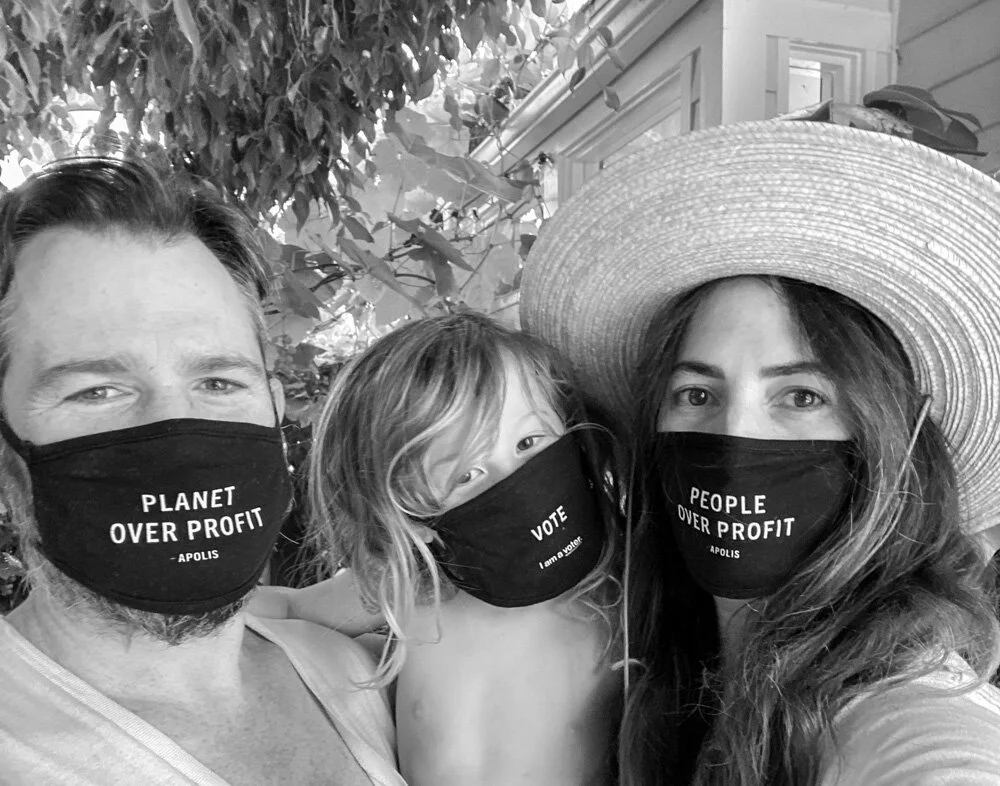
Register to vote, check your status and sign up for election reminders / news via When We All Vote and I Am a Voter.
Make your voice heard.


Traveling Lightly as a Family
A recent Q&A I worked on with Steamline Luggage (discussing topics ranging from working from home to road and air travel with a young child,) is now live on their blog. In conjunction with the interview, Steamline has offered our community a promotional code for 15% off their gorgeous luggage, which we’ve both used at home and on-the-go for years. Use WLM15 for a discount, now through August 20th. A sampling of the exchange is below.

Q: We know you cut down on air travel to cut down on your carbon footprint; tell us more about that and how you still embrace road trip travel?
A: Flying less often is such a simple way to significantly cut back our negative impact on the planet. (A single cross-country flight here in the US represents about 1/18th of a person’s annual carbon emissions!) So while our small business and family hasn’t cut out air travel entirely, we’ve certainly decreased the number of trips we take by air. We’re only flying for rare/unique business occasions, or to be reunited with family after long stretches of time apart. As far as road trips are concerned, we’re staying close to home. Luckily SoCal is rich with mountains, deserts, old-growth forests, and vast beaches. In just a few short hours, we can be transported to so many breathtaking places. Plus, we live in a tourist destination— we might as well stay home and enjoy it.

Q: Back to your carbon footprint—the way you are cutting it down in terms of travel and at home is really admirable. What are some good “hacks” for greener travel?
A: Less than 20% of the population has ever been on a plane, yet the negative environmental impacts of air travel affect the entire planet. So if you are in the privileged position to be able to fly, challenge yourself to do so less often. When you do have to travel by air, little modifications can help, such as flying coach, packing light, bringing a reusable coffee/water bottle to fill after security, shutting the window shades when instructed by flight attendants, financially offsetting carbon emissions via a trustworthy source, and routing directly whenever possible. Additionally, while on-the-go, skip the disposable goods (marketed for “travel” or otherwise) at the airport, in the sky and while at your destination by opting for reusable / washable / refillable alternatives. Additionally, educate yourself in advance of a vacation, and consider how tourism is impacting the local community and infrastructure of the community you wish to visit. Confirm that it has the capacity to sustainably manage tourism.
Q: Little West is so gorgeous! And a fun age. Has having a child changed the way you have travelled thus far, what you would like to see, or how far from home you are most comfortable going? And regarding your road trips, what is your biggest travel tip for traveling with a kid for long car journeys?
A: Traveling with a little one can, of course, be a bit of a challenge. (“Please don’t put your mouth on the seat-back table, West!!!”) But it’s also an immense joy. West has flown over both the Pacific and Atlantic at this point. No journey is too long or too short— it all just takes a bit more consideration than it did before, and that’s quite all right. For road trips (and at home), we rely heavily on children’s audio books! (West is wildly in love with Sarah & Duck via the Pinna app.)

Q: Although we are all getting more comfortable in our little bubbles while we socially distance, we remain deeply interested in the connections we make with people with whom we mightn’t have much in common when we do leave our home spaces. In terms of past trips, can you recall one of the most meaningful exchanges you've had with someone while traveling? Both/either on the road or at your destination.
A: I enjoy staying in actual, old-fashioned Bed & Breakfasts. They lead to so many more human moments in otherwise highly curated experiences. When visiting our home away from home, Belcastel (Aveyron, France), I'm always moved by the little things… like a local grabbing us a head of lettuce for our dinner from their garden, or business owners opening up their kitchen after-hours to provide us with bread and wine. I ache for our late night dances by the river there, and to hear the villagers sweetly laugh at us while we huff-and-puff our way up the steep hills (paved with medieval cobblestones) as we slip out the backs of our sandals and wipe sweat from our sunburned faces. Sigh…
Q: As a small business owner who’s influential on social media, what does this look like when you travel? Do you ever find the need to power off—and if so, how do you do this? What role do social media and communications play on your trips?
A: I rarely power down when out of town, but I don’t think that has to be a negative thing, depending on how it’s executed. Though it certainly has taken me years to figure out how to most efficiently navigate work vs play while on trips, and remember to look up and breathe.
I’ve found that, for me, sharing compilation posts and videos across my blog and social channels AFTER the trip allow me to focus on living in moments (and capturing them as I naturally would anyway), and then I can edit my footage and imagery on the journey back home while my son is occupied with an audiobook or with my husband. While on the trip, I do feel that it’s important to share a bit about the environmental toll our activities take (or don't take), in realtime, as it draws awareness to the impacts of travel, and sparks some productive conversations on ways that we can all be more responsible, and mindful of our actions and footprint.

Q: How do you generally plan or design your trips? Do you build around visiting loved ones / people or certain places or things?
A: We have no family here in LA, so we tend to “use up” most of our travel time and money on visiting family members elsewhere. But when we plan a trip based on a place itself, we always overlap it with business in some substantial capacity so that we can better justify the journey and expense. (And when traveling by car, we are much more flexible with planning in general.)
Q: We really appreciate your candor and advice re: WFH challenges, such as how you said, “Even though I can’t work uninterrupted for more than a 30-60 minutes at a time, I do try to practice helpful habits like separating myself from the rest of the family, clocking-in for the task and clocking-out when it’s completed, and having necessities and comforts within arm’s reach (and notifications off) so I’m not sidetracked.” SL founder Sara Banks is a mother of four boys (4 mo.-7 yrs) and is attempting the same! She has noticed how the practice is similar to her travel mantra of “slow down, look up”, i.e., powering on or off (not both!), being present, and single-tasking well over multitasking poorly. Do you think these disciplines have the potential to improve home and travel life in our post-COVID-19 world?
A: I certainly hope so. I’m keeping my fingers crossed that we remember and honor such findings, rather than fooling ourselves back into believing that we have to do everything… perfectly… and all at once. It’s okay to be the tortoise rather than the hare if that’s what it takes to cross the finish line with integrity and peace of mind.
Q: Your sentiment also really resonates that, “This is a time for heightened flexibility, compassion and patience— with others, and with ourselves." Sara has also been contemplating the virtues of communal care versus self-care. Do you think we might come out of this with a more neighborly, less-judgemental world?
A: I think that communal care is crucial to a healthier tomorrow. In becoming more connected and reliant upon localized and collaboratively-managed resources, we can potentially alleviate much of the burdens carried by our planet, and better provide for everyone — not just those who can afford it. This time has also been a loud reminder of what jobs and skills are most necessary (and thus should be respected and compensated accordingly) to keep our communities safe and functioning.

Q: Lastly, you seem to use space so cleverly and never seem to have too much of anything around, but just enough that you can highlight things you use. Does your use of space apply to how you pack? What are some essentials you might bring with you, and do you tend to be a light or heavy packer? Any tips for packing for kids?
A: We tend to be easygoing and toss things pell-mell into the car when on a road trip. But for air or train travel we’re highly organized and minimal, typically sharing one suitcase and limiting ourselves to 2 carry-ons so we still have hands free to hold each other. Since we have a straightforward and simplified relationship with “stuff” in our house, it’s now fairly effortless to translate that into our packing system and routine. On a more detailed sidenote, West’s favorite activity is reading books, so we take a small stack of slim and lightweight paperbacks in our carry-on, and then we always try to visit the library wherever we go. A library can be such a fantastic window into a community’s personality!

My Fertility Journey
Content alert: This post contains frank and personal stories concerning the process of trying to conceive and stay pregnant.
Yet another month gone by, and I’m still unable to become (or remain) pregnant.
We’ve now been trying for a year and a half. At first, I began the journey with optimistic caution. At 34 years old, we conceived West on the very first try, and it was my first pregnancy ever. The entire experience — including labor — was positive. I knew then how lucky I was. I know it still. (More on that further down in this post.)

In the past 18 months, I’ve had:
negative and positive pregnancy tests
bleeding that my doctor and I suspected was implantation bleeding (which I experienced with West)
months with no periods
months with weeks-long bleeding
normal FSH levels / test results for my age
hormonal & physical fluctuations
I’m sure that there have been a few months along the way during which we missed my ovulation window. I routinely wore an Ava bracelet to track my cycle, but life still gets in the way sometimes, and that’s okay. (Click here to view my post about intimacy in a small space.)
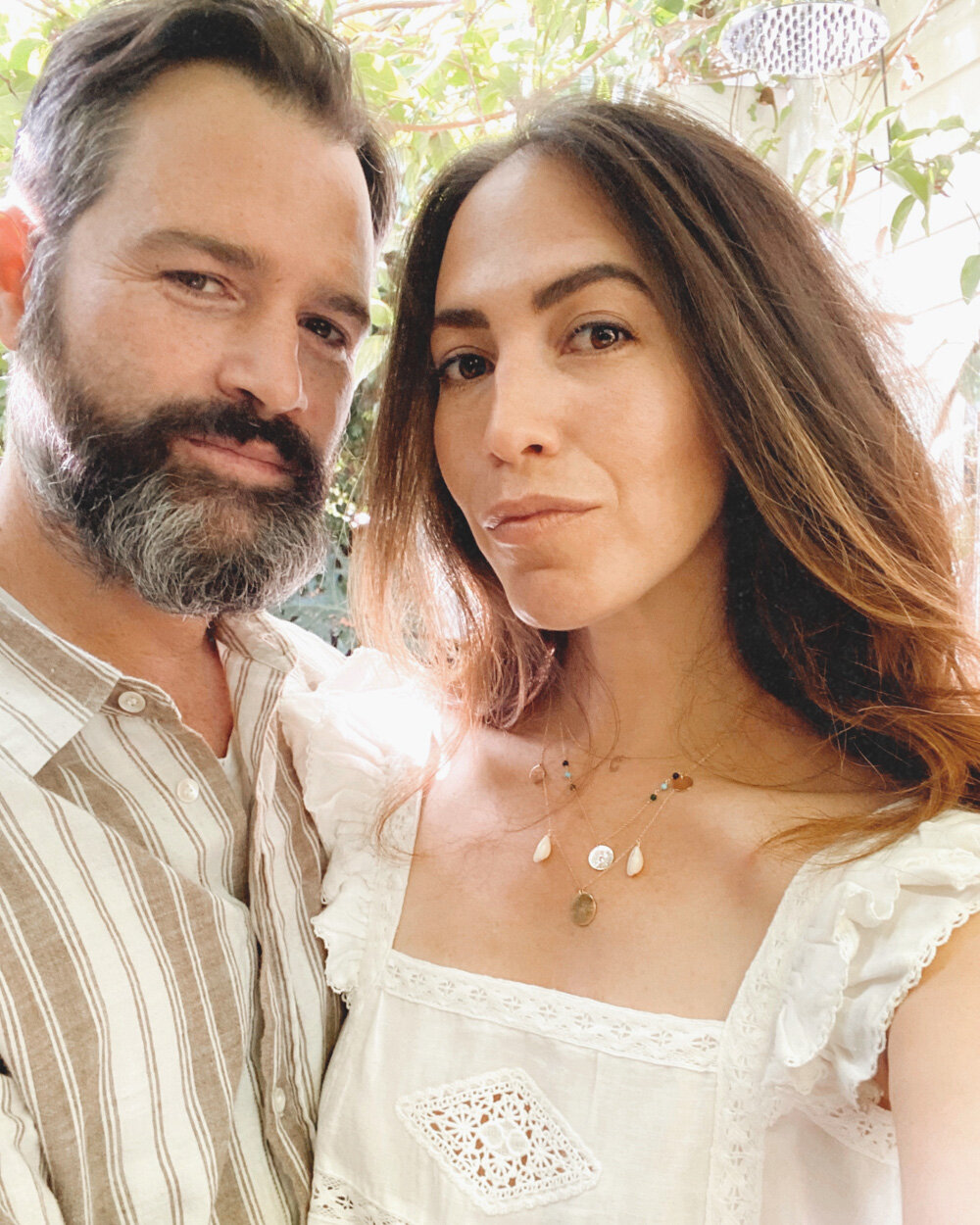
But the mental and physical rollercoaster of trying to conceive (and the unsuccessful starts) takes a toll of sorts. There are the changes in the body (some visible, some not), the extra careful monitoring of everything consumed, the dramatic dips in energy, and, ultimately, the heartbreaking disappointments.

I’ve modified my diet, the contents of our medicine cabinet, and even my wardrobe to accommodate the ride. I now sticking almost entirely to clothing that adapts comfortably to the dramatic waistline inches gained and lost over the months, including pants that accommodate the fluctuations while still being appropriate for business video conference calls and bike rides with my son and dogs at a moment’s notice. (This might seem like a silly detail, but every single time I get dressed I’m somehow reminded of my inability to get or stay pregnant, as well as the need to keep my company going during this pandemic while also still being present with my family. To me, it’s a meaningful consideration, even if it’s a minor one.)

It’s a challenge to discern which emotions are a result of my fertility journey, and which are a result of the pandemic, running a small business, and renting in an expensive city. It all adds up to a tangle of anxiety.

I’ll keep my head up, even during the days that are particularly draining and bleak. Our little family has so much privilege, along with everything we need— we have to pay that forward.

It’s my duty to focus daily on being an anti-racist, raising a feminist and anti-racist child, advocating for voting rights, and fighting for human rights and environmental justice every step of the way.

Throughout my pregnancy and on the day I was ready to deliver West, I had the privilege of safe and respectful maternity care. It wasn’t perfect— there were points at which I believe the hospital got it wrong. For example, some of the medical staff tried to hurry me into having a Caesarean section since my contractions didn’t progress quickly after my water broke, but I had access to a doula team that advocated hard on my behalf for a vaginal delivery without an epidural. This sort of access, along with the opportunity and space be heard, and the successful outcome is by no means a given for every woman in America.
The Centers for Disease Control and Prevention reported that “Black mothers in the U.S. die at three to four times the rate of white mothers, one of the widest of all racial disparities in women's health.” (NPR)
According to Every Mother Counts: “Chronic stress and systemic and interpersonal racism contribute to a higher risk of complications and death for women of color. The number of women who die giving birth in America each year has nearly doubled in the last two decades, and over half of all maternal deaths in the U.S. can be prevented.“
My fertility journey includes working towards dismantling the systemic racism that robs Black women and women of color from potentially having the same wonderful experience with their baby/babies as I had with our lil’ West.

The fight for equitable maternity care is one to engage in every day until quality healthcare is accessible and provided for all mothers. And as for my physical struggle to conceive… well, I’m 39, so it’s still very much within the scope of possibility, but I’m coming to terms with the fact that West might never have a sibling beyond our pups, StanLee & Sophee. (For reasons I’m not yet ready to discuss publicly, we aren’t currently considering IVF or adoption.)

Just when I start to feel overwhelmed with disappointment, West intuitively swoops in and reminds me of my overflowing gratitude for this lil’ family, home and life.

What's Next For Our Family? (Updated)
The following is an updated version of a blog post I published in February of 2019.
One of the questions I’m asked the most often is: What is the plan for when West gets older and wants more privacy? And do we need more space if I’m able to have a second child?

The same sort of questions popped up time and time again when I was pregnant with West— everyone asked us when and where we’d be moving. But we took things day-by-day, and it all worked out better than we could’ve ever imagined. That’s how I want to live— planning wisely the realities of life, but also allowing the future to unfold naturally as we navigate the present. That way, when the time comes, we will know what we need and why, rather than acting half-heartedly (and perhaps wastefully) on predictions.

People make all sorts of living situations work for them and their families, whether by choice or necessity. Diverse lifestyles and homes are all around us, but they’re rarely integrated into entertainment in a way that makes them seem like anything other than a problem or a quirky novelty.

I don’t expect that the issue of space itself will inform any of our family’s decisions making at this time. Instead, the main factors that I expect will determine how long we end up staying in our tiny cottage are financial and family related.
We rent, and we have no family in Los Angeles. While our home and garden have been an exceptionally wonderful spot to Shelter in Place, renting and trying to keep a small business afloat in an expensive city/state during the pandemic heighten insecurity. Plus we miss our families terribly.

We love and appreciate our home and garden more than ever, and are in no rush to leave. But lately I do find myself dreaming of a slower, quiet life, more land, four seasons, and better access to our family… and I wouldn’t mind a fireplace and a tub. When the time comes, I suspect we will look for a place with two bedrooms, or at least a little “extra” space in which to creatively craft a second bedroom. But we’ll deal with that when the time comes. (I want to share some of the places we have in mind, but that’s for a later post…)

When we decide to go, I’ll be sharing the entire process here, as you have supported us tightly throughout the years. But as we move through our current (9th!) year in the Tiny Canal Cottage, I hope we are able to bring you as much joy as you continue to bring us. Thank you.


Summering in a Small Space during the Pandemic
After 4+ months of staying Safer at Home, most of our household rules and practices are now fully out the door.
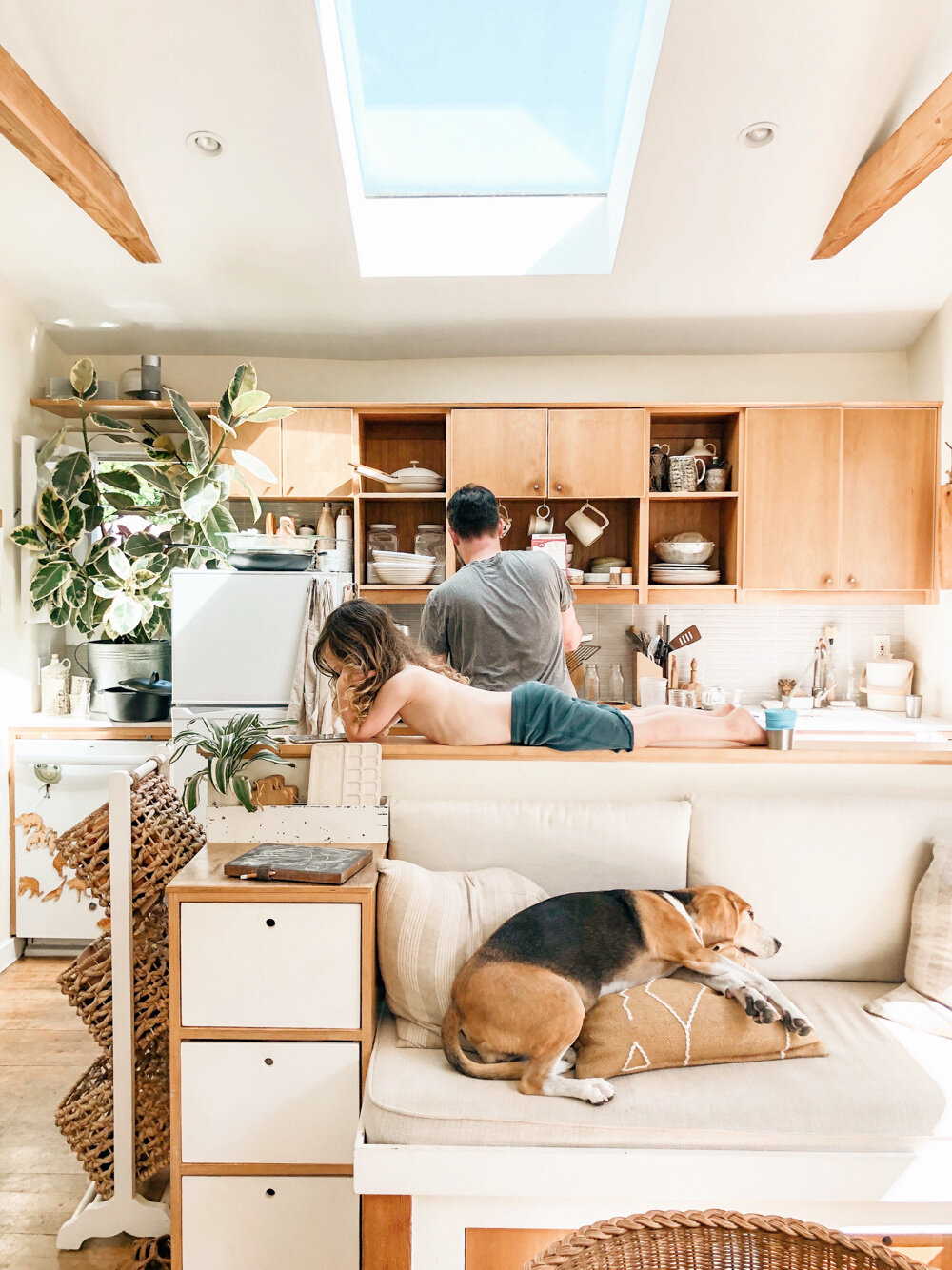
Above: West watching friend Shavonda Gardner during an IG Live.
Mealtimes are fluid.
Activities are devised on the spot, rather than planned in advance (unlike those early, ambitious weeks in March).
Laundry day is any day.
And Adam and I are much more likely become distracted and randomly get absorbed in read articles and updates on our phones, rather than delaying until West is asleep at night like we used to.

Above: West wearing a child-sized mask, handmade at Late Sunday Afternoon in Venice.
I am still working full time, while Adam and West are, of course, still unable to take the local adventures they used to.

Above: Adam Winkleman and West enjoying the remains of what was once an epic pillow fort.
Those field trips once allowed me to focus uninterrupted on my job for valuable chunks of time throughout the day. Now we have to get a bit more creative— a challenge we’re (thankfully) all still into.
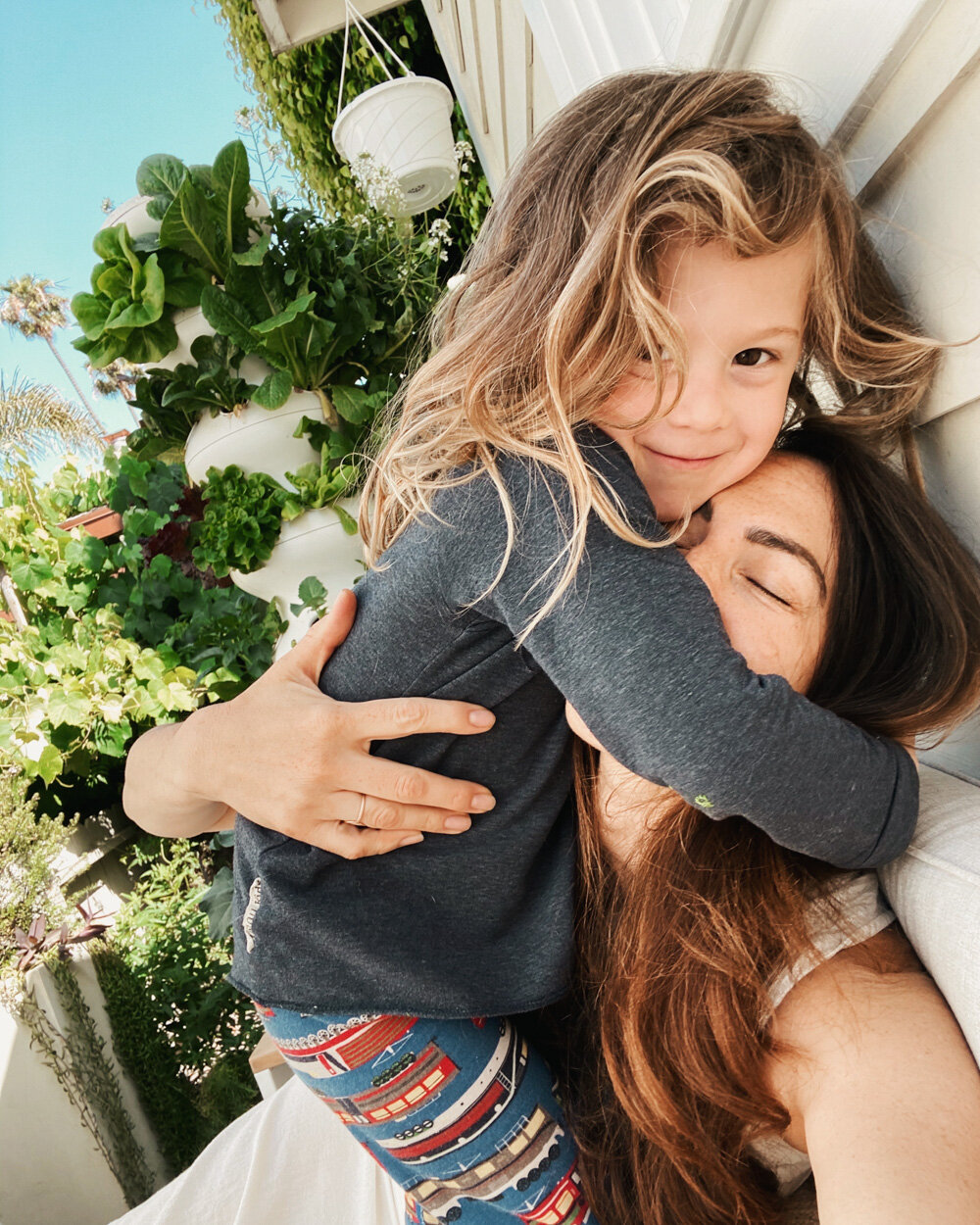
(Click here to read my Tips for Working Effectively from a Small Home / Apt During the Pandemic.)
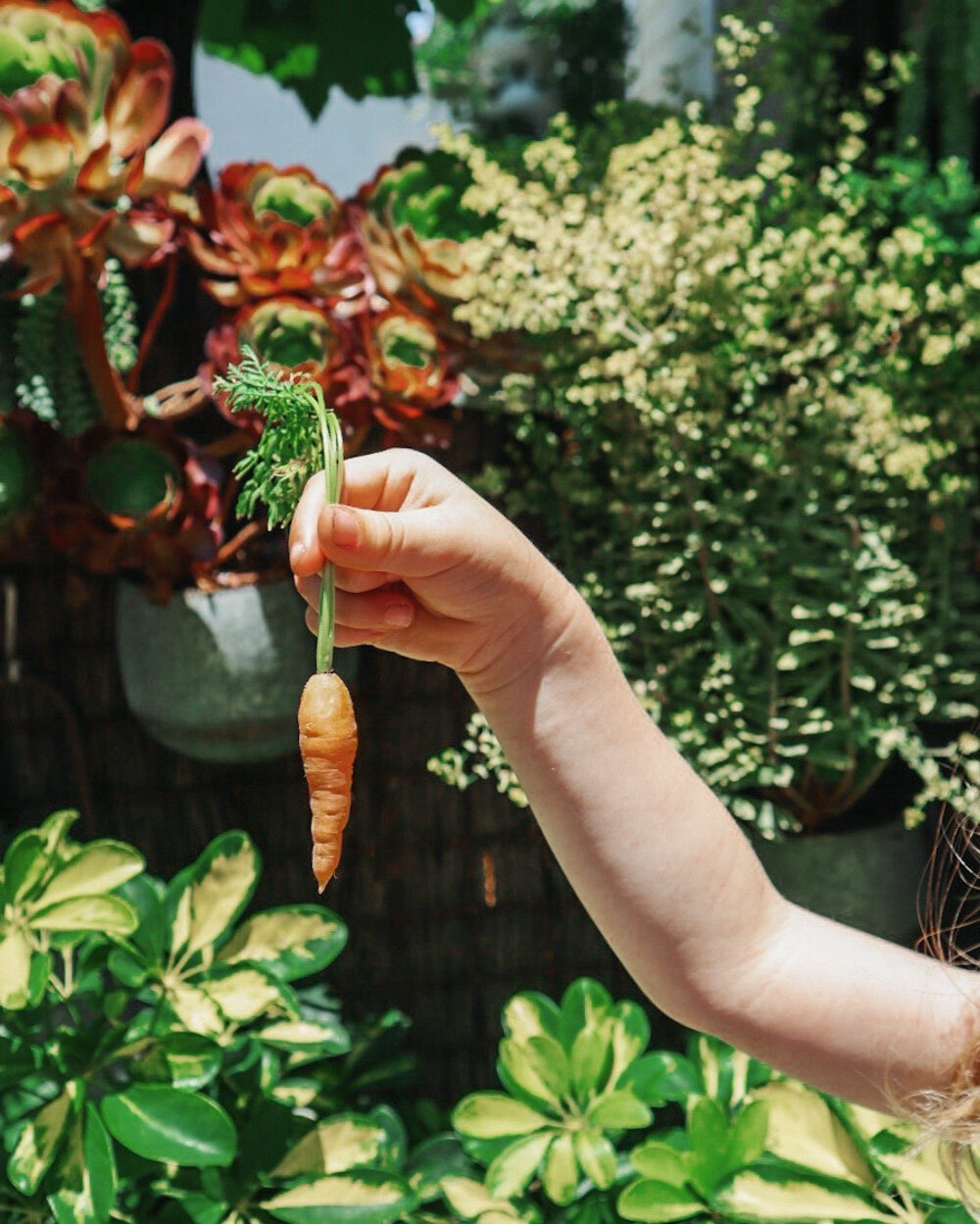
We haven’t gotten West any new toys (except an oversized crane that we’d ordered way back in winter) since the very start of the pandemic.


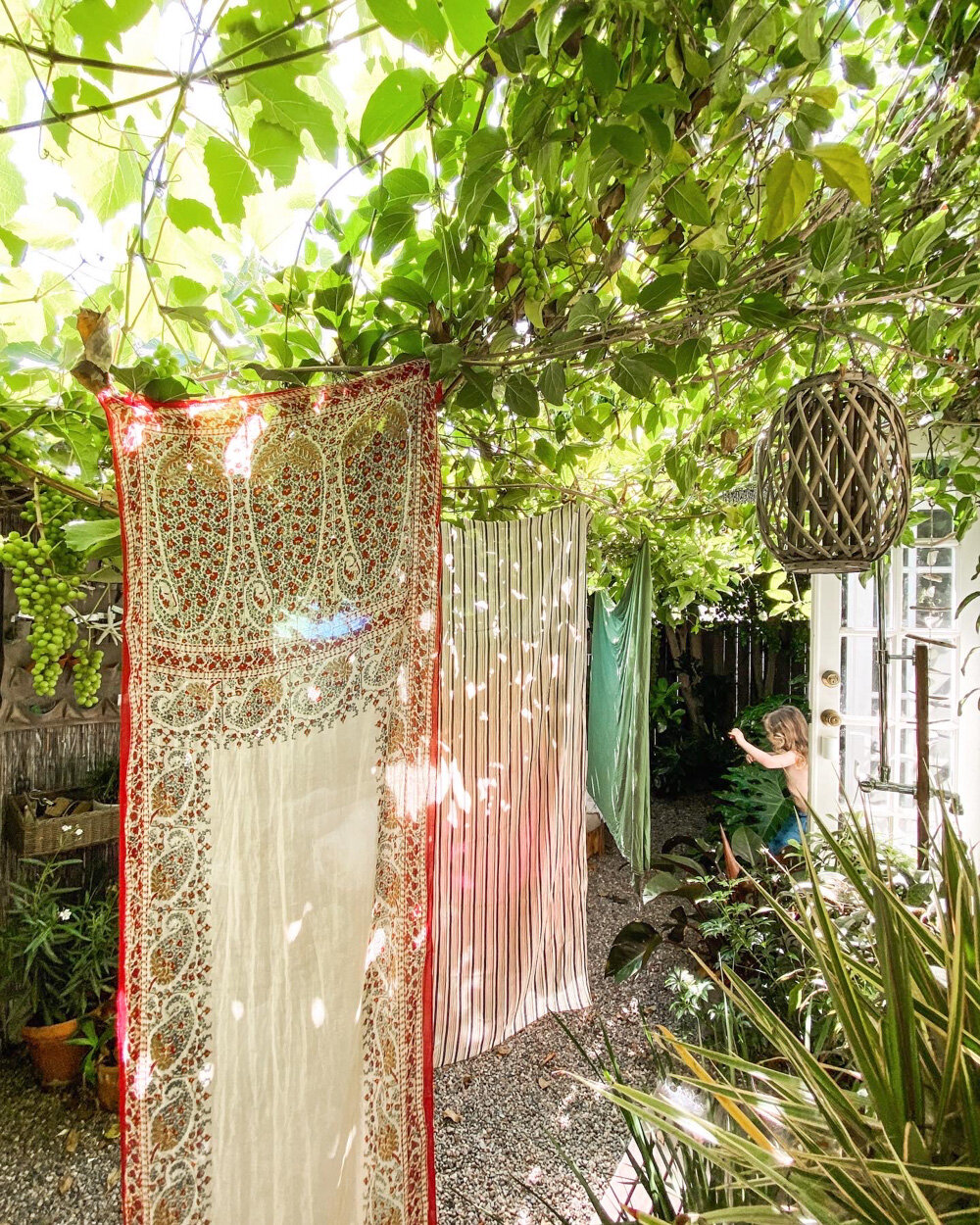
As such, we’ve been doing things like draping oversized linens from the vine canopy as part of an obstacle course, writing letters to friends and mailing them via a city post box (and discussing absentee voting when we do so), and setting up museum exhibitions throughout the house. (This is something West came up with on his own. He gives us slow-guided tours of the works on display, which range from rocks to dolls to pieces of hardware.)

Adam and I are also relying heavily on the Pinna audio app throughout the days. Pinna offers ad-free podcasts, audiobooks and more, helping us keep West entertained without a screen while my husband and I manage our small business.
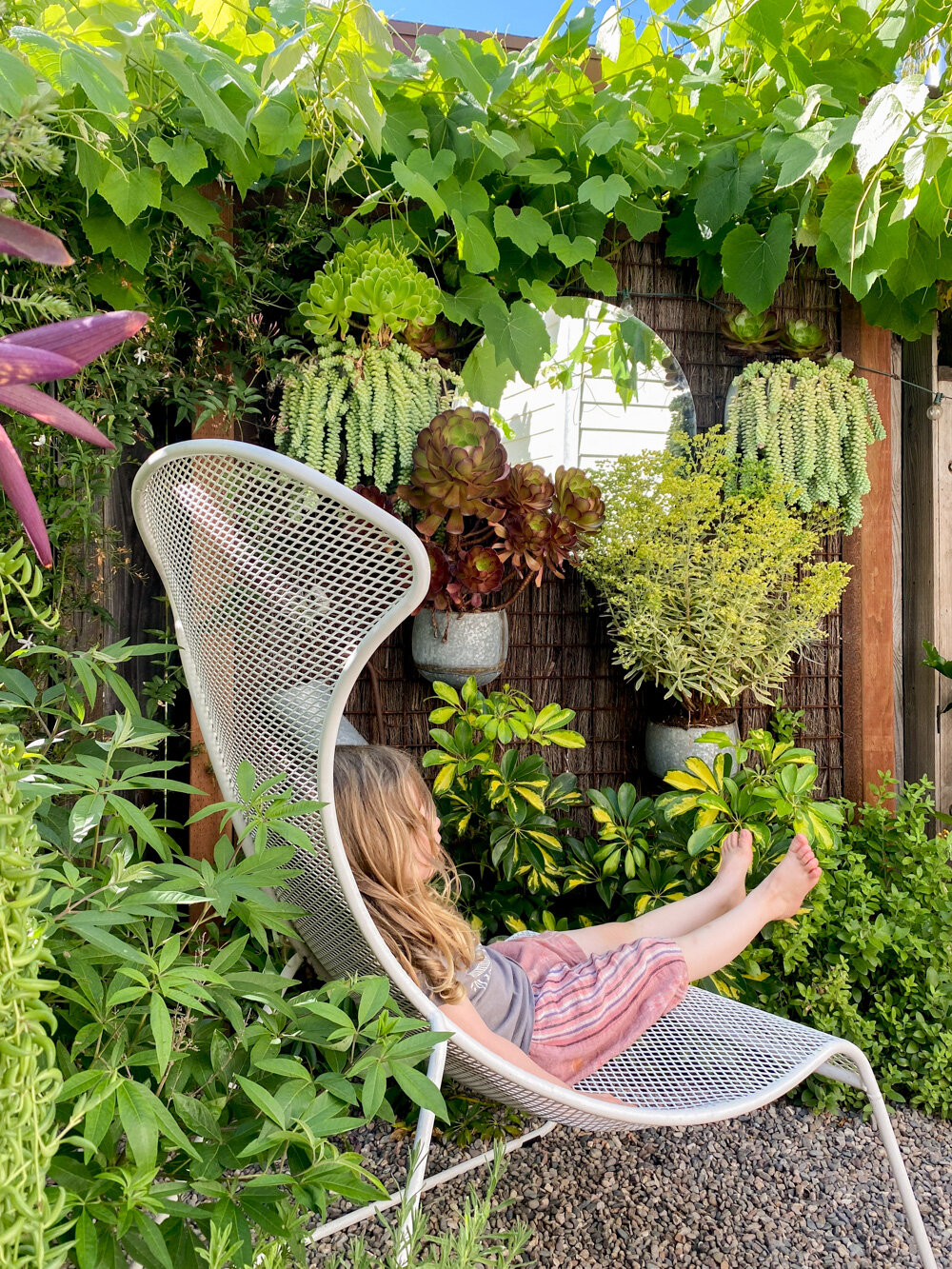
West listens attentively to his long-time favorite series, Sarah & Duck, or his new obsession, Quentin and Alfie's ABC Adventures.
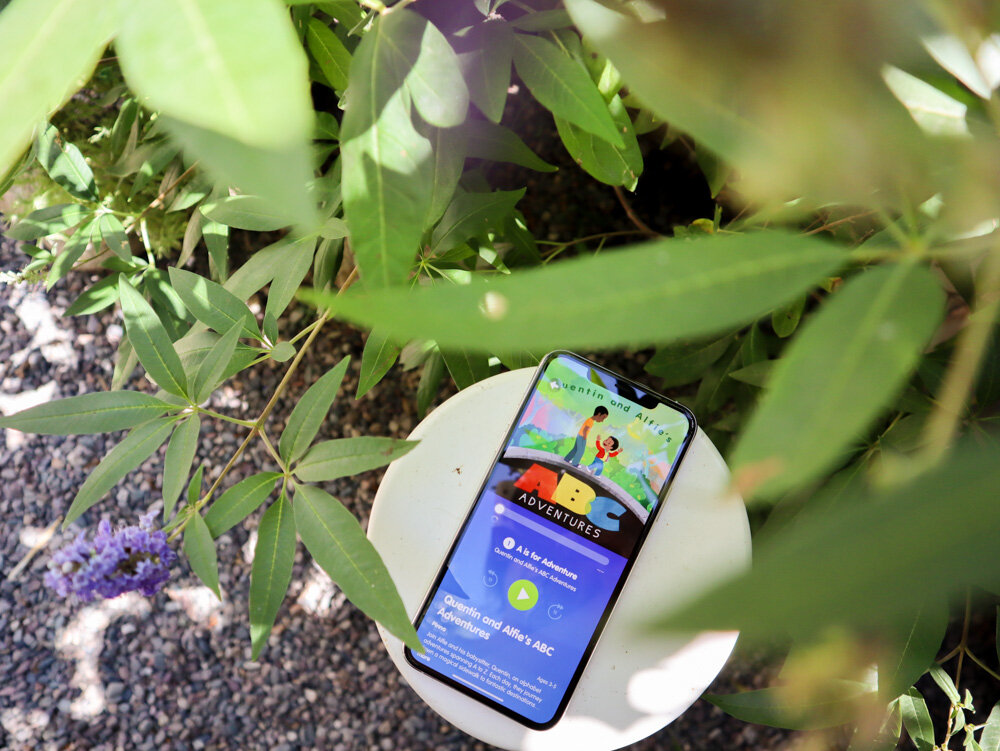
Above: Quentin and Alfie's ABC Adventures on the Pinna app— our go-to for ad-free podcasts and audiobooks for our 3+ year old.
He’s so enamored of the Pinna segments that not only will he listen to them for long stretches of time while playing inside or outside with blocks and trucks, but he also drops a portable speaker in his wagon to listen to the stories on-the-go as we all take the dogs on their walks. (Use this link and the promo code: PINNA3MONTHS for 3 months of free listening.)
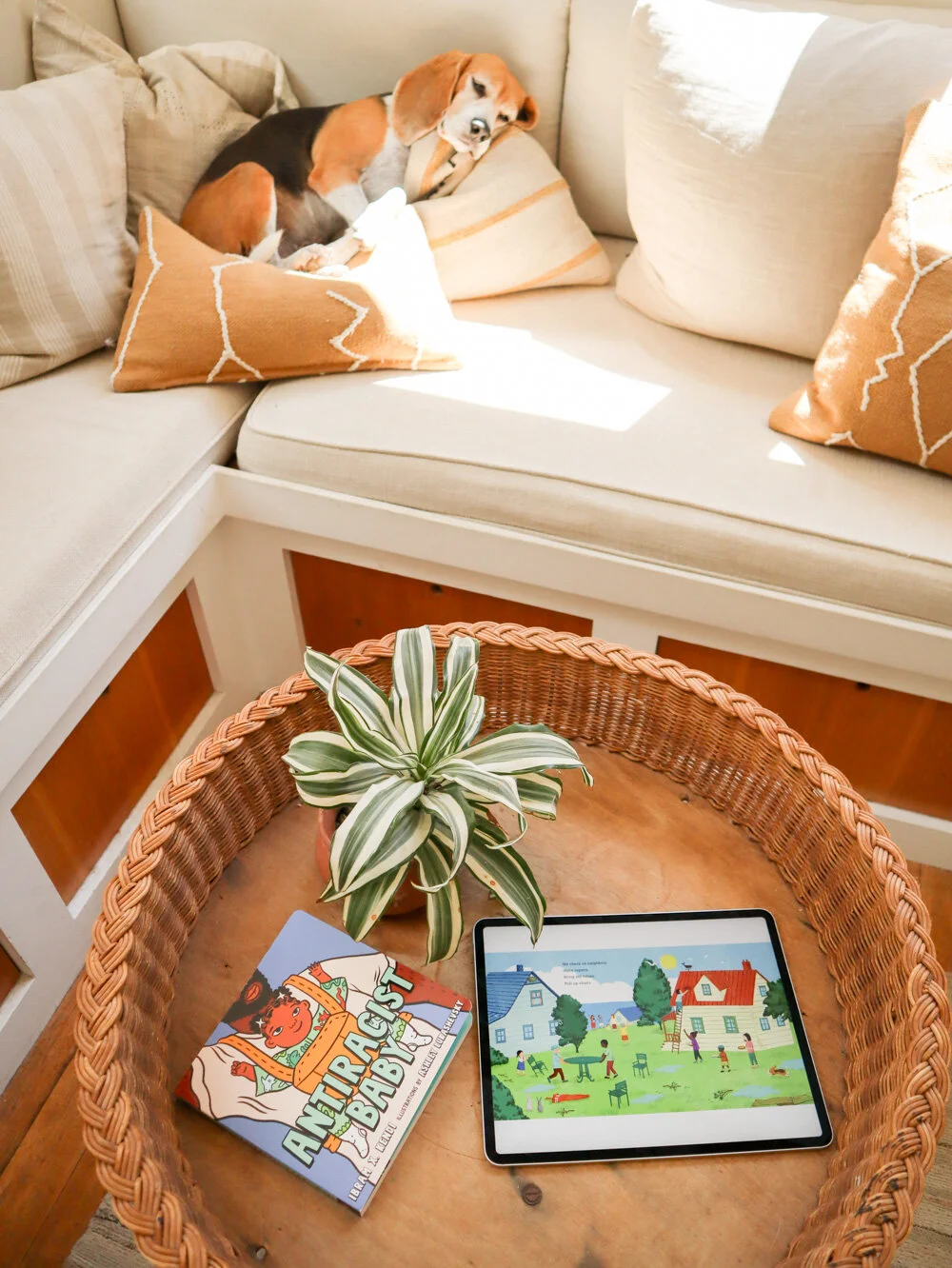
Above: A borrowed library book via The Libby Ap (featuring an illustration by Christian Robinson, and a copy of Antiracist Baby by Ibram X. Kendi.
Other activities we’re still regularly doing with West include:
Reading for about 2 hours each day. In order to expand our collection of books, we downloaded the Libby library app.
Biking in the early mornings (before the heat and crowds set in).
Watching episodes of Sarah & Duck or Puffin Rock with our mini projector
Checking on the fairies’ house and using a pulley to transport foraged supplies their way.
Listening to Pinna audiobooks / stories while playing with trucks, building blocks/tiles, train tracks, etc. (Visit this special link and use the promo code PINNA3MONTHS for a free 3-month trial.)
“Painting” the fence with water
Bubbles
Cooking, baking, cleaning and laundry as family games
Dance parties
Building forts (on the couch, with a tablecloth tent, and with play silks / scarves)
Window darts (these are plastic, but I’m glad we have them—- they’re fun for the whole family and we use them constantly)
Running around the house and yard with the pups
Art class (stickers, simple crafts, color pencils and crayons, paper planes, etc)
Gardening, Farmstand harvesting and monitoring, and careful watering of the indoor/outdoor plants
Puzzles (we only have 4-5 small ones, but they’re enough)
Basketball
Video / Portal calls with family and friends
Chatting over fences and through windows with our neighbors
“Fishing” in the main room or garden
Switching up meal and snack formats in the PlanetBox for in-home picnics

Meanwhile, Adam and I have an ever-growing stack of books we’re eager to read. I ordered some for my e-reader, some from author’s sites, and others through Elizabeth's Bookshop & Writing Centre (fulfilled via bookshop.org). A percentage of all sales from Elizabeth’s goes to The Loveland Foundation to support their mission of making mental healthcare accessible for Black women and girls. West goes to bed around 9:30, so it’s around then that Adam and I finally get to open pages and read.

At this rate, I imagine it will take us quite a while to get through our current reading list. But it’s lifelong work, this learning and unlearning.

And as for the summer, I’m all for foregoing traditional activities in order to keep members of our communities safer, figure out ways to make our planet healthier in this crucial decade, and to take meaningful actions to rectify inequalities throughout our country.

Composting in a Small Home and Garden (An Update)
“Landfills continue to be built in disenfranchised communities. Food deserts continue to be prevalent in disenfranchised communities. Climate change continues to be felt the most in disenfranchised communities. Taking ‘sustainable action’ means taking action to create a greener, cleaner world for everyone. Reducing food waste and regenerating soil are two of the best ways to help reverse climate change. Composting does both.” - Compostable LA

HOW WE STARTED OUR COMPOSTING JOURNEY…
More than a year ago, we began our composting experience here at our lil’ cottage in the city in order to divert our organic materials from landfills. (Food waste is one of the largest component within landfills in the US, and it releases potent methane— a greenhouse gas.)

In the kitchen, we use a countertop bin that we fill up throughout the day before routinely pouring it into our 33 gallon Jora Composter tumbler, which sits in our back garden.

We eat a vegetarian diet, composed primarily of plant-based ingredients. Between those scraps and the greenery from our yard, the tumbler filled up quickly. But even in its compact format, it was still large enough to accommodate most of our green output.

When the tumbler needed a little time to break down its contents, we relied a touch more on LA’s “green bins" — the city-issued, outdoor containers reserved for yard clippings, branches, flowers, a variety of grasses, leaves, and fruits + vegetables from any source that have NOT been prepared for consumption and have NOT been partially consumed.
TROUBLESHOOTING
It took Adam a while to strike the right ratio of green vs brown materials in our tumbler. The contents immediately became to moist, as we had more kitchen scraps than brown matter. So Adam relied on weekly supplements of wood shavings to balance out the contents. But the shavings had to be purchased, and were packaged in plastic, which completely counteracted the positive impact we were trying to have. So after using one bag and getting the contents of the tumbler to dry out to a moderate level, Adam replaced the shavings with dried, fallen leaves rounded up from our garden. (He does this every Sunday after he tends to our two Lettuce Grow towers.)

We quickly learned not to toss anything in the tumbler that isn’t truly organic matter. We avoided adding products / materials that claimed to be “backyard compostable, as they can be problematic. (If you’re new to composting and/or want to be an informed consumer, I’d recommend doing some research on “biodegradable” vs “compostable” vs “backyard compostable.”)

At the end of spring / start of summer, we were able to use some of the compost in our lil’ porch garden, and throughout patches of the yard. We did this gradually and carefully, as we weren’t confident that the dogs wouldn’t start sniffing around in the soil and digging everything up. Luckily, that didn’t happen.
COMPOSTING DURING THE PANDEMIC
Since Sheltering at Home for over 4 months and preparing nearly every meal here during that time, the scraps became too much for the tumbler.

We explored options for a residential compost pickup service, and discovered that our home is located within Compostable LA’s service area, so we enrolled ourselves (along with our next door neighbor) in their services as a way of managing the overflow of scraps from the tumbler.

Here’s a list of what can and can’t go in a Compostable bin:

The service starts when Compostable drops off a clean bakery bucket to live out its new life as a short-term residential compost storage bin. Once a week, Compostable delivers / exchanges the buckets, and transports the food scraps to their nonprofit partner, LA Compost. Compost is used in members’ gardens and sold to urban farmers.

This is one way in which we’re putting our consumer activism to work.
*Source: The NDRC
Select photos by Lucia Doynel
To donate a box of organic fruits and vegetables to Angelenos within food deserts, click here to buy a box for $32 + delivery to be gifted and delivered by the non-profit Suprmarkt. (Please explore the drop-down menu and sidebar options for full customization and pricing.)

Renovations as a Renter
It might surprise some readers to know that we’re renters.

With the amount of time we’ve been here and the renovations we’ve undertaken across the cottage, garden and even the neighboring tiny house, most people understandably assume that we own the property.
Once folks discover that we rent, they usually ask why we’ve poured so much money and effort into home modifications and improvements.
Does the landlord pay for the work or deduct the costs from our rent?
(No, but I assure you that he is generous, supportive and wonderful.)
Are we on a rent-to-buy plan?
(No.)
My thought on renovating our rental has always been that if the update is reasonable and within our modest, allotted budget, the investment isn’t a waste. Sure, I’ll never get the money back, but I find genuine value in the pleasure sparked by the end results.

Committing a little savings to an improvement here or there slowly over time has helped us stay comfortable in our home as we evolve, and it has sustained our excitement about being here— even after nearly a decade. This is helpful, as we weren’t in a position to buy a home (tiny or otherwise) for the vast majority of that time anyway.
Besides, an improvement to our home is also an improvement to my office, since I’ve worked here, full-time, since day one.

I’ll only consider substantial upgrades if there is something that is really bothering me every single day. Eventually I’ll target the issues, draw up my creative plan, review the scope of work, obtain a realistic estimate, and then consider the following: If we were to unexpectedly leave within the year, would I regret making this investment? If I believe the answer is no, I go for it if it feels doable and responsible, and if our landlord signs off.
Regarding the financial investment, let me be transparent: While we’ve put money behind our upgrades, we’ve also been able to offset some of the costs due to the nature of my small business. Yes, this is a privilege— absolutely. But it’s worth firmly noting that it’s also an enormous amount of work beyond/behind the renovation itself. (Thankfully, I really love my job.)

There are still updates we’d like to make. For example, our floors are extremely distressed, and while I feel somewhat sentimental about the stories that the wear-and-tear tells, they are in such a state that they look grimy 100% of the time. The same goes for the fronts of our cabinets and drawers. Also, the color of the stain on many of the built-ins is more saturated than I like, but there is so much detail and beveling throughout the wood that I can’t bring myself to commit to the time and resources required to change the look.
The updates we have made have brought us so much happiness, and I don’t regret a penny I (carefully) spent. As a result, we are as in love with our home as ever, and we are grateful to be in this cottage— even if we don’t own it.
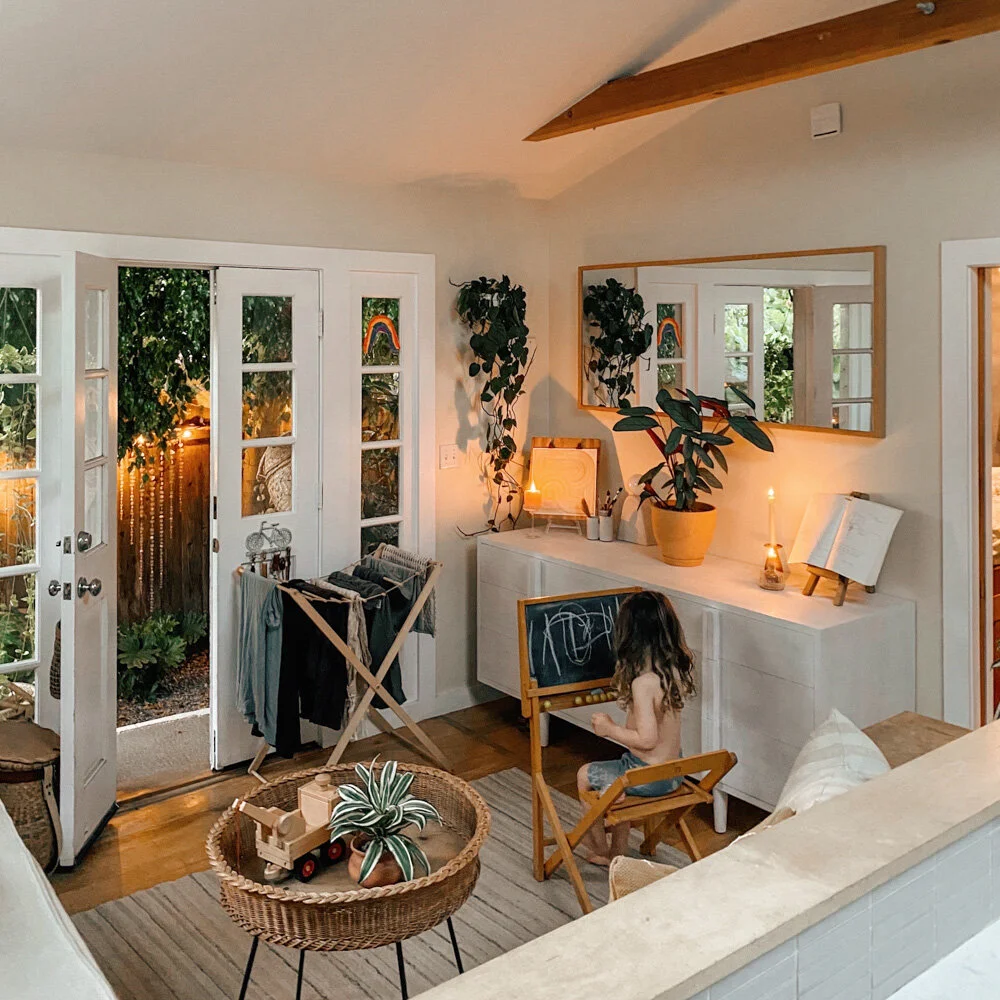
I suspect that most of our larger changes here are done. The economy is in turmoil, our small business is struggling (like so many others), and we’ve already poured so much into this beloved space. As such, I think we’ll stand-by for whatever adventures await us in the years to come…
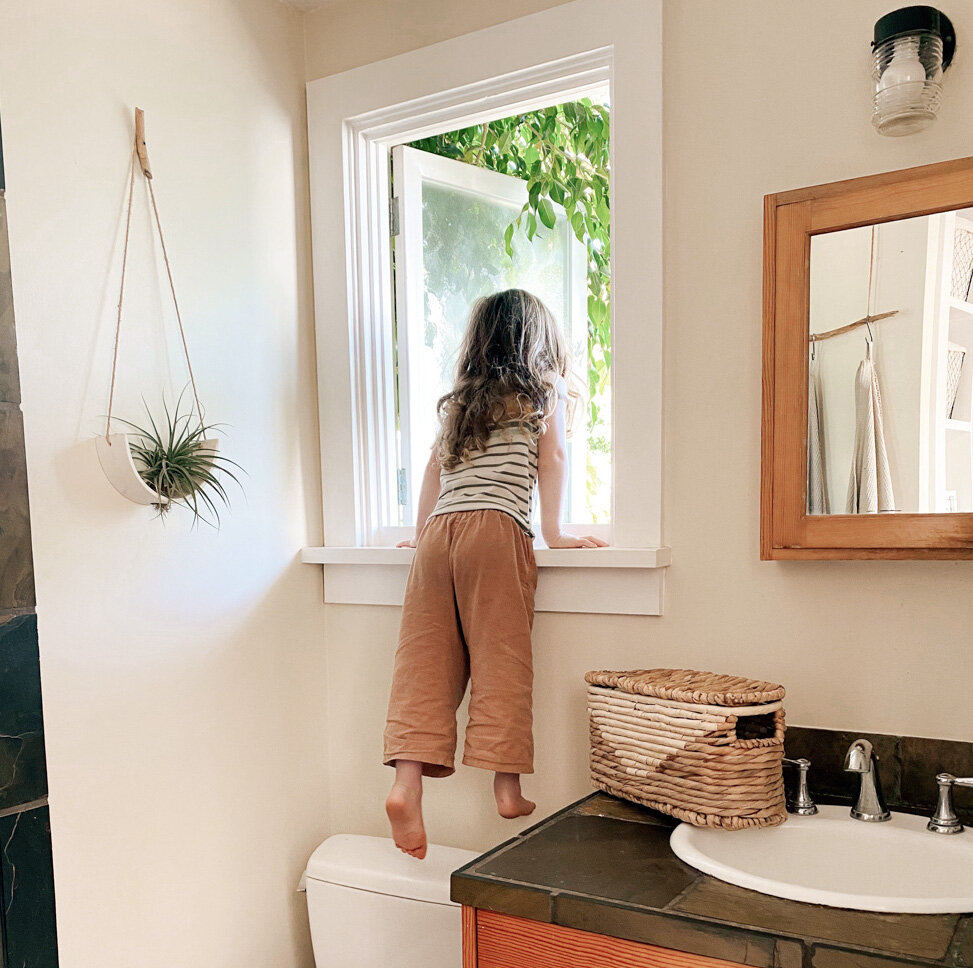
First photo by Lucia Doynel.

Safe Housing for Transition-Age Foster Youth (A Status Update)
Note: This blog post is a follow up to an initial post from June, which pertains to an initiative we’ve been working on with The RightWay Foundation since the onset of the pandemic.
Our family wants to thank everyone who tagged companies in my recent Instagram posts about The RightWay Foundation’s efforts to secure safe housing for transition-age foster youth.
Because of your responses to these social media posts, brands have taken note and delivered donations or committed to doing so.
Not only do these donations help by getting wonderful transition-age foster youth some of the items they need for a functional home and a healthy life, but they also allow RightWay to allocate their resources towards vital services such as mental health care, rent assistance, trauma-informed training, and job placement.
Here are a few companies we want to thank specifically for their contributions. (I hope to be able to circle back soon to add/thank more companies for further donations in yet another follow-up post.)
MATTRESSES
Avocado Mattress took note and committed to donating mattresses (among other essential sleep items) to RightWay in an ongoing capacity, starting as early as next week. (On a related side-note, we have an Avocado Green Mattress here at the Cottage, and we absolutely love it, and appreciate the brand’s commitment to the environment.)

Above: Our Avocado Green Mattress in the Cottage (captured as part of a past partnership with MindBodyGreen.) Avocado will be donating mattresses to The RightWay Foundation.
SOFAS
With the help of The Revery LA by Monica Wang, Jonathan Louis donated seven new, beautiful sofas to RightWay! Some of the youth have already begun to receive the couches in their apartments, and Franco, the Founder & Director of RightWay recorded a Thank You video for these contributions, here.

Above: Jonathan Louis sofas at The Revery for a photoshoot before being donated to RightWay.
BASKETS
Will & Atlas donated 20 of their gorgeous black jute baskets for the apartments. (We have a few of their baskets in another style, which that we initially got for West’s closet nursery, and we still use them daily.)

BOWLS & PLATES
OurPlace, a brand I admire for their ethical labor practices and clever, space-savvy Always Pan, are sending their stylish bowl and plate sets.
CUTLERY & CERAMICS
Fable is donating much-needed cutlery and ceramics, and we’re in talks with them to hopefully help RightWay acquire rolling donations of their surplus goods from previous seasons.
MUGS
Created Co. will be sending RightWay their delightful mugs for the youth in their new apartments.
TWIN-SIZE BEDDING
Dusen Dusen kindly sent numerous bright and playful twin bedding sets.

In addition to the above, several individuals have gifted items, from new oven mitts and tea towels, to beds, to AC units. And I’m sharing the following for the sake of accountability: our small business recently wrote a $1,000 check to RightWay with some of the money earned through our recent paid partnerships on Instagram.
Thank you to this community for your support, and you to the brands who are showing up to support foster youth.

Keeping a Small Space Organized
Click here to view the IGTV video that corresponds with this post.
Due to the pandemic, I’m receiving more messages than ever from parents (in homes both small and large) who are feeling overwhelmed by toy clutter. The same goes for folks struggling with what to do to accommodate the sudden influx of office supplies, as so many people are working from their small spaces for longer than initially expected (often with a significant other or roommate nearby).
Even a limited amount of “stuff” can quickly make a compact room feel cramped. But you don’t necessarily need a bigger space to relieve that sensation of overcrowding— it can often be solved with the help of a few surprisingly simple tools, such as book repair tape, pouches + envelopes, and multi-tasking baskets. While these are clearly not earth-shattering hacks, they can truly make a remarkable difference in appearance and function when used in varying formats throughout a tiny home or apartment. You don’t need to spend money buying plastic bins (that will sit on this strained planet until the end of time) or bulky storage solutions to keep your home organized and feeling uncluttered.
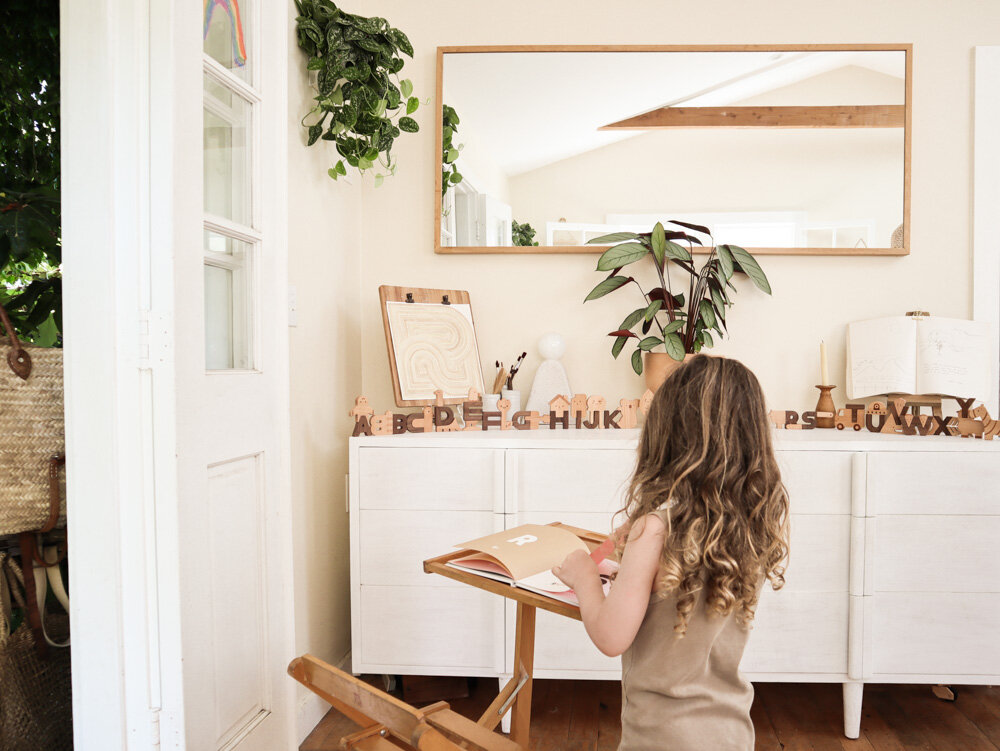
The one hack that we use across all areas of the house and all categories of items is to keep goods organized within their primary storage space via concealed, upcycled containers.
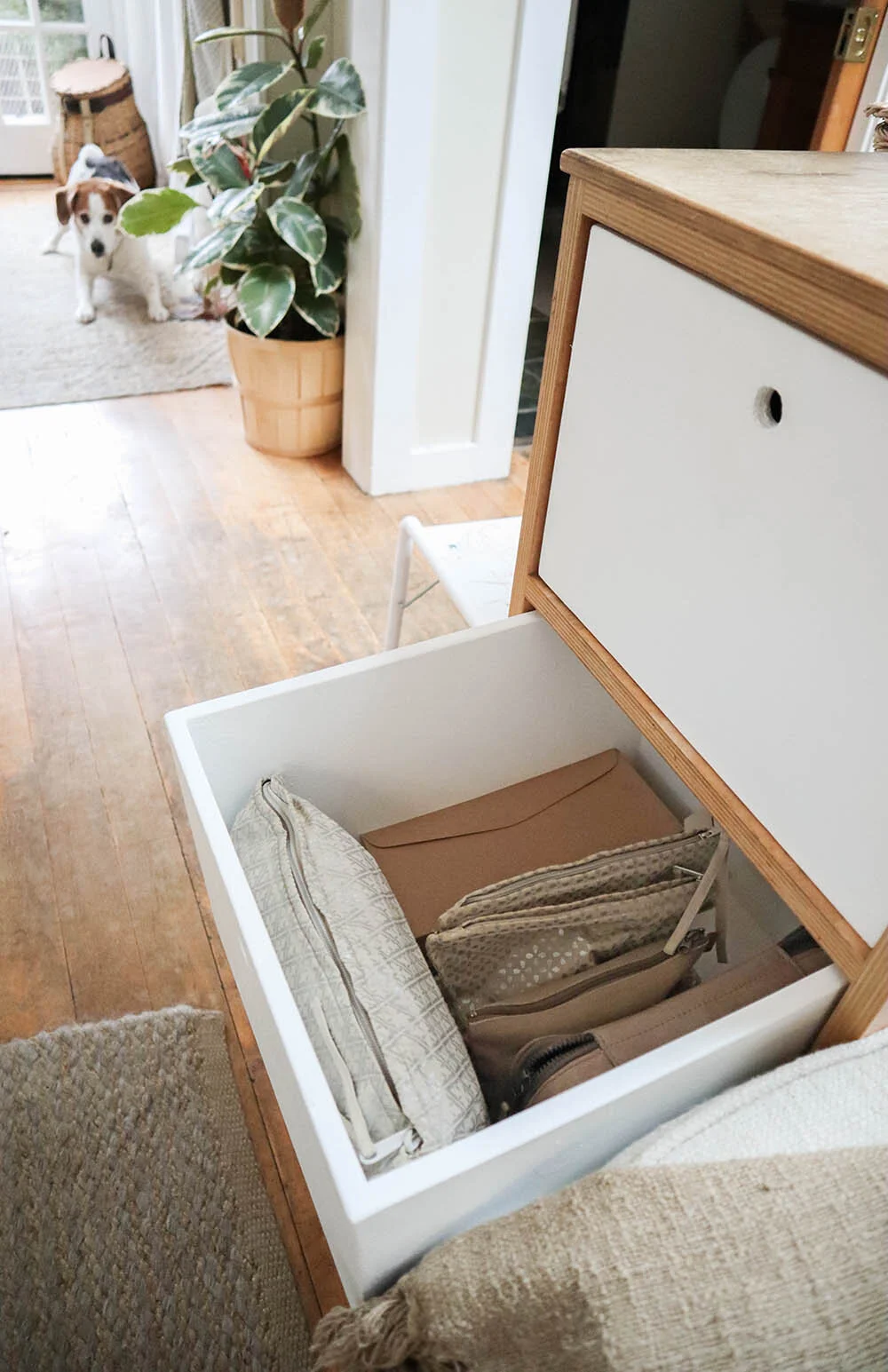
For example, my office supplies are primarily located in one drawer, which is built-in to our sofa’s side table. Within that drawer are multiple pouches: An old toiletries bag holds stamps and ink. An old folding camping stool’s carrying case contains hard drives and similar tech. A repurposed portfolio keeps stationary and envelopes filed together. (Click here to view our 1-minute video about Streamlining a Tiny Home Office.)
Similarly, in the bedroom within a drawer built-in to our bookshelf/nightstands are two travel / packing cubes— one for my bras, one for my underwear.
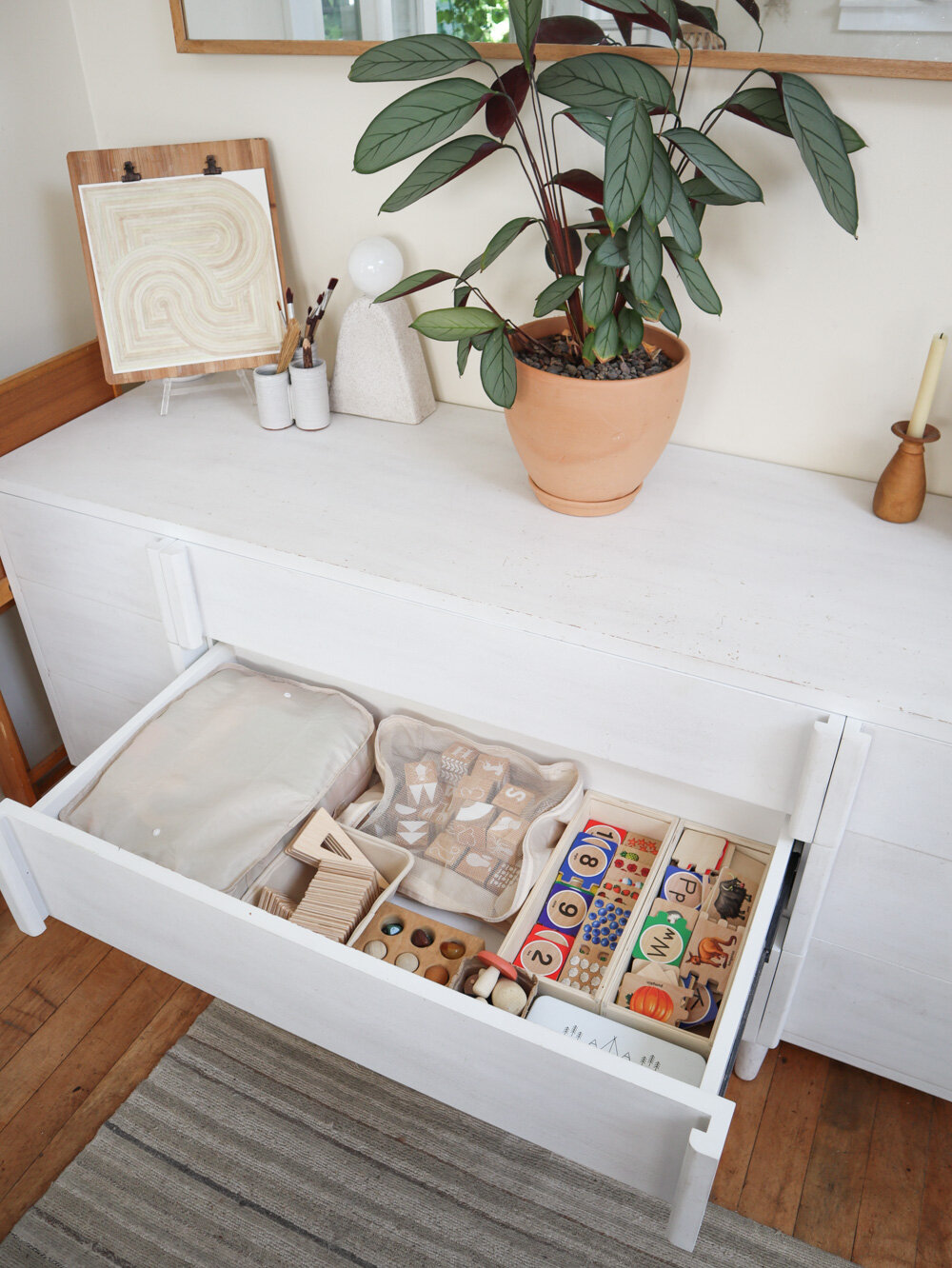
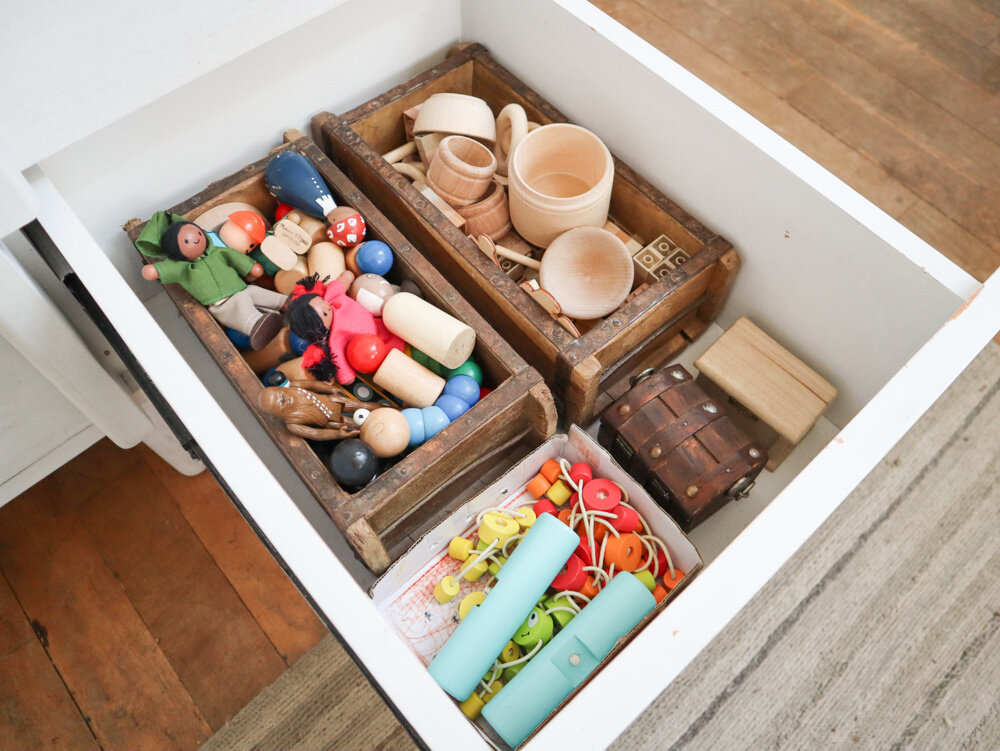
And in our only dresser, which sits like a buffet in our living space, West’s toys are corralled using a myriad of containers— vintage brick forms, cleaned to-go containers, canvas drawstring sacks, box lids, and so forth— which contain everything from puzzle pieces to blocks and figures.
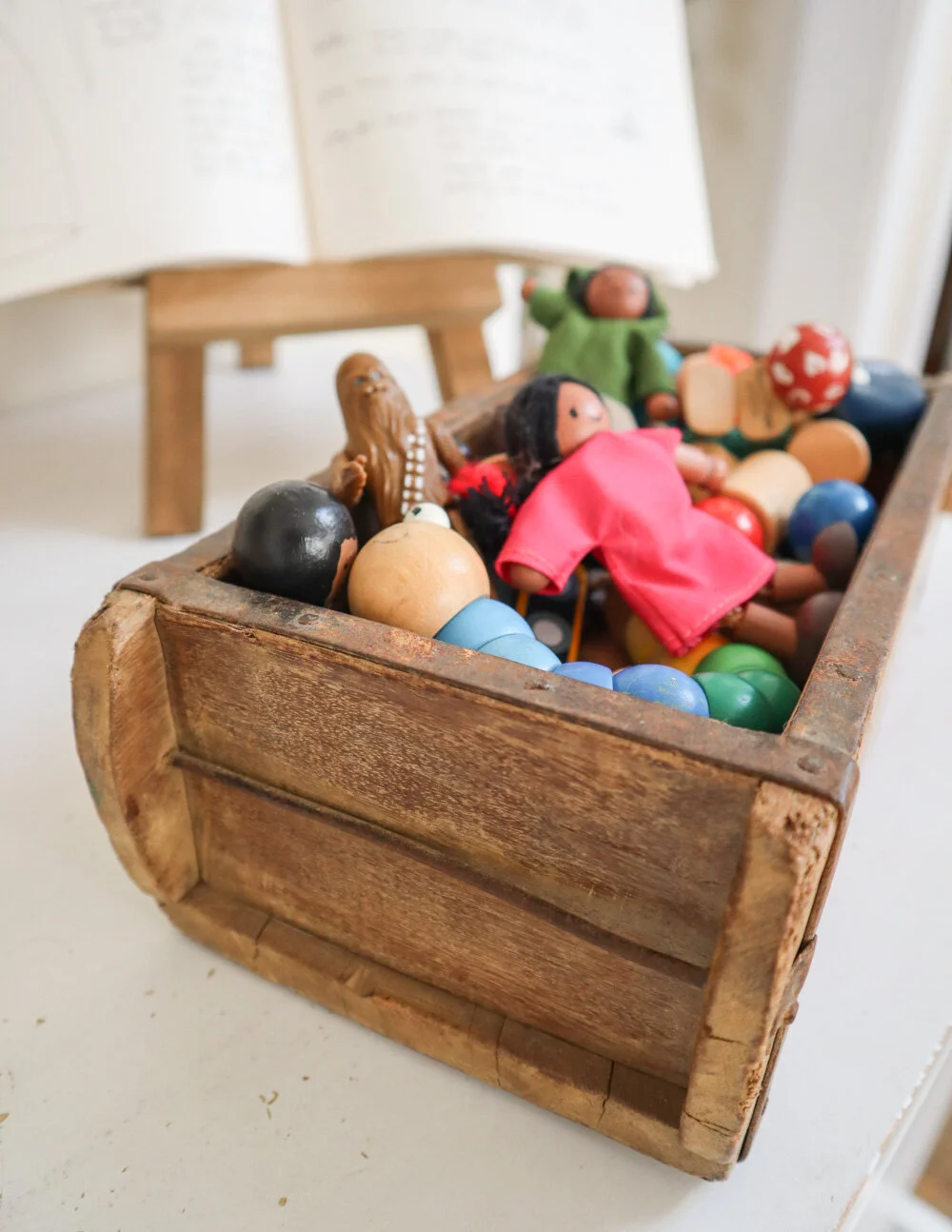
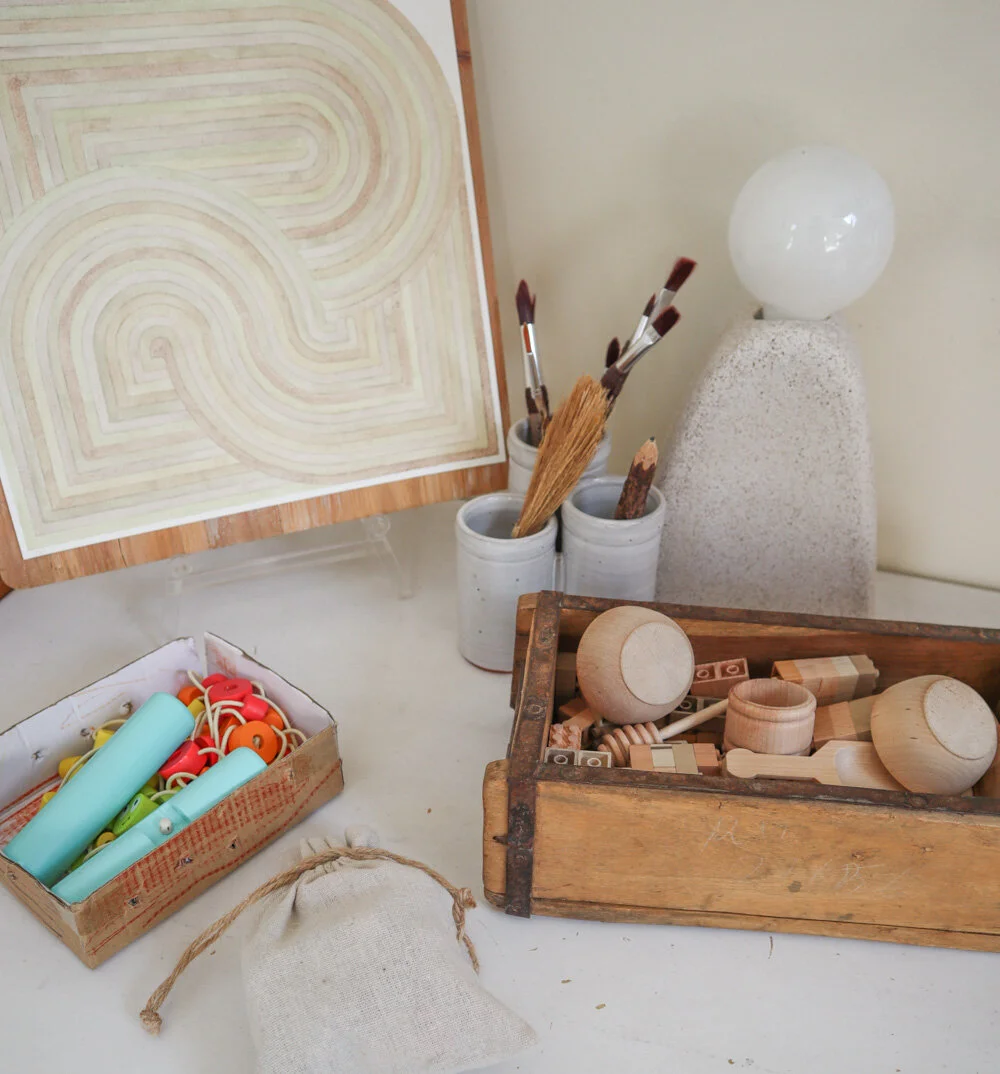
The point is not just to keep the drawers orderly (which sometimes works and sometimes doesn’t). It makes everything easier to tote from point A to point B, and also helps with cleanup.
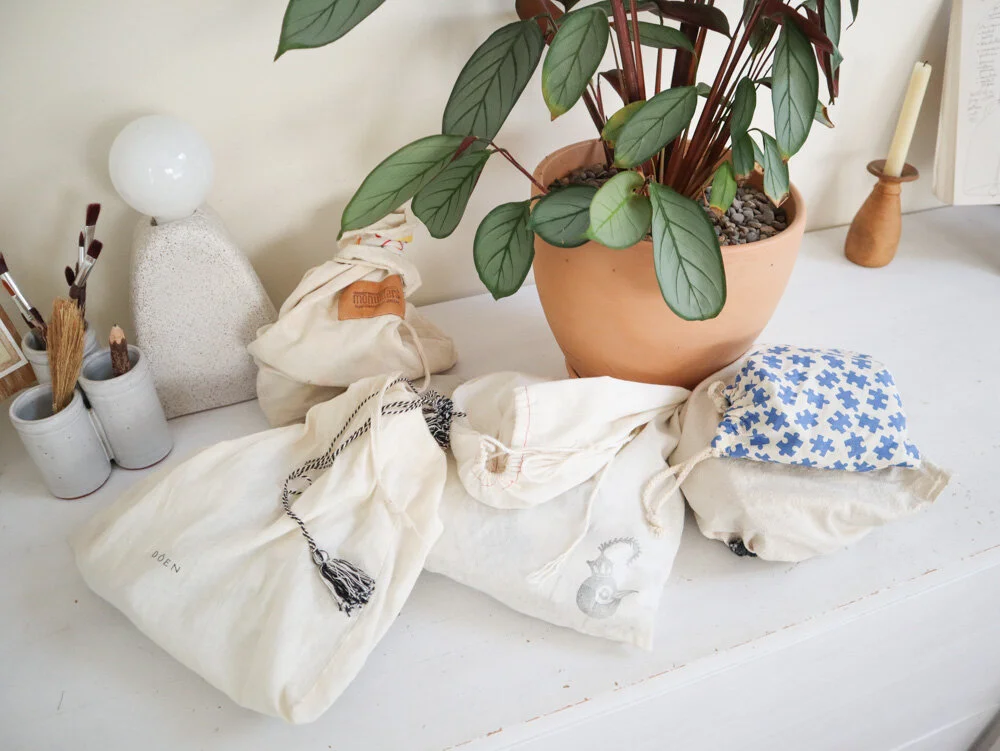
West is much more likely to return a set of toys back into a box or little bag (which we can then drop back into the drawer) than he is to carry each individual piece back to the drawer and then arrange it all in an orderly way.
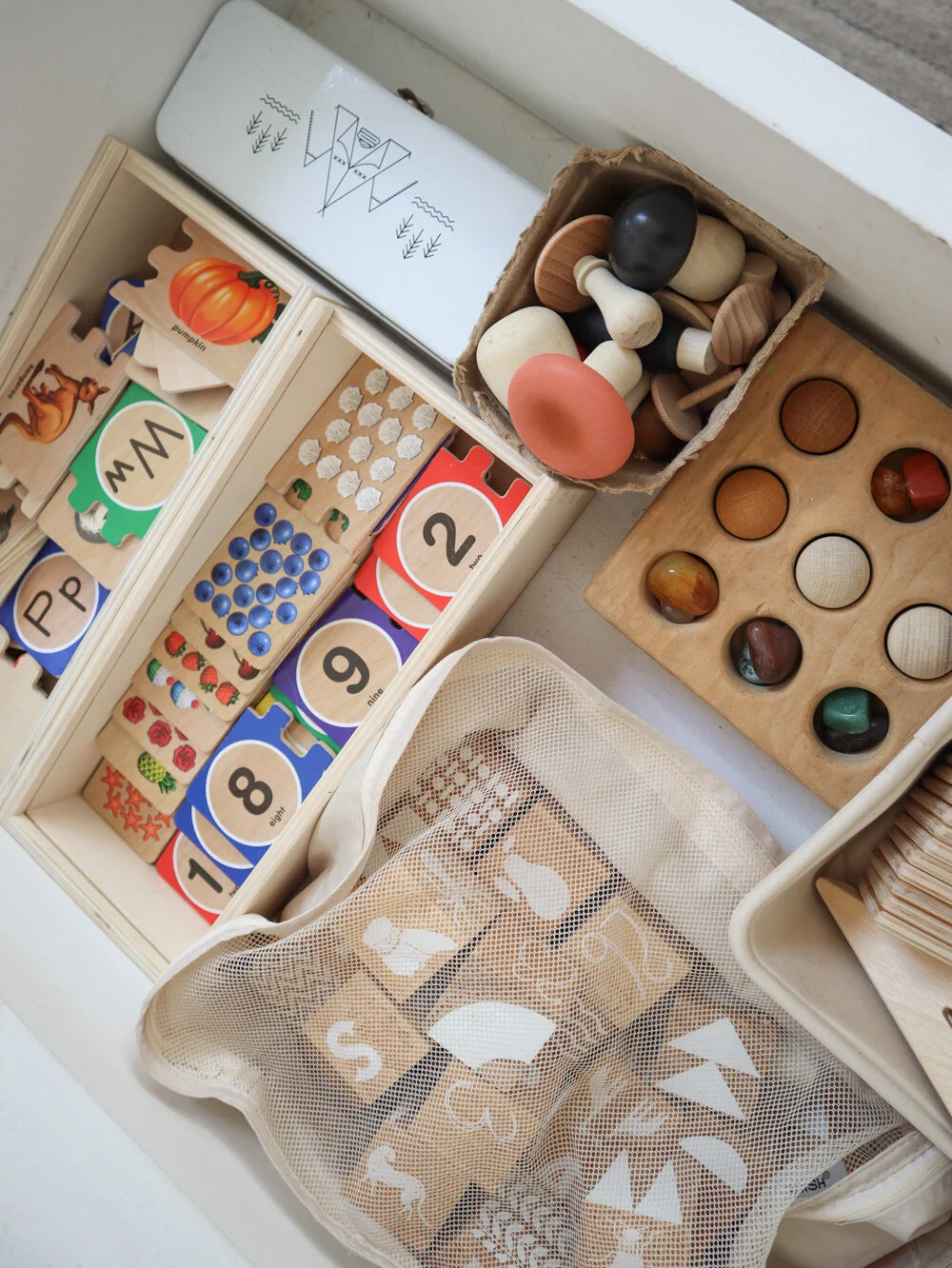
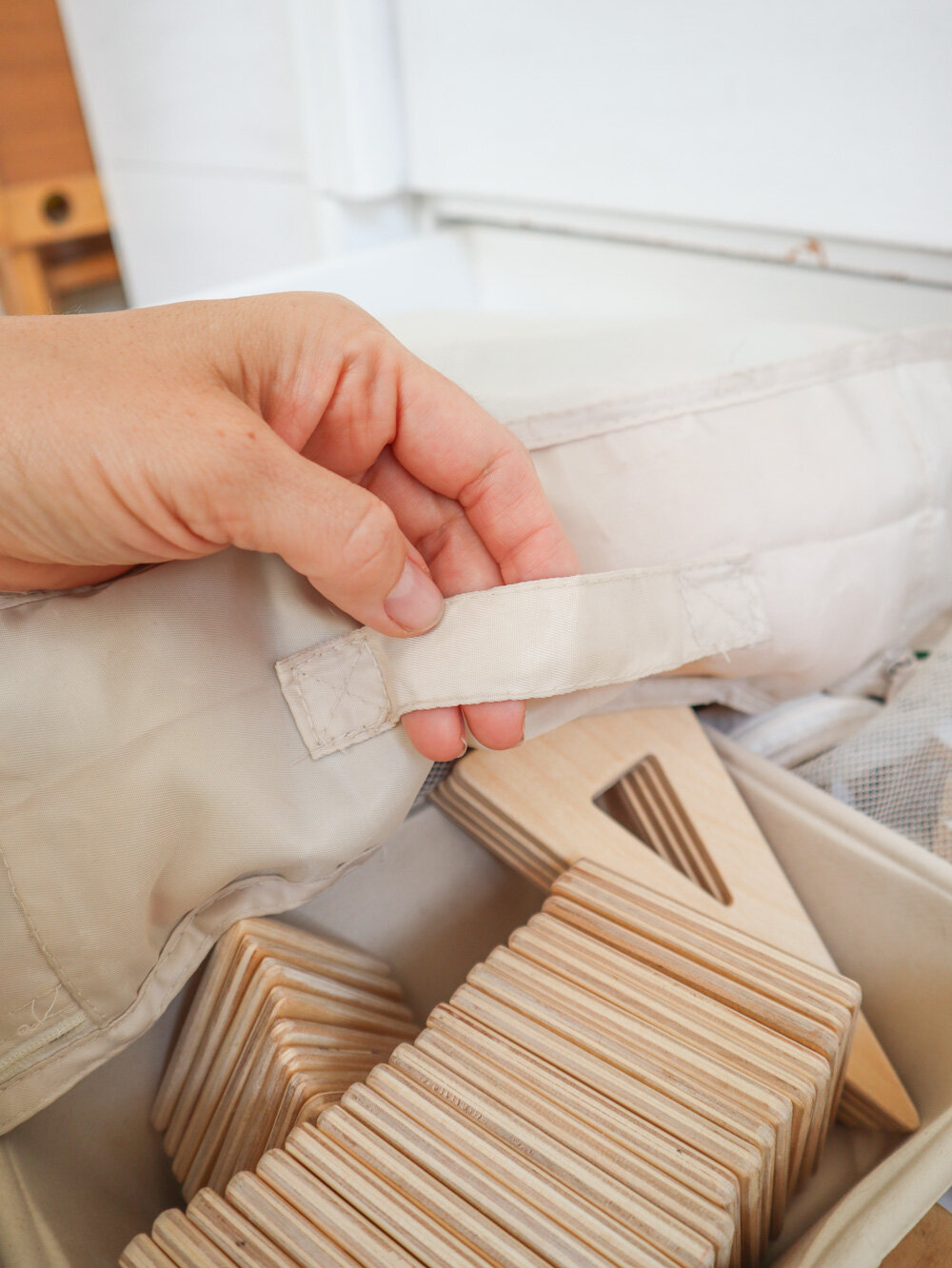
The packing cubes are particularly helpful, as we can dump them out and use them when we travel as well. Ours also have handles, which West uses a lot when hauling around his toys.
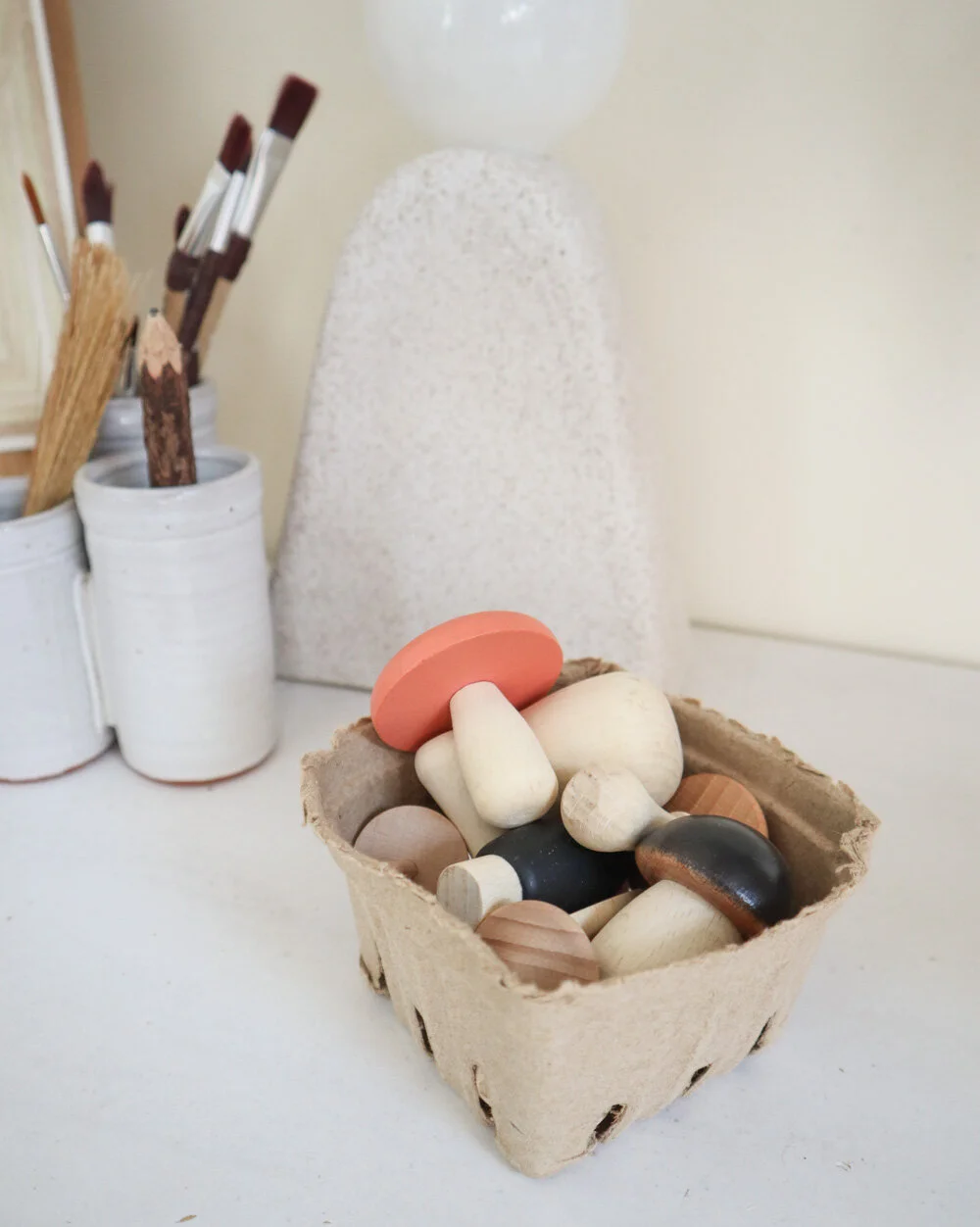
This is such a simple, inexpensive (or even free) way of keeping objects under control without infringing upon productivity or joy.

Intimacy in a Small Space
At the start of California’s “Safer at Home” order, I was interviewed by a sexual wellness brand and blog that focuses on modern intimacy through arts, science, and relationships. While some of the questions they posed and responses I provided speak specially to general human connection and physical intimacy while sheltering in a small space during the first months of the pandemic, much of the interview is applicable still, even as our state has inched towards reopening.
I’m sharing this slightly updated/modified version of the Q&As here on my blog, as I’ve recently received several messages from folks wondering how we manage time together, time apart, and physical intimacy here in our compact home.

Q: With social distancing & quarantine, how has human contact changed?:
A: Inside our home, not much has changed. We are used to being in close quarters with one another 24/7, although we used to have a few hours of exception sprinkled throughout the week, as we split or paired off to do various activities away from home. But now we’re learning how to connect with others in a whole new way. Thanks to technology, we can instantly be digitally united with our friends, family and colleagues from afar, while also discovering their unprepared homes, their unfiltered moods (many of them raw), their evolving habits, and their struggles along with their daily triumphs. And while we haven’t experienced the abundance of free time that so many others have referenced, we have indeed experienced a transformation in how we perceive and prioritize time throughout the day and night, which leads to increased connection in some ways, and reduced connection in others…
Q: How do you make space & time for intimacy?:
A: Depending on the form of intimacy, it isn’t easy. But I acknowledge what an immense privilege it is to be able to “shelter at home” with the ones I love, so I won’t complain.
In certain respects, our close proximity and constant exposure to one another make our deeply-seated bonds extremely strong, which is one of the reasons we live the lifestyle we do. However, when it comes to uninterrupted in-depth conversations and physical intimacy as a married couple (with a three year old who is constantly mere feet away, and while juggling a very small business that’s been rattled by recent events), those moments are limited and have relatively inflexible boundaries. But that’s okay— it’s certainly a new learning exercise, and we’re open to figuring it out.
Being physically intimate as a couple in a small space with a child always has its minor challenges. But we were creative in the first years of our relationship— now, 10 years in, I think that it’s helpful (though not always convenient,) to have the excuse to be mindful of how and when we connect, rather than lean into routine. And when I think about it, space itself doesn’t play as much of a role in finding places and moments for intimacy as much as general stress and exhaustion do.

Q: How do you carve out solo time?
If Adam or I are in need of a bit of air, one of us can walk the dogs or take a bike ride. But I can’t recall a time in recent memory when this has been necessary. Throughout the day we have the space we need to divide and conquer. For example, Adam and West can play and garden on the porch while I work on the back stoop. And while we can easily access one another (and I can enjoy the sounds of my child’s giggles, and the twinkling of the water circulating through the hydroponic stands ), we still have the space we need to be our independent selves and experience our own unique version of each day.
Q: What is a movie you will definitely watch?
A: We haven’t watched many movies as a couple— when we have time together we usually like to use it in other ways. But we did get a tiny, portable projector that has been a surprisingly fun way to transform several zones throughout our home into a cinema without the need for bulky equipment and wires. It’s proven useful for turning the living space or garden into screening rooms so that the bedroom can remain dedicated to self reflection and physical connection for my husband and myself.
Photos by Lucia Doynel

Bringing the Garden Inside through Earthy Linens
I love being inside our home— I do. But I’ve found that, in this time of far-reaching, heightened stress, being outside works wonders on my attitude.

I’ve been testing out ways of bringing the feeling of being outdoors into our bedroom to help counter the spike in anxiety I feel overnight.
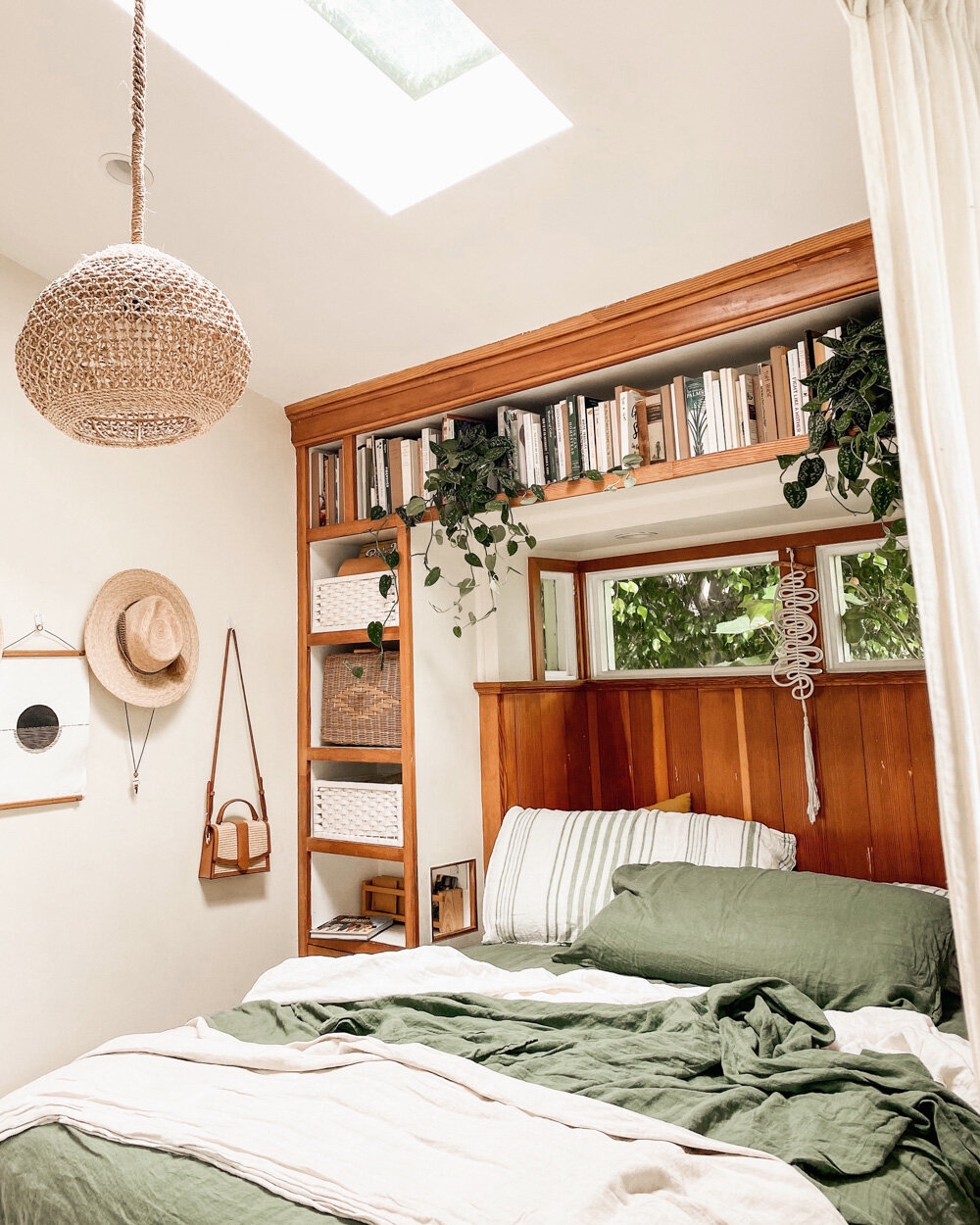
We have windows in our headboard, so I trained the grapevine to run along the wall behind the bed, where its bright, wide leaves brush against the glass beneath the trailing plants on our built-in bookshelf.

The greenery continues on the other side of the room, where trumpet vines spill from an overhead living canopy just beyond the French doors.
To visually connect all of these elements throughout the bedroom, we added 100% linen sheets in this Earthy green hue. So far I’m enjoying how it unites this small space without visually cluttering it.
I always prefer linen sheets. First of all, they’re breathable (which helps, as we have no AC here in our tiny, coastal home)
Additionally, they don’t cling to dog hair as much as other fabrics seem to.

They get softer with every wash, and they line-dry quickly, helping us cut back on energy usage and costs.
Lastly, I find them simply beautiful.

West keeps saying, “Mom— I love our new bed!” (So do I, West.)
Note: This blog post was not sponsored, but the sheets were gifted as part of a paid partnership with Brooklinen on Instagram. As always, a portion of the income my small company earned from the collaboration will be donated to The RightWay Foundation.
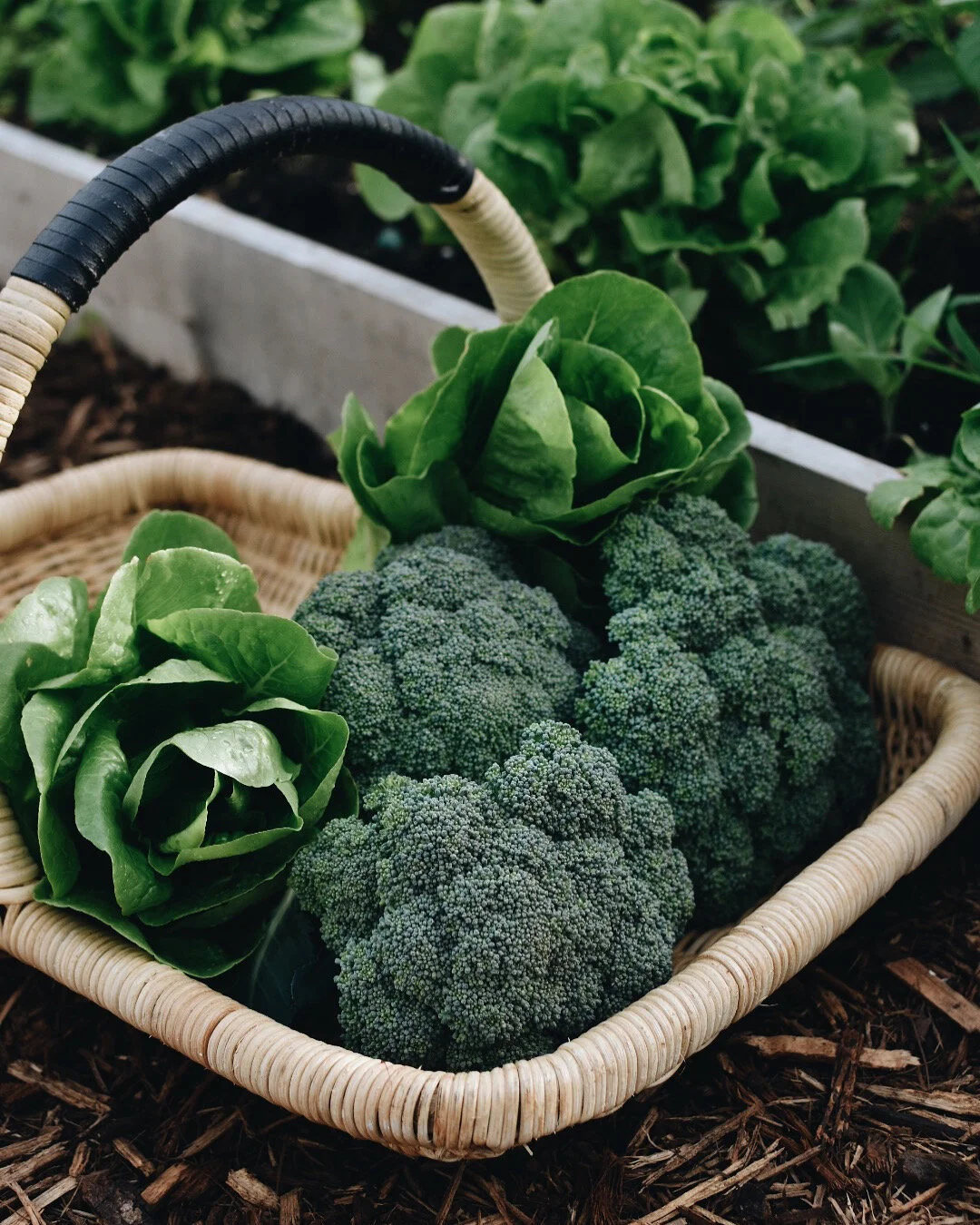
Plastic Free July
Words and images by Alyson Morgan, and shared with permission.

since the pandemic we have been far from zero waste, picking up our bulk items in little plastic bags. we try to continually make choices the best we can but if anything this pandemic has highlighted the racial inequality, the accessibility issues, and the privilege of a plastic free, low waste lifestyle. it often takes more time and money to make more sustainable, ethical choices. that is privilege in action.
so for me, this plastic free july, i would like to reflect on how this type of lifestyle currently is not available to everyone + emphasize a system change. plastic free living has to be available to all for it to make the difference our living world needs.
the other day i couldn’t find my cloth mask to take to the coop, so i brought a disposable one aj’s work had sent us. somewhere along the walk, i dropped it. realizing i did once i got to the market, i traced my path back and found it along the side of the road. as i picked it up, i thought to myself, “if it was my cloth mask i would have noticed it dropping out of my pocket.” i would have tucked it more securely in my bag. it’s made from linen, i made it. it’s valuable to me. the disposable one does not hold the same value to me. plastic holds no value to “us” therefore it’s easy to toss.
in my mind, this intersects with the social movements we are seeing globally. how do we care for the things we value? when something or someone is important and of value how do we treat it? we are calling for society to value black lives, so that black bodies, homes, and communities are not disposable. so that you value our lives as much as you do your own.
so in this conversation about plastic free and sustainable living, i see it’s really about reorganizing our systems and interrogating what we value as a collective? once we know our values, we can better align our lifestyle and envision structures and systems to reflect that.
for me growing food, is an small act of resistance and divesting from the larger system, but i know it’s not enough when communities of colors face food deserts and their options are often only wrapped in plastic. if you want to get rid of plastic waste in our oceans, your individual actions will only be a drop in the bucket when the system is out of balance.
- Alyson Morgan, @AlysonSimplyGrows

Earth Star Herbals: Herbs For Home + Healing In The Anthropocene
Alyson Morgan’s interview with Erin Boyle on Reading My Tea Leaves
Shop and/or donate organic produce in LA food deserts via SÜPRMARKT. SÜPRMARKT is a low cost organic grocery that operates weekly and provides 100% organic produce to make great health and healing available to the communities that need it most, because everyone deserves healthy food.


StanLee, Our Adopted Senior Beagle, Turns 14
I discovered out cottage thanks to my beautiful senior beagle-mix, StanLee. And today, he turns 14 years old. (Truth be told, since he’s a rescue we’re not sure of his actual birthday, but we’re celebrating nonetheless.)

9+ years ago, StanLee and I were living in a 5th floor studio apartment on the beach when we met Adam. As it became clear that it was time to move and begin our lives in a space all together, StanLee and I began the search for a new home.
First and foremost, I wanted a garden so that StanLee could breathe fresh air, chase squirrels and move around indoors/outdoors as he pleased.
I never once considered or cared about square footage.
I didn’t give a thought to parking spots or new appliances or pristine floors.
I simply wanted a sunny place where I could feel safe and inspired while working from home with StanLee, and a place from which Adam and I could easily enjoy the loud heartbeat of Venice while also cultivating a quieter home life.

StanLee and I explored nearly every street in Venice and visited several potential residences before Adam and I found this one and knew it was our spot.
Adam proposed to me here.
I grew my business here.
We then adopted Sophee (who promptly broke her leg and required a temporary crate, which we couldn’t fit anywhere in the house without climbing over it to get from point A to point B... poor Sophnugget).
Adam and I got married on the front stoop.
I was here when I realized I was pregnant, and 9 months later when my water broke.
Our son — now 3½ — loves being here so much that he quite literally never wants to go anywhere (which is currently highly convenient).
Our home means so much to us, and I know I wouldn’t have slowed down enough to discover and enjoy it if not for my beloved StanLee.
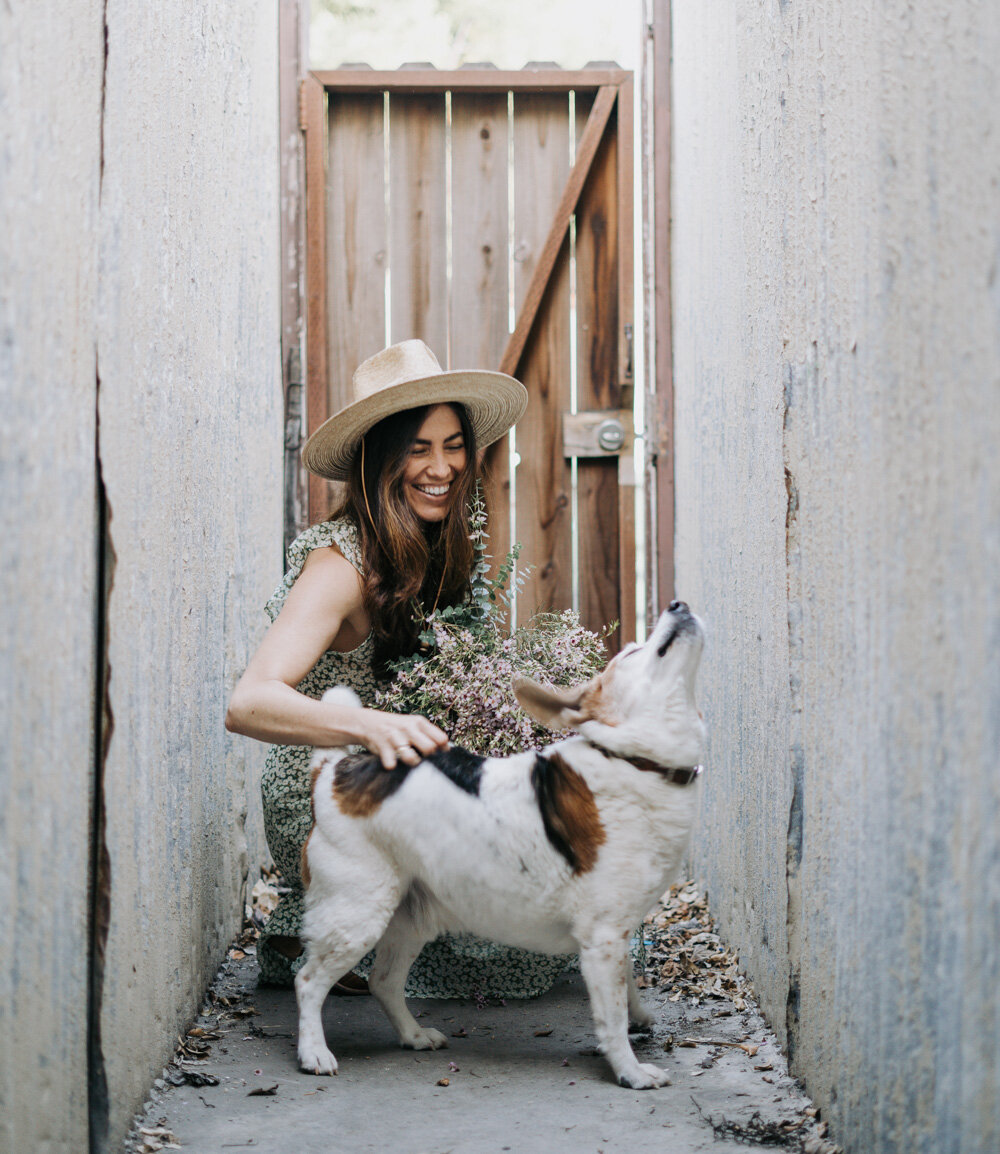
StanLee watches over our tiny cottage, and has even thwarted robbery attempts. He stood next to us on our stoop when Adam and I said our vows. He sat with my Dad and Grandpa Lou in Florida when they were recovering from treatments and surgeries, even though the medical equipment, walkers, and wheelchairs scared him. He protects West if my back is turned. He knows my every mood and move.

Happy birthday, Stanlee-Stubs. You’re the love of my life.
#AdoptDontShop

Photos of StanLee & Whitney by Lucia Doynel

Garden Aprons for the Family
One of the ways we’ve tried to reduce our negative impact on this planet is to not only be mindful of what we’re bringing into our own home, but to also be mindful of what we’re asking others to invite into their homes. This means that we gift rarely and cautiously, and that gift-giving often doesn’t align with a special occasion. Instead, we’ll usually give a present whenever we discover that perfect idea or item. (In other words, we’re fairly disappointing friends/family members sometimes...)

When it comes to gifting to one another as a couple, Adam and I are tricky. He’s one of those people who requires very little, and is content to use whatever he has until it falls apart. And while I’m the buyer for our family and will certainly go after the things we need or really want, I’m certainly not eager to acquire new belongings beyond those.

Back in the spring, Adam let it slip that he liked a garden apron by our friend Hilton Carter. After all, Adam has been spending most of quarantine focused on keeping our plants thriving, and teaching West how to tend to the greenery scattered around our porch, interior and yard.

Our anniversary and Adam’s birthday were coming up (to be followed shortly by Father’s Day), so I nabbed an apron, knowing it would enjoy daily use, and that it was designed by someone we love and admire. (Note: At the time of publishing this post, the aprons are sold out, but they’re due to be restocked before the end of the month.)

Personally I’m into aprons. I’m no cook, but I use mine (an Etsy find) around the house and neighborhood quote a lot.

We always seem to need cloth wipes, hair ties, dog bags, cell phones and doodads on-hand, so an apron with ample pockets is ever-useful for me.

Organic brown linen dress by Eileen Fisher
Even West has an apron, which he uses at his muck table and while watering the interior/exterior plants.

Adam’s apron arrived in mid-May, prior to our anniversary and well before his birthday.

He guessed what I got him right off the bat, so he ended up opening the Things by HC package early. (I saw no need to make him wait. Again, I’m bad at gifting ON specific occasions.) It’s a beautifully designed accessory, with removable leather straps, a ring for a towel or mister, a pen slip, and leather pockets suitable for heavy (and pointy) handheld gardening tools.

In true tiny house fashion, each apron lives in a different place based on how we use it. Adam’s dangles from a point on the porch, mine lives in one of the first drawers I open every morning in the kitchen, and West’s is fastened to the fridge via a magnetic hook for easy access.

For those interested in bringing the outdoors in, here is a roundup of our favorite aprons:
(The Etsy vendor also makes Mini Aprons and Teacher Aprons)

Small Space Gardening to Manage Anxiety (and How to Donate Fresh Produce in Los Angeles)
Over the years, @adamwinkleman and I have been given hand-me-down items (like an inflatable splash pool, a bounce house, a playhouse, and a deep potting bench) that instantly became comically huge in the context of our small garden. We of course passed those items onward— they never would’ve fit, or fit in a way that would’ve allowed us to navigate around them, as our outdoor zones are all only about 8’ - 10’ wide without taking any landscaping or architectural accents into account.
When we were planning where to grow our vegetable garden, we first considered how our family, the pups, and/or the neighbors naturally use each area of the yard. Ultimately we decided that the best spot was our 8’ porch and the path leading up to it.

The reality of this slim porch is that every day it serves as a play area, a living/office space, a grow zone, a pathway, and a drying spot for laundry and kitchenwares.

We’re now about 3 months into our growing experiment and in its current state the porch is certainly not particularly stylish, and it’s always somewhat of a mess. But it is highly functional, well-used, much loved, and deeply appreciated.

I’ve shared the following quote twice before, but I’m doing so again because it was this particular passage that helped us picture how we’d transform the space pictured above into the space pictured below.
“Every vacant lot, every grimy unused alley, has been repurposed and turned into a shady grove. Every rooftop has been converted to either a vegetable or floral garden. Windowless buildings that were once scrawled with graffiti are instead carpeted with verdant vines… Things that used to be done individually are now done communally— growing vegetables, capturing rainwater, and composting… In community gardens, on rooftops, at schools, and even hanging from vertical gardens on balconies, food sometimes seems to be growing everywhere.” - The Future We Choose: Surviving the Climate Crisis

We opted to turn our storage benches (which we adapted into seating with the help of 2 custom outdoor seat cushions and 2 back cushions) into raised-bed planters. We simply removed the lids and lined the boxes for seasonal use as planters.


In addition to the box planters, we have two Lettuce Grow Farmstands, which enable us to grow up to 72 plants within about 4 sqft. We also have an array of hanging and potted edible plants.

Even though we’re typically home most of the time (as this is also our full-time office), Sheltering at Home has provided us with the unique opportunity to observe in detail how the garden has evolved over the past few months.

In our slim, city garden, we’re growing:
grapes
pumpkin
cherry tomatoes
tomatoes (3 varieties)
zucchini
broccoli
carrots
radishes
herbs
leafy greens / lettuces
sugar peas
red peppers
sweet peppers
jalapeño
cucumber
strawberries
watermelon
squash


But more than providing us with food, this is also providing us with a much-appreciated form of stress relief during this tumultuous time.

Above photo by Lucia Doynel
By putting down our phones, stepping into the sun, and working as a family (or solo) with our hands, Adam and I have noticed that we feel immensely better after gardening during periods of particularly heightened anxiety.

No matter how small this space is, having access to it — and the food it provides— is a privilege.

Green space is beneficial for community health, happiness and overall success. However, there is significantly less public green space in low-income and BIPOC communities.

In Los Angeles, access to natural commodities such as shade are an issue of equity and a marker of inequality— particularly in this era of climate crisis.

So is access to fresh food and produce.

One of the organizations working to address inequalities in access to fresh produce is SÜPRMARKT.

SÜPRMARKT is a low cost organic grocery servicing low income communities in LA. It operates weekly, providing 100% organic produce to make great health and healing available to the communities which need it most because everyone deserves healthy food.
- SÜPRMARKT

You can donate fresh produce to an individual, couple or family living in a local food desert by signing up as a one-time or repeat donor here.
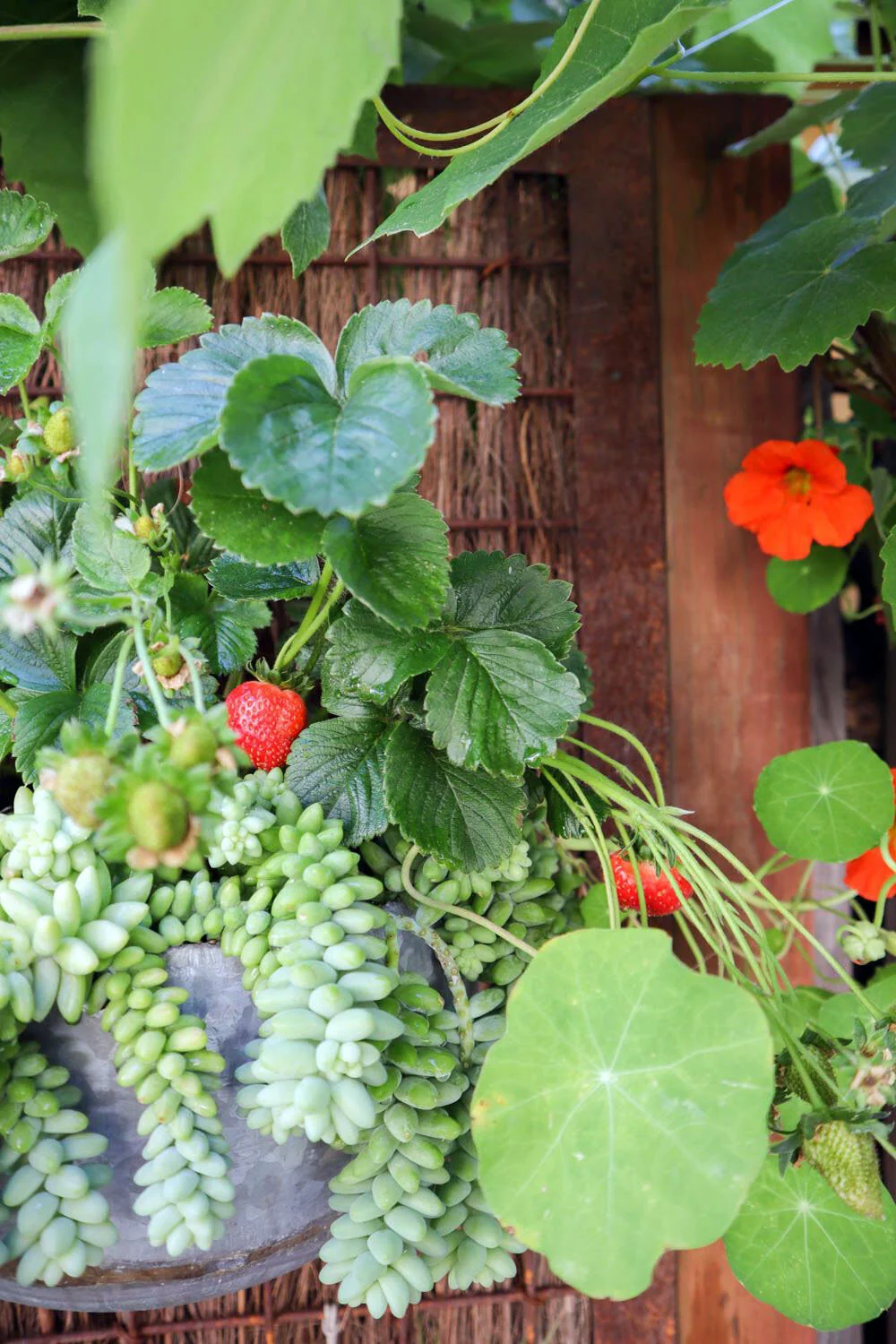
SUAY also offers a way to donate farm boxes ($33) to those in need here in LA. They teamed with other like-minded businesses to create a CSA style food bank called “Know Your Grower, Know Your Sew-er.” Through this initiative and with their partners, they’re feeding over 200 garment worker families per week during the COVID crisis, as the average hourly wage of a garment worker in LA is $6, and the COVID crisis has crippled their already low income livelihoods.

We are deeply grateful for the opportunity to grow edible plants through therapeutic practices here at our tiny home. Through donations, informed voting and community activism, we aim to participate in remaking LA into a city where everyone has access to green spaces and green foods.


Safe Housing for Foster Youth (Updated)
Over the years, this community has continued to show up for The RightWay Foundation. Today I have my biggest ask yet, and while I’d certainly be grateful for help from anyone who is in a position to give it, I’m focusing this request towards brands and brand managers specifically:
Help RightWay get 20 homeless, transition-age foster youth off the streets and into SAFE apartments by donating the following new items (allowing the organization to then direct their limited funds towards essentials such as food, mental health care, rent assistance and job placement).
These wonderful youth are constantly being pushed towards negative outcomes due to broken systems. Not only have they lost their jobs due to the pandemic, but they’ve ended up homeless in places that are dangerous (particularly for the women), and they’re enduring ongoing, relentless emotional (and often physical) trauma and discrimination.
You have inventory that they need. You can assist in providing them with a livable space to call home, equipped with the tools needed for a healthy life. (Please contact me to donate.)
Items needed (for 10 apartments for 20 youth):
Mattresses + Beds
Pillows
Bedding
Towels
Cleaning supplies
Cooking supplies (pots, pans, etc)
Dishtowels + oven mitts
Drinkware
Dishware
Flatware
Food storage containers
Table + chairs
Sofa + coffee table
First aid kits
Ironing set
Trash + recycling bins
Rugs
Lamps
Reusable shopping bags
Reusable water bottle
Reusable travel mug
Plants + planters + watering can
Original post from June 1:
In recent days, it has become clear that it’s time for my tiny business to press pause on sharing our story, thus decluttering social media feeds and opening up more space for Black stories to be heard. But it is also important for me to use my channels to amplify the social justice, environmental justice, community and creative work of others.
One such organization is The RightWay Foundation. This marvelous nonprofit works closely with emancipated foster and re-entry Youth to ensure housing and job resources in a trauma-informed environment. Over 50% of the homeless and incarcerated of Los Angeles have been impacted by the Foster Care System. These Youth, who lacked a strong and stable support system throughout their lives, deserve better.
Readers of this blog and our corresponding Instagram account helped us raise $1,000 for RightWay on my birthday, for which I thank you sincerely. That money helped RightWay kick off its Operation Housing First campaign, an initiative to secure safe housing for 20 homeless, transition-age foster youth during the backdrop of this challenging pandemic.
All people should have access to safe and affordable housing, and thanks in part to your contributions, Operation Housing First will be placing its first youth in new apartments this month. (And if you are interested in contributing now, funds are still needed to secure safe housing for more Youth.)
For those who’d like to learn more, RightWay’s Founder Franco Vega and Senator Holly J. Mitchell recently recorded an in-depth conversation during Senator Mitchell’s weekly “Sippin’ my Tea” live Facebook segment, during which they discussed the current needs of transition-aged youth, joint efforts from community partners and the collective impact we as a community can have on national policy. (Click here to view.)
The RightWay Story
In 2011, Franco Vega, a former orphan and probation youth, founded The RightWay Foundation to provide LA County transition-age foster youth (ages 18-26) with support and training to acquire and maintain employment. In recognition of the unresolved trauma creating barriers to job retention, Franco pioneered a program to address past trauma and support successful employment by integrating mental health with employment services. Now in its 9th year, RightWay has served as a lifeline for hundreds of foster youth in LA County, and continues to develop effective programs for transition-age youth.

Missing our Library While Sheltering at Home
Our 3 year old’s interest in gardens didn’t begin at home— it began in the pages of borrowed books.

As a mother, a tiny house resident, and curious business owner, the ritual I’ve missed the most while Sheltering at Home is visiting our local library.
“Libraries are essential for the health of our democracy, our communities, and our future.”
— Wanda K. Brown

When West and I are scooting through the aisles and he spots a book we’ve checked out in the past, he greets it as though it’s an old friend. These interactions pushed me past my urge to buy and cling to books, and inspired me to pass along much of our collection to a local branch. (I’ll admit that when I notice one of my old copies on a shelf, I give it a little, loving brush with my fingers as I tip-toe on by...)

Once, while I was chatting with a librarian at the check out counter, West looked up at a photo pinned to a bulletin board and jubilantly exclaimed (at a not-so-library-friendly decibel), “Everyone, look! It’s Mae!” as he recognized Dr. Mae Jemison from the illustrations in books we repeatedly borrow. What kids read MATTERS— even at just 1-3 years old, which is one of the reasons I am so grateful for The Conscious Kid’s ongoing book recommendations.
Even now, when we can’t visit our library due to the pandemic, we can still borrow titles online, free of charge. And while I don’t love reading children’s books to West on a screen (via the Libby App), this has been a wonderful way to incorporate new learning activities and entertainment while on lockdown without having to buy something new.

“Many libraries serve as first responders who take on roles outside of traditional library service that support patrons’ needs and community development. Functioning at various times as career counselors, social workers, teachers and technology instructors, library staff give special care to adopt programs and services that support the most vulnerable and curious.” - American Library Association
Our library teaches and gives us so much. Here’s to supporting and funding community resources that enrich our lives, provide us with an ongoing education, remind us of the delight of sharing, and exist for EVERYONE to enjoy together.