
Planning Careful Escapes from the City
Note: This post was created in collaboration with Airbnb.
I’m feeling the need to step out of the city more and more these days. Our mini trip to an Airbnb in Joshua Tree last week turned out to be a gulp of fresh air that we hadn’t realized we could all really use.
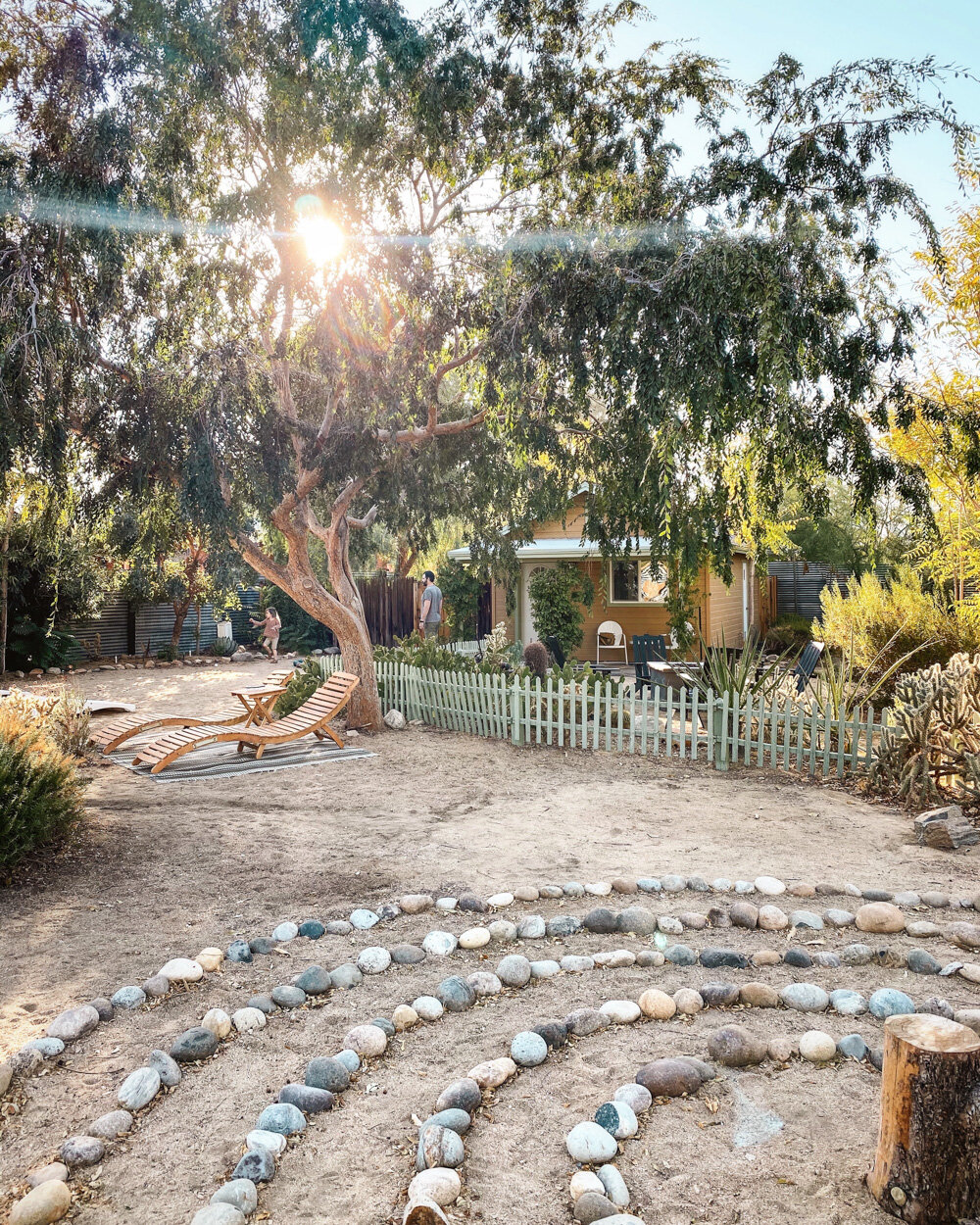
Above: Our most recent visit to Joshua Tree. Airbnb property details here.
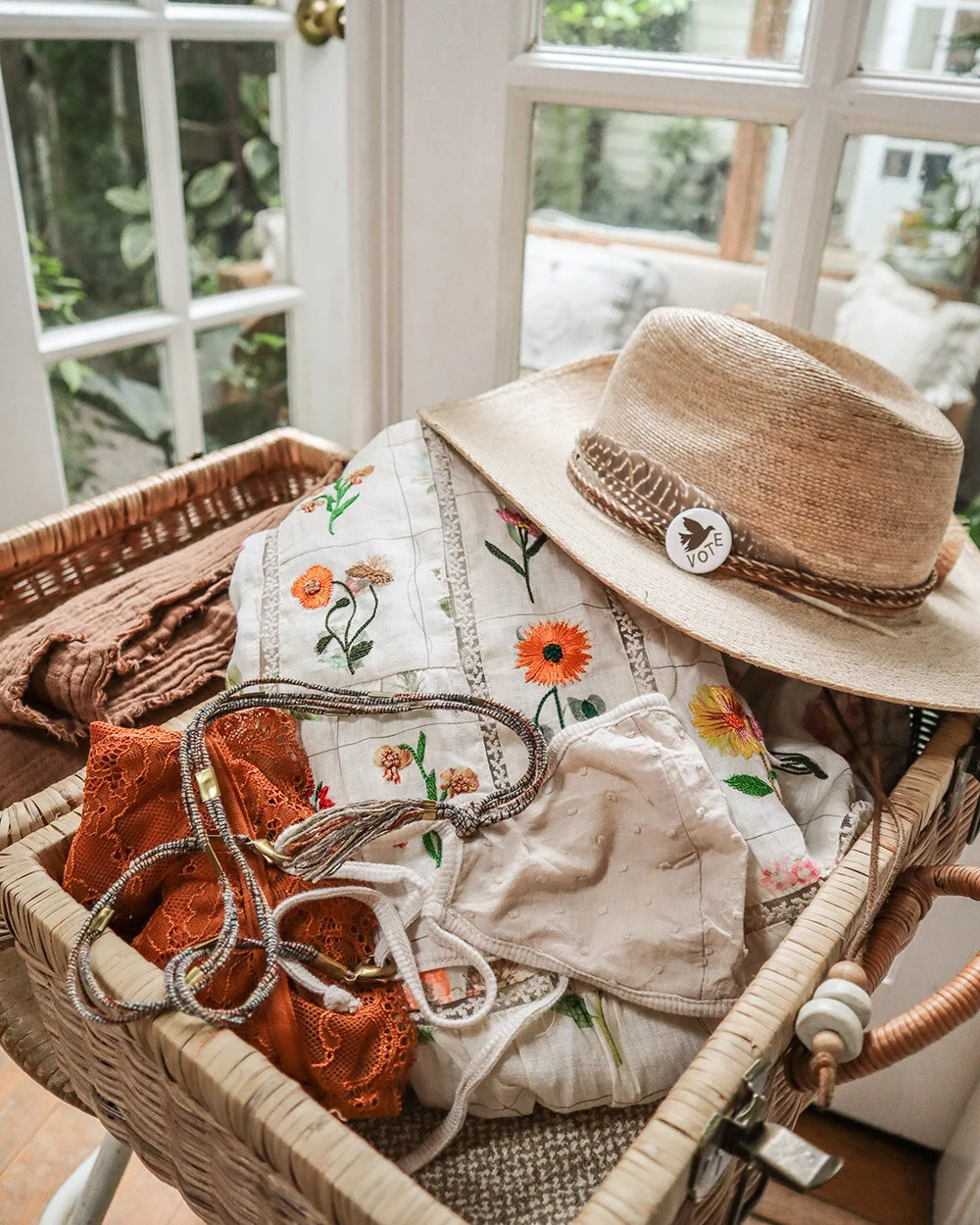
We planned and packed for pandemic-era car travel. For the car ride itself, we stuffed a cooler full of beverages and snacks, we toted a travel potty along for our little one, and we kept bottles hand sanitizer at-the-ready. For the stay, we packed enough washable face masks for one per person per day (along with an empty dirty laundry bag), as well as helpful little items like reusable drinkware and utensils to help us avoid single-use goods when out, and to minimize potential exposure.

Above: Packing for a road trip to Joshua Tree
The property was pristine, and we found it notably easier to practice social distancing while in the rural environment than it is daily at our home in the city. In short, we felt safe and relaxed, and the experience inspired me to investigate more spots for (safe, careful), relatively nearby getaways.

Here’s the list of properties that I’m compiling for such escapes. (Spoiler alert: My favorite one has an outdoor shower, of course… you know I can’t resist.)

Lakeside A-Frame - I love a good A-Frame, and this window-filled cabin escape is nestled beautifully between National Parks, and perched on four wooded acres overlooking a lake with staggering views of mountain peaks.

Malibu Airstream Eco-Retreat with Outdoor Shower and Lounges - This property is both extravagant and eco-minded at the same time. With abundant outdoor lounges (and even an open-air screening zone), a swing and piano overlooking the mountains and ocean, and — my favorite — an entirely outdoor bathroom, including a compost toilet, this Airstream is an actual SoCal dream of mine.

Topanga Getaway with Outdoor Tubs - Topanga’s quiet hills and old growth trees have always held a special place in my heart, and this

Wine Country Cabin - This renovated yet rustic cabin was once a military bunker that was relocated to the rolling hills of Paso Robles wine country and transformed into a cozy home. With views of wineries and rolling hay fields, it looks like a sweet escape from the city.

Refined Cottage Under Old Growth Tree Canopy - A bright, SoCal cottage on the Central Coast that’s close to town yet removed enough to enjoy wooded views and a quiet sundeck.

Topanga Tiny Home - An earthy, mountain getaway in Topanga canyon with designs that are as simple as they are stunning.

Bright, Minimal Wine Country Tiny Home & Garden - A sweet and simple tiny home for a quiet work/live retreat.

Minimalist Modern Cabin with Walls of Windows - A truly indoor/outdoor home in the high desert within the hills of yucca valley. With visually striking, clear walls, a sun deck and propane fire pit, this compact, uncluttered, off-grid home generates its own power from the sun.
Storing + Washing + Wearing Masks
Post Summary: Drying and storing masks in a small space, and a multi-tasking accessory to remind you to bring and wear one.
At the start of the pandemic, my husband used to always have to remind me to grab my mask on the way out the door. Now, seven months in and counting, we’ve found a routine that seamlessly integrates these necessities into our small home and lives. By now, this is a well covered topic in general, but I still receive inquiries about our mask collection and storage, so here are the details. (Remember, masks aren’t just about keeping ourselves safer— they’re about keeping others safer. It’s our responsibility to look out for our communities and our neighbors, particularly those who are most at risk.)

MASK SOURCES
We’ve found our collection of face coverings via various small retailers and shops. The majority of our adult + child masks are from The Odells, and a handful (that can accommodate filters) are from Suay Sew Shop. Each mask that The Odells sells creates 10 meals for hungry children and adults, and a percentage of all Suay’s masks sales go to feeding LA garment workers affected by COVID-19. Suay uses deadstock, vintage and remnant linens to create adjustable masks with a filter pocket and reshapable nosepiece.

MASK STORAGE
We store our clean masks in a small woven basket that’s affixed directly to the inside of our front door via a simple metal hook. (The basket is several years old from Connected Goods. Other versions that would be good for serving the same purpose can be found here. Handmade or vintage onion baskets are often well-suited options, too.)


MASK WASHING
After wearing our masks, we toss them in a metal bucket that’s suspended from our shower curtain rod, where they wait to until their next trip to the washing machine.


MASK DRYING
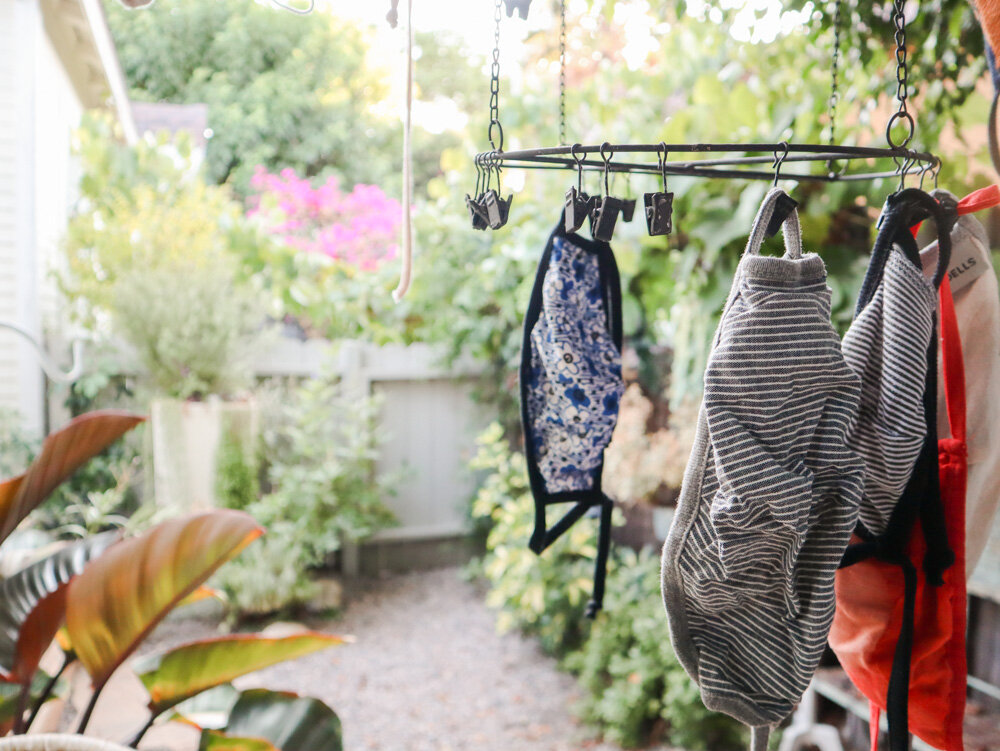
To prolong the life and structure of our masks, we dry them on our makeshift clothesline, our bedroom curtain rod, or from a space-saving, 3-tiered herb hanger I found at a small boutique in Santa Fe last year.

MASK WEARING
As for remembering to wear my mask, my handmade, 3-in-1 holder (which can be converted into a long necklace or a wrapped bracelet) by Maddalena Bearzi is a practical piece of wearable art. It reminds me to always have my mask at-the-ready— especially when biking, walking the pups, or running after the little one as he practices riding his bike. (Plus it’s perfect for wearing to a secure ballot drop box or to the polls — just saying.)


Home Learning - Tracing Tools for Children
Now that our little one is home almost non-stop for the seventh month in a row, we’ve started setting up morning mini lessons designed for his current interests and skills. At 4 years old, he’s ready for some semblance of schooling. But due to the ever-rising cost of pre-school in Los Angeles coupled with the COVID-19 rates throughout the city, my husband and I made the tough decision to not send our child to classes for the foreseeable future.

West has been spelling out short words and expressing a more in-depth understanding of numbers (particularly since counting down to his birthday), so we introduced some tracing tools to his daily mix of learning materials.

Our friends at Timberchild (who, years ago, crafted the wooden plates that our kiddo still uses daily), sent him this beautifully made, double-sided tracing board for his recent birthday.

These number boards are made from one solid, smoothly sanded piece of wood. With one side, children can start to recognize and learn numbers 1 through 10, and then progress to 11 through 20 on the flip side. The numbers can be traced with a finger, or by using the wooden stylus provided. Our son likes to invent various ways to count out the numbers, scrounging up crafting supplies, rocks, marbles, and even the annoying ficus seeds from the garden to fit into the numerous, divots — perfectly sized for tiny fingertips — on the board.
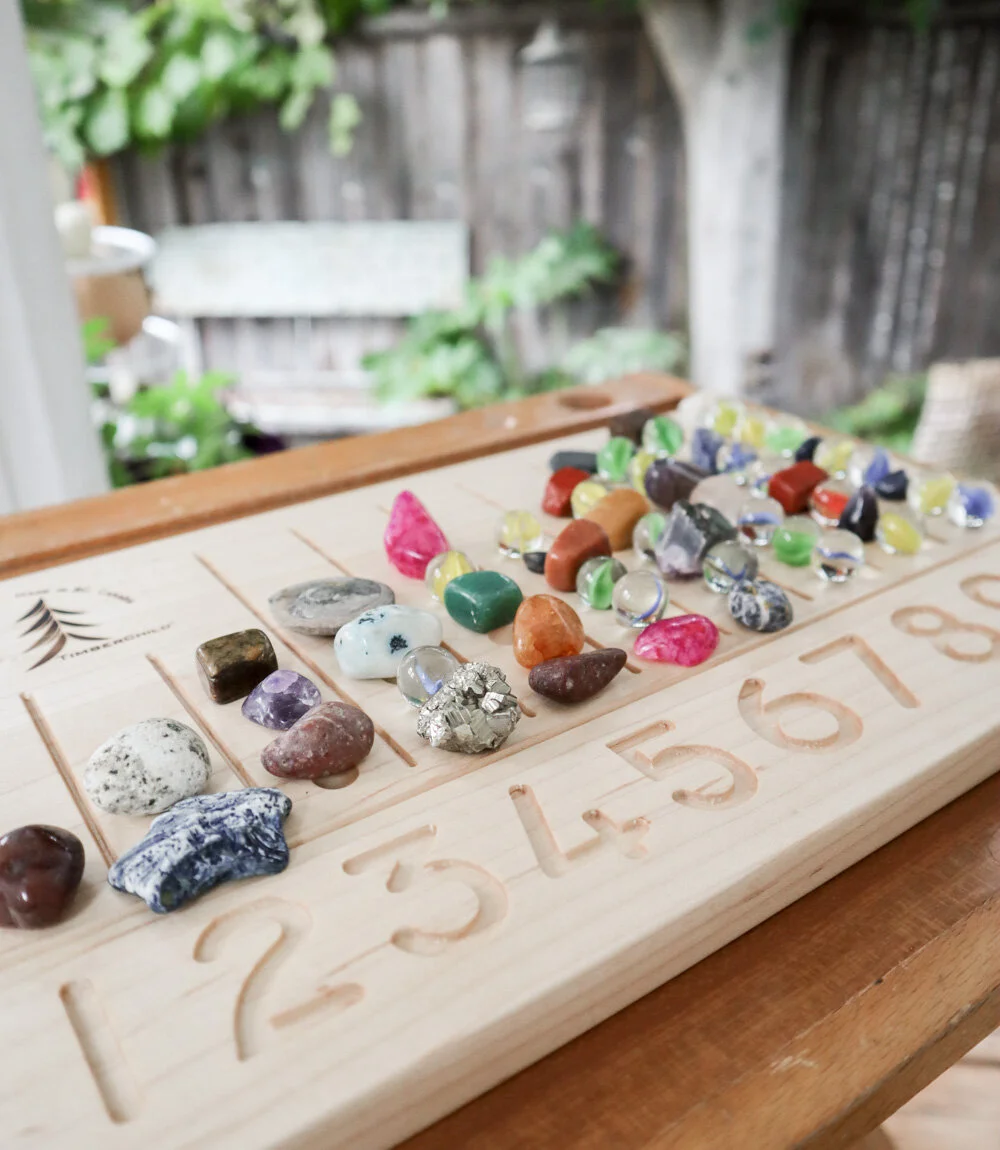
I appreciate the minimal design, which allows us to keep the board out without contributing to a feeling of clutter or overcrowding. This is always a consideration for us given the small size of our home, and the lack of a dedicated play space / bedroom for our youngest family member.


Tiny Living in 2020 - An Interview with Jewel Pearson of Ms. Bohemian Soul
Jewel Pearson is a Tiny House owner, consultant and advocate who has been an active and outspoken leader on creative, accessible small space living since 2006. Drawn to her vibrant style, her deeper dissection of the world of tiny living, and her sheer love of sunshine, I finally connected with Jewel over Instagram after long admiring her from afar.
Jewel believes that "you don’t have to give up luxury to go tiny,” just as I believe that “you don’t need to live large to live beautifully.” She shares her knowledge and extensive work in tiny house designing, building and living in order to help others explore this distinctive and delightful pathway to home ownership.
Personally, as a 39 year old small business owner who has never owned her own home, and who is raising a family that cherishes experiences over belongings, I am both professionally and personally interested in Jewel’s work. As such, I was overjoyed when she generously agreed to do a Q&A for this blog.
I haven’t introduced many outside stories to this site over the years because there are countless other home decor and lifestyle sites that curate and publish interviews and home tours full-time. What I believe sets The Tiny Canal Cottage apart is that it’s a real-life, decade-long experiment in small space living as an evolving, growing home and company. But Jewel and I share enough overlap that I know her story will resonate well with this blog’s readership, while her expertise, history and viewpoints offer vital insights that I cannot.
When devising the questions for this interview, Jewel and I wanted to avoid the typical inquiries that she and I both receive routinely from other media outlets. We aimed to redirect the light away from the extensively-covered topics such as storage and decor, and focus instead on the more meaningful issues behind small space living, such the role it can play in this era climate crisis, and its importance in an increasingly polarized economy and society that’s rife with social and racial injustices.
Want to know more about Jewel’s business? Visit her website and Instagram, and explore her professional services, such as her tiny house plans (available for purchase), tours, consultations, workshops, and public / virtual speaking options.

Photo courtesy of Jewel Pearson © Ms. Bohemian Soul.
Question: What draws you to tiny living, Jewel?
Jewel’s Reply: My initial draw to tiny living was having imagined it being my retirement plan, once my daughter was successfully headed off into her own. I had dreamed about it as living in a RV and traveling nomadically throughout the country, but as I got closer to the time and was looking at RVs I realized the ones from my dream weren’t in my budget, if I wanted to “retire”. I later stumbled on a story about a now friend, who’d built a tiny house around 2013 that resonated with me and then decided that’s what I was going to do.
For me tiny living represented freedom and “lightness”, freedom from having had to be so responsible as I did raising my daughter as a single mom and having to make decisions focused more so on needs and requirements. The RV life, as I had imagined it, meant opportunities for “irresponsibility” and the ability to make decisions based on wants and desires. I saw it as an opportunity to not have roots and attachments, but exist kind of nomadically – which, while I don’t actually travel with my house, I am still able to feel that personally as I am able to travel more (pre-Covid) because with tiny living my responsibilities and expenses have been reduced and that is the dream.

Photo courtesy of Jewel Pearson © Ms. Bohemian Soul
Question: Do you find your passion for tiny living growing, receding, or generally evolving over time?
Jewel’s Reply: I find my passion for tiny living growing and evolving. After 5 years I still love my house and love living in it. I love that I can quickly change my décor and make it feel refreshed and I have added and enlarged my outdoor spaces to make everything even more enjoyable. My passion has grown and evolved in what I feel is my community involvement and “responsibility” to represent people who look like me and weren’t being seen in this movement so they and their voices are included. My involvement has also evolved into conversations with government officials around legalizing tiny homes. It is also my desire and almost bucket list item to build a tiny house community.

Photo courtesy of Jewel Pearson © Ms. Bohemian Soul
Question: What you believe tiny living has to offer in an era of climate crisis?
Jewel’s Reply: Tiny living helps you to think more about your footprint and impact on the world. Living smaller offers a lighter footprint; you are consuming and wasting less almost automatically. Many tiny houses are designed to be more energy efficient, as they’re solar powered, have compost toilets, rain catchment systems, etc. The owners are or become more focused on the earth, with gardening and farming and become more focused on the food that they eat and the food’s source. It’s almost as a natural progression that you want to become a better steward of the earth through tiny living, even if that wasn’t your original focus and intent, and there is a lot of value in that in light of our climate crisis and certainly more value in it if more people took that path. Tiny houses on wheels, which offer mobility options should be and are a valuable consideration for the areas often impacted by fires, they present options for safety and less loss of property.

Photo courtesy of Jewel Pearson © Ms. Bohemian Soul
Question: What you believe tiny living has to offer in our increasingly polarized economy?
Jewel’s Reply: Each major city is currently experiencing an affordable housing crisis and issues with homelessness and the crises are increasing with no real end in sight. Tiny living offers viable solutions for both, if cities would just consider them. The west coast is doing a good job in doing so with the legalization of tiny houses on wheels as ADUs in many cities, which just makes sense as that option eliminates the major financial expense associated with building an ADU on foundation, it provides housing for the tiny house owner and it provides financial support for the conventional homeowner. If you consider how many backyards are available that aren’t being used for anything that would support the concept, it’s a win and no brainer. For the majority of my tiny house living I have been located in that same scenario, though not with official approval as it is currently not technically legal to do so here in Charlotte and in 2019 the city officials required me to move my home. However, I continue to try to have the conversations here with city officials and I continue to share the examples of what is being done in other progressive areas, as considering tiny houses on wheels offers an immediate solution for housing and it offers financial support for conventional homeowners and people are struggling and need solutions. It not the end all solution by any means nor is it something everyone is interested in, but it offers a very viable solution that should be considered.
This has also been a big consideration of mine as I’ve focused on the Black and brown communities missing from the larger tiny house conversations and movement. Much of the reasoning of why people get involved with tiny living is for the opportunities it presents for less debt/debt free living and the ability to own your home quicker, without the standard constrictions of mortgage loans. That is something that is sorely needed in those communities as the communities continue to show up last, year after year, in the rates for homeownership and in light of what should be major concerns with the existing wealth gap in this country and it’s continual increase without remediation. There are numerous historical and systemic issues that have led to and continue to contribute to both of those problems, but tiny living offers a viable solution for getting to homeownership quicker, for less debt/debt free living and opportunities for wealth building. The opportunities are something definitely worth consideration as so many people continue to pursue the very elusive “American Dream.”

Photo courtesy of Jewel Pearson © Ms. Bohemian Soul
Question: What sorts of microagressions do you experience as a Black woman in both the tiny home and design spaces?
Jewel’s Reply: One of the things that I’ve learned recently is to call “microagressions” what they really are, which is trauma. As a Black woman in this movement I’ve experienced trauma in the racism I’ve had to deal with in attending events in rural areas, in Facebook groups where participants used ethnic slurs and it is permitted and I’d receive racist comments on social media posts. I’ve received an anonymous threatening email message from someone clearly associated with the movement, as I’ve been very vocal about the lack of representation and inclusivity within the movement and people felt “attacked” because I was calling it out. As a Black woman living in my tiny house, I’ve twice had to relocate my home due to personal safety concerns due to experienced racism, once when my house was located in a RV Park and then most recently where it was located on a farm in a rural area right outside Charlotte.
Interestingly, in the design space I had a situation occur with a woman who bought my plans and built her tiny home from them. I ended up spending a lot of free consulting time with her during her build, as she was experiencing a lot of issues with her builder and I coached her through her build, as I could relate and felt compassion for her situation. Her house turned out fabulously, with obviously my plans as the foundation. Fast forward to last year, she shared she was going to be filming with “Living Big in a Tiny House” so I reminded her of the plans purchase agreement which requires properly crediting the design owner. After the filming had been completed and shared on social media, people who recognized her home’s design started tagging me in the posts as they were inquiring about her design and the correlation to my home. I then look at the interview and see that when asked about the design of her home there is this weird awkwardness and explanation of the design idea/inspiration being a result of her research and her design style, blah, blah, blah. She never credits me as the owner of the plans or the design. So I reach out again to remind her of the contractual agreement, she then shifts the responsibility to the host saying he agreed he’d include the info and loops him in and instead of either or both of them doing the right thing, his response to me is that he felt like what I was trying to do was ride his popularity to gain personal exposure. I had absolutely zero interest in his “following” as they aren’t actually my audience, nor do I need his “exposure” and I’d actually declined a prior opportunity with him to film my home. What I was requiring was that proper credit be given, as per contractual agreement. Never mind the fact that it was absolutely the right thing to do. His recourse was to add a note to his notes in YouTube, which had I not been dealing with a number of other priorities at the time would not have flown and I would’ve involved my attorney. What I know to be true is that disrespect would not have happened to a white designer, man or woman and it was uncalled for and came from a place of privilege.

Photo courtesy of Jewel Pearson © Ms. Bohemian Soul
Question: Has the pandemic shifted your views on where you want to be or how you want to live once travel becomes safer and more accessible on the other side of Covid?
Jewel’s Reply: There are actually a couple of pandemics currently occurring, one being Covid and the other being racism, both of which are very negatively impacting the Black community. With that in mind, once travel becomes safer and more accessible I know that I want to live somewhere I feel welcome and safe. Since early March I have been living in an apartment in the city here and have not been living in my tiny house since due to the incidences of racism I experienced, and because I’d experienced some challenges with the farm director and his management and direction of the property. I’d been on this 11-acre farm alone for 7 months and I didn’t feel safe, but didn’t have anywhere to relocate my house at that time. I was able to relocate my house in August and am planning to move back into it once the site’s infrastructure work is completed at the new location and I’m looking forward to that.
Longer term, I am considering places outside of the country for at least part time residence. Cartagena and Medellin, Colombia are areas of interest as is Mexico. I work remotely, but am required to be in a located in a place where my company has offices so that’s a big factor and also a limitation. My plan would be to still maintain my tiny house in the US, but I want to have options outside the US.

Longer-Lasting, No-Carve Pumpkin Decorating for a Small Stoop
On his birthday last month, our little one desperately wanted to create a jack-o-lantern. Knowing full well that a hallowed-out pumpkin wouldn’t survive long under the fluctuating marine layer and beaming sun in our coastal town, we caved in and carved one.

The results were endearing, but — as expected — only lasted until October 1.

After collecting and devouring a dozen Halloween books in recent days, our 4 year old was adamant about replacing the pumpkin. So we took a Tiny Adventure to a local farm / pumpkin patch, and selected a handful of funny little beauties to introduce to our small stoop. The agreement upon securing the batch was that they would be no-carve pumpkins, with the goal of them lasting longer.

We used the metal pumpkin glasses I found on Etsy years ago, along with a few other decorative facial features (made into stakes) that we found on-site at the farm.
(Click here for the pup version, click here for various other characters.)


The results continue to make us giggle whenever we walk into our home.

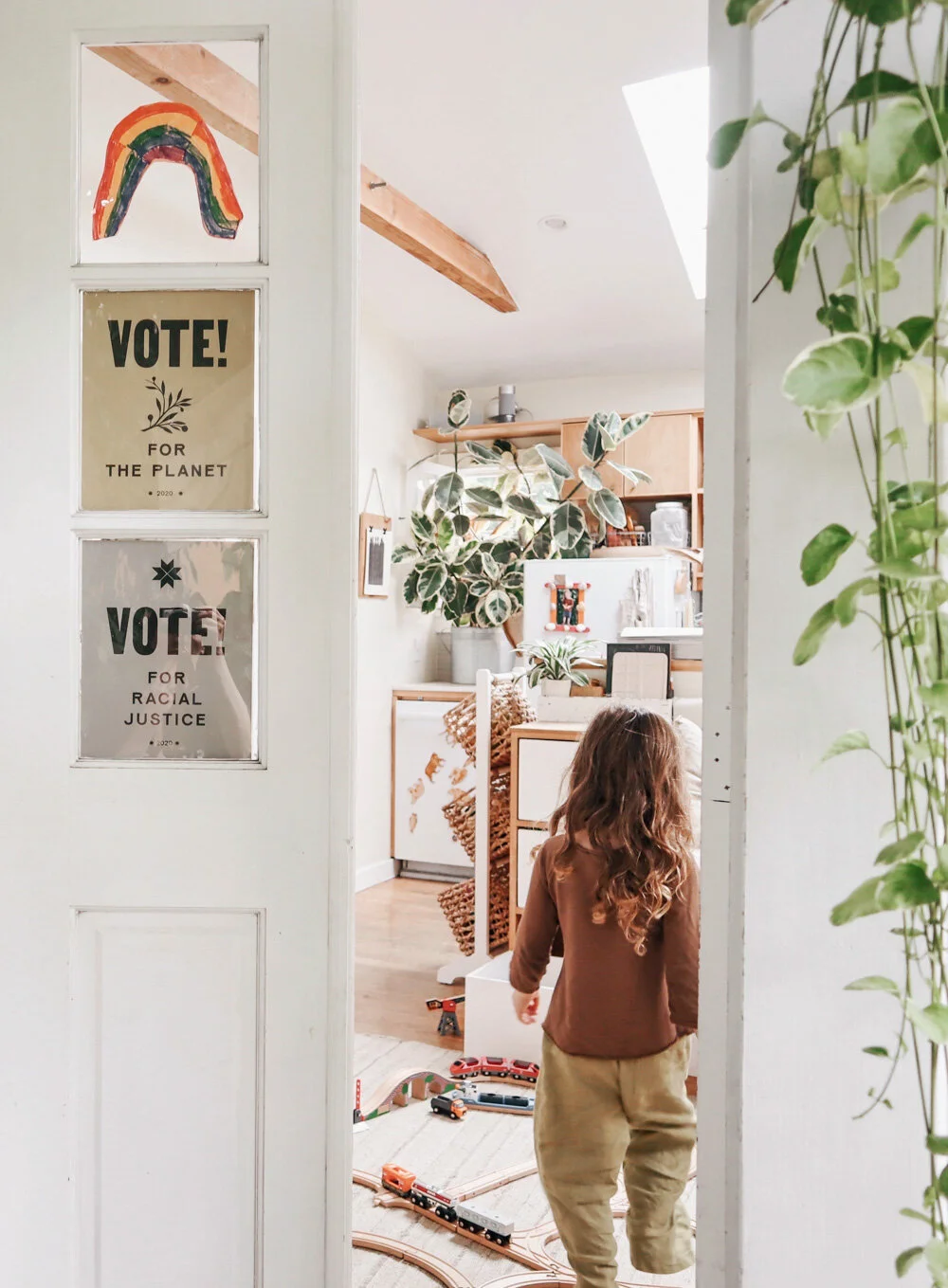
We’re not quite done yet. We intend to make a VOTE pumpkin, of course. See you at the polls, or at the ballot drop box, folks. Let’s vote in epic numbers — for the planet and for racial justice — so our voices cannot be ignored.

Tiny Adventures: Searching SoCal for Fall During the Pandemic
In need of some fresh air and a change of scenery, we took a tiny adventure to Underwood Family Farms in Moorpark (just outside of LA) this week.
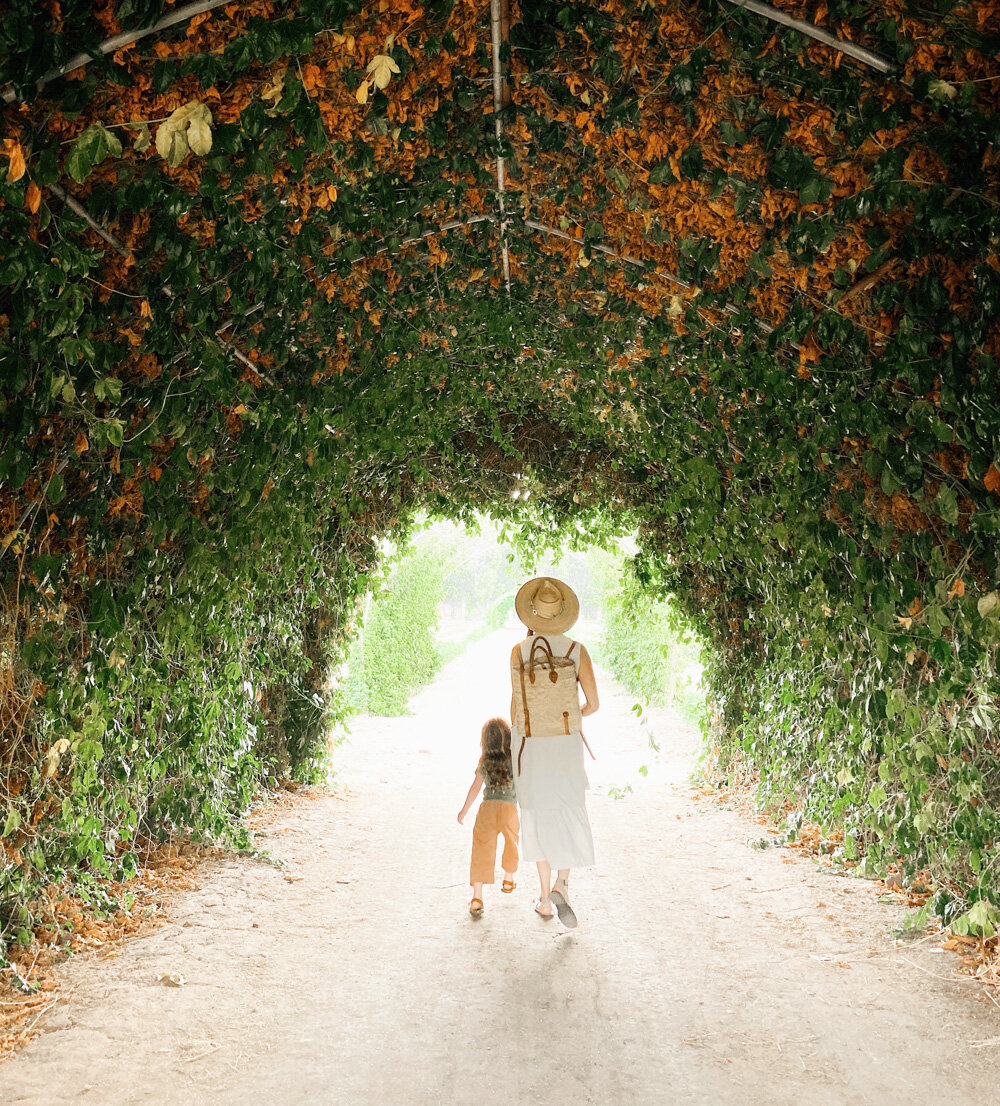
We figured it would be a good way for our little one to stretch his legs while we sourced locally grown pumpkins and produce.
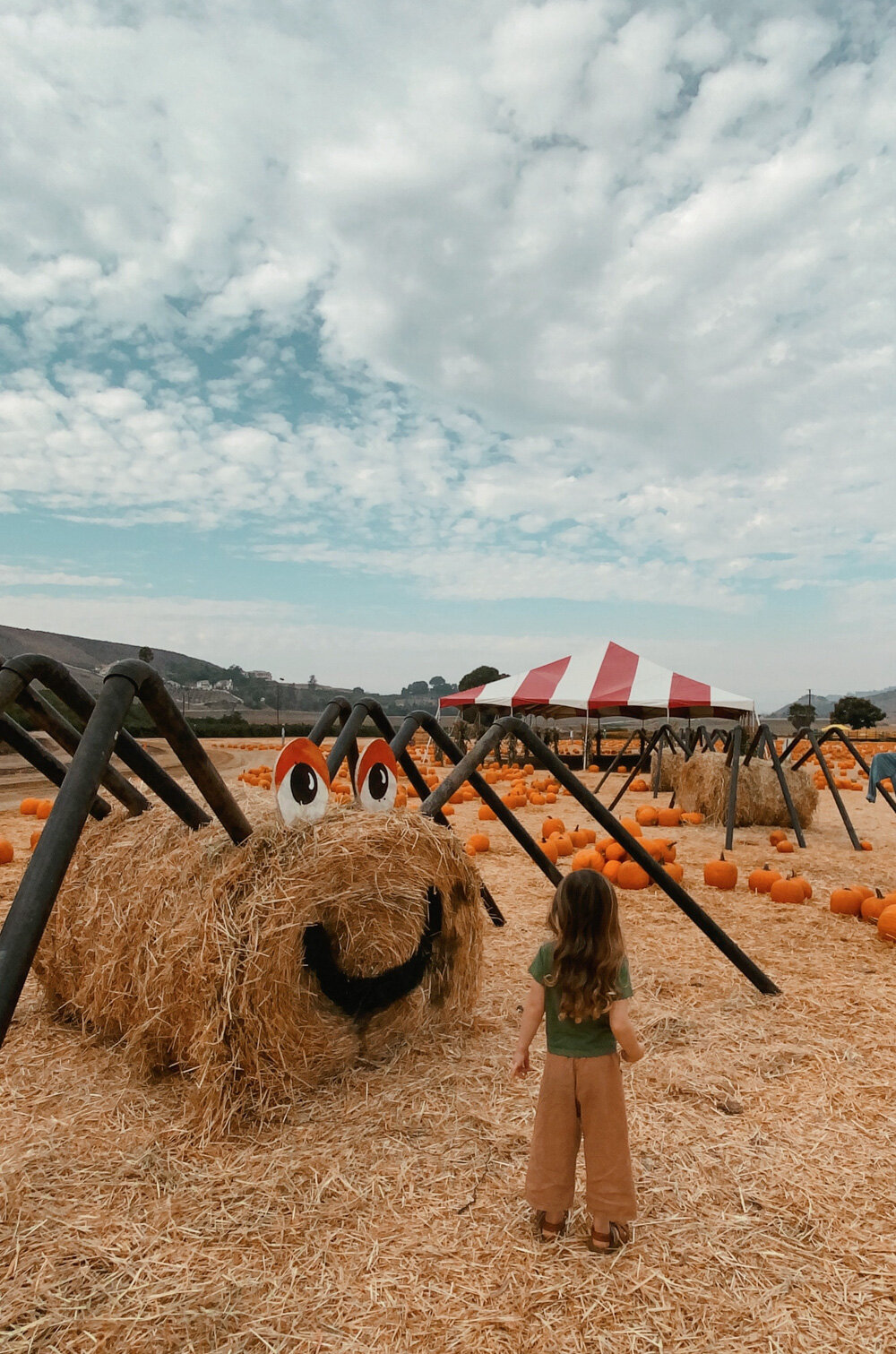

We wore our masks, of course— not just to keep ourselves safer, but to help protect others.

We also adhered to social distancing protocols, and visited right when the farm opened to the public at 9am in order to avoid crowds and the heat.


In order to both reduce waste and possible increased exposure to COVID, we toted our own snacks and beverages as usual.

We brought home a handful of funny lil’ pumpkins.
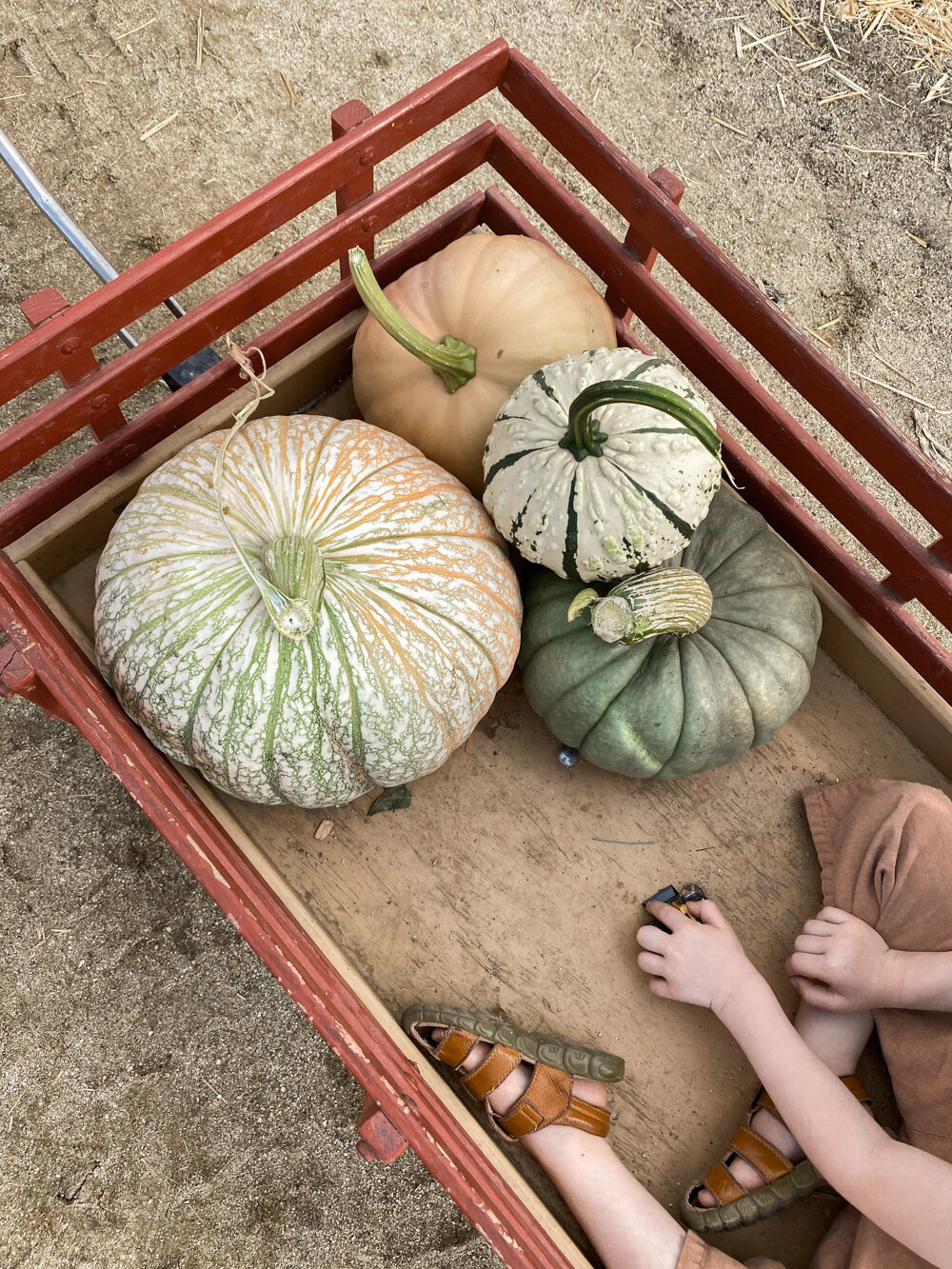
We’ll be decorating them in a no-carve way in order to extend their lifespan. (More on this in the following blog post.)

When we arrived home, we were thrilled to discover our mail-in ballots in our post box. We’ll spend the week educating ourselves on the issues and candidates with which we’re unfamiliar. And in the days to come, we’ll also send out our Vote Forward letters to residents in swing states. After all, October is the new November.

Weekend Activity: Getting Out the Vote as a Family

Above: “VOTE!” posters & postcards available for download here.
“To meet the challenges of the climate crisis and preserve all that we hold dear; to retain democracy, social justice, human rights, and other hard-won freedoms in the future, we must part ways with that which threatens to destroy them. Now is the time to make profound shifts in how we live, work, and relate to each other.”
- The Future We Choose: Surviving the Climate Crisis

Writing letters to voters is one of the most effective ways to help increase election turnout. So this weekend, our family will be writing letters to registered voters in Georgia to encourage them to cast their ballots in the upcoming election.

The template, instructions, names/addresses, and safe return address were provided to us via a coordinated process orchestrated by Vote Forward. This non-profit has increased their letter-writing goal from 10 million to 15 million, so there’s still an opportunity (and plenty of time) to get involved for those who are interested in helping get out the vote in swing states.

We’re always happy to support the USPS by purchasing stamps… and our little one is always more than happy to adhere the stamps to envelopes.

In the words of John Lewis:
“Your vote matters. If it didn't, why would some people keep trying to take it away?”

A Living, Over-the-Table Display of Fall Foliage for a Festive Occasion
Post Summary: How we created a space-saving, over-the-table canopy of real branches and flowers in celebration of the little one’s 4th birthday.

Time continues to boggle my mind— our little one turned 4 this week.

I believe this was the first year that he really understood the concept of his birthday. But, of course, it’s also the first year in which a proper party was out of the question due to the pandemic.

We pieced together a simple but festive celebration, replacing hugs with FaceTime calls (sigh), balloons with branches, wrapping paper with household linens (view more photos of this in last year’s birthday post), and a traditional cake with what I imagine must have been the world’s actual biggest donut.

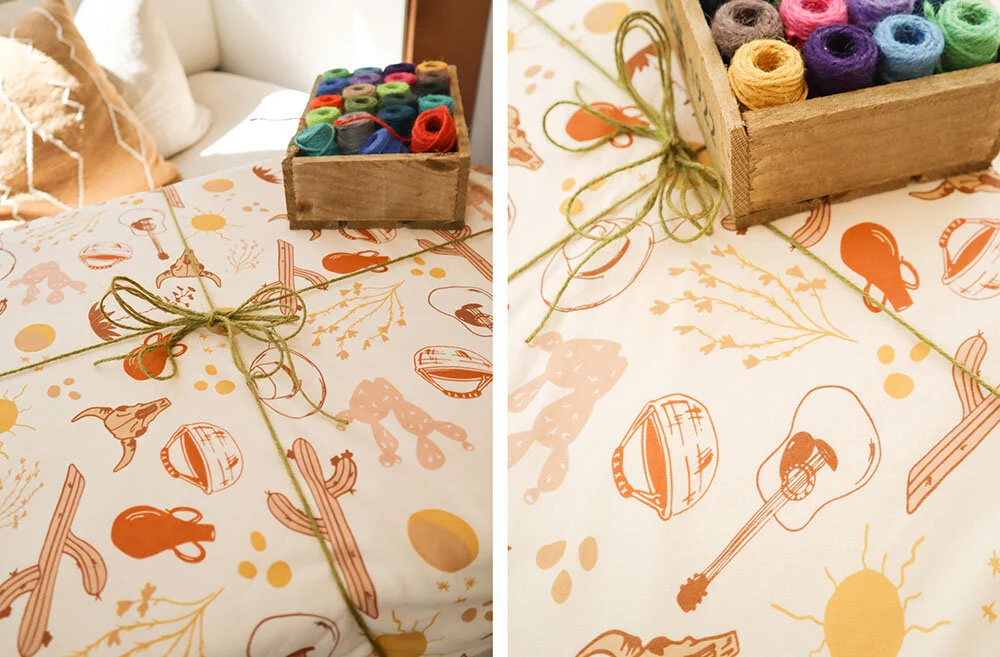
Above: A child’s blanket designed by our friends, New Darlings, doubles as wrapping paper.
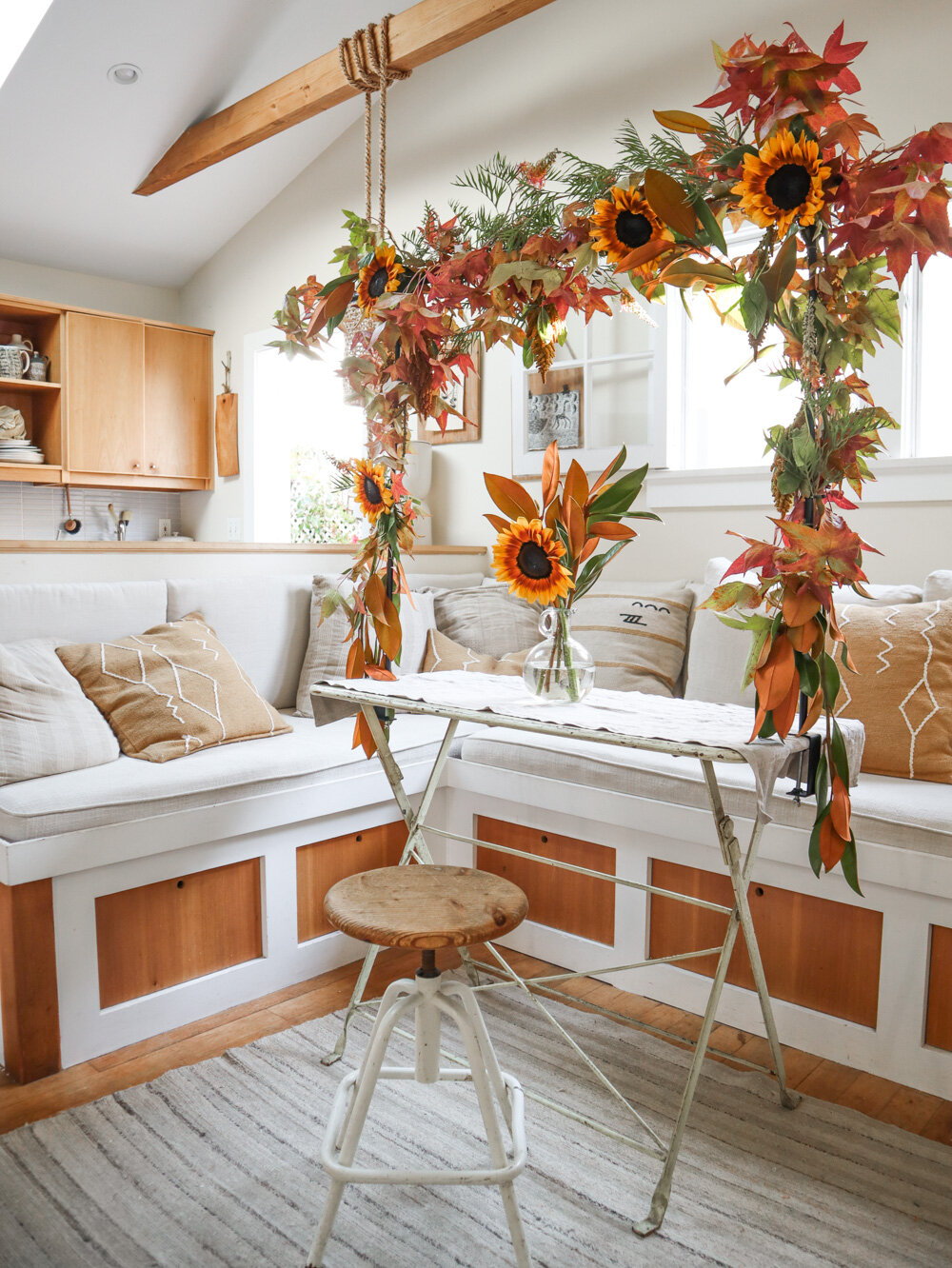
The birthday kid helped me create an arrangement of living fall foliage and sunflowers, which we picked up during a swift, masked visit to the flower market.


We used this adjustable, over-the-table system to frame the space-saving display.

What I appreciate about this design is that it consumes no tabletop inches, but instantly creates usable vertical space for a dynamic visual when paired with greenery, hanging lights, and/or decorative accents.

I use zip ties sparingly, as they’re single-use plastic, but I admit to using a handful for this display.

We’d run out of floral wire, as Adam uses it to train the cherry tomatoes on the grow porch, and twine couldn’t support the larger branches.

So the zip ties came to the rescue, making the process faster and much more secure— helpful, given that a (4 year old!) child was actively participating in the creation process.

An hour later, we had a cheerful little spot to quietly sing West a birthday song and attempt to make a dent in that enormous donut.

It was the activity more than the finished product that my son clearly relished the most. Brushing each other’s hands as we reached for the same magnolia branch, our sincere deliberations about where to place the prized sunflowers, and our cartoon-like exclamations when parts of the arrangement tumbled off the rods and crashed to the floor before being properly secured.

When the display dries out later this week, we’ll disassemble it together and tote the greenery to the compost and green bin via our fold-up wheelbarrow, which he loves to hitch a ride in once it’s empty. I vow to indulge him on every wobbly ride he requests— even when my back is sore and I’m behind on work. Time is boldly reminding me that my little one is swiftly becoming not-so-little, and that he won’t fit or delight in our sweet wheelbarrow rides forever.


Safe Housing For Transition Age Foster Youth (September Update)
I figured we could use a dose of good news after this deeply upsetting and unsettling week, so I wanted to share a happy update regarding The RightWay Foundation’s housing initiative, Operation Housing First.
For readers who are newer here, RightWay is an LA-based non-profit that has been working towards securing safe, dedicated housing for unhoused transition-age foster youth in LA. This community showed up repeatedly in meaningful ways, calling loudly for brands to donate goods and funds that would better enable RightWay to obtain and outfit the apartments, while still providing their youth with mental health care, rent assistance and job placement, as well as trauma-informed training for employers.
Over the past weekend, one of the pregnant youth that RightWay placed in safe housing gave birth to a heathy baby.
“From the bottom of our hearts, I want to say thank you, because now we have a beautiful baby boy that wasn’t born into homelessness, and that really warms my heart— you just can’t imagine.” - Franco Vega, Director, The RightWay Foundation
Additionally, the new mother’s roommate (who was also provided housing by RightWay) took time off of her job to support her friend in her new role as a mother.
“… a lot of our foster youth come from a broken system that never supported them. But now that they’re emancipated and they’re adults, they know how important it is to help each other out. Even though the county and the system didn’t help them out, they know deep down in their hearts that they need to help each other out.” - Franco Vega, Director, The RightWay Foundation
For any individual or brand who wants to get involved, please contact me, or visit RightWay’s website to connect directly with the Foundation.
As always, thank you.

How the Pandemic is Reshaping Our Living Situation
The following is part of a contributor article I wrote for Food52 / Home52. Click here to view the original piece.
My family has long lived and worked in a small space. Since the onset of the pandemic in our region, I’ve been relieved that the walls haven’t closed in on us. While our worlds have shrunk, our beloved tiny home, thankfully, has not.
We’ve lived in our less-than-400-square-foot cottage in Venice Beach, Calif., for nearly a decade, and I’ve operated my small business from home that entire time. In recent years, my husband and business partner, our preschooler, our two rescue beagles, and I have lived side by side, day in, day out.
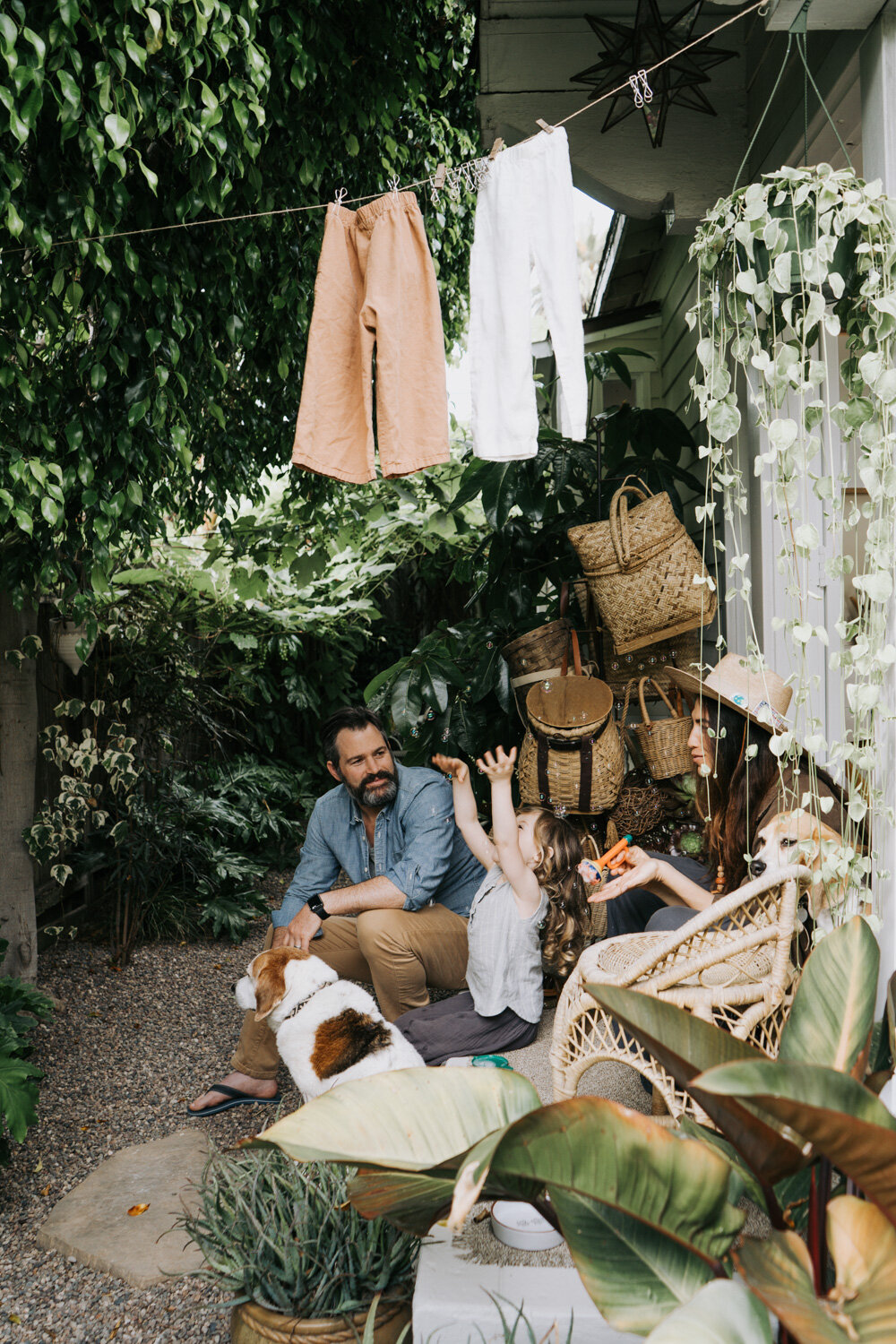
On some mornings pre-COVID-19, my husband and our son would pair off to tackle adventures around town, providing me with time alone to write, edit, and consult with clients. Such casual excursions are now no longer an option for those living in large cities.
Getting outside is different here than it is in less-populated towns. The sheer number of people we pass while walking our dogs or biking to conduct essential errands is high enough without risking nonessential activities—most of which are inaccessible anyway. Our beloved local library remains closed. The museums at which we hold memberships have shut their doors. And some local shops are slowly locking up for good.
While our home and its narrow thoroughfare garden are a safe haven that we’re fortunate to be able to continue to rent, our bubble basically stops at the lot line. And, in the long run, that is the problem—not the size of our cherished little cottage.
When my husband and I first stumbled across our house, we didn’t give a single thought to its square footage (or lack thereof). We were drawn to its numerous windows, vaulted ceilings, pocket doors, and functional form. Every single day since, we’ve noted in one way or another just how much we love this spot, and how lucky we are to be here.
Some might see our space as limiting, but in truth, it has expanded our world immensely.
For years we’ve enjoyed the ease with which we could pedal our cargo bike to the beach, walk to the market, and canoe among the ducks and cormorants while waving to our neighbors strolling over nearby footbridges. We’ve delighted in the fact that it never takes more than half an hour to clean our entire cottage from top to bottom. And we’ve learned to dance with and around each other over our worn-out floors in a natural, joyful rhythm.

The decision to live in the sprawling, expensive, and often inconvenient city of Los Angeles is one that our family continued to commit to for the regional and cultural benefits. There is an abundance of public parks and natural retreats, access to museums, close proximity to a never-ending list of live performances, and (mostly) temperate weather that encourages a myriad of daily outings and events, year-round.
Now, abruptly, all of those things are inaccessible. So we’re left wondering what remains. We have no family here, and our friends are scattered throughout the region, each with their own teetering schedules and safety protocols. The question isn’t whether or not our house is too small for long-term sheltering in place. Instead, it's how sustainable is living within this cocoon—regardless of its square footage?
Still, perspective is key. We have a roof over our heads, access to clean water and healthy food, and devices (paired with connectivity) that help us maintain our workload and relationships. In this moment, as throughout our entire lives, the members of this household have benefited from the kind of societal privilege that needs to be acknowledged and paid forward.
For now, we are letting this ever-smaller world guide us. Outside of our immediate bubble, we discover where to donate food, home goods, bedding and funds. And within our immediate bubble, we check in with folks from over fence lines and from rooftops to ask what is needed by all. We swap books and kitchen supplies. We bundle bulk food orders with our neighbors. We now compost together rather than as an individual household. We share the produce we grow, as others share their bounty with us.
Our home is also more functional and appreciated than ever before. From our garden, Adam and I routinely set up our own, miniature nature school and playground for our child, and do so with whatever items are already available to us. When he’s ready to step inside, I swap places with him and my husband, shuffling my office outside, the dogs by my side.
More than a dozen years of living small (here and elsewhere) has taught us how to manage being within inches of one another for months on end. And, for us, these recent months have solidified our love of living simply. We fine-tuned the art of setting up and breaking down pop-up offices and home learning activities long ago, but what is newer to us since being home together nonstop is that most of our household rules and careful divisions of responsibilities are now fully out the door. Mealtimes are fluid. Activities are devised on the spot rather than planned in advance (unlike those early, ambitious weeks in March). Family movie night can be any night. Yet, these sorts of changes have been surprisingly welcome.
What we were not prepared for, however, was the whittling away of the area surrounding us—that expanded world we so deeply relished—and how each step beyond our home and garden now feels like a step into the unknown.
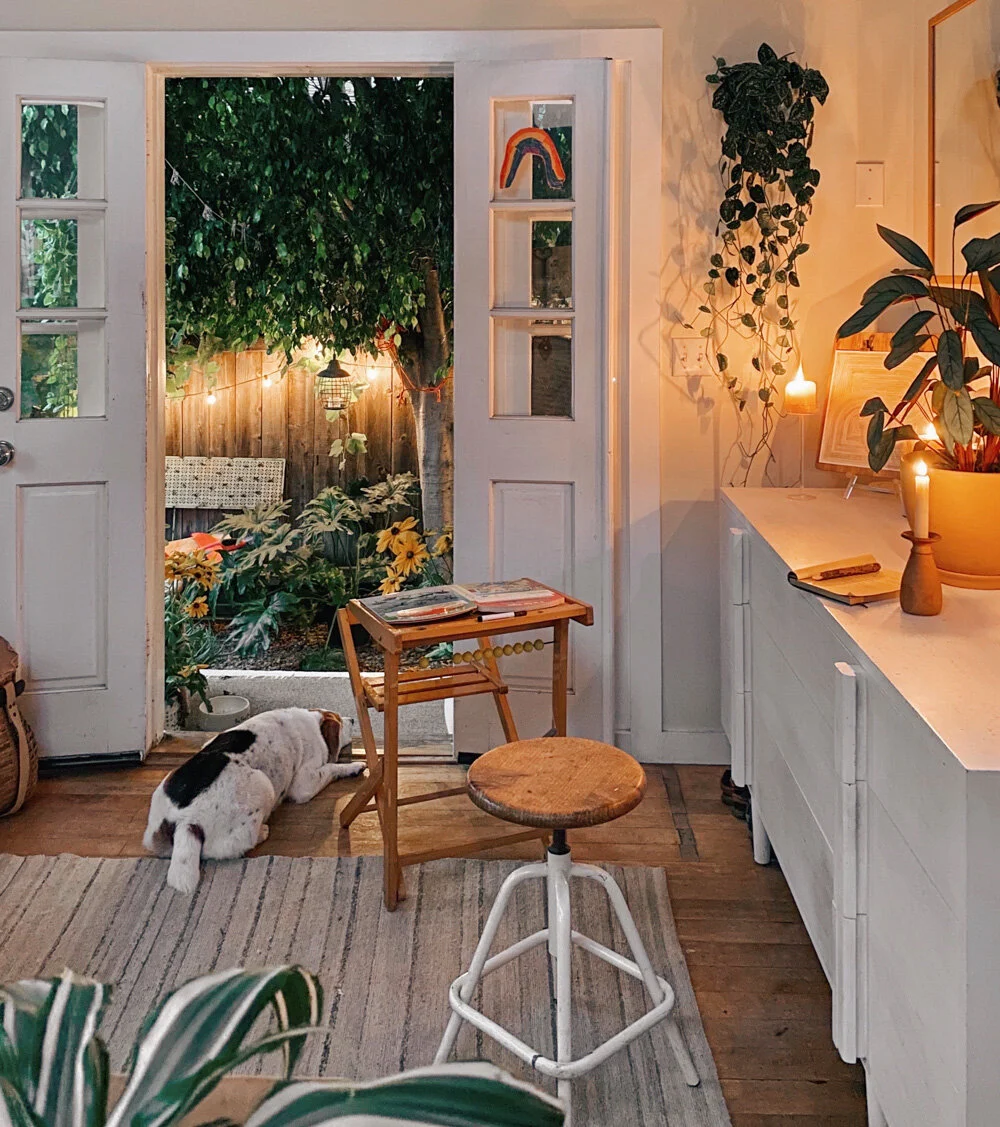
Note: First / key photo by Lucia Doynell.

Manageable Home Learning
Like millions of Americans right now, we are exhausted.
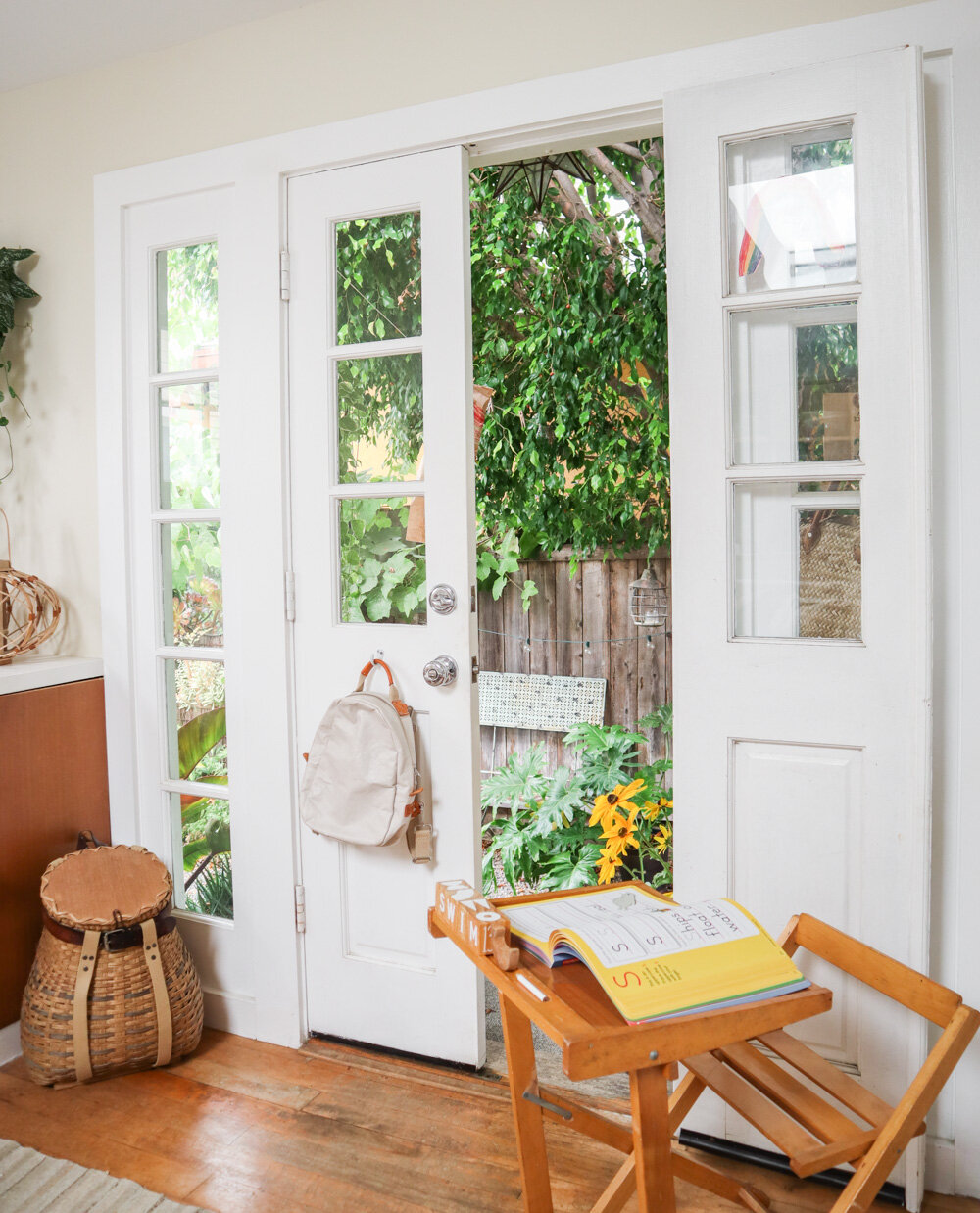
We are fortunate for countless reasons, and we are grateful for even more. Still, we are simply worn down.
Adam and I don’t want West to feel the weight of our fatigue.
At almost 4 years old, he’s ready for some semblance of schooling. But due to the ever-rising cost of pre-school in Los Angeles, coupled with the Covid-19 rates throughout the city, we are not sending our child to classes in the foreseeable future.

In order to give West a preschool-like feeling at the start of the weekdays, Adam and I have been packing themed lessons together at night for our little one to discover and explore the following mornings.

Spoiler alert: We’re not acing it as parents, folks. These are (very) low-lift lessons. I’m trying to be forgiving of such shortcomings, as we’re trying to run our small business in a recession, navigate family life in a big city during the pandemic, and attempt to figure out some major life changes and decisions (more on that later).

Just like with my office, we create a pop-up school space filled with workbook pages (usually from Highlights for Children), books, activities, and tools that support the morning’s theme. The theme is always something very general— like autumn, swimming, space, plants, etc. The obtuse nature of the themes helps us keeps things flexible, and prevents us from having to buy anything new in order to bring a fresh topic to life every day.

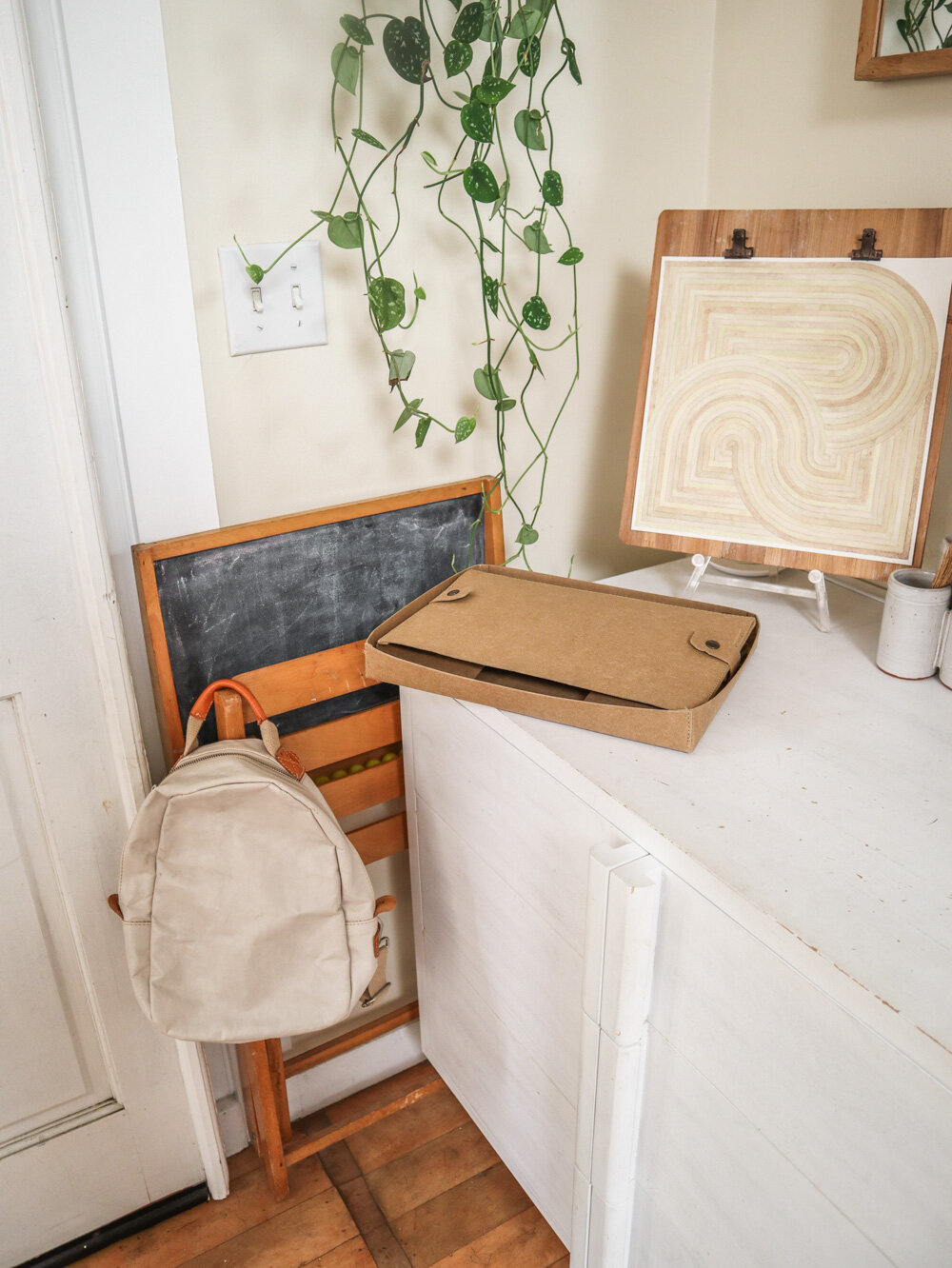
I’ve been filling West’s Uashama 100% organic paper backpack and collapsible, washable paper boxes / containers with the on-subject items he and Adam will use throughout the morning while I work.

And around lunchtime, we end up breaking it down for unstructured, open-ended play.

These sorts of mini lessons feel productive and doable. So while they’re not elaborate or innovative, they’re exactly what we can manage right now. And, most importantly, West is enjoying them.

More photos are below for those who are interested. (And while I have your attention: don’t forget to check your voter registration status or register to vote!)


Making a Voting Plan
“To meet the challenges of the climate crisis and preserve all that we hold dear; to retain democracy, social justice, human rights, and other hard-won freedoms in the future, we must part ways with that which threatens to destroy them. Now is the time to make profound shifts in how we live, work, and relate to each other.”
- The Future We Choose: Surviving the Climate Crisis

In the upcoming presidential election, I’ll be voting (early) for Joe Biden and Kamala Harris.
For those who think that politics has no place on a blog like mine, you’re mistaken. This blog is about home, and all the topics encompassed therein. It’s about running a small business while raising a family. It’s about community. It’s about the climate crisis and our ongoing role within it. It’s about physical and mental health. It’s about learning to be an antiracist. It’s about discovering how to live regeneratively. It’s about connecting with neighbors, as well as folks from all across the world. It’s about exploring what we can share and how we can share it. All of these topics are directly impacted by politics— now more than ever.

I believe that casting a ballot for the incumbent — or refraining from voting altogether — is a vote for an administration that prioritizes the profit, power and comfort of a select few over millions of lives, human rights, the health and future of our shared planet, and our democracy.

John Lewis wrote that: “The vote is the most powerful nonviolent tool we have in a democratic society.” From your local officials to the Senate to the presidency, it’s important to vote up and down the ballot in every election. But voter suppression is happening in America right now, playing out in old ways and new. With a plan, we can each fight to be sure our vote is counted. And we can advocate for the votes of disenfranchised groups to be counted, too.


Repurposing Bottles Around the Home
One of the DIY-lite projects I’ve long enjoyed is using branches and repurposed bottles to craft space-savvy garden stake vases.

Above: Photo from an East Coast wedding I produced in 2015.
After completing a recent creative project for which I was hired by Wonderful Wine Co., we had some leftover bottles that I decided to repurpose around the house and garden. (Transparency note: this blog post is not sponsored.)
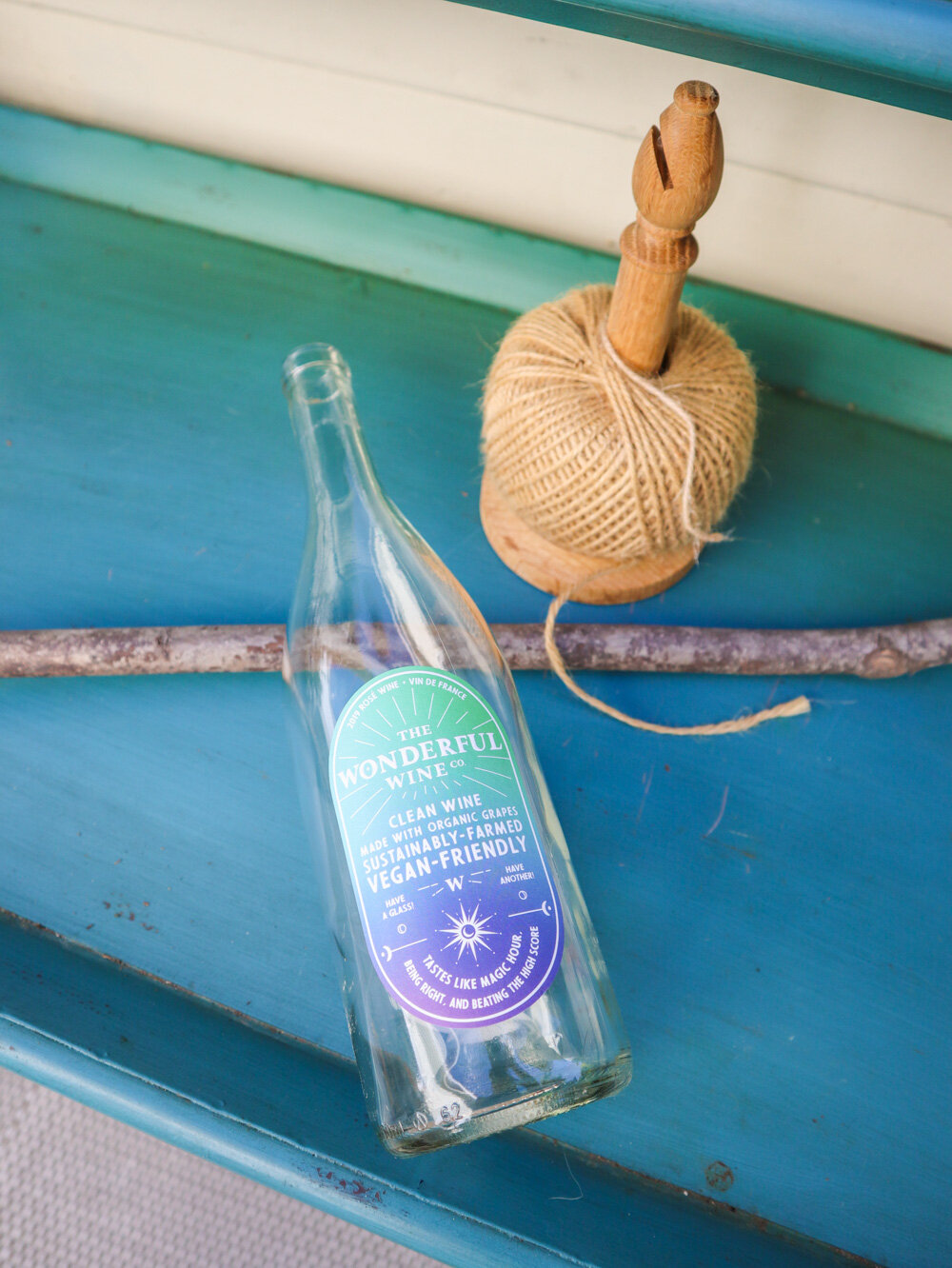
It’s estimated that almost half of a wine bottle’s carbon footprint comes from the production and mishandling of packaging. These particular bottles are made with lightweight glass that requires 20% less energy and 12% percent less water to produce, cutting back this company’s carbon emissions by approximately 26% overall, and making the bottles particularly usable for upcycling projects.

With the help of a few materials + accessories already here at the cottage, we turned the bottles into the garden stake vases, a dishwashing soap dispenser, a candle holder, a nightlight, and a simple vase to prolong the life of a tomato branch that was snapped off by a particularly rude mouse.

Remember: only a small percentage of recyclables actually gets recycled.

So before you chuck something into the bin, explore its other potential uses first.
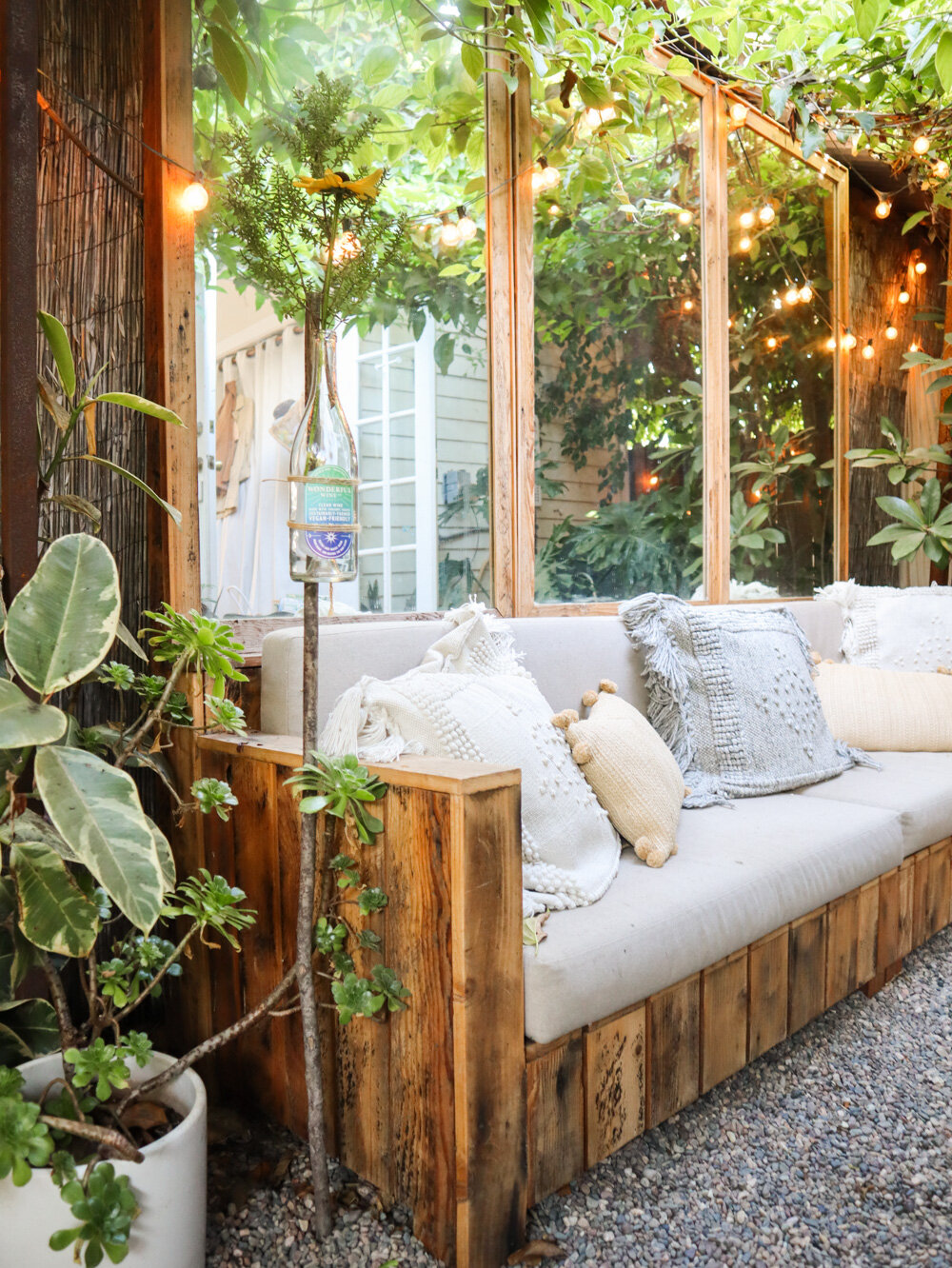
Additional photos below.


Decluttering & Remaining Clutter-Free for the Long Run (Updated)
Have you ever gone through the process of decluttering and downsizing, only to find yourself slipping back into an overstuffed life a few months down the road? You’re not alone. Every day I receive questions about how to declutter and maintain the results.

First and foremost, I think it’s important to find a dedicated home for everything with which you part ways, as 80+% of donations end up in landfills, and there’s a bunch of privilege wrapped up in the concept of decluttering in the first place.

Secondly, before you declutter, I’d recommend pledging to stop the influx of new, unnecessary goods after doing so. Otherwise the cycle repeats itself, which is no good for your space, wallet, the planet, and the disenfranchised populations who statistically live closer to landfills and toxic manufacturing and waste facilities.

Finally, if an item no longer works for you and can be put to better use with someone else, then letting go is a gift for both parties! I’d suggest asking yourself what purpose(s) each piece serves if any, and then take it from there responsibly.
With that, here are some easy tips for remaining clutter-free for the long run.

Avoid Triggers
Identify your more reckless spending triggers, then take care to avoid them. For example, do you find yourself buying items off social media links or major retail sites when you’re bored, stressed or unable to sleep? Tuck the phone away and pick up a book, meet a friend, or take a walk instead. Do you buy junk at the airport during layovers? Bring your own snacks, bottles and entertainment with you, and don’t even step foot in the shops within the terminal.
Pause Before Purchasing
When online shopping, challenge yourself to wait at least 24 hours before checking out. Chances are you’ll realize that you don’t actually need all (or any) of the items in your cart.
Get One, Give Two
If you do commit to acquiring a new item, try giving away two items in its place. Keep in mind that it’s important to find a dedicated home for everything with which you part ways, as 80+% of donations end up in landfills.
Reduce Opportunities for Impulse Purchases
Once you’ve swapped your common disposable goods (such as paper towels, cotton rounds, cleaning supplies, diapers, and tampons) for reusable options, you’ll have far less shopping to do. And with fewer trips to the store, you’ll have fewer opportunities to make impulse purchases.
Decline Freebies
You don’t need to accept every free item and bit of SWAG dangled in front of you. Just walk away, or use the magic words: “No thank you.” If you still somehow end up with freebies of wellness products or clothing that can be of use to organizations in need, leave the goods sealed/unopened and donate them as soon as possible.
Donating Gifts
If someone gives you a gift you can’t use and/or don’t like, shake off the guilt and donate it immediately. It doesn’t do anyone any good for the thing to rot away in a box under your bed. Pay their generosity forward by regifting the item(s) to a fitting non-profit, local school, etc.
Ask Qualifying Questions
Before you purchase a new object, ask yourself the following questions— you might be surprised by how few items actually clear these hurdles to earn a coveted place in your home:
Do I already own something that serves the same purpose as this new item?
Was this product produced ethically and with sustainability in mind?
Can this piece multitask? (Of course this question doesn’t apply to all goods, but it can apply to many. Multi-functional pieces will reduce the number of items you need in your home, saving you money and reducing your footprint.)
Where will this item be stored when NOT in use? And do I have the space for it?
Lastly, if the piece(s) you’re considering pass all of the questions above, then ask yourself: Is there a vintage or handmade option of this item that I can find locally instead?

You can do it. For your sanity, for your wallet, for your home, for your busy schedule, and — above all — for the planet.
First/key photo from the cottage taken by Lucia Doynel.

The Leaf Blower
We have five Ficus trees in our tiny garden. For most of the year they’re easy enough to manage, requiring very little water, and a professional trim twice annually. But during the summer they drop pods. (Lots of them.)

When Sophee was a puppy she began eating the pods, which are toxic to dogs. After much discomfort on her part and worry on ours (along with lofty Los Angeles veterinary bills), she recovered. But we were left wondering: do we get rid of these beautiful trees? The only substantial trees on this lot? The trees that provided us with shade and privacy? The trees that make an otherwise pale space pop with life? The trees whose branches sway in the coastal breeze and gift us with one of the Earth’s most beautiful sounds? Or can we find some way to deal with the pods annually without them poisoning our sweet rescue beagles?
… Should I buy a leaf blower?

Thankfully, as she matured, Soph learned not to eat the pods. As with the grapes that occasionally drop from their vine, the dogs seem to inherently know to steer clear of them.
Over the nine years here, those Ficus trees have grown. And grown.
With (blissfully) more tree comes (not-so-blissfully) more fallen leaves. They aren’t those gorgeous, wide, orange leaves that herald in the changing season. Instead, they’re the little, cracking leaves that flood our pea gravel pathways within hours and make everything feel a bit chaotic in this compact footprint.
Should I buy a leaf blower now ?

Confession: I did buy a leaf blower. (Pre-pandmic, of course.)
It sat on the stoop in its box for a few days. I’d glare at it from my makeshift desk on the kitchen counter and shake my head at it (and myself). Eventually, I decided to return it, unopened, and embrace the leaves instead.
Not only are the leaves helpful with balancing out the matter in our compost tumbler, but they’re also a small part of the natural world that we get to experience here in our tiny patch of land that was once dry, cracked earth.

The soil is becoming healthier. The butterflies and ladybugs and bees are growing in numbers. (So much so that we set up a bug hotel so that some of them hopefully stick around in the winter.)

How lucky are we to shuffle through these little reminders of a regenerated, tiny plot of land? Particularly now, as the light indicates that the summer is coming to a close, but the heat has yet to ease up, so the shade from the trees is deeply appreciated.
On a recent morning, I needed to clean up the walkway to record a video for a client. I began picking up the hundreds (thousands?) of leaves by hand. I could’ve borrowed our neighbor’s rake, but they’re not that much more effective on gravel, and I thought to myself: You’re always trying to slow down. Here’s your chance.
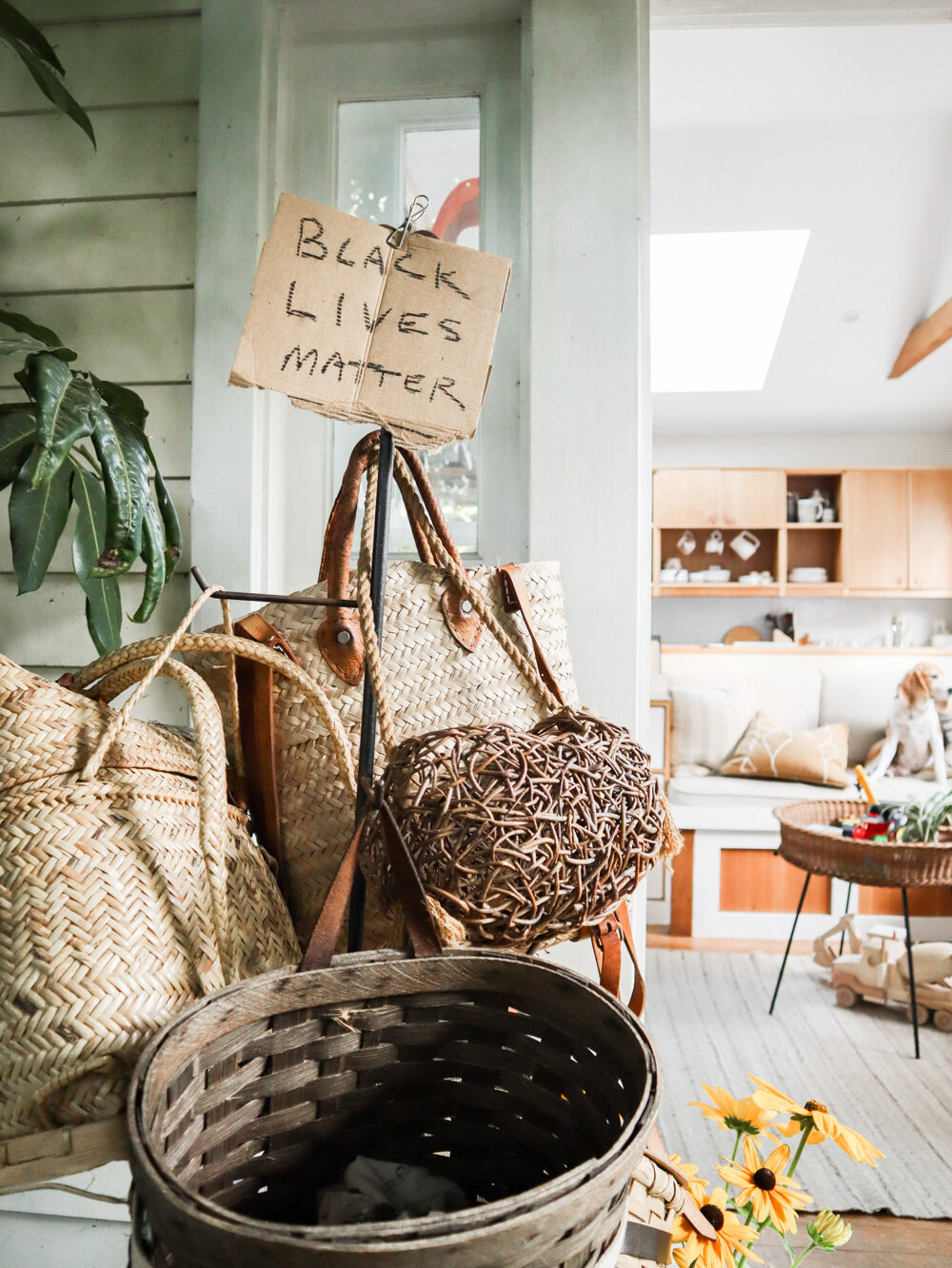
While I was out there, West joined me. We made a game out of gathering the leaves, filling up as many baskets from our rack on the stoop as possible.
He loved it.
I loved it.
It was slow.
It was simple.
No emails. No phone.
Just our hands and the leaves.

Everyone’s life is complicated enough as it is right now. If someone decides to buy something that makes their everyday feel a bit saner, I’m not here to guilt them for it. But in this context, the leaf blower experience was a good reminder for me that this (largely plastic) item was just one more item I could go without. And in going without, I got a whole lot more in return.

Repurposing & Recycling Leftover Paint
PSA Time: If you have leftover cans of paint sitting around after buying too much for a project (like we did after repainting our interior 2 years ago), you can take them to be safely and responsibly recycled for free.

In parts of the United States where the non profit PaintCare operates, households, businesses, and individuals can take their unwanted, leftover paint to a drop-off site. From there it is sorted and managed for reuse, recycling, energy recovery, or safe disposal.

There’s even information regarding their protocol for managing their services during the COVID-19 outbreak on their site.

Visit PaintCare.org to learn how to:
Estimate and buy the right amount of paint for future projects
Store your paint wisely to extend its lifespan
Discover fun projects for using up leftover paint
Donate your paint to organizations that might need it
Recycle your leftover paint

Note: This blog post was not sponsored, but the corresponding Instagram post was paid for by PaintCare. The Tiny Canal Cottage donates a portion of our earnings from paid partnerships to The RightWay Foundation.

Back to School & WFH: Working & Studying in a Small Space
Post Summary: How to establish and maintain more efficient practices for working and schooling from home in compact quarters with a partner, roommate and/or kid(s) ever-present. (View a related 15 second video here.)
As the new school year approaches and folks around the globe are settling into the idea of potentially working and schooling from home for the long-haul, I thought it might be of assistance to some if I shared this updated post about how we managed our live/work/daycare/school practices here in our small space.

Below are several accessible tips I’ve learned over the course of a dozen years of operating a business full-time from small residences, including some newer points that I’ve adopted in recent years since my husband began working from home, and our son has grown from a baby to a toddler to a preschooler.
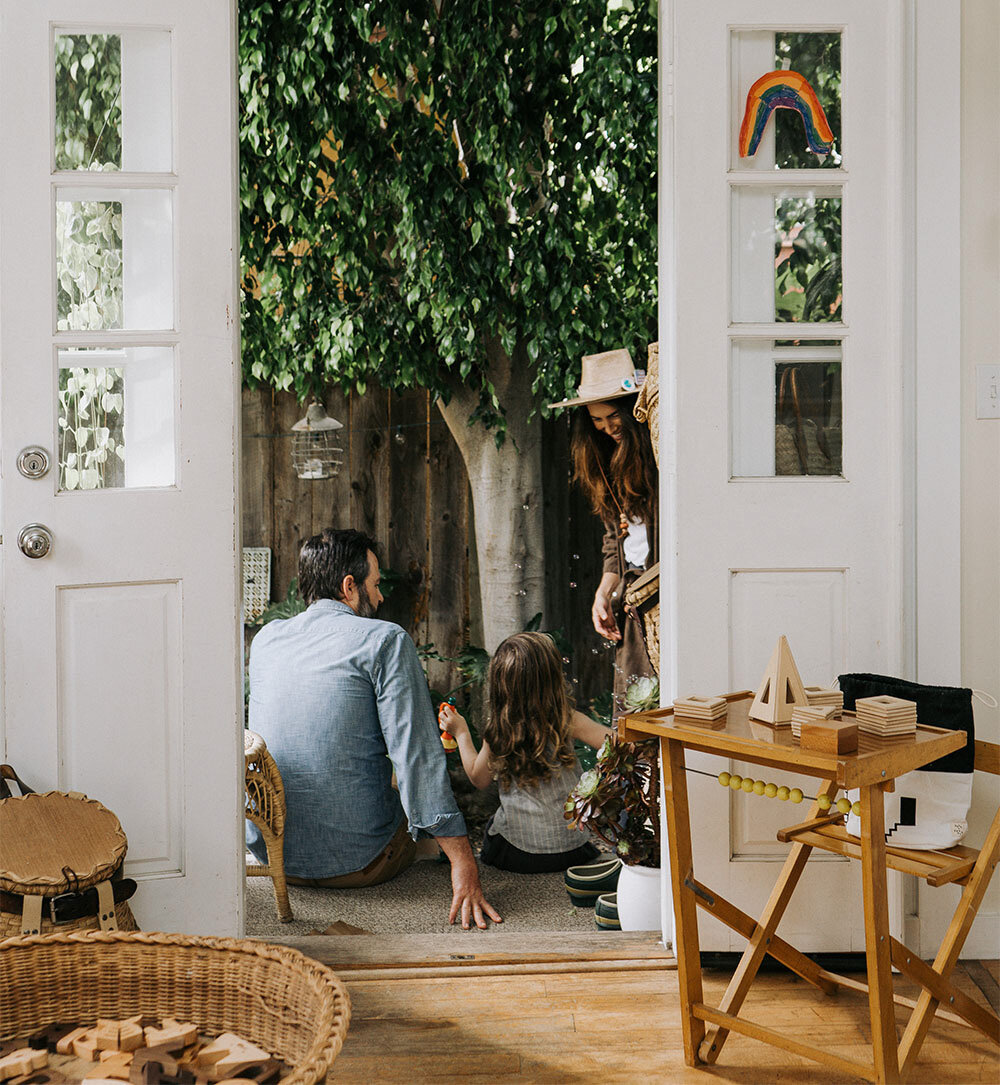
It’s my hope that these ideas will help you work and study effectively from a small house or apartment, whether you have dedicate space for a home-office and a home-school, or if you’re creating pop-up spaces.

Keep in mind that some days will undoubtedly be more challenging than others— there’s no magic solution to this juggling act. But the privilege of working from home during the pandemic is something to acknowledge and keep in perspective. So many people are out of work across the globe, and medical professionals, delivery personnel and workers tied to essential businesses are putting themselves at risk to keep the rest of us safe. Staying home— even if it’s not your preference— is important for our communities, so let’s make it work.
Make your bed
Studies show that people who make their beds tend to be more productive. But in a small space, I think that making the bed is doubly important. With limited square footage, the bed can become a useful surface for random tasks throughout the day, such as sorting/filing/printing papers.
Carve out time for self care
Whether it’s as simple as brushing your teeth and taking a shower— or more involved, like doing Yoga, making coffee/tea/a smoothie, putting on makeup if that’s your preference, and/or taking your pets for a (responsible!) walk, make sure to carve out time in your morning before work to accomplish the things you’d normally do before leaving your home for an office job.
Get dressed
I know this is often recommended to the point of exhaustion. Still, it really is helpful— even if you’re not on Zoom / FaceTime meetings during the day.
Set up a pop-up workspace (if you don’t already have a dedicated one)
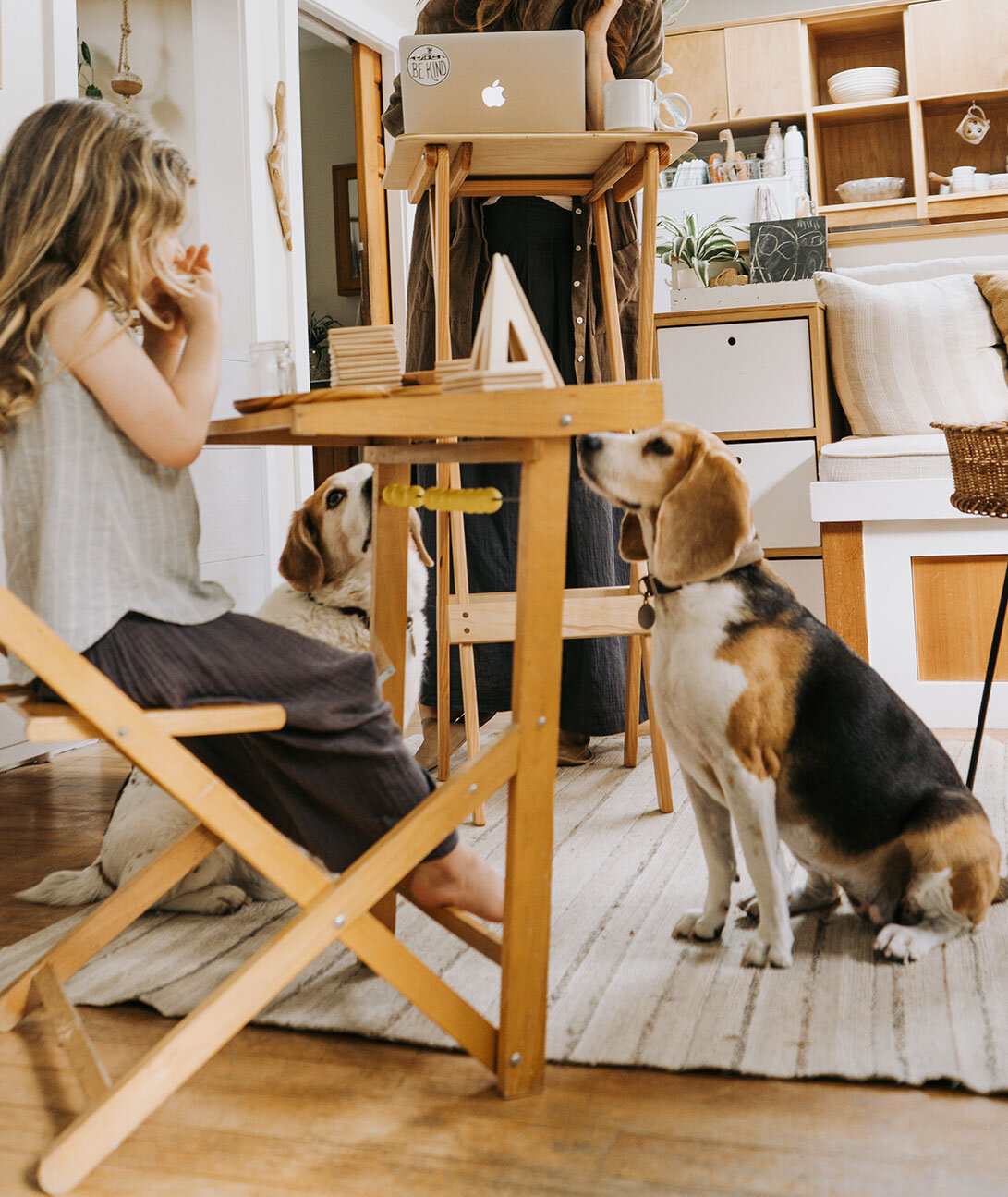
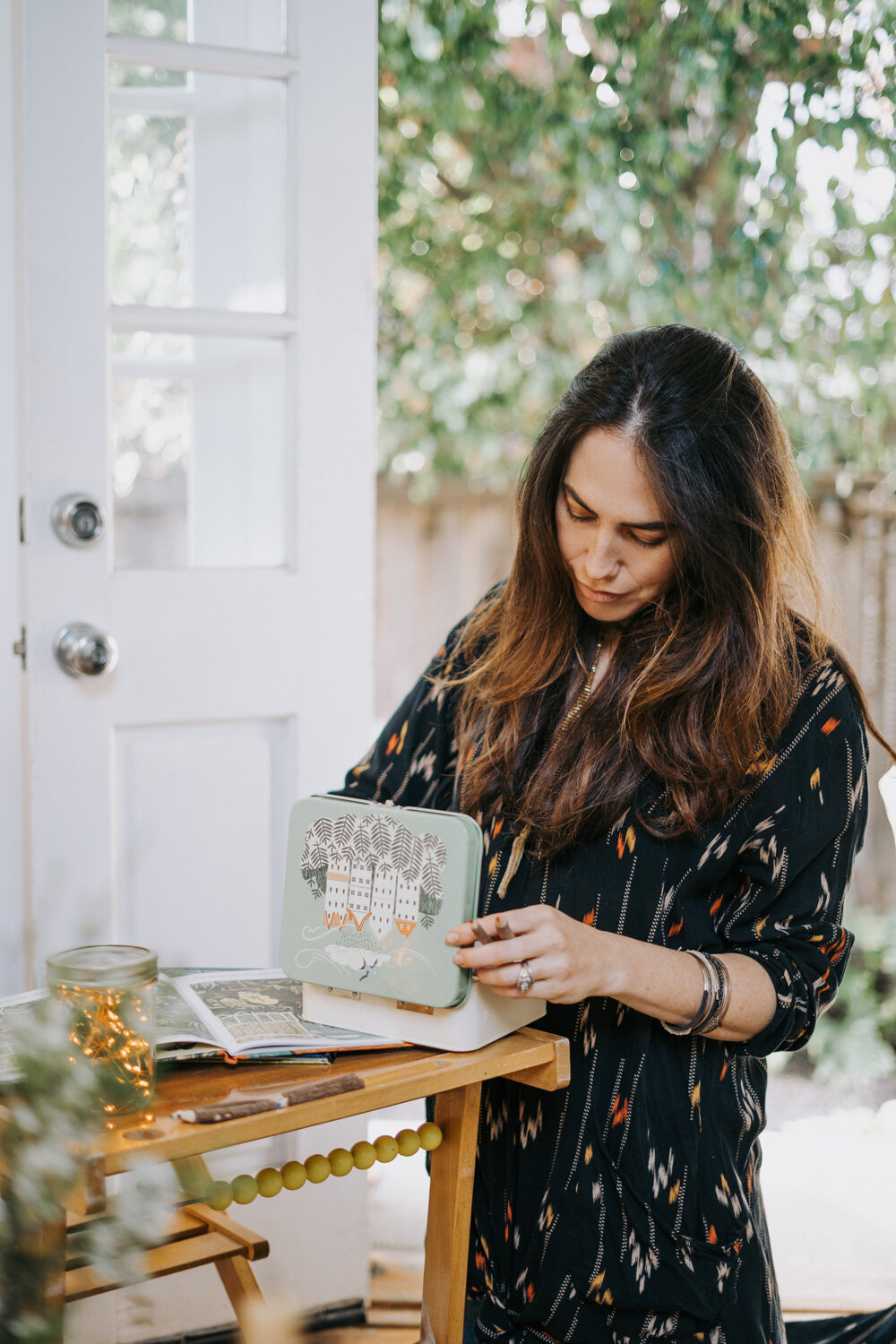
If you have a dedicated desk or dining table, fantastic. If not, create a pop-up workspace. Depending on your living situation, this might mean converting an end table into an office, employing a collapsible bistro table, or using a lap tray in bed. Whatever it is, set yourself up with the tools you’ll need throughout the day, so that you won’t loose your train of thought or productivity by having to get up and find supplies (and thus risk getting distracted) while you’re in a positive workflow. If possible, set up shop by a window, or place a mirror nearby to reflect the natural light from the closest window. It can be emotionally beneficial to get some exposure to nature and/or your community while you work.

Clock-in
Set a time to start and stick to it. I believe this is why I have been so productive at working from home over the past dozen years. When I first began working remotely, I had a client with whom I had to check in every morning at 8AM, and that obligation provided a me with a sense of formal structure, much like a standard office does.
Set your phone timer for scheduled breaks
When you’re working from home, it can be tempting to hop up and take care of chores around the house. Overall, it’s a great gift to be able to check off your personal to-do list while simultaneously addressing your professional duties. But the reality is that this can be distracting and derailing. Instead of succumbing to the urge to steal random moments to manage chores, set timers on your phone to coincide with the times of day you’ll likely need a brief break to stretch and use the bathroom. At those intervals, allot an extra handful of minutes for calling a friend, getting a snack, doing the dishes, watering the plants, tending to personal matters, etc. Let your parter / child / roommate know when these breaks are scheduled so you can touch base or get out of each others way if needed. When your timer sounds again to signify the break is up, back to work.
Try earbuds or noise-canceling headphones
Whether you prefer to listen to music, need silence, or simply can’t stand another minute of your housemate’s keyboard clacking, invest in a pair of earbuds or noise canceling headphones if possible.
Consider a curtain or screen
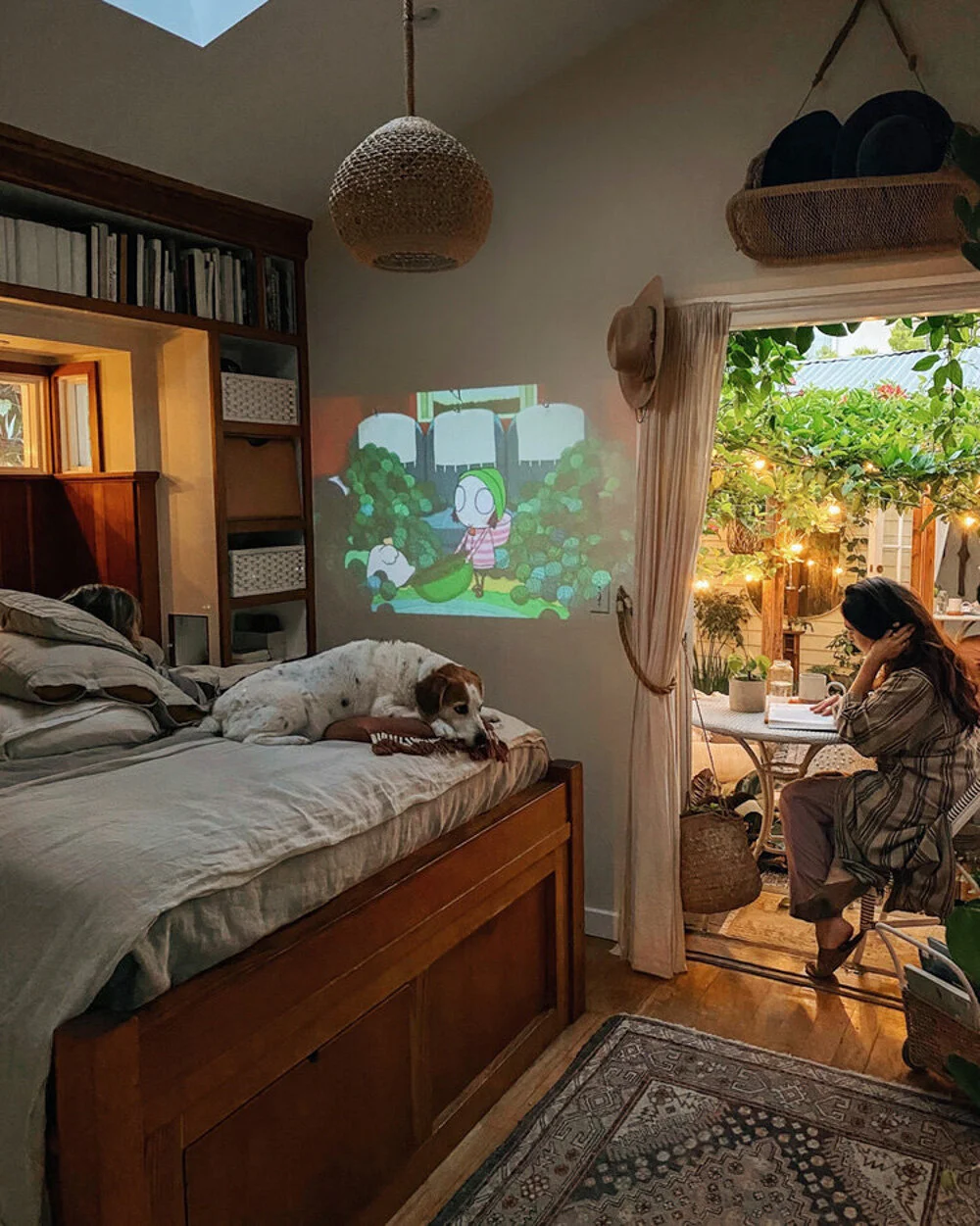
It might be worthwhile to use a makeshift curtain, accordion screen or a room divider of some sort to cordon off your work zone. (There’s plenty more about this topic in my book, Small Space Style.) Beyond adding a sense of privacy, this can provide physical and symbolic boundaries for those with whom you share your home. It can also keep your eager eyes in check when they’re tempted to wander over to the snack shelf or laundry pile when they should be focused on your work instead.
Practice In-House Texting
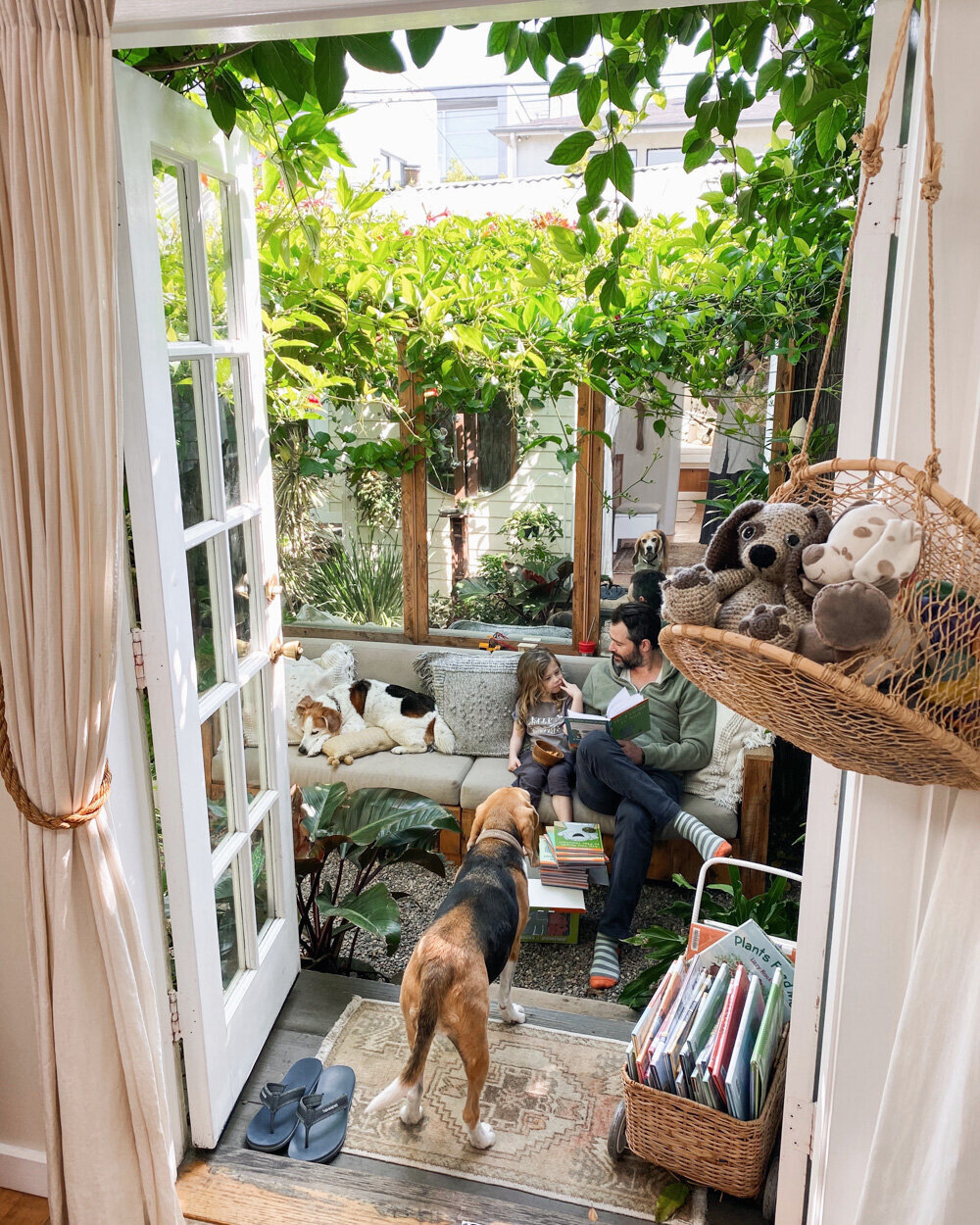
This might seem absurd in a small home or apartment, but consider texting your partner/roommate/etc. or asking them to text you if something needs to be discussed. That way you will see the text when you choose to look at your phone and can then respond accordingly, rather than being yanked abruptly from a focused moment. (Adam and I often do this, even though we live in under 400 sqft… it works.)

Explore storing your administrative supplies in more than one area if you’re feeling cramped
While it’s handy to keep your must-haves within arm’s reach (as mentioned in tip 4, above), you don’t need to cram ALL of your supplies into one area in your small home office. If you rarely use a printer but have one, perhaps store it somewhere else so that you don’t feel like your work zone is taking over your home. (Examples of this can be found in the IGTV video linked at the start of this post.) Same goes for bulky files, business tools, etc— especially if you’re sharing them with someone else in the home. Spreading accessories out will aid with storage, but it will also allow all parties to use the same items throughout the day without distracting each other when crossing zones to borrow this-or-that.

Temporarily delete apps that distract
If you’re tempted to check non-essential apps on your phone, consider deleting them during the work day, and reinstalling them after you’ve “clocked out”.

Clock out
Just like clocking in, a clocking out routine can be useful for maintaining a live/work divide. Stow office items until the next work day, freeing up your home for personal activities and family time.

The night before, set up an activity for your kid(s) for the morning
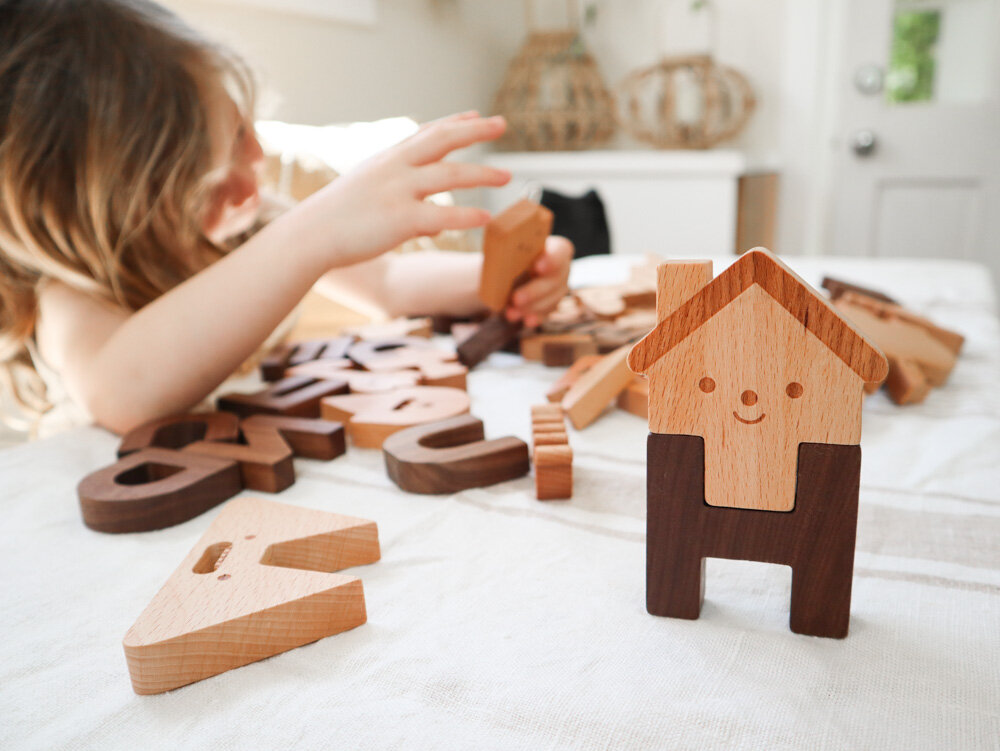
If you’re feeling like the mornings are too hectic, analyze why. Do your kids need something to keep them safely occupied while you go about your self care routine and/or prepping your workspace? Perhaps plan and set up an activity for the morning that will keep them happy so you can stick to your schedule.

Prep Meals
If you find yourself hanging out in the kitchen more than you normally do, perhaps prep your meals and snacks in advance. This can prevent wasted time, and while potentially encouraging a healthier diet since we all need to keep our immune systems in check while this virus circulates through our communities. Not only that, but preparing food in advance is a wise way to ration food within your household, limiting possible exposure from potentially avoidable grocery shopping trips and/or deliveries.
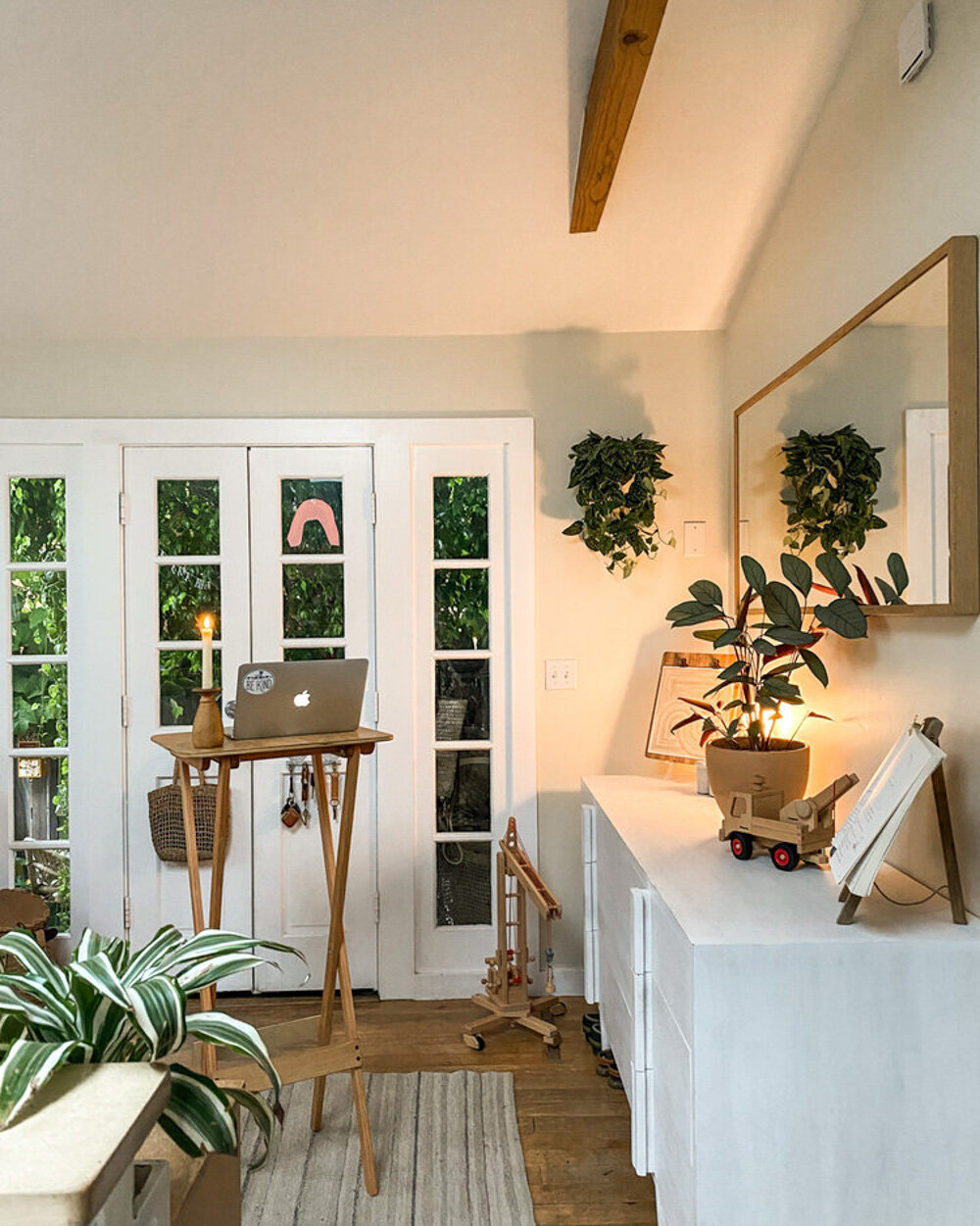
Remember: We’re all in it together. You’ve got this.
Select photos by Lucia Doynel.

The Privilege of Working & Studying From Home
Post summary: How to advocate on behalf of households with no access to internet connectivity or devices.
My next blog post will be about working and schooling from home, and I wanted to preface it with this:
As families around the country struggle to adapt to the challenges of working and schooling from home around the clock this upcoming fall, some do not have the necessary tools for online learning and productivity. Across the country, many students and families have limited or no access to adequate internet connectivity and dedicated devices.

The NAACP Legal Defense and Educational Fund called upon internet service providers that affirmed their commitment to racial equity this summer to help hundreds of thousands of students of color as countless schools transition to online learning.
Those who feel inclined can take action by writing to and/or using social media to tag Internet Service Providers and demand that they do their part to make certain that this nation’s schoolchildren receive the education they deserve.
Here are some of the requests outlined by the LDF that I am demanding of our ISP:
We insist that our ISP works with local school districts to determine what is needed for underserved families in regards to connectivity and accessibility.
We request that the providers offer free internet to households with school-age children for the upcoming/current school year, and ensure that the service provided is strong enough to support multiple family members streaming classes at the same time.
We ask that the ISP forgive any customer arrears that prevent families with children from accessing the internet.
We demand that the service provider makes their accessibility options known by advertising the access to these services widely and aggressively through flyers and U.S. mail for families with no phones, at school pick up sites, and through phone calls and emails, and ensure that materials are translated and accessible for non-English speakers and people with disabilities.
From the The NAACP Legal Defense and Educational Fund:
Any plan to educate America’s children that includes distance learning must address the fact that countless children will be left without educational access unless we undertake an aggressive effort to ensure access to computers and free high-speed internet connection for every family with children. As the new school year approaches, we ask that internet service providers act on their commitments to addressing structural inequalities and racial injustice by taking the series of actions outlined in our letter to help ensure that our nation’s schoolchildren receive the education they deserve.
Access to the internet and technological devices has been limited for many students of color throughout the duration of the pandemic – and it only stands to worsen as COVID-19’s socioeconomic implications continue to unfold. In April 2020, 54% of Latinx broadband users and 36% of Black users reported worrying about their ability to pay bills over the next few months, compared with only 21% of white users. As pandemic-related government moratoriums on evictions, foreclosures, and utility shutoffs begin to expire and federal unemployment benefits end, many families will soon face more monthly bills and be forced to prioritize immediate necessities, like running water and shelter, over internet access. Children should not be cut off from distance learning simply because their parents cannot afford an internet bill or because rural communities have been forgotten in the age of internet reliance and necessity.
Moreover, this pandemic-induced financial strain comes while many school districts have announced that they will be offering at least some form of distance learning for the foreseeable future — or requiring students to work remotely altogether. Therefore, as the 2020-21 school year approaches, access to online learning remains one of the most pressing needs for students and families of color. While some school districts have distributed devices to their students or encouraged local businesses to open hotspots, these measures are not nearly enough to meet students’ needs.
As a result, LDF is calling on internet service providers to act on their stated commitments to racial equity by expanding their coverage areas and providing free internet access and technology to low-income and communities of color.
Internet service providers must act swiftly to implement these measures to ensure that all students have the tools to succeed in the coming school year. As an organization deeply familiar with the challenges that face schoolchildren of color and their families face when it comes to achieving a quality, integrated education, we recognize that the digital inequities in this country represent a pressing racial justice issue that must be remedied in order to guarantee students’ equal access to quality education.

A Different Sort of Slow Summer
Folks are always saying that they want a slow and simple life. I think it’s one of the reasons why tiny house + camper living have held the attention of the public in such a tight and tantalizing grip in recent years— the promise of a pared-down life filled with fewer avoidable stresses. The appeal of more time and less noise.
But, as one of Small Space Living’s most enthusiastic cheerleaders, I must say: right now, there is no such thing as slow (at least in the relaxation sense of the word) or simple, no matter the size of your home.
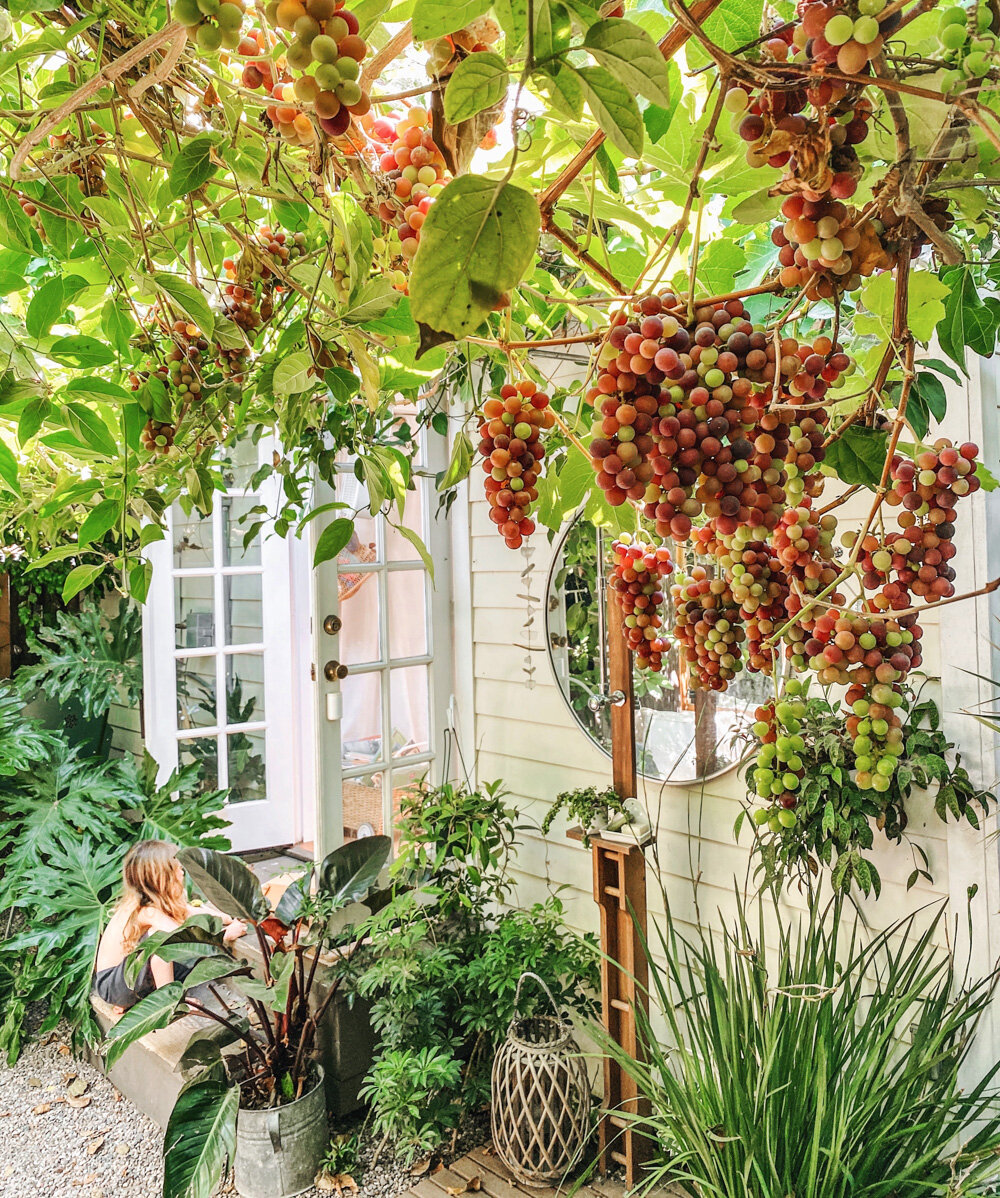
Those who are looking out for one another are either sheltering in their homes for their fifth month, or working in essential positions at their own great risk in order to keep our communities healthy and fed. And while being home is an immense privilege, it’s also an enormous challenge. Even with just one child, the days are exhausting for parents. And as a small business owner, a wave of overwhelm floods every minute of every workday.
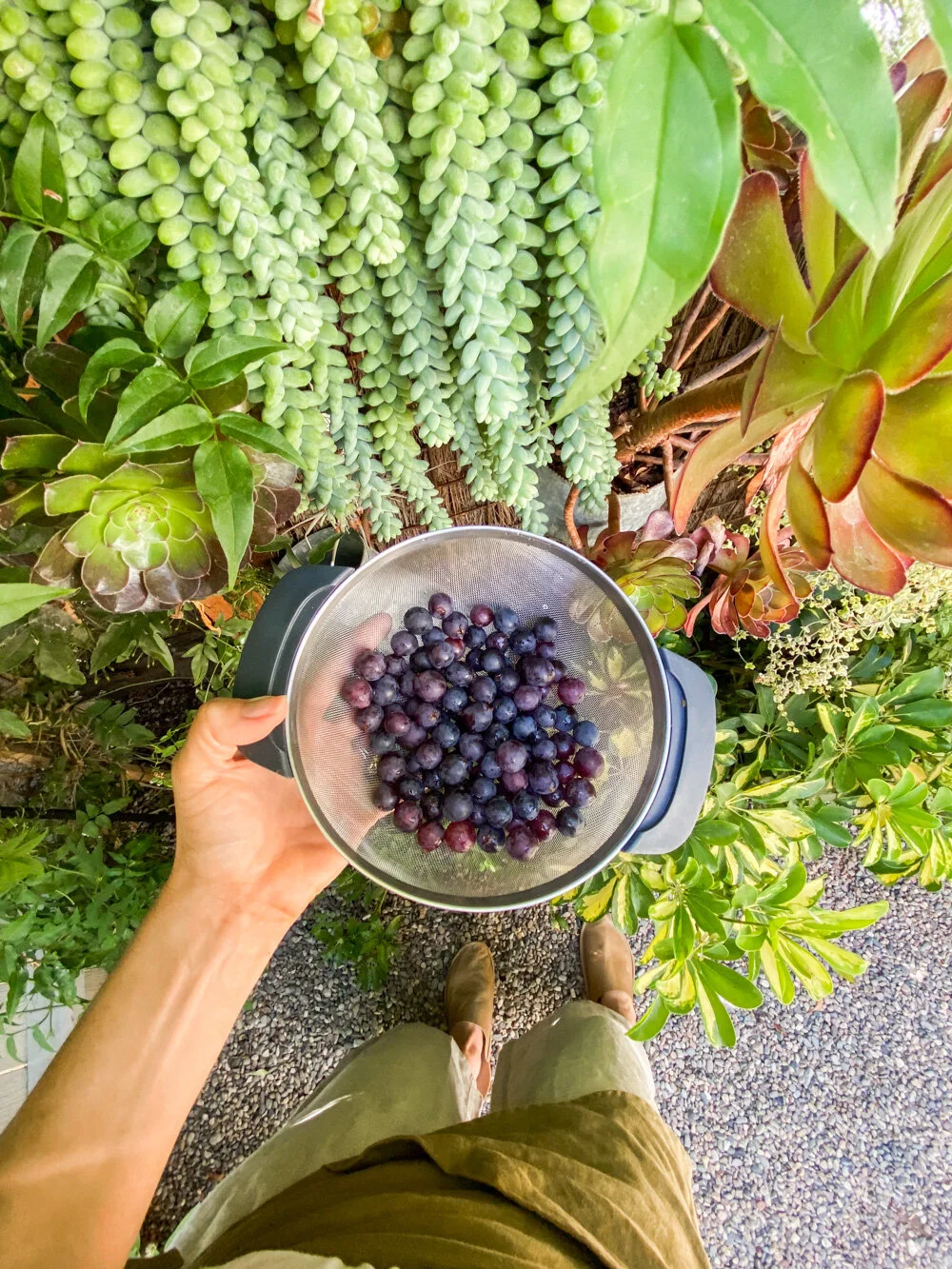
This is why our garden-to-kitchen-to-garden habits throughout the summer have been so valuable to me. (Related post: Small Space Gardening to Reduce Anxiety.)

Above: Straw & jar lid from Simply Straws. Jar by Ball.
When we need a momentary a break (from running the business, from parenting around the clock, or from the daunting realities we’re facing as a country), we find ourselves shuffling between the small kitchen and tiny wrap-around garden here a the cottage.

The garden and kitchen have begun to blend together as we clip fruits, vegetables and herbs, tote them inside, prep them in one form or another, then return outdoors to enjoy whatever we’ve made as we escape the heat while beneath the vine canopy. (Related post: Our 2020 Grape Harvest.)

Our neighbors have been making sweet grape juice (which we add to our sparkling water) from this year’s Concord harvest.

Above: Vegan Khala & Co food wrap (to replace single-use cling) drying on the rack.
Meanwhile, Adam has started making jam to accompany his weekly batches of sourdough bread.

Above: Adam’s freshly baked bread.
They’re little indulgences that offer impactful satisfaction. They help us— for a moment— regain that feeling of slow and simple. (The good kind of slow.)

Above: Cherries from our weekly CSA box, piled into a handmade ceramic tumbler by Daniel George of Flying Uke Designs.

New Mini Consultations
In recent months, dozens of folks have reached out to me to express their frustrations over being unable to find a comfortable rhythm while working, educating and juggling life from their small spaces around the clock during this pandemic.

It’s tough, my friends— there’s no way around that. Still, working from home is a privilege we need to acknowledge and make the most of.

So in response, I’ve been offering weekly Q&A sessions on my social media channels. They’re hugely time consuming, but I tackle them as often as I can with the intention of providing some support to our online community in this unique time.

Since there’s no one-size-fits-all answer to each question, I’ve also launched a new mini consultation service, which can be accessed here.

Via this service, I’m now available to offer video replies to questions that are personalized to specific spaces and situations, such as:
What are some ways I can adjust my particular small space to accommodate a baby? (Snap and send a photo and I’ll take a look and offer my feedback.)
How do I minimize clutter in this specific area of my home? (Snap and send a photo and I’ll take a look and provide suggestions.)
How can I make my rental space look/feel bigger on a budget?

My hope is that this provides readers with some useful assistance in a difficult time, while also supporting our small home and business.
Select photos by TinyLicious.