
Packing Carry-On Only Bags for Family Travel
Packing light for air travel with children.
When I showed glimpses of the carry-on only luggage that our family took to the Tiny French Farmhouse this summer, I received a cascade of unanticipated comments and questions: “How?” “Impossible.” “Packing list, please.”
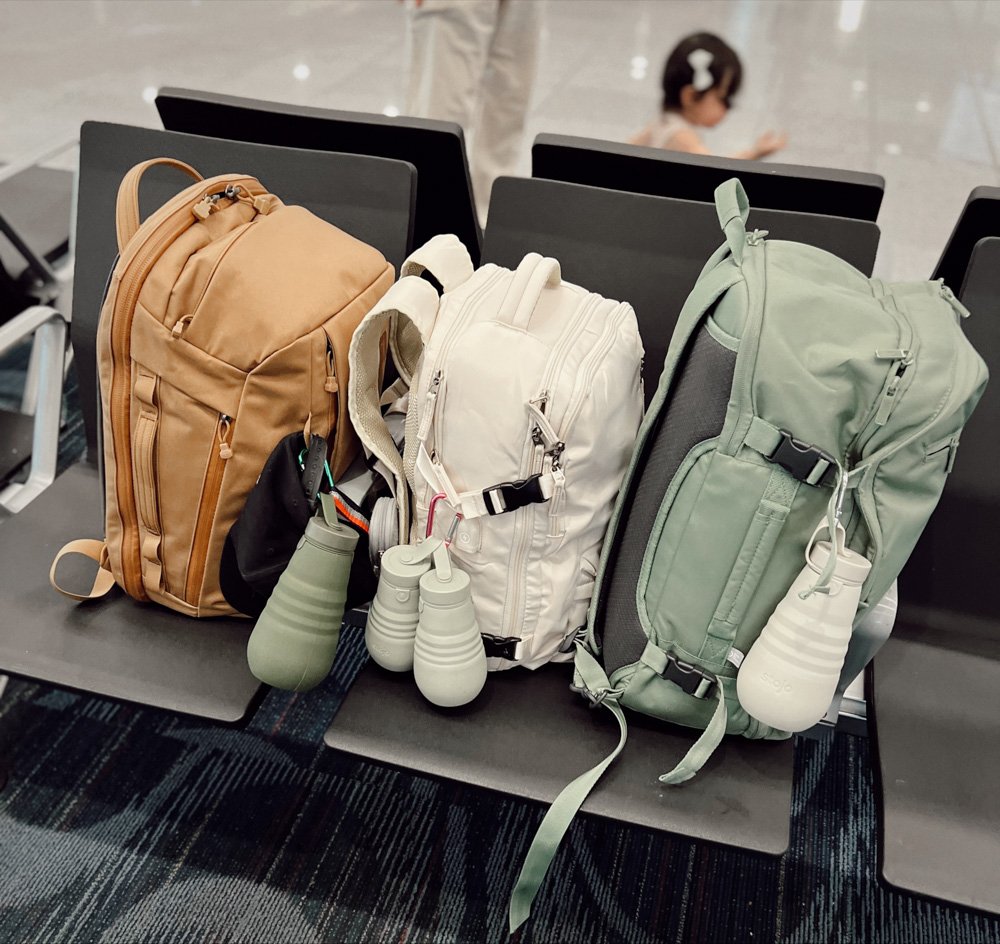
First and foremost, we have somewhat of a cheat when it comes to packing for this particular destination, as the farmhouse is our home and we plan to leave items there over time for increasingly lighter packing in the future. However, since this was only our second visit — and three out of four of us have VERY different bodies and needs than we did the last trip — these were pretty much fully packed bags.
Since most of us are operating on minimal mental bandwidth these days, I’m breaking down what/how we packed into simplified categories below:
BAGS
3 backpacks:
~25L juvenile overnight-style backpack (I wouldn’t recommend the one we have — but this one would’ve worked better.)
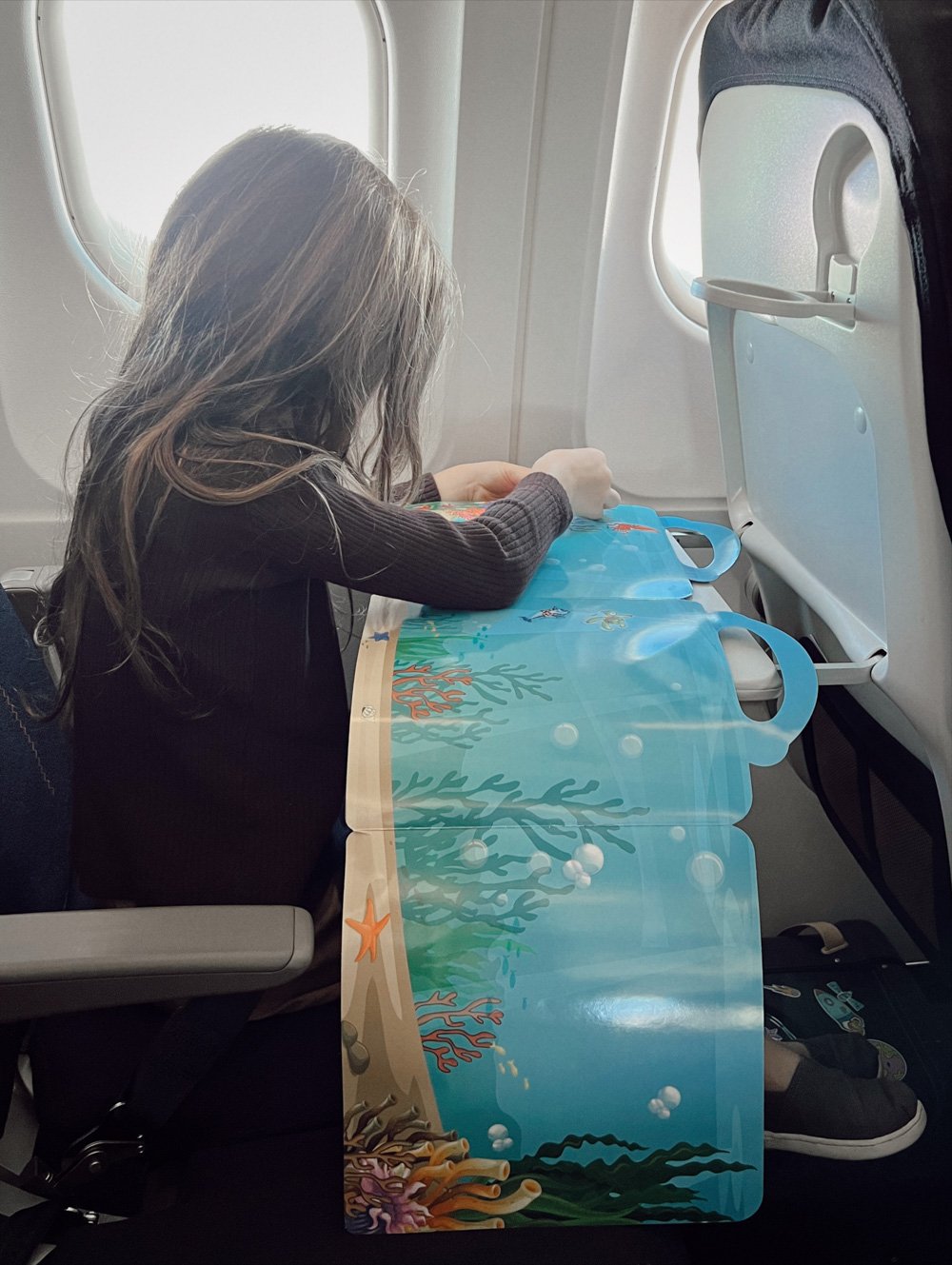
1 kid’s ride-along convertible suitcase / seat extender
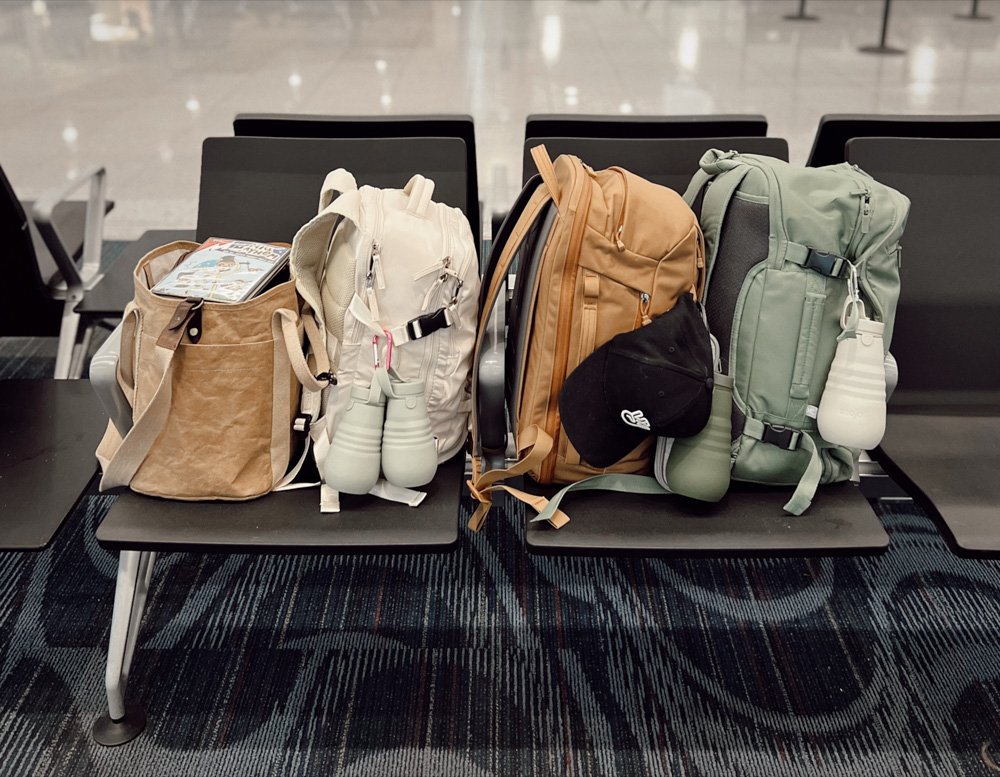
1 washable paper catch-all Palermo tote by UASHMAMA for miscellaneous overflow items
Baby Carrier Mini, in lieu of a stroller (Note: our youngest is small — please read specifications to find a carrier that suits your child.)
BOOKS
While I prefer hard-copy books, Adam and I use an e-reader for travel
For our baby/toddler: Indestructibles (lightweight, slim, flexible, waterproof)
For our young reader, paperback library books / series selected for content AND weight/size

FOOD + BEVERAGE
2 Stojo adult collapsible bottles, latched to backpacks with carabiners
2 Stojo children’s collapsible bottles, latched to backpacks with carabiners
1 Stojo collapsible, lidded bowl/to-go container
4 Sets of to-go cutlery with straws and washable napkins (minus the matching knives
1 Set of beeswax cloths

FOOTWEAR
I find that shoes from the following brands usually travel + wash well, as they’re slim but sturdy and flexible:
Rothy’s
AllBirds
Bensimon
FEIT slippers
Note: Rothy’s — both the men’s and women’s styles — are also versatile for dressing either up or down.
TOILETRIES
Shampoo + conditioner bar
All-age tin of sunscreen
Toothpaste tablets
Travel first aid kit
One shared travel-sized bamboo brush
Menstrual cup
LastSawb ear swab
Cadence magnetic honeycombs for smaller/specialty liquids.
A clear Stasher bag for all bottles, for easier TSA inspection when required. We then wash and use the bag for other things while abroad.

Above: A TSA-approved size bottle of multi-use Branch Basics cleaner from concentrate for use as detergent and more
TECH
We kept our tech to a minimum, editing cords and plugs and sharing as much as possible between necessary devices. We use a portable, zip-around cord book / organizer to keep everything streamlined.
TOYS
We repurposed small canvas pouches and reusable clear baggies to further organize and corral figurines, activities for fine motor skills, reusable-sticker books, and art supplies. All the pouches fit in the ride-along case with room to spare, since everything becomes undone in travel and needs to fit pell-mell, too. Once in France, we use the pouches and baggies to syphon off activities for car rides and unexpected waits while out-and-about.

CLOTHES + OUTERWEAR
This is so specific to preference, region, time of year and individual needs that I see no point in getting TOO specific. But since we knew we’d be able to wash our clothes, we only needed the following:
A TSA-approved size bottle of multi-use Branch Basics cleaner from concentrate for use as detergent and more
3 days worth of outfits each
1 overnight outfit each
Specialty gear like swimsuits and water-repellent jackets


Building Our New Small Cottage
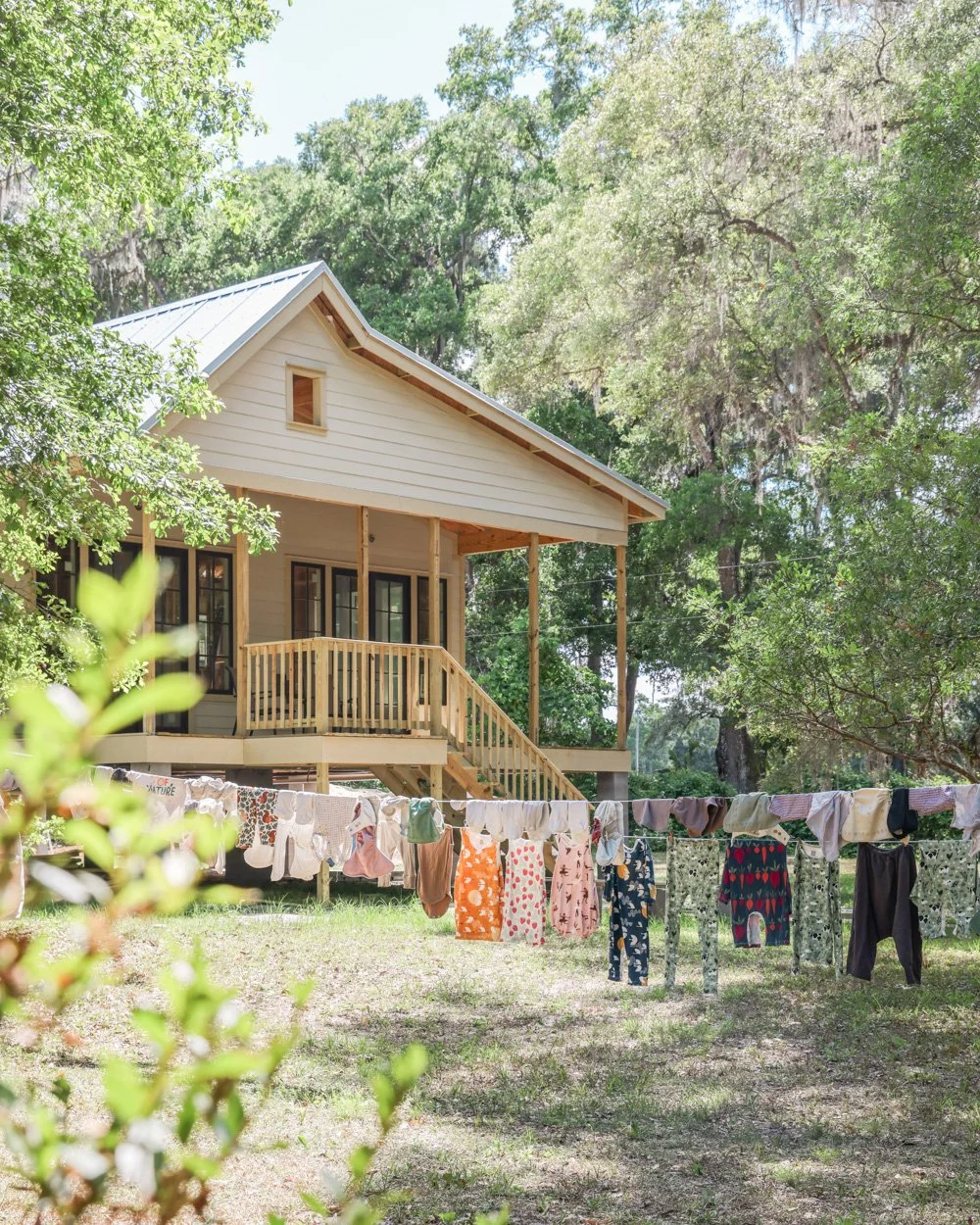
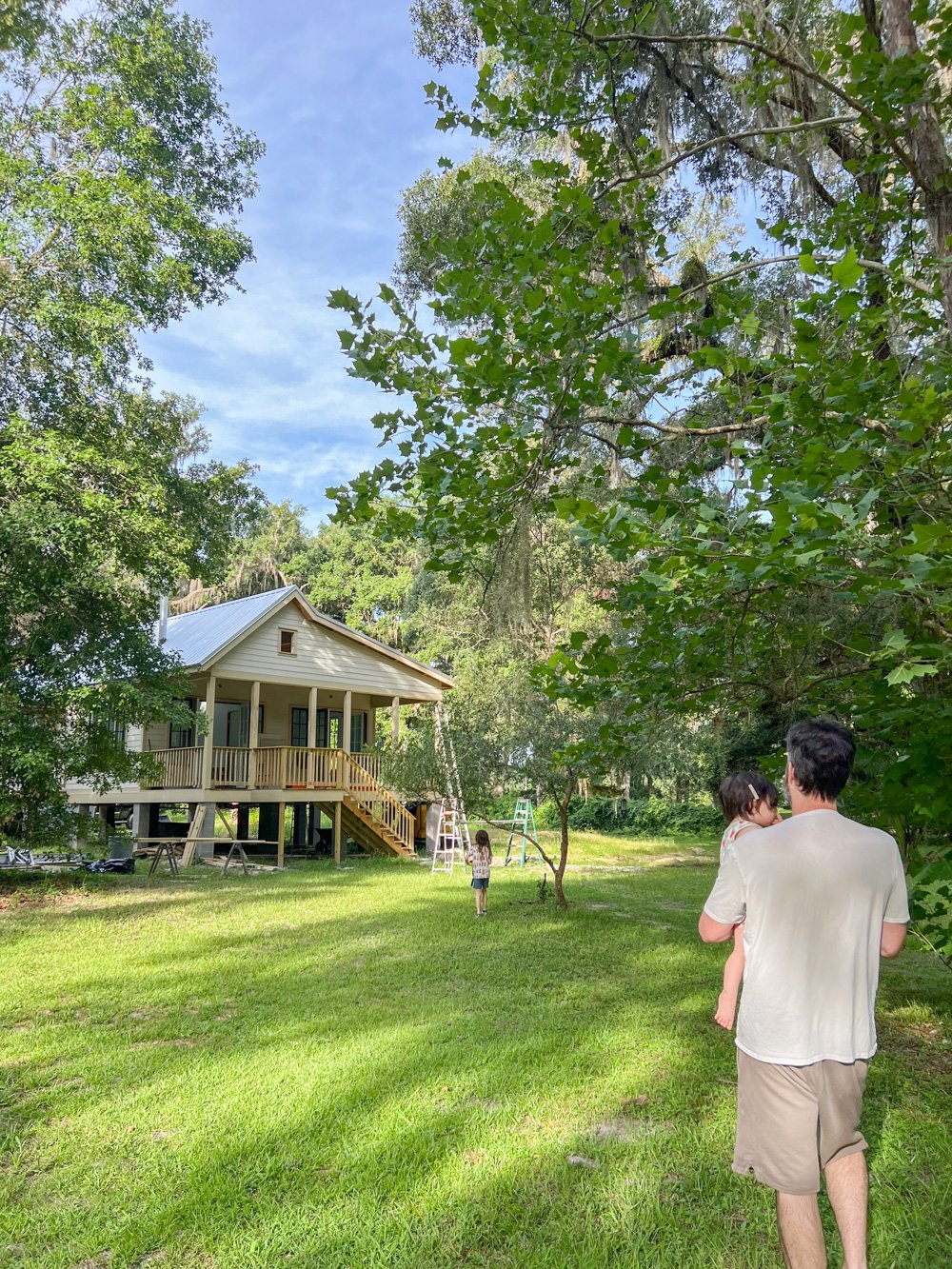
In January of this year, we broke ground on our new small Cottage in the Southeast.*
(*For those who are confused about this new cottage vs our Tiny French Farmhouse: the property that we’re restoring and renovating in France is a forever project for us, and won’t be livable full-time for several years. As such, this small Cottage will be our primary residence and studio for the foreseeable future, as planned from the onset.)


This cottage is roughly 900 square-feet. For reference, our Venice cottage was <400. The entire structure is built up about 5’-6’ off the ground due to current flood-level requirements in this particular area, which is a wildlife sanctuary.




The floorplan was a collaborative effort (dating back to November of 2020) between myself and Jennifer Langford (AIA, CNU, PA, LEED-AP) of The Sustainable Design Group.

Above rendering by & © Jennifer Langford, The Sustainable Design Group
My initial concept was a layout similar to that of our Venice cottage, but elongated to accommodate a second bedroom. Jennifer took the design and updated it to reflect the necessities of Florida living.


For example, she added a small utility room to house an HVAC system and electric water heater in order to cleverly avoid stealing space from the vaulted ceilings, which we wanted to keep as open and airy as possible.


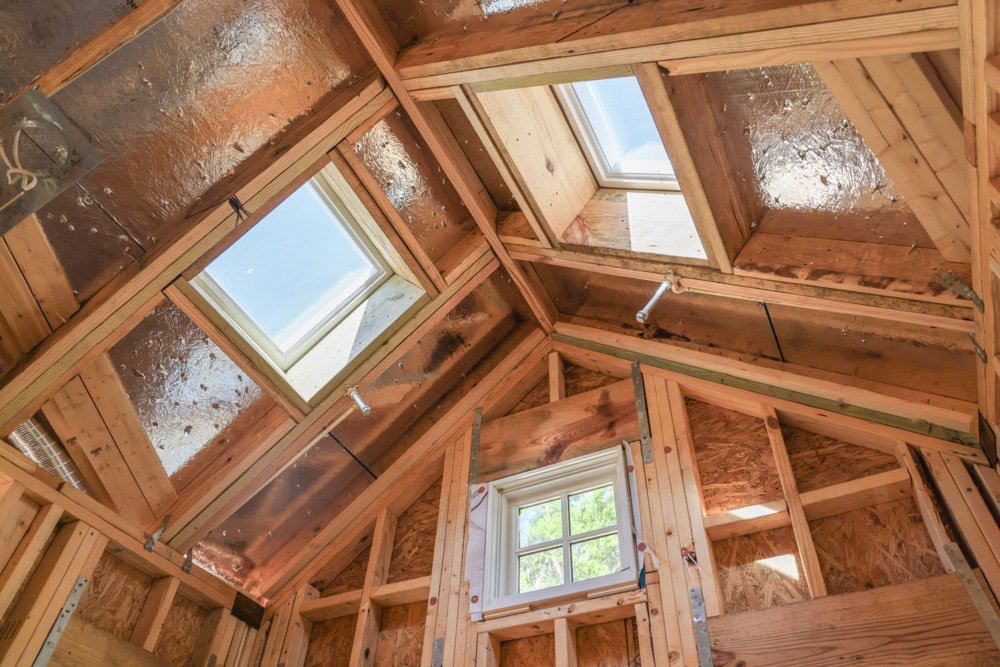
As a result of the utility room addition, she bumped out the shower in our bathroom + laundry room combo, resulting in one of our favorite features of the home thus far:



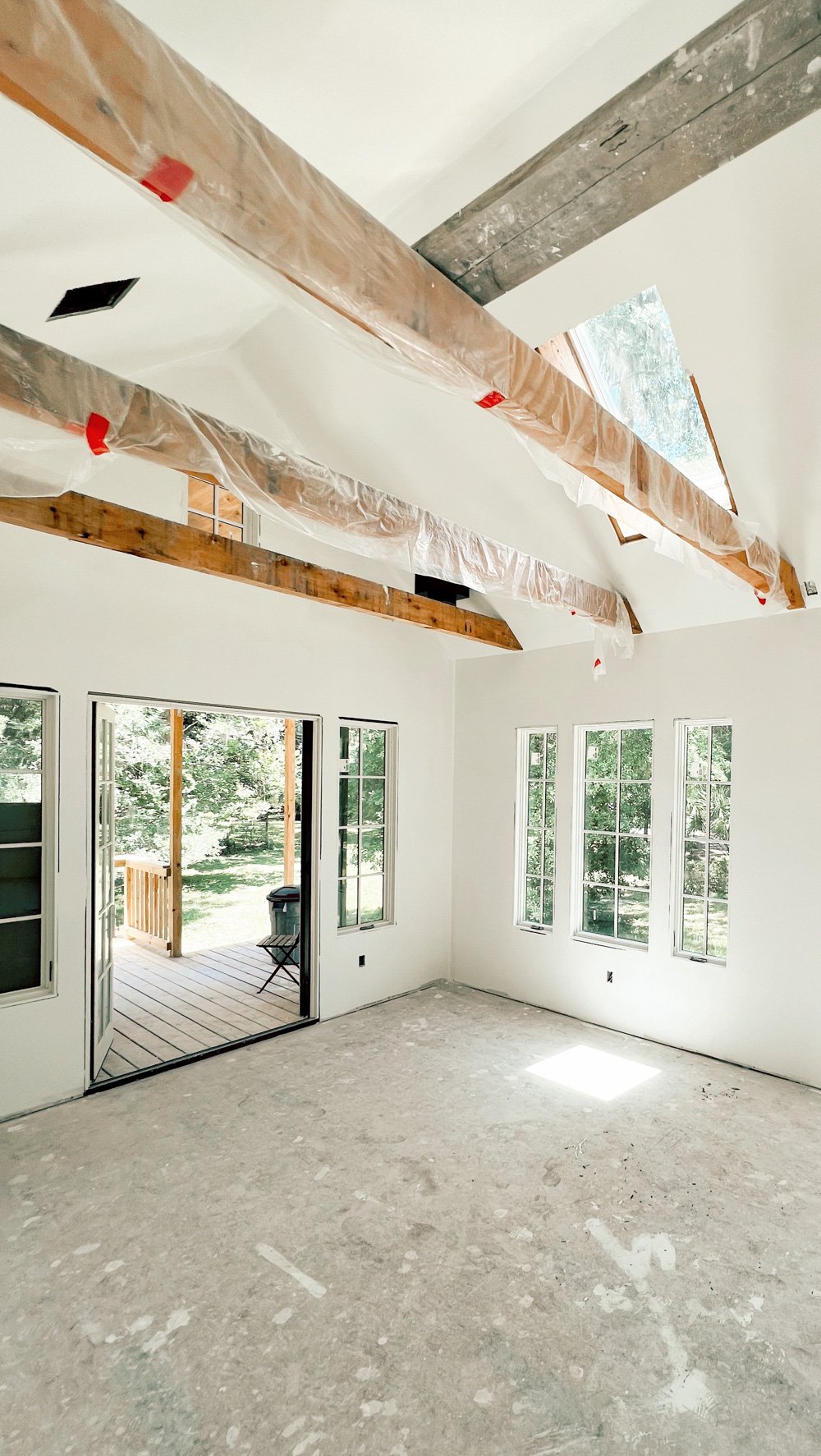
I’ll publish more of the small space design and engineering process with Jennifer in the future, but for now I’m sharing some of the exciting progress from 2022 thus far. (I’ve been covering this extensively on social media— particularly Instagram Stories, where I post daily updates and will continue to do so. Nearly 500 videos and photos of the process can be seen in the numerous “Prairie ADU” Highlights on my profile.)


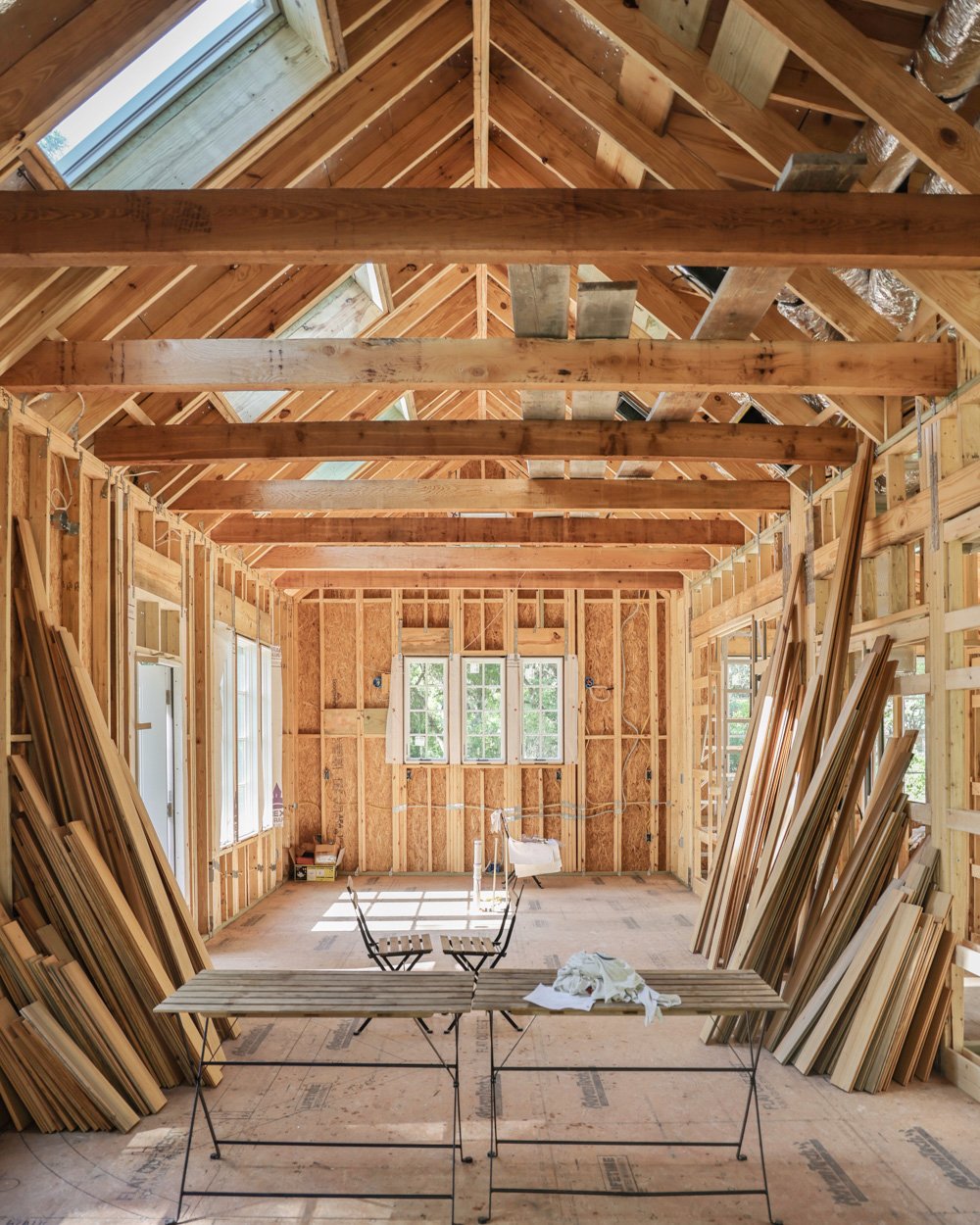


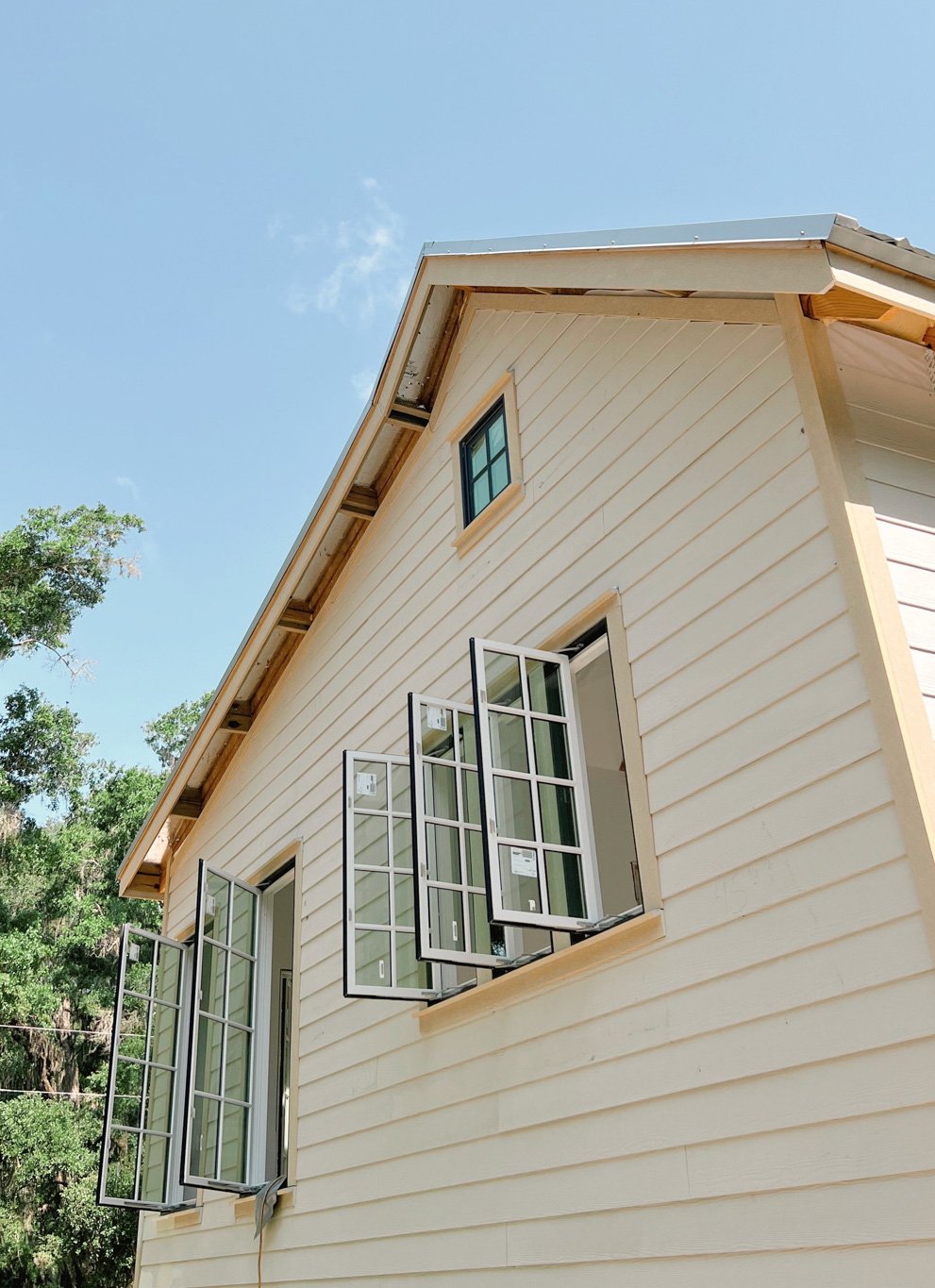


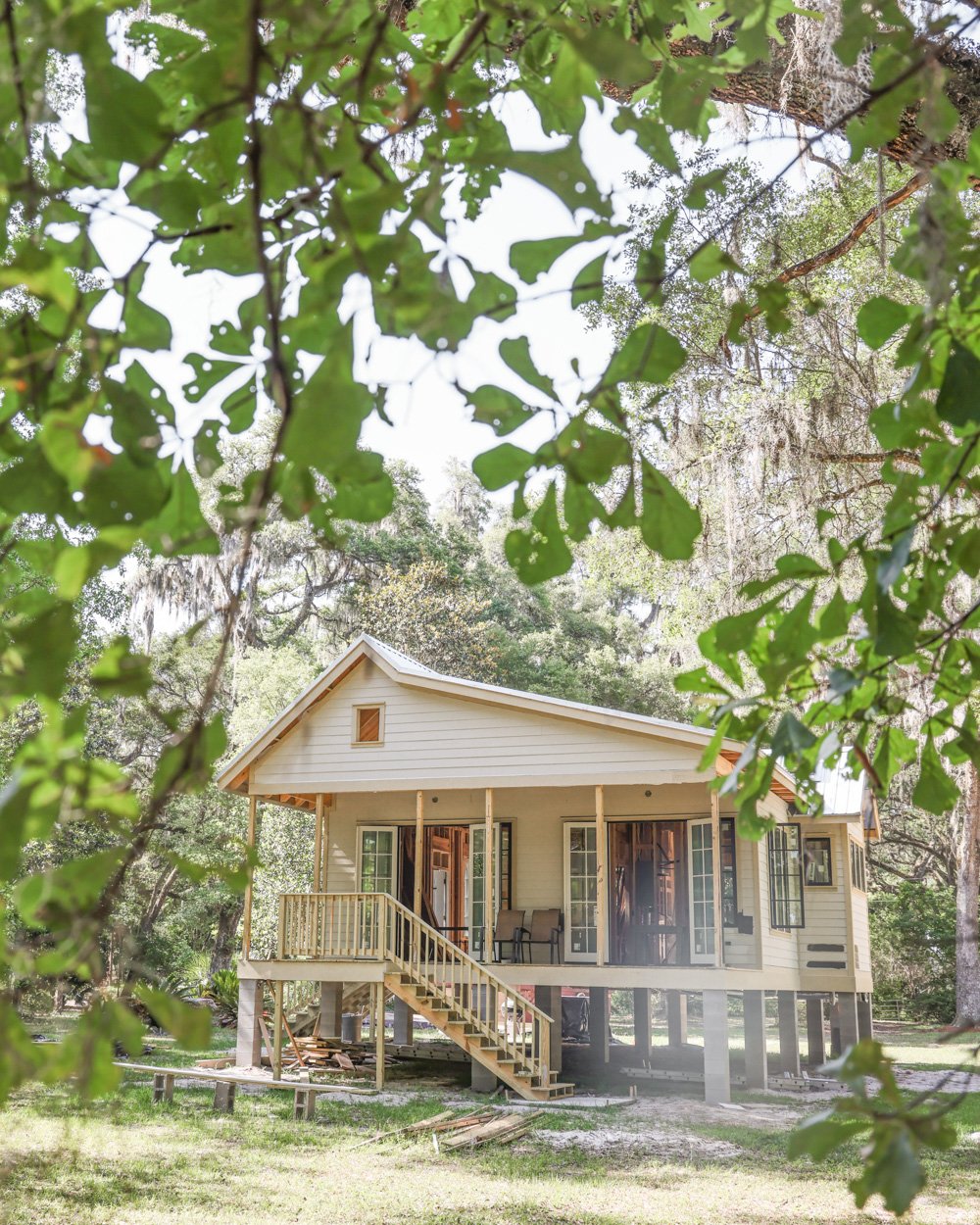
Although it has all taken longer than planned (due to numerous factors), we are pleased with our GC and his close team of subcontractors. Our home isn’t an easy one despite the compact floor plan, primarily due to the elevation and our decision to opt for custom framing. But the team is really bringing something beautiful to life for my family and business.

It’s been a year and a half since we left Venice, so we’re beyond eager to move in and resume our small space lifestyle… in our new setting, and with our newest family member.
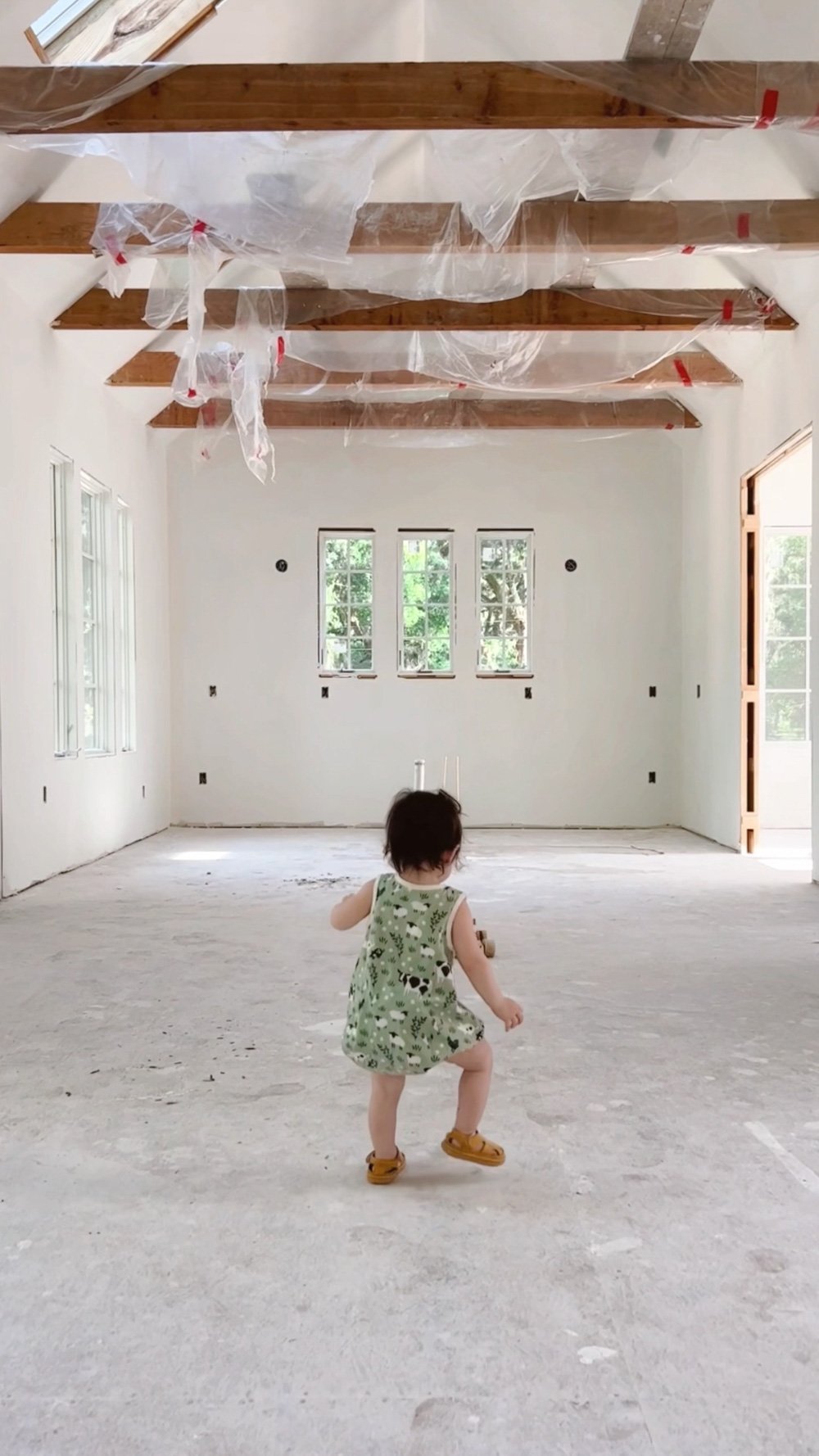

We’re almost at the finish line!

Let's go to Italy... together!

From April 23 - April 29 of 2023, I’ll be hosting a trip to Italy! Want to join me?
View the details + itinerary and/or book to join here!
I was initially considering a group trip to France (and perhaps one day we’ll do so!), but the itinerary for the Italian trip sang to me and ultimately won me over. It offers so many activities that remind me of our life in California, but with all the rich culture, history and architecture of Europe.

Activities Included:
Milan City Cycle Tour
Cooking Class with a Milano Chef
Lake Como Tour
Bellagio Lakeside Village Visit
Boat Ride from Bellagio to Tremezzo
Franciacorta Sparkling Wine Tour and Tasting
Venetian Water Taxi
Venice City Tour
Gondola Ride on the Canals
Islands of Venice Boat Tour
Other Inclusions:
Double occupancy in 4-star hotels
Local Guide throughout trip
All city transfers
Arrival airport transfer (until 5 pm on first day)

Additionally, I’ve secured a collection of mindfully curated gifts for attendees, featuring some of my favorite goods for travel from:
Vintner's Daughter
Steamline Luggage
Stojo
Branch Basics
(More details on the gifts later.)

Benvenuti in Italia!

Tiny French Farmhouse: Repairing the 2nd Floor Ceilings
When we and our partners purchased the Tiny French Farmhouse on the final day of 2020, we knew we’d have to tackle the repair of the 2nd floor ceilings as soon as possible. The water damage within them was evident from the realtor photos, and after visiting the property in our stead, our surrogates in the region confirmed the rot was indeed extensive.

Luckily our neighbors and friends are highly skilled in various areas of both home construction and repair, and are knowledgable about the specific materials commonly used throughout older homes in the Aveyron region.

When our family was finally able to visit the property last year, we connected with our neighbors, who generously agreed to handle with the removal of the toxic ceilings as part of the roof restoration for which we’d hired them.
The process was layered, but here’s the gist:
The low, rotted ceiling panels of the upper floor were removed
The aged and water-logged insulation was removed and safely discarded
In select areas, drywall and plaster were replaced or added
In certain spots, electrical wires were reorganized in safer arrangements
As part of the roof restoration, three VELUX skylights were cut-in and installed— one in both bedrooms, and one above the dark stairwell

As of now, the ceilings of the second floor — including the beams that were once fully or partially wrapped — remain unfinished. After seeing it first-hand, we’ll determine next steps.

Even unfinished, it is already greatly improved. Areas that were previously filled with soggy overhead boards (that encouraged bending and stooping) are now vaulted and spacious.
We’re not anticipating dramatic temperature changes within the home without the interior insulation. The roof now provides insulation via numerous materials / layers beneath its original stones, and the home is so small that it isn’t difficult to heat with the built-in system or petite space heaters left by the previous owners. Plus the large fireplace sits beneath half of the upper floor, and its chimney extends upwards throughout the main bedroom and 1/2-bath walls.


Of course, only time will tell! But since we’re in this project for the long haul, we’re unhurried and, currently, quite content.

Tiny French Farmhouse: Lauze Roof Restoration
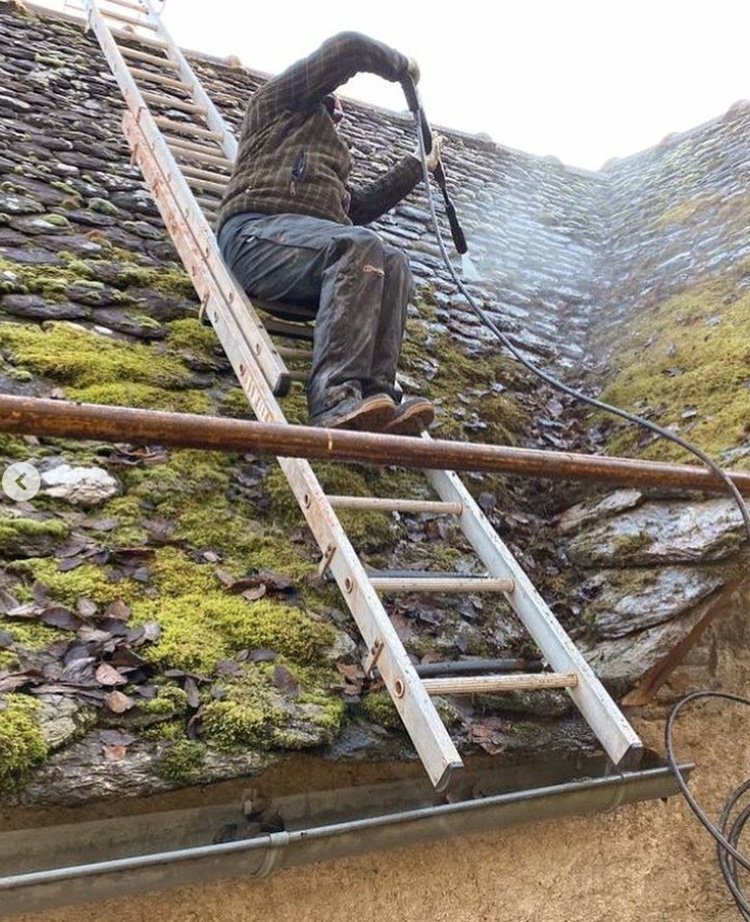
Since our last trip to the Tiny French Farmhouse, a fantastic team (who we’re lucky enough to call friends) restored the original, stone roof of the 1800s, <800 square-foot residence.
My family will be headed there next week, and we’re eager to enjoy their expert handiwork in person.
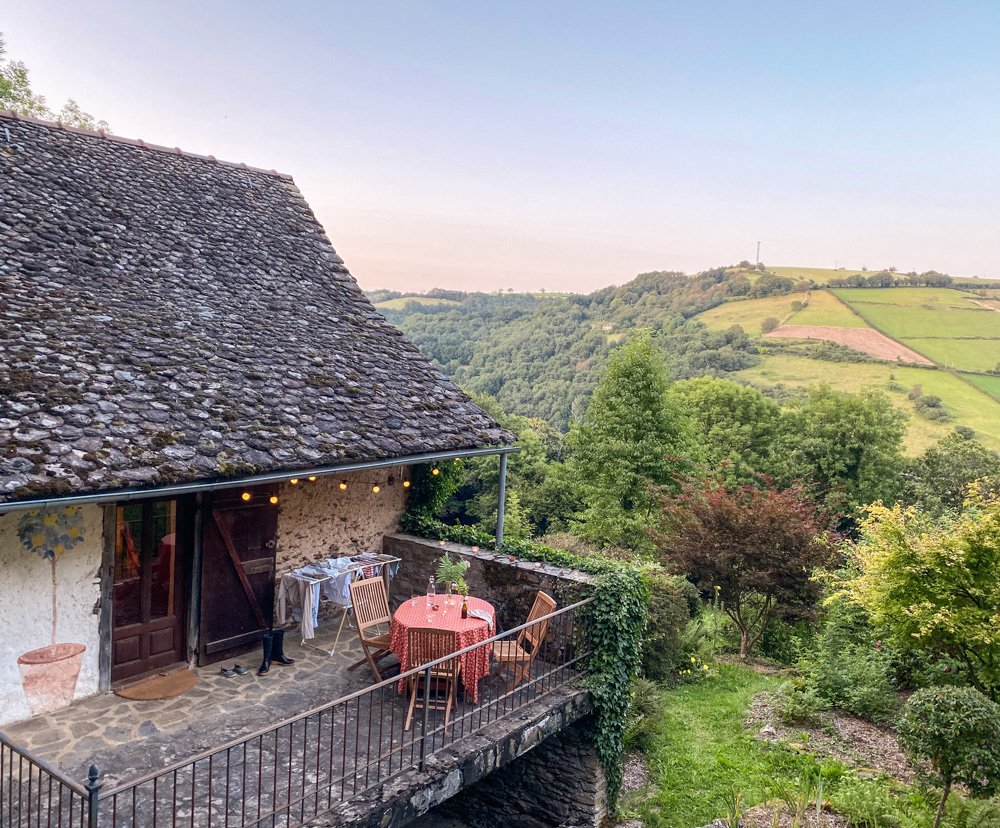
Before
This type of lauze roof is very common in the Averyon region. It’s not uncommon to pass one that’s being repaired, just as it’s not uncommon to pass one that has caved in after years of neglect.

Before
The stones gather green moss over time if not maintained, as ours had. In my opinion, the moss is beautiful, and allows the home to sink into its natural surroundings. But since the moss captures moisture and further weighs down the roof, it must be cleaned.

I covered the restoration process extensively across my social media channels*, but neglected to extend that coverage to the blog. (It’s been a sleepy year here on this site, I know. I was prioritizing time with our baby, while overseeing the new little cottage build in the Southeast. But I plan to get back into the full swing of posting later this summer.) *Much of that coverage has been saved to my Farmhouse Highlights on IG Stories.

Repairing the roof involved several technical steps, but the gist of it is:
The scaffolding was erected
The stone tiles were manually removed
The nails were removed one by one from the wood
The wood was allowed to dry out over several sunny days
The rotted components were removed and replaced, and the hips cleaned
Several layers of weatherproofing and insulation were applied above the wood
The tiles were individually and meticulously scrubbed clean and left to dry
The tiles were replaced, layer by layer, beginning at the bottom / soffits, and extending upwards towards the peaks.

From what we gather from the photos, we are thrilled with the end results. The before/after stand in stark contrast of one another, and yet the roof still looks like it’s beautiful, original self (plus the tiny skylights).

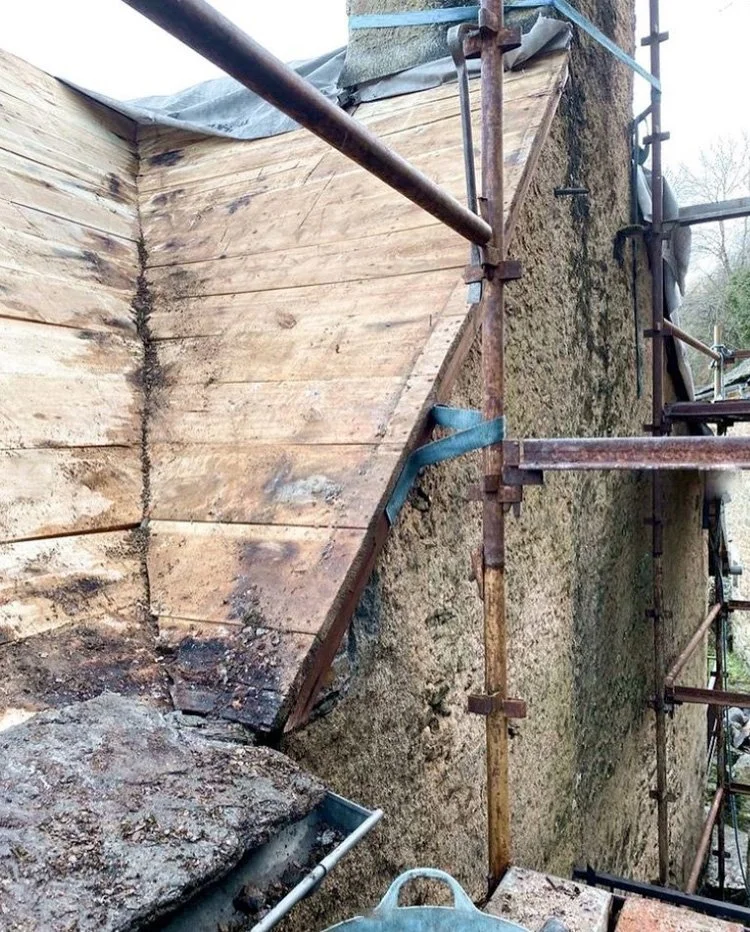


The entire process took a team of two about 4 months (including the ceiling work outlined in another recent blog post), as they worked around winter and spring snow and showers.
As far as budgeting for the restoration was concerned, let’s just say that the work was worth every penny, but that it was only possible to pay thanks to the multi-steward partnership behind the property acquisition.

Intimacy in a Small Space (Part II)
One of my most read entries on this blog is about intimacy in a small space. It was a personal post inspired by Maude, which is a sexual wellness company whose work and products are geared towards inclusive, accessible modern intimacy and destigmatizing the subject. The company was founded by our bold and brilliant friend, Éva Goicochea, whose work has turned a legacy industry upside-down, forcing it to confront its biases and narrowed viewpoint. I am so proud of her and her team that I want to shout it from the mountaintops.
Since Maude’s launch, Adam and I have used their products because they’re beautifully, artfully, and mindfully designed, plus they’re marketed with dignity. And, when it comes to small spaces, items often get left out in the open, so it helps when those items are visually appealing and even multitasking, like Maude’s.

Here are some of my favorites:
The Drop: See that lovely, dark green tear-drop shaped item on the bath tray? That’s the Drop, a personal massager that can be used for stress relief and pleasure, and is ideal on neck pain, erogenous zones, and joint pain. It is water resistant, has a small canvas carrying case + a travel mode setting so it won’t accidentally turn on when you’re on-the-go, and it is so tastefully designed that it can stay out in the open without shame.
The Burn Massage Candle: Massage is a powerful tool for fighting stress (which can reduce libido), and it releases oxytocin. Maude’s hand-poured burn massage candle is made with skin-softening jojoba and soybean oils, a 100% cotton, lead-free wick, and cruelty-free + vegan ingredients. Let the candle burn for 10–15 minutes, gently blow out the flame, then pour and apply the massage oil. (It will be warm, but not burning hot.)
The Compostable Wipe: You know I prefer reusable everything when possible, but sometimes wipes just come in handy. These are 100% compostable, water-activated, fragrance-free, OEKO-TEX® Certified, and hypoallergenic towels made for gently cleaning skin and sensitive areas.
The Tub Kit: These two products — the Soak and the Bath Salts, are made for solo relaxing or for soaking with a partner. Both are made from hand-harvested blends that infuse water with nourishing vitamins and minerals. Both are vegan and made with cruelty-free ingredients and never tested on animals.

Expect to see more Maude here over time, because intimacy has proven to be a crucially important part of successful small space living for us as a couple.

A More Sustainable Future for Marginalized Youth
It feels like the tolls against the marginalized continue to pile up at an unrelenting pace, despite all the work and progress of years passed. One of the communities that continues to face fierce odds against their physical + mental health, livelihoods and basic needs is foster youth.
Be a vital force in disrupting the pipeline that leads to disproportionately high levels of poverty, homelessness, incarceration, and unemployment among former foster youth. By supporting The RightWay Foundation, you’re helping build a more sustainable future.
I want to issue a special Thank You to Vintner’s Daughter, whose recent gift to RightWay will go towards hundreds of hours of intensive therapy for young women who are sex trafficking victims, and towards one year of intensive therapy services and support for 3-6 young women who are survivors of childhood trauma, commercial sexual exploitation, and the foster care system.
Year after year, Vintner’s Daughter, a woman-owned & operated business, continues to show up for foster youth in an impactful way. Because women can move mountains. Watch us.
Or better yet, join us.


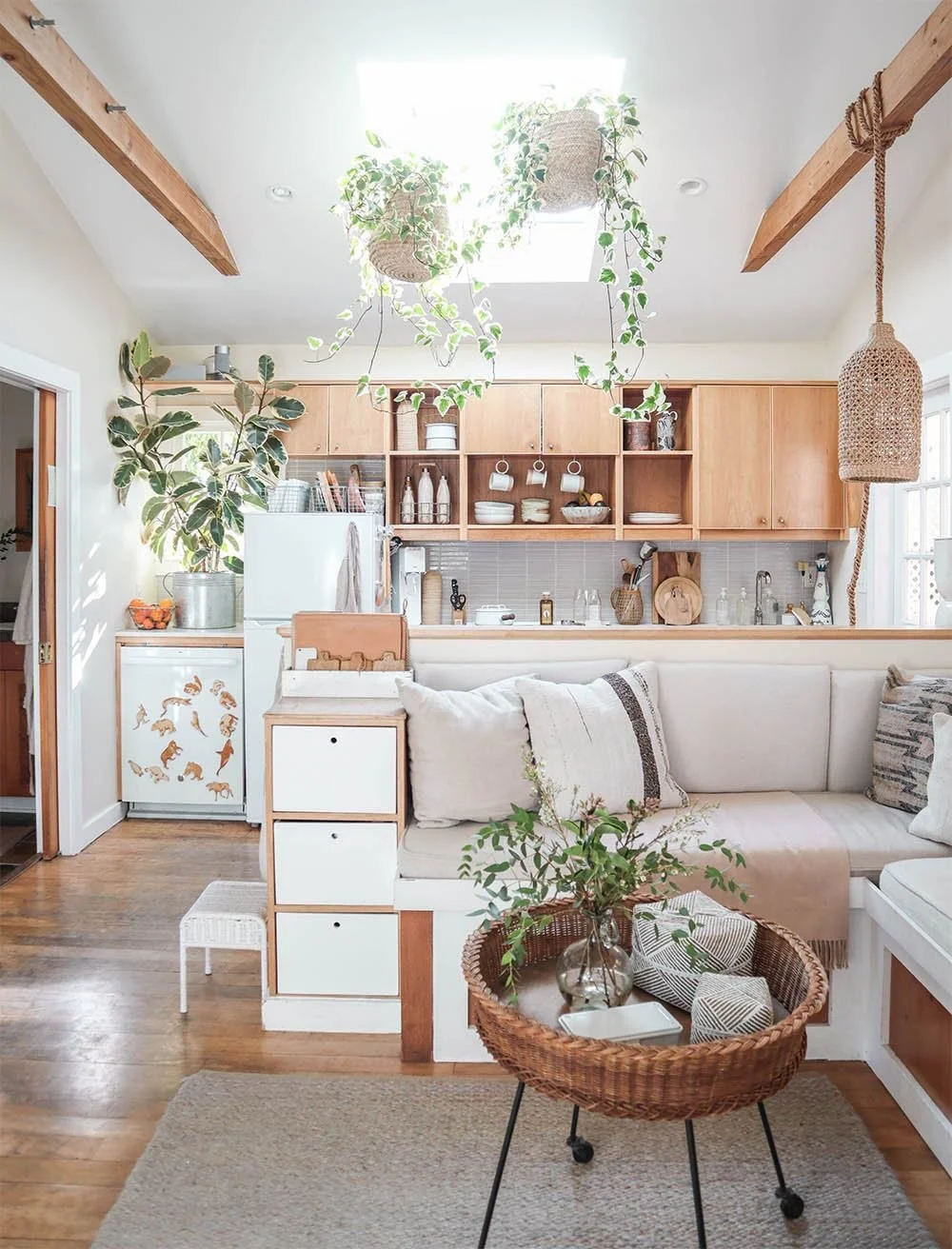
Small Space Design Hero: Solar Powered Fresh Air Skylights
Small Space Design Hack: Use skylights to enhance your home AND mood.
ANNOUNCEMENT: Now through Feb. 28, enter the VELUX Sunlight Lovers' Sweepstakes for a chance to win two VELUX No Leak Solar Powered Fresh Air Skylights with solar-powered shades and installation.
We’re current building a ~900 square foot cottage in the woods for our small family and business. (This is in tandem with our restoration of the shared, Tiny French Farmhouse, as our permanent move to France won’t happen for years.)

When I set about designing the space with our sustainable architect, I had a few firm requirements for the space:
Green practices and materials where possible
Just four rooms, no hallways
Space-saving interior pocket doors
Abundant natural light via window placement and ample skylights

We had skylights in our Venice Tiny Canal Cottage, and they made ALL the difference in visually expanding and lifting the <400 sqft space, but they lacked several features we desired. For example, there was no way to vent them, nor filter the sunlight when desired. So, when planning for our new cottage, I knew exactly how to get the look we love, along with the quality and functionality we were lacking before. It can all be achieved through the use of VELUX skylights.
On a side note, we also used VELUX skylights for the roof restoration and ceiling renovation in our Tiny French Farmhouse, but that’s a post for another day…
We selected VELUX No Leak Solar Powered Fresh Air Skylights. Since they’re solar powered, so no wiring is required during installation, despite the myriad of functions these skylights can perform.

Not only will the VELUX skylights provide the natural, mood-enhancing light we crave, but they’ll usher in the incredible natural surroundings, from the towering oak tree canopy to the stars at night. Plus they can be opened / closed via a remote control or smartphone for airflow. Fresh air ventilation has wellness benefits, since interior air is often more polluted than outdoor air. And in case we accidentally leave the skylights open, they have am acoustic sensor that automatically closes the skylight at the first sign of rain.
We also know just how impactful skylights are at visually enhancing the interiors of small spaces. The overhead natural light eliminates dark corners, amplifies the mindfully selected decor, and visually enlarges the space.

We opted for 3 slimmer skylights in our main room, which is the living + dining + entry + kitchen space, one skylight for the main bedroom, and one for the kids’ room.
When using skylights in a bedroom, it’s nice to have the option of blinds. (We learned this the hard way in our old cottage.) Our new skylights have solar powered blinds (controlled via remote or smartphone). For the bedrooms, we picked room darkening shades. For the main room, we used light filtering shades to diffuse but not block the sun.

We’re nearing the end of the framing stages of the new cottage build, and as of today ALL of the skylights are framed in. I’ll share updates on the installation and reveal of our VELUX No Leak Solar Powered Fresh Air Skylights.
In the meantime, there are still a handful of days to entire the VELUX Sunlight Lovers' Sweepstakes, which is open from Feb. 1 through Feb. 28 at 11:59:59 pm EST. The grand prize is two VELUX No Leak Solar Powered Fresh Air Skylights with solar-powered shades and installation. CLICK HERE TO ENTER.


Healing with the Power of the Ocean
Osea is giving 10% of the sales from their newly upgraded Hyaluronic Sea Serum to Sea Trees through 3/10. SeaTrees directly supports communities and scientists who protect and regenerate blue-carbon coastal ecosystems. Osea is a Climate Neutral certified, Female-founded and family operated business that makes exceptional vegan, clean, cruelty-free, seaweed-based skin + body care.
This post was sponsored by Osea, and contains a giveback mission to the nonprofit Sea Trees. Use code WHITNEY10 for 10% off, and know that 10% will be going to those acting to restore precious coastal ecosystems.
The ocean has the power to reverse climate change. The nonprofit Sea Trees knows it, and their work is geared towards the planting and protecting of blue-carbon coastal ecosystems. Because, much like mangrove forests, blue-carbon coastal ecosystems are hugely effective at removing carbon from the air.

SeaTrees directly supports communities and scientists who protect and regenerate blue-carbon coastal ecosystems. This includes planting mangrove trees, restoring kelp forests, coral reefs, seagrass meadows, and conserving coastal watersheds.

My friends and former neighbors at Osea are giving 10% of the sales from their newly upgraded Hyaluronic Sea Serum to Sea Trees through 3/10. Osea is a Climate Neutral certified, Female-founded and family operated business that makes exceptional vegan, clean, cruelty-free, seaweed-based skin + body care. I don’t use many skincare products, but I have trusted and used Osea for years.

Just as the power of the ocean can reverse the devastation of climate change, so can the qualities of the ocean help with skin that’s been impacted by pollutants, the sun, and time.

This newly upgraded Hyaluronic Sea Serum is powered by seaweed, volcanic marine ferment, and snow mushroom, which work to restore and maintain moisture in the skin. Despite the wildly fluctuating weather here lately, this serum keeps my skin feeling dewy. (One minute it’s freezing outside, and the next it’s boiling so the AC is cranked, which my skin haaaates. In both extremes, this formula gives me that extra moisture boost my 40 year old skin craves.)

Use code WHITNEY10 for 10% off, and know that 10% will be going to those acting to restore precious coastal ecosystems.

Eco-Friendly Wood Floors & Ceilings
Eco-friendly, safe wood floors and ceilings from responsibly-soured materials
We’re currently building a 900 square foot cottage in the woods for our family and small business.

We want to be responsible stewards of the environment and use reclaimed and recycled resources whenever possible — from hand-me-down furnishings (and plants!) courtesy of our neighbors, to reimagined building materials.


As such, for truly eco-friendly and healthy wood floors and ceilings from our region, Adam and I looked to The Goodwin Company. Not only are their products created with responsibly soured wood, but their entire business — from the log recovery process to their sawmill grounds — is fascinating.


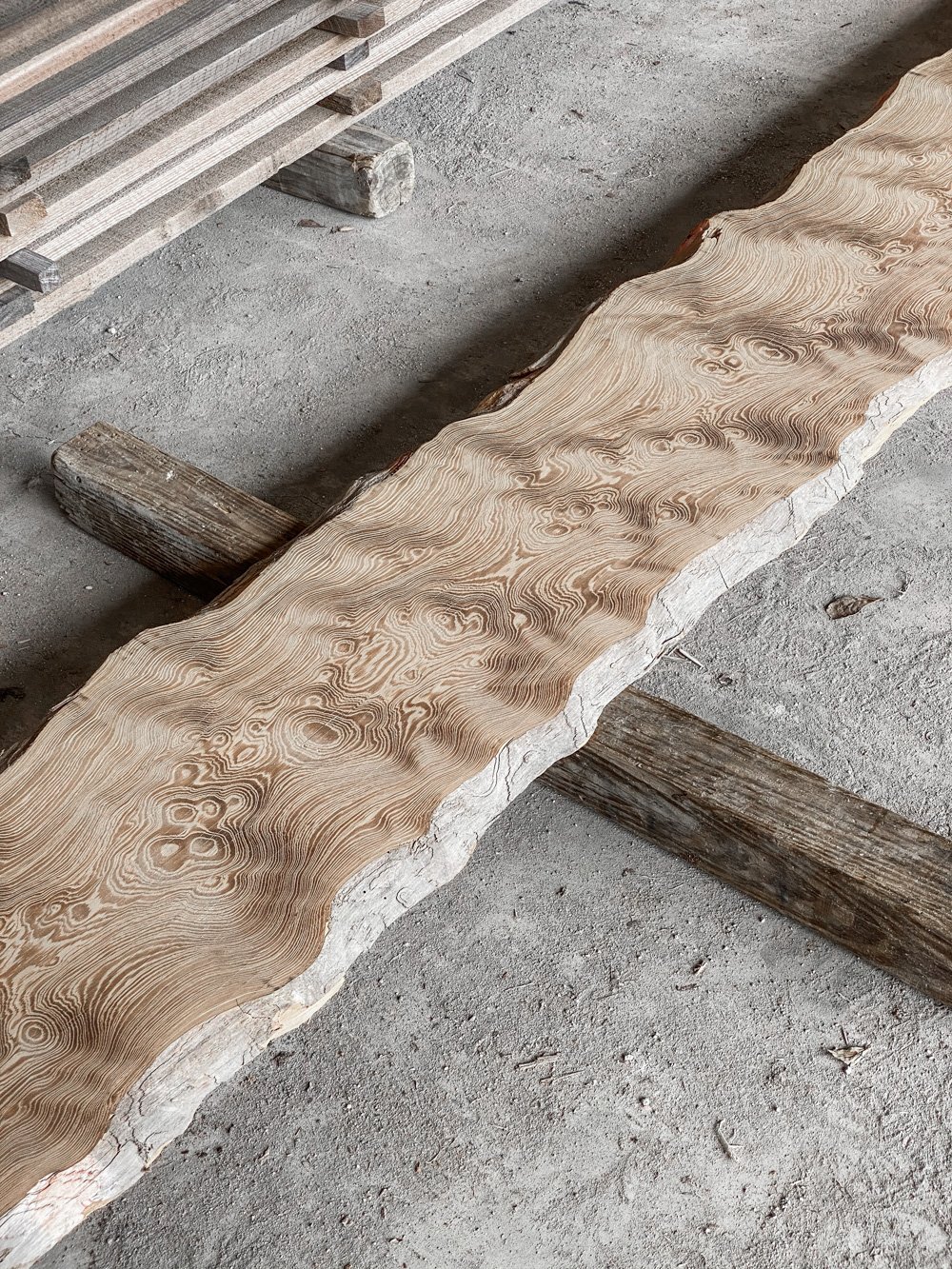
Goodwin works with state-permitted divers who recover, by hand, sunken logs of precious Heart Pine and Heart Cypress that were lost during river transport a century ago.

When Goodwin’s dive partners recover these logs from rivers, they do so in a way that preserves the underwater habitat. Goodwin actually spearheaded the responsible legal and industry standards for this practice, and their River Recovered wood comes from rivers close to the sawmill.

The logs are stored safely and naturally on-site. Over 600 are in their pond, which is filled with wildlife:

Goodwin also uses old-growth trees toppled by storms, and wood rescued from demolition, breathing new life into beautiful antique wood that would have otherwise been destroyed or sold to mills not practicing sustainable manufacturing.

Goodwin even reuses the sawdust from their mill, providing it to select blueberry producers to help crops grow.

Stay tuned for the reveal of this special wood in our little cottage. And, in the meantime, you can read all about Goodwin’s environmental mission here, and learn more about their process on-site via their Instagram channel.


Eco-Friendly Organization Tools
Tips for organizing, and living mindfully, beautifully, and practically in spaces of all sizes.
I’m delighted to be featured on the UASHMAMA blog today, sharing tips for organizing, and living mindfully, beautifully, and practically in spaces of all sizes.

I answered such questions as:
Many people want to de-clutter and live with less, but generally don’t know where to start and what to let go of. Do you have any tips for those who are just beginning the process of a living with less lifestyle or mindset?
… as well as:
When thinking about designing in a small space, should you prioritize design or function? Or can you have both?


9 Tips for a Lower-Impact, Practical, Temporary Living Space
Ways to make a temporary space function efficiently and less wastefully through planning, decor, creativity, and patience.
We’re starting off the new year exactly as we closed out the previous year…. in limbo. (I should note that I’m typing these words with a lack of gusto, but no lack of gratitude.)

At this point last year, we started packing up our holiday decorations at the Tiny Canal Cottage and, once the festive frills were gone, we simply kept packing. We eventually wrapped up our small business and 10 years of life into a fraction of a shared, cross-country moving van, and relocated too a temporary space on the East Coast. (Read about our attempt at a low waste, long distance move here.)

The space was meant to be our home for around six months while we awaited the build of a little ADU cottage in the woods of North Central Florida. However, we didn’t find a general contractor for months, as new construction is having a (stomach-turning, tree-uprooting) boom in North Central Florida. Then permit process took an additional five months, and — on top of that — global supply chain snags then came into play.

So six months turned into eleven, and here we are. But the build is, thankfully, FINALLY underway.
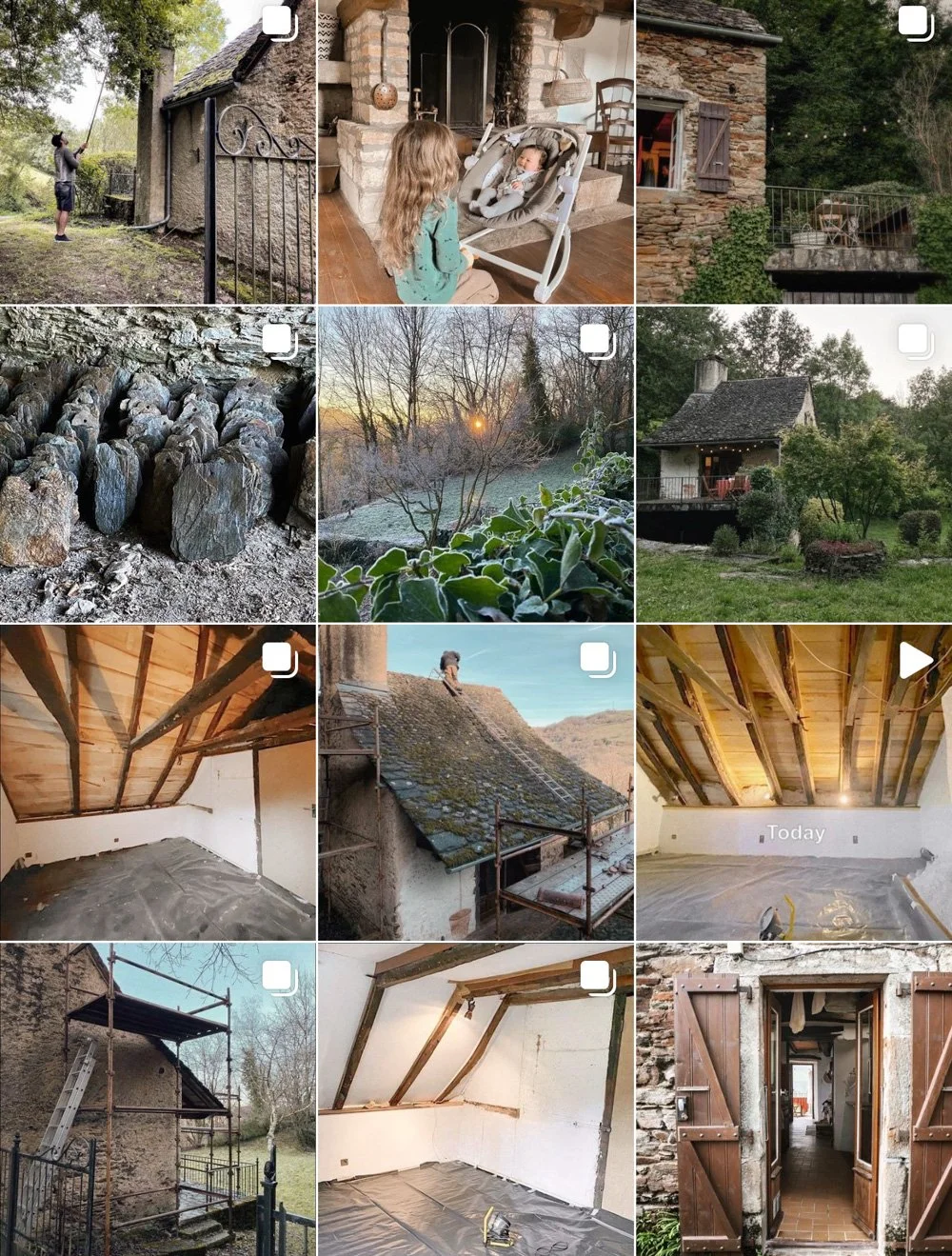
Surprisingly, we’ve had better luck in France with our little, shared Farmhouse. Thanks to our long-standing roots in the region, we quickly found local contractors and friends to begin the restoration of the our little, shared farmhouse since we can’t be there year-round just yet. I’m giddy with delight that this unique project is humming along marvelously, and I’m publishing regular updates on a secondary Instagram account: @TinyFrenchFarmhouse.
Overall, 2021 was a doozy of a year for us to uproot our lives and dive willingly into a state of ongoing upheaval. But the situation, while not ideal, has certainly had some very significant perks. All in all, I believe the move was the right decision. But the right decision is often not the easiest one to make, and this has been a bumpy road to traverse.
As someone with a full business and career in the Home industry, I’ve been looking for ways to take this experience and turn it into something helpful. I’m still seeking the mental bandwidth and available moments to conceptualize and execute whatever that would look like. So, for now, a humble blog post will have to suffice.

As far as personal matters are concerned, my main concerns regarding our temporary living arrangements were two-fold:
How would we make a temporary space designed for adults FUNCTION well (and safely) for us as a family with a pre-schooler, a newborn, two dogs, and a small business?
How would we keep environmental impact light without our usual belongings, practices and habits in place? (Especially during the pandemic, and in a far less eco-minded community than we were used to.)
Note: Before I jump into the following takeaways, I should distinguish what I mean by a “temporary space.”
First off, I’m not a young graduate just starting out on my own, nor am I in an industry that requires me to travel often for long stretches of time. I’m 40 years old, and I have a family, as well as a business based on the Art of Home. As such, I had believed my days of nomadic living to be behind me.
Secondly, technically our Tiny Canal Cottage was temporary, as we were renters who could’ve been asked to vacate at any time. But, despite the fact that we rented, it was our HOME. We knew that we wanted to invest in it as fully as possible, because we intended to live our lives to the fullest there as long as we could.
Our current situation is like a bridge for us. We’re slowly crossing over, sweetly mourning the life we left (as I expect we always will), while excitedly tackling two very different living projects ahead of us. The rooms to which we currently have access are not open for us to transform as we normally would. I liken our current existence to living in a loving, comfortable Airbnb. We’ve moved in and are using it to the fullest, but it’s not our own.
So, with that, here’s some of what I’ve learned, hugely condensed.

Don’t Be Trapped by a Space’s Intended Use
As is often the case with a small space, temporary living situations might need to multitask, or function in entirely different ways than their intended use. And that’s okay.
It’s. Just. Temporary.
For example, we’re using the upper floor of a single family home. The kitchen is on the ground floor, and the sounds from it carry throughout the entire house. When I was expecting the arrival of our second child in April, I knew that the last thing I’d want to do after breastfeeding and then pumping every two hours is trudge up and down the loud stairs in the middle of the night while exhausted and attempting to not wake the dogs or disturb the rest of the household. So I had to find a way to lightly convert part of the second floor bathroom into an area where I could clean / boil / dry pump parts, safely store breastmilk until he morning, and so forth. Was all this the stuff of Instagram dreams? Definitely not. But did it work just fine, while keeping everyone else asleep and preventing me from tumbling bleary-eyed down the stairs at 3am? Yes indeed.
Fully Ignore Decor Rules
To piggy-back on the above, sometimes you just need a means to an end in a space that’s not yours, so go ahead and break the rules if that’s what works. In our case, we have access to two bedrooms (filled with furnishings and items that aren’t ours), but the typical two bedroom layout was no longer working for our daily lives based on safety of the children and various parenting responsibilities. So Adam and I recently squeezed the provided queen bed + full bed, and our daughter’s crib into one (packed) room, freeing up a safe play area for both of our kids in the remaining bedroom. For now, it all functions exactly as we need it to, and we can put up with the unusual layout since we know it’s not forever.
Note: Our farmhouse and future cottage only have 2 bedrooms as well, but we will have the ability to equip and arrange them in a way that suits everyone’s needs.)

Pack with a Plan / Take What You Need
I’ve never been a fan of storage spaces. Ashlee Piper goes into the waste and excess involved in the storage industry in her book, Give a Sh*t, which I both recommend and refer to often. But my family has had to keep the vast majority of our belongings in a storage unit for the past 11 months while our little cottage is still being constructed and the shared farmhouse is being restored. Knowing that this would be the case for quite some time, we wanted to prevent financially and ecologically wasteful practices, like the repeat buying of items we already own but lost track of in storage, or keeping reusable goods tucked away in moving boxes while we churn through single-use alternatives for the time being.

So we planned accordingly, either dragging what we needed with us in our suitcases across the country, or making sure that the moving boxes we needed most for our attempt at a lower waste lifestyle were clearly marked and easily accessible upon pickup and delivery.

Plan for Setbacks
What we didn’t plan for was the (very) extended time our Cottage construction would take, so we failed to wisely pack and mark our first child’s hand-me-down items for his little sibling beyond a certain point. In other words, we considered the need for access to newborn goods, but not 9+ month goods. Same for seasonal garments. While there is only so much we can accommodate in our temporary space, we could’ve better planned the packing, labeling and placement of things we’d need if and when our finish line became pushed further back.

Do What You Can (Within Reason) via Limited Decor
Functional decor such as plants, portable lighting sources, mirrors, bedding, and rugs can make a large impact in both the look and feel of a room. If these are items that you already have on-hand, or ones that can be repurposed in your next space, why not go for it— temporary space or not.
Find a Stop-Gap with Extended Uses If Needed
Our homes can make all the difference in our lives— this why I love what I do for a living. If a living space is preventing you from being able to function the way you need for your mental health or livelihood, perhaps search for a stop-gap if possible. (A rental studio, an external office, a gym membership, a library card, etc.) Personally, I need a small space for my job of course… but small spaces are also my muse. For whatever reason, I feel infinitely more creative in limited square footage. This is one of the reasons why we built our 114 sqft greenhouse over the summer. It scratched an itch both personally and professionally, while also providing us with a versatile structure that we’ll hopefully have the opportunity to enjoy in evolving ways for years to come, extreme weather events permitting.

Set Ego Aside
I’d flat-out be lying if I said I didn’t struggle with our current setup. Again, I’m ever-so grateful, but it’s still a pride-swallowing situation as a 40 year old who is also the main earner in the family to tuck her family and business into someone else’s home. However, I can say with all sincerity that when I take external voices and societal pressures out of the picture and just listen to my family’s needs, this situation is 100% fine for us for the time being. We’re learning what we need — and don’t need — in this region and community, and we’re experiencing incredible moments as a multi-generational family that will stay with us forever.
Stick to a Budget
It can be tempting to go all out in a temporary space. (“I should add some on-trend bead board! This carpet has to go! That lighting fixture is not my style!”) But if you know for a fact that a more preferable living situation is just around the corner — and if budget is a consideration for you as it is for us — then consider every decor and design project you forego in your current space to be another project you can tackle in your more accommodating future home.

Work With What You’ve Got
Look around you to find the hidden uses and unexpected joys of your temporary space.

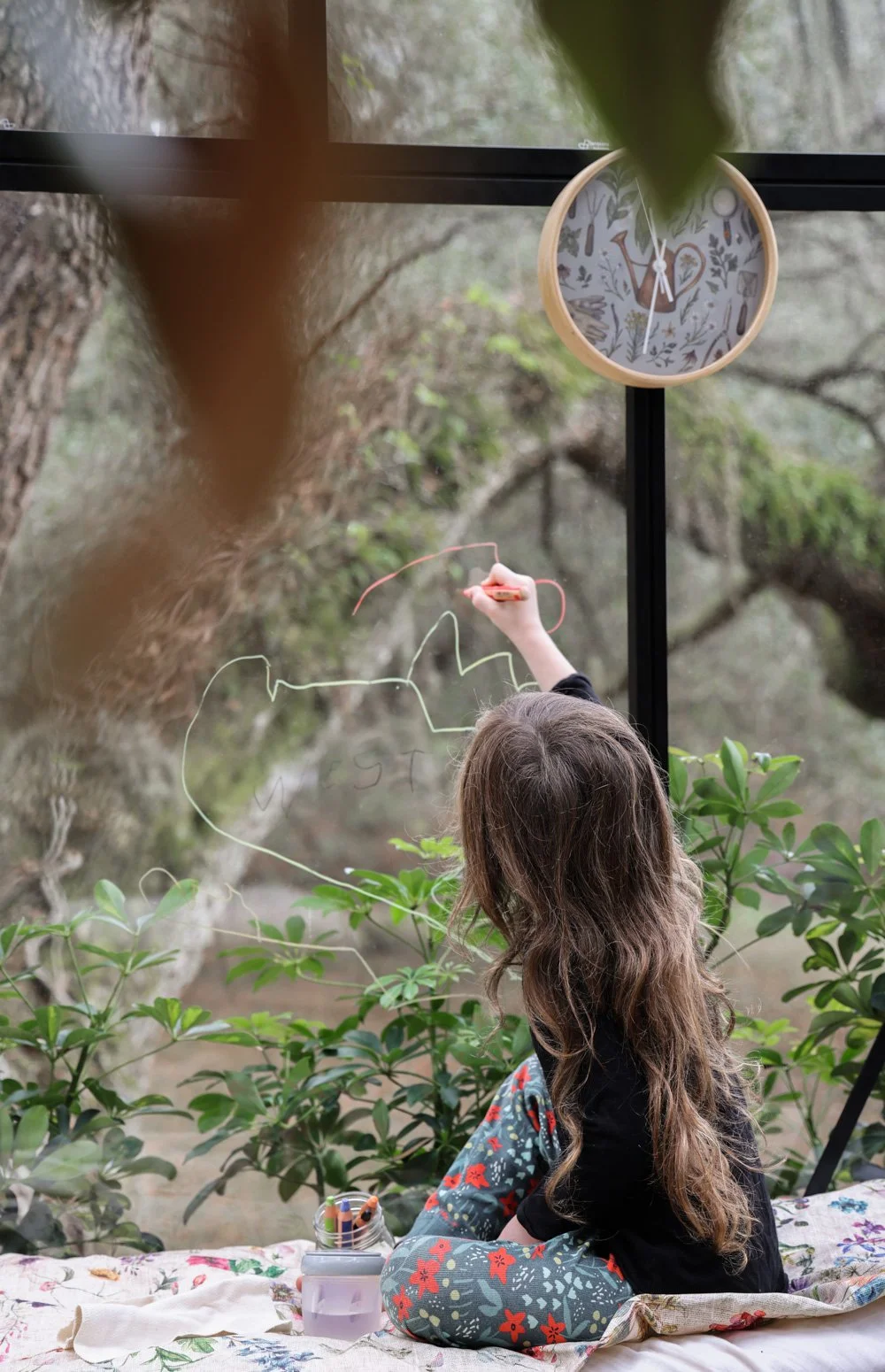
The following is an extremely specific example, but I think it’s a good one: Our Venice cottage had a built-in bed with an integrated headboard that turned out to be a perfectly cushioned spot for hours and hours of playing games of suction cup darts with our little one. Now he uses zero waste Stabilo art sticks to safely draw on the greenhouse windows while I work.

Put your temporary space to extended use whenever possible— unanticipated gems might perhaps reveal themselves, sparking moments that make a less-than-ideal situation into something you’ll cherish down the road.

Decorating with Nature
I am starting to consider myself more of a facilitator or celebrator of nature than an “artist.” - Ava Roth

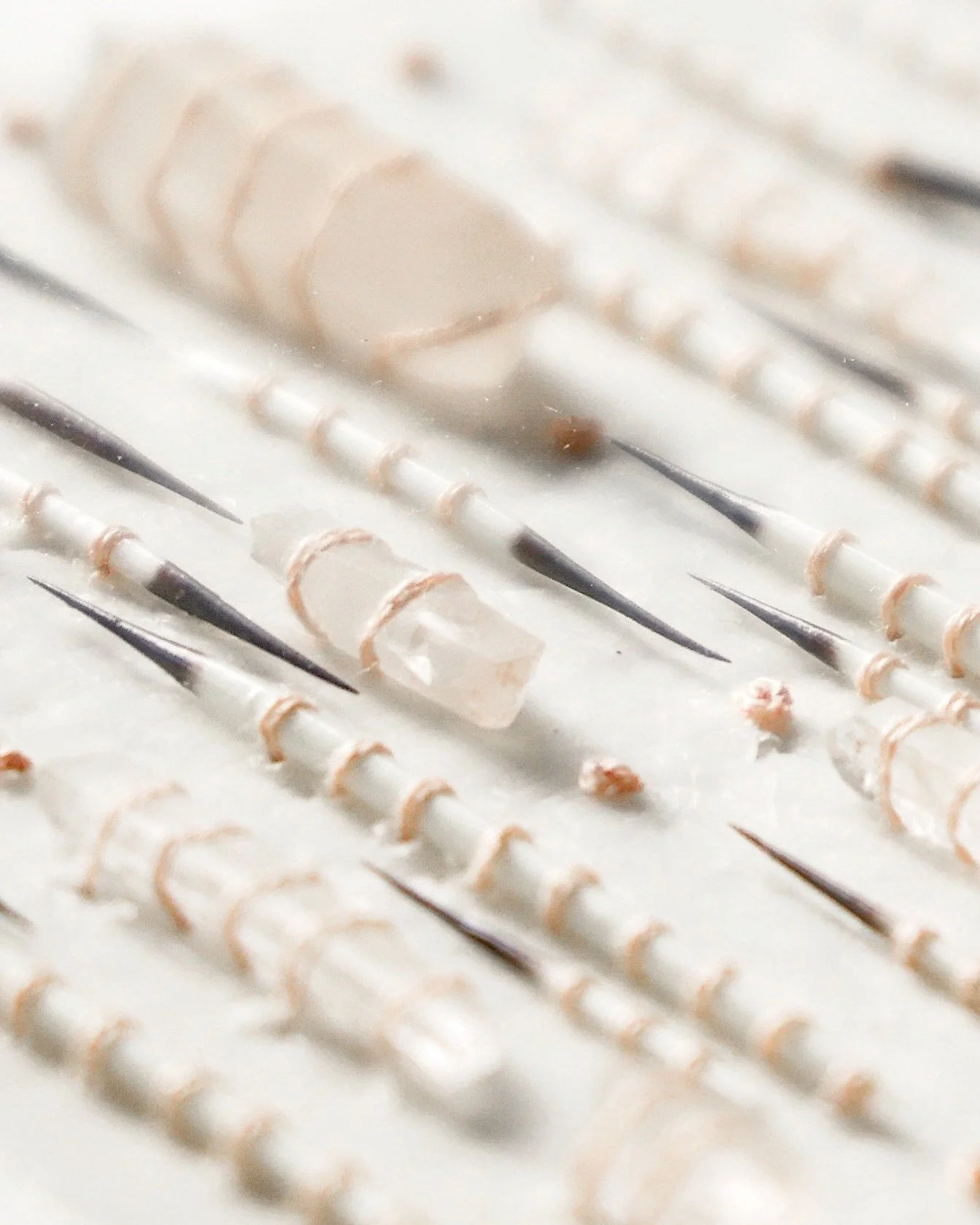
Ava Roth is a mixed-media Artist, a Bee Keeper, and — in her words — a Honeybee Collaborator. Her works first caught in my eye (and took my breath away) via Instagram. From her use of found quills, willow, antler sheds, leaves, and above all, beeswax, to her way of celebrating and nurturing wildlife, to the “fundamental” slowness in her creation process, I respect her methodology as much as I am enamored with her artwork.
Note: All animal-derived materials have — of course — been ethically sourced.

We were lucky enough to become the stewards of an incredible piece by Ava, who agreed to the below Q&A for those of you who, like me, are interested in her creations and mindset.

I’m fascinated and inspired by your use of natural materials for your work. What are your preferred materials, and why?
My primary inspiration is the natural environment, and at this point almost all of the materials I use are organic. However, this was not always the case. For many years I would simply incorporate little bits of natural ephemera into whatever I was making. Over time, I have learned to let the materials not just appear in my work, but to actually dictate every aspect of the process, leaving as delicate an “artificial” touch as possible. Increasingly, I find myself doing so little to the natural objects I have my hands on, such as leaves or crystals or porcupine quills, that I am starting to consider myself more of a facilitator, or celebrator of nature, than as an “artist.”
Beeswax is the cornerstone of (almost) all my work. Using beeswax to make art, which is known as encaustic, is a very ancient practice. Encaustic was used by early Egyptians and Greeks, and was the common medium for painting before the advent of oil paints. Not only is the beeswax organic and archival, it is luminous and limitless in is possibilities for application. Beeswax is the binder that holds my work together, both literally and conceptually.


You’re a beekeeper as well as a maker. How do these practices intersect when it comes to mindset and method?
I love this question so much, because it goes right to the heart of my intentions as a maker. The answer is simple – they intersect completely on every possible level! When I first started using beeswax as a medium I was interested in bees, but knew relatively little about them. The more I learned, the more that knowledge folded back into my work, and a beautiful feedback loop took root. Having direct contact with bees is essential. It is like a touchstone, keeping me connected to the core beliefs that hold my practice together.

What proportion of your materials are foraged vs otherwise? Is the foraging an important part of the creation process for you, and if so, why?
Although I do forage for my materials as much as possible, unfortunately, I can only collect a small percentage of what I use. This is because I live in a climate that is encased in snow for well over half the year! What I don’t forage myself, I buy from local sellers who collect their local materials and sell to artists like myself (I use Etsy a lot.)
Despite the fact that I rely on other foragers, I will still claim that foraging is a very important part of my creative process. The prospect of finding new materials to work with has taught me to walk through my environment in a state of attentiveness and inspiration. Looking in this way, with searching and awe, has further opened my eyes to my surroundings. I have learned to identify trees, birds, fungus as I scoop up Hemlock cones or driftwood or White Pine needles.

How do you balance your respect for bees and other animals with the use of such materials? (Much of our community is vegan and will be curious about this.)
I am wholly dependent on the natural environment, and bees in particular, for my work, and the well being of both are vitally important to me. Like with everything, slowing down and learning and listening is a crucial aspect of respect.
Because some of my work goes directly into bee hives, people have asked about the impact of this particular project on the bees in question. I can honestly say that my inter-species collaboration is truly a collaboration, and not a top-down mandate for the bees to do my bidding. I work on their time, in their environment, in their season, and at their discretion. The process has evolved slowly over many years of careful observation and reverence for the bees. Each piece is made with non-toxic materials inside traditional Langstroth hive frames. I do not manipulate conditions, such as the structure of the hive or the time it takes bees to naturally build comb. The frames are simply slipped into the hives when pollen is at peak flow, and “finished” by bees in the dark privacy of their home.

We’re part of a culture that values efficiency and speed, and yet so many of us are craving ways in which to slow down. I imagine your work requires a phenomenal amount of time to conceptualize and create, is this true? If so, as an artist, how do you honor the process and the time that it takes to complete?
Because my work is a celebration of nature, whatever hours I spend on a piece seems paltry compared to, say, the amount of time it took for the leaf I am embroidering to grow. But the slowness of my work is not a frustration, it is actually the point. Hours and days and years spent decorating, festooning, illuminating, celebrating nature is the only way to honestly engage with nature. The slowness is fundamental. At it’s core, my work is about exploring the boundaries of where humans collide with the natural environment. My purpose is to both discover and offer a more beautiful outcome of this encounter than the one we are faced with in the news every day. For me, that mission requires an investment of my imagination, my mind, my skills and most perhaps most importantly, my time.


Dressing the Tiny Greenhouse for the Holidays
This holiday season, I wanted to create a little bit of magic for our 5 year old, who has shown immense compassion, understanding, patience, and love this year. As were still between homes (our small ADU cottage is under construction, and the farmhouse roof is being replaced/restored), I figured that decorating our tiny, mixed-use greenhouse would do the trick:
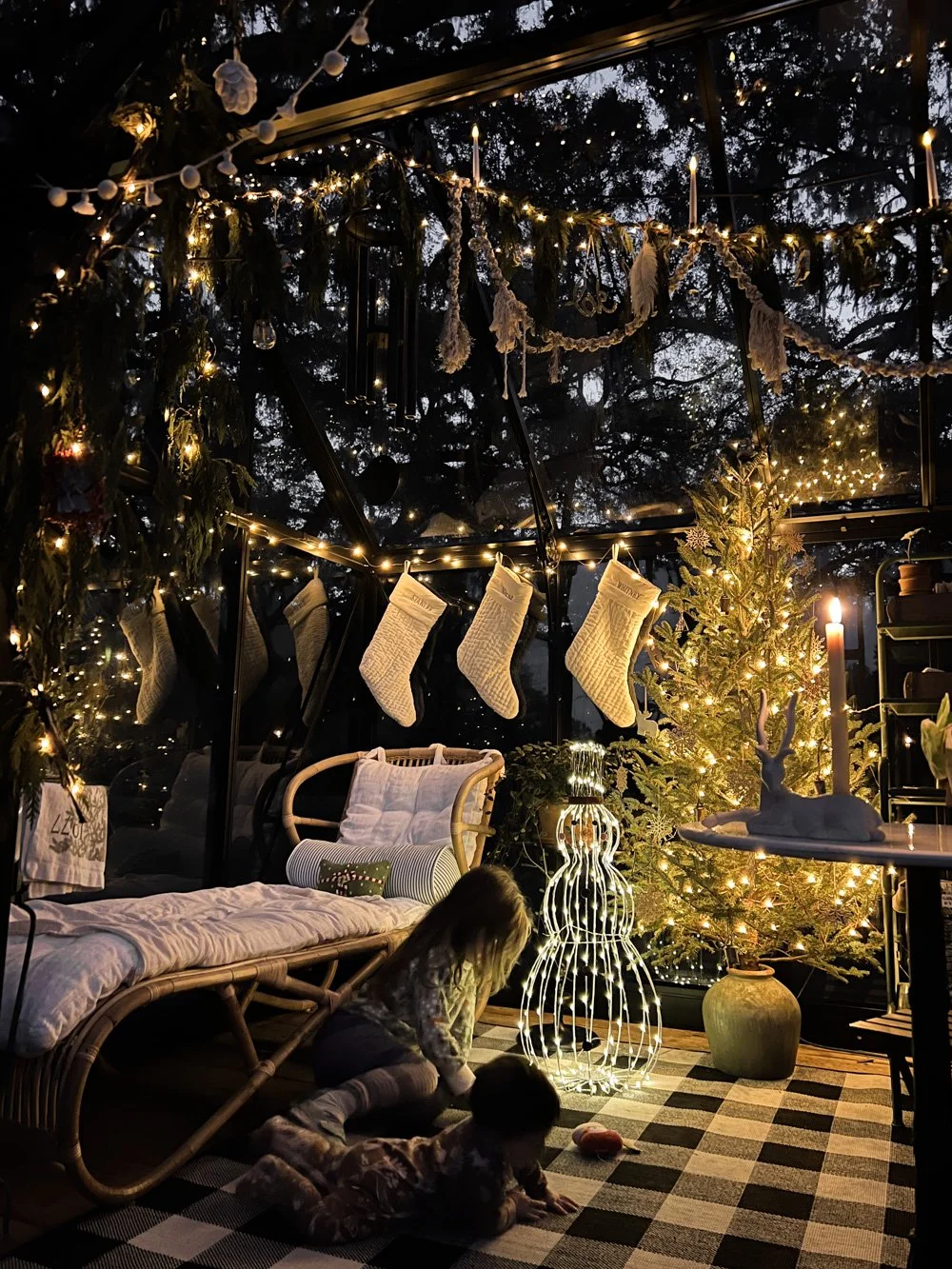

We’ve long kept all our holiday decor in a vintage suitcase, with the exception of the live tree, and garlands made from discarded clippings, which we get locally.

In celebration of our tiny cottage and the canals, we got one new ornament this year: a green canoe, just like the old one we had when living in Venice.

(Pictured below: A sampling of hand-me-down, add-on, and handmade stocking-stuffers for the kids. They don’t have to be new, pricey or flashy to be exciting for the littles.)

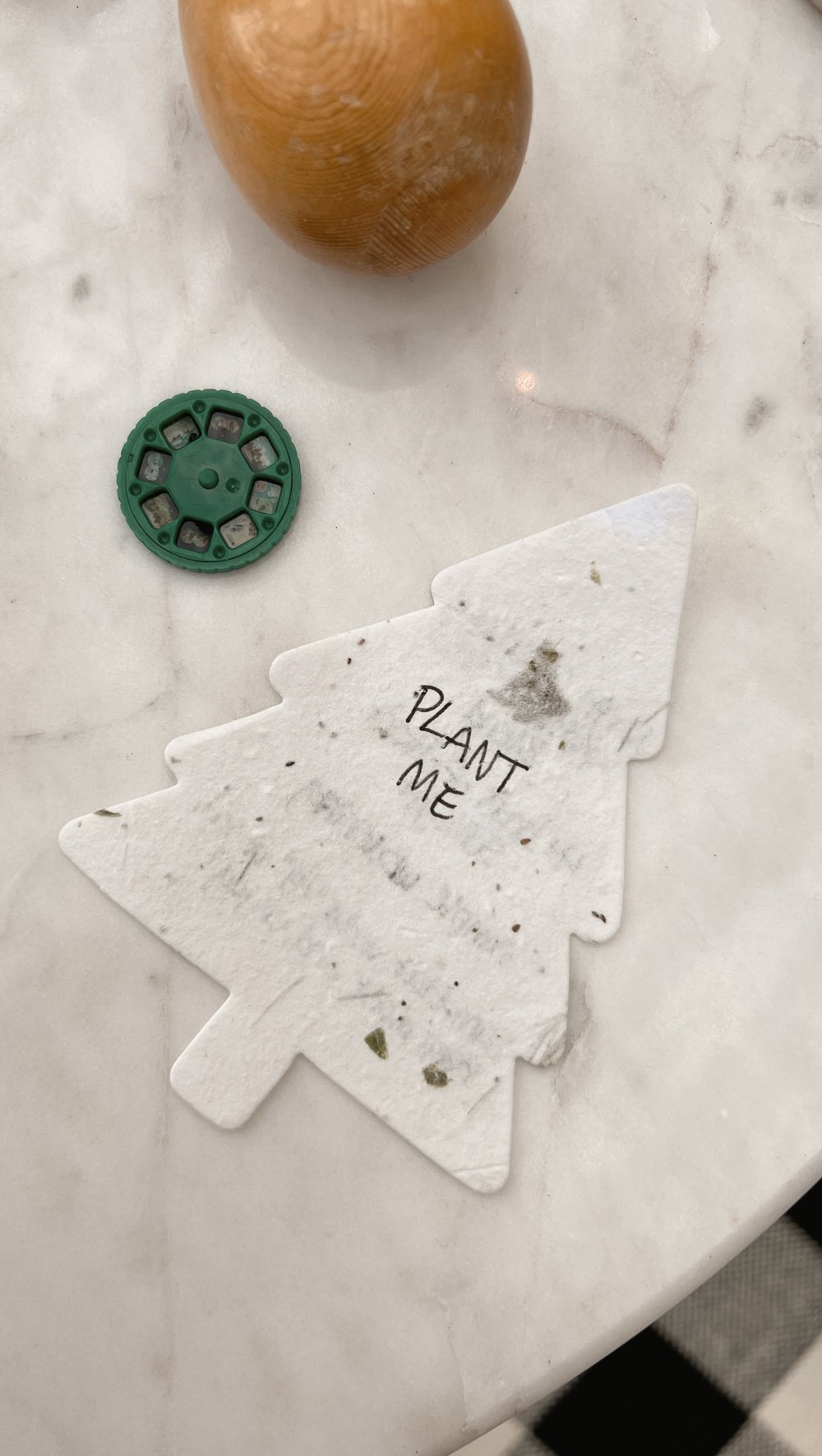
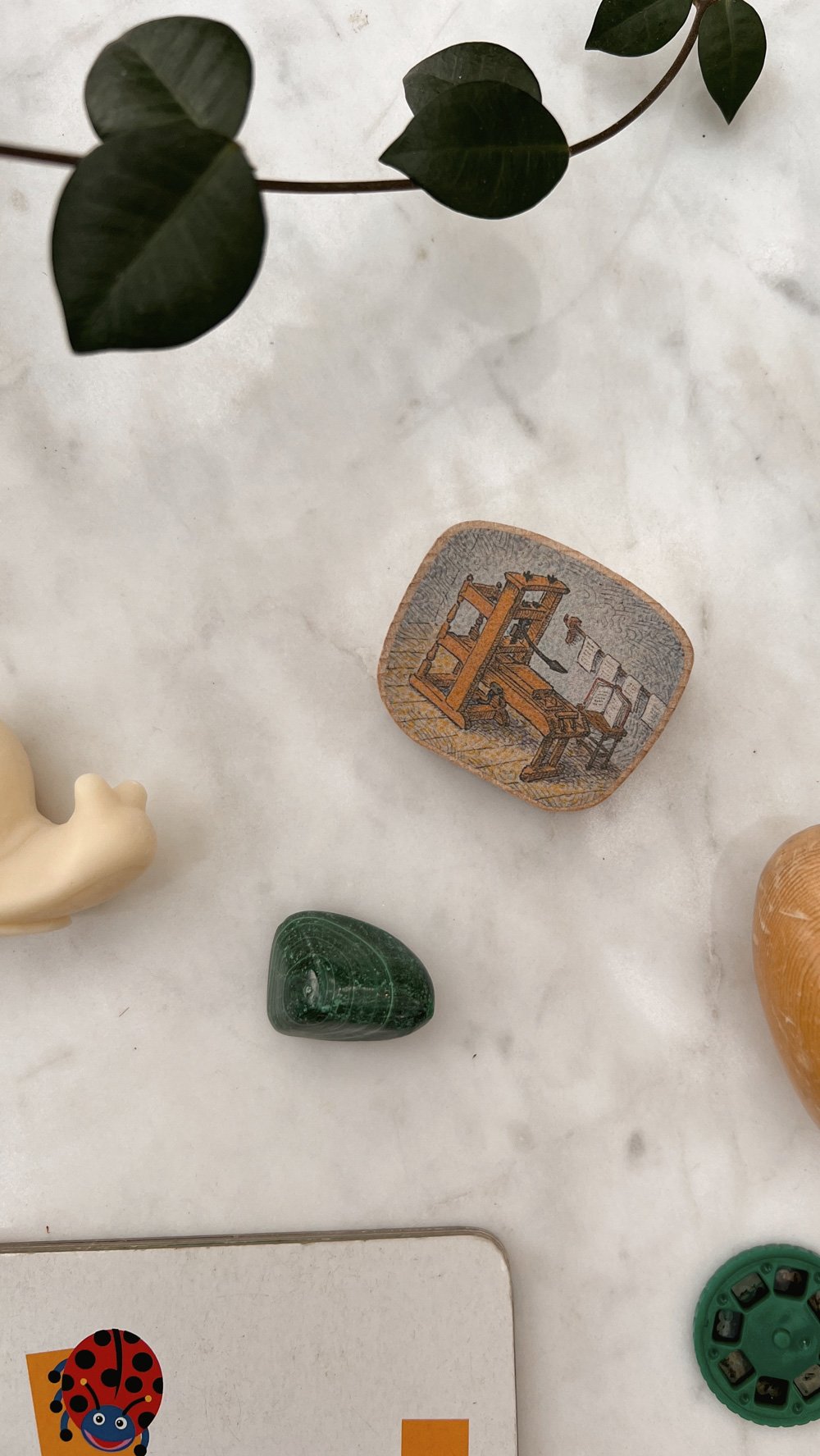


The greenhouse is powered by an extension cord that leads to the main house. There’s one plug-in, multi-strand string of warm, twinkling lights for the tree and stockings, and three battery-powered strands for the garlands. (I use rechargeable AAs, as well as carbon neutral batteries from Better Battery Co.

Here are some of our ornaments, most of which we put on the sprawling garlands, rather than on the little tree. Our tree is decorated with small brass bells, and wooden snowflakes and deer that were intended to be used as gift-topper tags.

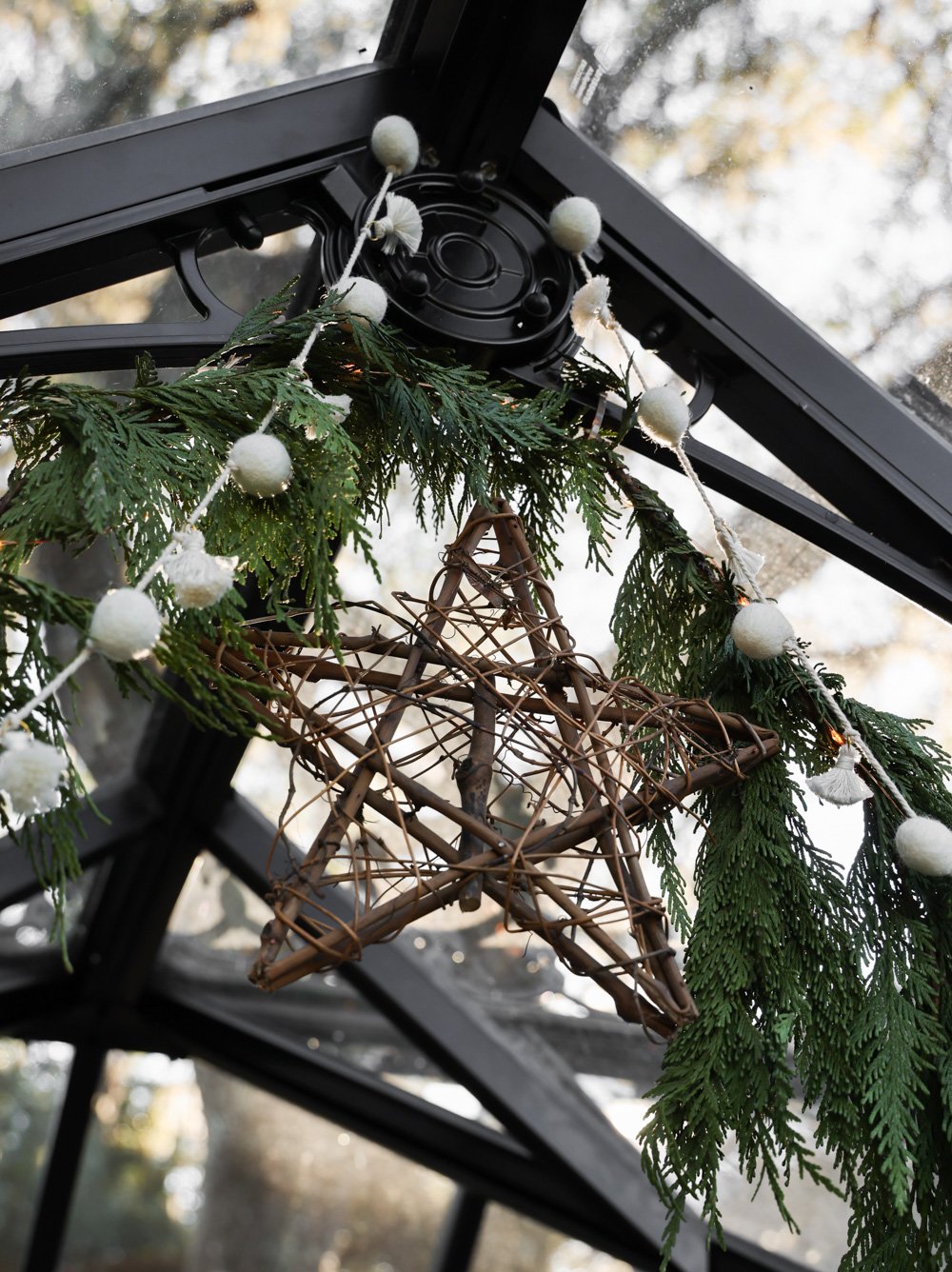




We don’t leave the lights on too long so as to minimize the disturbance of wildlife. But when the strands are switched on, they reflect off the angled panes of glass, amplifying the glittering glow.

It’s a happy little place, and I think we’ll make this holiday dressing a yearly event whenever we’re in the States for December. (The farmhouse needs to be further winterized, which is a project we’ll have to tackle later down the road for budgetary reasons.)

(Pictured below: The yearly stocking-stuffers I get for myself.)
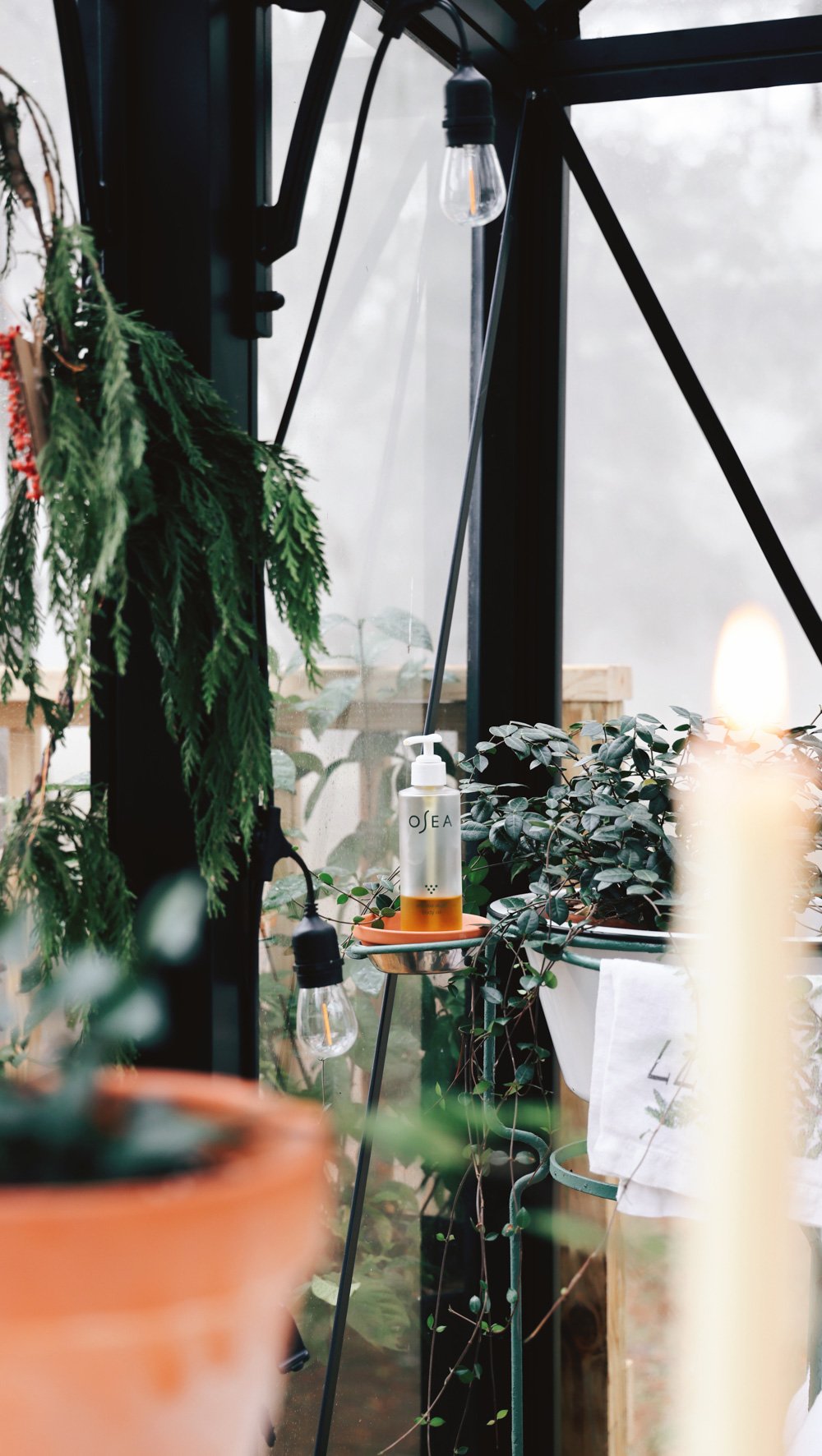

Although we are extremely eager to have a house of our own soon — either the farmhouse or the ADU — this special space is certainly making us feel at home for the holidays.


Guide for Avoiding Unnecessary Gifts
How to politely deal with unwanted gifts— hopefully before they’re given, but also after the fact.
This is an updated, more comprehensive version of an earlier post entitled, “How to Politely Handle Unwanted Gifting.”
It’s the time of year… for unwanted and unnecessary gifts. With the planet in crisis, folks struggling financially, and families grappling with an excess of clutter in their homes after being indoors for the greater part of two years, I’d argue that it’s time we more widely accept and respect one’s decision to firmly avoid giving and receiving gifts.

But how do we kindly tell a child’s grandparents to stop sending toys?
What do we do about well-intended friends who insist on giving “something!”?
What solutions are there for rehousing the unwanted gifts that inevitably make their way through the door, despite the recipients wishes?
And what are some unique gifts that won’t further contribute to overflowing households, and — inevitably— landfills, which have a greater impact on disenfranchised and marginalized populations?
Since living in our cottage, having our first child, and learning more about the climate emergency, we began gently telling our friends and family that the absolute best gift they can give our son is an inhabitable planet for his generation and those that follow, and that giving him random stuff doesn’t help him in the long run.

For years, this conversation was easy for us, as most people knew that we lived in a tiny house that couldn’t accommodate excessive belongings. Now, as we’re in limbo and transitioning between living environments, we’ve had to remind folks that even though we’re temporarily in a larger home, we still have the same views regarding gifting. We were hit with a wave of presents for both West and his little sister when she was born. We know that everything was acquired and sent our way with so much love, but we believe that the impact of the items (from the manufacturing, to workers’ rights, to packaging, to transport, to haphazard placement within our temporary home, to eventual disposal of some sort,) matters more than the intent.

For folks who take affront, and/or just don’t quite understand our reasoning, I suggest or give a copy of The Future We Choose: Surviving the Climate Crisis, and/or Aja Barber’s book, Consumed: The Need for Collective Change: Colonialism, Climate Change, and Consumerism.
Of course it needs to be acknowledged that to ward off gifting of this nature is a privilege, as so many people are living unhoused and without the basic necessities. But, as Barber wrote in a recent* Instagram post, “The things which are said to us in childhood normalize living in a world with inequality… “ (ie: “Be grateful for your food / gifts, because so many people are going without!”) So instead of tricking ourselves into believing that we should simply continue to accept unnecessary gifts and keep our thoughts to ourselves, we’ve instead started pointing the folks who wish to convey their love in tangible form in the direction of nonprofits such as The RightWay Foundation, which are in constant need of financial and product donations.
We are, however, always happy to receive children’s books, knowing that our kids will explore them thoroughly for years, and that we can ultimately pass them along to other children, a library, or a local school once they’re no longer being read.
We also embrace the idea of gifting experiences, such as museum or garden memberships / admissions, Airbnb Experiences, digital subscriptions, local food and beverage, and other such presents that support an organization or small business while also providing our family or others with a new adventure of some sort.

When it comes to regifting unwanted items, I look at it this way: If a giver circles back and asks me to reveal the whereabouts of a present they once gave us, that relationship is probably one that needs some reconsidering or deep work. And besides, there are so many people, families and organizations in need of certain goods that I feel no guilt in passing along a thing we do not need here, and giving it instead to someone who can put it to good use.
When rehousing an item, we’ve discovered that it’s extremely important to first verify that an organization can indeed put it to specific use, otherwise it is statistically destined for a landfill. Hopefully the original gift-giver would understand and support that action.
’Tis, after-all, the season to share.
(*Reference to a post by Aja Barber entitled, “Where do out human rights and and others begin?”)

Safe Housing for the Holidays and Beyond
Supporting The RightWay Foundation
My grandpa Lou was orphaned at 9. He bounced around homes, towns, and states. He watched a caregiver burn his clothes and everything he owned right in front of him. At various points he lived on a breezeway, ran away, was reunited with - and then dismissed by - relatives.
It wasn’t until he met a mentor, his rabbi, that he felt heard, safe, and guided. He took over the management and responsibilities of a scrapyard, he served and traveled in the military, he started a family, and he gave back to his communities.
When foster youth have a person and place they can count on, they can begin to pivot their energy from surviving towards thriving. This is one of the many reasons I passionately support The RightWay Foundation, and invite you to join me. (A donation link is always on my site.)

At the end of December, The County of Los Angeles Department of Children and Family Services will officially emancipate 1,370 young adults from their program, leaving them with no support. These youth will lose their housing and a stipend during the pandemic and escalating homelessness crisis. If we don’t fix our child welfare system, the cycle of trauma and poverty will continue.
RightWay’s job training, mental health sessions, housing support, and overall community services work. I’ve witnessed it first-hand, and if you sign up for their newsletter and subscribe to their Instagram feed, you’ll see it too.

Repurposed Gift Wrap with a Story
Repurpose items from around your home into low waste / reusable holiday gift wrap.
(Original post from 2020)
We haven’t bought wrapping paper or gift bags in years. Even though we live in a small space and don’t have many spare supplies of any sort sitting around, it’s still surprisingly easy to shop our own home for items that can be repurposed as playful packaging.

While the end result is rarely perfect, there’s so much to love— it’s original, it’s free, and it generates less waste. (Related post: Playful Low Waste Gift Wrap)

These handmade bars of soap were wrapped with completed pages from one of West’s work booklets, and topped with salvaged ribbon and tree clippings.


What I enjoy just as much as the searching and wrapping is passing along the stories behind each repurposed ribbon, book jacket, muslin bag, or fabric scrap.

Dust jackets remain my go-to for wrapping presents for kids. (We store most of these paper covers beneath our mattress throughout the year to flatten out the lines, and then grab one whenever we need some colorful packaging.)

While the illustration art is the attraction for the recipient, there’s usually a tale behind the rest of the bundle for the parents / guardians to share.

This method of wrapping is also friendly for folks who aren’t hugely into DIYs (that’s me). Plus it’s also safer this year than going to the store, as we’re meant to shelter at home whenever possible.

Below are a few glimpses of this year’s very quickly completed wrappings, as well as cleverly designed bundles that needed no wrapping whatsoever.

Above: Brown paper biodegradable tape from Net Zero Co.
Almost everything used above has a story to tell— a ribbon that has been passed down through multiple generations and households. A remnant that once held a stone that traveled the country. A string that once wrapped the weighted blanket that helped improve my sleep habits. A spare/unused shoelace from a pair of sneakers designed by a well-known creative and dear friend.

(And, of course, customized boxes of dog treats that shows the sweet faces of our pups— why would we want to cover those up?!)






Traditional Yet Informal Holiday Hosting
Creating a festive holiday tablescape in a small home or garden.
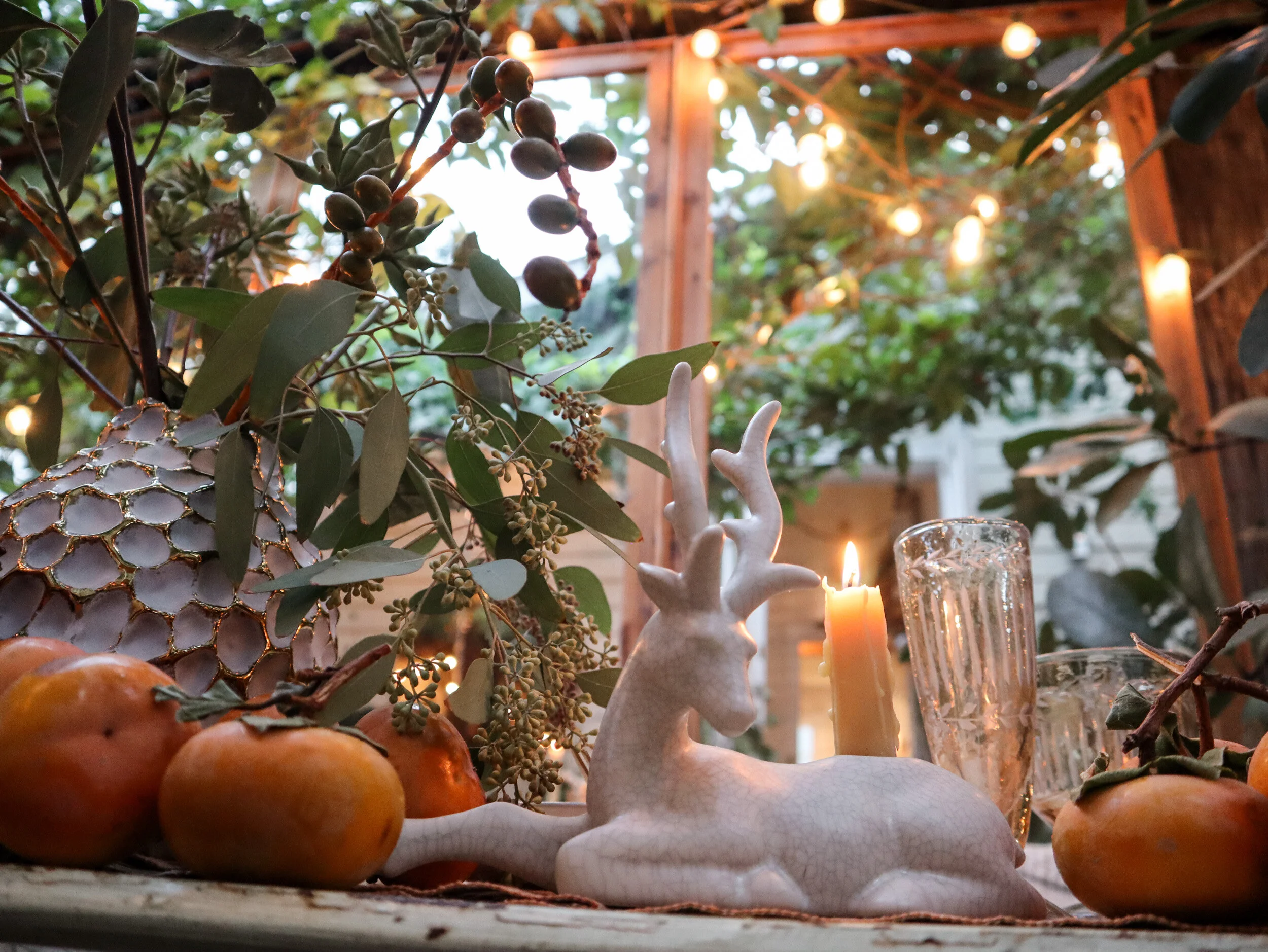
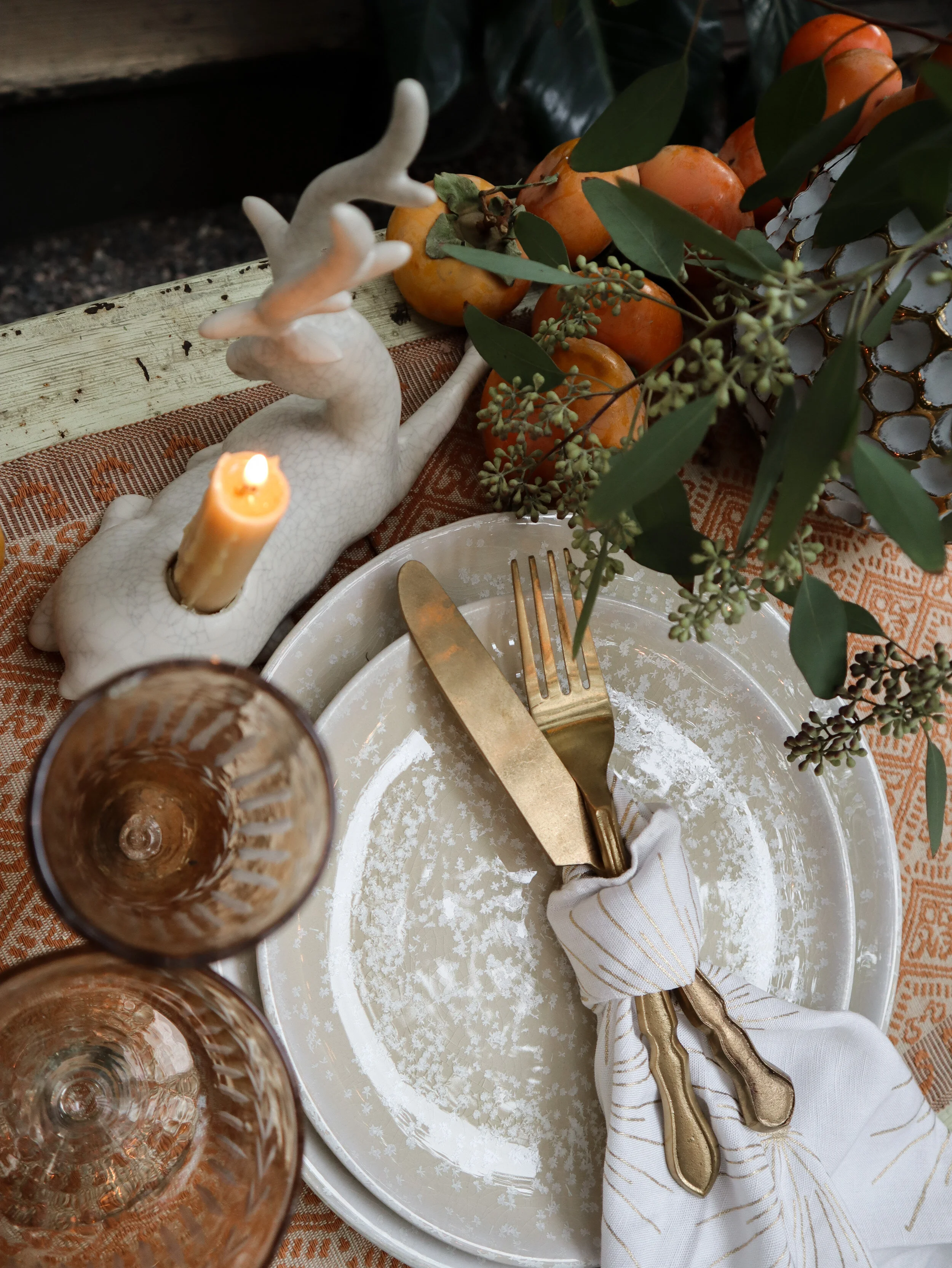
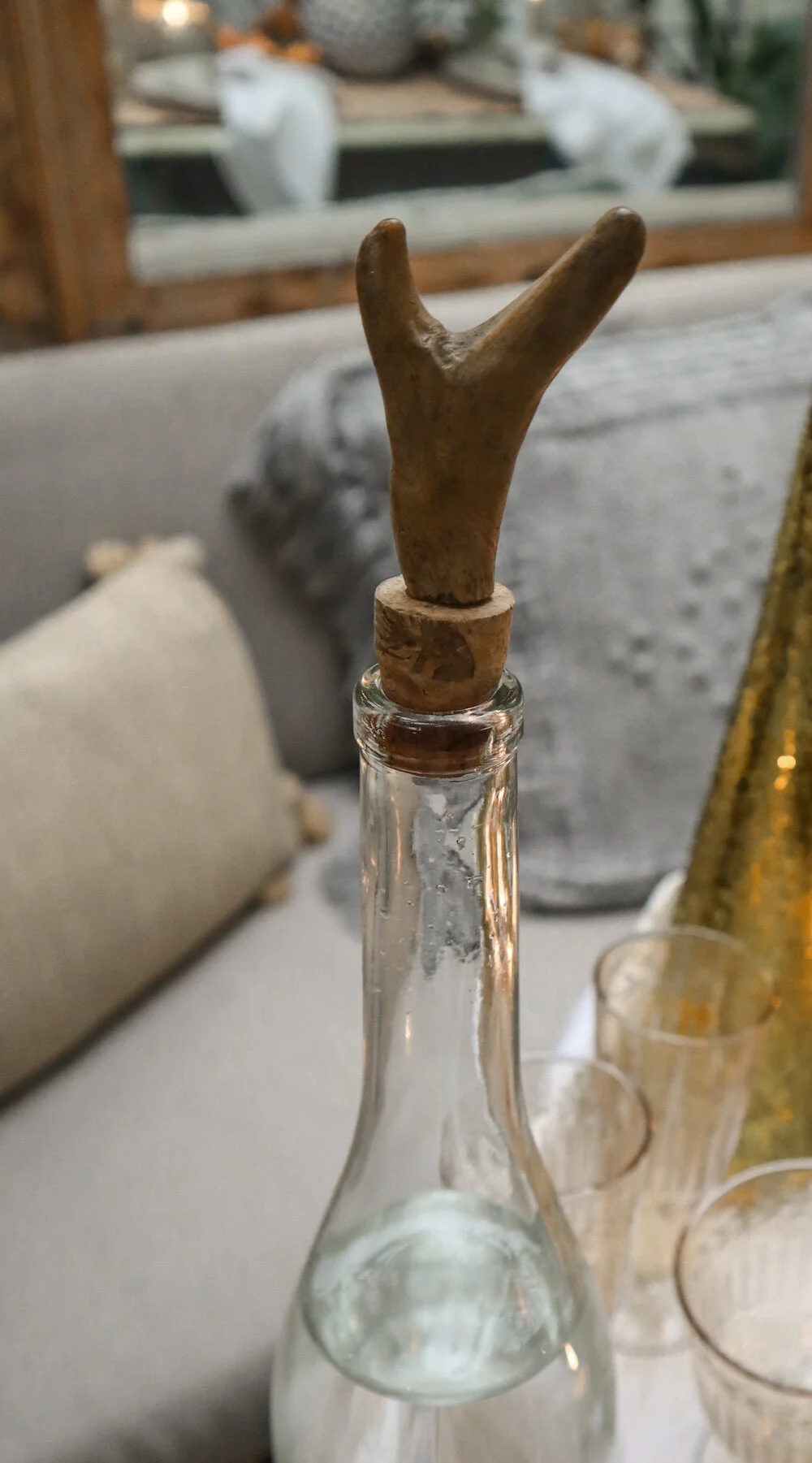
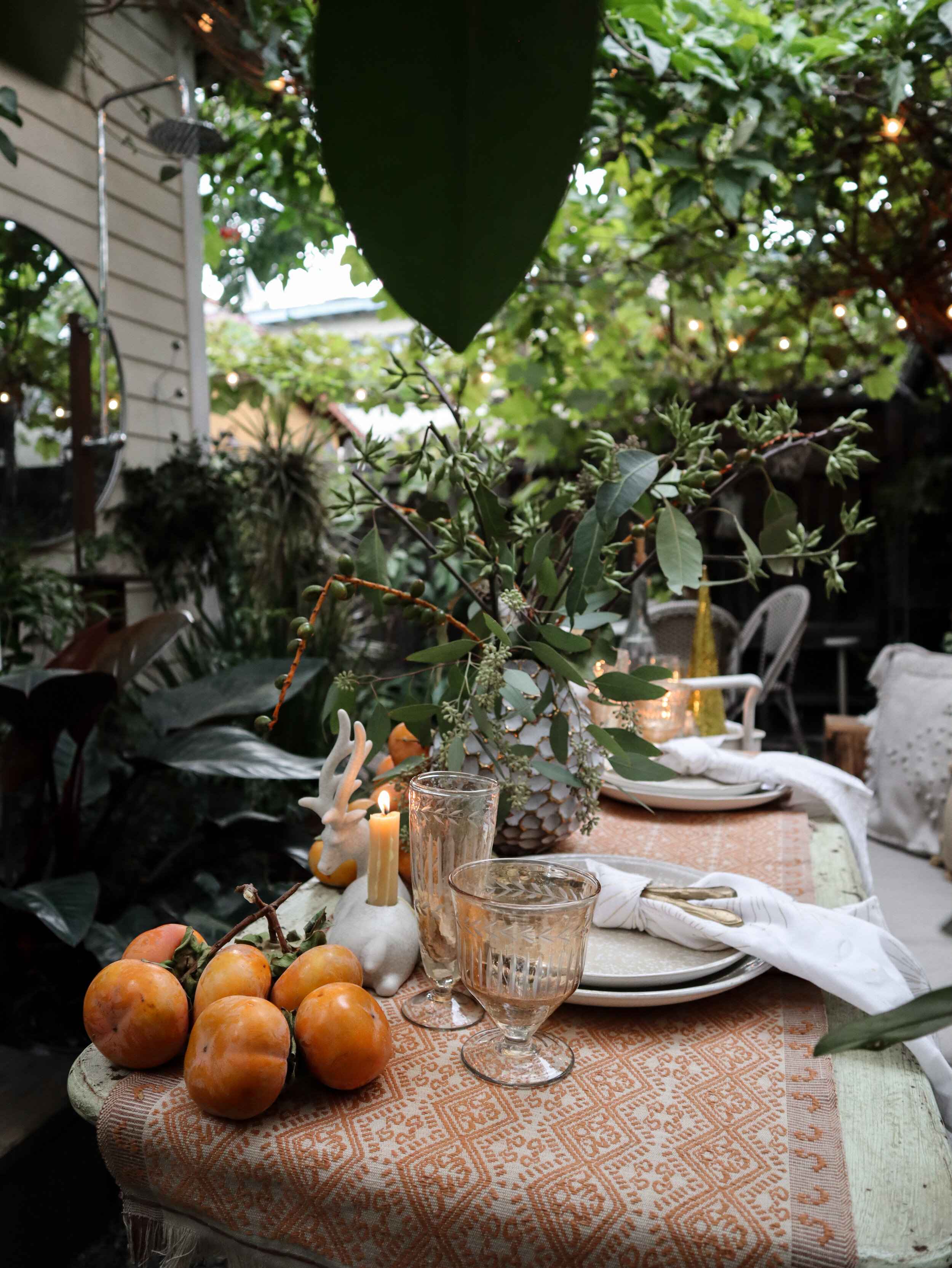
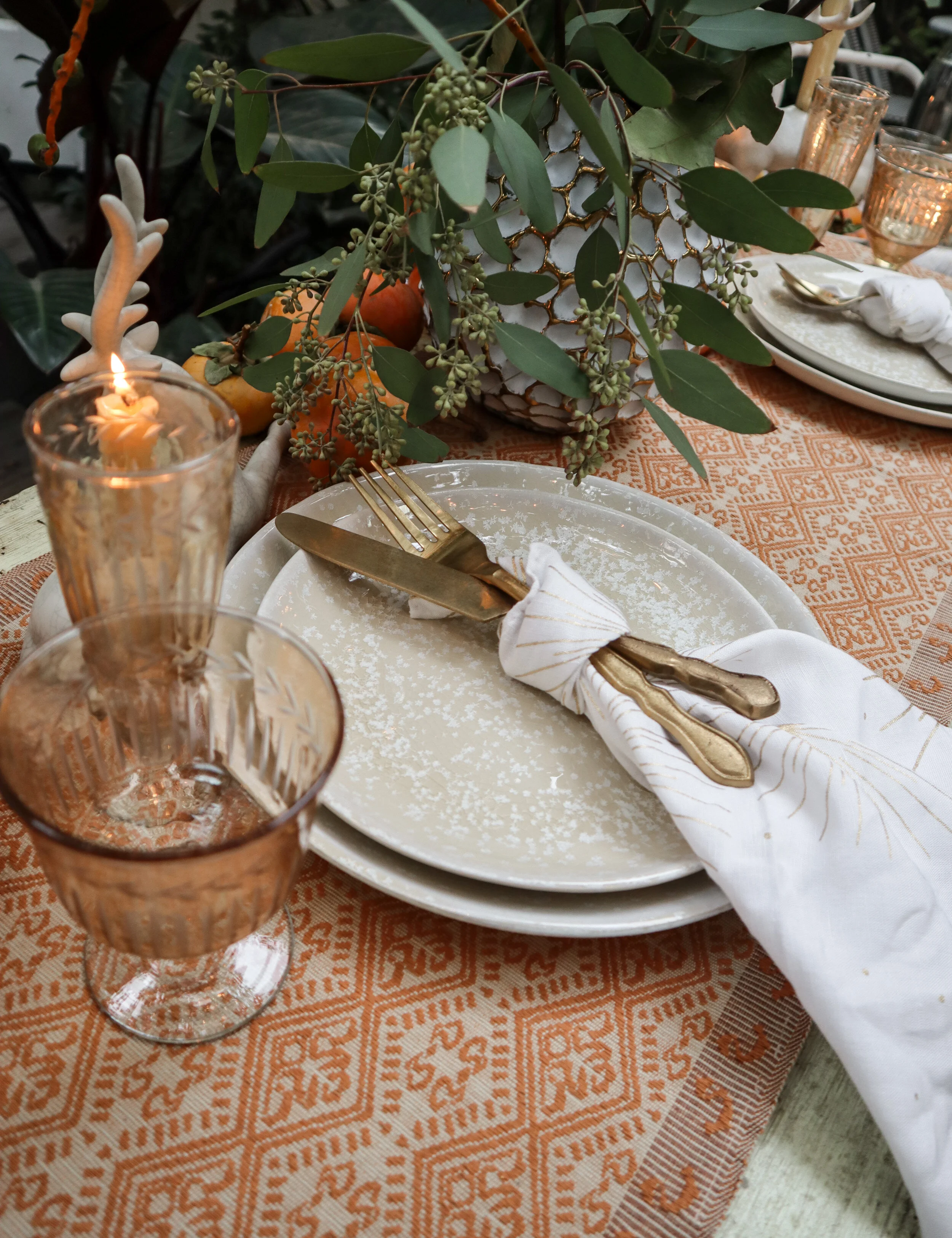
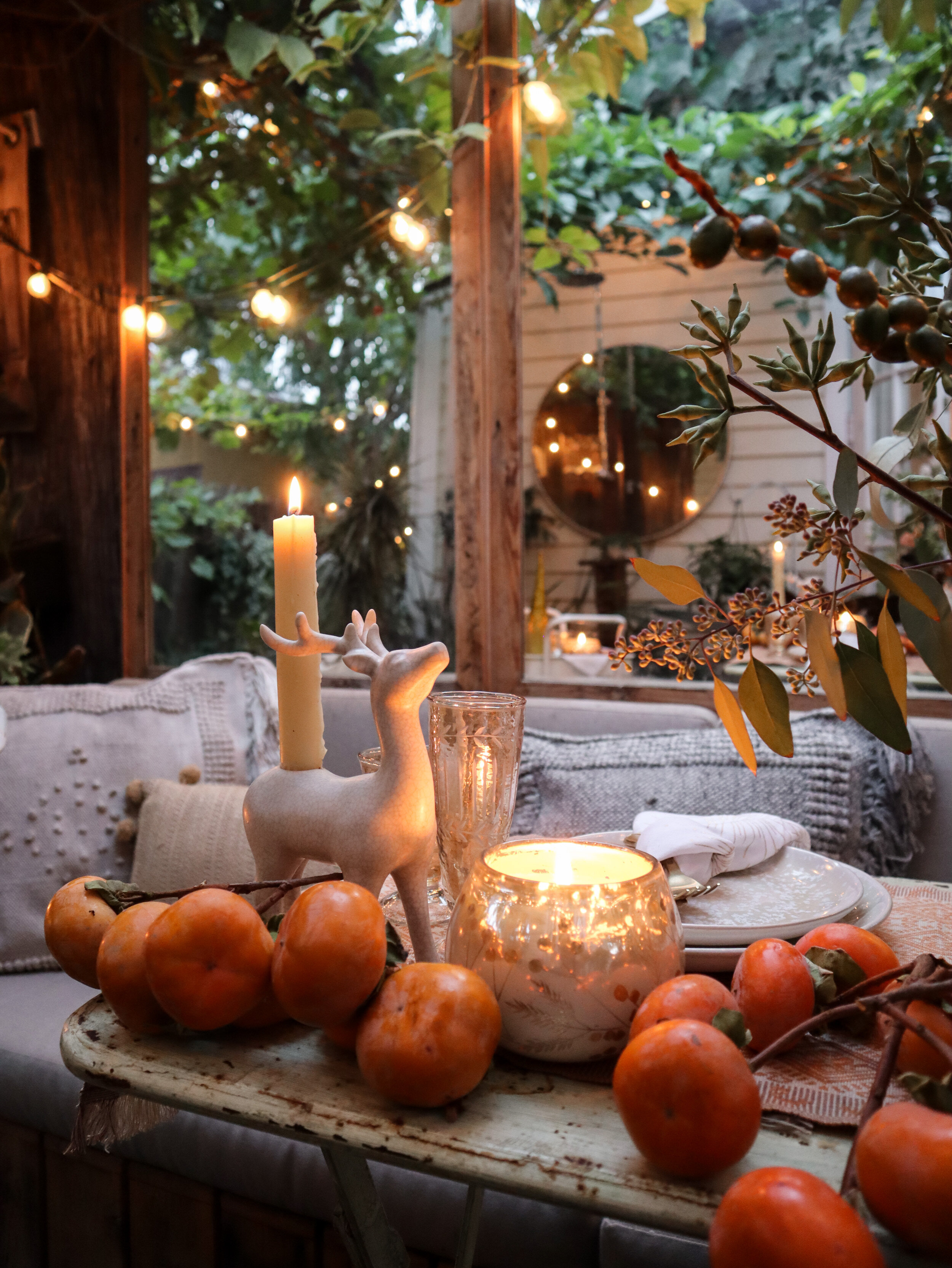
I can’t remember the last time we hosted… perhaps late November of 2019? Regardless, I’m eager to get back to it. In the meantime, I’m resharing this informal-meets-traditional tablescape I created for Food52 during a live broadcast, in the hopes it’ll provide some ideas for folks who are entertaining in small spaces this holiday season:

Low Waste Holiday Wall Decor for Small Spaces
Creative, low waste alternatives to Christmas trees for small spaces.
Not enough room for a tree in your small space? Here’s one easy way to use fresh greenery to create space savvy holiday decor for a small home. (View the 30-second video here.)

List of supplies:
Live branches
A bit of rope
A nail or damage-free Command strip
Battery-operated twinkle lights (we use rechargables)
A zip tie (to attach the battery pack to the back of the branch)
Clippers

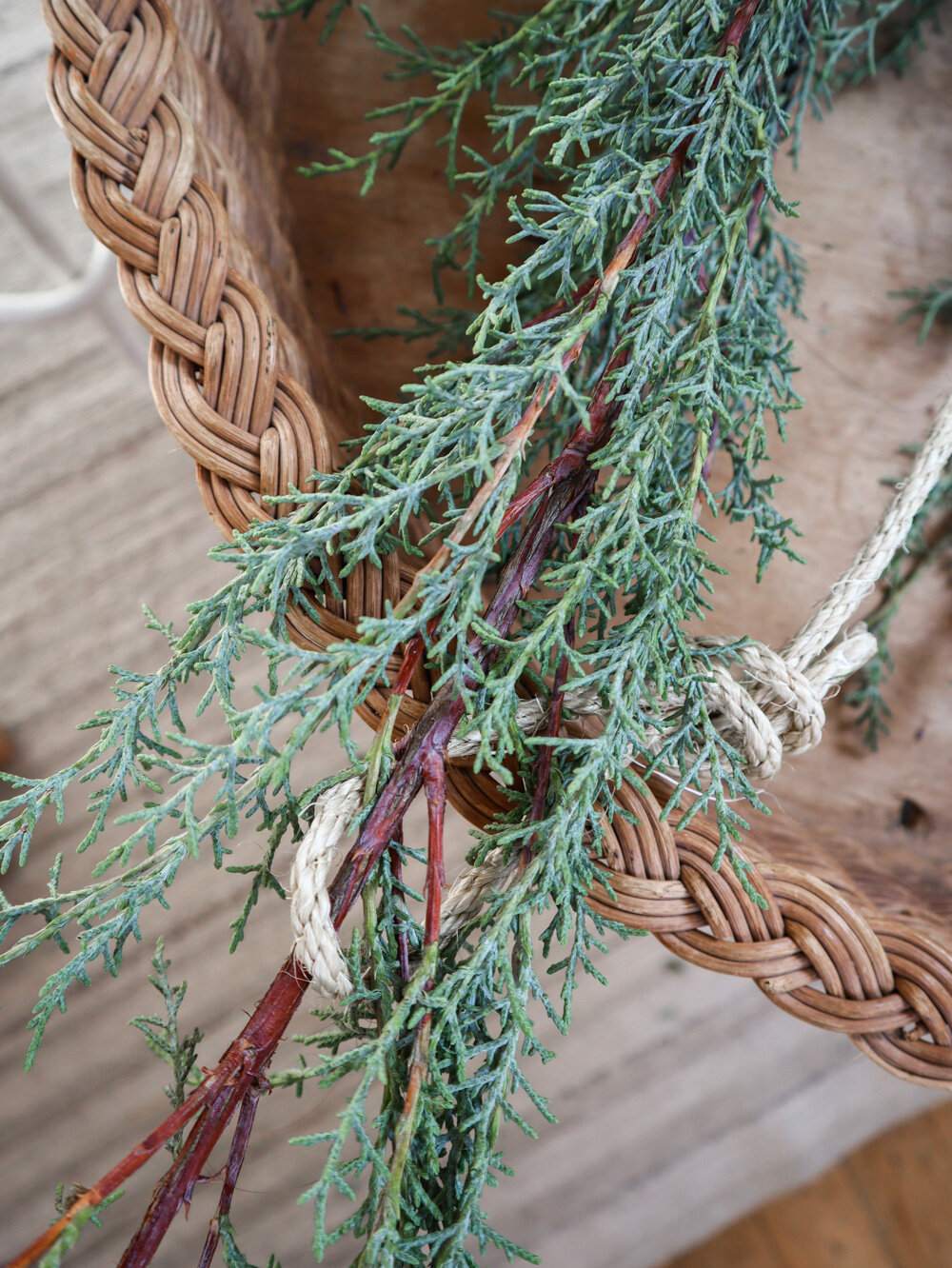
I simply wrapped the twinkle lights around the branch, tied the rope to either end, suspended the entire piece from a sturdy wall hook, and then added small florals and twigs throughout the branch for a pop of color and variation in texture. I carefully spritz the branch with a bit of water every few days, and replace the bright floral clippings as needed after they’ve fully dried up.

The final result is simple yet striking. And, best of all, at the end of the season the rope, hook and twinkle lights can be reused, and the greenery can go in the compost.


A Dramatic, Space-Saving Holiday Table
Creating a space-saving, dramatic, festive table of live greenery for the holidays.
(Originally posted in 2019)
Gathering with friends and/or family around a table in a small home or apartment can be such a uniquely intimate experience. But during the holidays— when we tend add extra decorative touches and welcome more people to the table than usual— surface space needed for tabletop essentials can suddenly become extra challenging to preserve.
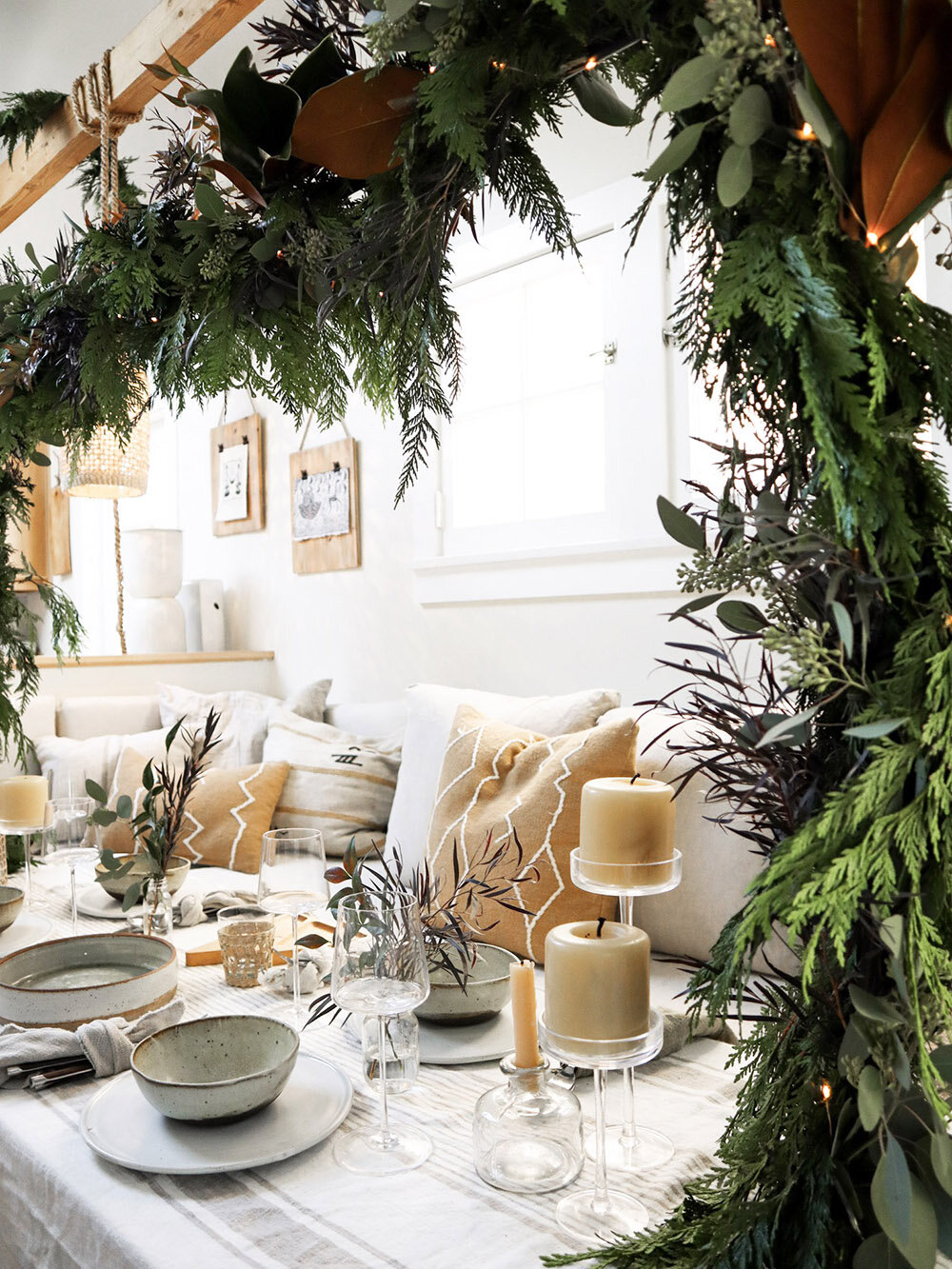
Certain items can help with this, such as rectangular plates and pedestal/cake stands. (Skipping some of the superfluous things you don’t need, such as napkin rings, chargers and placemats can save inches as well.) But if you want to add some wild branches or lush floral/greenery/dried bouquets to your table, you might be out of luck. As such, I wanted to demonstrate an easy, low waste way to add striking decor to your table without sacrificing your dining surface. (I also offer up additional suggestions in my book: Small Space Style.)
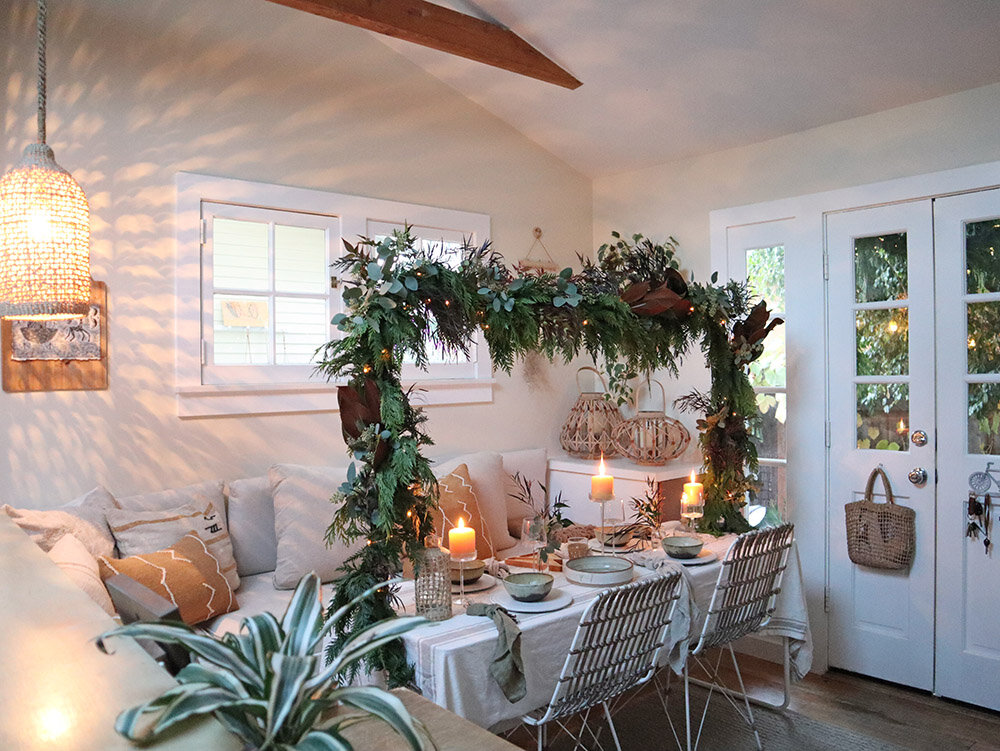
This display cost me about $150. I bought the garland and branches from a local shop, and used an over-the-table adjustable iron rod and battery operated twinkle lights (with rechargeable batteries) to create an overgrown and glittering display indoors. (I used real candles for the photos, but swapped them out for battery operated versions for safety after we snapped the images.) A bit of floral wire (and a vacuum) were the only other items I needed to attain the look.


Setting up the iron display rod took only a few minutes. The height is fixed, but the width is adjustable. When the setup is no longer needed, it breaks down easily for slim storage.

I used all living branches and clippings, so everything can be composted when the time comes.


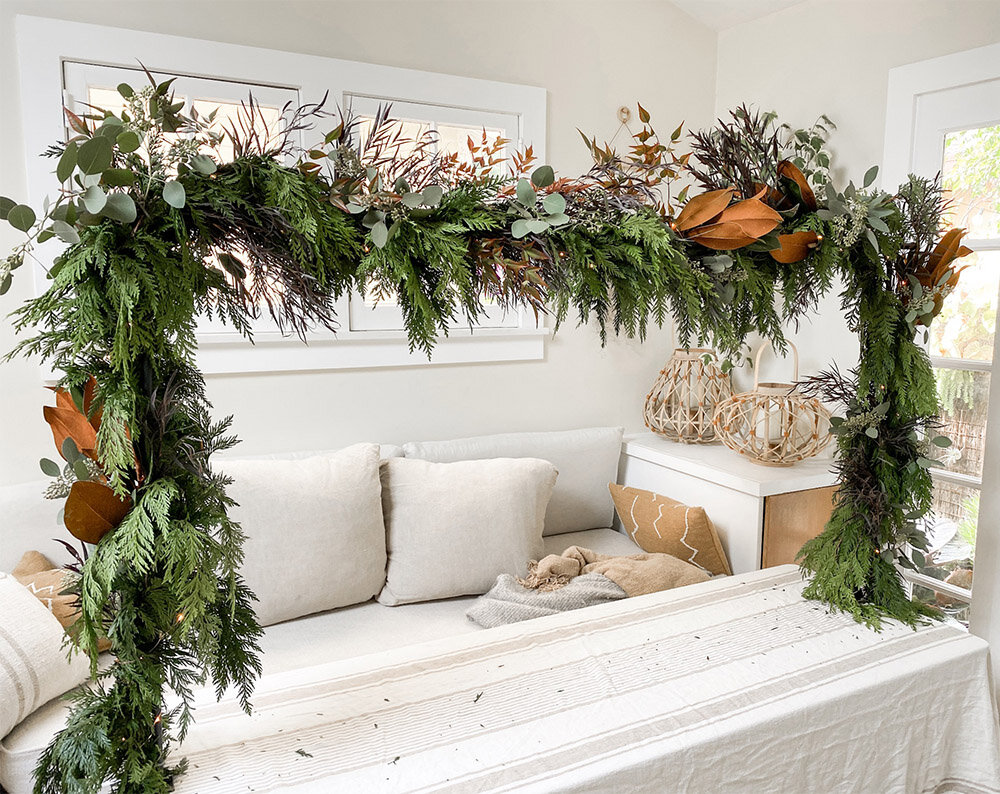
Adding the clippings to the garland took the longest, but was simple enough.

The entire process took about 90 minutes, and it was a surprisingly relaxing activity for me.

I (still) don’t really cook, nor do we host that often these days, so I enjoyed going out of my way to do something special for the guests we’ll have over in the coming days.

I’ll share a small space, low waste holiday decor video and post in early December.


In the meantime, I’m looking forward to spending time with our friends and family here at home. (And I’ll be following along with The Conscious Kid for insights and information regarding Native American Heritage Month.)

Whatever you and yours are doing this holiday, we wish you a safe and happy long weekend.
