
Sharing Responsibilities Across Family Lines
It’s the stuff, but it’s also a lot more…

We visit our public library A LOT. And one of the things you can’t miss in the children’s section is the enormous number of books centered around the topic of sharing. Throughout their childhoods, we remind kids repeatedly how important it is to share. But something about the messaging is often truncated, limited to tangible items like toys or supplies.
What about sharing workloads?
Time?
Energy?
Ideas?
Don’t get me wrong, I’m all about sharing things and reducing the sheer amount of stuff we buy and store within our bursting homes. But…


Feature: Better Homes & Gardens Podcast
Regardless of square footage, having a versatile home is key.
Recently I had the joy of chatting with the folks at Better Homes & Gardens via their podcast, The Better Buy.

In the episode, we discuss designing limited square footage to multitask for your household, blending the outdoors seamlessly with your space, and taking an eco-friendly lifestyle seriously—from home renovation to everyday habits.
We also chat a bit about about the French Farmhouse, cottage and greenhouse.


Thanks for having me on the show, BHG!
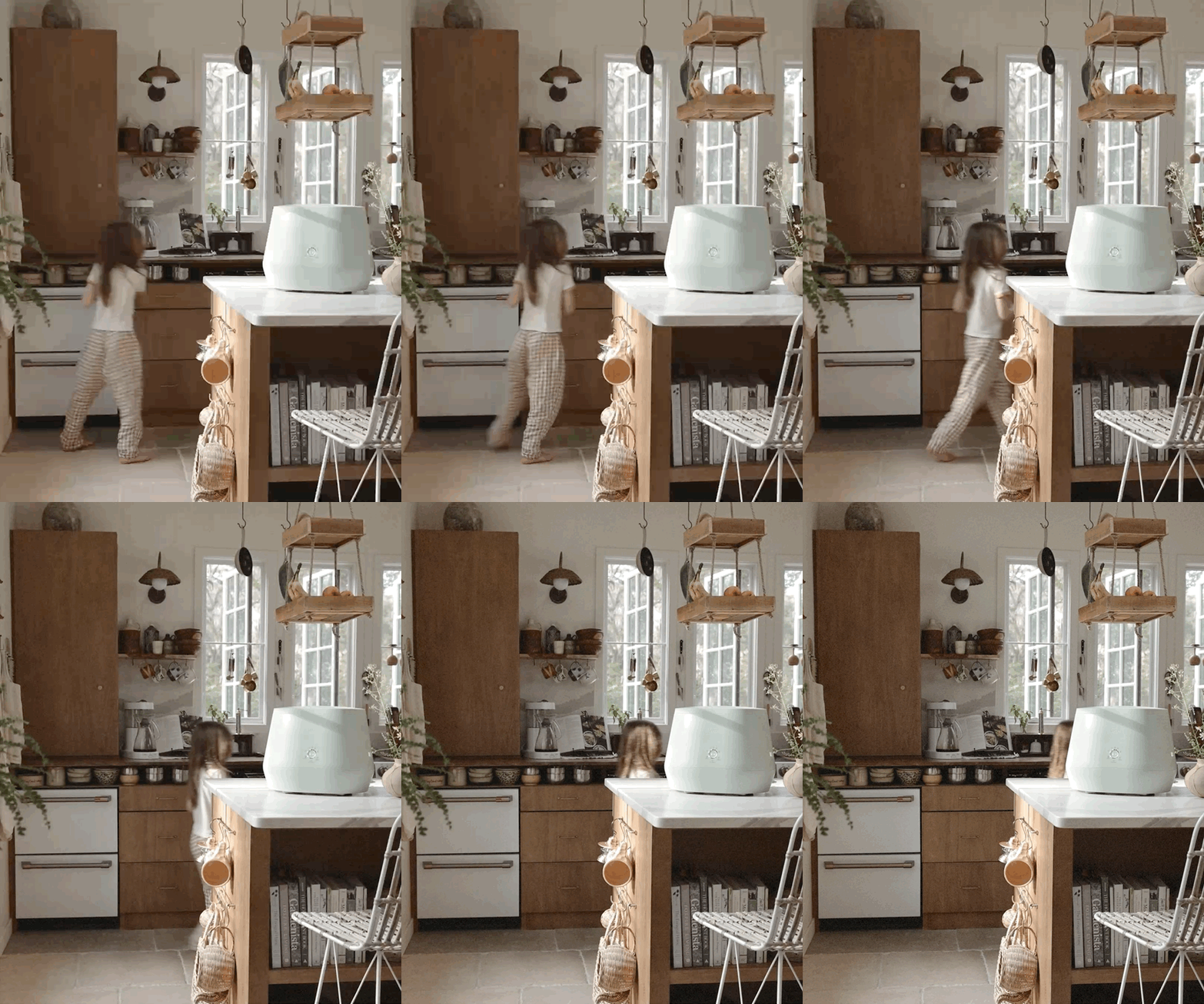
A Carbon Negative Kitchen Appliance with a Positive Impact on Soil Health
Imagine what our world would look like if, at the end of its life cycle, everything nurtured this magnificent earth as nature intended…
What if the world was waste-free? After all, there is no “waste” in nature — humans are the only species that create trash.

Food waste is one of the greatest contributors to climate change, and over 40% of that waste occurs at the household level.

But we have the ability to change this. Food waste is not really waste when it’s handled mindfully.


Instead, no matter where you live, food waste can become sustenance for nature, contributing precious natural resources back into the earth. Now, at the push of a button.

The Lomi Bloom is the only carbon negative appliance, and it can turn fruits, veggies, plant trimmings, yard waste, animal products, grains, and more into nutrient-rich plant food that supports healthy soil and its regeneration.


Lomi Earth — the result of Lomi’s “Grow” mode operating cycle— produces nutrient-rich, organic fertilizer that’s perfect to use on houseplants and gardens. When the Grow cycle is run with a LomiPod, the end result is packed with vital microbes to support plant health, and can also be sprinkled on lawns to improve soil health.

As we know, healthier soils store dramatically more carbon than degraded soils. When Lomi Earth is mixed with other soil and used to grow plants, the organic carbon in Lomi dirt is partially sequestered in soil and as plant matter. As such, not only are we able to avoid the harmful emissions of landfilling food waste, but we can also help sequester additional carbon.

Not only does Lomi Bloom reduce our carbon footprint and enhance our positive impact, it also rewards users in additional ways with every use. Via Lomi’s app, users can track their Bloom’s impact, and receive rewards like Lomi products and other useful, eco-minded items that can help us curb household waste.

Imagine what our world would look like if, at the end of its life cycle, everything nurtured this magnificent earth as nature intended…

Thank you to the wonderful folks at Lomi for supporting our small business by sponsoring this post. All opinions and photos are my own.
Rightsizing: Thoughts on outgrowing certain spaces...
Thoughts on the evolution and continued growth of this blog…
This is a place for sharing. Not just stories and visuals, but spaces themselves, and ways in which we can navigate and enjoy them together.
Over my 10+ years of publishing lifestyle and design tales of small space living, I’ve ushered millions of folks through lovingly crafted homes ranging from ~100 sqft to ~900 sqft. I’m continuing some of these intimate walk-throughs, but from now on the full-length / full-imagery versions of most posts (including those from the farmhouse and the cottage) will live on my new Substack + newletter: Rightsizing.
There’s so much interest surrounding multigenerational living, co-stewardship, shared resources, and sustainably + mindfully made, modest residences that the discussion has outgrown my blog, and is settling into a more suitably-sized space of its own.

Honestly I should’ve done this years ago, but I simply didn’t have the bandwidth. I so hope you’ll join me there now. Together, we’ll grow a community of folks who are interested in enjoying life in — and with — a smaller footprint.
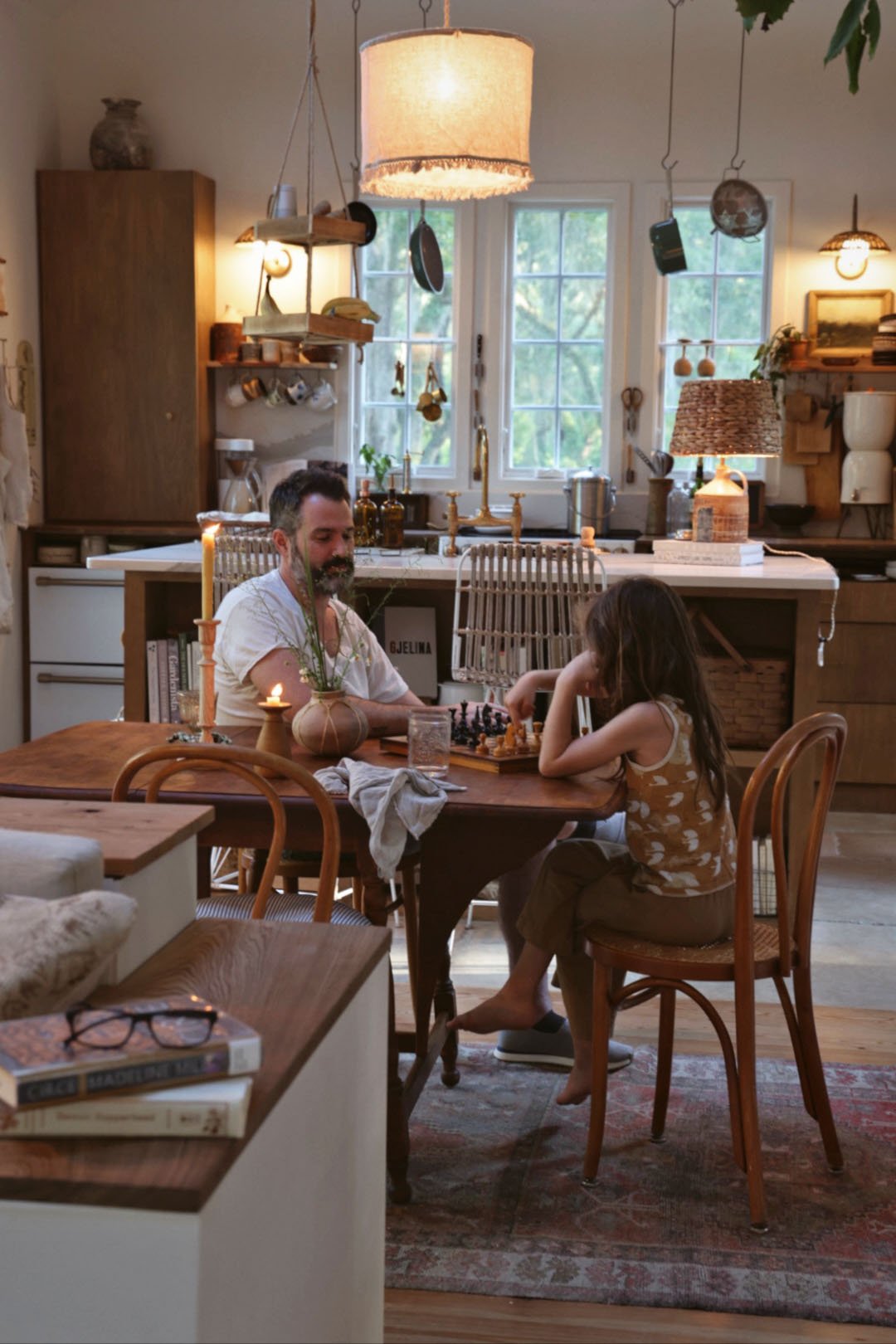
Why Subscribe? (Because life is better when we share it!)
Subscribing is like walking into our cottage or farmhouse, but without getting all the dog hair stuck to your clothes. You’ll receive my newsletters, and full length versions of posts from my (now abbreviated) blog, along with exclusive imagery.

Managing Mosquitoes in a Healthier & more Sustainable Way
Growing up in Florida and eventually living along the canals in Venice, California, my partner and I are no strangers to mosquitoes. Now, being back in the woods of the muggy southeast, we’re once again faced with a sudden and intense mosquito season. After getting bit on the eyelid the other day (a first for me,) and watching my eye swell for two days, I figured it was time to break out my preferred gear for managing the bugs for our home and family. Here are my favorites, including my new MVP from an ethical, low waste brand that I’ve long adored.
Mosquito Repelling, Plant-Based Lotion Stone
Click here
Why I like it: This lotion stone is easy to apply, works, and feels good on the skin. Plus it’s a very low waste product with minimal packaging and zero plastic.
About the stone: The Kate McLeod Dusk Stone is a bar that melts on contact, and is comprised of simple yet powerful ingredients that are full of antioxidants and fatty acids to heal and soothe skin while acting as a natural insect repellant. It’s a highly concentrated formula made without water, synthetics, or alcohols.


Insect Shield Clothing
Click here
Why I like it: I keep our insect shield scarves wrapped around our sun hats so we never forget them. This insect shield clothing can help reduce overall pesticide and repellent use, and puts the repellent next to your skin rather than on it. All dye colors are non-toxic and processed in a closed loop water system that recycles 100% of the water used in processing.
About: Pang Wangle Earth-friendly, Insect Shield® clothing repels mosquitoes, ticks, flies, fleas, chiggers, ants, midges. It's EPA approved for everyone, including infants, pregnant or nursing women, even pets.

All Natural Repellent for the whole family, including pups
Click Here
Why I like it: This family-friendly, all-natural bug spray, which comes in a stainless steel canister that we reuse, was developed for the humid, hot, swampy, bug infested climates of Florida.
About: Beat It contains no deet, no chemicals, and no artificial ingredients. It can be used on babies, children, pregnant women, AND pets. Beat It repels ticks and fleas on cats and dogs and keeps flies off horses.

Bee-Safe, Non-toxic Mosquito Repellent Sticks
Click here
Why I like it: The smell of this bee-safe formula doesn’t bother me the way citronella sometimes does, and the sticks burn smoothly for over 2 hours.
About: Madison James Flyaway Sticks keep away mosquitoes, horseflies, hornets, and the common fly, without hurting bees. They’re made in limited batches in the USA with highly effective ingredients, and are hand-packaged in a repurposed farm feed bag.

Soothing Bite Balm
Click here
Why I like it: Our 6 year-old has long appreciated this soothing balm, so we add a dab here and there when necessary. And I like that it comes in a tin rather than plastic, and it made by a Certified B Corp.
About: Murphy’s Naturals Bite Relief Soothing Balm uses soothing ingredients, like andiroba, eucalyptus, and chamomile oils. 2% of all sales goes back to communities working to better people and the planet. Murphy’s Naturals is a 1% For The Planet member, which means 1% of all revenues help fund environmental organizations.
Citronella Incense Hanging Coil
Click here
Why I like it: This is what we use if we have a larger outdoor gathering. It’s pretty, has a large coverage area when suspended high, and is nontoxic to people and animals.
About: This Fredericks & Mae Citronella Incense Hanging Coil lets off a slow-and-steady stream of citronella-infused smoke with the lemony scent of citronella
A Fan + Plants
There’s nothing more annoying than hearing mosquitoes buzz around you overnight, knowing you’ll wake up with welts. We sometimes point a fan towards the bed with a potted lavender plant situated behind it to help prevent the buzz and bites. (Not sure how much the lavender helps, but it smells amazing.)
Long Linen Clothing
When in a hurry or a pinch, we fall back on long linen clothing. It helps block the sun and shield somewhat from mosquitoes, while allowing our skin to breathe in the intense summer heat and humidity.
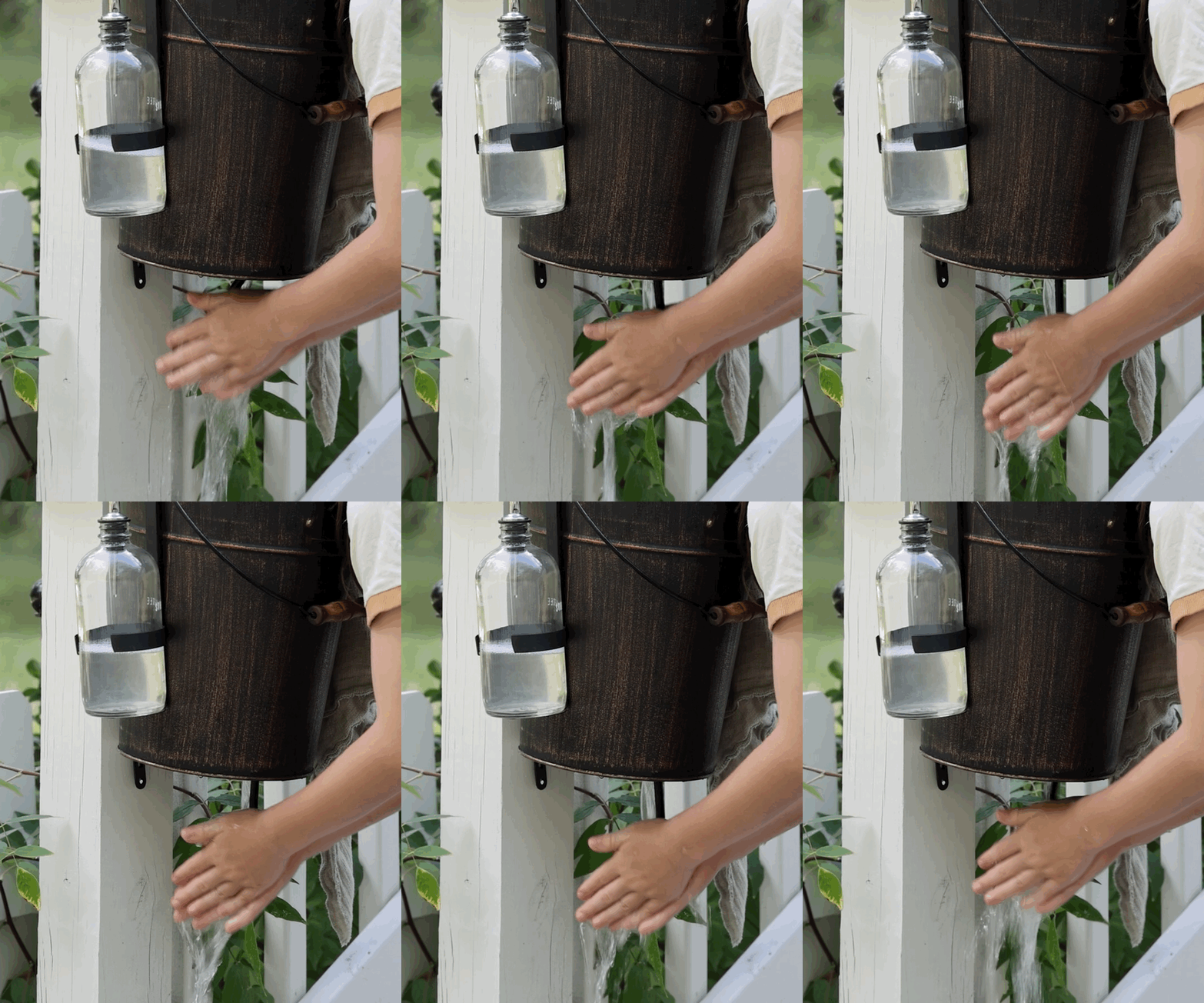
Prairie Hand Wash Station
I’m a fan of the earth on the little ones’ hands— soil, sand, bark, and that particularly enchanting smell of gardenia that lingers on the skin after the flowers are clipped from grandma’s garden pathway.
But I could do without some of the other things that get on the kiddos’ hands while we’re out— like, say, Strep bacteria, you know? (And I’m an avid no-shoes-in-the-house kinda person after years of living in major cities like New York, Los Angeles and D.C.)

As such, I added a simple hand wash station* to the front stoop.

I paired it with a repurposed and refillable bottle of soap with a spout adapter and an old cloth napkin, and voila!
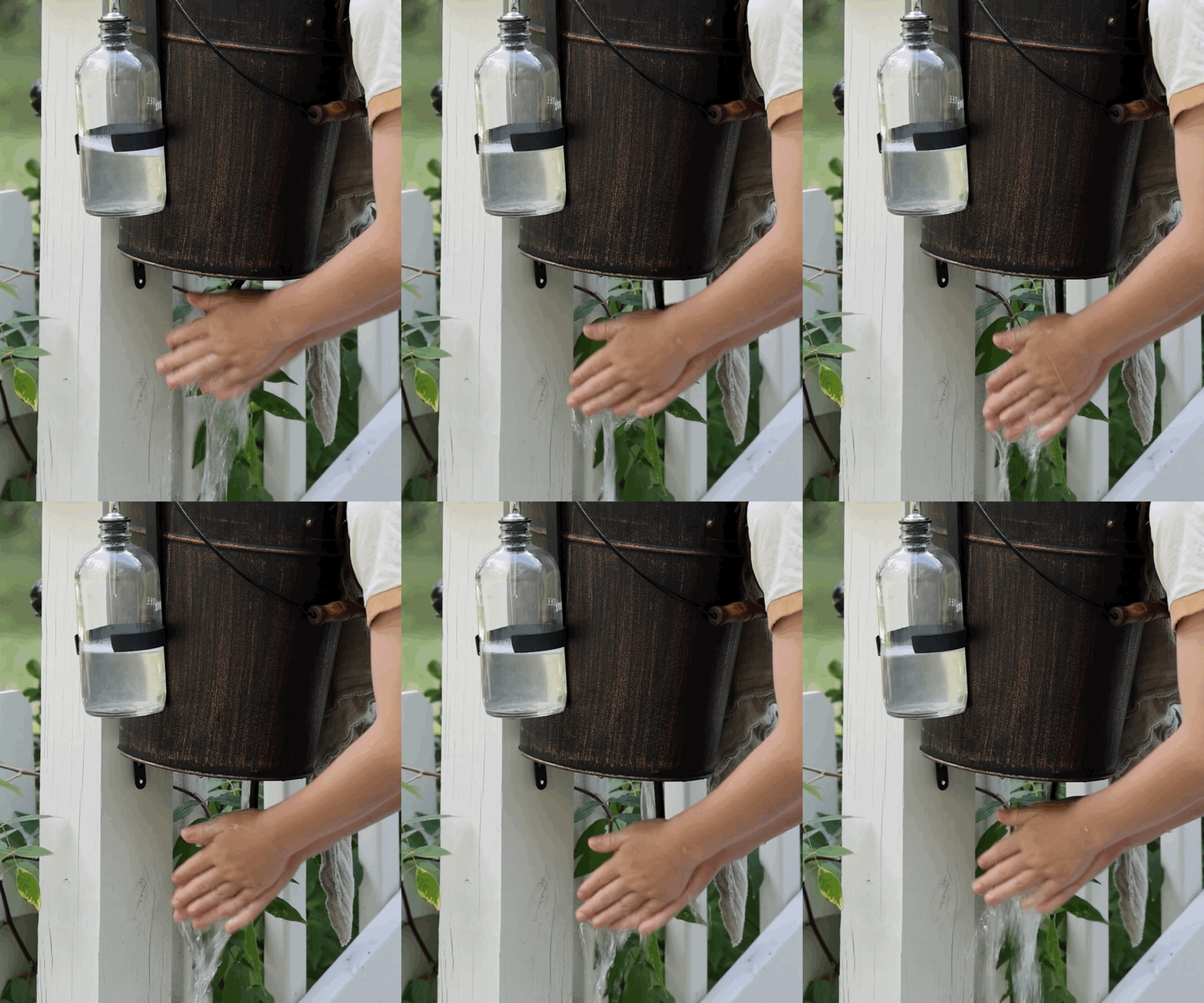
The soil can stay, but the Strep has gotta go.

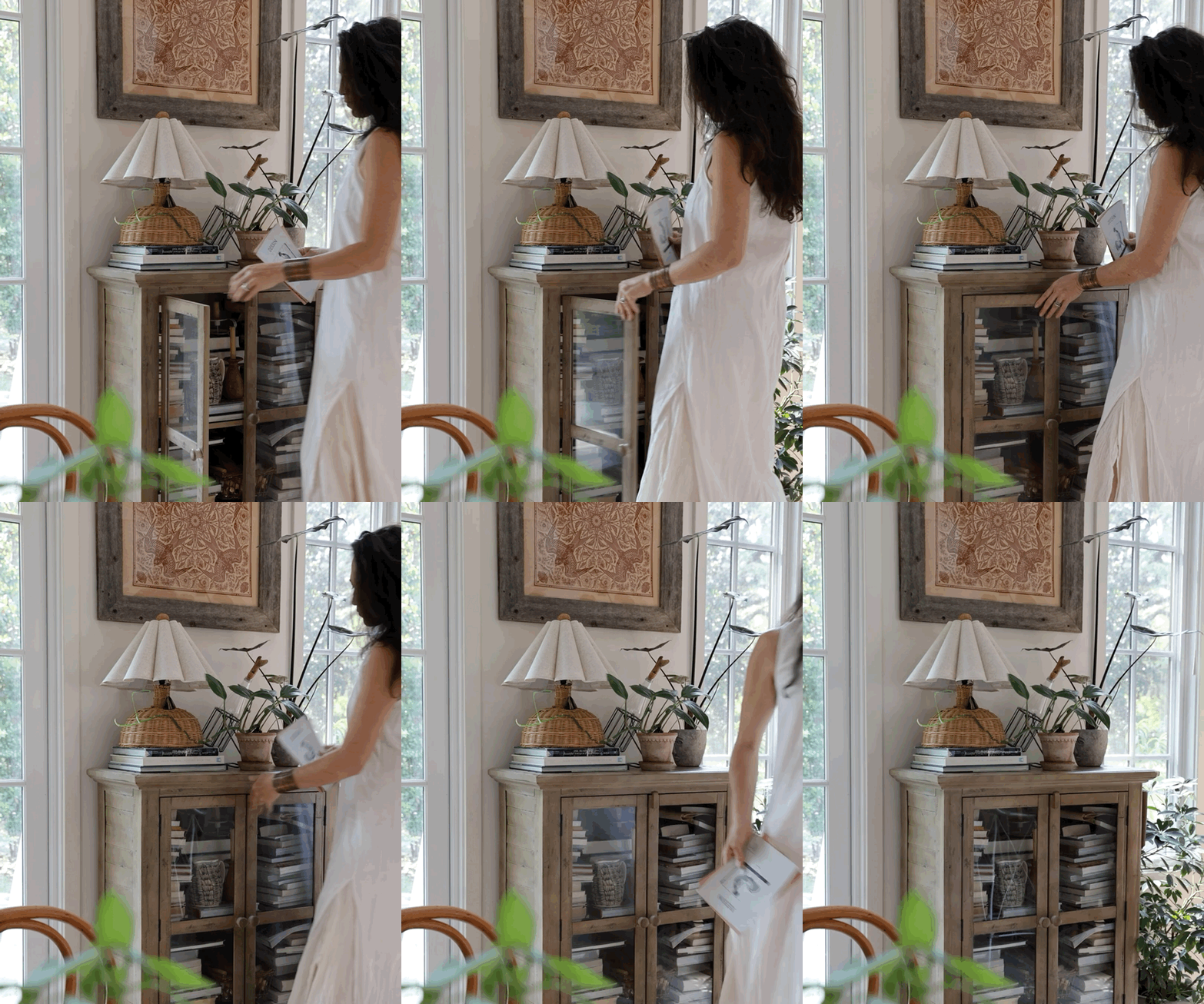
Do You Need More Space... or Do You Just Need Less Stuff?
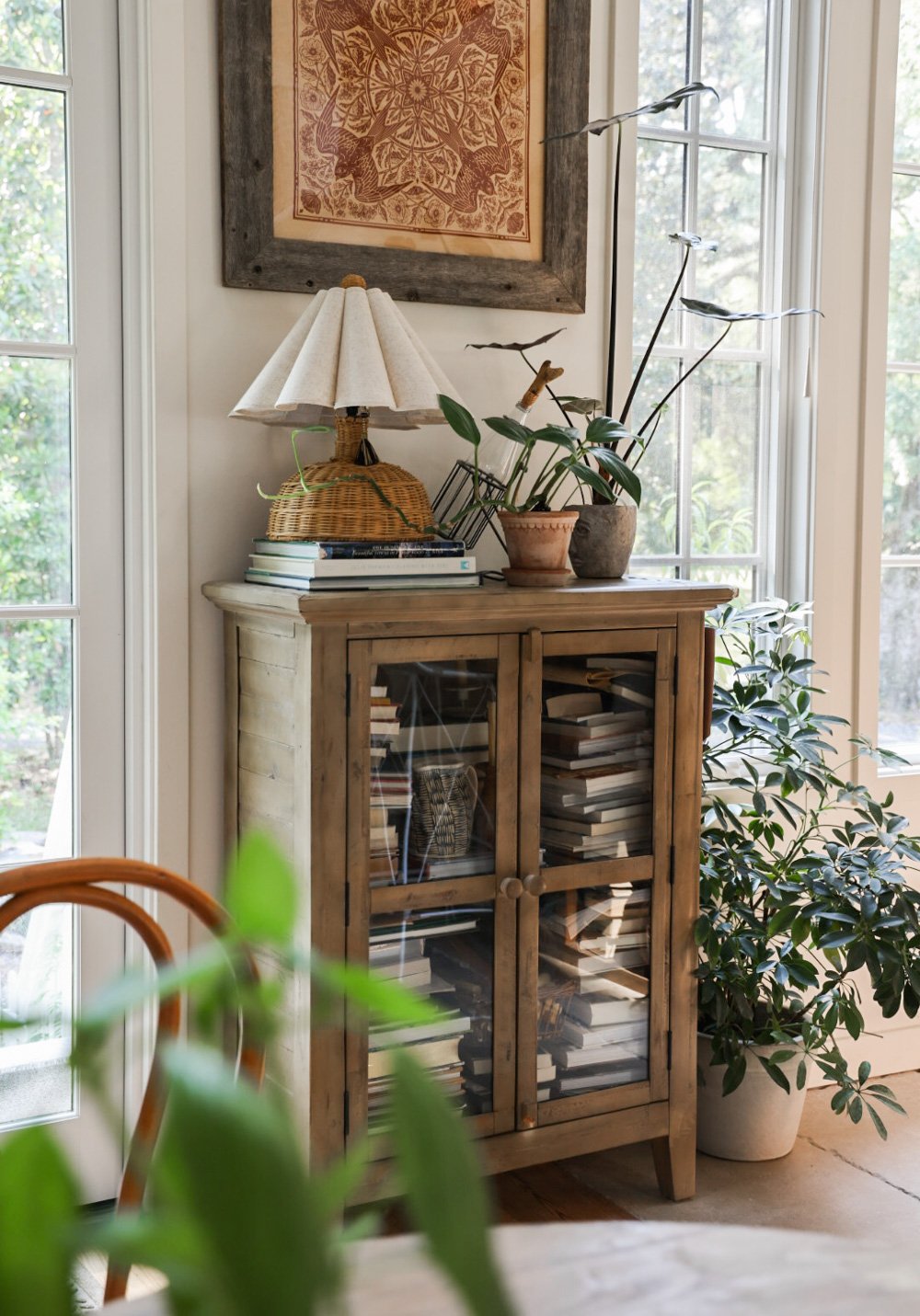
A handful of months ago, I let myself be momentarily deluded into thinking I “needed” an appliance garage & beverage station in the cottage kitchen.
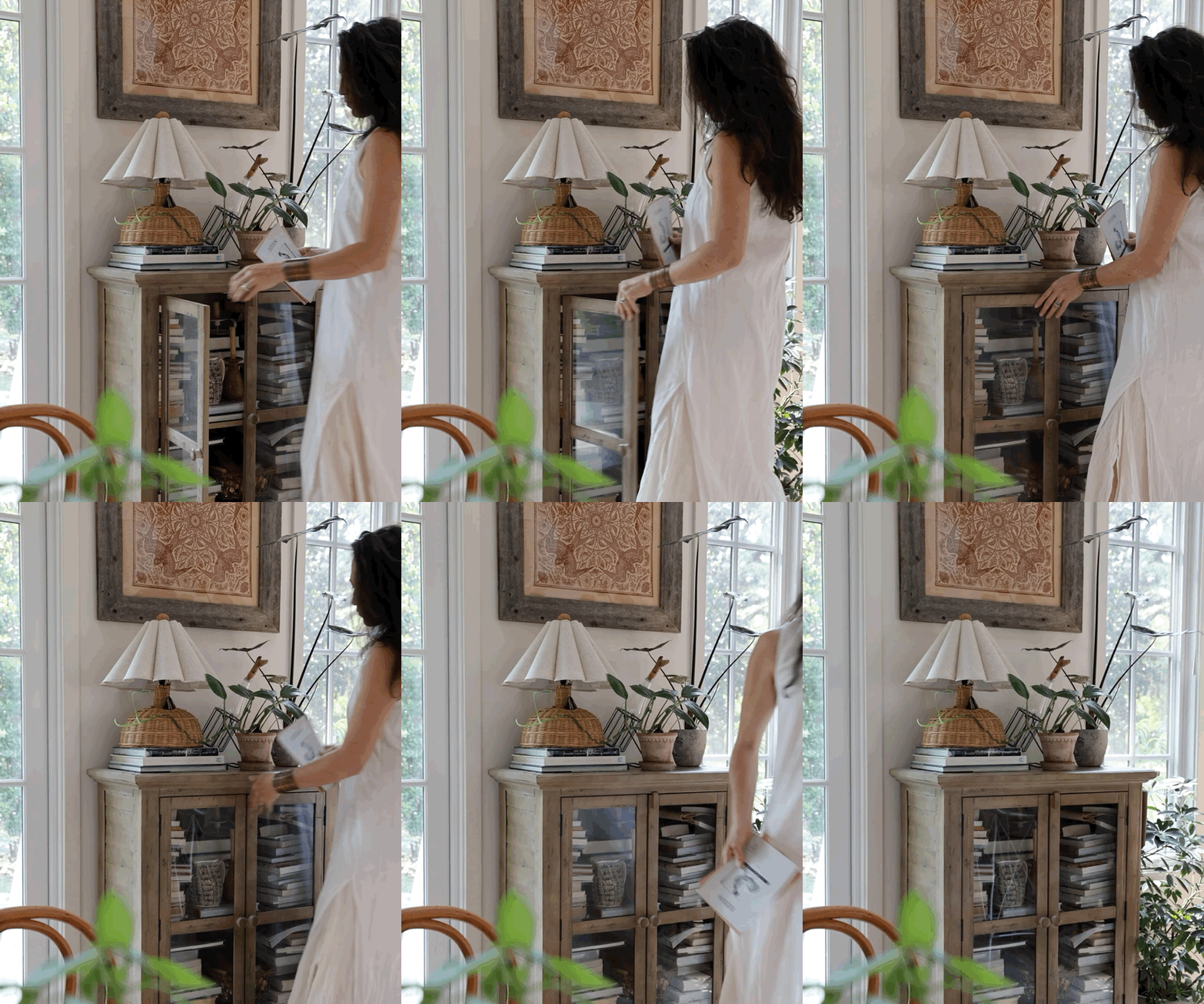
I had a spot picked out - a secondhand, windowed cabinet that straddles the line between our multitasking entryway / dining room and the kitchen. (Family and friends would immediately have drinks in their hands upon arrival! Kitchen gizmos would be tucked away but easily accessible! Ooh la la!)

In the meantime, our carefully pared down collection of non-library books had nowhere to go, so I shoveled stacks of them into the cabinet as a quick fix.

Over time, guests sometimes popped by, and it turns out that they were quite happy to take the two whole extra steps (gasp!) into the kitchen for their drinks.
Our collection of small appliances remained small itself, because most kitchen gadgets are things we can most certainly live happily without.
And as it turned out, I quite liked the books exactly where and how they were.
We all want to slow down, and yet we’re routinely lured into the expertly marketed promise of efficiency and convenience. We lust after silly accessories for which we upend our wallets and overtax our bursting homes, ultimately coming to the conclusion that we need more space.
But we don’t need more space.
We just need less stuff.
And this planet is desperately counting on us to act accordingly.


Before & "After": Turning a Construction Zone into a Garden & Outdoor Lounge
Note: While the following is a “before & after” post, the “after” is still very much a work in progress, and will remain so for years to come…

Approaching the outdoor design at our new cottage has been a challenge for me. After 9 years of working on our previous garden, we’d FINALLY gotten it to look and function exactly the way we’d long envisioned. (You can see some of the before / after photos scattered throughout this page on the blog.) But then, a single and short year later, we moved. To start all over again — from a construction zone, no less — felt both overwhelming and beyond budget.

BEFORE: February 2022. We built in an empty field so that no trees or branches needed to be removed. The Live Oak stump is leftover from a beautiful, ancient tree that split and fell down naturally years ago. The Sago Palms were here upon our arrival, and are toxic. We removed the ones that drop seeds, and we keep the pups well away from the palms remaining.

Above: May 2023
So we started the only way we could:
S-l-o-w-l-y.
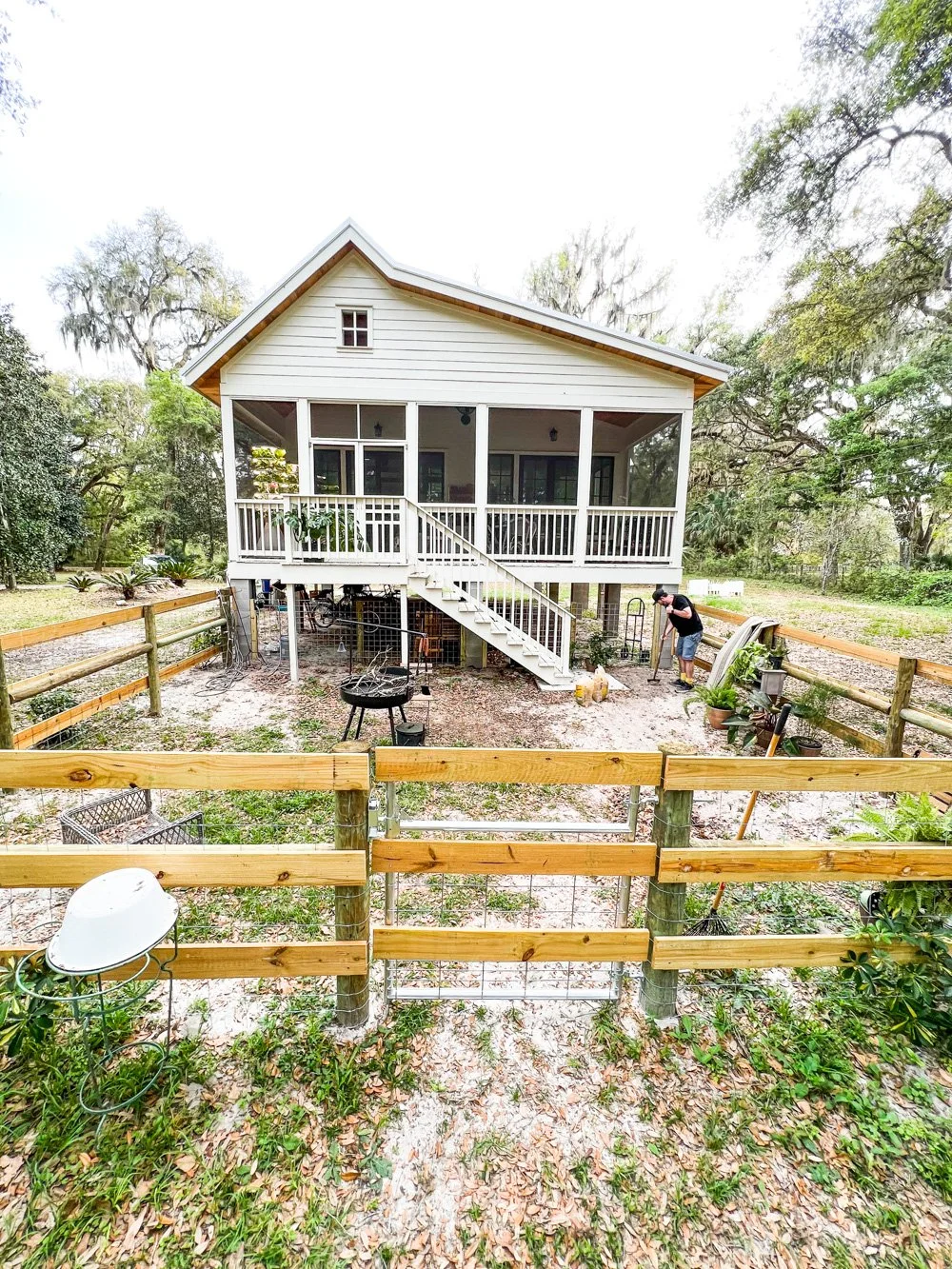
BEFORE: March 2023. I desperately wanted a natural willow fence, but in this environment we truly require a utilitarian barrier at the foot of the cottage to securely keep gators out while keeping our pups in. Enclosure is about 26’ x 26’.

Above: Work in progress. The vines will eventually engulf the fence posts and climb the porch supports, and we plan to establish shade-tolerant, oversized shrubs behind the sofa to obscure the underside of the cottage and create a living, breathable backdrop of green behind the sofa.
Our wonderful neighbors guided us through much of the process, teaching us more about native and regionally-friendly plants, and helping us obtain reduced prices on trees that would’ve otherwise been beyond our price-point. (They also collected all the plastic nursery pots for return to / reuse by the locally-owned plants shops.)

Our goal with this first pass at the garden was to restore the natural ground cover that was destroyed during construction, diversify the species of plants for both pollinators and shade, let select areas re-wild, and better conceal the underbelly of the cottage, which is built-up 5-6 feet above the ground due to flood safety requirements.


Over the course of several months, we planted the following around our cottage:
5 Fruit trees
6 Shade trees
12+ Creepers & vines
12+ Blooming shrubs
7 Herbs & Veggies (to compliment the 72 edible plants on our Lettuce Grow towers)
25 Shrubs
32 Cord grasses
Seeds: sunflowers, coreopsis, sweat pea, and more.

For natural (and free!) garden edging, we used dry fallen branches we’d collected over time. We hauled them home from around the land via cargo bike, wagon and Jeep.

We let the shape of the branches dictate the flow of the space.

The branches formed the pathways and zones within the space. We deliberately didn’t bother with weed barriers— more on why below.

The branches keep the gravel and mulch separated, and provide a natural surface for animals and plants to explore.

In a few spots within the fenced-in garden, we used mulch and pea gravel to delineate between pathways and plant zones. We didn’t bother with weed barriers, as the pea gravel wasn’t chosen for aesthetics, but for establishing natural drainage and solid, less muddy pathways for rainy days. (Plus it’s such a small area that it’s not hard to pull out unwanted greenery when need be.) Plus it’s tough overall, but soft enough for the pups’ paws.

This fence itself is, sadly, vastly far from the welcoming, warm, ethereal, willow border of my dreams. Instead it’s a utilitarian barrier at the foot of the cottage that is intended to securely keep gators out while keeping our pups in. (The dogs have access to a much larger space to roam freely nearby, but this closer, compact yard is a helpful enclosure for the dogs to access in the middle of the night and during particularly stormy spells.

To conceal the fence in time, we planted Coral Honeysuckle and Jasmine, which will creep and climb, ultimately covering the fence with a breathable barrier that welcomes pollinators.

We created space for a minimal lounge zone, an outdoor cowboy grill, and a bistro set. (And, of course, the kids are working on a fairy garden.) Eventually our outdoor shower will be included as well, hopefully privatized with the help of some creeping vines snaking their way over the fence.

We have two outdoor sofas— a rattan model for the porch, and a wooden design for the garden. The wooden sofa (not pictured in these visuals) is from our Venice cottage, and was made from reclaimed wood by our friends at Tumbleweed & Dandelion. The other is a “NATURA” sectional from Woven. It’s a modular system, which increases its use and versatility around our home and greenhouse.

Above: The “NATURA” sectional from Woven
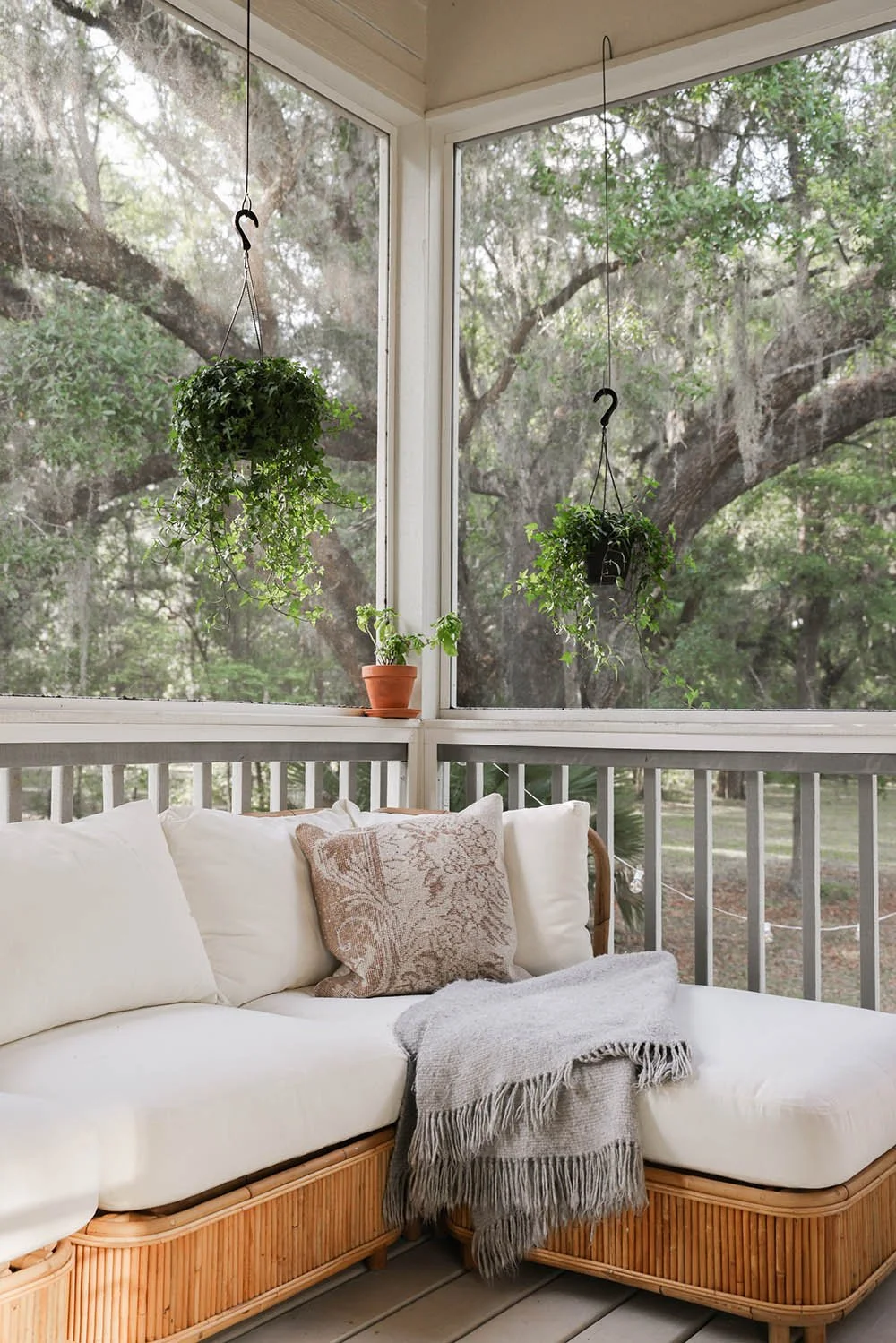
Above: The “NATURA” sectional from Woven
The NATURA is made from rattan, bio based foam and upcycled, recyclable all-weather fabric made from single use plastic water bottles. There is no hardware, it’s lightweight and ships standard, and it’s 95% compostable and recyclable through Woven’s take-back program.
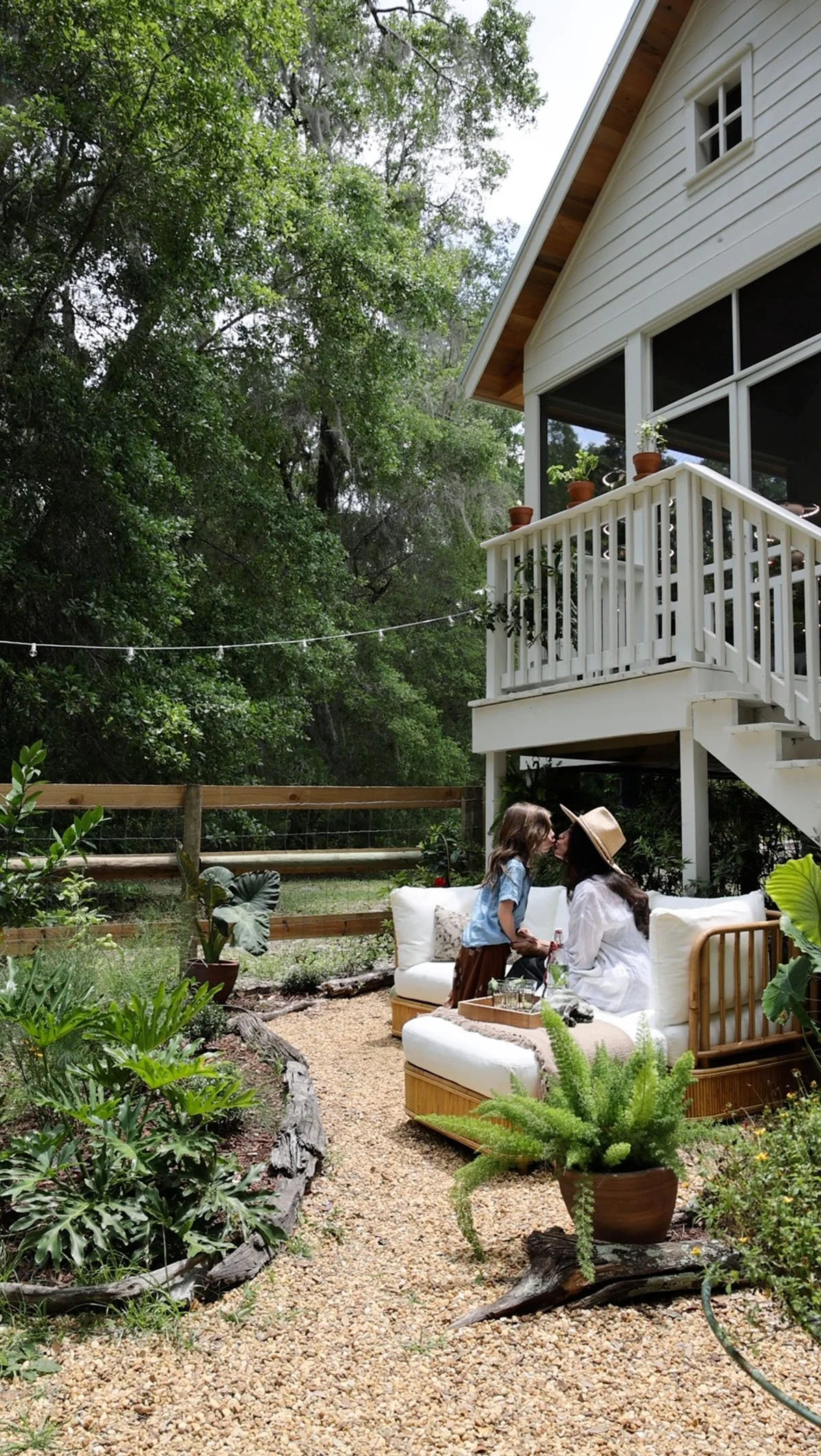

Out front, we intend to add a couple of locally-crafted Cypress chairs near the enormous preserved Live Oak stump. The stump is leftover from an ancient tree that feel down naturally years ago, and from its core another Oak has sprouted. We’ve slowly started planting flowers, vines and shrubs around it, while adding bird feeders + baths nearby. Already these changes have brought a myriad of pollinators, songbirds, deer, nocturnal animals, and sandhill cranes.


So many folks have asked why we chose vines and prairie grasses rather than more tamed and manicured plants, noting concerns over animals such as snakes, armadillos, raccoons and the likes.

But our goal isn’t to push the animals out… on the contrary (with the exception of those almighty gators). These creature were all here first, plus they need habitat since the county is rapidly ripping out acre after acre of old growth wooded areas in order to construct large housing developments. Our thought is that the land we share can remain a safe haven for the animals who have long lived here, while also providing them with cover that actually pulls them away from our paths and doorways.

This area has only just begun to take root. We so look forward to watching it grow, and learning from the experience.

Here’s to getting outside and celebrating nature while simultaneously respecting our one magnificent, collective home through our home and garden design decisions.
Note: I want to share a massive and heart-felt thanks to our incredible neighbors, who gave us so much of their time, energy, kindness, and expertise. And I also want to thank my parents — who have tended to this land for over 30 years — for their willingness to let Adam and I explore our own vision for this acreage. We are, after-all, merely a guest house / ADU to their home. We so appreciate their openness to reimagining what some of this land could become.
Functional Decor: Layered Kitchen Lighting
When we designed our new cottage, we didn’t include any ceiling lights in the main room, which consists of the kitchen, dining room, entryway, office, and living room. Nor did we include the recommended lights in our primary bedroom. Despite the electrician’s continued insistence that we needed built-in overhead lighting, I was adamant that we avoid it, remembering how harsh it felt — regardless of bulb type — in our previous tiny cottage.

Six months have passed since we moved in, and not once have I regretted the decision. In fact, I wish I’d listened to my gut about the kids' room too, and remained steadfast in declining the recessed lighting option in there, too. Alas, I caved on that one, and I’m still kicking myself for it.
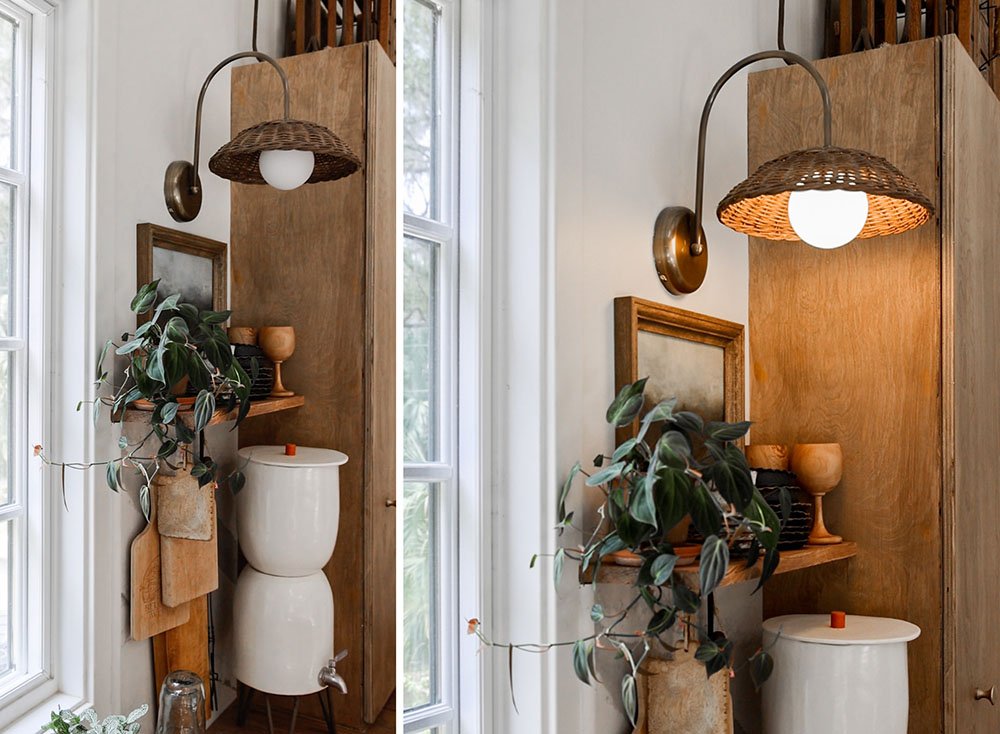
For me, lighting is the perfect example of Functional Decor. It is the ultimate way to decorate a home and set its feeling of warmth and welcome while addressing a distinct need. Plus lighting can be designed to suit any style within a myriad of budgets.

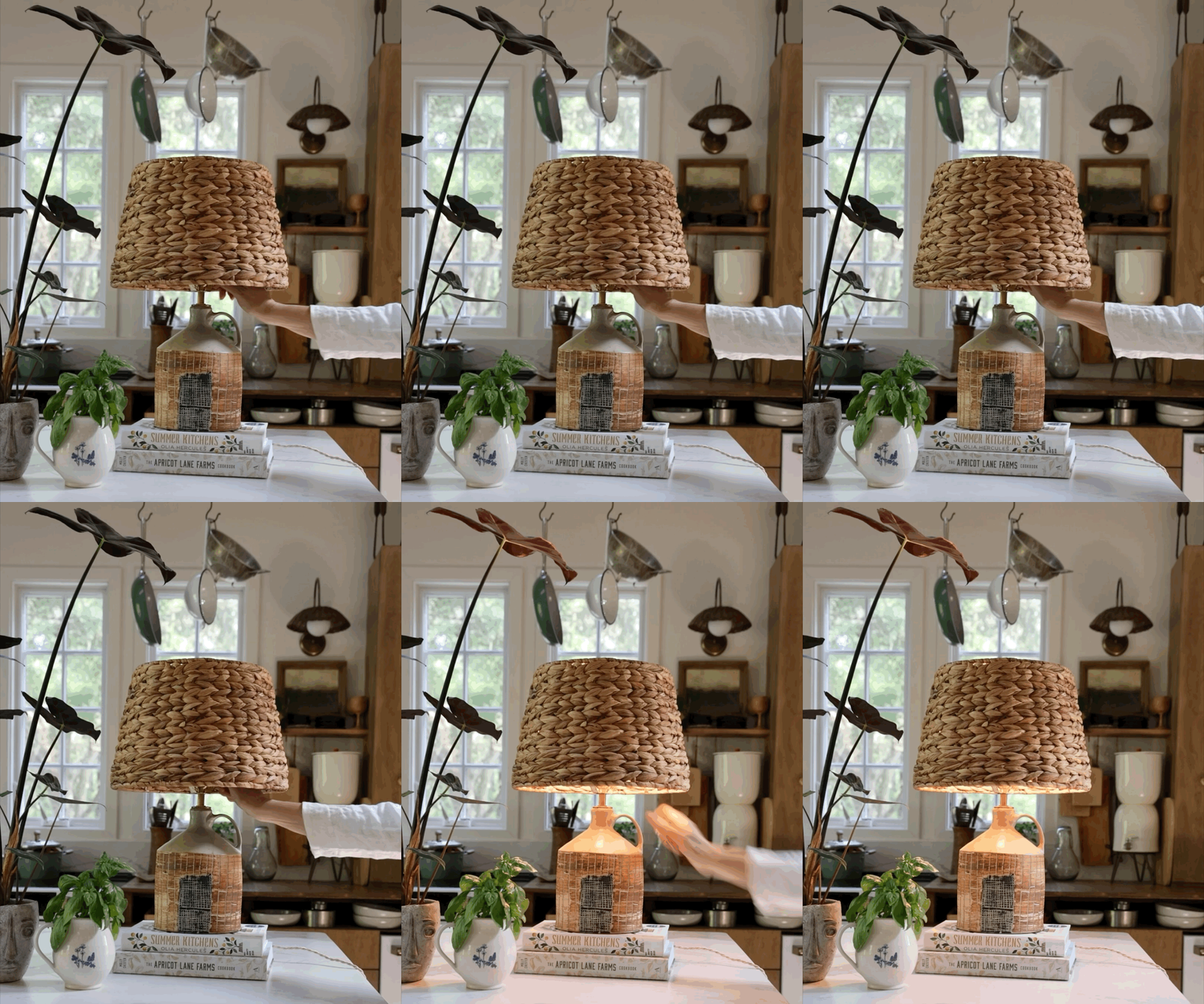
We don’t often need to switch on the lights within our home thanks to the numerous windows and skylights that usher in abundant natural light. But after the sun sets, the kitchen requires the most illumination, which is why the room is layered with sconces, a pendant, and two table lamps. All of these include natural, eco-friendlier materials, like rattan, linen, water hyacinth, and clay, rounding out the look and feel I want for the space while helping us brighten it gently but effectively in the evenings and early mornings.

I also prefer the versatility of less permanent lighting options. With the exception of the two wall sconces on the back wall, the other lights, including the pendant, can easily be relocated in case our needs or use of the space shift over time.

The growler-turned-lamp, which is ceramic with a light iron wash and a hand-carved screen door on the front, is by a life-long friend whose works of functional ceramic art I’ve collected for 20+ years. The other table lamp (in rattan) was designed by our friend Justina Blakeney. Lighting can be an opportunity to showcase (and even repurpose) sentimental items from around your home, not only adding to the decor but also telling stories about your family and the folks you love.

SOURCES
Handmade ceramic, iron wash lamp by our friend Daniel George Designs
Linen Pendant Lampshade: Secondhand (click here for the jute pendant lamp cord)
Rattan and linen table lamp by our friend Justina Blakeney of The Jungalow for Opalhouse

How to Make a Pop-Up Play Zone in a Small Space
Read more about establishing play zones for children in compact homes and outdoor spaces via my book, Small Space Style.
Living with kids in a small space can be a unique challenge. But it’s possible to nurture imagination, respect boundaries, and even remain organized when approaching the design and decor of a compact home with inventiveness and consideration.

I’ve long enjoyed creating pop-up play zones for my children in our various environments. Not only does this activity create a “new” area (without spending money or acquiring more items) for the little ones to enjoy, but it’s also playful way for me to start the day, as it feels like a creative warm-up exercise.

Even the smallest stretch of square-footage can be temporarily transformed into something special. (I’ve found this to be particularly useful on those long days when we’re confined indoors for one reason or another.)

Over a long weekend recently, I took 5 minutes to apply a few simple edits to the 3’ x 6’ space between our kitchen island and wall, turning it from a walkway into a play kitchen + art table + bird watching station for our 2 year old and 6 year old.

It didn’t consist of much— just two wall-mounted rails with hooks (for suspending items like an apron, food + tea set, lantern, and child-safe chopping tools), and a vintage folding chair and secondhand mini table with accents surrounding them.


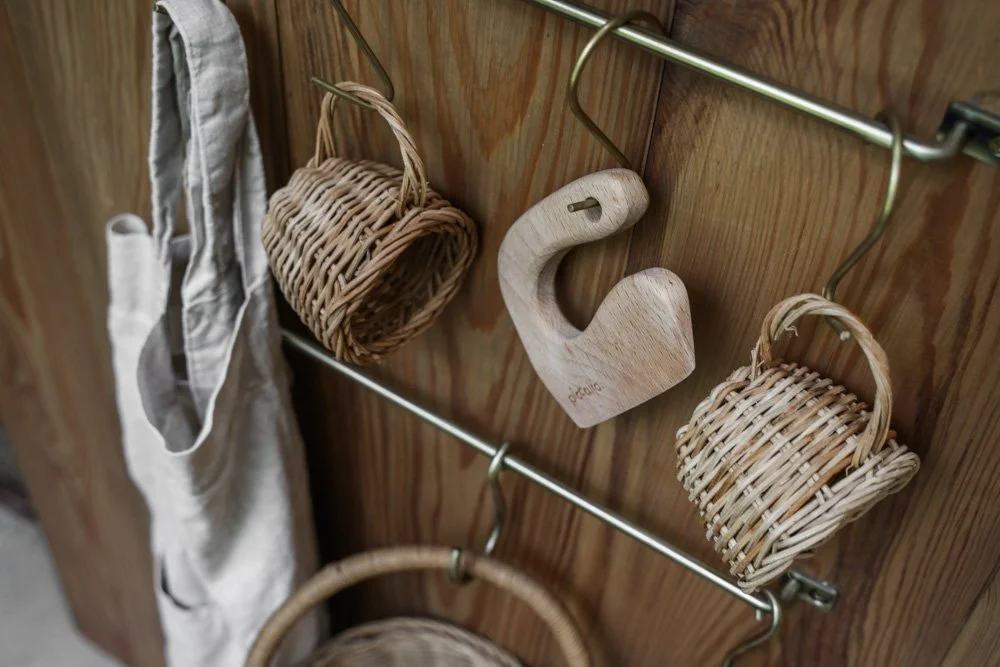
It was such a hit that I suspect we’ll leave everything out for a bit longer, or we’ll at least resurface the concept within a few week’s time.

As always, some of the key tools I use for creating such pop-ups include:
Vertical storage + organization for space-savvy layers of functional decor
Baskets for toting toys and accessories
Folding furnishings
Portable lighting


All items were repurposed from around the house, but when presented in this revitalized format, the kids enjoyed each of the pieces as though they were once again new to our household.
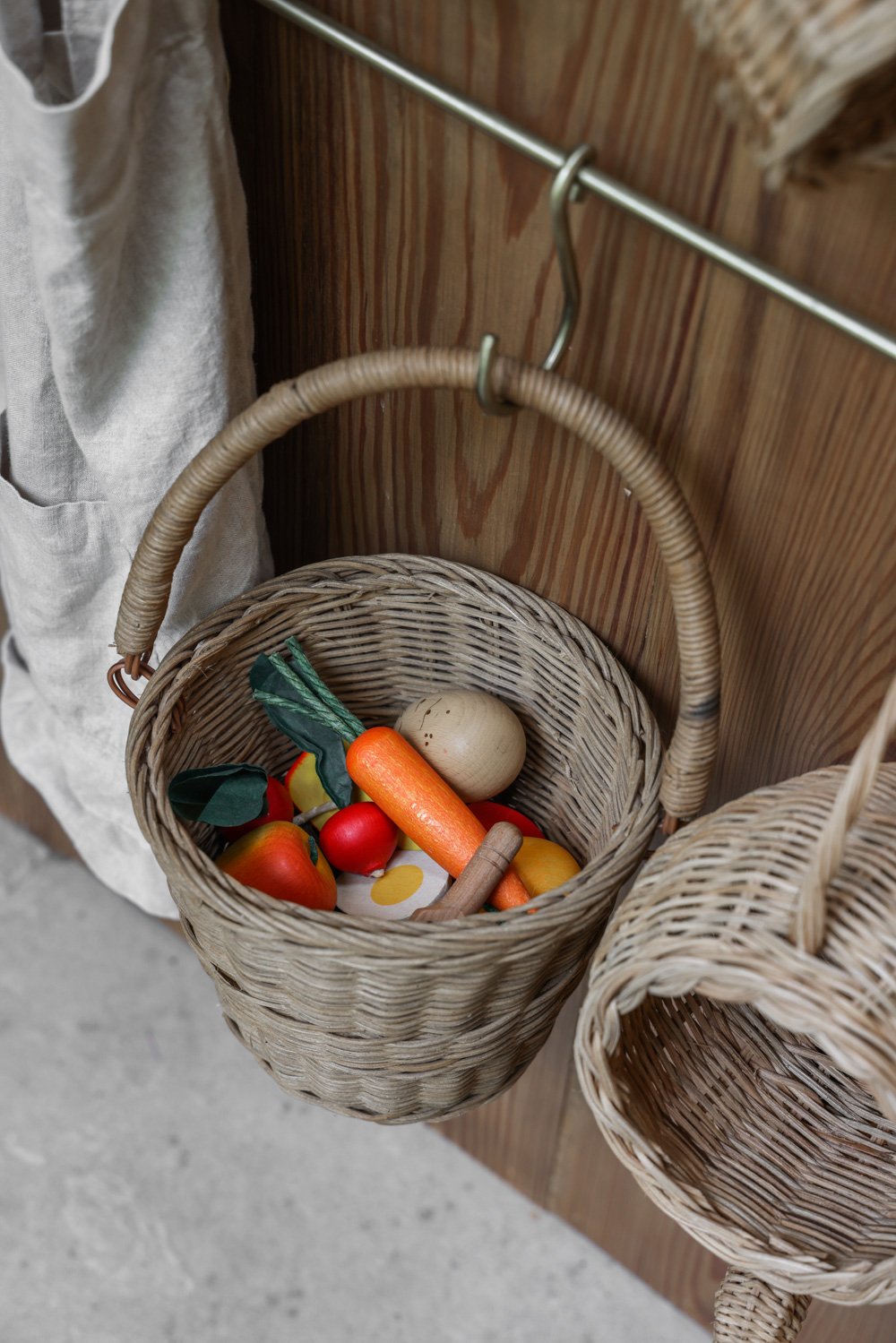
Here are some photos from this simple setup. And, as always, I invite readers to explore even more details regarding establishing play spaces for kids in small homes and gardens via my book, Small Space Style.

Italy, Spring 2023
I stepped out of my comfort zone when I agreed to host a group trip to Italy.

Venice, Italy. Photo by Alyson Morgan (@alysonsimplygrows). Luggage by SteamLine.
I’d never met any of the attendees in person.
I don’t speak Italian.
I’ve spent the majority of my weekdays for the past fifteen years mostly alone.
I’m wretched at small talk.
I get anxious over logistics.
And I don’t like to go anywhere without my kids and pups, let alone travel thousands of miles away from them.

Como, Italy. Photo by Alyson Morgan (@alysonsimplygrows). Collapsible travel bottle by Stojo.
But, on the flip side, now that we’ve settled into our new cottage and are discovering new routines in our household and business, this feels like such a season of change.

Restructuring.
Unlearning.
Relearning.
Evolution.

Lake Como
And, thankfully, the setup of this trip was such that I didn’t have to sweat the logistics, or make small talk. Instead, there were deep and joyful connections, paired with the vibrant backdrop of Italy and Trova Tourism’s mindfully curated adventures.

Bellagio, Italy
Despite initially planning on visiting France (since many folks who read this blog are interested in our @tinyfrenchfarmhouse journey), I decided to pivot and focus on Italy instead, as the itinerary sang to me given the overlap with my lifestyle.


Bike rides, long strolls, boat rides along waterways— all of this resonated with my family’s day-to-day existence. And on that note, my first group trip clearly had to include Venice, Italy— the town that inspired Venice, California, where our family resided for over a decade.

My small business and online presence were, for years, centered upon small space living along canoe-filled waterways under the warm sun that dries lines of laundry dangling from every awkward corner available.

So the visit to Venice, Italy was not only a feast for the eyes, but it was also a feast for my heart.

Venice, Italy. Photo by Alyson Morgan (@alysonsimplygrows). Luggage by SteamLine.
Our group activities included the following:
Milan City Cycle Tour
Cooking Demonstration with a Milano Chef
Lake Como Tour
Bellagio Lakeside Village Visit
Boat Ride from Bellagio to Tremezzo
Franciacorta Sparkling Wine Tour and Tasting
Venice City Tour
Gondola Ride on the Canals
Burano Boat Tour & Stroll

Burano

Venice
While the sights were stunning and the trip well-orchestrated, what meant the most to me were the friendships forged. It was an honor and joy to be joined by author, photographer and herbalist Alyson Morgan, as well as ten absolutely delightful, like-minded, and kind-hearted travelers, along with our exceptional guide.

They say that all good things must come to an end, and while the trip is indeed over I’m thinking that this good thing might just need to evolve and happen again.

… Alyson and I are currently pondering the possibilities together…

In the meantime, I’m just so glad I said yes to this.

Photo by Alyson Morgan (@alysonsimplygrows)
Pictured in this post: My travel water bottle from Stojo, and my favorite SteamLine Luggage carry-on case, which was the perfect size for our week in Italy. When at the cottage, I use our SteamLine pieces as decor in order to maximize their functionality and further enjoy their beauty. SteamLine has a refurbishment program, and they offer a collection composed of naturally renewable + sustainably-sourced rattan, and recycled synthetic leather.

Before & After Video: The Cottage in Spring 2022 + Spring 2023
What a difference a year can make! I’m grateful every day for the roof over our heads, for the clean water that comes from our faucets, and for my family’s health. Our friends at The RightWay Foundation, a non-profit with which we’ve worked for years, are working to ensure others have access to such fundamentals, too. RightWay provides safely-located, well-appointed apartments and shared housing for homeless transition-age youth. They supply the security deposit and subsidize half of each month’s rent for one year, while supporting youth in building financial and emotional stability. Click here to donate (any amount!), and become the support that transition-age foster youth need.
Before & After: Adding Character to Furniture
I’m a fan of working with what we’ve already got. It’s usually better for our wallets, better for the planet, and a way of making our homes look and feel our own.

A wobbly vintage rolling cart might just need a replacement wheel to be functional.
A broken planter might be useful when transformed into the perfect frog (or fairy) house on the stoop.
And a bland piece of furniture might just need a few reclaimed and repurposed accents to achieve its true character.
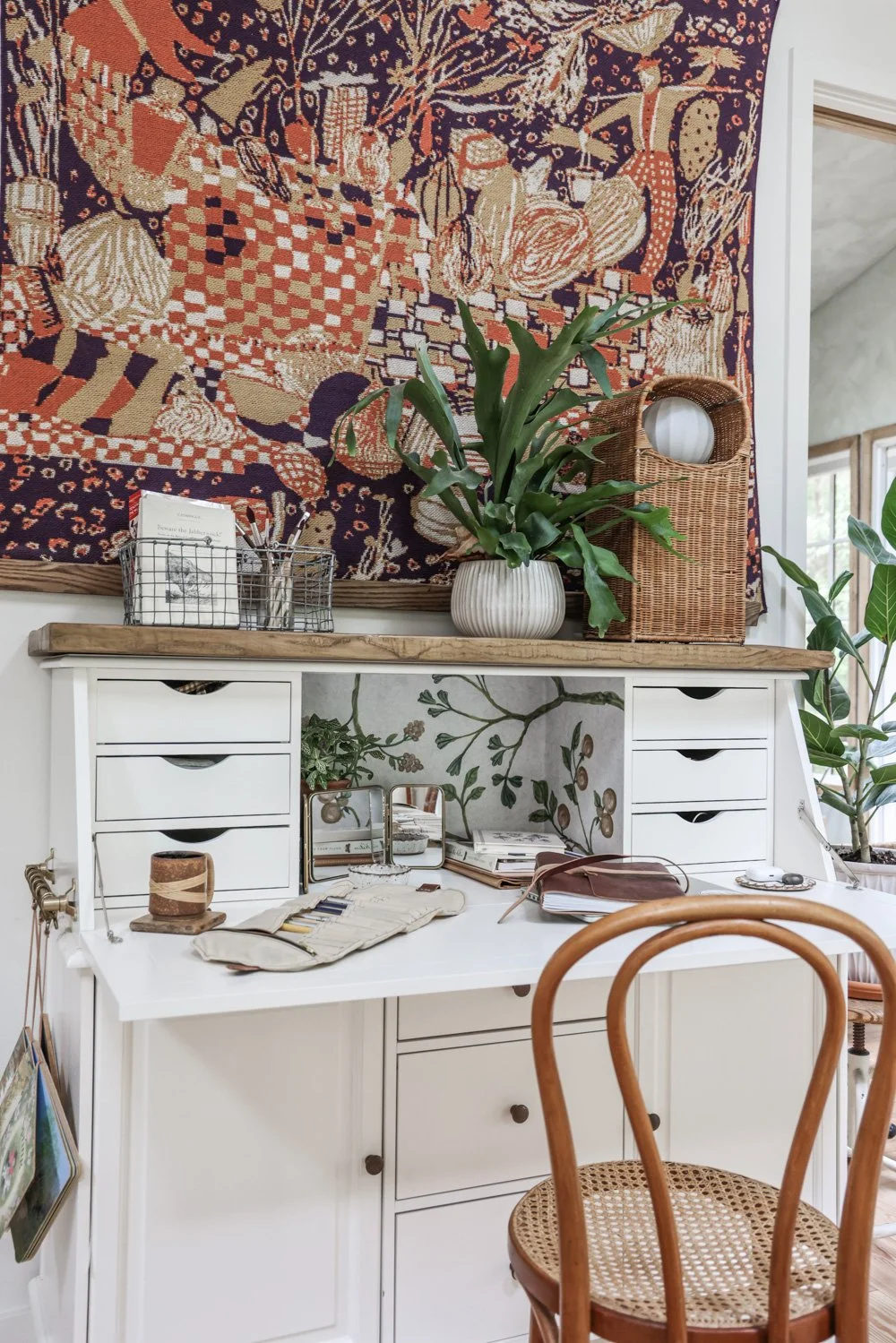
Our fold-away storage desk was one such piece:

This desk is perfect for our needs here in the cottage. It functions as an ample workspace when open, a narrow and unobtrusive console with storage when closed, it offers a standing-height tabletop when desired, and it’s almost the perfect width for this pocket-door frame-filled wall, which can’t support any substantial weight on its own.
But there was just no getting around the fact that it looked new and stale compared to pretty much anything else in our little home. The most obvious way to add character would be to paint it, but not a day has gone by since we installed this piece when it hasn’t been a heavily relied-upon workhorse for my small business. So rather than paint it — at least for now — I opted to work with materials we already had here at home in order to give the desk a beating heart.
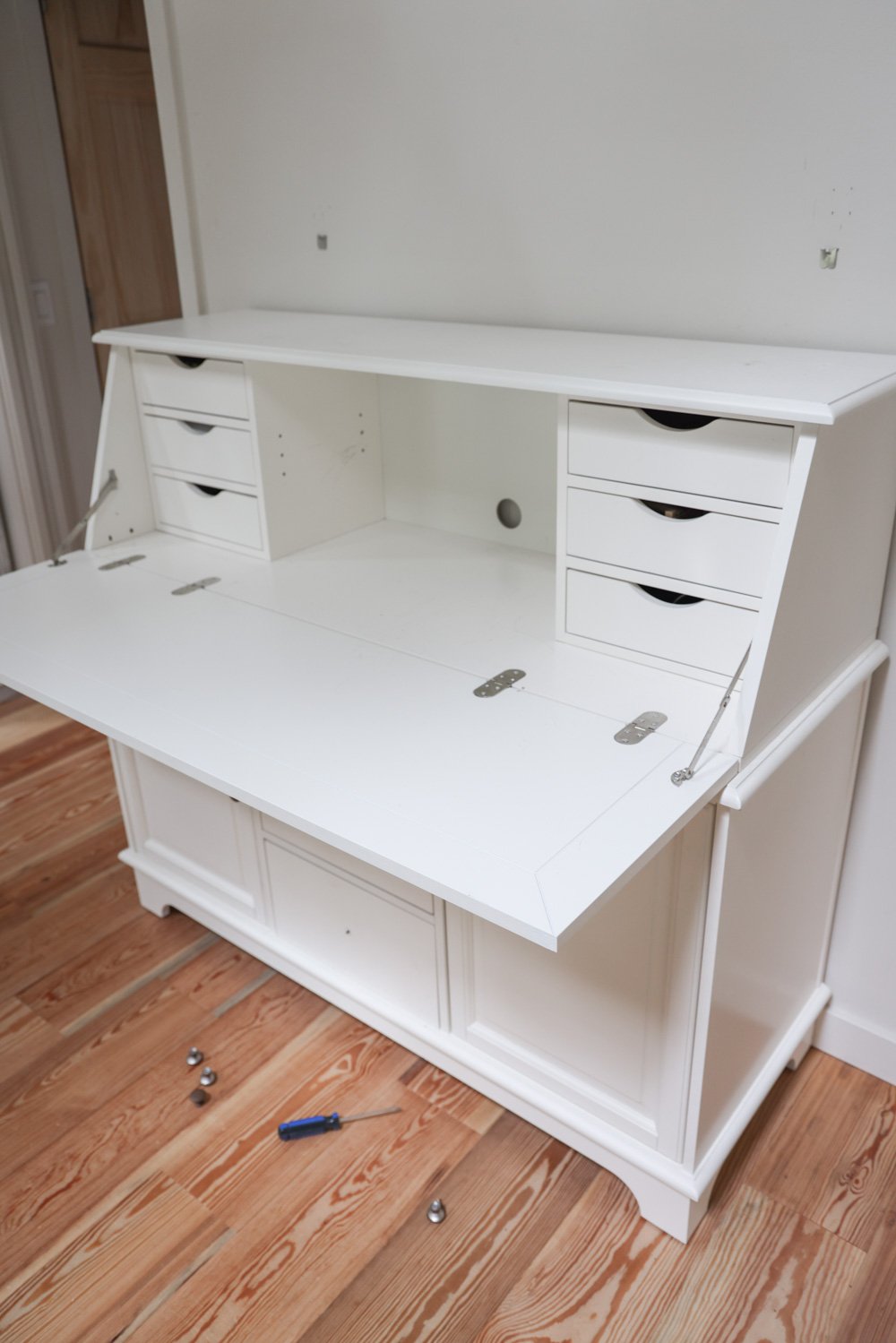

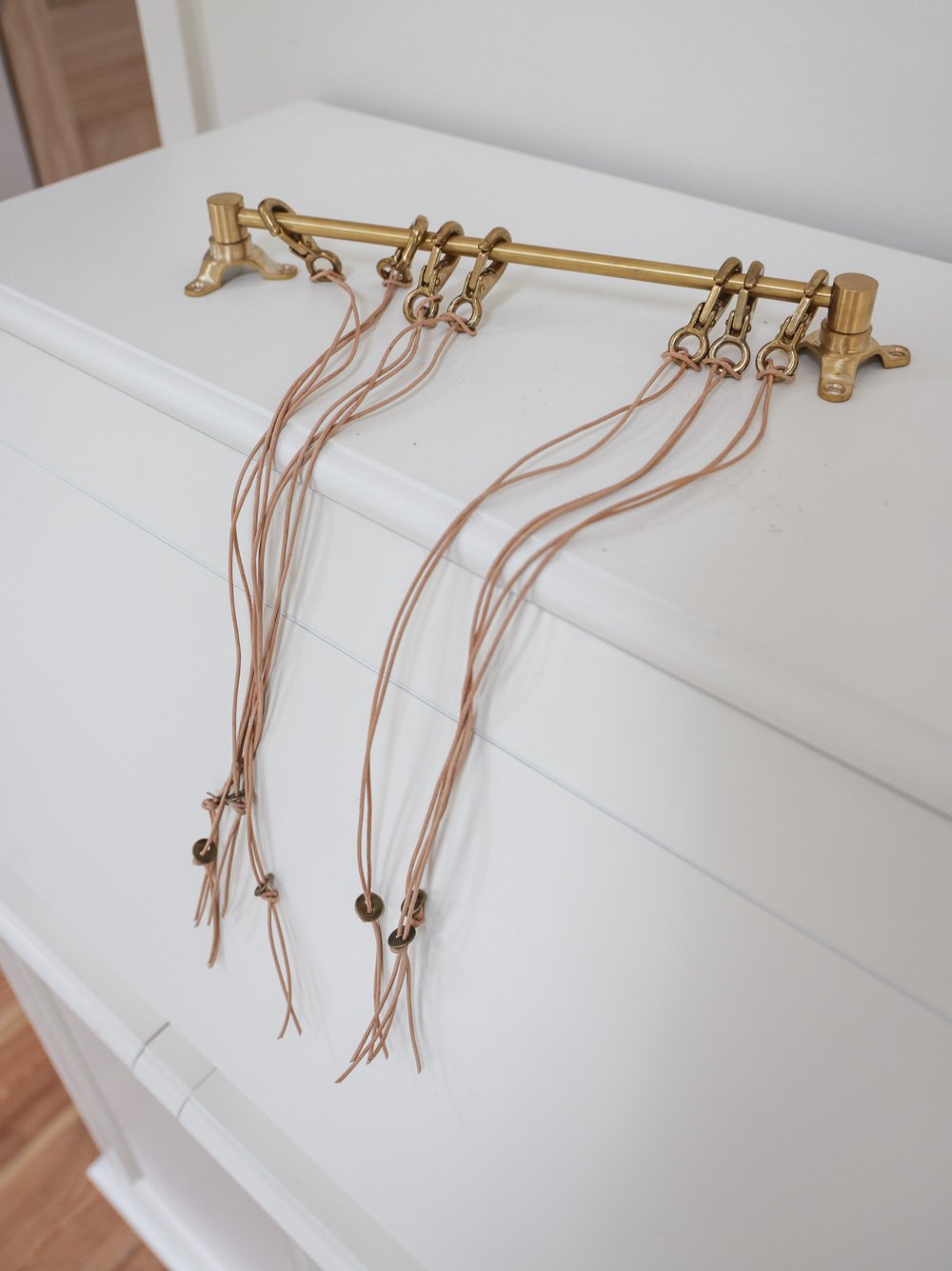
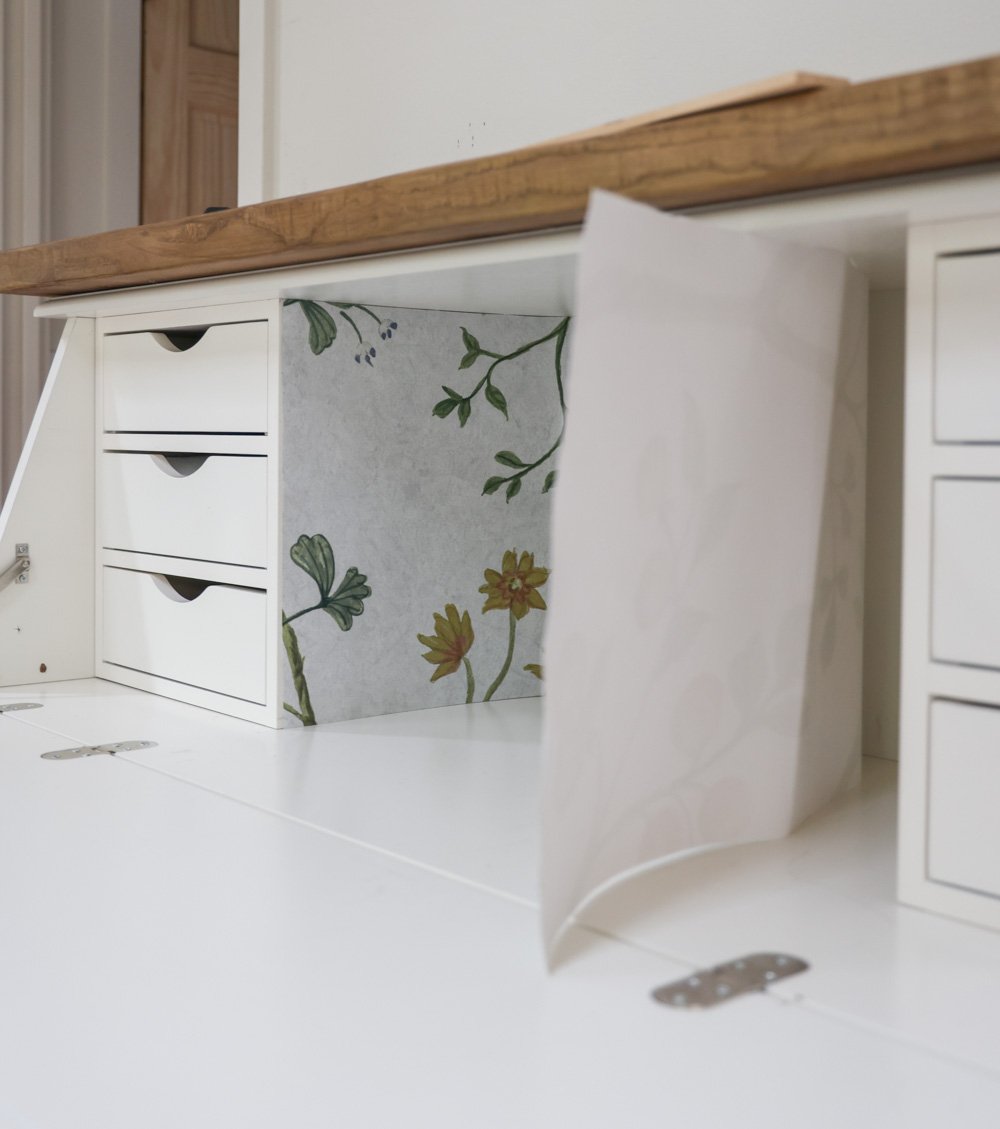
The brushed nickel nobs got a (hastily applied) coat of leftover textured bronze spray paint. The interior cubby received a remnant piece of peel + stick wallpaper from Rebel Walls, a scrap from our closet makeover. The exterior became a touch of extra book storage thanks to a clever, made-to-order suspended system that we were gifted upon moving in. Lastly, we layered the top shelf with a reclaimed wood board that was once the tabletop of narrow kitchen island from one of our previous homes.


While the end result isn’t the century-aged, eco-friendliest antique of my dreams, it is a highly usable, purposefully chosen, and mindfully modified desk that I plan to use for years to come.


If you already have newer furnishings for one reason or another, consider adding a dash of reclaimed materials to them in one or more ways. Vintage hinges, door knobs and pulls can work wonders. Similarly, consoles, countertop segments, accent pieces, and more can be enhanced when securely topped with a layer of repurposed or reclaimed materials, sized to your specifications. Additionally, paint, wallpaper, and secondhand accents can further transform a flavorless piece into a story-rich heirloom.


Custom Shoe Cabinet for Our Family of Four
Note: Discover tips and tricks for small space shoe storage via my book, Small Space Style: Because You Don’t Need to Live Large to Live Beautifully
One of the first things that’s visible upon entering our cottage is a tall, custom cabinet made from reclaimed wood:

Luckily, one of the things that’s not immediately visible is all its contents:
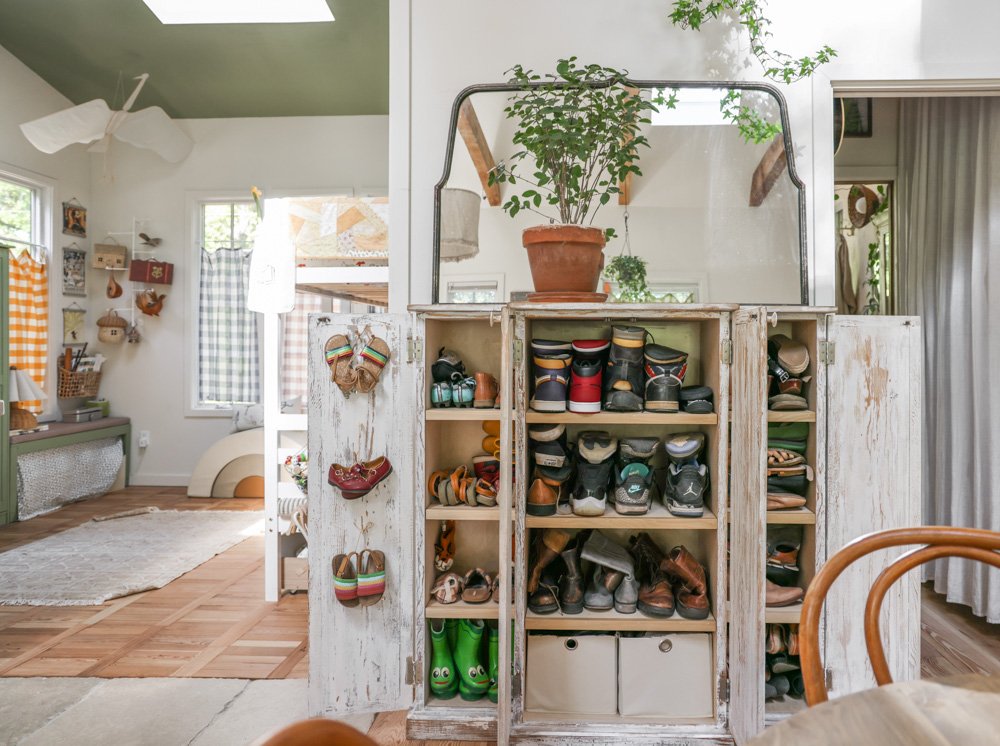
This three-part, four-doored cabinet holds almost all of the shoes for our family of four. (There are some frequently used pairs — as well as a few tall boots — stashed elsewhere for doorside access and utility.)
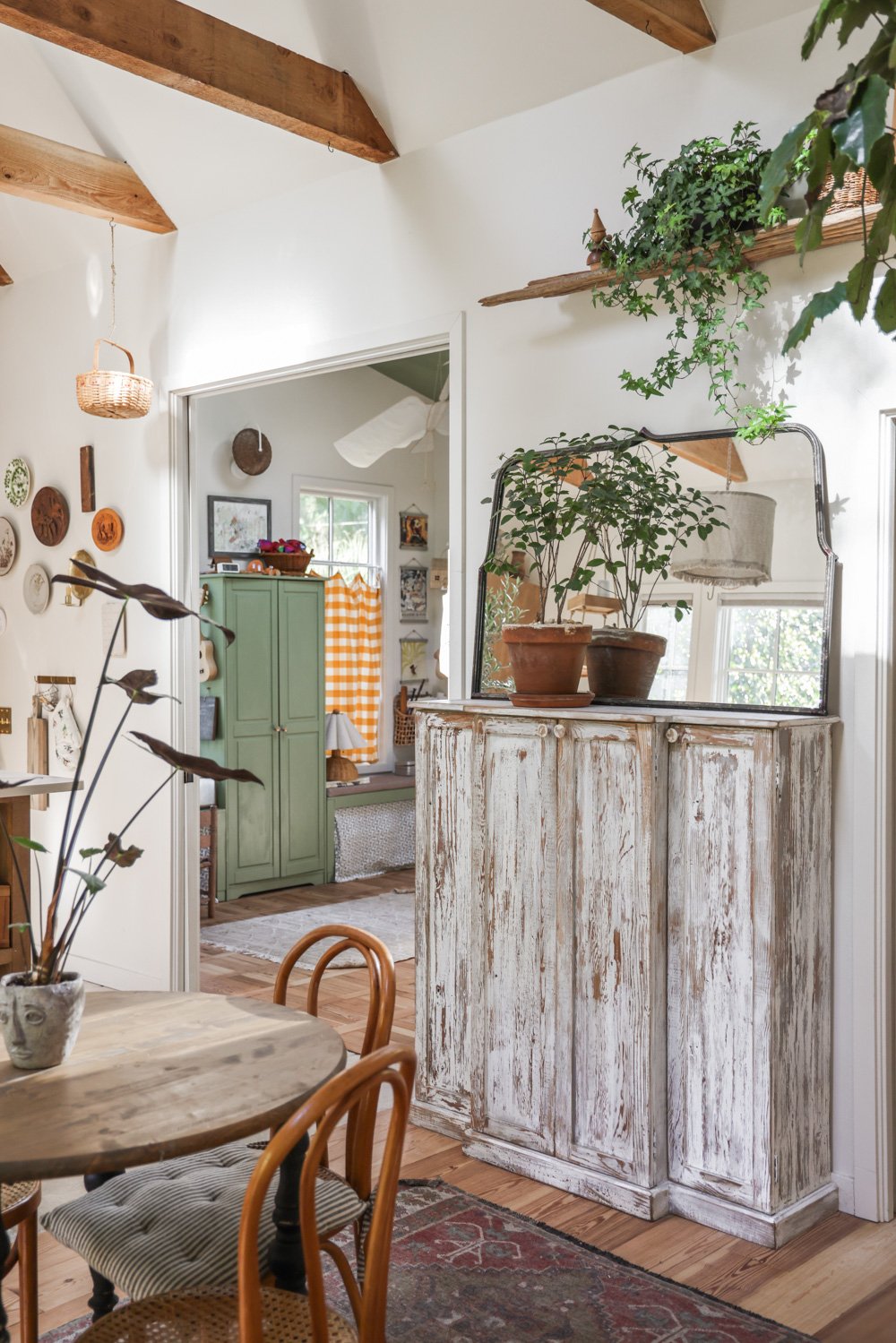
The cabinet was made by our good friend at Tumbleweed & Dandelion, with whom we designed it.
The idea was to keep everything near the front door, without causing a bottleneck there. We opted for a taller height (per usual), to maximize vertical space. The cabinet also provides the perfect perch for a large, light-bouncing mirror that adds color and depth to the pocket door wall, which itself cannot support even moderate weight due to the necessary hollow framing behind much of the drywall.
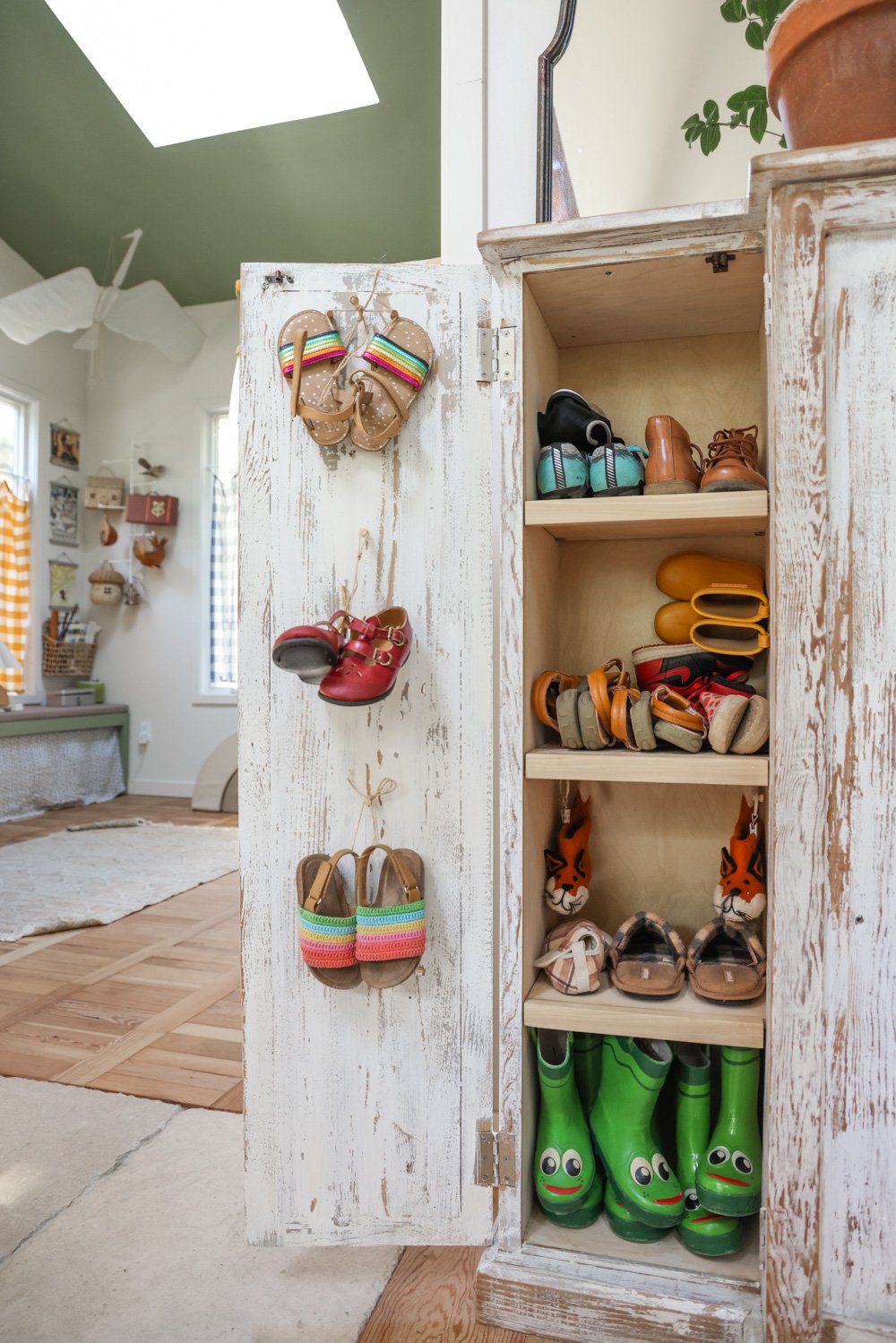
I’ve found that some important parts of designing custom furnishings for our unusual, smaller spaces are not just the obvious ones — like size (particularly depth) and shape, but also aspects like leg type and maneuverability around the pieces.
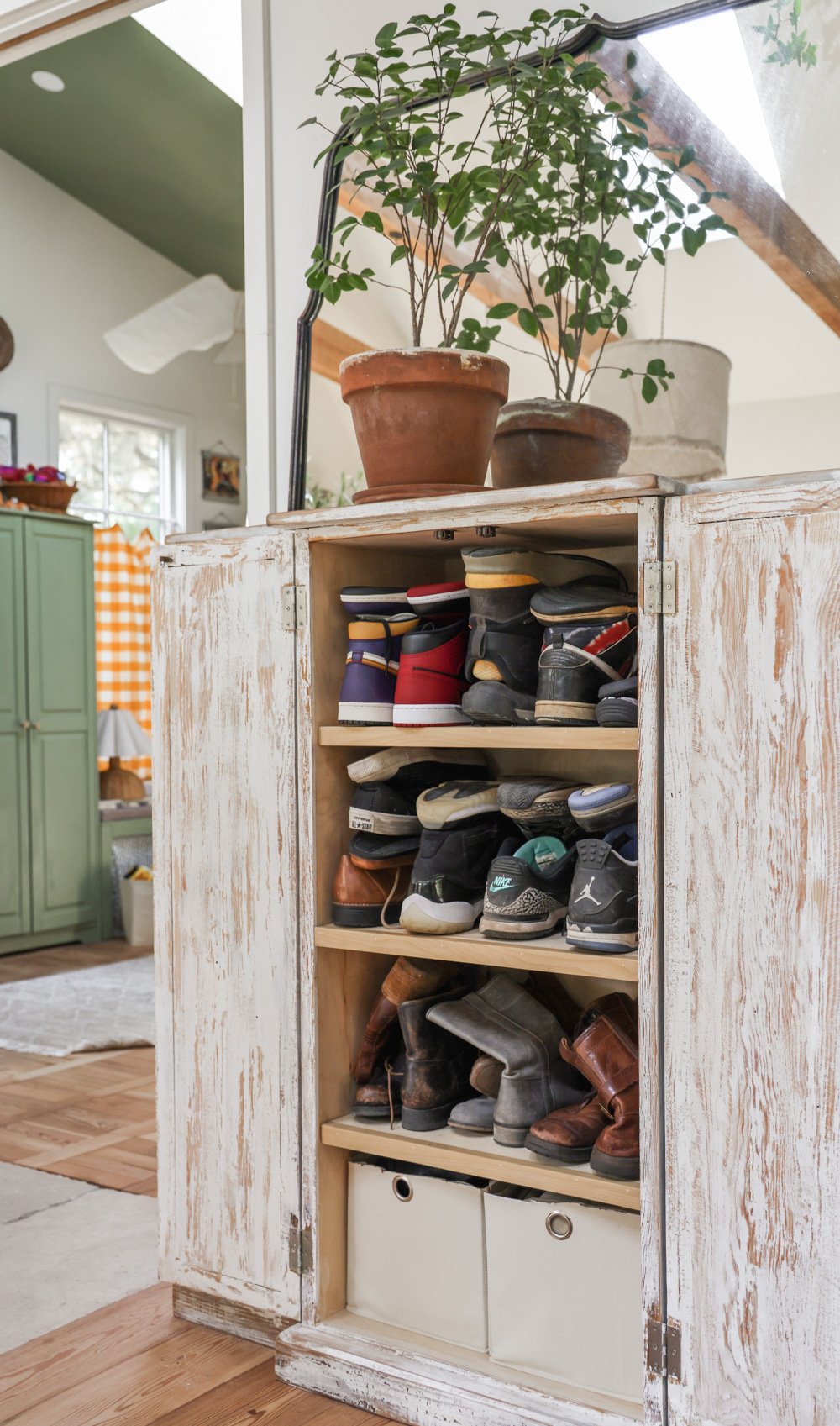
For example, we didn’t want dog hair to be able to make its way beneath the cabinet, and we wanted it as sturdy as possible since we have two young children. Hence the flat bottom design.
And we wanted the piece to be as shallow was possible to prevent us from bumping into it when in the “dining room,” or while crossing from the bathroom into the kids’ room, but it also needed to be deep enough to accommodate Adam’s sneakers. Hence the alternating depth between compartments.

The kids shoes go on one side, and handmedown shoes that they’ve yet to grow into hang from the interior of the door. Adam’s sneakers fill most of the middle compartment, while my shoes sit (somewhat pell-mell, but I don’t mind) on the right side.
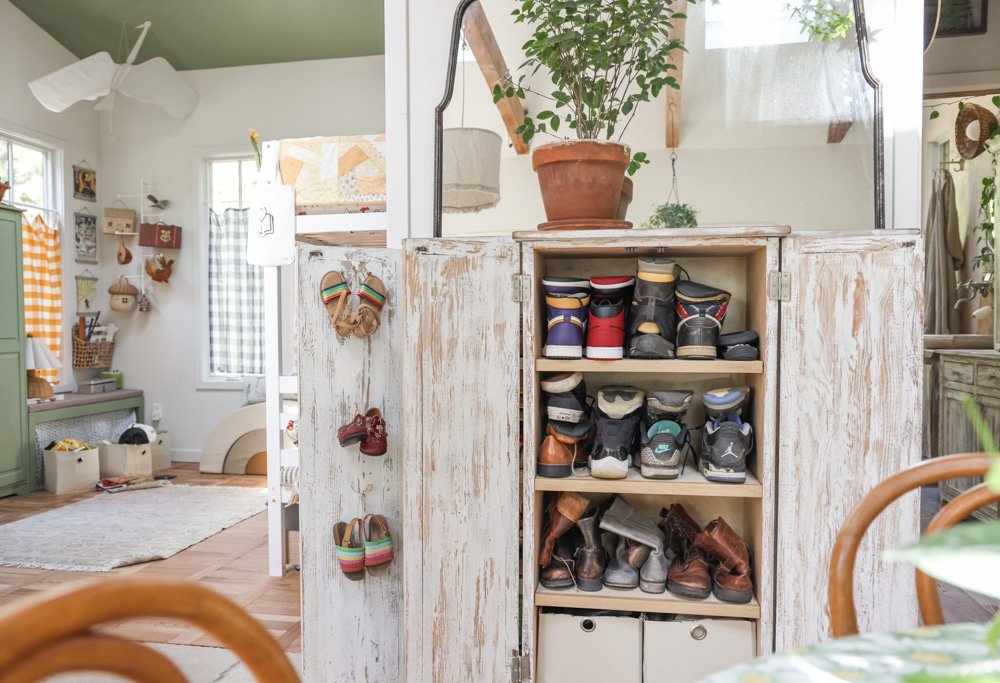
Shoes that my oldest child has outgrown go into a 6-pocket beverage bag that I suspend from the makeshift hallway coat closet, which is a small stretch of receded wall in front of the breaker box where I added a dowel and hangers to make the space highly functional. While in the bag, the shoes wait to be reused by our younger child, or are kept for sentimental reasons. (Yes, I’m good at letting things go, but not all things.)

This cabinet turned out exactly as we’d hoped and imagined, and has room inside to adapt, thanks to removable shelves. We’re grateful to our talented (and absolutely delightful) friends at Tumbleweed & Dandelion in our old, beloved town of Venice Beach, for bringing this vision to life!

And speaking of our Tumbleweed friends, the shop’s founder, Lizzie McGraw just wrote and published a fantastic book that I love, which be found wherever books or sold, or via her small business’ online store.

Small Space Wardrobes
Note: Discover tips and tricks for small closets — or no closets at all! — via the e-reader and hardback versions of my book, Small Space Style: Because You Don’t Need to Live Large to Live Beautifully.

Our last home had a single closet, which we all shared once our first child aged out of his closet nook nursery. When designing our new cottage, we knew we wanted more closet space since we’re now a family of four, but not that much more closet space. We’ve found that setting firm spacial parameters help us keep our belongings pared down and our essentials in check.

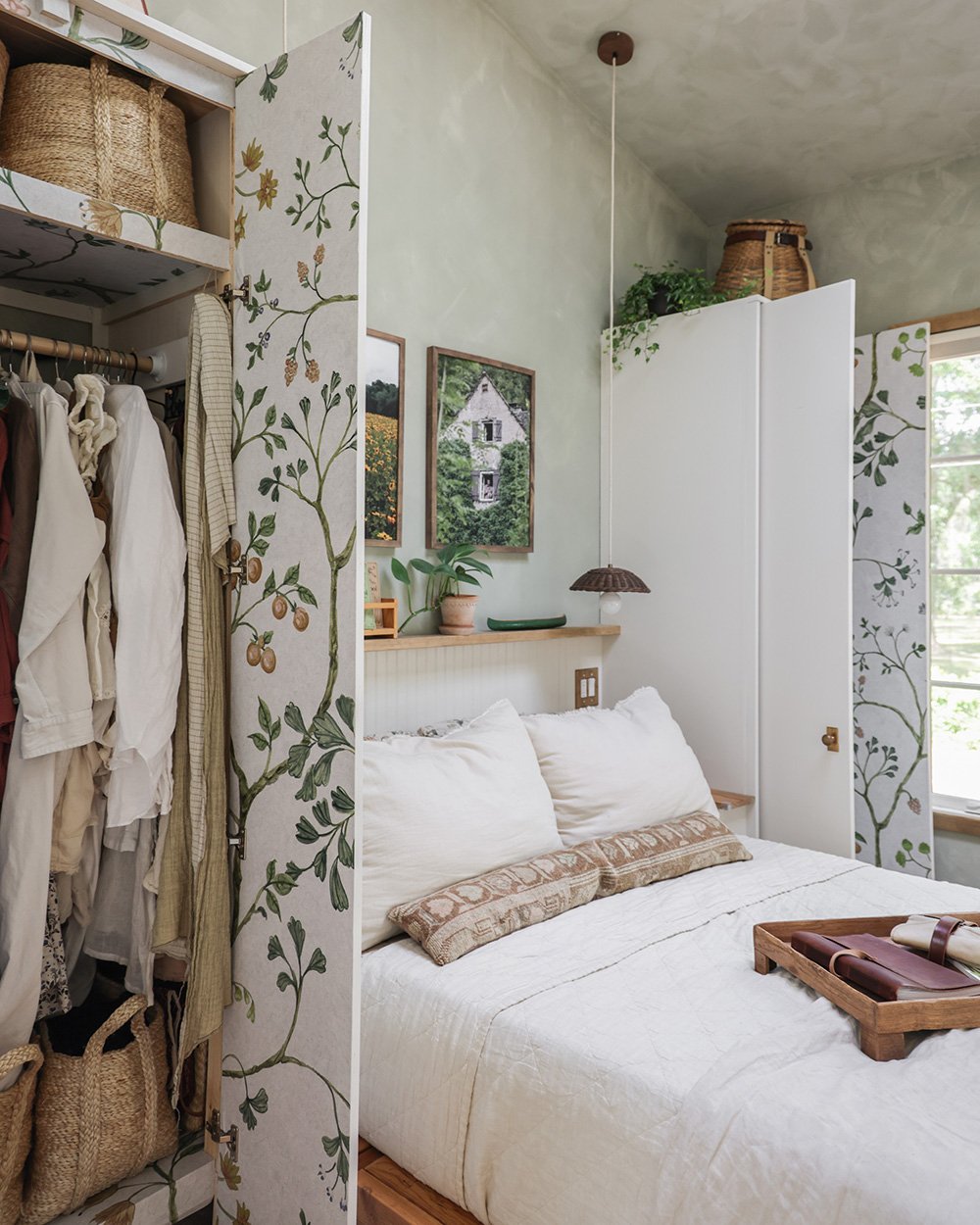
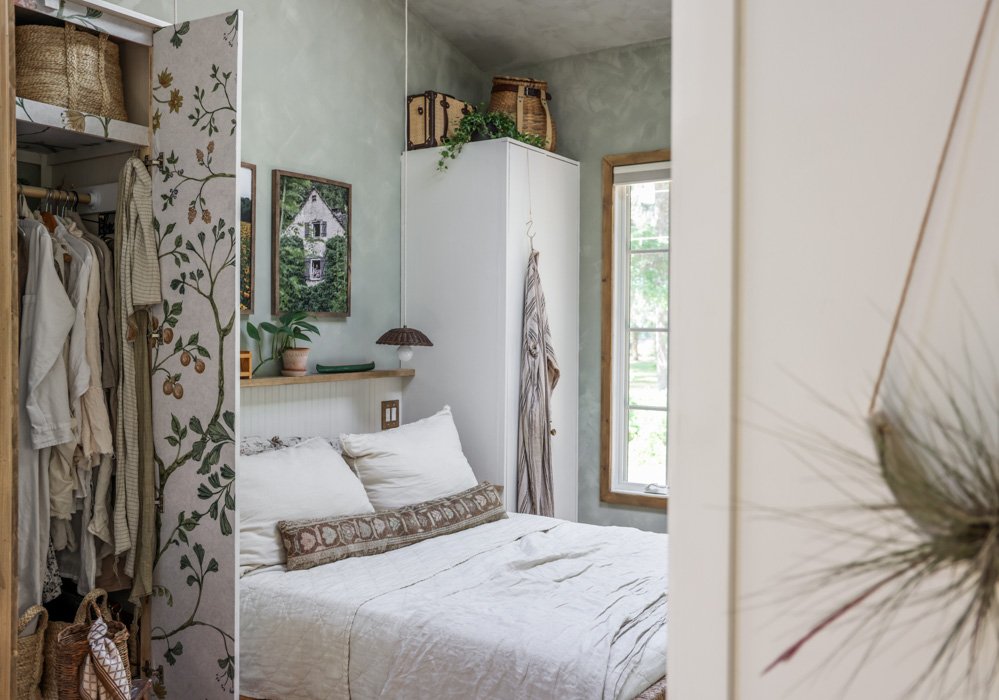
The kids share a slim, adaptable kitchen pantry turned wardrobe— details here. An impromptu hallway coat closet — established with the help of a simple wooden dowel and a linen flat sheet repurposed into a curtain (visible through the smaller doorway here) — contains everyone’s coats. So Adam and I used the space on either side of our built-in headboard to create 28” custom wardrobes for each of us, providing us with much more space per person than we’re used to.

Pictured: A thrifted basket with a baguette scarf from Maison Miette.
Usually I find that moving — or even returning home from a long trip — is such a wonderful opportunity to assess clothing and decide what is truly needed versus what is not.

Above: Steamline luggage made of renewable & sustainably sourced rattan for both travel & decor. Through April 20, 2023 use sale code SPRING 15 for 15% off sitewide at Steamline.
But we were in such a hurry to move into our new home (after 5 months of design + 5 months of permitting + nearly a year of construction — half a year longer than estimated), that we didn’t carefully finish our closets or sort our clothing before shoving it into place. We just tossed everything from the moving boxes pell-mell into the closets, using generic storage solutions that didn’t fit our specific needs.

As such, I dreaded opening those doors every day, knowing that items would topple out, and that it might take me several minutes to find what I needed. Admittedly, Adam had an easier time with this, as he has fewer garments and types of clothing.

We took the recent change of seasons and the need to swap out sweaters for swimsuits as an excuse to finally finish this project.

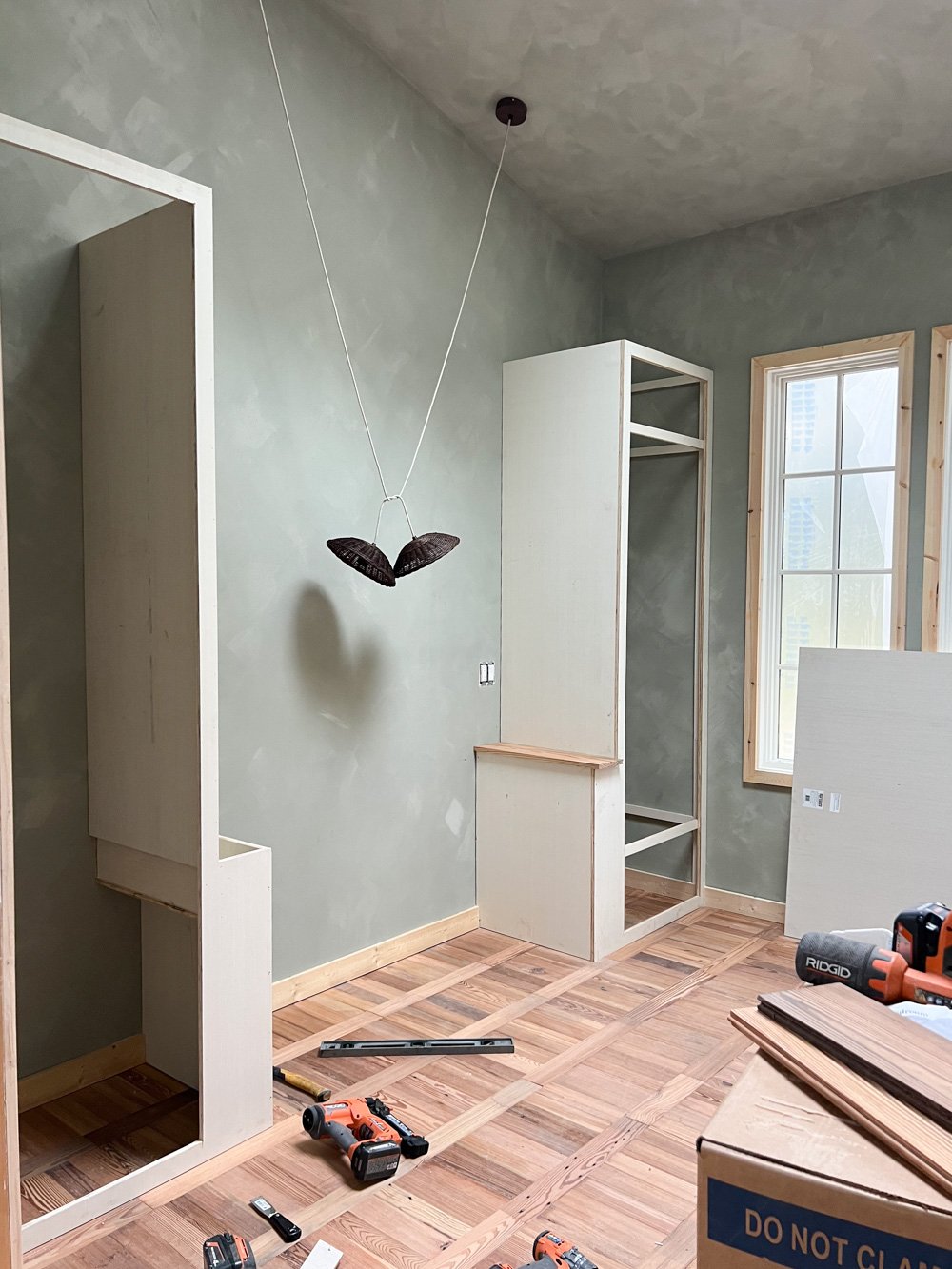
Above: The unfinished backs of the wardrobe doors,
As the inside of the wardrobe doors were completely unfinished and showed measurement markings, we decided that they first needed some dressing up themselves.

We used Rebel Walls paper for the kids’ bedroom mural, and loved how it turned out. So we opted for wallpaper again, rather than just paint. We chose a peel + stick format (in Song Tree Pearl) from Rebel Walls.

The application was straightforward, and the paper is forgiving in instances when repositioning is needed.

Above: Peel & stick wallpaper from Rebel Walls
Here are some of the eco-minded reasons we picked a mural from Rebel Walls:
They offer a customized product, keeping no stock of wallpaper that risks being discarded.
Their wallpapers are printed on Non-woven FSC Certified paper.
Rebel Walls uses printing technology, that is 100% pure from solvents and other harmful substances. The wallpapers are completely free from damaging VOC substances, and have no negative impact on people, animals or nature.
The raw material is transported to Rebel Walls in large quantities in order to need as few deliveries as possible— currently just 2 times a year.
Rebel Walls produces very little waste, but the waste they do get is recycled locally.

Of all the changes we made to the closets, the wallpaper is certainly the most impactful. It elevates the room, while corresponding nicely with the lime paint and reclaimed wood used on the bed, ledge, side tables, and floors.
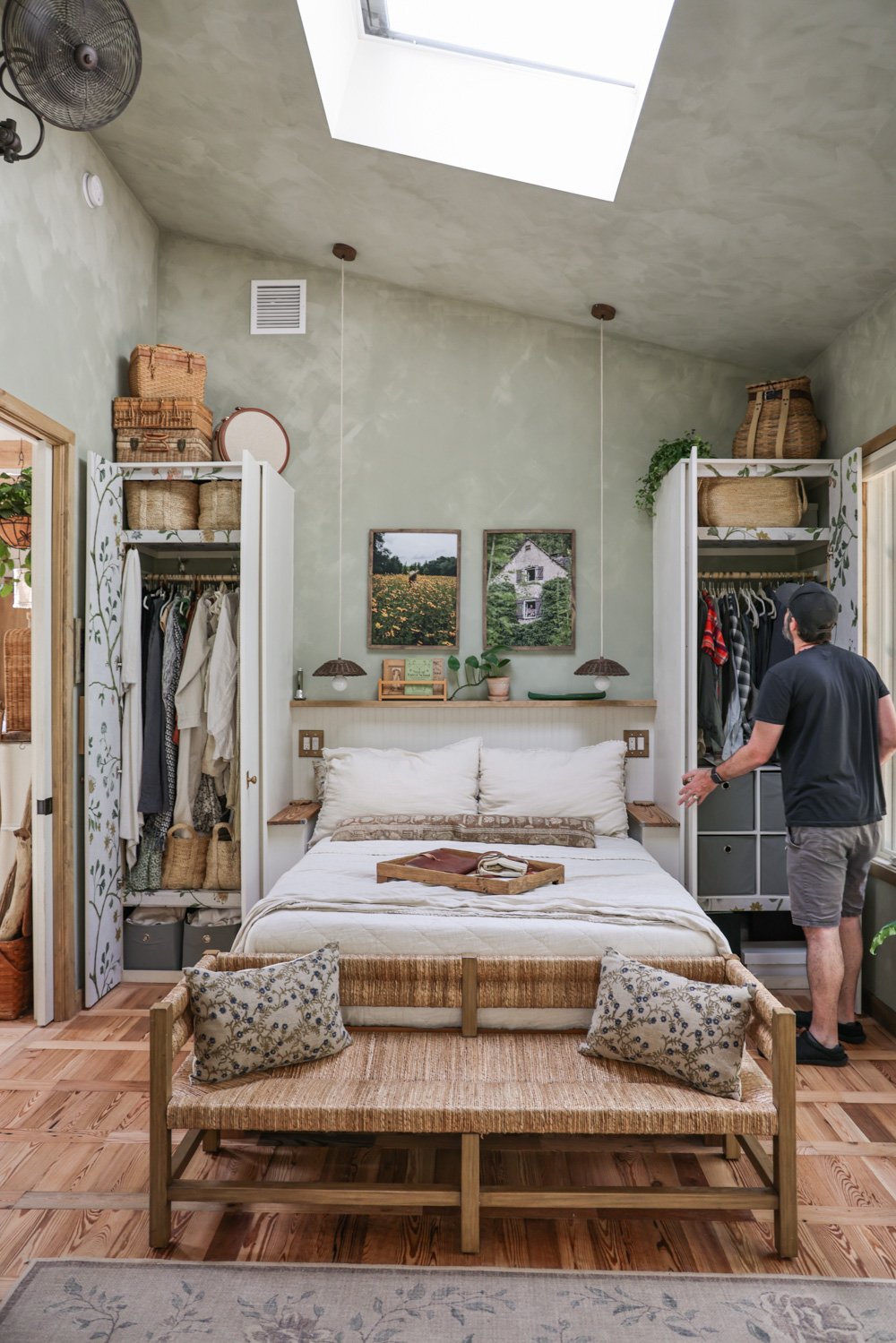
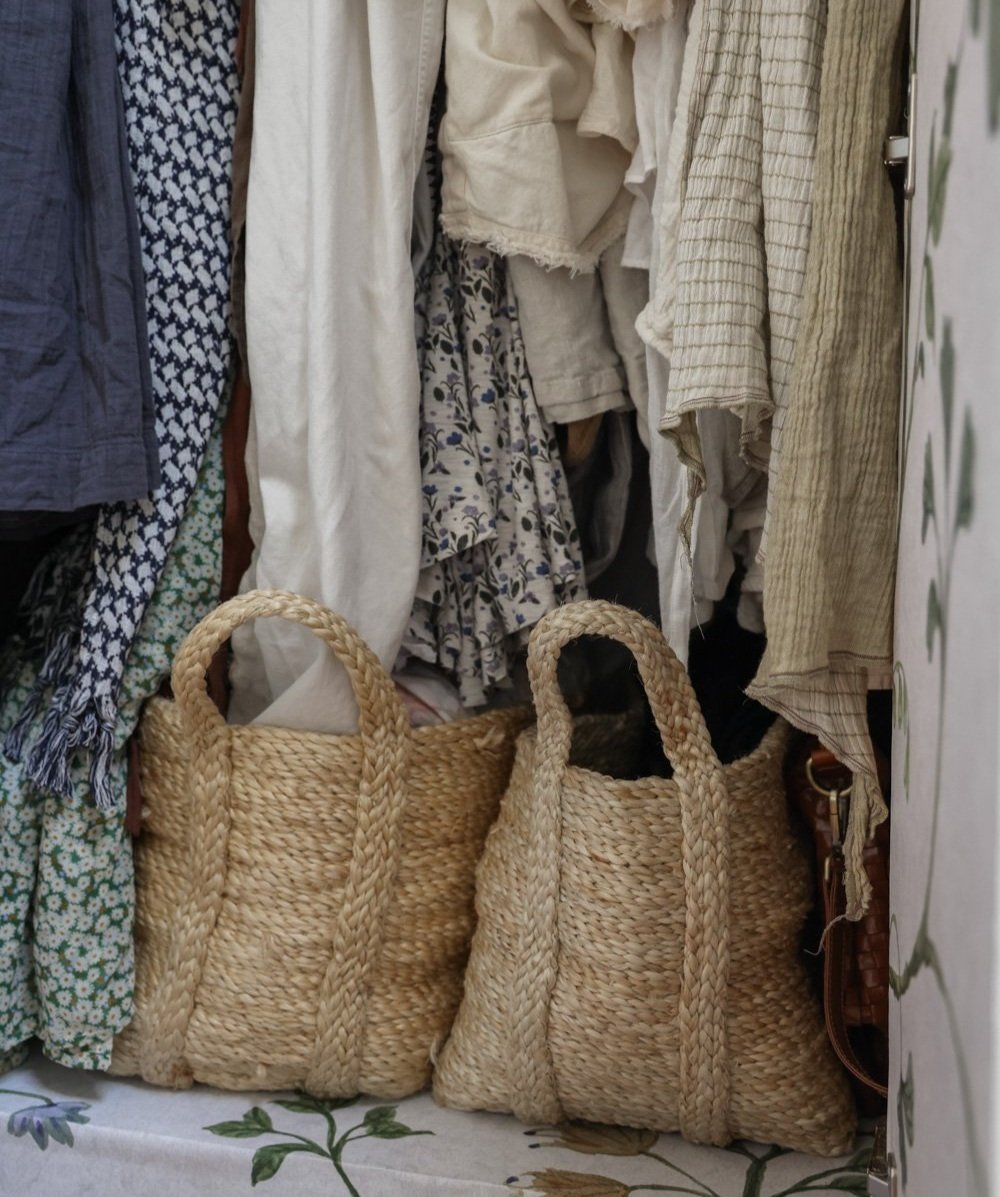
Instead of continuing to employ most of the stiff bins (which we repurposed beneath the kids’ bed for books), I once again used my old favorite, flexible and roomy jute baskets from Will & Atlas. The jute bins hold skirts and undergarments. Off-season clothing has, for now, been relocated to a harder to reach area at the foot of the built-in.

A thrifted wooden stepladder that we use throughout the cottage helps me reach the bathing suits and workout gear in the upper portion of the wardrobe.

Above: Work in progress, as we had wallpaper seams left to trim with a boxcutter— an easy task that requires mere seconds.
The wardrobe doors have burnished unlacquered brass knobs and corresponding backplates.

To maximize space on the dowel, we mainly use slim, metal top + velvet / no-slip coated hangers made with at least 80% recycled PET. We also have a few handmedown and thrifted wooden and specialty hangers. Some hold more than one article of clothing, which helps us fit more garments without needing more hangers.

On one interior wall, I’ve added two basic jewelry hangers, allowing me to keep my accessories by my clothing, without requiring extra surface space for a bulky organizer.

A couple of multi-use scarves made from deadstock fabric from Late Sunday Afternoon flank either side of the interior, suspended from loops of jute for easy access.

While a home is almost ever rarely fully finished — needs evolve, tastes shift, and environments change — we certainly feel more settled now that we were finally able to approach this key component of our cottage with intention and care.

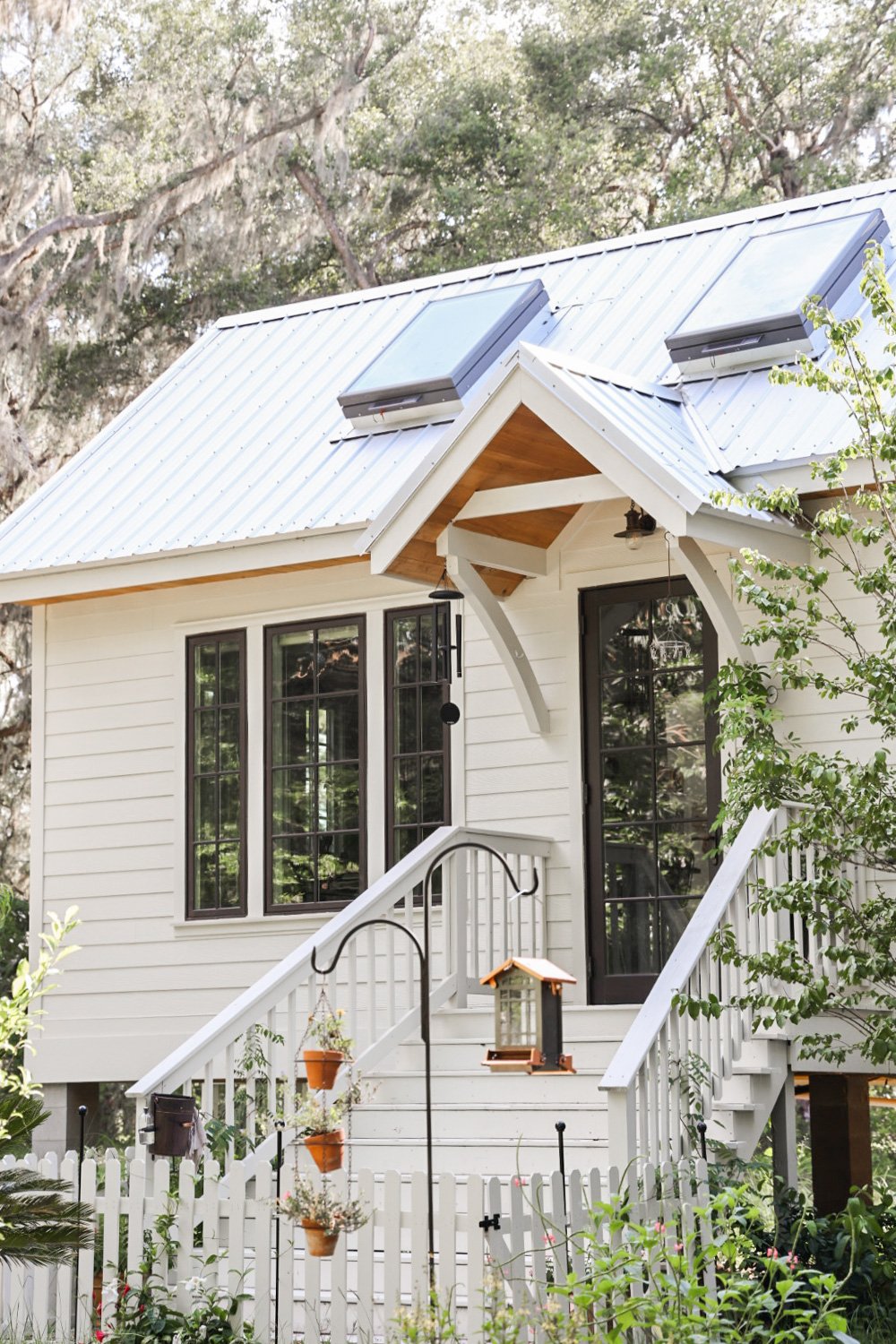
Feature: Tips for Adding Character to a Newly Constructed Home
When Real Simple columnist Laura Fenton contacted me to ask for a few tips regarding how to make a new home feel older for this feature she was writing, I was delighted.

I’ve never been drawn to a sterile, modern aesthetic, which could be one of the many reasons I fell in love with our 1920’s Tiny Canal Cottage in Venice, and our 1800’s French Farmhouse in the Midi-Pyrénées.

Adding stories, history and layers to our recently constructed home is of the elements that makes our little ADU cottage so special to me.

Recently, an eight year old friend of my son’s visited our home and remarked that it didn’t look as though we just moved in. She said that it felt as though the house had been lived in for quite a long time. Assuming she was referring to the character of the interior — rather than the impressive tumbleweeds of dog hair and ever-present, overflowing Uashmama bags of laundry waiting to be folded — she made my month. My husband replied that this was the highest design compliant anyone could give me regarding our home, and I think he’s right.

Here are some tips to consider when trying to make a newly built home feel as though it’s been around longer.


Reclaimed + Repurposed Materials over New Furnishings and Accessories
If you already have newer furnishings, consider adding a dash of reclaimed materials to them in one or more ways. Vintage hinges, door knobs and pulls can work wonders. Similarly, consoles, countertop segments, accent pieces, and more can be enhanced when securely topped with a layer of repurposed or reclaimed materials, sized to your specifications.

Mix & Match
Matching furnishings and textiles are often hallmarks of a new space. Try mixing and layering textiles and materials. Not all metals have to be the same. One set of curtains can be different than their neighboring set. The sofa and armchair can indeed contrast. Such an approach echoes a time when newly manufactured goods weren’t so prevalent, and unique, mismatched, homemade and storied goods decorated well-loved rooms.

Lime Paint + Tadelakt
Old homes develop beautiful, rich patinas of all sorts over time. An impactful way to attain a similar feeling is through the application of layered Lime Paint and Tadelakt. The origins of these concoctions date back centuries, so they inherently offer an old-world, texture-rich look when applied to walls and ceilings.

Swap Out Switch Plates & Electrical Outlet Covers
If your home has plastic switch plates and outlets, explore alternatives and work with an electrician to replace the ones you see / use most. Toggle switches, pull cords (keep child safety in mind), wooden plates, screws in dulled metal finishes, and other such details can delightfully age a room.

Include Plants
Mix and match pots, display methods (suspended, wall-mounted, tabletop, floor), and types of plants for a vibrant and layered home that feels truly alive.

Embrace Imperfections
I know that one of the benefits of a brand new house is that there should (theoretically) be less to repair and modify. However, as we’ve learned first-hand, there can be PLENTY of imperfections in a recent build— especially if you’re working on a tight budget. If safety isn’t an issue, try embracing the little quirks, as they too can add character and disrupt uniformity.


Feature: Our New Cottage in House Beautiful
We’re delighted to share that our new cottage is being featured in the March / April 2023 issue of House Beautiful, entitled, “Backyard Retreats.”

The feature is accessible online here, and will be available via newsstands on March 28th.
Heartfelt thanks to the team at House Beautiful, and:
Writer: Hadley Keller
Photographer: Jenna Peffley
Stylist: Raina Kattelson
Architect: Jennifer Langford
… and, of course, my partner Adam Winkleman.

Avoiding "Fast Furniture" and Taking Time to Source
Upon moving into our new cottage, we needed very few furnishings, despite having moved from our previous home with so few large items. One thing we did need, however, was a comfortable armchair for the living room office.

We took our time sourcing the perfect-for-us reading chair. With our planet in crisis, a temporary piece of “fast furniture” was out of the question. Did you know that 12.2 million tons of furnishings and home accents end up in landfills annually? This results in horrible amounts of of solid waste that have increased 450 percent since 1960 per the Environmental Protection Agency.

Instead, we borrowed a chair from family (which itself was a handmedown from neighbors) for a few months, covering it with a linen sheet so it better suited our decor (as pictured below).

Pictured above: A borrowed chair, covered with a linen sheet to better match our decor.
We wanted to find seating that would fit snugly yet welcomingly in the corner without jutting into either the bedroom entry or the thoroughfare to the living room’s French doors. We finally found what we were looking for— this timeless looking chair with casually draping cushions, an overstuffed vibe, and yet a space-savvy curved seat and rounded back.

We added a vintage stool, a handmade rattan wall sconce, a handmade ceramic airplant cradle, and a propagation station (designed by our friend Hilton Carter).

The end result is a very comfortable reading nook that all of us — pups included — enjoy daily.

Loula Chair by Sixpenny
Color: Oat Flour
Fabric: Light Weight Linen
Fill: Vegan Fiber


Small Space Laundry Zone Solution for Air Drying Linens
When I designed our new cottage, I considered several locations for the laundry zone.
When I lived in Manhattan in a ~350 sqft apartment, I had a combination single washer/dryer unit in the kitchen in lieu of a dishwasher. When we were in our ~400 sqft cottage by the canals, our stacked washer and dryer unit were in a bike shed that we shared with our neighbors. And in my ~200 sqft studio on Venice Beach, there was a slim, thoroughfare laundry room on the ground floor for all the tenants to share.

I took all of these experiences and others into account when deciding what we approach we should take in our new home. An shed setup beneath the house was out of the question due to the extreme climate and likelihood of flooding in this region. A kitchen setup would’ve been doable, but I was concerned that having our cleaning AND cooking hub in the same zone would lead to daily congestion. And we’re far too remote to efficiently rely upon a community laundromat.

The logical location, in this case, was the bathroom. I first considered situating our bathroom counter over a side-by-side washer and dryer, but I really had my heart set repurposing a rescued slab of wood for the vanity, as well as designing a custom hutch for laundry + bathroom storage. So when I discovered a narrow, ventless, stackable washer and dryer, I knew it was the answer for us. Tucked into a custom nook opposite the shower and sink, the electrical would be far from splash zones, and the entire setup wouldn’t require any of the space needed for navigation and comfort within the room.
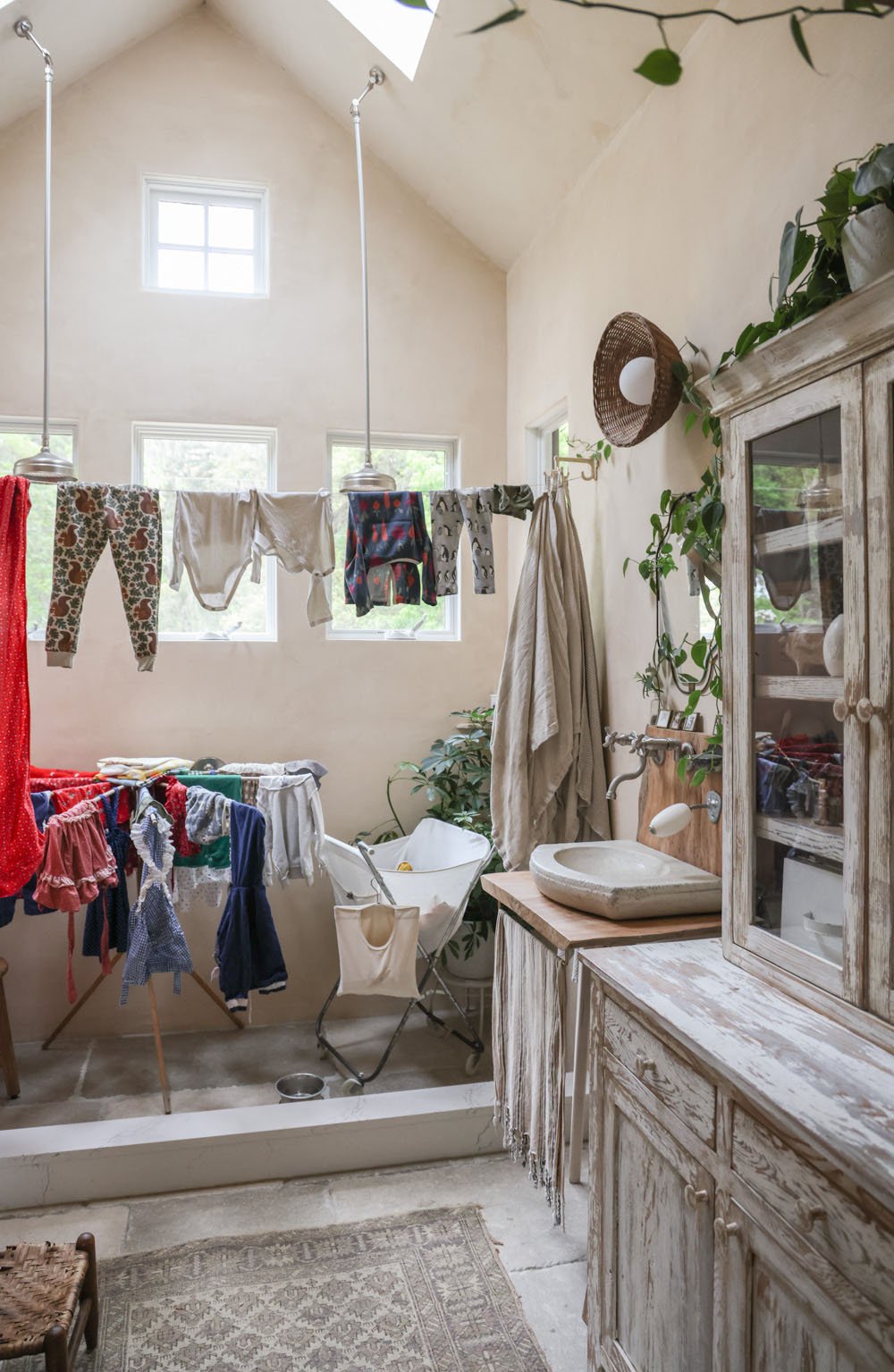
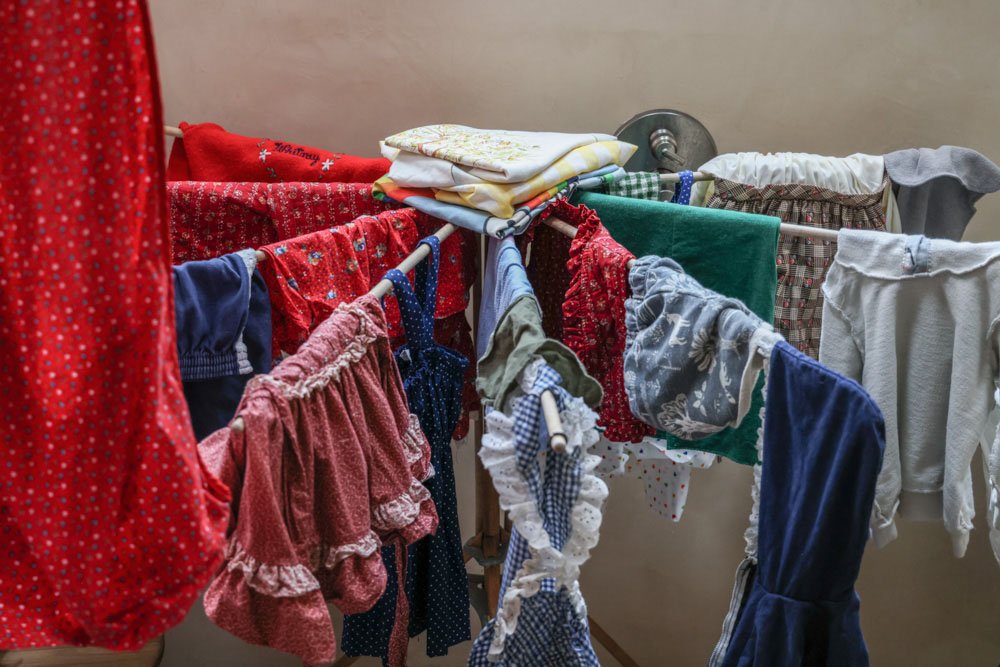
Even though we’ve typically always had access to a dryer, we’ve long preferred to air dry our linens whenever possible. But given the realities of the climate here, including frequent sudden downpours and tropically humid months on end, I wanted to reserve free space within the house for drying, rather than relying solely on our retractable outdoor laundry line. What would be the most suitable areas for this in our relatively compact home?

That’s when I began to picture the shower as a potential crucial component to our laundry room.
We usually try to conserve water by bathing quickly, so our shower is really only in use for about 10 minutes daily. As such, the bathing area’s real estate is largely available for 23+ hours per day. So when approaching the room’s design, I crossed out the option of a glass partition along the shower curb, along with the alternate option of a low / pony wall. Uninterrupted access would be easiest with a curtain.

Since we didn’t want a horizontal curtain bar running in front of the mindfully placed windows, we installed two towel hooks directly above the inner edge of the curb line on either side of the bathroom, giving us anchor points for stringing up a removable drying line that could also hold our shower curtains. In addition to the line, we have a vintage, collapsible drying rack (that fits under our bathroom vanity when not in use), as well as our fold-down, repurposed baker’s bread cooling shelf for more surface space for drying laundry.

The end result is a room that’s fully in use throughout the day. It works perfectly for our small home and our family routines.

Roundup: Secondhand Gems for Versatile Small Spaces
As my family advances into experiencing the first spring in our new cottage, we’re noticing the small ways in which our daily routines are shifting. For example, the tiny wood stove that was the backdrop of much of our daily activity since moving during the fall is now rarely in use. By contrast, the vintage rolling cart in which we stored the firewood is now in high demand for various gardening activities. As such, a spring shuffle was in order.
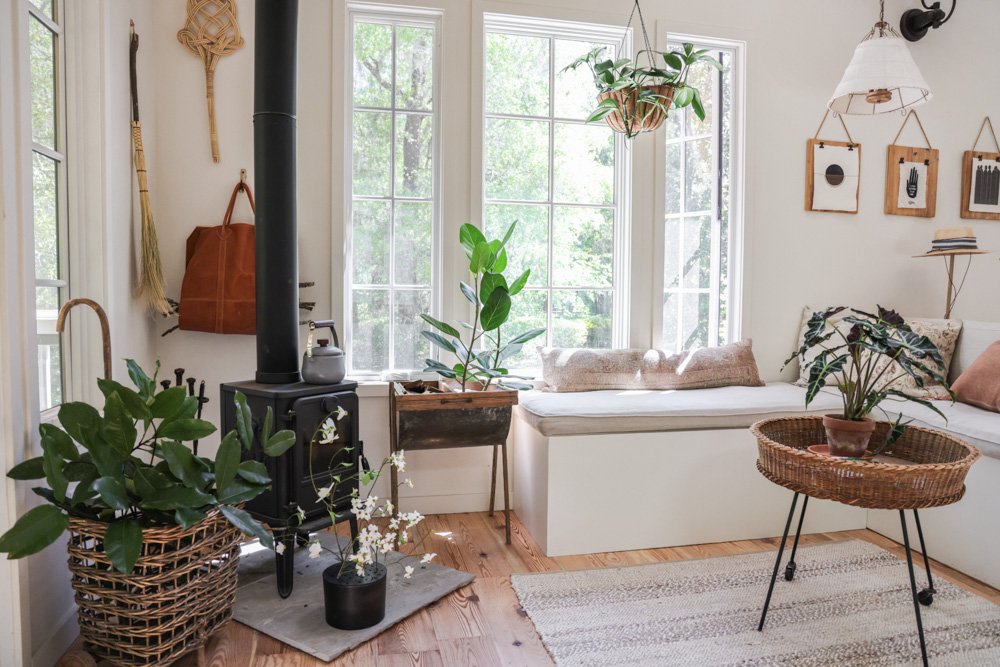
I usually don’t enjoy shopping, but I do delight in exploring vintage finds on ETSY, where I recently stumbled across a listing on Our Vintage Bungalow that was perfect for the update we had in mind. The piece for sale was an old metal + wood half-barrel divided into two compartments and outfitted with worn legs.
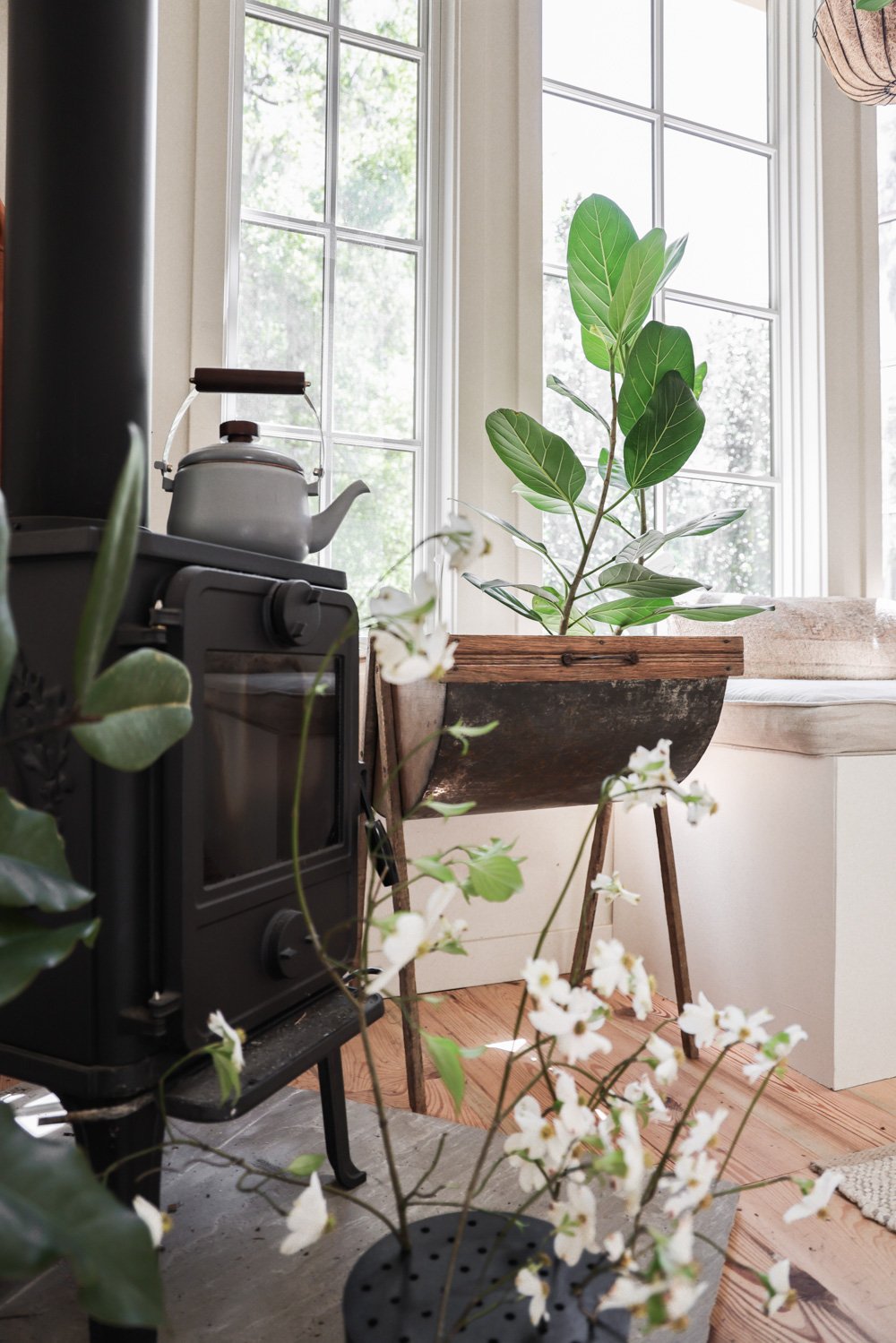
I thought it’d be the perfect size and shape for holding the firewood and displaying a plant in a tight space during the warmer seasons:
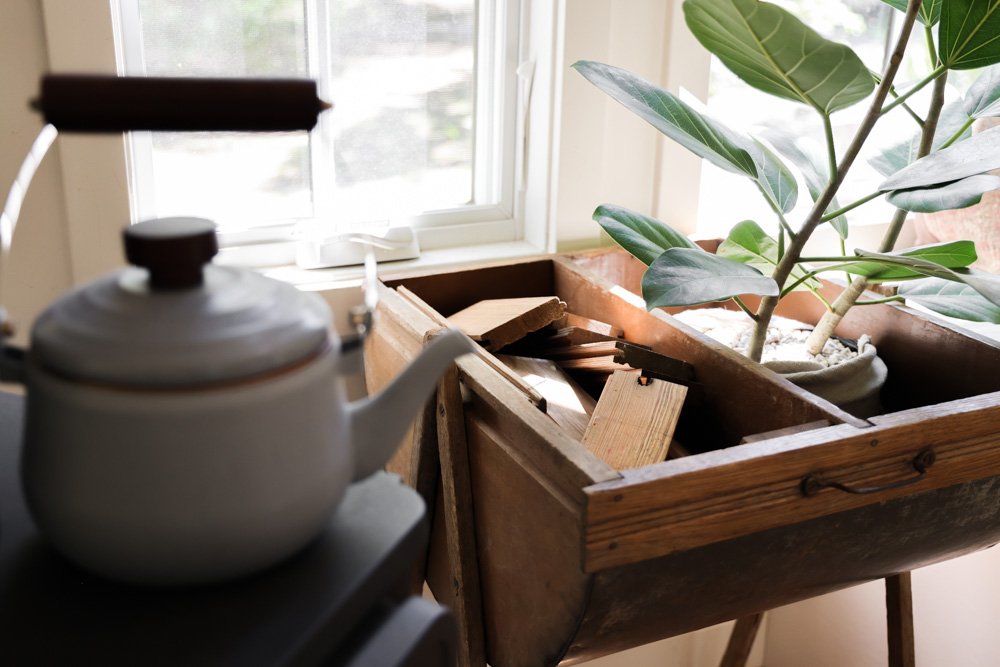
Fun side note: After discovering the piece, I noticed that the vendor also has a blog that communicates ways to successfully host and shop garage sales for a sustainable, vintage lifestyle… plus she shares her experiences with tackling a home renovation with young kids in tow. This is one of the reasons why I love shopping secondhand + small — there’s almost always an interesting story behind the storefront!
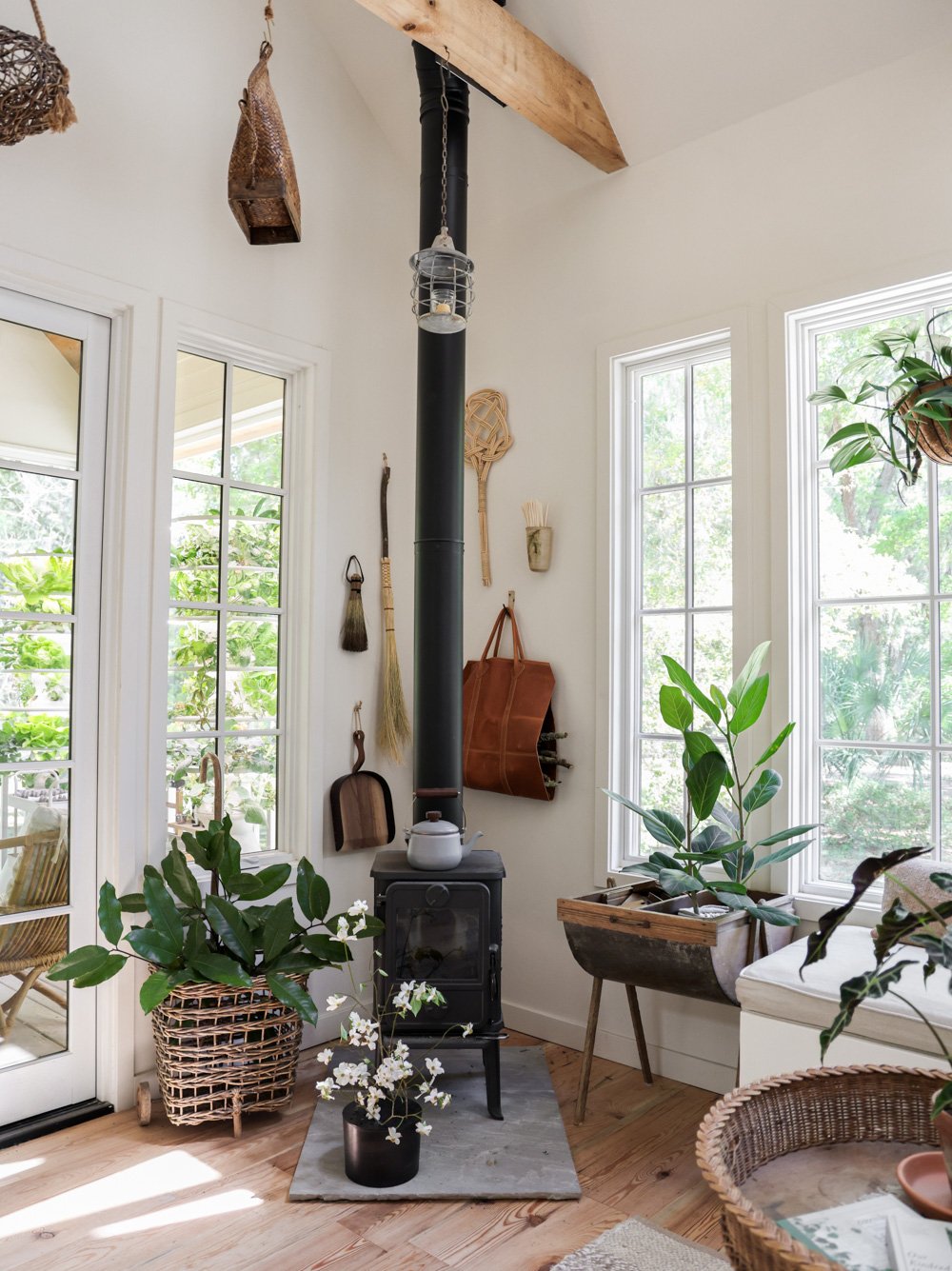
Over the years, countless folks have told me that they don’t know “how” to shop vintage or handmade on sites such as Etsy. For me, the key is to search for the general function I need an item to serve, rather than search by an item’s dedicated name directly.
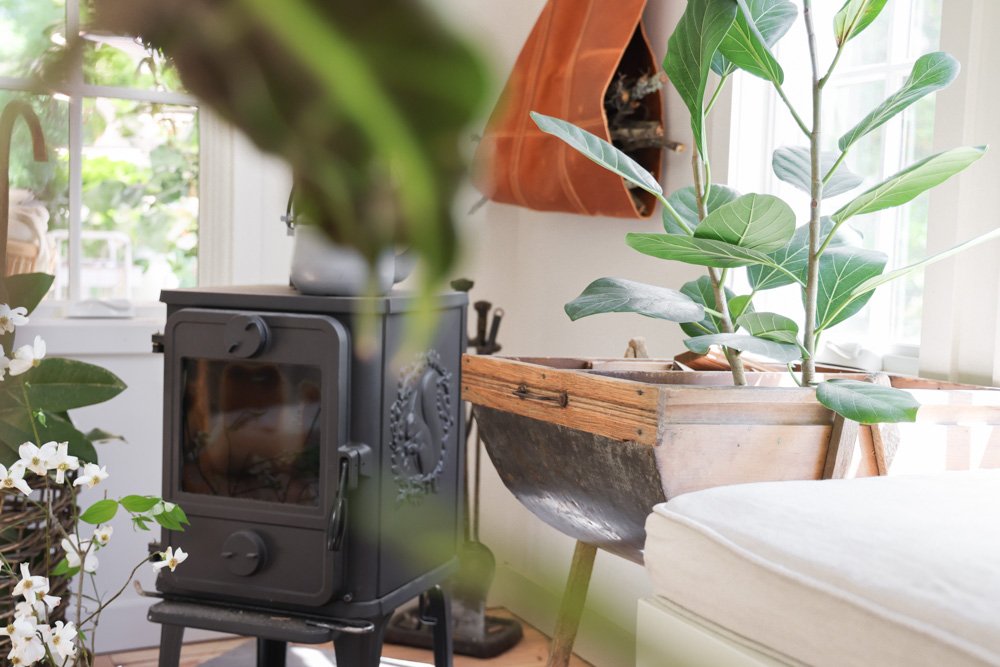
By searching for goods via detail and function descriptors, I discover creative and unique homewares that serve the purposes my family needs, in formats I might not have previously considered. This is one of the traits that makes our little home so personal and special to us.
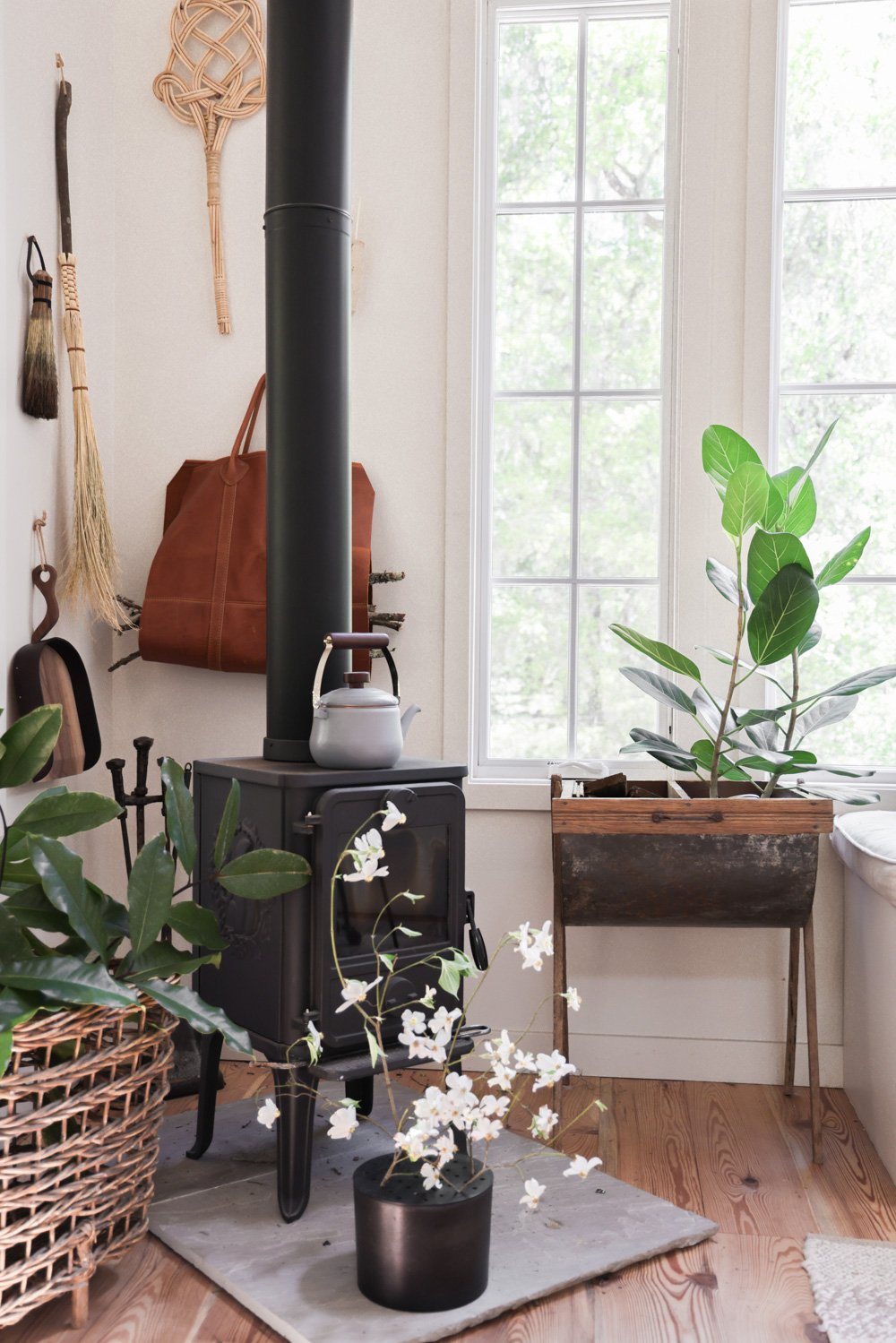
So here’s this week’s roundup of beautiful and functional one-of-a-kind vintage items that I favorited from the same shop that carried the half-barrel piece. My hope is that this sort of post helps readers find pre-loved homewares (rather than newly manufactured goods) offered by small businesses.
