
Before & After Video: The Cottage in Spring 2022 + Spring 2023
What a difference a year can make! I’m grateful every day for the roof over our heads, for the clean water that comes from our faucets, and for my family’s health. Our friends at The RightWay Foundation, a non-profit with which we’ve worked for years, are working to ensure others have access to such fundamentals, too. RightWay provides safely-located, well-appointed apartments and shared housing for homeless transition-age youth. They supply the security deposit and subsidize half of each month’s rent for one year, while supporting youth in building financial and emotional stability. Click here to donate (any amount!), and become the support that transition-age foster youth need.
Before & After: Adding Character to Furniture
I’m a fan of working with what we’ve already got. It’s usually better for our wallets, better for the planet, and a way of making our homes look and feel our own.

A wobbly vintage rolling cart might just need a replacement wheel to be functional.
A broken planter might be useful when transformed into the perfect frog (or fairy) house on the stoop.
And a bland piece of furniture might just need a few reclaimed and repurposed accents to achieve its true character.
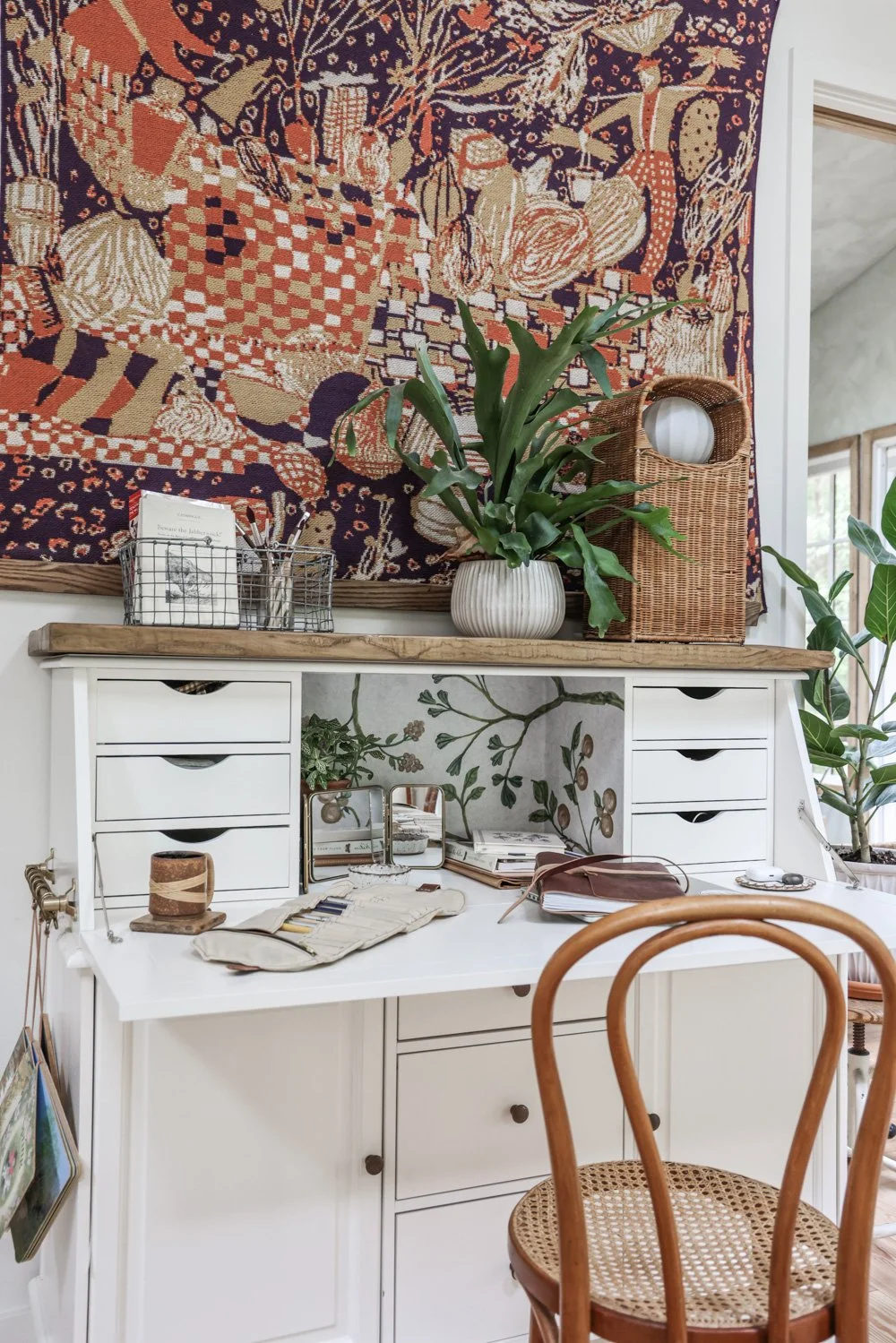
Our fold-away storage desk was one such piece:

This desk is perfect for our needs here in the cottage. It functions as an ample workspace when open, a narrow and unobtrusive console with storage when closed, it offers a standing-height tabletop when desired, and it’s almost the perfect width for this pocket-door frame-filled wall, which can’t support any substantial weight on its own.
But there was just no getting around the fact that it looked new and stale compared to pretty much anything else in our little home. The most obvious way to add character would be to paint it, but not a day has gone by since we installed this piece when it hasn’t been a heavily relied-upon workhorse for my small business. So rather than paint it — at least for now — I opted to work with materials we already had here at home in order to give the desk a beating heart.
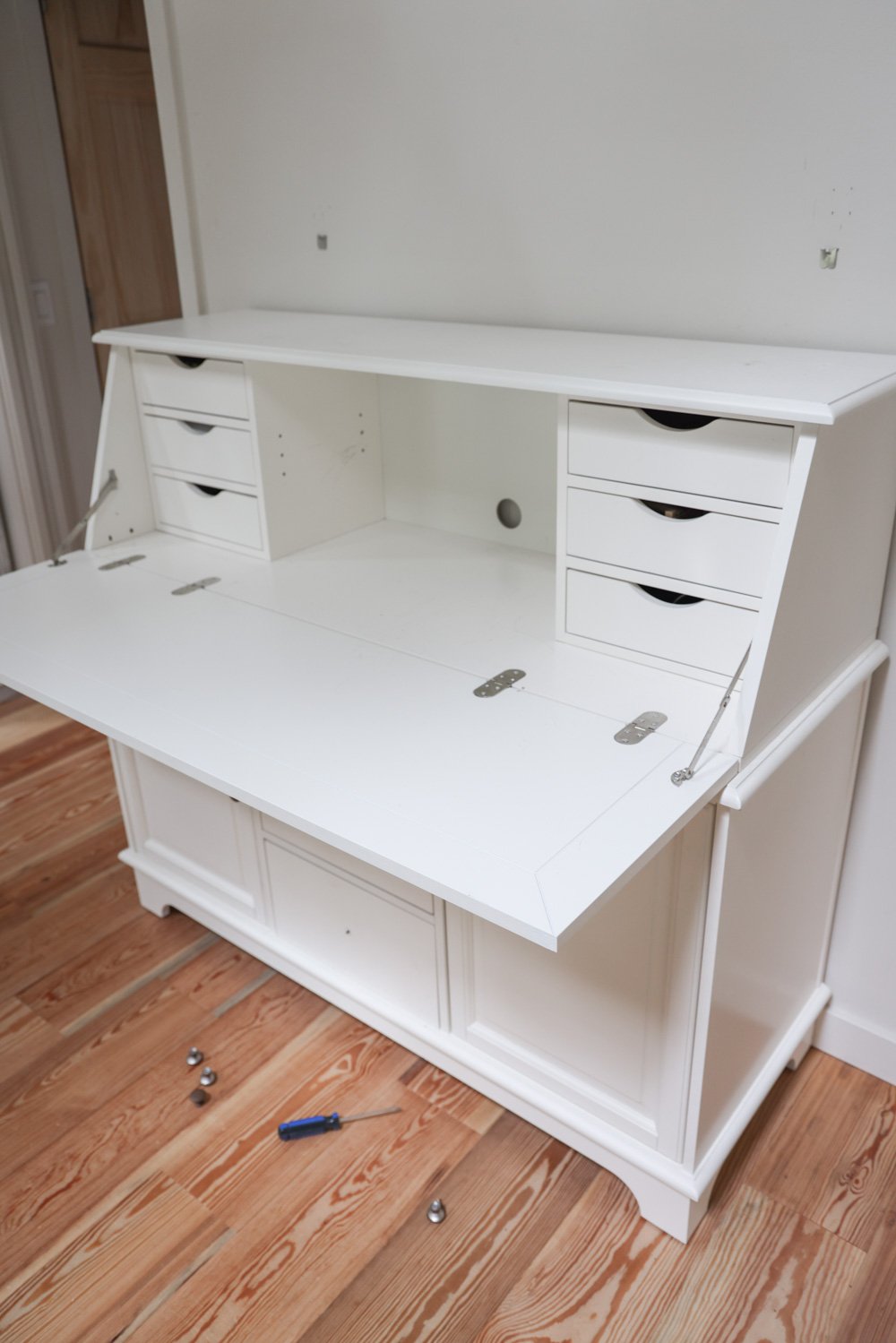

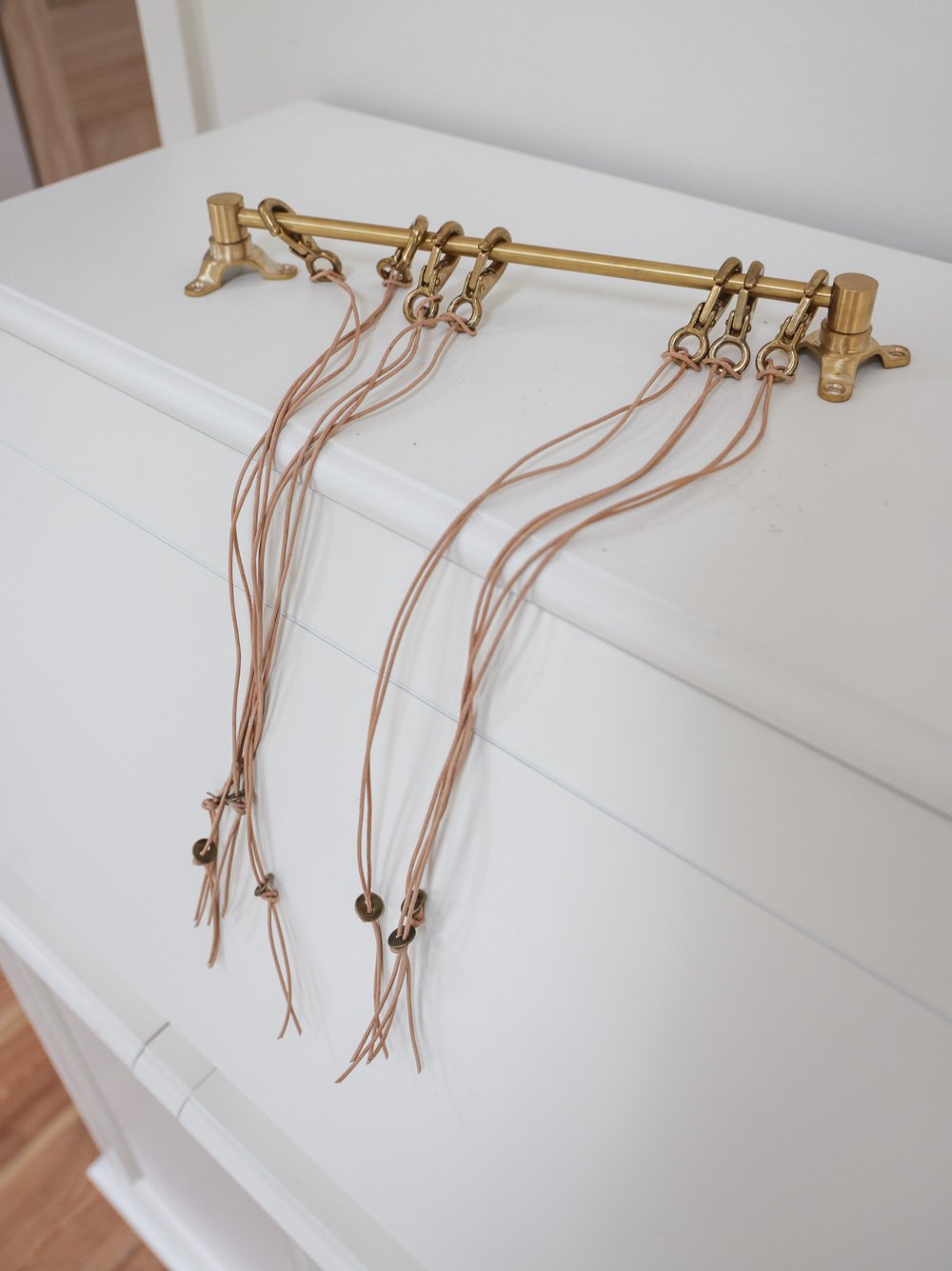
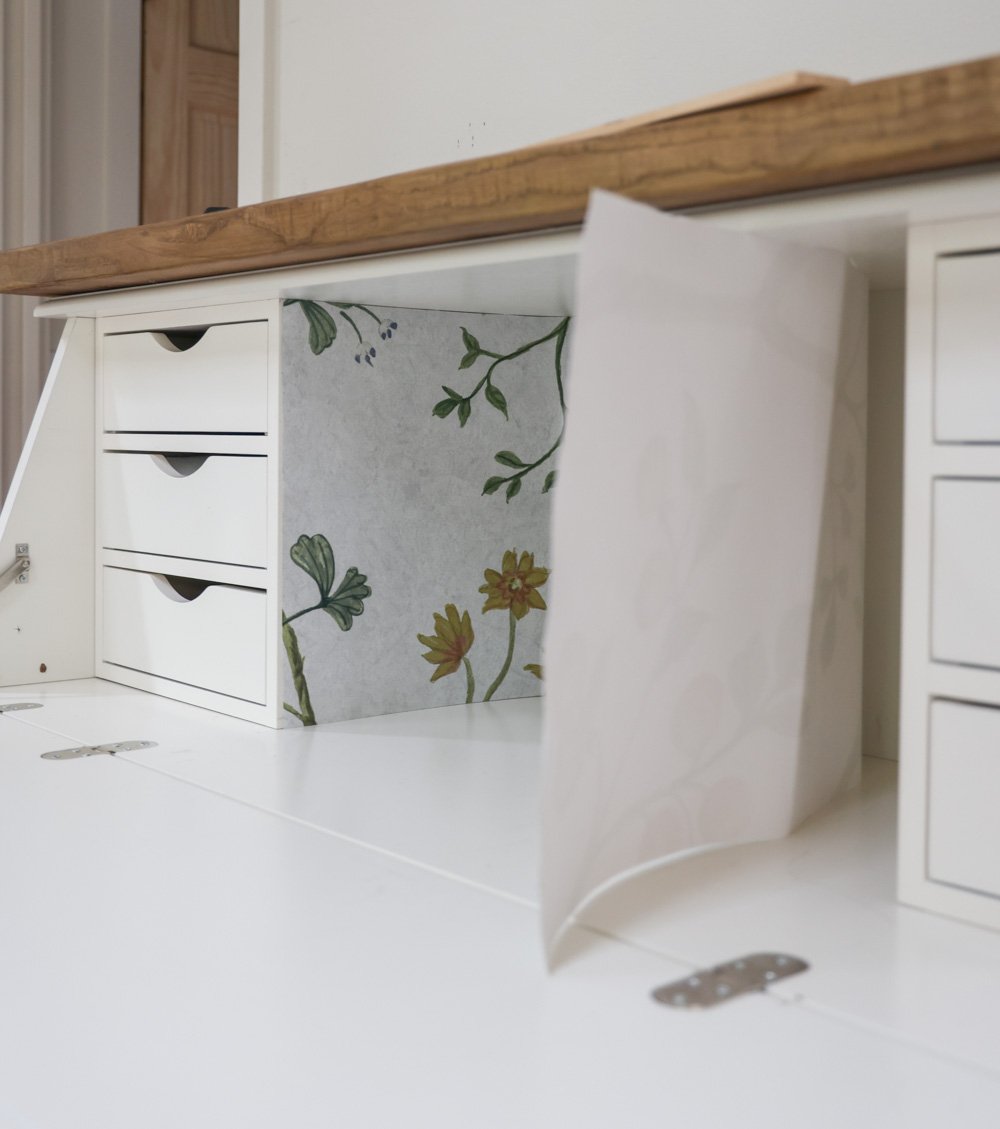
The brushed nickel nobs got a (hastily applied) coat of leftover textured bronze spray paint. The interior cubby received a remnant piece of peel + stick wallpaper from Rebel Walls, a scrap from our closet makeover. The exterior became a touch of extra book storage thanks to a clever, made-to-order suspended system that we were gifted upon moving in. Lastly, we layered the top shelf with a reclaimed wood board that was once the tabletop of narrow kitchen island from one of our previous homes.


While the end result isn’t the century-aged, eco-friendliest antique of my dreams, it is a highly usable, purposefully chosen, and mindfully modified desk that I plan to use for years to come.


If you already have newer furnishings for one reason or another, consider adding a dash of reclaimed materials to them in one or more ways. Vintage hinges, door knobs and pulls can work wonders. Similarly, consoles, countertop segments, accent pieces, and more can be enhanced when securely topped with a layer of repurposed or reclaimed materials, sized to your specifications. Additionally, paint, wallpaper, and secondhand accents can further transform a flavorless piece into a story-rich heirloom.


Custom Shoe Cabinet for Our Family of Four
Note: Discover tips and tricks for small space shoe storage via my book, Small Space Style: Because You Don’t Need to Live Large to Live Beautifully
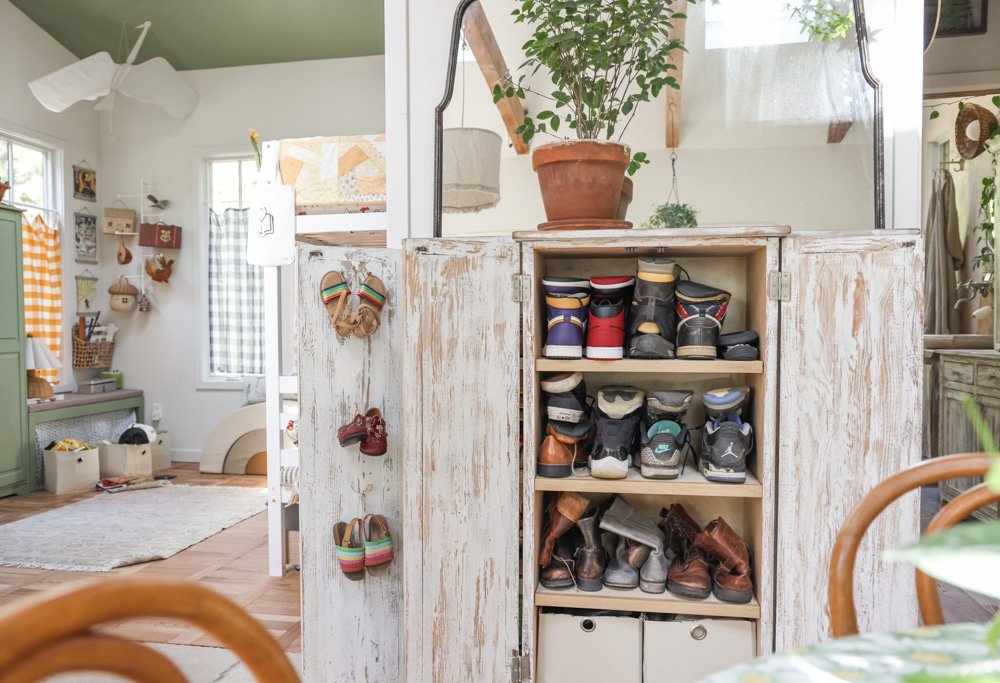
One of the first things that’s visible upon entering our cottage is a tall, custom cabinet made from reclaimed wood:

Luckily, one of the things that’s not immediately visible is all its contents:
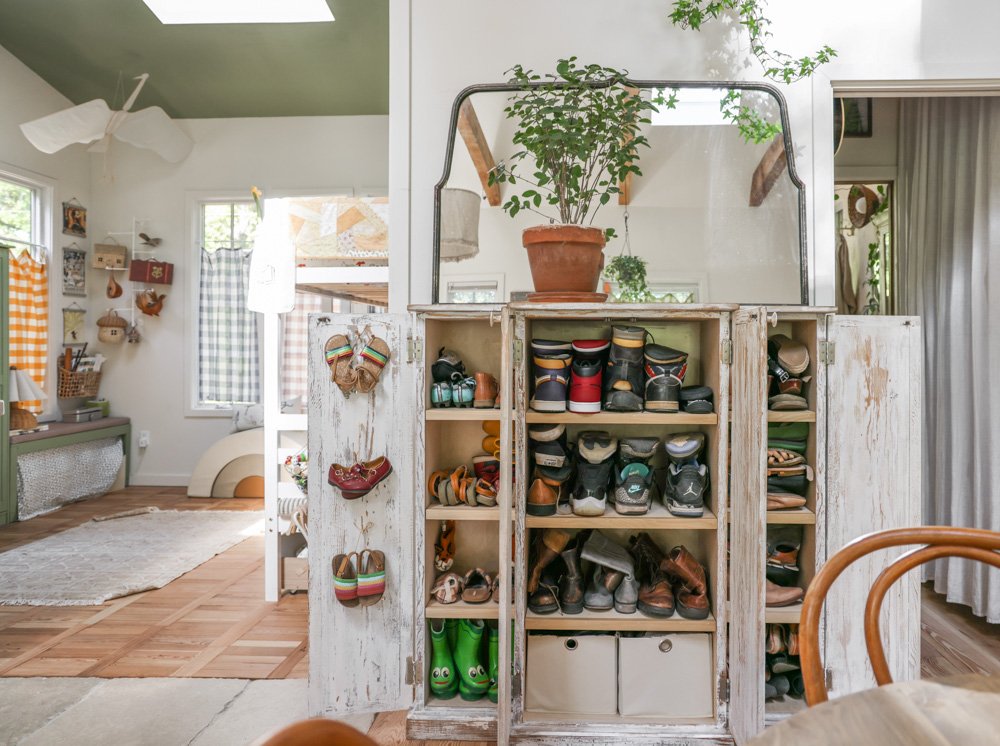
This three-part, four-doored cabinet holds almost all of the shoes for our family of four. (There are some frequently used pairs — as well as a few tall boots — stashed elsewhere for doorside access and utility.)
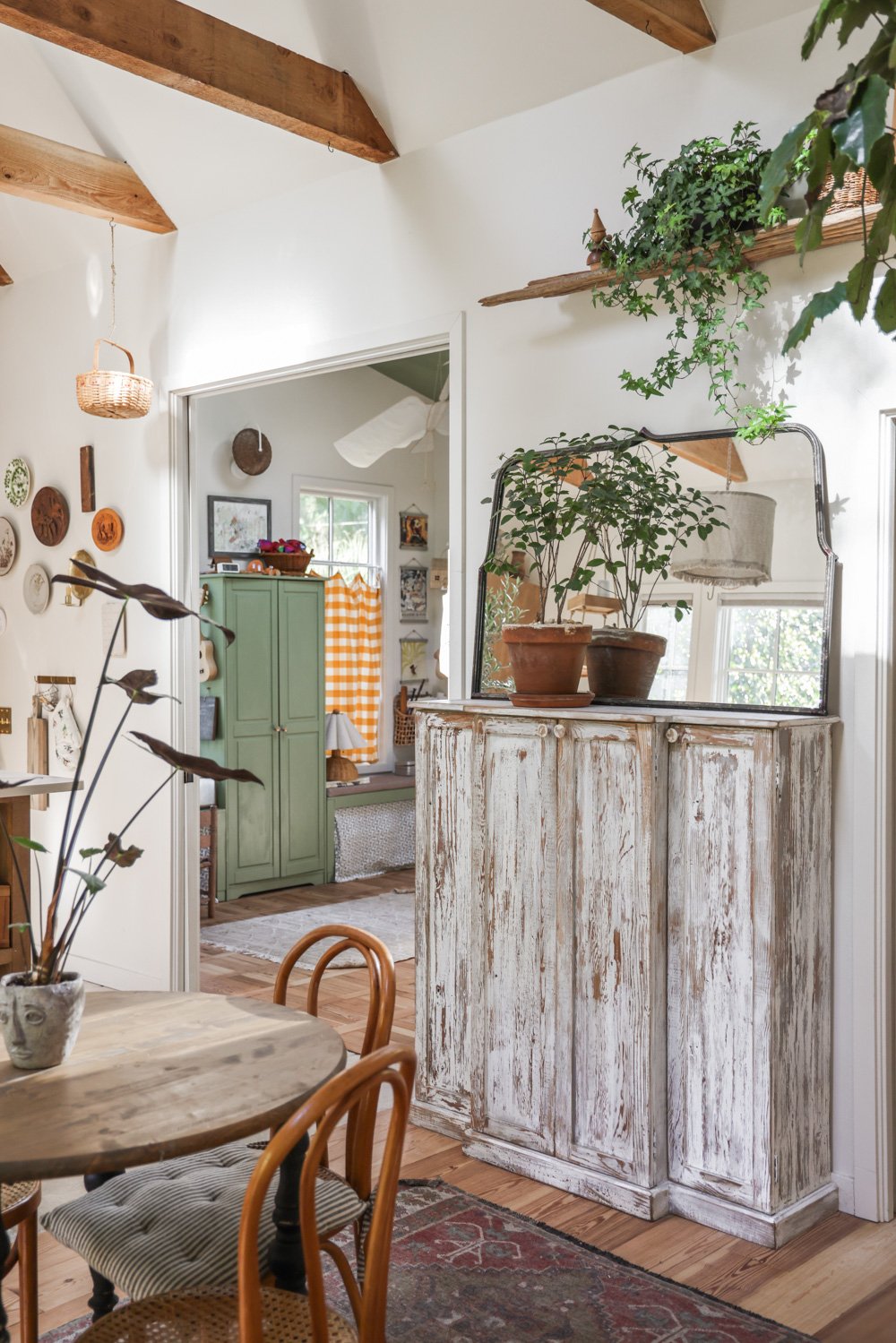
The cabinet was made by our good friend at Tumbleweed & Dandelion, with whom we designed it.
The idea was to keep everything near the front door, without causing a bottleneck there. We opted for a taller height (per usual), to maximize vertical space. The cabinet also provides the perfect perch for a large, light-bouncing mirror that adds color and depth to the pocket door wall, which itself cannot support even moderate weight due to the necessary hollow framing behind much of the drywall.
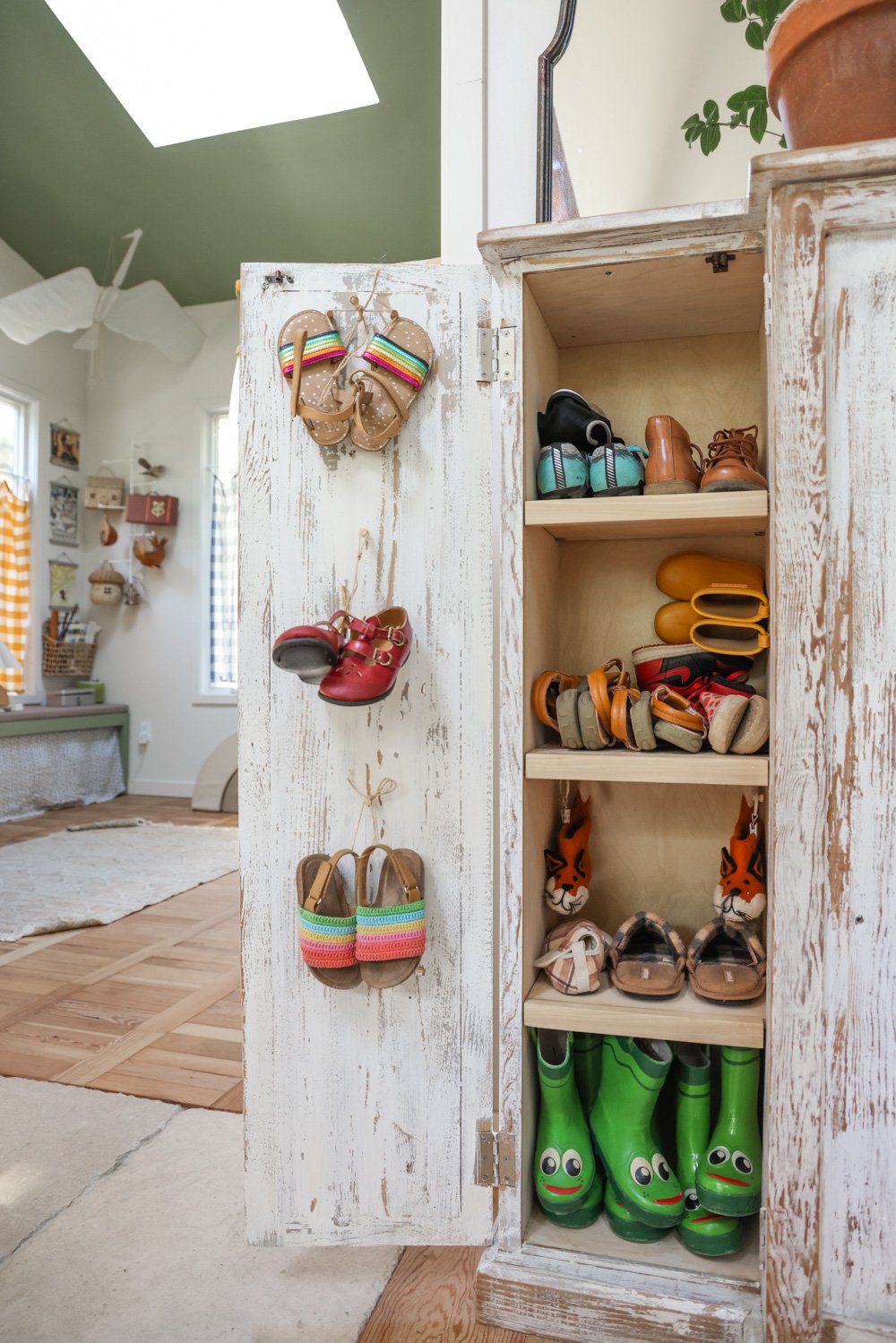
I’ve found that some important parts of designing custom furnishings for our unusual, smaller spaces are not just the obvious ones — like size (particularly depth) and shape, but also aspects like leg type and maneuverability around the pieces.
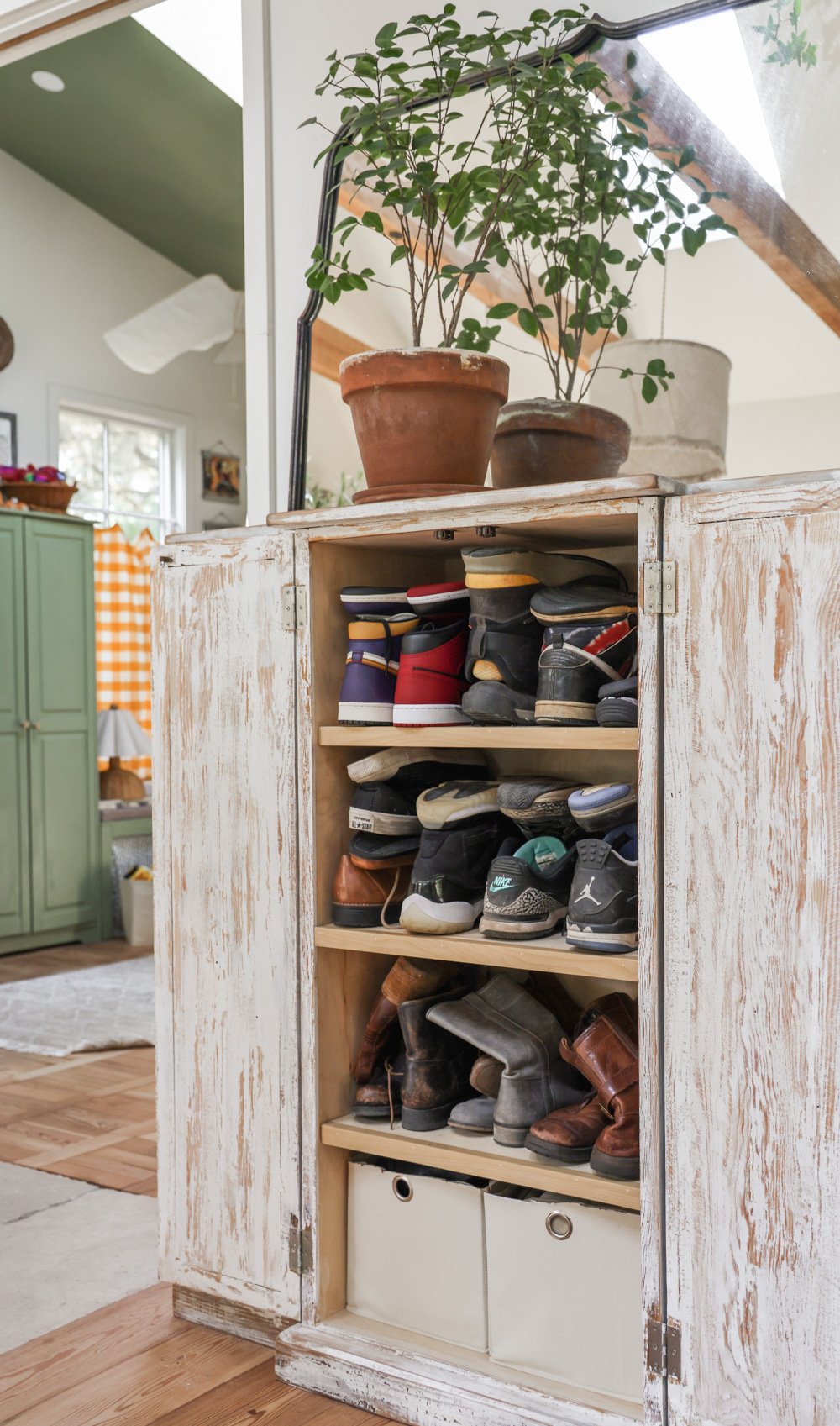
For example, we didn’t want dog hair to be able to make its way beneath the cabinet, and we wanted it as sturdy as possible since we have two young children. Hence the flat bottom design.
And we wanted the piece to be as shallow was possible to prevent us from bumping into it when in the “dining room,” or while crossing from the bathroom into the kids’ room, but it also needed to be deep enough to accommodate Adam’s sneakers. Hence the alternating depth between compartments.

The kids shoes go on one side, and handmedown shoes that they’ve yet to grow into hang from the interior of the door. Adam’s sneakers fill most of the middle compartment, while my shoes sit (somewhat pell-mell, but I don’t mind) on the right side.
Shoes that my oldest child has outgrown go into a 6-pocket beverage bag that I suspend from the makeshift hallway coat closet, which is a small stretch of receded wall in front of the breaker box where I added a dowel and hangers to make the space highly functional. While in the bag, the shoes wait to be reused by our younger child, or are kept for sentimental reasons. (Yes, I’m good at letting things go, but not all things.)

This cabinet turned out exactly as we’d hoped and imagined, and has room inside to adapt, thanks to removable shelves. We’re grateful to our talented (and absolutely delightful) friends at Tumbleweed & Dandelion in our old, beloved town of Venice Beach, for bringing this vision to life!

And speaking of our Tumbleweed friends, the shop’s founder, Lizzie McGraw just wrote and published a fantastic book that I love, which be found wherever books or sold, or via her small business’ online store.

Small Space Wardrobes
Note: Discover tips and tricks for small closets — or no closets at all! — via the e-reader and hardback versions of my book, Small Space Style: Because You Don’t Need to Live Large to Live Beautifully.

Our last home had a single closet, which we all shared once our first child aged out of his closet nook nursery. When designing our new cottage, we knew we wanted more closet space since we’re now a family of four, but not that much more closet space. We’ve found that setting firm spacial parameters help us keep our belongings pared down and our essentials in check.

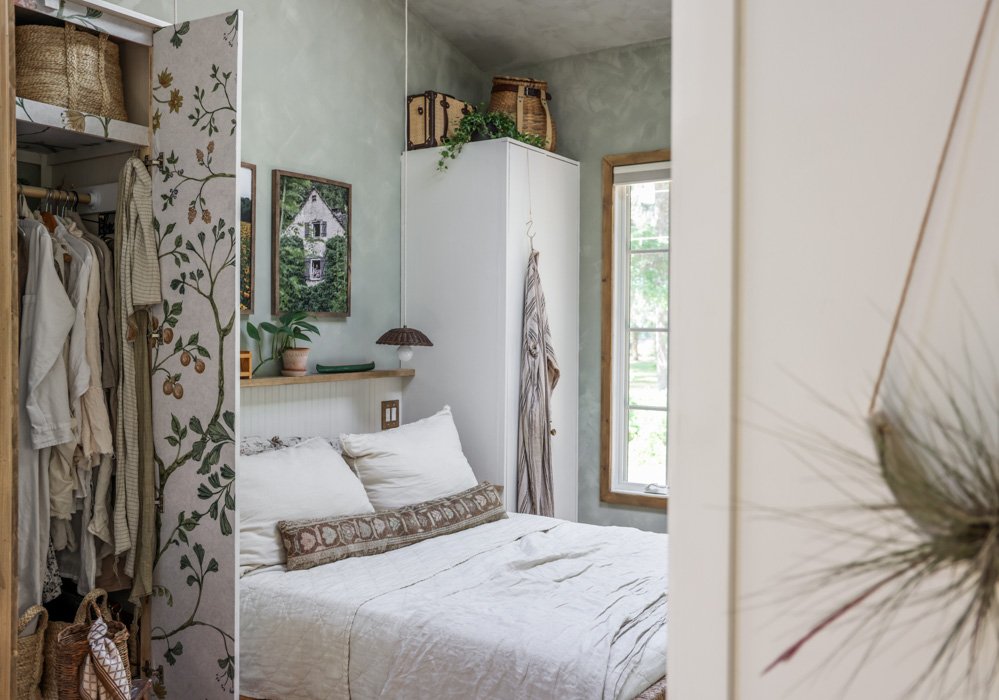
The kids share a slim, adaptable kitchen pantry turned wardrobe— details here. An impromptu hallway coat closet — established with the help of a simple wooden dowel and a linen flat sheet repurposed into a curtain (visible through the smaller doorway here) — contains everyone’s coats. So Adam and I used the space on either side of our built-in headboard to create 28” custom wardrobes for each of us, providing us with much more space per person than we’re used to.

Pictured: A thrifted basket with a baguette scarf from Maison Miette.
Usually I find that moving — or even returning home from a long trip — is such a wonderful opportunity to assess clothing and decide what is truly needed versus what is not.

Above: Steamline luggage made of renewable & sustainably sourced rattan for both travel & decor. Through April 20, 2023 use sale code SPRING 15 for 15% off sitewide at Steamline.
But we were in such a hurry to move into our new home (after 5 months of design + 5 months of permitting + nearly a year of construction — half a year longer than estimated), that we didn’t carefully finish our closets or sort our clothing before shoving it into place. We just tossed everything from the moving boxes pell-mell into the closets, using generic storage solutions that didn’t fit our specific needs.
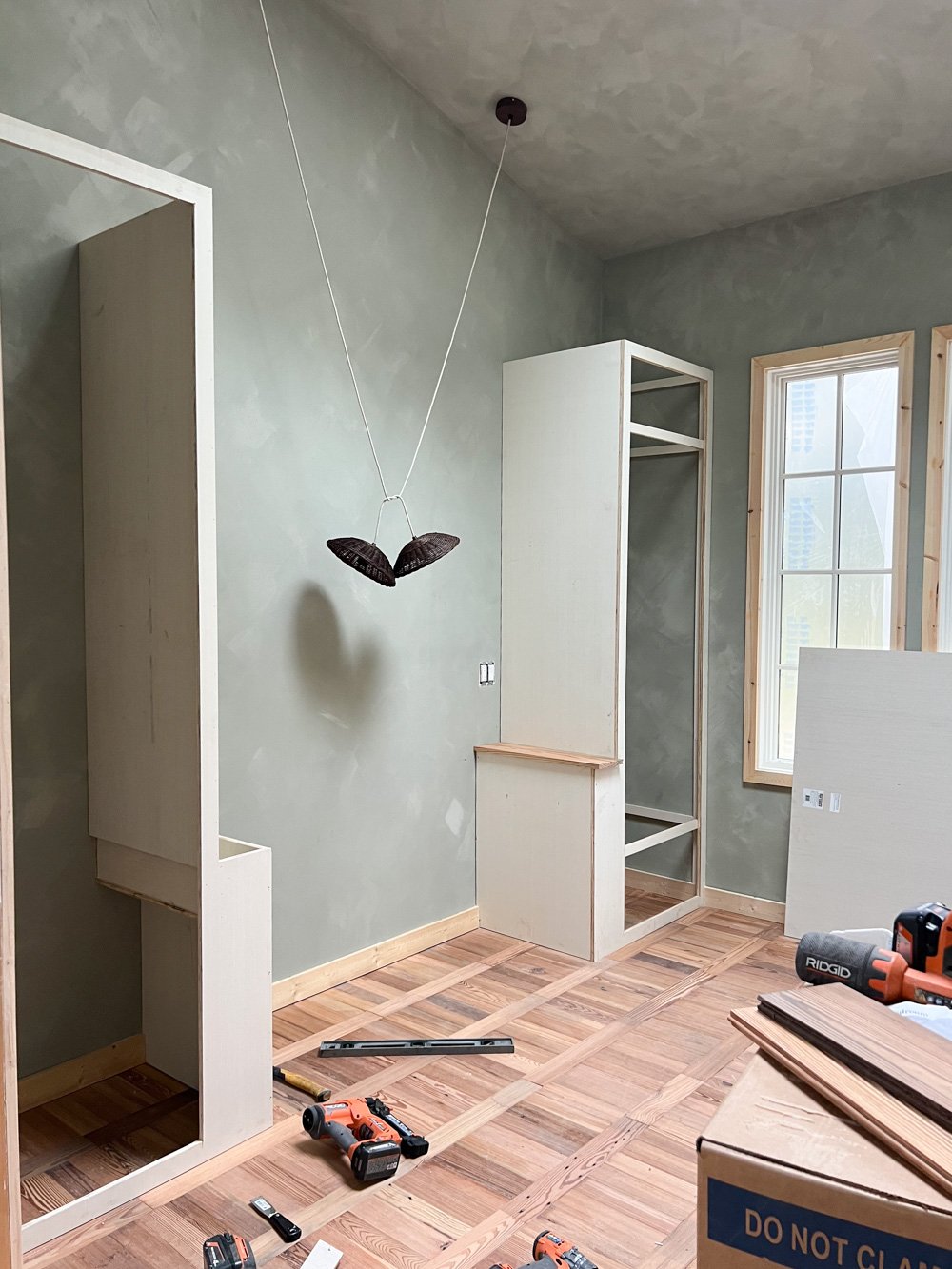

As such, I dreaded opening those doors every day, knowing that items would topple out, and that it might take me several minutes to find what I needed. Admittedly, Adam had an easier time with this, as he has fewer garments and types of clothing.

We took the recent change of seasons and the need to swap out sweaters for swimsuits as an excuse to finally finish this project.

Above: The unfinished backs of the wardrobe doors,
As the inside of the wardrobe doors were completely unfinished and showed measurement markings, we decided that they first needed some dressing up themselves.

We used Rebel Walls paper for the kids’ bedroom mural, and loved how it turned out. So we opted for wallpaper again, rather than just paint. We chose a peel + stick format (in Song Tree Pearl) from Rebel Walls.

The application was straightforward, and the paper is forgiving in instances when repositioning is needed.

Above: Peel & stick wallpaper from Rebel Walls
Here are some of the eco-minded reasons we picked a mural from Rebel Walls:
They offer a customized product, keeping no stock of wallpaper that risks being discarded.
Their wallpapers are printed on Non-woven FSC Certified paper.
Rebel Walls uses printing technology, that is 100% pure from solvents and other harmful substances. The wallpapers are completely free from damaging VOC substances, and have no negative impact on people, animals or nature.
The raw material is transported to Rebel Walls in large quantities in order to need as few deliveries as possible— currently just 2 times a year.
Rebel Walls produces very little waste, but the waste they do get is recycled locally.

Of all the changes we made to the closets, the wallpaper is certainly the most impactful. It elevates the room, while corresponding nicely with the lime paint and reclaimed wood used on the bed, ledge, side tables, and floors.
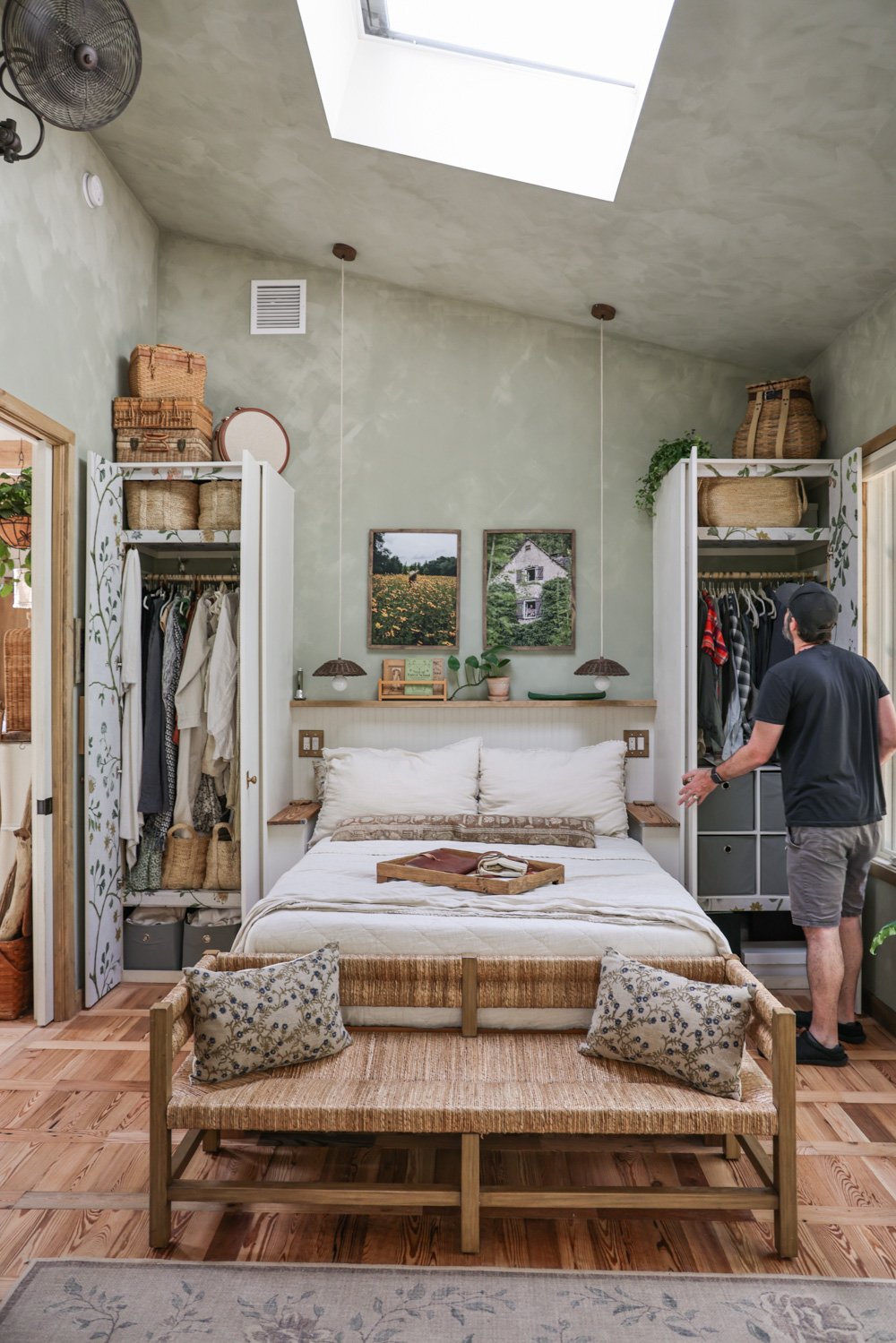
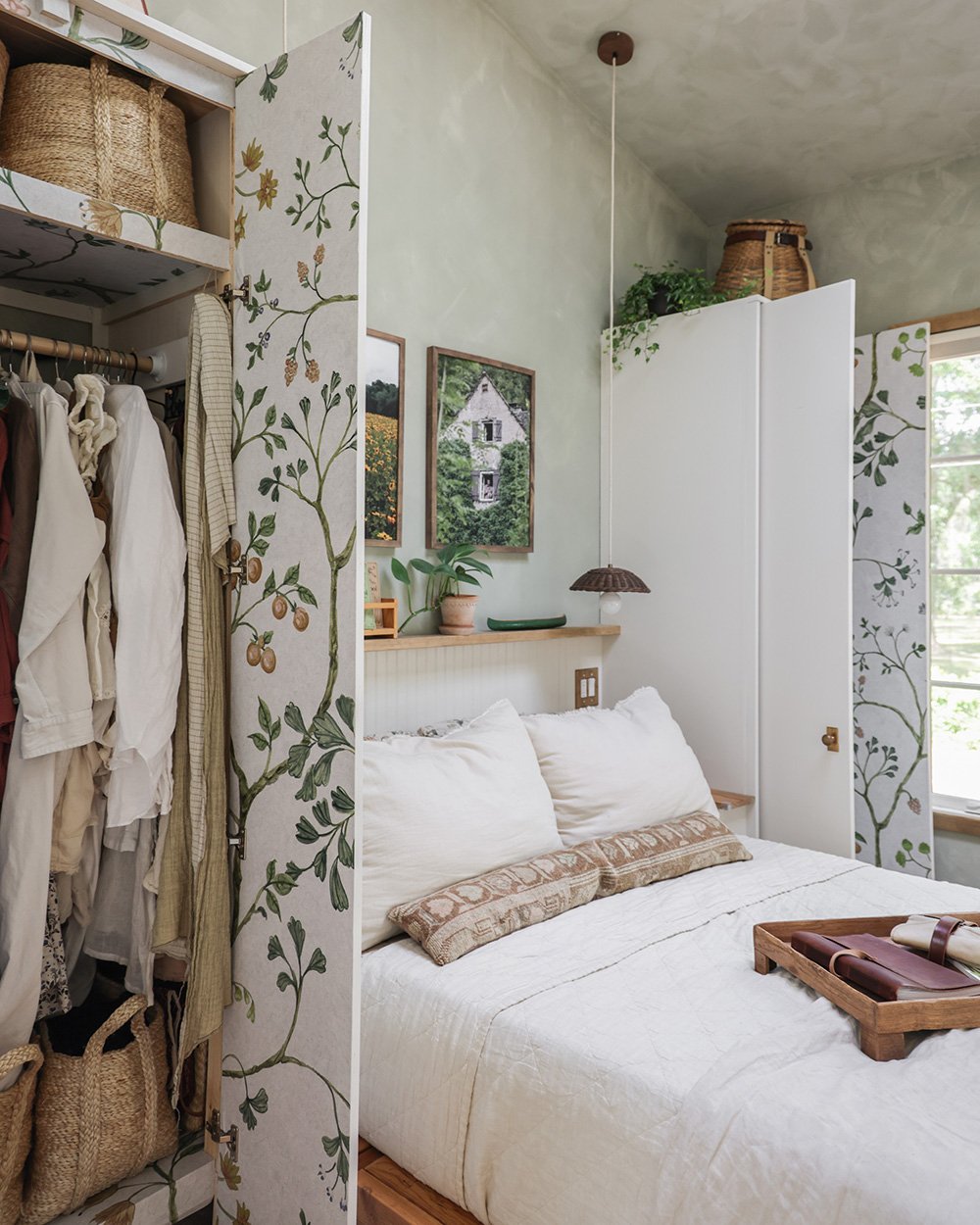
Instead of continuing to employ most of the stiff bins (which we repurposed beneath the kids’ bed for books), I once again used my old favorite, flexible and roomy jute baskets from Will & Atlas. The jute bins hold skirts and undergarments. Off-season clothing has, for now, been relocated to a harder to reach area at the foot of the built-in.

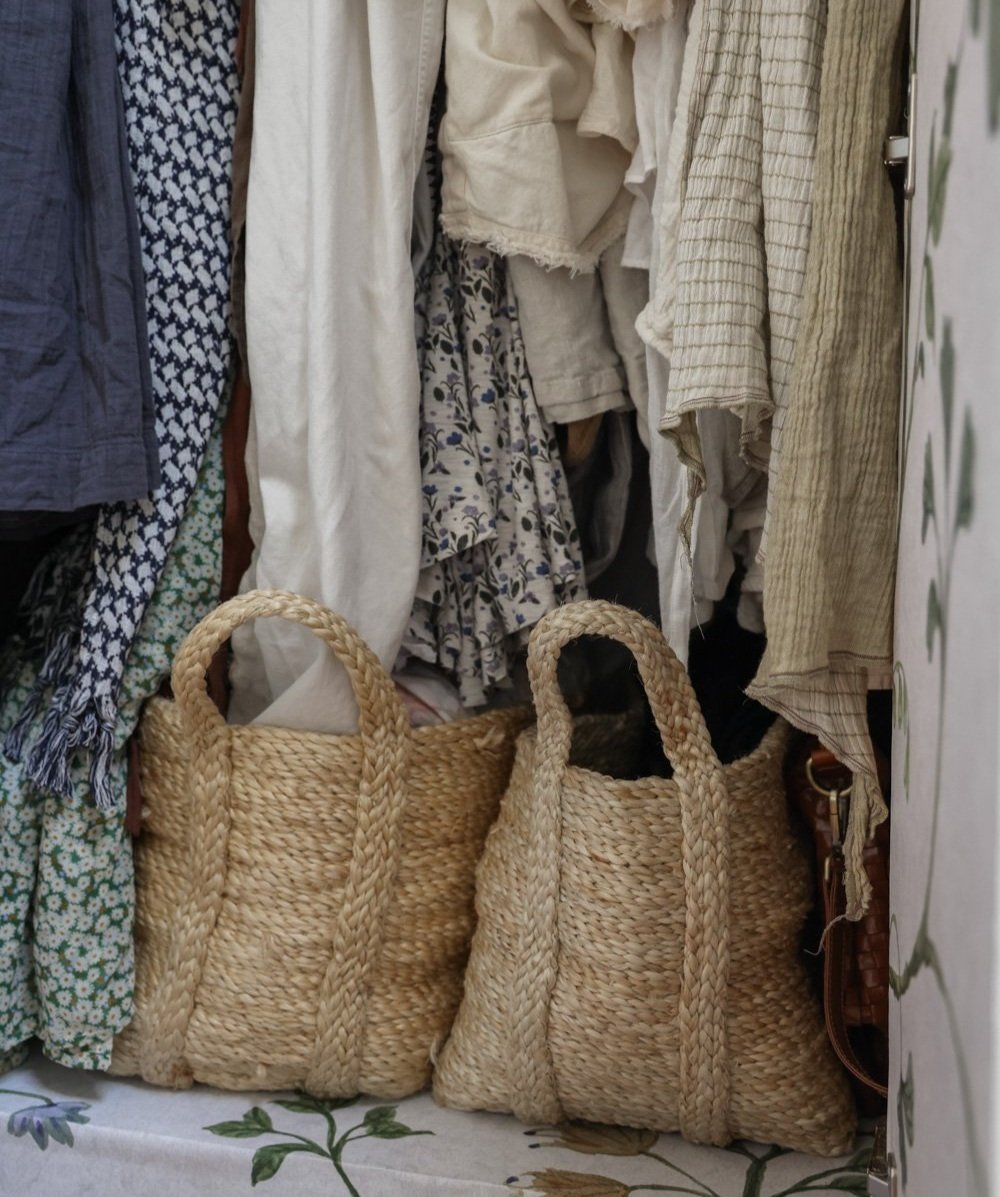
A thrifted wooden stepladder that we use throughout the cottage helps me reach the bathing suits and workout gear in the upper portion of the wardrobe.

Above: Work in progress, as we had wallpaper seams left to trim with a boxcutter— an easy task that requires mere seconds.
The wardrobe doors have burnished unlacquered brass knobs and corresponding backplates.

To maximize space on the dowel, we mainly use slim, metal top + velvet / no-slip coated hangers made with at least 80% recycled PET. We also have a few handmedown and thrifted wooden and specialty hangers. Some hold more than one article of clothing, which helps us fit more garments without needing more hangers.

On one interior wall, I’ve added two basic jewelry hangers, allowing me to keep my accessories by my clothing, without requiring extra surface space for a bulky organizer.

A couple of multi-use scarves made from deadstock fabric from Late Sunday Afternoon flank either side of the interior, suspended from loops of jute for easy access.

While a home is almost ever rarely fully finished — needs evolve, tastes shift, and environments change — we certainly feel more settled now that we were finally able to approach this key component of our cottage with intention and care.

Feature: Tips for Adding Character to a Newly Constructed Home
When Real Simple columnist Laura Fenton contacted me to ask for a few tips regarding how to make a new home feel older for this feature she was writing, I was delighted.

I’ve never been drawn to a sterile, modern aesthetic, which could be one of the many reasons I fell in love with our 1920’s Tiny Canal Cottage in Venice, and our 1800’s French Farmhouse in the Midi-Pyrénées.

Adding stories, history and layers to our recently constructed home is of the elements that makes our little ADU cottage so special to me.

Recently, an eight year old friend of my son’s visited our home and remarked that it didn’t look as though we just moved in. She said that it felt as though the house had been lived in for quite a long time. Assuming she was referring to the character of the interior — rather than the impressive tumbleweeds of dog hair and ever-present, overflowing Uashmama bags of laundry waiting to be folded — she made my month. My husband replied that this was the highest design compliant anyone could give me regarding our home, and I think he’s right.

Here are some tips to consider when trying to make a newly built home feel as though it’s been around longer.


Reclaimed + Repurposed Materials over New Furnishings and Accessories
If you already have newer furnishings, consider adding a dash of reclaimed materials to them in one or more ways. Vintage hinges, door knobs and pulls can work wonders. Similarly, consoles, countertop segments, accent pieces, and more can be enhanced when securely topped with a layer of repurposed or reclaimed materials, sized to your specifications.

Mix & Match
Matching furnishings and textiles are often hallmarks of a new space. Try mixing and layering textiles and materials. Not all metals have to be the same. One set of curtains can be different than their neighboring set. The sofa and armchair can indeed contrast. Such an approach echoes a time when newly manufactured goods weren’t so prevalent, and unique, mismatched, homemade and storied goods decorated well-loved rooms.

Lime Paint + Tadelakt
Old homes develop beautiful, rich patinas of all sorts over time. An impactful way to attain a similar feeling is through the application of layered Lime Paint and Tadelakt. The origins of these concoctions date back centuries, so they inherently offer an old-world, texture-rich look when applied to walls and ceilings.

Swap Out Switch Plates & Electrical Outlet Covers
If your home has plastic switch plates and outlets, explore alternatives and work with an electrician to replace the ones you see / use most. Toggle switches, pull cords (keep child safety in mind), wooden plates, screws in dulled metal finishes, and other such details can delightfully age a room.

Include Plants
Mix and match pots, display methods (suspended, wall-mounted, tabletop, floor), and types of plants for a vibrant and layered home that feels truly alive.

Embrace Imperfections
I know that one of the benefits of a brand new house is that there should (theoretically) be less to repair and modify. However, as we’ve learned first-hand, there can be PLENTY of imperfections in a recent build— especially if you’re working on a tight budget. If safety isn’t an issue, try embracing the little quirks, as they too can add character and disrupt uniformity.


Feature: Our New Cottage in House Beautiful
We’re delighted to share that our new cottage is being featured in the March / April 2023 issue of House Beautiful, entitled, “Backyard Retreats.”

The feature is accessible online here, and will be available via newsstands on March 28th.
Heartfelt thanks to the team at House Beautiful, and:
Writer: Hadley Keller
Photographer: Jenna Peffley
Stylist: Raina Kattelson
Architect: Jennifer Langford
… and, of course, my partner Adam Winkleman.

Avoiding "Fast Furniture" and Taking Time to Source
Upon moving into our new cottage, we needed very few furnishings, despite having moved from our previous home with so few large items. One thing we did need, however, was a comfortable armchair for the living room office.

We took our time sourcing the perfect-for-us reading chair. With our planet in crisis, a temporary piece of “fast furniture” was out of the question. Did you know that 12.2 million tons of furnishings and home accents end up in landfills annually? This results in horrible amounts of of solid waste that have increased 450 percent since 1960 per the Environmental Protection Agency.

Instead, we borrowed a chair from family (which itself was a handmedown from neighbors) for a few months, covering it with a linen sheet so it better suited our decor (as pictured below).

Pictured above: A borrowed chair, covered with a linen sheet to better match our decor.
We wanted to find seating that would fit snugly yet welcomingly in the corner without jutting into either the bedroom entry or the thoroughfare to the living room’s French doors. We finally found what we were looking for— this timeless looking chair with casually draping cushions, an overstuffed vibe, and yet a space-savvy curved seat and rounded back.

We added a vintage stool, a handmade rattan wall sconce, a handmade ceramic airplant cradle, and a propagation station (designed by our friend Hilton Carter).

The end result is a very comfortable reading nook that all of us — pups included — enjoy daily.

Loula Chair by Sixpenny
Color: Oat Flour
Fabric: Light Weight Linen
Fill: Vegan Fiber


Small Space Laundry Zone Solution for Air Drying Linens
When I designed our new cottage, I considered several locations for the laundry zone.
When I lived in Manhattan in a ~350 sqft apartment, I had a combination single washer/dryer unit in the kitchen in lieu of a dishwasher. When we were in our ~400 sqft cottage by the canals, our stacked washer and dryer unit were in a bike shed that we shared with our neighbors. And in my ~200 sqft studio on Venice Beach, there was a slim, thoroughfare laundry room on the ground floor for all the tenants to share.

I took all of these experiences and others into account when deciding what we approach we should take in our new home. An shed setup beneath the house was out of the question due to the extreme climate and likelihood of flooding in this region. A kitchen setup would’ve been doable, but I was concerned that having our cleaning AND cooking hub in the same zone would lead to daily congestion. And we’re far too remote to efficiently rely upon a community laundromat.

The logical location, in this case, was the bathroom. I first considered situating our bathroom counter over a side-by-side washer and dryer, but I really had my heart set repurposing a rescued slab of wood for the vanity, as well as designing a custom hutch for laundry + bathroom storage. So when I discovered a narrow, ventless, stackable washer and dryer, I knew it was the answer for us. Tucked into a custom nook opposite the shower and sink, the electrical would be far from splash zones, and the entire setup wouldn’t require any of the space needed for navigation and comfort within the room.
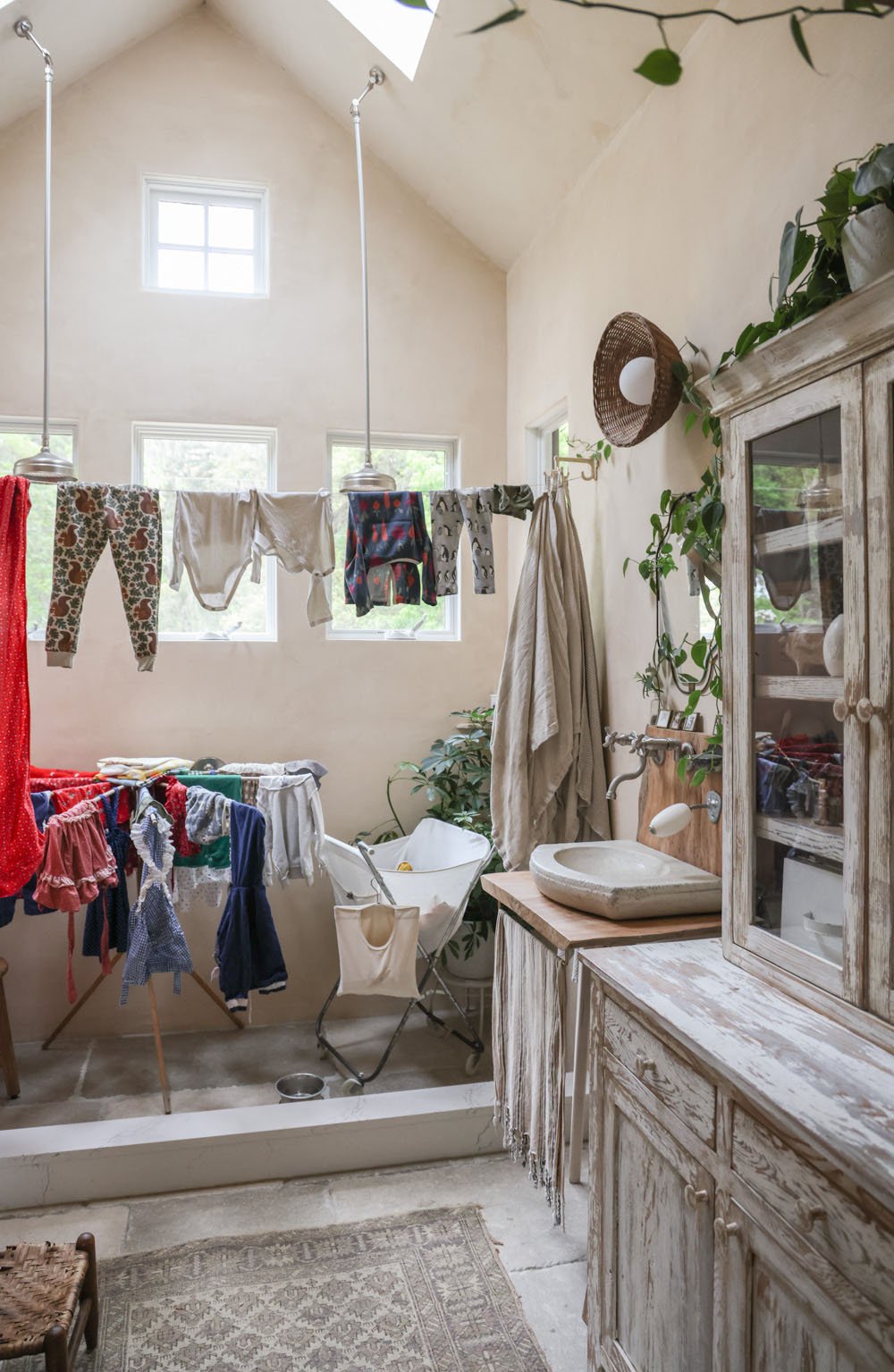
Even though we’ve typically always had access to a dryer, we’ve long preferred to air dry our linens whenever possible. But given the realities of the climate here, including frequent sudden downpours and tropically humid months on end, I wanted to reserve free space within the house for drying, rather than relying solely on our retractable outdoor laundry line. What would be the most suitable areas for this in our relatively compact home?

That’s when I began to picture the shower as a potential crucial component to our laundry room.
We usually try to conserve water by bathing quickly, so our shower is really only in use for about 10 minutes daily. As such, the bathing area’s real estate is largely available for 23+ hours per day. So when approaching the room’s design, I crossed out the option of a glass partition along the shower curb, along with the alternate option of a low / pony wall. Uninterrupted access would be easiest with a curtain.

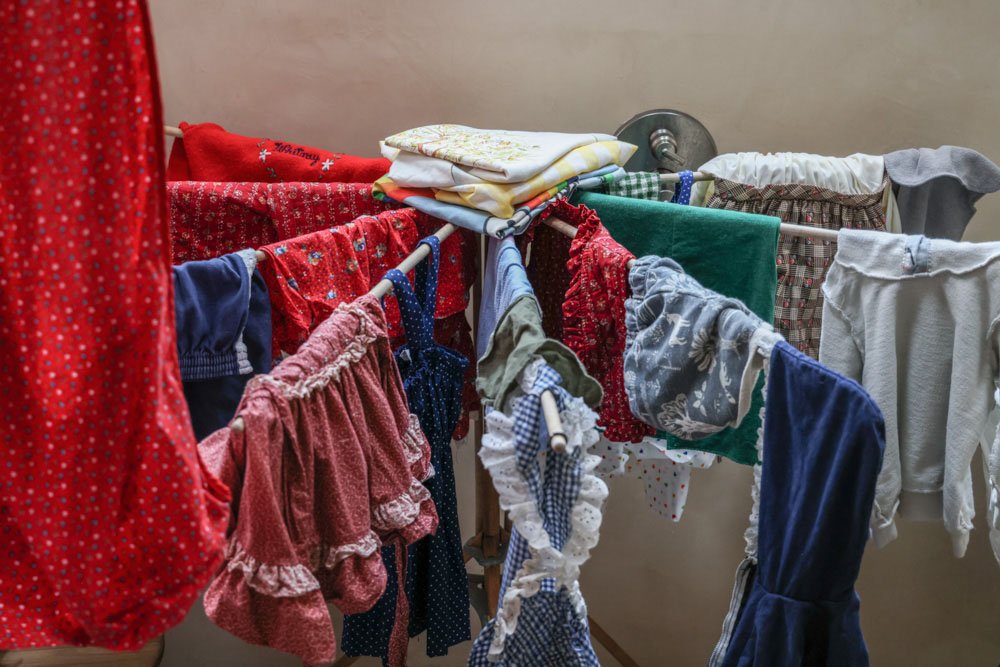
Since we didn’t want a horizontal curtain bar running in front of the mindfully placed windows, we installed two towel hooks directly above the inner edge of the curb line on either side of the bathroom, giving us anchor points for stringing up a removable drying line that could also hold our shower curtains. In addition to the line, we have a vintage, collapsible drying rack (that fits under our bathroom vanity when not in use), as well as our fold-down, repurposed baker’s bread cooling shelf for more surface space for drying laundry.

The end result is a room that’s fully in use throughout the day. It works perfectly for our small home and our family routines.

Roundup: Secondhand Gems for Versatile Small Spaces
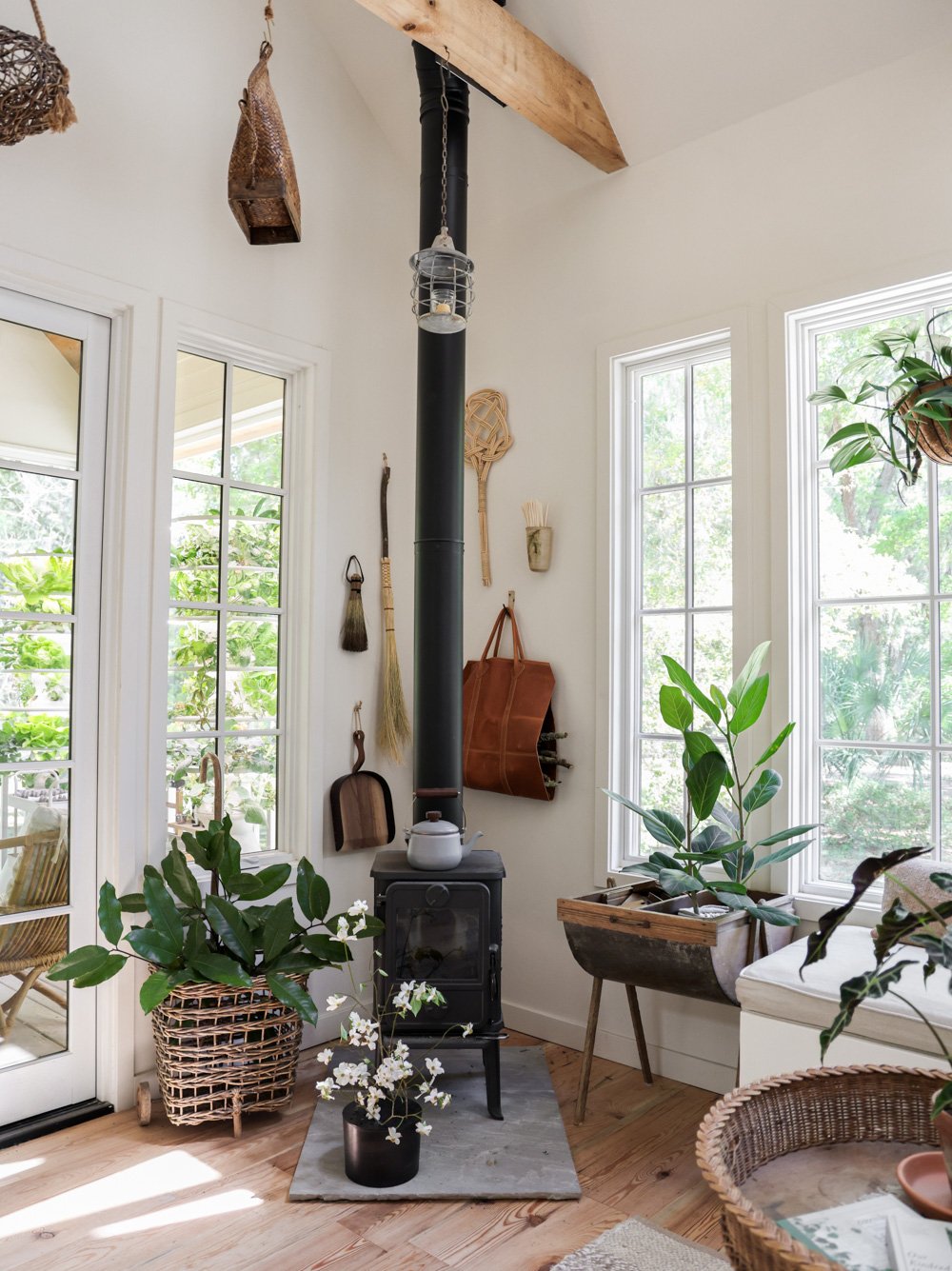
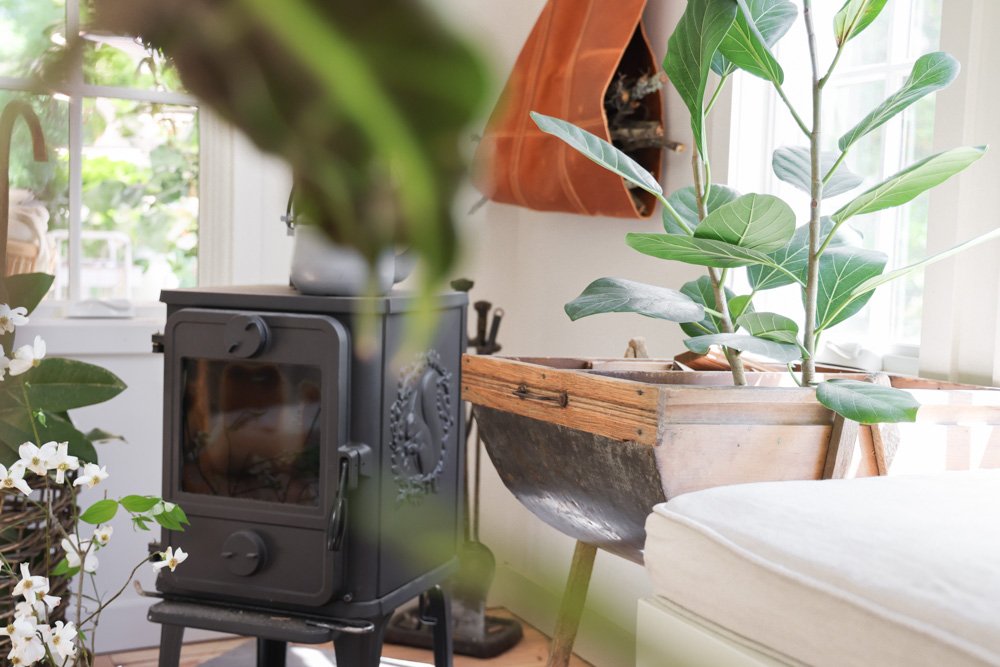
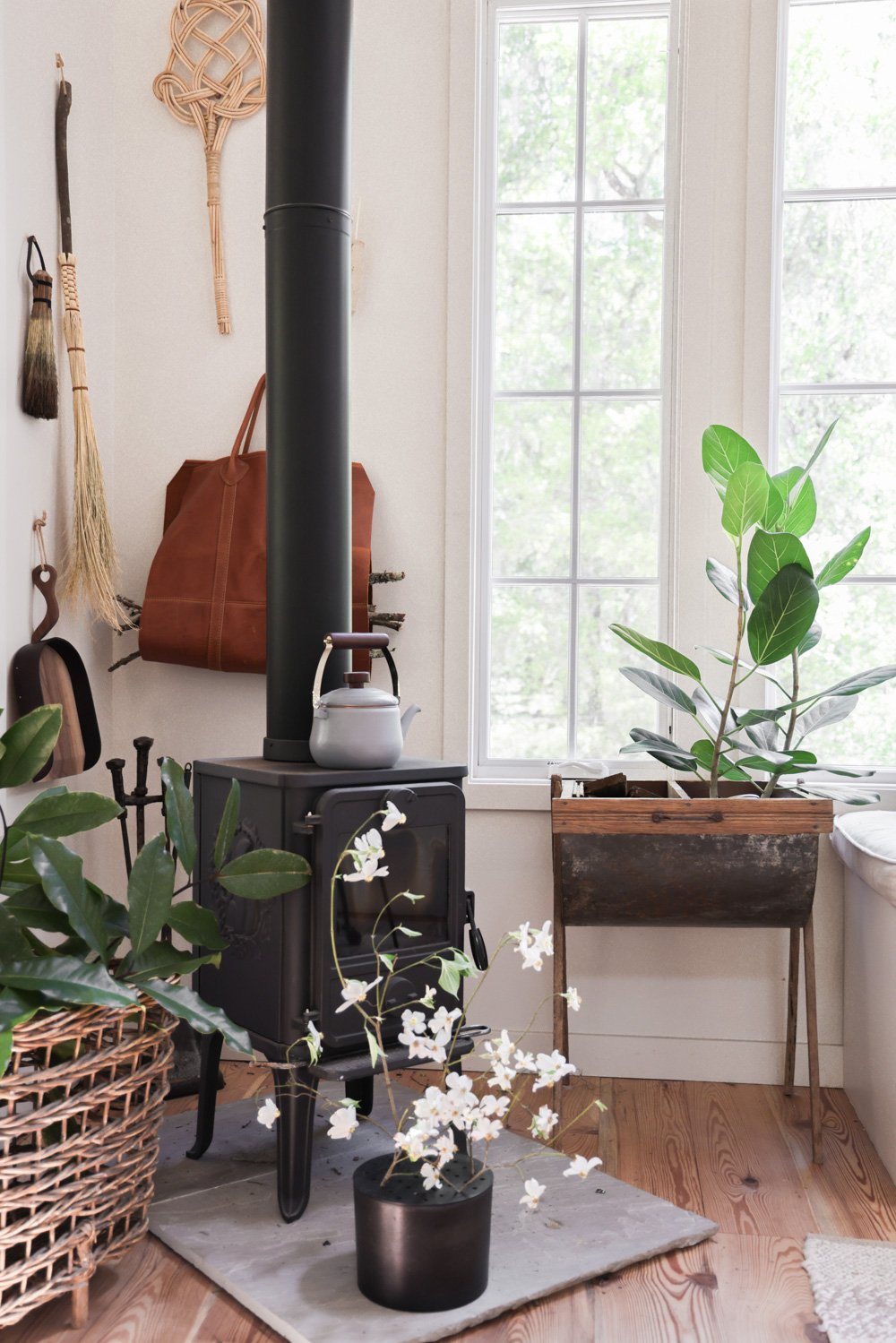
As my family advances into experiencing the first spring in our new cottage, we’re noticing the small ways in which our daily routines are shifting. For example, the tiny wood stove that was the backdrop of much of our daily activity since moving during the fall is now rarely in use. By contrast, the vintage rolling cart in which we stored the firewood is now in high demand for various gardening activities. As such, a spring shuffle was in order.
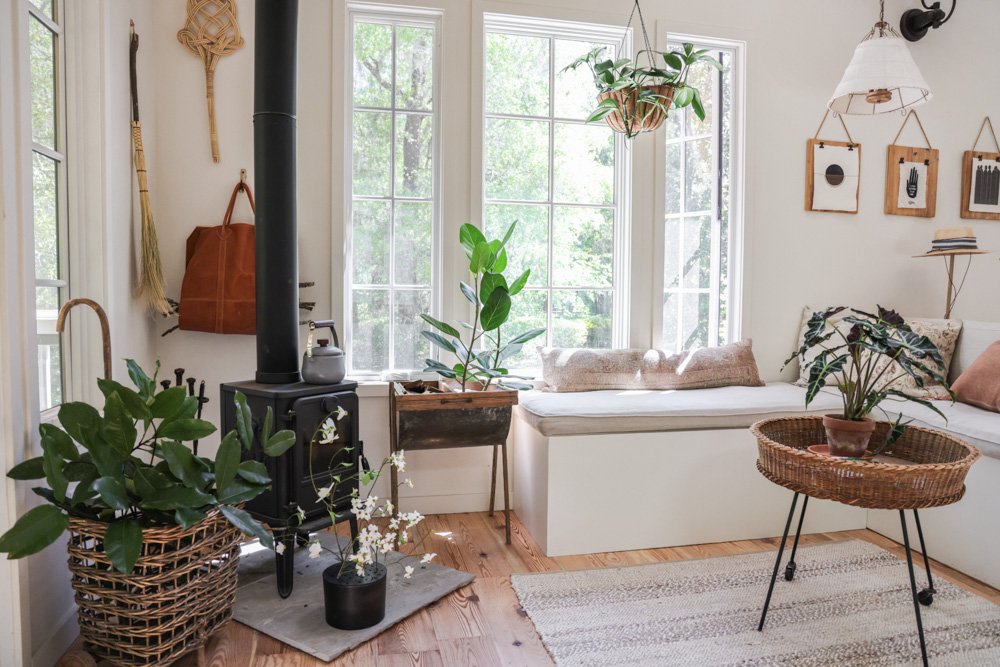
I usually don’t enjoy shopping, but I do delight in exploring vintage finds on ETSY, where I recently stumbled across a listing on Our Vintage Bungalow that was perfect for the update we had in mind. The piece for sale was an old metal + wood half-barrel divided into two compartments and outfitted with worn legs.
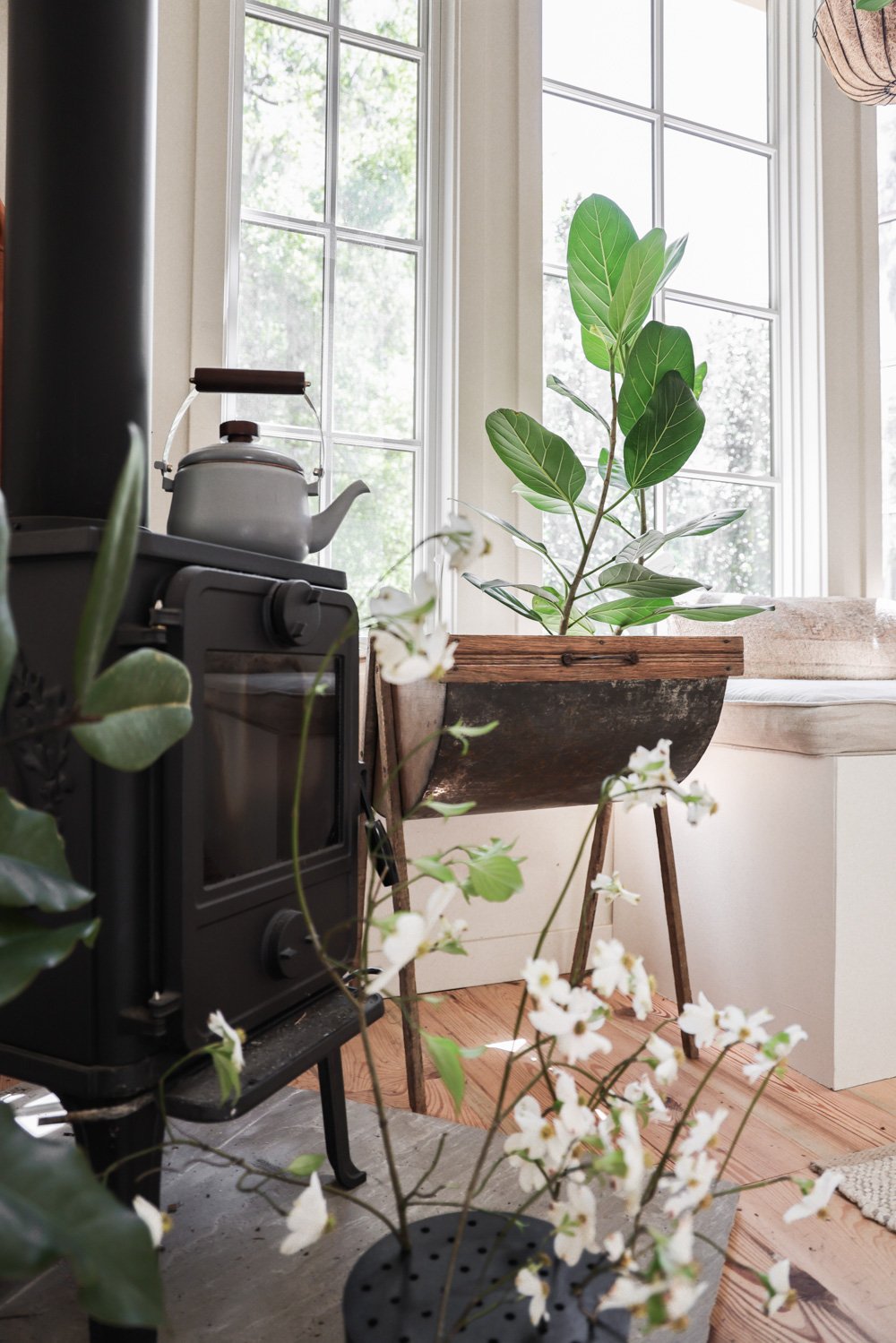
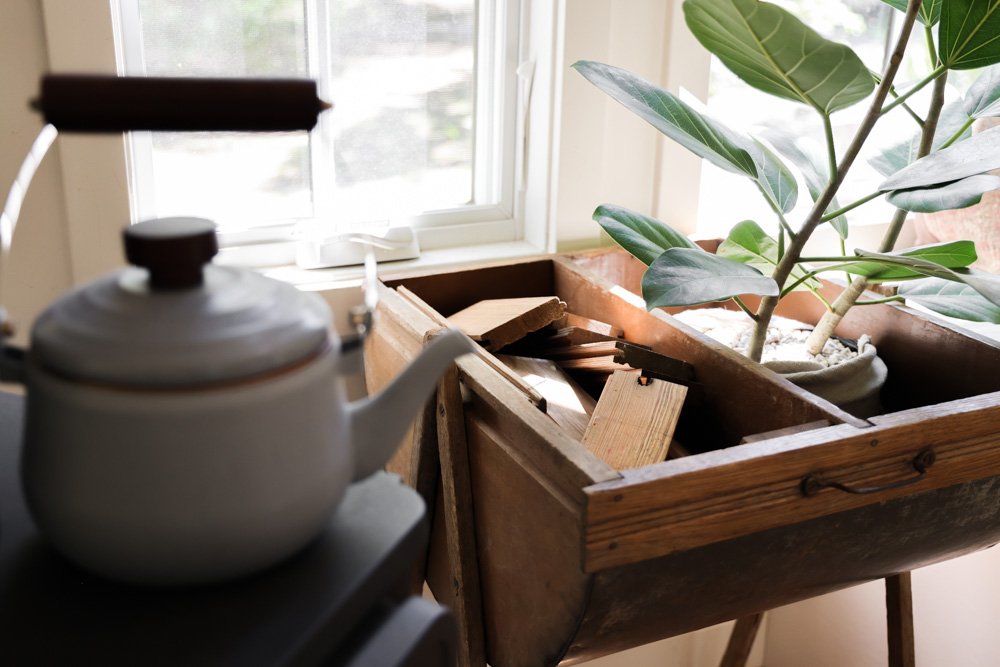
I thought it’d be the perfect size and shape for holding the firewood and displaying a plant in a tight space during the warmer seasons:
Fun side note: After discovering the piece, I noticed that the vendor also has a blog that communicates ways to successfully host and shop garage sales for a sustainable, vintage lifestyle… plus she shares her experiences with tackling a home renovation with young kids in tow. This is one of the reasons why I love shopping secondhand + small — there’s almost always an interesting story behind the storefront!
Over the years, countless folks have told me that they don’t know “how” to shop vintage or handmade on sites such as Etsy. For me, the key is to search for the general function I need an item to serve, rather than search by an item’s dedicated name directly.
By searching for goods via detail and function descriptors, I discover creative and unique homewares that serve the purposes my family needs, in formats I might not have previously considered. This is one of the traits that makes our little home so personal and special to us.
So here’s this week’s roundup of beautiful and functional one-of-a-kind vintage items that I favorited from the same shop that carried the half-barrel piece. My hope is that this sort of post helps readers find pre-loved homewares (rather than newly manufactured goods) offered by small businesses.


Homesteading and Eco-Activism
I find the work of writer, photographer, folk herbalist, and mother, Alyson Morgan, to be endlessly inspiring. Everything she does is rooted in her deep desire to reclaim our relationship with the earth and each other. And she has just released a spectacular new book, which I’ve been aching to share with this community since I first learned that it was in the works…

In this breathtakingly beautiful publication, Alyson communicates with her hallmark stunning artistry the magnificent and multifaceted vibrance of this planet though a raw yet deeply soothing lens. Our Kindred Home is a gentle and welcoming hand offering to guide those of us seeking mindful connection and mutually nurturing paths through life in the Anthropocene.

From Penguin Random House: Alyson Morgan, a second-generation Haitian American, grew up feeling disconnected from her roots and suffering from the trauma of racism. To heal herself, she found a connection with the natural world around her: slowing down, respecting the seasons, and growing or foraging plants in her local area. To Alyson, connection with the earth means finding a sense of place and home in an era of stress and overwhelm. Now she shares her methods of homesteading for anyone to practice in their own life. Beautifully photographed, with plant monographs, illustrations, and recipes, Our Kindred Home explores our deep ties to the natural world and offers regenerative and sustainable ways of living.

Alyson helps readers better understand the deep grief and systemic harm that stems from disconnection with nature, and provides pathways for healing, such as:
• An exploration of ecological grief and its impacts
• Information for working with subtle body energy
• Tools for observing, identifying, foraging, and cultivating plants
• Methods for creating infusions, honeys, vinegars, and oils
• More than 80 seasonal and 40 plant monographs
With the whole world in environmental crisis, creating a relationship with the earth that is reciprocal rather than exploitative and understanding our fundamental interconnectedness is more vital than ever. In Our Kindred Home, you’ll find everyday ways to connect to the earth for resilience, resistance, liberation, and collective healing.

Wall Decor for Small Spaces
There’s no wrong way to decorate your small home. The differences and diversity among our residences are what make them beautiful and interesting. Colorful or subdued, glossy or matte, patterned or minimal— anything can work if it’s done mindfully with the realities of your specific space in mind. But here are a few tips to keep at the ready if you’re struggling to crack the elusive code on how to best balance function and style within slim size constraints. (And there are 200+ tips in my book, Small Space Style.)

Decorate with Daily Essentials
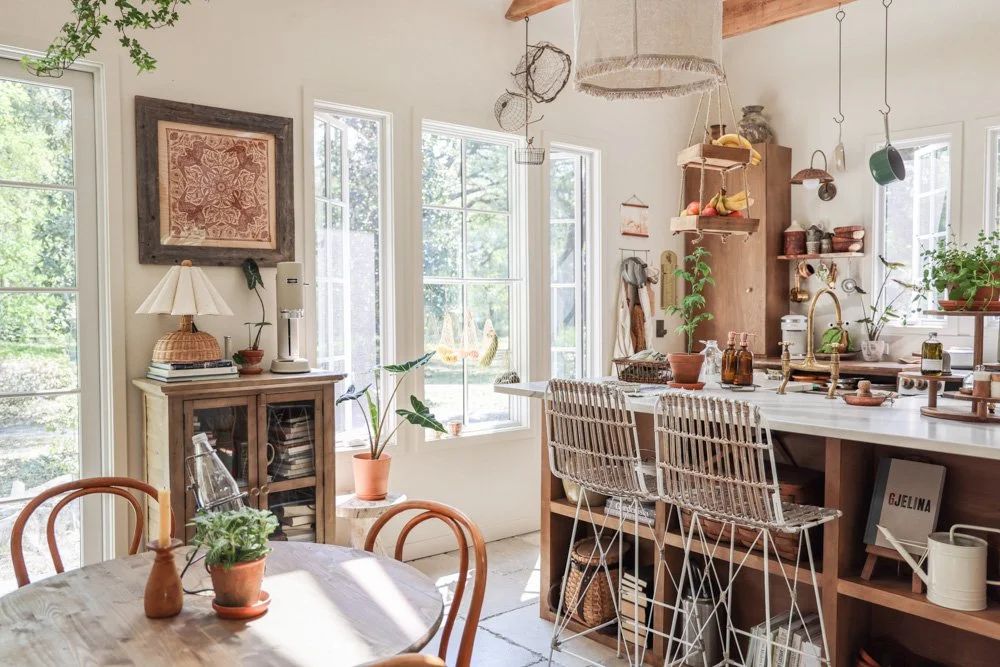
When storage space is pushed to the brink, play around with displaying your more stylish homewares and essentials via walls and other such vertical / suspended formats. While this leaves fewer inches for traditionally framed photos or elaborate window coverings, it frees up an impressive amount of drawer + closet + cabinet + surface space for navigation and daily use. Food, cleaning supplies, kitchenwares, wardrobe accessories, pet gear, and so much more can be on full display and within easy reach, while adding an entirely unique look to your home.
Play with Scale
More often than not, I’ve found that standard frames and typical print sizes aren’t best suited for small spaces, where it can be particularly impactful to play with scale. For example, with furnishings and wall decor it’s often helpful to go larger than one might first consider, as this can help sidestep visual and physical overcrowding. For example, a gallery wall might make a compact room feel overwhelmed, and an apartment-sized living room set can sometimes make navigation tough, whereas one roomy couch and a clever accent table might do the trick while avoiding access lines and adding extra comfort.
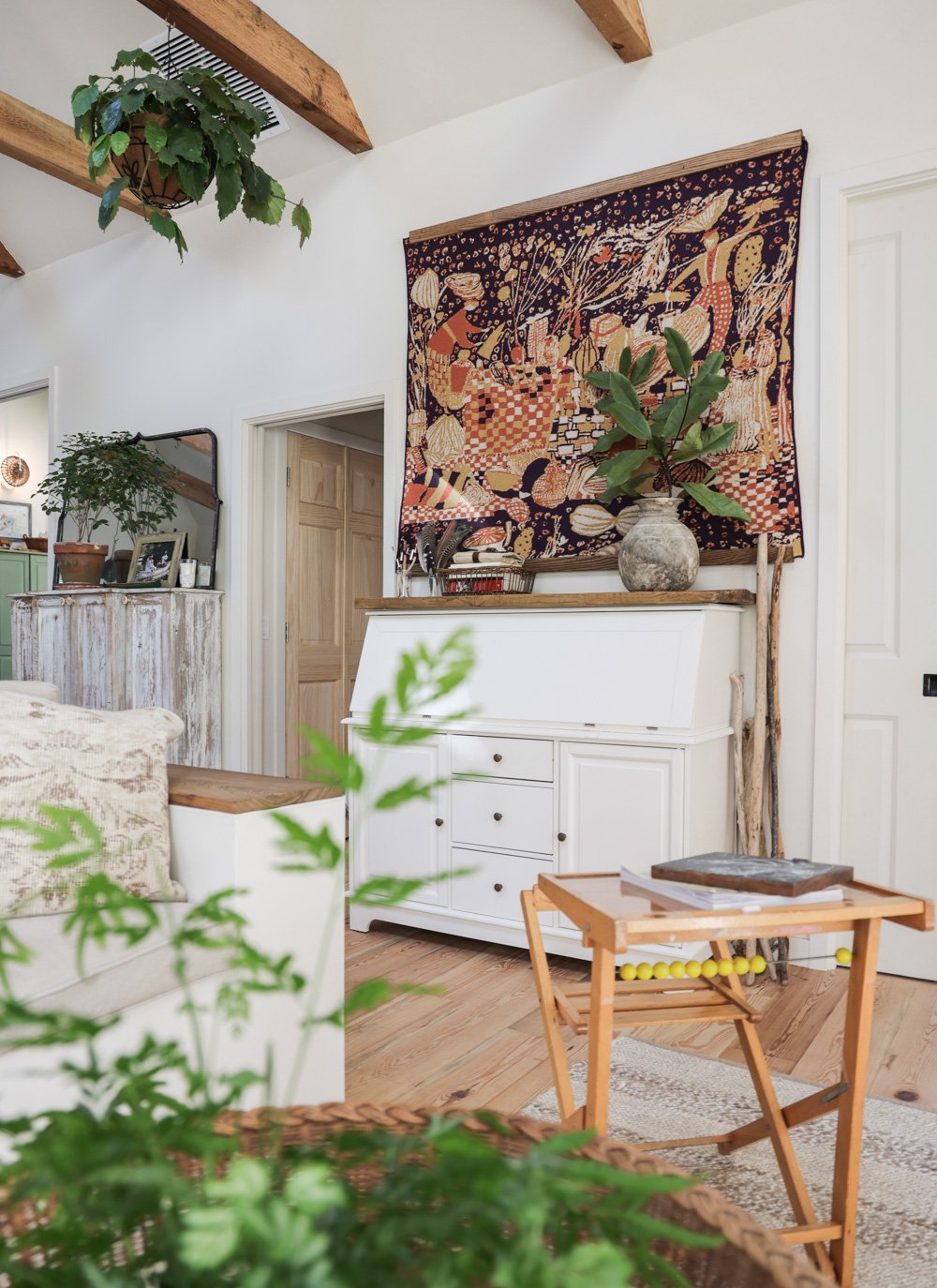
In our new cottage we suspended a large quilt in the living space / office, where it makes a big impression without making the walls feel closed in. By contrast, we’ve placed tiny, 2” frames around the house to keep family photos in sight without requiring a “gallery wall” or consuming space that’s better used in other ways.

Extra small brass frames from Connected Goods
Be a Good Steward of the Planet
There’s no shortage of mass-produced, “fast” home decor, such as generic signage, faux antiques, and synthetic plants. What if we avoid all of that, and decorate with the planet in mind instead? Responsibly-sourced vintage and secondhand goods, foraged finds, and daily essentials are all fantastic ways to adorn your walls and surfaces without contributing to the degradation of our one magical shared home.
Get Help from Hardware
Hooks, racks, and multitasking wall units are a small space dweller’s best friend. Invest in a dozen s-hooks and you’ll realize just how valuable and versatile they can be in every space of your home.

Celebrating Milestones the RightWay
UPDATE: Thank you to everyone who donated! We raised ~$1,500 for The RightWay Foundation non-profit in about 24 hours!
Today is my birthday, and I’d be absolutely overjoyed if you’d make it meaningful with me.

If you’ve ever found the information I share to be of value— and if giving is comfortably within your means — I’m humbly requesting contributions to The RightWay Foundation as a way of celebrating today. Note: If you do make a donation, please add a note in the digital Donor Scroll so I can thank you!

Above: Our Lettuce Grow towers— the same type that this community helped secure for The RightWay Foundation in 2022 for growing healthy greens for their foster youth and staff.
Our friends at The RightWay Foundation do critical preventative work to end the pipeline from foster care to homelessness, unemployment, incarceration, and poverty. Thanks in part to your generous gifts in 2022, RightWay provided dedicated housing for 34 current and former foster youth, and supportive services for 110 youth aging out of foster care. Now, in 2023, RightWay is providing dedicated housing for 30 additional former foster youth… because having a place to call home is the first step to a healthy, financially stable adulthood. (This is a topic that is near and dear to my heart — read more about that here.)

Having a place to call home is the first step to a healthy, safer, financially stable life.
Thank you for being here, and for supporting our small business and family, as well as this remarkable organization that is changing lives in extraordinary ways.

Want to celebrate your milestone the RightWay? The RightWay Foundation has set up a how-to campaign resource for anyone who wishes to raise awareness and/or funds for this marvelous non-profit on their special day. Click here to learn more and get started.

How to Organize Cleaning Supplies in a Small Space
In a home with limited storage space, cleaning supplies are often a challenge to place. As such, there’s an entire section concerning how to manage cleaning gear in my book, Small Space Style: Because You Don’t Need to Live Large to Live Beautifully. But as we settle into our new home and continue to decorate with our everyday belongings, there are plenty of updated visuals to share that convey two of my favorite tips for storing cleaning materials:
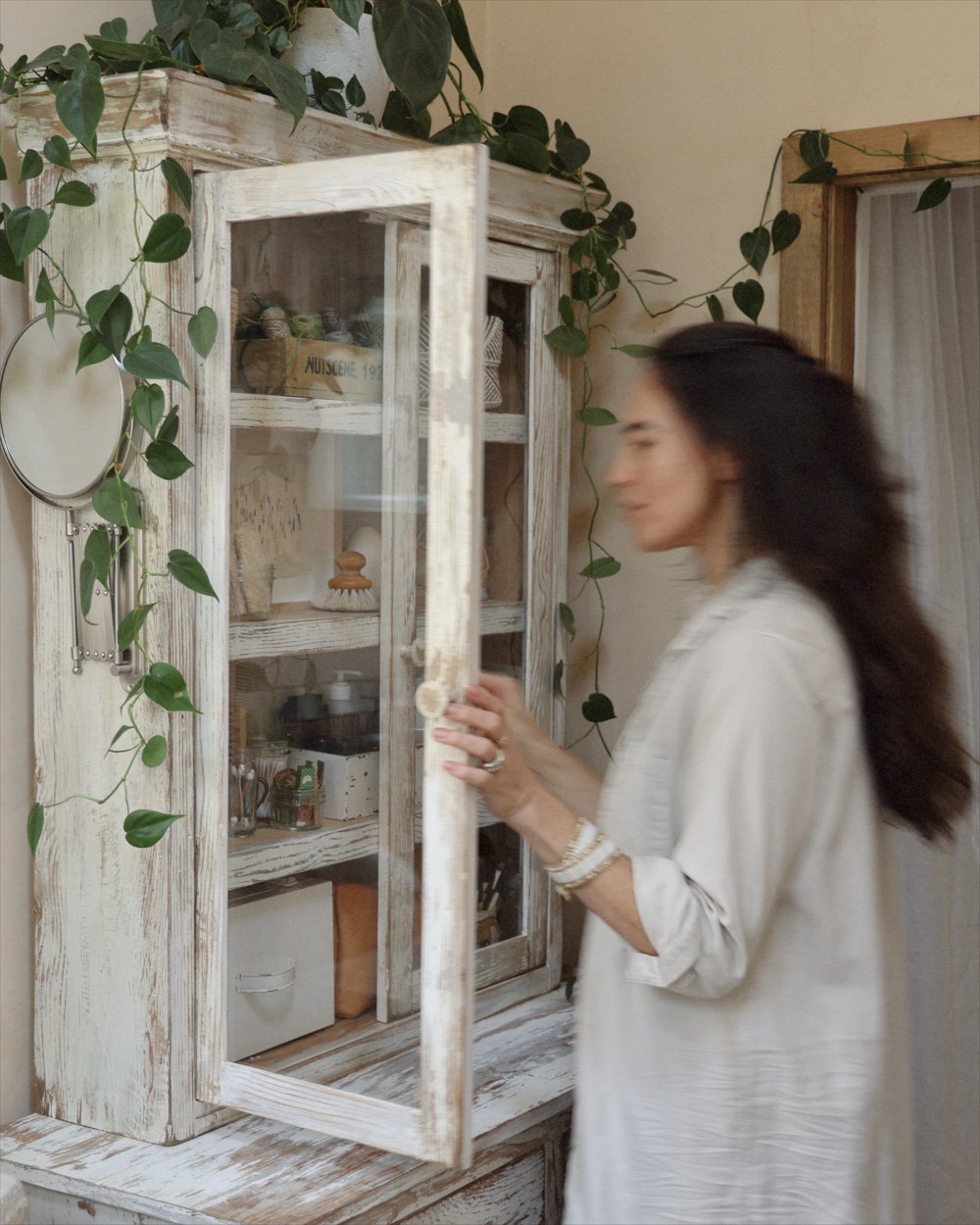
Above: The custom hutch I designed with Tumbleweed & Dandelion for our combination laundry room + bathroom.
• Go vertical
(and/or)
• Turn more sightly supplies into functional decor
And, thankfully, lovely reusable and refillable cleaning gear is often far more compact than single-use alternatives.
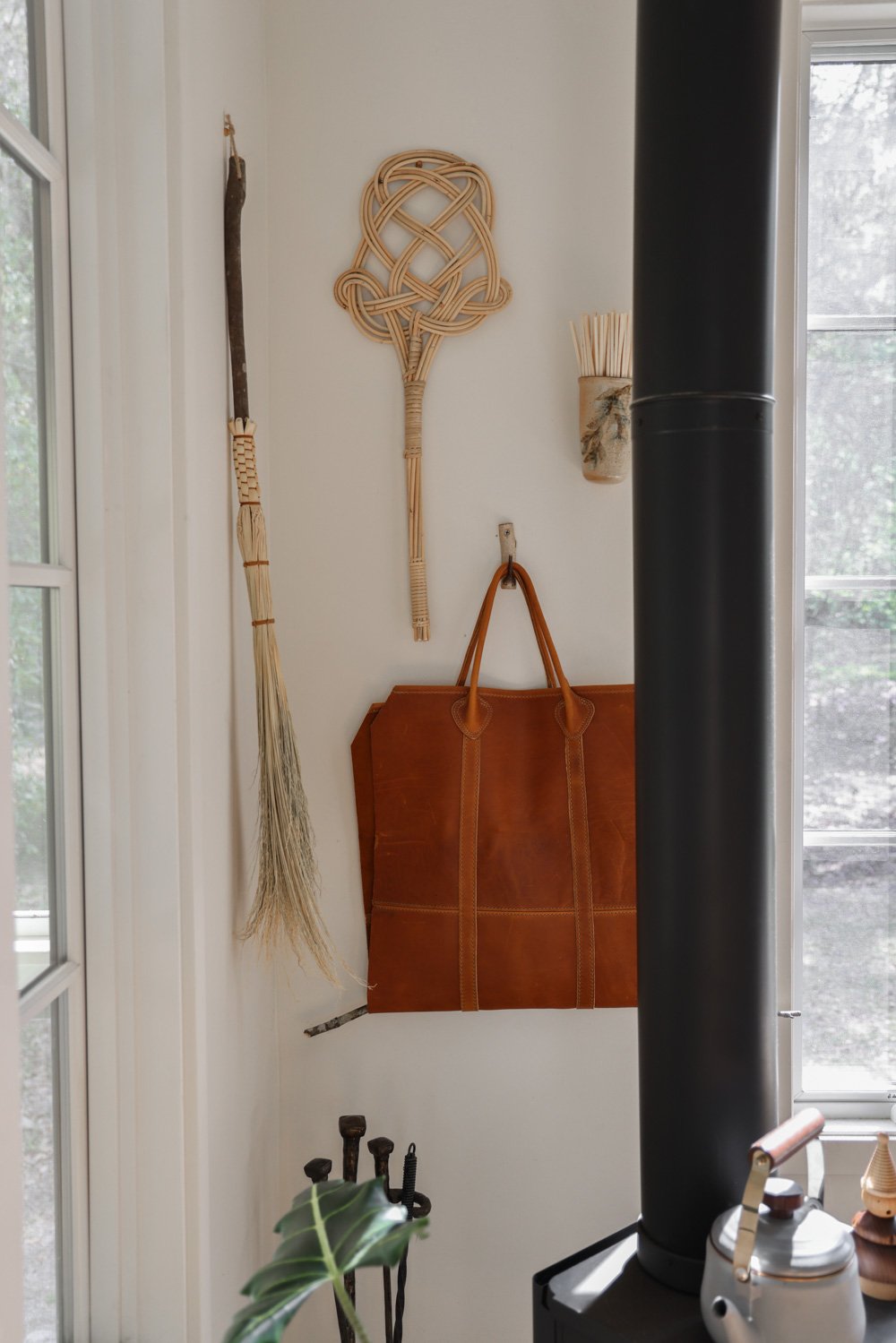
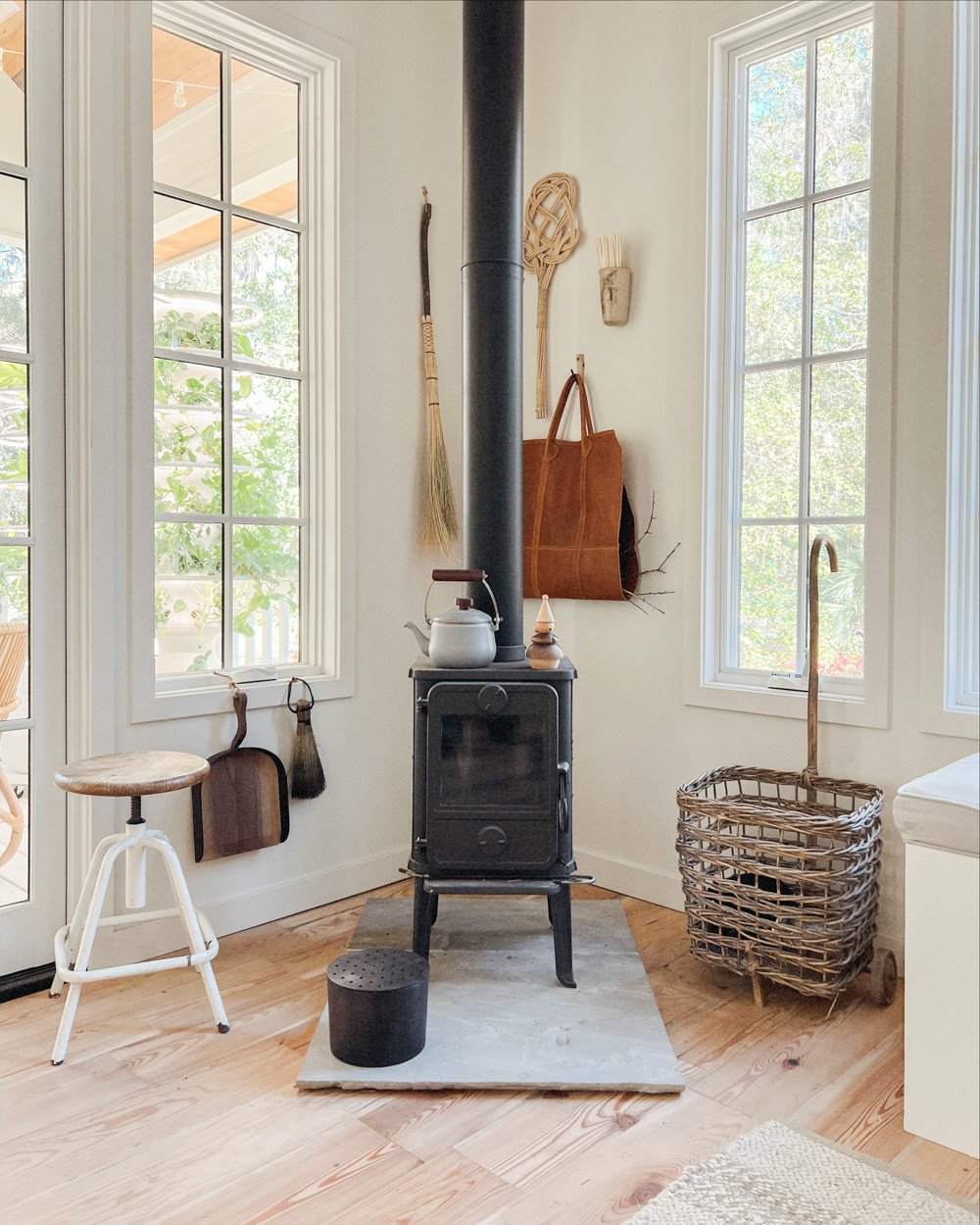
Above: A handmade, rattan rug beater and cobwebber (both from Connected Goods) suspended from the wall behind our tiny wood stove.
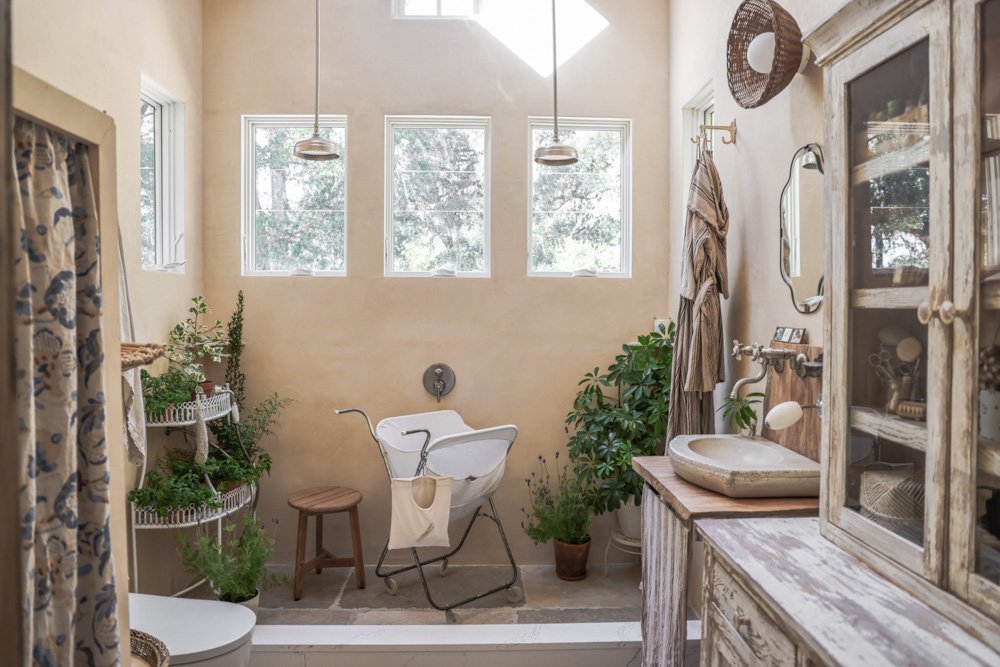
Above: A vintage, folding, rolling laundry cart (operating as a hamper) with an attached clothespin bag sit in our shower when we’re not bathing.

Above: A handcrafted wooden + leather dustpan and naturally dyed brush (both from Connected Goods) dangle from a windowsill.
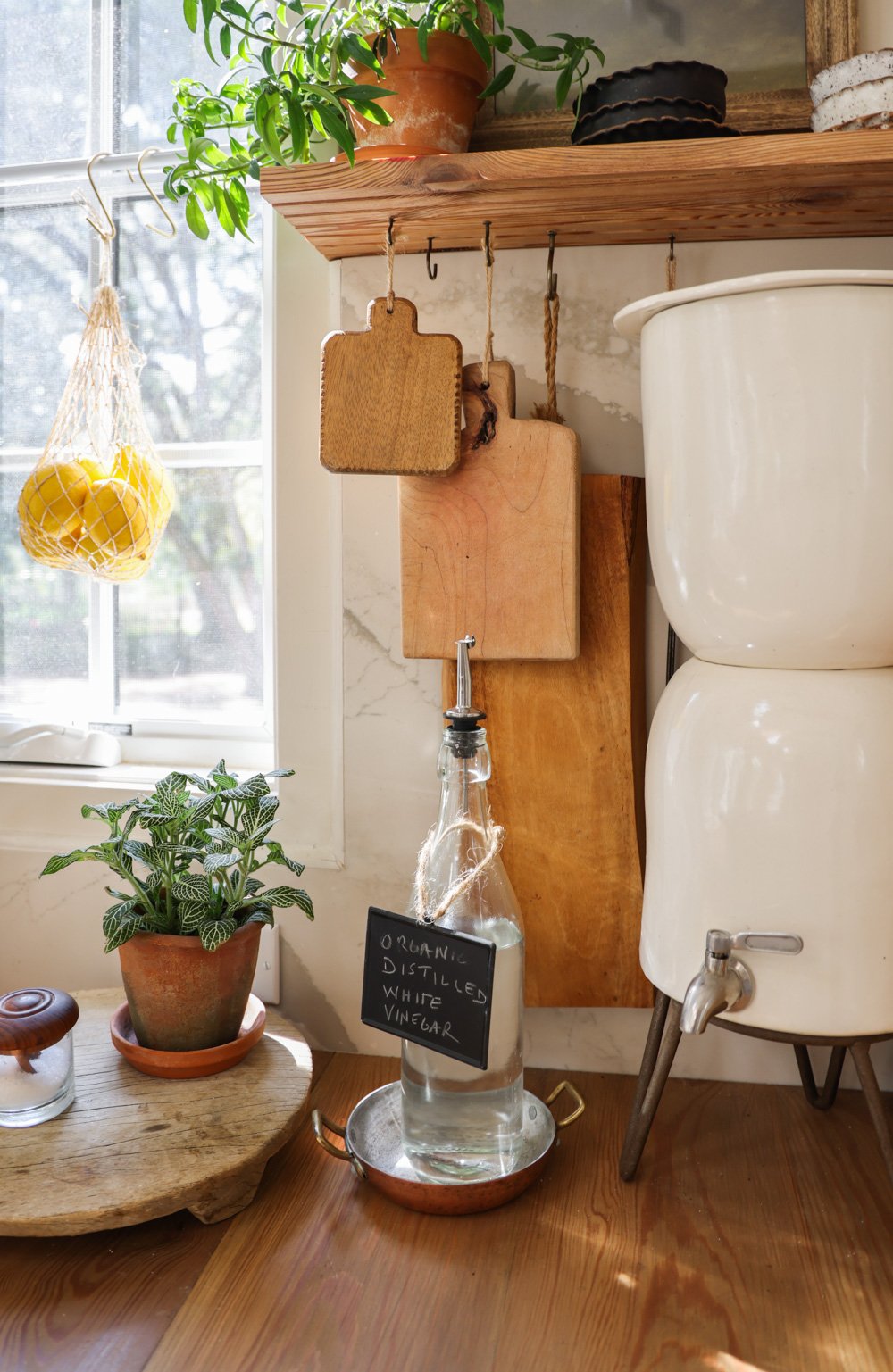
Above: A repurposed bottle with a universal spout adapter holds organic white vinegar, and sits in a vintage copper gratin pan.

Above: A refillable WOCA hardwood floor mop and washable pads are suspended from hooks inside of our HVAC closet door. (Not pictured: We have a slim Dirt Devil vacuum that also fits on the same rack.)
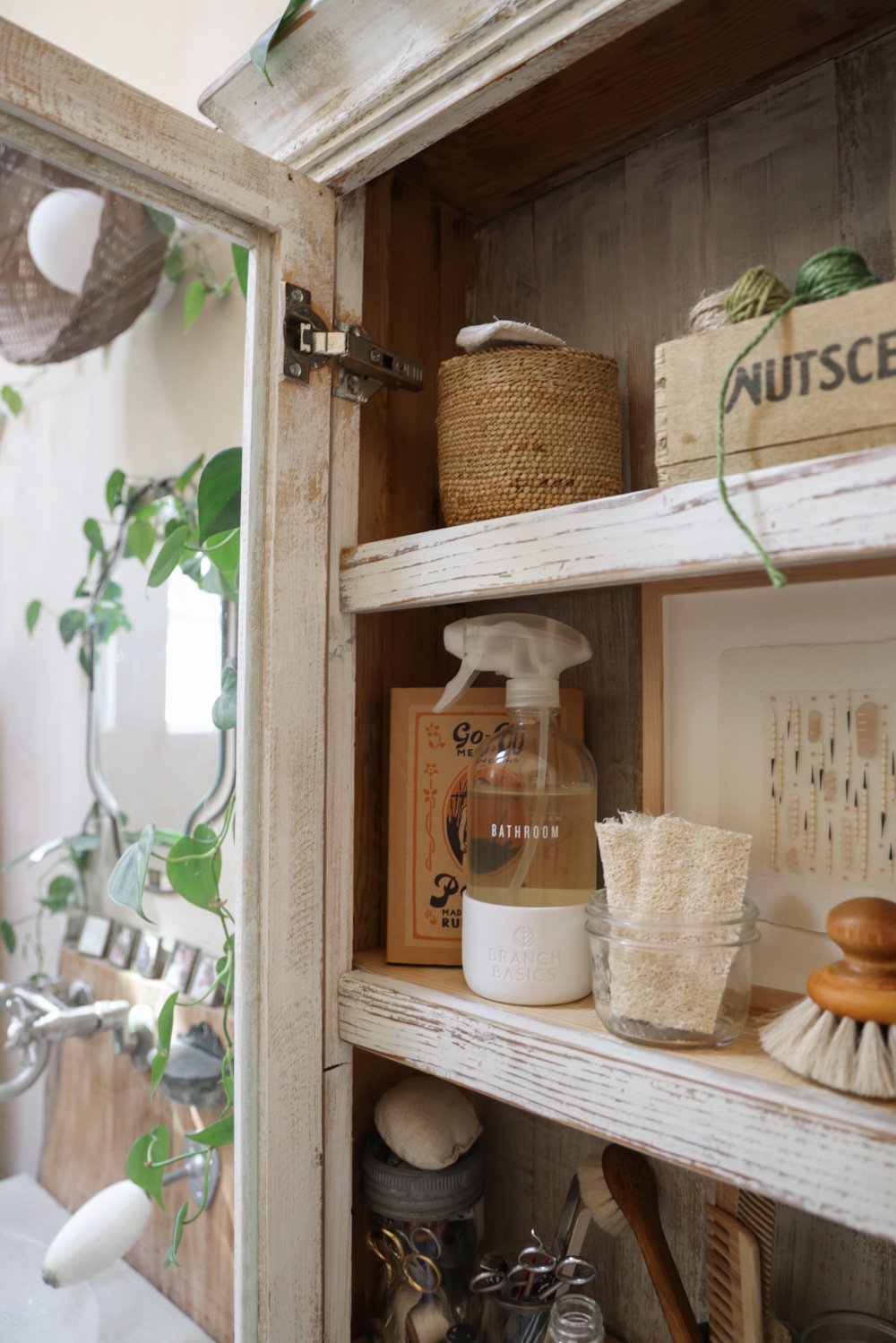
Above: A clear, refillable glass bottle of Branch Basics all-purpose cleaner from concentrate sits on display in our bathroom / laundry room hutch.

Above: Our washable, organic bamboo kitchen sponges at the ready on our kitchen wall.

Above: A drying rack (made from a repurposed bread cooling board), reusable dryer balls, and more hang from the side of our washer-dryer cubby.

Above: A compostable and biodegradable organic cotton + jute scrubber set (from Connected Goods) suspended from the kitchen wall.

Stylish Luggage for Travel & Decor
As I gear up for our group trip to Italy, I’m planning what to pack in my beloved SteamLine suitcase— luggage I’ve had for years. Back in 2020, I had the joy of doing an interview with SteamLine, as their luggage is not only an essential part of our travel routine, but it’s also used in our home decor as well. I’ve been eager to learn more about SteamLine’s current sustainability initiatives and their multitasking luggage, so it was with great pleasure that I interviewed SteamLine’s founder, Sara Banks, and posed they key questions I had in mind.
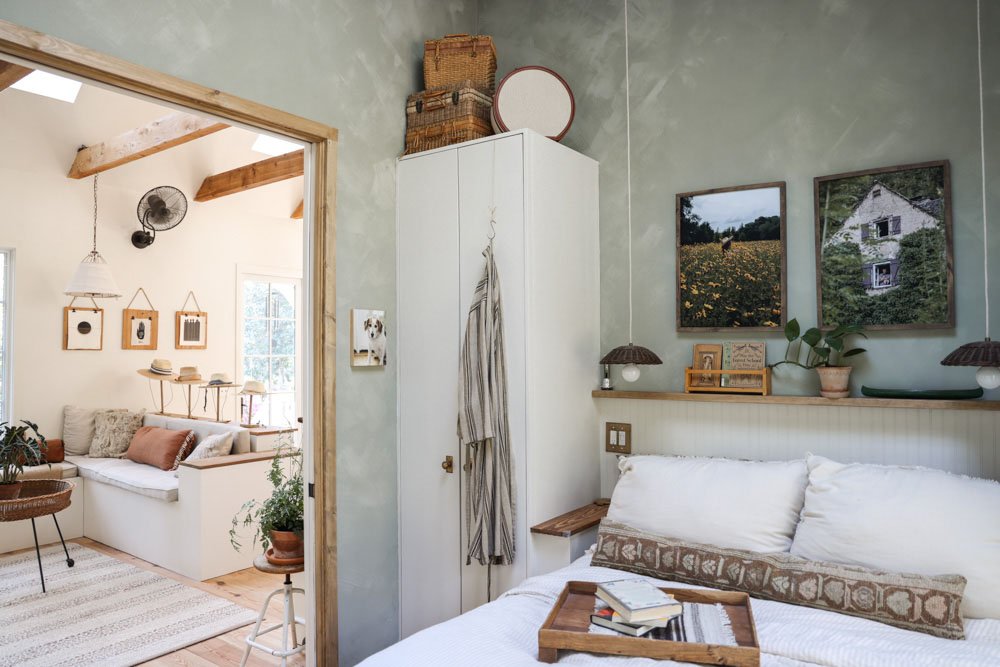
A linen SteamLine hatbox sits next to vintage picnic baskets, all holding various items as decorative storage.
Q&A with Sara Banks, Founder of SteamLine Luggage
Whitney: Sara! We’ve worked together for so many years and I’m such a fan of your mindset and brand. We use our SteamLine pieces even when we’re not travelling, as a way of maximising their functionality and celebrating their beauty. Is this something you envisioned for your products— for them to be used in a myriad of ways? What brings you the most joy when you see your designs in use?
Sara: I’m so glad that you are using your SteamLine even when not travelling! I have seen them used in your home and it’s exactly what I had in mind for stowing at home:) And congratulations on your gorgeous new cottage in Florida! It is dreamy in every way, I absolutely love how every room is multi functional and the colours/textures are so soothing!
The pandemic highlighted how creative our travellers were with using their Steamline cases to decorate and store items at home. Everything from toys in children’s rooms to adding color and decorative storage to a living room. Just because your trip has ended doesn’t mean your SteamLine case needs to go into hiding:) It brings me great joy to see the cases out exploring the world, but also adding conversation pieces, vintage home décor, and mobile storage at home as well.

Can you spot the SteamLine overnighter being used as storage on my desk?

Above: The Overnighter from The Explorer series, SteamLine’s first collection composed of naturally renewable and sustainably sourced rattan.
Whitney: As the climate crisis continues to impact lives across the globe, it’s imperative that we focus on sustainability. SteamLine has a refurbishment program— can you tell us more about why and what’s entailed?
Sara: 100% yes! We all need to focus on sustainability and personally have been looking for any and all ways to incorporate more sustainable materials and systems to ensure our cases can last a lifetime of travel. We launched a refurbishment program a few years ago. When it comes to repairing damage or wear-and-tear, our luggage is very similar to the construction of shoes. We are partnered with top cobblers in both the US and Europe to help customers with repairs and refurbishment, anything from replacing a wheel to lock repairs and more.
Additionally for sustainability, we launched a collection composed of naturally renewable and sustainably sourced rattan last year and have a collection of recycled synthetic leather.

West with one of our essential SteamLine bags in Palm Springs in 2018.

Pictured: a SteamLine mini on-the-go with us, August 2017
Whitney: What SteamLine piece(s) do you consider to be the most essential, versatile, and why?
Sara: We (my husband, 4 young boys and I) have been travelling the last 16 months with the 3 Spinners and 3 Carryons, so at the moment these are my most essential sizes. The carryon is perfect for many sizes of living spaces so easy to store tastefully when not travelling. And I have been trying hard to resist the temptation to put spinner wheels on this Carryon size so it still remains overall the most aesthetically pleasing for me.
Quick side note that I am sure you can appreciate: it has single-handedly the most freeing experience to travel with so relatively little and reuse everything that you have with you again and again -- or if not using it, gifting it on. It makes for a simpler life, and the forced resistance to avoid consuming new items is wonderful. Travelling slowly like this has many advantages, but stepping out of a commercial world into one of thoughtfulness and purpose is yet another highlight that I forgot how much I would value.
I also find the Overnighter case to be an under celebrated item. Not only for the quick overnights as the name suggests but also a versatile amount of home uses. We are going to be introducing this size in a completely sustainable, recycled material that I am really excited to share this autumn! It’s also a perfect size for children.

Sara Banks, Founder of SteamLine Luggage
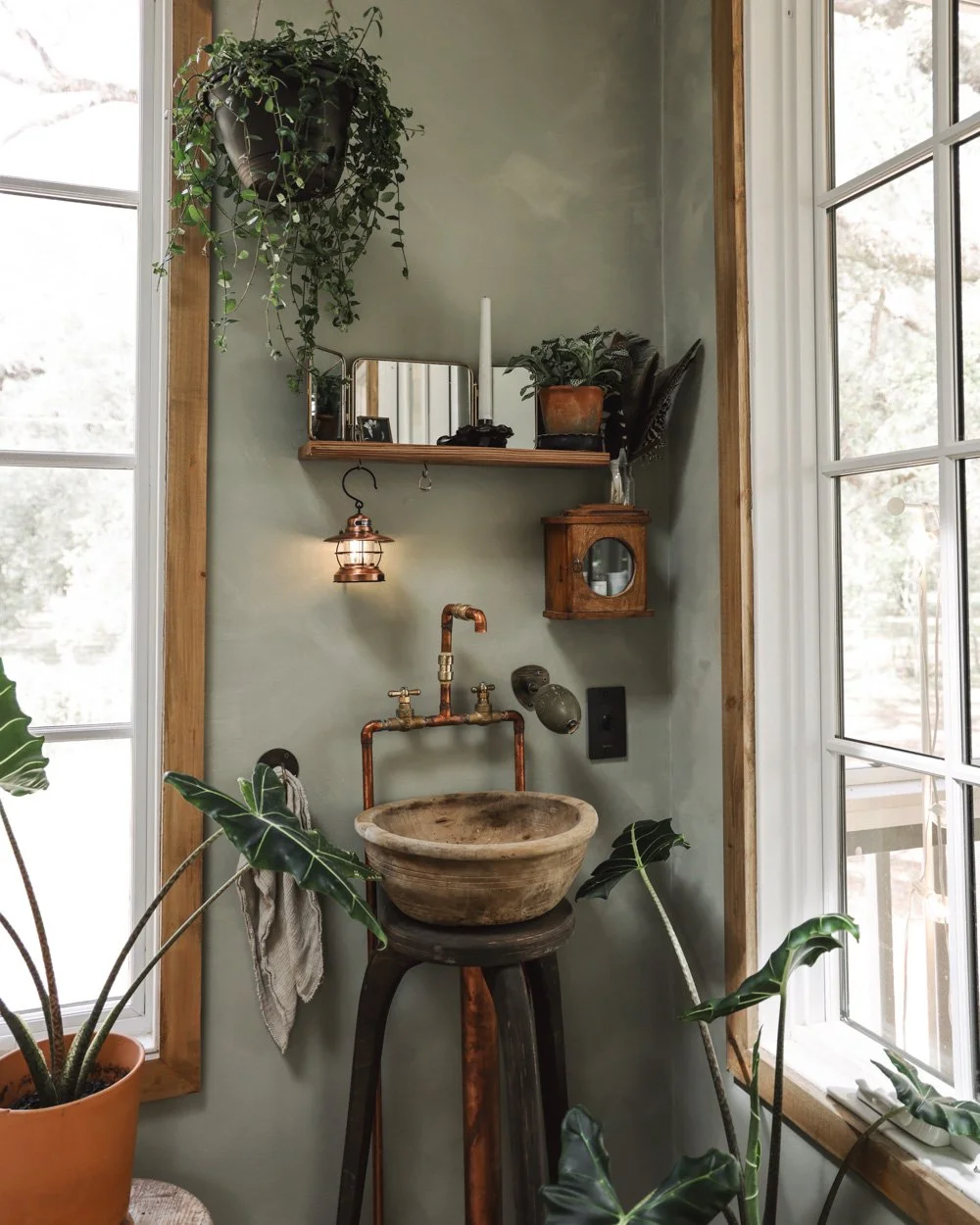
Small Design Detail: Custom Switch Plates
Our previous cottage had standard plastic switch plates in every room. I never once thought about them, as they worked perfectly fine and neither enhanced nor downgraded the interior in my opinion. But when I designed this cottage, I wanted the organic feeling to extend through as many details as possible. So when I saw that the electricians whirled through the house and installed standard white plastic rocker switches, I was appreciative of their work, but not thrilled with the fact that I didn’t schedule myself to be on site that morning in order to chime in about the plates.

After calling to confirm that the local Repurpose Project would indeed take the plastic units if we chose to replace them, I decided we’d save up to swap them out gradually over time.
In the bathroom and bedrooms, I’ve slowly been replacing the plastic plate covers with unsealed wooden alternatives, which I stain with the custom blend of Rove & Dwell Natural Whey Stain that we’ve used throughout the woodwork in much of the house:

But for three specific areas, I wanted something particularly unique. One of those areas was the bedroom sink zone, where there was a rocker plate (that controls a porch light), which we upgraded this week with a Buster + Punch toggle.
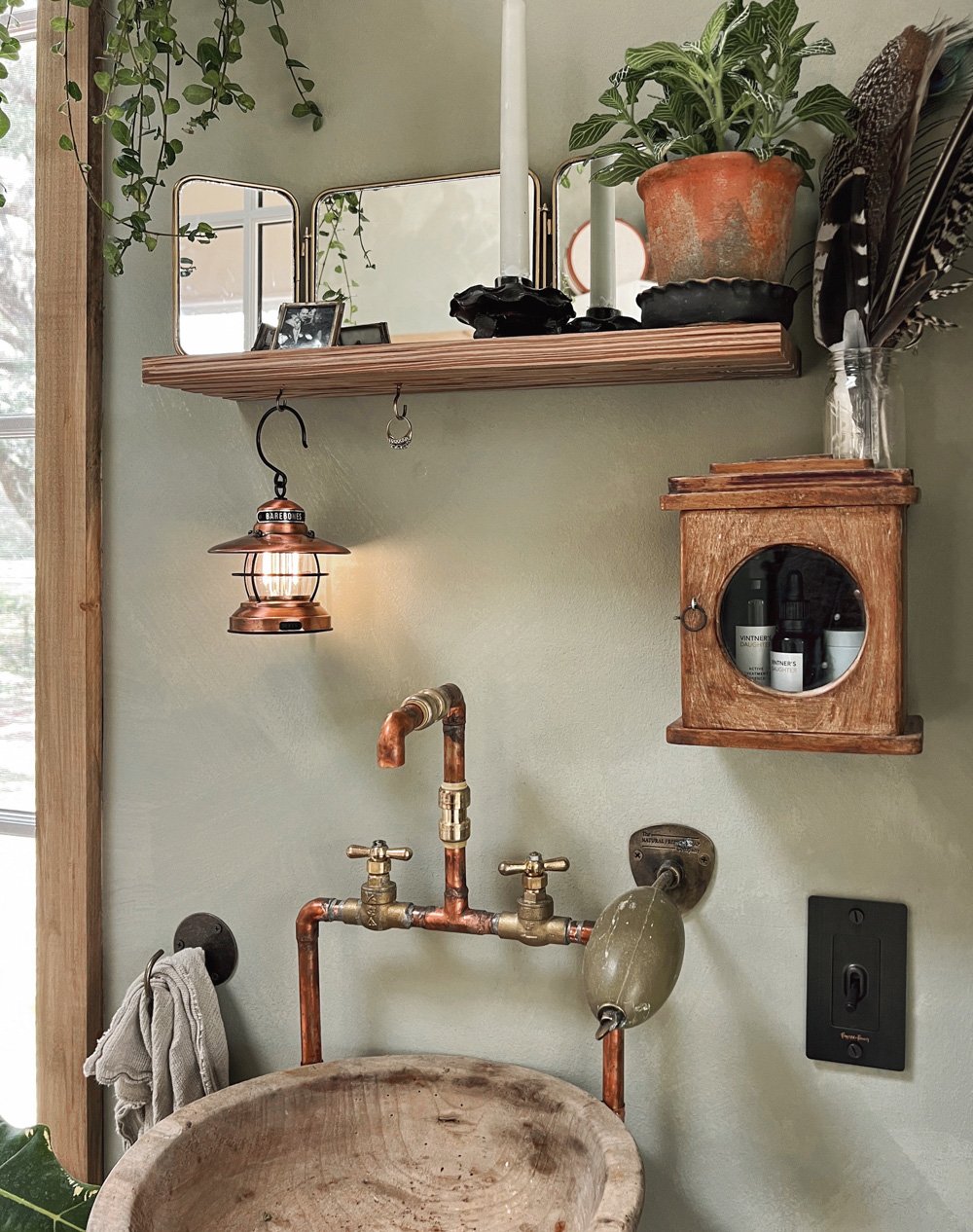
It’s a small detail with a big impact, don’t you think?

Biophilic Design: The Greenhouse Office (Brick Floor Update)
Shortly after we constructed our 114 sqft greenhouse-office, I was inside tending to a potted plant by my laptop when a small garden snake slid from the leaves to my hands before dropping down to my boots and sliding beneath the deck floor.

While I’m happiest when blending the indoors with outdoors in our design, I’ll admit that interacting with snakes while going about my daily office work wasn’t exactly my intention.
For the sake of the snakes and our family’s safety, I realized that we’d have to add either a screen to the underside of the greenhouse deck, or install decorative flooring within the structure.
As I wanted the interior to feel more like a traditional greenhouse settled into the ground (versus the raised format in which it’s constructed due to flood code), I opted for brick flooring. I’ve always loved the organic feel of brick, which is a material that’s long been used heavily throughout our region.

Rather than source traditional thick bricks, which would eat up valuable inches of height within the compact space and add extra weight, we picked a glazed thin brick from Fireclay.
We selected a hue named “Wind River,” which we chose for the way in which it perfectly echoed the mix of green, brown and grey of the Spanish moss in the grand live oaks overhead.

So while we kept nature out in one way (sorry, snakes - it’s in everyone’s best interest!), we like to think we brought it in via another avenue.

The low sheen on the otherwise muted surface gently reflects the sky, along with the movement of the clouds and foliage in the wind.

And the pattern is the same we used in the bedrooms of the cottage with reclaimed, remnant pieces of wood. These domestically-sourced bricks are rustic in appearance, yet elevated thanks to their lead-free, hand-applied glaze.
So the main question is, of course: why is there no grout?
The tile arrived in May 2021, but no contractor has ever arrived as promised to lay the subfloor and install the bricks properly since then. Rather than enter into month ten of waiting, our family (including our eager and loving 6 year old) decided to place the floor down ourselves. We figured that the loose installation felt reminiscent of informal brick floors of traditional old greenhouse anyway. Initially the bricks shifted and sang a bit, but they’ve now seemed to have settled. Soil and leaves sweep easily off the surface without much catching, but any little bits of earth that remain behind only add to the organic feel we welcome happily within this special space.

Perhaps, in another season of life, Adam and I will tackle the formal installation. Or maybe a professional will even show up to help as as once planned! We’re not holding our breath. We’re grateful for what we’ve got: a nature-rich — yet snake-free and mosquito-free — home office that gently brings the wild beauty of the outdoors in.
Note: Thank you to Fireclay Tile for generously supplying the bricks we used for this project!

Roundup: Secondhand Gems for Small Spaces
I flat out don’t like shopping.
(There. I said it.)
But I do enjoy rummaging around our home, searching ways to repurpose items we already have to serve new needs. (See my most recent upcycled hack here on the blog, or here via Reels.) If I come up short, I then find myself looking for handmade, secondhand or vintage items online or in our local thrift stores. To avoid wasting time and money, I don't just browse aimlessly or on impulse. When I shop, I’m on a specific mission.
For me, the key is to search for the general function I need an item to serve, rather than search by an item’s dedicated name directly. By searching for pieces via detail and function descriptors, I discover creative and unique homewares that serve the purposes my family needs, in formats I might not have previously considered. This is one of the traits that makes our little home so personal and special to us.
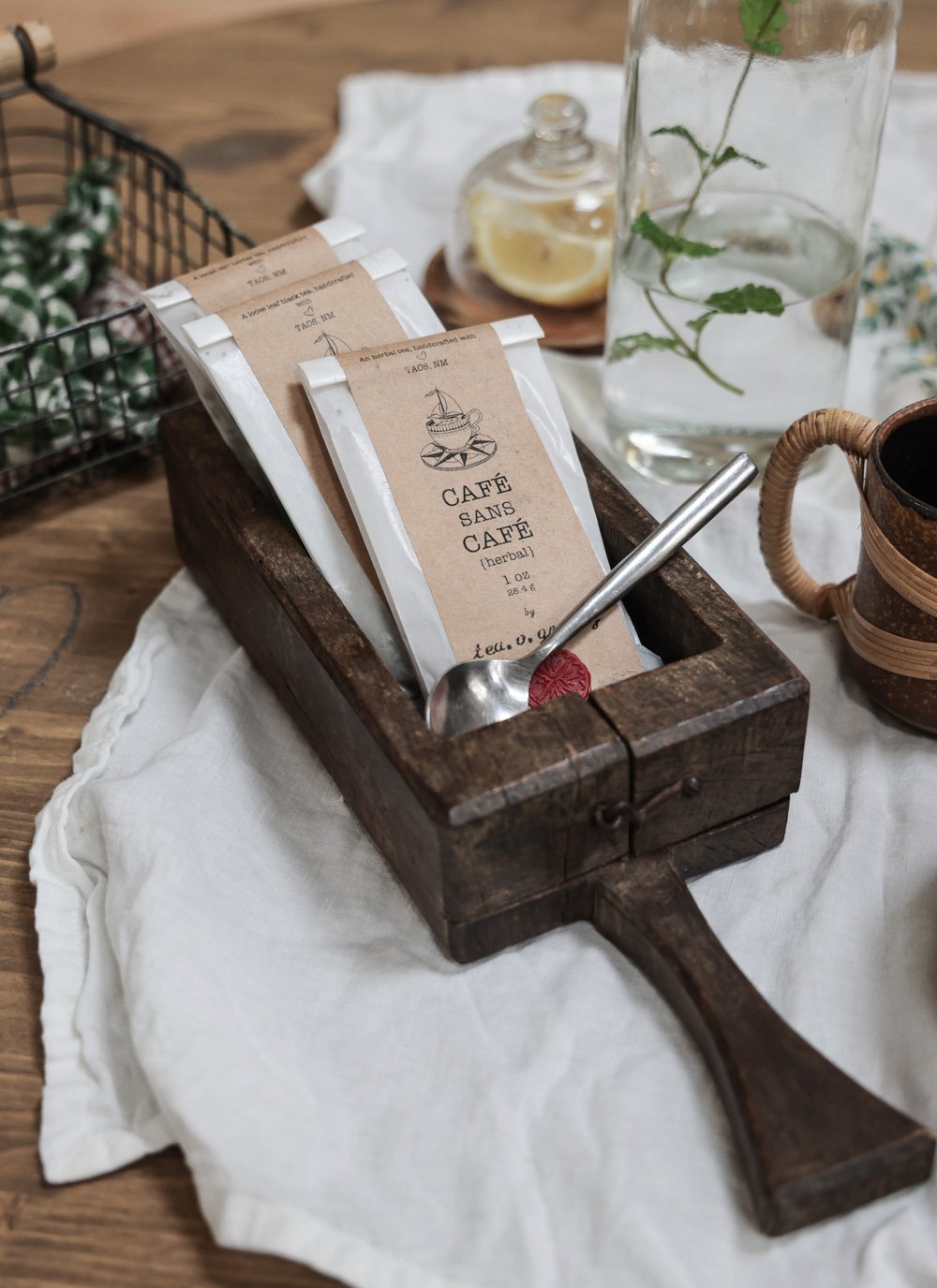
Over the years, countless folks have told me that they don’t know “how” to shop vintage or handmade on sites such as Etsy. So here’s this week’s roundup of beautiful and functional one-of-a-kind vintage or handmade items that I’ve favorited but don’t need. My hope is that this sort of post helps readers find handmade pieces or second-hand homewares offered by small businesses.

When purchasing a piece, you can further cut back on the associated carbon footprint by messaging the vendor to assure them you’re fine with repurposed packaging and don’t need any flair. I’ve chosen to use Etsy for these roundups, as it was the first major online shopping destination to offset 100% of carbon emissions from shipping.


One Small Step Towards a Cleaner, More Stylish, Eco-Friendlier Kitchen
In a small space, little details are particularly important. Because with less room to store daily items comes the frequent necessity to keep all sorts of goods out in plain sight. This by no means has to be a negative thing.
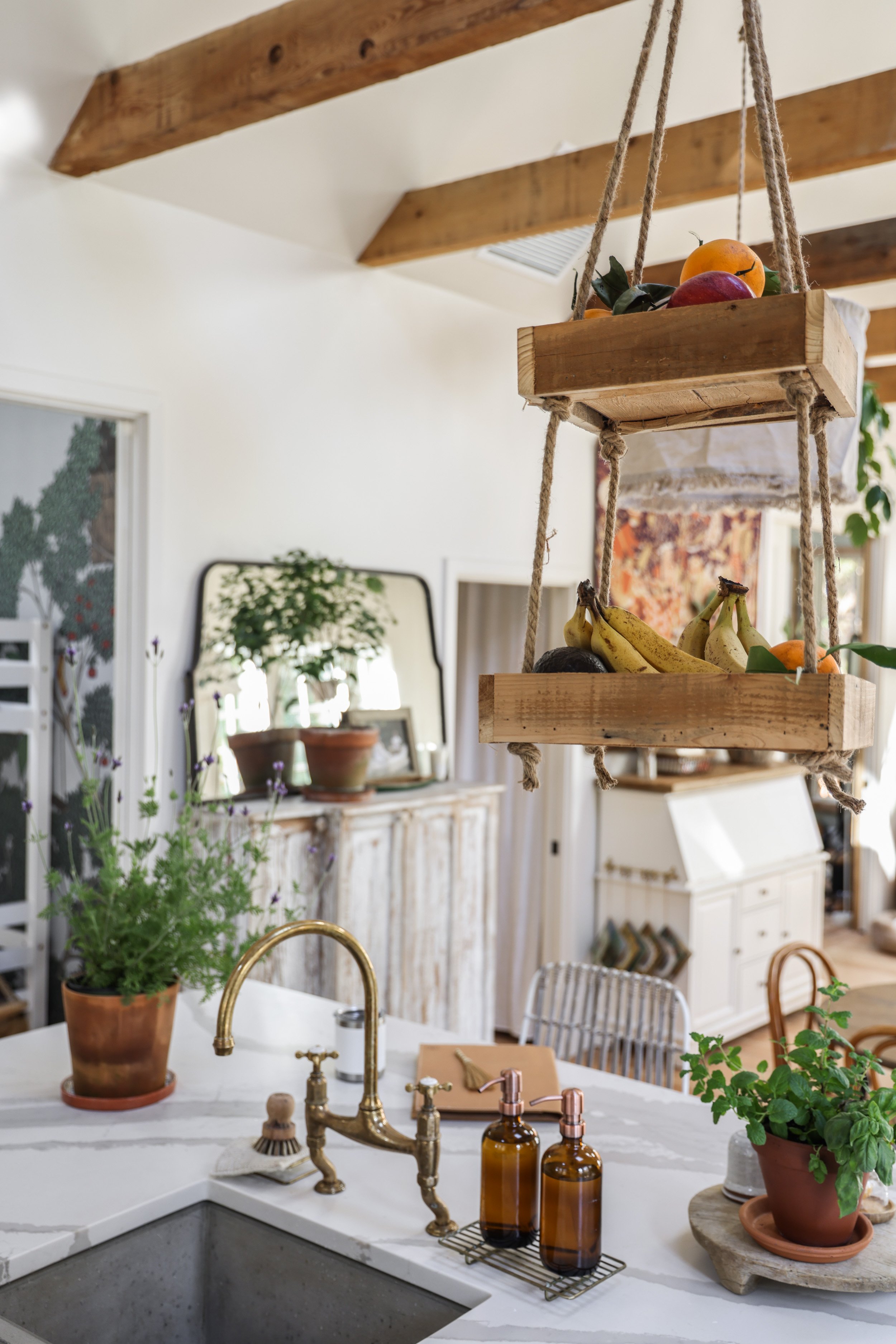
One little detail that elevates a kitchen time and time again are mindfully selected cleaning materials, including sponges and cleaning brushes. More importantly, eye-pleasing alternatives are usually more eco-friendly and budget-savvy over time.
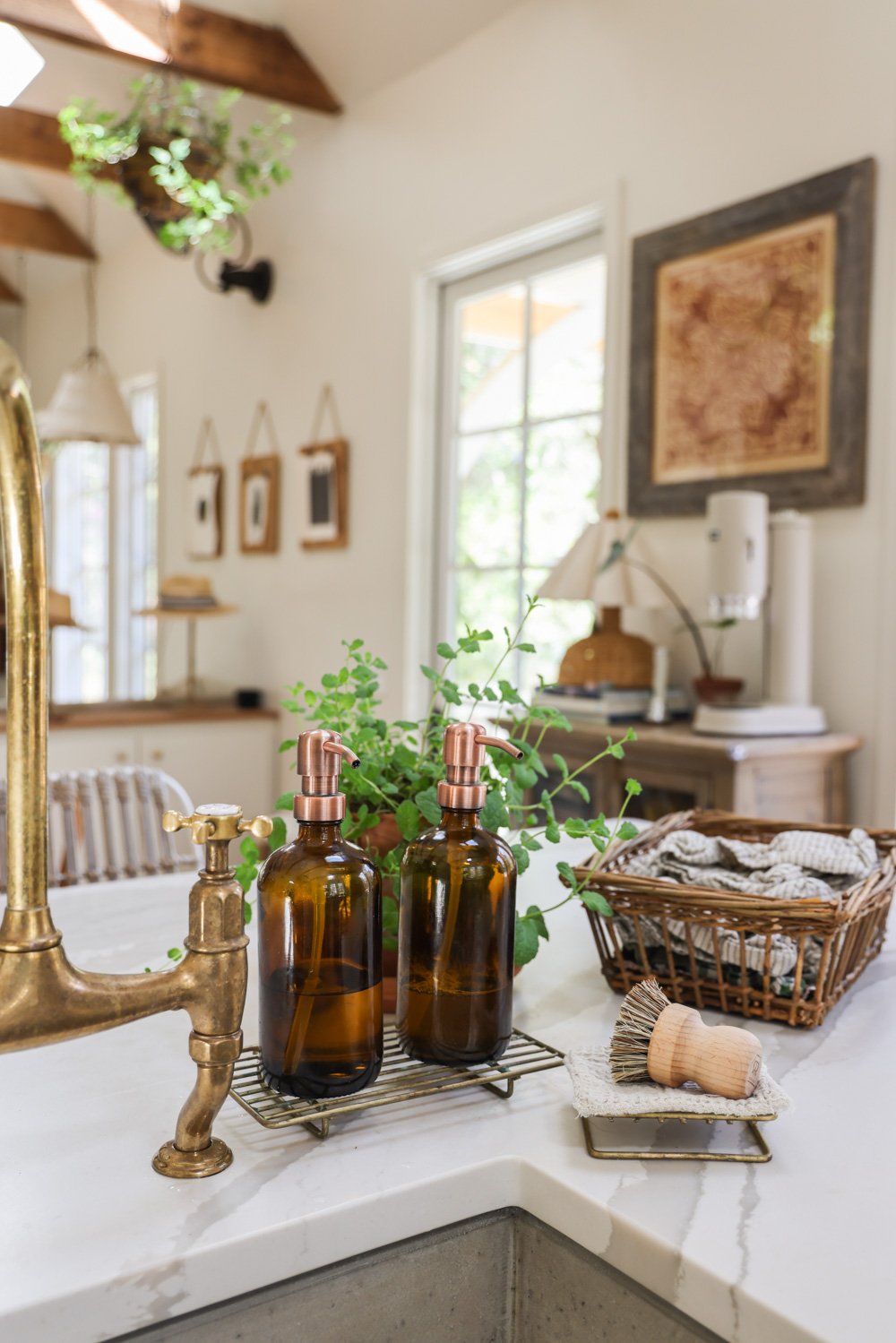
Typical sponges are made of plastic, with toxic dyes, and synthetic disinfectants. Not only are they less healthy for your body, but they’re also less healthy for the planet, as they cannot be recycled or composted, and even shed micro-plastics into our waterways and aquatic ecosystems. Plus, let’s be honest. They’re usually hideous.
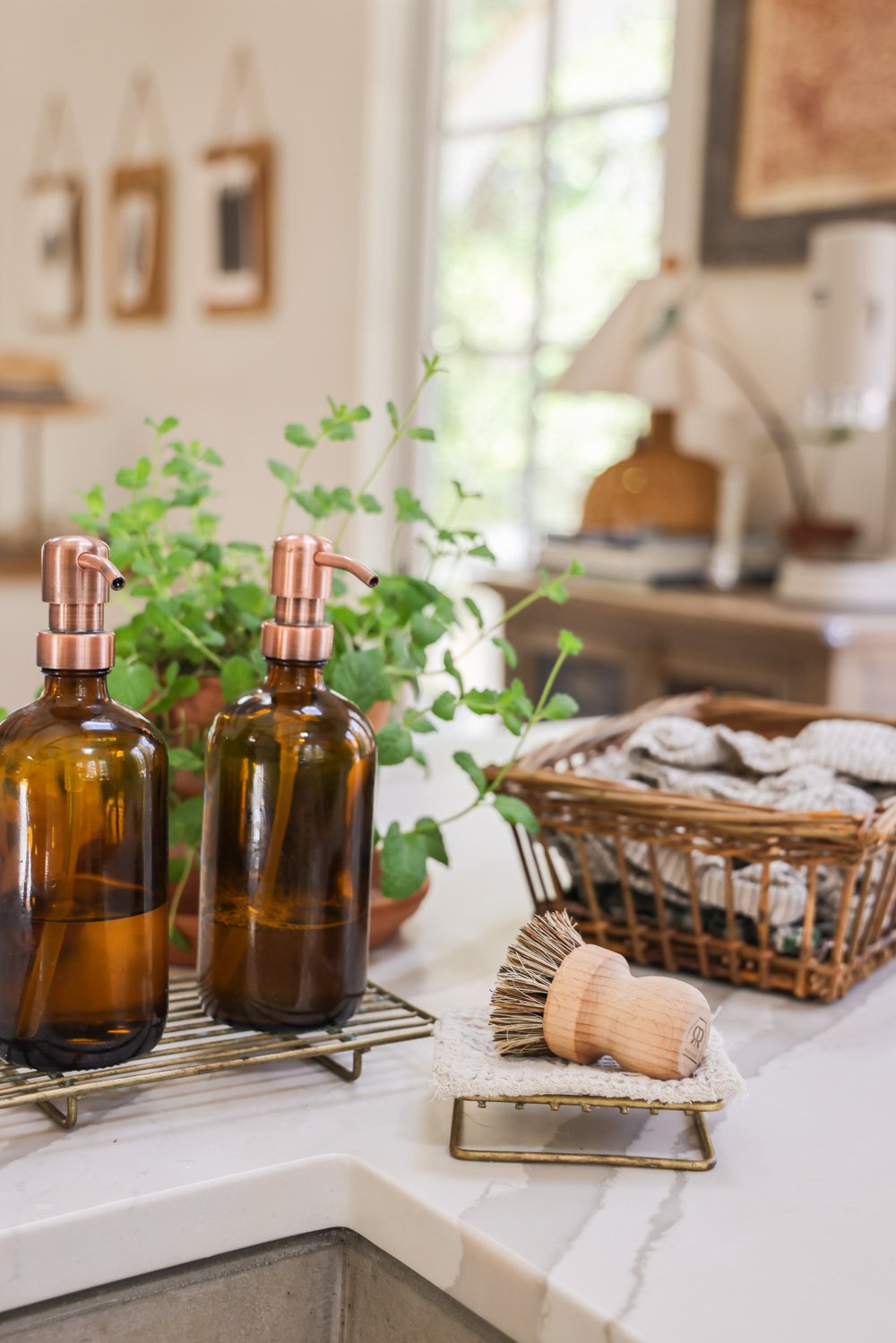
As always, if your current cleaning supplies are functional, don’t toss them out in exchange for the following. Instead, as the existing goods wear out over time, consider these (or other) greener alternatives. Here are my three favorite sponges + sponge alternatives that are kinder to the Earth… and kinder on the eyes:

SPONGES
These handmade, reusable kitchen sponges are compostable at the end of their life, and are machine washable and dishwasher safe. They’re comprised of dual layers of antimicrobial bamboo pressed between two layers of thick and scrubby, unbleached cotton waffle-weave fabric. The cotton is pre-shrunk to make it optimal for scrubbing, and to help minimize further shrinking.

SWEDISH DISHCLOTHS
These dishcloths are made of FSC certified 70% cellulose and 30% cotton, and are are 100% biodegradable. Ours are from this particular company, which donates 1% of every purchase to non-profits through 1% For The Planet, supporting environmental restoration. The dishcloths can be used for wiping, polishing, or scrubbing, and can replace 17 rolls of paper towels each, as well as packs of disposable wipes, and even sponges. Not only are they an eco-friendlier alternative, but they also absorb 20 times their weight. (We keep one at our kitchen sink to wipe the counters down, and one in the bathroom to wipe the vanity.)
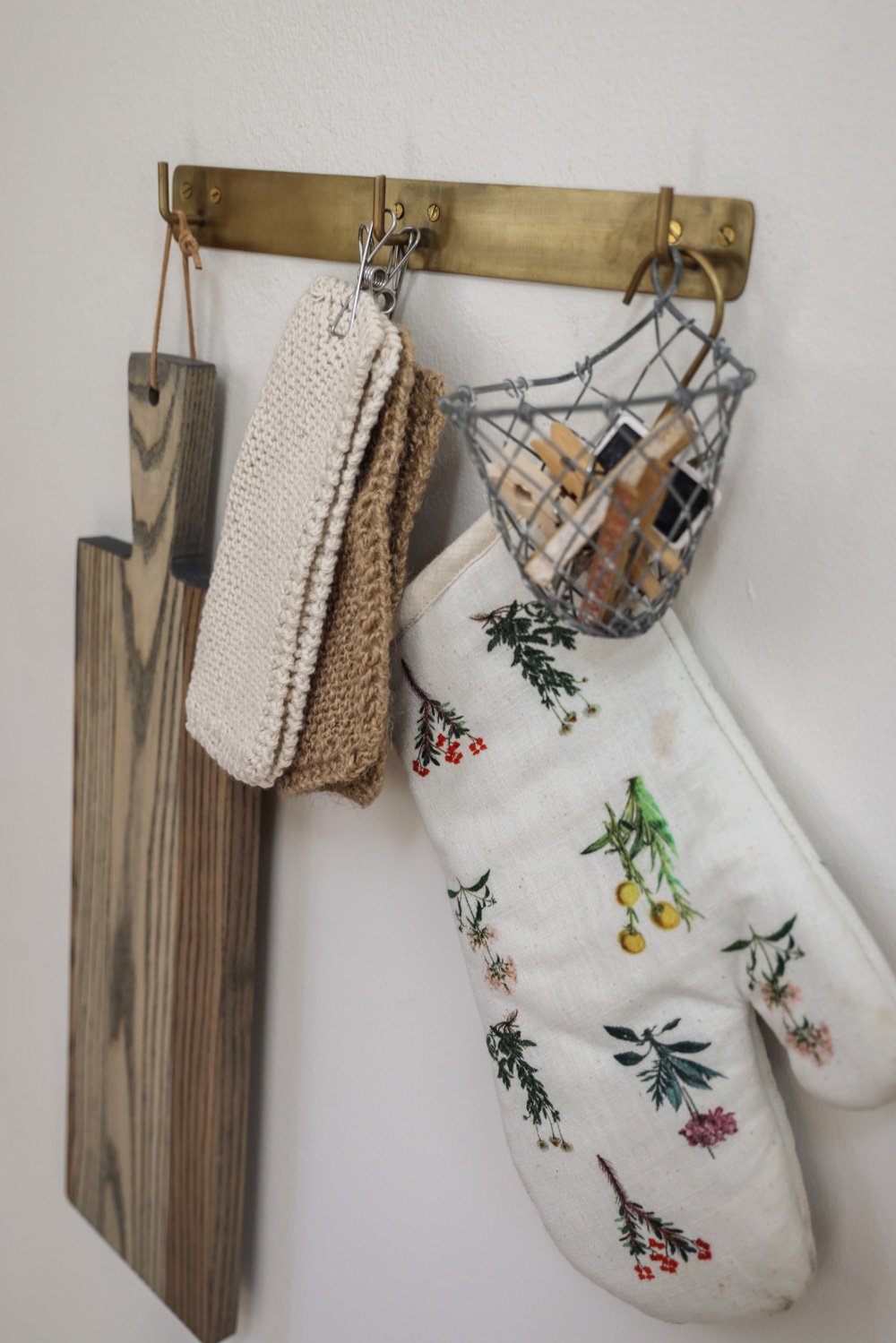
SCRUBBER SET
This organic cotton and jute scrubber set (7” x 7” each) scrub without scratching, allowing you to replace your disposable scrubbers with these tough cleaning, long lasting organic alternatives.The set includes one hand knit jute scrubber and one hand knit cotton scrubber, both of which are machine washable, plastic-free, synthetic-free, toxin-free, compostable, and biodegradable.

Eco-Friendly Woodland Mural for the Kids' Bunk Wall
From the beginning, we wanted the kids’ shared room to have plenty of color, life and character, while also flowing well with the rest of the cottage when viewed through the room’s open double pocket doors.
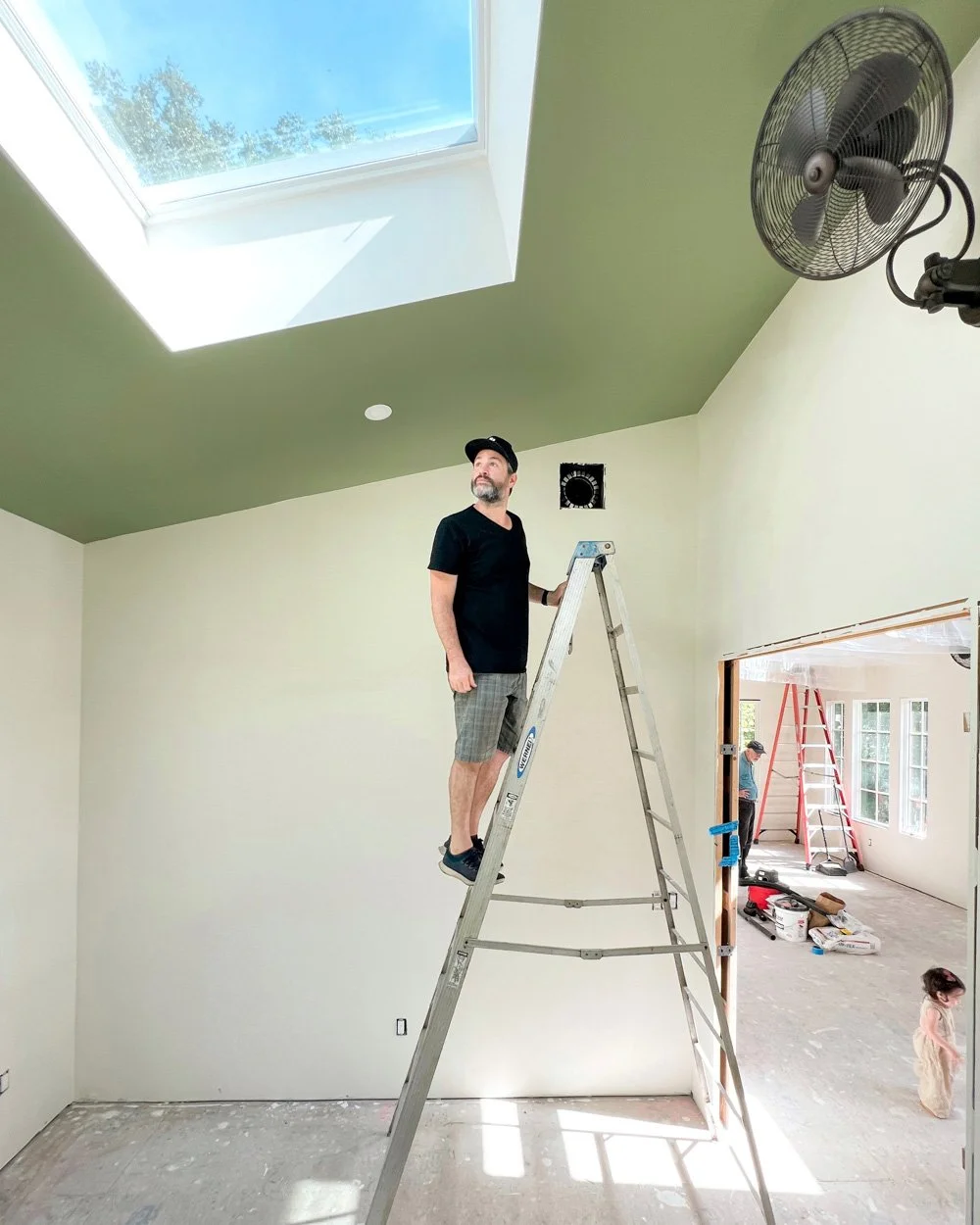
BEFORE
To achieve this, we painted the ceiling and select furnishings in a delightful shade of green chosen by our six year old, but we left the walls the same color as those in the main room. Since two of the walls are filled with large windows, that left two blank white walls. One of those is now a growing gallery wall, visible only when standing within the room. The other is the wall behind the kids’ convertible bunk bed.

This wall is the largest uninterrupted stretch of space in the kids’ room, and it’s visible only from within the room and certain spots in the kitchen. So we knew it’d be the perfect spot for a vibrant, playful mural.

Our six year old chose a woodland design from Rebel Walls, and we are all thrilled with how it turned out. The artwork features delightful clothing lines with unexpected details, treehouses, and wooden + rope ladders, all teetering magically within tree branches of lush green.

The mural took a morning for two of us to apply, owing to the angle of the ceiling (which tops out at 12’+) and the tight dimensions in which we were working with two ladders. It was a straightforward process that went quickly once we got the feel for the application throughout our experience with the first panel. I’d absolutely recommend these murals to anyone considering them, as this one brings us joy daily!

Here are some of the eco-minded reasons we picked a mural from Rebel Walls:
They offer a customized product, keeping no stock of wallpaper that risks being discarded.
Their wallpapers are printed on Non-woven FSC Certified paper.
Rebel Walls uses printing technology, that is 100% pure from solvents and other harmful substances. The wallpapers are completely free from damaging VOC substances, and have no negative impact on people, animals or nature.
The raw material is transported to Rebel Walls in large quantities in order to need as few deliveries as possible— currently just 2 times a year.
Rebel Walls produces very little waste, but the waste they do get is recycled locally.
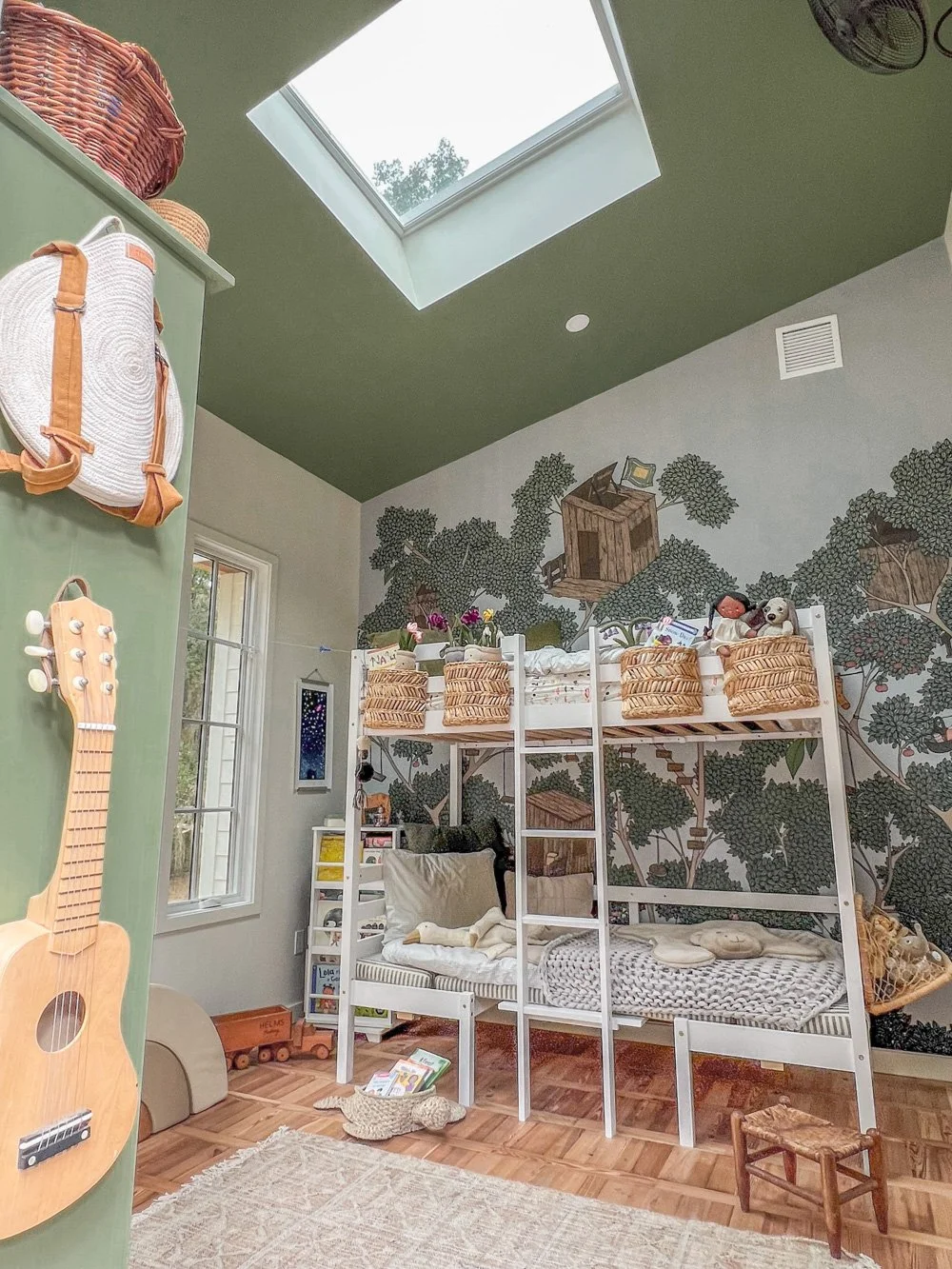
SOURCES
Mural: Rebel Walls
Venting Skylight: Velux
Paint: Valspar, Blanched Thyme
Floor: Recovered + reclaimed remnant cypress + pine from The Goodwin Co.
Bunk Bed: Click here
Bunk Cushions: Fragments Identity
Eco-friendly, healthy mattresses: Avocado
Most other items: Vintage, handmade and hand-me-down

Multifunctional Furnishings for the Children’s Shared Bedroom
Click here to explore the general post about the the children’s shared bedroom / playroom.
We have two children, ages 6 and (almost) 2. When designing the interior of their shared, 11 x 12’ bedroom, I wanted to be sure they’d each have dedicated spaces of their own, as well as ample room for overlapping or independent free-play. The trick was, of course, how to fit toy storage, wardrobes, learning stations, relaxation zones, sleep areas, and open space for both of the kids within the given floorpan.

There are two key elements of the room that helped us achieve our goals. One is the convertible bunk bed, which is detailed in full via this post. The second is a wall-to-wall, multitasking collage of carefully selected furnishings and accents:
One repurposed, shallow-depth kitchen pantry
Two benches (with raised legs)
Two removable, no-slip seat cushions
One child-sized chair

Truth be told, we’d originally designed a built-in with the same function and look-and-feel for this space, but our budget was too strained to accommodate it by the end of the home-build process.


We pivoted, customizing a slim, pine kitchen pantry and two benches instead, which we painted in the same hue as the ceiling, and grouped in a way that echoes the more polished design we’d intended to bring to life from scratch but ultimately could not.

The shallow-depth pantry, which is secured to the wall with essential, anti—tip hardware for safety, is in use as a wardrobe for both children. We opted to skip the addition of a dowel for hanging garments, though we’ll likely add that later as the kids get older. In the meantime, each shelf contains two collapsable storage cubes that function like clothing drawers.

The two benches both have custom, no-slip seat cushions for moments when the kids want to use the surfaces as reading zones.

Above: Cushioned benches for reading zones

Above: Benches in use as desks
The cushions can then be removed to convert the benches to desks (or to create forts for parents to stumble over).

We raised the benches with 2” cubes so that little chairs and seated kiddos can easily fit the same way they would at a desk. One toddler / pre-schooler vintage chair is ever at the ready, and the second seat is supplied by a sturdy arch from an Arc Indoor Playset.

The desks are curtained with repurposed bed linens, concealing ample toy storage that consists of 11” x 11” collapsible cloth cubes.

Four cubes sit beneath one bench, two beneath the other.

(Book storage is elsewhere within the room.)

These multitasking pieces allowed us to create a highly functional room without the need for built-in closets, bulky dressers, or separate lounge chairs and tables. As such, there’s more room for open play (and the blasted, aforementioned forts) without the need for more square-footage.
